

If I could go back in time to college, I probably would stop my ex-girlfriend from serving me that vodka drink she thought up freshman year. I’d also take more economics classes. I love the merger of data and human behavior, as well as the fact that even with data, no one ever seems to agree on anything.
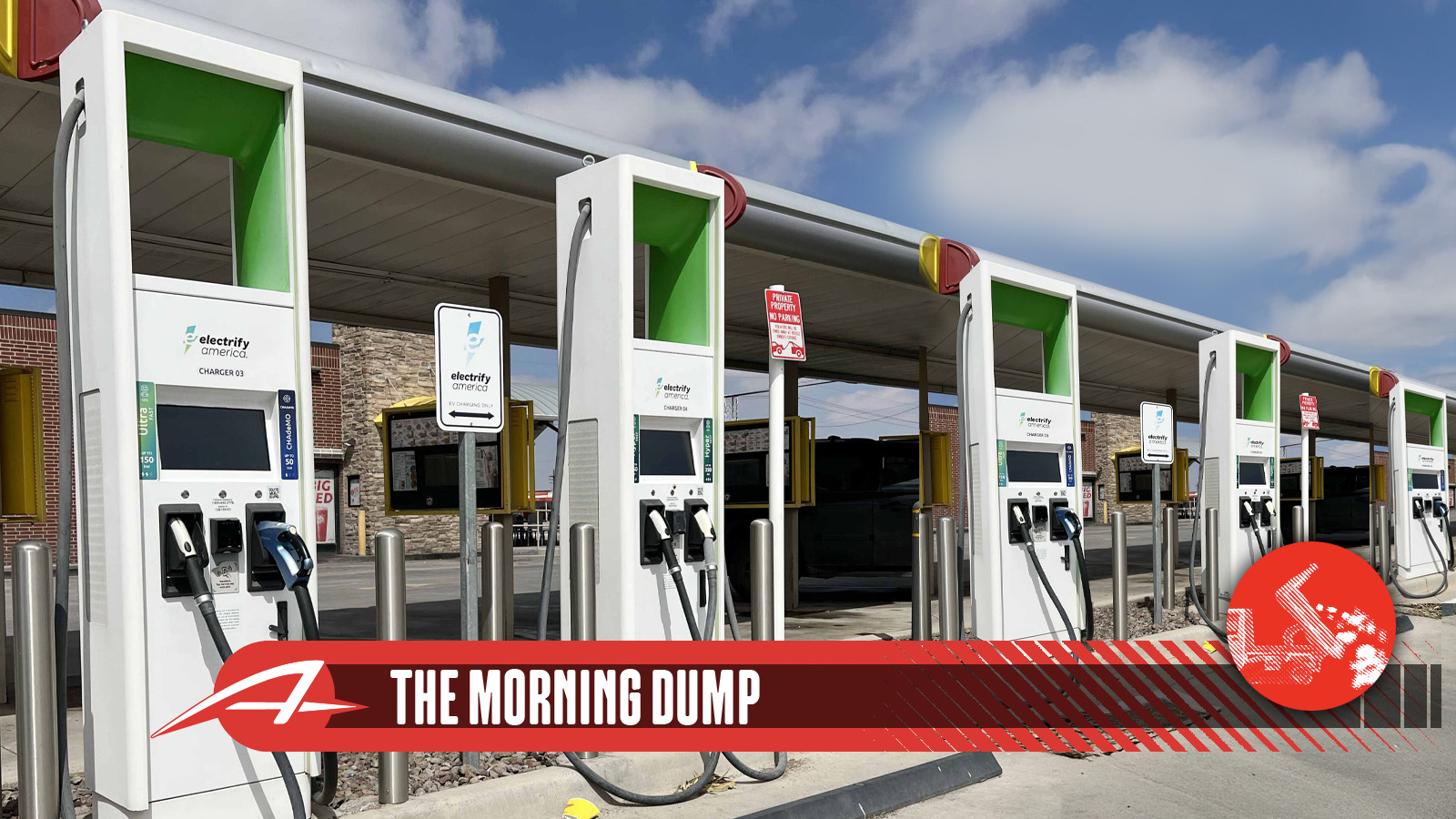
EV fast charger build-out is a great way to understand the EV market and is, in a way, even more powerful as a data point than, say, sales. America keeps adding chargers and keeps needing them, even as pundits (sometimes me) keep reminding us that EVs aren’t as popular as everyone once thought. What’s going on? The Morning Dump is going to dive into it.


Part of EV demand waning has to do with cost, and Lexus has an interesting answer: The EV version of the new ES is cheaper than the hybrid version. That might be a first! What’s not a first is yet another market cycle where drivers are super underwater. When will it end? Maybe soon. Maybe never.
And, finally, Tesla holds onto its management-friendly union for a little bit longer.
Here Comes The Used EV Wave

There’s a great Bloomberg article out this week that points out a fact that may surprise you, which is that not only are more EV fast chargers being built, but demand continues to grow at a quick pace:
US chargers have become more reliable and far faster, which encourages more people to use them, according to Paren, a data platform focused on EV infrastructure. Charging networks added about 11,300 ultra-fast cords across the US last year, up 48% from 2024. And the high-speed buildout is only accelerating: In the fourth quarter, nearly one in four new chargers were capable of pumping at rates of 250 kilowatts or more, which can typically add 100 miles of driving range in less than 10 minutes.
Despite the uptick in the number of chargers and their ability to sling electrons faster, the average US charging station is still fairly busy most of the time.
The number of charging cords in the EVgo network has roughly doubled in the past three years. Yet each cord, on average, has steadily pumped more electrons in a given period.
There are a few obvious reasons for this. The first is that EV charger demand is about the total number of EVs on the road, not new EVs sold. Even if EV sales drop by half this year, that’s still more than 600,000 new vehicles out there driving around. Another reason for more chargers is that there are still federal and state funds flowing into projects, though politicians (primarily from the Republican party) have tried to curb some of that.
The biggest reason why I expect growth both in usage and distribution has less to do with how many EVs there are and more to do with who is buying them. Electric cars remain popular (and often required) for ride-hailing services, and those users tend to rely on fast-charging.
Maybe more important is the used EV market. As I’ve mentioned before, a quirk in the way the Inflation Reduction Act was enforced led to a huge number of cheap EV leases. Those leased EVs are starting to be returned, and now a bunch of consumers are going to have access to affordable, high-quality electric cars.
Those consumers are also probably more likely to live in apartments or other places where they don’t have home charging access. I live in a building, and neither of my parking spaces has charging as an available option. If I were to buy a used EV, I’d be forced to use the local public chargers.
This is one of those outcomes that’s good for the larger EV market, as the increase in demand means an increase in chargers, which helps solve one of the concerns that would-be buyers have about charger access.
The Lexus ES EV Is Cheaper Than The Lexus ES Hybrid
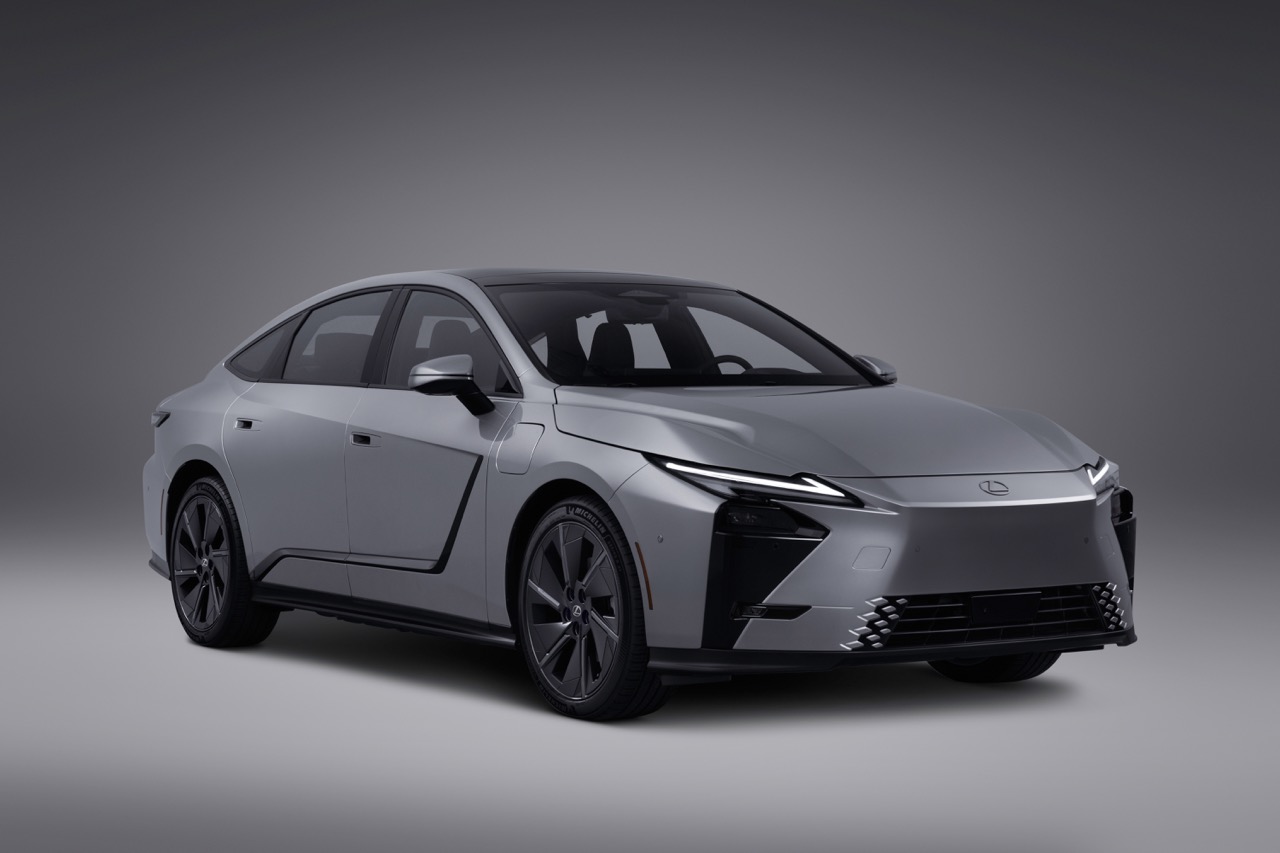
The 2026 Lexus ES is a big departure from the outgoing model, and now only comes as either a hybrid or an electric car. Curiously, the low-end EV version is now the cheapest of all the models.
The ES350h hybrid, which is roughly equivalent to last year’s ES300h (the gas-only ES250 and ES350 models are gone), makes a big jump in price up to $50,995. That base price is $6280 higher than before, which is likely accounted for by the new ES’s larger size and, presumably, additional standard equipment. Lexus hasn’t yet detailed what comes in the base Premium trim, or what you get by paying extra for the ES350h Premium+, starting at $55,795. The other significant change to the hybrid lineup is the option of all-wheel drive; it costs $1400 extra on both trims, and both the ES350h FWD and AWD models have 243 horsepower.
While EVs often cost extra compared to their gas-powered equivalents, the electric ES350e is the least expensive ES of the bunch. Starting at $48,795, it comes with front-wheel drive, 220 horsepower, and a claimed 300 miles of range. It’s offered in the base Premium trim, along with a Luxury trim for $57,195. To get all-wheel drive in the ES EV, you have to opt for the more powerful ES500e, which starts at $51,795 for the Premium and $60,195 for the Luxury. It has dual motors for a total output of 338 horsepower, but claimed driving range is lower, at 250 miles.
The loss of the Inflation Reduction Act probably plays to the benefit of certain automakers as it levels the playing field, and while $49k isn’t cheap, it’s the cheapest, and that’s quite the change.
IG Metall Loses Bid To Take Over Tesla Berlin
Last week, I pointed out that Germany’s biggest auto union, IG Metall, was trying to take over the works council at Tesla’s Berlin factory. It was contentious, but it sounds like workers there are fine with the status quo.
IG Metall, which has been fighting for more influence at Tesla’s gigafactory in Gruenheide, said it secured 13 of the works council’s 37 seats, leaving the committee’s majority in non-unionised hands.
Voting at the plant, the U.S. electric car maker’s only European production site, had started on Monday.
The current council is also dominated by non-union members, with IG Metall, which has for years been fighting for better working conditions, holding 16 of the council’s 39 seats, meaning an actual loss in representation.
Germans may be down on Tesla’s cars, but Tesla employees seem to like things the way they are.
How Long Will People Be Under Water?

Being underwater on a car loan means owing more in financing than the actual value of the car. It’s not great, and this usually happens in the hangover of some sort of financial event. In the case of the current market, a lot of this has to do with inflated prices during the post-pandemic period.
Is it turning around? Automotive News talked to some experts, and the answer is: Maybe, maybe not.
Scott Normandin, sales manager at Normandin Chrysler-Dodge-Jeep-Ram-Fiat in San Jose, Calif., said his dealership has seen “people coming in [$10,000], $20,000 dollars upside down.”
Nationally, a record 27 percent of all underwater new-vehicle buyers carried at least $10,000 in negative equity during the fourth quarter, according to Edmunds.
The problem was most acute on electric vehicles, particularly higher-end ones, Normandin said. He gave the example of an $80,000 EV for which “50 percent of the value is just gone” after two years.
“So I’m hoping it’s going to get better,” he said.
Patrick Manzi, National Automobile Dealers Association chief economist, presented negative equity volume and dollar amount data for new and used deals in a NADA Show speech Feb. 3. Those figures, from J.D. Power, followed a similar path as Edmunds’ statistics.
One possible out for buyers stuck on this cycle of needing new cars, but not being able to afford them, is leasing.
What I’m Listening To While Writing TMD
Who wants some bebop? Here’s Dizzie Gillespie doing “A Night in Tunisia” live.
The Big Question
What is stopping you from buying an electric car?
Top graphic image: Electrify America


High prices were keeping me from buying an EV. Especially since close to half my miles are longer roadtrips, which limited my options. Prices have dropped, and I finally picked up a 2024 Polestar 2 dual-motor. The EV6 was in the running as well – cheaper, long warranty, good packaging and interior room – but a test drive made the choice easy. The EV6 drives like a video game – responsive, but completely numb. And it feels like it smooths out the acceleration for you instead of doing as it’s told. The Polestar was surprisingly good to drive – it’s not sports car, but it’s a decent GT. And at lower speeds, stomping the accelerator gets you genuinely violent acceleration. My neck and shoulders were a bit sore after a short test drive.
For the fast-charging part – so far it did pretty well at the one roadtrip. Only issue I’ve had is that basically all the chargers at the destination city were under some sort of maintenance/reconstruction and I only had an L1 plug while I was there. Made the return trip kind of slow to start. Overall, I found charging basically dictated where/when we stopped rather than how often or how long.
Nothing is stopping me from buying an electric car. Leased a 2016 Spark EV as my entry to the world of EVs and then bought a 2017 Bolt EV. We drive it the most miles of our vehicles and it is used mainly for local and regional trips that are 200 to 250 miles round trip.
What is stopping me from replacing all our cars with EVs is public charger availability. While the west coast has more chargers than most regions of the USA they are mostly clustered around population centers and interstates. We need fast chargers in rural areas as well.
Also, 250 kW is not fast if we looking at what is available in other parts of the world.
I only need public chargers when I drive out of state, and not even always then, as states are not all huge in New England.
I have charging at home, and I get 9kwh vs. the 6kwh of other level 2’s, such as the ones in parking garages. The charging at home is better.
I would, however, like more fast chargers outside of the I95 corridor, for the way that I like to road trip. But, my lifestyle should not be an indicator of where to invest. Ever. (shrug). Along I95, access is pretty great.
I’ve had 2 PHEV’s and 1 EV so far, so I guess nothing has stopped me. They’ve all been perfectly reliable and a great experience. I always buy them used at 2-3 years old at 40-60% of the original MSRP and drive them until about 8 years old before the warranty is up on the battery and EV drivetrain. I might keep the Bolt EUV for closer to 10, since the battery had a recall replacement at 2 years old, so it got a whole new 8 year/100,000 mile battery warranty in late 2024.
I know circumstances change but generally, maybe don’t buy a car and sell it after only two years. Cars are so expensive now, I don’t know why you’d buy a car, any car that wasn’t perfect. I had a look at a new car recently, an EV that would have been perfect for my needs – Fiat 500e – because it looked cool, customers at my work who had them as loan cars all really liked them, I like small cars and no issue with range concerns as I have my own house and a train station down the hill to get into work during the week – but 36k and no cupholder? Or any space to put my feet? Or headroom because they all have a sunroof? I’m only 6ft tall which isn’t tall these days when you see all the youth who need oxygen they are so tall. Ridiculous. Waiting for Hyundai Inster (cringe, but it’s a cool car) prices to come down a bit.
Those 2 year old EVs are leases. A large number of people people lease vehicles and most of those have 2 or 3 years terms. Industry wide 2/3rd of new car buyers keep their vehicle for 5 years or less. People that can afford to buy new cars in general want a new car on a semi regular basis.
I work for an Automotive dealer group, I get it. I think it’s incredibly dumb and just having a conger line of lessees to focus on means manufacturers can just ride that planned obsolecence gravy train and not have to engineer things well anymore because after the cpo warranties are up who cares. I suspect a large part of ‘premium’ brand pricing is done by the manufacturers to cover their expected future recalls. Of course in my market, BYD have come along and all the buyers coming out of a bad experience in their german car are looking at Sealion 7s and other well equipped, 20k cheaper Chinese SUVs and jumping ship. Turns out brand equity doesn’t mean anything if you a turning out a sub par product. (Not Alfas though, they are a drug and half the customers also have ferraris)
I work for an automaker. Planned obsolescence isn’t a real thing.
I should clarify. I do a lot of service bookings and followup. One of our advisors almost said to a customer “see you at your next thermostat” instead of service. German car. Maybe not planned but they obviously do not give two figs about reliability reputation, or, they do and are just incredibly incompetent. I’ve also been doing this for over ten years. I don’t gamble but I would put money down on taking at least three coolant issue related calls any day before a long weekend.
Honestly, all the unnecessary cabin tech bullshit stops me from getting basically any car, let alone an EV. Also I’m still in “must have manual” phase of my life before my knees give out, so I’m trying to enjoy it while I can. The Civic Hybrid my wife got last year is a great car, enough for us for sure.
The unnecessary cabin tech bullshit is what keeps me from shopping for new and even new-ish cars of any kind.
EVs could be radically simple since a modern ICE vehicles have a lot of complexity baked in on account of the ICE
A smallish simple EV that avoids the weight begets weight trap is what I want.
I hope the slate does well since it would validate that approach.
Oh, and could I take this opportunity to mention how much I absolutely loathe all that soft plastic crap that car reviewers seem to love because they don’t have to deal with the filthy layer of melting goo that it turns into.
It’s been years since I’ve driven a brand new car and thought “Wow this is really nice”.
Most new cars are either weird for the sake of being weird, have way too much useless tech shoehorned into the cabin, or are distinctly lower quality than expected.
A few months back I got to drive a brand new C8 Vette (not in anger) and absolutely hated the LCD rear view mirror. The rest of the car was simply okay, nothing super special. OOOOh flappy paddles, whoopie… Maybe it’s because I wasn’t able to beat on it.
I drove multiple new EVs. Every single one had a different shift lever/knob/stalk, and most made it really annoying to do a 3 point turn. Sure some are quick accelerating, but all of them feel like a lead sled when you turn the wheel.
Even new ICE trucks/SUVs. They’re all massive yet don’t feel like it on the inside. Good luck trying to figure out how to change the radio station while driving. You have to crack the combination first while parked or have your co-driver do it.
I’ll stick with my 2008 and older stuff.
We have one EV and one PHEV. The reason we won’t transition the PHEV to an EV (to have 2 EV) is charging infrastructure. Northern WI and upper MI are have chargers few and far between. And the ones that are there are not exactly fast. I do look forward to the day when it’s possible though. (Well it’s currently possible, just inconvenient and unreliable)
What is stopping you from buying an electric car?
I did, in late 2024. I got a screaming lease deal on a Mini Cooper SE. It will also be a screaming deal when I purchase it in 2027. We put in solar panels, and the installation folks “threw in” a free charger. (I know, they probably would have charged a bit less without that, but we also got lots of federal and state incentives.) Our power bills are about 20% of what they were before – about the same as the lease – so the Mini is basically free. I think a lot of folks should consider the solar panels/car charger equation.
On top of that, I charge for free at work. My commute is about sixty miles. The Mini has a ridiculously short range, but it really works well for me.
I have got a cooper SE as well. They are great cars to drive. And the range is only ridiculous if you try to take it on long drives.
Cool car, I have been lurking on early ones so hard
I’m waiting for a fast charger to be available in New Meadows, Idaho.
Mostly that I already have one.
But if we’re talking about new/newer EVs that I’d be interested in, mostly cost and excess amount of in-screen controls.
I live in a condo. We have no chargers. I could charge about 5 minutes walk from home if a charger was available at city hall, which it usually isn’t.
We take a 3 week trip in late summer. I don’t want to deal with charging speeds.
I’m of the opinion that expansion of charging infrastructure in urban areas should focus on level 1 and level 2:
Ample electric outlets could be installed in apartment parking lots and garages for renters to plug in their own charging cords and top off.
An aggressive buildout of level 2 destination chargers should focus installation at places where drivers regularly park for half and hour or more: hotels, workplaces, grocery stores, shopping plazas, parking garages, etc….This alone may allow EV owners in urban areas to skip relying on home charging as 1-2 hours of level 2 charging will often recover more range than they used on their errands or daily commute. Also true at hotels where destination chargers would allow travelers to skip seeking a nearby level 3 charger.
This.
We need more low power Level 2 charging stations in parking lots and garages where cars sit, usually overnight.
This. A Level 2 in a parking lot where someone grocery shops for 30 – 45 minutes isn’t going to do much. We need chargers where people park at night – generally for 8 or more hours. That requires changes to building codes. Those changes have happened in some but not most areas.
I’m really interested in buying an EV because I’ll always keep a gas car for fun/weekends.
What’s stopping me is the sheer speed of innovation and improvements in the space. Every time I think I want a specific EV, something new is around the corner that blows it out of the water.
An EV from 3-5 years ago is completely uncompetitive in today’s landscape. A gas car from that time is basically still new.
I am not too far behind you. I do a lot of local driving but also a lot of long distance for work. I could absolutely keep a gas car for the long travel trips and an EV for the local stuff. But it seems every 6 months there is something new that totally makes what is out now obsolete.
I look at it a bit differently. Hyundai set the standard in North America 5 years ago with their 800v architecture in Ioniq 5 and Kia EV6. A lot of the newer EVs released in the last 3 years have disappointing specs.
New EVs like the Lexus ES350e from this article. 250 mile range, charges at only 150 kW, and takes 8 seconds to get to 60 mph. Those are really disappointing specs 2026. Especially for $50K or more.
I agree with you, but Toyota has always been behind the ball on EVs (deliberately, it seems).
All of their EVs scream “bare minimum”.
It isn’t just Toyota. Plenty of newly released EVs in the USA with 400v architecture and 150 kW charging
The interior of the BZ isn’t so bad at first glance except for the honking big screen.
I’ve kept an ev around for for a number of years. I got decent deals on leafs. They are great for around town. I’m not sure I would road trip one. I have fast charged some of them time time. But it’s not all that fast and it’s not cheap. Last year is the first time I’ve bought a ev new even though it was a delivery mile incentive stripped “used”. I’ve road trips a few kpmg platform cars and a few different gens of Teslas over the years. And while it’s fine it’s different. I’m not sure I will ever buy another new ev unless it’s a crazy deal and I’m not looking at massive depreciation. I was thinking of leasing but not so sure it’s for me. I got some people to do the cheap leases when they were available because it made a lot of sense for them. I almost did a lease then found the deal I couldn’t pass up. I might try to pick up one of the 500e when the come off lease depending on what they cost. I know some people that got deals on Teslas when they are being dumped I went for one of those too I kind of kick myself for not. Still once the battery and drive unit warranty is out on those I’m not sure they are great unless you paid a absolutely nothing for it.
What is stopping you from buying an electric car?
Money mostly. A PHEV makes a bit more sense for me than a full electric, but I can plug one in at home.
I have no reason to buy an electric car. I drive either not enough to care, or too far to bother. And I have five perfectly lovely cars already – if I am buying a car anytime soon, it’s going to be an old Alfa Spider. And that’s even before the minor details that there aren’t any that I like, nor are there any with user interfaces I can stand. And I find them *stupendously* boring to drive. They make perfect sense if you have that “just right” daily commute. But I haven’t had one of those in nearly 20 years.
The cost of a used decent EV will maintain my pair of BMWs that I love dearly for the rest of my driving years, and then some.
I’m encouraged to hear the fast charger build-out is continuing at a decent pace. The price per kWh still tends to be around $0.50 or so though, which at 3-4 miles per kWh means you spend $3.50 to go 21-28 miles. Until gas prices go up quite a bit, there are still tons of gas and hybrid vehicles that can do at least that. No matter how good the fast charging network is, it still makes very little sense for someone to own an EV if they can’t charge it cheaply at home most of the time.
When people ask me about EV ownership (our only vehicles are 2 EVs currently), I tell them battery life is basically solved (you can have manufacturing defects like anything else) and fast charging speed is solved for your road trip needs along major interstate corridors. But you will *not* save money taking your EV on a road trip. I only recommend EVs to people that can charge at home, and will continue to do so. That being said, even with the relatively expensive fast charging costs, my EV9 is the best road trip vehicle I’ve ever had.
Out of curiosity, are the costs drastically lower for “slow charging” away from home? I’m thinking of someone who cannot charge at home, but also doesn’t have the time constraints of a road trip.
Could you get enough cheap miles in your car by charging at grocery stores and other slow charging destinations?
A road trip being roughly equivalent to a gas car is a non-issue if your other charging is cheap.
In Europe, the cost for slow charging just varies a lot. I did a weekend in a small town in the south of Belgium and (older) slow chargers were more expensive compared to the (newer) DC fast charging stations next to the highway.
In my town, it would be easy to find a charging station that is priced three times (3x) as much as another charging station at walking distance.
As for time, depends. Most of the distance in our eNiro is commute, with little opportunity to charge on the far side.
A typical ‘topup’ on our 60+ kWh battery is 40 kWh (we never had 0% and we typically charge to 80%).
A ~10 kW charger at our local foodstore means 4 hours of charging.
We don’t spend 4 hours in any store. Also we need more than one of these ‘topups’ per week.
So for us this would not work. Luckily we can charge at home.
‘Slow chargers’ are also all over the place in the US cost wise. If you live near one that is heavily subsidized by government or business, you may be able to pay even less than you would charging at home. There are many that have very low rates or a fairly low flat fee per charging session. The rest of them tend to be comparable to fast charging in cost, and sometimes worse. As That Belgian Guy points out though, it’s going to be difficult to keep your EV charged by using slow chargers while you do errands. Realistically you will need a slow charger you can use for big chunks of time while you are at work during the day or at home over night. And even that will likely be a pain if you need to avoid tying the station up after your car finishes charging, i.e. you can’t leave the car there until the end of the work day or when you are leaving home in the morning.
Money.
But as soon as the Orange guy sends me my 2K check, and cheap used examples flood the market maybe?
No. Just remembered no charging within 7 miles of my home. Looking to sell. Not interested in sinking money into a charger.
This is why I still support hybrids over EV. YMMV.
You may be waiting a while on that one.
Money. It’s definitely that I don’t have the money.
I’m hoping the Telo comes to market. I am currently #23 on the waiting list. That’s what’s keeping me from buying an EV right now.
I’ve already bought several electric cars starting with used low range leafs and eventually buying new while credits were still around. Have never had a single mechanical problem with any of them (highest mileage one was around 75k miles) and they have been a great convenience the majority of the time as I rarely have to go to a gas station (still have one gas car, but hardly ever drive it) which saves a lot more time over the course of the year than I lose stopping a couple times a year at a fast charger. With that said I would not own one if I didn’t have a place to charge at home or at work, it would be extremely inconvenient to rely on public charging 100%.
What’s stopping me from buying an EV?
Unemployment. No career, no money, etc.
If I had it…well, I’d currently be waiting to buy a Slate. If I’d had money for a while, I’d probably have gotten a used 2nd gen Leaf or something.
Oh, and for new electric cars: I hate connected vehicles, crossovers, etc.