

If I could go back in time to college, I probably would stop my ex-girlfriend from serving me that vodka drink she thought up freshman year. I’d also take more economics classes. I love the merger of data and human behavior, as well as the fact that even with data, no one ever seems to agree on anything.
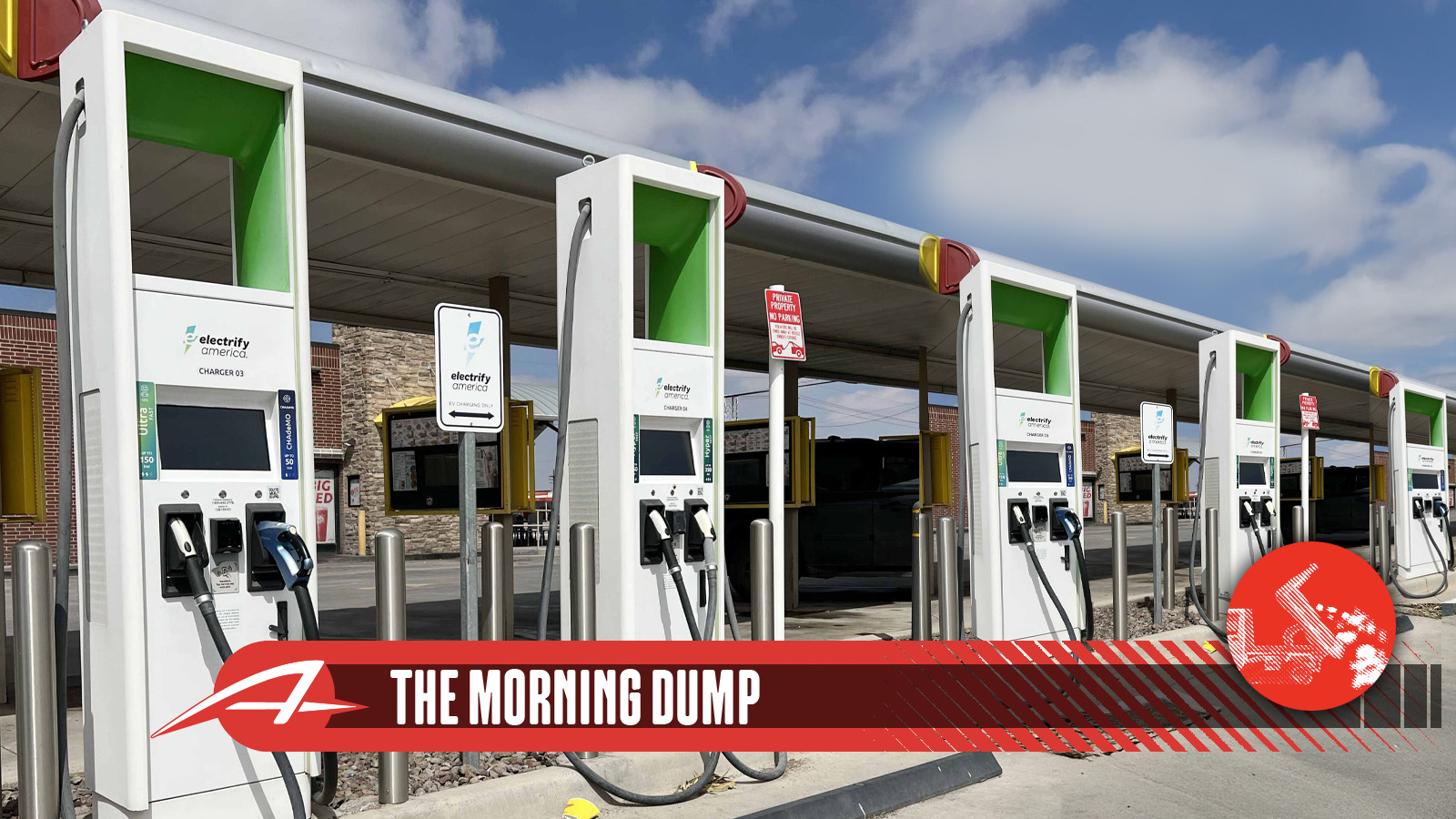
EV fast charger build-out is a great way to understand the EV market and is, in a way, even more powerful as a data point than, say, sales. America keeps adding chargers and keeps needing them, even as pundits (sometimes me) keep reminding us that EVs aren’t as popular as everyone once thought. What’s going on? The Morning Dump is going to dive into it.


Part of EV demand waning has to do with cost, and Lexus has an interesting answer: The EV version of the new ES is cheaper than the hybrid version. That might be a first! What’s not a first is yet another market cycle where drivers are super underwater. When will it end? Maybe soon. Maybe never.
And, finally, Tesla holds onto its management-friendly union for a little bit longer.
Here Comes The Used EV Wave

There’s a great Bloomberg article out this week that points out a fact that may surprise you, which is that not only are more EV fast chargers being built, but demand continues to grow at a quick pace:
US chargers have become more reliable and far faster, which encourages more people to use them, according to Paren, a data platform focused on EV infrastructure. Charging networks added about 11,300 ultra-fast cords across the US last year, up 48% from 2024. And the high-speed buildout is only accelerating: In the fourth quarter, nearly one in four new chargers were capable of pumping at rates of 250 kilowatts or more, which can typically add 100 miles of driving range in less than 10 minutes.
Despite the uptick in the number of chargers and their ability to sling electrons faster, the average US charging station is still fairly busy most of the time.
The number of charging cords in the EVgo network has roughly doubled in the past three years. Yet each cord, on average, has steadily pumped more electrons in a given period.
There are a few obvious reasons for this. The first is that EV charger demand is about the total number of EVs on the road, not new EVs sold. Even if EV sales drop by half this year, that’s still more than 600,000 new vehicles out there driving around. Another reason for more chargers is that there are still federal and state funds flowing into projects, though politicians (primarily from the Republican party) have tried to curb some of that.
The biggest reason why I expect growth both in usage and distribution has less to do with how many EVs there are and more to do with who is buying them. Electric cars remain popular (and often required) for ride-hailing services, and those users tend to rely on fast-charging.
Maybe more important is the used EV market. As I’ve mentioned before, a quirk in the way the Inflation Reduction Act was enforced led to a huge number of cheap EV leases. Those leased EVs are starting to be returned, and now a bunch of consumers are going to have access to affordable, high-quality electric cars.
Those consumers are also probably more likely to live in apartments or other places where they don’t have home charging access. I live in a building, and neither of my parking spaces has charging as an available option. If I were to buy a used EV, I’d be forced to use the local public chargers.
This is one of those outcomes that’s good for the larger EV market, as the increase in demand means an increase in chargers, which helps solve one of the concerns that would-be buyers have about charger access.
The Lexus ES EV Is Cheaper Than The Lexus ES Hybrid
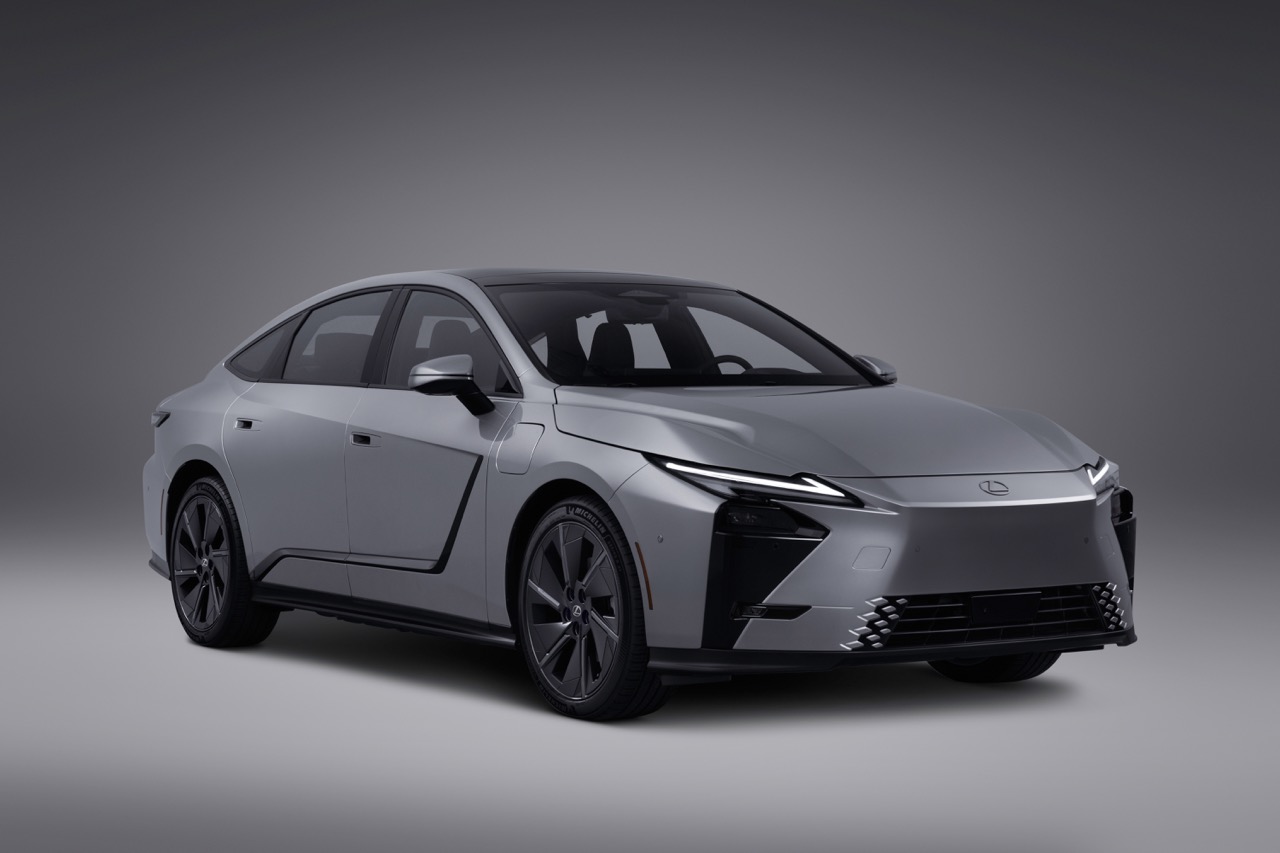
The 2026 Lexus ES is a big departure from the outgoing model, and now only comes as either a hybrid or an electric car. Curiously, the low-end EV version is now the cheapest of all the models.
The ES350h hybrid, which is roughly equivalent to last year’s ES300h (the gas-only ES250 and ES350 models are gone), makes a big jump in price up to $50,995. That base price is $6280 higher than before, which is likely accounted for by the new ES’s larger size and, presumably, additional standard equipment. Lexus hasn’t yet detailed what comes in the base Premium trim, or what you get by paying extra for the ES350h Premium+, starting at $55,795. The other significant change to the hybrid lineup is the option of all-wheel drive; it costs $1400 extra on both trims, and both the ES350h FWD and AWD models have 243 horsepower.
While EVs often cost extra compared to their gas-powered equivalents, the electric ES350e is the least expensive ES of the bunch. Starting at $48,795, it comes with front-wheel drive, 220 horsepower, and a claimed 300 miles of range. It’s offered in the base Premium trim, along with a Luxury trim for $57,195. To get all-wheel drive in the ES EV, you have to opt for the more powerful ES500e, which starts at $51,795 for the Premium and $60,195 for the Luxury. It has dual motors for a total output of 338 horsepower, but claimed driving range is lower, at 250 miles.
The loss of the Inflation Reduction Act probably plays to the benefit of certain automakers as it levels the playing field, and while $49k isn’t cheap, it’s the cheapest, and that’s quite the change.
IG Metall Loses Bid To Take Over Tesla Berlin
Last week, I pointed out that Germany’s biggest auto union, IG Metall, was trying to take over the works council at Tesla’s Berlin factory. It was contentious, but it sounds like workers there are fine with the status quo.
IG Metall, which has been fighting for more influence at Tesla’s gigafactory in Gruenheide, said it secured 13 of the works council’s 37 seats, leaving the committee’s majority in non-unionised hands.
Voting at the plant, the U.S. electric car maker’s only European production site, had started on Monday.
The current council is also dominated by non-union members, with IG Metall, which has for years been fighting for better working conditions, holding 16 of the council’s 39 seats, meaning an actual loss in representation.
Germans may be down on Tesla’s cars, but Tesla employees seem to like things the way they are.
How Long Will People Be Under Water?

Being underwater on a car loan means owing more in financing than the actual value of the car. It’s not great, and this usually happens in the hangover of some sort of financial event. In the case of the current market, a lot of this has to do with inflated prices during the post-pandemic period.
Is it turning around? Automotive News talked to some experts, and the answer is: Maybe, maybe not.
Scott Normandin, sales manager at Normandin Chrysler-Dodge-Jeep-Ram-Fiat in San Jose, Calif., said his dealership has seen “people coming in [$10,000], $20,000 dollars upside down.”
Nationally, a record 27 percent of all underwater new-vehicle buyers carried at least $10,000 in negative equity during the fourth quarter, according to Edmunds.
The problem was most acute on electric vehicles, particularly higher-end ones, Normandin said. He gave the example of an $80,000 EV for which “50 percent of the value is just gone” after two years.
“So I’m hoping it’s going to get better,” he said.
Patrick Manzi, National Automobile Dealers Association chief economist, presented negative equity volume and dollar amount data for new and used deals in a NADA Show speech Feb. 3. Those figures, from J.D. Power, followed a similar path as Edmunds’ statistics.
One possible out for buyers stuck on this cycle of needing new cars, but not being able to afford them, is leasing.
What I’m Listening To While Writing TMD
Who wants some bebop? Here’s Dizzie Gillespie doing “A Night in Tunisia” live.
The Big Question
What is stopping you from buying an electric car?
Top graphic image: Electrify America


What’s stopping me from buying an EV? I’m waiting for the new Scout Terra. (EREV version)
Name checks out
The fact that range/recharge times are still not competitive with gas cars on long trips, which is where the majority of my not-in-town miles are. I don’t commute, I can’t justify buying a new car just for 5 min in town trips, and I won’t replace my van unless/until I don’t lose any time on road trips by doing so.
As I’ve consistently said since 2015 or so, the first family-sized car with 500 miles highway range at 80 mph in 0 degrees F, or the first to add 300 miles of range in 5 minutes (under the same conditions) will go on my shopping list, but I can’t consider an EV before then unless my circumstances change (long commute again or something).
Makes two of us for the same reasons.
Though what WOULD get me to buy an EV is legit, take a nap while robo-Jeeves does the driving on the Interstate self-driving, and only on Interstates would be just fine. Not holding my breath on that. And there is the minor detail that my years of driving back and forth to Maine are likely ending sooner than later, as I am probably going to sell my place up there. At which point the need for that goes away too. Unless I need to carry crap back and forth, I fly where I am going.
Nothing will stop me from buying an EV, but I’m happy with my PHEV–and I’m actually running on battery power the vast majority of the time.
I feel like neither ICE or BEV drivers truly understand how great PHEVs are
My PHEV does about 36 miles in the summer and 30 in the winter. I can do a lot of my driving on that which is nice but I really wish it had more. 50/60 miles would be the ticket.
Longer range PHEV’s and EREV’s will provide a nice bridge to full EV’s for most people.
Absolutely, getting to the 50/60 mile range would mean most people would basically never use the gas engine in-town, with a battery a tiny fraction of the size of a full BEV. And then when you do go long distance you can refuel at any gas station in five minutes.
Not exactly a QOTD answer, but close:
I bought a used EV recently. I love, love, love it. Incredible deal. But it’s convinced me that car manufacturers, with the possible exception of Tesla and Rivian, have screwed up by attempting to convince us EVs can deliver the same experience as ICE vehicles. They can’t, and shouldn’t try: The experience is just fundamentally different–some things are far more of a hassle and learning curve (roadtrip planning), and some things are much better (a cheap nightly fill up if you charge at home, fast and quiet, etc). You have to have a different set of expectations and habits. That worked great for me once I wrapped my head around it, but I understand why people distrust manufacturers who are trying to sell EVs as equivalent to ICE cars. To that end, anyone who is going to try to rely on public chargers on a day-to-day basis should think it through very carefully–that makes sense if your mental frame is “cars go to gas stations” but I found trying to do that frustrating even though the charging infrastrucutre around me has been improving very noticeably even in the past few months. I installed a charger at home and now use it exclusively except on road trips.
This is an excellent comment.
Yes good comment! There is something about the past where 100-150 years ago when transitioning from horses to cars it was a mind shift and many people took a long time to make that shift.
Thanks! I think there may be a similar transition in how we (and manufacturers!) think about being a car enthusiast in the EV era. The EV doesn’t make fun roaring noises and is never going to give me the experience of shifting or fixing its engine, but instant, silent torque is its own fun and people are hacking the software settings on these things to tweak the details of their experience–that sort of thing can be a source of fun (especially if manufacturers embrace it by opening up software settings, for example). Our other car is 40 years old–it’s a different fun from the EV but both are fun in their way.
Yes and ICE cars may be just for hobbyists and collectors someday.
Maybe. Although I think when folks talk about that possibility they think it’s because “the govt bans new ICE vehicles” when in my mind a more likely scenario, at least in the US, is that ICE vehicles eventually become a small enough part of the vehicle mix that the gas/diesel distribution network starts becoming costly to maintain relative to the number of buyers and collapses–the opposite side of the economies of scale/network effect hill that EVs are crawling up now. To your point on horses above, a century+ ago one could once find multiple cheap places to feed and board a horse in my urban neighborhood, now I’d need to drive to the country and pay a fortune. It’s not just that people liked cars, it’s also that operating a horse became very hard to do unless you really love horses. Obviously we’re a long way from that.(Maybe Norway is getting there?) ..and when it happens I’ll hopefully still be driving my old ICE car for fun (just not far :))
Yes we could still enjoy this hobby (I love trail riding and overlanding in my JKU) I just want it as a hobby and not as necessary transportation. We need to get ICE cars to the hobby stage for sure.
I’ve always looked at it like the transition from manual to auto transmission in both function, and probably timeline. The manuals are still out there, and driven by enthusiasts, but it took a long time for the mindset to go from manuals are the base option and also more efficient to the place we are now with automatics.
when I got my i3 I pretty quickly started feeling annoyed that my gas van didn’t start each day with a full tank like the i3 did
100% this. Everyone thinks about range anxiety in terms of EVs on road trips but for me the far more common range anxiety was I’m late dropping off the kid and oh #$%^ my spouse didn’t fill up the ICE car yesterday and will we make it or do I need to stop and be even more late. Completely gone with the new magic fill-up vehicle. No-one thinks about things like that before going EV because we’re used to them.
Thank you. This is a good way to put it.
I got into a discussion in the comments yesterday with someone claiming that EV road trips were just as fast and convenient as an ICE. (And any counterpoint was apparently political propaganda?) And while EVs are better at a lot, road trips aren’t it. CAN do it, and being the SAME, are two different things.
Trying to claim they’re the same or better in all respects, and to convince people they are the same is a disservice to both the buyers and to EV adoption in general.
They are different. And that’s okay.
TBQ: I own two cars outright that fit my needs just fine.
If I had to buy something, my target budget would be ~$20k for the family car and <$15k for my commuter. There really aren’t any EVs that fit my family car needs at $20-25k currently, and while I could get a decent commuter EV for less than that I’m not giving up the benefits of not having a car payment without a much bigger reason than just EV. (plus I want to keep something with a stick for as long as possible).
It’s the same reason I’m not buying any cars at the moment – too much damn money for not enough improvement in my quality of life.
I want an EV, but my current gas car that is fully paid off for the last 7 years is too reliable! We’ll see how Slate pricing goes later this year.
We’ve had ICE, hybrid, plug-in hybrid and now,on our 3rd EV in our stable. We’re fortunate enough to have a place to plug them in at night and have both level1 and level2 (120v and 220v) charger cables in the garage. We love the instant torque and quiet ride of the EVs ( we’ve a 24 Hyundai Ioniq 6 limited AWD as our current ev). My take is this… IF you can plug in at home with a level 2 charger every night, and you do most of your travel locally with only rare road trips, a slight used EV with warrant left is a very good option. If you can have an ICE vehicle in your garage too then it’s a no-brainer.
If you can’t plug in at home with 220v, OR if your travel more than 200 miles a day then a PHEV would be ideal though I think the next gen phevs with range extenders (lightning replacement? Scout?) will be preferred over the current few phevs in the US. Phevs with their smaller batteries do fine with just a level 1 charger.
Having level 2 charging at home for full EVs ( or level 1 for PHEVs) is the single biggest advantage of having an ev. Without it, it’s a pain to deal with public charging, and it’s e pensive too compared to home charging. If you can’t charge at home, stick with regular hybrids
The thing stopping me from buying an EV is that I’m already leasing one, as I was one of the people who got an insanely cheap lease on an unloved EV. Once that lease is up, though, I’m totally going to buy a lease-return EV. Probably an Ioniq 6.
The main issue with buying an EV is need and cost. I have four cars, albeit two of which are old and high mileage, that are all paid off. One of them is my commuter beater that gets between 45-52mpg, so it costs me $30 in gas every week for my 60 mile daily commute. Until that car dies, the economics don’t make sense to get an EV. However, when it does die, a used EV may make more sense, except that I live in a rural area in the PNW and need more EV charging stations to be built between my house and major cities for my occasional trips to them.
What’s stopping me from buying an electric car? Cost. The higher up front purchase cost, the higher cost of repairs, the cost of tires.
And then there’s the software. Automotive software (all software really) is notoriously buggy, and if the whole car is software, who knows what will happen
I have not crashed one of my EVs so I can’t directly comment on repair cost but maintenance costs are way less than a gas car. Fuel is way less than a gas car, and tires have lasted as long as my previous gas cars.
(Comparing a Bolt EV to a Prius.)
From my research shows insurance is much higher for EV and many EVs eat tires. I love EVs but there isn’t one that meets my use needs
My real world experience shows insurance isn’t more for an EV and tire wear is the same.
The main thing that keeps me from buying an EV is the same thing that keeps me from buying a new car. I can’t justify the price of a car that interests me and fits my needs. I need 4 doors (kids) and I’d like it to be at least as fun as the car it’s replacing. That would mean with the cars I’m aware of are things like the CT5-V Blackwing, the RS6 Avant, or the Porsche Taycan/Panamera. These things are all six figures-ish and I’m just not ready to spend that sort of money on a new car (especially with things like kids and winter weather f-ing it up right from the start).
That Lexus is fucking ugly. Is this what an aspirational luxury car is supposed to look like now?
I’m fairly certain it was designed for the Chinese market as the first pictures last year were from China. Also, I agree with you.
it’s so hideous. good luck with that Lexus.
Absolutely terrible.
I remember back in 2021 when I got my Polestar 2 as lease and started to road trip, I had to plan very well my stops and alternatives were not many. Once I got stuck on a charger that didnt wanted to initiate the charge and I was able to swap to another unit. Today, I can just hit the road, enter my address, and the car will plan all the stops and alternatives are there, charger availability is not an issue as before, adding tesla chargers to the mix helped a lot, plus GM and Pilot partnership I could go very far just stopping at their stations.
The current issue is pricing but 90% of my driving is charging at home. Electricity prices does not fluctuate a lot compared to gas, having solar panels helps a lot with my own generation of electricity. The sun does not go to war or is affiliated to politics.
Someone should explain that to all of the idiots with anti-solar signs in their yards.
There isn’t an EV that meets my needs in my price range.
You said that 1000 times better than I did, with hundreds of fewer words
Cost has kept me from owning an EV. Mostly up front costs. The potential cost of replacing a battery at some point is also scary, but less so now than it was a decade ago. Lifetime costs of EVs are reportedly lower, but swallowing $3k for a charger on top of higher purchasing costs were a non-starter for us 6 years ago. The next time we need a new vehicle, I expect that there might be more viable options on the used market.
Not to nitpick but $3k for a charger is crazytown territory. Most don’t approach that.
If you live in a home with an unused dryer plug, it’s easy to install your own charger.
Sometimes. But that plug has to be in the garage already, and the wise move is to remove the plug and reuse the wire to hardwire an EVSE.
Our laundry room was alongside the driveway; we drilled a small hole and rewired the plug.
I spent $400 to add a plug next to the garage door, $25 on a mailbox to make a pass-through, and the charger came for free with the PHEV Pacifica.
I share Technology Connections’ frustration at the tendency to assume everyone needs MOST FASTEST CHARGER EVER when a 16 amp/240V line will serve most people perfectly well.
+1. His videos should be required watching for anyone wanting an EV. I overdid mine with a 14-50 just because I already had a panel with enough power in the garage but it wasn’t even remotely “needed” and a L1 normal outlet would have been fine 99.9% of the time.
https://www.youtube.com/watch?v=W96a8svXo14
Agreed. That’s my charger’s max rate, and I have it turned down to 12A most of the time to manage battery heating during charging. I’ve never been caught out with charging taking too long.
Honestly It really depends on the EV.
With where I’m living now I gotta drive 32 miles with a posted speed limit of 70 MPH along with 12 miles down dirt roads at city-ish speeds to get to and from town, not including the in town miles.
With my 2025 Nissan Leaf S that burns through more than half my range if I do the speed limit on the highway.
Luckily the highway is closed off on one end half the year, so we don’t get any thru traffic, and it’s all dotted yellow.
I like having half my battery left minimum so I can make an emergency run to the vet or hospital if need be.
I got a quote to wire up an 80 amp charger (to futureproof for a future BEV) and it was over $6K.
Back of the envelope here, a Leaf S with a 40 kwh battery would take 5 hours to replenish half its capacity at 16A and 3.5 hours at 24A. People are free to spend money how they want but you didn’t need an 80 amp charger even a little.
I don’t need an 80 amp charger for a Leaf. But for a future BEV it wouldn’t hurt.
Walmart is taking on the issue of EV owners who can’t charge at home. They are building out a network of EV chargers at every Walmart, Neighborhood Market and Sam’s Club location. They figure they can get people to combine shopping with charging, effectively nullifying the argument that renters need to waste at least an hour charging once a week.
The problem here, of course, is that I’d have to spend time at a Walmart.
and worse, time in Walmart parking lots.
You mean the place where I once watched 4 cars back into each other in slow motion? Yes, I would love to park my $60k EV that is totaled from a 2mph collision in such a place, thank you.
OMG! YES! When I go to Florida to visit my Mom I make the joke that every time I take her to Walmart I get to watch cars back into each other pulling out of parking spaces. I have also seen that happen twice in the time it takes me to walk across the parking lot.
My 86-year old mom has had two parking lot fender-benders in the past year….both in Walmart’s parking lot! LOL
I think EV chargers suffer from a bit of a visibility problem. It is hard to tell how prevalent or not prevalent EV chargers are, I know in talking to some people they are hesitant to buy one because they don’t believe there is infrastructure even in places where there fast charging locations. I think there is a few reasons for this. EV charging stations are often tucked away in corners of parking lots instead of in corners of high traffic areas like gas stations. Additionally they typically do not have as much visible road signage or advertising as gas stations since they are typically found via app or vehicle nav system. For these reasons I think having charging stations prominently featured at gas stations and highway rest areas will do more to drive EV adoption than other types of advertising. I have definitely started to see more of this in the Midwest but there remains a ways to go.
I think this is a really good point, even here in Seattle where EV adoption is quite high and there are even city run charger locations, the only ones that are readily visible are Tesla stations-which are a bit sporadic.
yes! and also for L2 chargers. half the time I know there is a charger somewhere in the parking lot or garage but I can’t find it.
“One possible out for buyers stuck on this cycle of needing new cars, but not being able to afford them, is leasing.”
Or, grow the F*** up and start living within your means. Drive a beater until you are rich, then you can spend as much as a condo on a car. No sane person cares what you drive.
Unfortunately, there’s like three sane people left in this country.
Torch omitted, obvious by the gas can next to the driver’s seat in the 2CV. Not to mention the chainsaw incident.
I feel like it almost goes without saying that no one who works for this site is part of that group of 3, which is why we’re all here. 😉
QOTD: Nothing, just need to sort the shit ones from the actually good ones. It’s remarkable how badly legacy automakers managed to screw up the EV transition and churn out piles upon piles of crap.
I don’t want a good EV, I want a good car that happens to have an electric drivetrain. Automakers should ken the difference.
Even if someone is underwater and somehow signed up for an 8 year loan, the absolute worst case is they won’t be underwater for more than the next 8 years while thye make their monthly payments and they even have a car they can drive that whole time! If, that is, they manage to exercise just a little self-control and not try to trade that thing in which I realize is a big ask for some. But at root it’s a problem that literally solves itself.
What is stopping you from buying an electric car?
Wanting a car, not a toaster.
If someone made an EV as good as this toaster I would buy it in a heartbeat.
Does Tommy from TFL know about this? He’s looking for the perfect toaster.
Was thinking this the other day, the used EV market may drive a real consumer demand driven upswing in EVs as more and more off-lease deals appear. Took a quick look the other day and realized you can get an Audi E-tron GT lightly used for not much over $30K which is really quite cheap for how much car you’re getting.
I would buy an EV is they were cheap entry level cars and I do not want a used one as they are often in need of new batteries (I know that batteries will be getting better in used cars) I would like one as a third car for in town driving.
Used EVs don’t often need new batteries. Used Nissan Leafs often need new batteries because Nissan was too cheap to use a liquid cooled battery.
TBQ – I have done the math for my driving habits and how much I’m willing to spend on a vehicle.
Going EV for me means paying quite a bit more money for less room, fewer features, settling for looks I don’t particularly like, and altering my daily habits.
If there was a vehicle that I loved the looks of, had the cargo area I want, and was closer to being equal overall costs, it would be a serious consideration.
Based on my current car, it would never payoff to have an EV for the distances I drive over a basic ICE vehicle.
I would need to drastically increase my driving to justify an EV.
Ditto
and ironically, less convienient to drive those increased miles
I don’t need one? I don’t hate them, actually if it could get me to work and back M-F about 50 miles per day, and charge in my driveway overnight, I wouldn’t hate a commuter. Drive the fun cars on the weekends.
But I already have 4 cars and I’m happy with them all at the moment. (But if the Crosstrek went away for some reason, and I could find a reasonable $ EV for commuting I’d be tempted.)