

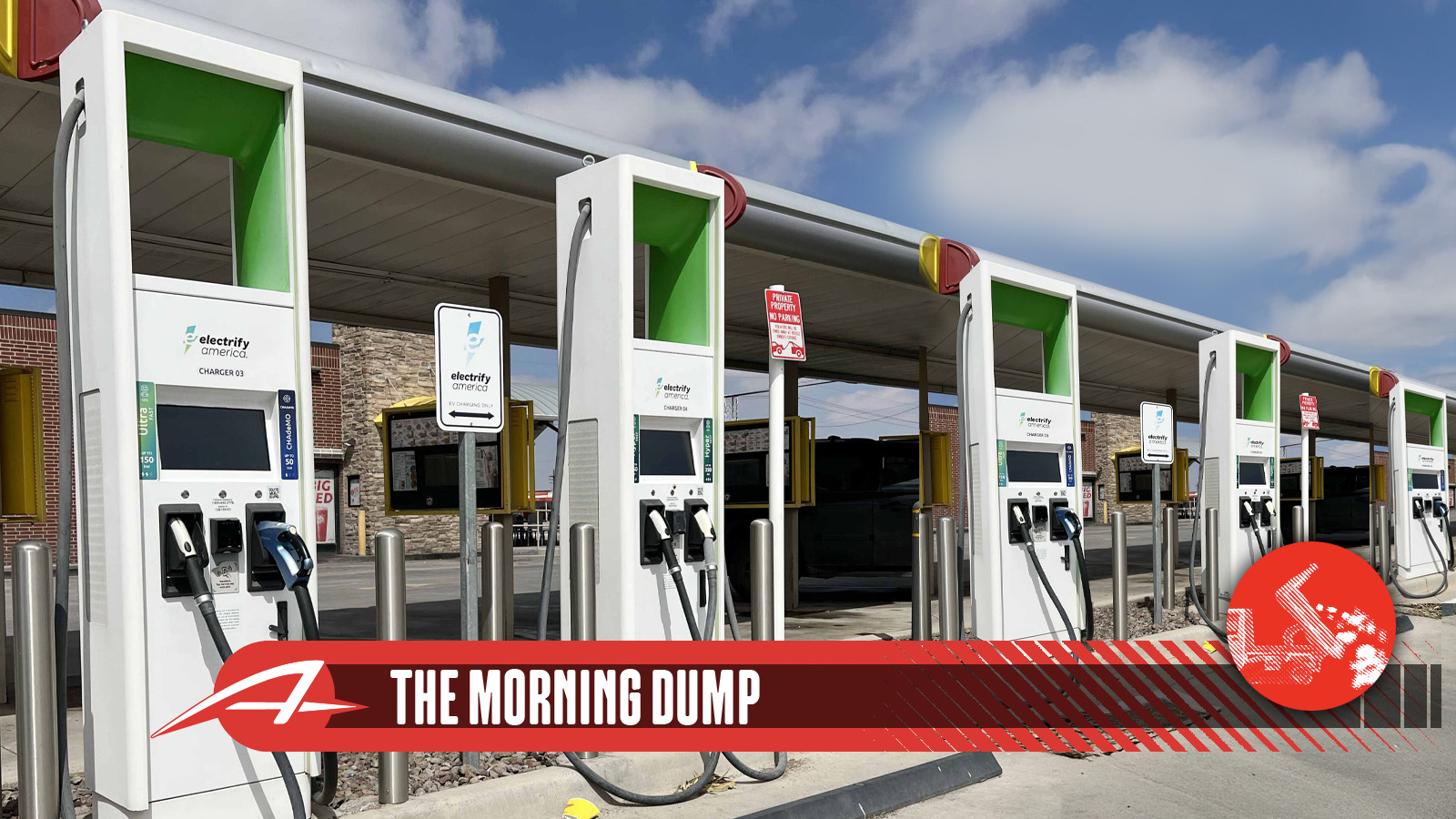
If I could go back in time to college, I probably would stop my ex-girlfriend from serving me that vodka drink she thought up freshman year. I’d also take more economics classes. I love the merger of data and human behavior, as well as the fact that even with data, no one ever seems to agree on anything.
EV fast charger build-out is a great way to understand the EV market and is, in a way, even more powerful as a data point than, say, sales. America keeps adding chargers and keeps needing them, even as pundits (sometimes me) keep reminding us that EVs aren’t as popular as everyone once thought. What’s going on? The Morning Dump is going to dive into it.


Part of EV demand waning has to do with cost, and Lexus has an interesting answer: The EV version of the new ES is cheaper than the hybrid version. That might be a first! What’s not a first is yet another market cycle where drivers are super underwater. When will it end? Maybe soon. Maybe never.
And, finally, Tesla holds onto its management-friendly union for a little bit longer.
Here Comes The Used EV Wave

There’s a great Bloomberg article out this week that points out a fact that may surprise you, which is that not only are more EV fast chargers being built, but demand continues to grow at a quick pace:
US chargers have become more reliable and far faster, which encourages more people to use them, according to Paren, a data platform focused on EV infrastructure. Charging networks added about 11,300 ultra-fast cords across the US last year, up 48% from 2024. And the high-speed buildout is only accelerating: In the fourth quarter, nearly one in four new chargers were capable of pumping at rates of 250 kilowatts or more, which can typically add 100 miles of driving range in less than 10 minutes.
Despite the uptick in the number of chargers and their ability to sling electrons faster, the average US charging station is still fairly busy most of the time.
The number of charging cords in the EVgo network has roughly doubled in the past three years. Yet each cord, on average, has steadily pumped more electrons in a given period.
There are a few obvious reasons for this. The first is that EV charger demand is about the total number of EVs on the road, not new EVs sold. Even if EV sales drop by half this year, that’s still more than 600,000 new vehicles out there driving around. Another reason for more chargers is that there are still federal and state funds flowing into projects, though politicians (primarily from the Republican party) have tried to curb some of that.
The biggest reason why I expect growth both in usage and distribution has less to do with how many EVs there are and more to do with who is buying them. Electric cars remain popular (and often required) for ride-hailing services, and those users tend to rely on fast-charging.
Maybe more important is the used EV market. As I’ve mentioned before, a quirk in the way the Inflation Reduction Act was enforced led to a huge number of cheap EV leases. Those leased EVs are starting to be returned, and now a bunch of consumers are going to have access to affordable, high-quality electric cars.
Those consumers are also probably more likely to live in apartments or other places where they don’t have home charging access. I live in a building, and neither of my parking spaces has charging as an available option. If I were to buy a used EV, I’d be forced to use the local public chargers.
This is one of those outcomes that’s good for the larger EV market, as the increase in demand means an increase in chargers, which helps solve one of the concerns that would-be buyers have about charger access.
The Lexus ES EV Is Cheaper Than The Lexus ES Hybrid
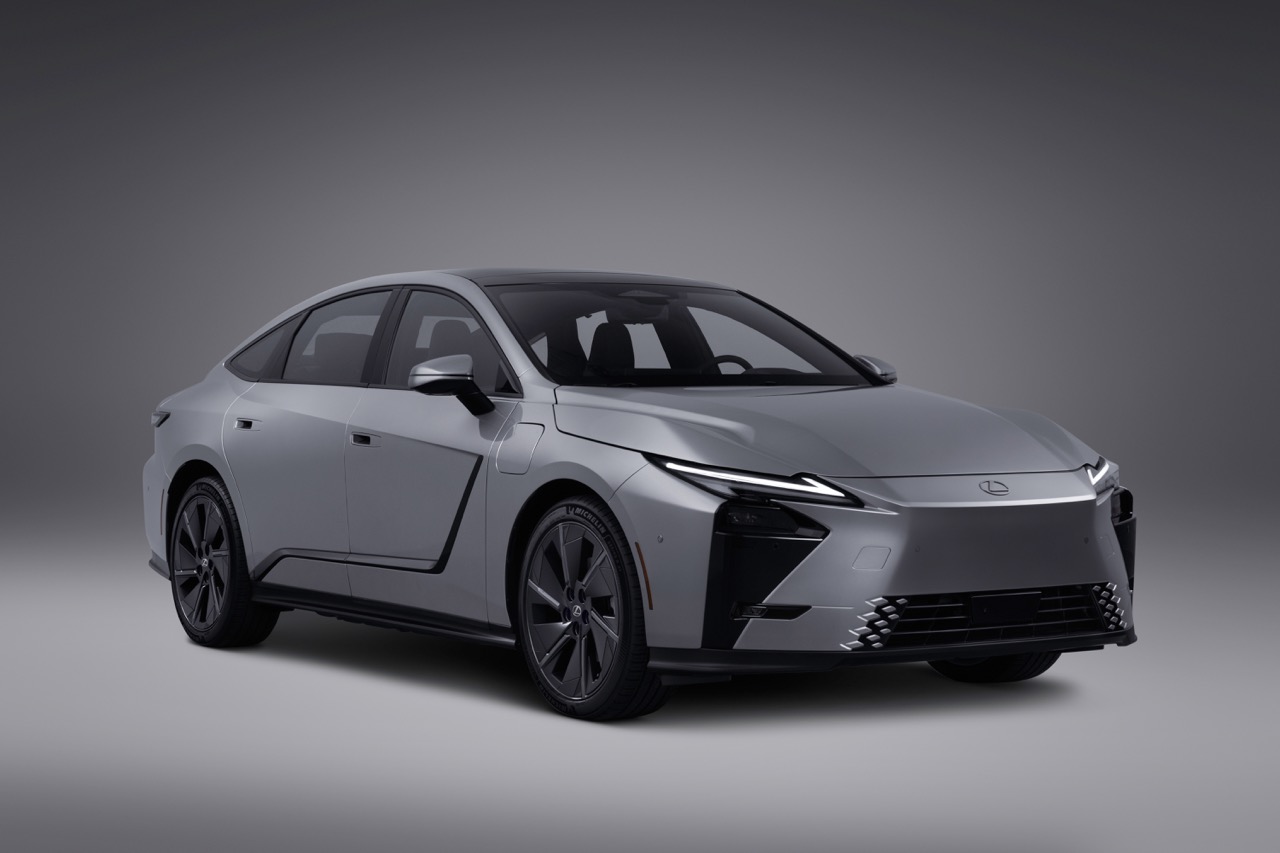
The 2026 Lexus ES is a big departure from the outgoing model, and now only comes as either a hybrid or an electric car. Curiously, the low-end EV version is now the cheapest of all the models.
The ES350h hybrid, which is roughly equivalent to last year’s ES300h (the gas-only ES250 and ES350 models are gone), makes a big jump in price up to $50,995. That base price is $6280 higher than before, which is likely accounted for by the new ES’s larger size and, presumably, additional standard equipment. Lexus hasn’t yet detailed what comes in the base Premium trim, or what you get by paying extra for the ES350h Premium+, starting at $55,795. The other significant change to the hybrid lineup is the option of all-wheel drive; it costs $1400 extra on both trims, and both the ES350h FWD and AWD models have 243 horsepower.
While EVs often cost extra compared to their gas-powered equivalents, the electric ES350e is the least expensive ES of the bunch. Starting at $48,795, it comes with front-wheel drive, 220 horsepower, and a claimed 300 miles of range. It’s offered in the base Premium trim, along with a Luxury trim for $57,195. To get all-wheel drive in the ES EV, you have to opt for the more powerful ES500e, which starts at $51,795 for the Premium and $60,195 for the Luxury. It has dual motors for a total output of 338 horsepower, but claimed driving range is lower, at 250 miles.
The loss of the Inflation Reduction Act probably plays to the benefit of certain automakers as it levels the playing field, and while $49k isn’t cheap, it’s the cheapest, and that’s quite the change.
IG Metall Loses Bid To Take Over Tesla Berlin
Last week, I pointed out that Germany’s biggest auto union, IG Metall, was trying to take over the works council at Tesla’s Berlin factory. It was contentious, but it sounds like workers there are fine with the status quo.
IG Metall, which has been fighting for more influence at Tesla’s gigafactory in Gruenheide, said it secured 13 of the works council’s 37 seats, leaving the committee’s majority in non-unionised hands.
Voting at the plant, the U.S. electric car maker’s only European production site, had started on Monday.
The current council is also dominated by non-union members, with IG Metall, which has for years been fighting for better working conditions, holding 16 of the council’s 39 seats, meaning an actual loss in representation.
Germans may be down on Tesla’s cars, but Tesla employees seem to like things the way they are.
How Long Will People Be Under Water?

Being underwater on a car loan means owing more in financing than the actual value of the car. It’s not great, and this usually happens in the hangover of some sort of financial event. In the case of the current market, a lot of this has to do with inflated prices during the post-pandemic period.
Is it turning around? Automotive News talked to some experts, and the answer is: Maybe, maybe not.
Scott Normandin, sales manager at Normandin Chrysler-Dodge-Jeep-Ram-Fiat in San Jose, Calif., said his dealership has seen “people coming in [$10,000], $20,000 dollars upside down.”
Nationally, a record 27 percent of all underwater new-vehicle buyers carried at least $10,000 in negative equity during the fourth quarter, according to Edmunds.
The problem was most acute on electric vehicles, particularly higher-end ones, Normandin said. He gave the example of an $80,000 EV for which “50 percent of the value is just gone” after two years.
“So I’m hoping it’s going to get better,” he said.
Patrick Manzi, National Automobile Dealers Association chief economist, presented negative equity volume and dollar amount data for new and used deals in a NADA Show speech Feb. 3. Those figures, from J.D. Power, followed a similar path as Edmunds’ statistics.
One possible out for buyers stuck on this cycle of needing new cars, but not being able to afford them, is leasing.
What I’m Listening To While Writing TMD
Who wants some bebop? Here’s Dizzie Gillespie doing “A Night in Tunisia” live.
The Big Question
What is stopping you from buying an electric car?
Top graphic image: Electrify America


Also, that new ES is hideous
The Grand Cherokee was an appropriate header image for the negative equity section.
I’m only waiting for a decent V2H system (that’s compatible with more than one vehicle) to use the car as a house battery. The day that happens, it’s on!
What’s preventing me from buying a used EV is that we have too many vehicles already. Most of them are old and aren’t very nice but I like to see them through to the junkyard, usually by way of rust. It sounds snobby but I don’t want to waste my time selling any of them and having to deal with the clientele for a $2-3k car.
Once the fleet is paired down I’ll get a cheap Leaf or something to dabble with. Something a bit nicer than that one David Tracy bought 🙂
For now, the only thing stopping me from buying an EV is need. We have a hybrid (RAV4) that does okay mileage-wise, and the truck (2012 F-150, 5.0 liter V8) though aging quickly is doing fine for what we need it for.
Since the truck is going to be the next thing up for replacement, the issue is going to be cost and range while towing considerations. A 28′ camper and a 20′ flatbed that can carry up to 14,000 lbs do pretty brutal things to an EV’s range, so I’m hoping something electric with a range extender will be a viable option. Oh, and I don’t want to shell out six figures for it.
Otherwise, I’ll have to stick with dino fuel.
I think you’ll be waiting until at least 2035 before we get something realistic that can do that. Good towing, good range and low cost…right now you can only get one at a time, hopefully soon two but good luck with all three.
I think you’re right, especially considering we always buy used for the trucks. The wife’s commuter is typically new with a warranty, but I just can’t justify the cost of my first house (a ~$60,000 starter home, 30 years ago) for a new truck.
The prices these days are absolutely insane. In 2014 I bought a Silverado 1500 LT for $32k out the door with a couple minor options. Based on today’s pricing, I don’t think I will be buying a brand new truck anytime in the near future.
Perhaps the question should be “what vehicle will excel for 355 days a year” and just rent a beast for the 10 days you drag the camper.
It’s amusing to watch someone pay $90k for an F250 and get like 11mpg just so they can drag a 5th wheel around for 10 days a year. For the remaining 355 days you shell out big bucks for fuel, have a tough time finding parking spaces that fit, and…checking notes…pay hefty insurance rates.
For our daily commutes, the EV is cheap and reliable to run. If we go camping, we rent a camper van. In the end we are many dollars ahead and don’t have the depreciation and headaches of owning (I’m looking at you Mercedes)
I’m 45 miles from the nearest place I could rent a truck, so the logistics for what you suggest just aren’t viable.
I work from home, so mileage isn’t a big issue, but I do need something while my wife has the RAV4 for her commute and the Miata has been put away for the winter.
It makes no sense to drive 45 miles to get a truck, drive 45 miles back home, load up a pile of branches from the yard, haul it to the local tree dropoff, then drive another 45 miles just to return it and collect the other car I used to get to the truck rental place, only to have to blow another 45 minutes/miles to get home. Pretty much ditto for the home improvement material runs. In my life, sheetrock and plywood are a surprisingly frequent thing.
For most people I’d suggest an SUV and a utility trailer, but my “toys” put me a little beyond that.
I’m just one of those people that legitimately need a pickup.
Good luck finding a rental truck that allows you to tow a camper (or anything, really).
Insurance is lower for my truck than anything else I own, so while fuel is indeed expensive, I don’t really buy the rest of your criticism.
Not criticism. Clearly your use case does not match the model I put forward.
My office has a parking lot full of expensive staff pick up trucks that haul exactly zero. In fact, they borrow their uncle’s beater to haul lawn waste and their trailers. This is what I built my observation around.
Carry on.
QOTD: I have 1, but won’t be getting a second until there’s some sort of “soul” I can feel in it while driving. I haven’t driven one that makes me feel I’m part of the machine.
TBQ: We’re looking to replace my wife’s Ford Focus, which while still running fine enough, is getting long in the tooth and with a 1 year old we could use one vehicle that’s a big larger (mine is a Mazda 3).
While I’m not inherently opposed to an EV, I’m not considering one because on top of being more expensive than a comparable ICE/hybrid, they’re at best on par for energy/fueling costs, and typically worse. Taking my 2018 Mazda 3 as an example, I get 30-32 MPG, probably 60/40 highway/city split. Averaging $0.25-$0.30/kWh here in RI, the breakeven for a fairly efficient EV is about $3.00/gal. Which up until this Iran fiasco, we’ve been below for a while. So the only real cost savings is in oil changes, and the occasional brake job.
So instead I’m considering a hybrid, probably Toyota. If we had solar then obviously the math is a lot different, but that’s not in the cards right now.
Yeah we’re at about $0.27/kWh here right now. The math would be far, far different if the rates weren’t so high.
If we lived in a place like Plattsburgh where rates can sometimes be as low as 0.05$/kWh (because they have a hydro plant) you’d better freaking believe I’d be more open to an EV, lol.
add up how much money you’re spending on oil changes and other maintenance.
if the fuel costs are break even, you’ll save time on your day to day leaving home with a fully charged battery every morning and not having to go to gas stations.
and you’ll no longer have an oil change every 5k miles. that should also save $150-200 a year.
And how about insurance and tires? Those were the big nasty surprises for my buddy who picked up a gently used Model S.
As to oil changes 7.5-10k is what is recommended. A DIY job with Supertech oil and filter costs about $30, bringing the annual cost to as little as $30-60 and maybe 30 minutes of work, far less than going to a shop.
extending oil changes to that length is a choice, and I personally think it’s a foolish one.
as for doing oil changes yourself… if you value your time at $0 you can definitely do oil changes for less money. Everyone has to make that decision for themselves.
insurance is definitely something people need to research, but it varies highly from person to person and geographic area.
my anecdotal data point is that my insurance went up about $20 a month from a 10 year old used car to a brand new EV.
“extending oil changes to that length is a choice, and I personally think it’s a foolish one”
Yeah, well, you know, that’s just, like, uh, your opinion, man!
– The Dude
It’s what the service manual calls for and that was assuming 20 year old oil specs. Oil has only improved since then. I’ve been doing extended oil changes for years on my cars with no issues. In fact the factory set valve clearances on my Honda were still center of spec even 20 years/165k later. IMO 5k oil changes is a foolish waste of money on cars that don’t require it, much like putting premium in a car that calls for regular.
But you do you.
“if you value your time at $0 you can definitely do oil changes for less money. Everyone has to make that decision for themselves.”
Most people ludicrously exaggerate the fiscal value of their free time. Nobody short of a CEO makes enough money to justify paying someone else to do something as easy as an oil and filter change.
If however someone wants to pay a stoned, high school dropout a hundred bucks to do 15 minutes of stoned, high school dropout level work, part of which is toking a vape while waiting for the oil to drain go ahead, it’s their hard earned money after all.
Those same deluded folks also grossly underestimate the time it takes to actually have a shop change the oil which can get into hours depending on the distance and the wait. In such cases DIY IS the time saver. And sitting in a waiting room isn’t IMHO quality time spent. But of course it’s your free time to spend as you want.
“Averaging $0.25-$0.30/kWh here in RI, the breakeven for a fairly efficient EV is about $3.00/gal.”
Also factor in charging losses which can be substantial.
Does your utility offer time of use pricing or special EV rates if you charge off-peak?
A lot of utilities do.
They do not, it’s a flat rate at all times of day/night. The utility company is in the middle of rolling out smart meters (which has it’s own share of drama from the tinfoil hats), so it’s possible once that’s complete and the utility has a more granular view of usage, that they would roll out something like that. Which I am in favor of, because that would certainly make the math on an electric car more favorable.
Yes, smart meters are a requirement for time of use. They also allow utilities to more accurately charge for power. It is those few peak time hours that are REALLY expensive for the utility.
> now a bunch of consumers are going to have access to affordable, high-quality electric cars
As well as the Blazer EV/Honda Prologue.
A BEV was perfect for me now, but range, particularly when towing is now an issue, along with the lack of trailer friendly charging infrastructure.
Range Extended EVs solve that issue though (if built right).
The other things stopping me from buying one are unrelated to the electric drivetrain.
I need a lot of space for the family (2 large dogs, 2 adults including me, and a baby), if I’m getting a new full size pickup or full size SUV it needs seating for 6, and considering all the pics I’ve seen of the Ram 1500 REV are Sans front bench, and the legacy F-150 Lighting was never made with a front bench, I sadly think there won’t be a 6 seat option anytime soon, and Scout is having a hard enough time brining their range extended pickup to market, so I’m not holding my breath on that one either.
So I got an order for a Ram 1500 Crew Cab Long Bed Big Horn with the Hurricane I6, 6 seat interior, and 4 corner height adjustable air suspension.
Wow, that new Lexus ES is…not very attractive. I’d buy an EV if I were compelled by one that comes to market in the segment I’m shopping in. I find the Slate truck pretty compelling and I plan on looking into it when they actually exist. I don’t think I’m quite done with ICE cars though, I like interacting with an engine, so I need to find a way to do both things.
Nothing, I already have one, and will probably be replacing a 5th Gen 4 runner with the R2 as fast as I can possibly do so.
What keeps me from buying an EV? The same things that keep me from buying anything that’s not at least 15-20 years old…I just can’t justify the cost when my commuting/transportation needs can be completely covered by old, sub-$5000 beaters. Plus, I’m pretty sure my Miata & Baja are forever cars for me at this point. No interest in taking on a monthly payment. There’s nothing I need that the cars I have don’t cover, and the luxuries that a newer car might offer over those just aren’t worth spending any money on. And that’s without even mentioning my complete disinterest in dealing with controls moved to screens instead of physical buttons, or the fact that installing a charger is not an option at my home.
Yup. What this guy said. I’ve put 90K on a car I paid under $2500 for in 2020. I’m not directly opposed to an EV, but I have no need to rush out and get one either. I’m much more likely to swap EV bits into an old car than I am to buy a modern EV.
Nothing, I have an EV and I won’t go back for my DD. It’s too easy and too convenient to never have to worry about maintenance or fluids or anything else like that for my commuter.
Nothing as my wife daily drives a VW ID.4. We’ve had it just over three years and her daily commute is about 70 miles round trip. She absolutely loves the car and I love the fact that all I’ve done with it is recall work (pesky door handles) and get new tires. So far the maintenance has been next to nothing.
While I’m not in the market, I’ve been encouraging a friend who is in the market for a new car to seriously consider a used EV. I’m seeing ridiculous deals on used ID.4s with low miles and all the bells and whistles (e.g. the big glass roof). Polestars too. His wife is an EV skeptic for some reason. I’m trying to have her talk to my wife about the ownership experience. I think there’s just a fear of something new with the worry of having to understand how to deal with this new thing. We’ll see.
Trust me when I say that the last thing you want in a VW is their “big glass roof” It is the thing I hate most about my GTI
Well, my wife has had that roof for three years and loves it. Especially on sunny winter days, it keeps the cabin warm without using too much of the battery. No issues whatsoever with it.
Cost. Waiting for an affordable EV truck. Rivian’s are great, but not 80K great. Waiting for either the Telo to come out or Ford’s new EV. I’ll likely buy whichever gets to production first.
My daily driver is an EV, but I keep an ICE vehicle mostly because of charger availability. Chargers are readily available in cities and along interstate highways, but less so in rural areas or places off the beaten path. I haven’t found places I can’t get to with my Tesla, but I have been in many situations where certain routes and destinations require a lot of planning. I don’t like planning.
The other major barrier is that I don’t like most EVs available right now. I view most as utilitarian transportation appliances that are boring once the novelty of EV ownership wears off. My Model 3 is a great daily driver but I can’t say I’m very passionate about it. Unfortunately, it is probably the EV I find most interesting at the moment.
This actually brings me to my current EV/ICE dilemma. I acknowledge my Model 3 is the best solution to my daily driving needs, but I really want to trade it in for a manual transmission Wrangler. The Jeep would be less reliable, less comfortable, and more expensive to maintain. I also feel a bit guilty about swapping an EV for an ICE vehicle. Still, after years of driving transportation appliances I’m ready to daily something interesting again.
Yeah reason why I stayed away from the Tesla’s as they just strike me as an appliance. I really like my Polestar 2 as a daily as it feels more like a car to me then an appliance. Though I do still have 5 ice vehicles I can drive at my disposal 3 of which are manual. I am hoping to have my truck back together this weekend so I can get one of the manual vehicles out next week as we will have nice weather after a rainstorm here that is washing away all the salt.
Also I had a buddy that had a recent 2dr wrangler (probably a 2022 or so model year) with a stick shift which he really enjoyed but he traded it and his Subaru in recently for a gladiator as he wanted a truck to pull his side by side and he has 2 kids.
I have 2 EVs and charge at home. I think I’ve been to a DCFC 5 times in 2 years. we got the free EA 500 kwh which I still have not used up.
going to a gas station to fill up a rental car was a PIA
Edit:
Also, more L2 chargers is what is needed for everyday use. There are not enough that you can rely on them when going out locally. Maybe 1 or 2 in a location. I don’t need a DCFC when going to the movies or dinner at a restaurant. plug in for 2-4 hours gets me enough of a charge to get home or my next stop and keep the charge topped off.
I’ve had my Mach E for a little over a year. Bought it new at the end of 2024. Love it for what I needed it for; 70 mile round trip, daily commute. That’s all I use it for. Well, that and errands around town. It does not ever get more than 50 ish miles from home. I charge for free at work, but do have a home charger just in case.
So, for me, an EV was a no brainer when I needed a new vehicle.
TBQ –
Nada. I bought by first electric car in the fall. That’s after 6 years of owning a PHEV, and in May my electric motorcycle will turn 10.
I eased into it. The motorcycle never had to be relied on as a daily, and the PHEV was just a family hauler that let me see how easy at home charging is. Everything went peachy, so I took the shot with the EV.
First road trip needing public chargers was last week. It was about what I expected. Charging took exactly as long as estimated, but each time there was a short line, adding about an extra 10 minutes. The lack of infrastructure is the bottleneck, not the cars on offer.
Nothing. I bought mine (used) last June and it is fantastic. I only waited because the car I already owned was running just fine and had long been paid off. I had some “life changes” that pushed me to throw caution to the wind and get something new.
I have family that live a few states away and was was concerned about charging on the trips but that has proven to be a non-issue. It makes the trip a bit longer but it’s actually much nicer adding a few extra pit stops to take a stretch and use the bathroom. I overdid (as usual) the home charging setup with a 14-50 outlet (9.6kw max) which easily handles charging – a regular outlet would have probably been fine, too
Otherwise it’s just like every other car except smoother, quieter, and (probably) better around-town acceleration.
I was also a little concerned when the other half wanted to take ours down to Florida from Chicagoland in December. It did make the trip take a little longer but really wasn’t as bad as I expected as we used Tesla super chargers pretty much the whole way down (expect for one stop that had a free fast charger). It gave us time to stop at some antique stores in Tennessee also a mall in Tennessee on the way down. We also stopped at a few buckees and didn’t have to feel rushed going through there like most people.
My only complaint is I wish my car had a little more range so I wouldn’t have had to make as many stops but for her it was nice as she is one that cannot seem to hold her bladder for more then 2 hours while my on the other hand I could do a whole 16hr trip with no bathroom break hah.
As an EV would be a commuter vehicle for me, cost.
I’m not looking to replace my primary hauler/tow pig, I’m looking to commute for less than I pay for gas in my paid-off primary hauler/tow pig
I’ll add that there’s a fairly good chance that my wife’s next car will be an EV, as she’s planning to run her optima for another 3-4 years.
Do this survey by-brand and model, and then tell me which people are trading in vehicles that are this far underwater.
Confirm the thought that everyone has online: is this a case where Stellantis-owners and pick-up trucks owners under- or over-represented here?
Given the depreciation curves on trucks, I would guess they are underrepresented in the numbers.
Seriously, price out a 3-5 year old truck.
I’ll counter with how much damage an early-trade of a 96month financing option is capable of doing
But that’s going to be the case for anything financed over that term – nothing specifically truck related there.
Exactly, so let’s see the data.
It’s a reflection of the buyers & market conditions; not the necessarily the vehicles themselves.
“What is stopping you from buying an electric car?”
The fact that there’s nothing appreciably wrong with my old Jag and there’s no way I could afford to replace it with anything nearly as nice. My commute is 1.5 miles each way, which makes me a perfect candidate for an EV, but I fill up so infrequently I forget which side of the car the filler is on, so I’m not sure the difference in fuel cost would be worth it. I’m not against EVs at all but what’s the compelling business case for it in my situation.
Plus, everything else has gotten so expensive. My car works, I’ll drive that.
Stated in here before got my Polestar 2 last year after trading in a Miata RF that had the trans replaced under warranty which made me lose hope for any long term reliability and also due to the fact I currently can charge at work for free and commuting almost 100 miles a day even if charging at home that is much cheaper then driving a car that requires premium. Once this gets long in the tooth (or the fiance’s TourX does) I’ll look at getting another EV as long as I still have a home I can charge at hah.
I’m not in the market for a car right now, so that’s the real reason. If I was, I’d consider it. But the reality is, there’s no EV minivan (no I will not be counting the POS ID.Buzz with it’s useless range and insane price tag). I cannot replace my current vehicle with anything on the market. So I guess that’s that. And even if say, Toyota, came out with an EV Sienna, I probably wouldn’t be able to afford it anyway, as I could barely afford a base model hybrid one.
In the event that I was replacing the van with a commuter type vehicle, I would consider one. The combination of the brutal cold here in the winter makes EVs a little less appealing though, as well as my driveway situation, which is one car wide and because of how it runs along the house and the roof pitch, I’m either parked on one end (near the garage past the house) or near the sidewalk. I’d need to be able to run something like a 50ft cord. Probably not impossible? Also would need to run a 240V line out to the driveway… somewhere? It’s a non-zero effort when I could just buy a hybrid and not have to invest in anything.