

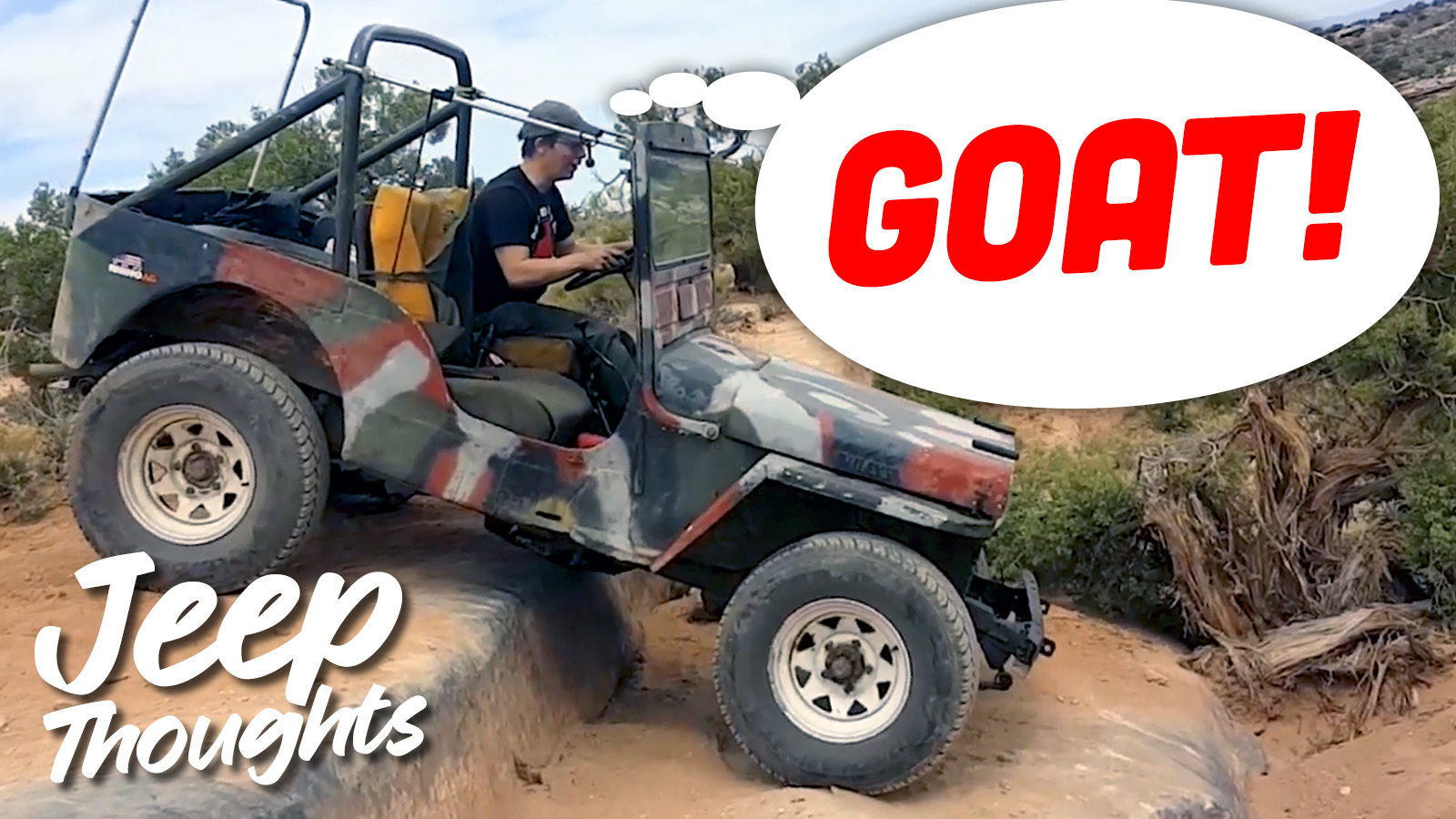
On this week’s installment of “Jeep Thoughts With David Tracy,” I want to talk about why I think the 1945 Willys CJ-2A may be the greatest off-road vehicle platform of all time.
The World War II Jeep may be the greatest Jeep of all time, but it’s not the best Jeep of all time. In fact, its successor, the civilian CJ-2A, was better. I am not disparaging the mighty Willys MB; it helped allies win World War II, and it set the standard for every single 4×4 to follow. The Land Rover Defender? The Ford Bronco? The Toyota Land Cruiser? The Nissan Patrol? All of these legends were inspired by the WWII Jeep.


But if I had to choose one vehicle to use both around the farm and off-road, I’d pick the civilian model that debuted for the 1945 model-year, the CJ-2A. It got rid of the Willys MB’s low-hanging fuel tank:
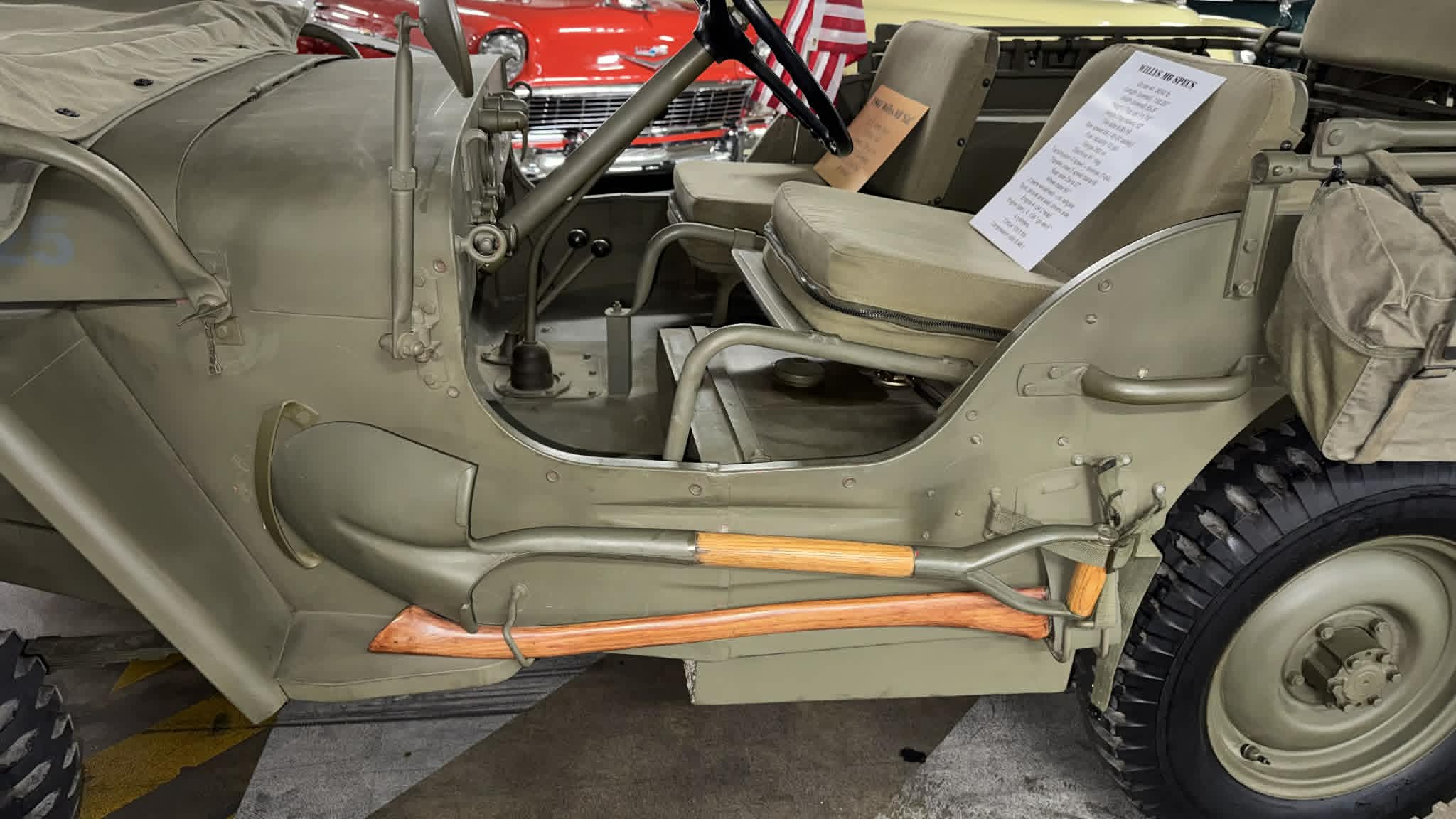 That tank, by the way, is pretty annoying to fill:
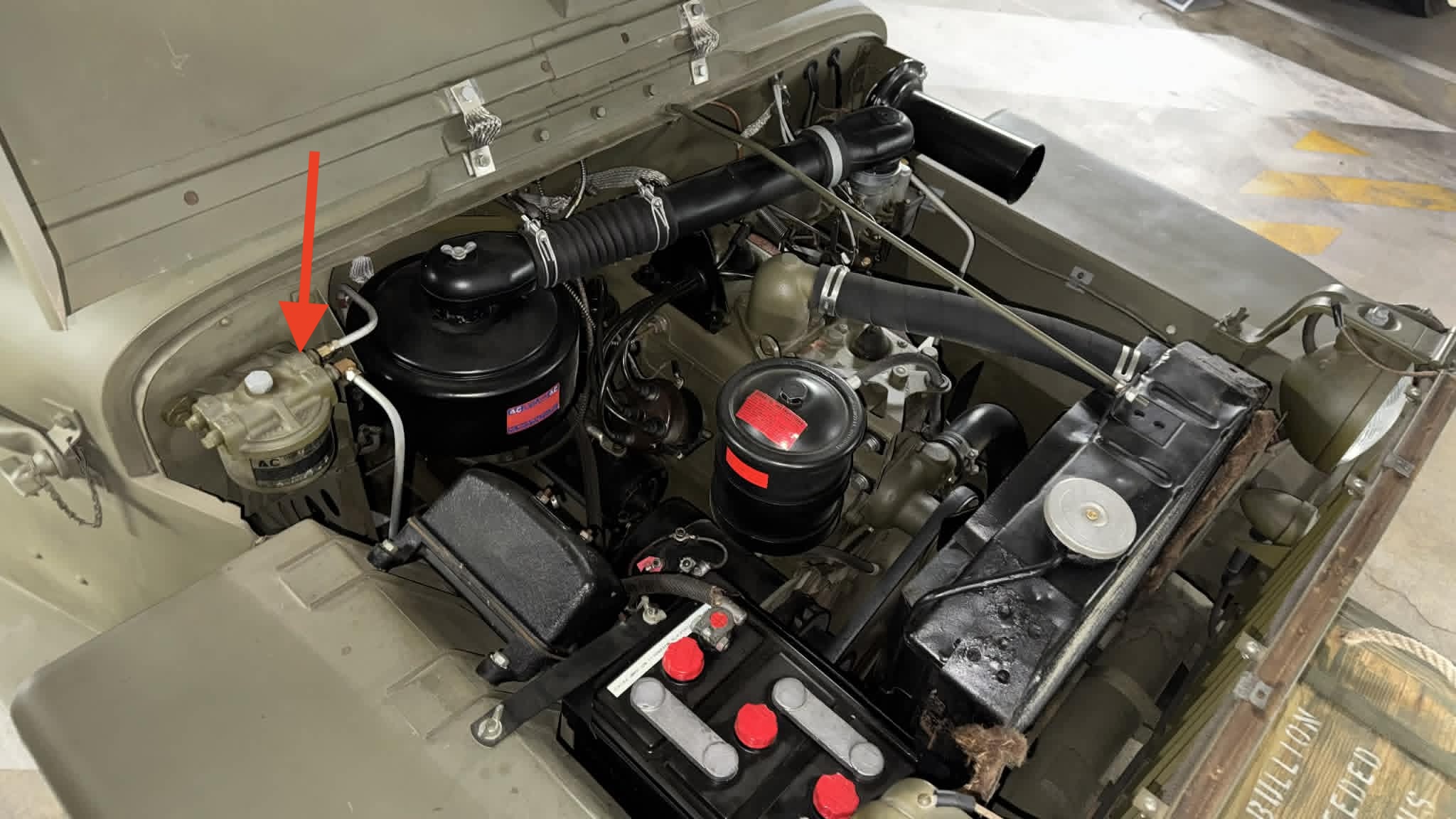
It also deleted the needlessly complex fuel line that goes from the tank, up the firewall, around the engine bay, and finally into the carburetor:
The CJ-2A bolstered the MB’s frame quite a bit by boxing the C-channel, it added a super useful rear tailgate where the MB had none, and — crucially — the CJ-2A’s T90 manual transmission is significantly more robust than the WWII Jeep’s.
Yes, the CJ-2A is slightly better than the WWII Jeep, a vehicle that I’ve argued remains one of the great off-road platforms of all time.
This has led me to conclude that the CJ-2A may very well be the greatest off-roader ever. What I mean by that is, I believe it is capable of traversing more obstacles than any other vehicle. Yes, some modern vehicles will get up dunes the Jeep can’t handle. Some will be able to power through deep mud pits the Jeep can’t handle. But when you factor in every type of terrain out there — rocks, mud, tight forests, brush — I believe the CJ-2A, especially if you added in a locking differential or two, can traverse the highest percentage of challenging obstacles. Here’s why.
Why The CJ-2A Is The GOAT Over Modern Off-Roaders

You might be thinking to yourself: How can an 80 year-old vehicle possibly still be the best off-roader when the world has the brand new Jeep Wrangler, Ford Bronco, and Toyota Land Cruiser?
The answer to that requires a look at what makes a vehicle great off-road. I’ve written about this many times, but the most important attribute of a great off-road vehicle is favorable geometry. That means short overhangs, good ground clearance, a small belly, light weight, and small overall dimensions. After geometry, things like traction, torque, underbody protection, and articulation become important.
Most modern off-roaders excel in the latter areas. Lockers have become commonplace on many SUVs, tires are better than they’ve ever been, engines are more powerful than ever (and transfer case/axle ratios are nice and short), disconnecting sway bars allow for great articulation, and skid plates abound. But what most modern off-roaders struggle with is weight (a two-door Wrangler weighs two tons!) and overall vehicle geometry. Let’s focus on the latter.

Because of demand for increased interior volume (and also the need to package more features), vehicles have become larger. In order to achieve great approach, departure, and breakover angles (plus ground clearance), many modern vehicles have to resort to humongous tires. Seriously, the very smallest tire you can get on a modern Jeep Wrangler is 32-inches (see above). The big-dog Jeep Wrangler Rubicon TJ from just 20 years ago offered 31s, and those were considered big:

With tall tires, the overall vehicle becomes taller, and to achieve decent stability you need a wide enough stance, which is why a Jeep Wrangler JL is a full seven inches wider than a Jeep Wrangler TJ from 20 years ago.
So yes, modern off-roaders have great ground clearance and approach/departure angles, but to pull that off they have to make significant compromises on overall vehicle geometry.

“But what about that TJ you keep mentioning? That’s small, right?” And the answer is yes. The Jeep Wrangler TJ is one of the best off-roaders ever because it combines compact overall size with the amazing suspension pioneered by the Jeep Cherokee XJ and ZJ.
The TJ Rubicon is absolutely one of the off-road kings, with factory lockers, a 4:1 low range in the transfer case, skid plates, great approach/departure/breakover angles, and small overall dimensions. But I still think the CJ-2A is a little better (not stock-for-stock, as the TJR has lockers, but as a platform).
Why The CJ-2A Is The GOAT Over Other Jeep CJs/Early Wranglers
It’s fairly obvious why I’d say the Willys is a stronger off-road platform than a new vehicle given how large vehicles have become and how heavily laden with safety tech they are. But what about other CJs like the CJ-5, CJ-7, and what about the Wrangler YJ and TJ?

For one, I can tell you as a matter of fact that the CJ-2A is better off-road than the YJ, because I have owned both, and the YJ does not come close. Its track bars limit articulation from the four leaf springs, its lower profile limits ground clearance, and frankly this results in an off-road experience that involves lots of scraping and lots of tire-lifts. I love my YJ, and it’s fun off-road, but a 1945 Willys CJ-2A crushes it on the hard stuff.
Even if you removed those track bars, the YJ couldn’t hold up. CJ-3Bs, CJ-5s, and CJ-7s may all offer more power than a CJ-2A, but the one area that they — along with any Jeep after 1953 (and also Land Cruisers and the like) — struggle with is top-heaviness.
Having short overall length is a boon for an off-roader. It allows the vehicle to push the wheels out towards the bumpers to create great approach and departure angles, without yielding a huge belly that creates a poor breakover angle. Being short is good.

The issue is that, in order to maintain stability up steep grades, a vehicle with a short wheelbase has to have a low center of gravity. It’s the reason why the vehicles that you often see roll over when off-roading are Jeep CJ-5s, CJ-7s, Jeep YJs, and TJs. They’re not as short as an old CJ-2A, but they’re still quite short, and with their overhead valve engines, their center or gravity is taller than that of early, flathead engine-equipped CJs.
View this post on Instagram
This really began in 1953 with the CJ-3B. Overhead valves are a great thing for engine efficiency/power, but when we’re talking about pure off-road capability, you really don’t need a ton of power — you need thrust at the wheels. The CJ-2A creates this with a fairly torquey engine and also super short gearing in the axles: 5.38 to 1.
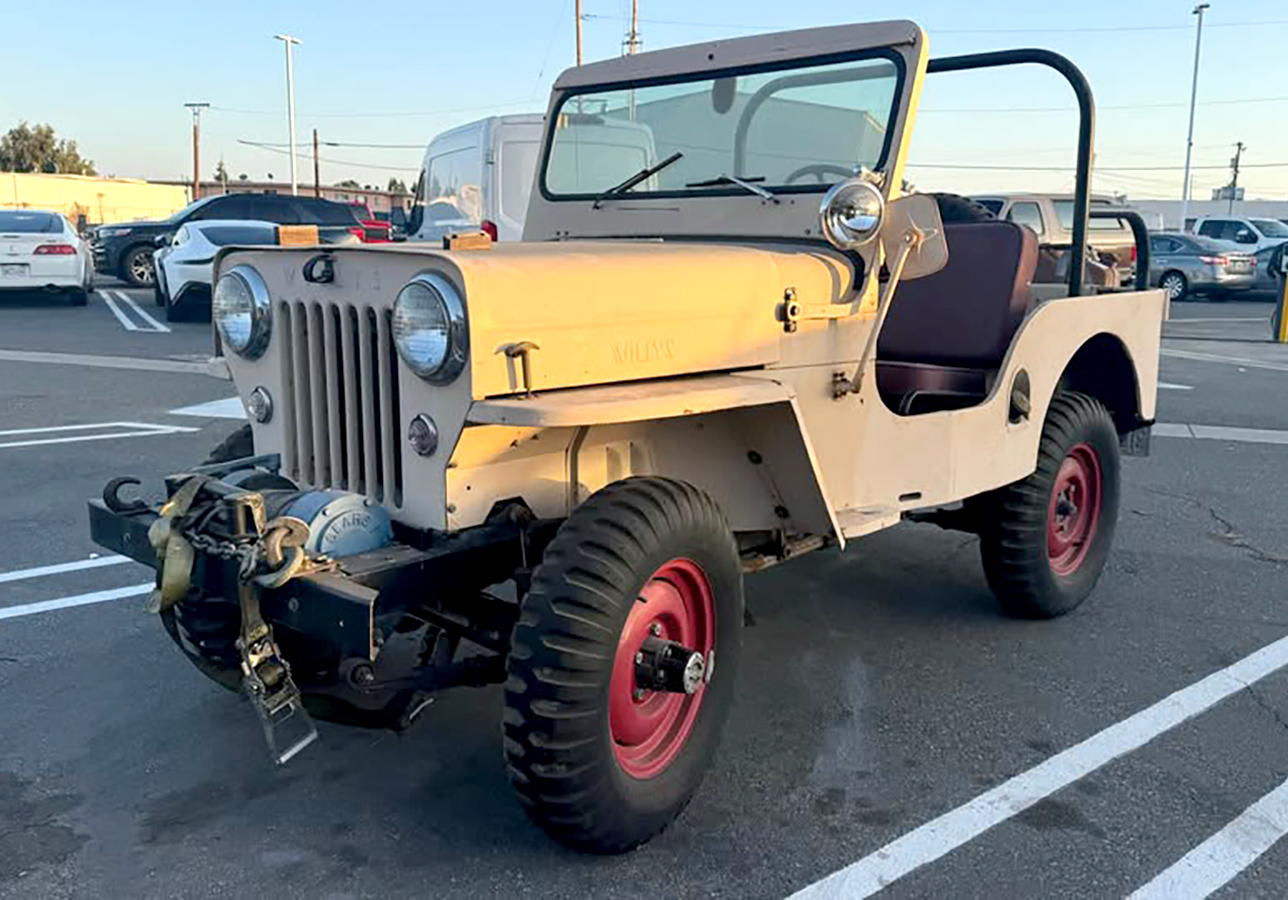
In 1953, the CJ-3B introduced the F-head overhead valve engine, which I quite love. But in order to package this engine, Willys-Overland had to extend the hood by about four inches, which required extending the cowl, which raised the windshield, which required a higher seating position. It was a chain reaction that led to a significantly taller machine. This can be an issue when climbing steep grades.
The other downside that many Jeep CJs and Wranglers have over the Willys CJ-2A is that they feature a roll bar. This is great for safety, of course, but if we’re talking about pure capability, being able to lower the windshield and create a slim profile that you can maneuver under downed trees and other low obstacles is a significant help.
The CJ-2A Has The Perfect Off-Road Silhouette

The CJ-2A is far from a truly perfect off-road vehicle. The leaf spring shackles limit approach and departure angle, the leaf springs themselves don’t flex as well as a coil spring setup, the frame flexes well but not quite as well as a flimsy WWII Jeep frame, and the Go-Devil under the hood doesn’t make a ton of power.
But the geometry is pretty much perfect. The rocker panels are way up high, as are most of the mechanical bits (many other Jeeps may technically have more ground clearance, but their rockers and more of their bellies are lower). The folding windshield and lack of a roll bar keep the profile low, the overall length is super short, the flathead motor keeps the center of gravity down, the width is really narrow, all the mechanicals are tucked up high, and weight is only 2,500 pounds. Combine this amazing geometry with a torquey engine, a low-range transfer case, and solid axles that flex well enough, and you’re basically a set of lockers away from being invincible.
It’s very unlikely that there will be a future vehicle that is as geometrically perfect as the CJ-2A. Gas engines have gotten too large, so hoods will be high. EVs will never come with two solid axles. A flat gas engine might solve this, but even then, the number of safety mandates in modern cars pretty much means that there will never be a vehicle as simple, as small, as lightweight, and as low as a CJ-2A.

There are plenty of vehicles that are great off-road, and many are right there with the CJ-2A. With lockers, many will outperform the CJ-2A on certain terrain. But as a platform, the CJ-2A (and its CJ-3A and M38 derivatives) is as close to off-road geometric perfection as there is. And there may not be a single vehicle out there that, with nothing but a simple mod or two (like a Lock Right locker), can handle a diversity of off-road obstacles as well as this first civilian Jeep.


On top of it all, how many competitors could be optioned with rear AND front PTOs? I guess that doesn’t really do anything for its off-road abilities, but still very cool.
A CJ-2A with the old Buick/Dauntless V6 and a Saturn Overdrive is pure magic.
IME the Suzuki LJ80 is better off road.
A CJ2A (or any other Willys-era Jeep with the D18 transfer case) is so expandable… you can have up to six shift levers. It’s like a Lego set that you can take off-road, fix it with a rock and screwdriver, and drive it home (avoiding the freeways, even with a Warn overdrive).