

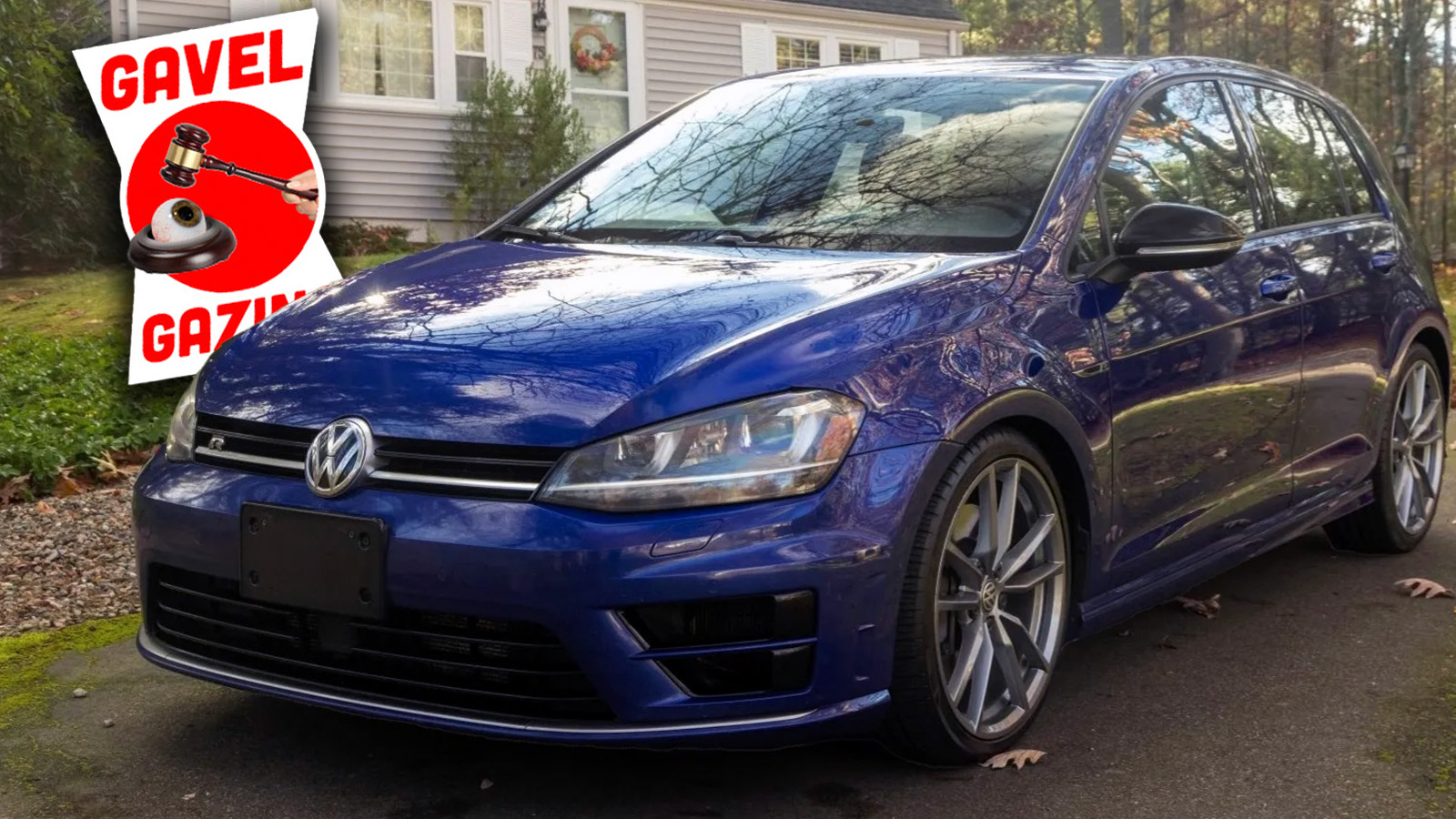
It’s rough being a car enthusiast shopping on a reasonable budget right now. Values of many fun cars from the 2000s are starting to climb, lots of late-model stuff hasn’t depreciated at the rates we’ve seen in the past, and the running costs of multiple cars can get out of hand quickly. Owning a sports car and a daily driver that are both out of warranty sounds great until they both need repairs in the same month. So what about one car to do it all? If that’s your situation right now, an Mk7 Volkswagen Golf R is a rather tempting proposition.
We’re talking about a reasonably sized, genuinely potent hot hatchback with all-wheel-drive for days when the weather isn’t so nice and subdued looks for when you want to blend in. It’s new enough to have a stout turbocharged engine, old enough to still have buttons, and while it’s not as focused as a Mazda MX-5 or Subaru BRZ, it’s well-suited to real-world situations where those sports cars are a bit small.


Airport pick-ups, IKEA runs, that sort of stuff. Best of all, you can now get one for less than the price of America’s cheapest new car. Sometimes a lot less.
What Are We Looking At?

In the long and illustrious history of fast all-wheel-drive Volkswagen Golfs, the Mk7 Golf R stands out as a high water mark. A superhatch from a time before capacitive-touch everything that pairs high-quality materials with rapid pace. While the Mk6 Golf R received a somewhat lukewarm reception due to its modest horsepower bump over a GTI and non-defeatable stability control, the Mk7 more than made up lost ground. The renowned EA888 two-liter turbocharged four-cylinder engine gained a massive output boost to 292 horsepower, Haldex all-wheel-drive remained on deck, and a choice of a six-speed manual gearbox or a dual-clutch automatic resulted in properly quick acceleration. We’re talking zero-to-60 MPH in 5.2 seconds during Car And Driver instrumented testing, and that’s for the row-your-own model. Ditch the third pedal, and that time drops to 4.5 seconds. Hot.

I’ve been lucky enough to put hundreds of miles on various Mk7 Golf Rs, which is why I can report that they’re astonishing all-rounders. More than just nicely-weighted steering, proper acceleration, and a willing chassis, these cars also come with huge livability. They’re spacious, practical, and ride beautifully over potholed roads with the available adaptive dampers in their comfort setting. You get buttons and knobs for everything on the inside, and on the outside, Volkswagen kept the look subtle. Those who don’t know what they’re looking at will simply assume the Golf R is a sensible, practical, normal hatchback. Perfect if you’ve outgrown juvenile theatrics.
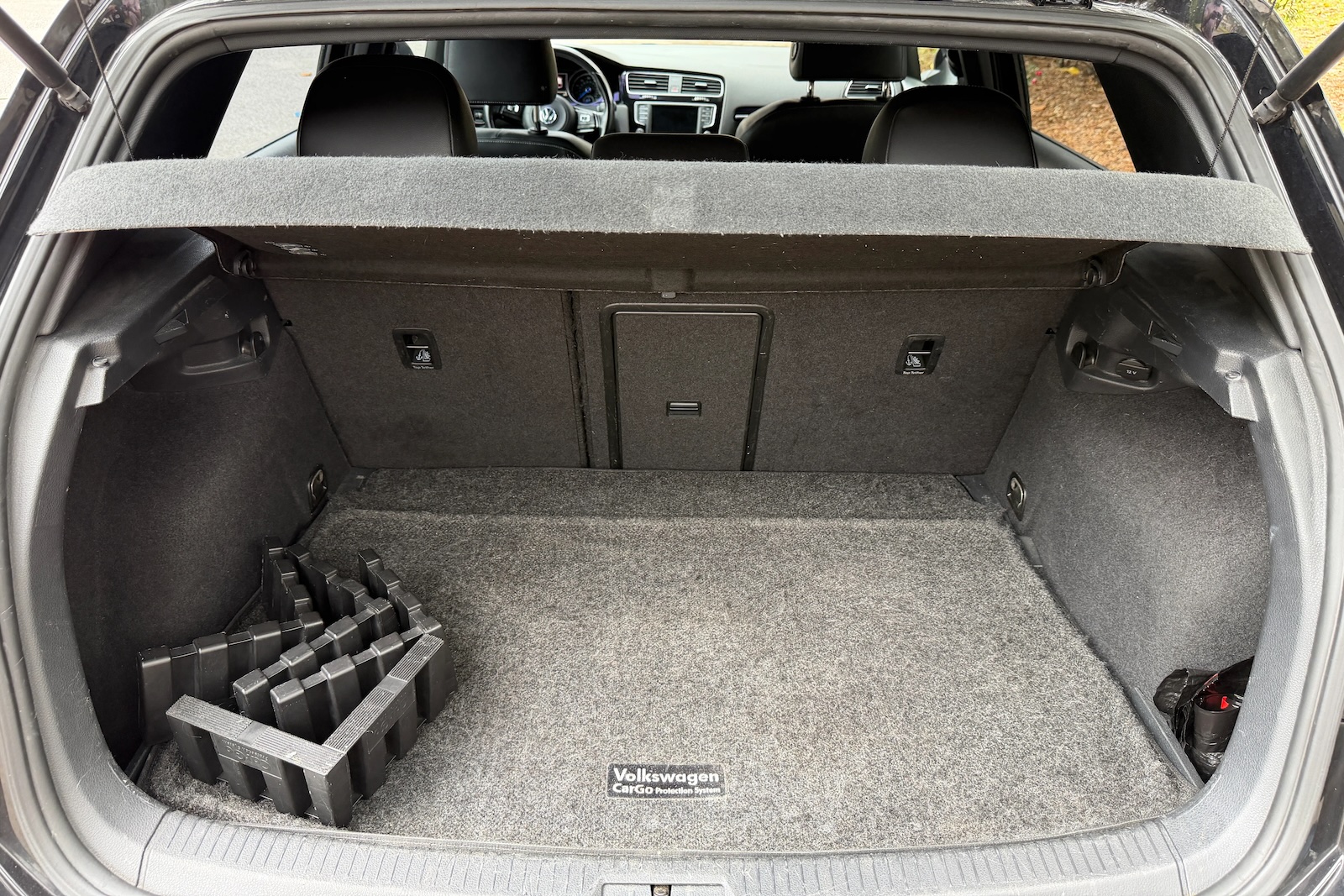
What we’re looking at here is one of the best quick daily drivers of the past decade. A backroad-munching turbocharged all-wheel-drive weapon when you want excitement, a perfectly pragmatic hatchback when you need a regular car to do regular car things. It might not have the drift mode of its successor, but in many ways, it’s easier to live with. Oh, and you won’t have to be minted to get one.
How Much Are We Talking?

When the Mk7 Golf R was brand new in 2016, it carried a price tag of $36,470. That was a huge amount of money for a Golf, nearly double what a base 1.8-liter front-wheel-drive model would cost. However, thanks to the magic of depreciation, you can now pick one up for less than the price of a new Hyundai Venue. At a starting price of $22,150 including freight, the Venue is America’s cheapest new car. Or, for around $6,650 less than that, you could’ve bought this. It’s a 2017 Golf R in lovely Lapiz Blue that sold on Bring A Trailer back in March. Equipped with the DSG dual-clutch automatic transmission, free from modifications, and boasting a clean Carfax, this is the sort of example that seems like a solid pick. It may have covered 99,000 miles at the time of the auction, but at a hammer price of $15,500, you could’ve put the price difference between this and a Venue into a maintenance fund.

If you prefer to hand-make your own shifts, you may be interested in something like this 2016 Golf R. It went up for auction on Cars & Bids back in March, and while this six-speed manual example does have two relatively small damage entries on its Carfax, it had 87,700 miles on the clock at the time of the auction and crucially, is bone-stock. The hammer price ended up being $15,500. A familiar number, but still a bargain for this level of performance.

Can’t wait for an auction to come up? If you’re willing to cast a wide net, there’s decent selection in-budget on the normal used car classifieds. Here’s a black 2016 Golf R up for sale in Florida for $20,999. While it may have 96,646 miles on the clock, it also sports a clean vehicle history report and a six-speed manual gearbox, plus the seller claims it comes with full service history back to day one.
What Can Go Wrong On A Mk7 Golf R?

Surprisingly, not that much. The big-ticket item regardless of transmission and history is the water pump. These are known to leak, and with the water pump and thermostat housing coming as one assembly, it’s best to do them together. The kit will run you $408.85 on FCP Euro, and figure a total bill of about $1,000 at your local independent garage, depending on labor costs. Another common issue is the crankcase breather system, as the diaphragms degrade with age and mileage. A kit with new breather hoses and a new valve costs $196.79 from FCP Euro, with the valve itself taking only about half-an-hour to DIY.
Less common but worth watching out for is intake cam-related issues. These can manifest as failed spool valves, failed adjusters, or simply bad cam magnets. If you notice a rattle or rough-running codes, get this checked out immediately. Best-case, it’s just the cam magnet, which should cost less than $400 to have replaced. Worst-case and very rare, damage has been done to the actual camshaft, leading to a bill that could end up somewhere in the neighborhood of $2,500. Otherwise, you will want to make sure fluids and filters have been changed regularly, and it’s usually best to buy an unmodified example. Primarily, if you look out for leaks and such and fix things as they crop up, stock examples of the Golf R have proven themselves to be reasonably reliable used cars.
Should You Buy A Mk7 Golf R For The Price Of A New Hyundai Venue?

Usually, buying a used performance car over a new regular car is an ill-advised proposition. However, if you can find a decent Golf R at a reasonable price, afford the extra fuel costs, and set aside the difference between it and a Hyundai Venue for maintenance, why not give one a whirl? If you can only have one reasonably priced performance car and it needs to do everything, the Mk7 Golf R is still the full package.
Top graphic image: Bring A Trailer


My 2017 R 6mt is over 130k with no work other than regular maintenance and tires. I run snow tires in the winter and that allows me to get through the chain controls without having to chain up. Where I live, that can be a weekly occurrence in the winter.
I found that the stock clutch is a weak spot for autocross. I either bogged down or the clutch slipped. I don’t wish to replace the clutch, therefore, I don’t race it. I have a friend who does very well racing her dsg Golf R. Still, I’d rather have a clutch pedal for daily driving than the dsg for racing once a month.
Oh, hey, fun. I own one of these.
Is it sporty? Yes. More than a GTI? No, the extra weight is definitely felt (technically it is faster 0-60). But it’s better set up than almost any other mid-market AWD sports inspired machine, and will certainly put a smile on your face.
Is it practical? Yes, fold down the seats and you can haul a truly shocking amount of stuff. On a footprint-to-volume ratio, I don’t know of any modern car that comes close to a Golf for efficiency. Adults can also fit in the back seat, though long road trips might be a bit cramped if you’re over 6′.
Is it fun? Yes, it’s got enough power on tap for any daily driving needs, launch control if you so desire, and enough traction to respectably haul ass around the track.
Is it reliable? Actually, yes. I know, I know, used VW. But these were all made in Wolfsburg to an appreciably higher level of quality than any other contemporary VW (according to VW peeps I’ve met, they were made on a small line that took mostly veteran mechanics who really cared). As the article mentions, the waterpump/thermostat is a weak point, mine broke and it indeed took $1k to fix. That is the sole out of schedule maintenance expense in over 110k miles. None of the potential problem areas (transmission, Haldex unit) have given me any trouble at all, and I make sure they are double-checked frequently. No other leaks or hiccups that I’ve seen in regular inspections. Crossing fingers, but it’s lasting better than any Subaru I’ve owned.
Is it comfortable? Ahhh… now we get to the crux of the argument. Yes. Very much yes. In fact, biased though I am, I will confidently state there was no other car on the market available in the upper 30’s that could match the R in terms of practical comfort when new, and that holds even more so on the used market. The cabin noise level is blissfully low (even more so when you put some decent rubber on after wearing through the horrible factory Continentals), the ride comfort is amazing, and there is SO MUCH SPACE. I cannot overstate how amazing the topological paradox VW created with this car is. The volume on the inside is at least twice the size of it’s theoretical outer dimensions.
All in all, 10/10 purchase, would buy again, and no, mine is not for sale.
Like most German cars (and lately most cars in general), it is imperative that these are maintained above and beyond. Especially those Haldex units. They need frequent fluid changes and cleanouts.
I keep thinking hmm get a VW wagon and a written off R and combine, but then remember my last project like that
I nearly bought a Mk7 Golf R…but then another kid came along and I bought a minivan instead. I’m still tempted by them, but finding a cheap(ish) one means high miles and mods of the questionable variety. Lower mileage ones are a lot more money, and unmodified Mk7s are nearly impossible to find in my area – the Golf R is the alternative choice up here in the PNW for the hatchback WRX STi we never got.
No idea about the R, but the Mk7 GTI certainly isn’t the worst VW to buy. I’ve known a lot of people with VWs that made them swear off the brand, but the Mk7 GTI isn’t one of them.
My eyes certainly wander to GTIs occasionally so I get the appeal.
I had both, an MK7 GTI and MK7 Golf R. They were both manuals, APR tuned, and dead solid reliable. When new, the Golf R wasn’t worth the extra cash. After depreciation, the Golf R still isn’t worth the extra cash over the GTI. The GTI always felt playful, fun, and light-footed. The Golf R felt like a running back that gained weight to play linebacker. Not to say I would never buy a Golf R, but I would rather have the GTI for less cash and more playfulness any day of the week. Just my 2 cents.
Yeah the GTI always felt like plenty of car for me. I prefer a better all-around car in the warm to hot state of hatches, versus the full out hatch turned sports cars like the STi, R and Type R.
Having 300 hp is the perfect amount for a daily. Any more than that is typically wasted. However, it doesn’t mean my current daily doesn’t have 550 for what it’s worth.
OK Thomas, a fair take on a fun car. But you mentioned an MX-5 and the two car issue. If you have a chance to swing it, get a cheap Miata as a toy car. The freedom from worry, combined with the analog joy of driving make it worth it.
Those $400 repairs you mentioned for parts that are KNOWN to fail: That’s a 2.5L motor shipped to your door for an NC Miata. It’d also dead simple to do. My teenage son and his friend did the motor swap with just jackstands and hand tools. Took a few days. $400 for the complete, running and warrantied motor, including shipping. Meanwhile my 2015 Silverado has decided to munch it’s own transmission and that’s easily a $4000 bill.
My NC cost about as much as one camshaft repair on the Golf.
Mind you, as it’s my only car, I have to admit that it’s a bit less practical than the Golf.
I presently own a 2024 Mk8 R, and previously owned a 2018 Mk7.5 R. I have 16k miles on the ’24 and had 43,000 miles on the ’18. So about 60k miles driving an R and I have never had any mechanical issues. Both cars tuned to stage 1, the ’18 was APR, and the’24 is IE with Flexfuel so I can run anything from 91 octane to E85 without need to manually change the tune. The car does everything I want, handles well, is economical ro run, comfortable, capacious, and quite powerful when I need it to be.
German.
Boosted 4cyl
VW
Nope
/End typical autopian comment from people who have never owned anything more advanced than a ’92 Ranger.
You can stop scrolling now.
Nailed it.
Mechanically speaking, my ’15 GSW TDI was a lot more trouble free than the ’18 Outback that replaced it. Legally speaking is a different matter…
Can confirm after owning MK7 GTI (from new) and Golf R. Both were reliable and fun. My GTI still had the original pads and rotors at 85k miles. The pads still had 5/32 front to back.
As a colleague said when she sold her GolfR “Nothing’s wrong with it right now, so this is the best time to sell before something does go wrong”
a few things I trust more than a used VW (or just VW generally): sushi buffet at circus circus, random USBs found at the airport, a guy named Brad at the bar who swears he can sell you spaceX stock, and a parachute from an estate sale.
funny. top marks
But…. you probably shouldn’t. Because it will very quickly exceed that cost as soon as it does what VW’s just luv to do, which is break your wallet with nonstop repairs
Eh… anecdotal evidence, but my 2017 Jetta SE (manual) is pushing 170K miles with no major repairs. Brakes, tires, fluid changes or course, but I am on the original clutch.
Of course, it is a humdrum but solid commuter, rather than a souped up Golf. I may have jinxed it with this comment, but for a car that cost $20K new, I have no complaints.
Go buy a lottery ticket.
My 21 GTi has been more reliable than the 17 Honda Ridgeline it replaced.
I usually ignore these because sure, “lol, unreliable VW” has been a running joke for as long as I’ve been remotely into cars.
Thinking back now, I’ve owned six in my life starting with a 2001 Jetta bought used back in like, 2004 or 2005. And I currently own two. I’ve put 250 to 300 thousand miles on VWs since then, highest total being 165k on a 2012 Golf R that was making 80hp up from stock for over a hundred thousand of those. Another notable one was 40k that I did in just over a year on a Golf TDI before I got the R.
Not only have I never been left stranded by a VW, but each one has happily functioned being fed regular maintenance items with no major failures or shocking service surprises. They’ve all been solid for me.
Ditto. Three used Jettas, two bought new Golfs, TDI and GTI, minimal issues over hundreds of thousands of miles. Worst I can think of is a failed rear wheel bearing on my ’85 Jetta 2dr at 150K or so. My ’84 GLI went 400K before the tinworn got it. ZERO engine work. TONS of friends with VWs over the decades too, very, very few issues with any of them.
Though personally, I find the R a bit silly. My ’17 GTI Sport was perfection, and as I have said on here many, many times, selling it to Carvana at nearly the peak of the used car stupidity post pandemic was one of the dumbest automotive things I have ever done, even thought it meant is was a nearly free car for four years.
I owned a Yugo and its made it 100,000 miles. So its all a lie. They are super reliable!
A car is basically as reliable as you make it. My Spitfire is very reliable – it was taken apart and put back together to rather high standards than the cretins in Canley did originally, and most of the original and well-known faults in the design have been addressed.
People neglect cars, and then they break. And neglect includes not dealing with well-known issues before they bite you in the ass.
I’ve owned at least five Polos of various marks up toa 2006 model, and the only major problems I had with any of them were entirely my fault. Most of my families cars have been VAG too.
Maybe there was some dramatic drop off in quality after 2006, but everything up until then has been reliable for me.
I have had 4 turbo EA888 powered cars-2 GTIs, an R, and a GLI. I have driven them over 155,000 miles with only 1 them requiring anything other than oil changes (5k intervals) and a brake fluid flush. The MK7 GTI needed a thermostat/water pump that was replaced under warranty.
Well, seeing as how VW is at or near the bottom of most of the long term reliability reports. Every other person I’ve known who owned VWs, including my MIL, has had serious issues with them.
My usual response to those like you is… well… I’m sure there’s a few Yugo owners who got 150-200k out of their Yugos. Doesn’t mean they were overall a good brand.
We’ve owned a slew of Toyotas including a 30 year old Tacoma I still own. None of them have ever been in the shop and we don’t think about it. Because the brand makes good cars and trucks
2017 GTI owner here — knock on wood, but it’s been just as reliable as any of the Hondas or Subarus I owned before it. The biggest costs I’ve had are tire repairs, which is more bad luck than a specific VW flaw.
Fantastic drivers, I have personal experience with some hot VWs going all the way back to mk2 GTIs, which were bullet proof. That said I will never forget a certain 96 flash red GLX VR6 with the BBS baskets that broke my heart and my wallet. No praise or shade, maintenance just costs more than the Japanese counterparts in my experience
My father in law had an R32 that once broke down leaving him stranded in the middle of nowhere. He towed it to VW, and no joke it broke down again on the way home from the dealership. Luckily I was following him this time. I’ll never forget he was still cracking jokes about how much better his R32 was than my spec V Sentra as we waited on the 2nd tow truck.
I have no experience with a mk7 or 8R, but I do have a FL5 type R in the garage and even with auto crossing, the only thing it has cost me in 3 years is an unfortunate amount of pilot sport 4S tires
Dunno, I own one and all I’ve spent is $1k for the waterpump/thermostat outside of scheduled maintenance. They are built to a noticeably higher standard than other VWs of the era, and if you’re not thrashing it at the track all of the time, it doesn’t get strained much around town. I feel more confident in it lasting past 200k miles than any car I’ve owned.
Until VW can routinely make products that can go 200,000 miles like a Toyota without major issues… sorry. I see no reason to buy one when much better products with better overall quality exist.
I had 2 VWs that were over 200k and one Audi that was over 300k before I sold them.