

A little while ago, I wrote up Camaros and full-size wagons modified in Finland to dodge heavy passenger car import taxation. In the case of the Camaros, it meant replacing the rear seat and glass with a six-foot-long bed, grotesquely extending the rear of the car; with the wagons such as Caprices and Electras, the rear seats were replaced with uncomfortable temporary-use MDF board-based seats that turned the wagons into vans in the eyes of the lawmaker. You would also have to keep your speed below 50mph, but who cares? The cars cost half as much as a regular wagon, or less.
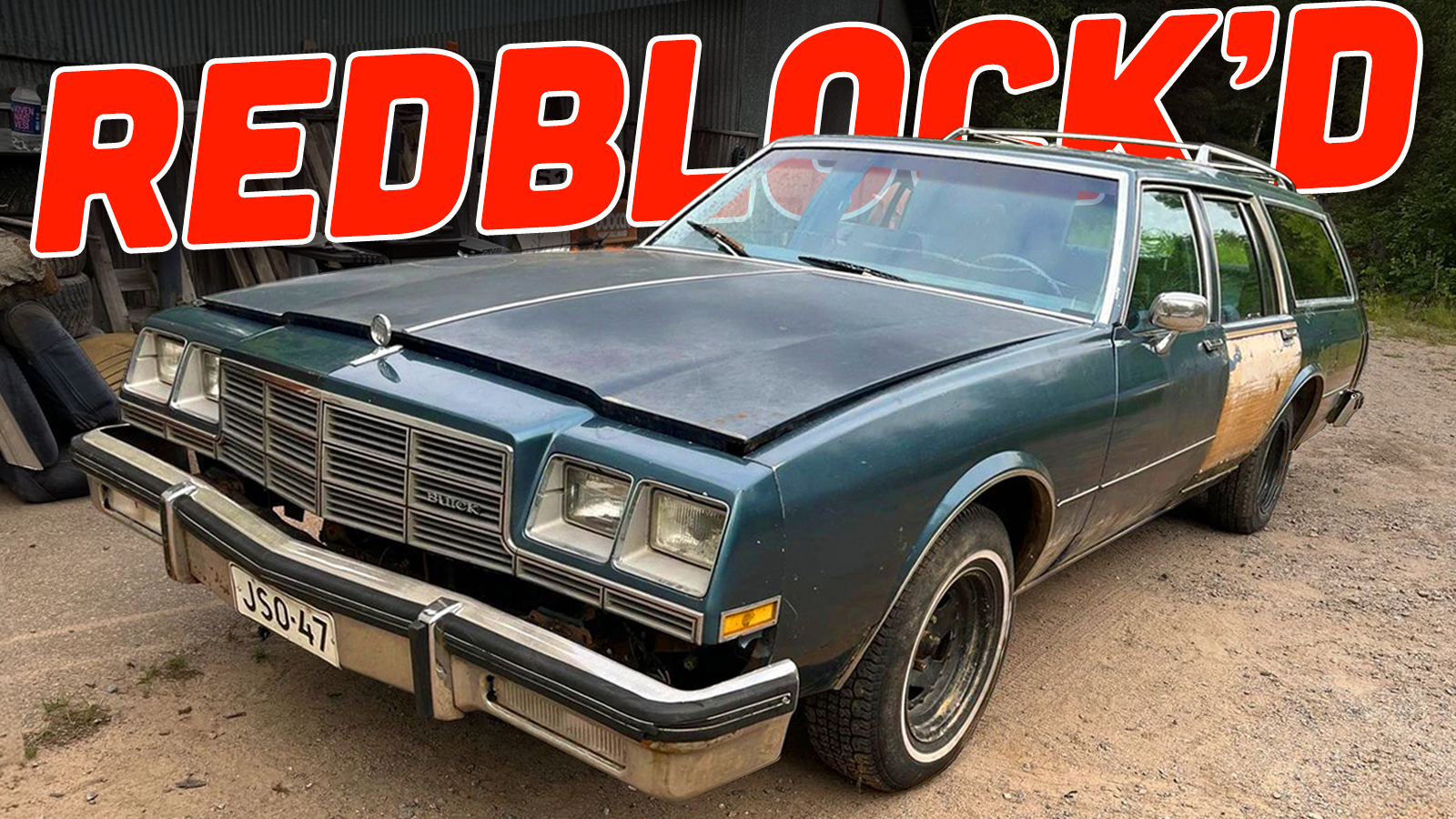
After the cars were successfully registered in Finland, they had to deal with the great weather and ample amounts of road salt here. Fast forward nearly 40 years, and some of these van-wagons still survive, bearing scars from Finnish winters and summers. Sometimes they pop up on sale on Nettiauto for cheap, and in some cases the original drivetrain has been swapped for something faster, or something at least functioning. Take a look at this Buick Le Sabre, which now has a Volvo engine under the hood.


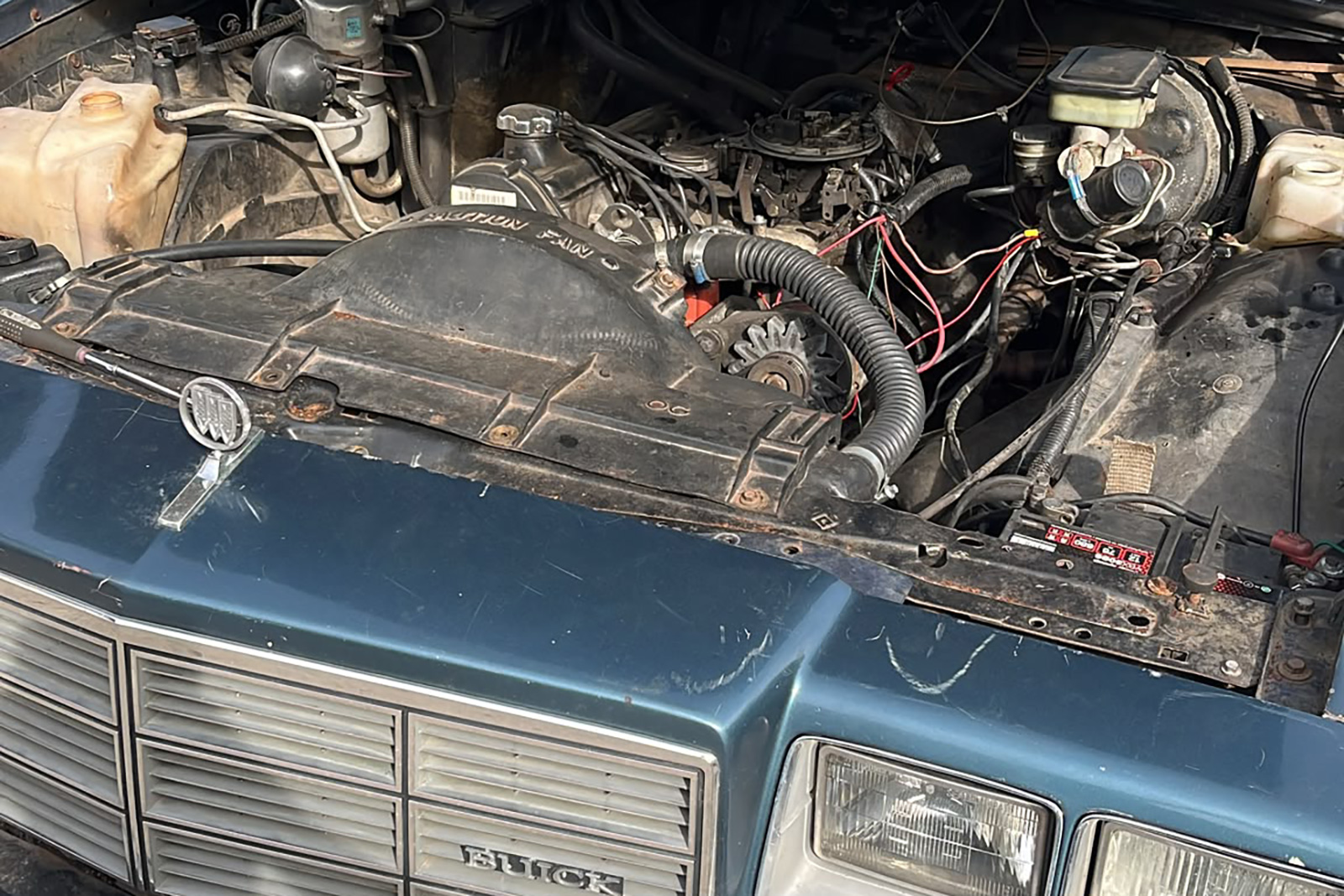
Come on, usually it’s Volvos that receive American V8s in the hands of builders. One of Paul Newman’s Volvos even had a Buick engine, albeit a V6 from a Grand National.
I got in touch with the seller to find out what exactly has happened to the Buick that now relies on half as much engine than it used to. Matti R, from Lappeenranta in southeast Finland, explained that he’s originally a Volvo enthusiast and hobbyist. He got this 1983 Buick as it was advertised to “need a little work”, and he soon discovered the original Olds 307 had cracked the block from the water jacket.
Granted, it had sat for over a decade after being put up for sale, but the earlier ad gave a pretty solid idea of the car. As the description went, the frame and the underbody were said to be okay, with a single patch needed for the spare wheel tray, but it was also mentioned to run and drive despite having been off the road for a long time. Importantly, the ad had the words “All kinds of little detail work to do” (Kaikenlaista pientä hifistelyä löytyy), which ended up meaning a complete engine swap. I guess that just depends on your definition of “detail work”.
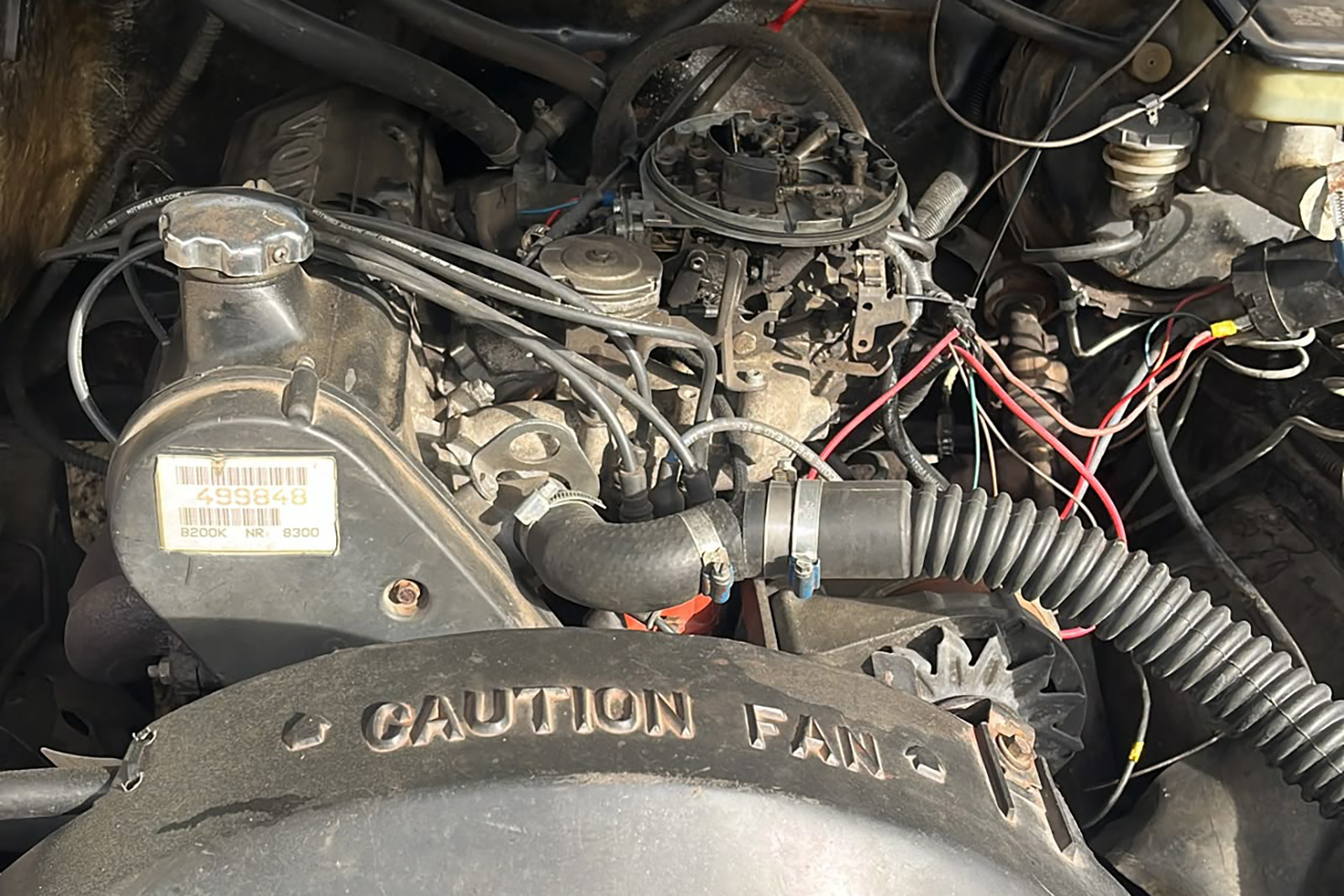
Matti wasn’t discouraged by the 307 being damaged goods. With access to a lot of Volvo parts and a number of engines, he soon figured he’d drop a B200K in there partially as a joke.
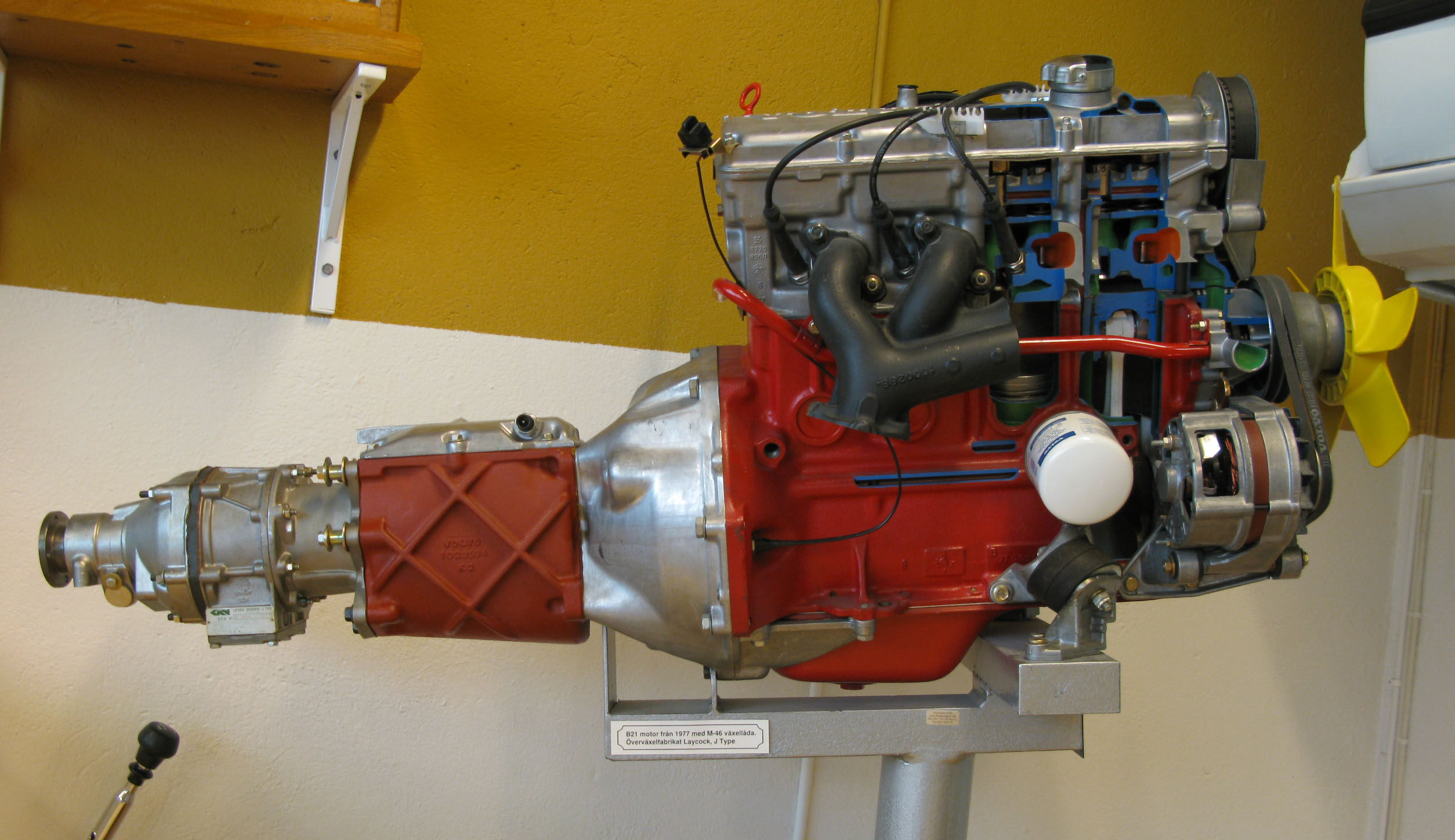
The B200K is pretty much your average Volvo Redblock, which you can find in various old rear-drive Volvos from the 240 to the 740, as well as the Dutch-built Volvo 360. In the 360, it represents the One Good Engine available in the car, as it’s a Real Volvo Engine compared to the Renault-derived fours the 300-series otherwise used. Stock, it produces around 100 horsepower, and it usually breathes through a Solex carb.
Now, the Buick might not have had a lot of power stock, but 150 horsepower still represents 50% extra over the Volvo motor, with 240 lb-ft of torque available at 1600rpm. The Volvo B200K produces almost exactly half of the torque, 121 lb-ft at 2700rpm. In any case, it might be that the Buick’s rubber-burning days are over. At least it will probably use around the same amount of fuel to make up it, as old Volvos have been known to drink a bit.
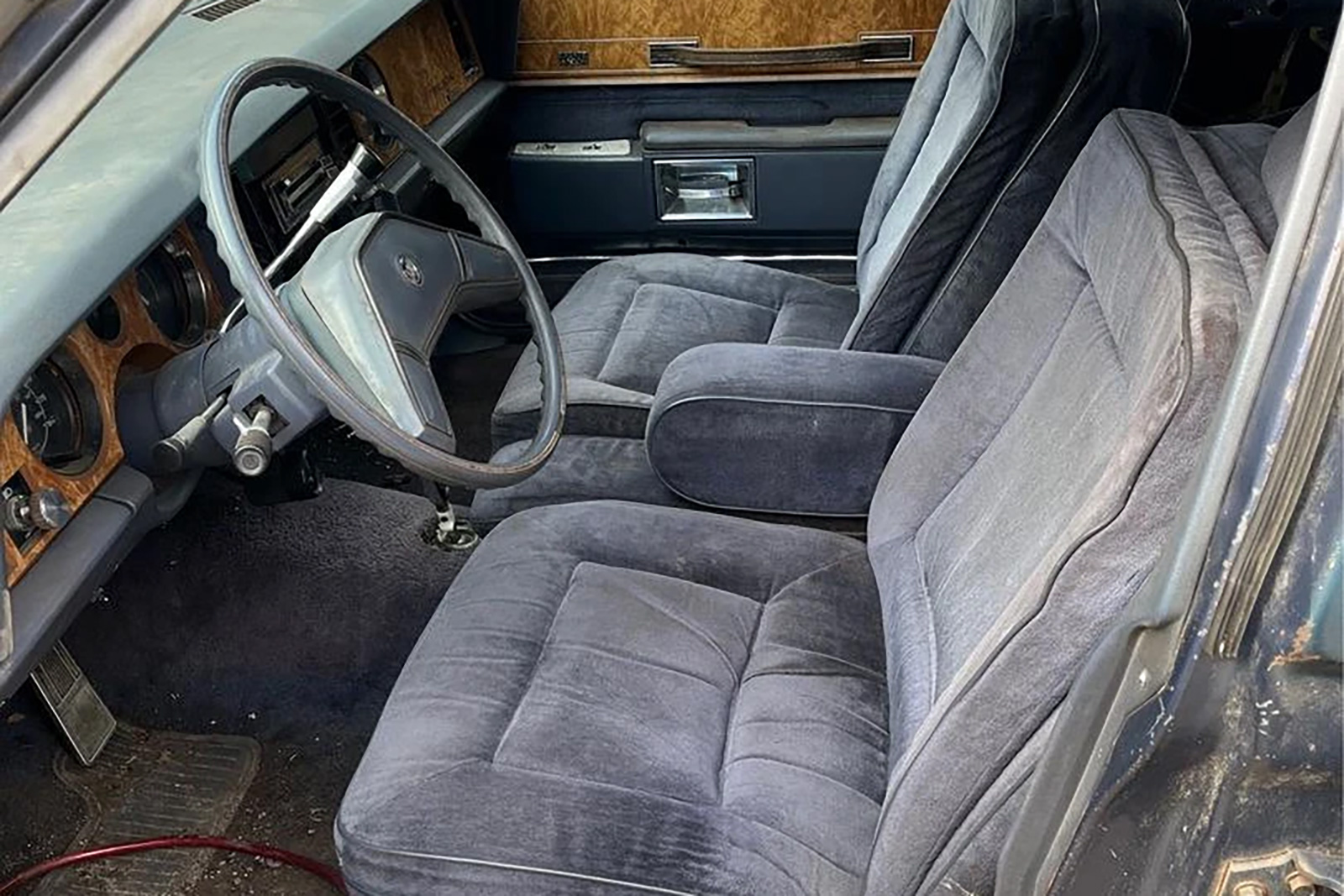
As for the gearbox, the Buick now features a neat installation of a five-speed Volvo M47 manual gearbox with a floor shifter. Matti had to build the clutch setup and the custom propeller shaft himself, but it works. You can probably count the number of floor-shifted, full-size Buick wagons with one hand. Since the steering column still has the now-vestigial shifter for the auto transmission, it’s now Twin Stick like an old Mitsubishi.
Looking at the cabin, the wagon also retains its Body by Fisher sill covers, as well as a good amount of fake wood. The Buick had originally been imported in May 1989, during the heyday of the van-wagon import craze. By that time it was six years old, so it must’ve been very cheap even by the time it was in Finnish plates.
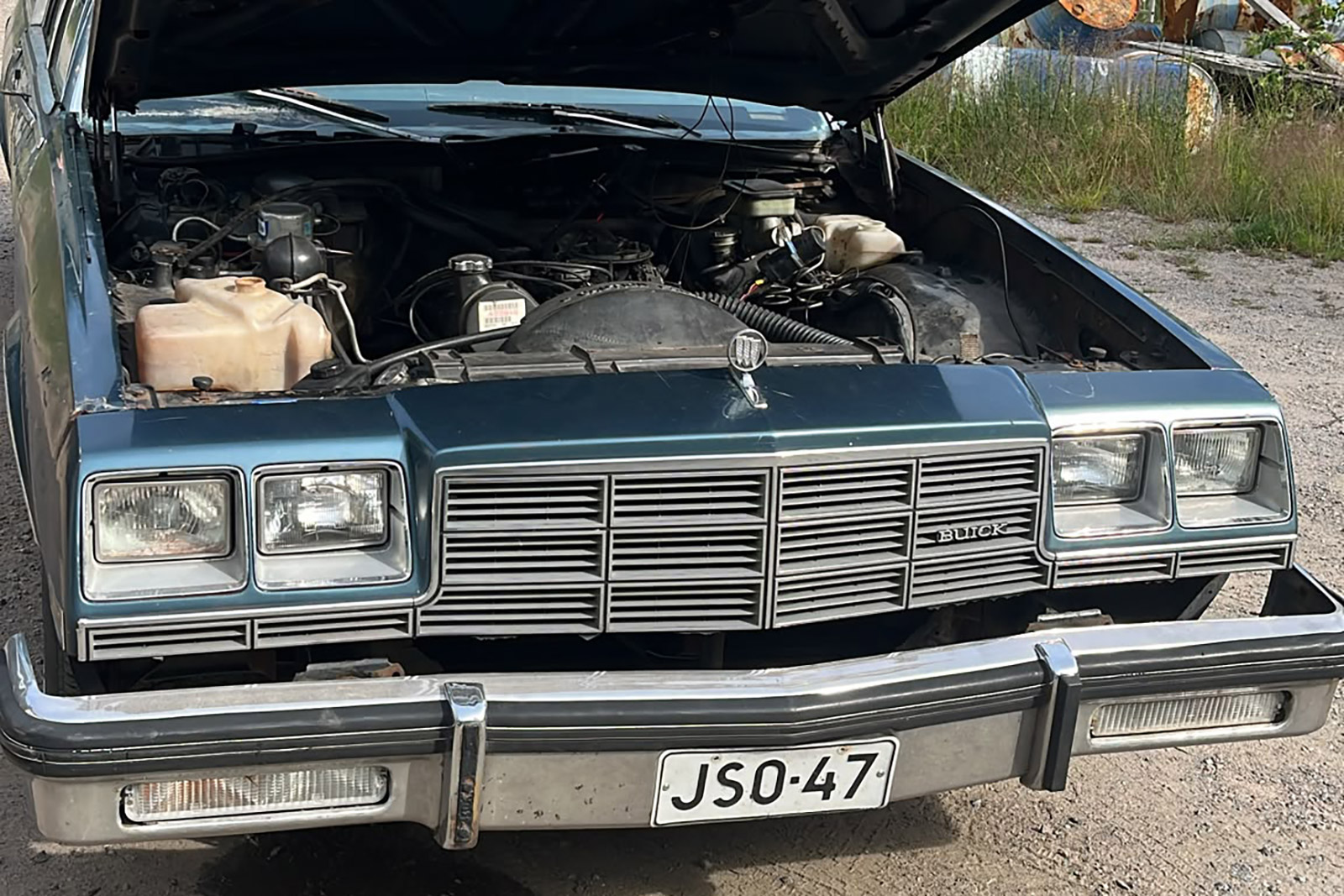
Matti says the Buick again runs and drives, and it again does need some detail work to pass roadworthiness inspection, but he’s been able to go on test runs to verify it’s all buttoned up. There’s no welding any more to do, but for example, the doors have been swapped for less rusty ones and the electric windows on these need work. He’s put it up for sale as there hasn’t been enough time to finish what needs finishing.
Since the engine swap is one of those rare cases where the new engine doesn’t provide extra power, or necessarily even extra reliability, as Olds 307 motors seem to generally have a decent reputation for a Malaise era engine, it remains a curiosity whose biggest plus is that it works and moves the car, and again gives it a chance to pass inspection. Since it’s a four-banger, it could be called Duke Rödblock as an Iron Duke reference. Or Redbuick?
Images unless noted: Nettiauto, Matti Rapanen


Yup, you got me…I never would have guessed Volvo. I asked “where is the engine?” when I saw the 1st photo. It looks so small in there! This is awesome though…I like that Buick
The red block I assume is the SBC of Scandinavia?
That seems like a lot of weight for a Volvo M47.
I guessed om606 but I guess that’s too normal. Volvo in a Ford Country Squire wagon or similar would have been funnier. Old Ford tractor engine in an old Ford.
Just got back from central Sweden and saw lots of malaise era stuff and American cars there, apparently it’s a thing there and in Finland. That’s gotta be one slow ride with that engine…
The B200K when it was removed from its original car: “Finally! I got to get rid of that old square wagon! I wonder what will I end up powering now! So many exciting possibilities!”
Life: “Hold my Koff…”
This time on the More Hudraulic Press Channel, I will do the Ultimate Burnout using dis Vagon, this drum of old Hudrrualic oil and the lake. Ja dis will be fun.
O-K. The rear tires are comvetly covered in oil now. Now to start the Burn out.
WAHHHHHHHH!!!. Now, I vill side step the clutch.
Here Ve GO!
VAT DA FAHK! It didn’t even spin the Tires!
Thank you for watching, and have a nice day.
Dis Rabbit is evil and must be Punished.
I’m no expert so I’ll trust your judgement with an answer to this question. The Volvo is bulletproof and has been available for generations with no caveats, the 309 you toss in reliable, for a malaise era engine. So anytime you toss in a qualifier, red flag, and malaise did that claimed HP actually exist with the power throttling from that era?
Duke Rödblock would be a great name for an actor in the Noir Era.
Coming Soon: Slow Passage, Starring Duke Rödblock and Ima Bohr
Or Duke Redcock for the adult genre.
Introducing: Biff Rydberg
I had a version of this car with a 5.7, and let me assure you there were no tire smoking days.
That is a lot of car, and I would not want to drive it with significantly less power.
But I know small motors are used to move heavy things throughout the world, but my Americanism makes me instinctively ‘nope’ this swap.
My first car was a ’73 Ford Country Squire station wagon with a 400ci V8. I can’t imagine the Buick would have been any quicker.
I think the technical term for these cars is Lead Sled.
Remember Volvo doesn’t make feather lite vehicles either. I doubt there is much difference in performance after everything is done
There was still a ~1200 pound difference from a volvo 240 wagon of the day to the big GM wagon.
Learned to drive on an ’85 Mercury Colony Park with a 302/AOD combo. Yep.
Strap a grandfather clock to the roof and track it against Torch. Could start a series. Slow car time trials.
I feel obligated to point out this immutable fact: It’s more fun to drive a slow car fast than a fast car slow.
I feel without a track you can’t drive either fast so a slow car is the better car.
Over the decades I’ve had a great collection of slow cars that where fantastically fun to drive ‘fast’.
Torch driving something or just running? I mean sure same comparison but details people
I don’t know if I’d go to see that in IMax, but I’d definitely watch it on youtube.
I saw Volvo and I thought a Penta V8 swap, a boat engine for a boat, however the mention of the loss of 4 cylinders killed that. It must need a hell of a clutch as that has to weigh a couple of metric tons and will probably have a 2.something rear gear, smokin’. (-:
Easy, just always park on a hill. That way, you will always have a rolling start.
I guessed Hayabusa
1340cc of angry Japanese squirrels
Me too. lol
The Red Block is an excellent choice for a swap. It leaves gobs of room under the hood for after-swap shenanigans *coughturbocough* and has mountains of aftermarket support for virtually anything you might want to do with it. You want to meet or beat the original power levels? Eminently doable, and nearly as durable as stock. Red Blocks are solid.
A full size wagon with a manual. I don’t think I’ve ever seen that. I mean…ever.
Does the Volvo 940 wagon count as full size?
I have no idea. I never had any interest in the 940 as it distracted from the 240.
I had a friend that got close. 68 Chevelle wagon, 307 with a Rockcrusher. Some crazy old lady’s husband had custom ordered it. I drove it a bit. I would call it a hard pass, but I admit it was weird.
I wonder sometimes about cars of the 50s and 60s. Generally speaking, you went to the dealer, drove the demo car and then sat down and checked boxes on what you wanted your car to be. When your deposit cleared, they ordered your car.
Which sounds cool as hell.
Until you realize that this was also the era of the “2 martini lunch”. Someone that had a liquid lunch with extra helpings shows up at a dealership and works with a salesman that is also 5 servings into his lunch. The pair of them become best friends, mark a bunch of boxes, write a check and then go to the bar next door to celebrate.
Then a couple weeks later, some poor dude gets a call from a dealer to pick up their woodgrained Purple wagon with Green shag carpeting, plaid seats, a big block, 3 on the tree and manual drum brakes.
If you’re going Chevelle just get a rebuild from an SS
Nah, get a Malibu interior package and deselect air conditioning. For a Florida car.
If you were trying to buy that now on BaT you’d swear alcohol makes you smarter.
Ah, the jokermobile. If my mother had an opportunity to order anything she wanted, she would probably order something like that. But with a pintel tow hitch and no wood grain.
She dressed in purple and green outfits and never got the Joker references.
That sounds like a couple of cars I went through in my youth.
I learned to drive on my Parent’s 73 Malibu Station Wagon with 350 and a 3 on the Tree. Still have that shift pattern memorized after close to 40 years. That beast was lots of fun on snowy roads.
You aren’t going to hook up a boosted red block to a big heavy wagon via an M47.
We had a Ford Country Sedan – an un-wooded squire – with a three on the tree.
Even as Volvo redblock engines are a bit odd, the B200K is a really weird variant. The common engines were 2.1 or 2.3 liters, but the B200K was underbored by 3-5mm to get the displacement below the 2 liter mark, beating tax regulations in some countries. It had a fairly high compression ratio of 10:1 and either a Solex or Zenith downdraft carburetor.
Italy and Portugal, for sure. The recipients of such oddities like the BMW 320is E30 and the Alfa Romeo GTV 2.0TB. Or the Ferrari 208 GTB.
SAAB did something similar with the final year of the three-cylinder two-stroke engine in order to get its displacement below fifty cubic inches so as to be classified as a utility engine and therefore exempt from US emissions requirements.
That begs the question some company I think Ford beat tax regulations on commercial vans by including cheap seats that were removed after delivery then sent back to be installed on new vans. So passenger tax but remove seats commercial hauling van. Any other examples of design for import but have a custom change at the dealership?
All this thing *really* needs – not boost – is different final drive gearing.
Like 4.56 or something. The limitation, of course, is you’re going to be revving a bit too much for anyhing above 70 mph, even with the M47s overdrive.
Good point. M47 is a 5 speed, M46 had the push-button overdrive, which is a bit taller than the M47 5th. With the factory gearing in my 240 its really happiest over 65 in overdrive.
M47s also tend to fail. The M46 is a lot more stout.
Silly enough for me to like it
Manual trans at least, and of course even in Finland I imagine an LS swap is not the most expensive thing. probably a few Saab 9-7X units wasting away somewhere out there.
I’m guessing this engine was close to free and the car couldn’t have been worth much more.
Considering the budget, an LS may as well be a Ferrari V12.
A five-cylinder white block would at least sound more interesting.
probably true. Rednecks are definitely going to redneck no matter what part of the world. there are Plenty of weird drivetrains in square bodies that I have run into, but usually a 350/350 motor and trans is readily available and running adequately in some GM car that has otherwise rusted beyond the owners welding abilities or cares.
“….as old Volvo owners have been known to drink a bit.” FIFY
this is totally dumb and I approve.
Glögg!
My parents bought a 1981 Buick LeSabre with the 5.7L diesel, brand new. I thought that car was slow. This thing must be an absolute sled. When I saw the headline, I thought that they might have used the Bosch fuel injected Turbo version of the Volvo engine…
I would say that would be the real benefit of using the NA version. when a turbo set up come up on the cheap it will be that much easier to upgrade then.
Can super chargers or turbos be added to diesel? I think they can.
You’ll never guess how tired I am of click bait headlines.
C’mon theAutopian> Do better.
I’m going to skip reading this one just on principle.
Unfortunately if you want your website to succeed, you have to do that. Headlines like that get more clicks, which websites require to survive (ad revenue, members can’t fund everything). I think the writers have touched on this before. There’s a whole series of ways to optimize your site so people visit it and stay there, called search engine optimization. Some of it seems weird or phony sounding but it’s what search engines use to determine where your website ranks when it appears in someone’s Google search results. And you want to be as high up as possible.
This site competes with a ton of other content, not all of it human generated. I’ve been in digital marketing for over a decade now, and it’s just how running a website works. The lovely authors here don’t get much of a say in what drives website traffic, so things (like headlines) have to adapt.
Something every member can do is use their work computer to search car news and search Autopian and select follow.
I don’t get what’s wrong with a little bit of suspense? Would you rather the article be titled ‘Buick Wagon has Volvo engine’? How dry would that be?
Depends if the sump gasket failed.
As clickbait goes it’s kind of thin, since it says REDBLOCK’D in giant red letters right across the picture.
Kinda gives the tease away right there on the front page, you know?
Just trying to keep theAutopian> honest. I can’t stand sites that have articles that are questions instead of statements. I have a low threshold for that sort of thing.
Amen, I can’t post shit with out approval
You specifically asked for your posts to go through the manual approval process. If you don’t want to do that anymore, talk to Matt.
The Autopian came about after Jalopnik went hard down this route – and still is going down it – and the exodus of talent got together to form this site. That’s a lesson they won’t forget quickly.
That’s not the only reason they quit Jalopnik, but it’s on the list.
Redblock’d didn’t give it away?
But you
1. clicked through
2. interacted with the article by commenting
3. caused more interaction from others with the inanity of your comment
I am not sure you could have done much more for the site’s metrics. You really showed them.
Did op just clickbait us complaining about clickbait?
The snark was intended.
Yeah, what a doofus. I didn’t think it was clickbait at all. To me, there is zero clickbait on The Autopian. It’s all interesting to read.
Eh. The definition of clickbait to me includes some sort of deception. Which Wikipedia agrees with.
https://en.wikipedia.org/wiki/Clickbait
What is an appropriate headline here?
Maybe just label everything Car Article and leave it up to date?
How about “xyz block in abc auto “
The headline IS most definitely clickbait. It would have been easy enough to make it a statement and not a question. This isn’t jalopnik. I expect better from theAutopian>. Look at the other articles here; , they don’t need a click to see the lead.
Yes we have gone from different site to Jalopnik lite
I wouldn’t go that far, but it does seem to have shifted a bit
Fine, I’ll bite, hopefully together we just generated a few more pesos for the staff.
The fact it was no surprise what was done is well documented above.
I think we might have to agree to disagree that to ask a question in a headline automatically makes it wrong. Calling it “clickbait” is a dog whistle like “woke” and distracts from the primary issue in question.
This isn’t the fricking Wall Street Journal. I think its fine to ask a question as a headline in the context of the lighthearted lens this site generally gives us a view through. As long as we get the answer. That said, a better headline might have been “Why would someone engine swap a Volvo B200 into a 1983 Buick wagon?”
Regardless, this article is exactly what I’m here for and why I followed from the old site. Everyone is writing about Slate, its harder to find true jalopy content. Please, more rust and mud and lead dust and shower spaghetti and B200 Buicks and less “You can buy a used Bently for the price of a new CivicR that you also can’t afford” Factual headline but I’m never opening one of those again.
That is until it’s “You can buy a new Radio Flyer wagon for the price of a 2003 Mercedes SL500”
Yeah, what a doofus. I didn’t think it was clickbait at all. To me, there is zero clickbait on The Autopian. It’s all interesting to read.
I do agree that I miss when there was more of the wrenching articles, funny goofy articles, heartfelt vehicle owners stories, and adventure sagas such as Project Cactus…DT’s Ebay Jeep project was on par w/ that and were both awesome! I want to emphasize that there is still all of that and it’s all amazing…it just feels like there is a little less of the fun, funny wrenching adventures/stories in general. I still read and love everything though! The Autopian is the best site on the net ever!
“more rust and mud and lead dust and shower spaghetti”
Yes! These were some of the funniest stories. Of course, except for the lead dust but actually I’m still for it but only if it’s safe where zero lead dust is inhaled and it’s disposed of properly, ha ha
That feels a little impersonal. Internet communication to me is an area where things start getting conversational. What I mean is one wouldn’t really go up to a friend and say “Red Block in Buick LeSabre” you’d say, GUESS What I saw in a Buick LeSabre at cars and coffee?!
I might be hyper sensitive about it. I just absolutely hate those type of headlines for informational posts. Fortunately it looks like theAutopian> mostly avoids them. I hope that continues to be the case.
I’d argue this is not an informational post. It’s an informal, “look at this oddity” post. A blog post on a site that treads the line of blog and informational source.
I personally don’t think it’s an informational post but more of a blog post/conversation starter. And boy did it start a conversation!
In order to get more clicks and thereby have less ads the Autopian needs members and people from outside the circle. So unless everyone decides to upgrade to Platinum quit your bitching
You want another jalopnik? TheAutopian> should be better than that.
Hey! Both of my Volvos have Renault-derived fours and I assure you that just this last Monday one of them ran.
You are already 50% up on the expectation!
How is it that you are so well-informed about my expectations?
For how long?
And was it going the right direction?
It got me to the grocery store! And back! With groceries! There was even a hill involved, although admittedly the uphill part was without groceries.
The direction is less important when the car will go just as fast either way.
Ran? How far? How fast? How long?
What about Tuesday?
“Tuesday has no feel”
-Newman
All it needs is some boost.
And Grand National badges.