

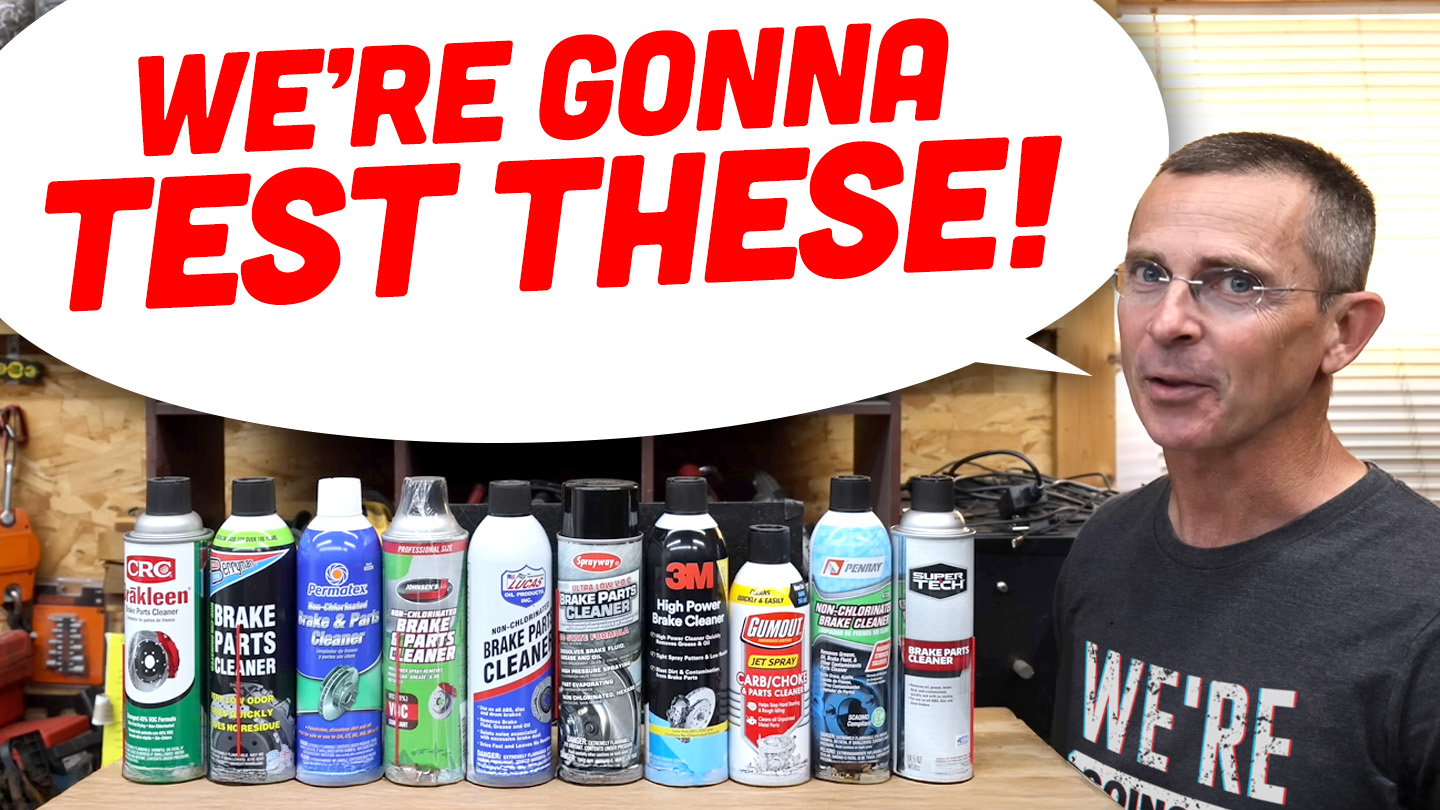
If you spend any real amount of time wrenching, there’s a pretty good chance that you have a can or a few of parts cleaners in your inventory. There’s a whole world of carburetors, brake parts, and engine components that could use a nice cleaning up from time to time. But if you’re like me and thought that most of these cleaners have similar effectiveness, you might be surprised to watch this latest Project Farm video. Apparently, some cleaners are shockingly more effective than others.
I almost always have a can of parts cleaner in my inventory and can think of a million different ways to use it. Most of my earliest wrenching projects were reviving barn find motorcycles from the dead, and cans of carb cleaner/parts cleaner were instrumental in restoring old carburetors back to working condition. It’s just so easy and gratifying to insert the little plastic stick into a jet, clear it out with some blast from the can, and then put it all back together.


I’ve found myself using parts cleaner to shine up Vespa undercarriage parts gunked up by a heavy oil leak. I’ve used parts cleaner to wipe away the grime from brakes, and I’ve used parts cleaner to clear oil out of an area so I can better pinpoint a leak. Parts cleaner can even be used for stuff that isn’t exactly car-related, like zapping away marker from a surface or cleaning appliance parts. There’s a good chance that you’ve seen my cans of parts spray in random pictures of my desk, including this one of this lamp that I bought that came from the SS United States:

Usually, I just grab whatever is on the shelf at Walmart or a parts store, never really thinking twice about the effectiveness of the can. Often, I end up with a can of Gumout Carb/Choke & Parts Cleaner or Walmart Super Tech Parts Cleaner, and it seems to work fine enough. I’ve had this habit for years! As it turns out, I might actually be using some of the less effective cans of cleaner out there.
Todd Osgood from Project Farm decided to test the popular brands of parts cleaner out there, and the results were so convincing that I’m now going to switch brands. Check this video out:
Kinds Of Cleaners
Todd technically tested two types of parts cleaners. The first type of cleaner you’ll find out there is brake cleaner. These are broken down into two categories: Chlorinated cleaners and non-chlorinated cleaners. I’ll let Fastenal explain:
– Chlorinated solvents (like perchloroethylene or methylene chloride): These are the old-school heavy hitters—super effective but require a bit more care when using them.
– Non-chlorinated solvents (like acetone, heptane, and isopropyl alcohol): These are the newer formulas designed to meet the needs of users who live in areas that restrict chlorinated options. They still pack a punch and dry even faster than their chlorinated cousins.
The two types are important to consider because chlorinated brake cleaner can get lethal fast if you’re not careful. Dr. Bernard, known as the ChubbyEmu, recently published a video based on a case study from 1982 that detailed a man who accidentally inhaled phosgene gas while welding parts. Here’s that video:
The gas effectively destroyed the man’s proteins and DNA, eventually leading to his death after his body shut down. How did this happen? He cleaned parts with chlorinated brake cleaner before hitting them with a welder.
In 1995, the Journal of Accident and Emergency Medicine detailed another case of a man who was injured after trying to weld an old refrigerator, which had chlorinated fluorocarbons in it.
Phosgene gas is reportedly created after the Tetrachloroethylene-based cleaner is exposed to temperatures past 315 degrees Celsius, which is what you can get if you weld a part that you just cleaned with the stuff. Brake cleaner isn’t the only can of chemicals with chlorinated hydrocarbons, as you can find them in pesticides and other solvents.
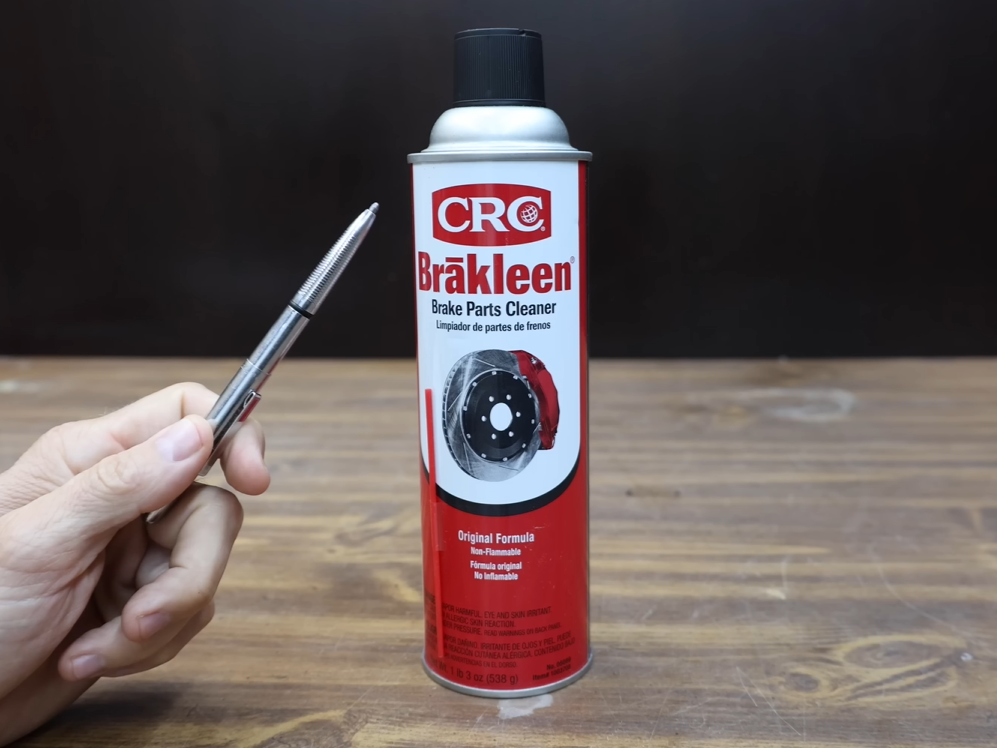
Also, Tetrachloroethylene is a Group 2A Carcinogen, which means it’s “Probably carcinogenic to humans.” Chlorinated cleaners are really effective at destroying whatever uncleanliness is in your path. However, some wrenchers just avoid chlorinated cleaners because of the potential health and environmental risks. For those folks, non-chlorinated solvents exist.
You will also see carb cleaners and general parts cleaners out there. These will also usually be non-chlorinated and sometimes have similar ingredients to non-chlorinated brake cleaners, but they’re more formulated to break up varnished fuel without destroying the carb’s internals. You’ll often see these cleaners with high amounts of acetone. Of course, none of these chemicals are safe for you, so don’t treat non-chlorinated cleaners as something safe to use without caution.
The Tests
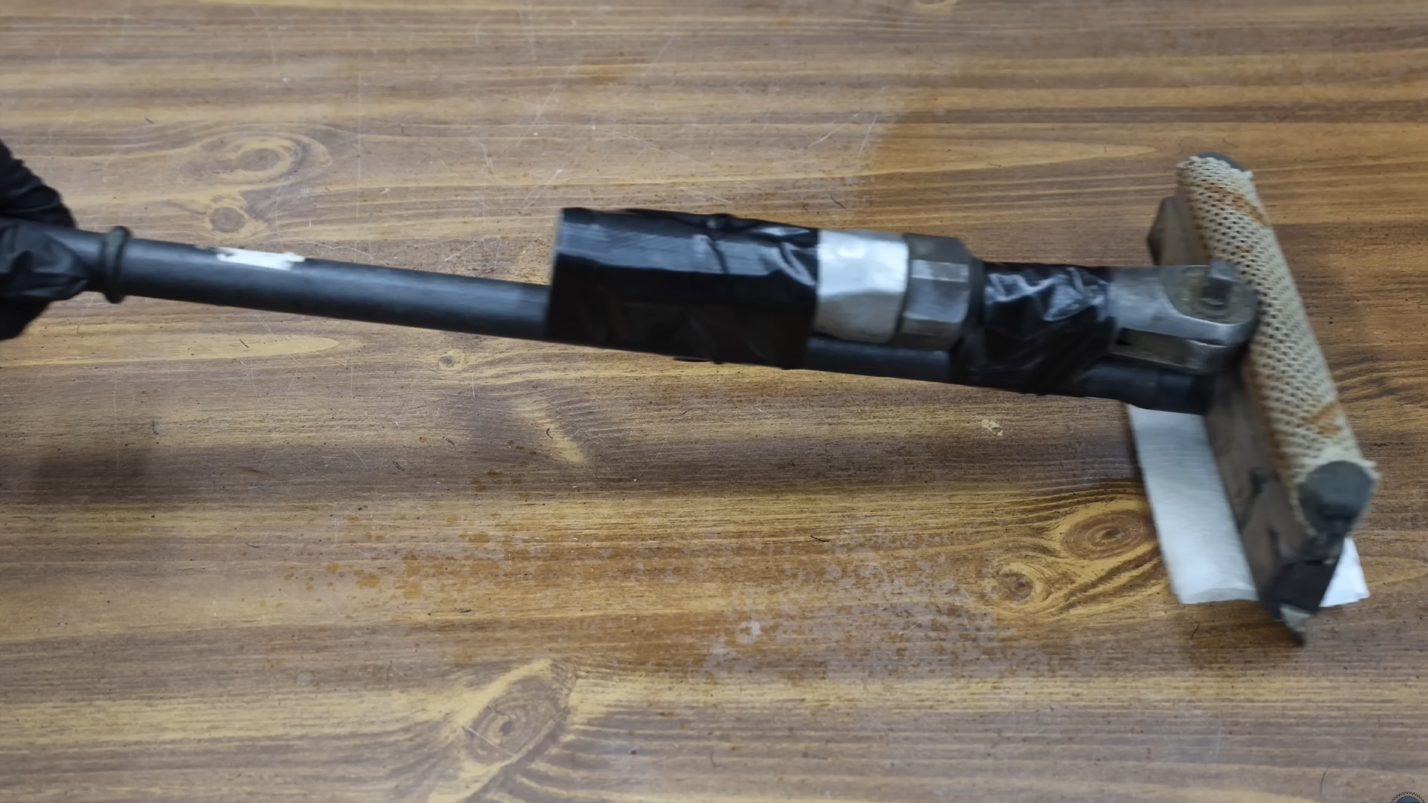
Todd brewed up a fascinating way to test the cleaners. The first test involved simply wiping the cleaner onto a table using a weighted squeegee to press a solvent-soaked paper towel against the surface. With gravity providing consistent pressure so each brand would be applied equally for each test, the time it took for each brand to evaporate was measured. This metric might be important to you because you might want the product to sit there and process for a moment, or you might want the product to just do its job and dry up so you can keep working. I won’t spoil the full results for you, but one of the chlorinated cleaners took 244 seconds to evaporate while one non-chlorinated parts cleaner disappeared in an impressive three seconds.
The next test was a two-in-one setup.
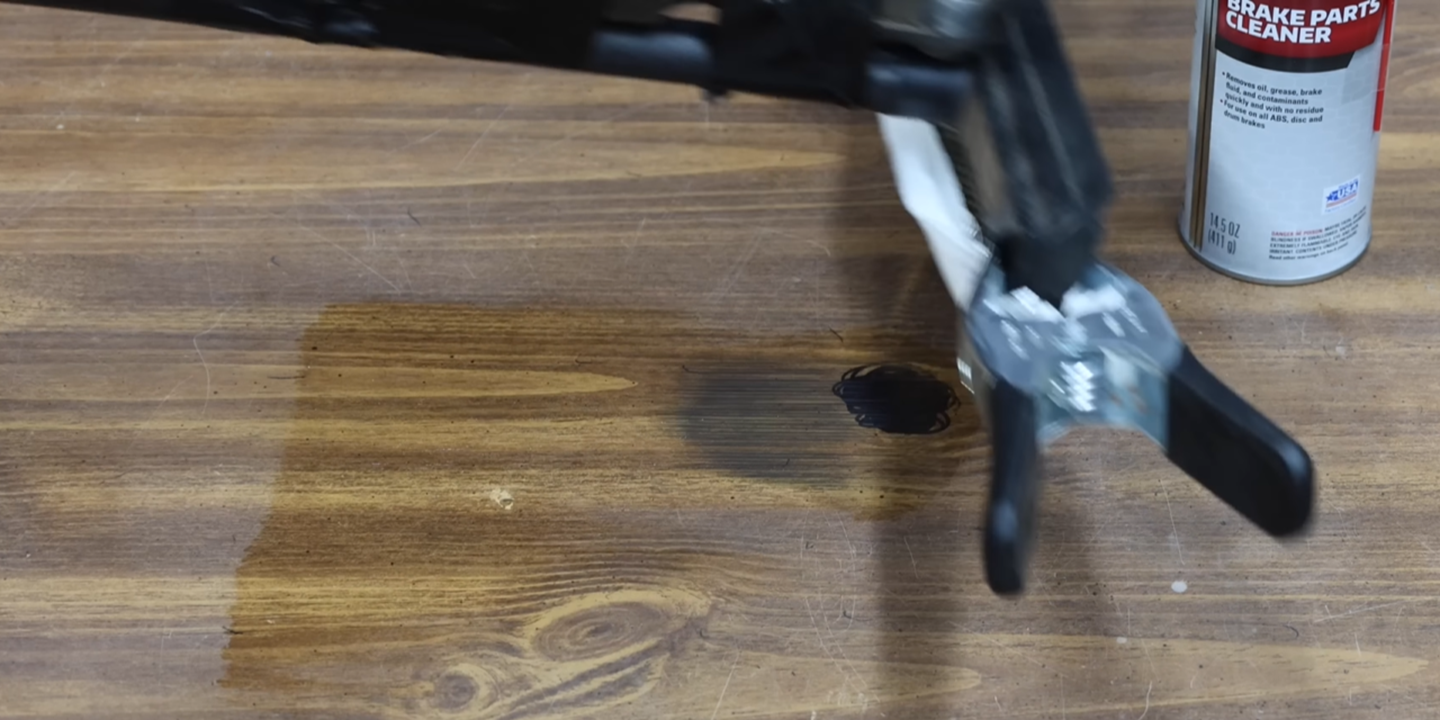
Todd marked the table with permanent marker, then applied grease over it. Then he tested how many wipes of the brush (again, weighted for consistent pressure from test to test) were required to remove the grease and reach the marker stains. This is where the things started blowing my mind. Again, I highly recommend watching the video to get the results, but the Gumout and Super Tech cleaners that I have been using for several years were at the back of the pack for performance. The fastest cleaner got the job done in three passes, but it took Gumout a lousy nine passes to do its job.
The next test is a wild one, and challenges the cleaners to remove a sludge of grease, brake fluid, motor oil, and sand off a test piece. While the test might seem a bit exaggerated, these cleaners are supposed to be able to dislodge built-up crud from your parts using the pressure from their sprays in addition to their solvents, and this test simulates that.
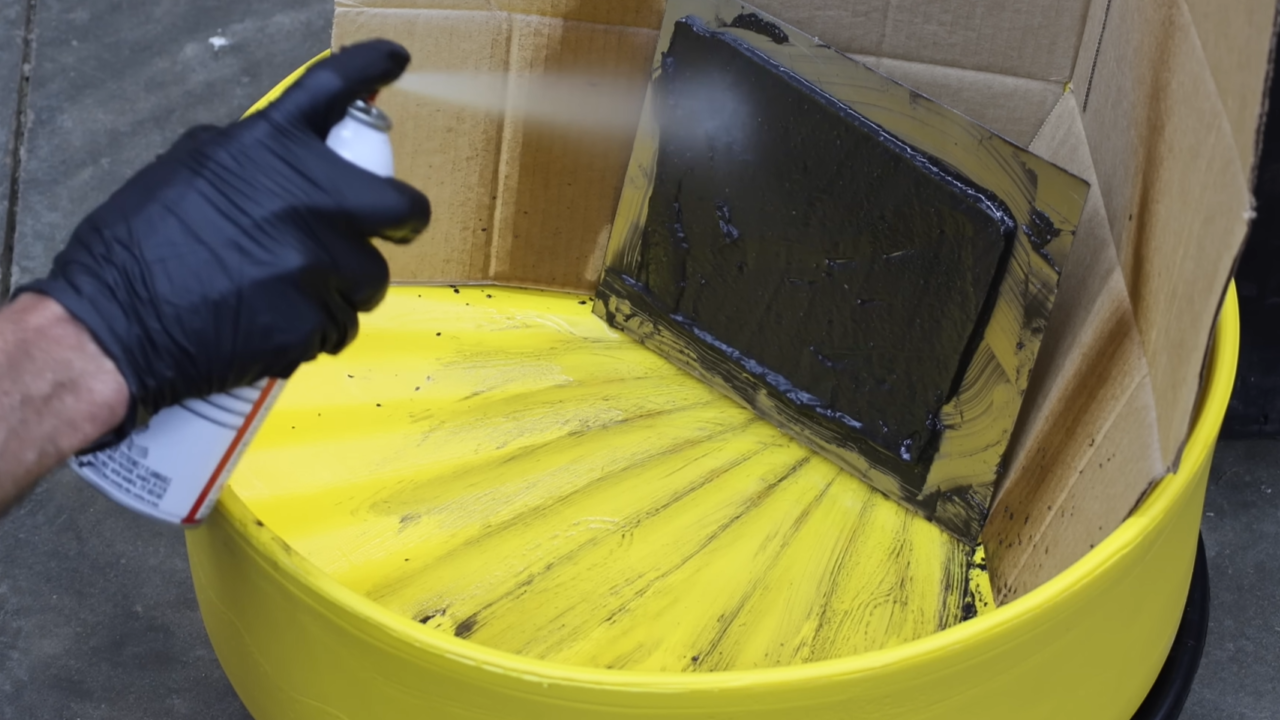
Once again, Gumout and Super Tech finished at the back of the pack. On average, the Super Tech blew away zero grams of sludge per gram of cleaner used. Gumout did only slightly better, blasting away 0.01 grams of sludge per gram of product used. As a result, these cheap sprays technically cost more to use on a cost per gram removed basis. Ouch.
The final test involved seeing what residue was left behind after the product evaporated from a test piece. Gumout and Super Tech took last place and second-to-last place, respectively, leaving behind some considerable residue.
Learning Something New
Todd more or less answered a question I’ve had for years. I long wondered about the effectiveness of carb cleaners because the stuff that I used didn’t seem to do its job unless I expended a whole can on one part. As it turns out, I’ve just been using the worst parts cleaners on the shelf, and I didn’t even know.

Todd’s testing had some clear winners in it. One of the best non-chlorinated cleaners was Permatex Non-Chlorinated Brake & Parts Cleaner. It evaporated slowly and left behind a lot of residue, but performed almost as well as the old-school chlorinated cleaners. So, I think I have a new cleaner to try this season!
The biggest lesson I’ve learned here, and honestly, I’m sort of surprised I already didn’t know this, is that not all parts cleaners are as effective as I thought. I figured that whatever’s on the shelf would get the job done. Apparently, I was right, but some cleaners do things vastly faster and better for not a whole lot more money.
I highly recommend watching this episode of Project Farm. If you use parts cleaner as often as I do, you might learn something new. I know I did. Todd, if you read this, keep up the great work! I probably wouldn’t have learned so much about how different similar products can be if it weren’t for the guy buying and testing tons of tools and chemicals so you don’t have to.
Top graphic image: Project Farm / YouTube


Between the solvents we had on the bench in our garage, eating frog legs and crawfish out of the rice fields sprayed by crop dusters I later guided with flags (and get some spray) in high school, I am amazed the only cancer I’ve had was a melanoma from back when I spent a lot of time in the sun doing healthier things like being on the swim team.
I’m now convinced there is some type of placebo effect in using a cleaner out of habit for awhile. Such as yourself, I’ve used Gumout for years and have always thought it was fine, yet I remember picking up some SuperTech and thinking “this stuff sucks”.
Also, the more I learn about the various chemicals used in the auto-repair industry, the more I’m happy I moved auto-repair to hobby status and started flying a desk many years ago.
I wish you had written out the results. I’m very interested in a lot of this guy’s content, but his voice makes the videos completely unwatchable. I do realize this isn’t his fault…
As a frequent user of parts-cleaner sprays on any number of old flivvers I happen to have drug home, I was super interested in watching this.
I made it about :23 before I couldn’t take the guy’s voice anymore, and fast forwarded to the end. The content might be great, but the narration is absolutely brutal.
Project farm is a great watch
“Dr. Bernard, known as the ChubbyEmu, recently published a video based on a case study from 1982 that detailed a man who accidentally inhaled phosgene gas while welding parts”
While I was a student at UC Davis one of my professors told me the biochemistry building we were in had been built with the exhaust from a fume hood right next to the building’s air intake. The hood in question was in a lab that worked with phosgene….
Which building was that? I grew up in Davis and spent some time taking courses in those hallowed halls while in high school but went to UCSD to get away from my parents and the seemingly half of my high school class that stayed in Davis. I think all of my lectures were in 194 Chem. My parents met and both graduated there and my mom still lives in assisted living in Davis. The city has changed so much from when my first memories were forming, and it was a little town of ~9,000.
IIRC Briggs hall.
I was there in the early 90s and it was still very much a cow town but the delusions of grandeur were making their way over from Sacramento even then.
Ha! I used to deliver the Sacramento Bee to Dr. Briggs. Before Briggs Hall was completed. My route included College Park, and several customers had buildings named after them. Dr. Kleiber was another.
Back when I was a young’n we had tri Chloro ethylene. Nothing stood a chance.
That stuff straight up erased whatever you aimed it at
Fun fact: there are multiple Superfund sites throughout Silicon Valley where semiconductor factories used to be. Mostly because of trichloroethylene contamination. Some of the Google buildings have to maintain positive pressure to keep the fumes from coming up from underground into the building.
I worked at one in the Montreal area.
When environmental laws started taking off in the 70’s, the company confirmed with the government what to do. The answer was that it’s still OK to send it down the floor drains.
A few years later, the floor was redone in the shop. They discovered that the floor drains were not connected to the sewers, but just drained into the ground.
The factory was built in 1928 and had used TCE pretty much since day one!
Vehicle repair has always offered major risk to your health. The old time way to locate a freon leak involved an opportunity to produce your very own phosgene gas with a propane torch powered leak detector. Many still clean parts with raw gas.
While this article may seem shouty, that’s not going to hurt you. Ignoring the warnings sure will. These risks convinced me to walk away from auto repair 20-some years ago.
I used to use those “widowmaker” jacks every single time I lifted my car to change wheels or for something minor. I never put my body under the vehicle, but I also thought the whole widowmaker thing was overblown because it never happened to me. Then it did, and it was terrifying. I suddenly realize how many folks end up pinned under their cars.
Now, every car gets a trolley jack at a minimum, even for emergency tire changes.
Todd’s videos are the best when you’ve already purchased the items he’s testing and the one you bought starts doing well in the first test so you just start rooting for it like it’s your home team. And then when it wins it’s exhilarating. Happened to me when he tested borescopes. Love me some validation.
Classic move of reading reviews after you bought the thing. The validation is better than the pre-purchase research
I thought I was the only one lol
I get that the incentive to generate lots of content every day is strong, but if I see much more recapitulating of YouTube, I’m going to quit this site even faster than I quit Jalopnik over the endless listicles.
As a sidebar to another article, it’s fine. Or a “see also,” that’d be cool. But I’m not here in this corner of the internet to be told about that other corner over there. I’m not at the Autopian to be told about a YouTube video.
Amusingly, this story didn’t even get many clicks. I did it purely because it genuinely surprised me. We do believe that the occasional post about a video some people may not see is okay. That’s why we sort of stopped doing the daily Autopian Drive-In thing. A daily video post was, eh…
Thank you Mercedes, for sharing something you feel may be of benefit to Autopian MEMBERS. Elhigh should stick with YouTube, or possibly the National Enquirer.
No, I would prefer to stick with both but thanks for your input.
Please buy a membership to help support our great community.
I already have. Got the bumper sticker and everything.
Great thanks .
it doesn’t show member yet by your name.
Don’t know what to tell you. I can post a picture of the T-shirt if it helps.
First, unless you spend hours a day on youtube and the algorithm magically suggests this to you, theres a pretty good chance you’d never see it, so it’s 100% relevant to this community. Second, I love the entitlement – all salty about something thats provided free to you. Crazy.
First, Project Farm is a popular YT channel with nearly 4 million subscribers – myself among them. There’s no magic in the algorithm; Todd is a reliable source of clicks. The algorithm is going to put his channel in front of as many people as possible. He might not have the pull of Mr. Beast, but he ain’t Rebecca Black either. For an ostensibly one-man show, he does very well.
Second, you can call it entitlement; I call it feedback. And it would be free to me, except I paid. And even then I don’t think I’m entitled.
I just don’t want to see this site go the way Jalopnik did.
Bye Felicia.
I have not had time to watch Todd’s video yet, so this may be in there: California-compliant brake cleaners generally contain mostly acetone, because it is a low VOC cleaner. These cleaners evaporate very quickly (which sucks in hot weather) and do not work very well. Non-California-compliant brake cleaners generally contain naptha and heptane, rather than acetone. These cleaners work better and evaporate more slowly. CRC Brakleeen red and green seem to be the same here in California (acetone), but in other states they can be very different from each other. If I am shopping for brake cleaner when I am not in California, I look for the “not California compliant” on the can. Also, acetone is hard on paint and can soften plastics. For that reason, I am always careful when using acetone-type brake cleaner around electrical connectors and I NEVER wipe down my toolbox with brake cleaner containing acetone. It fogs up the paint.
Why is this article so loud and fast?
I read at my own pace, and I’m reading this article in silence.
I was hoping there was a better alternative than my go to red Brakleen. Ah well. That stuff is truly scary. When I worked in the parts industry, farmers would buy that stuff by the pallet! Washing their hands with it, no gloves, etc. I would always tell folks to NEVER weld anything after cleaning it with the red stuff.
I used to be a lot more cavalier with my usage as well, until I realized that this stuff is by far the most effective wasp killer on the planet. IMMEDIATE drop dead upon contact. Scares me.
I used to live places where black widow spiders were ubiquitous and carburetor cleaner had a similar effect… bug sprays were ineffective but a can of Berryman or such instantly knocked ‘em dead. Probably inadvisable but that was the era of “better living through chemistry.”
CRC Wasp & Hornet Killer Plus Insecticide | 14 oz
I wonder if it’s any good at cleaning brake parts? Lol!!
Not surprised Gumout scored poorly. I have had good luck with Brakleen, but after my mother contracted the respiratory disease that eventually killed her, I’ve been a lot more careful around this kind of stuff and reduced my use considerably. I don’t even mind dying, I just really don’t want to die like that. For cleaning, I mostly put the physical work in and keep nasty chemicals for corrosion freeing and protecting (I’m a huge fan of ZEP 45 and PLS for these—picked them up working at a salt water marina and they absolutely annihilate anything else I’ve gotten off the shelf and they seem to hold product and fire a good distance long after the can seems like it should be empty, but I have to order them online and they are really nasty, so that’s the trade off).
It’s just not a Sunday without a new Project Farm video. I have actually bought things on Todd’s tests.
I have bought things I didn’t even know I wanted.
same on both accounts
The cordless pocket blower I bought has been super handy and I didn’t know it existed before he reviewed them.
Are there carguys who don’t know about Project Farm? I’d think a Venn diagram of those 2 groups would be a single circle.
Count me as the carguy that ruins your singular circle Venn diagram. Sorry. I’ll remedy that over the weekend
He’s a national treasure.
While all these other sites get free review units and payola to hype of products or simply take manufacturer’s claims for face value, he puts in the work to do real world testing.
Chlorinated Brakleen is the OG of cleaners. Always have a can of that stuff handy.
But yeah, whenever me or my son busts it out for a job, we always remind each other to stay away from hot surfaces with it. We like to use fire to loosen things when necessary so we’re well aware of the safety concerns. We’re so safe, that sometimes we have to bust out the safety sandals when steel-toed boots just won’t do the job.
I’ve even used it to clean parts of my vehicle that most of you would refer to as a UAP.
My wife says I’m addicted to brake cleaner. But I can stop any time I want!
I always trust Todd’s reviews.
Can’t wait for the Project Farm and The Autopian collab!
What’s interesting is that I use and have used a lot of Permatex products, but honestly had no idea they made brake parts cleaner. The ones my dad used as when I was a kid I am sure were the Chlorinated ones, but I am glad they are making those the minority.
I test brake cleaners based on whether or not the Doom soundtrack starts playing after using copious amounts of them in a non-ventilated area
I’ve inadvertently gotten high on solvents a few times, and I can’t believe there are people who do it recreationally. It’s an awful buzz.
Instant headache.
I actually use a can of the chlorinated to clean stains out of clothes- only outside !!
I never expected to read about someone doing diy dry cleaning, but here we are.
Yeah, this video will likely change my brake cleaner purchasing habits.
I’ve already purchased several products based on Project Farm testing and I’ve been happy with all of them.
I’ve been happy with all of them except the electric chainsaw. The battery absolutely did not last as long as his testing made it seem to be
Project Farm is awesome! No bullshit, no talking to hear the sound of his own voice. Straight to the point
I love his videos, but I do wish he would…tone it down a bit? If you watch his earlier videos you’ll know what I mean. He’s sort of amped up his “presenter” voice, it gets a little grating to listen to.
I’d never watched any videos before this one. It’s… hard to listen to for twenty minutes straight. Every sentence goes up in pitch! Every sentence ends in an exclamation mark! Every sentence repeats part of the previous sentence! Just… breathe (with a respirator), add a minute or two to runtime, and don’t give me anxiety with the voice-over, please.
YouTube gives us the option to control the speed, the volume, and even captioned text. Just watch at 0.75 speed and read the closed captions.
I don’t think ANYONE watches him because of the sound of his voice.
The best thing about Project Farm is Todd gets straight to the point, he gets so straight to the point you can kinda see he holding back from laughing, it’s freakin great.
VERY IMPRESSIVE