

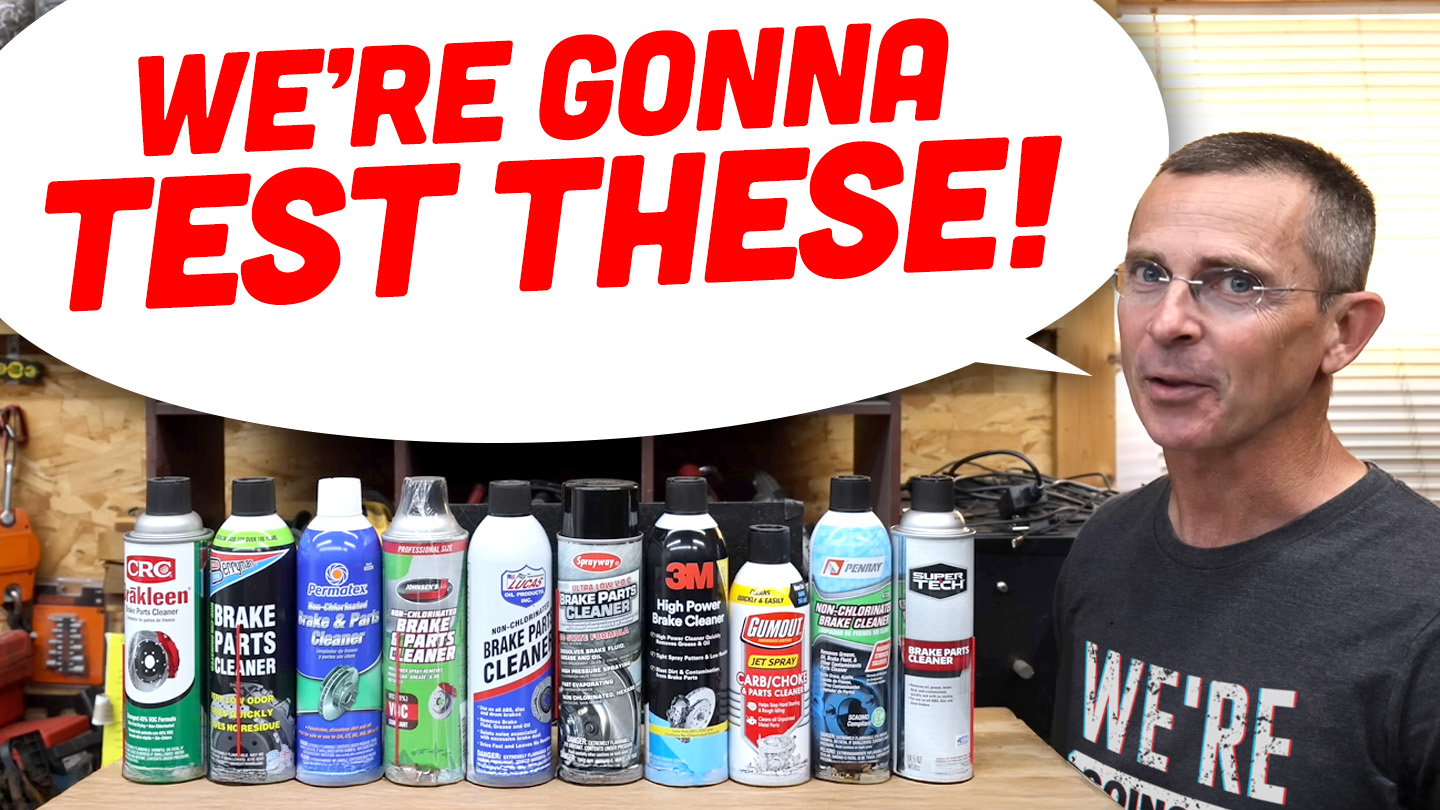
If you spend any real amount of time wrenching, there’s a pretty good chance that you have a can or a few of parts cleaners in your inventory. There’s a whole world of carburetors, brake parts, and engine components that could use a nice cleaning up from time to time. But if you’re like me and thought that most of these cleaners have similar effectiveness, you might be surprised to watch this latest Project Farm video. Apparently, some cleaners are shockingly more effective than others.
I almost always have a can of parts cleaner in my inventory and can think of a million different ways to use it. Most of my earliest wrenching projects were reviving barn find motorcycles from the dead, and cans of carb cleaner/parts cleaner were instrumental in restoring old carburetors back to working condition. It’s just so easy and gratifying to insert the little plastic stick into a jet, clear it out with some blast from the can, and then put it all back together.


I’ve found myself using parts cleaner to shine up Vespa undercarriage parts gunked up by a heavy oil leak. I’ve used parts cleaner to wipe away the grime from brakes, and I’ve used parts cleaner to clear oil out of an area so I can better pinpoint a leak. Parts cleaner can even be used for stuff that isn’t exactly car-related, like zapping away marker from a surface or cleaning appliance parts. There’s a good chance that you’ve seen my cans of parts spray in random pictures of my desk, including this one of this lamp that I bought that came from the SS United States:

Usually, I just grab whatever is on the shelf at Walmart or a parts store, never really thinking twice about the effectiveness of the can. Often, I end up with a can of Gumout Carb/Choke & Parts Cleaner or Walmart Super Tech Parts Cleaner, and it seems to work fine enough. I’ve had this habit for years! As it turns out, I might actually be using some of the less effective cans of cleaner out there.
Todd Osgood from Project Farm decided to test the popular brands of parts cleaner out there, and the results were so convincing that I’m now going to switch brands. Check this video out:
Kinds Of Cleaners
Todd technically tested two types of parts cleaners. The first type of cleaner you’ll find out there is brake cleaner. These are broken down into two categories: Chlorinated cleaners and non-chlorinated cleaners. I’ll let Fastenal explain:
– Chlorinated solvents (like perchloroethylene or methylene chloride): These are the old-school heavy hitters—super effective but require a bit more care when using them.
– Non-chlorinated solvents (like acetone, heptane, and isopropyl alcohol): These are the newer formulas designed to meet the needs of users who live in areas that restrict chlorinated options. They still pack a punch and dry even faster than their chlorinated cousins.
The two types are important to consider because chlorinated brake cleaner can get lethal fast if you’re not careful. Dr. Bernard, known as the ChubbyEmu, recently published a video based on a case study from 1982 that detailed a man who accidentally inhaled phosgene gas while welding parts. Here’s that video:
The gas effectively destroyed the man’s proteins and DNA, eventually leading to his death after his body shut down. How did this happen? He cleaned parts with chlorinated brake cleaner before hitting them with a welder.
In 1995, the Journal of Accident and Emergency Medicine detailed another case of a man who was injured after trying to weld an old refrigerator, which had chlorinated fluorocarbons in it.
Phosgene gas is reportedly created after the Tetrachloroethylene-based cleaner is exposed to temperatures past 315 degrees Celsius, which is what you can get if you weld a part that you just cleaned with the stuff. Brake cleaner isn’t the only can of chemicals with chlorinated hydrocarbons, as you can find them in pesticides and other solvents.
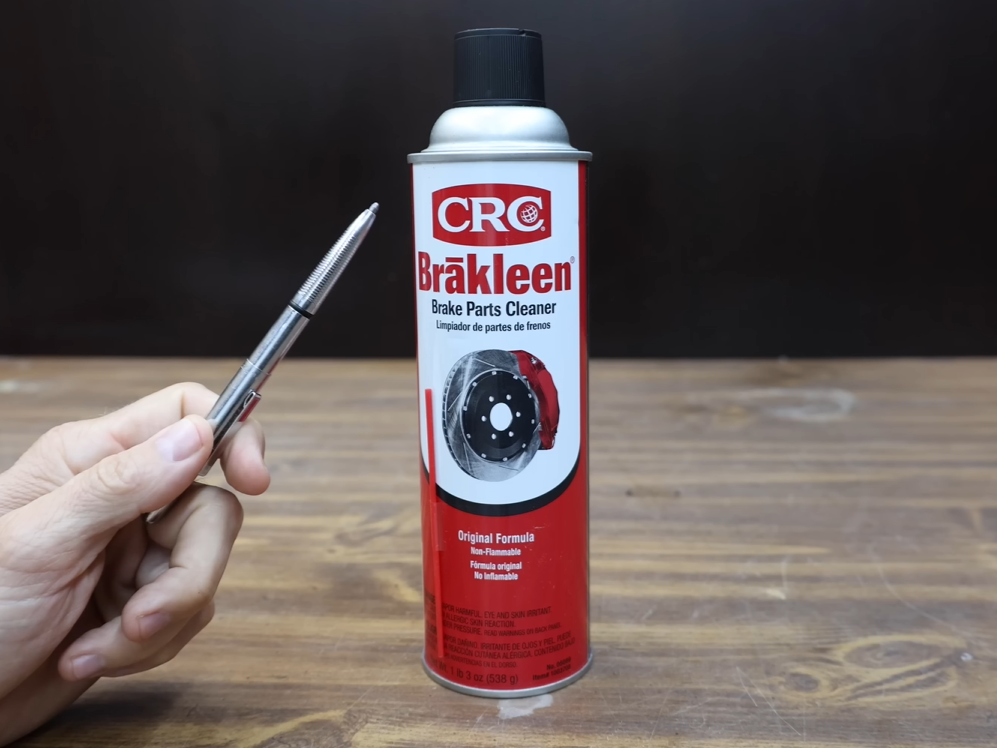
Also, Tetrachloroethylene is a Group 2A Carcinogen, which means it’s “Probably carcinogenic to humans.” Chlorinated cleaners are really effective at destroying whatever uncleanliness is in your path. However, some wrenchers just avoid chlorinated cleaners because of the potential health and environmental risks. For those folks, non-chlorinated solvents exist.
You will also see carb cleaners and general parts cleaners out there. These will also usually be non-chlorinated and sometimes have similar ingredients to non-chlorinated brake cleaners, but they’re more formulated to break up varnished fuel without destroying the carb’s internals. You’ll often see these cleaners with high amounts of acetone. Of course, none of these chemicals are safe for you, so don’t treat non-chlorinated cleaners as something safe to use without caution.
The Tests
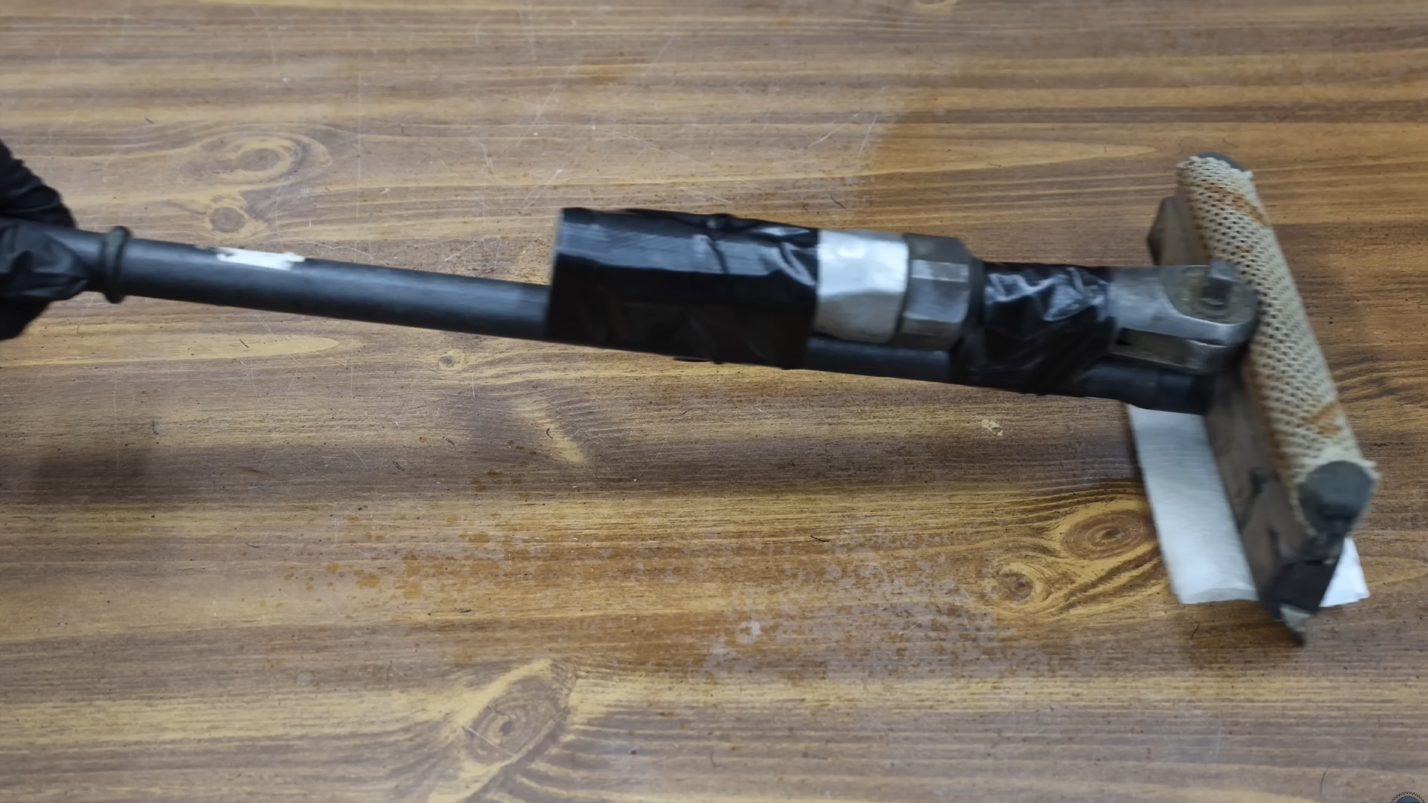
Todd brewed up a fascinating way to test the cleaners. The first test involved simply wiping the cleaner onto a table using a weighted squeegee to press a solvent-soaked paper towel against the surface. With gravity providing consistent pressure so each brand would be applied equally for each test, the time it took for each brand to evaporate was measured. This metric might be important to you because you might want the product to sit there and process for a moment, or you might want the product to just do its job and dry up so you can keep working. I won’t spoil the full results for you, but one of the chlorinated cleaners took 244 seconds to evaporate while one non-chlorinated parts cleaner disappeared in an impressive three seconds.
The next test was a two-in-one setup.
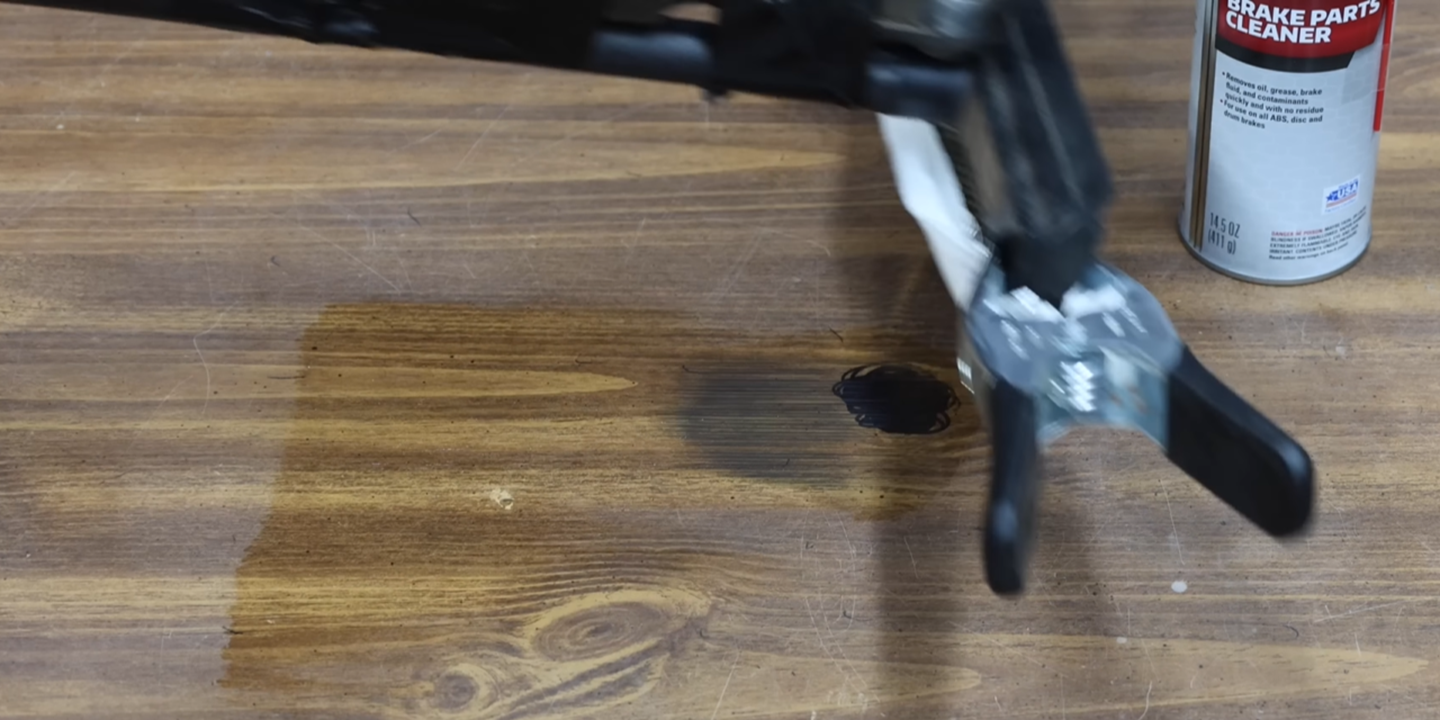
Todd marked the table with permanent marker, then applied grease over it. Then he tested how many wipes of the brush (again, weighted for consistent pressure from test to test) were required to remove the grease and reach the marker stains. This is where the things started blowing my mind. Again, I highly recommend watching the video to get the results, but the Gumout and Super Tech cleaners that I have been using for several years were at the back of the pack for performance. The fastest cleaner got the job done in three passes, but it took Gumout a lousy nine passes to do its job.
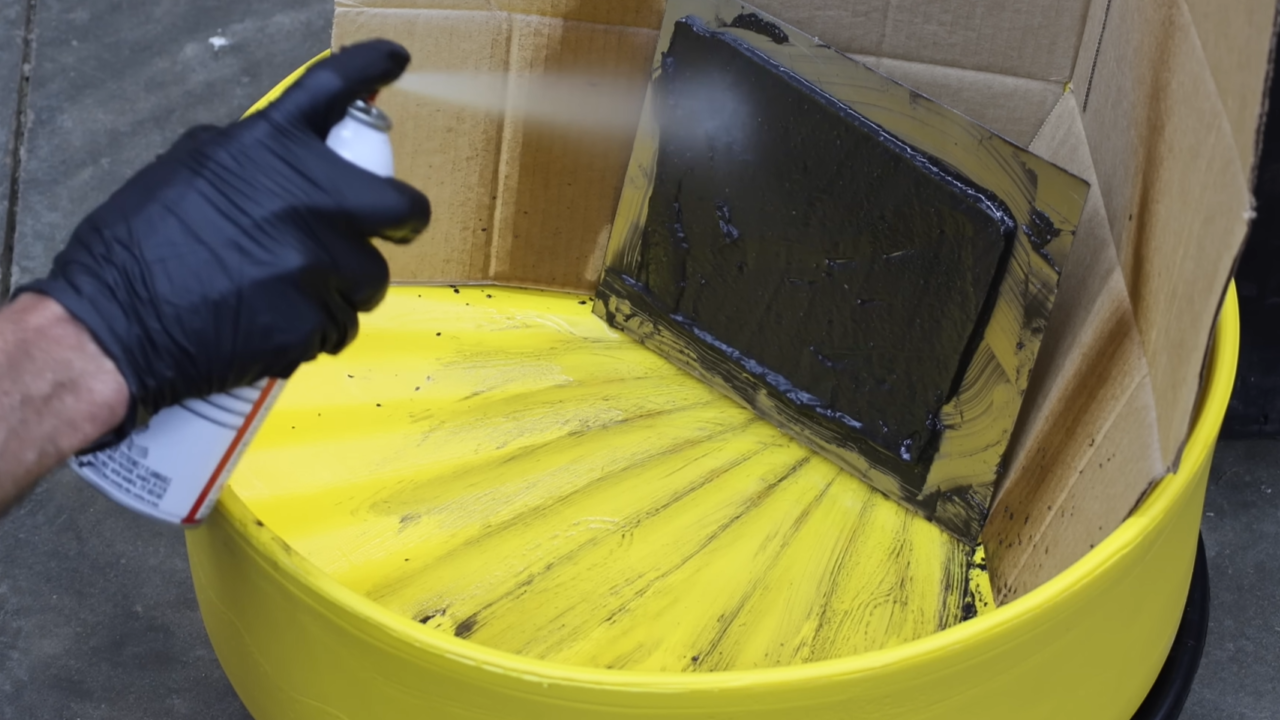
The next test is a wild one, and challenges the cleaners to remove a sludge of grease, brake fluid, motor oil, and sand off a test piece. While the test might seem a bit exaggerated, these cleaners are supposed to be able to dislodge built-up crud from your parts using the pressure from their sprays in addition to their solvents, and this test simulates that.
Once again, Gumout and Super Tech finished at the back of the pack. On average, the Super Tech blew away zero grams of sludge per gram of cleaner used. Gumout did only slightly better, blasting away 0.01 grams of sludge per gram of product used. As a result, these cheap sprays technically cost more to use on a cost per gram removed basis. Ouch.
The final test involved seeing what residue was left behind after the product evaporated from a test piece. Gumout and Super Tech took last place and second-to-last place, respectively, leaving behind some considerable residue.
Learning Something New
Todd more or less answered a question I’ve had for years. I long wondered about the effectiveness of carb cleaners because the stuff that I used didn’t seem to do its job unless I expended a whole can on one part. As it turns out, I’ve just been using the worst parts cleaners on the shelf, and I didn’t even know.

Todd’s testing had some clear winners in it. One of the best non-chlorinated cleaners was Permatex Non-Chlorinated Brake & Parts Cleaner. It evaporated slowly and left behind a lot of residue, but performed almost as well as the old-school chlorinated cleaners. So, I think I have a new cleaner to try this season!
The biggest lesson I’ve learned here, and honestly, I’m sort of surprised I already didn’t know this, is that not all parts cleaners are as effective as I thought. I figured that whatever’s on the shelf would get the job done. Apparently, I was right, but some cleaners do things vastly faster and better for not a whole lot more money.
I highly recommend watching this episode of Project Farm. If you use parts cleaner as often as I do, you might learn something new. I know I did. Todd, if you read this, keep up the great work! I probably wouldn’t have learned so much about how different similar products can be if it weren’t for the guy buying and testing tons of tools and chemicals so you don’t have to.
Top graphic image: Project Farm / YouTube


I don’t actually use much brake cleaner – it doesn’t do a great job of lifting grime anywhere near as well as some proper degreaser.
A good degreaser works like soap, it changes the surface tension and gets into the oil and grease and lifts it.
Brake cleaner is for getting surfaces completely clean of any remaining contamination afterwards, ready for gaskets or installation.
It also works even better in an ultrasonic cleaner!
If something has some really severe layers of old grease, in some cases I’ll submerge it in petrol or kerosene and leave it for a few days. I try not to do that, as you really shouldn’t get fuel on your hands as it causes all sorts of problems for your skin and can get absorbed into your bloodstream easily.
A possibly interesting addition from my time working at CRC. The original Brakleen has had (if I remember right, I was there more than a decade ago) 8 different forumulations over the years up to that point. Always thought it would be interesting to see how well each one worked versus the other, if they were changed to be better-working, or changed to be safer or to satisfy regulations.
When I started working at my current job many years ago, the brake wash used in the shop was a frequent topic of discussion, not for the increasing number of carcinogen warnings on the packaging but for its tendency to suddenly flash. Eventually, the health concerns prompted management to demand that the shop find a replacement. They tried many things, but none worked as well as the original brake wash, so the stuff stayed in use until one of the guys singed his eyebrows off for the third time. (I think that incident also resulted in a small fire.) Suddenly, one of the alternative cleaners was determined to be acceptable.
If you turn the volume way down, it’s easier to listen to the video.
There’s some Scotty Kilmer energy to this guy. But I do enjoy some of the weird stuff he chooses to test and he’s certainly methodical.
I’m no fan of Kilmer, but I do like the work done by the guy at Project Farm.
Yeah. I was comparing more the energy of the presentation and not the quality of the content. Scotty is a BS artist and Todd is an interesting nerd.