

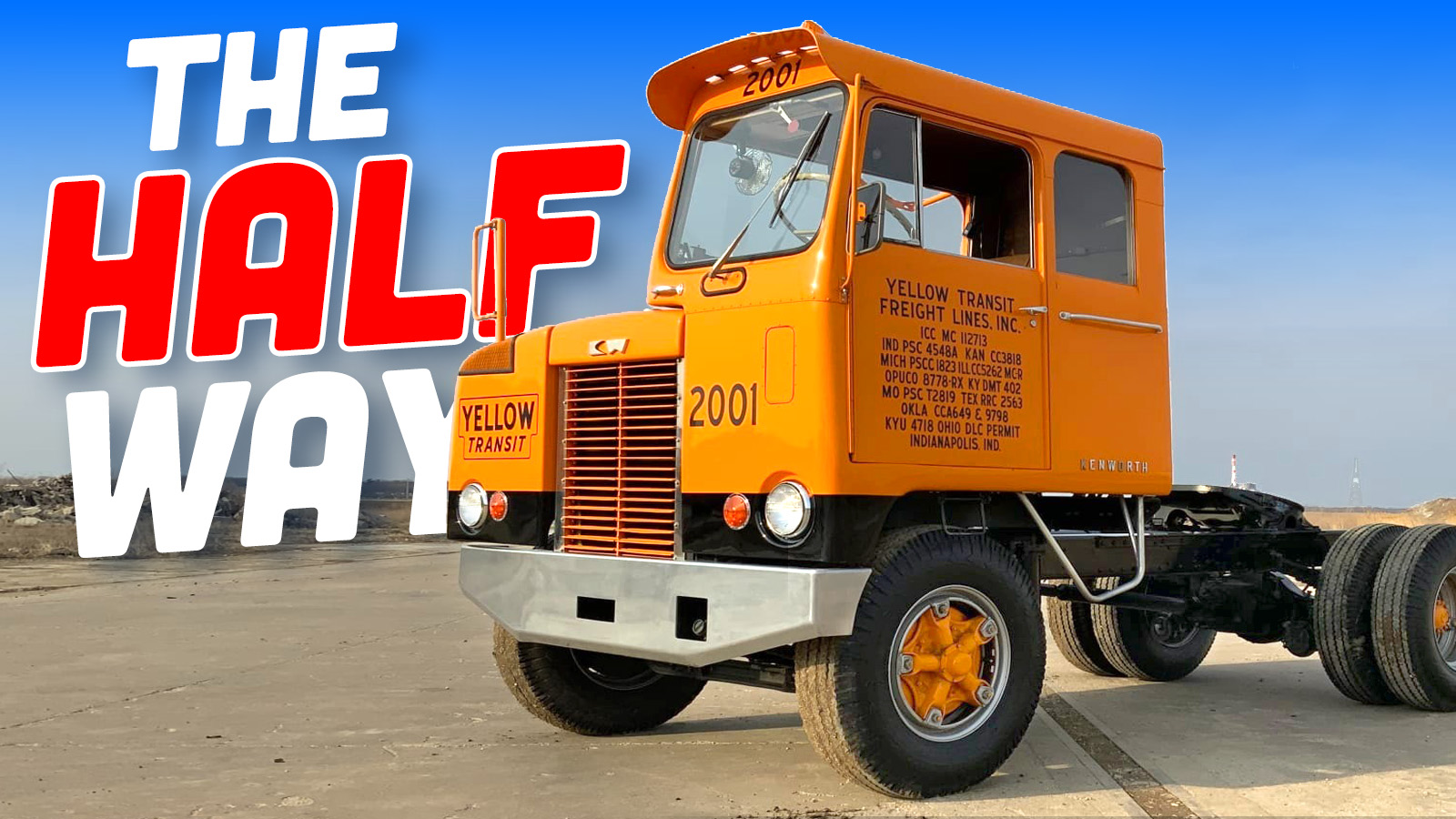
Truck manufacturers, fleets, and owner-operators are always trying to figure out how to maximize profit and minimize costs. The tools for the job, namely the semi-tractor and the semi-trailer, have an incredible impact on this. If your semi can get a little better fuel economy or if you can carry more cargo within legal constraints, that’s potentially more money you can bring home. Prior to the 1980s, the trucking industry had to work around strict length and weight restrictions that highly limited loads. Companies and individuals both found clever ways around the rules, and one of them was Kenworth. In the 1950s, Kenworth made a truck that maximized load capacity by minimizing itself. This is the Kenworth Cab Beside Engine, the truck that traded comfort, style, and everything else in the chase to shed weight.
Trucking regulation in the early decades of the automobile led to plenty of confusion and a lot of headaches. Much of it stemmed from the fact that trucks were highly limited in their total length and allowable weight. These regulations sometimes varied wildly, which meant that a truck that was legal in one state was illegal in another.


As the U.S. Department of Transportation wrote in 1997 in a draft study, prior to 1956, federal government regulation of transportation was limited to economics. DOT says the first form of transportation to see federal regulations was the railroads in the 1800s. Steamship lines were the first to see federal regulation in the 1900s, and this was followed by regulations on trucking companies, pipelines, and finally, airlines by the 1930s.

Since the feds cared only about the economics, state governments were left in charge of determining what trucks were and were not legal to use on their roads. Trucking became a major concern in the early 1900s as America’s road networks were still largely in their infancy, yet trucks were getting longer, heavier, and more numerous. States would enact regulations limiting the size and weight of trucks, and truck producers had to get creative to build rigs that worked for their owners. The Kenworth CBE, above, was one of those weird tricks meant to deliver the goods within the constraints of the law.
Length Regulations Were Highly Varied
The first state to enact a truck weight limit regulation was Maine in 1913. Back then, a truck driving in Maine couldn’t weigh more than 18,000 pounds. Massachusetts would follow with a more generous regulation allowing trucks up to 28,000 pounds. Pennsylvania and Washington enacted matching weight limits of 24,000 pounds. As you can readily guess, this was a problem early on, as a truck that was legal in Massachusetts wasn’t legal in neighboring states. Pennsylvania would later refine its weight regulations to limit the first axle to no more than 18,000 pounds.
Weight limits were first, but soon enough, they were followed up by limits on length and height, too. By 1929, most states had regulations on the total weight and dimensions of trucks. By 1933, all states had some sort of regulation limiting a truck’s size and weight. Many of these regulations were all over the place, but weirdly, the states did largely agree on one thing, and that was width. Until 1982, when the feds took over these regulations, most states agreed that trucks shouldn’t be any wider than 96 inches.

Things just didn’t get better, either. Here’s what I wrote in previous reporting:
In 1935, Congress passed the Federal Motor Carrier Act, which gave the Interstate Commerce Commission the power to regulate the trucking industry on a federal level. Eventually, carriers had to file as private, common, or contract carriers. By 1938, the ICC regulated the number of hours a trucker or bus driver could drive in a single shift. Yet, the states still had the power to impose limits on truck length and weight. Even back then this was a huge headache because a truck that was perfectly legal in one state wasn’t legal in another, and in 1941 the ICC conducted a study on the impacts of this. Here’s a snippet of what the DOT found, as it was presented in the 1997 U.S. DOT Comprehensive TS&W Study:
. . . wide and inconsistent variations in the limitations imposed by the . . . States. . . [and that]. . . limitations imposed by a single State may and often do have an influence and effect which extend, so far as interstate commerce is concerned, far beyond the borders of that State, nullifying or impairing the effectiveness of more liberal limitations imposed by neighboring States.
The 1941 study concluded that the only logical path forward was federal regulations on size and weight limits because state laws were so wildly different that trucking companies ended up just building trucks to fit the laws of more restrictive states, anyway. After all, if your truck was built just for a looser state, it wasn’t legal to operate it in a strict state.
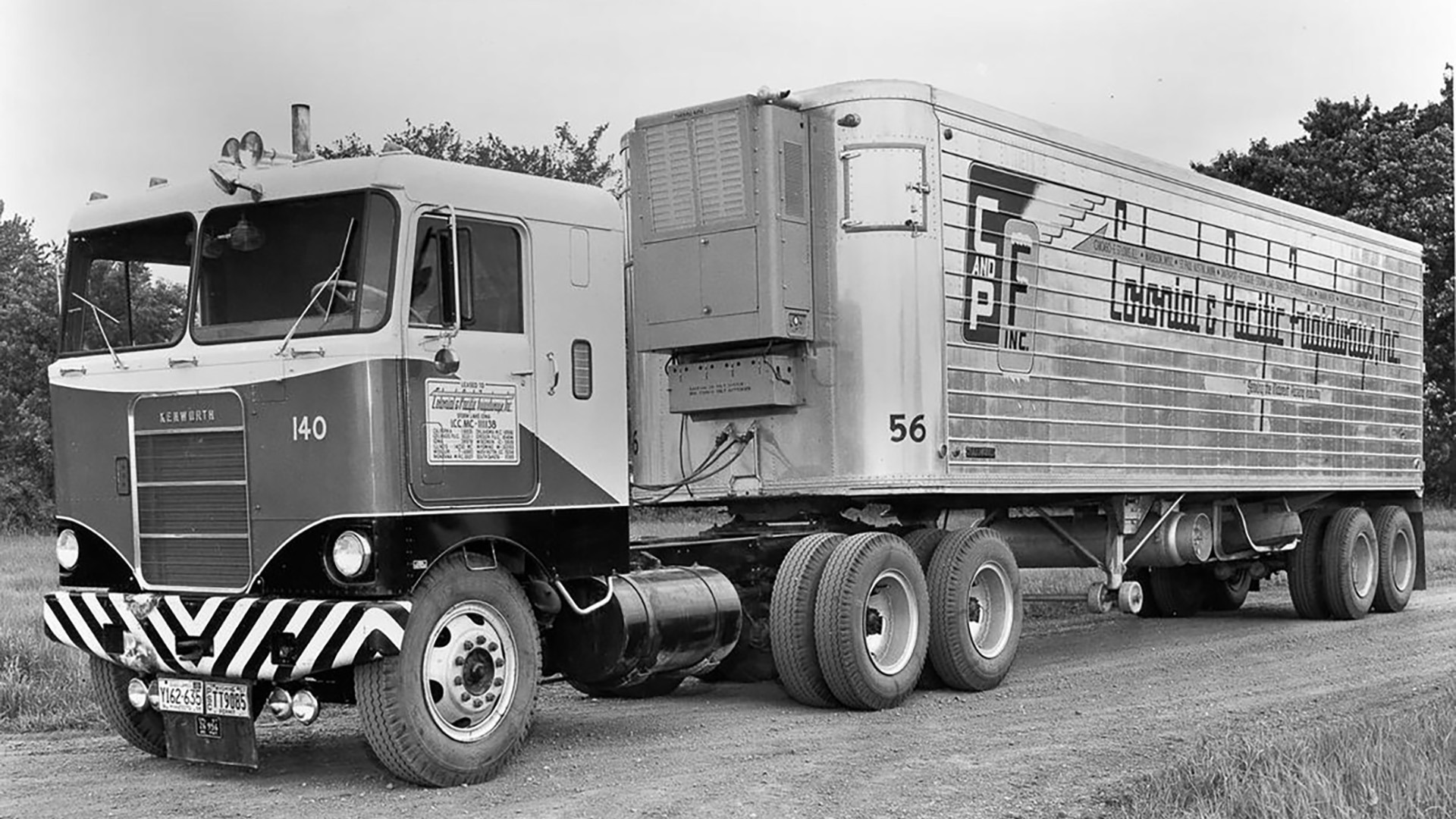
The most infamous length restriction was in Illinois. As Curbside Classic reported, the railroad lobby successfully convinced state lawmakers to limit trucks to no greater than 35 feet in length. It was an attempt to pump up rail traffic by limiting the growth of the trucking industry in the state.
The federal government eventually stepped in with The Federal-Aid Highway Act of 1956. This Act established limits specifically for trucks traveling on the Interstate and Defense Highway System. The feds said that trucks couldn’t be wider than 96 inches and couldn’t be heavier than 73,280 pounds. However, there was a grandfather clause for states with higher weight limits. The states also retained the ability to regulate length. The federal government would not regulate truck length until the Surface Transportation Act of 1982.
Cabovers Were King
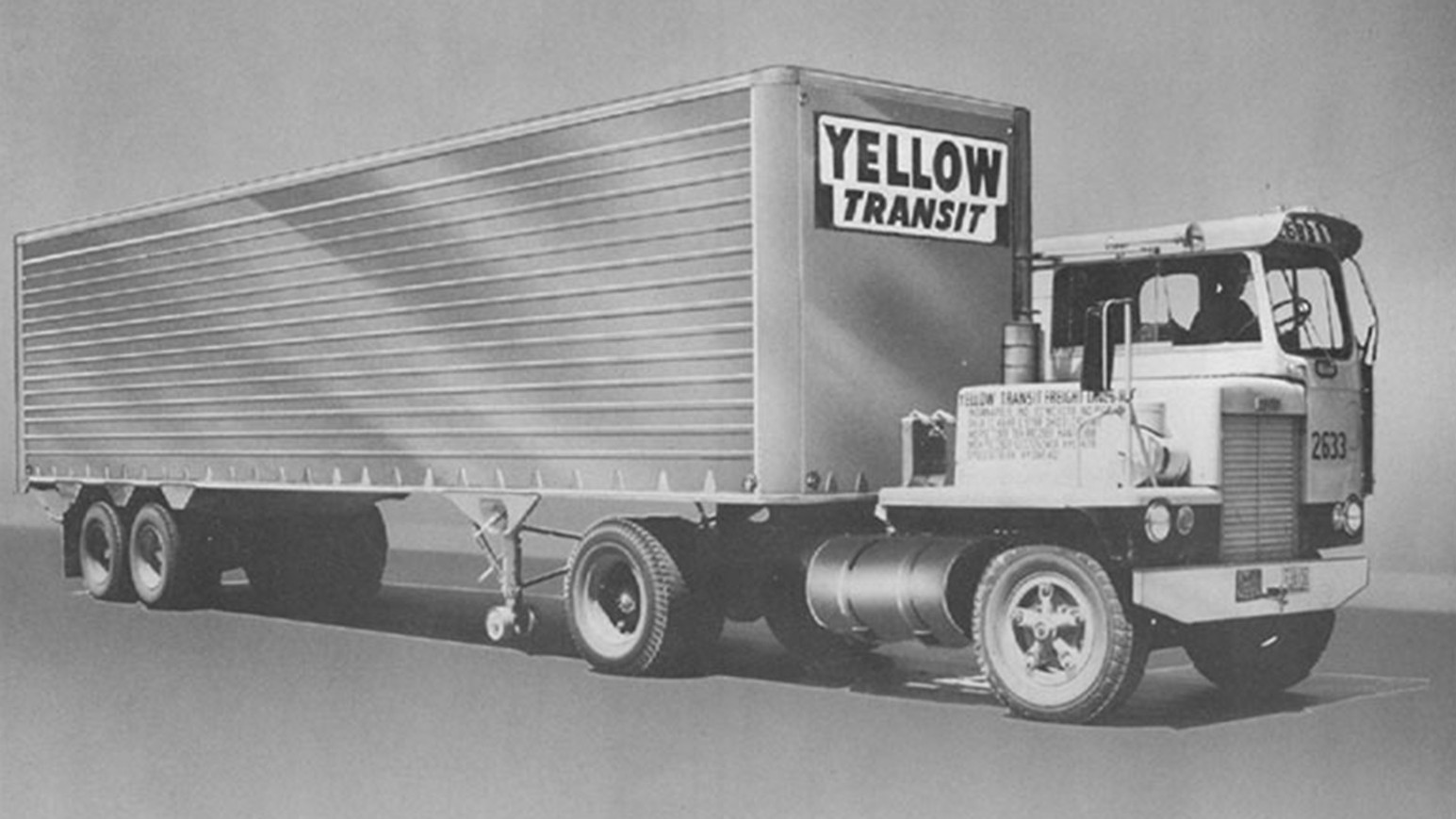
Until 1982, the trucking industry fought a constant battle to carry more cargo within length and weight constraints. The cab-over-engine semi-tractor ruled the roads during this period. By placing the cab and the engine on top of the front axle, a cabover truck saved on the several feet that would have otherwise been wasted on the long hood of a conventional design. Feet that aren’t spent on an engine in front of the cab can instead be used to carry more cargo.
To some, just having a cabover design wasn’t enough. Several decades ago, truck producers tried to find the apex of the cabover, producing shorter, lighter trucks that sacrificed creature comforts, interior space, and even a comfortable bed, all in the name of carrying more cargo. One extreme example was the Kenworth Cab Beside Engine, or CBE. This truck maximized on everything by cutting its cab in half. Yet, somehow, it still had a passenger seat and even a sleeper option.
The Truck With Car Visibility

In 1954, trucking news publications announced that Kenworth had developed a “completely new type of truck” with a revolutionary design.
According to Kenworth Chief Engineer Robert C. Norrie to Diesel Progress in 1954, Kenworth created the CBE to be the ultimate truck for visibility. This wasn’t something that Kenworth came up with overnight, but was the result of an extensive research program. Many of the cabovers of the 1950s had large blind spots. If someone stood close enough to the front of the truck, the driver wouldn’t see them. Likewise, there wasn’t much in the way of side or rear visibility in the trucks of the era, either.
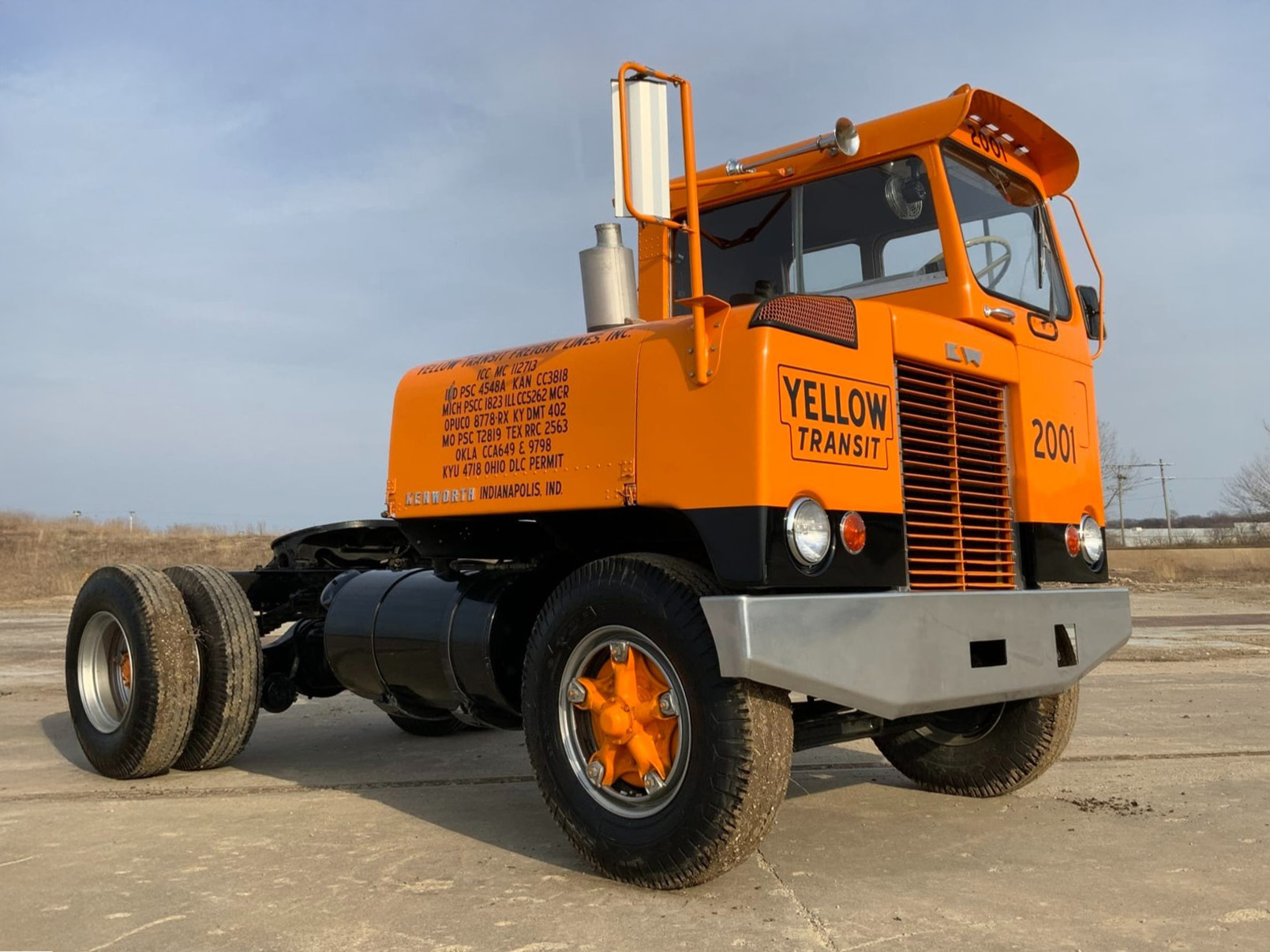
Kenworth sought to create a truck where the driver could see anything from any angle, from Diesel Progress:
“We started with the requirements, for ideal visibility and no pre conceived ideas of how the finished truck would look,” he said. “Our first thought in making every decision was its effect upon the driver’s view of the road. As a result, he can see more than the driver of any conventional or cab-over-engine truck.” As proof of unsurpassed visibility, Mr. Norrie cited the fact that the driver of the new truck can see the head of a man standing in any position next to the cab. He also mentioned that corner posts were made as narrow as possible, and that the left rear view mirror is placed low to eliminate a blind spot The driver can reach out and clean all windows from inside. The rider sits tandem to the driver, as in jet planes, with a good view of the road.
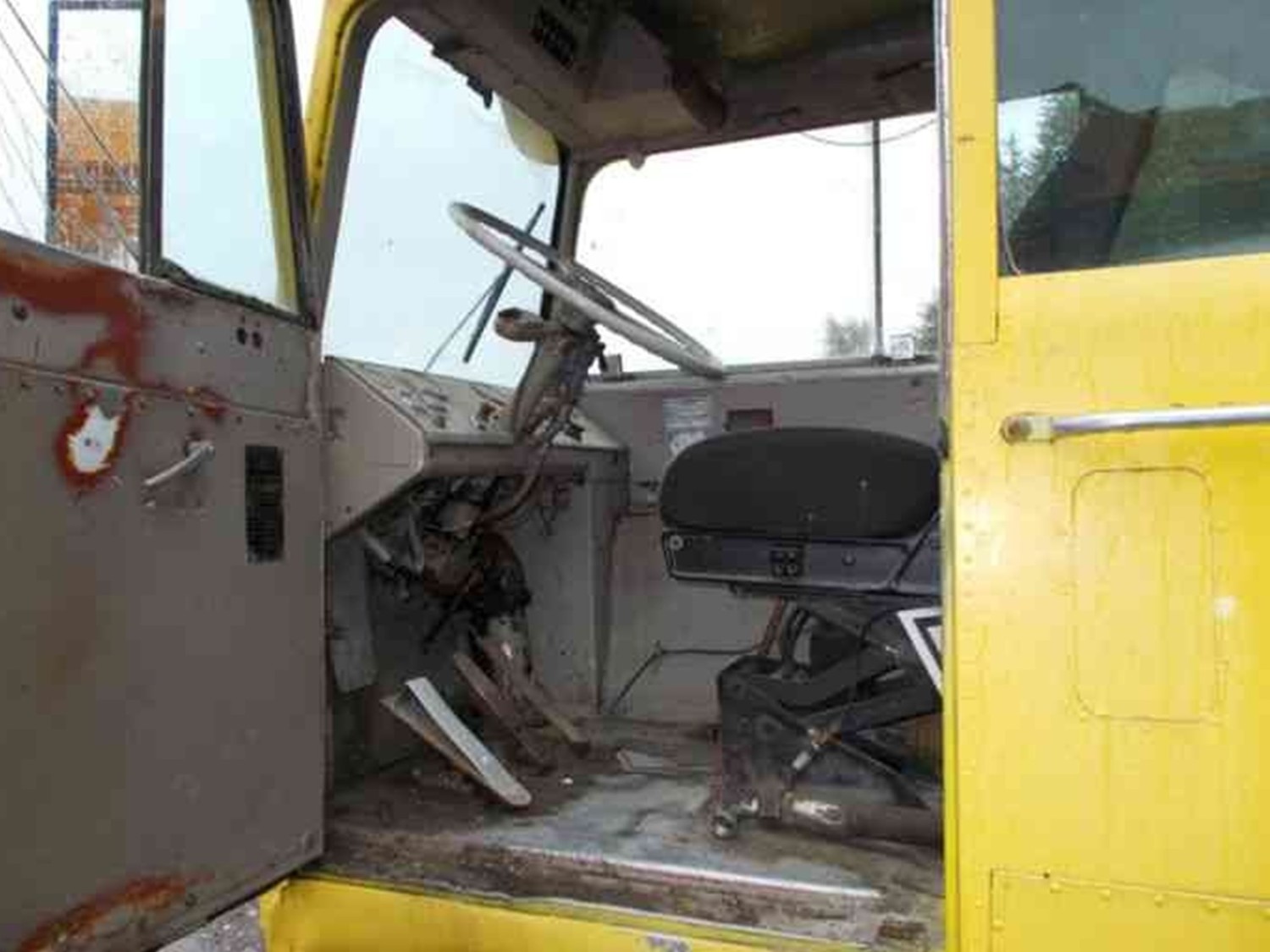
The cab of the CBE is constructed out of welded aluminum, and in addition to being designed for visibility, Kenworth also wanted to make the truck easy to service. Part of it was that, by not having a huge cab, a mechanic could easily get straight to the engine through a hood. But there was more, from Diesel Progress:
Other features minimizing repair costs are the greater ease of access to the engine, especially on the right side. Engine and transmission can be removed with standard repair equipment. Exhaust comes directly from the engine, with no elbows or flexible tubing—another weight saving. This shortened, simplified exhaust system and the bolted-up style radiator can also help reduce service work. Core replacements are cheaper. Sheet metal units are small and can be replaced at low cost, if dam aged. The drop-down panel for electrical switches and circuit: breakers brings them down level with driver’s eyes ready for easy maintenance. The bumper will bend without distorting the frame, and contains a retractable tow hook. The air intake is well placed to the right of the cab. Kenworth’s functional design is highlighted by the return of the exposed radiator cap.
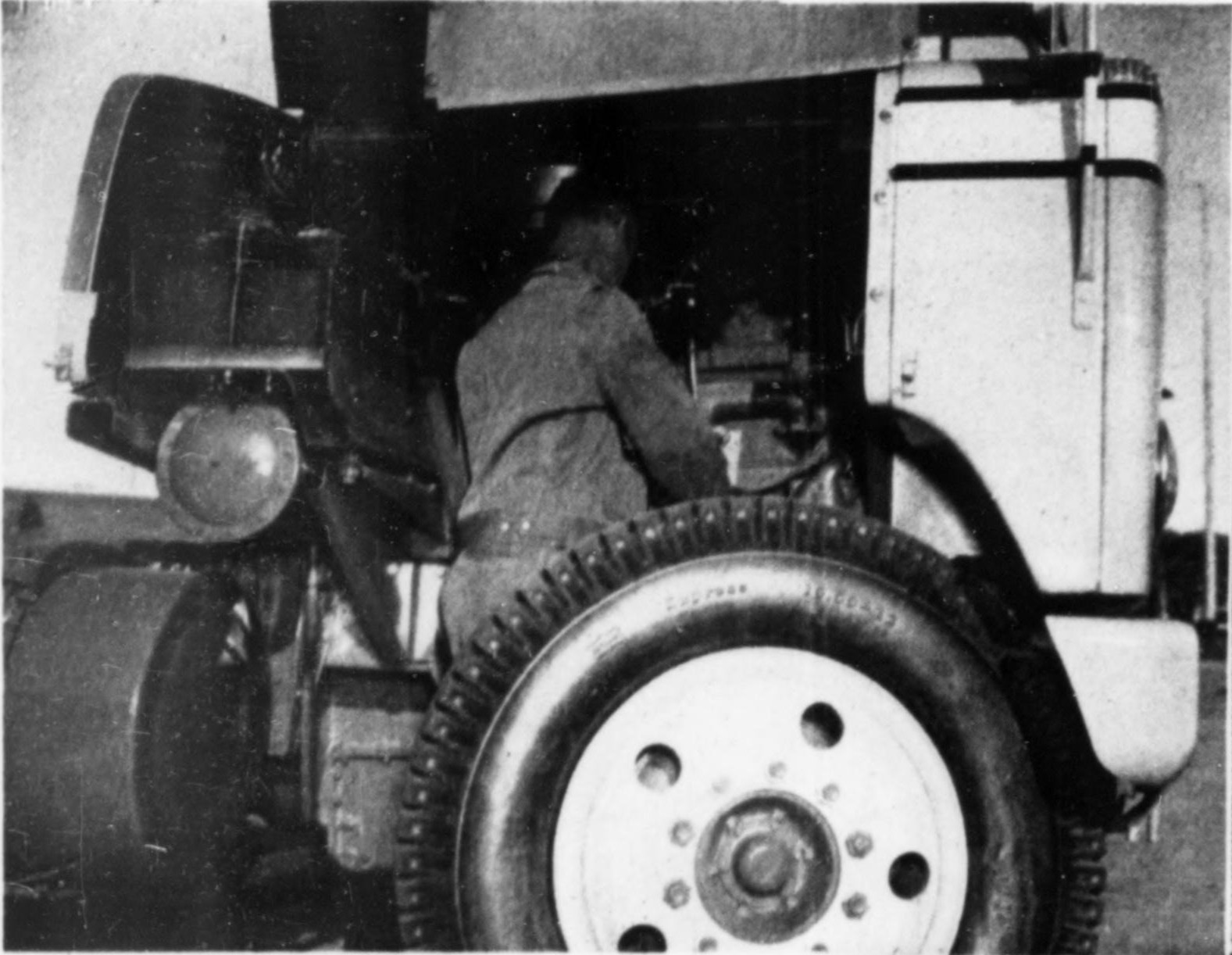
“Even the door is new,” Mr. Norrie said. “It’s the first departure from tradition in making truck doors in 25 years. A simple, strong one-piece aluminum extrusion goes clear around the door opening, forming the frame, window slide, seal and drip.” The new Kenworth cab-beside-engine design has many features that should greatly reduce driver fatigue. Vibration has been eliminated by isolating the insulated, rubber-mounted cab from the rest of the truck and mounting the steering gear rigidly on the cab, rather than on the chassis. As a result, there is reduced vibration from the chassis or road to the steering wheel, and engine noise in the cab is practically eliminated. Since the cab is separate from the engine compartment, it stays cooler than other types of cabs, Another feature reducing heat and noise is the detachment of the exhaust pipe from the cab.
Less Truck, More Load
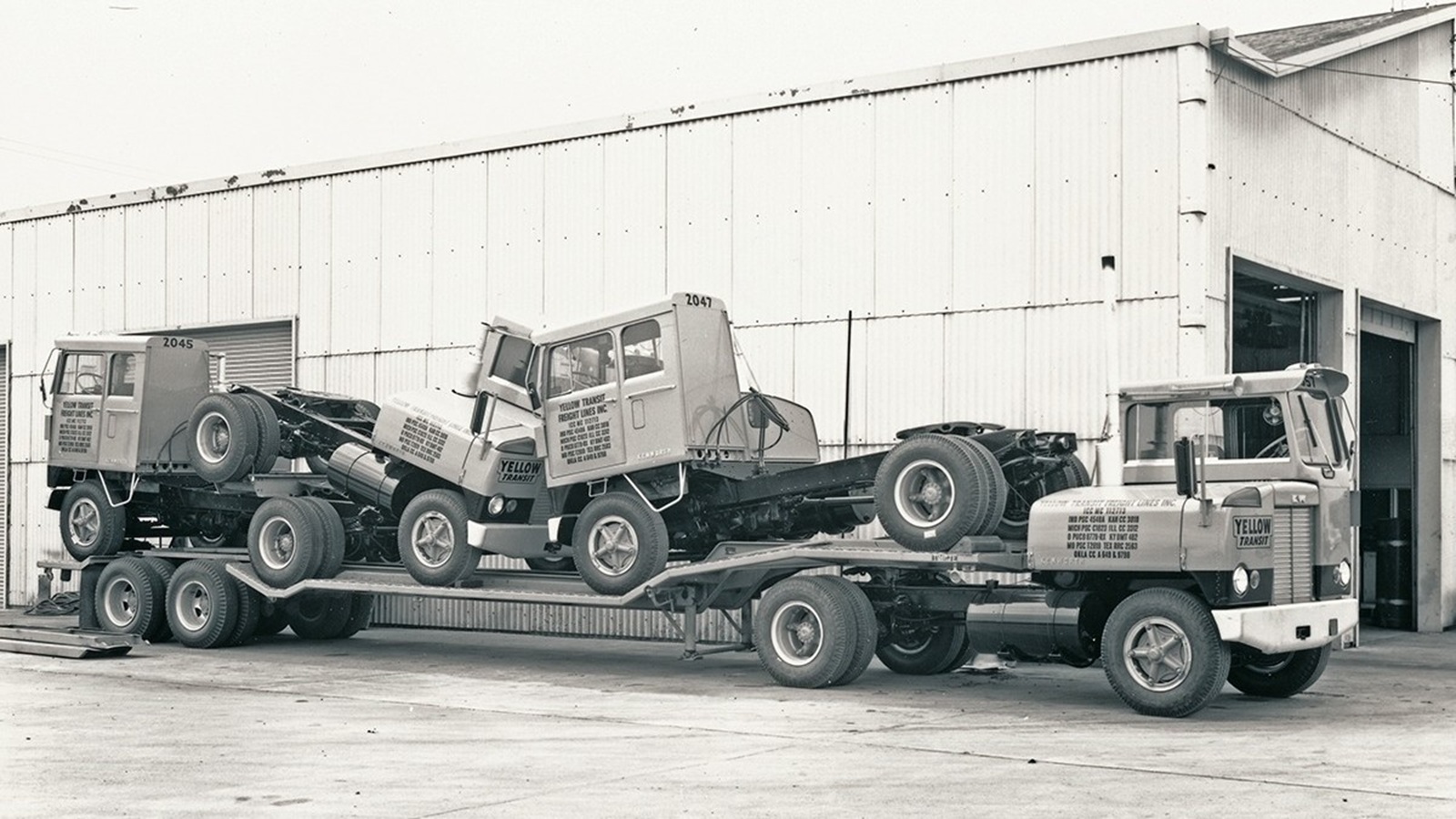
While visibility might have been the impetus for the CBE design, Kenworth’s designers had more than one trick up their sleeve. All of this engineering reduced the weight of the cab by 1,000 pounds. Cutting the cab in half and using aluminum made for a lot of the weight savings, but there was more. Buy cutting the cab in half, there was only need for one pane of windshield glass, one windshield wiper, and one door. Even the passenger seat, when equipped, was mostly an afterthought, and the person unlucky enough to sit behind the driver had only some canvas to sit on.
Amazingly, Kenworth even built a sleeper version (below), and the sleeper looked vaguely like a coffin tacked onto the back of the cab. It’s noted that the CBE cab actually wasn’t any shorter than a typical Kenworth cabover, which came in at 70 inches with a 138-inch wheelbase. All of the benefits of the CBE were baked into the sliced cab design. Kenworth also claimed additional weight savings in the form of aluminum frame rails, an aluminum bumper, and aluminum spring hangers.

Aluminum was a big deal in the 1950s. GMC would also go heavy into the use of aluminum on its similarly weird “Crackerbox” trucks, which you can read more about here. The Kenworth CBE came in at only 9,800 pounds when loaded with fuel and a driver, or 8,900 pounds empty. Yep, this thing isn’t even as heavy as a GMC Hummer EV!
The demonstrator truck was outfitted with a 743 cubic inch Cummins NHB-600 straight-six diesel, which made 200 HP at 2,100 RPM. However, since the CBE had the same footprint as a regular cabover, just with a weird body, Kenworth said they were available with all diesels, up to and including a 300 HP Cummins NHRBS-600 straight-six and a 285 HP 844 cubic inch Buda DAS 844 straight-six diesel. For further context, the Buda diesel came from the Buda Engine Company of Buda, Illinois, and was known for its industrial engines.
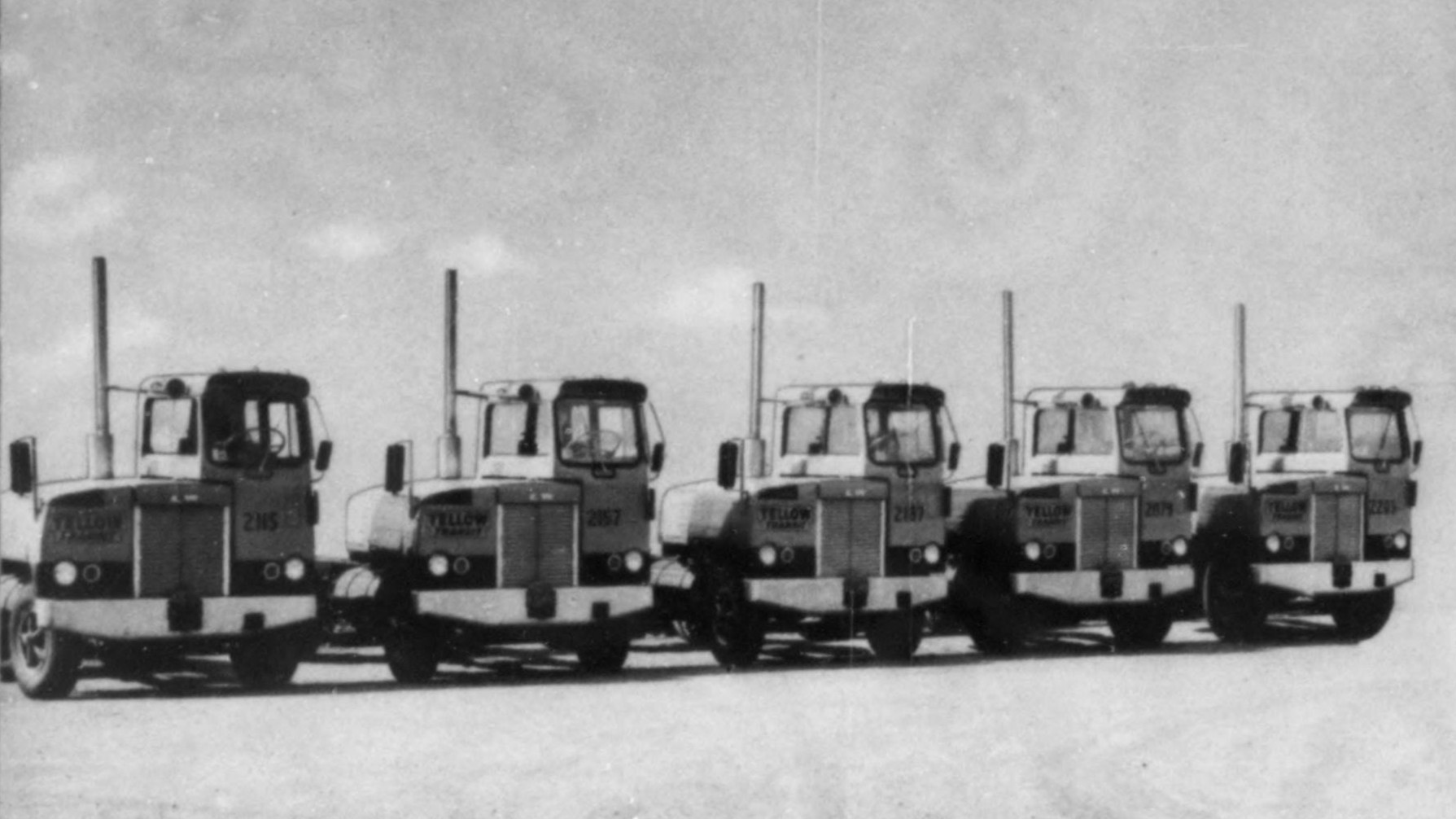
Common transmission configurations included four or five-speed transmissions from Clark or Fuller with two-speed axles. These weren’t particularly fast rigs, and generally topped out at around 55 mph, depending on configuration.
Through all of this, Kenworth was able to market the CBE as the truck that paid drivers back by allowing drivers to carry an extra half-ton of cargo. Trucking companies were quick to bite, with Yellow Transit Freight Lines, Merchants Motor Freight, and other fleets scooping up hundreds of examples. Yellow alone would scoop up 350 units for its fleet. Buying the CBE was a big deal for Yellow, as these were the trucks that moved the carrier over to diesel power.
This made the CBE more successful than some of the trucks I’ve written about. However, it wasn’t meant to be.
Maybe A Little Too Weird
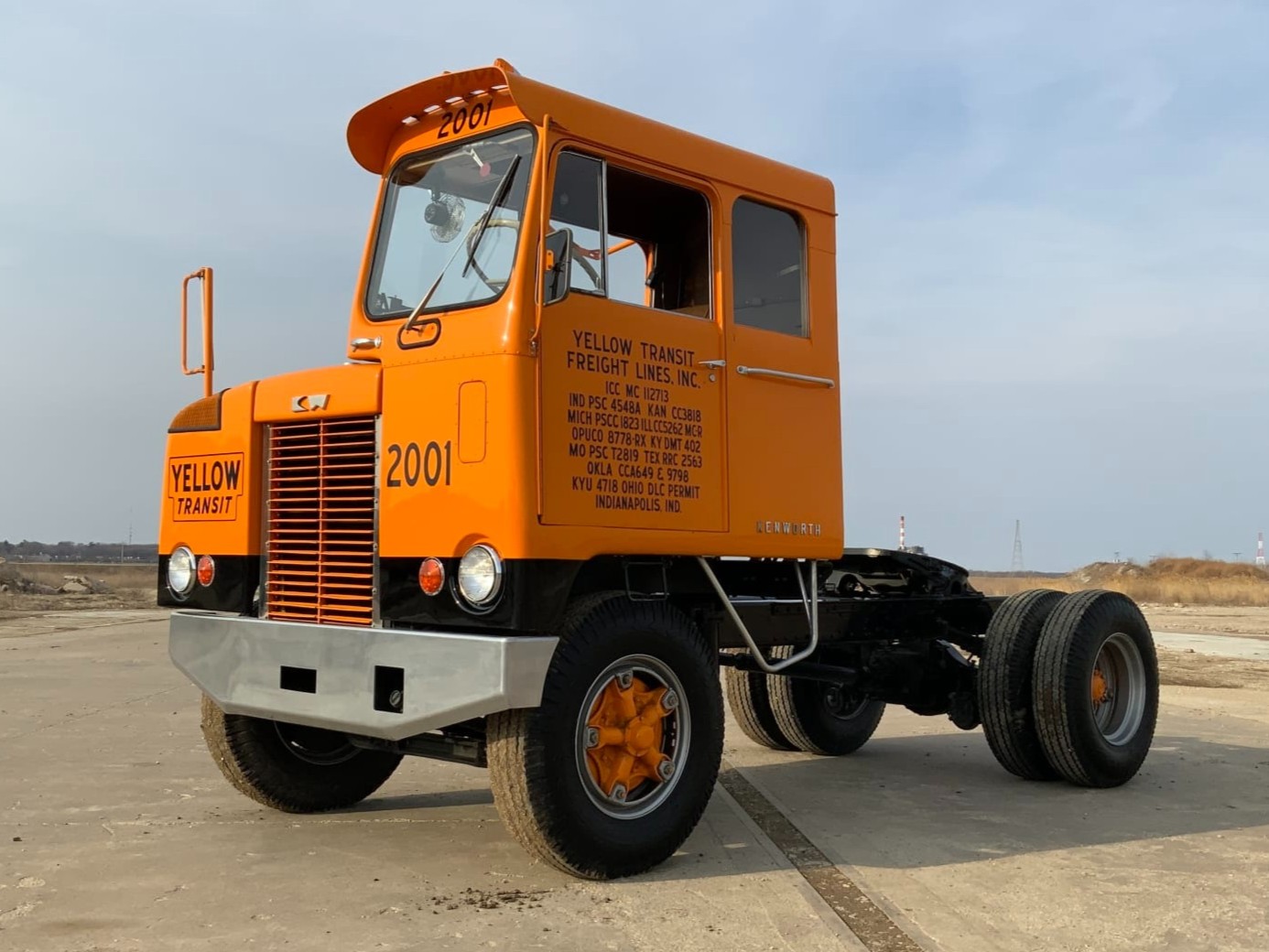
Ultimately, the CBE would not be the reinvention of the trucking world that Kenworth expected it to be. As the Iowa 80 Trucking Museum notes, Most fleets and operators not named Yellow likely saw the goofy cab as a detriment, not a plus. Drivers probably didn’t want to sit in a confined space, and what passenger really wants to sit in a tiny alcove behind the driver on some basic canvas? Basically, anyone who cared about comfort was willing to give up the weight savings for a more conventional cabover. The trucks were better rolling billboards than over-the-road semis.
The concept wasn’t entirely a dead-end, however. The CBE found new life as some companies scooped them up for terminal truck use – a type of truck used to move equipment around yards – rather than highway tractors. You’ll note that a lot of purpose-built terminal trucks look an awful lot similar to the CBE with only a tiny cab, lots of visibility, and high maneuverability.
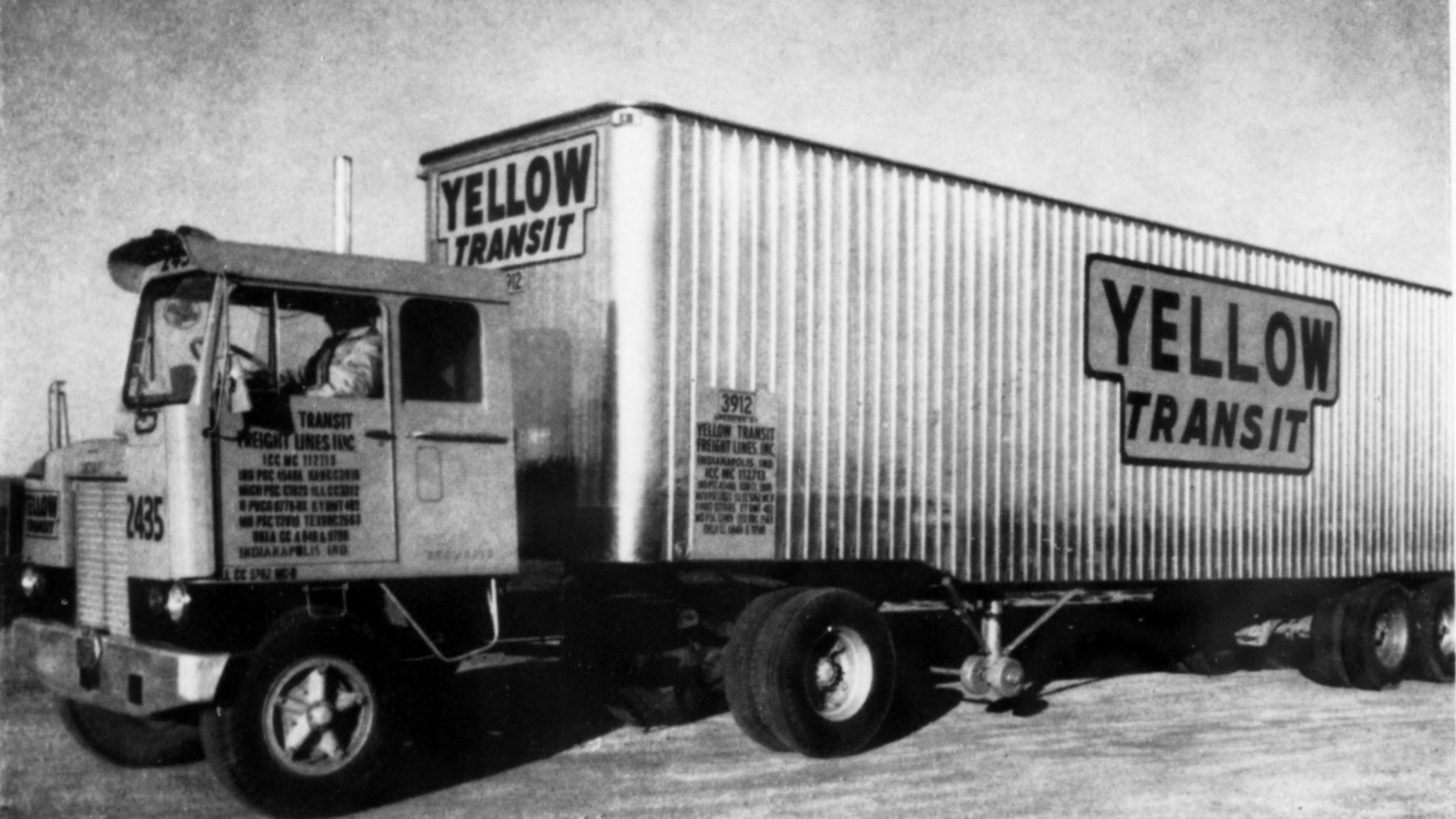
The Cab Beside Engine, which sold in model codes like TCF 521 and TCC 522, was sold until 1960. Later examples of the CBE got a tilt cab for even easier maintenance, and around 1960, the truck also gained a fiberglass roof.
Kenworth went back to more conventional cabover designs after the CBE. But the CBE still holds a soft spot in truckers’ hearts today. Some of the surviving examples have been restored, and you can even find one for sale at an auction platform from time to time.
The CBE was a great concept. It was the truck for the kind of operator who wanted to maximize their load and visibility at the expense of everything else. Comfort, style, and practicality all took a side seat to shedding weight and adding visibility. The truck had the kind of content cutting that might have made Carlos Ghosn proud if it were done today. But as it turns out, the most traditional way to design a truck cab still works out to be the best.
Topshot image graphic: Mecum Auctions


Another photo from back in the day – https://www.facebook.com/photo/?fbid=1333919022108010&set=pcb.1333919052108007
Pics of sleeper and passenger seat in a half cab? Was it a real sleeper for sleeping, or is that just the name of the lengthened cab?
“Sheet metal units are small and can be replaced at low cost, if dam aged.”
I read this line three times before I realized the last word was “damaged” with an erroneous space in the middle. I am coming clean. I literally sat here wondering how an aging dam would cause the truck to need its sheet metal replaced.
Funny enough, Utz, the chip company, still uses these around town in Hanover, PA. They’re called “yard trucks” or “yard dogs” now.
https://www.autowtruck.com/s3/media/trucks/Autow-Terminal-Tractor-01.jpg
Service may have been a specialty of Miles E. Sons Trucking but spelling, I thimk, was not.
We can’t forget the international narrow cab trucks,
https://share.google/RkL6wHDuafc8p8whg
10 years ago I spotted one hiding in the bushes south of Santa Cruz off highway 1. Not sure if it’s still there.
And a zillion offset cab Macks. Which I think may have predated these Kenworths.
Those were a bit different in that the driver and passenger sat side-by-each.
Are you from Rhode Island?
Maine. 🙂
But the same sorts of French-Canadian millworkers who said that were all over New England.
The International version only seated one, and if you had a load of pipe or steel blocking both doors you could enter / exit through a hatch in the roof.
Neat!
I feel like Im entering Cloud City.
sidetruck <3
oh no think of the lot lizards
Well, at least you’d be able to scope them out a lot easier with all of that visibility!
Scope ’em out and scoop ’em up!
If you ever find yourself in the Quad Cities or on I-80 in Eastern Iowa, the Iowa 80 Trucking Museum is well-worth a visit.
It sounds like a lot of the weight reduction is thanks to the use of aluminum and things like the door construction. The thing is it was still a specialized truck since it didn’t reduce Bumper to Back of Cab, so it didn’t help with total length restrictions it only increased the payload.
The reality is the national laws still haven’t leveled the playing field and there are still a lot of cases where a truck is legal in one state and not in the next. CA has a King Pin to Axle rule that can limit the total weight. Both by overloading the trailer’s axles or due to the bridge formula. So a truck that was legal in WA and OR at 80k is illegal once you slide the axle at the CA border.
FedEx’s west coast operations use a lot of Single axle tractors and 28′ trailers in part so they can take advantage of the fact that triples are legal in OR. They run doubles in CA triples in OR and back to doubles in WA. Meanwhile that 53′ trailer that can run on most roads in WA or CA can’t really stray far from I-5 or I-205 on the way between the two.
The federal rules essentially just set the minimum maximum for both weight and trailer length on interstates.
I think that the connection wasn’t made as well as it might have been, but I took it that this eliminated the need to choose between a cab-over, which permitted a longer trailer and a conventional cab with better sightlines. At least that’s what I understood.
There’s still a market for narrow-cab trucks among steel haulers. International used to be the primary source, but it appears that Peterbuilt is now the go-to.
https://fontainemodification.com/work-trucks/cab-modifications/narrow-cab/
https://www.redpowermagazine.com/forums/topic/149021-narrow-cab/
https://www.curbsideclassic.com/blog/vintage-trucks/vintage-truck-white-3000-half-cab-by-murty-bors-a-rare-sight/
“..and can be replaced at low cost, if dam aged.”
Yes, that describes me pretty well. “Dam aged.” Hope my wife doesn’t find out I can be replaced at low cost.
Half cab over the road trucks are pretty goofy but they do have a long history with vocational trucks. Cranes, cement mixer, and dump trucks often had Half cabs and Gradall may be the last one standing since their basic layout hasn’t changed since the 50s. By odd coincidence Foden in the UK introduced a half cab in the late 60s, and was bought by Paccar in the 80s
Very cool! I saw what appears to be the very same truck at the National Automobile Musem down in Reno, NV when I visited about ten years ago.
I uploaded a few of them here (let’s see if the link works).
https://i.ibb.co/xSNXBp3m/20151014-132709.jpg
https://i.ibb.co/C5xdbsD7/20151014-132838.jpg
https://i.ibb.co/F4KsV2dN/20151014-132724.jpg
https://i.ibb.co/JjHdhYwb/20151014-132749.jpg
Thimk?
IBM has always had aggressive lawyers, and probably had the word trademarked.
Hahaha, love the Carlos Ghosn dig.
I’ve always found it strange that Yellow Freight Lines would have orange as their primary color.
I was once told the official color is “swamp yellow.”
And Yellow cabs are orange. And cabs painted yellow are Checker cabs (at least back in the day around these parts). And here, Checker cabs weren’t Checker cars (I don’t ever remember Checker (cars) as cabs in Baltimore)
I see a lot of this style at the port of seattle shuffling trailers around.
I love this series on weird trucks, hope it keeps going. I feel like you’re halfway to a book here already.
Lots of weird history in trucking. The top of the line kw for the past 40 years has been the W900L, the extra long hood version of the W900. But it only exists because of James… James Bond.
The Terminal Trucks as seen at the port while similar in having a 1 man cab and an engine accessed from the side are a different kind of beast. They are specialized for the task. The have 2 doors the standard one on the driver’s side and a sliding one on the back of the cab. The 5th wheel plate is able to be lifted and dropped. That way the driver never has to dismount. Back into the trailer, hit the lever to lift the trailer off the landing gear, slip out the back door to connect the air lines and back in the seat. Because their primary use is low speed they usually have lower power engines and make up for it with steep gearing.
Very cool, makes sense there would be so many adaptations if your goal is to make something lower cost that can still move a loaded semi trailer.
Definitely one of the more specialized trucks out there and as such the big players are small companies most people have never heard of like Capacity and Ottawa while the big companies sit out.
Mercedes, I’ve been waiting on this article! Weird niche trucks from an era when the industry was still figuring it out. Next, you should do offset cab Macks. Same concept but different execution.
I see yard trucks with half cabs working in my area all the time. I remember well seeing the offset cab dump and concrete mixing Macks on the highway. I’ll be waiting for an article.
There were even offset cab OTR Macks with sleepers back in the day. those look really weird.
I remember one of those being featured in the Bananarama “Cruel Summer” music video. Unfortunate choice of rig, considering they had to squeeze three women and the driver into that thing. It would’ve already been a tight squeeze in a normal-sized cab! (Well, I guess it may not have been too unfortunate for the driver in that particular case.)
Funny thing was, it was a normal size cab for the day.