

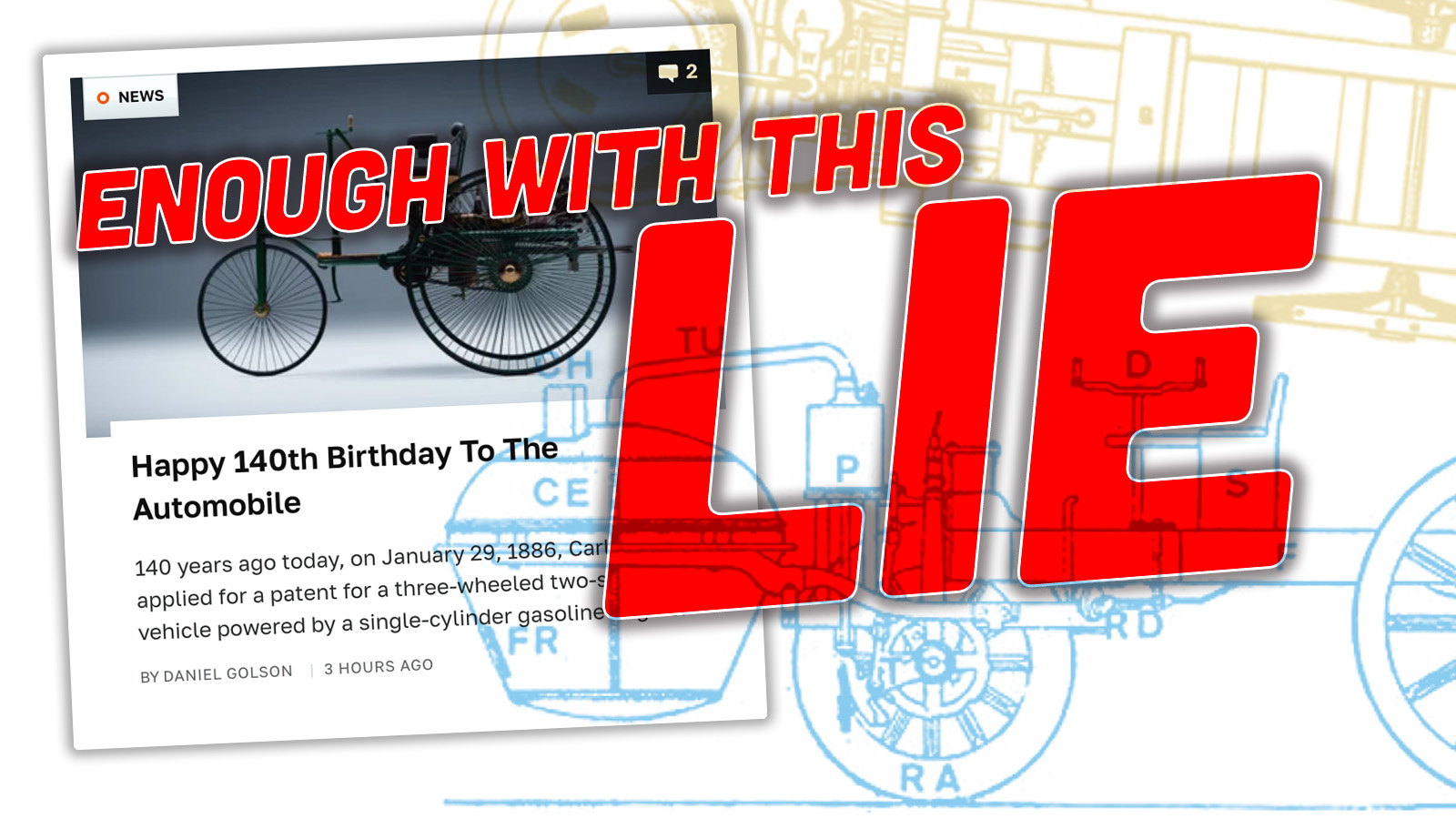
Look, I’m not trying to get into a micturating contest with our pals over at The Old Lighting Site, but there was a story on there repeating Mercedes-Benz’s lie that I simply cannot abide, something that, during my many years at that site, was a lie I repeatedly sought to dispel. The story is called, simply, Happy 140th Birthday To The Automobile, and that headline, and more importantly Mercedes’ claim, is wrong. The claim is wrong by 117 years, wrong about the automobile in question, wrong about the country of origin, and wrong about the person behind that automobile. It’s all wrong, and while our friends at Jalopnik are being fed, just like everyone else, this lie by Mercedes-Benz about the birth of the automobile, they should know better, because while I was there I wrote about how Mercedes-Benz’ claim of inventing the automobile is just plain wrong. Many, many times.
The article is referring to Mercedes-Benz’ claim that the Benz Patent-Motorwagen of 1886 was the “first automobile.” It absolutely was not. This isn’t even a matter of opinion or some pedantic splitting of hairs; if we define an automobile by what it actually is – a wheeled, motorized land vehicle capable of propelling itself – then the Benz machine was beaten to the punch by over a century, because Nicholas-Joseph Cugnot built such a machine – an automobile – way back in 1769. Some say 1770, but still.


[Ed Note: We changed our original headline, “A Car Website You All Know Is Pushing Mercedes-Benz’ Lie That They Invented The Car And I’m Not Having It,” because some of our friends at Jalopnik were upset, even though this was really meant to be a tongue-in-cheek joke about how Jason obsessively wrote about this lie 100000 times while he worked at Jalopnik! Regardless, we’re not here to offend our friends (and in retrospect, we should have just given them a heads up), but rather to call out Mercedes-Benz first and foremost (and anyone who spreads that lie last and lastmost). -DT]
Keep in mind, this wasn’t some hypothetical thought-experiment, only existing as paper and ink: this was a real, running machine, designed to be something to haul artillery for the military. It didn’t work well, and it was involved in the very first car wreck ever because it was so hard to steer:
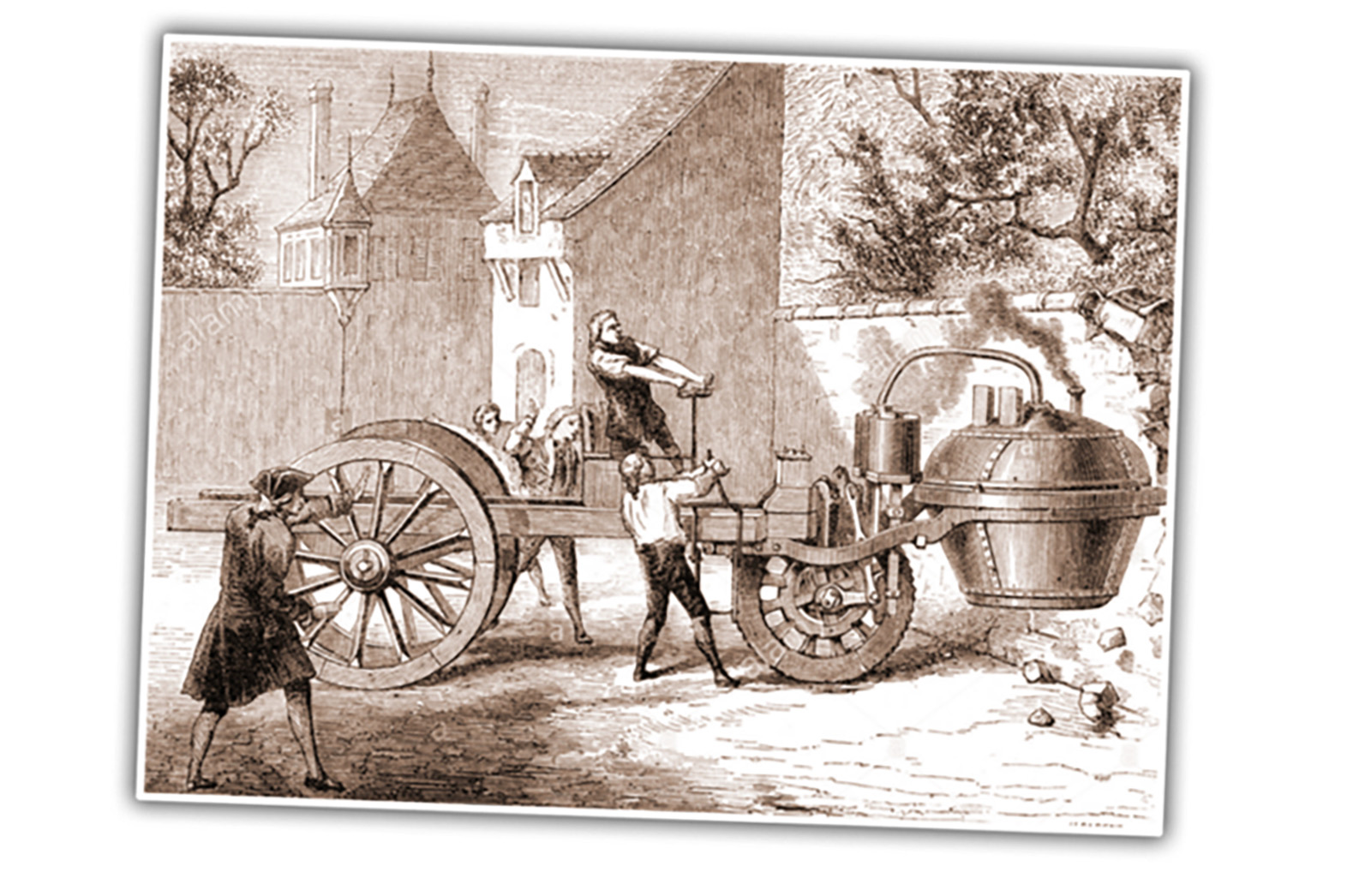
It wasn’t a good car, but it was absolutely a car. And it still exists! You can go see it in Paris, at the Musée des Arts et Métiers, if you’d like. Maybe someone from Mercedes-Benz can go there and carbon date it, if they want.
And look, if somehow Mercedes-Benz wants to be all weasely and try to say this was a machine for hauling, not moving people, then you know what? Fine! It doesn’t matter, because there were plenty of other cars, yes, actual, genuine passenger automobiles, after the Cugnot steam drag.
Take the London Steam Carriage from 1803, for example! This was a steam vehicle specifically built to be a passenger car by Richard Trevithick, and I wrote about it for Jalopnik back in the day, too.

If anyone at Mercedes-Benz would like to explain to me how this motorized, wheeled, trackless, road-going, passenger-carrying vehicle was not a car, I’d love to hear it.
You know what else the London Steam Carriage had? A patent. A patent from 1802. So if Mercedes-Benz wants to qualify the “first car” as the first one with a patent that was then subsequently built and driven, then our pal Rick there beat them to the punch by about eight decades.
The patent part is interesting; Carl Benz seemed to think it important enough to include it in the name of his Patent-Motorcar, but patents for automobiles go back much further than you’d think. James Watt – yes, the guy the watt is named for and an early steam engine pioneer – patented the idea of engine-driven cars sometime after 1784, but the purpose was just to try to keep people from building steam cars, because Watt thought they were a bad idea. He was a patent troll, and I wrote about that for Jalopnik, too.
In America, there was an attempt to patent an automobile in 1790, by someone named Nathaniel Reed.

Read was able to secure patents for steam engines, but Congress found the idea of a self-propelled automobile too absurd and essentially laughed him out of the place. Here’s a National Archives summary of a letter about it that was sent to Thomas Jefferson (emphasis mine):
Nathan Read (1759–1849), a minor New England inventor, presented his petition to Congress for a patent on his inventions on 8 Feb. 1790, some time before TJ received the present letter: these included plans for both a steamboat and steam road carriage. The latter was ridiculed to such an extent that he abandoned it and the former was based on a paddle-wheel arrangement not original with him, in consequence of which he presented a new petition on 1 Jan. 1791 and seven months later was granted letters patent for “a portable multitubular boiler, an improved double-acting steam engine, and a chain wheel method of propelling boats” ().
What’s really bonkers is that Read was given a patent for a steam-propelled ship, another sort of automobile, really. Water travel seemed fine, but road travel was too far? How strange.
And then of course there was the famous American George B. Selden who filed for a patent on an internal combustion car in 1879. Selden was also sort of a patent troll, though, holding back his patent until 1895 when the automotive industry was picking up, so he could get royalties from carmakers.
The point is, if it’s the patent part that Mercedes-Benz is hoping makes their automobile “the first,” then I don’t think that holds water. It may be the first patented internal combustion Otto-cycle car, though, and I think that’s a pretty big deal on its own.
We’re just getting started here, though. There was something of a boom in automobiles in England in the 1820s and 1830s, when enterprising people were building motorized omnibuses and establishing regular bus routes from London to Bath and all sorts of other places. There were many, from people like the aforementioned Trevithick and Goldsworthy Gurney and Walter Hancock, all motorized, driving automobiles, hauling paying customers from one place to another at speeds sometimes approaching 20 mph or so.
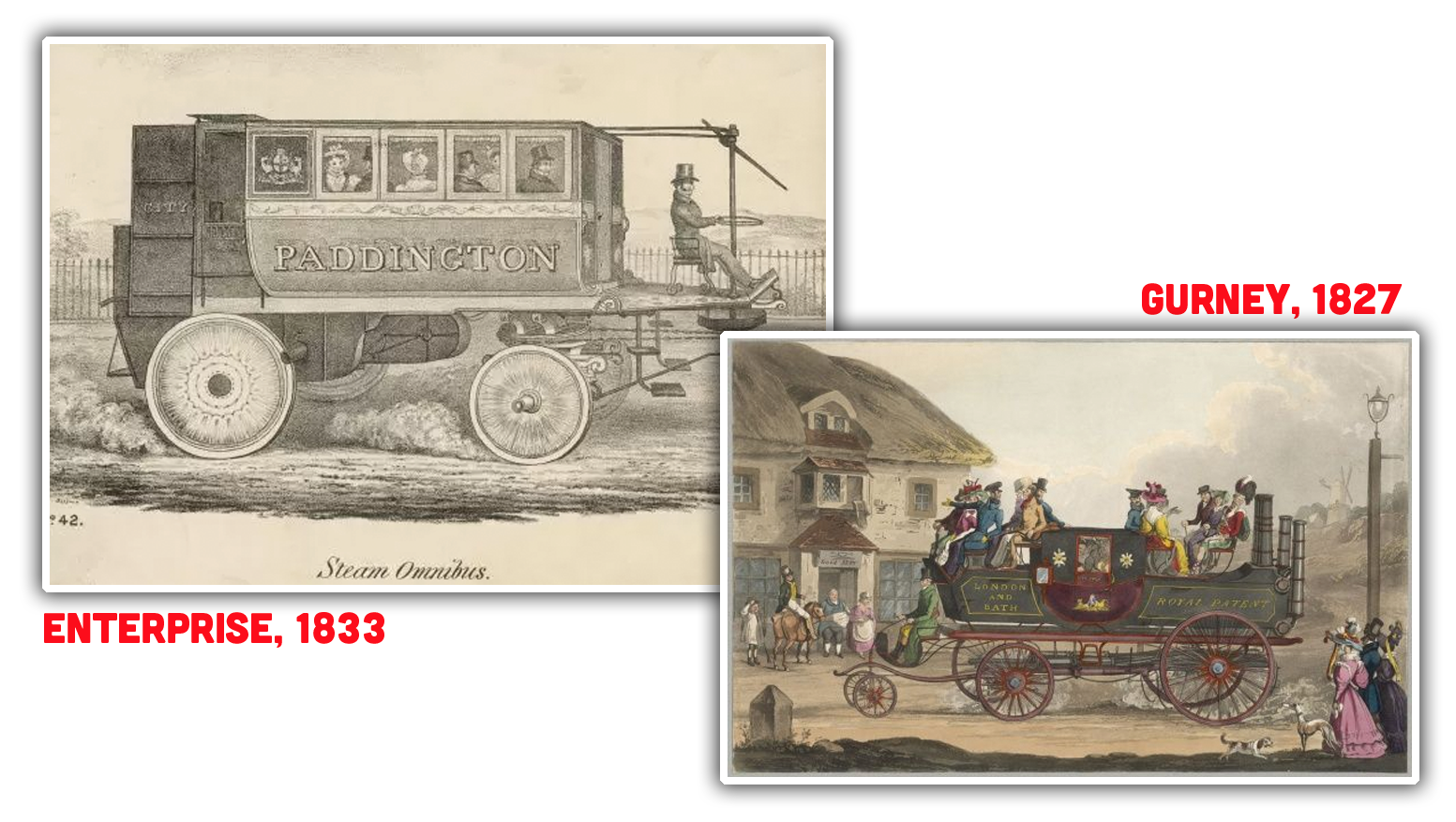
There was such a boom of these automobiles that what I believe to be the very first comic/cartoon to feature cars was drawn and published around this time, in 1831:

As I said when I wrote about this cartoon before – even correcting myself from when I wrote about it for Jalopnik:
“The cartoon is titled A View in Whitechapel Road and was drawn by H.T. Aiken. It shows what is, essentially, a traffic jam, of automobiles, buses and private cars and commercial vehicles, some of which have names like The Infernal Defiance and The Dreadful Vengance, and there’s a hot bread-vending truck that I bet smells great.”
So, if Mercedes-Benz actually invented the automobile in 1886, how is it possible that they were plentiful enough for a freaking cartoon to be drawn about them in 1831? Something doesn’t add up, and it’s Mercedes-Benz’ math. Well, I should be more fair here: math and lies.
Mercedes addresses a mere five predecessors to their car on a page called “Forerunners to the Automobile”, one of which was Cugnot’s steam drag, and the other four were internal combustion cars like theirs, one of which, built by Frenchmen Edouard Delamare-Deboutteville and Léon Malandin in 1883, even used the same type of Otto cycle engine of the Patent-motorwagen.
Why are these called “forerunners of the automobile” and not just “automobiles,” which is what they were? The hell do they mean by “forerunners?” Mercedes tries to justify it in this paragraph:
Carl Benz was the first inventor who not only had the idea of creating an engine-powered vehicle, but also designed, built and tested one. His great achievement lay in the consistency with which he developed his idea of a “horseless carriage” into a product for everyday use, which he then brought to market and as a result made his idea useful for the entire world – unlike the other inventors mentioned here.
This is such a guilty and half-assed explanation. Take that first sentence there, the one that says “Carl Benz was the first inventor who not only had the idea of creating an engine-powered vehicle, but also designed, built and tested one.” That sentence is absolutely false. Plenty of other inventors had the idea of an engine-powered vehicle, designed, built, and tested them. I’ve mentioned a bunch of them already, like Cugnot to Trevithick and Gurney and Hancock. That sentence is an outright lie.
And the second half of that paragraph? What do they mean by the “great achievement” of “consistency?” I don’t know what they’re getting at there? And the idea that the Patent-Motorwagen was “a product for everyday use” is really a stretch. If anything, that level of refinement and usability for the automobile probably didn’t truly come until the Ford Model T in 1908, especially if we count Mercedes-Benz’ phrase “made his idea useful for the entire world.”
Mercedes-Benz even having this “Forerunners of the Automobile” page at all seems like deep down they know their claim doesn’t hold water, and they’re trying to hedge things a bit. It’s not working, though. Again, the Patent-Motorwagen was a huge achievement in the automotive world, no question. It just was not, by any stretch, the “first automobile.”
I’m still not done. Let’s hop back to America, where there was plenty going on. There was Oliver Evan’s deeply strange Oruktor Amphibolos, an amphibious car/dredger thing:

Even if we don’t count that one, there were people trying to start car companies in America as early as 1851:

That never got off the ground, but others actually managed to pull off building workable cars. There was Sylvester Roper building steam-powered cars and motorcycles in the 1860s:

…and Richard Dudgeon, who built his Red Devil passenger car back in 1855:

America also hosted the first automobile race, in Wisconsin in 1878. I wrote about that for Jalopnik, too.
Maybe Mercedes-Benz is going to try to say that none of these count, because they’re mostly steam-powered cars. If that’s the case, I’d ask them what they’d call the EQS 450 or any of the other electric vehicles they sell. Are those not cars because they don’t use gasoline? Of course not. They’re cars, just like a Mercedes-Benz 230SL Pagoda is a car. But even if they wanted to play that stupid game, there were other non-steam-powered cars around.
There was Etienné Lenoir’s Hippomobile of 1863, which I also wrote about for Jalopnik, and that was an internal-combustion car that could run on a fuel like gasoline.

In 1807, Issac de Rivaz built an experimental internal combustion vehicle, and Mercedes-Benz even mentions it on their guilty-feeling page about “forerunners to the automobile,” that I mentioned earlier, all of which are actual automobiles that were developed before the Benz Patent-Motorwagen. On that page, they also mention one of their most interesting predecessors, Siegfried Marcus, who built at least two internal-combustion, gasoline-powered cars, one in 1870 or 1875, and another in 1888.
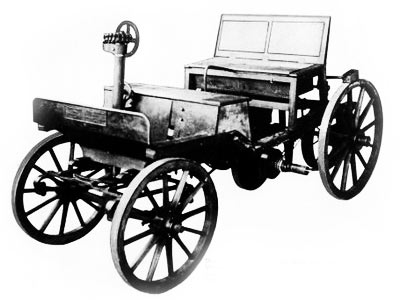
Mercedes-Benz likes to downplay the 1875 car, claiming it was actually made in 1888; I hardly think it matters, because Marcus did have a running internal-combustion car in 1875, and I know this because there are records of a noise complaint from Vienna Police being issued to Marcus and his Benzinautomobil (gasoline-powered car) from that year:
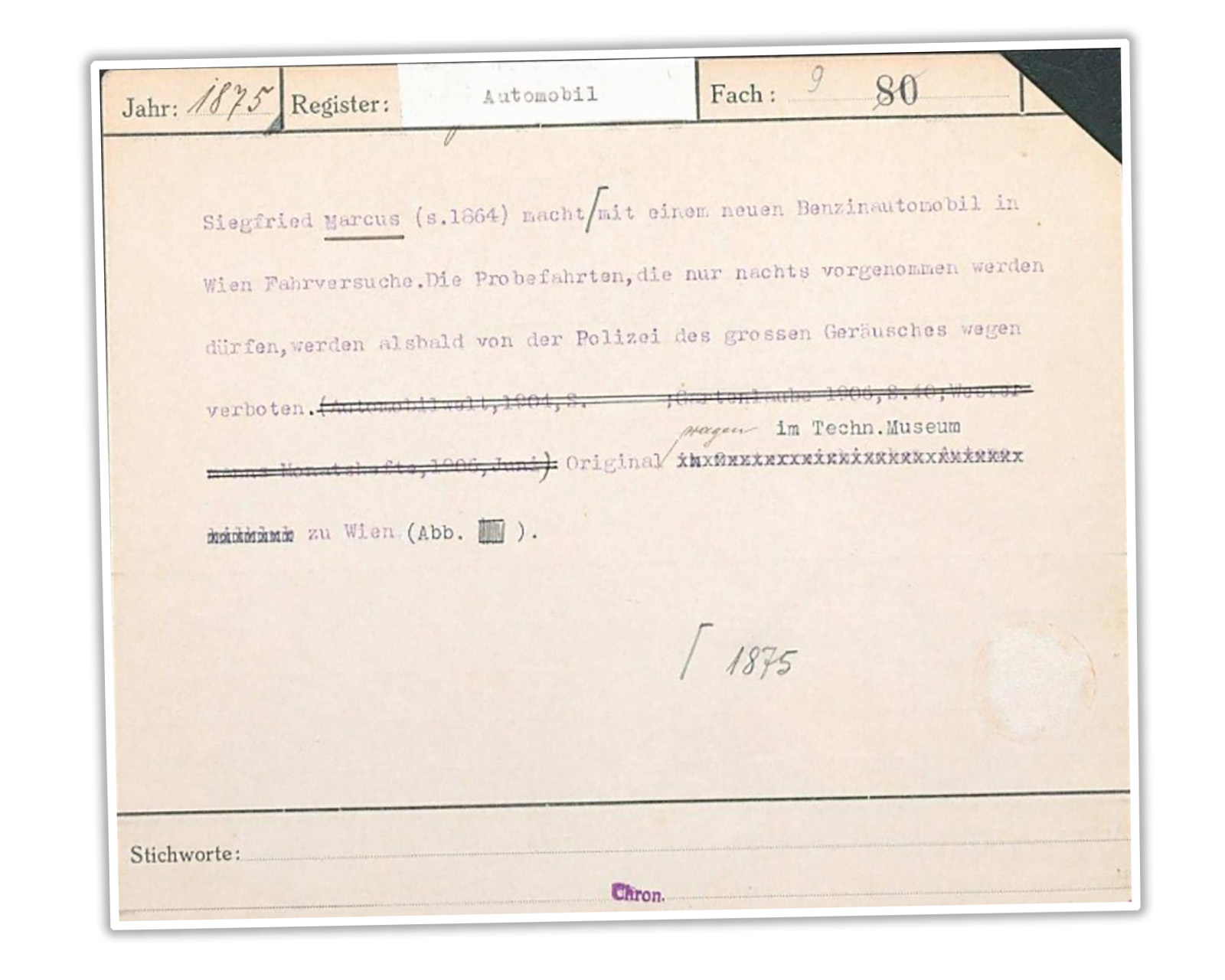 The Marcus/Benz first-car controversy has a more sinister element, because Marcus had been taught as the inventor of the automobile (I’d disagree with that, too, but still) to schoolkids in Vienna, but when the Nazis came to power in the late 1930s, they put a quick stop to that, because Marcus was a Jew. There is correspondence from the Reich’s propaganda ministry ordering that all references to Marcus inventing the automobile be expunged and replaced with Benz and his Patent-Motorwagen. I’ll have a larger investigation of this in the future, because it’s all deeply infuriating.
Maybe Mercedes-Benz will try to say the Patent-Motorwagen was the first production automobile, but even then, they’d have trouble, I think. About 25 Patent-Motorwagens were built between 1887 and 1894, but back in 1878, Amédée Bollée’s La Mancelle automobile went into series production in France, with 50 examples built; most by Bollée, but 22 of which were built by a licensee or perhaps bootlegger in Berlin.

Mercedes-Benz did have a car that could be considered the first really mass-produced car, the Velo, which had 1,200 units produced. Mercedes-Benz’ website states it like this:
“The world’s first production car with some 1200 units built was the Benz Velo of 1894, a lightweight, durable and inexpensive compact car.”
…which I think is a little misleading, since it seems to imply that 1,200 Velos were built in 1894. There weren’t. Yes, 1,200 Velos were built, but that was between 1894 to 1901, and that is impressive, but in 1894 only 67 were made. Other companies were building cars in series at this time too, though, like Panhard et Levassor with about 90 cars made in 1894. So maybe the Velo could be considered the first mass-produced car, but considering Panhard et Levassor had made over 1,000 cars by 1901 as well, along with Peugeot, who, incidentally, also likes to claim the first mass-produced car, their Type 3 of 1891 which sold 64 copies. So who knows for this one?
This all drives me nuts for so many reasons, not the least of which is the fact that Mercedes-Benz is still the beneficiary of a Nazi-era propaganda campaign, and they don’t seem to be the least bit concerned with changing this, or the actual truth. I’m tired of seeing sites like Jalopnik just accept Mercedes-Benz’s flawed claims without question, especially because I spent so much time on that site trying to get the truth out there. Hell, I wrote a story in 2020 listing 10 cars made before 1869! In an easy-to-read listicle! Did no one search their own site to check if Mercedes’ claim was accurate?
The 1886 Benz Patent-Motorwagen is an incredibly important car for so many reasons: perhaps the first true Otto-cycle car to be built, for example, and it definitely marked the start of a new era of automobiles as they emerged from their more experimental stages into something more common. But the notion that the Patent-Motorwagen was somehow “the first automobile” is simply absurd. The development of the car was long and slow, and the Benz machine absolutely has its place. Mercedes-Benz’s insistence on calling it “the first automobile” debases the whole history of the car, and debases Mercedes-Benz itself.
Sites like Jalopnik should know better than to perpetuate this myth that only serves one company and diminishes the work and accomplishments of so many more.
Stop it, Mercedes-Benz. Enough already.


Something is seriously wrong with Google. Searching for “first car” only brings up results about Benz, Ai and otherwise. Even if i put “lie” in there only this article appears in that list to counteract it.
Aside from the stupid AI overview, that’s one of the most annoying problems with modern Google search to me. It strongly favors recent posts and news almost regardless of my search query. It doesn’t even matter if older articles may very well be just as accurate and relevant to what I’m searching for.
I end up having to adjust the maximum publish date to some time in the past, or do an advanced search. Even then, Google just spits out what it thinks I want, not what I asked for. But if I get too specific, it just gives up. Oh and in my experience, a lot of times it’ll just not include websites that I know exist and would have been included in search results in the late 2010s.
I wonder how many people still know how to “drive” a search engine?
Search engines have ADAS now to keep you from steering out of your lane (looking at information more than a year old).
AI search is full autonomy.
This perfectly encapsulates using Google the last few years.
I find myself using “forum” or “reddit” way more than I should just so I can find real people’s answers and not slop.
Edit: thank you for not allowing Ai here
Your searches on Google should always end with-ai
Even then I still end up with the first page being slop articles about “hey here is the definition of every term in your search” and finally at the very end a generic answer.
Torch is on fire this week!
Just repeating: deeply infuriating.
Check out the beard and tousled advancing baldness on Delamare-Debotteville:
https://group.mercedes-benz.com/bilder/konzern/tradition/geschichte/vorlaeufer-des-automobils/09-edouard-delamare-denoutteville-1856-1901-w380xh214-cutout.jpg
He was a 19th century Dr Emmett Brown.
Off topic- whatever happened to Jason Drives? That was great. They need to off road a model T like those clips. Apparently they’re pretty damn impressive. Like an old old old XJ but 2wd.
Whistling diesel ripped around in one I believe last year that was pretty entertaining, but I know you guys could do it better
So did TFL. The latest Torch Drives (apparently “Jason Drives” belongs to the old site) ran just a couple weeks ago and was of a rare prewar Datsun.
The victors write the History. MB is the oldest auto company still making cars, so they trumpet the claim and no extant competitor is around to call them on it. Just one excellent if somewhat abnormal enthusiast website…
Peogot, Tatra, and Opel are older than MB
Clearly I’m reading to much history written by MB
I just want to understand this, sir. Every time a rug is micturated upon in this fair city, I have to compensate the person?
As an interesting aside, the Henry V Poor listed in the advertisement for the American Steam Car Company was Henry Varnum Poor who went on to found what is now Standard & Poor. His brother John was a major advocate and developer of railroads in New England.
So the Poors were filthy rich?
I’m not sure about ‘filthy’. They weren’t at Vanderbilt to Gould level.
Having toured a Vanderbilt mansion, there was nothing filthy about it
To be fair, Jalopnik is a website for politics not cars.
I applaud Autopian for refusing to yield to the lying media trying to force a lie. I applaud and supported JT & DT to create a new site as Jalopnik lost its soul and every decent writer they had as they dove into hell. Trust me I know what it feels like to post facts and be attacked by people who don’t want to realize they have been lied to. But sooner or later you have to decide truth or consequences. Is there a reason to support a site that lies and attacks you as not being a friend when they make you feel bad for telling the truth? How many writers there are car people and is it just the site?
Well, if hated this bald-faced lie before I learned about its Nazi connection, I sure as hell won’t like it more now.
I still remember when you first wrote about this in Jalopnik because I realised I wasn’t alone in thinking Mercedes’ claim to being the inventors of the automobile was super cringe because of how demonstrably, patently false it was.
I don’t think admitting the Patentwagen wasn’t the first automobile detracts from its importance; soldiering on with a Nazi revisionist lie repackaged as marketing eight decades after the end of WWII feels much worse to me, but hey Mercedes-Benz, you do you.
Wait till you read about the Quandt family and BMW!
Oh, don’t get me wrong, I know all German carmakers ended up having strong ties to the Nazi regime. Also, most American carmakers, and Renault itself while France was under German control in WWII. What I have qualms about here is that Mercedes is still actively rolling with this, while everyone else desperately tried to downplay their Nazi ties to save face as best as they could. The whole narrative becomes more than just a bad, transparent lie: it’s all that but it was also made up by Nazis to erase a jewish inventor from history, and Mercedes seems to be more than happy to keep propagating it in 2026.
Never mind the sad story of Mercédès Jellinek
The real question is was it considered a station wagon or a hatchback.
Anyhoos…According to the first peoples of America who arrived on the Mayflower, Henry Ford invented the car.
It’s really a bit of luck it took off. Gasoline was a bi product of refining oil. They were using oil and kerosene for all sorts of things. Just like electric cars were there way before lost people have any idea they were. Look at diesel using rotted peanut oil for his engine too. It’s always been about using something cheap to get energy. Then when you have everyone using that it’s no longer cheap. Constant cycle.
Does it bother me that this myth persists? Yep.
Does it bother me even more that people still care? Even more yep.
I would be super mega thrilled if we humans lost our hugely pointless obsession with originalism, but my stony little heart doesn’t feel it’s going to happen anytime soon.
I ought to blame encyclopedias, but they’re extinct, so I’ll blame the internet. Or more accurately, the way journalism has to function now that “publish or perish” has made print a fringe medium, editing a laughable anachronism, and news budgets more a matter of “How can we fill out the homepage with stuff that drives views?” rather than “What’s newsworthy today?” to say nothing of “Can I find out enough about it to write an article?” Do I sound like a deeply bitter former newspaper copy editor? Dear reader, I am!
I’m not saying I have a quarrel with this piece. While it clearly states that most of the points it makes have been made before, there are sturdy pegs to justify its posting, chiefly the Jello Picnic article about the specious anniversary. Which car was the first car *is* something that ought to matter to car culture, if mainly as trivia: Both the Benz and Cugnot’s machine have about as much in common with a Polaris swimming pool sweeper as they do with a modern automobile.
What chauffs my boiler are the lazy, by-the-numbers pretexts used to justify stories and the fleeting superlatives they peddle. Take an article saying that some notches on a log are the oldest evidence of simian tool use yet discovered. Cool. It’s neat to know that something like us was making stuff a couple thousand millennia in the past, but the headline is probably going to read “Humans first used tools 2M years ago”. Or take a listicle ranking the “best” Porsche gearboxes of all time… hurry, scroll down to see where the G50 lands, and get primed for rage!
We geek out on data points while paying little attention to their place on the continuum, which is objectively way more interesting. And which this article does a good job of addressing. So yeah, hatin’ the game here, not this particular player.
Happy birthday then, Mercedes-Benz! Wow, 140! That’s… a number. If I remember my Emily Post anniversary rules correctly, that means you should be getting a bunch of peridot-encrusted sugar spoons. Or was that ivory eyebrow combs? Hmm. I’d better get this right. So much depends.
Now if only sticking the fob into my CLK’s ignition didn’t make me feel like testing myself with the box o’ pain from Dune. Every damn time. And for good, oft-repeated reasons. There’s a timeline for ya.
You make good points and I really like your writing, have you submitted anything to the Autopian? I love a word ninja, doubly so when they are passionate, and I would enjoy reading a full piece from you.
Thanks, but I overcooked it a little there. I feel like I ought to tone down and chill for a time. I try to air-gap spicier words by working in a notes app, then giving them a rest and review period before hitting “send”… or “delete”. Probably should have waited a while longer in this case.
“That sentence is absolutely false.”
One might even say it’s patently false.
An interesting aside regarding Siegfried Marcus is that while the Nazis downplayed his contributions to the invention of the automobile, his electrical ignition patent (the Wiener Zünder!) remains recognized as *the thing* that made the continued use of liquid fuels possible for internal combustion.
Meanwhile the failure of the Otto patent in 1886 really opened the floodgates and Benz was among the first to take advantage.
I’m personally in favor of going the other direction and saying “that wasn’t any more real than all that crap before it!” The first REAL CAR was the 1916 Cadillac Type 53
Jason said, “Everything dis guy just said, is bullshit.” Jason, you are a lovely, lovely, witness.
It’s by ‘Daniel Golson’, which translates to A.I.
Sadly, a lot of JalAIpnik articles are similar nowadays.
Sadly he’s real. Dropped out (failed) car design at Art Center. He blocked me on Twitter after I skewered a couple of his half-assed car design takes.
I guess I worded that wrong. Most of those new people at the old site seem to use A.I. to begin their articles, but they never seem to be able to finish the articles appropriately. They just seem incomplete.
AI never makes mistakes.
Apparently, many Germans were anti-semantic, as well.
” The mastery of the art and spirit of the Germanic language enables a man to travel all day in one sentence without changing cars”
—Mark Twain
Even before the heyday of the aircooled Volkswagen, they were making rear-engined sentences.
Brilliant!
Ouch. you just hurt me with that one. Keeping the laugh in…
I did not see that coming.
How come we don’t get a shameless plug for the book you wrote 10 years ago? That was a great read
Although I cannot verify this, my gut feeling is that this bit of corporate legend stems from a couple facts:
Mercedes-Benz is indeed the oldest automobile manufacturer in the world – this is indisputable.
Meanwhile, Germany had a way of Nationalistic self-aggrandizement during a couple of key eras during it’s history – first during the beginning decade and a half of the 1900’s under the Kaiser’s rule, and again in the 1930’s. Things were better in Germany because the Germans were told, and therefore thought, they were better. Nothing else that occurred or existed elsewhere, before during or after, mattered because it wasn’t germaine.
Kinda like “USA is #1” and “MAGA”.
That’s not technically true: Mercedes-Benz (or Daimler-Benz, as it was known up until recently) only dates from 100 years ago, from the merger of the Daimler company (which made Mercedes cars) and the Benz company in 1926. The Benz company dates to 1886, but Mercedes-Benz does not. However, you can say that the current company has its roots in 1886, but the company in its current form is really only 100 years old. Technically, Peugeot was founded in 1810, although they did not make cars until 1889, and the company is of course also no longer independent, being owned by Stellantis now. However, it does still make cars under that original Peugeot name, which Benz does not, and hasn’t for 100 years.
Robert Peugeot, great-grandson of the founder, is Vice-Chairman of Stellantis, and has done everything from working on the assembly line to ..
oh go look for yourself
https://en.wikipedia.org/wiki/Robert_Peugeot
interesting guy
That idea still persists today – at Mercedes. I still remember when I was building interiors for the SUVs in Alabama in the 00’s and the US staff tried to explain to our German overlords that US vehicles needed cupholders because US drivers do in fact visit drive thrus and do in fact eat and drink in their cars. The German response was always. “No, you cannot drink while driving a car. If you are thirsty you must stop at a cafe, have a drink, and then continue your journey…”
Then they relented a bit with overly complicated cupholders that would spring out of the dash or other places and not work for anything besides a 12 oz can. It took a few model generations to get actual functional cup holders.
Stir that political excrement back over at Jalopnik, please, this is a site about cars.
I can tell you’re gonna hate the comment section here.
Thanks, but that’s what I honestly love about the comment section here. Jalopnik turned into a politics-first comment dump, and the extrusions smelled equally bad from both types of sphincters. Nice to see mostly comments about vehicles on this forum.
Truth is in jeopardy when AI sources its information from popular sources instead of reputable sources. I’d assume Jalopnik’s article was AI written like nearly everything else there.
They only have AI-written and crowd sourced content from the commenters.
They get 2 posts with zero effort out of the second type.
“What was your (best / worst) [car-related thing]?” followed the next day by “These are your (best / worst) [car-related things].”
“This should have been a slideshow.” – the old site.
“These 12 Automobiles Were Automobiles Before Mercedes Invented the Automobile”
He even provided a link!
https://www.jalopnik.com/the-top-10-cars-made-before-ulysses-s-grant-became-pre-1843203744/