

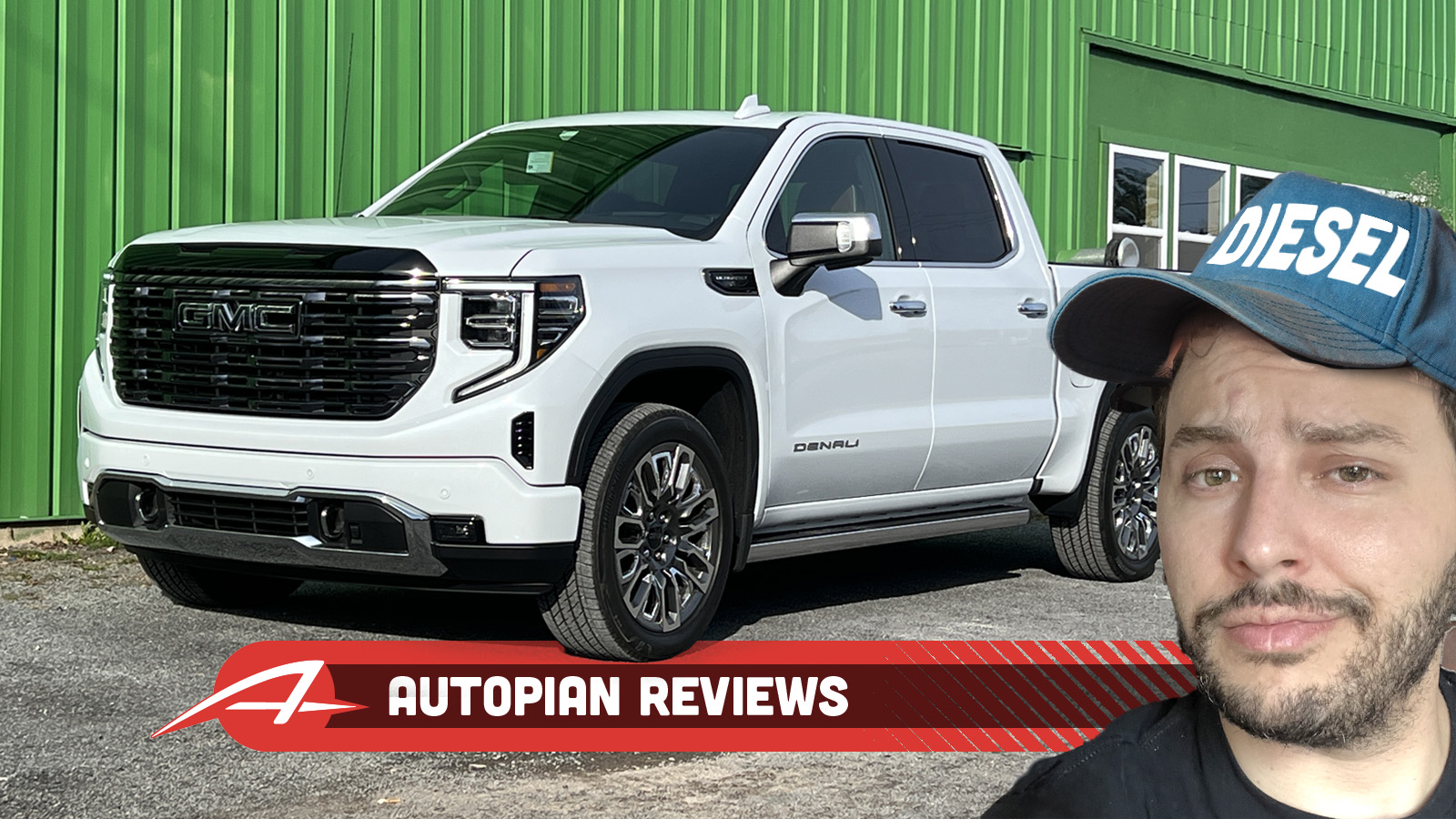
I wonder all the time whether diesel engines have run their course in 1/2-ton trucks like the Ford F-150, Chevy Silverado, and Ram 1500. With modern turbocharging and hybrid tech, gas-powered engines can, on paper, deliver the same (or better) torque and fuel economy as their diesel counterparts. And with diesel currently averaging $5.63 a gallon, it’s hard not to question why anyone would opt for a diesel engine in their 1500-sized truck.
For the majority of the trucks I mentioned above, manufacturers have made that decision for you. Ford dropped the Power Stroke diesel from the F-150’s lineup in 2021, and Ram followed suit shortly after, eliminating the EcoDiesel V6 from the 1500’s option list in 2023.


General Motors is taking a different approach. Out of the big three American legacy manufacturers, it’s the only one to currently offer a diesel engine option in its 1/2-ton trucks, the Chevrolet Silverado and the GMC Sierra. Instead of leaning into complex, heavy hybridization to offer improved fuel economy, like Ford with the F-150 or Toyota with the i-Force Max-equipped Tundra, GM relies on its 3.0-liter Duramax inline-six to offer up to 25 mpg combined on 2WD models, making it the most efficient truck in its class, according to EPA estimates.
Factoring in the extra cost of diesel fuel compared to regular gasoline, the savings you might see in fuel economy are probably close to a wash, depending on how much you drive and the fluctuating prices at the pump. So the question remains: Why choose a diesel over something like a hybrid V6 or a gas-powered V8, which might deliver worse economy but run on cheaper fuel?
Well, after putting over 400 miles on a GMC Sierra Denali Ultimate equipped with the Duramax over the weekend, road-tripping and doing real truck stuff like hauling furniture, it’s fully won me over. The fuel economy and sheer distance you get out of a tank were nice touches, but it was really how the engine felt, with its near-instant torque delivery and grumbly noises, that convinced me diesel is still the answer for when you want a 1/2-ton truck that does real truck stuff.
The Basics

Engine: 3.0-liter turbodiesel inline-six
Transmission: 10-speed automatic
Drive: four-wheel drive
Output: 305 horsepower, 495 lb-ft of torque
Fuel Economy: 26 mpg hwy, 22 mpg city,24 mpg combined
Base Price: $84,400
Price As-Tested: $86,790 (including $2,795 destination charge)
Why Does This Car Exist?
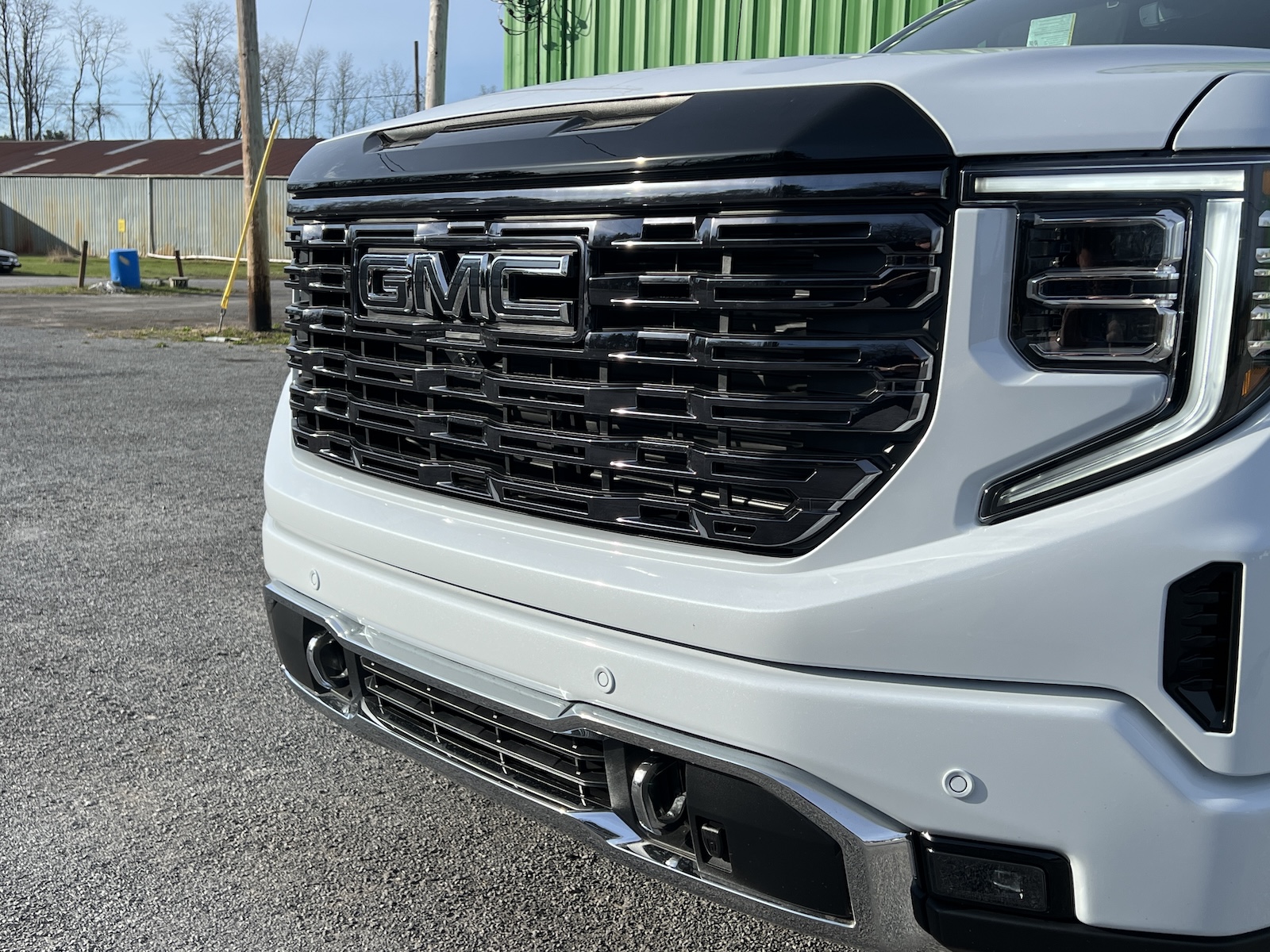
To ask why the Sierra exists prompts a much larger question: Why does GMC exist at all? Many of its vehicles are reskinned Chevrolets, using the same powertrains and similar interiors. The answer isn’t incredibly difficult to grasp: Because people buy them. Whether it’s because they don’t want to be seen in a Chevy but still like the vehicles, prefer the design of the GMC, or just want to one-up everyone at the construction site, there are plenty of reasons why someone would want a GMC over the equivalent Chevy.
The Sierra is simply an extension of the Silverado, which is GM’s best-selling and most important vehicle. The Sierra is, by far, the highest-volume product GMC offers. Nearly 37% of all GMCs sold last year were Sierra 1500s. If you count HD and EV models, that number jumps to 57%. Americans sure do love their trucks.
The real question, then, is why does the diesel Sierra exist? Well, like I mentioned above, it’s the most efficient of the four powertrain options available—outstretching even the base 2.7-liter inline-four. Because of that, it also unlocks the largest range in the lineup (600 miles between fill-ups, according to the EPA). And with 495 pound-feet of torque on tap, it also offers the most torque in the Sierra 1500 lineup (30 more lb-ft than the 6.2-liter V8).
The diesel, then, is the ideal choice for users who tow, especially over long distances. What they care about most is overall range and tow capacity, and the Duramax is the best at both of those things. In a double-cab, 2WD configuration, the Sierra can pull a trailer weighing 13,200 pounds—the most of any trim. It’s worth mentioning that the payload with the diesel is only 1,880 pounds at most—if you want the maximum hauling capacity, you’ll have to go with the 2WD truck with the regular cab and standard-sized bed.
How Does It Look?
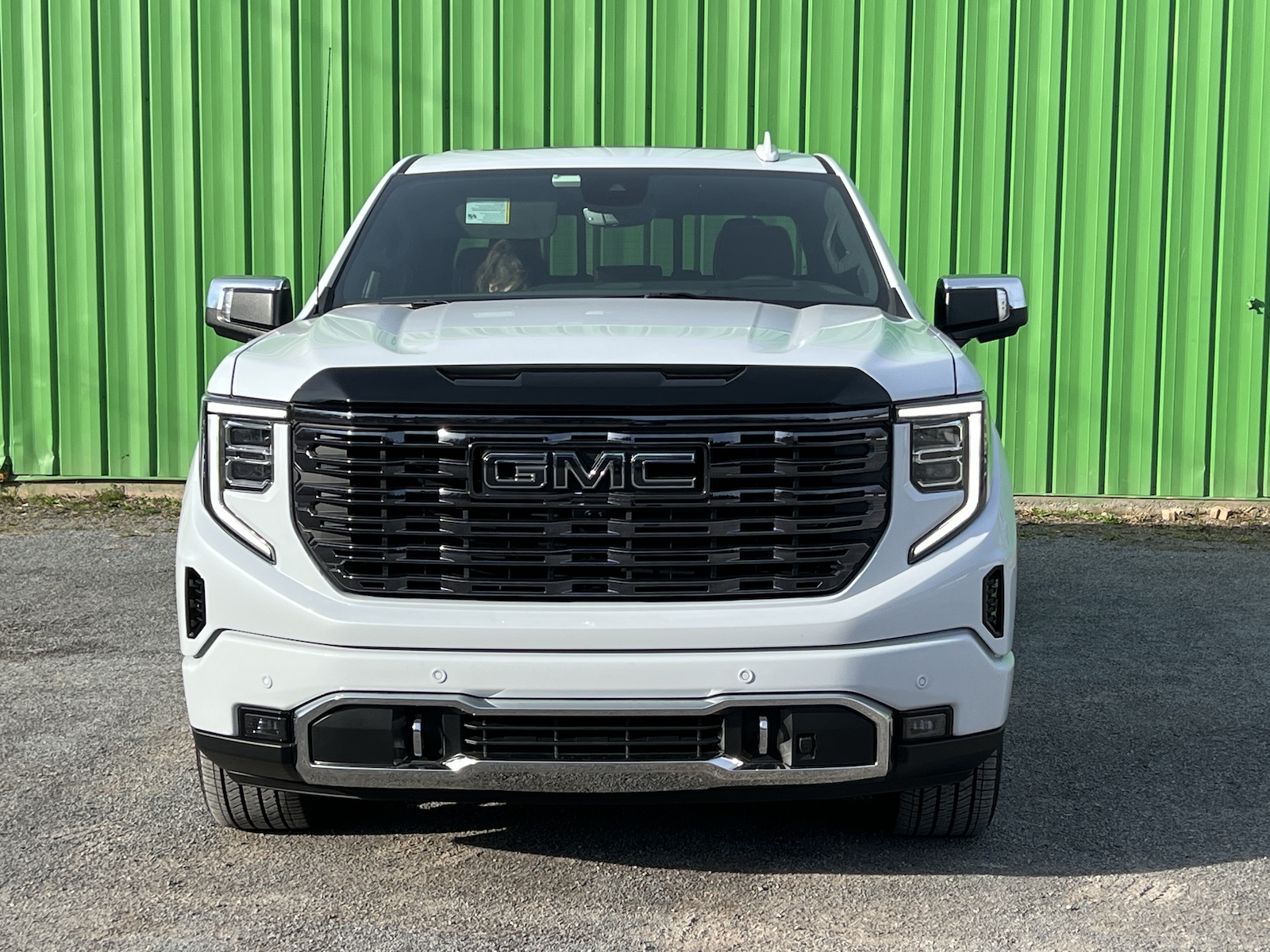
In years past, I’ve found the Sierra often struggled to set itself apart in the looks department compared to its Chevy-badged Silverado sibling. But in recent years, that’s not been the case. GMC has developed a corporate design scheme all its own, with C-shaped lighting for the fascia that I think looks pretty good.
Being a top-of-the-line Denali Ultimate model, there’s lots of chrome trim everywhere, including the grille, the lower front valance, the window surround, the side mirror caps, and, of course, those gigantic 22-inch wheels. Even the tow hooks up front are chromed out. I don’t very much mind the chrome grille, as flashy and large as it is, but the 22s are a bit much. If I could, I’d option some smaller wheels to get a bit more sidewall on the tires for a better ride (so long as it doesn’t hurt fuel economy).

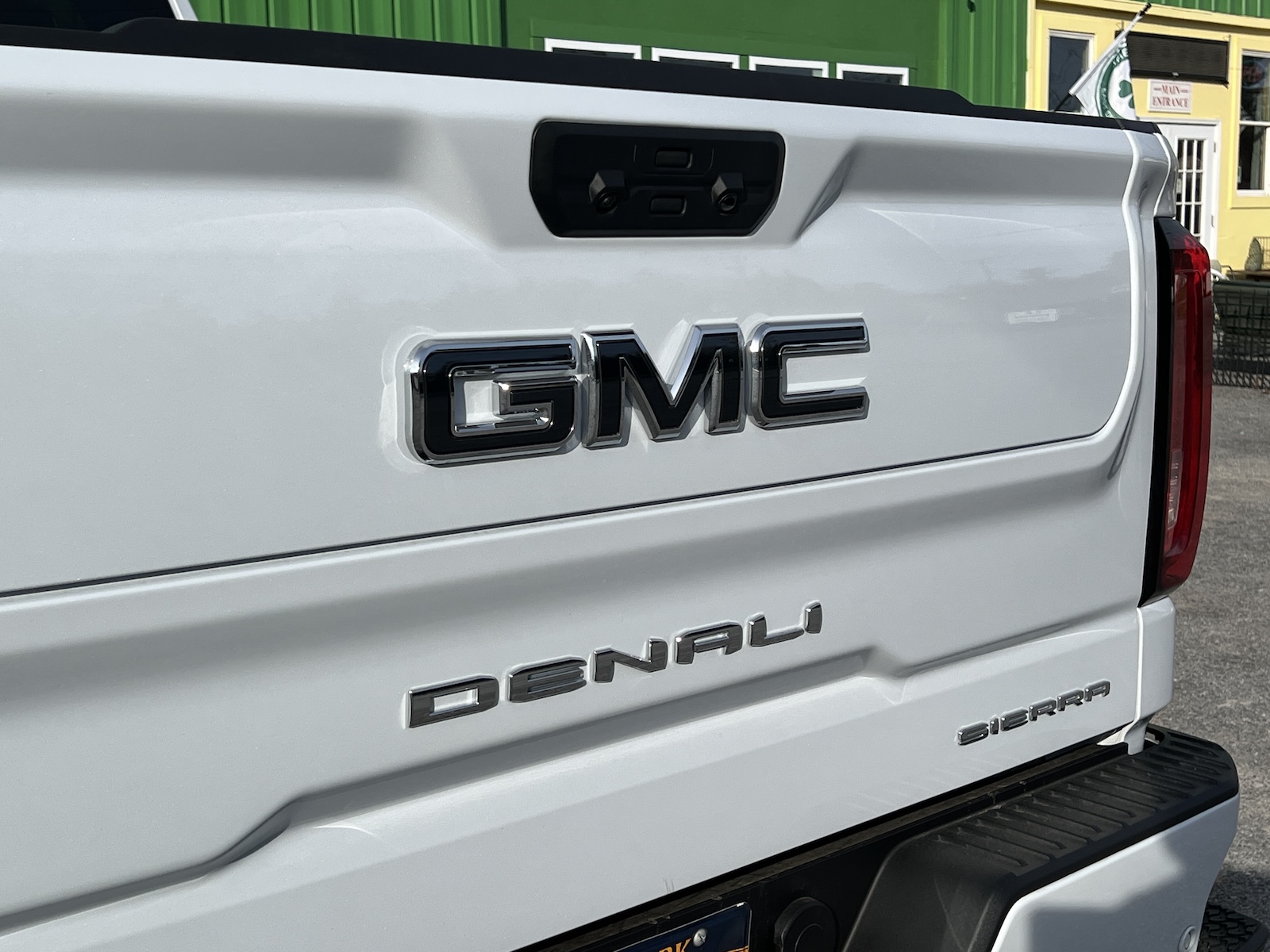
The rest of the Sierra is a very standard three-box pickup truck, with a bed measuring 79.4 inches front to back and a couple of pretty useful corner steps. The tailgate has GMC’s MultiPro tailgate system, which is essentially just an extra step that folds out from the panel, making it way easier to get up into the bed. I deployed it pretty much every time I opened the tailgate, and found it incredibly useful. If I owned this truck for long enough, I’d be pretty mad if my next truck didn’t have a feature like this.

The only thing that really bothered me about the exterior of this truck was the blacked-out badges. For Ultimate models, the “GMC” badges go from red to black, making them look a bit too aftermarket to me. The red, meanwhile, normally contrasts nicely with the chrome grille and the Glacier white paint (a $1,095 option on this truck), so I’m sad it’s not here.
What’s The Interior Like?

If I’m spending over $86,000 on a pickup truck, it better be packed to the gills with quality materials, a smart layout, and useful features. Thankfully, the Sierra Denali Ultimate delivers on all three with what is probably the nicest pickup truck interior I’ve ever spent time in.

The full-grain leather seats are plush and didn’t make my back ache, even after a three-hour stint behind the wheel. The heating, cooling, and massaging functions probably helped a bit, too. The steering wheel felt excellent in my hands, and the electronic gear selector—as little as I trust electronic shifters—was pleasant and straightforward to use.

The driver’s seat—hell, every seat in the house—had acres of head, leg, elbow, and shoulder room, with the captain’s chair up front allowing for enough adjustability that it feels like anyone, from a seven-foot-tall basketball player to my four-foot-nothing grandmother, could find a seating position they liked. I also appreciated the center stack of real buttons for the climate control (in piano black, boo!), as well as the physical controls for volume, parking sensors, and auto stop-start. I can’t believe I have to praise a manufacturer for having something as simple as a real volume knob, but here we are.

Like on most pickups, you can fold up the seat bottoms of the second row in the Sierra for more cargo space. But this truck had a couple of hidden doors built into the left and right seatbacks that were pretty neat, if not a bit tiny. What you’d store in here, I’m not entirely sure. But I’m glad they were available, in case I needed to stash something in the cabin and didn’t want it to be seen from the outside.
How Does It Drive?

Like most modern body-on-frame pickups, the Sierra Denali has an air of solidity to it that I greatly appreciate. It feels like you can do just about anything and go just about anywhere in this truck. While the adaptive air-ride suspension isn’t as smooth or effortless as something like my Audi A8L, it does a great job of mitigating imperfections in the road through the chassis without shocking the cabin—high praise considering the horrendous conditions of New York City roads right now, where I spent a lot of my time with this thing.
Out on the open roadway, the Sierra 1500 is a lovely machine. It can emulate the presence of a luxury SUV more so than any pickup truck could have done as recently as a decade ago. Sure, you might get the odd body-on-frame jitter into the cabin from time to time, but otherwise, the ride is perfectly comfortable, and the steering is quick enough that you’re not going hand-over-hand through every turn. For the most part, it just felt like a normal car, but longer and taller.

While I didn’t get the chance to test out the Sierra’s towing capabilities, I’ve towed a race car with this engine before, with a Chevy Suburban, and it made the entire experience incredibly pleasant. The low-end torque and 10-speed auto meant I didn’t really have to change my driving habits much, plus the stability provided by the adaptive air suspension meant no weird bounciness coming from the rear, which is something I’ve experienced when towing cars with traditional passive suspension setups.

Instead, I used this Sierra to haul. A lot. My girlfriend is moving in with me next week, so we took this weekend to move a bunch of her stuff, including a lot of furniture, from her place to mine. We made two trips and snagged tables, chairs, desks, and a good deal of other items. Then, the next day, we took it on a road trip to upstate New York to shop at a handful of vintage stores to find more furniture for the apartment. We ended up with a nice dresser that fit perfectly in the bed.

During that trip, I managed to achieve over 25 mpg, according to the truck’s onboard computer. That’s just one mpg less than the car’s official highway rating, done with what was probably a few hundred pounds worth of cargo onboard (we got some other stuff, too). More importantly, for the entire 430-mile weekend, which included roughly 100 miles of low-speed, stop-and-go city traffic, I didn’t have to stop at a gas station once, and had about 100 miles in the tank left to spare by the end of my loan.
How Is All The Tech?

The nice thing about the current Sierra is that it doesn’t yet run GM’s newest operating system, which means you can still pull up Apple CarPlay and Android Auto for things like music playback and navigation, which I did almost the entire time I had the car. The infotainment system is otherwise fairly straightforward—there’s a 13.4-inch touchscreen that dominates the experience, controlling a bunch of the truck’s settings.
Let me give you an example. There are front and rear cameras, which helped greatly for parallel-parking in the city for loading and unloading my girlfriend’s stuff. But unlike some cars, there was no physical button to quickly bring up the cameras, forcing you to dig into the touchscreen to locate your desired view. A minor annoyance, yes, but seeing as how there was still one blank button in the center stack, I feel like this could easily be solved.
One thing that GM does right is Super Cruise. The assisted driving tech has been available in select Chevy, GMC, and Cadillac products for years, and as far as Level 2 systems go, I think it’s the best out there right now. Not only will it accelerate, decelerate, and steer on its own, but it’ll also switch lanes for you without being prompted, and even go around slower traffic sitting in the left lane. It’s not perfect, of course. You still have to watch it at all times, and there are some sharper turns it can’t quite negotiate without some intervention, but it’s still really good.

It’s not just a gimmick, either. I used Super Cruise for roughly half of my drive upstate, or around 150 miles. Would I pay $25 to $40 a month for it? Maybe if I were doing these types of drives all the time, sure. But if my driving wasn’t solely highway miles, I probably wouldn’t. Super Cruise relies on pre-mapped roads to function, so you can’t just flip it on wherever and expect it to work (though it did work on a lot more roads, including two-lane roads, than I expected).
Does It Fulfill Its Purpose?
The GMC Sierra and its sibling, the Chevy Silverado, are essentially in a segment of one when it comes to diesel 1/2-ton pickups. But while they don’t have to outclass vehicles from other automakers, they still have to make sense to buyers.
After putting a bunch of miles on this Duramax straight-six, it’s easy to see why GM keeps it around. It unlocks a ton of range between fillups, while delivering damn good fuel economy for a pickup of this size. More than that, it makes the whole experience of modern trucking feel nice and effortless, at the same time appealing to my inner enthusiast with its diesely rumble and audible turbo spin-up—something those hybrid V6s struggle to replicate.
Would I go for the Denali Ultimate? Probably not. I could do without the high-class leather and massaging seats if it means saving some coin. If you do without all the fancy stuff, you can get a Duramax-powered Sierra 1500 for around $57,000, which feels a bit more reasonable. Sure, filling up this gas tank at the end of my loan may have cost me $117, but the long range between fillups and huge towing capacity are, for my use cases, anyway, worth the tradeoff.
Maybe you feel differently. If you were buying a new truck, would you want a diesel engine? Or would you settle for a V8, or even the base turbocharged inline-four? Let me know in the comments.
Top graphic images: Brian Silvestro


Hard for me to put any merit at all into this review when the author continuously refers to it as a “car”
400 miles driving around and hauling furniture and you’ve figured it all out… LOL
Fun review but you’re not even in the ballpark.
I don want to pick nits but i will; 1—-“”very seat in the house—had acres of head, leg, elbow, and shoulder room”” >>>>>>NO. gm positions its seats to the outboard edge of the cabin putting the seat right next to the ‘B’ pillar. Your shoulder almost touches. You do NOT have room to reach in your pocket. I have much more room in my wife’s Forester. 2—- trip computers always lie. dont cite its mpg reading. Most are 1-3 mpg high- always- ALWAYS on the high side. 3—– the 3.0 diesel has durability issues? Not 6.2 disaster levels but notable. 4— $90,000 for a car with 36% US content?. I have an issue with that.
A few times a year I tow a 6-7000lb enclosed trailer up and down CA or as far as Utah for work. It’s usually done in a diesel Ram 2500.
This last trip, the boss had to use the Ram to go somewhere else so I rented a Chevy 2500 gasser.
Over the same drive I’ve done 10+ times with the diesel, I barely noticed a difference with the gas engine. Long stints on I5, up and down the grapevine, and through LA traffic.
Diesel is over $2 more per gallon in most places around here at the moment. Plus the added cost of Def and the higher initial purchase price, I just didn’t see the benefit of a diesel motor. Of course, I wasn’t near the towing limit but I think a majority of towing loads on a 3/4 ton truck are similar to mine.
…. and diesels seem to be troublesome above 80,000 miles. They are choked down with so many control devices that the gremlins are profligate.
13,200 lbs of towing capacity? Since when did any 1/2 ton truck get the frame, suspension, and brakes to adequately control such a massive trailer? How does such a manufacturer claim bear out in the real world?
well. that wont pop up until after the warranty. he-he-he