

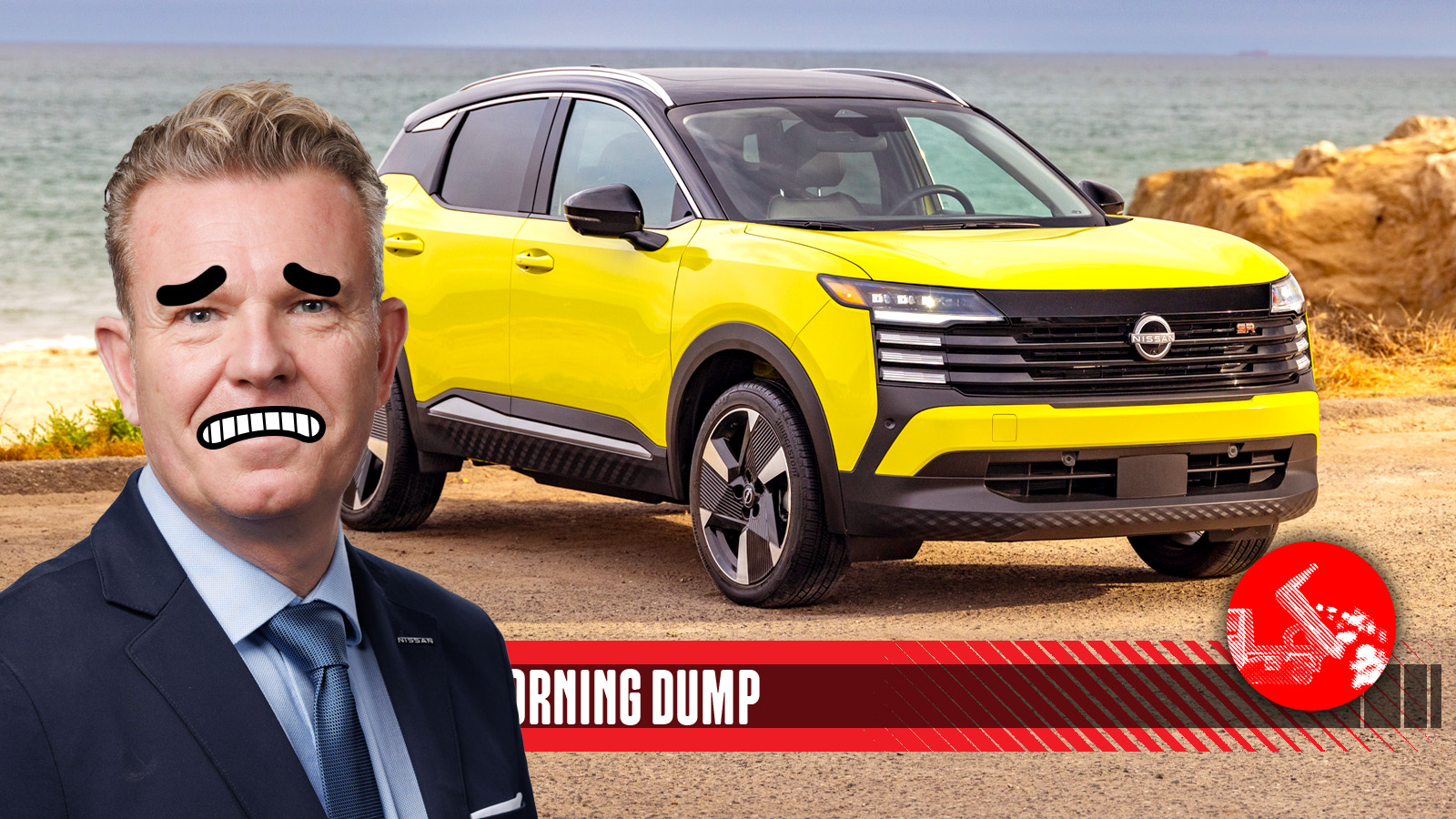
It’s been one of those days and I’m starting The Morning Dump at 11:42 AM. Technically, it’s still morning. It won’t be morning by the time you read this because even I’m not that fast. You know who is fast, though? Policymakers in the United States, who keep changing the rules on tariffs.
For a company like Nissan, this is super annoying. While Nissan builds vehicles in the United States, it doesn’t think it can build a sub-$30k vehicle here, so it makes those cars in Mexico. There’s essentially a 25% tariff on those vehicles, meaning it’s cheaper to build something in a place like South Korea. Is that fair?


If you thought the original round of tariffs was unfair, you’re not alone. After the Supreme Court ruled that the certain tariffs were unconstitutional, a bunch of companies lined up for refunds. Some of those refunds will be going to hedge funds.
For all the crap Stellantis takes, it’s at least finding a way to bring sales up in what was a tough quarter for most. In fact, Stellantis might be the only large automaker that did better in every market. Even China! It’s a tough place to sell cars these days, and Ford CEO Jim Farley doesn’t want to import that market stateside.
‘It Is Not Feasible’ To Move Cheapest Cars To The US Says Nissan CEO

I finally drove the new Nissan Kicks and, eventually, I’ll tell you about it in detail. It was good, although the high trim version I drove seemed a little expensive. That’s not a coincidence. With a 25% tariff on the Kicks, the company basically can’t make money on the vehicle if it can’t charge a lot for it, according to the company.
This is a strange quirk of the tariffs. The original stated goal was to have “90 deals in 90 days.” It’s been a year and there aren’t 90 deals and, in many cases, the deals that do exist aren’t fully signed or ratified. This means that automakers who build cars in countries that do have a mostly agreed upon or signed deal, like Japan and South Korea, save money relative to places like Mexico.
As with everything trade-related, this isn’t universal. The United States-Mexico-Canada Agreement (USMCA) is still in place, and vehicles that follow those rules are exempt. Well, the content of those cars that is USMCA-complaint is exempt from the newer 25% tariff. This is why Audi got hosed, because the Q5s they were building in Mexico were mostly non-USMCA complaint, with a lot of parts from Europe.
This is what Nissan is complaining about in this Automotive News article as the company’s leaders complain about trying to sell Sentras and Kicks:
“These two products are sourced from Mexico because of the affordability requirements of the segment,” CEO Ivan Espinosa told Automotive News at a media event here.
“At the moment, it’s not feasible to move them to the U.S.,” he said. “We need to continue working on the cost competitiveness.”
Espinosa isn’t the only one who takes issue with this. From the story:
The Trump administration’s 25 percent tariff on imports from Mexico is “unfair,” particularly compared with the 15 percent charged on vehicles from Europe and South Korea, Nissan Americas Chairman Christian Meunier said.
“A 10 to 15 percent tariff is manageable, but 25 percent is not sustainable long term,” Meunier said.
Because few companies make a truly affordable car in the United States anymore, it’s hard to argue that we aren’t just raising the cost of these lower-priced vehicles. However, both Toyota and Honda have found a way to make some Corollas and Civics here, so it’s not entirely impossible.
Nissan’s plans involve increasing the amount of US-sourced parts in the Sentra and Kicks, which does point to the original goal of the White House being somewhat fulfilled. The other big part of the plan, reportedly, is to sell higher trims (Trimflation), which counters the White House’s other goal of making cars more affordable.
Hedge Funds Might Be Getting Your Tariff Refund
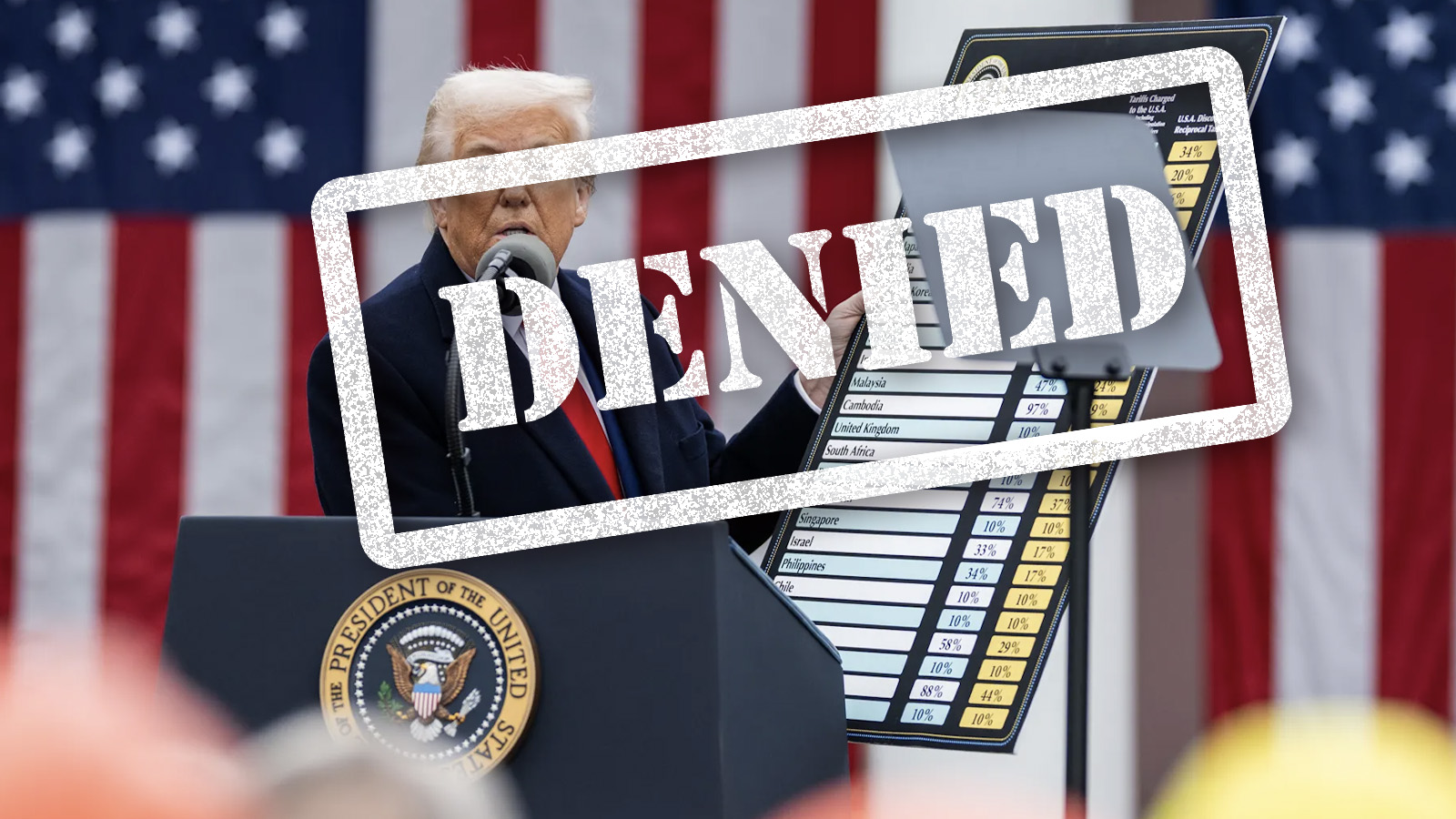
When the Supreme Court overturned certain tariffs, numerous companies had already filed lawsuits so they’d be first in line to get refunds. Not everyone can wait for all the capital they lost, which is an opportunity for hedge funds that want to buy those refunds at a discount.
“The Supreme Court decision unlocked the market,” said Wes Harrell, a managing director at Seaport Global, which connects hedge funds with importers holding tariff claims.
“I think ultimately we’ll see more folks come in as a result of higher inflation around input costs and what that’s doing to liquidity concerns,” Harrell said.
Tariff refunds were selling at 20 to 40 cents on the dollar before the Supreme Court’s ruling. But prices have since skyrocketed with major brands taking legal action to get their money back.
Larger claims with high-quality sellers are going for up to 70 cents on the dollar, Harrell said. “The past month or so has been importers getting their ducks in a row, talking to trade counsel, determining how best to protect their rights in this litigation and in the refund process.”
Will you see any of that money? Probably not.
Stellantis Saw A Lift In Every Market
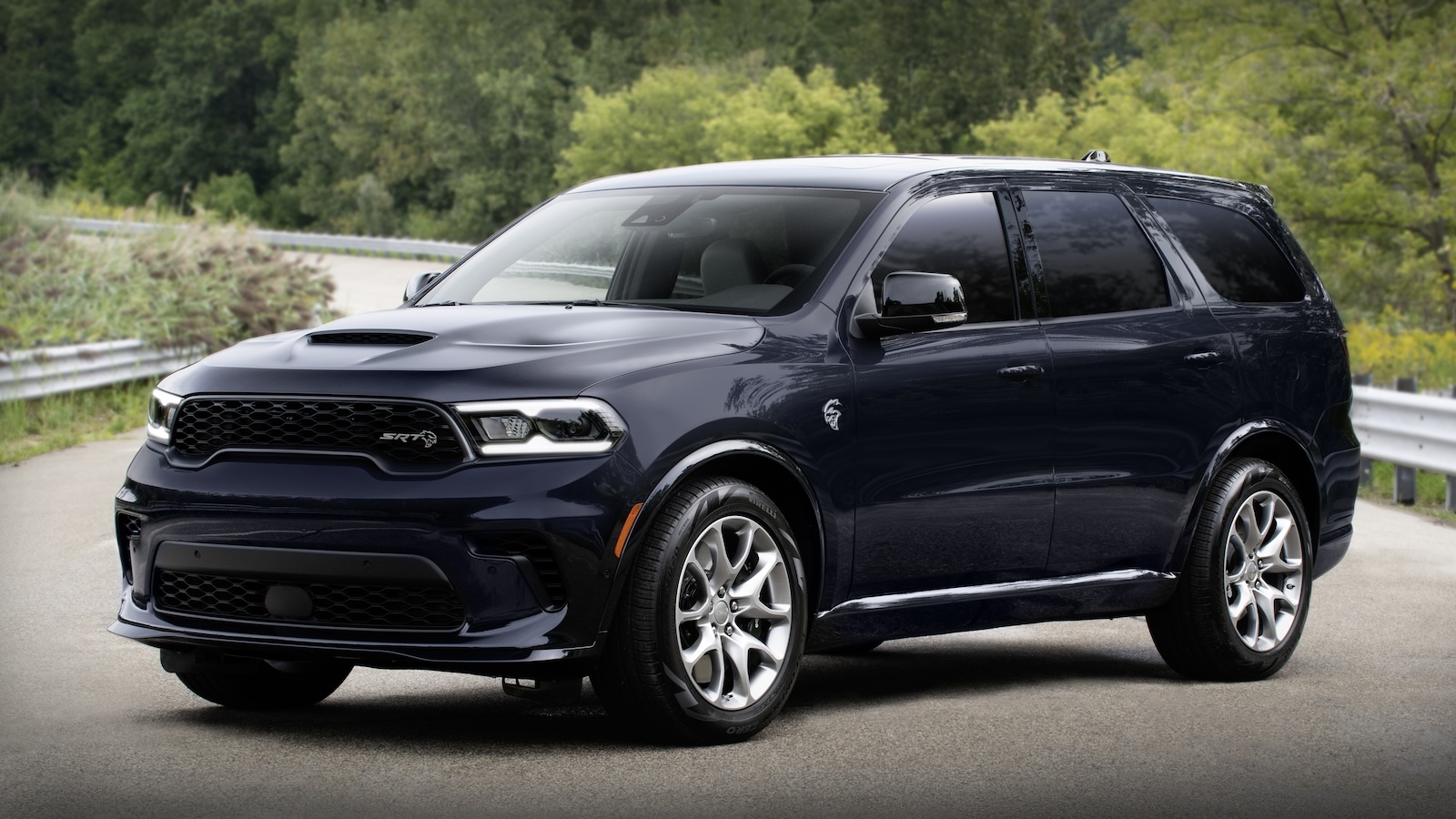
While Stellantis has been able to boost North American sales with the addition of the Hemi V8 back to the Ram 1500 (where it belongs), that’s not going to work in Belgium. It turns out that Stellantis, which was near the bottom a year ago, has managed to find ways to sell cars everywhere. Is there any automaker that has improved its sales in every market? Not that I can think of.
As a whole, the company was up about 12% in Q1, including a 17% rise in North America and a 15% rise in Asia Pacific. The company even did well in Europe, as it explains:
In Enlarged Europe, Q1 shipments increased by approximately 69 thousand units, up 12% y-o-y. LCV volumes were stable at approximately 135 thousand units. Passenger car volume growth was driven by new launches. FIAT, Opel/Vauxhall and Citroën brands shipments benefited from the performance of Smart Car platform nameplates (Citroën C3, C3 Aircross, Opel/Vauxhall Frontera, Fiat Grande Panda) which increased by approximately 48 thousand units, or 85% y-o-y. Leapmotor-branded vehicles gained commercial momentum, with shipments increasing by 22 thousand units to approximately 27 thousand units; supported by the success of the T03, in the BEV entry-price segment across Europe, particularly in Italy.
I had an enlarged Europe once, but a doctor gave me a pill and it went back to normal size.
‘We Should Not Let Them Into Our Country’

Ford CEO Jim Farley may have loved his SU7, but he doesn’t think Chinese automakers should be able to sell cars here. The CEO went on Fox News and basically said it would be a bad outcome if that happened.
From that interview, via InsideEVs:
Ford CEO Jim Farley loves driving Chinese EVs, but he’s also clearly worried about what could happen if they could more easily enter the U.S. market. In a recent interview with Fox News, the CEO said Chinese EVs shouldn’t be allowed on U.S. streets due to the “devastating” impact they would have on the auto industry.
“We should not let them into our country,” he said. “Manufacturing is the heart and soul of our country. For us to lose that to those exports would be devastating for our country.”
This will keep coming up, and it’s approximately correct to say that more so than pretty much anywhere, China has subsidized its industry in a way that makes it an all-consuming beast. That being said, American companies could benefit from competition with world-class EVs. It just ain’t gonna happen here anytime soon.
What I’m Listening To While Writing TMD
You can’t do TMD in 45 minutes without some power, so I turned to The Stooges and “I Want to Be Your Dog.” That’s such a great riff.
The Big Question
What are some of the best American-made affordable cars and why are they the Pontiac Vibe?
Top graphic images: Nissan


Farley on Fox news.. because of course he was.
“We should not let them into our country,” he said. “Manufacturing is the heart and soul of our country. For us to lose that to those exports would be devastating for our country.”
What exactly do you manufacture that competes with small, affordable Chinese EVs?
Ford ain’t letting go of that sweet sweet socialism
Unless it’s worker’s benefits.
I’m old enough to remember when GM (Cruze, Malibu), Ford (Focus) and Stellantis (Dart, 200) all offered small, US, UAW built cars that were cost competitive in the class. During the first Trump admin, in fact. If they wanted to, they would!
To say nothing of the Neons and Ions and Cavaliers and Aleros and Grand Ams and Tauruses and Fusions and Milans and Stratuses and Sebrings that came before… when your product offering all becomes more expensive and imported, it seems wimpy to complain about affordability and tariffs. The big 3 did it to themselves.
SIA built Subaru Forester is one of the best US assembled affordable cars. The US built Corollas are too.
Well the US auto manufacturers have nobody to blame but themselves for being so uncompetitive. They manipulated the market and tariffs, took advantage of the truck loopholes and stopped making cars.
Just because the American manufacturers abandoned the market, it seems like a terrible idea to not allow anyone else to sell low cost cars.
The domestic manufacturers say they don’t make small low cost cars because nobody wants to buy them, so whining about competition in a market they don’t want to participate in seems a little disingenuous. Well maybe a lot disingenuous.
Of course part of the problem is that Trump vaporized their plans and investments for cars that are aligned with the rest of the world, and is doing everything he can to kill American automakers in the long run.
You say complaint and I say compliant. Let’s call the whole thing off.
It’s not impossible to build an inexpensive car in the US, they choose not to because they are greedy. Huge pickups and suvs make big profits. Then don’t even get me started on the UAW and how they drive up prices.
I find it unfair that they can immediately take your tariff money but for some reason they find it so very difficult to return it.
They eliminated that department.
Oh right, I forgot.
CEOs bankroll hard-right policies, and when the consequences land, they quietly walk back the very positions they championed.
Meanwhile, the historical record shows the economy has often performed better on average under Democratic leadership. Not always, and no president fully controls the economy, but the trends are there: stronger job creation, investment, and GDP growth. And yet boardrooms keep circling back to trickle-down and other well-worn ideas that don’t match the outcomes.
Bring back the 90% top tax bracket!
When you go googling for the answer to your statement, ‘historical record shows the economy has often performed better on average under Democratic leadership’, you should change the wording to ‘very much has, like 10 out 11 recessions in the last 60 years were under Republican administrations’.
I didn’t make it as biting because I want even feeble-minded automotive enthusiasts to feel welcomed here. The point was more one of repeating the same thing over and over than just making a political statement.
The wealthy class redistributes more wealth to them than anyone else. It takes money to make money and they have all the money. When tax rates were higher, companies were forced to invest into their workforce and raise wages. Thanks to Ronald Reagan, that all stopped and now the funds can just flow freely to the top where they stay.
People think it’s mean to say that billionaires shouldn’t exist, but if you think about it, wouldn’t you start just giving money away once you got to, say, 900 million? Instead, we have these doge-based demons on their way to being a personality cult of a TRILLIONAIRE. And to what end? He won’t be able to accomplish anything he can’t now.
People also somehow missed last time Elon Musk’s pay plan was being debated he stated that it needed to be higher so that he had more ability to be the only person to control the incoming robot army he is planning. ROBOT ARMY. Was this on your bingo card? It should be now!
And yet Republicans and news media will only talk about the one time there was a recession under a Democratic administration and point to that as “proof” that Democrats can’t lead.
I can already hear him (you know who!) proclaiming: “Nobody does recessions better than us! We do the best recessions!”
And yet the myth that Republicans are fiscally responsible and good on the economy persists.
This. All day.
“At the moment, it’s not feasible to move them to the U.S.,” he said. “We need to continue working on the cost competitiveness.”
It’s not “feasible” because they don’t want to. I think what he’s saying is they’re going to lobby lawmakers for exemptions to get the govt benefits of building the Sentra/Kicks in the USA without having to do so.
“The Trump administration’s 25 percent tariff on imports from Mexico is “unfair,” particularly compared with the 15 percent charged on vehicles from Europe and South Korea, Nissan Americas Chairman Christian Meunier said.”
It most definitely is Unfair. Not that Crooked Trump or his gang cares about being fair.
Mexico and Canada are our top trading partners, not the EU or China.
Best American-made affordable car? The 1966 Corvair. One of the prettiest American cars ever, inexpensive, reliable—probably the peak year for Corvair build quality, with the bugs worked out from the ’65 redesign, and before Corvair production became an afterthought in ’67-68 and literally got shoved into one isolated corner for ’69—and easily the best handling car made by an American company, probably until the mid-2010s. Available in a gorgeous array of colors, with a long list of mostly a la carte options, in your choice of three bodystyles, three trim levels, with four available engines and three transmissions, and if that wasn’t enough to get you exactly what you wanted, John Fitch or Don Yenko or the folks at EMPI or any number of other enthusiast shops could step in and help you out.
And they’re still pretty affordable and easy to own today!
That riff is what plays in my head when I am about to go off the rails. like ordering the third drink too many.
The problem with the big three, back in the day, was that they became concerned only with satisfying three groups: the union, upper management, and the shareholders. The most important group, the one that supplied the cash to make it all work, that is the customer, was taken for granted and forgotten.
Dumbass car companies: offshore production for cheap in exchange for handing over IP gained over many decades of manufacturing and untold billions of dollars to a country where government controls manufacturing and who uses the sell-at-loss-to-attain-full-market-share model then bitch and moan when the thing almost anyone who isn’t a C-suite parasite could have told them would happen does. Unfortunately, isn’t confined to the automotive business as it seems the entire world is backwards in that the most selfish, dastardly, and dumbest hold the most power.
Honda and Toyota can make sub-$30k cars here because they sell such consistently high volumes (and I would imagine successfully upsell a lot of higher-profit options and trims), a result of decades of excellence in meeting or exceeding customer expectations. This can happen when you reinvest in the product with the goal of consistently delivering improvements for about the same cost to the customer instead of occasionally cynically shitting out a competitor or even giving it a decent shot only to hobble it with some cheapskate Achille’s heel that could have been solved cheaply so that money can be diverted to rich stockholders and overpaid C-suite assholes who couldn’t give less of a f about the company’s longterm future.
You are correct. People who buy Toyotas are very risk averse.
When I worked for an auto group and could see the figures, people actually bought way more warranties on Toyota and Subaru than they did on Chevrolet or Volkswagen.
So, yes, Toyota and Honda do make additional monies on these sub-$30k cars.
Also helps too that Toyota and Honda pay their workforce extremely well. They take care of their employees and make it a place people want to work at, meaning the TMs take more pride in their work. I’ve seen it firsthand going from UAW Plants to supplier facilities, then to the Japanese plants. My BiL is in his second year working s at a Toyota plant and already makes more than my wife who is on her 8th year of teaching.
That’s part of it (and an underappreciated part of QA—a steady, reliable, and experienced workforce who cares), but processes for the employees is a big driver, stressing to the builders to get something right vs just getting it out the door. Then, when you build a good product people want to buy, that don’t need rework, and recalls, or discounts to move them, you can afford paying the workers who keep you going in a way that’s almost self-sustaining. It’s a completely different corporate attitude of pride in what you do and considering the longterm future vs f-em-get-that-bag-king! It’s probably an even easier job for management just doing it the former way than constantly putting out fires from last week’s bodge like with the latter and having to constantly adjust reported earnings to cover problems and more inconsistent sales.
Best American-made affordable car? Not sure anything will ever dethrone the Model T Ford on the affordable front. The cheapest T was $260 in 1925. Inflation adjusted 101 years later, that’s $4,906. It wasn’t safe or comfortable, reliable or efficient by our modern standards, but it was a quality-built transportation device.
It was reliable in the sense that when it did break down (which was fairly frequently, as did many cars from the same time) you could probably fix it in 5 minutes with a rock and a ball of twine
I am pretty sure that in 2126, there will be more 200-year-old T’s still puttering around than all 100-year-old 2026 models put together. It’s hard for me to imagine today’s plastic cars aging gracefully or being repairable without replacement widgets. Then again, maybe we’ll be able to 3-D print computers chips by then.
Will there still be any oil left at that time to run them though?
I’m assuming we can use synthetic oil and gasoline. Might be expensive, but for hobby use people will be ok.
If all else fails, I’ve read that Model Ts can run on pure corn ethanol, which I know we’ll always have
Good point. And more true to its origins.
More likely using propane and natural gas
Maybe my memory is failing more than I thought but it seems the under $30,000 cars had all but disappeared before the tariffs even started. I guess someones memory is failing.
Protectionism sucks, and the American car companies aren’t even worth protecting anyway.
They could at least *act* like the deserve the protection. If they actually made good cars and tried to compete, they’d get more sympathy.
While the UAW sucks and gives unions a bad name (even other unions don’t like them), they are not necessarily the reason for Detroit’s problems. For example, the UAW is proven to be capable of building good cars (including the Vibe, Prizm, and even the Hilux that we got until 95 and the Tacoma that followed).
Honda and Toyota make it obvious that they’re run by engineers. The American car companies need to have their executive boards comprised entirely of engineers, unless the union wants a works council (in that case, half the board would be labor, and the other half would be engineers).
It’s the American jobs and know-how that’s worth protecting. I don’t have any better ideas to do this.
We could have an industrial policy to directly support important domestic industries. We made baby steps that direction with the last administration.
Industrial policy means nothing without the actual industrial capacity and know how backing it up. Functionally, this means protecting the auto industry. Aside from Aircraft, we build nothing that requires more skill and capacity.
The policy is key to building capacity. They go hand in hand.
China didn’t take over and dominate battery manufacturing because they were largest or best at it when they started. They took it over because the government identified large format batteries as a key industry to dominate and then spent the money to make it happen.
Batteries is only one example.
And they were able to do this because the groundwork was already there. They had decades of infrastructure, technology and skill. No argument that smart policy is important but it only worked because of the industrial base.
If we want to make batteries or whatever, we don’t get there by killing off our auto industry.
I didn’t say anything about killing off our auto industry. (That would be shooting myself in the foot as I’ve worked in that industry since the 90’s)
No, the groundwork for building batteries in China was not already there. In the 1990’s and 2000’s the USA and Japan were ahead of China in battery tech. China actively decided to dominate battery manufacturing and raw material processing and then did it.
(Part of that was buying leading LFP battery tech invented at MIT that the US government spent millions of dollars to develop for pennies on the dollar in a bankruptcy auction)
China could have only decided to dominate battery manufacturing because they had a modern industrial base going back to the 1970s. The skill to build batteries comes from an already advanced industrialized base with both the ability to build manufacturing process and the skilled workforce.
Until recently China did not have modern manufacturing. They used low tech processes with lots of labor because labor was cheap. Today they are leading in automation and getting the worker out of the factory.
China started the modern battery revolution less than 20 years ago, in the early 2010s. Hardly decades of infrastructure or already laid groundwork.
First mentioned in the 13th 5 year plan as part of Made in China 2025.
Crazy what they have done in the last decade.
Batteries, solar panels, wind turbines, EVs, etc. They have long term vision, not the quarterly demands of our spreadsheet cowboys.
Semiconductors, trains, robotics, AI….
Microchips handily outrank cars in complexity and capacity. The ceded most of its chip production to Asia decades ago, but US chip engineering still ranks number 1 in the world. Remember TSMC doesn’t design chips, they simply manufacture them.
Companies like Intel, Apple, IBM, Qualcomm, and Micron are all still headquartered in the US and lead the world in logic and radio chip design. Memory is fiercely competitive with the Koreans, but Micron is still one of the top memory companies.
Most of our microchips are made in Taiwan using machines made by the Dutch firm ASML. We are opening plants in the states but building hi-tech things like microchips doesn’t create nearly as many jobs as cars or planes nor does it allow you the capacity to produce things core to national defense like cars and planes.
Building cars doesn’t provide that many jobs anymore either. Everytime the UAW gets a new contract and higher pay we replace more of them with automation.
Automation is getting steadily cheaper and labor steadily more expensive. It is also another sector that China leads.
7.25 million jobs in the united states. Nearly 4% of the workforce. That’s worth protecting.
1 million in direct auto assembly and parts manufacturing. Add in everyone that works in dealerships and repair shops and we are up to 4.5 million. You number includes the waitress that works at the restaurant near the dealership….
Yes, the INDUSTRY is worth protecting but it is never going to be a lot of jobs again. That is what people that don’t work in manufacturing don’t understand. Most of the jobs losses over the last 4 decades were not due to outsourcing – they are due to automation.
If we are going to lead at manufacturing we need to lead in automation and other high tech fields. We need a focus similar to Amazon where they are planning to automate 75% of the jobs in a distribution centers by 2033.
The future of manufacturing is not a human spinning a wrench or carrying a part.
I don’t believe any waitresses are included in that number but if they are, I believe that their jobs are worth protecting too.
Industries are worth protecting – jobs are not.
When the focus is on protecting jobs industries become uncompetitive and eventually fail.
Completely incorrect. ASML has a monopoly on lithography, but most fabs only have 2-3 lithography tools. The rest of the processes (etch, deposition, polishing, cleaning, anneal, metrology, etc) are equipment made by Applied Materials, Lam Research, Tokyo Electron, and a few others. Most of that equipment is manufactured in Asia now (where the customers are), but AMAT and Lam are American companies that employ tens of thousands of engineers at very large campuses in the US. Not to mention all of their US-based suppliers manufacturing semiconductor equipment components across the US (pumps, fittings, sensors, power supplies, motors, heaters, valves, etc).
That’s generally true, though fabs require far more people for building the infrastructure and factory itself compared to building a car factory and take about a decade to build. There’s some nuance, but yeah, a car factory does employ more line workers than a fab, though automation will continue to drive that down.
There isn’t a single car or plane today that isn’t packed with microchips. Microchips power our defense equipment, our food production, our banking, our power grid, our transportation, and our medical industry. An enemy country doesn’t need bombers or nukes if they can stifle chip production.
I’m not saying our auto industry isn’t worth protecting, but chips are a FAR greater national security risk if say China invaded Taiwan and TSMC shut down.
Completely incorrect.
ASML machines are literally the chookpoint. You rightly point out that it is but one step in hundreds. Accept that there is no alternative for this one step.
There isn’t a single car or plane today that isn’t packed with microchips.
That’s not what I’m saying. Microchip capacity =/= vehicle capacity. Our War Department is certainly representing it’s new name well but there’s also a need for actual defense building capacity. The core to that is in our auto and aviation manufacturing infrastructure. Oshkosh can build military vehicles because of it’s capacity owed to peace-time products (fire trucks, etc.)
And? ASML will gladly sell their machines to the US if we order them. Their EUV optics and laser systems are designed and built in the US! Of course, now companies like TSMC, SK Hynix, and Samsung have filled ASML’s order books for the next several years, but lots of critical components for ASML’s machines are built by the US workforce, and it’s not like ASML doesn’t sell to US fabs.
You seem to keep missing the fact that missiles, jets, ships, radar systems, etc are completely useless without microchips to power them. Who cares if you can make jet fuselages if you have no avionics to put in them? Development of the Patriot missile system in the 1980s is what led to creating copper interconnects, which has since led to the advanced packaging schemes that unpin modern processors, memory stacks, and SoCs. The automotive industry RIGHT NOW is running out of memory chips, since global memory production capacity has been completely bought out by AI.
You can pour all the funding you like into aircraft and automotive manufacturing, but if you leave chipmaking out in the cold, it’s an exercise in futility.
The ship has sailed. Once you let companies take their shit all off of shore along with the supply chains then you are done. You cannot fix that the way they are attempting. This is short term gains fucking long term. You reap what you sow.
It’s only sailed if what you want is to have a nation with no industrial capacity. The future isn’t written and Americans can accomplish whatever it is that they want when they aren’t being so damned stupid.
We don’t do things like fly to the moon without this industrial backbone.
Sorry let me be more specific. With the current oligarchy and the sentiment about “capitalism” being some religious doctrine in this country, that stuff is never coming back. People don’t realize companies fucked us chasing record short term profits. Unless policies are put in place, there is zero chance. This is a genie out of the bottle thing. Companies are never gonna choose long term over short term if they are publicly traded.
I support policies that grow industrial capacity here in the states. (obviously) while promoting equity. But I don’t think people quite realize how difficult it is to build an industrial base once it’s gone. It just doesn’t happen. The reality is that we aren’t all going to be a part of the work-from-home-laptop-class. We need a diversity of job sectors and skills. That’s what makes a nation strong.
This stuff is worth protecting. And yes, tax the rich.
Biden’s 2022 IRA Act and CHIPs Act was getting it done. Trump screwed with both. And here we are.
Jobs need to be worth it to save. Jobs just to have jobs is not good for anyone.
Tell that to the 7.25 million workers associated with the American auto industry. That’s more than 4% of our total workforce. At some point, someone might talk this way about your job and I’d imagine you’ll want someone to stand up for you.
My job is talked about like that all the time and my union stands up for me. I also do not want the “what about the jobs” to be use to destroy the environment or to continue to have badly run companies making the investor class rich. That Jobs Über Alles can go really badly, xenophobic, and racist really quick, see the 1970-80s.
Putting a lot of faith in unions. Auto workers are unionized too and that isn’t protecting them.
But in any case, I appreciate broader conversations about wealth inequality and environmental protections but lack of jobs has never solved any of the problems that you outline. It only makes those problems worst.
As an engineer, I appreciate the flattery, but Honda has made some extremely expensive EV investment missteps lately (even without the tariff chaos). Engineers CAN be good at strategic business management, but it’s a rare skill.
Kindly skip writing clickbait titles. For me at least, it’s equally if not more enticing to read the article if you don’t bury the lede.
Lame:
This Car ExecSays ‘Unfair’ Tariffs Make It Almost Impossible To Sell Sub-$30k CarsIntelligent: Nissan CEO Ivan Espinosa Says ‘Unfair’ Tariffs Make It Almost Impossible To Sell Sub-$30k Cars
It wasn’t Ivan Espinosa, though, otherwise I’d have written “Nissan CEO.’ It’s Nissan Americas Chairman Christian Meunier which is kind of death for a headline since most people don’t know who that is.
I should have read the entire post instead of skimming it to find out which company this was referring to and did see Espinosa’s name.
How about Nissan Americas Exec… or Nissan Exec…?
[Edit: My intent is to be supportive and constructive. What ya’ll have done with this site is amazing and I want it to be the best it can be!)
All good! Thanks for the note, I took it as trying to be helpful and appreciate it.
“We should not let them into our country,” he said. “Manufacturing in other countries is the heart and soul of our country. For us to lose that to those exports would be devastating for our
countryCompany.”Capitalists love the free market until someone else makes a better product than they do. Then suddenly they love government intervention and protectionism laws
“I had an enlarged Europe once, but a doctor gave me a pill and it went back to normal size.”
No, that was Russia performing an
amputationSpecial Operation.“Manufacturing is the heart and soul of our country.”
If this is even remotely true, then it’s been time to get a heart doctor long ago.
And an exorcist.
The USA is the second largest manufacturing economy in the world – behind China. We are also the 2nd largest economy in the world so that makes sense.
We also manufacture more overall today and even more cars in the USA than we did back in the 70’s when manufacturing employment peaked. We just make more with a lot less people today. Similar to the changes in farming around 1900.
Correct, but I was specifically thinking of less people working in manufacturing now. There’s less people in the culture. “heart and soul” is more of a cultural term than an economic term. From that perspective fast food is probably closer to the heart and soul of the country. Everybody probably knows a worker in that industry. Less so in manufacturing, unless you consider food processing manufacturing.