

One of the biggest perks of my chosen career is that I’ve had the chance to drive a lot of cars. I did the math and I’ve gotten behind the wheel of more than 1,000 different vehicles, ranging from tiny electric city cars to Bugattis and Lamborghinis. As much fun as it is to drive an exotic, I’m way more impressed by a car company that can make a really good affordable car.
Give engineers all the money and all the time and of course they’ll make an excellent supercar or luxury cruiser. I have never driven a mediocre new Rolls-Royce or Ferrari. It’s so much more of an accomplishment to build a car that a normal family can afford that manages to stand out above the competition. After a lot of talk about cars getting bigger, about people not being able to afford new cars, it’s neither the affordable cars nor the bigger cars that have seen growth this years. It’s the ‘mid’ cars. The practical ones. This includes minivans, a Morning Dump favorite.


With this data, where do you think Volkswagen is planning to go in the United States? Towards larger trucks and SUVs. I guess no one is that worried about affordable cars if there’s no competition from Chinese automakers, and one senator seems to be stopping a plan to block them from selling here. Not that China can afford to keep undercutting everyone forever, as various levels of government in that country seem to be signaling to automakers to stop burning so much cash.
It’s Hip To Be Mid
Cox Automotive put out their Q3 sales forecast update, and there’s a lot of good stuff in it if you’re as obsessed with the car market as I am. The general trends remain, in that consumers seem to still be buying cars even if there are a lot of larger macroeconomic signs that indicate it should be a tougher market.
Not like there’s a lot of growth. It’s going to be both a “mid” year in the parlance of youth, in that it’ll neither be great nor terrible, as well as a “mid” year when you consider what buyers are actually buying. Check out this chart:
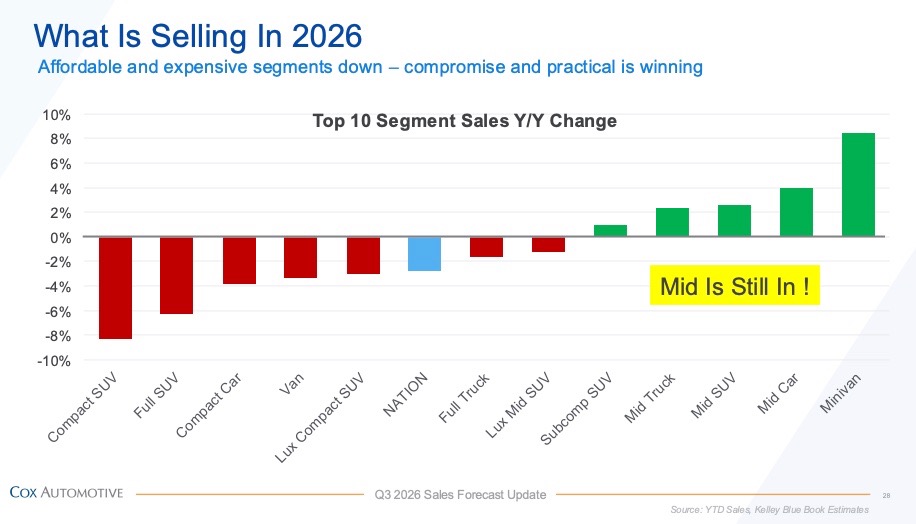
Basically every segment is down this year except for subcompact SUVs, midsize cars, midsize SUVs, midsize trucks, and minivans. To clarify, the ‘Mid SUV” is probably drawn from the KBB definition, which means anything larger than a RAV4 but smaller than a Tahoe.
This may seem sort of unexpected if you haven’t been paying attention to the shifting consumer behavior. Here’s Cox’s Senior Economist Charlie Chesbrough explaning what’s going on:
Looking at the top 10 segments, which represent 88% of all sales, we see middle ground, or more practical segments gaining. Year to date, the more affordable segments like Compact SUV and Compact Car, priced less than $40K – are down this year compared to last year. High interest rates and high prices are impacting affordability for these segments’ customer base.
However, the more expensive segments like $70K full-size trucks, $78K luxury midsize SUVs, and $83K Full-size SUVs are also down this year. Those segments all saw gains or were flat last year. What is selling are Midsize cars, Midsize trucks and Midsize SUVs. As we stated in March – Mid is In – and in June – and at the end of September, Mid is Still In. And, the family friendly Minivan segment, about as practical as there is, is seeing the biggest percentage gains of all this year.
These buyer trends may be showing a shift towards value in the marketplace. Affordability concerns and economic uncertainty may be leading more affluent segments to lose their customers to the more practical. And, high prices may be leading customers of the more affordable segments to pull-back from buying new vehicles and push them into the used market.
That last bit is what’s really interesting to me. A logical conclusion might be that affordable cars would be more popular, but some of those buyers are being shifted into used cars. While it’s still a K-Shaped economy and there are plenty of buyers at the higher end able to buy a luxury SUV without blinking, the mid-level white collar jobs held by upper middle class people are probably most at risk from AI and so it tracks that those consumers are maybe skipping the German SUV for maybe something a little more practical like a Telluride.
Availability is also key. Data has shown affordable cars don’t sit on the lot for very long, and that trimflation and other factors (tariffs) are making it more difficult to find sub-$30k cars.
Mid is in.
What’s VW Going To Do In The United States?
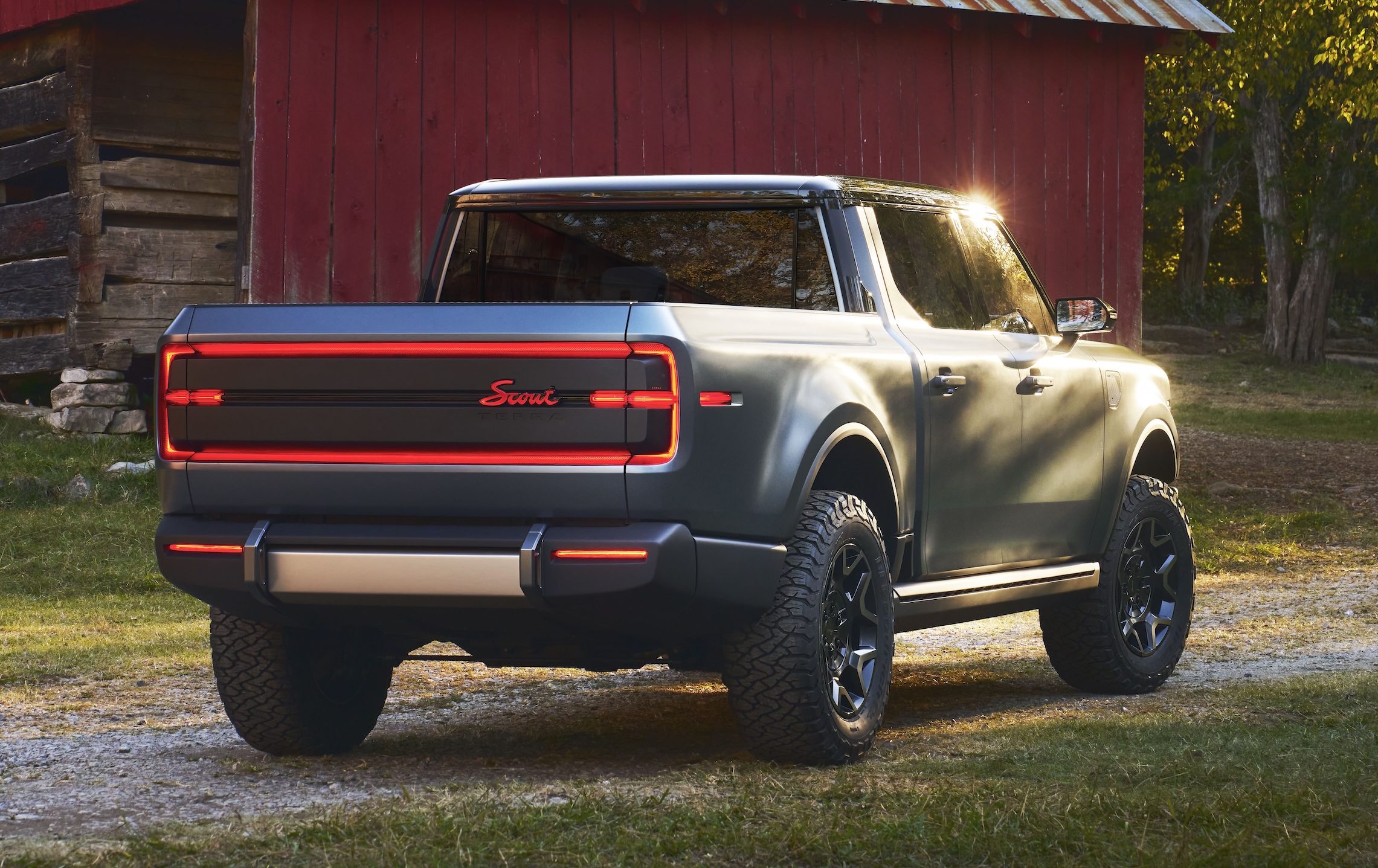
I’m very much on the record saying that Volkswagen, via Scout, is going to probably end up making a gas-powered Audi SUV in South Carolina. That hasn’t all been hashed out yet, officially, and Reuters reports that this is one of those things the board is considering in Germany today:
VW Group’s supervisory board meets today, with unresolved issues ranging from details of the restructuring to its strategy in the U.S., where the company has lost billions due to painful tariffs.
The automaker wants to pivot towards the most profitable U.S. segments, such as pickups and large SUVs. The board must settle the long-standing question of whether premium brand Audi should get its own U.S. factory or use a new plant under construction for VW Group subsidiary Scout in Blythewood, South Carolina.
At least the pickup is likely to be mid (sized).
China Car Ban On Hold Because Of One Senator

The US Congress is almost certainly going to end up passing a bill that effectively bans Chinese cars. A key step might have timed out with the appearance of a delegation from China led by President Xi Jinping, with 99 out of 100 senators on board to fast track legislation. Unfortunately, the bill’s sponsors needed all 100.
Why wasn’t it fast-tracked? Reuters, via the South China Morning Post, explains:
Republican Senator Bernie Moreno and Democratic Senator Elissa Slotkin had planned to seek approval for the procedure – which requires unanimous Senate backing – on Thursday, the same day that US President Donald Trump met China’s President Xi Jinping in Washington.
But instead they will delay things and hold talks with Republican Senator Rand Paul, who had raised some concerns, in an effort to convince him to allow passage, congressional aides said. Paul’s office did not immediately respond to a request for comment.
Both Democrats and Republicans think this will pass in the coming weeks.
State-Controlled Chinese Car Companies Are Reaching The Limit Of ‘Burning Cash Every Year’

The funny thing about China’s strong pivot towards carmaking is that it led to a brutal price war that cost the country a lot of money. So much money. It’s a price that the ruling Communist Party might have been willing to pay in the past, but now the party is interested in AI and robotics, which means the tap is being turned off slowly.
One way this has been implemented is in the merging of the joint ventures between state-owned carmakers Guangzhou Automobile (GAC) Group/First Automotive Works (FAW) Group and Toyota.
“That marked a very important start [and shows] that the local governments behind the state-owned enterprises are finally reaching the limit of bearing losses every year, or burning cash every year,” said Feng Xiao, co-head of China industrial research at brokerage CLSA.
Feng predicted a number of state-owned carmakers, including Dongfeng, BAIC, SAIC and JAC, will move forward with potential mergers, either among themselves or with privately owned auto groups. “We’re going to see an accelerating trend of further consolidation in the domestic market,” he said.
The country’s auto industry has the capacity to make 40 million cars, but only buys about 20 million cars internally and exports another 10 million, leaving a huge gap.
What I’m Listening To While Writing TMD
It’s time for fall vibes. I don’t know why “CHIHIRO” by Billie Eilish feels fall-like to me. It just does. Maybe it’s the Spirited Away connection.
The Big Question
Do you own any mid cars of either definition?
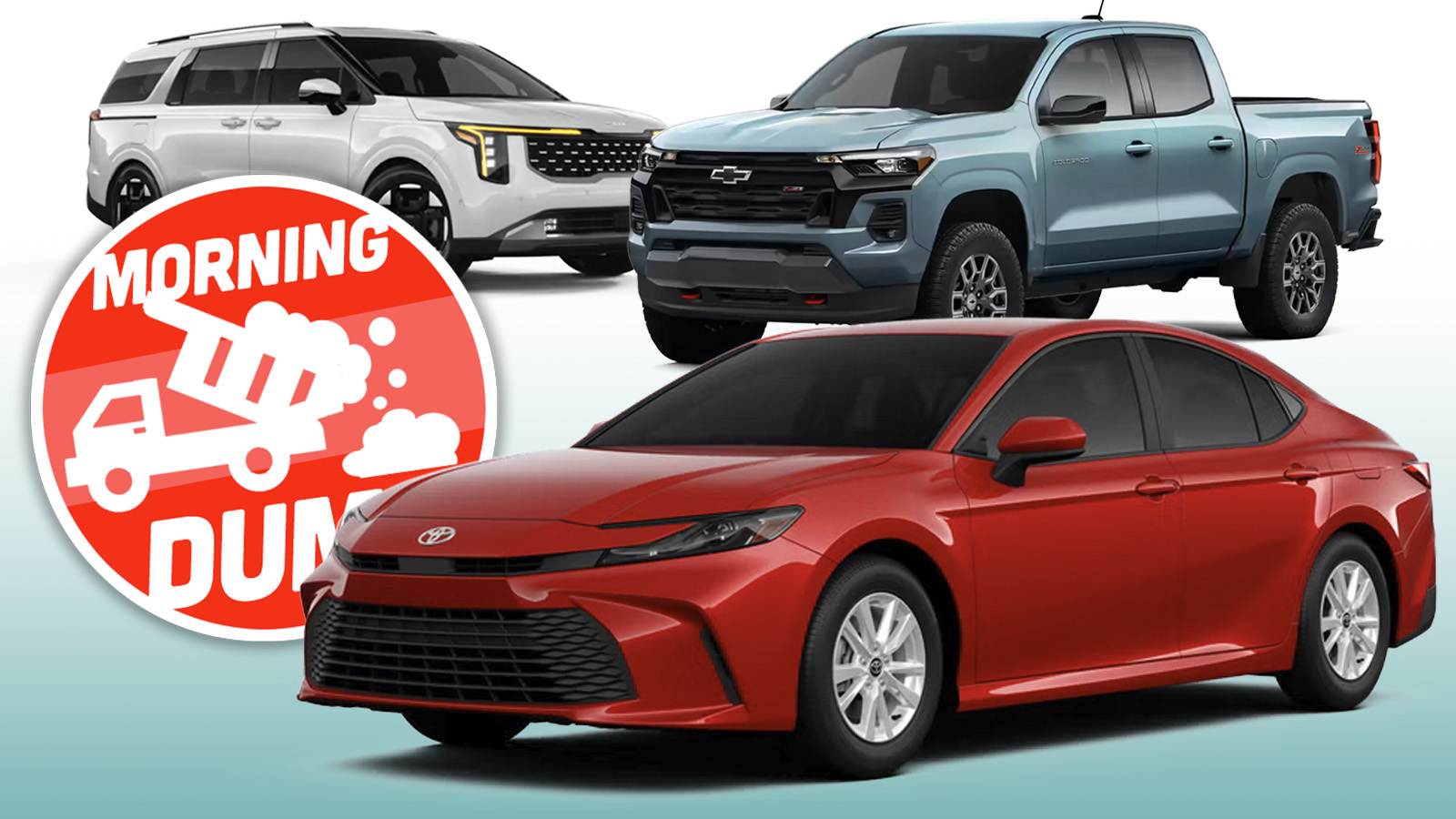
Top graphic images: Toyota; GM; Kia




Full size car, Full size SUV, 2 sports cars. Everything is old enough to vote this year.
I have a “mid-sized” Colorado ZR2. I was pretty set on the Colorado when I was in the market a whole 4.5 years ago, and got a few “why would you pay $45k for a mid-sized truck? Just get a full size!” Well, even then you would have to spec up a full size to $55-60k just to match options like heated steering wheel and seats.
I also planned on using the truck off-road, and didn’t want to deal with maneuvering a full size through the woods.
tbq: Sort of? In theory, I own two cars that are mid(-sized).
My 1969 Dodge Coronet is built on Chrysler’s “B-body” mid-size platform. It’s almost seventeen feet long, though, which makes it brobdingnagian by modern standards.
Going the other direction, my 1998 Grand Cherokee was a mid-sized SUV when it was built, but these days it’s smaller in every dimension than a ‘compact’ RAV4.
Neither are mid-sized by modern standards, and not even for the same reason.
We have a “mid-sized” Honda Pilot (I consider it larger though)
It’s somewhat a bit puzzling to me that Rand was the only hold out senator. Granted he tends to vote against anything that gives the government more power, but on something considered this important to the local industry I would have assumed he would go for it. While it is commonly known for Bourbon and Horses, Kentucky has 4 Automotive factories, including Toyota’s largest in the world, Ford’s largest under one roof, plus all of the suppliers that feed those plants. Per capita KY is the largest producer of automobiles of the 50 states. Even his Kentucky residence is in the same town as the Corvette Plant.
The problem is that most driving isn’t fun anymore because of lights, speed limit enforcement, and traffic.
In that context, interesting vehicles don’t make much sense. People just gravitate toward the general purpose thing that will get them and their stuff around.
Even as an enthusiast, I recognize that it takes lot of effort to get to a road where sportiness matters at all, and where I’m not endangering cyclists, other road users, or my license if I go a bit fast.
Which is why most of the time I drive the mid EV.
I have a Subaru Impreza, which isn’t wild by any definition, but it gets the job done.
Plus one on the Impreza. Its unstoppable, still going strong after 17 years!
Mines only 11. Just crossed 120k mi this month!
Well, I consider minivans to be in that “mid”-sized category, given that they compete with the likes of Pilots, Highlanders, Palisades and Tellurides, which are all solidly mid-sized.
So, we average to mid, with a minivan, a Miata, and a full-sized pickup truck.
I think my 2018 VW Atlas qualifies as a mid-size. It’s smaller than a Tahoe, but bigger than a Rav4. I am always impressed by how much cargo space it has when the 2nd and 3rd row seats are flattened. Even with a V6, it manages to get 25mpg on the highway.
We have a Golf 3 and a Peugeot Partner van,those are both pretty small I guess?
I have a 2014 prius and a 2019 grand caravan. i am in automotive nirvana.
I’m not sure if mid is even mid anymore.
Minivans and “full-size” SUV’s are now anywhere from a couple to several inches of each other in length (not counting the long models) and are the same width – maybe 1.5” narrower.
Traditionally midsize pickups are now about the same width as full-sizers at 77” or more compared to the full-sizers starting at 80”, save for the Frontier.