


A common thread involving modern cars is the absurd cost of repairs for what what seems like minor cosmetic damage. Fairly or not, for some reason it seems like Rivian is getting a lot of attention on this issue. Probably not unfairly, given incidents such as the $42,000 rear bumper repair Jason covered back in 2023.
If you’d fancy buying a Rivian and this is a concern for you, wouldn’t it be great if we could provide some kind of bolt-on solution that also helps to solve some of the other common issues of EV range anxiety? Yeah, it sounds like two totally different problems, but let me explain. And I admit, the second part is a bit sketchy. Maybe a lot sketchy.


Repairability Problems
As Torch reported via the link above, the damage to the R1T in question was hardly a catastrophic accident:

To refresh your memory, here is what Jason wrote:
Last week, a pretty common and minor-looking fender-bender ended up going viral on the Rivian Owners’ Forum. The wreck, a relatively low-speed rear-end collision involving a Lexus RX330 bumping an electric Rivian R1T’s passenger side rear corner, resulted in what looked like minor damage. A bent bumper cover, a dent in the tailgate — the sort of things that many truck owners would just learn to live with as part of the Truck Life. But a fancy new electric Rivian is no ordinary truck, and this was no ordinary repair bill.
According to the owner, the Lexus’s insurance adjuster came back with an estimate of $1,600 — about what most of us might have guessed. Of course, we’d have guessed very, very wrong, because the final bill came to over $42,000. I mean, good guess, it was just, oh, 26 times too low.
You might not remember the post, but here is a picture of the damage:

Yeah, I know. Forty-two Gs is like half the value of the truck. You can barely see the damage, and honestly, you’d probably just leave it once the Rivian is six years old and worth a fraction of the new value. You can read Jason’s whole story here, but the gist of it is that they had to replace a one-piece body part that stretches from the back of the car to just behind the windshield, called a “unipanel”.

I was about to say “all the way to the back bumper,” but the Rivian really doesn’t have a rear bumper. Yeah, about that …
A Bar-Like Thing That Protects The Ends Of Your Car? That’s A Novel Idea!
You would think that a company that put a single piece of unbroken metal on a vehicle’s body might try to protect it from the inevitable bumps it will take in daily life (especially as a pickup truck). Still, this is not just an issue with Rivian.
Younger people might not be aware of things that cars once had called “bumpers” that acted as shock-absorption devices in low-speed collisions. For some time, all American cars were required to feature bumpers that could withstand impacts of 5 MPH with no damage to a car’s lights or mechanical systems. Naturally, many companies dealt with this regulation by adding park bench-like appendages onto the front and back of cars like these, which the video below shows actually worked.
Today, that’s not the case. The bumper regulation was reduced to 2.5mph in 1982; many cars look like they would barely take such a hit and, worse than that, a more significant bump would cause serious structural damage. This Telsa is a perfect example of how even a minor hit could jam the liftgate shut and cause thousands in damage:

Obviously, this is getting silly. Cars had bumpers for a reason, and they still need them. As I pointed out before, even during the darkest days of the malaise when the 5MPH bumper law was in effect, a number of cars such as the Corvette and Porsche 928 were able to meet those standards while keeping the good looks.

Of course, with an SUV, do we really care? Sure, a chin-scratching car designer will think you’ve ruined their creation, but it’s a UTILITY vehicle, people! To me, a $40,000 bill from a fender bender (if you can even call it that) sure ain’t “utility.” What if we could protect the fragile Rivian and add a “tough” look while also offering an additional benefit that any EV owner would like- a little less range anxiety. Say what?
Ramming Speed!
First of all, I can’t believe that I’m sitting here and typing that “if a Rivian can sustain $40,000 in damage from a light hit, it probably needs bumpers.” Geez, does a staff of at least dozens of engineers need to be told that? Anyway, let’s go ahead and do this. Up front, we can add a “ram bar” style extended bumper to protect the nose:

Here’s a closer view:

In back, we’ll add a big “step” bumper like on an old Suburban or something:

Again, a closer shot:

Naturally, these bumpers would bolt onto the ends of the frame so that the energy would go right to the strongest part of the truck. I’m hoping they could be retrofitted to existing Rivians.

Here’s an animation of the front to show you the difference:
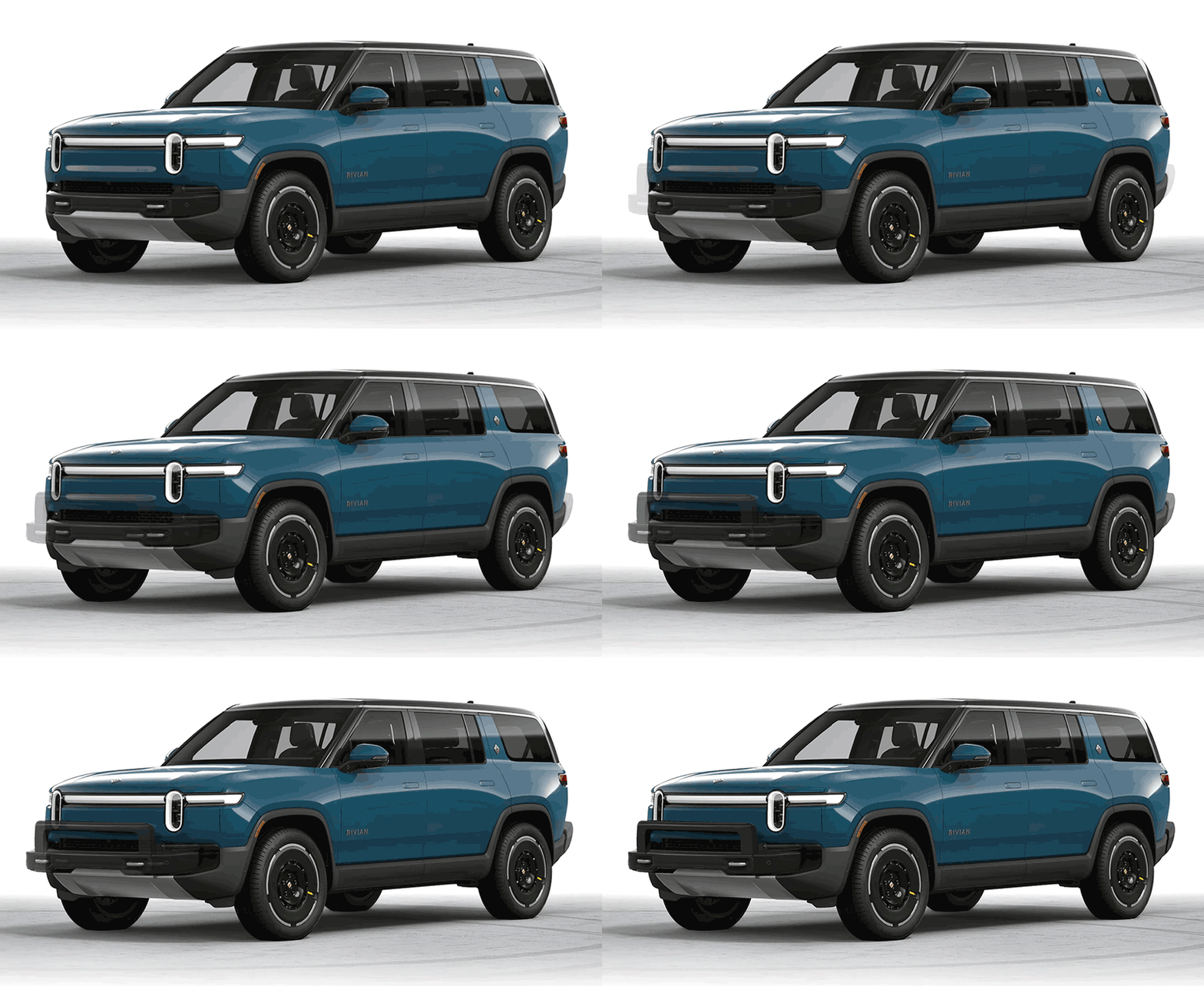
And an animation of the back:

It isn’t as clean-looking as the stock Rivian, but if you can suffer the appearance, you’ll be rewarded not only with a protected aluminum body, but possibly more range. Yes, that’s what I said.
Aggravated Battery
You might think that “range anxiety” and “bumpers” have about as little to do with each other as Yacht Rock and Norwegian Black Metal (but I could see Michael MacDonald doing the latter). You’re wrong. In fact, nearly fifty years ago a very early best-selling EV used the 5 MPH bumper to help the horrendous range of this pioneering (and rather terrible) electric.
The car in question was known as the CitiCar. You might have seen this lovable doorstop around; it was admittedly sort of an enclosed, street-legal golf cart, but surprisingly it was one of the most popular electric cars of the seventies. The thing was tiny, so where did you put extra old-school lead-acid cells to gain range beyond the ones in the “trunk?” Also, what would seventies-legal bumpers look like on this minuscule car?
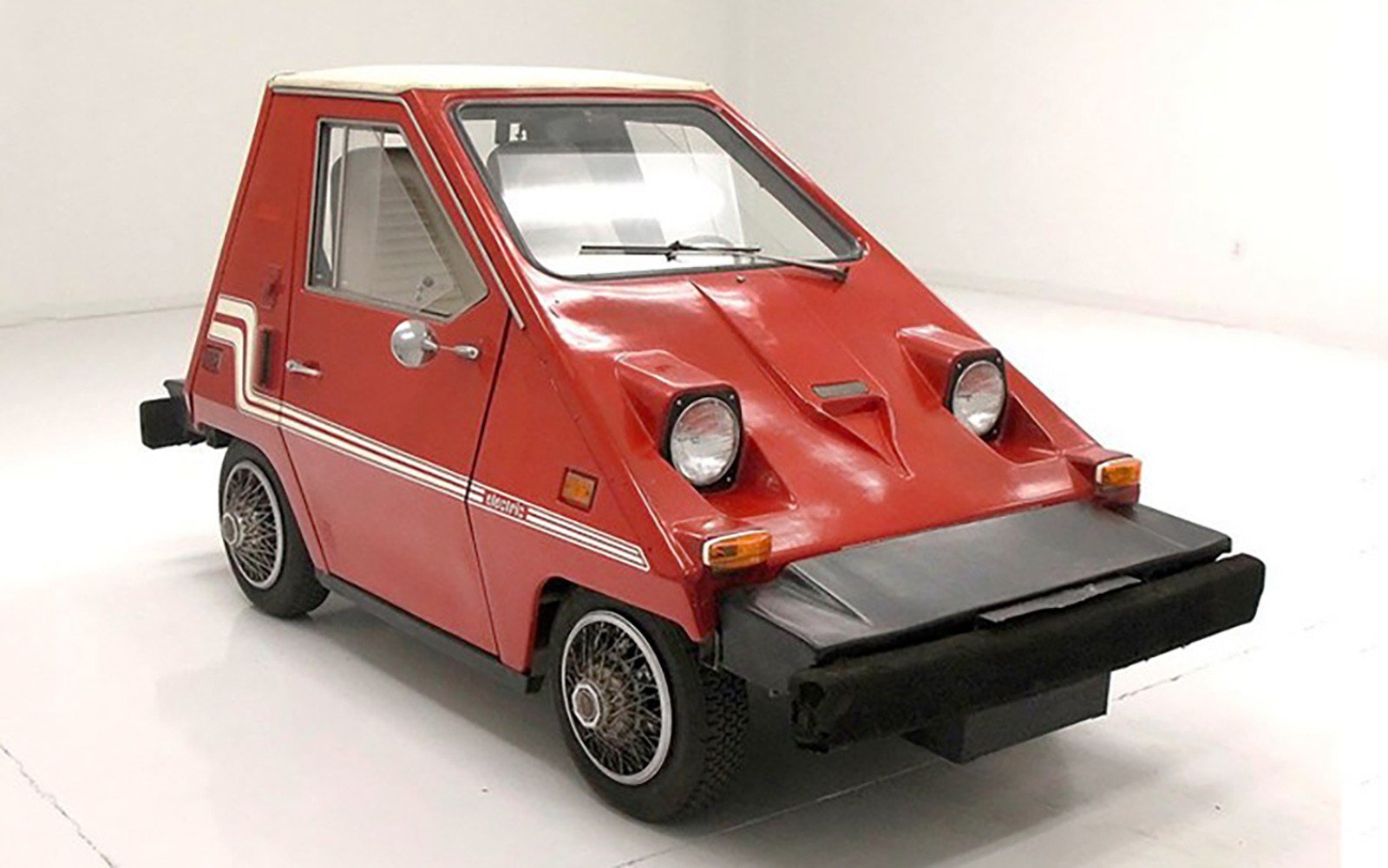
The answer to the second question was “it would look stupid,” as you can readily see here. Not that it would look much less stupid without the bumpers.
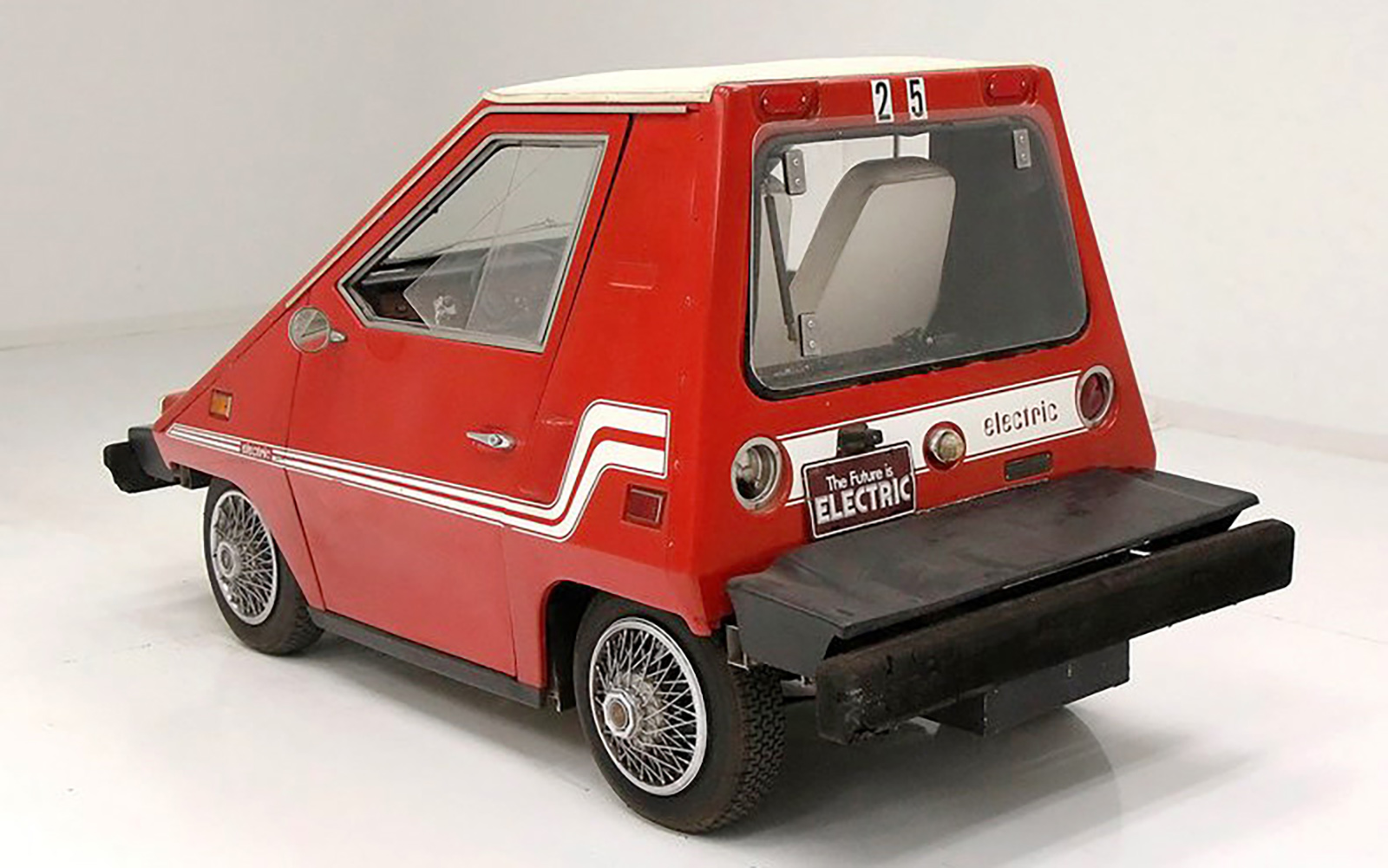
But what about the answer to the first question, the poor range? The answer is “the dead space behind the ram bars was for batteries.” Take a look under that big black cover above the front bumper:

It gets stranger! Look at what some homebuilder did to his own CitiCar (actually this one is a later “CommutaCar”):

Extra batteries not enough? They pushed the bumper out even further and added a gas-powered generator!

Look at that! This person made a very early EREV, complete with extra batteries in back and extra gas tanks to keep the generator going!

Like the CitiCar’s bumpers, the ones I’m showing on the Rivian could be as hollow as a politician’s promise and left that way. This would definitely help solve the $40,000 fender bender problem.
But adopting the CitiCar’s battery packaging solution? Well, let’s just see if we could get a little range out of it. First; I asked the internet, which supplied this via “AI Overview:”
Standard lithium-ion battery packs average about 4.5 to 9.5 kWh per cubic foot (with a mid-estimate of around 6.4 kWh per cubic foot). Most electric vehicles consume roughly 250 to 350 watt-hours of energy per mile driven. That means a 1-cubic-foot lithium-ion battery pack delivers an estimated 4.5 to 9.5 kilowatt-hours of energy, which translates into roughly 15 to 35 miles of driving range.
That’s very, very rough, but let’s look at our Rivian bumpers.

If we could make them about the size I’m showing or just slightly thicker, maybe we could get around 2 cubic feet in each, or about 4 cubic feet total. Based on those rough figures, even four total cubic feet times 15 (the low end of range) is 60 miles: nothing to sneeze at. If it could get more efficient than that, we’re talking some serious numbers. That’s a big bonus for something you thought was just protecting the body.
The big question – and why this might be a terrible idea – is this: can the bumpers protect the batteries? We don’t want them to puncture for fear of the fire risk (among other things). I would say, first of all, we don’t want one big battery; smaller batteries inside in sections would reduce the risk of a large unit breaking. A steel bar behind the plastic cover protects the items behind.

I’m actually more afraid of what’s behind the bumper since that’s what the moving battery will hit. It’s sort of the opposite case with something like nineties Chrysler products like the Stratus, Cirrus, and Avenger with the battery located essentially right inside the bumper, where it would get pushed into the front wheel on impact. Man, no wonder our Stephen Gossin has a love/hate relationship with these Mopars; what an awful place to put a battery.

Regardless, the crazy battery bumper idea is almost certainly a bad one, but if I don’t throw insane ideas out there, who will?
Bumper-To-Bumper Protection
Would these bumpers be cheap? Probably not, but I’m willing to pay to stop my truck from sustaining new-loaded-Ford-Maverick-sticker-price level damage from minor hits. Besides, I’d probably want to add some “overlanding” looking additions to the very suburbanite-looking R1T or R1S. If I could get extra range as part of the bargain, all the better.
You don’t want the batteries? Leave the bumpers empty. Maybe we’re better off storing charging cables in there. Better yet, use them as coolers like on old Ford F-Series:

That’ll give you something to drink while you wait for your Rivian to charge.
Top graphic images: Rivian


Porsche had two different sets of “Dagmar bumpers” for its 911 G-Series. Thinner ones for European and international markets, and thicker ones for US and Canadian markets.
I learnt that NHTSA proposed reducing bumper standards from 5 mph to 2.5 in January 1975 but rescinded its proposal in March 1975…
Amateur hour.
That’s what you get with going with an automaker who has been building cars for mere months, rather than decades.
A HS friend of mine had an early 70’s Datsun 1200 with two giant welded on industrial girders as bumpers. You did NOT want to box that car in.
look at those cans
I can look outside at our fleet of 5 vehicles and can confirm that 4 of the 5 have sustained bumps and taps that would cause that damage to the Rivian. The bumper covers have scrapes and there are a few dents in some of them. I smile when thinking that all 5 of them combined are worth less than the Rivian, and yet they are paid off and I have little to no stress about scratches and dings. Any body shop could also easily repair these vehicles in a short time for far less money. New is not always better.
Lets just fill the bumpers with tannerite for maximum effect.
Filling the bumpers with tannerite should be quite safe, I think. Tannerite needs a REALLY high-velocity impact to detonate…
Challenge accepted!