

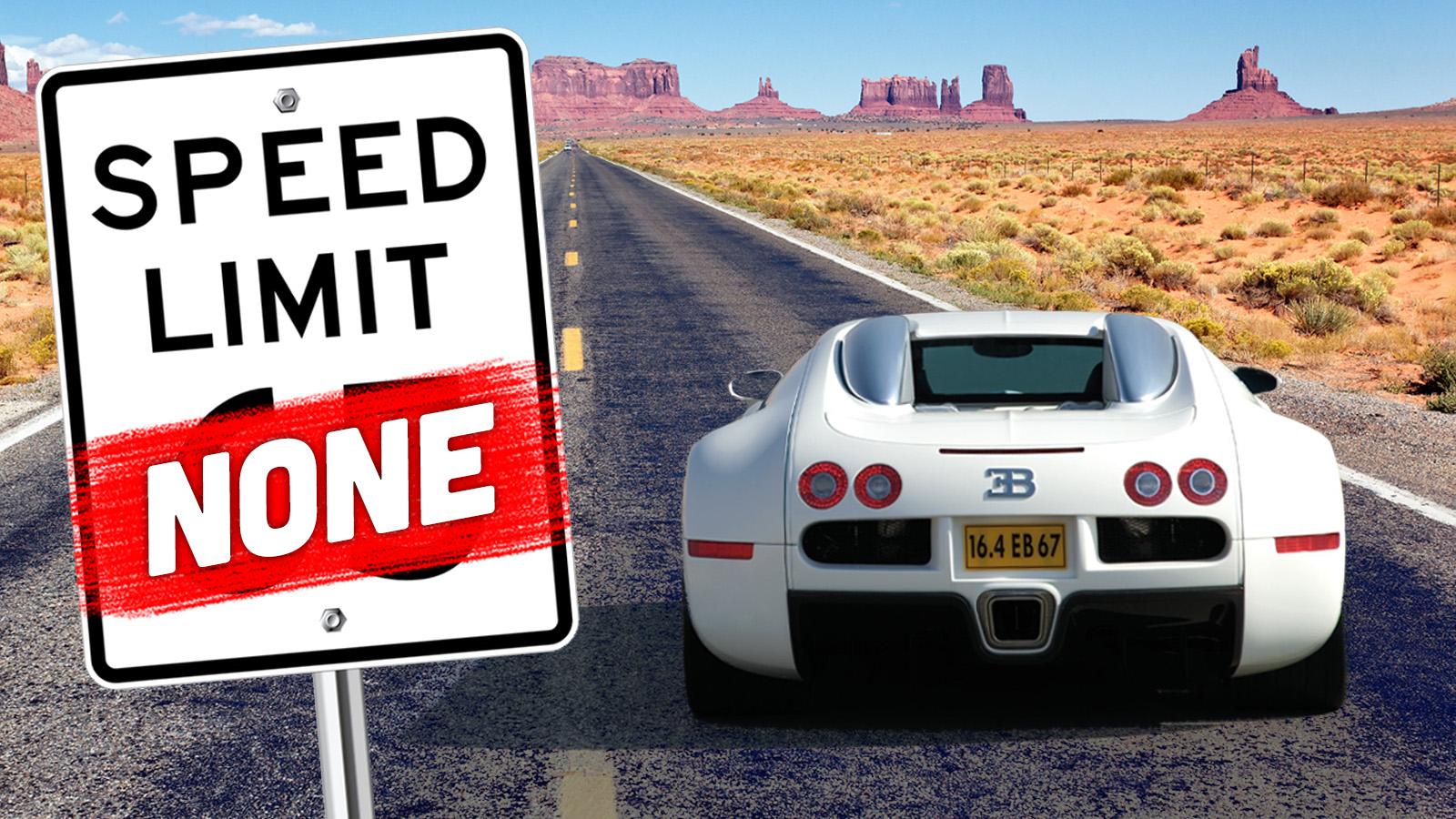
The idea of speed-limitless highways in America has always seemed like a pipe dream to me. Sure, there are plenty of roads in the U.S. that probably could operate without a speed limit, but without proper driver training or vehicle inspections, it would quickly become disastrous.
Despite that, one state representative in Arizona is pushing to enact such a policy for a selection of highways in the State. Earlier this month, Nick Kupper, a Republican member of the Arizona House of Representatives, introduced a bill called the Reasonable and Prudent Interstate Driving (RAPID) Act.


The bill would “authorize derestricted speed zones for non-commercial vehicles during daylight hours on qualifying rural interstates,” effectively removing speed limits for most drivers. At first glance, I was pretty happy about this, seeing as how most speed limits on wide-open sections of highway on the western side of the country always feel 15-20 mph too low. But the more I think about it, the worse an idea I think it is.
Here’s How The State Rep Justifies It
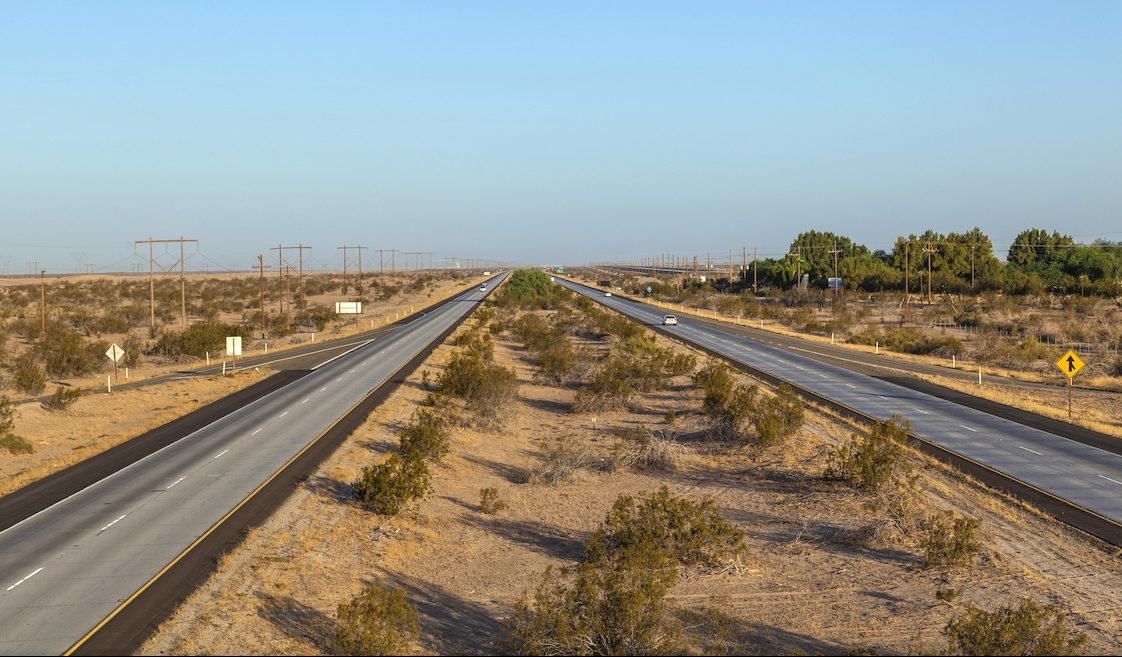
On the surface, this bill appears to make a lot of sense. On these rural interstates, the speed limit is normally 75 mph. But on a clear day with little traffic, 75 mph can feel like a slog, especially when you can see several miles in front of you.
Instead of raising the limit to 85 mph (currently the highest speed limit in the country, in Texas), Kupper is proposing a different approach. From the Arizona House of Representatives’ news release:
“Most drivers can tell the difference between a crowded city freeway and a wide-open stretch of rural interstate,” said Representative Kupper. “The RAPID Act accounts for that difference. It will let us raise speeds where it’s safe, keep tough penalties for reckless driving, and update our laws to reflect how people actually use these roads.”
This wouldn’t just be a speed limit delete for rural highways, obviously. The bill, HB2059, would limit nighttime speeds to 80 mph and would only apply to roadways where it makes sense. It would also punish road users for exploiting the lack of a real speed limit:
Arizona Department of Transportation ADOT would rely on engineering studies, safety records, and highway design standards when determining eligibility. At night on those stretches, the maximum speed limit would be 80 miles per hour. Existing “reasonable and prudent” standards remain in effect, and the bill increases civil penalties for misuse of the zones.
It’s not like there isn’t any precedent here. For decades, Montana operated its highways in a similar fashion, with daytime limits simply enforced as “reasonable and prudent,” without any real, set number. It wasn’t until 1999 that the State enacted a 75-mph speed limit during the day (that’s since been increased to 80 mph). Kupper says even as speeds increased during this no-limit period in Montana, crashes went down:
Representative Kupper pointed to Montana’s previous “reasonable and prudent” system as evidence that higher speeds can be implemented responsibly. A Montana Legislative Audit Division review found that even as average speeds rose after daytime limits were removed, crash and fatality rates per vehicle mile continued to fall and remained in line with neighboring states, with seatbelt use and driver behavior having a much greater impact than the posted limit.
“Montana showed that you can modernize speed laws without sacrificing safety,” he added. “When rules are clear and focused on driver behavior, states can let safe highways operate as they were designed to operate. Arizona should benefit from those lessons instead of sticking with limits that don’t reflect reality.”
Are We Really Sure About This?
Germany has its legendary stretches of unrestricted Autobahn highways, but it’s only sustainable because that country’s population is far better-trained for driving on roads without speed limits. I’m sure most of the people reading this know to stay in the right lane except to pass and to always watch their mirrors, but you probably come across people who do neither on your commute to work every day. This type of stuff isn’t really required to get a driver’s license in America, and the laws around lane discipline are rarely enforced.
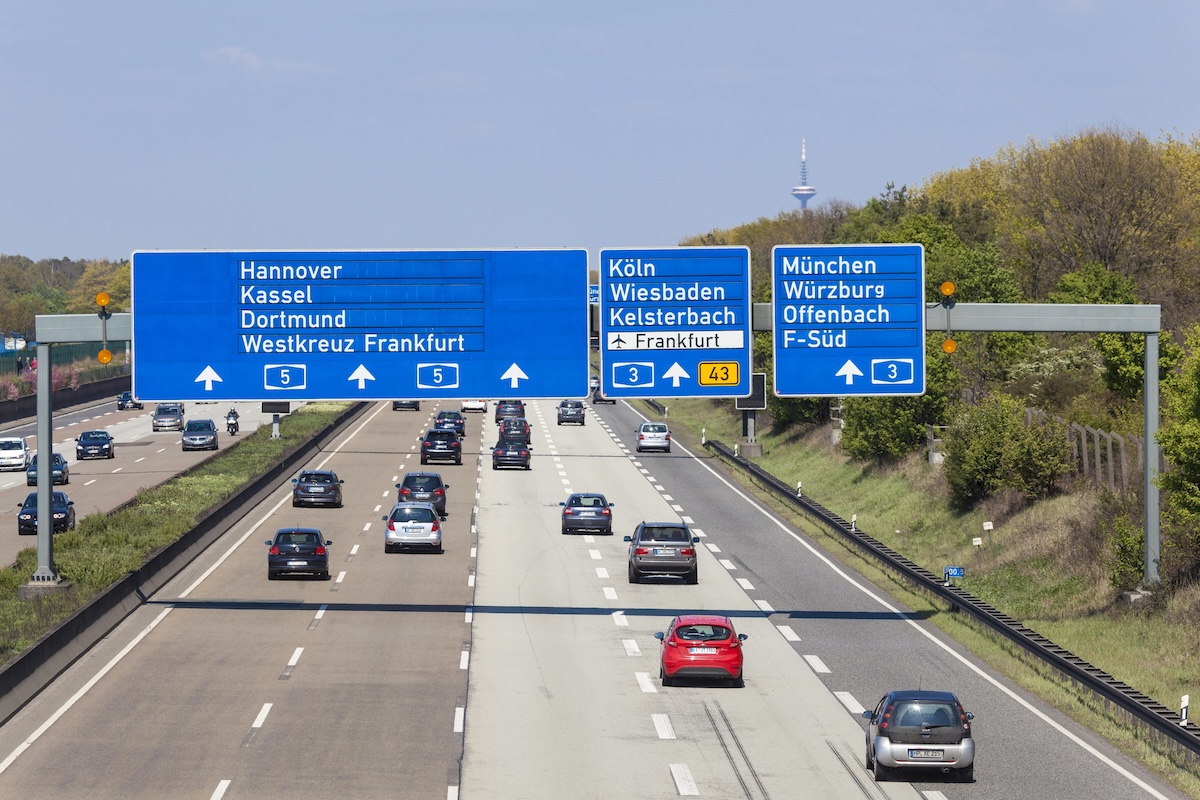
There are also much more stringent vehicle inspections in Germany. These inspections cover things like tires and brakes, but also analyze stuff like suspension bushings to ensure the car will deliver stability during high-speed maneuvers.
Unlocking higher speeds for drivers without the proper training or vehicle checks feels like it could have catastrophic consequences. To his credit, Kupper has at least thought about some of this, mentioning an effort to educate the public on proper lane discipline.
The bill requires annual safety audits of derestricted segments, coordination with the Department of Public Safety on enforcement, and a public education effort to ensure drivers understand key expectations—such as lane discipline and passing rules—before entering a zone.
But I don’t think this goes far enough. This release doesn’t mention anything about this training being mandatory, which suggests that anyone can show up in their car and start cruising at 97 mph down the interstate. I can already see out-of-staters from across the country planning road trips to Arizona specifically to see just how fast their cars can go. Car clubs already do this type of thing for visits to Tail of the Dragon, but at least those roads have speed limits.
There’s also nothing said about improving Arizona’s vehicle inspection process, which, as of this writing, only covers emissions, not safety. So theoretically, you’d be able to show up and top out your rusted-out pickup truck on dry-rotted tires without any repercussions, risking your safety and the safety of those around you if one of those tires decides to disintegrate once you cross triple-digit speeds.
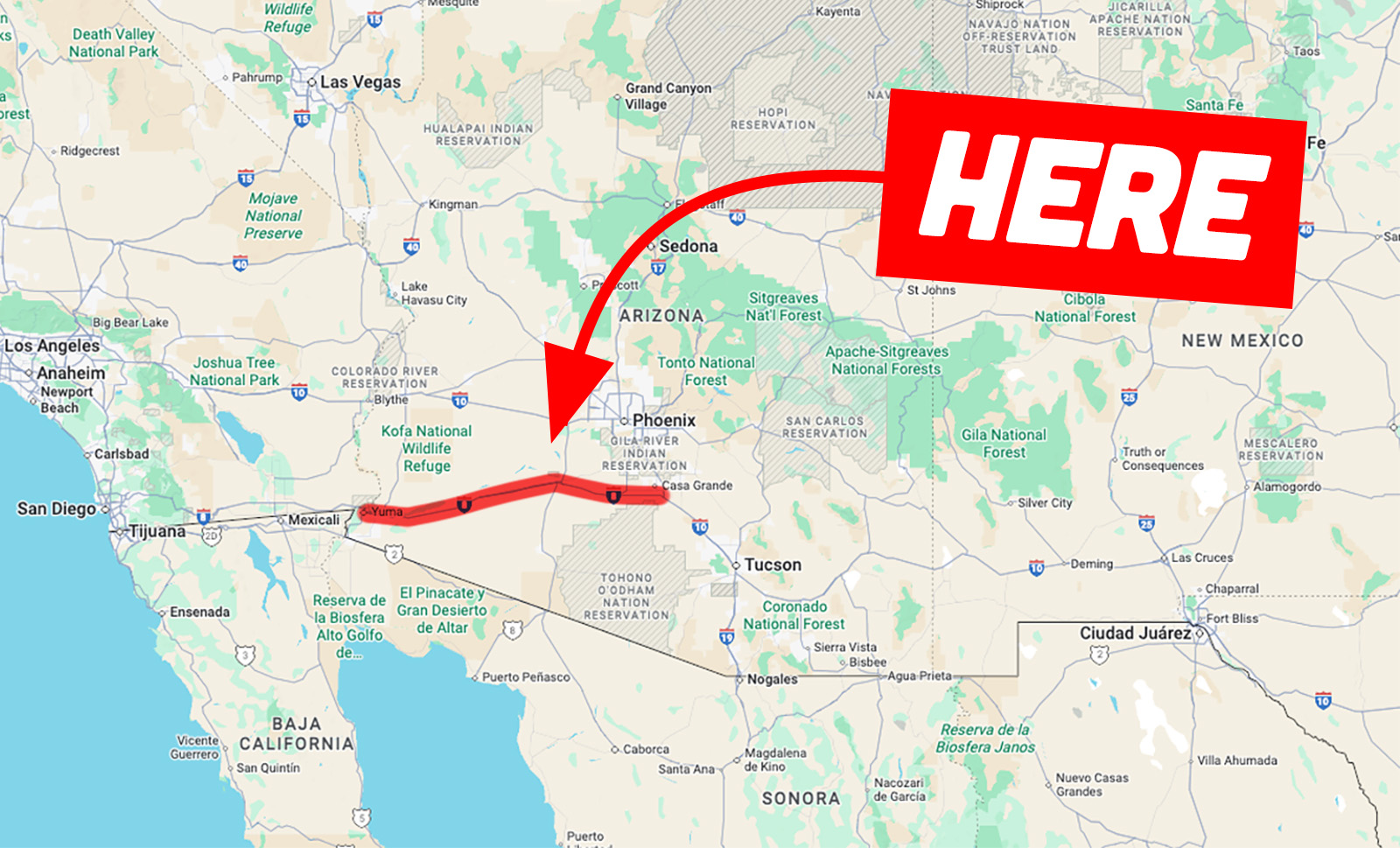
The RAPID Act is still currently just a bill, of course, and has yet to pass the Arizona House or Senate. If it does pass, the unrestricted zones will be tested in a one-year pilot program using Interstate 8, which stretches from southern California to Casa Grande, just south of Phoenix.
To be clear, I’m not against de-restricted highways in America. No other place on the planet is more suited to limitless zones than the wide-open, flat, high-visibility highways of the West. But it’s only feasible if the drivers and the cars are properly prepared to handle the extra speed. Without those precautions in place, there’s too much risk involved.
Top graphic image: DepositPhotos.com, Bugatti


As an Arizona resident I highly doubt the skill of the average driver’s ability to safely drive the current speed limit never mind anything “open”. Unofficial speed limits around here is about 10 over the posted anyway.
I lived six years in Texas, the land where the speed limit is often just a suggestion. Even in urban areas. There’s a toll road between San Antonio up to Austin where the speed limit is 85. So, it’s a you have to pay to play situation.
While Arizona might spend a lot of money to do a lot of analysis of where this might work, I’m skeptical.
I made the slog from Tacoma to Davis (N California) Monday and Tuesday. There are stretches of I-5 in WA and CA where the speed limit is 70. But the pavement is such a patchwork of decent pavement and not so good. I hit a six-inch deep pothole in the right-hand lane in N California so deep that it bottomed out the right front strut on my Accord. At 70+ mph. The tire and wheel appear to be undamaged. At 100+ that could have been catastrophic.
My biggest concern I think, is that a lot of these 70 mph stretches out here are only two lanes wide and with the number of big rigs sharing these two lanes really constrains things. If one big rig driver decides to pass another big rig, suddenly you have a 50-60 mph rolling roadblock. It’s bad enough doing 70 and having to suddenly nail the brakes HARD. I can’t imagine having that happen doing 90+. Any stretch in AZ they consider this would have to have a minimum of three lanes.
We think of truckers as being good drivers, but there are exceptions. And any collisions with anything at elevated velocities will be high kinetic energy events.
Final point, I’m too frugal about fuel consumption to really go much over 75. Aerodynamic drag etc can’t be overcome. It increases at the square of the velocity. At 65 mph I get around 40 mpg. At 75, it’s down to 35 or so. I have no idea what it would be at 100.
I did a work trip to Italy in 1988 from Milano to Amalfi and back then, there were still stretches of the Autostrade that were essentially, limitless. Poking along in a diesel Fiat Ducato van in the right lane, I expected to see Ferraris and Lambos (saw a couple around Maranello and Sant’Agata on the secondary roads we were on) blasting past me, but most that did were in big black Mercedes, Volvo and Audi sedans and wagons. Executive cars, I assume. Despite being stuck driving a van, it was a fun trip.
For certain people there is always a lot of hand wringing whenever someone proposes to increase freedom. I saw it when the 55 mph national speed limit was removed, I saw it when concealed carry became legal in ohio too. Apparently Brian is one of these people.
Way too many can’t responsibly handle your implied vision of “freedom,” and the often unreasonable levels of risk they needlessly and selfishly impose upon the rest of us–as particularly evident on roads driven by me and my loved ones, more so since 2020–justify some degree of supervision for the greater good of society. Freedom isn’t defined by individually determined limits, that’s anarchy. You’re out of line labeling Brian, we don’t know him.
You must be one of the hand wringers
Well, since you love to label people, at least I’m smart enough to know the difference between a freedom (of speech, religion, etc.) and a privilege, like to operate a motor vehicle on public roads.
I wring my hands every day over the fact that people too ignorant to understand that difference and the implications thereof still get to vote.
I never equated speed limits to freedom of speech. Do better.
So, your mentioning speed limits and gun ownership in the same sentence about “freedom” didn’t commonly classify them at the level of a Bill of Rights guarantee?
That’s exactly what your words stated. I simply didn’t need to include bearing arms in my parathetical since you already used that one.
Plenty of forces seeking to influence voters count on a lack of critical thinking ability, but I’m guessing you’re at least a thinker who just needs to, as you put it, “do better” with the English language from a critical perspective, both as a writer and a listener.
Well, I was living in TX when open carry of assault rifles became a legal thing, and it was unsettling to walk into an H-E-B grocery store and see some little compensating guy wearing an AR-15 on a sling over his shoulder. It made me consider getting a concealed carry permit and buy a pistol. Who knows whether that guy was a “good guy with a gun” or a nut job about to try to mow us all down. I never understood the appeal of open carry. It just makes you the first target for the nut job and/or maybe the cops responding.
I moved back to Washington state a few years ago and no longer feel the need for a CPL or a pistol.
I prefer concealed carry and I think concealed makes for a safer society. I like that the bad guys have no idea who is armed.
Open carrying a rifle outside of the woods or a range is a perfect barometer of someone who should be on a list. I’m a certified (by the DNC) gun nut, and have open carried here in Arizona about twice.
Compensation? Just asking. Don’t shoot me.
And sorry. That wasn’t about you. It was about the guy in TX.
It’s something… People talk about the “manospere” of today, with all this alpha yammering, but it goes back further than that. Old boomers in their pick up trucks yelling about the civil war coming, blah blah blah.. I just like to shoot at the range, and used to live in a very dicey part of town. I’m not a prepper but I won’t deny being prepared. However the idea of dressing in Temu tactical gear and going to the HEB like I’m in Falluja, strikes me as a sign of needing therapy.
Guns are something I own and use, not my personality.
Both times I drove across the US, with much of the trip on I-40, I had several long stretches where I was over 100 mph. These were with light traffic, clear visibility, and during daylight hours.
Most of the time, I cruised about 1/4 mile behind the rabbit*, for both safety and license-protecting reasons. Whenever there was heavier traffic, I dropped to whatever the left-most lane’s prevailing speed was, not attempting to weave through traffic for an opening. Exceptions were made to get around left-lane campers, but always with patience and care, and I was usually in a group of cars all doing the same.
Obviously any construction zones, poor pavement, and other hazards would cause me to slow to more normal speeds.
Outside of populated areas and construction zones, law enforcement was basically nonexistent, once I was west of Oklahoma.
The two cars I did this in were a Dodge Challenger R/T and a Mazda RX-8.
My point is, there are genuinely places where this can be safe in the United States, and portions of the interstates in West Texas, New Mexico, Arizona, and California fit the bill. I personally would have been comfortable on those roads at about 200 kph / 124 mph, which I briefly touched in each, when there was clear line of sight for miles and almost no traffic.
*The rabbit is a driver/car that is driving at high speed, who you let by and then match their speed with a safe distance between you. Basically you let them be the one to come across a road hazard or enforcement, giving you time to slow down and know what’s coming. I only drive more than 10 mph over the limit on the interstate alone if traffic is really, really light. I still tend to stick below 80 mph; it won’t be long before someone faster comes up behind me. I move over, let them pass, match their speed, and bingo – they’re the rabbit. I’ve spent the last 12 years in SoCal, twice doing the cross country drive, and not once did I get a speeding ticket.
Never, ever be the rabbit.
What’s up doc?
Ugh, joy kills are at their worst when they are absolutely correct.
Unless Arizona is fighting for nationwide TUV inspections and improved driver’s training/testing, this is just a terribly ill-fated bit of “freedom at all cost” posturing and the cost will be lives.