

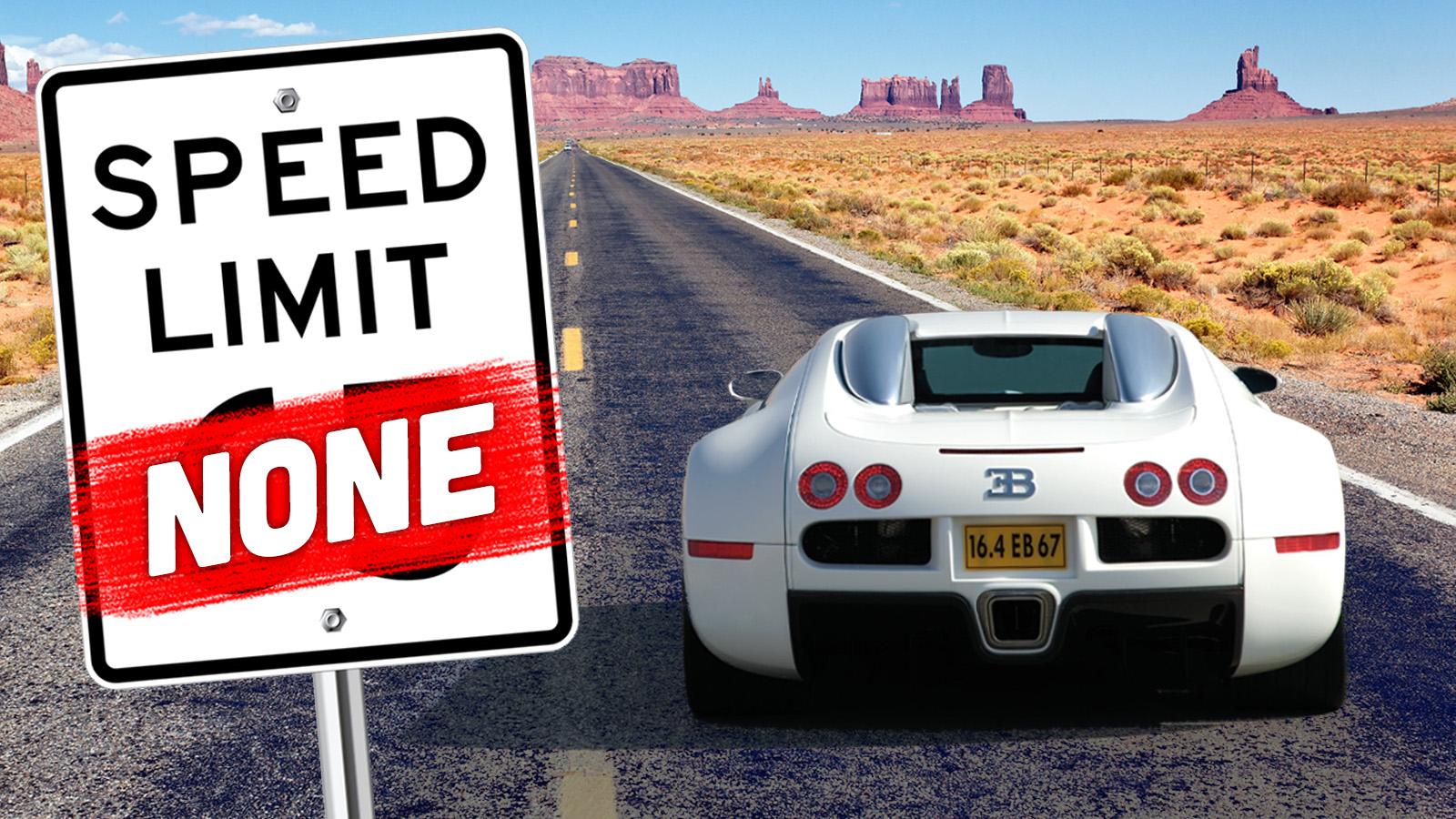
The idea of speed-limitless highways in America has always seemed like a pipe dream to me. Sure, there are plenty of roads in the U.S. that probably could operate without a speed limit, but without proper driver training or vehicle inspections, it would quickly become disastrous.
Despite that, one state representative in Arizona is pushing to enact such a policy for a selection of highways in the State. Earlier this month, Nick Kupper, a Republican member of the Arizona House of Representatives, introduced a bill called the Reasonable and Prudent Interstate Driving (RAPID) Act.


The bill would “authorize derestricted speed zones for non-commercial vehicles during daylight hours on qualifying rural interstates,” effectively removing speed limits for most drivers. At first glance, I was pretty happy about this, seeing as how most speed limits on wide-open sections of highway on the western side of the country always feel 15-20 mph too low. But the more I think about it, the worse an idea I think it is.
Here’s How The State Rep Justifies It
On the surface, this bill appears to make a lot of sense. On these rural interstates, the speed limit is normally 75 mph. But on a clear day with little traffic, 75 mph can feel like a slog, especially when you can see several miles in front of you.
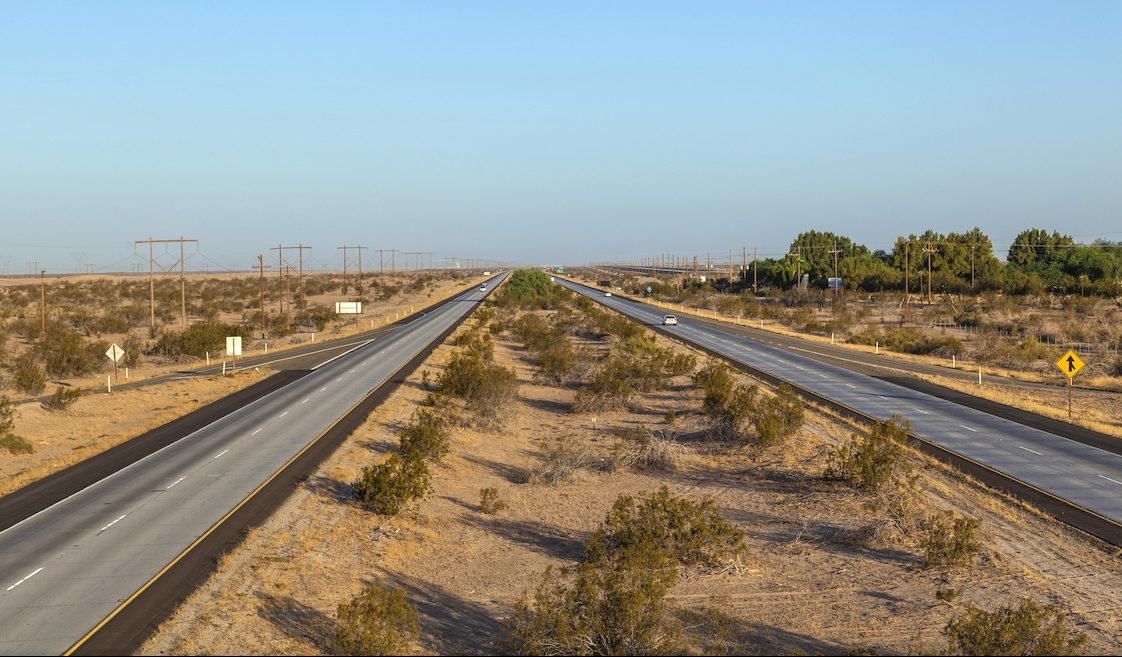
Instead of raising the limit to 85 mph (currently the highest speed limit in the country, in Texas), Kupper is proposing a different approach. From the Arizona House of Representatives’ news release:
“Most drivers can tell the difference between a crowded city freeway and a wide-open stretch of rural interstate,” said Representative Kupper. “The RAPID Act accounts for that difference. It will let us raise speeds where it’s safe, keep tough penalties for reckless driving, and update our laws to reflect how people actually use these roads.”
This wouldn’t just be a speed limit delete for rural highways, obviously. The bill, HB2059, would limit nighttime speeds to 80 mph and would only apply to roadways where it makes sense. It would also punish road users for exploiting the lack of a real speed limit:
Arizona Department of Transportation ADOT would rely on engineering studies, safety records, and highway design standards when determining eligibility. At night on those stretches, the maximum speed limit would be 80 miles per hour. Existing “reasonable and prudent” standards remain in effect, and the bill increases civil penalties for misuse of the zones.
It’s not like there isn’t any precedent here. For decades, Montana operated its highways in a similar fashion, with daytime limits simply enforced as “reasonable and prudent,” without any real, set number. It wasn’t until 1999 that the State enacted a 75-mph speed limit during the day (that’s since been increased to 80 mph). Kupper says even as speeds increased during this no-limit period in Montana, crashes went down:
Representative Kupper pointed to Montana’s previous “reasonable and prudent” system as evidence that higher speeds can be implemented responsibly. A Montana Legislative Audit Division review found that even as average speeds rose after daytime limits were removed, crash and fatality rates per vehicle mile continued to fall and remained in line with neighboring states, with seatbelt use and driver behavior having a much greater impact than the posted limit.
“Montana showed that you can modernize speed laws without sacrificing safety,” he added. “When rules are clear and focused on driver behavior, states can let safe highways operate as they were designed to operate. Arizona should benefit from those lessons instead of sticking with limits that don’t reflect reality.”
Are We Really Sure About This?
Germany has its legendary stretches of unrestricted Autobahn highways, but it’s only sustainable because that country’s population is far better-trained for driving on roads without speed limits. I’m sure most of the people reading this know to stay in the right lane except to pass and to always watch their mirrors, but you probably come across people who do neither on your commute to work every day. This type of stuff isn’t really required to get a driver’s license in America, and the laws around lane discipline are rarely enforced.
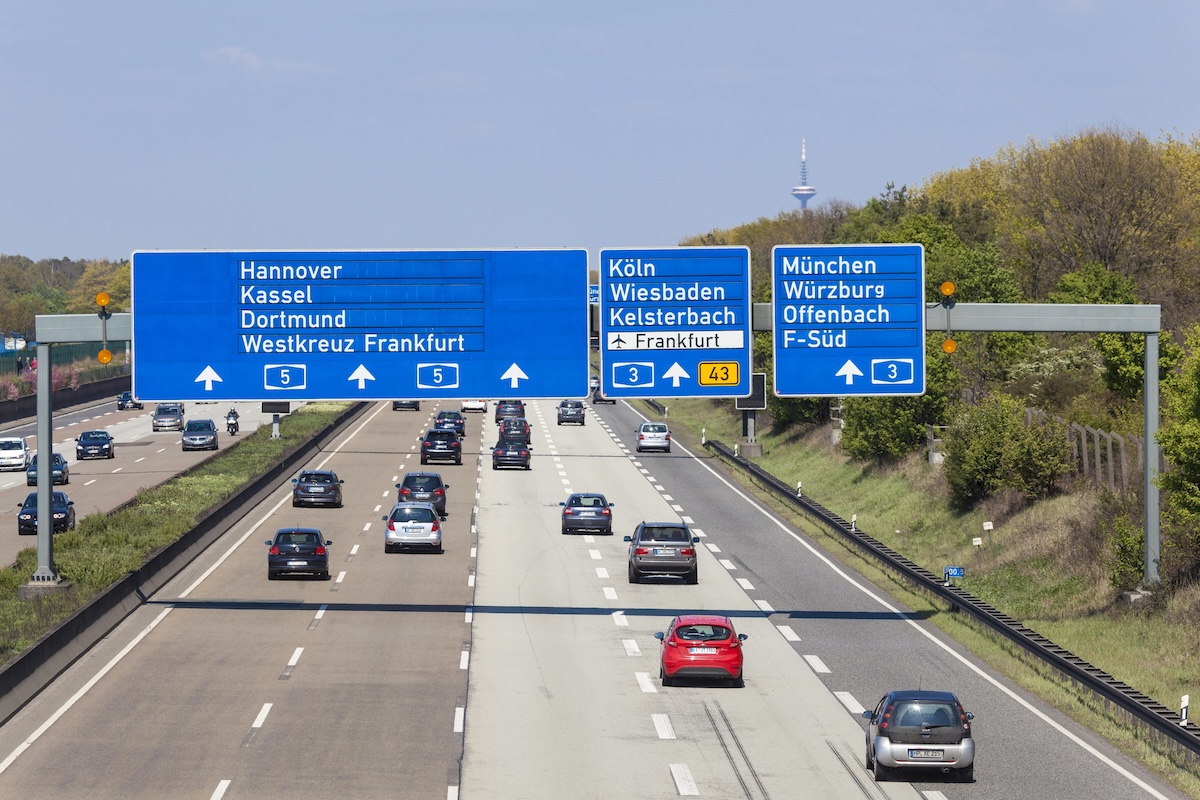
There are also much more stringent vehicle inspections in Germany. These inspections cover things like tires and brakes, but also analyze stuff like suspension bushings to ensure the car will deliver stability during high-speed maneuvers.
Unlocking higher speeds for drivers without the proper training or vehicle checks feels like it could have catastrophic consequences. To his credit, Kupper has at least thought about some of this, mentioning an effort to educate the public on proper lane discipline.
The bill requires annual safety audits of derestricted segments, coordination with the Department of Public Safety on enforcement, and a public education effort to ensure drivers understand key expectations—such as lane discipline and passing rules—before entering a zone.
But I don’t think this goes far enough. This release doesn’t mention anything about this training being mandatory, which suggests that anyone can show up in their car and start cruising at 97 mph down the interstate. I can already see out-of-staters from across the country planning road trips to Arizona specifically to see just how fast their cars can go. Car clubs already do this type of thing for visits to Tail of the Dragon, but at least those roads have speed limits.
There’s also nothing said about improving Arizona’s vehicle inspection process, which, as of this writing, only covers emissions, not safety. So theoretically, you’d be able to show up and top out your rusted-out pickup truck on dry-rotted tires without any repercussions, risking your safety and the safety of those around you if one of those tires decides to disintegrate once you cross triple-digit speeds.
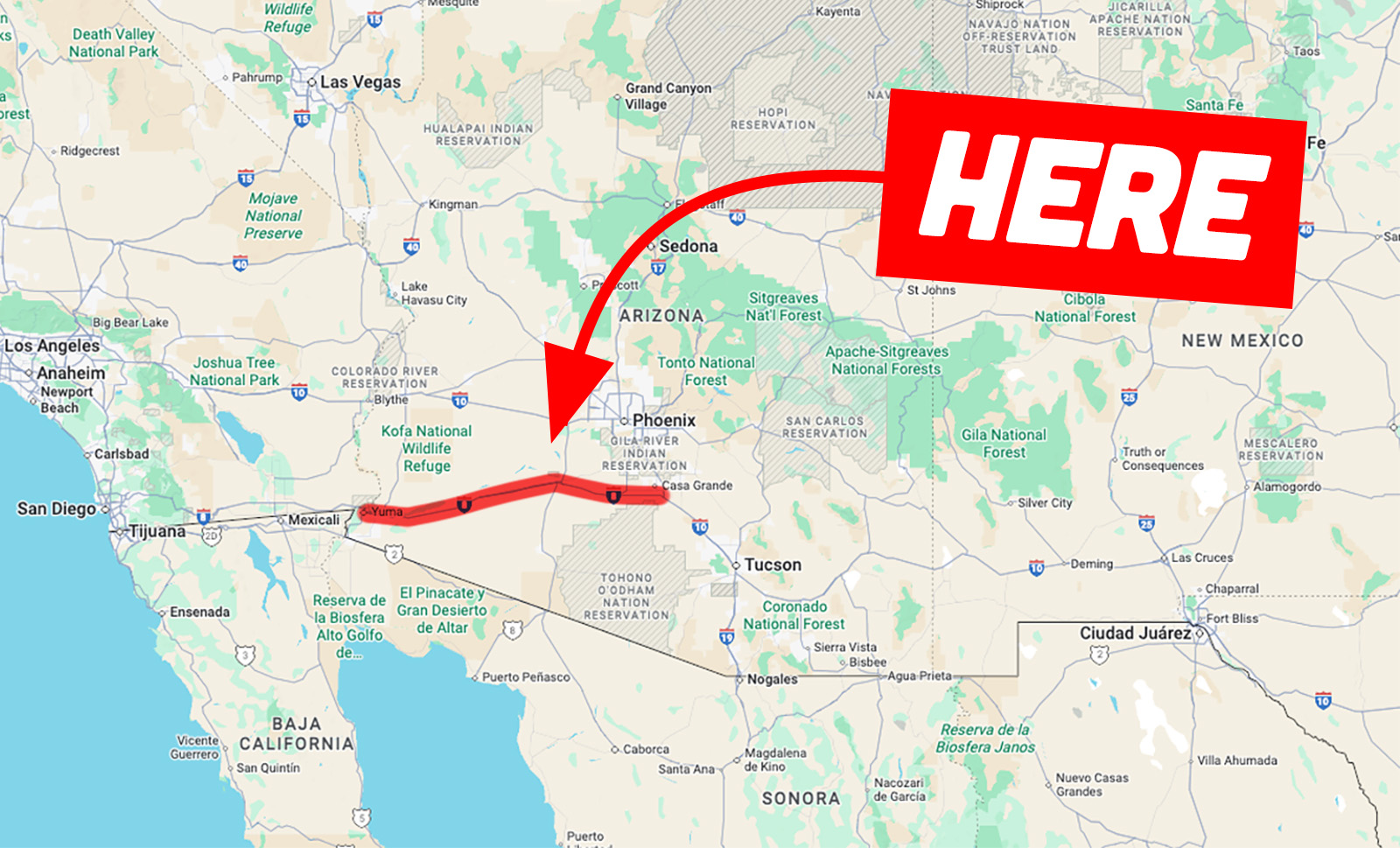
The RAPID Act is still currently just a bill, of course, and has yet to pass the Arizona House or Senate. If it does pass, the unrestricted zones will be tested in a one-year pilot program using Interstate 8, which stretches from southern California to Casa Grande, just south of Phoenix.
To be clear, I’m not against de-restricted highways in America. No other place on the planet is more suited to limitless zones than the wide-open, flat, high-visibility highways of the West. But it’s only feasible if the drivers and the cars are properly prepared to handle the extra speed. Without those precautions in place, there’s too much risk involved.
Top graphic image: DepositPhotos.com, Bugatti


No speed limits across the vast wasteland. Sounds like they’re filming The Road Warrior Part V.
I lived in Montana during its brief return to sensible speed limits for the state. It was the safest I ever felt driving, you could look for nuts and scan the road without a thought to some revenue-raising cop.
It was the courts that got rid of it. The Governor was all upset because Click & Clack were all upset, but someone told them that Boston was so lawless that they use the breakdown lane as a travel lane because Mass***es feel themselves too special to obey laws. He used that for a return argument and suddenly Massachusetts lost interest in dictating to us. That left the nannies to go to the courts, the favorite destination for those who want to over rule the people.
For the record there are signs permitting travelling in the breakdown lane on Rt 3 south of Boston during rush hours. Apparently it was allowed on other roads too but not any longer. I think it’s a stupid idea but there it is.
I have the “advantage” of many years living on this rock, and grew up in New England. Years ago, people in Massachusetts just started using those lanes. You may have noticed, especially around Boston, that people there drive rather lawlessly, to put it mildly. The State Police tried to stop people for a while, but eventually they just gave up and years after that they put the signs up.
That’s fine, they run their state they way they want, I just get a little peeved when they lecture others. The fuss Click & Clack started came within a hair of taking my enjoyable drives away. If you have to drive from Great Falls to Glasgow, 55 is simply absurd and “Reasonable and Prudent” makes a lot of sense.
My neighbor was a Montana Highway Patrol officer. First ticket he gave when the Feds backed off and we got “Reasonable and Prudent” back was to a woman driving on I-15 peering through the small hole she had cleared on her windshield, which provided her only visibility. He found that neither reasonable or prudent, and the judge agreed.
Thanks for the back story. I’m relatively new to Mass.
I used to have business in Sidney/Glendive MT in the early 90s. I got a daytime speeding ticket, something like $5 payable on the spot. I still remember the cop looking at my NY drivers license and saying “Son, do you even know where you are?”
A friend of mine around 1970 flew from NYC to Phoenix and rented a huge convertible, put the top down, and headed toward Flagstaff at high speed. He was stopped, and figured it would cost him. Instead, the cop explained heat stroke to him, and said he should put the top back up. My friend thanked him and put the top up – figuring if the cop wasn’t going to mention his speed, he sure wasn’t going to bring it up.
Im sure people are doing it anyway especially in the middle of nowhere. What scares me are the logging and oil field service class 8 trucks doing whatever when there is mixed traffic add in someone who doesn’t understand you shoudnt cut people off but really can’t with with a vehicle like that it’s problematic. It is an interesting conundrum let Darwin handle it and hope no collateral damage or try to do something to prevent it. No win situation. It also seems that the repepte offenders just keep doing it until they kill someone anyway so whatever law or order is perceived likely doesn’t exist. That on top of a certain kind of person attracted to police work now maybe refocusing them on something more dangerous and making them do that is the better play.
You go Arizona! I’ll sit here in Mass with my popcorn watching
I used to respond to quite a few highway speed road traffic incidents as a fire /medic. I can’t remember a single one that was caused by equipment failure.
About 75% were due to impaired drivers, mostly alcohol. Then there were a few, maybe 15%, from adverse road conditions.
The rest were not a significant number. Most of those were people falling to pay attention to the road, animals, and the best one ever: a cold sober MD on her way to visit family who just couldn’t take her eyes off the waterfall and drove straight off the road.
I don’t believe that raising the speed limit on the rural interstate highways will make driving dangerous.
My memory is that MT put a limit in place because a judge ruled that law enforcement needed to prove that the speed was dangerous to write a citation.
FWIW here’s what Google AI had to say:
“Statistics on Fatalities
Approximately 33,000 tire-related accidents happen each year.
These accidents lead to nearly 20,000 injuries annually.
Fatalities from tire blowouts are a serious concern, especially for large vehicles like semi-trucks.”
I expect higher speeds will lead both to greater risk of blowouts and greater consequences from those blowouts. That’s just one mode of equipment failure.
Google AI, a reliable source indeed. I checked what they had to say, and it is not quite so simple.
Most of those tire failures all y’all are worried about come down to under inflated tires.
We probably didn’t see that because most of our truck traffic was log trucks, and because they spend a lot of time on crappy roads, they tend to take care of the tires.
Here’s the thing, though. Higher speed limits on the Interstate Highways tend to reduce traffic on the less safe US, state, and local roads.
And the proposed change will not be applied to heavy hauling trucks. So arguing against it because of trucks doesn’t make sense.
Final note: I am an old guy. I feel comfortable driving at the 80 speed limit on the Interstate highways in the upper Midwest. And I have dropped in behind an STI Subaru who was the pesky 1%er mentioned above.
It’s been a long time since I drove the interstate across Arizona, and I drove it in a Peugeot 404, which flat out was not up to triple digits. I wouldn’t hesitate to run that kind of speed in my current car.
“Google AI, a reliable source indeed.”
Don’t like GAI? Feel free to provide your own sources.
“I checked what they had to say, and it is not quite so simple.
Most of those tire failures all y’all are worried about come down to under inflated tires.”
And how will allowing cars to drive even faster make this better? Spoiler, it won’t. According to AAA “road debris has resulted in approximately 39,000 injuries and more than 500 deaths between 2011 and 2014.” That includes “road gator” tire fragments. Higher speeds make this far worse as those cars will be hitting crap on the freeway at even higher speeds, increasing the severity of those crashes.
“Here’s the thing, though. Higher speed limits on the Interstate Highways tend to reduce traffic on the less safe US, state, and local roads.”
Oh? Where’d you get THAT idea?
“I wouldn’t hesitate to run that kind of speed in my current car.”
Yep. username checks out.
From your beloved Google Gemini:
Interstates are statistically safer than other roads due to controlled access, no intersections, and design features like medians and wider lanes, leading to significantly lower fatality rates per mile traveled
Back in my Uni days some clowns in DC passed a national 55 speed limit. Some guy named Nixon signed the damn thing, and we all had to play along.
But like so many of these things, it had unexpected consequences. Let’s say you wanted to go from A to B, and the interstate, which was much safer, now took an extra hour. Voila! More traffic on other roads.
We had a lot of fun with this in economics classes, because it was an excellent example of how people respond to incentives.
The question was where you got the idea raising the speed limit on the interstate would get people off surface streets. So in your world because people could only drive 55 mph on the interstate they shifted to surface streets to save an hour?
Nope, not buying it.
Even at a steady 70 mph a journey would need to be 240 miles to save that kind of time over 55 mph and there’s no way anyone’s did that with even lower speed limits, more lights, more cross streets and tighter traffic. Certainly not for that kind of distance.
Something’s not adding up here. Try again.
Let’s look at Montana. It is 700 miles across on the interstate. Highway 87 is about 50 miles shorter and about the same time if you go the speed limit.
But nobody goes 80 on I-90. And almost all the traffic is on the interstate. At 90 it is about an hour and a half quicker.
Maybe you need to go back to 1st grade and learn how to add?
“Let’s look at Montana”
OK:
“Highway hazards: Why Montana has one of the highest car accident fatality rates”
…
“Certain states experience more severe road safety issues than others due to factors like population density, road infrastructure, and local driving behaviors. Rural states, in particular, tend to have higher fatality rates per capita compared to more urbanized states. This is largely due to higher speed limits, longer emergency response times, and more frequent encounters with wildlife on the road. Montana, unfortunately, falls into this high-risk category.”
https://www.traveldailynews.com/column/featured-articles/highway-hazards-why-montana-has-one-of-the-highest-car-accident-fatality-rates/
(emphasis mine)
That’s quite an accomplishment for a massive state with barely any people in it.
Wanna try again?
We were in Germany recently with a friend who grew up in Berlin. I mentioned the high number of cars we saw that were from driving schools and he told us a little about the process of getting a license there. It involves significantly higher costs than in the US and a lot more time driving under professional instruction. Obviously, we’re a bit lacking in comparison here in the US. Unfortunately, out here the west, anyway, there’s no chance of getting such strict requirements instituted for drivers since driving is pretty much a necessity and you can’t price people out of being able to get to their jobs. That doesn’t sound compatible with unrestricted speed limits. And that doesn’t even consider the vehicle inspection issues.
One other thing he mentioned is that it is actually not all that uncommon to have left lane hogs on the autobahn and other highways. The problem with that happening in Germany is that no matter how slow they’re going, if you get caught passing on the right then you are guaranteed a ticket.
Arizona has felony speeding above 80mph. I’d rather not leave it up to an officer whether or not my speed above 80mph is “reasonable and prudent” when a felony is on the line. They need to dump that in conjunction with this for it to have any legs.
I’ve driven every mile of Interstate 8 and most miles on all the other interstates in AZ. Big ol’ nope from me. Even if the traffic levels were low enough (and they aren’t), none is in proper condition to allow for it. Folks aren’t going to have the reaction time to avoid bad pavement or any debris and we definitely have our fair share of semi truck tire blowouts. This should be a non-starter until they commit to ensuring the actual roads are good.
Based on my experience the last time I was in Arizona, people are already driving like there was no speed limit. Driving between Winslow and Flagstaff, I was going 80 or 85 and getting passed like I was standing still. This includes highway patrol who weren’t going after anyone, they were just trying to get away from the boring desert.
Combine this with the poorly maintained interstates and poorly maintained cars, and I can see it going as well as expected.
Phoenix also seems to have a high percentage of drivers who believe they’re in a Cup race while on their way to work. (Or at least a much higher percentage than we have in NorCal.)
It’s a bunch of shitty drivers over there, man. The same clown that passes you going 90 is then going 60 up the next hill. Or there’s a ’97 Grand Caravan in the left lane losing speed up the hill trying to pass a semi.
Salty roads = rust = more modern cars on the road capable of those speeds safely. AZ has a lot of old ass cars and old ass drivers behind the wheel of them.
More often than speed it is lack of attention that are the root cause of crashes. Studies in Europe showed that city streets without line markings are safer they concluded because they force drivers to pay attention instead of simply trusting markings that some drivers ignore and crash.
Back when I drove a 600 mile round trip every weekend, I used to dream about de-restrictions. Allowing a relatively safe 100mph could cut 2h of driving out of the weekend, which adds up, and makes it all more worth it.
But then I remember that certain bumps, undulations, cracks, and expansion joints would unsettle my car at 80mph – I can’t imagine the mess a clapped out Altima doing 110 would create…
We need seriously improved roadways, signage, and safety features to avoid big issues.
Aren’t drivers worried about hitting coyotes? Unlike the rest of America, where pedestrians are worried about being hit by Coyotes.
#MustangLyfe
Plus there are all of the issues with the coyotes continually lifting Acme anvils over the roads via hoists, trying to ride rockets down the interstate, painting artificial tunnels on the sides of hills, etc.
Little known fact about the Autobahns. They do have a speed limit. 130 kph is the safety speed. Above 130 kph, you are taking on more responsibility for your actions. Have an accident where they can prove you were in excess of 130 kph and you will bear more responsibility for what happened.
Second little known fact about the Autobahn. Much of it HAS a speed limit. Near cities, there is a speed limit. It’s not uncommon to have a speed limit depending on which lane you are in. It is also not uncommon to have speed limits appear where the road is not perfect, such as 100 kph when raining or whatever.
There are sections of the Mountain West (like areas of Arizona) where a speed limit makes no sense. Clear down, nothing for miles, great visibility, let it rip potato chip. However, limit in areas with broken up roads or during rain or at night need to be enforced. However, I can see there being a “recommended speed” of 80 or 85 mph where if you exceed that speed, your insurance isn’t going to pay as well. Sort of like how the local places have quasi-road closures in the rare winter events that allows you to drive on the roads, but if you have an accident….
I don’t think either of those facts are little known by anyone who has actually driven over there.
I think 85mph is more than fast enough for the average untrained, idiot, entitled, American driver whose car only sees a mechanic when it breaks, if then.
But just like in Montana, “reasonable and prudent as speed enforcement” would get smacked down in court as too arbitrary anyway. Not that this bill has the slightest chance of making it into law. It’s just grandstanding, rather like the nonsense bill introduced in the US House that would bar dual citizenship. Not going to happen.
It actually is the tires that I’d think, with no supporting evidence, that would be the biggest equipment failure risk. I agree with lots of posters that equipment failure isn’t a major cause of accidents in the US, even without inspections, but allowing uninformed people to push the envelope with equipment not designed for it is when we’d see an uptick. And I think it’d be tires. Both tires in poor condition as Brian mentioned, tires not properly inflated to spec and just cheap non-OEM tires not rated for sustained high speeds in 100F+ temps that Arizona sees all summer.
Not saying they’ll have daily fatalities due to 120MPH blowouts, but my gut says it would happen more than it does now. Desert roads are hard on rubber.
Yes, just the other day I parked next to an Accord with cheap off-brand tires worn down to racing slicks. And we’re going in to winter. I wonder how long they could sustain triple digit speeds.
A couple years ago, I was in the UAE. I work in nuclear power, so I went to the nuclear plant there right on the border of the UAE and Saudi Arabia. It’s a LONG drive through the desert from Abu Dhabi. The good news is that the speed limit is 160 kph. The bad news is that the speed cameras are set to trigger at 160.1 kph and they just take pictures and bill the rental car place. Tons of horror stories of guys going along at 162 kph and building up $1000s in fines.
The road is super wide, super straight and super boring. It has something like 4-5 lanes. In the far right lane is a series of giant trucks with HUGE tires (much bigger than any American tire I’ve seen). They drive slow, something like 60 kph. I wasn’t there during the summer and didn’t experience the real heat of 120+ deg F that is common for the region. But even so, TWICE, when driving down that road, there were giant explosions, that blew giant chunks of rubber all over the road from those trucks with the big tires.
The real danger of that road isn’t actually the heat, or the tires exploding randomly on those giant trucks. It’s the boredom. The road is straight as an arrow and all you can see is tiny hills (6-10 feet high) every once in a while on northern side of the road and lots of powerlines on the southern side. There are long sections of no exits. Mirages are commonplace (I saw a couple). It’s BORING. After about 30 minutes, you are pretty spent and having problems seeing straight, and it will be an hour between exits sometimes.
Oh, and if you go, get an SUV. It’s common to have sand drifts across the road, which sucks because you can’t tell them from a Mirage. To make it worse, on exits, these drifts can hide some huge speed bumps. The extra suspension travel of an SUV helps in both cases.
I noticed a TON of completely bald tires last time I was in AZ, which I could see being a problem
U.S.-Americans can’t even figure out how roundabouts work.
Derestricting stretches of expressway would be good move to reduce overpopulation and increase organ donations.
Germans are culturally different that Americans when is comes to things like safety, following rules, vehicle maintenance, collective responsibility.
I really hope speed limits and enforcement do not go the way of gun “laws”
I know speed limits on rural highways are not patrolled enough to be enforced but at least some people generally follow them since they exist.
“An unregulated speed limit, being necessarily to the fun of a free state, the right of the people to hoon and bear harms, shall not be infringed.”
Go home, Senator, you’re drunk!
I see a lot of tailgating in that picture of the A5 in Germany.
Given that gun deaths exceed motor vehicle deaths in the US, how about we trade less speed limits for more gun restrictions?
We should probably focus on mental health. Suicide deaths are higher than car accidents and much higher than firearm deaths (excluding suicides by forearm). The problem is that much like DARE, suicides are increasing as more efforts are going toward prevention. Someone smarter than me would have to figure out a solution that works without bringing negative attention and results.
‘Reasonable and Prudent’ in the land of ‘Hold My Beer and Watch This’ is not going to end well.
Perfect!!!!
I don’t agree. People are not as stupid as many like to believe. People are smart and deal with highly dangerous situations daily and come out fine.
I happen to have great faith in the ability of the average person, though I know that’s not a popular view in these judgemental times.
It’s not the average person I’m worried about. It’s the 50% who are below the average.
“Think of how stupid the average person is, and realize half of them are stupider than that”
We could even adjust this down to the first quartile and still have an awful lot of people that you need to watch out for 🙂
Clearly, you have never needed to work with the general public
The biggest issue in my onion is by FAR inspections. Not only is TUV incredibly stringent and in depth but EVERY SINGLE European country has inspections. As far as I know, they are almost all universally more stringent than nearly every US State. Because a large portion of vehicles legally on the road in the US are barely inspected, it is very reasonable to say that many vehicles that would be driven at triple digit speeds are genuinely unsafe to do so.
This isn’t even considering the selfishness of US drivers, and the post-Covid breakdown of the social contract of driving. The cars in the US are widely and very often not safe enough for the operations they normally do under 85 MPH, and de-restricting will be a death sentence for numerous people who genuinely do not know about the problems their vehicles could have. Not to mention that the forces, stresses, heat, and wear on components is much higher when operating at triple digit speeds. Brakes and fluid take a ton of heat in a hard stop, steering components and bushings CANNOT be failing at that speed, or they will, and so many more.
This is a terrible idea. As everyone else is saying, it works in Germany because they know how to drive and are a society that highly values order and structure. Antisocial driving is also really frowned upon throughout Europe and comes with real penalties…not to mention Germans and the majority of Europeans are willing to drive sensible cars.
We have absolutely none of that here. There are no real penalties for antisocial driving, everyone insists on driving 6,000+ pound ICBMs, individuality/MUH FREEDOM is more important to most Americans than the greater good, and the social contract has been shredded and set on fire. Oh and no one knows how to drive because driving is treated as one of MUH FREEDOMS/a god given right rather than a privilege.
There is no etiquette on American highways at all, anywhere. Germans know to not weave in and out of the left lane or camp there doing 5 under. Americans do not, especially if they drive Subarus. I swear every time there’s some car causing a massive backup by hogging the left lane and driving slow it’s ALWAYS a goddamn Subaru.
Wait what are we on about again? Anyway this would result in fatalities literally every single day, especially in a state like Arizona that has a massive population of MAGA loonies. There’s be some F350 Punisher Edition or whatever absolutely liquefying a smaller vehicle every single day. But then again, MAGA is a death cult and the average American conservative thinks literal children being executed by firearms is worth it to protect MUH SECOND AMENDMENT FREEDOMS, so I can’t imagine they’d care too much about the lives lost.
Until someone kills meemaw of course, then it’s a tragedy and they’ll be on social media crying crocodile tears about how they should’ve known better. Same thing as Covid, gun violence, literally everything forever, etc.
I’ve been saying for years, no matter where you go, you end up stuck behind a goddamn Subaru.
Vehicle checks and driver training are one thing – after all in Germany there’s plenty of drivers from other countries (EU or not) where neither training nor vehicle checks are nearly as stringent (my home country of Poland immediately comes to mind) and nothing bad happens (usually…). However, there’s a component of German police being active on the Autobahn and enforcing strictly the bans on overtaking on the right and tailgating. Easy to get suspended and get some points in Flensburg if you’re driving recklessly. And regaining that license once you’ve lost it is no mere formality either as you need to undertake psychiatric evaluation. Additionally, going over 130 km/h might very likely increase your liability in case of an accident.
Not to mention of course automated radar systems.
Additionally, Autobahn is unlimited only where the road is pretty much immaculate. Otherwise 120 km/h (or lower) will very likely appear. And the road is checked by the police and they will also clean it up if there are any parts or larger trash laying there (in a safe manner). Missing 10 or 15 meters of steel band? 120 km/h on that section. And it goes on and on.
Additionally, Autobahn’s geometry is usually optimized for higher speeds. This includes not only how long the curve is, but also how tilted it is, how the drainage system works etc. And the obligatory Notruf booth every two kilometers.
Another thing is flat mirror on the left of US cars.
Without convex mirrors it’s harder to see far enough back what’s going on in the left lane.
And when left lane traffic moves at 100+ mph and your lane does 75 it’s kinda important to be able to see as far behind as possible.
European cars have convex mirrors on BOTH sides as a rule.
Relative to Western US Interstates (and a lot of Eastern ones for that matter), the geometry of the Autobahn sucks. Narrow, much curvier, much hiller, with VERY short entrance and exit lanes as a rule and minimal breakdown lanes. It is not even remotely comparable to a US Interstate highway in the plains or desert southwest, where you can have the road go in a dead straight line for 10s of miles at a time (longest tangent being 72 miles of dead straight and damned near dead flat in Nebraska). The sightlines in Germany are generally terrible, relatively speaking – it’s 1930s roots show through rather a lot, despite decades of improvement. It’s the drivers, not the road, that make it such a delight. German drivers would make even the abomination that is the Merritt Parkway a delight.
But otherwise I agree 1000%. That level of responsibility can never, ever work here in the land of Freedumb.
No arguing from me either that some, especially older, sections, can be a bit challenging. I particularly remember A1 (I think) section in Saarland a year ago in November. Cold, wet, somewhat narrow and curvy. On top of that it’s you and your headlights as the Autobahn has surprisingly little in terms of lighting and reflective plastics. Outside of the Autobahn in a city too. In Italy driving at night on their autostrada can be quite easy – even if the road is empty, the put a metric ton of the reflective plastics and the whole way lights up like a Christmas tree. Looks kind of cool on an empty alpine section.
Quality-wise, a lot of the express roads (one notch below A-class) in my home country of Poland are better than some sections of the Autobahn as they were mostly built in the last 20-ish years and the requirements have since gone up.
On the other hand, this is why many German cars are built the way they are – they’re engineered to drive 200+ km/h on the bends, accelerate quickly to merge and brake quickly when leaving the Autobahn.
They’d probably also have to ban vehicles (or drivers) that cannot go fast enough. So, no semi’s (because of the uphill portions), no prii (hypermiling drivers), etc.
Why? You simply need to ENFORCE “keep right except to pass” and the various other rules of the road. The Autobahn, six days a week, is a steady stream of truck traffic that is STRICTLY limited to 90km/hr (and mostly in the right lane). And they mean it. I can’t say it doesn’t cause a problem now and again, given I have seen what happens when a truck pulls out to pass without checking his mirrors for “low flying aircraft” quite carefully enough. It’s pretty rare though compared to here where everybody is doing stupid shit all the time. And as mentioned – if you are going faster than 130km/hr even in that situation, if you hit the truck you are deemed partially at fault. Which is quite fair, IMHO. YOU should have been paying more attention too.
Because banning them is simpler (for AZ HP) than watching for them to make a violation. AZ HP will be needed to slow traffic down for accidents, anyway.
Actually, I would prefer that some sort of data-driven (ha!) speed limit is posted and enforced. Seattle has these. Something like that would have been nice the past few days in SoCal, with the torrential rain. saw two trees downed and one car flipped over on 12/24 on The 118.
I’m all for this kind of thing along rural stretches of interstates, if we can only take care of one thing:
Left lane campers. I don’t know what kind of reflection the greater American societal decline it is, but people often feel entitled to their left lane positions and often they’ll be obstinate or even respond aggressively by brake checking or slowing down if you do the flash-to-pass or apply some tailgating pressure.
Could just be an Atlanta thing, but I’ve also found this in the middle of I-81 in Virginia and along the Mass Pike.
So let’s add a rider to this bill that says police will enforce left lane passing with greater vigor and actually cite people for camping. It’s not the people going 100mph in the left lane I’m afraid of, it’s them having to dodge into other lanes because someone insists on doing 65-70 and won’t give up their place (And would rather flash a gun at you if you stick around – has happened to me twice on 285)
Around here, you only can pass in the right lanes because of the left lane hoggers and the middle lane tractor trailers, so only leaves the right lanes available.
Yeah, I’m perpetually amazed by the reflexive aversion to the “slow” lane. Was anybody ever actually taught “regardless of how fast you drive, as soon as you possibly can, get over a lane?”
In California, the roads are so torn up by tractor trailers (particularly in the mountains) that a sedan is shaken up and 20dba noisier when in the right lane. Even normal drivers don’t want to occupy the right lane, regardless of their speed.
I know people like to argue about where the best and worst drivers are, but I have a rule that I follow for rating cities-
If the right lane is the fastest moving during rush hour that city has shitty drivers. I’ve hit rush-hour gridlock in a couple major cities and got to my destination on time because you can just cruise in the right lane (paying attention to avoid people getting on the highway and trying to force themselves into the middle lane for no reason).
This is always the case around here. I’ve never figured out why, but in really heavy rush hour traffic, the right lane is always the one that moves the fastest. That might be 25 mph compared with 10 mph, but still.
Growing up in Florida and then moving to the PNW I can attest that the aggressive response to driving is primarily a southeast phenomenon. I’ve been followed back to my house multiple times and verbally threatened with a gun countless times in Florida.
Not a single time has that happened in the PNW and I’ve been driving out here longer than I lived in Florida. In fact, I find the road rage harmless and cute up here compared to the life or death battle of Florida road rage.
Personally I think it’s the heat and humidity that sets people off. High humidity is when I start to lose my cool.
I agree I drive a lot in MN, WI, ND and FL and FL makes me want to drive right to the airport.
If you are going 20 over the limit and need to make a left exit and every one else wants to go 30 over are you still a “lane camper”?
Yes.
Then I am a lane camper for that mile to the left exit. People who want to go 30+ over can just tailgate me.
20 over and approaching a left exit is a rare situation. 5 under with no left exit within 20 miles is 100x more common in my area.
There are a lot of left exits on the highways I drive and nearly always have to make one nearly every trip.
I suppose it depends on how long you are in the left lane. If you move into the left lane when your exit is approaching (let’s hypothetically say no more than a mile in advance) then that seems reasonable. Although realistically, you should only have left-lane exits when you have a restricted lane (carpool / toll), and a carpool lane is not intended as a passing lane except in cases of congestion.
Note: intended may significantly deviate from actual usage, especially with left-lane campers.
It’s not about your speed relative to the limit, it’s your speed relative to others. If you’re not going faster than the traffic to your right, you belong with the traffic to your right.
Even when making a left exit? Do I just dive over into the left from the far right at the last second cutting people off and risk being hit? When do I get over?
At the last second no, a mile before needing to also no.
yes before a mile would not want to inconvenience someone going 30 over for 45 seconds. I usually wait until I pass the 1 mile to exit signs.
Left exits should not be a thing to start with on the open road (in urban areas, different story, slightly different rules), and in places where there are such speed limits should be *enforced*.
The mass pike east of Worcester – combat zone. No rules, battle to the death with other drivers. That is on the off chance traffic isn’t stopped which is 99% of the time.
Mass pike west of Worcester: 2 lanes, jimbob and Cletus doing the side by side 55mph phalanx formation, traffic is backed up behind them for 10 miles, they will both slow to 50 if you indicate you want to pass.
I think the front lines really begin at the 495/Westboro toll booth (now gates, I suppose). I swear I’ve seen aunties in Foresters pick up 20mph and start tailgating the moment we get past the big merge after the bridge.
Absolutely need that added to the bill!! I’m sure everyone sees it all the time – people merge onto the freeway, then immediately move to the left lane and not move for passing traffic which creates unsafe passing on the right that causes accidents.
The ‘keep right except to pass’ signs are being ignored.
Some commenter here argued that if they’re already doing the speed limit or more in the left lane, they do not have to move because no one needs to go faster that that…. terrible logic
The FL legislature passed a KRETP bill earlier this year, and our dipshit governor vetoed it. Sigh.
Ugh – figured he would have been down with that. Florida has a lot of left lane camping that this would help with.
I can’t remember his rationalization, but I am sure it was completely stupid. I can’t listen to him speak without wanting to punch my television, so I avoid it whenever possible. Thankfully Tallahassee is a long way from here.
Honestly, FL is nowhere near as bad for this as a lot of states are. And I am not sure it would make much difference anyway. KRETP has been the law in Maine for decades, and it really makes no difference at all because there is basically no enforcement. So much easier to just pull people for 80 in a 70 in no traffic than to enforce something that would actually make a difference.
Believe me, left lane campers are not exclusive to the East Coast. They are alive and well on the left coast and aggressively resist moving over or even allowing a faster car to go by.
I think it’s a great idea. Our interstates were designed to be limitless once the technology was there, and the technology was there. It isn’t feasible in more heavily urbanized areas, but this clearly isn’t that.
Equipment failure is a pretty uncommon cause of accidents, the “rusted out pickup” you speak of as an example in your article probably isn’t going to be real happy at 60, let alone 100 mph.
Eh… I would beg to disagree. The assumptions being made at present include:
That safety inspections have made a meaningful difference in the American West (they haven’t – Utah, the last holdout, just got rid of theirs); andThat people who would otherwise act recklessly are being restrained by the presence of speed limits.Very few accidents are due to equipment failure, and when you look at fatal accidents, it fundamentally amounts to people not knowing how to drive – at any speed (https://highwaysafety.utah.gov/2023-crash-facts/) (if you look at the stats, roughly 9% were “too fast for conditions”, but the rest of the driver-related factors fundamentally amount to people losing control at regular or high speed).
There is a key stat there, though- of the drivers who perished, 34% of them were unrestrained (while seatbelts are normally worn by 93% of drivers in-state). The takeaway there is that people who are speeding are already disregarding this law and other laws – we can thus expect responsible people to potentially go faster if the speed limit is unrestricted, as opposed to expecting more irresponsible people to just mash the gas now that it’s “legal.” In vast parts of the West, the de facto speed limit is already somewhere between 90 and 100, and Wyoming won’t pul you over for doing 100+.
About those vehicle inspections, there are plenty of non-western states that don’t do them, including some big ones. Canada is a mixed bag depending on the province.
Not to mention Mexican-registered cars, which are all over the west.
Yeah, it’s always kinda surprising to me how… and how to put this delicately… there is a bit of a bias toward the expectation of people with unsafe vehicles being law-abiding on this forum.
Like, I’m sure everybody knows how various modders defeat emissions compliance on their vehicles (which is a problem, albeit not a deadly one except to the extent that it encourages other law-breaking). The bigger issue is a culture that encourages people to toss the keys to their partners/kids who are driving on their third DUI or suspended license, resting easy in the knowledge that the fourth might yield a week in jail – if they’re caught. Most of the people who cause accidents are well on their way to habitual vehicle malice, and the laws in most of the West simply have no teeth with respect to negligent entrustment.
I’d happily endorse a law wherein, if you get caught driving on a suspended license or without an interlock in a car that isn’t yours, whoever owns the car gets hit with a $2,000 fine and the vehicle is impounded, in conjunction with a way to readily check the validity (via driver license compact) of anyone’s driving status. Way too many bad drivers are enabled by those around them who supply them with vehicles without interlocks.
I wasn’t thinking of DWI, just tourists road-tripping to Yellowstone in a non-inspected Midwest or Northeast car with rusty brake lines.
A big part of the problem is that taking away someone’s ability to drive is tantamount to house arrest, especially in those states where DWI is more prevalent.
It isn’t. You’ve got:
Like, it might act as a lifestyle-restricting device, which again, I’m perfectly fine with. Most first-time DUI/DWI-ers end up with ignition interlock mandates (this varies by state, but it’s almost universally true in my state), and most second-time DUI-ers are those caught driving a vehicle without the interlock installed. Nobody is going from “Can drive” to “Can’t drive” with their first DUI, they’re going from “Can drive” to “Can legally only drive this particular car, while sober”.
Arizona, incidentally, does not suspend your license on the first go-around, just mandates an interlock. After the second offense, license is suspended.
https://azdot.gov/mvd/services/driver-services/driver-improvement/driving-under-influence-dui
And to be clear, I’m perfectly fine with this. If you rack up 2+ DUI’s, then clearly you’re not cut out for driving and should move somewhere it isn’t necessary.
This works in Germany because they have rigorous driver testing and vehicle inspection. This would be chaos in the US, especially with democratized horsepower.
80 is a good number, it works great in Montana and Wyoming. And Utah. And Nevada.
I agree completely.
Also, my first thought was, ‘Arizona drivers might be about to spend a whole hell of a lot more for insurance.’
I forgot about them, which is odd because they pretty much run the show.
Just did a trip across Montana. Even with snow on the road we saw plenty of vehicles going more than 80.
We took a shorter slower route than the interstate.
I’ve driven it in the summer and the speed is around 90, with plenty of cars running quite a bit faster.
So, I would conclude that the 80 limit in Montana “works” because it is not enforced.
Well, I would say that 80 keeps 99% of drivers under 100.
The other 1% is the reason I’m concerned about “no speed limit”.