


The nice folks at Automotive News are holding their annual Automotive News Congress, and it’s been an exciting one, with various executives reacting to the sometimes brutal shifts in the market the last couple of years. If you like hearing what business leaders have to say about the future then you’re going to love today’s Morning Dump.
GM’s President (and occasional Autopian commenter) Mark Reuss laid out the case for why his company isn’t abandoning its electrification dreams, acknowledging in blunt terms what happens when you take your eye off the ball. Ford CEO Jim Farley addressed the weird critique from the Sec. of Transportation on Chinese tie-ups. Hyundai’s CEO Jose Muñoz said his company was going to become even more American than some American brands.


Who could he be talking about? I feel like he’s talking about Stellantis, which has just made a deal to send a limited number of Chargers to the UK, if you’re into that sort of thing.
‘The Whole World Is Moving That Way’

It was nice to hear Reuss address the issue of GM’s long term commitment to electric cars. As I wrote earlier this month, I’m sure the company would love to have more hybrids, but the automaker might be right in the end. I think there’s an inevitability of electric cars that people can’t square with the reality that gas-powered vehicles (especially trucks) will exist for a long time.
Addressing Automotive News Publisher KC Crain and the Automotive News Congress, he said he thinks the company has done the right thing:
“We’re in it for the long haul,” Reuss said. “Work may be a little slower on EVs, for instance, but that’s OK. The whole world is moving that way.”
[…]
Despite increased costs and uncertainty, GM will not make major changes to its product and investment plans as a result of short-term changes in regulation, fuel prices or other factors, Reuss said.
“Whipsawing on technology and propulsion and regulatory administrations is not the game you want to play,” Reuss said. “It burns capital. It destroys things faster than you could ever imagine.”
This is ultimately the correct take, and GM has enough profitable trucks and other vehicles to get to the finish line. That doesn’t mean Cadillac or Chevrolet will be the brands to win, but the market will eventually get there.
‘Stop The Drama’

Ford’s Jim Farley was also at the event and he responded almost directly to the random attack from Secretary of Transportation Sean Duffy over the company’s ties to Chinese automakers. The White House, for its part, also seemed caught off guard and basically defended Ford.
Farley seemed to reference the issue, saying (via the Detroit Free Press):
“We’re going to partner with the Chinese and we’re going to compete with them. Both can be totally fine, they are not mutually exclusive,” Farley said. “So, stop the drama. Just get on with designing good vehicles, great software, great experiences, a great relationship with your owners and suppliers — and we can compete.”
Ford’s partnership in licensing technology from CATL has helped Ford enter a new business called Ford Energy, a subsidiary that will make battery storage systems. Ford will make EV batteries using CATL’s technology at its Blue Oval Park Michigan in Marshall.
“That’s our factory,” Farley emphasized, but noted that CATL is a leader in battery production, so the partnership is “a good solution. It’s American jobs. We’re learning. We’re working with them. We’re solving problems together. It’s better than importing batteries.”
If the United States hadn’t given up its lead on battery technology we wouldn’t need help from Chinese automakers, but here we are.
Hyundai Is Going To Be ‘More American’
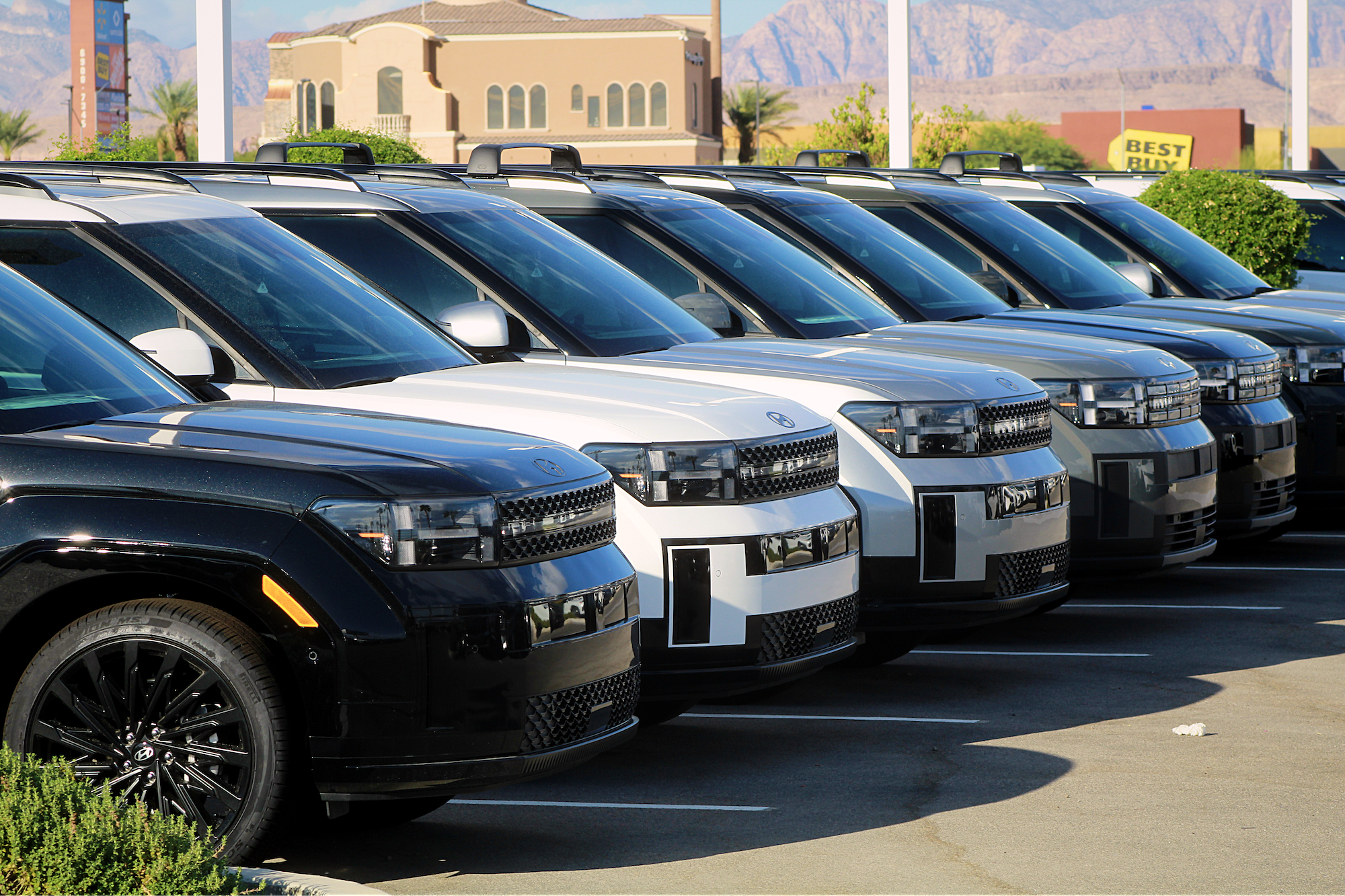
Here’s one more. Hyundai’s Muñoz–who I might see tomorrow, actually–announced that the company is making a $500 billion investment in its Alabama facilities so it can produce engine and hybrid components for the new Tucson and Santa Fe hybrids and EREVs.
Again, from Automotive News:
Muñoz said the size and breadth of Hyundai’s U.S. investments make it “more American than a lot of the American OEMs.”
A spokesman confirmed that the investment would pay for development and production of new engines as well as an extended range EV powertrain for vehicles built in North America. Those power plants would be used in upcoming Santa Fe and Tucson crossovers.
I wonder which OEM he’s talking about? Just kidding, I bet he’s talking about Stellantis.
A Charger Six-Pack Scat Pack Costs $100,000 In England
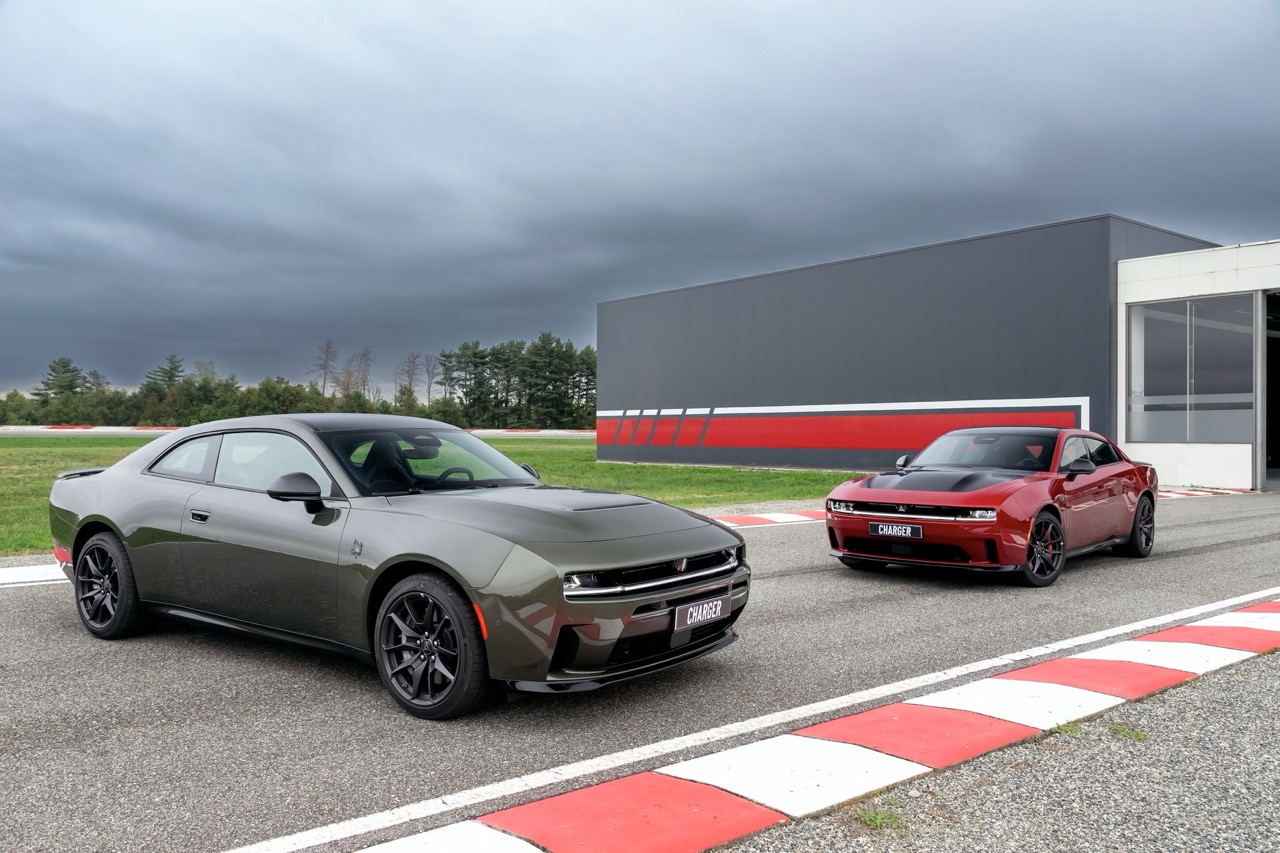
When Thomas drove the Charger Six Pack Scat Pack he thought it was fun if not a little compromised. At $67,965 there’s some real competition in the United States. Transport it it to the UK and it gets a lot more expensive, though there’s maybe less competition.
Unity Automotive is the official importer of Dodge and Ram products (which are not converted) and now has some pricing to look at:
UK pricing and availability
Retail pricing at Unity Automotive for the two-door Sixpack is:
- Charger Sixpack R/T 2-door, 420 hp, £70,000
- Charger Sixpack Scat Pack 2-door, 550 hp, £76,000
That’s a lot. A Dark Horse Mustang is about $10,000 less and RHD.
What I’m Listening To While Writing TMD
Indie Sleaze is a made up term for the music that I identified with when I was a cool-ish young person. I’d have probably been offended by the glib moniker at the time. I guess I don’t get a say. There are many favorites from the era, but don’t sleep on Santigold’s “Shove It (Feat. Spank Rock).”
The Big Question
What’s the most ‘American’ carmaker?
Top photo: GM


What is that blue monstrosity behind Reuss in the top shot? What I can see of it makes my eyes bleed.
I had never heard of Santigold and that song does have a catchy sound to it. I went down an internet rabbit hole this morning trying to figure out the music track of Target’s latest “It’s in The Bag” campaign and found that it was Raye’s Joy, performed with her two younger sisters. The part of the song that Target’s ad agency used is more than a third of the way in. And although I usually don’t like music composed and performed by mid-20s women, I LOVE this song. And the official video, available on YouTube, is fun and even uplifting.
Cadillac Celestiq
It’s real, and Cadillac’s version of a Rolls-Royce. And it looks cheap AF.
….and fgly
I’ve seen a few of the new Caddy electrics on the road. I must say, they are stunning in person. Has Caddy found it’s mojo again?
According to the definition, apparently Tesla is the most American. Parts, Labor and assy location. Sadly the case. I do wonder how many chinese made Buicks get the front of the lot parking at UAW union halls though.
My retired UAW neighbor has had 2. First one was lemon law’d, so he swapped it for one a year newer. I don’t have the heart to tell him it was built in China.
My retired neighbor bought a Buick Envision thinking it was American good old fashioned Buick. She filled up her depends when she seen the made in China stickers everywhere.
I think Honda and Toyota are fairly high on the domestic parts content, aren’t they? Especially Honda with all those factories in Ohio.
I took a Lyft in a non-hybrid 2018 Honda Accord this afternoon and it’s still very nice. I asked the driver how many miles she has put on it and it’s north of 180K and there was nary a rattle and she said she hasn’t had to do anything beyond scheduled maintenance. Her only complaint was that the leather on her seat was starting to crack. At 180K miles of mostly urban driving, that car has had someone in that seat for who knows how many hours and how many farts. I think it would be great if cars came with a Hobbs meter. It wouldn’t require many lines of code to incorporate that (perhaps hidden in some sub-menu) into the infotainment system.
She said it was her first Honda, and she plans on buying another one next year (this time a hybrid) only because Lyft won’t let you drive for them if your car is more than 10 years old.
assembled in america, I feel like it is almost more so that Honda and Toyota are made here because of the import taxes that have been there for decades. Not sure how much of the parts are sourced from the US versus other countries though. Honestly it almost seems like the big three rely pretty heavily on Canada and Mexico for assembly, and that always seemed to be at odds with many a UAW workers rhetoric from a few decades back. Maybe that has changed? I don’t know for sure.
Here’s the latest chart of domestic content in cars and light trucks sold here:
How Much Of Your Car Is Really Made In The USA? | Carscoops
Sean Duffy? From “Road Rules”?
Remember that UK pricing includes VAT at 20%
“Just get on with designing good vehicles, great software, great experiences, a great relationship with your owners and suppliers — and we can compete.” – j.farley.
“good vehicles” NOT “great vehicles”…the “great” is reserved for software, experiences and relationships…
his statement explains alot
Don’t let great be the enemy of good…or something like that.
Sadly, I agree with this.
Let’s say Ford brings back the 300 I-6. Less power and worse fuel economy than the Ecoboost 3.3L.
With good service intervals, the 3.3L EB will last 200k miles or more. It’s considered a good engine. Even with the outdated lubricants of the era, the Ford 300 would last 400k miles, it’s a great engine. Could the same design with modern machining and oils get to a million miles regularly? Maybe.
And how does that impact Ford?
The 3.3L EB is a modern engine that gets good reviews. The 300 would not get good reviews (low tech, poor fuel economy, way down on power) and that would hurt sales.
That 3.3L will likely last 15 years. If you have had no problems with your F150 that you got new in 2011 and now it is running funny, going to the Ford Dealership for a brand new one that has more gee-gaws and toys is tempting. While, I know guys with 40+ year old F150s with the 300 that are still planning to go to the Ford dealership for a replacement, when their truck finally starts having trouble. So, although they will be Ford owners until they die, there’s a good chance the trucks will out last them.
Good is good enough for the mechanics. As for the software? What’s the #1 complaint about new vehicles? Some weird BS about some screen not coming on or the like. Today’s cars are buggier than a Commodore Amiga. Any car company that makes software that isn’t buggier than a NYC hotel room has an advantage. So, yes, the software has to be GREAT. Might not have to be the most advanced in the world, but it needs to work every single time and have “Guru Meditation Errors” regularly.
to meet emissions and Fuel Economy standards the 4.9 six would have to have a fair number of changes. I could see a flow through head help somewhat, but then it likely would need a VVT setup which gets rid of the gear driven cam to crank set up (and likely reduces life expectancy). DI fuel injection would likely be required, so unless you include a cold start intake injector to clean the valves, again the life expectancy drops. God forbid they employ some sort of Cylinder deactivation, but likely it would be required to meet regs, though again reduces life expectancy. add in the variable pressure oil pumps that wear out over time, but are required to get that cafe standard down half a MPG, and then if left out of the 150k mile replacement schedule they cause a cascading catastrophic failure mode on the DFT/VVT setup above.
Yeah, it doesn’t have to be the old 300, but some engine that is just as durable and unkillable.
Look at the diesel side. The 7.3 was as unkillable. Ford would sell a 7.3 and not see the original owner’s grandchildren need to come back to replace it. So, Ford corrected this and built the 6.0 Power stroke. They have been seeking a middle ground between the exceptional 7.3 and the exceptionally bad 6.0 ever since.
unfortunately the things that made the 5.3 and 6.0 Gas GM motors good about the same time the 7.3 and to an extent even the 4.6 Ford was ruined by emissions and Cafe standards. the 7.3 was pretty simple, durable, but not fully fault free. but the fauls were minor compared to Cam phaser on tritons and the milkshake issues on 6.0 diesels which sadly came from multiple fronts.
Yeah, CAFE and EPA make designing an engine harder, but it’s not impossible. In 2003, Ford switched from the 7.3 to the 6.0. Dodge/Cummings changed the fueling system on the 5.9. Most likely both changes were driven by new EPA rules.
However, the result was different. The 5.9 is still a great engine, the 6.0… not so much.
So who can we blame? Ford.
One of three things happened.
Ford might have had a bad engineering team. Lost a critical member that designed the 7.3 or something. It happens.
Ford might have cut the development budget. Without enough budget for testing, they wouldn’t have found the milkshake setting on that engine.
Ford also might have told the engineering team “the 7.3 is over built, design this thing to last 100k at most” and the engineering team absolutely nailed the brief.
Ford could have taken a perfectly good design and decided to cost shave after all the development work was done and hosed that up between development and production.
I have no way of knowing. But I do know that Ford hosed up the 6.0L and it got dreaded “Fails to meet expectations” in the review.
This is a great example of how automakers think. What they lose is at the margins. I don’t want a 200k mile lifespan truck, I want a truck that is still worth a fair amount of money after I put 200k on it, because it’s “juuust broke in”.
Also, the design lifespan for US market cars is 150k miles. Meaning, anything that exceeds 200k is definitely a target for cost cutting. If the engineering was perfect, once you cross 150k, the next time you start the vehicle the wheels fall off, engine is locked up, and transmission is oops all neutrals.
My dad was an active member of SAE (Society of Automative Engineers) for most of his career. He said when he first started going to meetings in the 60s, there were presentations from chief engineers from the Big 3 saying that “to make a car hit the emissions and the fuel economy goals, we either need to raise the price of the car or reduce the design life.” A general number everyone talked about was 30k.
Dad said it wasn’t until the mid-70s that the Japanese companies started attending these meetings and they never got the memo.
At the time, GM was known to have the best engineers in the business. And the Vega from the early 70s was a marvel. Everything single thing on that car would break at the exact same time and force you to get a replacement. And to show that these GM engineers were ahead of the times, this happened around 30,000 km (19k miles).
Spot on.
The Japanese and later Korean automakers definitely pushed the expectation up as a sales tactic.
At the same time vehicle pricing began rising so quickly that customers demanded vehicles that lasted longer. It’s really hard to beat a good value proposition. Toyota pushing powertrain warranty to 5yr/60k in the 90s was leagues better than domestics, and korean cars copied the method. Meanwhile domestics were dragged kicking and screaming to now have the same 5yr/60k.
Planned obsolescence. used to be 100K for domestic cars, then Japan upped the ante when they decided to be better in all ways. American cars had to do what they could to adjust so they could survive. Perhaps Korean Cars will be the new Toyota? bring up the planned obsolescence to 200K?
My experience with Toyotas is that they are 250k or more for planned obsolescence. However…
That’s the ones that have 200-300k miles and are 20 years old. Has Toyota dropped that number down under 200k since then? I don’t know because the newer ones aren’t at those miles yet.
My sister got caught with that years ago. She got in to horses and needed a truck to town a trailer full of them. She talked to everyone that was also towing horse trailers and every single one of them said the same thing. Get a Ford. The Powerstroke was a hell of an engine, but a bit down on power and a bit thirsty. However, Ford had just come out with a brand new Powerstroke that was a more power and used less diesel.
So, my sister went to the Ford dealer and paid top dollar to get a brand new 2003 F350 with the brand new 6.0 Powerstroke.
And 23 years later, she still drives the 2006 Dodge she bought to replace it.
“Just get on with designing good vehicles, great software, great experiences, a great relationship with your owners and suppliers — and we can compete.” – j.farley.
“good vehicles” NOT “great vehicles”…the “great” is reserved for software, experiences and relationships…
Automotive News’s headlight says “Hyundai to invest ‘half a billion’.
I only mention this because if AN is wrong, and it really is half a trillion, I’m gonna be really confused on how bad things have gotten if Hyundai needs that much money to build the new Tucson Hybrid, along with new engines/EREV powertrains.
Actually, scratch confused, it’ll make me extremely worried!