


Aside from the world’s longest undefended border, the United States and Canada share many things. Great lakes, oil pipelines, trade routes, mountain ranges, and languages, to name a few. The two countries also have lots of differences. When’s the last time you saw large swaths of America speaking French, or an FBI agent riding a horse?
In the world of cars, there is one major difference between the U.S. and Canada right now: Whether to impose import tariffs on Chinese cars. Back in January, seemingly in response to American manufacturers moving production out of Canada, the northern country and China laid out a framework under which Chinese manufacturers could import their vehicles into Canada at a tariff rate of just 6.1 percent—a significant drop from the 100% import tariff that had previously matched the 100% tariff imposed by the U.S. in 2024.


For Chinese automakers, this is a big win for a few reasons. Not only is Canada another market prime for growth in the EV and PHEV segments, but it also means the cars developed for the Canadian market can also be used for the American market, since the U.S. and Canada share safety and emissions standards.
What else is going on? In the world of ultra-luxury vehicles, a lot, actually. Bentley says it’s cancelling four of the five EVs it had planned, not only because the demand for EVs is far lower than expected, but because its VW Group stablemate, Porsche, canceled the platform they were to be based on. Meanwhile, Ferrari is pausing deliveries in the Middle East over the war in Iran. Also, Lexus finally has a price for its all-electric ES sedan.
Let’s get into it.
Why Canada Is The Perfect Stepping Stone For China To Get Cars Into The U.S.

Among the things the U.S. and Canada share, the most relevant for this conversation is vehicle safety and emissions standards. For decades, Canada has adopted America’s crash test safety and emissions regulations, meaning that if a vehicle is authorized for sale in one country, it can very easily be sold in another.
When buying a used car in Canada, all you have to do to get it federalized for registration in the U.S. is switch out the speedometer from kilometers per hour to miles per hour and get a letter from the manufacturer saying it meets U.S. standards. Aside from a few small differences, the cars are usually identical.
For BYD, Chery, and Geely Holding Co., the three Chinese automakers planning to enter the Canadian market, these shared rules represent a great value proposition. Instead of having to develop two separate vehicles to meet two different standards for crash testing and emissions, they can develop one car. From Automotive News:
This means BYD, Chery and Geely will each have just one engineering bill come due to homologate their vehicles in both markets.
“If you homologate to Canada and want to [sell] across the border, you are good to go,” said Terry Woychowski, president of automotive ar Caresoft Global Technologies, the Detroit firm known for its engineering analysis and cost studies derived from vehicle teardowns.
[…]
And if the three automakers focus solely on electric vehicles, the cost and time to enter both markets will be further reduced.
Regulators in Canada and the U.S. certify EVs for efficiency and range in harmonized laboratory test procedures. The U.S. accepts most Canadian certified vehicles, according to the EPA.
Canada will also serve as a great test bed to gauge interest in Chinese vehicles for the greater North American audience, since U.S. buyers and Canadian buyers share similar tastes in cars.
It’s not all roses for Chinese automakers, obviously. Differences in stuff like software or exterior lighting may need adjusting before the cars meet U.S. standards.
Their Canadian market vehicles would need certification for the U.S., said Sam Fiorani, vice president of global forecasting at AutoForecast Solutions.
“Among the few differences would be the connected-vehicle limitations, but many other certifications are very similar between the two countries, requiring relatively minor modifications,” Fiorani said in an email.
There’s also another hurdle: America’s Chinese software ban. The U.S. has outlawed the sale of connected cars with China-sourced software starting for the 2027 model year, which means any current car from a Chinese brand wouldn’t be able to enter the U.S. market.
While that’s a limiting factor right now, there are ways around it. For one, Chinese automakers can simply start developing and building cars in Canada or America. Because of the current USMCA trade agreement, importing cars from Canada right now is a little complicated, tariff-wise. From Autonews:
Under current rules, the non-U.S. content on USMCA-compliant vehicles built in Canada is tariffed at 25 percent. Vehicles that are not USMCA compliant are tariffed at 25 percent of the value of the entire vehicle.
If Chinese brands were to start building cars in the U.S., things would get a lot simpler. While that might sound like a long shot, it’s less far-fetched than you think. Several Chinese brands made big splashes at CES in Las Vegas back in January, while Geely even let journalists, including me, drive a bunch of their cars on a race track. Most importantly, President Trump, talking about Chinese brands entering the U.S., had this to say that same month, per Autonews:
“If they want to come in and build a plant and hire you and hire your friends and your neighbors, that’s great, I love that,” President Donald Trump said during remarks at a Jan. 13 meeting of the Detroit Economic Club. “Let China come in, let Japan come in.”
At this point, it feels like a matter of when, not if, Chinese vehicles will hit the U.S. market en masse.
The Dark Side Of Platform Sharing
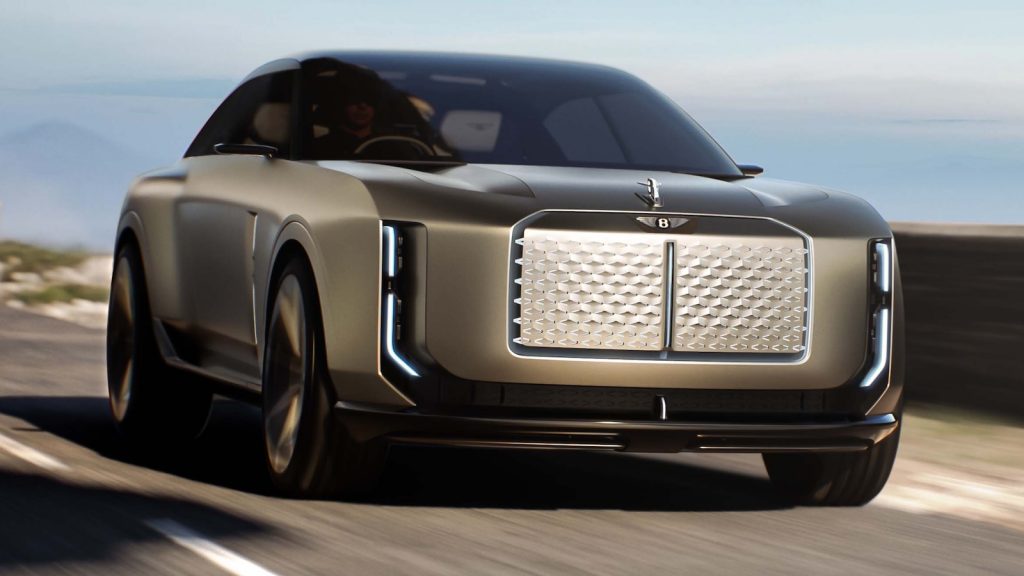
Platform sharing is a widely used strategy in the automotive industry, in which a carmaker—usually an automotive conglomerate with many different brands—develops a singular, modular architecture that can underpin a large variety of cars throughout its lineup. This has many obvious advantages, since instead of having to develop, say, five different SUVs from scratch, a company like the VW Group can use the same underpinnings for the Volkswagen Touareg, the Porsche Cayenne, the Bentley Bentayga, the Audi Q8, and the Lamborghini Urus. That’s a lot of money saved.
Platform sharing has its downsides, of course. Because the cars share an architecture, it restricts engineers on what they can do with the powertrain and chassis setup. It also restricts designers on how they can differentiate cars between brands. And, as Bentley learned, it means that if your future cars are based on a platform from the greater conglomerate, and that platform gets canceled, your cars get canceled, too.
CEO Frank Walliser confirmed that while the Bentley EV planned for 2027 is still on track, the four other EVs it had planned had to be called off, since Porsche canceled its EV platform, which it planned to use on its upcoming SUV and all-electric Panamera sedan. From Auto Express:
In conversation with Auto Express, Bentley CEO Frank Walliser said: “We have to rethink and recalculate our complete product line, and all future offers. If you compare our planning with what it was two years ago, it looks completely different.”
The news comes as little surprise given the decision by Porsche to cancel the SSP-61 platform program – formerly known as the SSP-Sport – that was destined to underpin the future K1 SUV, plus the next-generation Taycan and a new all-electric Panamera.
By extension, this means that development of Bentley’s four future EV models due by 2035 has also been put to bed.
For what it’s worth, that doesn’t mean Bentley’s EV goals are canceled. Like many automakers, the company is simply putting its EV transition on hold and instead turning its sights on hybrids. For now, that seems like a smart approach.
No Ferraris For The Middle East, For Now

Staying on the subject of exotics, the conflict in Iran means Ferrari buyers in the company’s small (but important) Middle Eastern market aren’t getting their cars. The company confirmed to Bloomberg it’s suspended “most” shipments of new cars to the region.
“We are closely monitoring the developments in the Middle East and the potential implications for our business,” the Italian super-car maker said Thursday in a statement to Bloomberg News. Ferrari has been “managing a few deliveries via airplane,” it said.
Ferrari shares extended losses and fell as much as 4.6% in Milan. The stock is down around 11% this year.
The move highlights how geopolitical risks are starting to affect logistics for luxury-auto makers, even as Ferrari’s low volumes and multi-year order backlog help cushion potential disruptions.
As Bloomberg points out, the Middle East only accounted for around 4.6% of Ferrari’s sales. But as the conflict in Iran drags on, it could have lasting effects for the brand. The nice thing about being a company as small and agile as Ferrari is that it can reallocate cars to different markets and adjust production far quicker than your average car brand. While those moves can only get you so far, I wouldn’t worry just yet.
The Lexus ES Is A Sub-$50,000 Electric Sedan With Okay Range
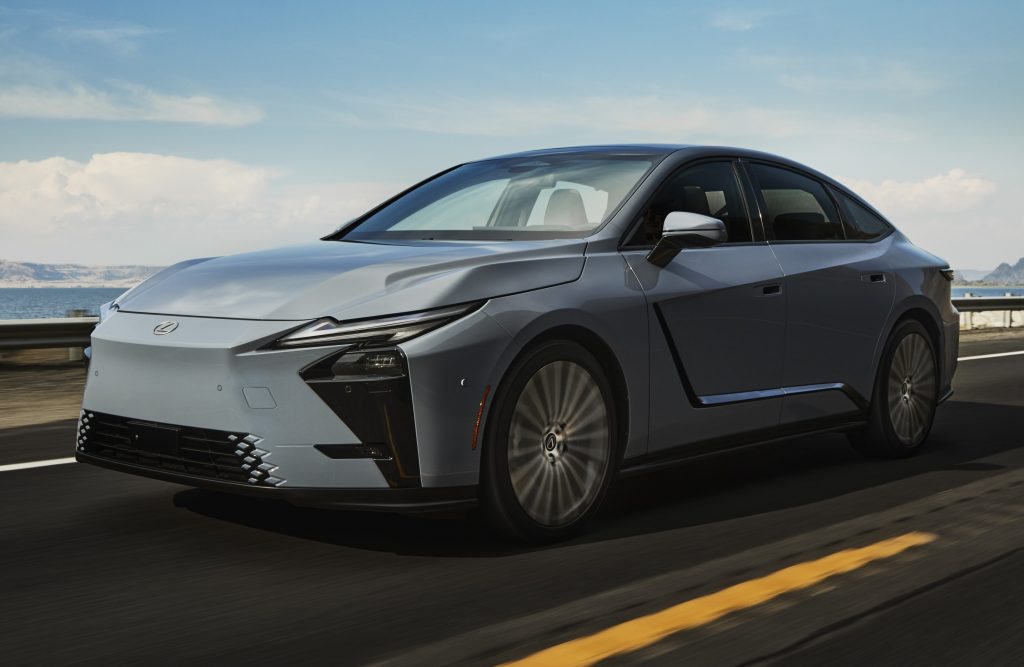
About a year ago, Lexus showed off a drastically new ES sedan, complete with either hybrid or electric power. Now, the car is finally on sale, and it’ll be available as an EV first.
There are two trims available: A base, front-wheel drive ES 350e and an all-wheel drive ES 500e, both using the same 74.7-kWh lithium-ion battery pack. The 350 is the cheaper of the two, priced from $48,795 including destination charges, and also the trim with the most range, rated at 307 miles, as estimated by the EPA. Adding the rear motor nets you 338 horsepower (versus just 221 in the base car), but you lose 31 miles of range.
In the late 2010s, those numbers might’ve been competitive, but in the year 2026, not so much. Don’t forget, just yesterday, BMW revealed its i3 sedan, which is supposed to compete in the same segment as this Lexus. That car has 800-volt charging tech and up to 440 miles of range, according to preliminary estimates. Sure, it’ll probably be a bit more expensive than the ES, but in this case, I’d say the extra coin is probably worth it (going by specs alone, anyway. I haven’t driven either of these cars, so final judgement is on hold until then.)
I’m far more interested in the hybrid version of the ES. Because it uses Toyota’s TNGA-K platform, that means it’ll be mostly Camry underneath, and the Camry is a great car. Deliveries of that car will start later this year.
What I’m Listening To While Writing TMD
Thinking about the dark side of car-sharing platforms reminded me of the wonderful song “Darkside” by Blink-182, from their 2019 studio album, NINE.
The Big Question
When do you think Chinese cars will enter the U.S. market? Would you buy one if the price and specs were right?
Top photo:


Not to digress, but Bentley had five EVs planned!? Good lord they must have some potent koolaid at HQ. Were they even making five ICE models?
Some companies are very loose with the definition of models. Bentley has 5 models on their US website but 3 of them are variations of the Continental.
I was wondering, that does make more sense. Though that could still be 2-3 actual model which seems wildly optimistic for Bentley even in a best case EV adoption timeline.
Back in 2024 Bentley said they would start selling an EV SUV in 2026 and the rest of the lineup would be hybrid until 2035. This announcement pushes back the EV a year.
While Bentley said the SSP models are dead since the VW platform is dead I would not be surprised to see another EV in the mix sometime in the nearish future. 2035 is still 8 years away after all.
When it launched in 2024 the Rolls Royce Spectre was their best selling model in Europe and second highest globally. Sales dropped in 2025 but they still sold 1008 of them out of a total global sales of 5664.
Complying with national standards was always the easy bit. It was going to be production that was going to be the expensive/hard part. Canada was never going to be central to anything, except maybe as a small test market.
Some deluded Canadians might think they’re the central lynchpin, but small-minded hosers are currently bleating ‘Elbows up’ without thinking strategically. At most, we’re just useful idiots for China. Strategic thinking means the view past the next couple of years. But Don Cherry-level intelligence permeates this country, so I have low expectations.
Mostly, if I’m a Chinese automaker looking at the mature North American car market, I’m thinking I want to set up in Mexico, because cost is what I’m competing on. Maybe I wait it out until a friendlier administration is less hostile to my interests. Maybe I ‘partner’ with GM or Ford and get in Trojan Horse-style using my Mexico plant and make it just squeak into USMCA compliance.
If the US market rejects my products, Central/South American countries will absorb that production. It’s not like they’ve got domestic manufacturers to protect.
At this juncture, eating others’ lunch in other parts of the world is probably a better use of my resources rather than trying to crack one market. It’s a very North American conception to think we’re the centre of a global vehicle market of 90+ million vehicles.
I have yet to see any compelling argument on why I should trust government agencies and business in the US over those in China.
Going through China would give some me insulation by distance.
How will billionaires manage without the other four Bentley EVs to choose from?
‘…let Japan come in.’ Does the orange menace not know that Japan’s been building cars in America for decades?
How will oil sheiks and political repressives manage without easy access to the latest offering from Ferrari?
That Lexus ES may be a perfectly comulent EV, but jeez, it’s also sort of ugly as sin.
Chinese cars are already in the US market. Get right over to your friendly local Volvo\Polestar or Buick dealer and pick one up.
As for buying one, I generally never say never, but almost certainly not. I doubt they would ever come up with anything I would find remotely desirable.
My understanding is that Canada has long been more flexible about car standards than the US, allowing things that are much closer to what the EU allows. Which is how, as one example, Ladas were sold there for a while.
As for automotive tastes, well, that is a whole different thing. As my Canadian college roommate used to say “the US is a melting pot, Canada is a cookie sheet”. Different provinces vary FAR more in many, many things than US states do. Quebecois have historically bought cars that US skinflints would consider too sparsely equipped, and the dirt-poor Maritimes are not far behind them. I mean – those people bought *Ladas* in surprising quantities until they found out how crap they were…
I had a college roomate from New Mexico, who I managed to convince (this was pre-google) that his state boasted the highest incidence per capita of human canibalism.
There’s a non-zero amount of people you can still convince of that post-google
ROFL. Who knows, it might be true… Though I feel like Alabama might be more likely.
I always wanted a Lada Niva.
I drove one around quite a bit the summer I spent in Budapest. I wouldn’t kick one out of the garage. They are the good sort of terrible, if you know what I mean. 🙂
“good sort of terrible”
That’s the dream.
They are TERRIBLY vehicles – but damned good at what they are meant to do. And you can fix them with a screwdriver and a rock when they break (actually they include a really nice toolkit in the boot). Which they do, all the time.
Not only that. Geely already makes Volvos in the US.
My guess is around 2030 for byd for make a comeback. Unless something magic happens or the Chinese buy an American division or expand something they already have. The smaller guys no idea. But certain ones smaller companies are already here with class 5/6 trucks and low speed vehicles. They would probably go a more traditional way of an importer and dealers.
Xpeng might be right on the heels too. Zeekr and other geely brands who knows but they are expanding and doing well in the markets they are in. The state owned companies like saic and chery, dongfeng. I don’t think will come in for several years after the first mass market Chinese cars.
Xiaomi has never entered the US market with anything officially. That strikes me as odd. But I think they always feared apple would sue them. Plus their os tends to have alot of ads now and not sure how people would like that. It would be strange for them to enter the US without their original thing smart phones. There were some rumors of a store openings soon. So maybe they know there is market demand.
I would buy one if the price is right.
2040
Nope
This makes me wonder if the US tariffs and such on Chinese cars apply to used vehicles too. If Canada got rid of the sales cap, it would be quite humorous if it opened a loophole that mass amounts of Chinese made vehicles could be sold in Canada at a cheap 1 year lease, returned to the manufacturer, which would then reflash the digital speedo to mph, put a letter of meeting standards inside, and send it across the border to be resold in the US as a used vehicle. I’m guessing it wouldn’t be that simple, but it sure would be entertaining.
AFAIK they apply to used goods as well, based on original country of origin. My buddy mentioned it the other day, as it had been causing him frustration buying watch parts. It doesn’t matter where it’s shipped from(outside of the US) when it crosses the border tariffs hit based on the place where it was made, even if it was made in 1950.
I own a dirt bike built in China and sold by a company in California, purchased in 2016, and at the time I paid ~$2k delivered to my door inclusive of title and document fees, and for the price at the time I wish I had bought a used Japanese bike. That’s not to say it’s bad, but most Japanese bikes would be better, and they would still be worth more.
That said I think that manufacturing in China is improving exponentially, and I am considering buying another Chinese bike (Ibex 450), but this time not just to save money but because it seems better on paper than the competition. I don’t know as much about their automotive industry, but I am not strictly opposed to trying out a new reasonably priced EV.
I have a few China bikes and have had many more. You are right about the quality but it’s slowly increased. Resale I’m not sure for the ice bikes it will ever be. People don’t even know what a zongshen is let alone some of the smaller guys. These e dirt bikes the kids are riding though. They all know their names and seem to have some resale value at least now. So maybe. Now you can get a China bike with fuel injection for $2500 sometimes a bit cheaper. Quality has increased but not as much as the automotive space. I doubt it will have any resale value either.
A guy into John Deere tractors told me one time you are paying a premium when you buy to have better resale value. I think that sums up the China bike too. You will easily lose about $1.5k to $2k using a bike. You just pay a lot less up front for a China bike that might be worth nothing to $500 after you are done with it.
My only problem with csc is their prices. But zong definitely has improved and made a better bike. They have been top of the pack for a very long time though. You probably already check him out but motocheez on YouTube is always getting cheaper Chinese bikes and reviewing them. Some interesting adv bikes have come out.
The tt250 I bought from CSC was during their presale, it was on the first shipload of bikes imported so the price was discounted, shipping was discounted, and they didn’t charge their typical doc fee. At the time it was nice piece of mind to have a dealer standing behind the product and I have called/emailed them for parts, troubleshooting, and other support. Being the cheap bastard that I am though, I could have done it the hard way and saved ~$500, or I could have bought a Tw200 used for about $2k then and it would be worth $3k now.
I almost got on the bandwagon then too but Im too cheap. I was still paying about $1k or a little less then. I think I actually got a hold of a closeout tmec 200 that was sitting in wherehouse for about $650 shipped instead. Buying at the bottom of depreciation is always fun too. I’ve seen some used klrs for about $2k maybe they will go up.
Txpowersports has always done right by me. They have a lifan 400 adv for about $5500. Or if you want to slum it a bit a rps 300 adv for $2900. I think motocheez has both and buys from txpowersports too.
FortNine had a recent video on the Ibex 450 and how good it is, so it’s definitely worth checking out!
China has able to manufacture to high standards for decades now. iPhones were never considered low quality and they’ve always been made over yonder. The country just has so much manufacturing capability that their QC is all over the spectrum.
I watch all of FortNine’s videos and it seriously got me thinking about selling my VStrom and my dirtbike and getting a slightly smaller middleweight since I don’t do much single track. I found the Vstrom a little heavier than I want on gravel, but I also don’t enjoy riding that bike on the freeway.
Yeah I myself picked up a Tenere 700 last year and I’ve already dropped it twice lol. I’m used to street bikes, I’m used to dirt bikes, but ADVs are so different to either. The Tenere is a really good canyon carver, but same drawbacks: heavy off-road and not even remotely geared for highway cruising.
Not sure what exactly happened, but Chinese articles about the Chinese car industry always warn against not letting what happened to the motorbike industry some time back happen to the car industry. My guess is that excessive (subsidized) competition led to a race to the bottom on quality, causing their reputation to tank in export markets?
There many differences between the FVMSS in the US and the CVMSS in Canada. However, it is not difficult to design for both at the same time.
One example is daytime running lights. Mandatory in Canada, but not required for the US. But, you can have DRL’s in the US. Same for automatic headlights at night.
The big difference is that there are no provincial requirements on top of the CVMSS. Think CARB in California and many others when it comes to commercial vehicles. You would not believe how much states mandate stuff on school buses.
A couple of notes:
– there have been “conversations” about adopting EU standards. Much of this driven by a growing number of people up here mad about bright headlights.
– I really disagree that Canada and the US share vehicle tastes. Canada has its pickup market like the US, but overall, we’re much more likely to buy smaller cars. It’s the whole reason we’ve seen Canada specific models that the US doesn’t get – either completely different cars like the Acura EL or yore, or the Canadian-specific builds of the current Civic. The small CUV market is fairly strong too. Which…I think makes cars from China rather ideal. Lots of small models that fit the economical sense up here.
Which I think is my way of saying I’m not sure Canada is the entry point to the US that you think it is.
Using this as an opportunity to promote Transport Canada’s survey on the headlights being too damn bright, it’s a faint hope they might do something about it.
https://tc.canada.ca/en/corporate-services/consultations/canadian-experience-vehicle-headlights-glare-night
Canada, especially urban Canada, is often one model size smaller than in the US market. And, when you look at regional markets like Quebec and BC, they tend to be dominated with hatchback vehicles – similar as expected in much of PNW/New England in the US.
I think the growing conversation on adapting EU standards might been driven more from the current political threats of economic war than simply ‘headlights’ – but headlights is a much better platform to take than publicly calling out someone blatantly disregarding international agreements, or asking “who would ever sign a thing like this” on the USMCA and impose illegal tariffs.
Canada has a free trade deal with the EU. Harmonizing standards is probably not far off.
Did Canada get the GR Yaris? I promise I won’t be jealous. Much.
No – GR Corolla same as US. (Actually now that I think of it, I don’t think Toyota does the Canada-specific thing as much.)
Along with that, it seems to me based on having taken a fair number of trips to Western Canada-BC, Alberta, even the Yukon and NWT-that Canadians are more into hatches and wagons than the USA?
During good times, if your nation is wealthy, doing well, and holds a lot of global influence it’s much easier to keep out cheaper products in the name of protecting domestic suppliers without alienating voters.
As Canada and Europe are finding, that math gets much harder when your economy is shaky and your global influence is limited, so allowing cheaper options in helps keep constituents happy.
Fortunately for the US, we’re not doing anything that might cede global influence, drive away our allies, or drag us into expensive global conflicts with high odds of increasing inflation and real potential for causing a recession.
That Lexus ES feels like such a miss.
It also looks like it’s missing a few pieces of its front fascia.
But it will be a lot more appealing when you can buy one used with 8,000 miles for $22K next year.
I think I’d rather have the prior gen.
Sort of weird too it feels like it’s mixing in some Toyota styling cues which seems crazy given how hard they’ve worked at maintaining a distinct brand identity for Lexus.
All of Toyota’s EV efforts have been “that’ll do” half-hearted compliance cars. This one is offensively ugly on top of that.
Regarding Chinese BUILT vehicles imported to Canada, the low tariff only applies to 49k vehicles. Also, the slots will likely mostly be filled by manufacturers that already have a presence in the country (Tesla, Polestar, etc.)
I’m not yet convinced we will have many Chinese branded vehicles on our icy and dilapidated roads.. (and when they do come, they will likely initially target markets like QC and BC before the entire country)
Tesla sales were down 60% in Canada last year. Perhaps something to do with a “not a real country” comment that I’m convinced Musk got from Southpark. BYD coming in (as an example) would make it even harder… they’re down to under 20k sold in 2025, so LOTS of room for other brands. And when the limit increases to 70k, I bet that all brands that are not currently in market.
The first year is absolutely going to be vehicles that were previously available here from established manufacturers, there’s little chance of getting both federalization and a sales/distribution/service network set up by year end. That said, the quota is supposed to increase over the next five years, supposedly a piece of the quota will eventually be dedicated to vehicles under $35k (which doesn’t apply to any of the current likely vehicles), and there are reasonable rumours that some of the Chinese OEMs are starting to take action (Chery supposedly recruiting for staff, BYD apparently talking to dealers).
Dilapidated? Is this in the cities? Every time I’ve driven to Canada with friends we’ve commented on how the roads are noticeably smoother and nicer than American highways.
Wow, where was that? I haven’t driven the entire country, but if there are many awesome and cool things about Quebec, the quality of our road infrastructure generally isn’t top notch. As hyperbole, I often describe it as driving in Cambodia post-bombing.. (for the record, I’ve never been there, it’s just an image)
In French, a pothole is called a “nid de poule”, which translates to “chicken nest”, but colloquially they are sometimes described as “nid d’autruche” (ostrich nest). Every spring, the movement caused by thawing ground reveals new “nests” that are then quickly filled (read: patched) and then continuously reopen as the patch doesn’t last..
It doesn’t help either that most infrastructure was built in the same decades (60s and 70s) and require massive simultaneous upkeep..
Montréal is a great city to visit but not too enjoyable to drive in: the traffic of course, but also the streets are nothing to be proud of. Unfortunately, smaller cities also have similar issues with their streets. Luckily I’m in Québec City and our streets are much, much better… (The benefits of living in a capital!)
Ha calling them bird nests is pretty great. Still need to get to Montreal and Quebec city, we actually were considering going to both for a fall east coast road trip last year.
I used to live in Montana and me and some buddies (admittedly this was 20 years ago) would road trip up through Alberta pretty regularly and always thought the highways there were noticeably smoother and better maintained than their american counterparts-certainly in Montana which is a relatively poor state. I now go to Vancouver pretty often and their city streets are probably as bad as ours in Seattle so maybe it is just a city thing. Here I don’t think it’s freeze-thaw but the amount of water creates pothole problems that crop in the spring similar to what you’re describing.
TBQ: I’m worried about software-defined vehicles coming from foreign countries that don’t exactly get along with the US. So for that reason, I’m going to hold off on a Chinese vehicle for at least a couple of generations to see how the security questions play out.
That being said, it’s not like domestically produced vehicles are much better. It seems likely that if your car was made in the last few years, it is sending some sort of location and driving data back to someone. The OEMs claim to anonymize the data, but I find that dubious and unverifiable. Our only course of action is to urge our representatives to draft data protection legislation with actual teeth. But I don’t see that happening in the foreseeable future.
Cars have been sending data back to the OEM for quite a bit longer than a few years. The Washington Post did an article back in 2019 on a 2017 Volt. Some of the data found:
“He discovered that the car was recording details about where the car was driven and parked, call logs, identification information for his phone and contact information from his phone, “right down to people’s address, emails and even photos. ….. including pictures of the person the previous owner called “Sweetie.“
I imagine Chinese cars will come to the US if and when we have new administration.
They will be hit with the same rabid racism and xenophobia that the Korean and Japanese cars were met with.
Yes, by patrons at Cracker Barrel proudly driving their Buick Envision and Lincoln Nautilus, both built in China.
Early in our marriage I had that discussion with my father-in-law. He was UAW and a Ford guy through and through. We bought a Nissan Frontier and anytime we saw him he went on about “how could you buy a foreign car – you got to support American factory jobs…”
Finally I said. “My truck was built in Tennessee and your F-250 was built in Canada. How is it that I’m the one not supporting American blue collar workers”. That pretty much ended that as a topic of discussion.
Car built in China? I will never own one.
So no to certain Lincolns and Buicks.
I doubt many people see avoiding certain Lincolns and Buicks as a significant obstacle.
Touche’
Americans said the same after WW2, of both Japanese and Germans cars. How did that go?
I’d give one a try. If it was substantially similar to a well reviewed overseas model. Or used a lot of the same parts but made here in the States. With automation and electric vehicles being what they are, as long as the parts are well designed and the software decent it’ll likely be just fine. The big thing would be parts availability and service network.
Everything you said makes sense, but something in me would rather be able to buy French cars in America.
Most speedometers now are digital and can already switch between mph and kph 🙂
All the mfr has to do is provide a letter saying the Caandian car meets US standards.
Also, we need to accept both US and international/Euro UNECE standards already
That would be the ultimate. Let us import European vehicles as well. I could drive a Dacia Sandero again.
TBQ :
I think it will likely be another 5-7 years before Chinese cars enter the US market.
I would not buy one. I understand I am right up against it by owning a Volvo, but it was designed in Sweden, built in Belgium. The latter half of that statement is the sticking point for me. Not owning a Chinese built car.
I had a 2011 Volvo C30 that we traded for a 2019 Volvo XC40. The former being built in Sweden and the latter being from China. From a quality standpoint there weren’t obvious differences as both were well designed in Sweden. But there were a lot of little things about the VC40 that really started bugging me over time.
Between that and the fact that they now use Google for all of the in-car software, I won’t consider them again until something changes.
I know they don’t get the MPG one might expect from a smallish hatchback, but jeez, I still dig the C30. And if I had to drive a new Volvo, the XC40 would be on the shortlist.
I’ve got a ’89 240 wagon and ’04 XC90 and I kind of love them both in their own way.
It was a good car for the most part but had small problems. One big problem. A/C would randomly blow hot air instead of cold. Seat memory would never hold on the key fob. Had to turn off the aggressive auto braking emergency stop features since it would hard brake for cars in front of me in other lanes. That one was sort of big but at least I could turn it off
The one big issue is the brakes. The damn thing is small but nearly 5K lbs and I don’t think Volvo adjusted the brakes for the weight properly. We had 26K miles on it when I sold it and it needed another set of rotors and pads. Had the first set replaced under warranty at 19K miles. Brakes should certainly last longer than that! But most EU manufacturers use really thin rotors for weight savings.
I can’t give an endorsement for those reasons but the car did have some well designed features. If you’re under 6’ tall it’s also quite comfy (I am not under 6’ tall and found the seats too short). But I won’t have one for those reasons and the Google based software running everything is a non starter for me.
I have a C40 that is about to get the big UI software update from Google on Monday. I’m a little concerned.
I don’t blame you. I’d be researching how to opt out of data sharing if possible.
Not that I would trust Google not to collect it and sell it anyway, which is why it’s a non starter for me.
As a Canadian, I hope for two things:
-The BYD Shark
-That we finally copy Mexico and accept Euro safety standards along with North American
Realistically, I’m hoping to slide into a cheap EV by the fall, possibly an Ioniq 6, cause no one wants em, but it’ll fit my use case well.
+1
Canada should take this opportunity to review the standards. Obviously the plants in Canada aren’t going to start building cars that don’t meet US standards because they want to be able to sell on both sides of the border. But that doesn’t mean they can’t accept imports with the European standards.
I’m not 100% sure what the implications are, though.
The euro NCAP doesn’t include standards for unrestrained passengers, which is smart (because I’m pretty sure it’s the law in all of the US for a front passenger to wear a belt). The EU does have standards for pedestrian impact, though, but there’s no harm in importing a car that includes that (just some extra cost that isn’t necessarily needed).
On the emissions side, it doesn’t really apply to EVs (hence the lower barrier of entry) but why not consider if EU emissions standards would be acceptable?
I would assume US standards are going to get worse over the next 2 years at least
Canada is pretty consistent across the country that all passengers must be belted, so that part doesn’t really matter.
The cost plus of pedestrian safety should be offset by not requiring to re-engineer a Euro market vehicle for our market, allowing them to directly import.
At this point the unrestrained passenger requirements seem like more of an intentional barrier to entry into the north american market than for anything else. And it’s something that adds cost to every vehicle sold in north america but doesn’t get coverage.
I’d say it is more laziness than a thought out plan to keep out competition.
Front seat passenger seat belt use is not required in all 50 states. Live free or die!
I hope Xiaomi brings the SU7 Ultra. I may do halfsies with my Canadian brother-in-law.
I mean, Chinese cars already have entered the US market- Coda, Polestar, Volvo, Buick
And Lotus to an extent with the Eletre, which seems to sell all of 3 units per quarter, but it counts nonetheless.
And Mazda, if they bring their new 6 EV here, since it’s Chinese under the Mazdaesque sheetmetal.
I don’t believe they can bring it to the US since it’s effectively a Chinese designed and programmed EV with a thin veneer of Mazda logos slapped on top, versus the aforementioned Chinese manufactured EVs having a software stack built up entirely outside of China.
Duly noted. You’re likely right Alex. 🙂
I wasn’t particularly hankering for one personally. 😉
No clue but yes, provided it’s airgapped.
Like give me an audio jack and a smartphone holder, that’s it.
Would you accept a million screens and AI that sends all your data to China? Because I’d have to guess that’s the real option
Many of our phones and other electronic devices are already made in China.
So what’s changing for you, that it doesn’t also get sent to NSA/Google/Apple? Seems like an improvement to me.
Where are you going to get a phone with an audio jack?
That right there is proof that our civilization is on the wane.
Got one, Samsung Galaxy XCover Pro 6
Samsung Galaxy A54 5G. 3.5 jack and an SD card
I had to google (duckduckgo actually) ‘airgapped’ in the context you were using it, because all I could think of is the plumbing air gap needed when you install a dishwasher outflow. Now I understand what you meant and of course agree, though even if such a thing were assured, I’d still be suspicious.
The Toyota EV specs make BMW look like something that they haven’t appeared to be in the last half to full decade: smart
I’m guessing the Toyota/Lexus EVs are targeted mostly at existing Toyota/Lexus buyers. They are “good enough” but not class leading, so their loyal and small-c conservative buyers will stick to the brand.
The optimist would hope that Toyota probably realizes that hydrogen is a loser, sees where the (global) car market is going, and is putting out these generations of EVs to “do something” (otherwise the Chinese brands will eat the entire global EV market) while they work on something class leading.
The pessimist would say that they’ve dragged been kicking and screaming to EVs and are begrudgingly half-assing it, and don’t realize they will soon be obsolete (like Honda seems to be doing to themselves).
the current play of 1:6:90 will work for the next 5 years, but they need to be making EREVs and EVs that are actually competitive after that. They are notorious for being slow on decision making. So, I’m not sure if they recognize that the time to start making moves is now
I’ll be interested to see what happens with Toyota and H2. I’m quite certain that the H2 development that Toyota has been doing is for their Hino HD truck brand. Just reducing development costs by experimenting with small car size fuel cells instead of semi sized ones. Toyota is spinning off Hino into a separate company in April. It will be interesting to see what happens with Toyota fuel cells.
(Daimler Truck and Toyota are spinning off their Fuso and Hino brands into a single stand alone publicly traded company. Each will keep 25% of the final company and the other 50% is being sold to investors)
I hope Geely enters the US market soon, they can expand their current Volvo/Polestar dealerships, expand their current South Carolina factory, they could go around the ban of software using Google Automotive currently being used in their US vehicles (Just fix the glitches cof cof EX30), they could even buy Nissan if they wanted but the japanese will never allow it.
Lexus has Toyota, Volvo needs a mainstream brand.
It’s called Geely
Yes, thats the first part of my comment, they need a mainstream brand in the US.
it would be cool if Geely brings LEVC into North America
Hope they bring over the Zeekr 7X. It’s going gangbusters whichever market it enters.