

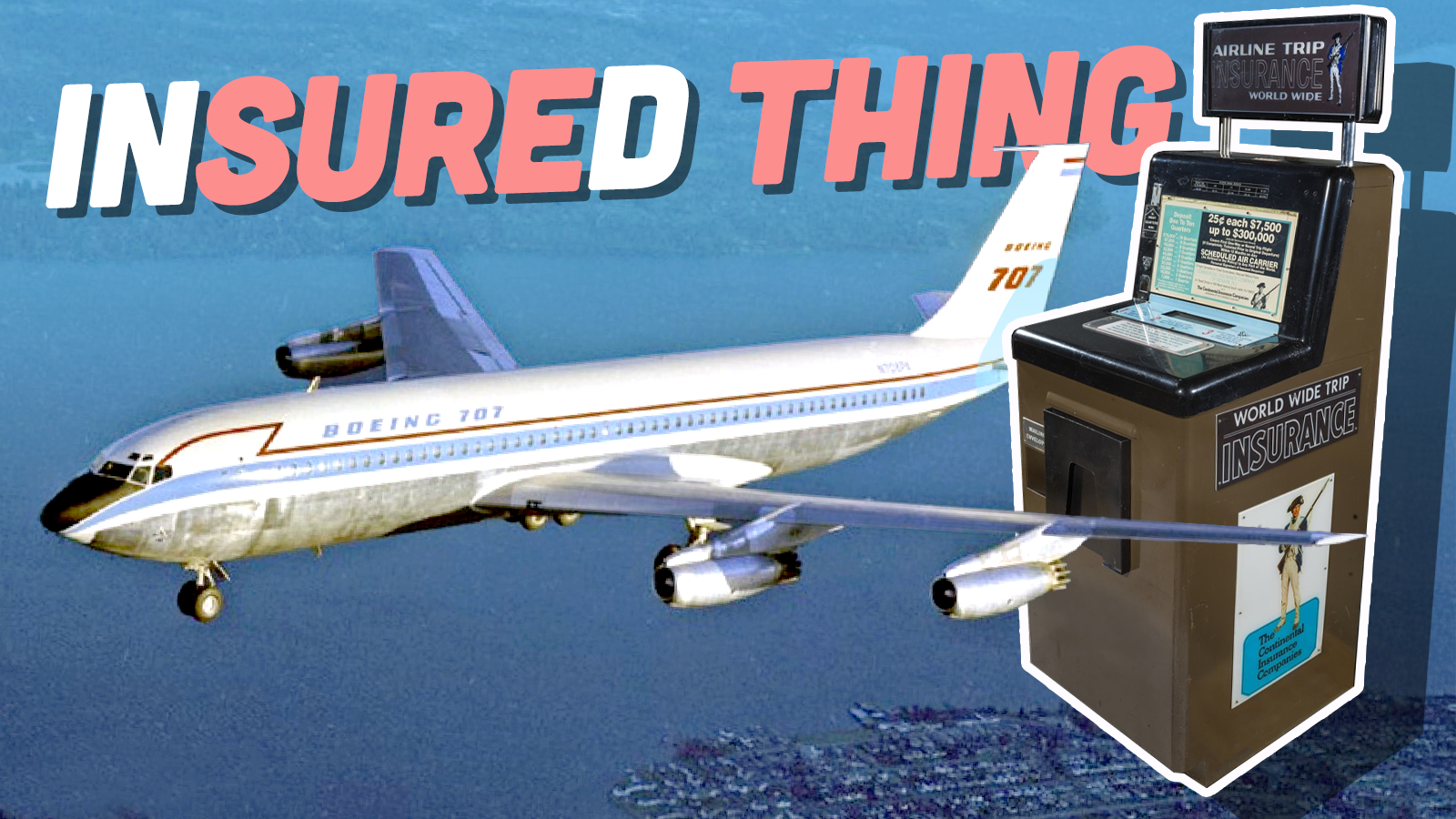
Flying is one of the safest ways to travel today. On average, there are 28,000 commercial flights every single day in America, which ferry nearly three million passengers to their destinations. For the vast majority of the time, each and every one of those flights would arrive without incident. But this wasn’t exactly how flying used to be, and, in the 1960s, passengers were so scared to fly that insurance companies came up with a wild idea. Decades ago, you used to be able to spend a couple of dollars at a vending machine at the airport to insure your life for your flight. One of the reasons why these machines are gone might not be what you’re thinking, either.
One of my guilty pleasures is the air disaster flick. I’ve watched the Turbulence trilogy, Sully, and Flight more times than I’m willing to admit. Last night, I also finally completed watching the entire Airport saga by watching the movie that started it all, 1970’s Airport. This film was a trailblazer in popularizing the air disaster genre, even though the movie didn’t even start building up the disaster until about halfway in. The disaster itself didn’t take place until nearly the end of the two-hour, 15-minute slog. The movie makes up for the time with its beautiful bare aluminum Boeing 707s and wonderful late 1960s cars.


If you haven’t seen this 56-year-old movie and are concerned about spoilers, skip on. Otherwise, there was a part of the film that took me by surprise. The disaster part of the plot hinges on a man who was at rock bottom and was desperate to provide for his wife. To give her all of the money she’ll need, the man wires up a bomb, places it in a briefcase, and rushes to the airport. When he arrives, he buys a life insurance policy at a kiosk right before his flight. The idea was that he’d blow up the plane, everything would look like an accident, and his wife would get the payout.

I initially thought that this had to be some Hollywood movie magic being worked into this film so that the plot made sense. Admittedly, the first time I ever flew on a commercial flight was in 2016, and this movie was made more than two decades before I was born. I was surprised to find out that, yes, insurance companies really did sell life insurance policies to scared passengers on their way to board flights. Even wilder is that Airport‘s crazy plot? That more or less happened in real life more than once! Let’s look into the once wacky world of so-called flight insurance.
Crashes Used To Be More Common
Aviation wasn’t always as safe as it is today. In the early days of aviation, crashes weren’t just common, but they were almost expected. Engines weren’t reliable, aircraft structures sometimes failed, and navigation was primitive. Those old propeller-driven planes also couldn’t fly above the weather, weren’t pressurized, and had few redundancies. Even the iconic Wright Brothers technically crashed their plane before their first actual successful flight.
At first, putting more planes into the sky didn’t help much. According to the Mackinac Center for Public Policy, in 1929, there were 24 known fatal crashes of commercial aircraft in America. It wasn’t just a bad year, either. Reportedly, in 1928 and 1929, the commercial aircraft accident rate was about one crash per one million miles of flight.

Such a rate would be unconscionable today. Airlines in America currently fly around 8.1 billion miles per year. If the planes of today crashed at the same rate as the planes of the 1920s, that would be the equivalent of 8,100 commercial airliner crashes a year. Yet, the 2025 mid-air collision of American Airlines Flight 5342 and an Army helicopter was the first major crash of a commercial airliner in America in 16 years.
That’s how far aviation safety has come. You have a far greater risk of getting harmed in a car crash on the way to the airport than on the plane itself. Sadly, as some aviation fans say, aviation safety and regulations are written in blood, and the industry had to learn a lot of hard lessons to get to where it is today.
Flight Insurance

It’s understandable, then, that many airline passengers of the first half of the 20th century were scared to board a plane. Travelers Insurance claims to be one of the first companies to insure a passenger against air accidents. On May 6, 1919, President Woodrow Wilson was given “ticket number one” by Travelers in France, which insured his travel. Apparently, Wilson probably didn’t board a plane, and thus never got the chance to use the ticket.
In the early days of flight insurance, an airline would work out a deal with an insurance company, and then the airline ticketing agents would offer the insurance as an upcharge when passengers bought their boarding passes.
After World War II, flight insurance would take off as its own monster of a business. Instead of partnering up with airlines, the insurance companies would sell policies right out of booths and vending machines installed at the airport. These policies were marketed as giving travelers peace of mind on their flights, but it was also a way for insurance companies to rake in additional revenue.

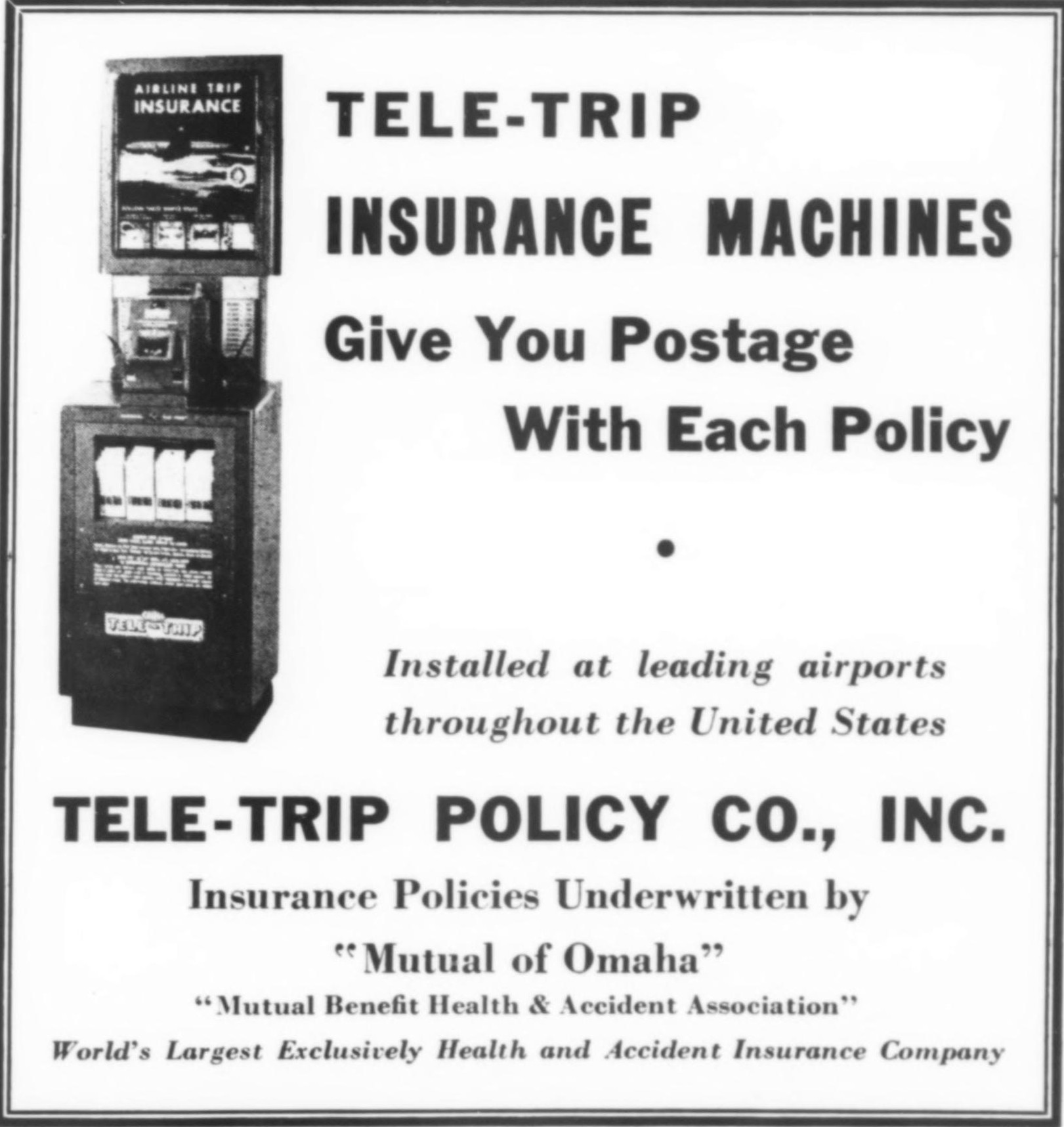
One of the masterminds of this new strategy was John M. Shaheen. As the New York Times writes, Shaheen served in the Navy during World War II. There, he was attached to the Office of Strategic Services, which ran clandestine operations. In 1947, Shaheen came up with an idea to revolutionize the sales of flight insurance. He founded Tele-Trip Insurance, and its calling to fame was selling life insurance out of vending machines at airports. Now passengers could purchase life insurance for their flight with quarters as easily as they purchased other small objects from vending machines.
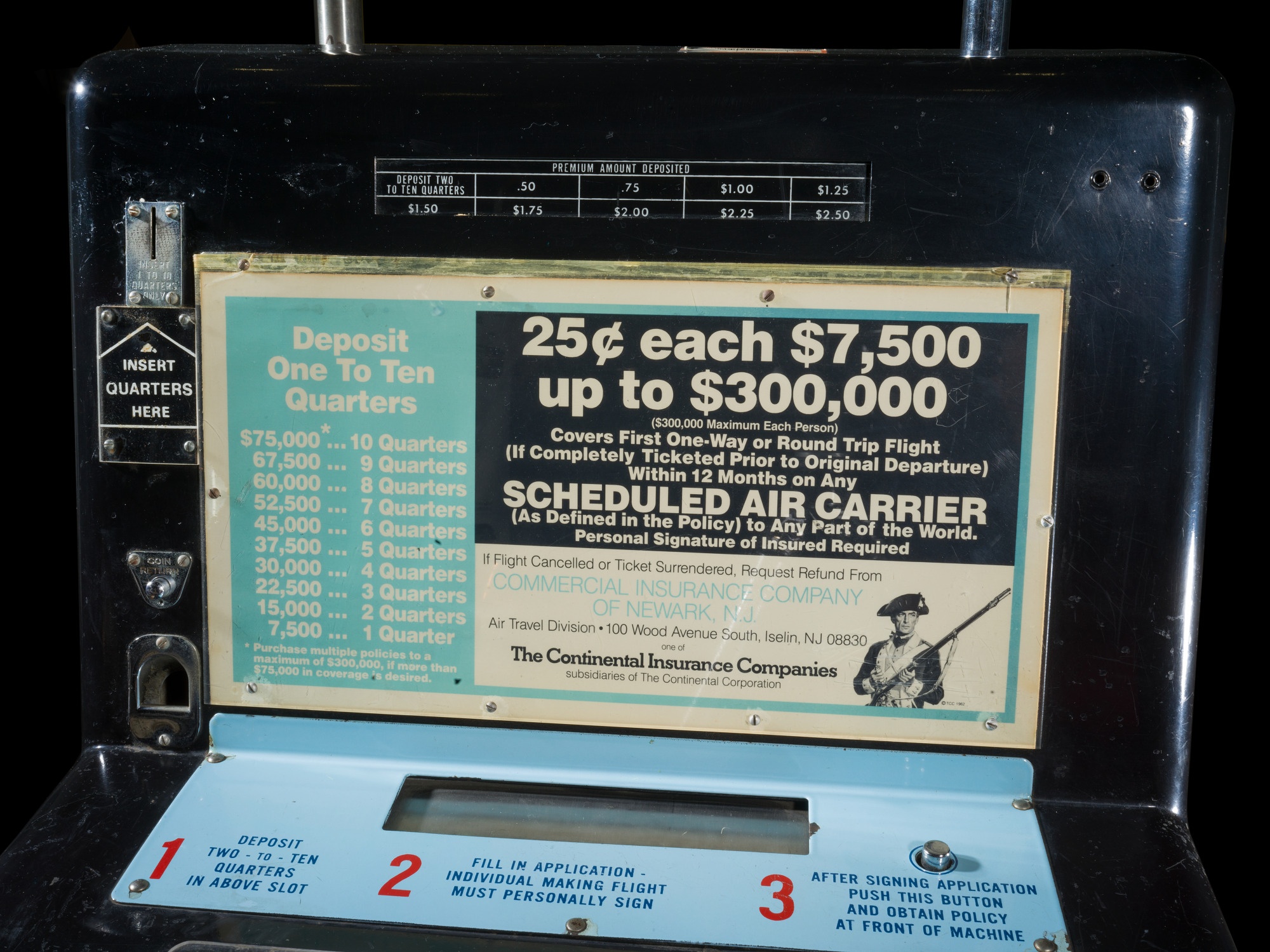
The brilliance of the booths and vending machines was how easy the policies were to obtain. A vending machine didn’t make sure the person buying the policy was who they claimed to be, depending on the insurance company, each quarter gave you a specified amount of insurance coverage. For example, the Continental Insurance Companies had vending machines that offered $7,500 of coverage per quarter, up to 10 quarters. You could then buy multiple policies for the same trip if you wanted to, for a maximum of $300,000 of coverage.
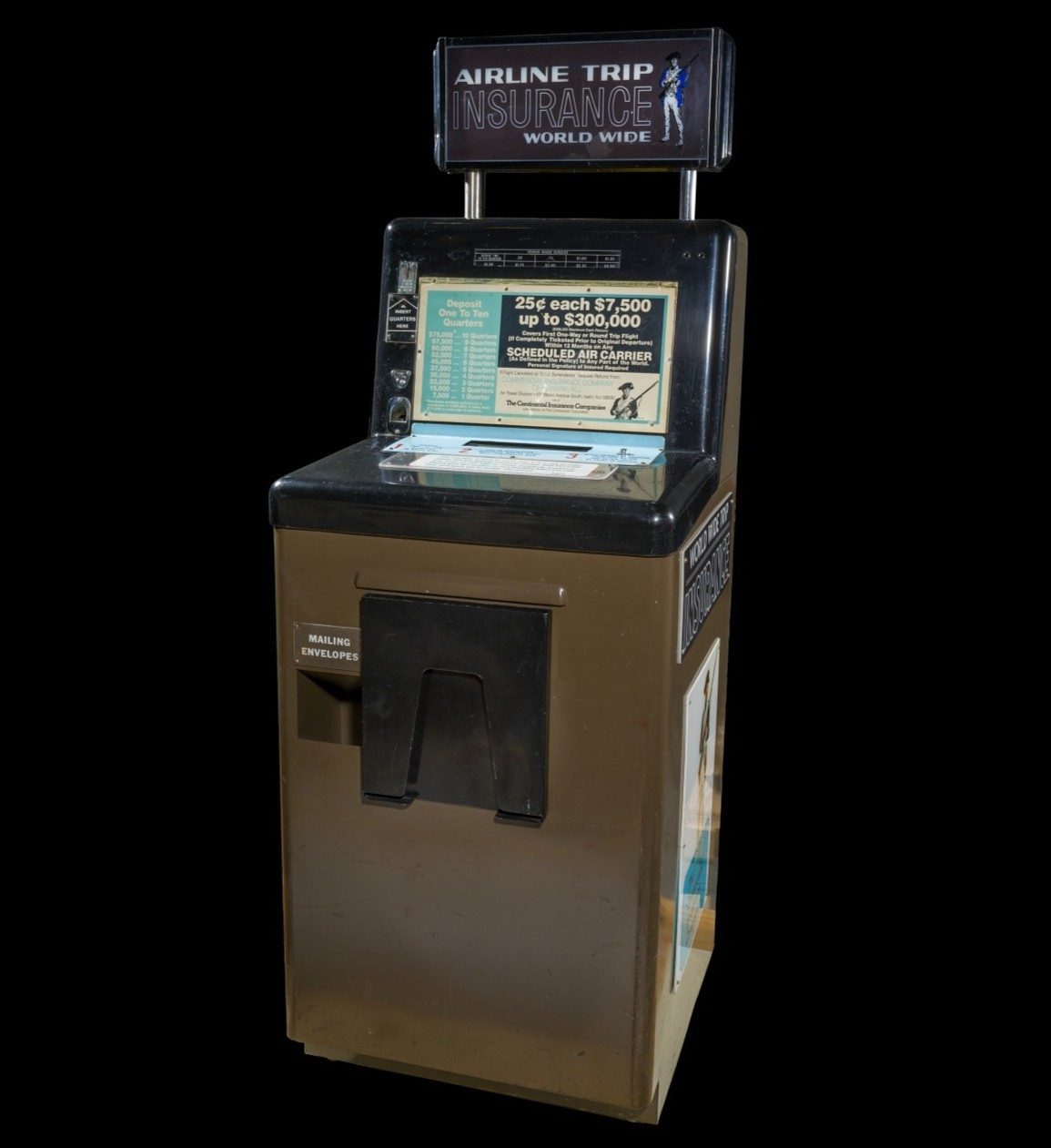
The process was simple. You dropped your quarter in the machine, filled out the application, and then pressed a button to get your policy. You’d then drop that policy in a mailbox at the airport before boarding your flight. These policies had numerous catches. The most important thing was that the policy covered just the duration of a one-way or round-trip itinerary. So, if you got injured or killed in any other situation, this policy didn’t touch it. The insurance also covered only trips on scheduled airline carriers. If you died in a general aviation aircraft, in a flight operated by a “non-scheduled” carrier, a charter flight, or some other situation, you weren’t covered.
Lachs v. Fidelity & Casualty Co. of New York, 306 N.Y. 357 (1954), detailed what the application might say on a policy dispensed from a vending machine:
“I hereby apply to Company named below for Airline Trip Insurance to insure me on one Airline trip between: Point of Departure? ____ Destination? ____ And return ____ Beneficiary’s home? ____ Beneficiary’s Street Address? ____ Beneficiary’s City? ____ Beneficiary’s State? ____ Name of Applicant (please print) Signature of Applicant”.
In Lachs v. Fidelity & Casualty Co. of New York, a passenger purchased flight insurance and would ultimately perish when the flight they boarded crashed. The insurance company denied coverage, claiming that the airline was a non-scheduled carrier and thus not covered. The court ruled that the exclusions of the policy were too ambiguous. This case is a major reason why insurance polices have miles of fine print today.
The business of selling flight insurance would become marginally profitable, and Mutual of Omaha would purchase Tele-Trip Insurance in 1954. Meanwhile, pilots pushed back. Aviation was getting safer practically every year. By the 1940s, Mackinac Center for Public Policy notes, the average number of crashes per year had fallen to around five to 10 crashes per one million miles of flight. By the 1970s, advancements in air safety had gotten the average down to less than five crashes per one million miles of flight.
To pilots, the advertised need to purchase flight insurance was overblown. Yet, that didn’t stop the insurance companies from offering the vending machines and it didn’t stop passengers from scooping up policies.
Just how nutty did it get? Take this paragraph from Insurance Business Magazine:
The trend became so prominent that one 1963 lawsuit alleged, “In recent years air trip travel insurance has developed into a business of tremendous volume. For example, a recent annual report filed by a group of underwriters who handle a large portion of air trip insurance business in the United States, showed total premium collections for the year to be $3,382,561. In the same year the group wrote air trip insurance for $84,564,025,000 and paid out $1,388,839 in losses.”
While insurance companies raked in cash, a lot of it would go to the airports, which took a cut in concession fees. Still, even after the airport got its money, the machines were still profitable for the insurance industry. Aside from Tele-Trip Insurance, another big name in the insurance machine business was Fidelity & Guaranty Co. of New York.
The Dark Side Of Insurance Vending Machines
The business of selling insurance right before a flight also came with an unfortunate downside. Those looking to commit insurance fraud now had a new way to do it. If you insured yourself or a family member before a flight and then blew up the aircraft, you or your loved ones would get paid, provided the insurance company didn’t figure out your scam.
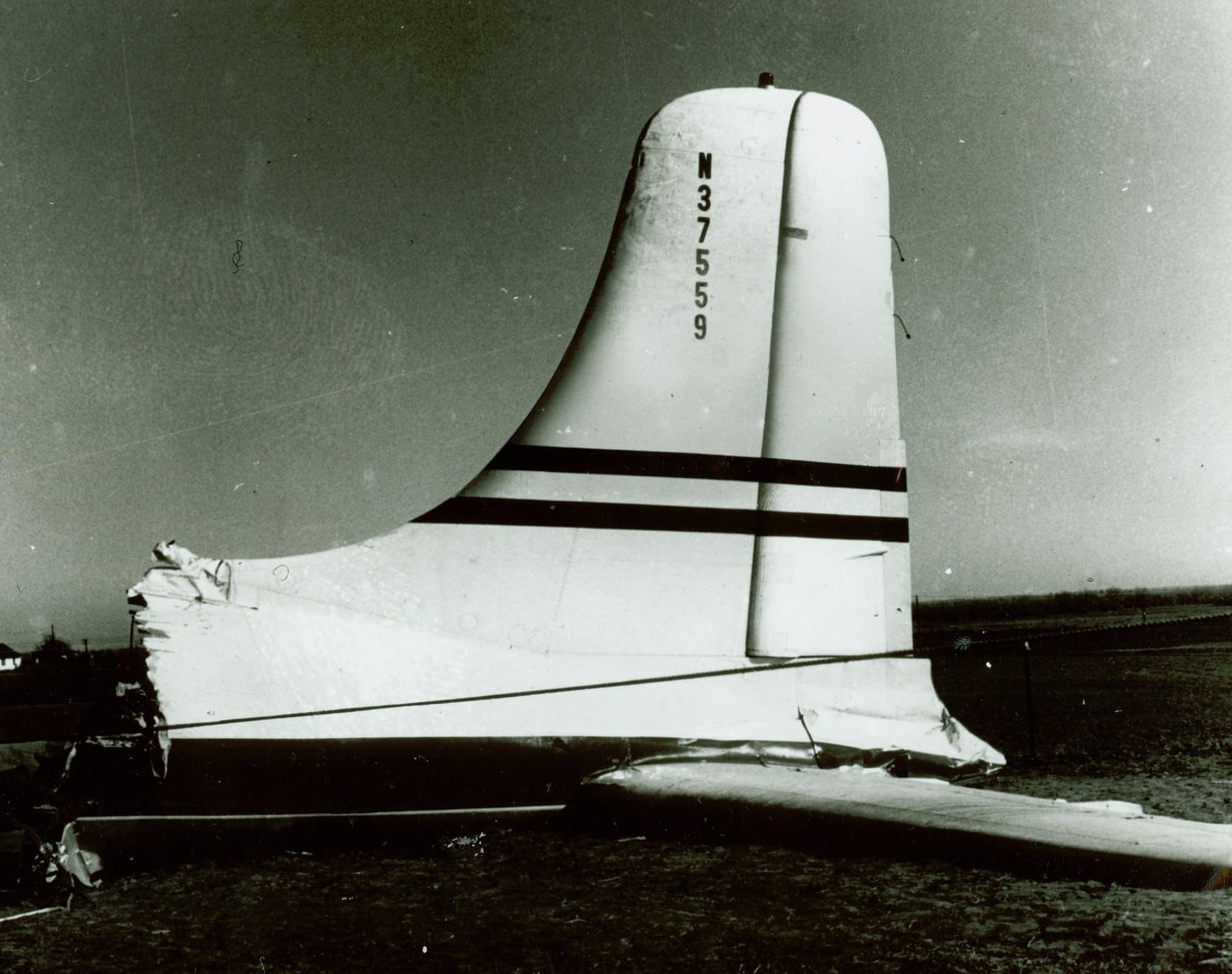
The risks of insurance fraud were well-known even in the early days of the flight insurance vending machine. On November 1, 1955, United Air Lines Flight 629 departed Stapleton Airport in Denver, Colorado, bound for Portland, Oregon. The aircraft, registration N37559, was a Douglas DC-6B with 44 people onboard, and it would never reach its destination. Barely 10 minutes after departure, an explosion rocked the aircraft, and it crashed into a field near Longmont, Colorado, killing all onboard.
The Civil Aeronautics Board, United Air Lines, and the FBI would discover that the aircraft itself was in operational condition, and it wasn’t a mechanical or structural issue that brought the aircraft down. Instead, something inside the aircraft exploded. The investigation revealed that nothing flammable or explosive was reported to have been shipped in the aircraft’s cargo hold. The extensive damage also suggested that no component from the plane itself was the source of the explosion. So, how did something blow up on the plane?

The Federal Bureau of Investigation explains what happened next:
A considerable quantity of personal effects of passenger victim Daisie E. King was recovered form the wreckage and closely examined by the agents. This material included a number of personal letters, newspaper clippings about her family, a personalized checkbook, $1,000 in traveler’s checks, an address list, and two keys and a receipt for safety deposit boxes rented by Mrs. King. These articles revealed considerable information about the background of Mrs. King.
One of the newspaper clippings reflected that her son, Jack Gilbert Graham, had been charged with forgery by the Denver County District Attorney and had been placed on the local “most wanted” list by that office in 1951. From the fact that most of these personal effects of Mrs. King were found on or near her body, it was apparent that she had been carrying them in her personal handbags at the time of the crash rather than in her luggage. Despite careful searching, practically none of the contents of Mrs. King’s luggage was recovered, and only small bits of the suitcases believed to belong to her were found.
Immediate effort to determine the identity of passengers on which large amounts of trip insurance had been obtained revealed that six passengers had a maximum of $62,500 of such insurance; four had $50,000; two had $37,500; one had $35,000; two had $12,500; and two had $6,250. Because of a holiday weekend, however, a complete check of all companies writing such insurance was not possible at once, and among policies located later were three on the life of Daisie E. King.
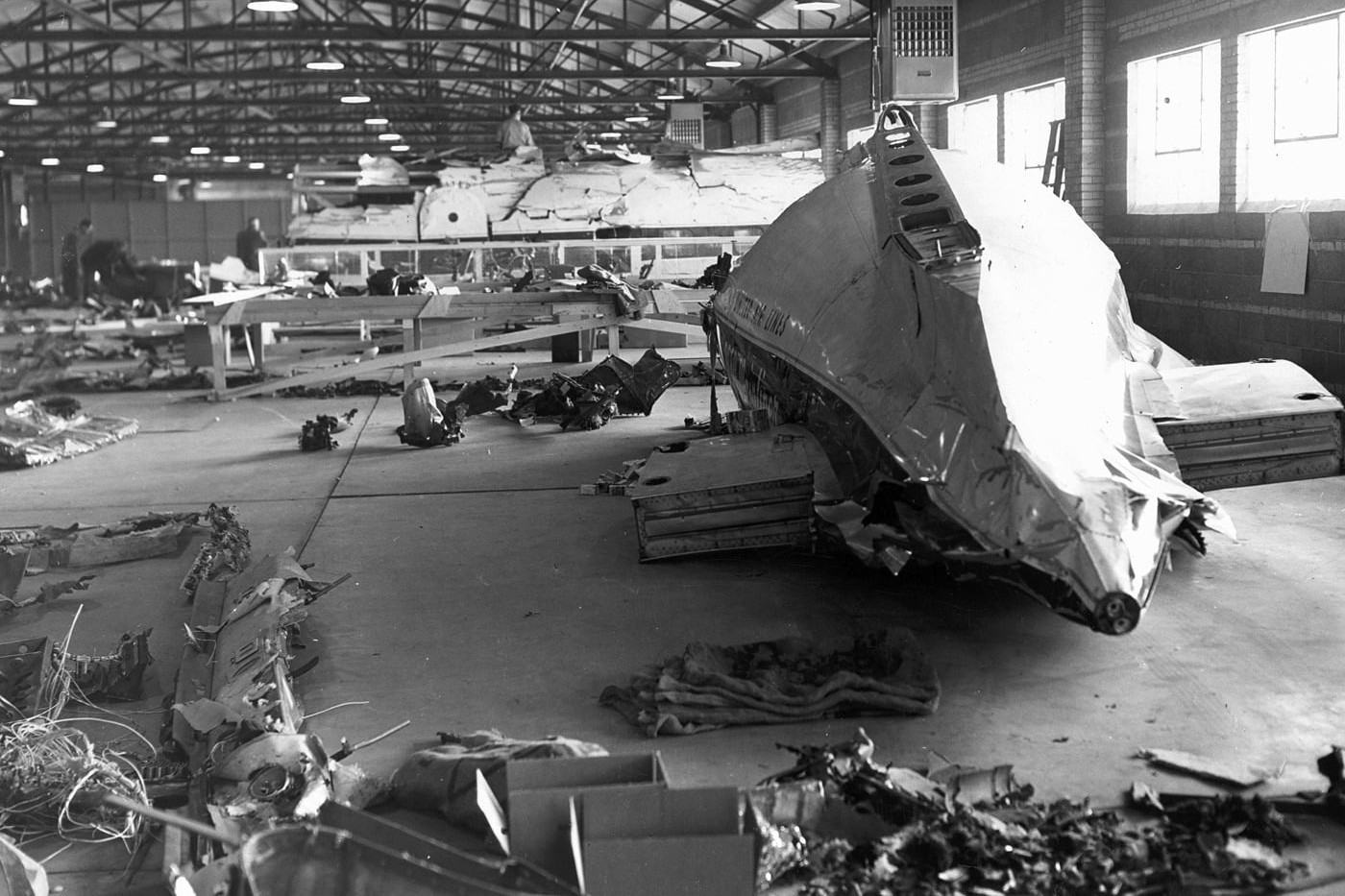
The investigation would find that Graham took out a duplicate insurance policy on his mother valued at $37,500. He would later admit to placing 25 sticks of dynamite into his mother’s suitcase to bring down the aircraft and cash in on his mother’s death. Graham had also insured his mother’s restaurant before blowing that up, too. At the time, the idea of someone intentionally blowing up an aircraft was such an anomaly that America didn’t even have a specific law to cover it. Apparently, Graham had a grudge against his mother for placing him in an orphanage when he was a kid.
The state of Colorado responded to the result of the investigation by banning insurance vending machines in airports.
Graham’s actions would not be the last time someone would use insurance purchased at an airport to cause mayhem. In just the decade following this incident alone, at least three more fatal crashes were caused by people committing insurance fraud by blowing up flights. Of course, insurance-fraud-related crashes would become so infamous that they inspired the novel Airport and the subsequent film.
The Fall Of Flight Insurance
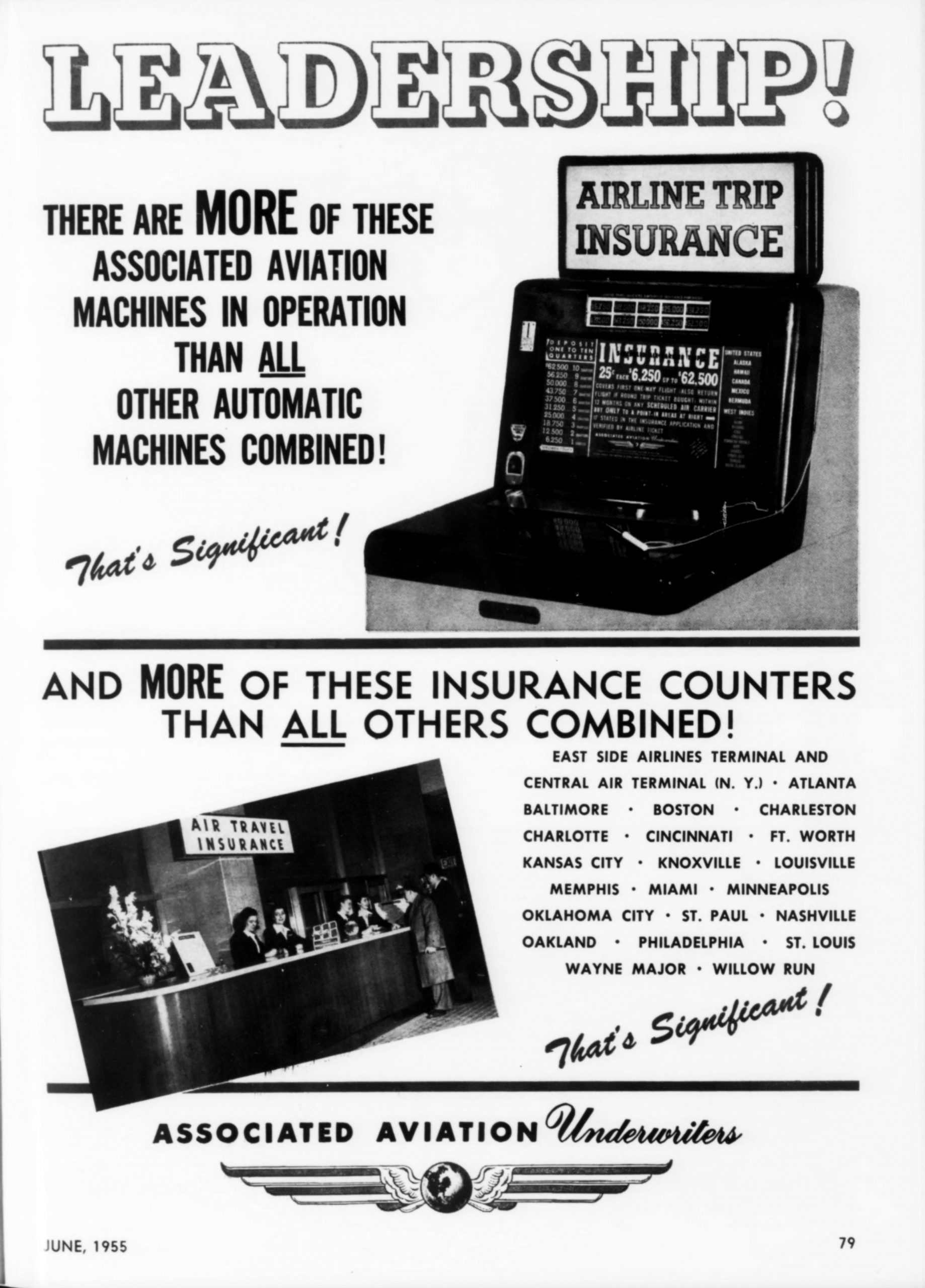
Yet, insurance companies were undeterred and kept selling the policies, anyway. You’d think that the chances of blowing up in an insurance fraud incident would have brought an end to the flight insurance vending machine, but it didn’t.
Instead, as Insurance Business Magazine writes, it was simply the fact that aviation kept getting safer. Insurance companies kept the machines around through the 1970s, but they began to fade in the 1980s as flying became far safer and the public began realizing that flying wasn’t nearly as dangerous as it used to be. Those who still feared flying also found that they could obtain other life insurance policies that covered plane crashes. Likewise, credit card companies also offered their own coverage.
In other words, people simply stopped buying the policies. Those who were scared to fly had no reason to buy insurance at the airport anymore, and everyone else didn’t care. The machines became obsolete. Apparently, you might still find one of these machines in some parts of the world, but they’re certainly an anachronism.
That’s not to say that flight insurance is totally gone. Nowadays, instead of selling you a temporary life insurance policy, companies will sell you “travel insurance,” which might cover injuries, trip cancellations, lost luggage, delays, and other losses. Travel insurance is a multi-billion-dollar industry, too. But, thankfully, it doesn’t come attached to the fear of going down in a Boeing 737.
Another Obscure Part Of History
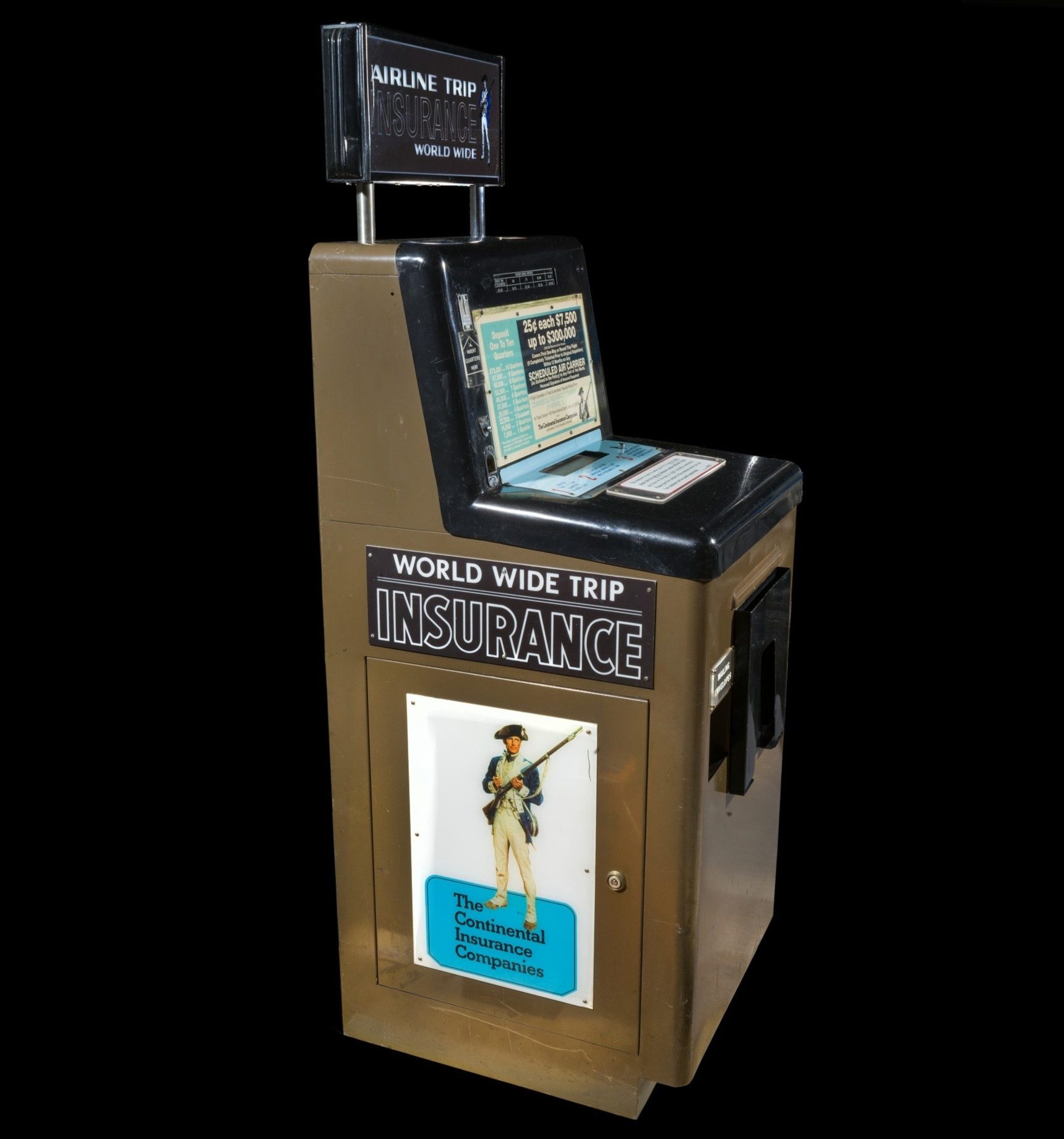
I know this is merely a review for some of our older readers. But, for someone who has grown up in this modern era of aviation? Honestly, it blew my mind. It’s wild to think that some people were so scared of flying that they wouldn’t board a plane without throwing some quarters in a vending machine. But I suppose it made sense. Planes did crash more often back then, and people didn’t want to leave their families with nothing if they died.
The flight insurance vending machine is one of those pieces of history that’s sliding into obscurity today, alongside hits like the payphone, the pager, and the floppy disk. That’s why I’m happy that places like the National Air And Space Museum exist and collect artifacts like these. If it weren’t for people preserving history, my jaw would still be on the floor.
The fact that these machines are gone is a good thing. The next time you board a flight, you can rest assured that over a century of safety innovation will almost certainly get you to your destination safely. Now, airport vending machines can be left to jobs like replacing those headphones you forgot at home.
Top graphic images: Boeing/National Air And Space Museum


I’m pretty sure that machine up there would give you a Biorhythm with your insurance policy.
No horoscope?
People used to be deeply into insurance. These were the same people who bought insurance for being a war casualty where the term “bought the farm” came from. $10k enough to buy the farm the farm boy soldier grew up on.
The Denver news always does a story about 629 on the anniversary. I thought this is one of the better done pieces with the daughter of two of the responders with video of them from previous interviews.
https://www.youtube.com/watch?v=L37xkeNo4t8
They also unveiled a memorial last year in the old Stapleton tower thats now a brewery coffee place with arcade games a some outdoor games. I think they were claiming it’s tower that was there for 629 but was built in the 60s because the old one was too short. Either way interesting place.
Wow, yeah had no idea these existed…so crazy and interesting. Thanks Mercedes!
If you bought a policy and presumably had the documentation on you when the plane crashed, did your named beneficiaries have to depend on the honest business practices of an insurance company to find out that they would be receiving money? Or did the insurance companies just hang onto the money and wait to see if anyone asked about it?
it sounds like you were supposed to put the policy in a nearby mailbox with the address of the beneficiary. Now I wonder if you could hang around an airport waiting for a plane crash…
I’m old enough to remember these, at the time I remember them around 1980, you dropped the form into the kiosk.
Consider adding Zero Hour! (1957) to your list. It’s the basis for the Zucker, Abrahams and Zucker movie Airplane! (1980). Zero Hour! is bad enough to create your own Mystery Science Theater 3000 experience.
As a young-ish person I only know about this from playing Leisure Suit Larry 2!
Under “the dark side”, I was expecting to hear about how the insurance companies lobbied against regulation and advancement that would make air travel safer, and therefore policies less necessary.
The past really is a foreign country, isn’t it?
Perhaps foreign countries will want these as an insurance for legal support once landing.
“Traveling to the United States? Bribe the Trump Administration before you leave!”
Oh yeah. Back in the 70s and early 80s my buddy (who lived about 500 miles away) and I would regularly fly to visit each other and we had a standing agreement that whoever was flying would buy $100,000 in insurance at the kiosk with the other as the beneficiary. It was only a few bucks and made the flight seem more exciting somehow.
I feel like it would make your buddy’s flight more exciting…
There’s a name for such an arrangement.
Goes back some ways
Ah, the good old days when you could pick up dynamite at the hardware store, then buy a couple packs of smokes for a buck and have a quarter left over for your life insurance policy.
Dang, between the 787 door plug blowout, DB Cooper, UAL173, various in-flight passenger freakouts and this, PDX just can’t win.
737 door plug, as if the 737 didn’t have enough of a bad name already.
I’ve always wondered what people were so afraid of. Humanity has a perfect flight record! We’ve never left one of them up there. You can rest assured that you WILL land, in one way or another.
There’s scores of boats at the bottom of the ocean though, maybe boater’s insurance is needed more.
It just depends on whether or not you survive the landing. I know which one I’d prefer! /s
If you’re crash landing at night, be sure to turn on the landing lights. If you don’t like what you see, just turn ’em back off.
Hmm, good point. Note to self: only take flights that land at night.
The airline industry would prefer you use the term ‘involuntary conversion’.
Thing is, when my highly modified hot rod breaks down, I don’t drop 40,000 feet!
No, but you may have to drop 2 feet and start walking!
True enough!
I’ll chance it
I remember this being the basis for a joke in a 70s sitcom. I vaguely remember it was The Odd Couple and Felix was freaking out at the airport so Oscar told him to put some quarters in the insurance machine. I could be switching up which show it was, though.
In the same year the group wrote air trip insurance for $84,564,025,000 and paid out $1,388,839 in losses.
This stood out to me. I always assumed vending machine trip insurance was a scam and they paid out essentially no losses. $1.4 million in paid losses is a small fraction of the $84 billion in policies they wrote, but that still means these policies paid out semi-regularly. I guess it isn’t too surprising, though. As a kid I remember reading about a US airline crashing maybe once per year. Crashes were rare but regular occurrences. It is amazing how much air safety has progressed in 40 years.
Yeah, people may say there’s a lot of airline crashes. But a casual look at how many planes are in the air at any given time really drives home the reality of how safe they are overall.
Right before that they mention the insurance companies took in $3.3 million in fees, so I was surprised they were paying out 39% of what they were taking in. Even in bad times for aviation safety I would have assumed it was almost all profit.
I wonder what kind of flight was their least profitable. I’d guess smaller planes.
Four fatal US commercial crashes in 1950, and 5 in 1960. And far fewer planes were flying then.
I don’t remember vending machines, but I remember that the travel agents, gate agents and the like would push forms on you to fill out.
wow…memory unlocked. I completely remember that Continental insurance vending machine at the departure gates in Allentown, PA. Sidebar memory would be the chapel located on the second floor of the main terminal.
airport chapels still very much exist. If you are abroad on a layover and don’t have time to leave the airport, they’re about as close an experience to local culture as you’ll find.
I remember sitting in the row of coin operated TVs watching whatever crap was on at the time while my grandmother filled out one of these every time we flew (my grandfather was chief engineer on an oil tanker and we would often fly to see him)
Those were kind of neat but today seeing a screen on something like a chair would mostly be “ugh ads”
Normally when you sign any kind of legally binding agreement like an insurance policy you have pages and pages of tiny font conditions to slog through. Did those not exist then? Was it as simple as it pays if and only if you die?
If so I think the ratio of $30,000:$1 ($7,500 per quarter) and the profitability of gives you some idea of how likely you were to die on that flight. By the time of the lawsuit in 1963 that 30,000:1 payout ratio had dropped to 25,000:1 with $1 dollar paid out per $2.4 taken in for total odds of about 1 in 60,888 of being killed on that flight.
Great question! One of the problems with flight insurance policies was that their exclusions were often ambiguous. What was a “non-scheduled” carrier? Some insurance companies weren’t clear on that.
One of the lawsuits that happened because of that ambiguity is part of why insurance policies have so much fine print today. I just added an extra paragraph to the story to explain that. 🙂
Thanks. That helps.
One other thing though:
“The business of selling flight insurance would become marginally profitable”
A payout of $1 for every $2.4 taken in as per the numbers quoted in the 1963 lawsuit sounds quite profitable to me.
From the reports I looked at, it was technically massively profitable, but airports took a cut in concession fees from the machines (just like they do today), reducing the ins. co.’s margins. I guess that means both the airports and the insurance companies benefited from people being scared to fly.
That makes a bit sense since those kiosks increased people’s perception of the dangers of flying and could, at least in theory, cause loss of business as people decided to take ground based transport instead. And those kiosks did take up a bit of floor space, required security, etc.
The question was how big a taste did the airports take? A gross profit of 140% is a pretty good starting point. Then there’s the question of how creative the insurance accountants were. There’s lots of ways to look poor for the tax man while still paying for yachts and caviar.
Also plane crashes are rare, but usually dozens or hundreds of people die when they happen. While I have no idea what percentage of passengers would buy this, insurers generally don’t like having to payout tons of money all at once (hence why natural disaster insurance is usually very hard to get).
“insurers generally don’t like having to payout”
FIFY.
If random, large payouts are a problem the solution there I think is to diversify with various other policies to bring in more revenue and keep the claims department busy between infrequent plane crashes and natural disasters.
You gotta read the fine print, my friend.
Only covers you for a limited time.
Quite costly for that.
It’s up to you to decide whether there those numbers indicate there is enough value to the policy. To rational folks probably not. To a lottery player maybe there is.
On a long or high risk flight, it might be worth it to someone, especially as the cost is low.
We paid more going to Europe to take a low risk flight, and I think my parents flew separately on the theory both planes wouldn’t go down.
I think I mentioned somewhere I took trip insurance through the airline once, just enough to guarantee a return flight.
Got a rider for life flight, due to destination, that was very fair since it was based on the trip insurance.
Might have been a terrible deal if I had insured for a complete trip disaster.
My last flight I got bumped by TSA at Sfo.
Took 18 hours to get home with an interminable layover somewhere middle of the night.
Makes me wonder how long they could have delayed me, if they didn’t have seats?
I wonder if any policies taken out on MH370 ever paid off.
Good question
I had a bad experience in the 80s and now hate flying (loud bang on take-off and returned to airport with fire trucks lining the runway). I’ve flown maybe 3 times since then. I’m guessing planes don’t have the smoking/no smoking lights anymore?
And I grew up on the disaster flicks. Planes, earthquakes, all the good stuff.
They actually do still have no smoking lights above the seat with the seatbelt sign. Ive flown on older planes that still had ash trays and I’m in my early 30s.
I flew a Lufthansa flight back when they were the last carrier to still allow smoking. I was about mid-cabin and couldn’t see the front of the plane before we rolled out of the gate. It was like my dad’s stories of Smoke Filled Rooms and how he used to come home for lunch, shower and put on a clean suit.
I’m in the wrong half of my 30s, and I miss real silverware on planes. And actual meals.
They are still required to have ashtray in the lavs, for the reason ppl do somewhat regularly try to smoke in there and they’d rather someone put their butt in the ashtray than the trashcan full of paper towels.
I strongly rely on probabilities to ease any fears. The gut-reaction is understandable but the odds of a problem are miniscule.
But I still understand the unease. I was on a redeye trans-Pacific flight a few years ago and awoke in the dark and my half-asleep brain registered where I was: in a dark tube, moving at 500mph 6 miles above a frigid ocean hundreds of miles from land, beyond any and all help if anything should happen, while the turbo fans quietly cycled up and down.
And my brain said “what the FUCK are we doing up here?…and WHY didn’t you buy some INSURANCE?”
they’ve been mostly replaced with wifi lights on newer or refurbished planes.
I remember when the whole plane was “smoking” and the “no smoking” section was a couple of rows in the back.
Watch the Mayday series.
Some of the best, everyone survives.
The plane hit by a missile that was landed with part of the wing torn off is impressive.
The FedEx hijacking too.
I mentioned a crash film where they repaired the plane, and it may be Five Came Back.
Descrptions are too vague for me to be certain.
From the thirties.
Hare Krishnas, Skycaps, armrest ashtrays, luggage lockers, and white courtesy telephones…
There’s a whole collection of former air travel totems to be revealed to modern passengers.
Hairy fishnuts?
Pear pimples for hairy fishnuts!
Also, red carbon paper stains all over your fingertips. If you know, you know 😉
I think the last vestige of carbon paper is duplicate checks, but that isn’t the same.
don’t forget the “headphones” that were really hollow plastic tubes that carried sound from the speaker(s) in the armrest.
They were stethoscopes, essentially
That peak safety era we all enjoyed is now regressing. With current cuts to the FAA, we have less safety inspectors and less air traffic controllers. Cracks are already forming. But ‘the plan’ is on schedule. Let’s show ‘um all how inefficient the government is. Let’s keep cutting back budgets. See! It proves we need to privatize everything! Yes, that’s sarcasm.
Are these proposed cuts that haven’t happened yet? My quick search shows the FAA budget increasing every year except 2023- to 2024.
Well there are a lot of people who want to bring back “the good old days” so….
We’re clearly on the way, including bringing back plague.
What they don’t remember is, in “the good old days” when I was born in the US, the top marginal income tax rate was 91%.
And look at all of the wonderful things the country was able to achieve with that 91% tax rate, during the ‘good old days’. That part has my vote for a come back.
You got a point, though the Korean War was one of those “wonderful things”. In 1950, the 91% rate was for income >$200K. That’s $2.74M in 2026 bucks.
Oh not that part.. progress and all..
I’m Ok with bringing back the good old days. No Citizens United, higher taxes on the rich, trust busting still in effect.
I would be all in. I think most who want to make america again mean unearned power for some and no power or equality for others.
Old days? Can we just go back to 2004 or so before social media?
My grandparents took my brother and me to Ireland in 1978. I remember them purchasing policies from a vending machine at the airport. I wasn’t scared of flying until that moment. Added bonus: we flew on a 747. I think we were the only kids on the plane. They let us talk to the pilots in the cockpit, and go up the spiral stairs to the 2nd floor lounge. Great memory.
Parts of Ireland were not too safe in 1978, and it was reasonable to expect an airliner flying in or out of anywhere in Great Britain would be a bomb target.
The first time I flew was in the late ’90s, yet I somehow knew flight insurance existed. I always wondered how the family would know you purchased the insurance if you just got a paper that you took on the plane with you. God knows the insurance companies weren’t going to seek out claims. Thanks for mentioning that they would mail the policy to family before boarding. Now I know. Also, I guess your family might have gone to the gate with you in those days since you didn’t have to have a ticket to get through security.
Thanks for mentioning that they would mail the policy to family before boarding.
Suuuuure they would. I wonder how many policies got “lost in the mail”.
Turns out the “mail slot” was a shredder?
That or they mailed the policies on the same flights that carried the policy holders.
With the state of ATC and the fact that it’s known that the only American commercial aircraft manufacturer left is perfectly fine with cutting corners to increase profits, maybe we all should just fly less.
It’s almost like 75 years of industry consolidation and governmental incompetence is causing a problem or something…
Actually there are far less people flying.
They are planning on demolishing half the airport here.
FedEx is using half of the in service gates.
When they raised prices they cut flying and increased profits.
But generations have been trained to never fly.
I’m old enough to remember these kiosks at the airport. Along with decks of cards, crayons and other misc. swag available on flights. Also the ridiculous smoking section. And perhaps the most dated thing . . . Hare Krishnas handing out little flags and asking for donations in the terminals.
Old enough to remember almost all of that. My only experiences with Hare Krishnas at airports were the many times I’ve watched Airplane.
That movie is still amusing. The actor who played “Joe Isuzu” was one of the Hare Krishnas IIRC.
Roger, Roger. What’s your vector, Victor? You have clearance, Clarance.
The last time I saw them at LAX, I was about 10 years old. They disappeared not too long after that.
I’m also old enough to remember a few forlorn insurance kiosks still at airports in the 80s. The Hare Krishnas had dispersed by then, though.
And the pilot gave each kid a little pair of wings.
A few years ago my kids received some of that old school personalized treatment. We were boarding and I pointed out the cockpit to them as we went by. One of the pilots saw this and came out to invite them in to look at the controls, etc. Then a flight attendant brought them the wings. We were just economy tickets. Very cool of them. Delta, if it matters.
Delta seems to have its shit together vs the other major U.S. airlines but the bar is very, very low.
Agreed, at least a few years ago.. American, the opposite.
United also trending in the wrong direction .
Delta used to have the shortest overhaul and service intervals so I flew Delta when possible.
I miss the Krishnas in a way. I remember being approached by one, a young stunning girl in a flowing outfit, as a young teenager. She was quite attractive. She was clearly looking at recruiting. My mom came over and grabbed me forcefully, giving her a bad look.
Swag, yeah, I flew to Europe in … 96? got a little bag with all kinds of “comfort” items, socks, sleeping mask etc.