

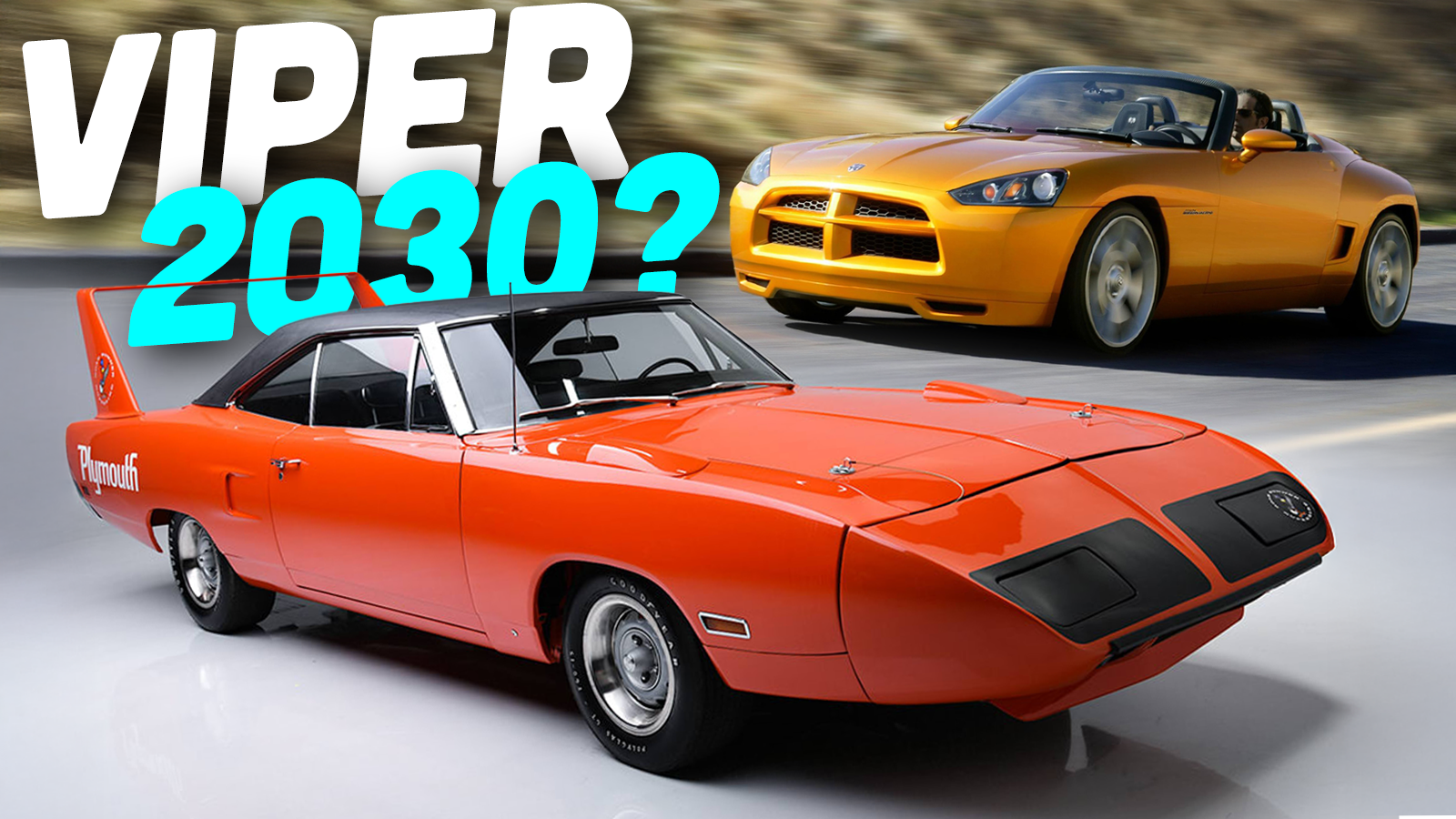
The Dodge Viper was, for about 26 years, one of the scariest cars on the road. From its slithery styling to its charismatic V10, there hasn’t quite been an American sports car like it before or since. But America has been without a Viper since 2017, and that’s depressing. Dodge seems to be suggesting something is going to change, as it just teased something that looks high performance coming in about 2030. This new car could also be more or less Dodge’s take on the Mazda MX-5 Miata formula. Or it could be a high performance muscle car like the Superbird. Let’s look at where Dodge’s most famed sports car came from and where it could be going.
Stellantis just announced one of the most ambitious turnaround plans we’ve seen in a while. The automaker says it’s going to spend $70 billion to turn the corner, and the plan involves launching 60 new models by 2030, nine of which will be priced under $40,000. If you, like me, have lost track of time, that’s just four years from now!


Stellantis really wants to breathe some life into the brands that have seemingly been abandoned. Chrysler, which currently has just one car, is set to have four by 2030. Ram is getting a compact pickup truck, a revival of the Dakota, a Ramcharger SUV, and even a second ProMaster van! Then there’s Dodge, which will be getting a GLH.
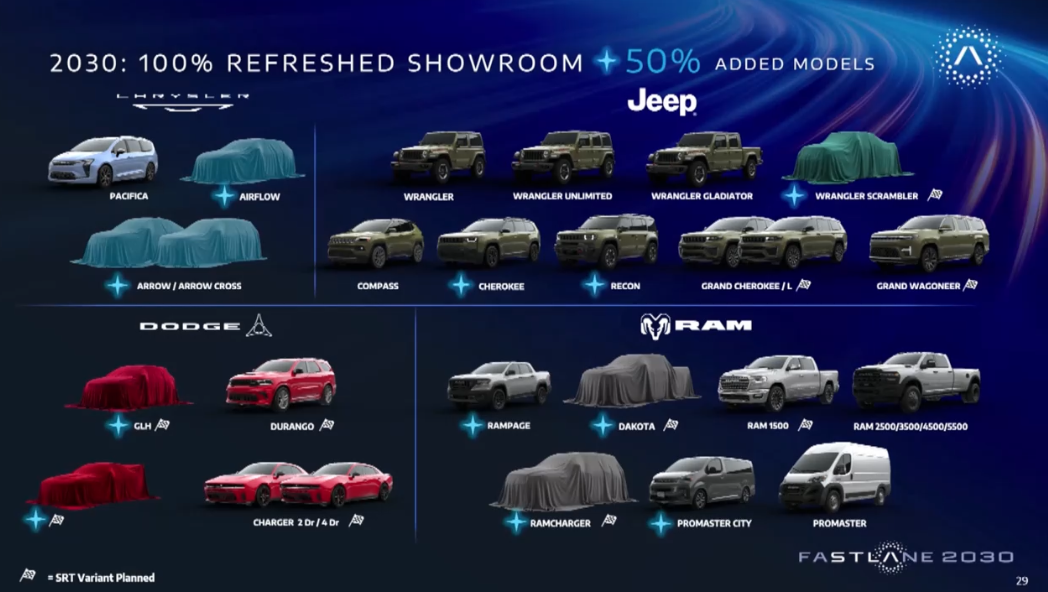
But wait, what’s this? Dodge seems to be saying that it has an unnamed sports car in the works. Dodge CEO Matt McAlear has been talking about his desire to see a sub-$30,000 “entry-level halo” car in the Dodge lineup. Are we about to get a Dodge Miata? Is the Viper coming back in an affordable form?
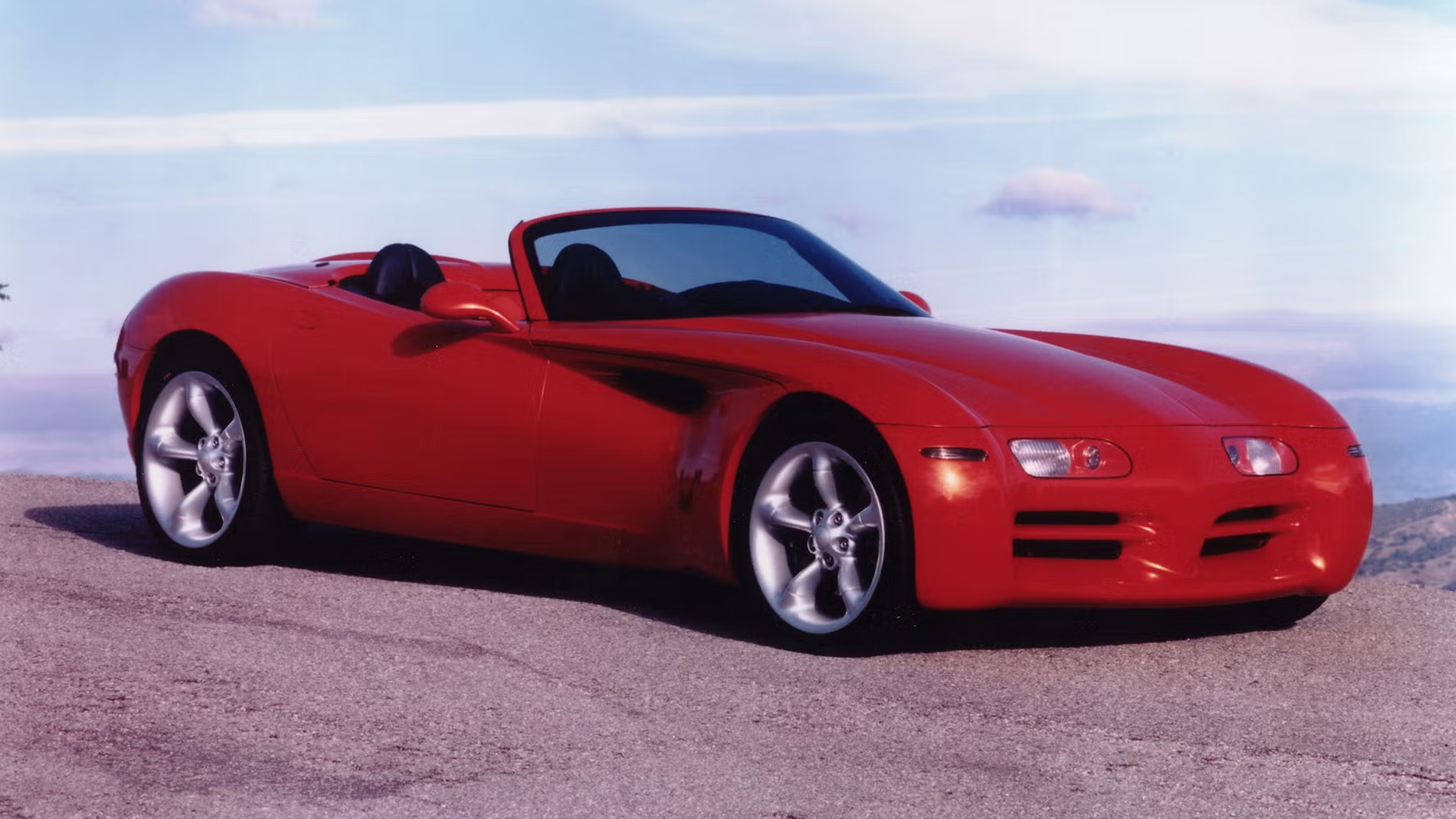
Update: 1:20 CST: Dodge has confirmed that the new car will be a “hyper muscle car” called the Copperhead, and that it will be based on the Charger. This vehicle, or at least its 3D-printed buck, is reported to have some styling cues from the Viper. But it is not a Viper. Car and Driver has the scoop.
Pictured below is the 1997 Dodge Copperhead concept from 1997.
The original story continues below.
Dodge Appears To Be Working On… Something
Sitting all by itself in the bottom left corner of the Stellantis Fastlane 2030 presentation is a new Dodge product. It’s shaped like a sports car, and Stellantis says that an SRT version is planned. However, this vehicle was never actually mentioned in the presentation. It doesn’t even have a name yet. What is this car?
One possibility is that Dodge is planning on making a sort of Viper-inspired affordable sports car. Back in early 2025, The Drive spoke with Dodge CEO Matt McAlear. When asked about the Viper, he said that it was “One of my favorite cars.”

Then, he brought up something fascinating when asked if there was a need for a halo car outside of the Charger. McAlear said that there is a market for an entry-level halo car and a flagship halo car. Things got only more exciting from there. From The Drive:
With that, McAlear introduced an entirely new element to the conversation—the prospect of an “entry-level halo.” So of course, we pressed. What would that even look like from Dodge?
“I don’t know what I’d compare it to,” he said. “I think there’s inspiration in seeing what some of the powersports companies have done. Not only the crazy side-by-sides, but the three-wheelers, the Slingshots, I think there’s something there.” “Everyone has so many hobbies these days, they want to spend their money on so many different things,” McAlear continued. “It’s tough to be all-in on one thing, put all my chips in one basket and say, ‘I gotta have that car.’ “It’s great for those who can afford it, but not all of us can or want to do that.”
[…]
“I think there’s some kind of entry-level, back to that sub-$30,000 mark,” he said. “I think there’s a market for people who just want to have that weekend car again, who would like a Viper, but don’t have that $100 or $120K. Something that doesn’t need all the safety features, doesn’t need the heated seats. Just a car.”
McAlear never confirmed development of a Viper or an affordable Viper-like car, but it was clear that he’d love to see something like it in the Dodge lineup. This wouldn’t even be the first time that Dodge has gone down this path.
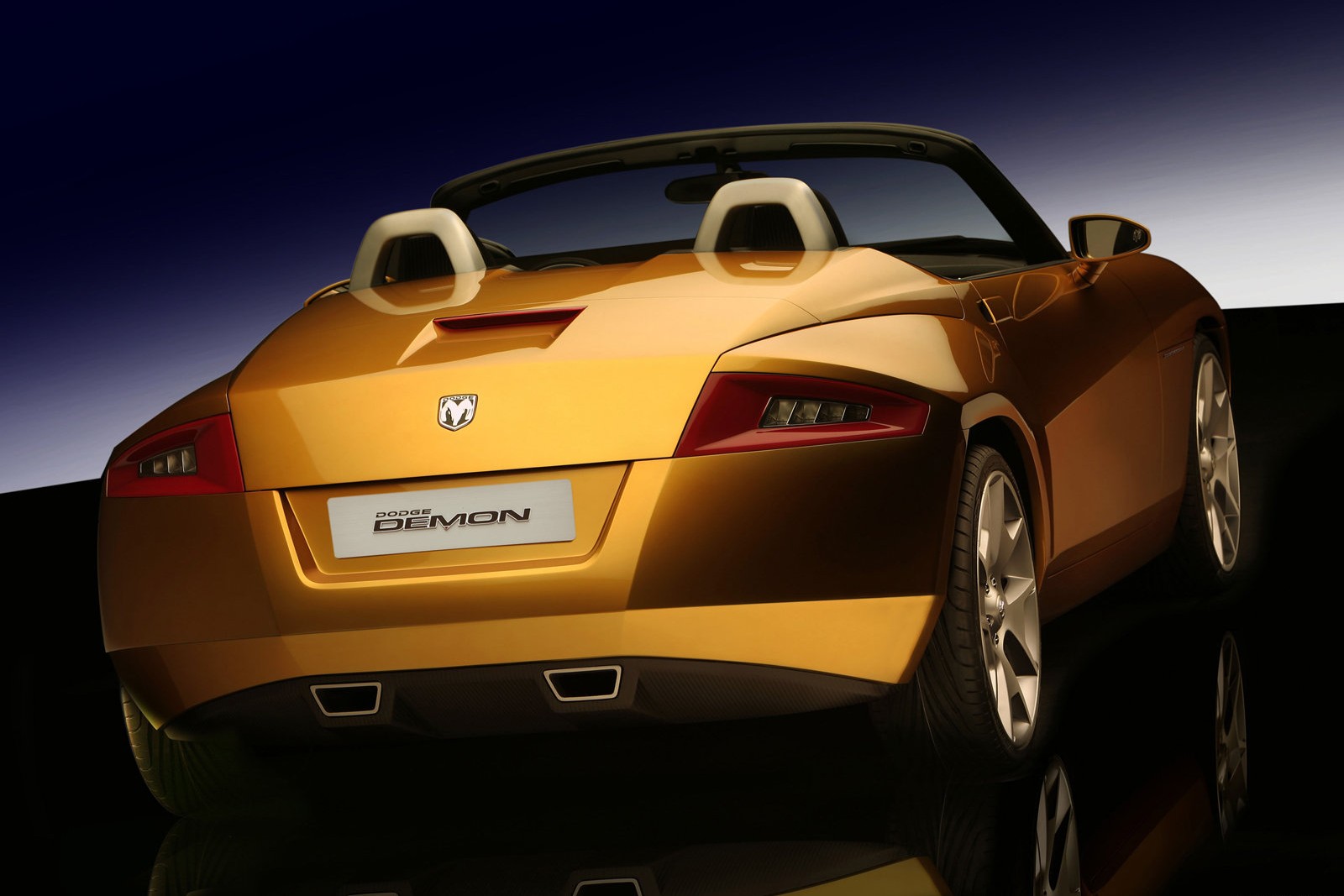
In 2007, Dodge teased the Demon concept car. The Demon was about the size of a Mazda Miata NC and featured a 2.4-liter four with 172 HP and 165 lb-ft of torque. Had the Demon gone into production, it would have gone up against the Miata, the BMW Z4, the Pontiac Solstice, and the Saturn Sky.

Dodge had also considered an even smaller sports car. The 2004 Slingshot concept was built as a car that could have been pitched to young buyers as a compact sports car. It featured a rear-mounted turbocharged three-cylinder engine with 100 horsepower and a six-speed automated-manual transmission. In reality, the Slingshot was little more than a rebodied Smart Roadster.
If Dodge wanted to get really weird, there was also the 2009 Dodge Circuit EV, which was a hot orange Lotus Europa S with a battery pack and Dodge crosshairs on it.

So, Dodge can reach into its bag and pull out any idea here. Dodge could build another Viper, or it could make a Miata-like sports car with a sort of nod to the Viper. Or, it could do something else entirely. Sadly, Dodge is keeping its trap shut for now, so we have no idea.
However, it does appear that some sort of sports car is in the works. Given the state of the rest of Dodge’s lineup, this could have the potential to be Dodge’s most exciting car in years.
Why A New Viper Would Be So Cool

As Hagerty writes, legend has it that certified car guy executive Bob Lutz got the idea for a Dodge sports car after driving his Autokraft Mk IV Cobra replica. Further inspiration came from Carroll Shelby, who reportedly told Lutz that the Shelby Cobra deserved a reboot. Lutz was Chrysler’s president of operations in 1988, and at the time, Chrysler was known for slinging K-cars and was developing future LH sedans. But Chrysler didn’t really have anything to get people pumped.
As the story goes, one day, Lutz and design director Tom Gale encountered each other in a hallway and dreamed about “what if?” Lutz thought that building a modern Cobra could be a tool to excite both the workers within Chrysler and the public. A new Cobra could show the world that Chrysler could build more than just K-cars. Apparently, this excited Gale so much that he rushed back to his studio and started forming some clay.
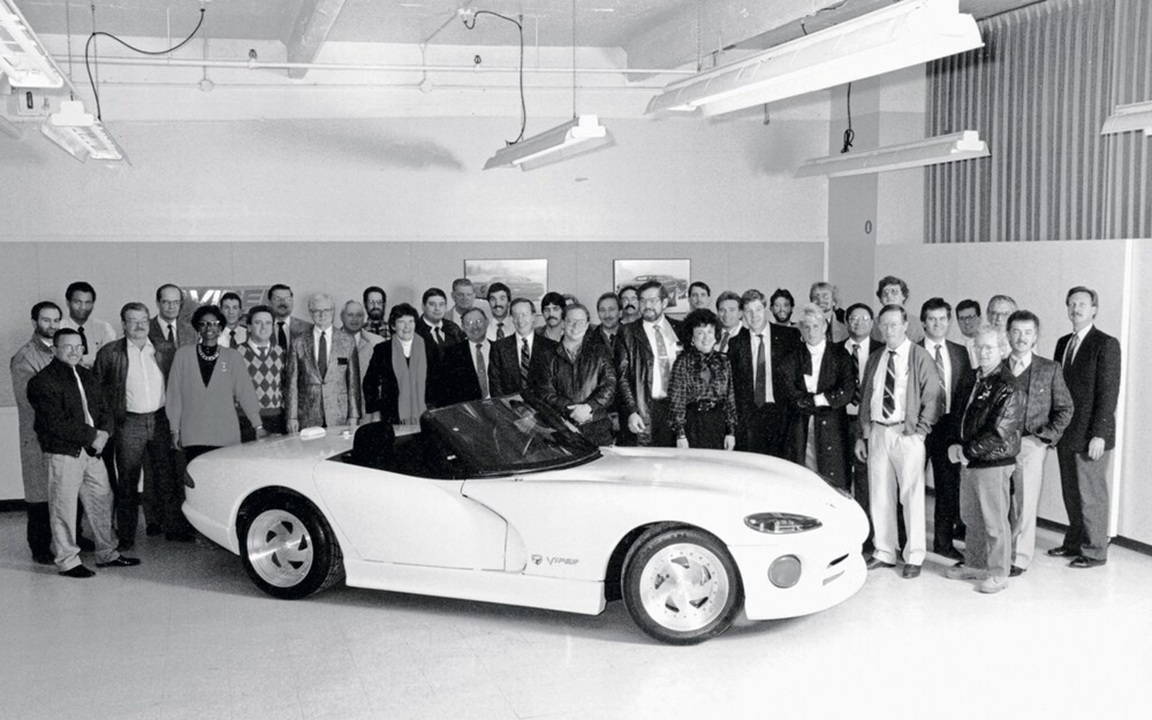
Gale managed to produce a concept car in only a few months, which went on display at the 1989 Detroit auto show. The concept Viper at the show had half of a Chrysler LA V8 with six extra cylinders welded on, creating a V10. Metalcrafters had taken the clay body and made metal panels out of it. Meanwhile, hot-rodder Boyd Coddington gave the concept car a chassis. The Viper concept was rough and apparently barely ran, but it was a smash hit.
As Car and Driver writes, Lutz thought that Chrysler had the tools to make this sports car happen on a budget. Chrysler had Lamborghini in its portfolio and was already developing a V10 engine for heavy-duty Dodge Ram trucks. This sports car could even raid the parts bin of the Dakota for suspension parts. Lutz formed a team with Gale, lead truck engineer François Castaing, and Carroll Shelby to bring the sports car to life.

Chrysler CEO Lee Iacocca wasn’t sure about spending $80 million on a sports car that might not make a return on investment, but eventually greenlit the idea. A crack team of 85 engineers who were also largely racers was assembled to make the car a reality.
The heart of the Viper, its 8.0-liter V10, was developed with help from Lamborghini, and sported an aluminum block, iron liners, aluminum heads, magnesium valve covers, and forged internals. Some enthusiasts have long said that the Viper has a “truck engine,” but it doesn’t. The Magnum V10 and the Viper V10 aren’t the same engine even though they might have started at the same place. The Viper’s V10 was a work of mechanical art, too, with 400 HP and 465 lb-ft of torque on tap, all reaching the rear wheels through a five-speed Tremec T56.

The original Viper went on sale in 1992, and it was an instant legend. The team was so obsessed in making a pure sports car experience that everything else took a backseat. The only safety features in an old Viper come from your brain, there aren’t exterior door handles, and you don’t even get windows that roll up. Comfort? That’s cute. The pedals to operate the thing had to be offset to the left of the driver seat just to make everything fit. Dodge was kind enough to give you a fabric roof, but even that was basically an afterthought.
The Viper was like a concept car that you could buy with tri-spoke wheels, a side-exit exhaust, and looks like nothing else. The original Viper would gain a reputation for being unruly, unforgiving of mistakes, and generally uncomfortable. But who cares when you get a car that looks like a striking snake and sounds so epic?

Over time, the Viper lost its leg-cooking side pipes, gained a solid roof, and even got operable windows, yet, it continued to get lighter, faster, and louder. Vipers even went racing and earned class wins. The Viper only got crazier over time, eventually getting an 8.3-liter V10 with 500 HP on deck, the side pipes returned, and later, it even got 600 HP.
When the Viper was in its final years in the mid-2010s, it had become the flagship of the SRT brand and fired 645 HP and 600 lb-ft of torque from an 8.4-liter naturally aspirated V10. This was a car that hit 60 mph in the 3-second range and had a top speed over 200 mph.

When the Viper died in 2017, it didn’t go out in a sad funeral, but standing proud. The Viper was never a hot seller, with 31,850 examples going home over its 26-year run. But it did go out as an American icon. The Viper was such a legend that its engine didn’t even stay in its own body. Viper engines have been bolted to Ram trucks, more than one motorcycle, a British sports car, and even a Zagato.
Personally, I would love to see a Dodge Miata-like sports car with Viper-ish styling or something like that. A Viper has been one of my dream cars ever since I was a kid, but they hold their value so well that I don’t see myself buying one anytime soon. But I could swing a Dodge Miata. I suspect an affordable Dodge sports car probably has a better chance at being profitable, anyway.
Wait, Maybe It’s A Muscle Car?

You know what’s also profitable? Just make it a muscle car. Dodge already has one in the form of the Dodge Daytona, and there’s something interesting when you blow up the high-res version of the drawing. Look at that image and tell me you don’t see a giant wing. While none of this could mean anything and Dodge is just having fun with us, could you imagine something like… this?

While Plymouth is gone, the company doesn’t seem to have an issue with swapping badges around (see: Ram Dakota). The original was designed as a ridiculous homologation special to help the company compete in NASCAR. This is why you see the incredible body kit that’s mounted to a regular Plymouth Road Runner’s body. It’s also possible that it’s a Barracuda under there, although the wing feels more Superbird.
We will be watching Dodge’s next moves here. Is the Viper or something inspired by it coming back? What about a muscle car?
[Ed note: This post has been modified from an early version that didn’t include the muscle car, high-res image – MH]





I a bit late to the show,…
But in the end it’s just another snake.
Stellantis announces eight new vehicles to be cancelled by 2030
At its annual investor day, Stellantis unveiled eight new highly desirable vehicles, ranging from entry-level sports cars to heritage-embracing SUVs, that it will cancel by 2030.
“We’re continuing the tradition of exciting products and engineering innovations that nobody will ever be able to buy,” said the CEO, “We hope that new consumers and long time fans alike will join us on the journey of press announcements, concept reveals, and eventual cancelation due to economic downturn, government bailout, or corporate restructuring.”
All eight soon-to-be aborted product lines are expected to provide decades of content for enthusiast websites speculating about what could have been.
“While none of this could mean anything and Dodge is just having fun with us, could you imagine something like… this?”
For Dodge? No.
But I COULD imagine something like THIS:
https://moparblog.com/wp-content/uploads/2013/05/Joe-Dirt-Daytona.jpg
I needed a good laugh this morning, and I literally LOL’d at this.
Hang on a minute! The Viper didn’t just bring home class wins. It won the Daytona 24-hours OVERALL in the year 2000. I’m surprised that none of the actual Viper owners mentioned this.
https://youtu.be/wfZoexh6NOk?si=KWudNKCUIlkkKnHK
Wait a minute. Rewind that. What’s that GLH? A real hatchback?
We can hope!
The dream fof the 90s is alive
in Portlandat Dodge!I’d like to see an MR2-type vehicle with their new 330hp Hurricane 4. Put an Alfa badge on it and call it the 4C overseas.
Wow if they bring back the Copperhead that has to be one of the longest time frames from concept to reality. Its been 29 years since the concept was unveiled!
“Entry-level halo” seems kinda like an oxymoron to me, but I’d be down for some sort of Miata/Toybaru type action. Lord knows there’s a fair few younger dudes who are either single or at least have no kids, so a usable play toy ain’t a bad idea.
In my interpretation of the term, a flagship vehicle isn’t necessarily the most expensive or largest item, but rather the most important and most representative of the brand’s identity.
The flagship’s relationship to the rest of the brand’s range is that everything gets pitched as “Like a (flagship item), but (insert attenuating circumstance)”.
Apple’s flagship product is the iPhone, everything else is “like an iPhone but bigger/more powerful”.
The Cooper is Mini’s flagship, because it’s the most Mini of the Minis. Mini portrays itself as a maker of small, stylish cars with satisfying handling, and these qualities don’t become any more prominent as you go up in price or add features. The more expensive Countryman does a worse job of representing the brand, and is “like a Cooper, but fat”.
The Wrangler is without a doubt Jeep’s flagship despite being half the price of a Grand Wagoneer. A big, comfortable family hauler with a high towing capacity is, by necessity, bad at off-roading, and therefore bad at being a Jeep, but that segment is very profitable, so it borrows some of the Wrangler’s image.
A Flagship is the car without which a brand would lose the biggest part of its identity. Mazda without a Miata or VW without a Golf would be just as depressing as Porsche without the 911 or Ford without a Mustang.
Please be a Viper!!!
Glad to see! The more 2-seat cars in the world, the better!
I usually don’t give my cars names, but my 4th Miata, a Jackson Racing supercharged 94 NA with full Flying’ Miata suspension bits + proper roll bar was named “Copperhead” since it was painted burnt orange from a previous owner. Hell of a car and great fun on the track!
photo below from an old “Miatas at Hallett” event.
https://scontent-ord5-2.xx.fbcdn.net/v/t1.6435-9/145809707_10225684066268145_6025381141982482143_n.jpg?_nc_cat=102&ccb=1-7&_nc_sid=24ef35&_nc_ohc=jJ1J7QoIn_kQ7kNvwGQyk13&_nc_oc=AdrejaYTsNo9CtG0wkYwzy-tTyFcRWmdoUYFdk74TMWdJTj_XOiwtl3gzvAQy_MyYX4&_nc_zt=23&_nc_ht=scontent-ord5-2.xx&_nc_gid=aCAg7MUI3y1gz0tCh4I5Dw&_nc_ss=7b2a8&oh=00_Af5LmSO63lh47T5AM2mv3lnQCKfk1knpAX3rLxObSSFrxw&oe=6A36C4F4
Hold on, they only sold 31,850 vipers total? Thats lower than I thought, I would have thought more were sold, especially spread across several generations
Famously fewer sold total than Corvettes sold in most individual years!
As a fan of big, stupid wings, I’m interested. To see it, that is. I’d never buy a crazy expensive sports car like this. But I’d love for it to exist, just like I was with the Viper.