


Today’s cars are examples of impressive engineering built up from over a century of advancements. It’s not hard to find cars with variable geometry turbochargers and computers that could run circles around what was used during the Apollo Program. Some cars even have carbon fiber wheels. These technologies had to start somewhere, and a great leap forward for American cars was technically a Dodge. This is the Shelby CSX-VNT, and it was a hot compact with variable turbine geometry and, yes, wheels made entirely out of a composite.
The name Shelby conjures up images of voluptuous, V8-powered Cobras and iconic classic Mustangs. There isn’t a whole lot that’s different going on today, as Shelby American is happy to sell you a V8 super snake of your choice or the kind of street trucks that we wish could come out of the Ford factory that way. Shelby has even decided to dip its hands into the heavy-duty pickup truck market with a ridiculous Ford F-250 Super Duty Power Stroke slathered in Shelby parts.


But there was a time when Shelby did more than turn up the taps on Fords of various shapes. As one of our co-founders, Beau Boeckmann, wrote late last month, Carroll Shelby built one of the craziest supercars out of a De Tomaso Pantera. He also had a relationship with Chrysler that produced some of the most legendary rides of the 1980s.

As Shelby American explains, Carroll Shelby and Lee Iacocca became friends through the relationship they fostered between Shelby and Ford in the 1960s. Iacocca left Ford and took the helm at a badly damaged Chrysler in 1978 with a mission to save the beloved automaker from the brink. Many will point to Chrysler’s K-cars and the minivans as prime examples of how Iacocca rescued Chrysler, but there was more. Iacocca didn’t just want to make Chrysler a fierce competitor again, but he also wanted to put Dodge back on the map as a purveyor of high performance.
Back in those days, the so-called Malaise Era was still in full swing, and automakers hadn’t quite figured out how to adorn cars with emissions equipment without choking their engines of power. The blazing power numbers of 1970 gave way to far more tepid outputs, and the appeal of these cars was challenged even further by safety equipment.
To its credit, Dodge didn’t take it sitting down. Dodge figured out that it could still make a high-caliber muscle car, so long as it wore the body of a pickup truck. The fabled Li’l Red Express obeyed the letter of the regulations and was still the fastest thing in America.

Iacocca would call on his old, now retired friend, Shelby, and together, they created a new era of performance. Throughout the 1980s, Shelby and Iacocca would take normally pedestrian cars and turn them into beasts that, to paraphrase a model name, went like hell. But Shelby didn’t just put go-fast parts on Dodge Chargers, Dakotas, Daytonas, Lancers, Omnis, and Shadows; he also moved the needle forward on performance technology.
Perhaps the best representative of this is the Shelby CSX-VNT, a pioneer in modern turbocharging technology and a trailblazer in composite wheels.

Dodge’s Import Fighter
The Shelby CSX and its variants started life as a much tamer car, the Dodge Shadow, which was also sold as the Plymouth Sundance.
According to the May 1986 issue of MotorTrend, the Shadow and Sundance were originally supposed to be different cars. Back in 1981, American automakers were trying to climb out of the hole they fell into during the oil crisis in 1979 and the malaise of the 1970s in general. However, their efforts came with some difficulty, as Japan was importing piles of affordable, fuel-efficient cars that buyers were scooping up from dealerships.
The federal government got Japan to voluntarily cap vehicle exports to no more than 1.68 million units a year. This gave domestic brands some breathing room, especially at the lower end of the car market. The Dodge Shadow and Plymouth Sundance, which were destined to replace the Dodge Omni and Plymouth Horizon, were originally supposed to be at the bottom of Chrysler’s lineup, playing roles as volume cheap compacts. As MotorTrend noted, they were supposed to launch in 1985.
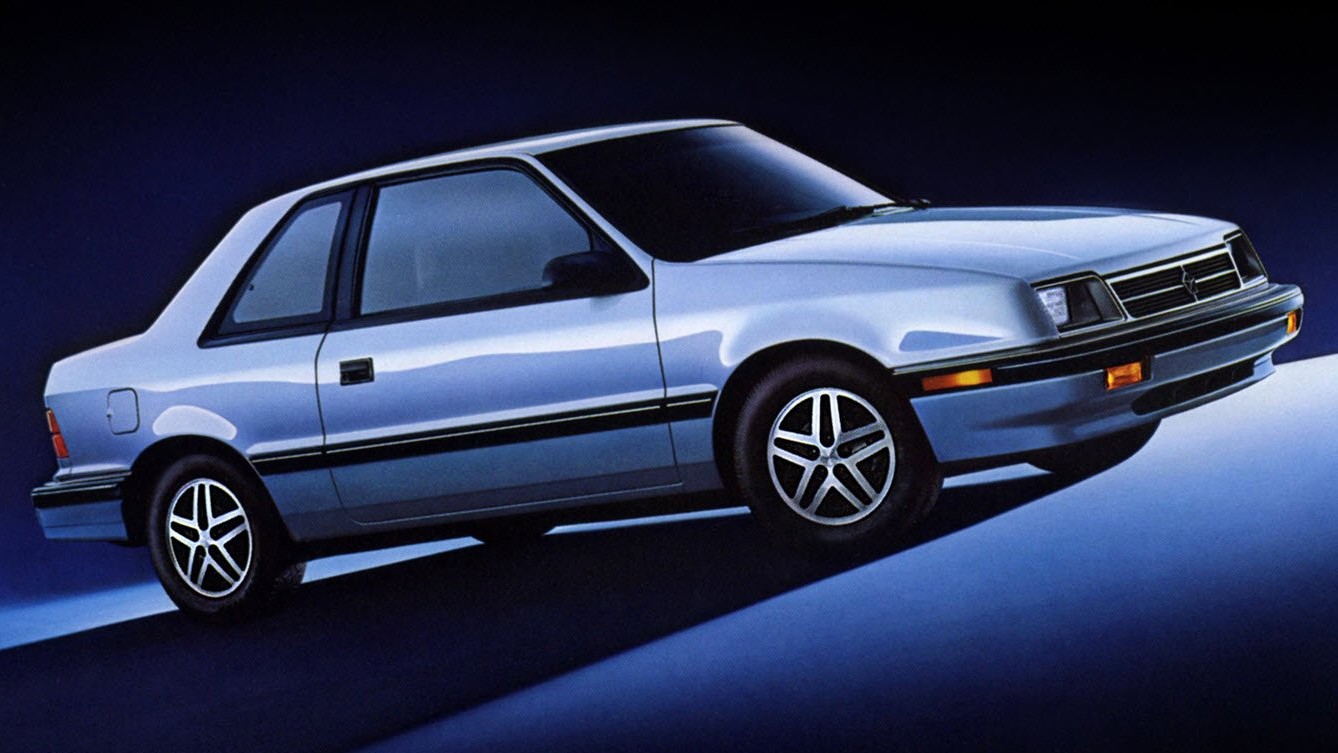
The voluntary export restrictions were supposed to cease in 1984, but lobbying succeeded in delaying the restrictions. Instead, Japan was allowed to bring in 1.85 million cars in 1984 and 2.3 million cars in 1985. This became a major concern for Chrysler, as it meant that it would need a competent car to battle not just the Chevrolet Cavalier, Pontiac Sunbird, Ford Tempo, and Mercury Topaz, but it now had to face increased numbers of Honda Civics, Toyota Corollas, Mazda 323s, and Nissan Stanzas.
Chrysler decided to ready itself for the flood of imports by changing the mission of the Shadow and Sundance. The “Omnirizon” twins were still selling well, and the Mitsubishi Colt slid into the role of the car for the price-conscious buyer, so Chrysler put the Sundance and Shadow back into the oven for another year to move it upmarket.
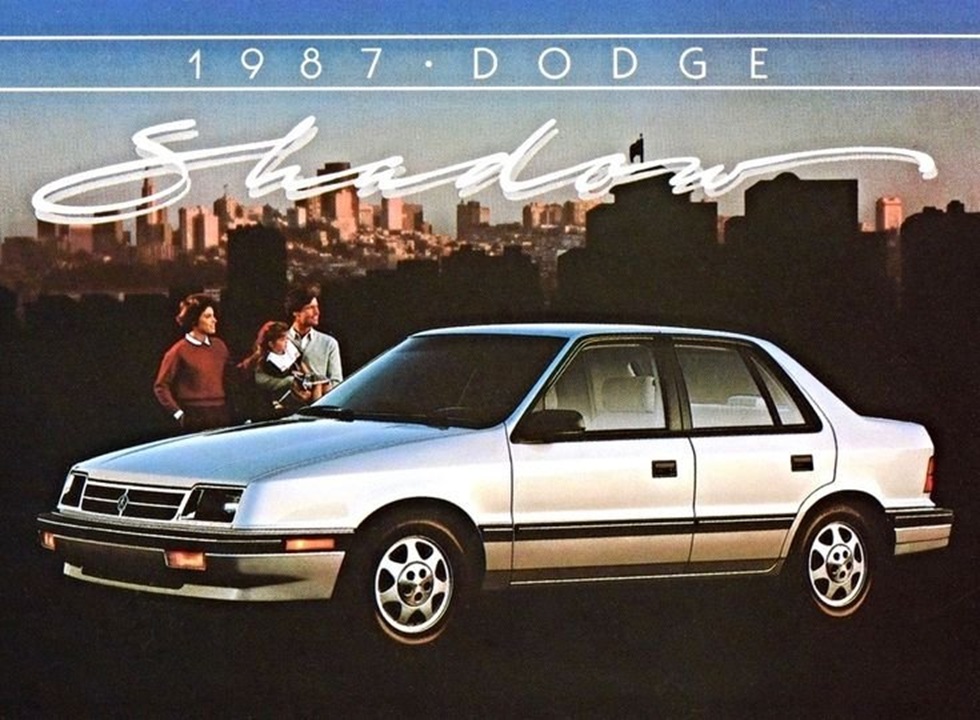
According to the October 1986 issue of MotorTrend, the Chrysler P-chassis derivative of the K-car platform started with parts borrowed from the G-chassis that underpinned the Dodge Daytona and Chrysler Laser. This meant a unibody with MacPherson-strut front suspension, a 27mm anti-roll bar, and a rear beam axle with trailing arms.
The base engine for the Shadow was Chrysler’s 2.2-liter overhead cam four-cylinder. In this guise, it made 97 HP and scooted the Shadow to 60 mph in 12 seconds. Hotter was the same engine, but with a metal snail good for up to 10 PSI of boost. That bumped power to 147 HP and dropped the 60 mph acceleration time to 8.8 seconds.
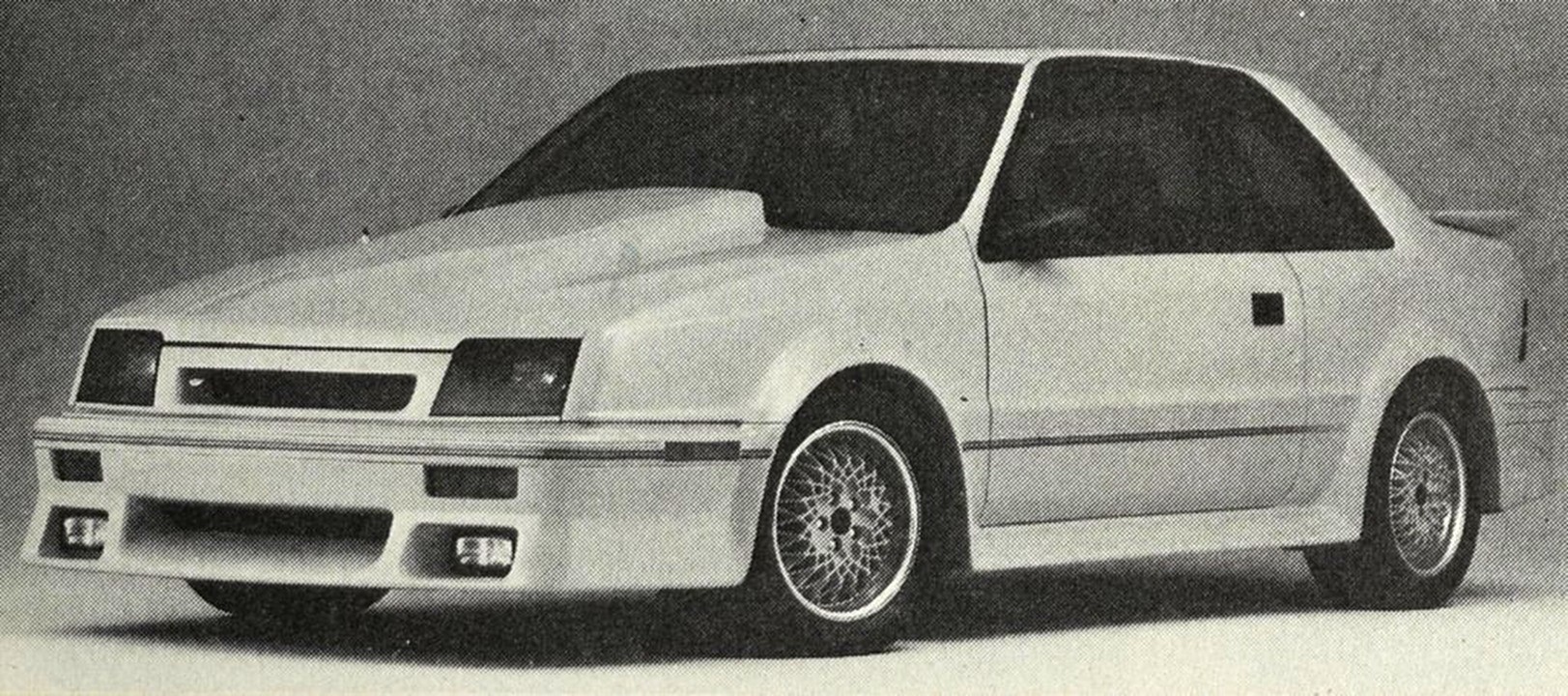
When the Shadow launched in 1986 for the 1987 model year, journalists got to check out a go-fast version that was developed by the Dodge Direct Connection Group. That one had a body kit, an upgraded suspension, a large hood scoop, and an air-to-air intercooler. The result was that 60 mph was dispatched in 7.29 seconds and the quarter mile in 15.42 seconds at 91.3 mph. The car also rang up 0.92 g on the skidpad. Apparently, journalists loved the fast version, and while Dodge couldn’t say when it would arrive, they confirmed that one was coming.
Overall, MotorTrend said that while the Shadow and the Sundance were not the heaviest hitters in their segment, they were good enough that the twins shouldn’t have had too much trouble finding fans. The fans who were willing to wait got to witness the fast version only a year later.
The CSX
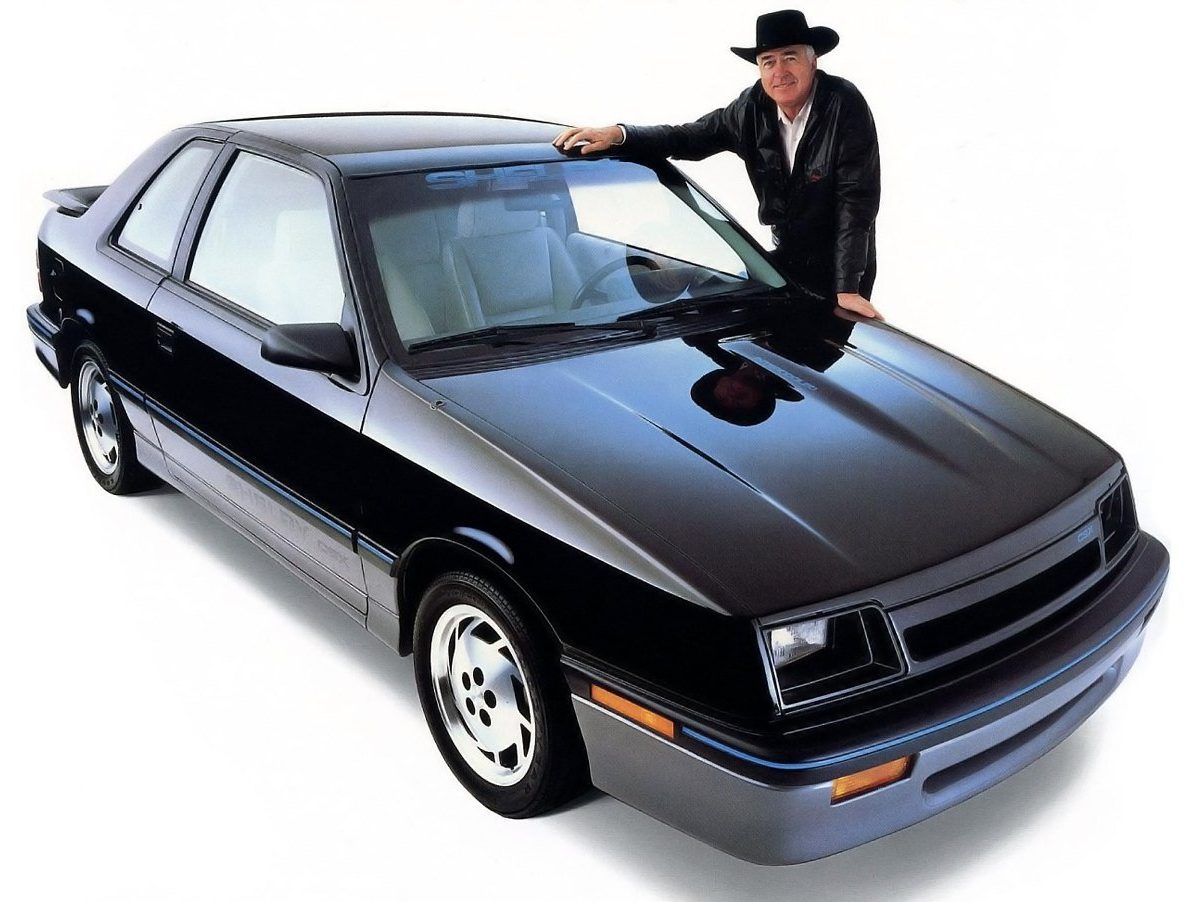
Those who waited got a treat. In 1987, Shelby Automobiles rolled out the CSX, which stood for Carroll Shelby eXperimental, and experimental it was.
As an article at Allpar writes, when Carroll Shelby began work on spicing up the P-cars, he wanted to use Chrysler’s Turbo II engine. This intercooled engine had already proven itself after being loaded into the power barn of the 1986 Shelby GLH-S and would also find a home in the 1987 Shelby Charger GLH-S. However, the hottest P-car mill at launch was the 2.2-liter Turbo I inline-four. Allegedly, Shelby found it easier to convert the Turbo I to a Turbo II than to swap over the entire engine. In the process, Shelby would drag over the intake, intercooler, fuel injectors, throttle body, and turbo from the Turbo II, tuning the Turbo I to work with its new parts.
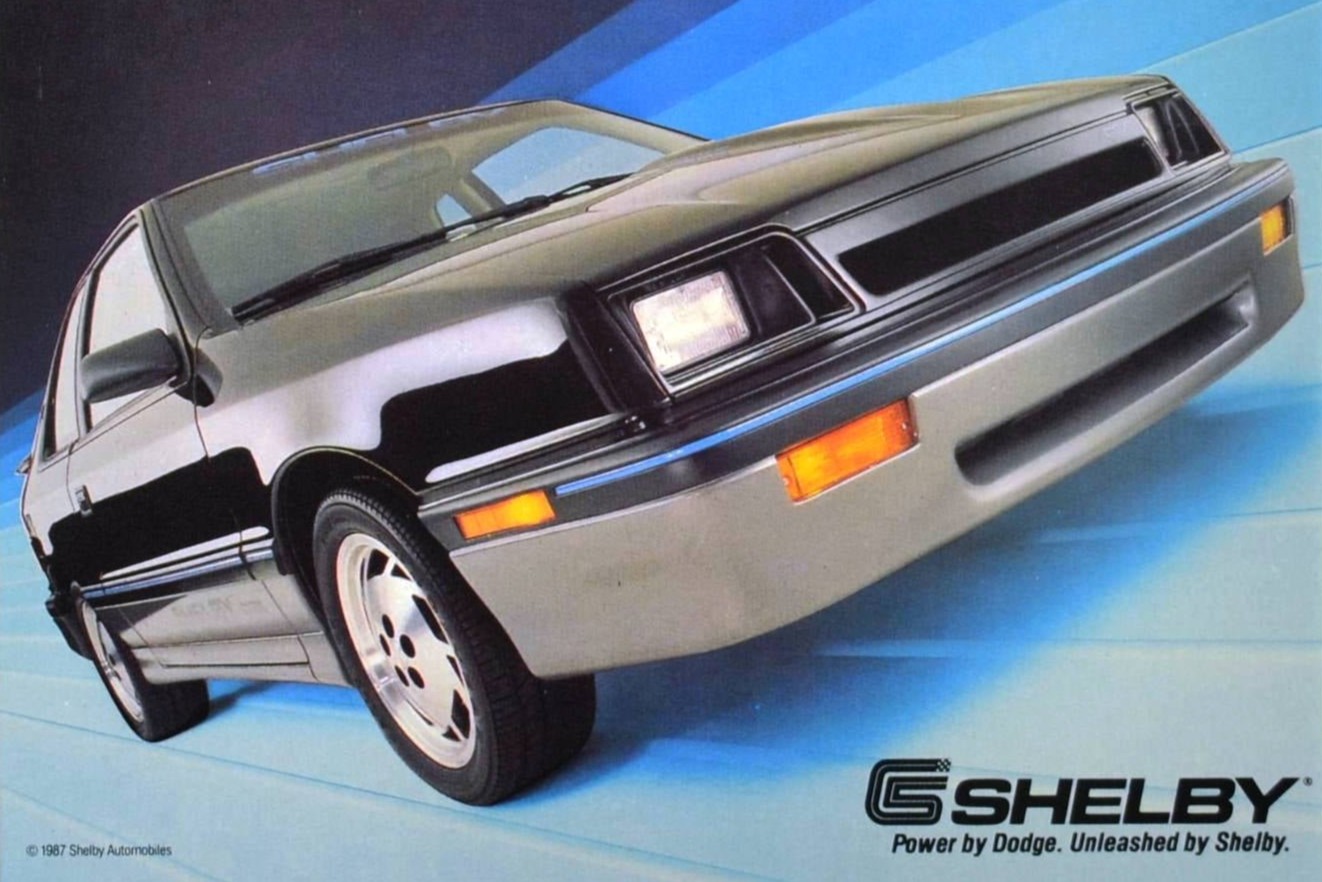
The result was 175 HP, 175 lb-ft of torque, and a claimed 60 mph acceleration time of 7.1 seconds, or slightly faster than the Dodge Direct Connection test car shown to journalists. That engine reportedly had a compression ratio of 8.1:1, the turbo produced 12 PSI of boost, and the powerplant helped complete the quarter mile in 15.1 seconds. Again, that’s an improvement over the Dodge Direction Connection car that journalists drooled over.
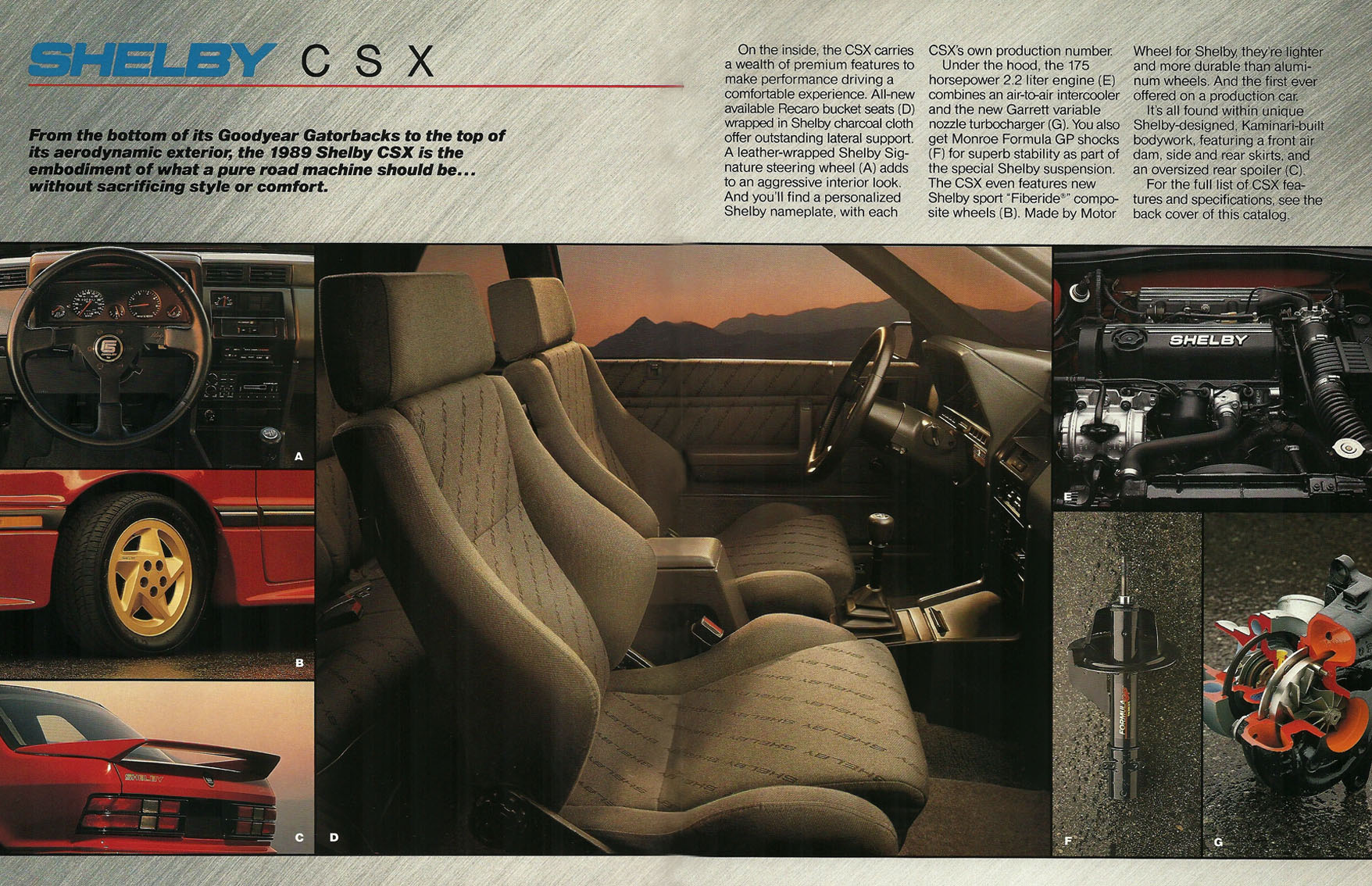
It wasn’t just all power, either, as Shelby decorated the Shadow with a body kit, hot wing, 15-inch Shelby wheels shod in Goodyear VR50 Gatorback tires, and a sporty steering wheel. Platform changes included Monroe Formula GP struts, front and rear sway bars, and four-wheel disc brakes.
Sadly, I could not find any period reviews, but Allpar claims the car did 0.85 g on the skidpad, just a little worse than the Direct Connection test car. The price for all this was $13,495, and it came fully loaded with a cassette player, boost gauge, and a five-speed transaxle. Only 750 examples were built.
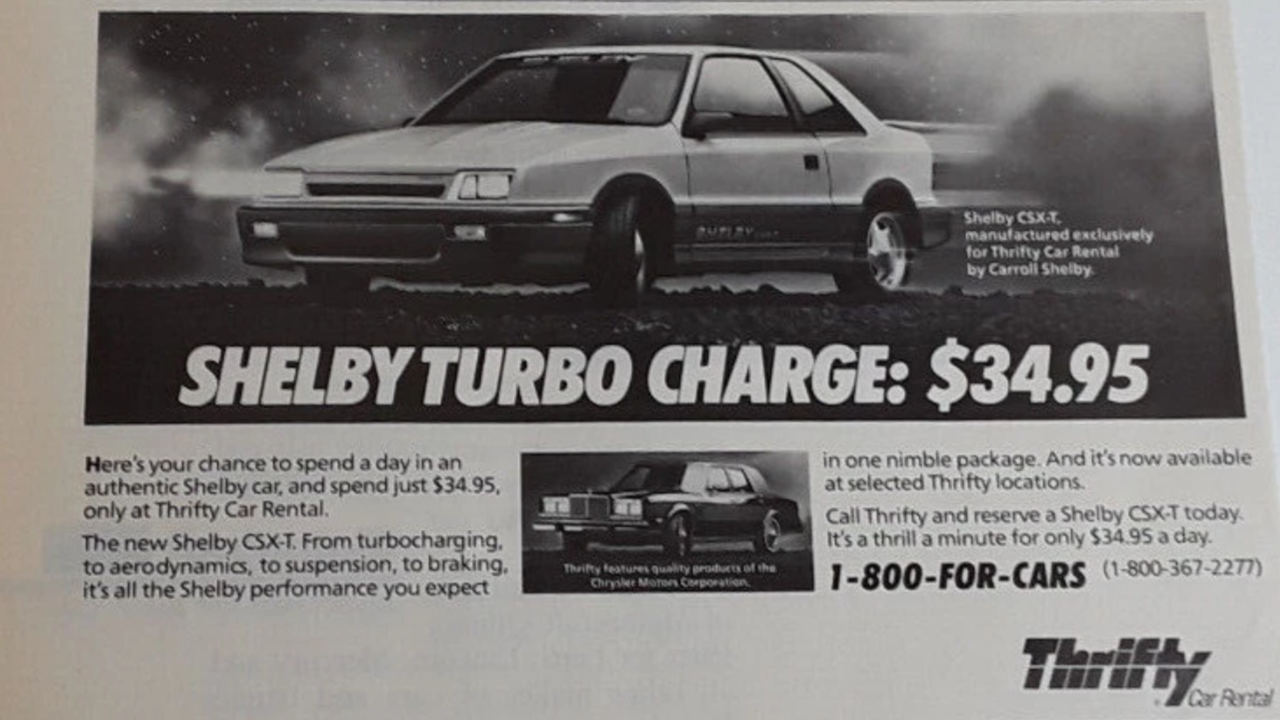
A second version of the CSX would come in 1988, and what was interesting about this one was that it was meant specifically for Thrifty Car Rental. This was more or less a modern take on the Shelby GT350H that was built for Hertz in 1966. The CSX-T, as it was called, was largely similar to the regular CSX, only this one had a non-intercooled Turbo I. With 146 HP and 168 lb-ft of torque on tap, it was slightly hotter than a regular Shadow turbo. 1,001 of these were built and were rented out for $34.95 a day ($100.87 in 2026).
In the background, Shelby was working on making the Shadow even faster. In 1988, he presented the Super Shadow concept car, which sported a Chrysler 2.2-liter turbo with dual overhead cams, a Lotus-designed 16-valve head, a steel crank, steel rods, 8.1:1 Hemi turbo pistons, and an intercooler. The most interesting part of the build sheet was the turbocharger, which was a unit from Garrett with a variable nozzle. Output was an impressive 225 HP. The Super Shadow also had composite wheels. We’ll get back to both that turbo and the wheels in a moment.
Arguably, the true Holy Grail of the CSX is what came in 1989, because that’s when Shelby pulled out all the stops to make the apex of Dodge Shadows.
Fiberglass Wheels And A High-Tech Turbo

The final bow of the CSX came in 1989 as the Shelby CSX-VNT. This car would essentially serve as the production version of the aforementioned Super Shadow, and the most technologically advanced parts actually made the cut. In 1989, MotorTrend explained that Shadows were built by Dodge with Turbo II engines fitted before being shipped to the Shelby Automobiles factory in Whittier, California. Then, Shelby got right to work squeezing more power out of the mills. The centerpiece of the performance was the turbocharger, from MotorTrend:
Built by Garrett, the VNT is the latest weapon in the war against turbo lag, and it’s finding its first production application in the CSX. Also referred to as the variable vane turbo in some circles, the Shelby people feel that theirs is the more accurate term. The theory behind the system is simple, though the metallurgical and control problems are no doubt a bit more daunting. Twelve movable vanes are positioned in a ring around the exhaust-side turbine wheel. All the incoming exhaust gas passes through the vanes, which are linked by a single control ring that rotates slighty to change the angle of the vanes. At low engine speeds, the vanes reduce the area for exhaust gas to enter and drive the turbine. With the reduced area, the gases are forced into the turbine housing at a higher velocity than in a normal turbo. This in turn drives the turbine wheel faster, shortening the lag time before boost builds and bringing the boost on line at a lower rpm.

At higher engine speeds where the artificial boost in turbine speed isn’t needed, the vanes slowly open and the turbo works like a conventional unit. Besides the help off the bottom, the Variable Nozzle Turbo also eliminates the need for a separate waste-gate to keep boost within safe parameters. When the engine control logic module senses that maximum boost has been reached, it signals solenoids that control the vacuum-driven vane control ring to reduce the flow of incoming exhaust gas. Luckily, you don’t have to understand all the nuances of the VNT to appreciate the results. The CSX has 175 hp at its 5200-rpm peak and makes 200 Ib-ft of torque at just 2400 rpm. These are pretty serious numbers, and go a long way toward describing the Shelby motor’s miniature V-8 power characteristics. In a lot of ways, the CSX mimics the feel of a big normally aspirated motor. The engine builds a limited amount of boost right from idle and really comes on solidly by 2000 rpm-surprisingly low for a turbo motor. From there to the 6000-rpm redline, you have a broad band of seamless power at your disposal.
Catch the engine by surprise at any normal rpm, and you’ll have to wait only about a second for the boost to build fully. Again, an impressive performance for a single-turbo installation. The higher the revs, the shorter the wait, and the stronger the hit when the pressure builds. The boost comes on a bit suddenly by mass-production standards; there’s an anti-social edge to this little motor, an irrepressible surge when the power hits that makes the car feel even faster than it is.
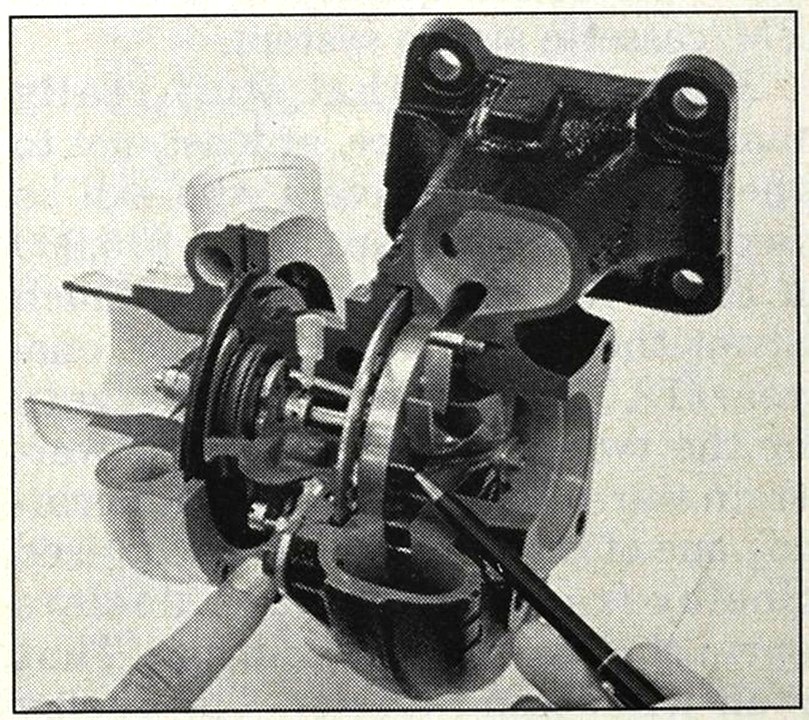
Engines with the VNT were called the Turbo IV, and in the CSX-VNT, it was good for 174 HP and 205 lb-ft of torque. It’s sometimes reported that the VNT is a creation of Garrett, but that’s only partially true. As Shelby Automobiles explained to Car Craft Magazine in 1989, the variable nozzle turbo was indeed designed by Garrett, but the computer that controls it was done in-house by Chrysler, and a patent was even generated in the process.
The other innovation brought to the CSX-VNT was the fiberglass wheels, which were designed by the Goodyear subsidiary Motor Wheel Corporation and called Fiberide. Here’s what Popular Science said about Fiberide wheels in 1989:
The composite wheels on the Shelby CSX represent the latest advance in the evolution of the wheel. While the gold-tone five-point-star wheels look as if they’re made of polished aluminum or steel, they are actually molded of vinyl ester/polyester reinforced glass fibers. Randomly dispersed chopped fiberglass is bolstered by continuous strand sheets in areas that require more support. According to Scott Murray, director of engineering at Motor Wheel Corp. in Lansing, Mich., each wheel weighs 18 pounds—five pounds lighter than a similarly styled aluminum wheel and seven pounds less than a steel wheel. Five pounds per wheel may not seem like an astounding weight savings on a 2,800-pound car, but this 20-pound reduction in unsprung weight means the suspension doesn’t have to work as hard, and the handling can be made more precise.

“This wheel was designed from scratch and pushes the technology,” says Murray. “We started with clay models of what Shelby wanted the wheels to look like, and we engineered the load-bearing structure of the wheels from there.” The 11-year development of the Fiberide wheel program at Motor Wheel entailed 5.4 million miles of road testing, as well as extensive laboratory tests on impact, stress, fatigue, corrosion, and how long lug nuts will remain tight. Murray says the composite wheels met or exceeded all criteria when compared with existing aluminum and steel products.
Metal wheels also can resonate like a bell being rung, but Motor Wheel test drivers noted that the Fiberide composite wheel soaked up vibration and tire noise that the metal wheels tended to transmit into the car. Murray claims there is also an added bonus of having wheels that will never rust, corrode, or tarnish and will require a minimal amount of maintenance.
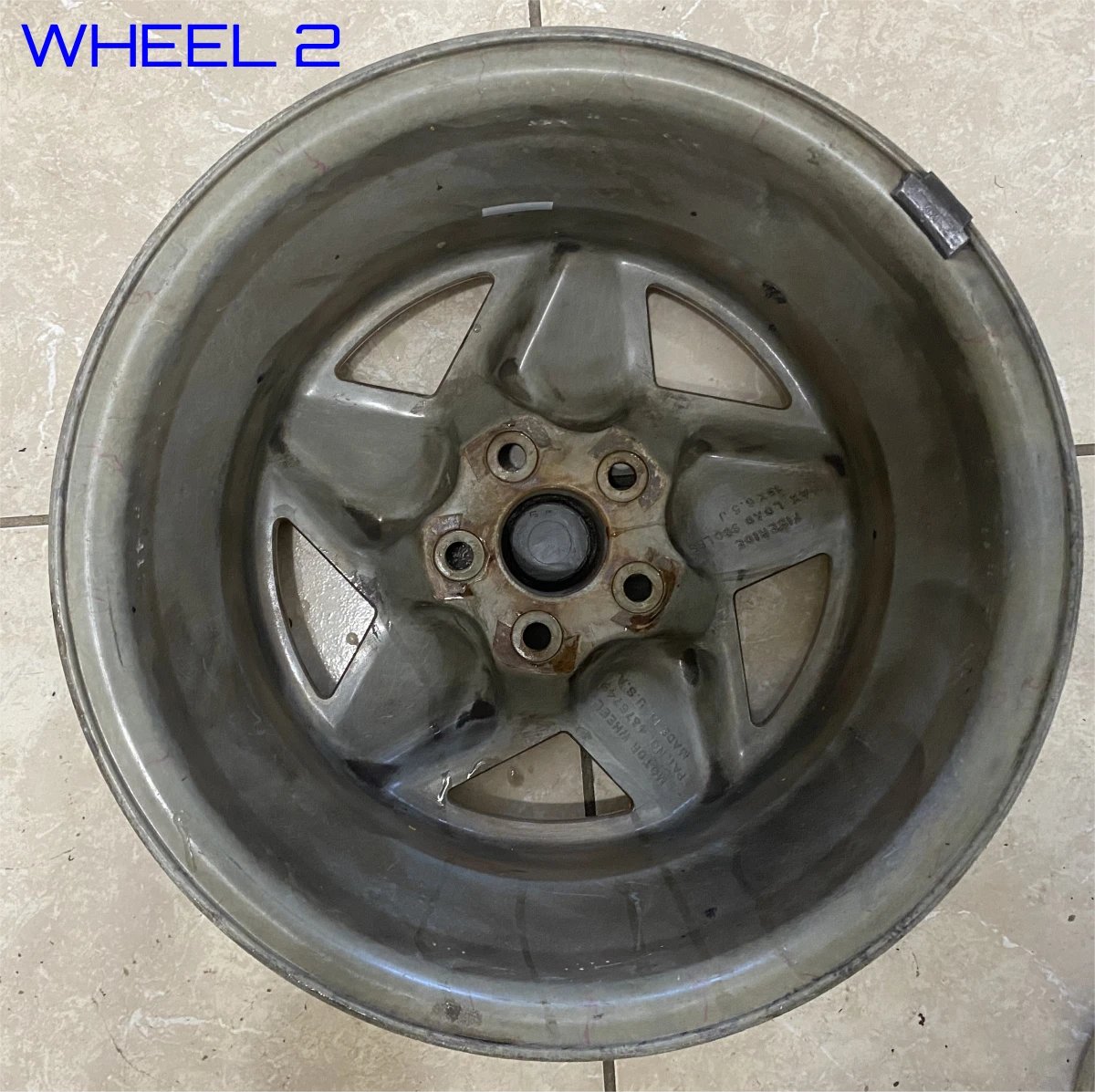
The CSX-VNT’s wheels weren’t the first application of Fiberide. In the mid-1980s, General Motors was looking into the feasibility of a next-generation Pontiac Fiero and considered composite wheels. As it turned out, a company was already working on such a concept. Motor Wheel’s Fiberide wheels were molded at 300 degrees Fahrenheit under 1,500 pounds of pressure, and had been subjected to millions of miles of testing over several years. This wasn’t exactly a crazy concept. Back in 1971, composite wheels were developed for the rally version of the Citroën SM, and were then sold to the public as an option for roadgoing SMs.
Motor Wheel made a prototype set of Fiberide wheels for the future Fiero research project. Sadly, that 1990 Pontiac Fiero never came, but the only set of fiberglass Fiero wheels in existence stuck around. However, Motor Wheel’s Fiberide application for the CSX-VNT was the first time those wheels were ever mounted to a production car. Shelby and Dodge go so far as to claim that the CSX-VNT is the first production car to come with composite wheels. I suppose that could be technically correct since the SM’s composite wheels were a separate purchase.

As for the rest of the CSX-VNT, it was a pocket rocket in the vein of the GLH-S. From MotorTrend:
You would have to spend some seat time in a purpose-built race car to be fully prepared for the way the CSX goes down the road. Surface irregularities are only mildly rounded off by the firm suspension components, and copious amounts of road noise are telegraphed into the chassis by the big Goodyears. Try to carry on a conversation while rolling down an expansion-jointed highway, and you’ll sound like you’re being throttled. Your passenger will wonder why you bought such an obviously shoddy car. You might even wonder too, at times. Driving around town, you might easily conclude that the Shelby people don’t care a whit about making you comfortable or keeping your Kommuter Kup smoothly in position on the console. Well, you’re right, they don’t.
All the suffering turns directly into mouth-watering bliss the instant you blow past the city limits. Take a bead on the first series of corners, tap the brakes, and pitch her in. The cornering load builds sharply and the CSX just carves—almost no body roll, almost no street-car slush factor—just tight, accurate response. Suddenly the high suspension rates and brawny roll resistance make perfect sense. At first you might overdrive the CSX, particularly if you’re used to dealing with the slow response time of softly suspended, under-tired regular street cars. The Shelby, on the other hand, actually notices all those little steering inputs that other slushier cars barely respond to at the limit. This is, of course, a good thing, at least once you clean up your act a little bit.
There aren’t many cars that will outstick the CSX; our car generated 0.86 lateral g on the skidpad, circulating in classic front-drive understeer. But on the road, in real turns, the car offers greater flexibility than your average front-driver. Trailing the brakes deep into turns sets the car’s tail out nicely, taunting you to see just how long you can hold the car in a lurid four-wheel drift. Of course, it’s always possible to have too much of a good thing, as we discovered while slalom testing the CSX. Brutal tran-sient maneuvers can unstick the lightly loaded back end to the detriment of many little rubber cones. The CSX is a short-coupled little car with a lot of traction; it responds quickly to the right command, or just as quickly to the wrong one. It can’t be flung about with the same wild abandon as your average front-driver. The payoff is that its limits are considerably higher than your average car’s. The CSX ended up snaking through the slalom at an average speed of 64.94 mph—a remarkably swift performance. Most front-drivers are relatively stable in yaw in the slalom, and understeer sets the maximum speed limit. By contrast, the CSX’s grippy front end turns in sharply, more like a nicely set-up rear-drive car.
In terms of performance on paper, by MotorTrend’s measurements, the CSX-VNT hit 60 mph in 7.44 seconds and could do a quarter mile in 15.58 seconds at 88.8 mph. It’s unclear why this car was slower than previous versions of the CSX. Shelby claimed the car could hit 60 mph in 7.1 seconds, so maybe the slightly slower run was due to the driver’s launches.
Either way, MotorTrend said that, with the right driver, there wasn’t a front-wheel drive car on sale in 1989 that could catch a CSX-VNT in a straight line or in the corners. The brakes even got the car to a dead stop in only 126 feet from 60 mph, which isn’t bad at all! The great part was also that since this was based on a Shadow commuter car, the CSX-VNT was as practical as it was sporty.
A Piece Of Automotive History

Just 500 examples were sold for $15,000 each ($41,360 in 2026). Today, you could score one of these cars for under $20,000, and some have even sold for under $10,000. Like many sporty Chryslers from this era, it seems like there’s a decent group of superfans, but they’re otherwise largely ignored by most other car collectors.
The biggest contribution the CSX-VNT made to car history was its technology. Variable nozzle turbocharging was novel back then, and the CSX-VNT was one of the very first production cars to get it. Nowadays, variable geometry turbos are everywhere from basic economy cars to supercars. While fiberglass wheels aren’t much of a thing, carbon fiber wheels are. When you look at the CSX-VNT, you’re not just basking in one of the absolute coolest American performance cars of the 1980s, but witnessing the infancy of a couple of modern technologies.
The CSX-VNT was also a swan song of sorts. It was the last Dodge Shelby, the last Shelby to be built in Shelby’s own California facility, and to some fans, the last “true” Shelby. Yet, this is one of those Holy Grails where rarity does not exactly equal value. Honestly, that’s pretty cool, I think, as CSX is one of the coolest hot compacts of the era, and they’re still attainable today. Besides, how many other cars are you going to buy that have fiberglass wheels?
Front graphic images: Bring a Trailer listing


So funny this article came out. This summer I was asked to be track driving instructor for the local chapter of the Shelby Dodge club. I knew of the Chargers and GLH’s but only had a passing knowledge of the turbo shadows. It was fun to see them out on the track, some modified and some stock. They did have a rule that no fiberide wheels were allowed for the track day. During the Advanced/Instructor run group I had some fun playing with a gutted and caged track prepped GLH in my Viper.
I did look up how much a CSX cost after the day was over since they looked super fun.
For an extremely brief (I’m talking 6/7 weeks) period of my life I owned a CSX. I’m sure mine was ratty compared to new but holy turbo lag! I got it as trade from a man for tennis lessons for his kid when I was 17 and then I ended up selling it for 6k when my dad offered me his much nicer 2nd gen Acura TL has a hand me down after which I promptly dumped all 6k into that TL because Tokyo Drift.
Now I look at it like a cool ride I should have kept but at the time it felt extremely cheap compared to a well built honda.
I can’t blame you, I remember a friend had gotten super into chrysler stuff and was telling me about the similar Omni GLH in the early ’00s and scoffing at it. Another friend’s parents had an older K car and that thing felt like a real turd 20+ years later, and honestly the CSX probably wasn’t any faster than the TL anyways?
Such high quality upgrades to such a forgettable platform
I know that people think back to turbo lag and think it sucked. I rather enjoyed it. My second car was a 1984 SVO that had a Gillis valve to raise boost to about 18 lbs. At about 3200 rpm that car would explode forward. At least it was rear wheel drive.
I have a 1986 SVO now that is fully built with ported everything, huge FMIC, upgraded injectors, pump, etc. running a PIMPx ECU. It makes ~400hp to the wheels (when it’s not on jackstands!) and boost comes on about 2800 rpm. It’s a riot when it’s running.
I agree, I have an old Audi 2.2L 5cyl with a newer GTX Garrett turbo. All the fancy ball bearings and billet wheels of the new turbo can only do so much when you want 400+hp on a small motor. That said when boost hits it is like being rear ended in a good way. Super fun and unlike a lot of modern turbo 4’s that focus so heavily on response and torque down low, mine keeps pulling hard all they way up to redline and would probably keep making more power if I raised the redline.
Your mom likes being rear ended in a good way. Sorry. I couldn’t help it.
That sounds like a great time, those SVO Mustangs are super cool. And I kind of agree, while not nearly as built as your car I have a 2005 Legacy GT (basically a WRX) and boost doesn’t really fully hit until around that same 2,800 or so rpm giving it more drama and personality that today’s turbo hot hatches. Even with only 250hp there’s that couple of ticks of building, building, booooom. Even with awd on a wet road (or maybe it’s just my tires) it will lose traction for a sec when the boost fully hits if I have it floored. Most of the newer DI turbo hot hatches I’ve driven have this kinda flat power delivery that almost feels the same whether you’re at 2,000 rpm or 5,000 rpm and while objectively better they’ve lost that sense of drama the older turbo cars have.
Yep, I miss my 1.6L Flyin’ Miata that put close to 240 hp to the wheels. You just had to hit the gas and then count “one one-thousand,” after which it’d go 20-80 faster than anything I’ve ever driven.
My friend in the Navy back then was looking to get a 6cyl Shadow, or at least a turbo 4. He ended up with the generic 4cyl version. This is the one I bought my 79 Lil Red Express from, such a disappointment.
I don’t remember these, but neat!
Sometime in the very early 90’s, a buddy and I test drove a CSX-T that had found its way to the used car lot at our local Ford dealership. It was quick, but when the turbo spooled up, holy torque steer, Batman! My buddy drove it first and swerved a bit when the boost kicked in, so when it was my turn, I was prepared. Or so I thought. Nope, I swerved a bit too. I suppose it’s something you’d get used to if you drove it on the daily. Sadly, due to a lack of funds at the time, I never got the chance to get used to it.
I’m old enough to have been around when these things were new and…. even back then they were sort of a joke. On one hand… sure… I really and truly admire trying to squeeze as much as possible out of a 80’s econo-box. But in 1987 the Japanese automakers were light years ahead of this and anything else the Big 3 had then. My basic bare bones 4 banger Tacoma can do 7 seconds pretty easily. Granted its newer by 9 years but still.
Damn those wheels are good looking. I REALLY like them.
Last month I was at the Chrysler Nationals at Carlisle and the Shelby Dodge Automotive Club had a very impressive lineup that included several CSX’s along with lovely examples of the GLH, GLHS, Shelby Chargers and Daytonas.
’60s/’70s muscle cars used to be the sole reason for shows like this. They’re still the bulk of the field, but more and more later ’70s Malaise and ’80s/’90s Rad-era cars show up every year. The old muscle cars have become simply unobtainable for a lot of people, and many of the rarest ones you used to see like Superbirds and Hemi ‘Cudas have disappeared into climate-controlled collector garages, never to see the light of day again.
Combine it with the fact that Gen X’ers and elder Mellenials are becoming the core of the participants in these car communities as the Boomers age out. These children of the ’70s and ’80s are reaching middle age, have garages and maybe some equity and are getting project cars. And they’re nostalgic for the cars of their youth. The effect is entire rows of ’80s Shelby Dodges and customized Neons at shows that were once exclusively populated by Barracudas, Road Runners, etc.
I for one am here for it.
Agreed. I grew up doing the regional car show circuit with my dad and his ’59 Fairline Skyliner and… I got so sick of it that I didn’t enjoy car shows for years. There’s only so many 5-6-7 Chevys and ‘64.5 Mustangs you can look at before it gets dull. Seeing the boomers pass the car show torch to younger generations has renewed the appeal.
When I was 15 my mother got a used 4-door Sundance. Hateful. I’ve not owned a Chrysler product since.
I remember reading in Car and Driver (or something, it wasn’t the internet) that these and the Daytonas were K-car derivatives and I hated them all even more after gaining that bit of knowledge. Pre-car me knew these were no Mustangs or Camaros.
Yeh a friends mom had an admittedly well used K car of some variety in the late 90s early aughts and man was that thing a turd, though somehow they managed to milk it along for a fair while before something killed it off.
As a college student who religiously read AutoWeek (gotta get mail somehow), people did not know what to do with theses thinks and their Dodge/Shelby brethren. They were unknown and expensive(ish). It was just a bad time for new cars but better days did come.
I would love to drive one of these once. I had the fully-matured version of the platform, a ’93 Duster with the V6, as my first car. It was a blast, and I still miss it despite its many faults.
I always liked the Shadow/Sundance even in their normie versions. Good looking pseudo-coupe, certainly nicer than an Escort, Cavalier, and dear g*d it even overlapped a year with the ancient Chevette. It might have not been this exact composite, but even Ford Tempos had composite wheels. In a MotorWeek review one of them melted.
Interesting comment on the Ford Tempo having some sort of composite wheels? I’m very well steeped in Tempo/Topaz history, and I had not heard this yet. Any more information on the composite wheels? Some sort of test car?
I vaguely recall a Ford wheelcover melting during the braking test. The only info I can find on Tempo’s having composite wheels is a comment you made last year on CurbsideClassic. I’d love to know more
Too bad lightweight wheels never really took off for regular cars.
I’m still amazed the industry (and even the EV side) is obsessed with large wheels. Why does every non-base trim need 20″ wheels? And why can’t I get a “long range” package that gets me smaller wheels?
They make the monster trucks for sale now look less like the massive tanks they’ve become. People might realize cars are actually way too big if they didn’t come with 24” donk wheels. Can’t have people wanting smaller vehicles now.
Some guy at work had a base model HD Ram 4×4 with the steel wheels and it looked a tad silly. It brought to mind a monster truck riding on its little transport wheels.
Of course, it now has giant wheels and tires with spike lug nuts. I preferred the before.
Can’t have people thinking that larger phallic appendages are popular now can we?
I have a Bolt and there are people who put Cruze Eco wheels, or even 15″ Sonic wheels on them for exactly that reason. I’m curious if it would improve the punishing ride somewhat…
There are reasons for the larger wheels, but I agree with you that a little more rubber would be nice. Larger wheels make for more work by the suspension and more maintenance costs, which adds to the industry profit.
I miss my old Jetta and its 15-inch wheels, especially now that I have teenagers driving. Scrubbing a sidewall on a curb does a lot less damage than grinding a 20-inch alloy on concrete.
My mom had a pre-facelift Shadow ES Turbo of this era through about 1996 (hit a deer) that she still speaks highly of to this day. She would sometimes needle dad that the Z24 he bought in matching colors was a slower car than hers.
My late mother had an ’87 Le Baron woody wagon with the 2.2 turbo and it would flat-out embarrass many cars of the same time period. It never idles smooth and drank oil but it was, for what it was, fast.
Sometimes my sister and I would change the flourescent gauges over to Kilometers from Miles just to watch her drive slower on the way to mall trips, etc…
Fun times.
I looked at a (used) V-6 manual Shadow ES in that teal green that was popular in the era. Chose a (used) 91′ Civic LX in similar color. The better car, but it was boring, not one of my favorite cars, and did not live up to the delight and reliability of the 83 Civic it replaced.
“This wheel was designed from scratch and pushes the technology,”
I’m more smitten by the voloptuous side wall on that performance tire.
I worked at Garrett Pneumatic Systems Divsion in Phoenix in 1985 and one of the projects I worked on as a Manufacturing Engineer was a variable nozzle turbocharger! Odds are that that turbo was what I was working on! I only worked there for a year, but I do remember that project. My job was to “walk the boards” of the design engineers and check that their design could actually be built. The body for this was designed with some difficult (and expensive) shapes that required us to head out to the local fab shop to discuss with the machinist what they could (or not) machine with the available equipment in that shop. We made some changes based on the machinist’s advice. Great job, but not a great place to live for us, so we quit our jobs and left thus why I was only there a year.
Boy do I miss when Automakers felt it necessary to create stuff like this to sell cars. Having such an insane gap between the hairshirt Plymouth versions and something like this is simply great fun.
I also always found the two door versions of the Shadow to be pretty darn good looking. The sedan… not so much.
Same. I saw a 2-door the other day and was struck by how good I thought it looked. Back when they came out, I was rather dismissive of them
I always felt like the Shadow was meant to be a 2-door and the Neon was meant to be a 4-door.
They still do create some fun stuff but now they remove the basest of base models so we have no choice but to pay more for the top trims, AKA dropping the Golf so now all you can buy is a GTI or Golf R. What if you don’t want large wheels, body kit, adaptive suspension et al? Too bad bro.
I never thought when I woke up today that I would read the phrase apex of Dodge Shadows.
My first car was a red Sundance Duster with the V6. Handled well, pretty fast, and a beast in the snow. Underrated cars
What was with that car in the snow? That was my first car too and I drove it home one day on normie all-seasons through a snow emergency where I wasn’t supposed to be on the road at all. Made it fine.
I had a 89 Sunbird 5 speed, was also a beast in the snow, must have been the iron block?
A close friend ay SUNY Buffalo in the late 90s had a cherry red Shadow. It was a stick, and I think a V6. It was fast as fuck for the time. He even swapped out the rear axle, which had drums, for a caravan rear axle which had disc brakes. Drop in replacement.
Now that I think about it, it may have been a turbo, as I recall a hood bulge on it.
My mom had a 1991 Plymouth Acclaim, her only new car. I got that thing over 100mph on a huge downhill leading into St. George UT from the north. That was a scary speed for that car.
Acclaim is one of my favorite boring cars *ever*. I see them and get wistful. Everything about it is so purposeful. They’re comfy and roomy in a tidy footprint. The perfect no-bullshit car.
When I was younger I inherited my Grandmother’s triple red Acclaim sedan. It is the best definition of cromulent that I have. It did as functioned. Not great, not bad, just walked down the basic sedan checklist.
My mom’s was a manual too!
WOW. Talk about rare.
All the ES and Duster trims had the hood bulge, and none of them needed it turbo or not. It was just there. My V6 had it.
Thank you for clarifying. I still feel like it was the V6. Do you recall yours being fast? Wait, “fast”?
For the time and the price, absolutely. I think 0-60 was in the low 8 second range which was too much power for a 16 year old. Thankfully I didn’t misuse it…much. Most modern cars would blow the doors off it now but in 1997 it was no slouch. The V6 and the 2.5 Turbo I it replaced were pretty similar in performance. The turbo was a smidge faster but was peaky and wanted premium gas.
Yo I was at SUNY Buffalo from ’95-’99!
Awesome!!! Studying??? I am a Mechanical Engineer. Was very active in SAE (team Captain in 99/00).
I started in Mechanical Engineering in ’95 and was a participant in SAE for the first couple years I was there. I did some machining of suspension components for the mini baja. I switched to Computer Science later and graduated in that.
We absolutely should know one another then. I was doing exactly the same thing on Mini-Baja from 95-97. Luker was the captain those years. The 96-97 (my sophomore) year I designed the shifter mechanism, among a few other things. Are you on Discord?
TriangleRAD on Discord
I think the real impressive thing is driving it from Buffalo to St. George lol, I suppose it wouldn’t have been all that old, though feels like cars aged a lot faster back then…
Honestly, I’m not sure how the car got out west to Utah. At least, I can’t remember. Not sure if my mom shipped or drove it. Maybe my brother did? She drove that up until 2002? I think that is when she got the Camry that my son is now driving (which she drove for over 20 years).
Also interestingly, Chrysler eventually did the same value engineering process on these that they had on the Omnirizon, with the somewhat stripped down Sundance America getting a $7600 base price, to compete with the wave of cut price cars that showed up from established automakers after Yugo survived just long enough to demonstrate that a demand existed
Unlike the earlier Americas, it was the base trim level among many with the former base model renamed Highline.
Confusing the folks who went to purchase a Porsche 911 RS America, thinking it was a cheap trim package lol
I’m normally a fan of alternative materials being used in production vehicles, and I love when automakers use composite materials in a smart way. However, fibreglass wheels may be where I draw the line. I’m sure they wouldn’t have marketed them if they hadn’t done proper research into whether they were up to the task, but damn… I think I’d feel safer driving a car with a duroplast chassis and vinylon interiors.
I kinda recall people actively avoiding the fiberglass wheels when these were just used cars.
Yeah, just can’t imagine that they’d be as durable and impact-resistant as regular alloys or steelies. There’s probably a good reason why we don’t hear about composite wheels nowadays
Yeah I’ve been looking for a mention of how well the fiberglass wheels held up. I’m thinking 40 years in the sun have probably not been kind to them.
Chrysler had a lot of cool stuff in the 80s and 90s that gets overlooked in what often seems like a Mopar muscle cars followed by K-cars and minivans followed by Viper chronology. The GLH and -S were impressive in their brutality; the Daytona was a good-looking car and, though probably dependent on model year, could hang with Mustangs and IROC-Zs. The Shadow and Sundance always had their hot versions, & I believe you could even get the Sundance as a Duster with a V6.
However, my slushbox ’88 Horizon was still a turd.
Yes in 1992 they started phasing out the turbo version for the 3.0 V6 from the minivan, and that was the only “hot” engine for ’93-94
I’m a sucker for Turbo Dodges. I’ve owned two Omni GLH hatchbacks, one of which had the complete Turbo II powertrain from an ’87 Shelby Charger GLH-S. Lots of fun.
Chrysler was making factory 2.2L Turbo IIs by 1987 for the Daytona (previously the only Turbo II engines that existed were the ones that Shelby had converted). It was my understanding that only the Shelby Omni and Charger GLH-S got the converted Turbo IIs, and that all later Shelby cars got the Chrysler factory Turbo II because it was stronger than the converted version with a beefier crank and rods. Wikipedia agrees with me FWIW.
I too was a fan, having first an 85 GLH Turbo and then an 87 Shelby Lancer, which I believe also had the Shelby converted turbo II engine. I’m used to the Shelby Lancer getting overlooked among all the other models. I went out of my way to rent a Shelby CSX-T on a trip to China Lake in the late 80s and made time to stop at the Whittier facility and get an impromptu tour, getting to see the in-development CSX-VNT and Shelby Dakota V8 convertible pickup while there. Good times.
The real question is if you could keep the steering wheel pointed straight at wide open in the GLH.
No.
That’s part of the fun! The FWD version of fishtailing!