


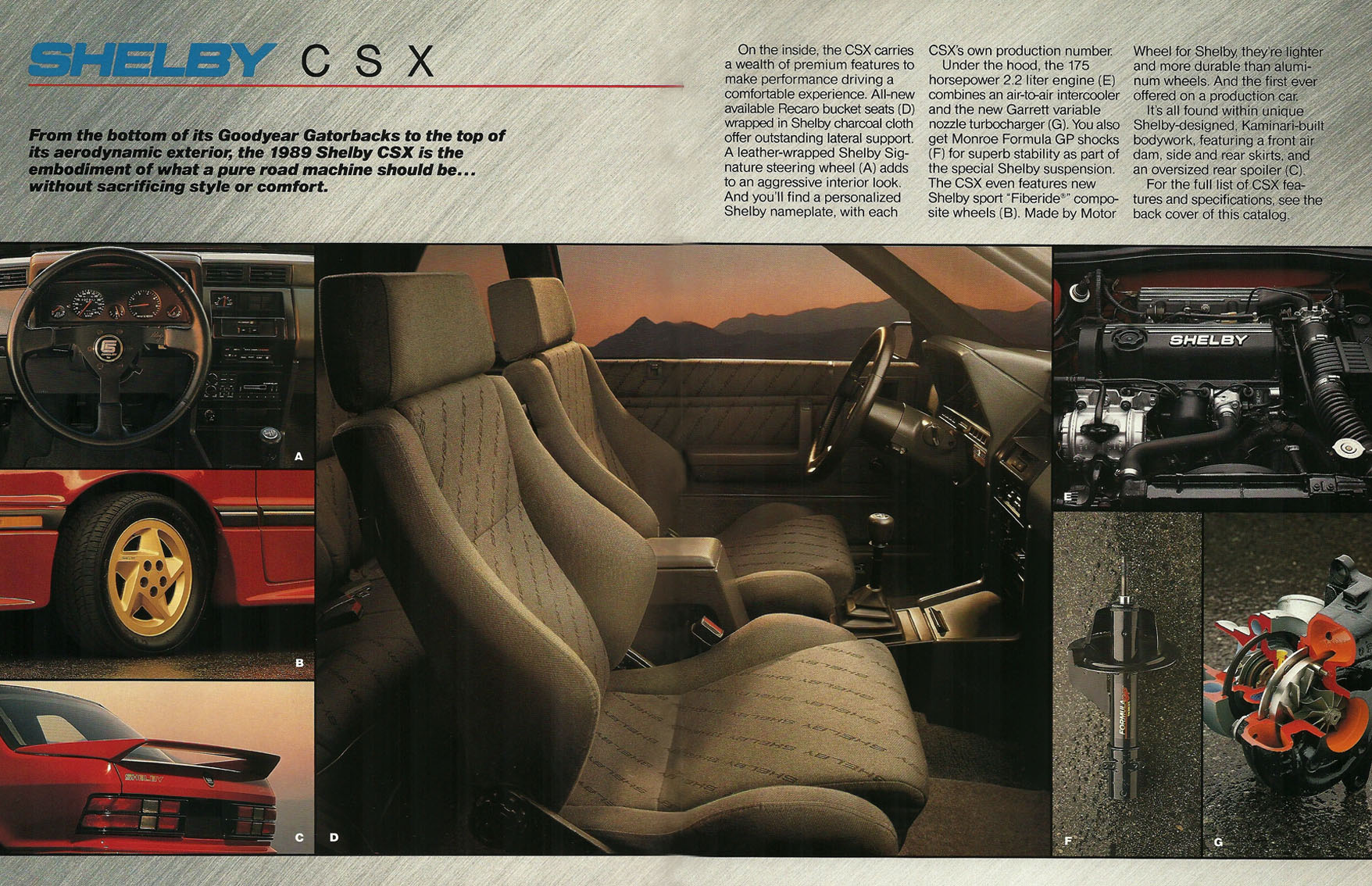
Today’s cars are examples of impressive engineering built up from over a century of advancements. It’s not hard to find cars with variable geometry turbochargers and computers that could run circles around what was used during the Apollo Program. Some cars even have carbon fiber wheels. These technologies had to start somewhere, and a great leap forward for American cars was technically a Dodge. This is the Shelby CSX-VNT, and it was a hot compact with variable turbine geometry and, yes, wheels made entirely out of a composite.
The name Shelby conjures up images of voluptuous, V8-powered Cobras and iconic classic Mustangs. There isn’t a whole lot that’s different going on today, as Shelby American is happy to sell you a V8 super snake of your choice or the kind of street trucks that we wish could come out of the Ford factory that way. Shelby has even decided to dip its hands into the heavy-duty pickup truck market with a ridiculous Ford F-250 Super Duty Power Stroke slathered in Shelby parts.


But there was a time when Shelby did more than turn up the taps on Fords of various shapes. As one of our co-founders, Beau Boeckmann, wrote late last month, Carroll Shelby built one of the craziest supercars out of a De Tomaso Pantera. He also had a relationship with Chrysler that produced some of the most legendary rides of the 1980s.

As Shelby American explains, Carroll Shelby and Lee Iacocca became friends through the relationship they fostered between Shelby and Ford in the 1960s. Iacocca left Ford and took the helm at a badly damaged Chrysler in 1978 with a mission to save the beloved automaker from the brink. Many will point to Chrysler’s K-cars and the minivans as prime examples of how Iacocca rescued Chrysler, but there was more. Iacocca didn’t just want to make Chrysler a fierce competitor again, but he also wanted to put Dodge back on the map as a purveyor of high performance.
Back in those days, the so-called Malaise Era was still in full swing, and automakers hadn’t quite figured out how to adorn cars with emissions equipment without choking their engines of power. The blazing power numbers of 1970 gave way to far more tepid outputs, and the appeal of these cars was challenged even further by safety equipment.
To its credit, Dodge didn’t take it sitting down. Dodge figured out that it could still make a high-caliber muscle car, so long as it wore the body of a pickup truck. The fabled Li’l Red Express obeyed the letter of the regulations and was still the fastest thing in America.

Iacocca would call on his old, now retired friend, Shelby, and together, they created a new era of performance. Throughout the 1980s, Shelby and Iacocca would take normally pedestrian cars and turn them into beasts that, to paraphrase a model name, went like hell. But Shelby didn’t just put go-fast parts on Dodge Chargers, Dakotas, Daytonas, Lancers, Omnis, and Shadows; he also moved the needle forward on performance technology.
Perhaps the best representative of this is the Shelby CSX-VNT, a pioneer in modern turbocharging technology and a trailblazer in composite wheels.

Dodge’s Import Fighter
The Shelby CSX and its variants started life as a much tamer car, the Dodge Shadow, which was also sold as the Plymouth Sundance.
According to the May 1986 issue of MotorTrend, the Shadow and Sundance were originally supposed to be different cars. Back in 1981, American automakers were trying to climb out of the hole they fell into during the oil crisis in 1979 and the malaise of the 1970s in general. However, their efforts came with some difficulty, as Japan was importing piles of affordable, fuel-efficient cars that buyers were scooping up from dealerships.
The federal government got Japan to voluntarily cap vehicle exports to no more than 1.68 million units a year. This gave domestic brands some breathing room, especially at the lower end of the car market. The Dodge Shadow and Plymouth Sundance, which were destined to replace the Dodge Omni and Plymouth Horizon, were originally supposed to be at the bottom of Chrysler’s lineup, playing roles as volume cheap compacts. As MotorTrend noted, they were supposed to launch in 1985.
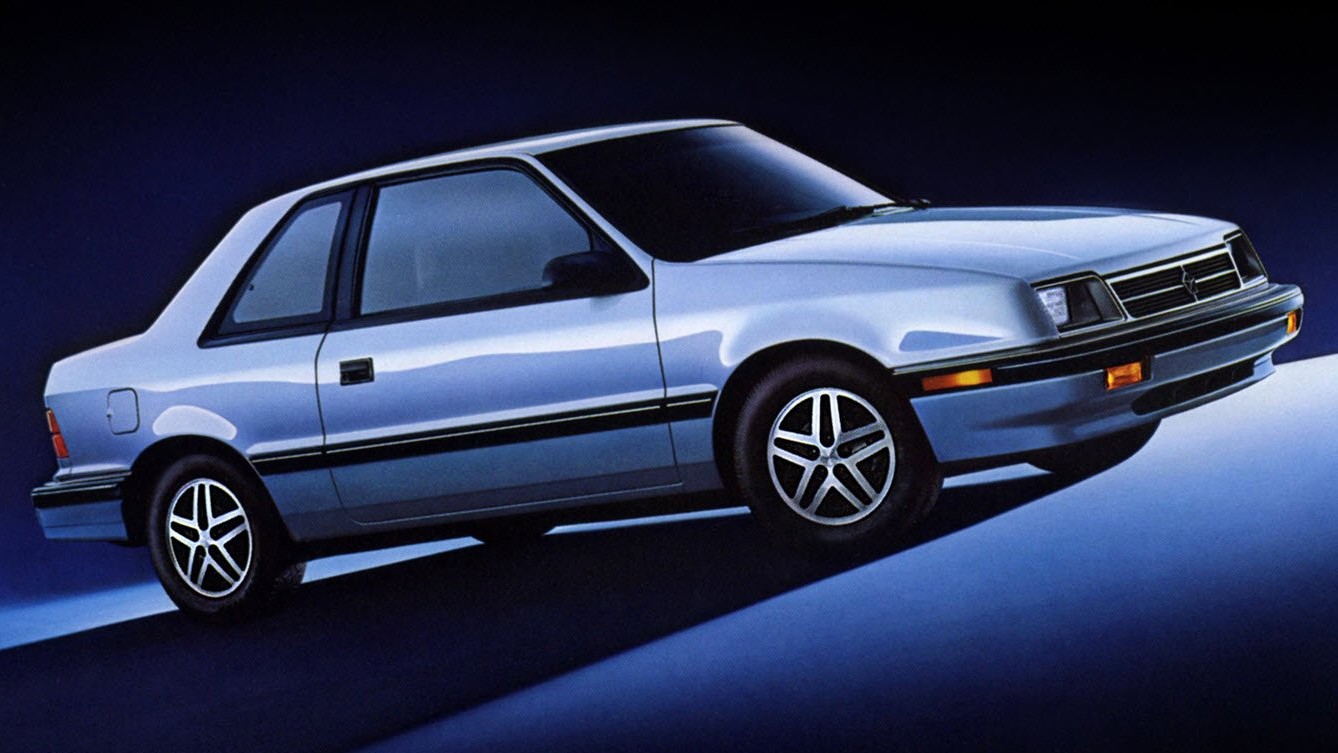
The voluntary export restrictions were supposed to cease in 1984, but lobbying succeeded in delaying the restrictions. Instead, Japan was allowed to bring in 1.85 million cars in 1984 and 2.3 million cars in 1985. This became a major concern for Chrysler, as it meant that it would need a competent car to battle not just the Chevrolet Cavalier, Pontiac Sunbird, Ford Tempo, and Mercury Topaz, but it now had to face increased numbers of Honda Civics, Toyota Corollas, Mazda 323s, and Nissan Stanzas.
Chrysler decided to ready itself for the flood of imports by changing the mission of the Shadow and Sundance. The “Omnirizon” twins were still selling well, and the Mitsubishi Colt slid into the role of the car for the price-conscious buyer, so Chrysler put the Sundance and Shadow back into the oven for another year to move it upmarket.
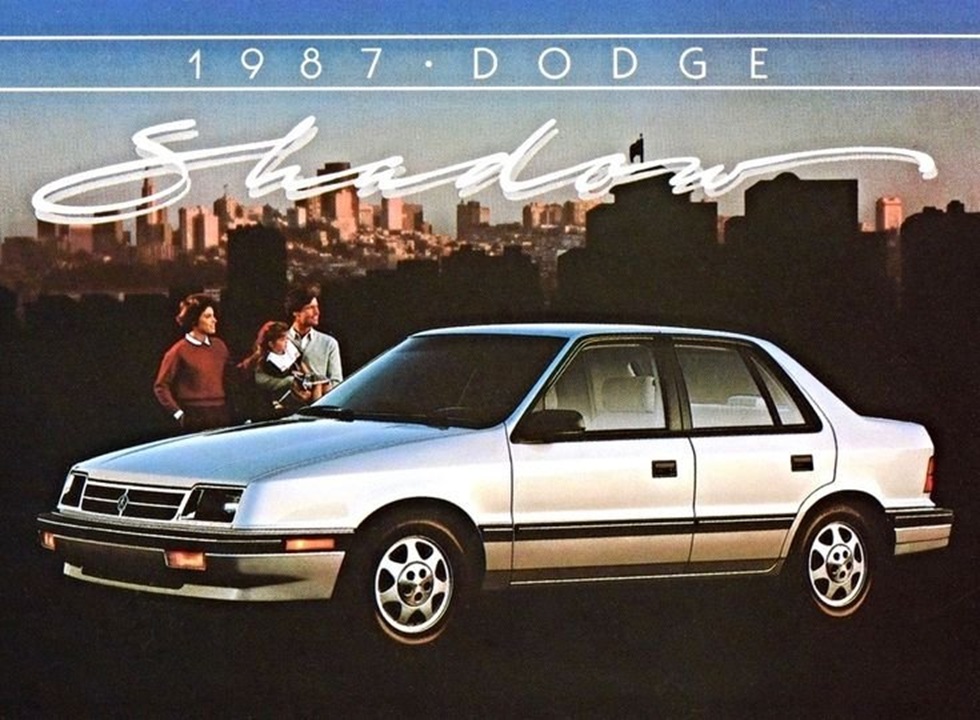
According to the October 1986 issue of MotorTrend, the Chrysler P-chassis derivative of the K-car platform started with parts borrowed from the G-chassis that underpinned the Dodge Daytona and Chrysler Laser. This meant a unibody with MacPherson-strut front suspension, a 27mm anti-roll bar, and a rear beam axle with trailing arms.
The base engine for the Shadow was Chrysler’s 2.2-liter overhead cam four-cylinder. In this guise, it made 97 HP and scooted the Shadow to 60 mph in 12 seconds. Hotter was the same engine, but with a metal snail good for up to 10 PSI of boost. That bumped power to 147 HP and dropped the 60 mph acceleration time to 8.8 seconds.
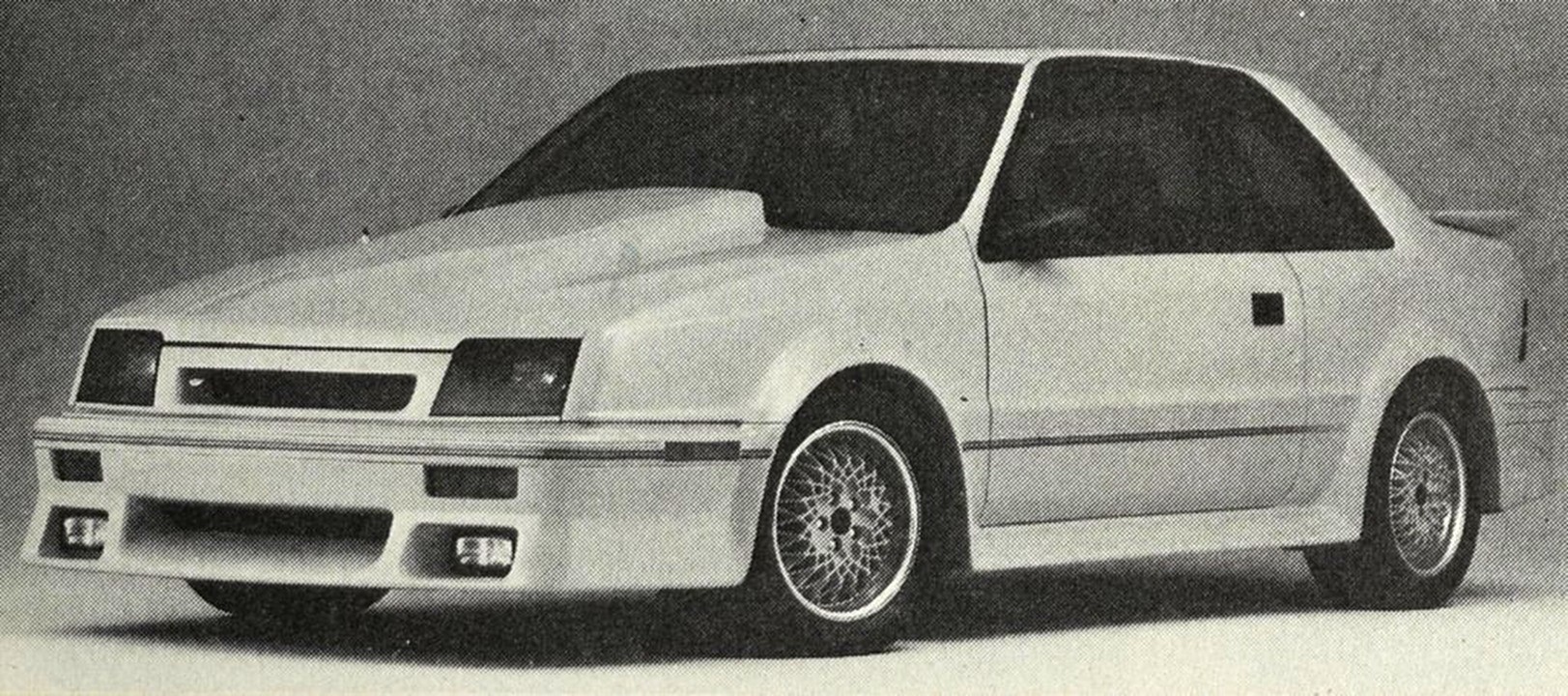
When the Shadow launched in 1986 for the 1987 model year, journalists got to check out a go-fast version that was developed by the Dodge Direct Connection Group. That one had a body kit, an upgraded suspension, a large hood scoop, and an air-to-air intercooler. The result was that 60 mph was dispatched in 7.29 seconds and the quarter mile in 15.42 seconds at 91.3 mph. The car also rang up 0.92 g on the skidpad. Apparently, journalists loved the fast version, and while Dodge couldn’t say when it would arrive, they confirmed that one was coming.
Overall, MotorTrend said that while the Shadow and the Sundance were not the heaviest hitters in their segment, they were good enough that the twins shouldn’t have had too much trouble finding fans. The fans who were willing to wait got to witness the fast version only a year later.
The CSX
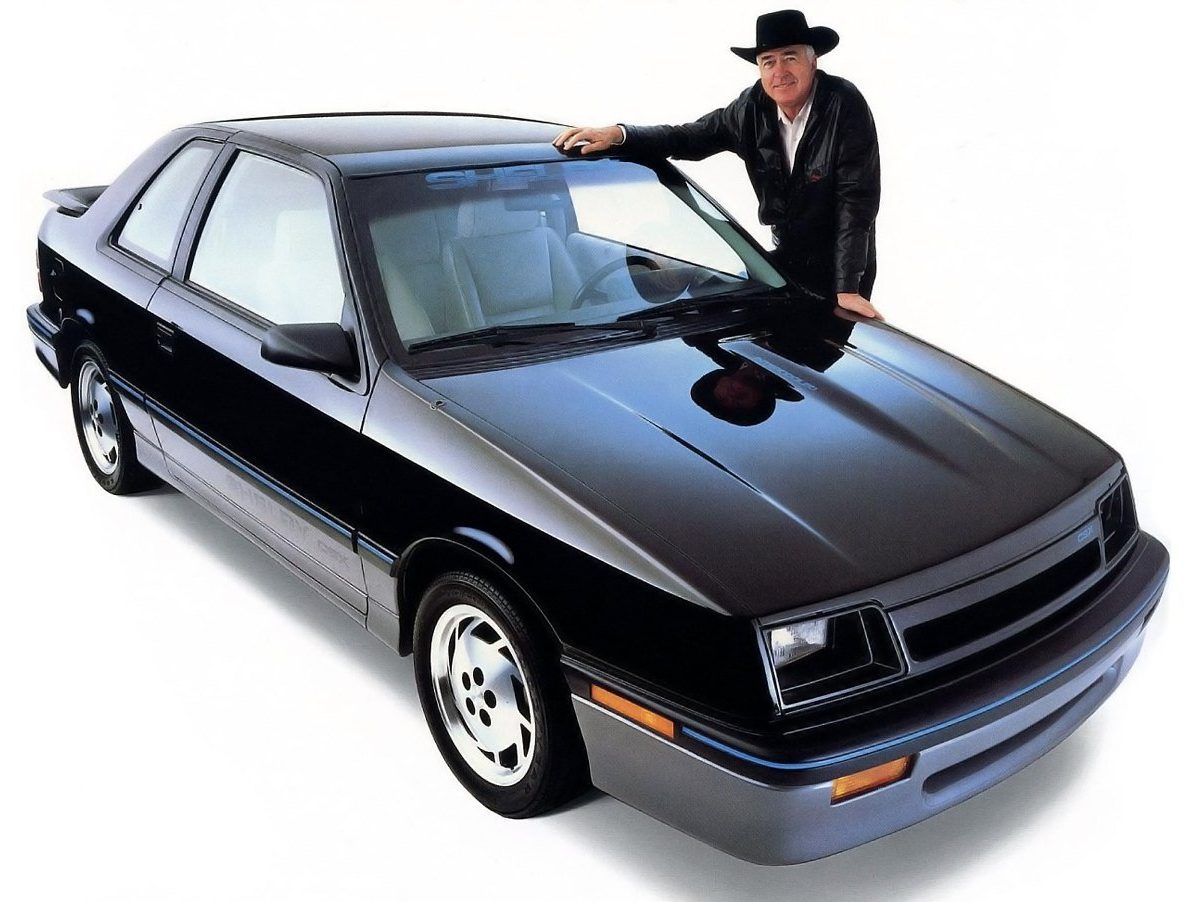
Those who waited got a treat. In 1987, Shelby Automobiles rolled out the CSX, which stood for Carroll Shelby eXperimental, and experimental it was.
As an article at Allpar writes, when Carroll Shelby began work on spicing up the P-cars, he wanted to use Chrysler’s Turbo II engine. This intercooled engine had already proven itself after being loaded into the power barn of the 1986 Shelby GLH-S and would also find a home in the 1987 Shelby Charger GLH-S. However, the hottest P-car mill at launch was the 2.2-liter Turbo I inline-four. Allegedly, Shelby found it easier to convert the Turbo I to a Turbo II than to swap over the entire engine. In the process, Shelby would drag over the intake, intercooler, fuel injectors, throttle body, and turbo from the Turbo II, tuning the Turbo I to work with its new parts.
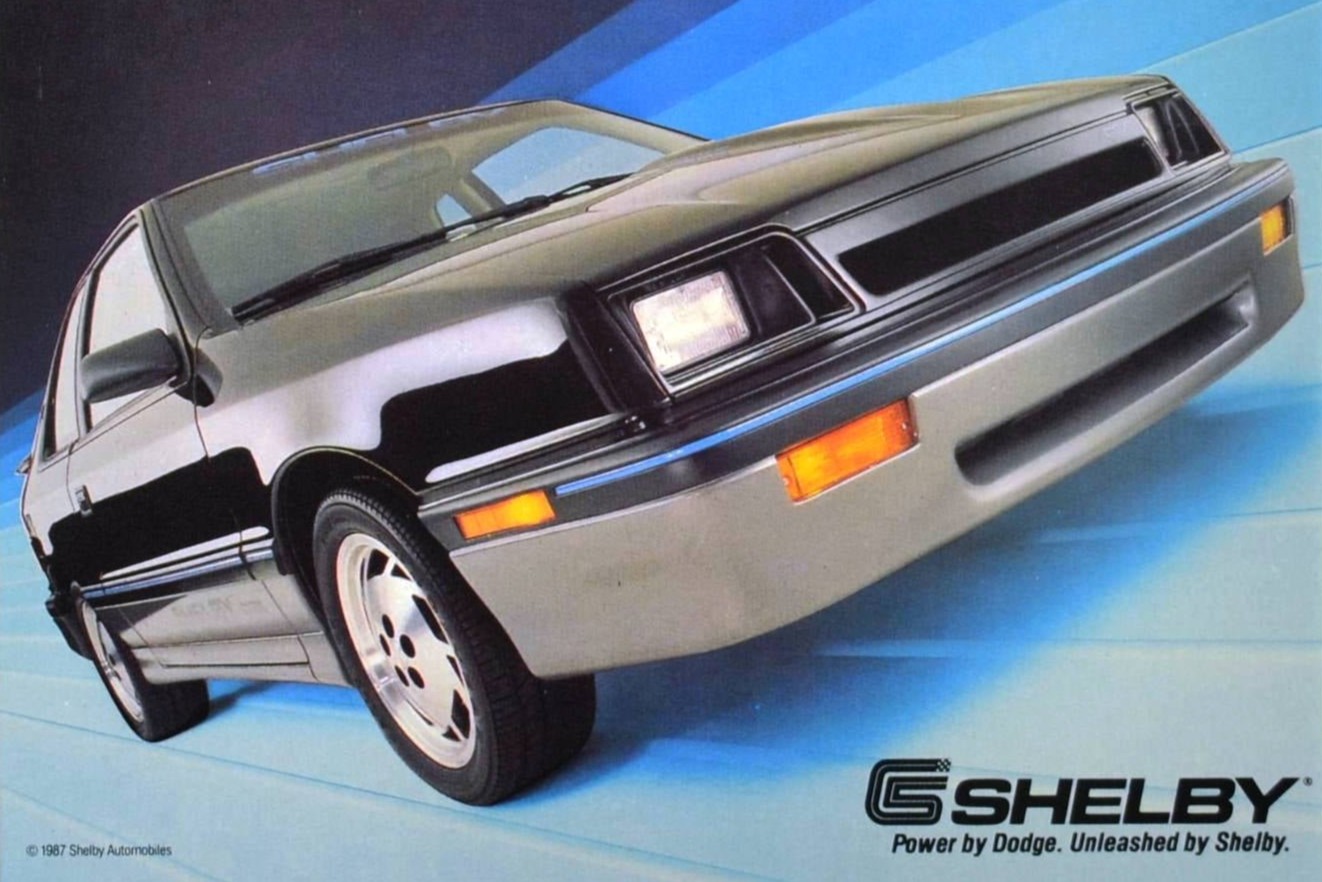
The result was 175 HP, 175 lb-ft of torque, and a claimed 60 mph acceleration time of 7.1 seconds, or slightly faster than the Dodge Direct Connection test car shown to journalists. That engine reportedly had a compression ratio of 8.1:1, the turbo produced 12 PSI of boost, and the powerplant helped complete the quarter mile in 15.1 seconds. Again, that’s an improvement over the Dodge Direction Connection car that journalists drooled over.
It wasn’t just all power, either, as Shelby decorated the Shadow with a body kit, hot wing, 15-inch Shelby wheels shod in Goodyear VR50 Gatorback tires, and a sporty steering wheel. Platform changes included Monroe Formula GP struts, front and rear sway bars, and four-wheel disc brakes.
Sadly, I could not find any period reviews, but Allpar claims the car did 0.85 g on the skidpad, just a little worse than the Direct Connection test car. The price for all this was $13,495, and it came fully loaded with a cassette player, boost gauge, and a five-speed transaxle. Only 750 examples were built.
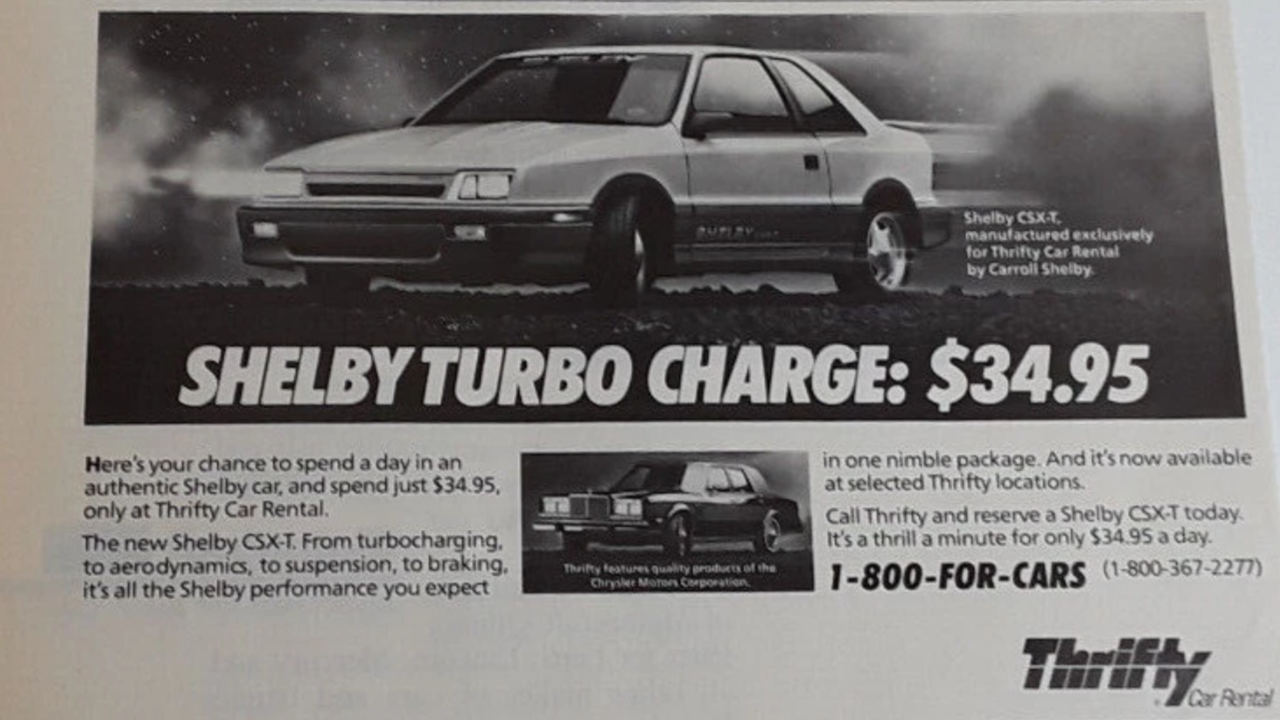
A second version of the CSX would come in 1988, and what was interesting about this one was that it was meant specifically for Thrifty Car Rental. This was more or less a modern take on the Shelby GT350H that was built for Hertz in 1966. The CSX-T, as it was called, was largely similar to the regular CSX, only this one had a non-intercooled Turbo I. With 146 HP and 168 lb-ft of torque on tap, it was slightly hotter than a regular Shadow turbo. 1,001 of these were built and were rented out for $34.95 a day ($100.87 in 2026).
In the background, Shelby was working on making the Shadow even faster. In 1988, he presented the Super Shadow concept car, which sported a Chrysler 2.2-liter turbo with dual overhead cams, a Lotus-designed 16-valve head, a steel crank, steel rods, 8.1:1 Hemi turbo pistons, and an intercooler. The most interesting part of the build sheet was the turbocharger, which was a unit from Garrett with a variable nozzle. Output was an impressive 225 HP. The Super Shadow also had composite wheels. We’ll get back to both that turbo and the wheels in a moment.
Arguably, the true Holy Grail of the CSX is what came in 1989, because that’s when Shelby pulled out all the stops to make the apex of Dodge Shadows.
Fiberglass Wheels And A High-Tech Turbo

The final bow of the CSX came in 1989 as the Shelby CSX-VNT. This car would essentially serve as the production version of the aforementioned Super Shadow, and the most technologically advanced parts actually made the cut. In 1989, MotorTrend explained that Shadows were built by Dodge with Turbo II engines fitted before being shipped to the Shelby Automobiles factory in Whittier, California. Then, Shelby got right to work squeezing more power out of the mills. The centerpiece of the performance was the turbocharger, from MotorTrend:
Built by Garrett, the VNT is the latest weapon in the war against turbo lag, and it’s finding its first production application in the CSX. Also referred to as the variable vane turbo in some circles, the Shelby people feel that theirs is the more accurate term. The theory behind the system is simple, though the metallurgical and control problems are no doubt a bit more daunting. Twelve movable vanes are positioned in a ring around the exhaust-side turbine wheel. All the incoming exhaust gas passes through the vanes, which are linked by a single control ring that rotates slighty to change the angle of the vanes. At low engine speeds, the vanes reduce the area for exhaust gas to enter and drive the turbine. With the reduced area, the gases are forced into the turbine housing at a higher velocity than in a normal turbo. This in turn drives the turbine wheel faster, shortening the lag time before boost builds and bringing the boost on line at a lower rpm.

At higher engine speeds where the artificial boost in turbine speed isn’t needed, the vanes slowly open and the turbo works like a conventional unit. Besides the help off the bottom, the Variable Nozzle Turbo also eliminates the need for a separate waste-gate to keep boost within safe parameters. When the engine control logic module senses that maximum boost has been reached, it signals solenoids that control the vacuum-driven vane control ring to reduce the flow of incoming exhaust gas. Luckily, you don’t have to understand all the nuances of the VNT to appreciate the results. The CSX has 175 hp at its 5200-rpm peak and makes 200 Ib-ft of torque at just 2400 rpm. These are pretty serious numbers, and go a long way toward describing the Shelby motor’s miniature V-8 power characteristics. In a lot of ways, the CSX mimics the feel of a big normally aspirated motor. The engine builds a limited amount of boost right from idle and really comes on solidly by 2000 rpm-surprisingly low for a turbo motor. From there to the 6000-rpm redline, you have a broad band of seamless power at your disposal.
Catch the engine by surprise at any normal rpm, and you’ll have to wait only about a second for the boost to build fully. Again, an impressive performance for a single-turbo installation. The higher the revs, the shorter the wait, and the stronger the hit when the pressure builds. The boost comes on a bit suddenly by mass-production standards; there’s an anti-social edge to this little motor, an irrepressible surge when the power hits that makes the car feel even faster than it is.
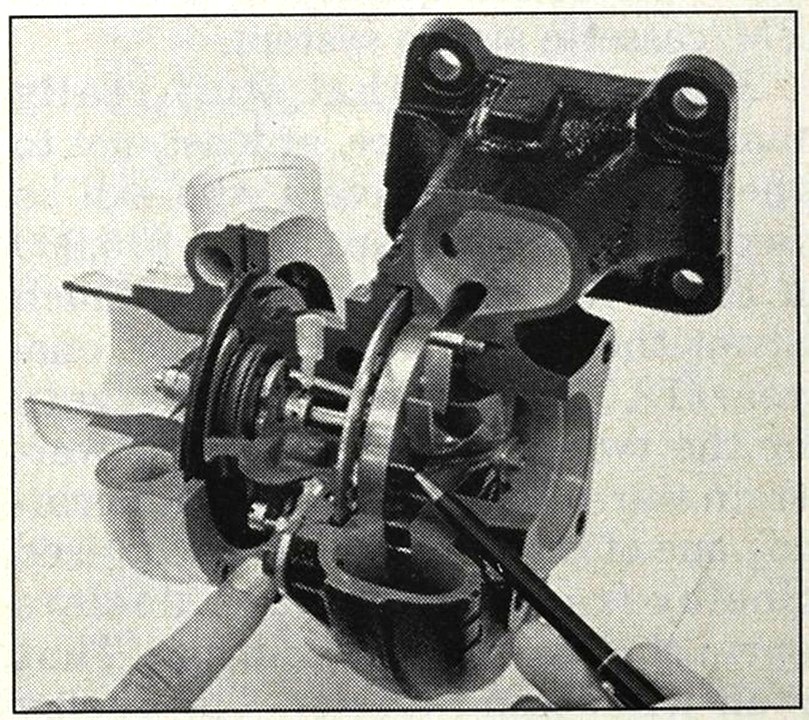
Engines with the VNT were called the Turbo IV, and in the CSX-VNT, it was good for 174 HP and 205 lb-ft of torque. It’s sometimes reported that the VNT is a creation of Garrett, but that’s only partially true. As Shelby Automobiles explained to Car Craft Magazine in 1989, the variable nozzle turbo was indeed designed by Garrett, but the computer that controls it was done in-house by Chrysler, and a patent was even generated in the process.
The other innovation brought to the CSX-VNT was the fiberglass wheels, which were designed by the Goodyear subsidiary Motor Wheel Corporation and called Fiberide. Here’s what Popular Science said about Fiberide wheels in 1989:
The composite wheels on the Shelby CSX represent the latest advance in the evolution of the wheel. While the gold-tone five-point-star wheels look as if they’re made of polished aluminum or steel, they are actually molded of vinyl ester/polyester reinforced glass fibers. Randomly dispersed chopped fiberglass is bolstered by continuous strand sheets in areas that require more support. According to Scott Murray, director of engineering at Motor Wheel Corp. in Lansing, Mich., each wheel weighs 18 pounds—five pounds lighter than a similarly styled aluminum wheel and seven pounds less than a steel wheel. Five pounds per wheel may not seem like an astounding weight savings on a 2,800-pound car, but this 20-pound reduction in unsprung weight means the suspension doesn’t have to work as hard, and the handling can be made more precise.

“This wheel was designed from scratch and pushes the technology,” says Murray. “We started with clay models of what Shelby wanted the wheels to look like, and we engineered the load-bearing structure of the wheels from there.” The 11-year development of the Fiberide wheel program at Motor Wheel entailed 5.4 million miles of road testing, as well as extensive laboratory tests on impact, stress, fatigue, corrosion, and how long lug nuts will remain tight. Murray says the composite wheels met or exceeded all criteria when compared with existing aluminum and steel products.
Metal wheels also can resonate like a bell being rung, but Motor Wheel test drivers noted that the Fiberide composite wheel soaked up vibration and tire noise that the metal wheels tended to transmit into the car. Murray claims there is also an added bonus of having wheels that will never rust, corrode, or tarnish and will require a minimal amount of maintenance.
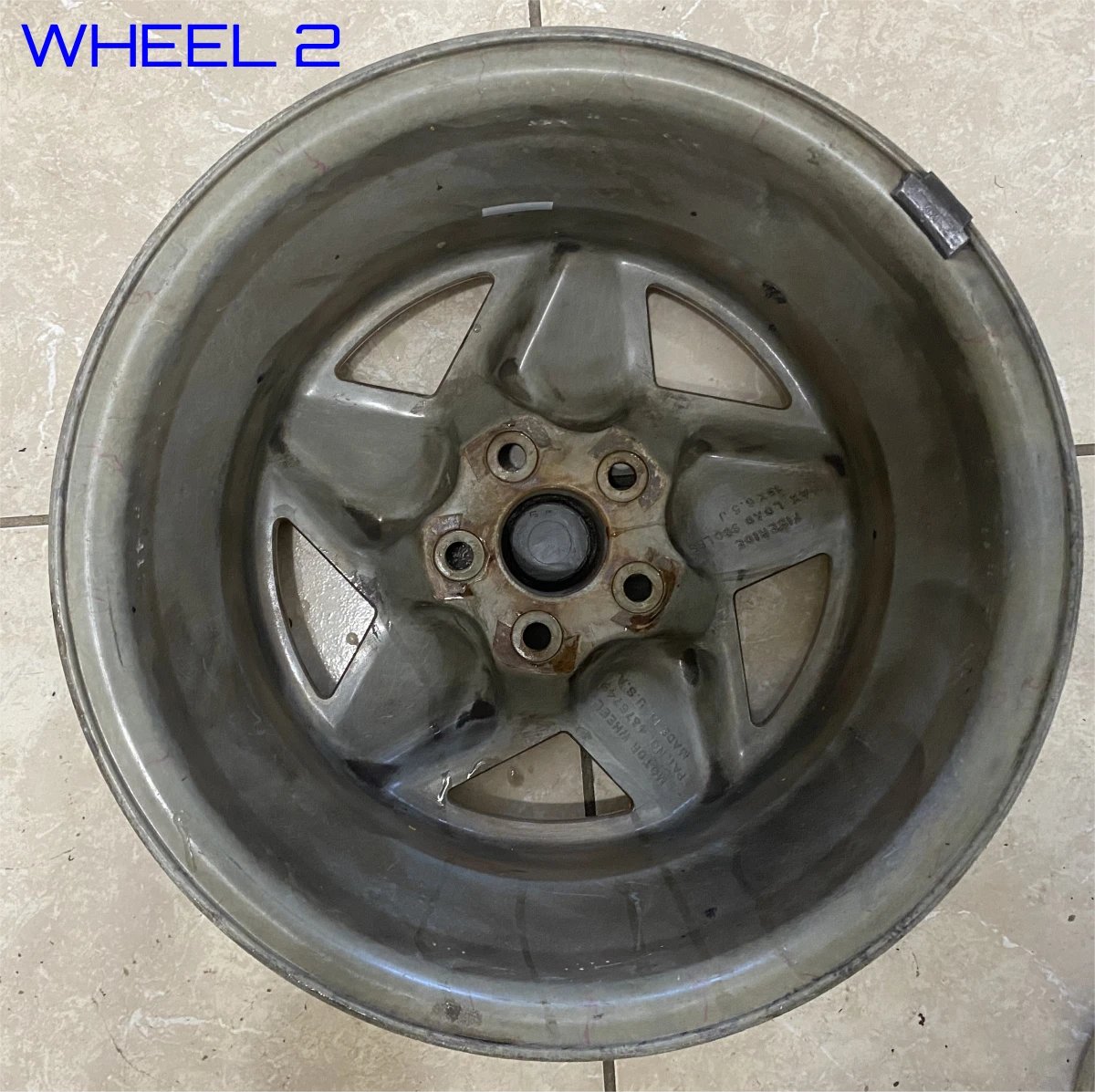
The CSX-VNT’s wheels weren’t the first application of Fiberide. In the mid-1980s, General Motors was looking into the feasibility of a next-generation Pontiac Fiero and considered composite wheels. As it turned out, a company was already working on such a concept. Motor Wheel’s Fiberide wheels were molded at 300 degrees Fahrenheit under 1,500 pounds of pressure, and had been subjected to millions of miles of testing over several years. This wasn’t exactly a crazy concept. Back in 1971, composite wheels were developed for the rally version of the Citroën SM, and were then sold to the public as an option for roadgoing SMs.
Motor Wheel made a prototype set of Fiberide wheels for the future Fiero research project. Sadly, that 1990 Pontiac Fiero never came, but the only set of fiberglass Fiero wheels in existence stuck around. However, Motor Wheel’s Fiberide application for the CSX-VNT was the first time those wheels were ever mounted to a production car. Shelby and Dodge go so far as to claim that the CSX-VNT is the first production car to come with composite wheels. I suppose that could be technically correct since the SM’s composite wheels were a separate purchase.

As for the rest of the CSX-VNT, it was a pocket rocket in the vein of the GLH-S. From MotorTrend:
You would have to spend some seat time in a purpose-built race car to be fully prepared for the way the CSX goes down the road. Surface irregularities are only mildly rounded off by the firm suspension components, and copious amounts of road noise are telegraphed into the chassis by the big Goodyears. Try to carry on a conversation while rolling down an expansion-jointed highway, and you’ll sound like you’re being throttled. Your passenger will wonder why you bought such an obviously shoddy car. You might even wonder too, at times. Driving around town, you might easily conclude that the Shelby people don’t care a whit about making you comfortable or keeping your Kommuter Kup smoothly in position on the console. Well, you’re right, they don’t.
All the suffering turns directly into mouth-watering bliss the instant you blow past the city limits. Take a bead on the first series of corners, tap the brakes, and pitch her in. The cornering load builds sharply and the CSX just carves—almost no body roll, almost no street-car slush factor—just tight, accurate response. Suddenly the high suspension rates and brawny roll resistance make perfect sense. At first you might overdrive the CSX, particularly if you’re used to dealing with the slow response time of softly suspended, under-tired regular street cars. The Shelby, on the other hand, actually notices all those little steering inputs that other slushier cars barely respond to at the limit. This is, of course, a good thing, at least once you clean up your act a little bit.
There aren’t many cars that will outstick the CSX; our car generated 0.86 lateral g on the skidpad, circulating in classic front-drive understeer. But on the road, in real turns, the car offers greater flexibility than your average front-driver. Trailing the brakes deep into turns sets the car’s tail out nicely, taunting you to see just how long you can hold the car in a lurid four-wheel drift. Of course, it’s always possible to have too much of a good thing, as we discovered while slalom testing the CSX. Brutal tran-sient maneuvers can unstick the lightly loaded back end to the detriment of many little rubber cones. The CSX is a short-coupled little car with a lot of traction; it responds quickly to the right command, or just as quickly to the wrong one. It can’t be flung about with the same wild abandon as your average front-driver. The payoff is that its limits are considerably higher than your average car’s. The CSX ended up snaking through the slalom at an average speed of 64.94 mph—a remarkably swift performance. Most front-drivers are relatively stable in yaw in the slalom, and understeer sets the maximum speed limit. By contrast, the CSX’s grippy front end turns in sharply, more like a nicely set-up rear-drive car.
In terms of performance on paper, by MotorTrend’s measurements, the CSX-VNT hit 60 mph in 7.44 seconds and could do a quarter mile in 15.58 seconds at 88.8 mph. It’s unclear why this car was slower than previous versions of the CSX. Shelby claimed the car could hit 60 mph in 7.1 seconds, so maybe the slightly slower run was due to the driver’s launches.
Either way, MotorTrend said that, with the right driver, there wasn’t a front-wheel drive car on sale in 1989 that could catch a CSX-VNT in a straight line or in the corners. The brakes even got the car to a dead stop in only 126 feet from 60 mph, which isn’t bad at all! The great part was also that since this was based on a Shadow commuter car, the CSX-VNT was as practical as it was sporty.
A Piece Of Automotive History

Just 500 examples were sold for $15,000 each ($41,360 in 2026). Today, you could score one of these cars for under $20,000, and some have even sold for under $10,000. Like many sporty Chryslers from this era, it seems like there’s a decent group of superfans, but they’re otherwise largely ignored by most other car collectors.
The biggest contribution the CSX-VNT made to car history was its technology. Variable nozzle turbocharging was novel back then, and the CSX-VNT was one of the very first production cars to get it. Nowadays, variable geometry turbos are everywhere from basic economy cars to supercars. While fiberglass wheels aren’t much of a thing, carbon fiber wheels are. When you look at the CSX-VNT, you’re not just basking in one of the absolute coolest American performance cars of the 1980s, but witnessing the infancy of a couple of modern technologies.
The CSX-VNT was also a swan song of sorts. It was the last Dodge Shelby, the last Shelby to be built in Shelby’s own California facility, and to some fans, the last “true” Shelby. Yet, this is one of those Holy Grails where rarity does not exactly equal value. Honestly, that’s pretty cool, I think, as CSX is one of the coolest hot compacts of the era, and they’re still attainable today. Besides, how many other cars are you going to buy that have fiberglass wheels?
Front graphic images: Bring a Trailer listing




Just saw this article! I have ’87 and ’89 CSXes, both production #321 in their respective years. In 2004, I was fortunate to meet Carroll Shelby at a car show, and he signed the dash of the ’87. I’ve had that car for 27 years and the ’89 for 20. But I’m getting close to retirement, the cars are just sitting, and arthritis makes it hard to do a lot of car work now. It’s time I start looking for new custodians of these interesting and unique cars.
I loved these cars when they were released and was going to get the Plymouth version for no apparent reason.
But, them I saw the Chevy Beretta an fell in love with that instead.
I didn’t have much money in those days and not much taste either.
I built a kitchen for a guy that had one of these. He adored it, but he also NEVER drove it. If I recall correctly it had something like 10k original miles. The guy turned out to be an a**, and tried to wriggle out of paying me the $15k balance for the custom cabinets I’d just built and installed. It took placing a lien on his assets to get him to cough up.
which came first? These wheels or Ferrari 348 wheels?
I literally had no clue these had fiberglas wheels.
Torch should do a bit about the Euro spec version of the Dodge Shadows because the Euro taillamps look so much better and really make the back look like a completely different car.
This is the kind of dumb shit I’d end up with if I had space to house a collection. Something about it is really speaking to me, and they’re *almost* cheap enough to buy on a whim.
I drove a CSX during my stereo install days. Torque steer so forceful it put me off FWD cars until about 3 years ago..
The Shadow was arguably better than a Tempo and at least on par with the N-body. The hatch was a hidden gift.
This is from the time when Chrysler was pulling an American Motors on its parts bins, except they were coming up with more and bigger winners than forever-broke AMC could with its Eagle. How many different ways can we sell the K platform, Lido? He went on to find out. Ostensibly the Shadow isn’t a K car, except the P platform was derived from the K so yes, it is.
Regular Car Reviews once described 80s Chrysler like Taco Bell, determined to make a menu by rearranging the same six ingredients in different ways.
That is NOT WRONG.
Learned two things today- about this and a Rally version Citroen SM- were they trying for some sort of unreliability prize >?
Not to be mean, but it sort of looks like a Fox body Mustang with all the personality sandblasted off.