

I’m a big fan of the Volkswagen Golf Harlequin and the Polo Harlekin special editions done in multicolor schemes. In recent years, it has felt like parking lots are full of white, grey, dark grey, and black cars, chosen in monochrome hues that won’t risk the resale value, with just the occasional bright spot in there to show that you’re not viewing the world in black and white. Some carmakers offer bright shades as the no-cost default color, as Stellantis has done in Europe, but the multicolor Golf and subsequent Polo have remained weird blips on the radar.
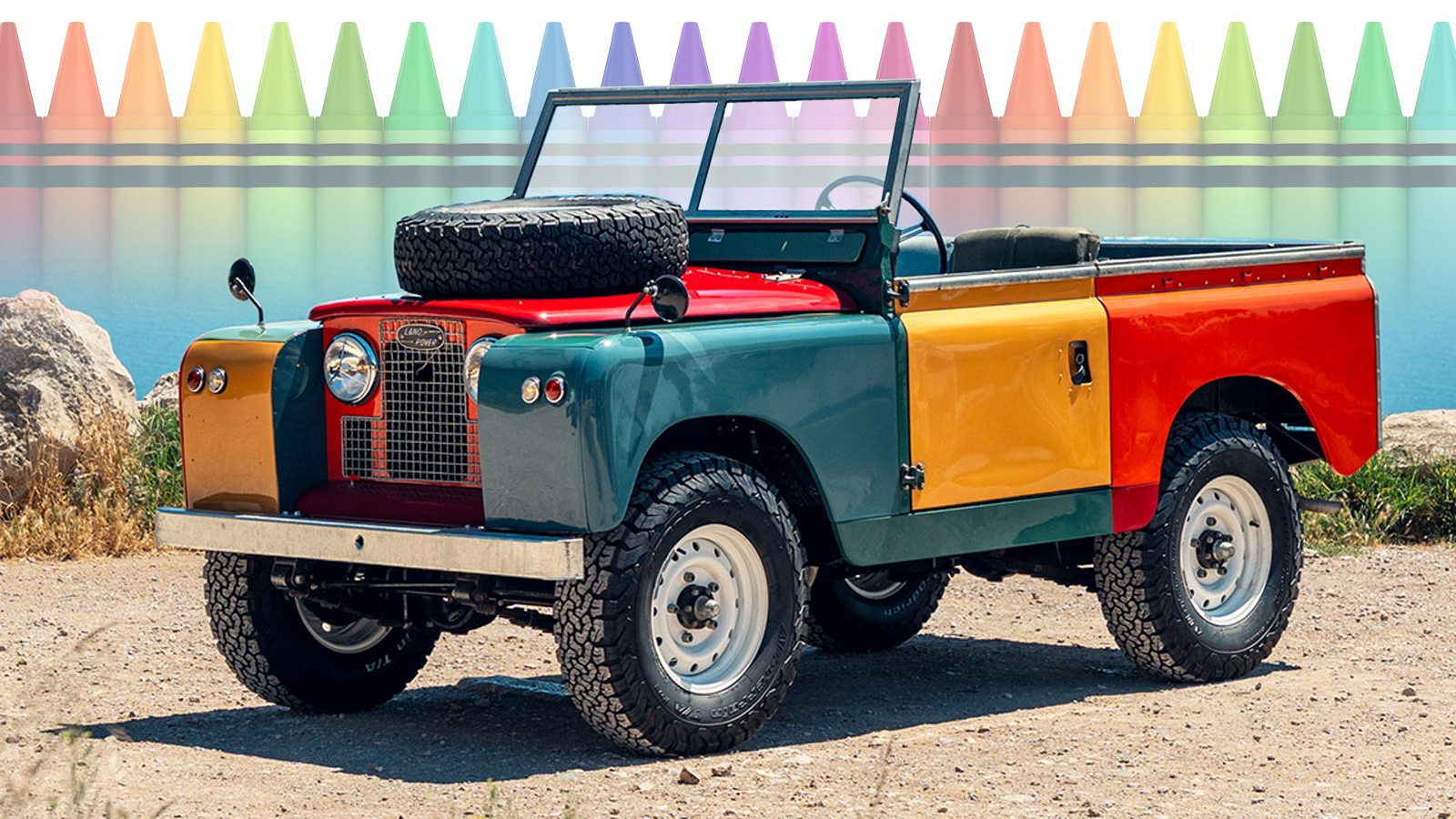
Still, they have influenced a bunch of tuners willing to replicate the same zany look, and sometimes custom cars appear with their panels repainted in the same fashion. A good example is this Land Rover Series II that was displayed at Monterey Car Week last year and memorably driven back to LA from there, instead of being trailered.


Harlequin History Lesson

Here’s the original scheme as demonstrated by original Volkswagen marketing material. Volkswagen took batches of green, yellow, red and blue cars aside from the original factory line and had workers in moustaches and mullets swap out their bolt-on body parts so that no panel would be next to the same color. 3,806 Polo Harlekins were built, which is far more than the 264 Golf Harlequins that were made. The Golfs weren’t easy to sell, and some dealers repainted them. Jim Ellis VW in Atlanta gathered some unsold Harlequins and swapped the panels around again to create the rarest versions: single-color Harlequins.
Sometimes you see vinyled-up cars done up in Harlequin/Harlekin scheme, and when the 1996 Polo Harlekin turned 25 years old in 2021, the Dutch Volkswagen importer customized a single new car in the same style to commemorate the original edition. In 2025, Volkswagen did the same for a Polo R World Rallycross car to celebrate the Polo’s 50 years.
But these sort of jobs are always closer to “Let’s do this for social media” instead of “Let’s go wild and see if people will buy these.” I would absolutely welcome the idea of Volkswagen doing the new ID.Polo in a Harlequin scheme and offer them for sale.
Make A Replica, If You Must
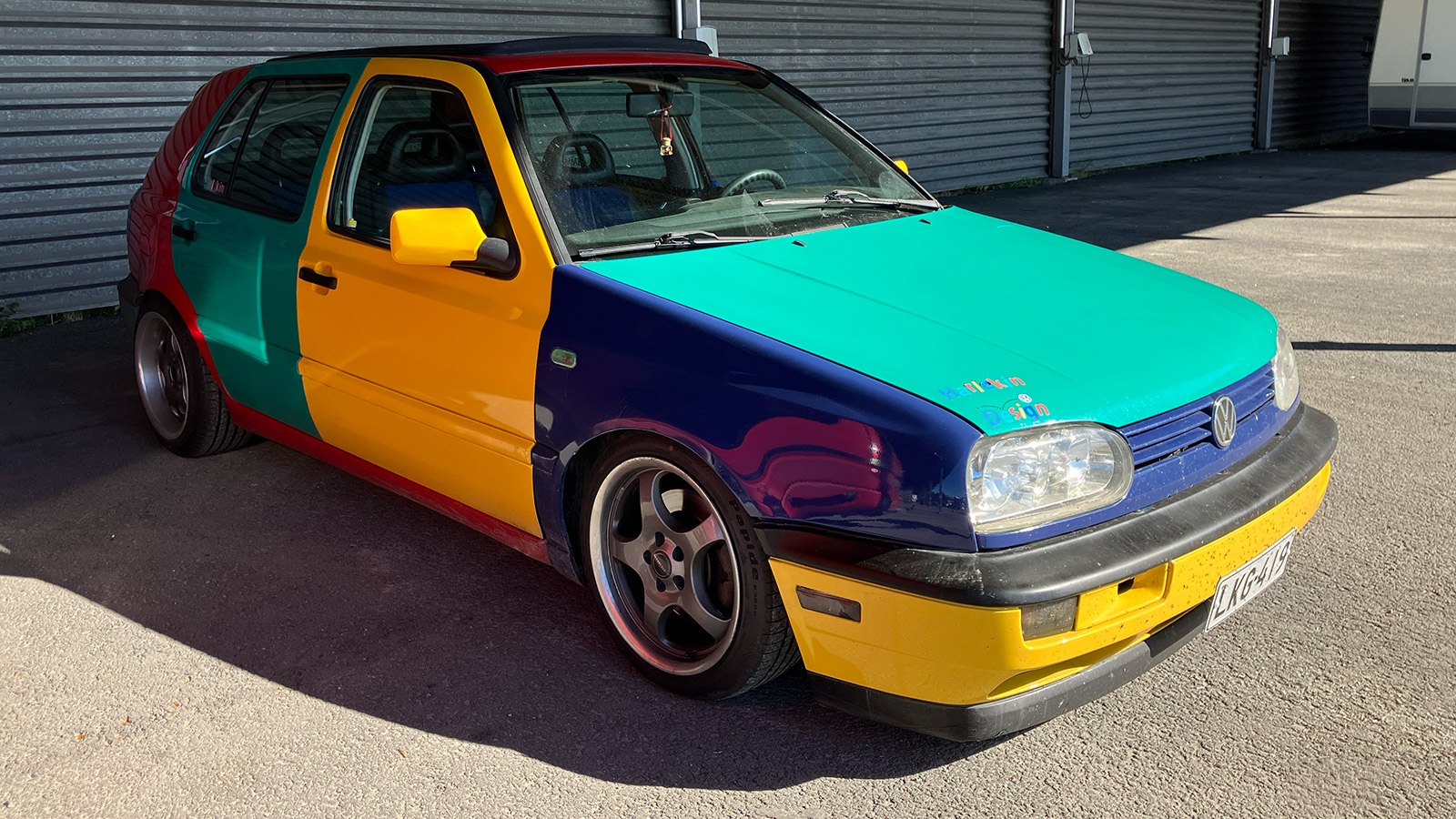
There’s a Mk3 Golf Harlequin driving around my region that I’ve spotted in traffic a few times and also managed to see parked at a Toyota dealer on a couple of occasions. My kid calls it The Clown Car (in Finnish, “Pelleauto”) and audibly wondered if there’s a real clown driving it.
It’s a slammed tuner car, and I believe it to be a replica, as there’s a detail that will always reveal if a Golf Harlequin is the real deal: if it’s Euro, it isn’t real. Harlequin edition Golfs were an American market specialty, meaning they will have side markers and narrow plate plinths on the rear hatch.

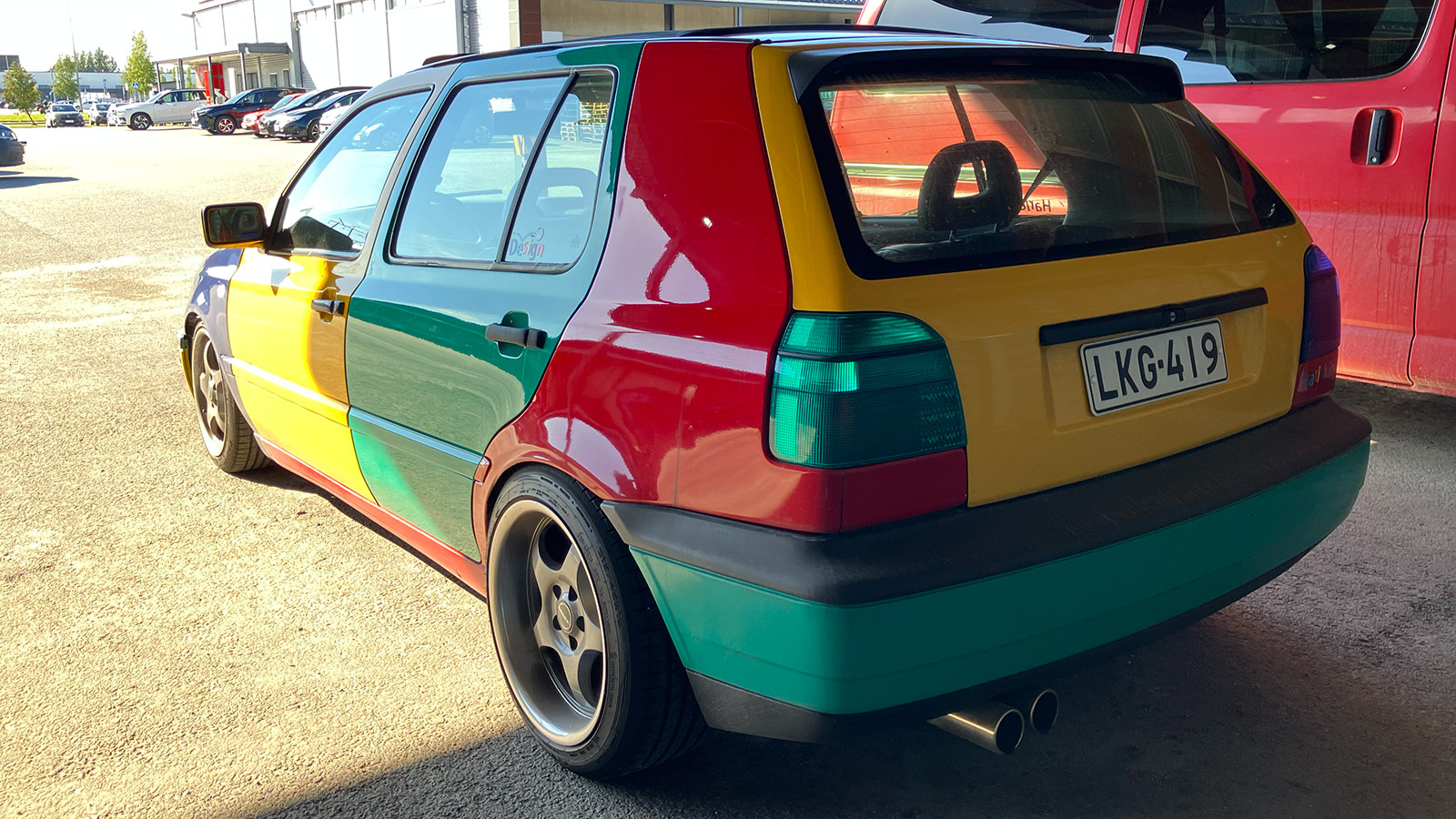
The latter is the big reveal, as a wide, European-sized plate plinth means the car was manufactured as a regular Golf in Europe. Real Harlequins were built in Puebla. But painting all the panels and doors for real means full commitment to the bit, instead of a removable vinyl job, and the car does have an American market front bumper with side markers.
The one other thing is that the Golf here is a 1994, and Harlequins were all built in 1996. A Golf would also be badged Harlequin with a Q, as the Polo Harlekin was spelled with a K. Note the differently colored Hella tail lights, a neat touch.
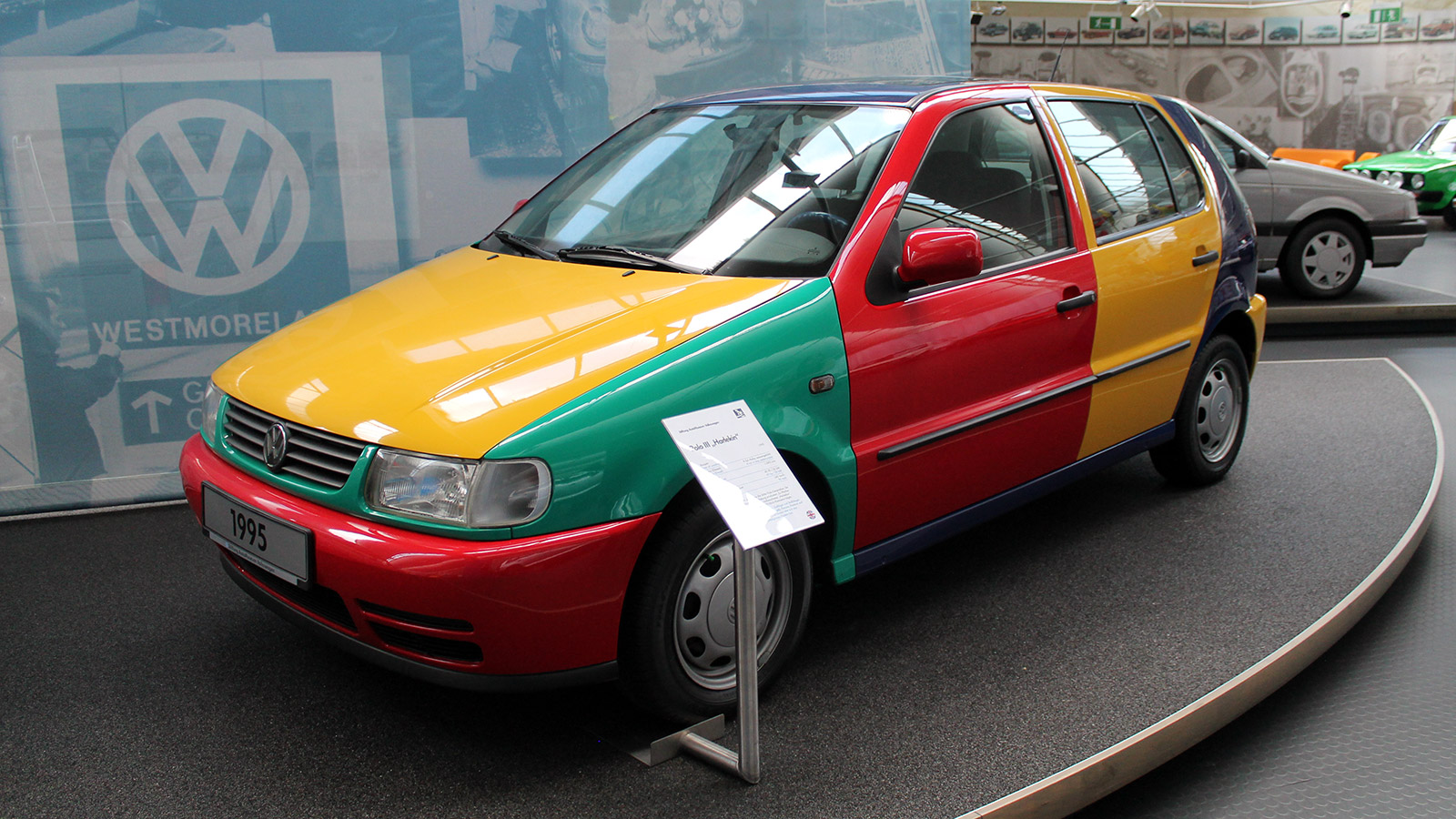
For some time, I’ve also been looking for a cheap and cheerful Polo Harlekin. Getting to see one in the metal at the Stiftung Volkswagen Museum in Wolfsburg – in the best possible scheme – didn’t help, as I would have wanted to take that one home there and then.
The problem with them is twofold: most ‘90s Volkswagens have rusted so badly in Europe by now that any cheap Harlekin will be really rotten, and they are such cult cars at this point that a good-condition car will cost a lot. I think there’s at least a single Polo Harlekin registered new in Finland, and a handful have come here as secondhand imports.
There was likely a brief moment when the joke was sort of old and the multicolor VWs not in vogue, and you could pick a decent condition one for cheap, but after 25 years of wear and tear you’ll only be able to get rusty ones from Germany for a grand or two. Any Harlekin that doesn’t need significant welding in all the places that a regular, well-worn Polo would, will cost far more.
To prepare, I have already bought a matching green Momo steering wheel and a set of BBS Benetton three-spoke wheels in the correct 4×100 configuration, a set that is often seen on Harlekins. I’m just missing the car to put them on.
Maybe the Golf would be the ticket: it’s already in town, it’s already road legal, and while I think only Citroëns should hug the ground like the Golf does, the suspension is probably straightforward to set up for a more normal-looking ride height. Too bad it seems to be 5×100, so my wheels won’t fit.
It Doesn’t Have To Be A Volkswagen

RM Sotheby’s is also auctioning a really neatly done 1958 Land Rover a week from now. The custom paint job, done in 2025, was created by Sean Wotherspoon, who has done a bunch of collaborations, including limited edition sneakers with sports and apparel brands, and who has also designed a similarly Harlequined Porsche 911 earlier as well as a Taycan in collaboration with Porsche.
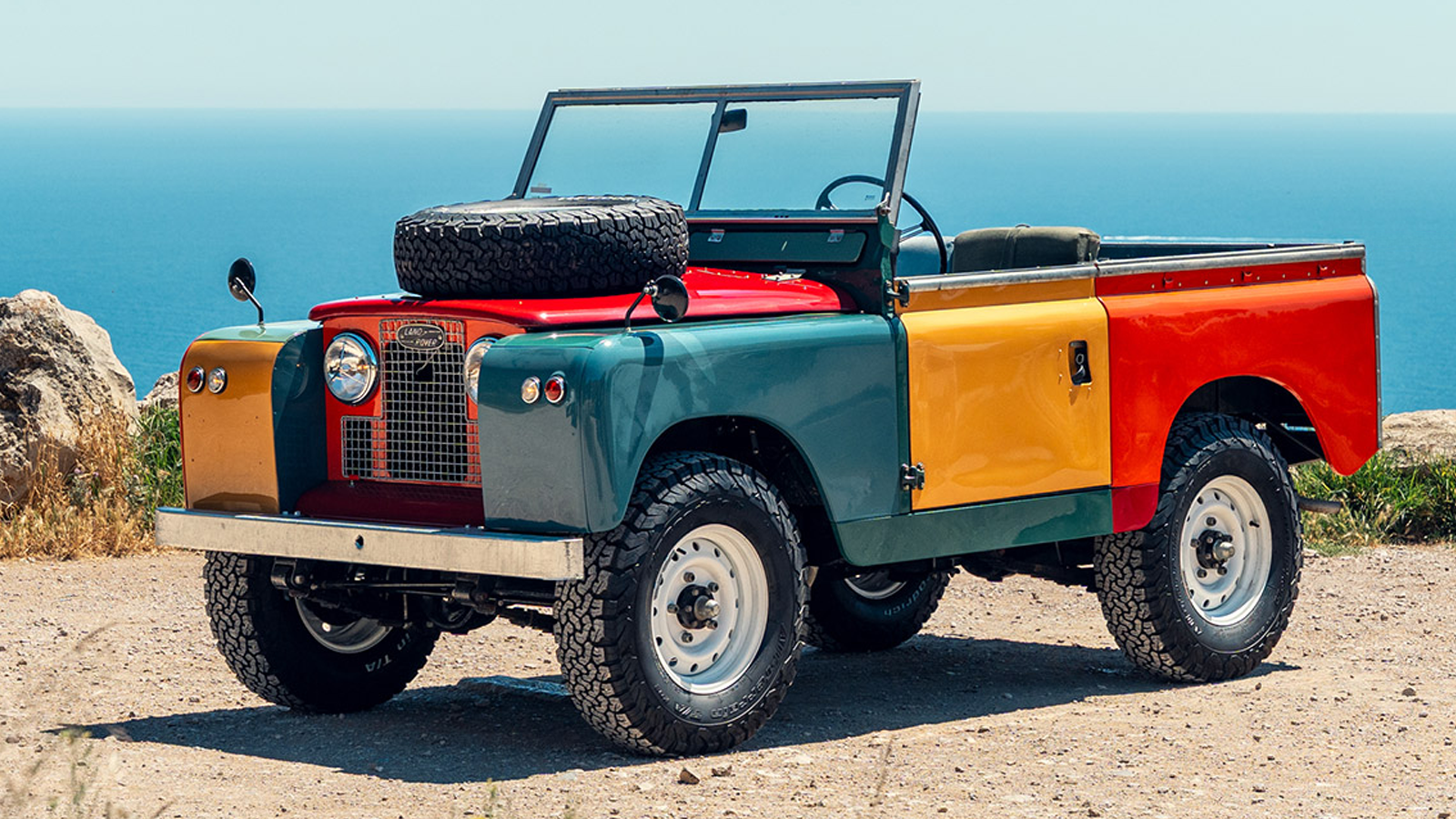
While the Harlequin/Harlekin schemes on Volkswagens are symmetrical, meaning that each front fender, door, and rear quarter panel has a matching color left and right, the scheme on the Land Rover is more … rotating. That means that viewed from the front, the face of the truck’s passenger-side front fender is painted yellow, the entire driver-side fender is green, then the driver door is again yellow and the driver rear quarter panel is red. However, the passenger door is also yellow. This adds a different, weirder dynamic to the exterior instead of the calculated zaniness of the original Volkswagen scheme. The tiny squares of red paint on the rocker panels add an extra touch to the look as they help break up an otherwise continuous stretch of green, especially on the passenger side.

Inside, the bench seat is reupholstered in vintage plaid fabric, and the cargo area is covered in old jeans. This is neat, and the differently colored seats bring to mind an early Renault Scenic trim level, which had all the MPV’s seats in different colors, sort of a reverse Harlequin.
View this post on Instagram
“I’ve always loved Sean’s design, from Nike, to Adidas, to the Porsche that went down so well,” said the car’s builder, Jimmy Howson, when the car was originally revealed. “All the cars I’ve done have been beautiful and curvaceous, so I thought: let’s colour block a literal brick. Also, I’ve had a few Land Rovers in my time, why not have one in LA!”
The short-wheelbase Land Rover was originally a Canadian-spec truck, so it’s been left-hand-drive all its life. It returned to the UK in 2002, and it’s believed to have been one of only six LHD Series II:s in the UK at that point. It was rebuilt at Howson’s Stuff by Spot outfit in Britain, with a Land Rover specialist from Essex providing know-how. After completion, it was shipped to the United States to be shown at the 2025 Monterey Car Week.
When the show was done, it was driven back to LA. Howson and Wotherspoon threw the Land Rover’s keys to Mikaela Worthington, a car enthusiast, engineer, and Monterey Car Week regular they had met 15 minutes earlier, and told her to drive it home via Interstate 5. Matt spotted her on the road, six hours into her journey, and got this great interview with such tidbits as:
“At one point on the drive between the delirium and everything else, I was like, I feel like Amelia Earhart,’ Worthington tells me. “Gina [in the Mini Cooper] was like ‘She didn’t come back!’”
The Land Rover threw a few curveballs, such as a barely working clutch, but she persevered despite the hard sun and endless straight road ahead.
“I think the moral of the story is just say yes to stuff, do more things. And while it was absolutely type II fun [miserable while it’s happening, but fun in retrospect], it was worth doing.” I’ll definitely use “type II fun” from now on, and it’s incredible I hadn’t heard the term before.
The Land Rover has now been shipped back to the UK and will be auctioned at RM Sotheby’s Woodcote Park event on 8 July. The auction listing says its gearbox was refurbished in 2026, so we’d expect the clutch to work perfectly this time around.
Top graphic images: RM Sotheby’s; DepositPhotos.com


I saw like 10 years a go or so early nineties Golf Country (basically lifted golf with AWD) that had Harlequin colors. I don’t think it was stock, but damn it was cool. Pretty rare beasts, I don’t think I’ve seen more than 2-3 Golf Countries ever.
Your definition of better must be different than mine
Sorry Antii, but the more correct wheels for a Harlekin are these.
I KNEW what it was gonna be! Sorry, those should go on a Nissan Micra or a Mazda 121.
They were an option in the brochure for the Mk3 Polo IIRC, but yeah, they don’t suit a Golf quite as well.
They might work on one of the new Fiat 500’s, or any other small friendly cars.
There was a first gen Mazda3 hatch with the harlequin scheme on it in my area over a decade ago. It’s probably succumbed to rust now as it was already losing it’s rockers at the time but it was always fun to see.
There is a few Golf Harlequins and a Polo Harlekin around here in PHL. The Polo belongs to Jamie from Orchid Euro in Pottstown, they also have/had an Atlas done up in the scheme as well.
I noticed the one in the article, though it has the American front and rear bumpers, the owner still decided to paint them in the European style with raw/unpainted bumper tops. That must look strange up close because N/A spec bumpers were not textured plastic on the tops like Euro bumpers, they are smooth because they were to take paint on them.
Also, the 4 color Momo Benetton steering wheel and shift knob is the way to go on these, but good luck finding any for cheap, some are as much as a cheap car.
mega cool. top marks.
I think unless you have a great tast in color you are making a clown car
The line between clowns and harlequins is very fine indeed.
Most modern Renaults have colours as the no cost-options. Mine came in a colour called absolute green.
We have a Peugeot e-2008 and it came in this great, no-cost Fusion Orange. I love it.
When I bought my MX5 it was yellow, and green, and white, and red.
It looked shit.
After a while I got fed up of the constant attention, bought some rattle cans, drove it in to a field, masked off the windows and lights, and painted it satin black. I’d have painted it a single shiny colour, but lack the skill.
I’m not a fan of brightly coloured cars, but weirdly love brightly colour motorcycles. I’ve not had one that wasn’t either lime green or stripy red, white and blue.
Love it!
If I ever get a Vintage “not a” Bronco, it’ll be Harlequin.
All the bright colors make me miss my orange Jeep.
Harlequin Trax
I am getting this error 🙁
https://upload.wikimedia.org/wikipedia/commons/4/4a/Peugeot_403_berline_01.jpg
Odd. Still works for me. Not sure why there’s a Wikipedia in your error message. The actual Google Gemini link address is:
https://lh3.googleusercontent.com/rd-gg-dl/AFfU-fK9QMbQvh2SMuuyWHX6tT1KargjtFo_AP0zl85ciiyhIguFrPjTyOl7U6WCLVOdYnFSbIVr7FbUUhh9xaI_iRNW510J_ezSL2SF667jBsj2qDIj2ToRpc2AqTLkwd4oRsJDTSiciv9Ua7V98ySoCeSSuPuGmnJ-pcEMg-uZB_eY9Dykv-iPXcvNijDqZwyTcdie10iffndO0JQqqxI6XleVUuHudTcxtpLFhQYh6EHzCwMmV0YhYJsPmnXmED0VDla8CEj4hp6Oi177omBFvF2tFn4oe0w2kB2xPke3JI8Xk8ybar2gwcA7ZSdNPHR9N8Yyj9hNFI1GrKpTiPFi1z-dYqKKOR9vo2n5dFwov0F_vEaer2k8VTcysc6LlAaFDml-yq1Lizm_8HjyajpgW7oEZUGwmTrJewApGsPee7z86AqksFwBZxARGiZLit2NXzJf3jj6eO2SKY_d3KZSUjosoEr6C9yNZPRwfwd_ItLU1KVMW3RfEUjiwiThfNGkqlupMHoWoOEkFOzp2t33DfXneUliwucqhn_nYrwiuaL7Cpep0XV95_uiBVISyy4CCCB2SgcVEGytQx9ZAs4xq8AivD2CWjY71o-GLMI3A7ZKUZXt-XJcSJQWkI9C_qenhb0q4Pv_8Ykj5nJIQO8OcFlN3FHvD2fzk3SzHnGEeVUx2rPv77VWDDAIoTtCg5w1w6ESBtZ01VMRY3sw3fPe-tljt8R_udlaUePqmF5Rfd_Fvuy2VyGmPsBdRl4tKwZdQ3jZLMOxg1NVAP5FHuro1G0gA7ZKY9UQ0aoPjHJ6l501OzzpJQ7u1okJlyAVpCFTpntOnlFMVJjXgMcSAiZXjof3Y3ojJnX0b5ostLeXO5V9JF47i_vnT-nEfl8EVi6Dhhoe6YTb-1GgNxx7GiEbGv7oCDGHP_po2k_M9jIMOyElMoZ3Ki6OB7AI2_712_AP7DTWJn36PChoMPPq7o-jQcxhfxEFiO-jHt2tuSNgadPhoFUDpYZWv15-L24yCmPWKGyJcpiC8HdDKmO8w9tmEw0gyOZkwVKqCrSPY1AWxO0n8kpNQ6u809H2xii3r762GmSjAocXFrjkIMB0_uGuzEIWp2etZO-VUHeYdzipeOV0VJQVGlw7uGg8PmjUedrF7lyiqGiyRY4HdCNo2PIq6jDNnbL_X0w8lOAaaCeTnvo-8OFuDc0qRGw6Ch8XfQgZfDiGG8ZDhAWljAu9oYEPmv-YBmeFuv1EnrreAeJDsF0xad76VfHpik7Yddac=s1024-rj
It would be better if this site would let you upload images like the old site does.
A Jeep wrangler would be easy to do this with as the hood and doors are only a few hex bolts from off.
I once owned a Pinto that was seven different colors. It was not whimsical and pretty. But it was $300 and it ran.
As a kid in the 90’s when people asked my favorite color I would proudly declare “Multicolor!!!”. You can see how I came up with that…
I know many people like this.
I love the RC world, because there are a lot of people out there who paint their shells in harlequin colors. There is even a 4 paint set that has the VW harlequin colors available. RC shells are not very expensive, so it’s a fun thing to do.
There’s a Harlequin Toureg roaming the streets around my town. One of these days, I’m gonna get a picture of it. (Maybe it’s an Atlas, I can’t remember. It’s definitely a VW, though)
I’ve been thinking about this on a Slate
I’m not sure how long I’d love it on my Slate (if I get one)
I have no interest in a pickup, but the potential for Harlequin colors on a Slate would be great. I’m hoping they get a second model in wagon form going at some point.
The harlequin paint schemed Vokaro was quite pretty. Needed a Tesla drive swap and a 20-25 kWh battery power dense enough to max the motor out. Imagine 250-300+ horsepower with ~1,500 lbs weight and RWD. Perfect car for clowning.
I also think a harlequin 2000-ish BMW M3 Coupe “Clown Shoe” would be great. I’d also clown with that.
I love the harlequin.
My other-half would likely move heaven-and-earth to prevent me ever from owning one, though. I’ve had a few very bright vehicles in various yellow, red, purple, or combination of thereof. Shamefully my current fleet is monochrome.
Your other half should support your interests, hobbies and happiness.
You only live once! Proceed with confidence and determination.
As Dr. Dean Edell often repeated: “Remember, it’s easier to ask for forgiveness than permission!”
I would rock a Harlequin anything tbh. The Chevy Trax has some good colors that would be nice and bright
I’ve never PURPOSELY set out to build one of these. But, I have had a few multi-colored cars, depending on what the Pick-N-Pull had available to repair wild animal damage!
What’s the most interesting animal to hit your car.
I’m suddenly reminded of the deer lady in The Straight Story.
If a company did this today, it’d be like 3 shades of grey/silver, black, white, and then maybe a dark blue.
Someone on Forza did that in custom scheme you could download. They called it “GTI Harlequin” and it was Black, Grey, Silver, White, Navy and Red. It didn’t look bad but it was hilariously dull
Don’t forget the lamest shade of green, that actually looks grey.
I really like colorful cars, also multi-toned cars, even when they’re not a color I’d have chosen for myself. I agree with the article that people seem afraid to hurt their resale value by not choosing a boring color, and it’s certainly true that most manufacturers don’t exactly offer a great selection in the first place.
So when I see something more “fun”, it makes me happy.
It’s the same with houses, everyone is afraid of painting their houses, inside or out with anything other than “agreeable grey”.