

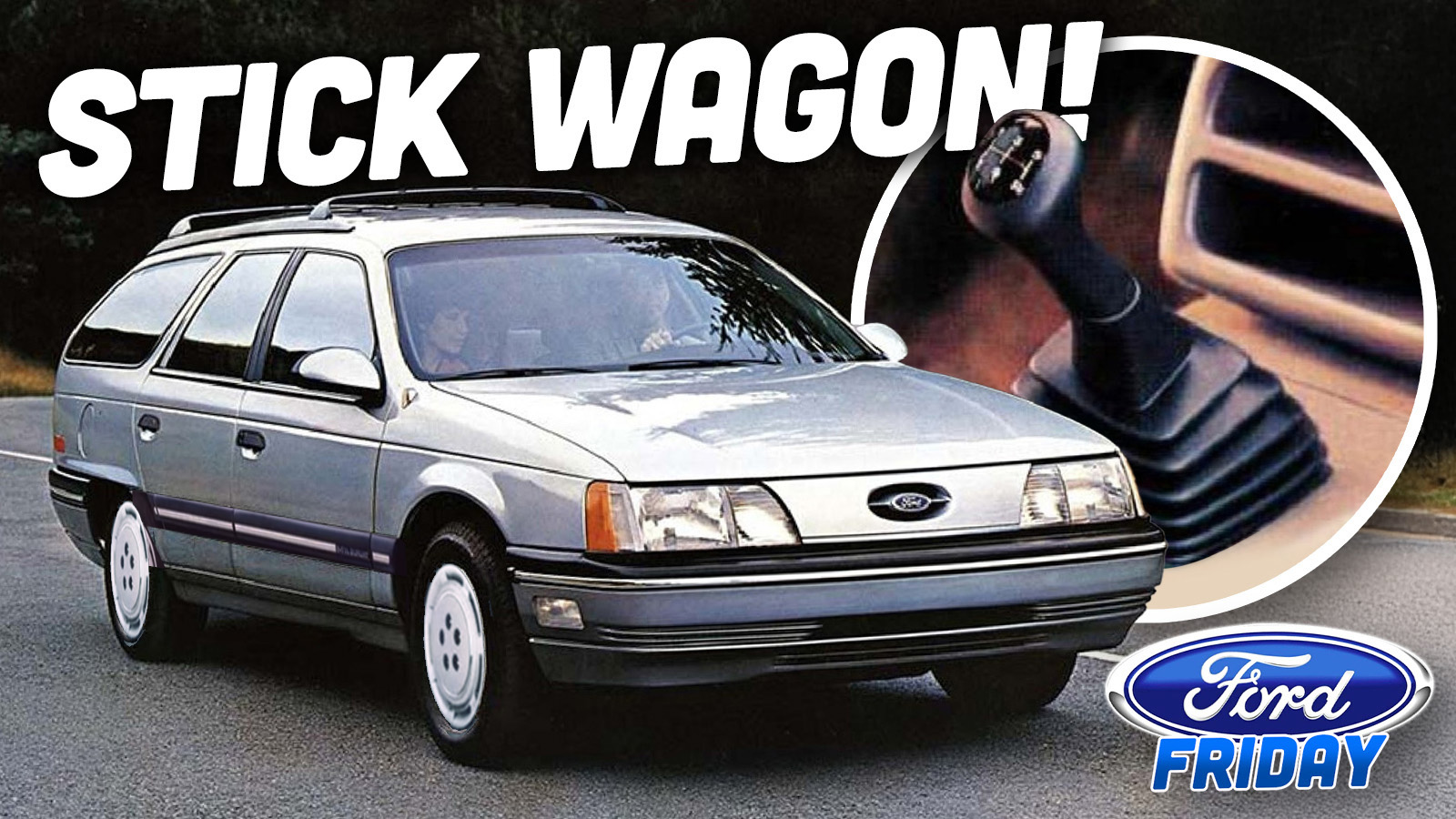
The 1986 Ford Taurus was an automotive industry revolution. Ford took car design years into the future with its aerodynamic family car that instantly made most other cars look a decade old. For most enthusiasts, the best version of the Taurus was the hot version SHO, with its Yamaha-designed V6 and snickety manual transmission. But there is another enthusiast version of the Taurus, one that perhaps most people have forgotten about. For just two years, Ford was willing to sell you a Taurus station wagon with a fun five-speed manual transmission. It was a dream, except for one little problem.
Some of the most exciting moments in automotive history involve those times when an automaker so brilliantly captures lightning in a bottle. The original Ford Mustang was one of those moments; so was the first Chevrolet Corvette. Move forward in time, and you’ll find great ideas like the Mazda MX-5 Miata, the second-generation Dodge Ram, and the Porsche Cayenne. The Ford Taurus was one of those vehicles, and it remains one of the greatest product launches in product history. To understand where I’m coming from, let’s go back to the 1980s.


The decade opens up at the tail end of the so-called Malaise Era. The multiple oil crises of the 1970s had forced a sort of automotive industry reset. Sheer size and power were substituted for fuel economy and lighter weights. The government wanted automakers to clean up their tailpipes and make their cars safer. The cars of the era became rather square while emissions equipment and the change to SAE net ratings choked engines of their once-impressive power numbers. This was a time when even Chevrolet’s mighty Corvette struggled to break 200 horsepower.

Ford broke into the new decade with product lines like the Fairmont, Granada, and LTD, which were perfectly adequate family cars, but weren’t exactly lighting up the marketplace. Luckily, Ford had aces up its sleeve. The Escort showed the world the benefits of a “world car.” The Tempo took Ford’s compacts into the future. But since 1981, Ford had something bigger, better, and more bombastic in the works. The Taurus would become a revolution, a sensation, and the subject of case studies for decades to come.
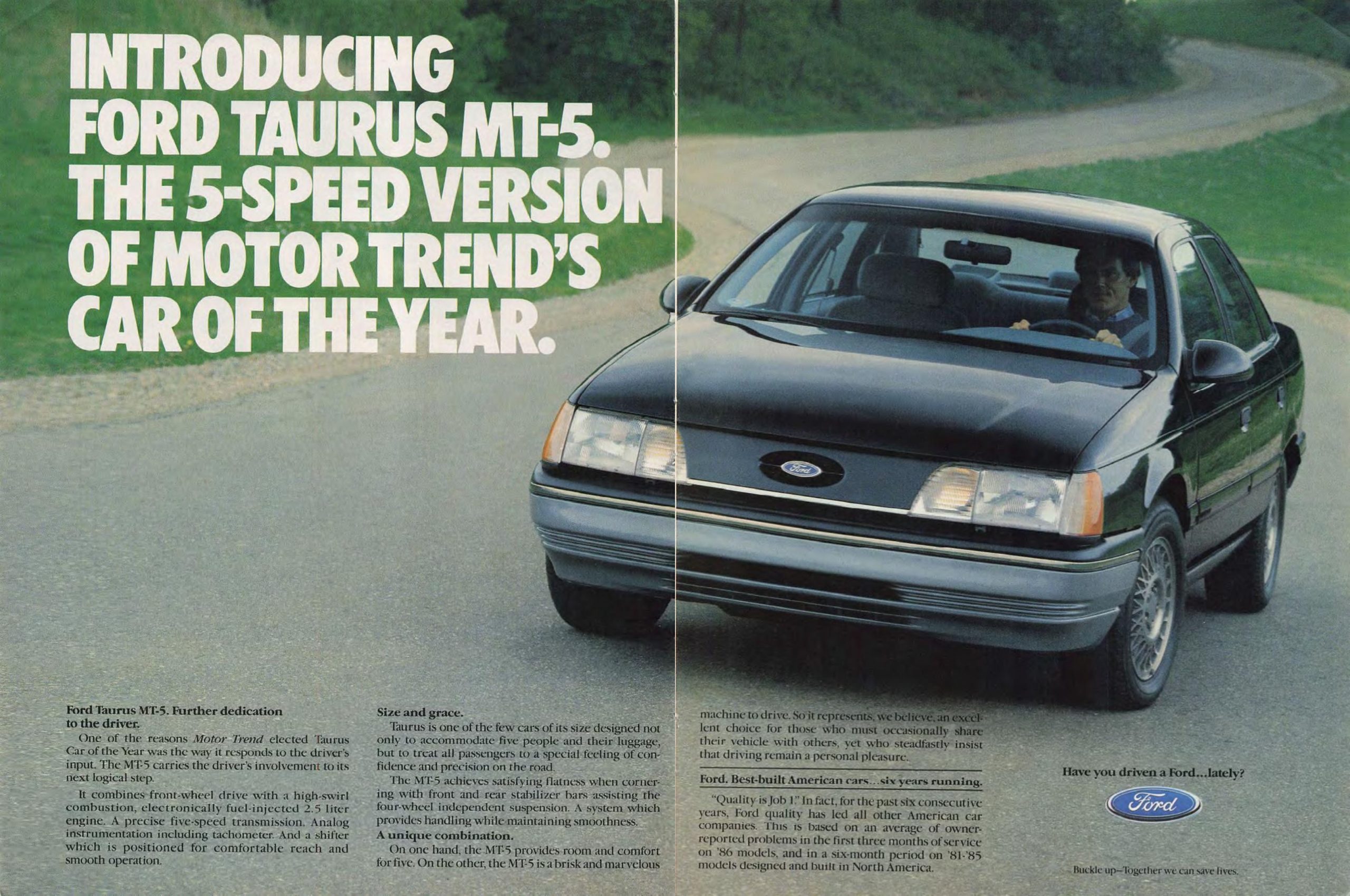
But there is one variant of the Taurus that doesn’t get much airtime nowadays, and it’s the version that was a regular car, but a bit more fun. That’s the Taurus MT-5, a car that some younger enthusiasts might not even know about.
The Car Designed To Be Different

In designing the Taurus, Ford dusted off the world car playbook that led to the Escort. Instead of having design and engineering teams working on their own projects by themselves, everyone worked together. The March 1985 issue of MotorTrend talks about some of the development:
The Taurus, to debut in September 1985, is an important vehicle for FoMoCo, in that it represents a major corporate commitment to an unconventional, forward-thinking design concept in a mass-market car. For all its leading-edge-of-technology intentions, the Taurus (and sister ship, Mercury Sable) is anything but an enthusiast’s special interest vehicle. Rather, it is aimed point-blank at mainstream middle America. The Heartland. The bread and butter of the Motown Manufacturing Mentality. Originally conceived as an enlightened substitute for the company’s land yacht LTD, Grand Marquis, and Lincoln, the Taurus series will be marketed (in 4-door sedan and station wagon models) as more alternative than replacement, due to the recent upswing in sales of Ford’s full-size traditionals. It is a from-the-ground-up new car with an all-new V-6 engine, a fully independent suspension, and aero styling that promises to deliver the lowest coefficient of drag (Cd) of any American sedan.
[…]
An interesting postscript to the Taurus powertrain development was the collaboration between Engine Engineering and Design Studio departments to produce cosmetically correct engine compartment aesthetics. That’s right; cosmetically correct. The approach, which will be used on all of Ford’s future new-car programs, was to make an under-the-hood statement—a simplified, refined, machined look with heavy emphasis on color and contrast. The routing of electrical, vacuum, and spark plug lines, air cleaner layout, and rocker cover and throttle body design changes were all prompted by the Design Center’s approach to creating a cleaner, more accessible (more serviceable) engine compartment. (Cosmetic design changes to the throttle body housing actually resulted in a more efficient airflow path.)
[…]
Ford suspension/chassis engineers freely admit that the Taurus project target vehicle was the Audi 5000—regarded as one of the best-handling cars in its class. Although the Taurus represents an impressive step toward creating a car with that fine balance of comfort and stability, it has not yet reached a state of refinement for favorable comparisons with full-size Audis and BMWs. Typical of built-in-Detroit full-size sedans, the Taurus demonstrated a penchant to wallow on rebound over pockmarked and pot-holed asphalt. Driving leisurely with subtle, less than demanding driver input, the Taurus provided quiet, compliant, deceptively solid footing. Asked to hustle through tight esses, however, where limited body roll and predictable transient response are important, it becomes apparent how deeply the Taurus’ family car roots run. Comfortable, yes. True World-Class sport sedan handling? Not quite yet.
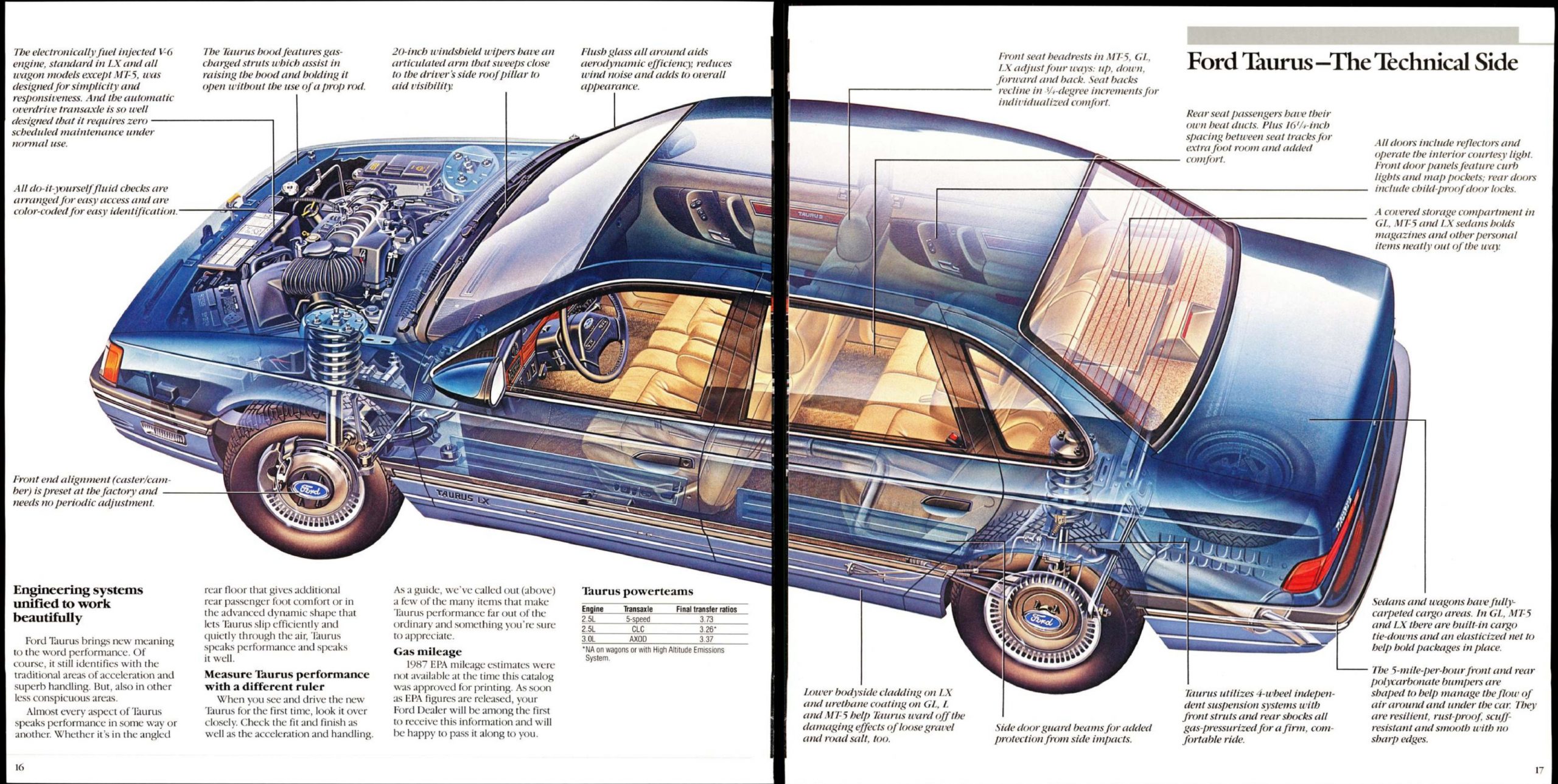
In its retrospective, Hemmings noted that Ford also took a different approach to figuring out how to fill out the Taurus. In the past, automakers would churn out vehicles with features that they thought buyers would like. This time, Ford asked potential customers what they were wanting to see in their next family car. The work put into making the Taurus right was staggering, and no detail was too small to obsess over.
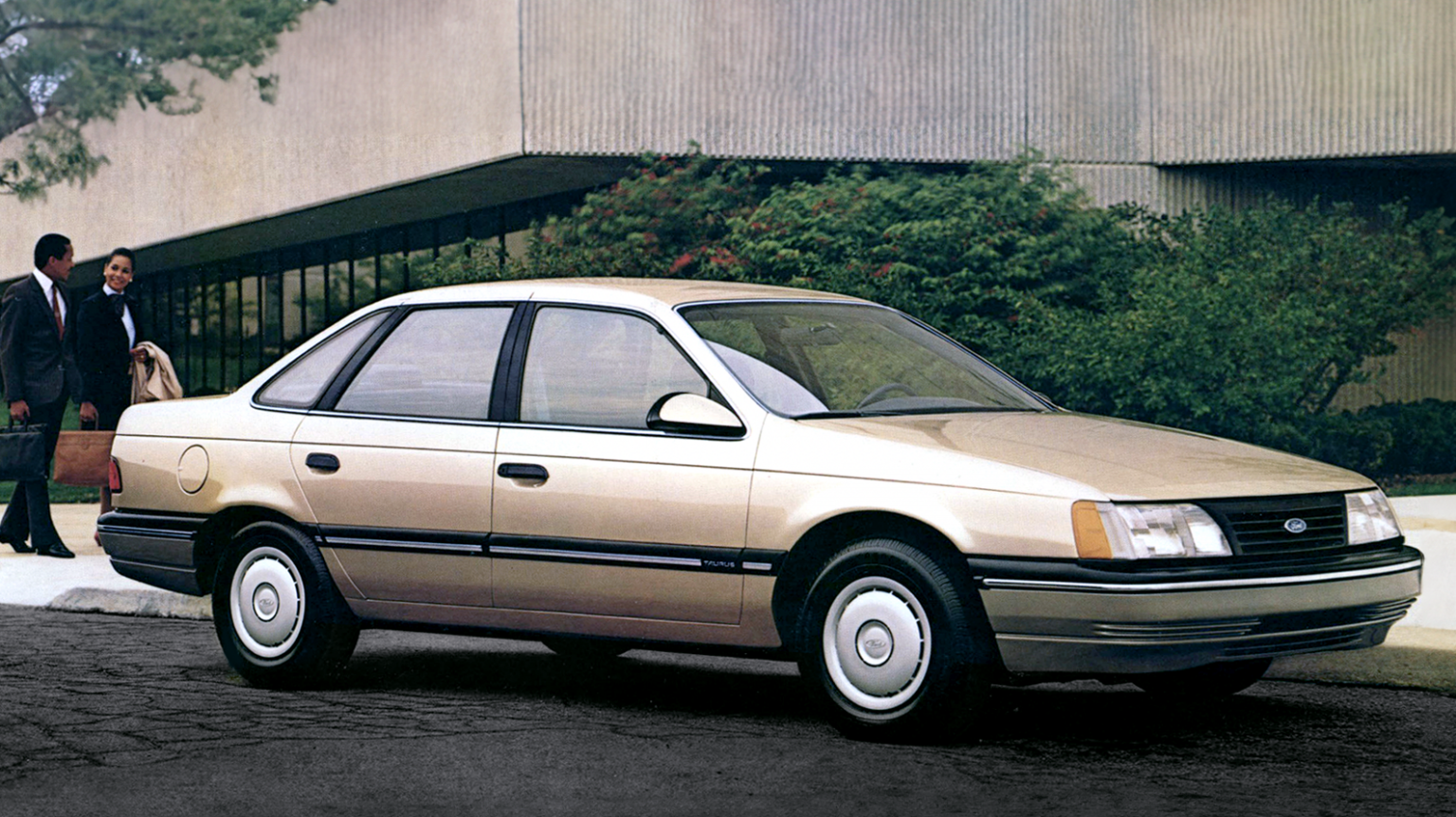
As Thomas wrote in 2024, famed Ford head designer Jack Telnack even fought to ensure his car did not have a traditional grille. Marketing and sales demanded that the Taurus have a real grille, and promotional images and brochures were even created featuring the car with a traditional grille. But Telnack just couldn’t let that slide. The Taurus wasn’t just any other car, and it couldn’t look like any other car. Bill Ford agreed that such an aerodynamic car couldn’t be marred with a grille.
Hemmings continues about the car’s development:
[T]he research into the car’s development went so far as to examine variables like insurance cost, ease of repair and even advanced ergonomics for the driver. Engineering teams ripped apart hundreds of cars from competitive brands, reverse engineering each one to determine the best practices employed by various manufacturers. What allowed for this extensive research and development was the budget set aside for the Taurus: At $3.5 billion, it was the largest in Ford’s history. For comparison, a mere $870 million had been allocated for the development of the Ford Fiesta subcompact.
Knowing that the car’s launch would be as important as its development, Ford spared no expense in a mid-1985 Hollywood premiere (held at MGM Studios Soundstage 85) that featured space themes to highlight the futuristic nature of the car. Its ovoid shape was a huge departure from the norm of the day, and critics weren’t sure how to react. Chrysler (and even some Ford executives) thought that the car’s bold, grille-less styling had gone too far, and predicted that the Taurus would be a huge failure for the automaker when it hit the road at year end. To hedge its bet, Ford continued to produce the Fox platform LTD, but the die had been cast: If the Taurus turned out to be a failure, the billions spent on its development would have dragged the company into a Chapter 11 bankruptcy.
Like A Spaceship On The Ground

All of this work paid off. When the Taurus entered production in late 1985 for the 1986 model year, it blew both the public and the motoring press away. The Taurus wasn’t just a family sedan. It looked like a road-hugging spaceship that safely and efficiently carried families to their destinations. This was a car with flush composite headlights, flush door handles, doors with frames that cleanly wrapped into the roof, and wheels pushed to the perimeter of the chassis. The Taurus was also pretty slick for a car of its day with a drag coefficient of 0.32.
It wasn’t just a smooth ride, either. At launch, buyers were able to nab a Taurus with either a 2.5-liter High Swirl Combustion (HSC) inline-four (which was first seen in the Tempo as a 2.3-liter four) with 88 ponies in the stable, or a 3.0-liter Vulcan V6 with 140 thoroughbreds on tap. Bolted to these engines was either a three-speed ATX automatic or a five-speed manual.
Later, the HSC engine would see a power bump to 105 horses, the AXOD four-speed automatic would become available, and in the final years of the first-gen Taurus, Ford’s 3.8-liter Essex V6 would make an appearance. Of course, nobody can forget the hot and fast 1989 Taurus SHO and its 7,000 RPM redline 3.0 V6 that got breathed on by Yamaha.
Now, on just a cursory glance at a modern article about the Taurus, it would be easy to draw a conclusion that the SHO and its Mazda-built MTX-IV five-speed manual transaxle was the only Taurus to have a choose-your-own-adventure transmission. However, for just three model years (only two for the wagon), there was one more version of the Taurus that could be considered to be an enthusiast special. Well, sort of.
The Lesser-Known Manual Taurus

When the Taurus launched for the 1986 model year, it was offered in a handful of trim levels, starting with the base model L ($10,071 or $30,683 in 2026) and working its way up through the mid-range GL ($11,322 or $34,494 in 2026) and top-spec LX ($13,351 or $40,676 in 2026).
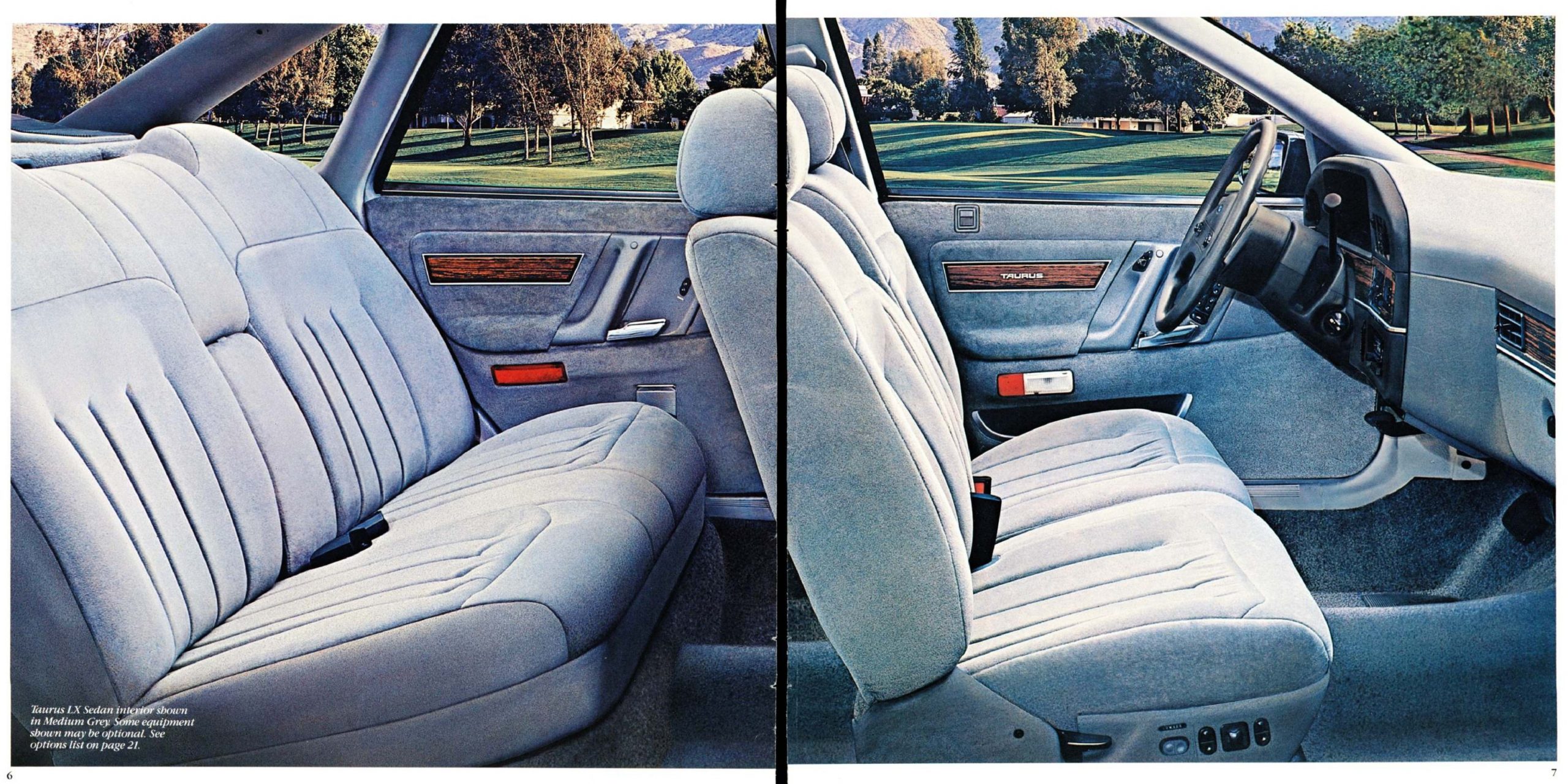
The L was fairly basic, featuring the 2.5-liter HSC four-cylinder with a three-speed automatic, 14-inch steel wheels with covers, a black louvered grille, a cloth bench seat, an AM mechanical radio, and a very basic instrument cluster with an analog speedometer surrounded by warning lights. Many of the options that were standard to higher models, like interval wipers, the V6, an electronic radio, a digital clock, tinted glass, a rear stabilizer bar, and bucket seats with a center console, were either options or simply unavailable to the L.
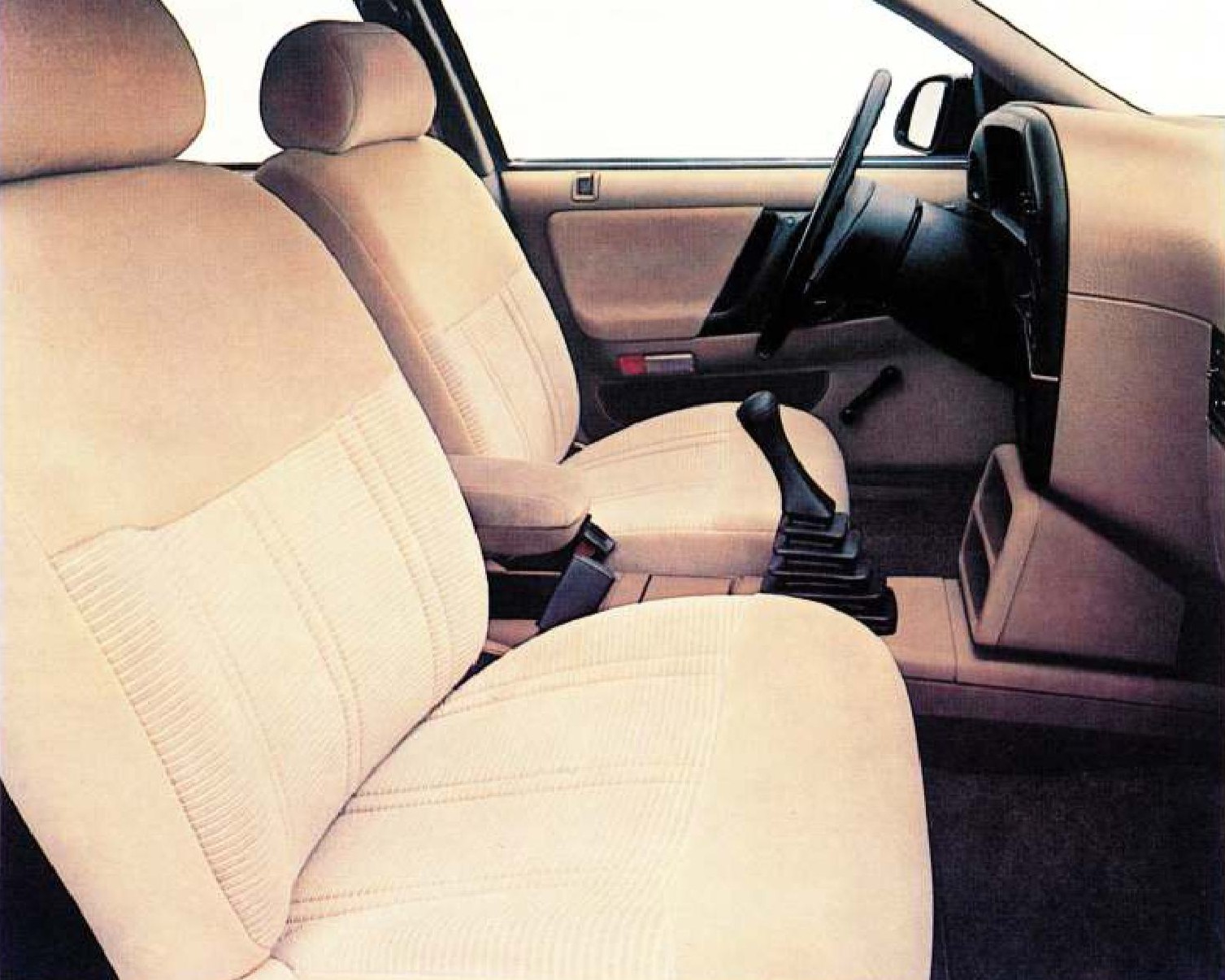
The GL was the first trim to come standard with V6 power, and it got niceties the L didn’t get. Then there was the LX, which ran through the garden with all of the aforementioned features, plus a power driver seat, dual illuminated visor mirrors with secondary sunvisors, cornering lights, a reclining passenger seat, and power windows, locks, and mirrors. The LX was also the only trim to get air conditioning standard. The options list was pretty tall, even for the LX, and included bits like a digital instrument cluster, a rear-facing third seat for wagons, leather seats, vinyl trim, cruise control, an instant-heat system for the windshield, and more.
But there was one trim level I left out, and that one was the $10,276 MT-5 ($31,307 in 2026). Placed above the L grade but below GL, the MT-5 was a sort of middle child with a few options picked and, most notably, a five-speed manual. A few luxury options the MT-5 had that the L didn’t were power mirrors, bucket seats, a “luxury steering wheel,” an electronic radio, a reclining passenger seat, the nicer grille, a digital clock, tinted glass, and interval wipers. Thankfully, Ford also gave the manual version a fully equipped analog instrument cluster with a tachometer and all.
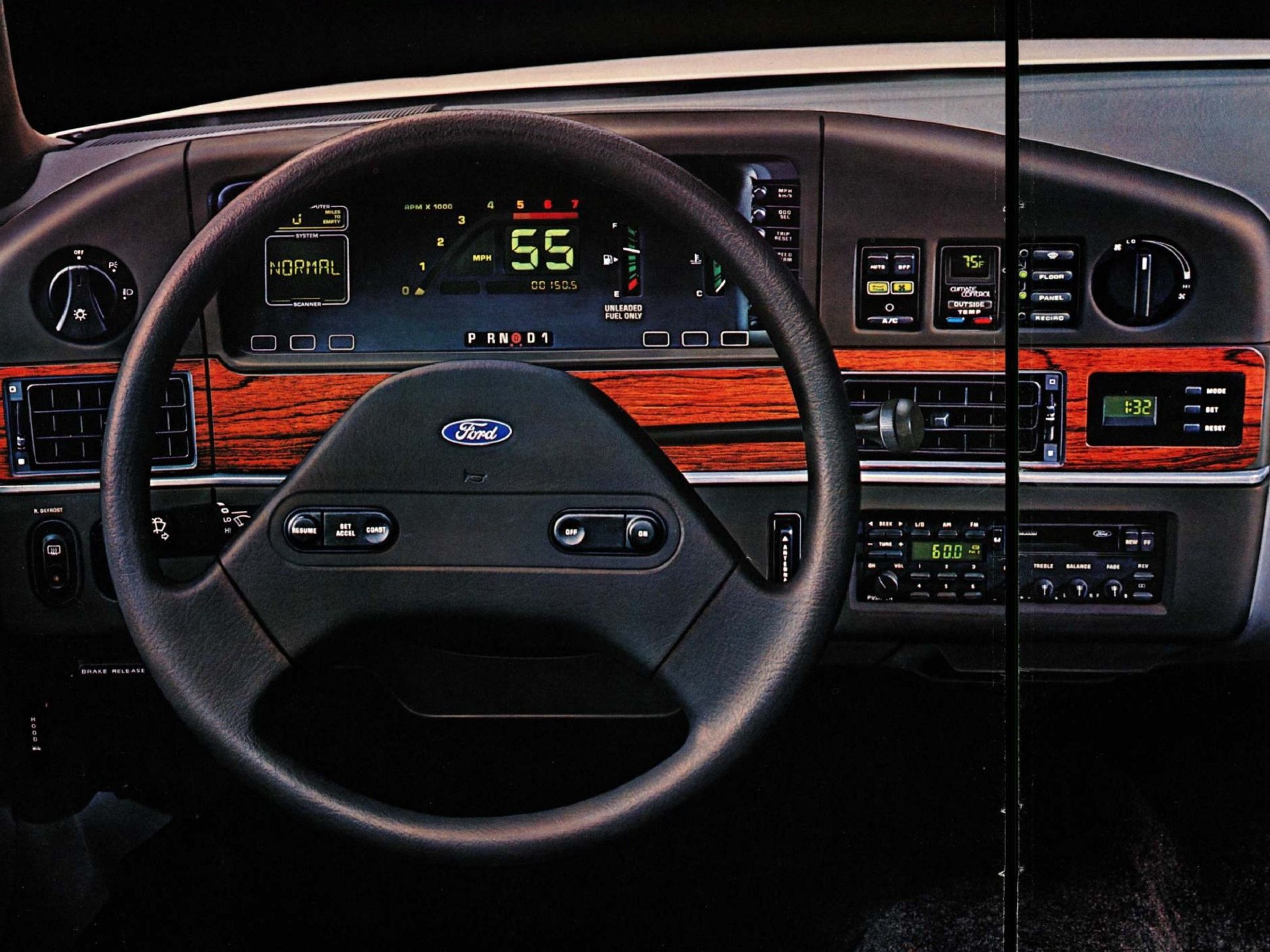
Under the hood of the MT-5 was the 88 HP HSC four, and the transmission was a five-speed MTX-III. The MT-5 became available in April 1986 for the family-oriented enthusiast. Now, you might wonder why Ford even bothered to make such a car, considering that the early Taurus wasn’t exactly trying to light up the stoplight drags.
According to a period review from the Morning Call, some 300,000 imported cars with manual transmissions were sold in America in 1985. It only made sense for Ford to try to steal some of those sales. Of course, Ford couldn’t just toss a stick into the L and call it a day, because the enthusiast wants a little luxury to go with their fun driving experience.

One brochure said that the MT-5 was “A taste of performance. A touch of class.” Another called it “Driving fun.” Ford tried to sweeten the deal by selling the MT-5 with front and rear stabilizer bars as standard. In 1987, the MT-5 would become the second Taurus trim to come with air conditioning standard.
About As Spicy As A Bottle Of Water
Alright, so was there something special here? Well, that depends. Here’s what the Morning Call said:
The MT-5 proved to be an easy car to drive. Assuming that one can operate a manual transmission. Many people are frightened by a manual transmission and probably for good reason. But as manuals go, the MT-5’s was one of the easier to use. The gears were well defined and the clutch had a lot of built-in forgiveness. Handling was responsive and precise but not overly so. In other words, you didn’t have to think about it all the time and if you wanted to groove in and out of traffic or lay it on in the curves, there was more than enough suspension to handle it. The four-wheel independent suspension has MacPherson struts all around, gas-pressured shocks and fore and aft stabilizer bars. The test car also had the optional P205/65R15 tires, which no doubt helped things along.
Powering the MT-5, is a 2.5 liter/150 cubic inch four-cylinder with overhead valves, electronic fuel injection and a high-swirl and fast-burn combustion chamber design. The engine is rated at 92 horsepower at 4,000 rpm and 132 foot pounds torque at 3,000 rpm. Now right up front this doesn’t sound like enough power to move the Taurus out of its own way. But surprisingly the MT-5 doesn’t have bad performance. To be sure, you’re not going to suffer from whiplash on a second to third shift or do you have to worry about smoking those front tires off when leaving the line. But you will be able to mix it up in traffic and run the expressways without worrying.
Some of the reasons for this are the excellent gearing on the five-speed manual and the relatively light weight of the car. Also, it has a big four- cylinder engine and does produce quite a bit of torque; torque is important when moving weight. The engine/transmission combination proved to be impressive for fuel mileage. The test car averaged 22 miles per gallon for city driving and 32 mpg over the highways. Regular unleaded was used. The test car was equipped with the optional extended range fuel tank (18.6 gallons, the standard tank measures 16 gallons), which as one can see would give it quite a driving range.

I checked the MotorTrend archives, and the first mention of the MT-5 that I could find was in October 1986 in only a very short paragraph that talks about models for 1987:
After spending a week in an MT-5 sedan, I came away pleased with its operation. The 5-speed MTX III works smoothly and without hangups, but the MT Golden Rule applies to this car: Anything can be made better with 50 more horsepower.
Most stories paint the MT-5 as being an improvement over the base L, a bit more fun to drive, and reliable, but the compliments seem to taper off around there. The sedan was only 2,863 pounds, but still had only 88 HP for motivation. Calling this engine “tepid” would probably be pretty accurate. Certainly, you probably wanted to refrain from challenging anything but compacts and diesels. In case you were wondering, the MT-5 was worse than the L in one way, and it’s that it wasn’t even offered with the option to upgrade to the V6.

One thing that the MT-5 had going for it was that Ford was willing to sell it to you in a wagon body. So the whole family, including those in the optional rear-facing third seat, could enjoy manual fun. Even the SHO wasn’t available as a wagon!
As you could probably imagine, the MT-5 didn’t exactly light the sales charts on fire. The wagon was available for 1986 and 1987, and if Marti reports from enthusiasts are correct, only 2,376 MT-5 wagons were sold in 1986, with 3,910 more finding homes in 1987. The sedan was around for one more year, but sadly, enthusiasts have only the production numbers for 1986. That year, Ford allegedly moved 20,011 Taurus MT-5 sedans, which is pretty neat!

Yet, the MT-5s are rare for Taurus. In 1986, Ford moved 236,362 Taurus vehicles in total. That number increased to 374,763 units for 1987 and 387,577 for 1989. Compared to the total production, the MT-5s were barely a blip on the radar. The MT-5 wagon’s apparent sales make the MT-5 sedan look like it was a decent seller.
It would seem that the MT-5 probably found itself stuck in an unfortunate position of not being attractive to the enthusiast buyer. Perhaps it was the fact that the Taurus was futuristic, but didn’t exactly scream “sports sedan” as the imports did. Perhaps it was the fact that the enthusiast special was given the weakest engine. Or perhaps it was just the fact that it was a family car that most people expected to see an automatic in. The original Ford Taurus itself would go on to become an automotive legend, one that still carries influence today. But the fact that Ford made a manual one that wasn’t the SHO is barely a footnote.
A Forgotten Special
The Ford Taurus MT-5 is also another example of rarity not exactly equaling value. If you can find one of these for sale, it’s almost certainly going to be well under $10,000. It just seems like, for the most part, the MT-5 was discontinued and forgotten, with only a small group of fans keeping survivors alive.
Despite all of that, I find myself enamored with the MT-5. Sure, it wasn’t fast, wasn’t particularly desirable, and was bypassed by even enthusiast buyers when it was new. Yet, Ford did something neat with this car. Ford took a regular, everyday car, and made it just a little bit more fun. I like to imagine that, back in the 1980s, someone’s parent had just a teensy bit of fun on the school run by rowing their own gears in the family MT-5.
So, from that angle, I think there should be more cars like this. I know that current manual take rates are so low that there’s little point in an automaker trying. I’d still be delighted to see a Chevrolet Trax or a Toyota Corolla slinging a manual. Or, heck, Ford could just bring back the Taurus, period.
Top graphic images: Ford



I think we need a little perspective here. This was towards the end of manual transmissions being the norm. Now we think of manuals as the sport option. Until this time period it was the cheap option. It was actually the K-car that made the automatic transmission “the standard”. This was a big feature for them, especially at their price point and forced the industry to conform.
I had an ’89 Taurus V6 wagon for a few years, and all I really remember about it was the rage I felt when I couldn’t reach the oil filter to change it. I literally couldn’t get my arm through that narrow opening. I forget what the dealer wanted to charge me to change…a LOT. Even the cheap oil-change places wanted to charge me $30 extra to replace the filter.
I wound up simply not changing the filter for the three years I had it.
Fun fact, Valvoline had a whole document on changing it because it could hurt you. You could also end up shorting out the starter wire and causing a fire. It’s a greattttt design.
Corvette mentioned; i’m here
A friend at college got his parents’ Fairmont Futura Wagon with fake wood and a four speed when they bought a brand new Taurus Wagon with a manual transmission and that was the only manual Taurus Wagon I have ever seen.
I dream of 2 door falcon wagons.
The Ford parts bin is deep with everything you might find of a Shelby 350 GT that would bolt right on.