

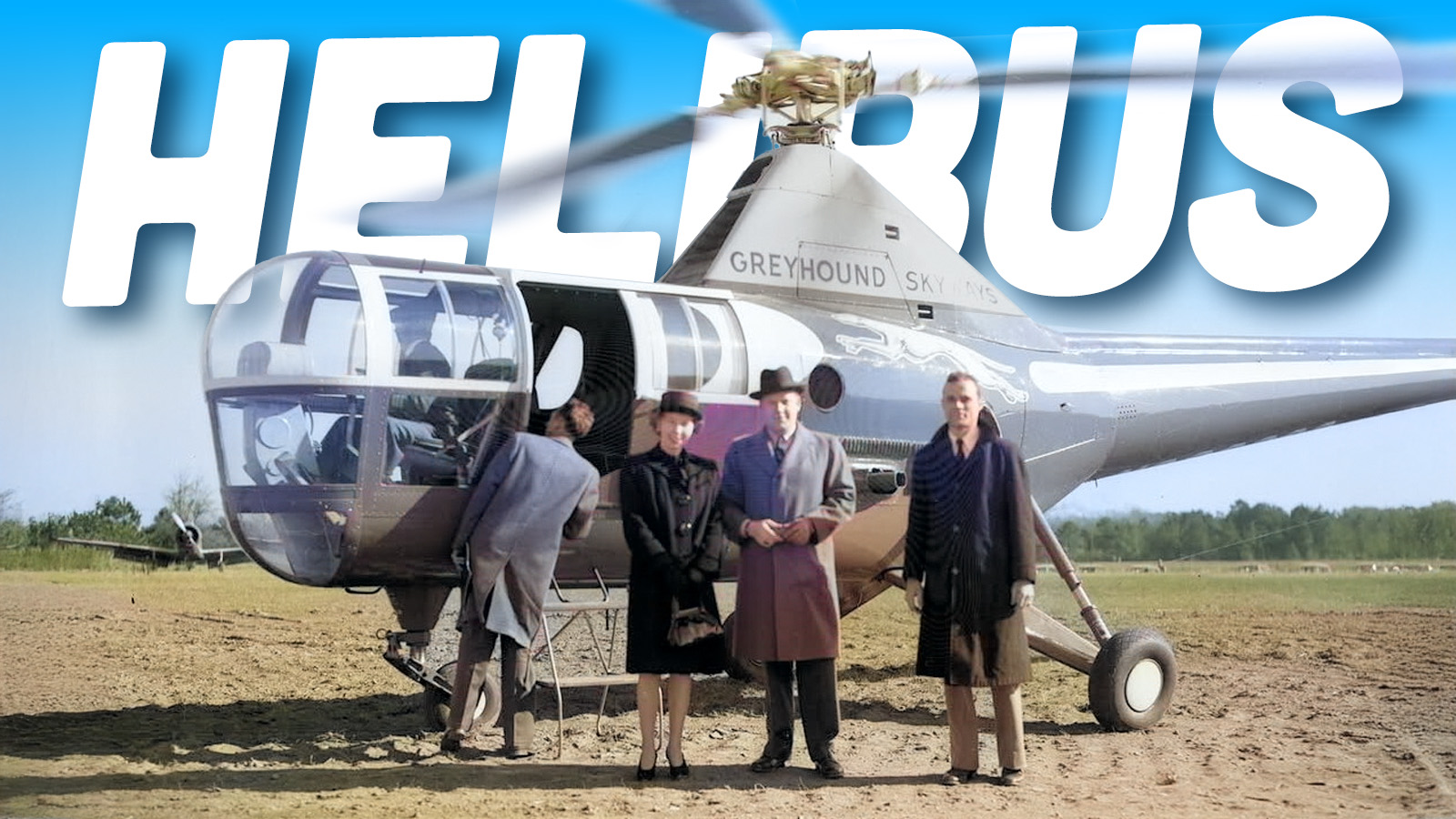
One of the hottest topics in aviation right now is the air “taxi.” The idea is that, in the future, there will be lots of little electric aircraft buzzing around cities, carting people to destinations only a short haul away. It sounds like something dreamed up by Silicon Valley, but it actually isn’t anything new. Back in the 1940s, Greyhound Lines had a similar idea. Instead of just driving people to cities in its buses, Greyhound had the ambitious idea to haul people some 25 to 100 miles in a helicopter that was outfitted to be like an intercity bus. Greyhound Skyways was a bold idea, but the concept of a helicopter bus has failed more than once.
The 1940s were a transformational period for aviation. In the few decades prior, aviation grew from an activity partaken by pioneers, daredevils, and barnstormers, to an increasingly reliable way to transport mail, cargo, and people. One of the greatest contributions of the 1940s to aviation was the rapid evolution of the jet engine and the gas turbine. Then there was the helicopter.


American inventors had experimented with proto-helicopter designs as far back as the 1860s, but technology was too primitive to lead to any successful designs. The first truly successful helicopter was the Focke-Wulf Fw 61, which first flew in 1936. The helicopter that’s often credited with being the first “practical” helicopter, and the one to form the template for future helicopter design, was the Sikorsky VS-300, which flew on September 14, 1939.

These helicopters laid the groundwork for the future, and not just for future helicopter design. By the early 1940s, dreamers and illustrators were imagining a future where helicopters were as ubiquitous as the personal automobile. The appeal was there right from the start. A helicopter didn’t need a runway as it didn’t have a takeoff or landing run, and could be set down in a place with minimal space. In periods of wartime, a helicopter can operate long after airfields have been destroyed. There were predictions that, after World War II, just about everyone was going to fly a chopper as their car, too. Here’s what a 1944 issue of Science and Mechanics magazine predicted:
A helicopter in your back yard? The picture is bright. You go out behind the apple tree, give the rotors a whirl, and whizz!—you’re on the office roof. At the end of the day, whizz!—and you’re back in Suburbia, tending your delphiniums. Beautiful picture, isn’t it? But you’ll probably have to keep your machine in perfect condition, to be passed on by some safety agency, and it won’t be the perfunctory windshield wiper and horn test, either.
[…]
The neighbors may not care if you crack your own skull, but they won’t want you doing it on their sun porches. So for some years after the war is over, the first helicopters, and other airplanes for that matter, will be flown by people who can scrape together enough money to insure: (1) a machine in perfect condition; (2) maintenance that will keep it that way; (3) expert training in the operation of the machine. The designers say helicopters are harder to fly than airplanes.
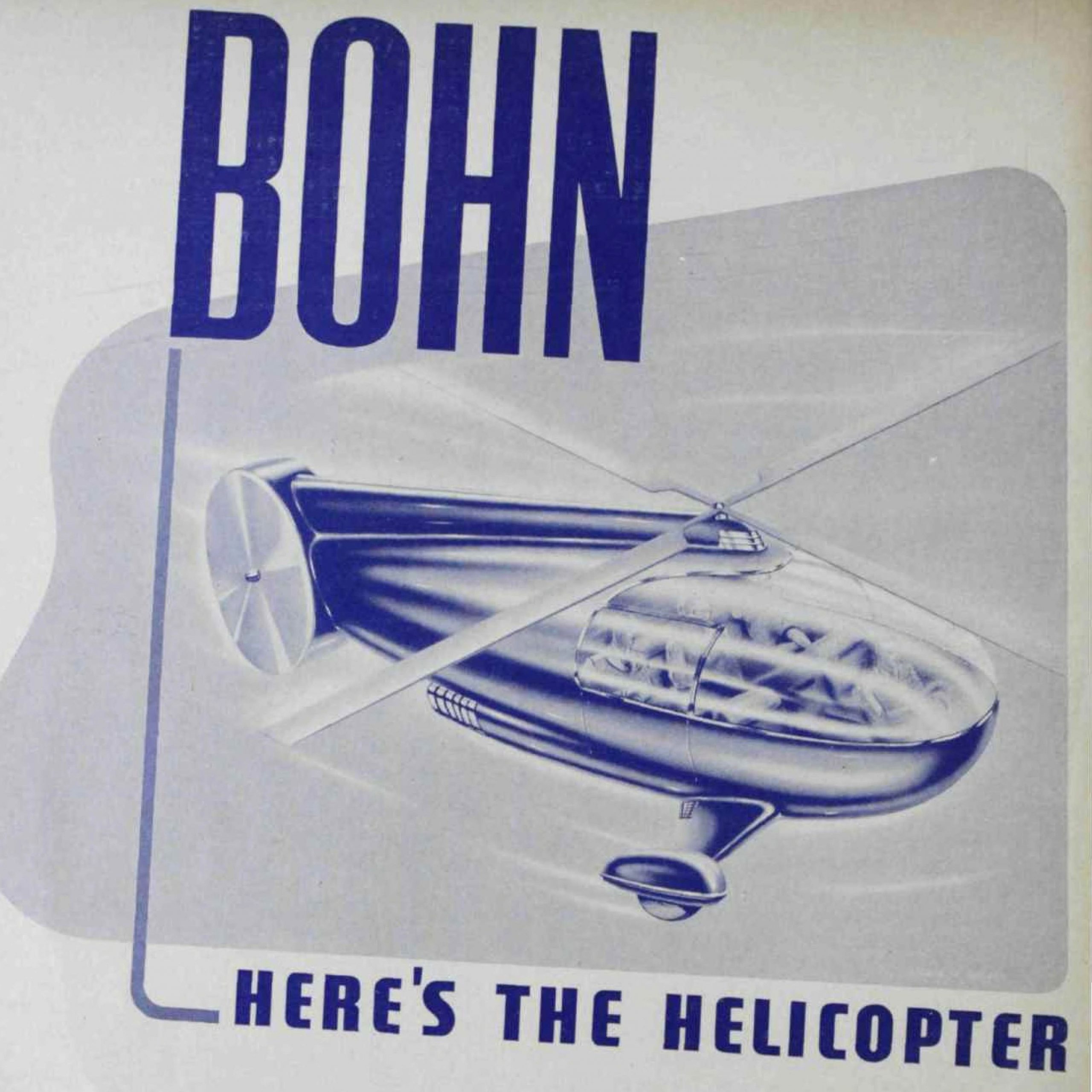
For ground transportation companies, helicopters were seen as a threat. Helicopters carried soldiers, supplies, and cargo at faster speeds than any truck or bus, and didn’t have to worry about roads. According to the book The Greyhound Story by Oscar Schisgall, in 1943, executives at numerous Greyhound Lines branches began to worry if the helicopter was going to replace the bus just like the car replaced the horse. Manferd Burleigh, president of Great Lakes Greyhound Lines, went as far as to urge that Greyhound at least experiment with helicopters.
The founder of Greyhound Lines, Carl Eric Wickman, wasn’t impressed with the era’s helicopters, stating: “When that thing can pick up one of my buses and deliver it safely to the next bus stop, I’ll give it serious thought.” However, Wickman was forced to face the reality that helicopters were the new thing that America was obsessed with. Choppers were out there rescuing soldiers, getting patients to lifesaving hospital care, and lifting climbers off mountains. Suddenly, the humble intercity bus looked like old news.

Greyhound would embark on an experimental program to bring the benefits of bus travel to helicopters. Greyhound Skyways would become a helicopter airline before most helicopter airlines were even a thing.
Making A Flying Bus Route
According to The Greyhound Story, the first order of business was just acquiring some choppers. As the Chicago Sunday Tribune reported in June 1943, one of Greyhound’s constraints was that, due to WWII, there were few helicopters available for civilian projects like this. The bigger issue was figuring out how to integrate helicopters into a bus line. What would these helicopters use as landing pads? How many bags and passengers could they safely carry? How much should a ticket cost? Are helicopters even safe? Greyhound would work through all of these problems and more.
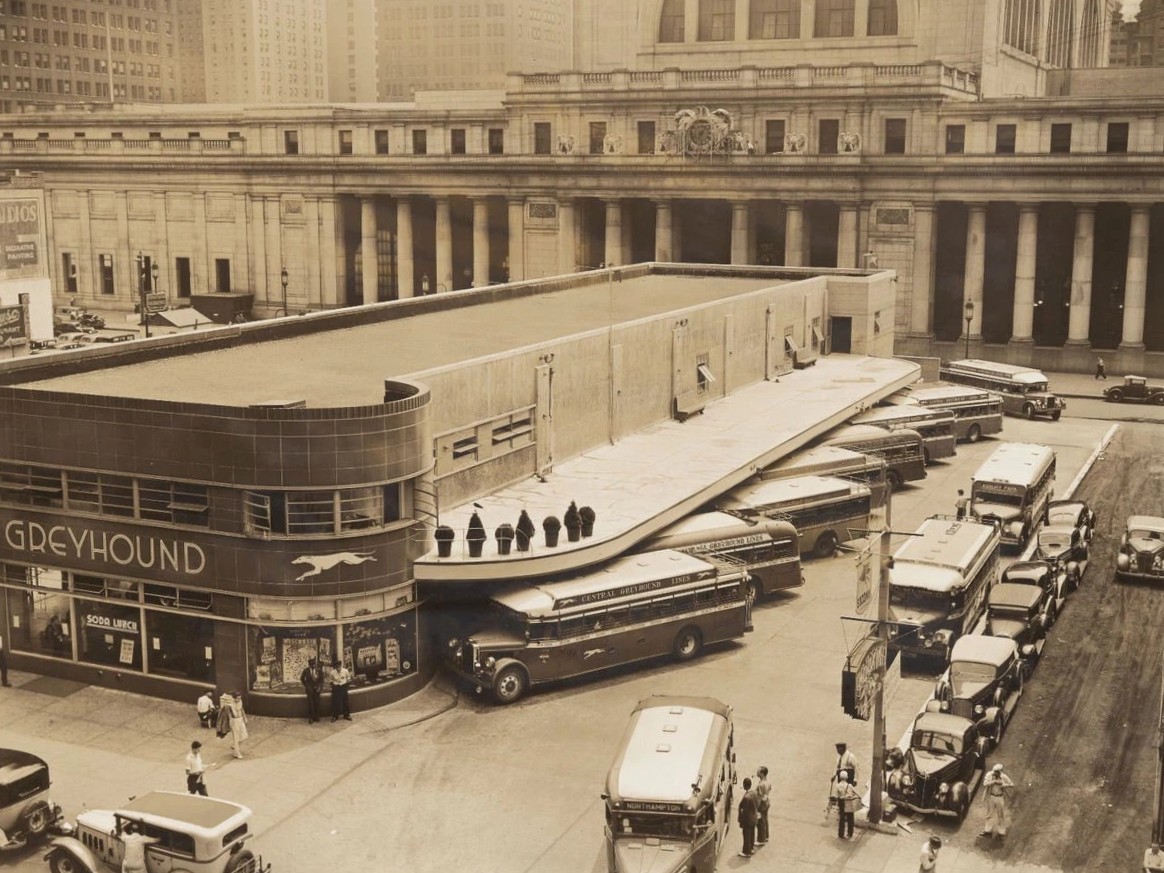
At first, Greyhound had a rather simple solution for a number of those problems. In the early days of the project, the concept of Greyhound Skyways was being drawn up as a service serving Chicago, and the plan called for helicopters to land on the roofs of existing bus stations. The helicopters would then fly over the same 60,000-route-mile network that Greyhound buses did. Another purpose of Greyhound Skyways was to serve established airlines as a feeder that flew passengers from bus stops to airports.
Greyhound applied for permission to launch helicopter service with the Civil Aeronautics Board (one of the predecessors to today’s Federal Aviation Administration and the National Transportation Safety Board). Official plans called for launching the service with two routes. One would have helicopters flying between Detroit, Michigan, and Flint. The other route was between Detroit and Louisville, Kentucky, with a stop in Cincinnati, Ohio. Bus stations along the routes with flat roofs would have these roofs converted into landing fields.

The helicopters were even thought to ease congestion in the Greyhound network. At the time, wartime fuel and supply rationing efforts in America pushed many to ride the bus. Greyhound boomed with 120 million passengers a year, but this meant that Greyhound buses were filled to the brim and not particularly comfortable.
Greyhound actively urged travelers to stay away from its buses unless they actually had to go somewhere. By putting some of those people into helicopters, it was thought, Greyhound buses could ease some of this congestion. The helicopters were supposed to help the buses, at first, not replace them.
Greyhound even benefited from having a pool of already qualified pilots and mechanics. Many Greyhound drivers and bus mechanics were serving as Army pilots, Navy pilots, and aircraft mechanics. The idea was that, once these soldiers came home from the war, they could transition to flying and fixing helicopters. While not totally related to Greyhound Skyways, an interesting detail about the war was that so many men were overseas that Greyhound hired an army of women as drivers and mechanics.
Greyhound Skyways
Soon enough, Greyhound started advertising its “air buses” as something that would take off after the war ended. In 1944, Greyhound alerted its shareholders of its intentions, from The Greyhound Story:
Greyhound has made a preliminary survey of the possibilities of operating helicopters over nationwide routes at the conclusion of the war. A hearing has been held before the Examiners appointed by the Civil Aeronautics Board.

There was just one issue, as the Civil Aeronautics Board issued a recommendation that it didn’t believe surface transportation companies should be permitted to operate an air service. Further, the CAB said that applications for any service from a surface transportation company that involved helicopters should not be heard until said service could prove itself to be practical.
Making matters only worse were the protests to Greyhound Skyways and other services. Railroads opposed proposed airline routes that served the same towns that passenger rail already served. Remember, this was during a time when the federal government controlled airline market entry. Airlines had to ask for permission to fly to a new destination.
Robert Driscoll, Greyhound’s then general counsel, was determined to overcome these hurdles. He asked the CAB to at least allow Greyhound to fly its helicopters between its own existing bus stations. Meanwhile, Greyhound itself was confident enough that Greyhound Skyways was going to work that it published literature and even a promotional film. That film can be viewed below, or by clicking here:
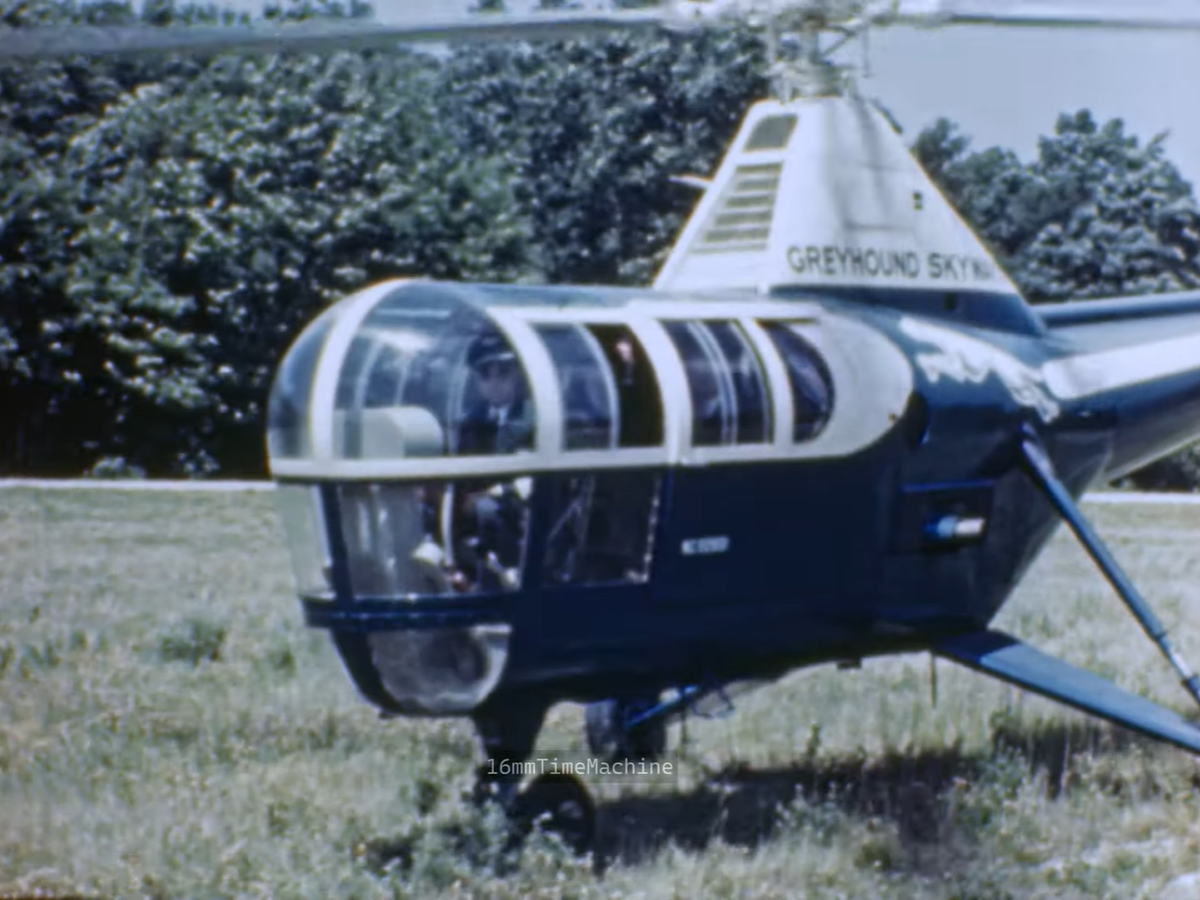
The helicopter shown in that video and in promotional materials was a Sikorsky S-51, of which Greyhound Skyways received two examples for $48,500 each ($889,836 in 2026). The Sikorsky Archives details the helicopter’s build:
The Sikorsky S-51 helicopter was a company funded commercial version of the S-48/R-5 helicopter. World War II had ended and the market for sales of Military helicopters did not look promising. The S-51 helicopters featured a 48 foot 3 bladed fully articulated main rotor and a 3 bladed tail rotor powered by the reliable Pratt and Whitney 450 hp R985-AN5 radial engine. The S-51 had the pilot forward in the cockpit with a 3 place bench seat across the back of the cabin. The first commercial customer was Los Angeles Helicopter Airway who purchased five S-51 helicopters and established a passenger and U.S. Air Mail Service in the Los Angeles Basin area. The next customer was the U.S. Navy who purchased four S-51 (HO3S-1) helicopters to support Operation Highjump, Antarctic operations.
[…]
The Sikorsky S-51 fuselage was built in 3 sections: an aluminum framed cabin with Plexiglas windows and the pilot forward and seating for 3 passengers aft; a steel frame center section was covered with easily removable panels, and the tail cone was a monocoque design with magnesium skins.
Main Rotor Assembly
A 3 bladed fully articulated main rotor head was installed on the S-51 helicopter. The rotor diameter was 48 feet on helicopters and 49 feet on helicopters with all metal blades and controlled by a mechanical control system and a bungee trim system to reduce pilot fatigue. A rotor flapping restrainer was optional equipment which allowed rotor engagement in higher wind conditions. A hydraulic servo system eliminated the bungee trim system in late production helicopters (H-5H) and was offered as a retrofit kit for earlier models. Hydraulic power for the servo was provided by a hydraulic pump belt driven by the tail rotor driveshaft.
Tail Rotor Assembly
A 3 bladed 8’ 5’ diameter tail rotor with laminated wood blades was installed on the S-51 helicopter. A 2 bladed 8’ 9” diameter tail rotor with all metal blades was installed on late model S-51 (H-5H) helicopters and was offered as a retrofit kit on earlier models.
Engine
A Pratt and Whitney Wasp Jr. 450 hp R-985 AN-5 or AN-7 engine was installed horizontally under the center section of the helicopter with a cooling fan/flywheel above.
Main Rotor Blades
The main rotor blades were constructed with metal spars, plywood ribs, plywood pockets with the entire blade covered with 2 layers of fabric. A NACA 0012 airfoil was used. All metal blades were provided in later models during production (H-5H) and offered as retrofit kits for earlier models.
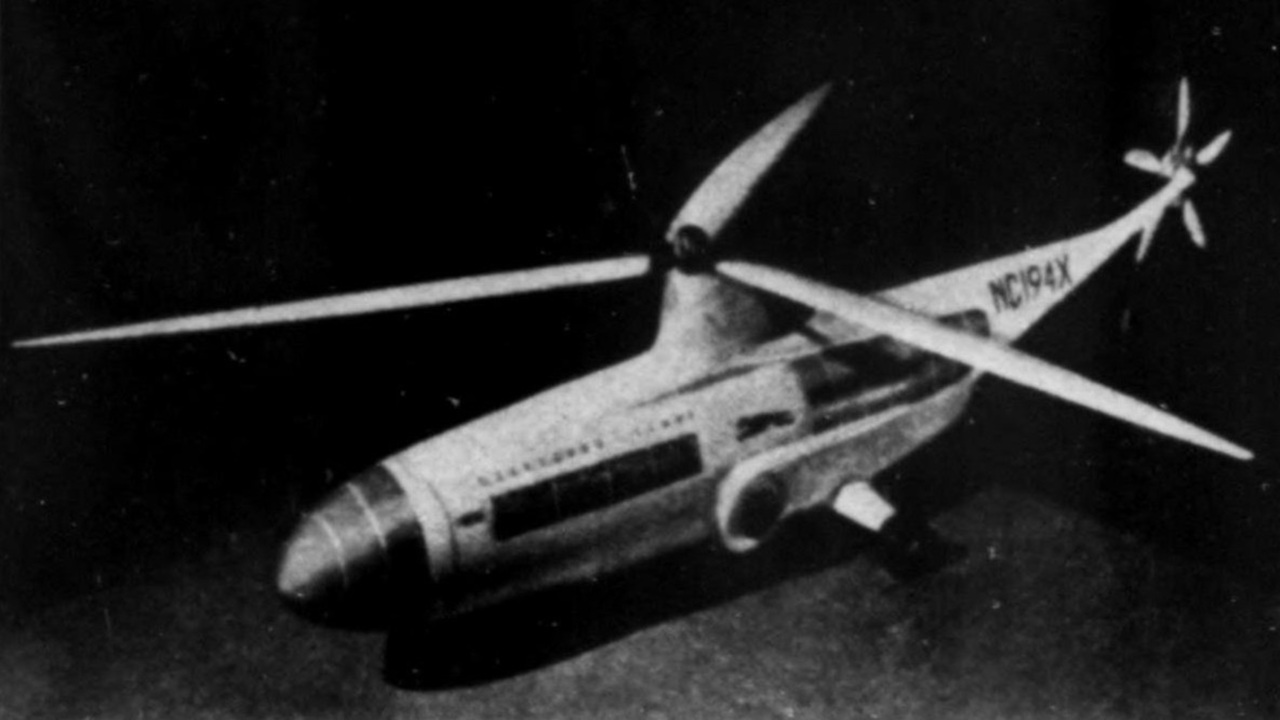
The S-51 was only supposed to be the start. Raymond Loewy and Igor Sikorsky collaborated with Greyhound bus engineers on a design for a 12-passenger helicopter bus that was to be manned by a crew of two.
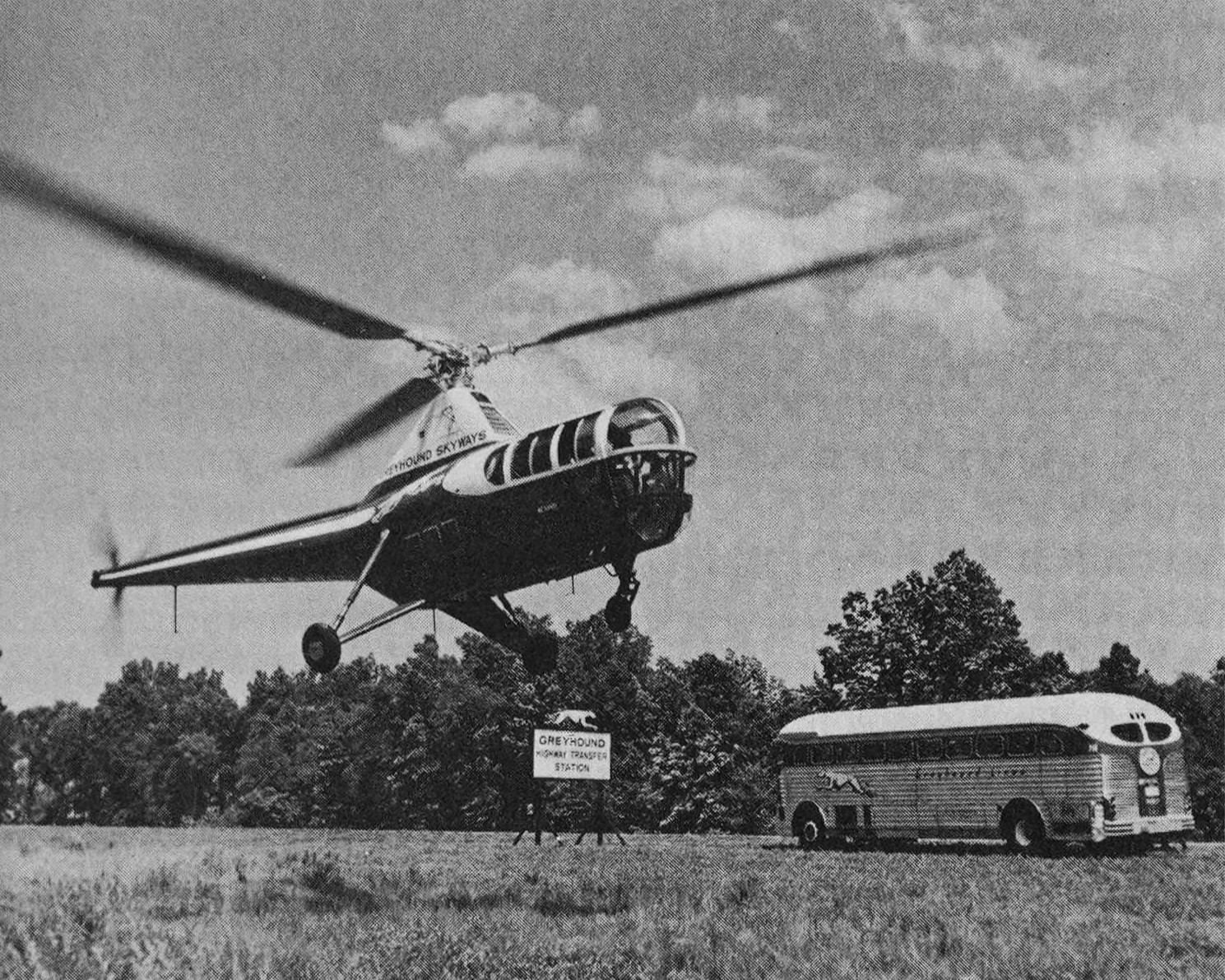
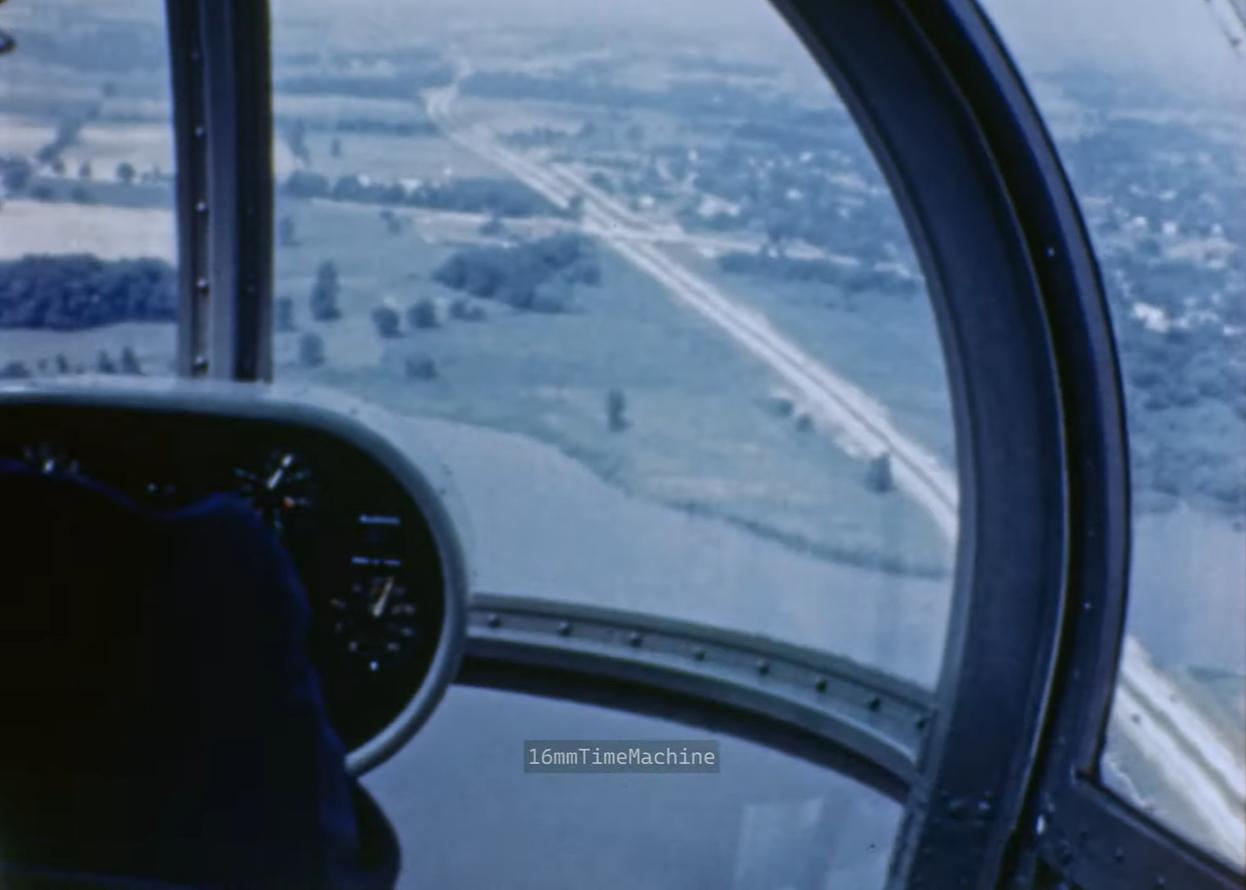
Meanwhile, Greyhound got the green light to begin trials. In the video, you could see how Greyhound envisioned Greyhound Skyways could work. Buses traveling down a highway could pull into a central median, where a helicopter would land. Up to three passengers would disembark from the helicopter and board a waiting bus, while up to three passengers from another bus would board the helicopter.
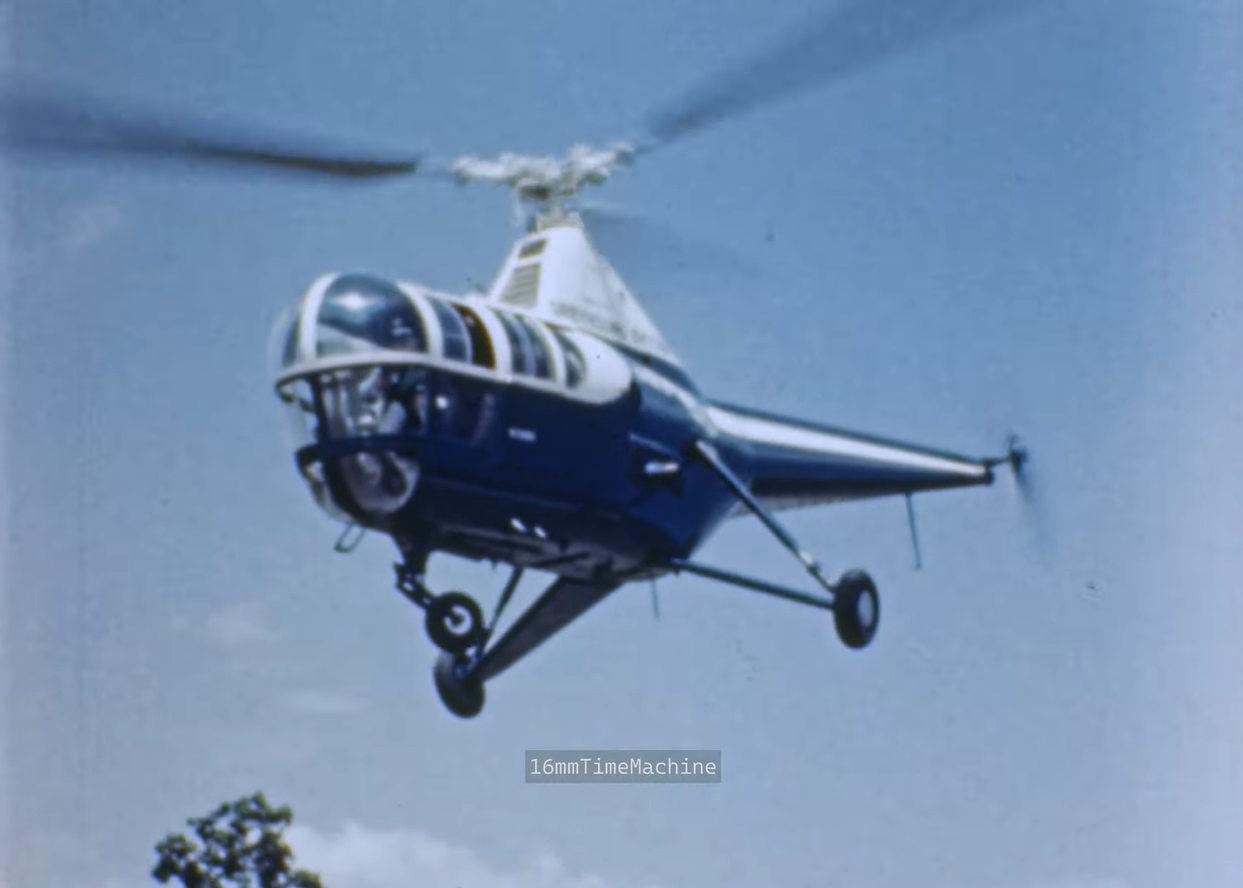
Greyhound touted the helicopter service, which would fly anywhere between 25 miles and 100 miles as a sort of “near doorstop service.” The narrator also proudly proclaimed that Greyhound Skyways would provide air service to 70 million Americans who reside in small cities and towns that did not already have airline service. Greyhound also hoped to land helicopters down right in front of businesses and other places where airplanes couldn’t go.
All of this sounds magical, right? So why are you not able to fly on a flying Greyhound bus today?
Small Helicopters Are Terrible Buses
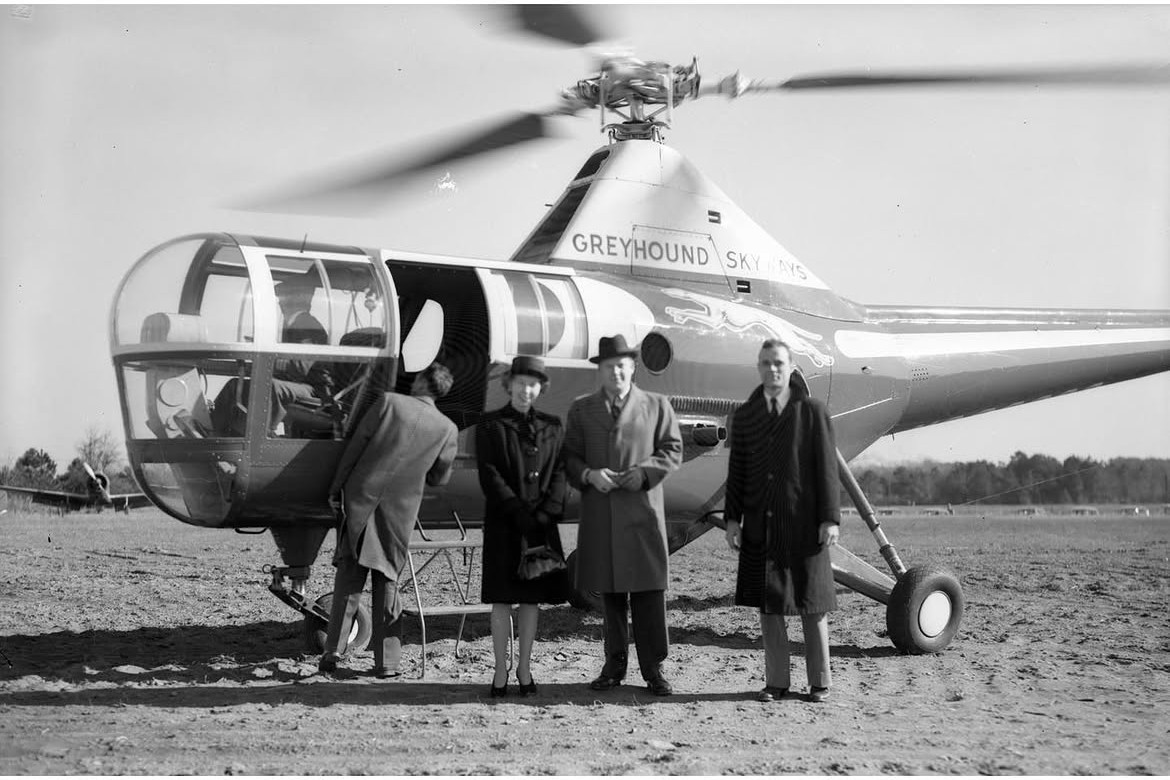
Greyhound Skyways operated test flights until 1947. Then, it quietly discontinued promoting the airline, before ever launching revenue service. By 1950, the entire project was scrapped. Today, most sources, even the Smithsonian Magazine, simply say that the idea didn’t work out. Amazingly, The Greyhound Story quotes a message that was sent to Greyhound shareholders in 1947:
It now appears that it will be some years before the development of a helicopter of sufficient capacity for commercial operation in regular intercity transportation service can be expected. Greyhound has therefore abandoned its efforts to obtain authority to establish such service, without prejudice to its right to revive the program if it seems advisable at a later date.
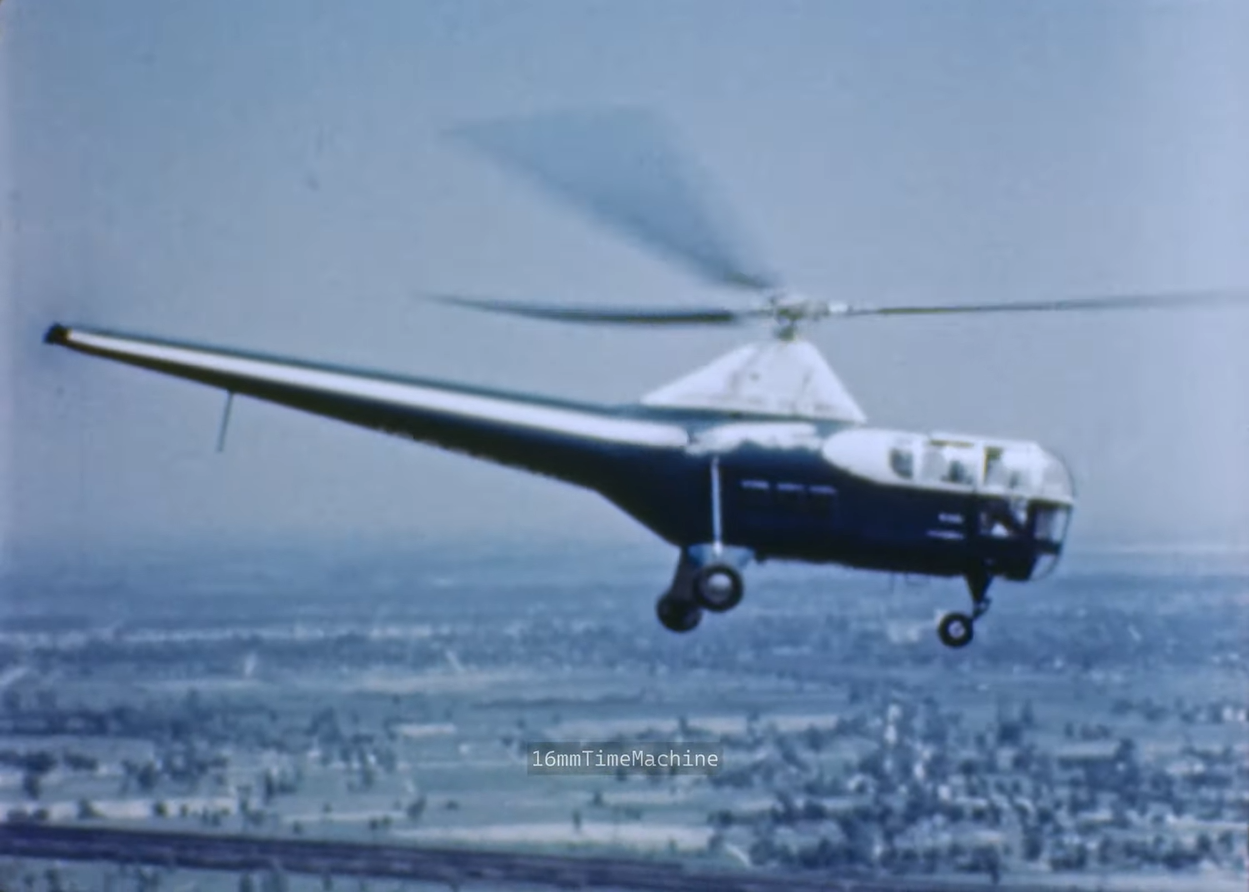
As you’ve probably guessed by now, a helicopter that carries only three people wasn’t going to make much of a dent in Greyhound’s capacity issues back then. Also, air travel was already prohibitively expensive back then, even in higher-capacity airliners. Ferrying only three people at a time in a helicopter only made financial sense if the tickets were absurdly expensive.
What about that nifty Loewy-designed helicopter bus? It never advanced past a model.
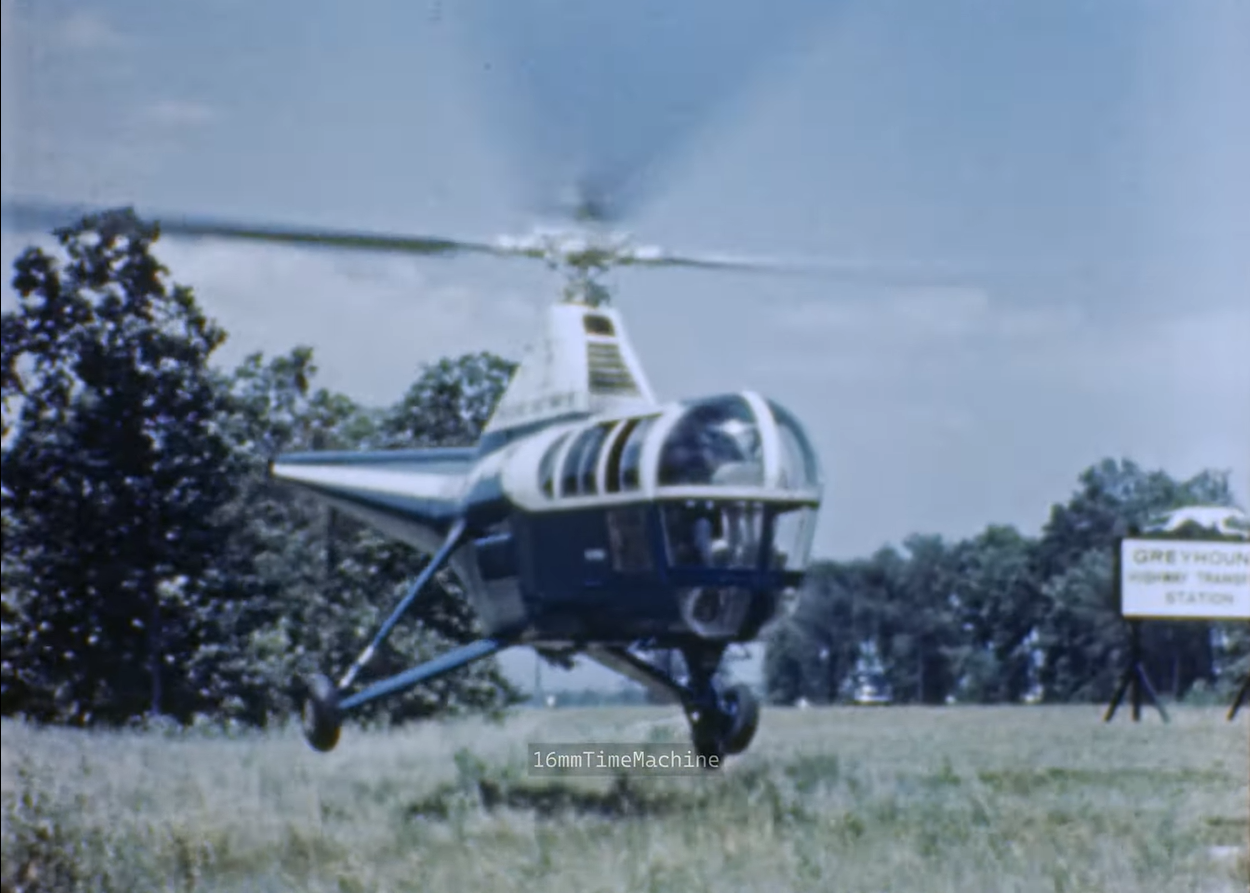
There was another thing, too. What if everything worked out and Greyhound had a fleet of flying buses? As a Greyhound officer allegedly noted, the company would have had to write off millions of dollars in buses, terminals, garages, equipment, and trained personnel as it transitioned to becoming an airline rather than a bus line.
Others Tried And Eventually Failed
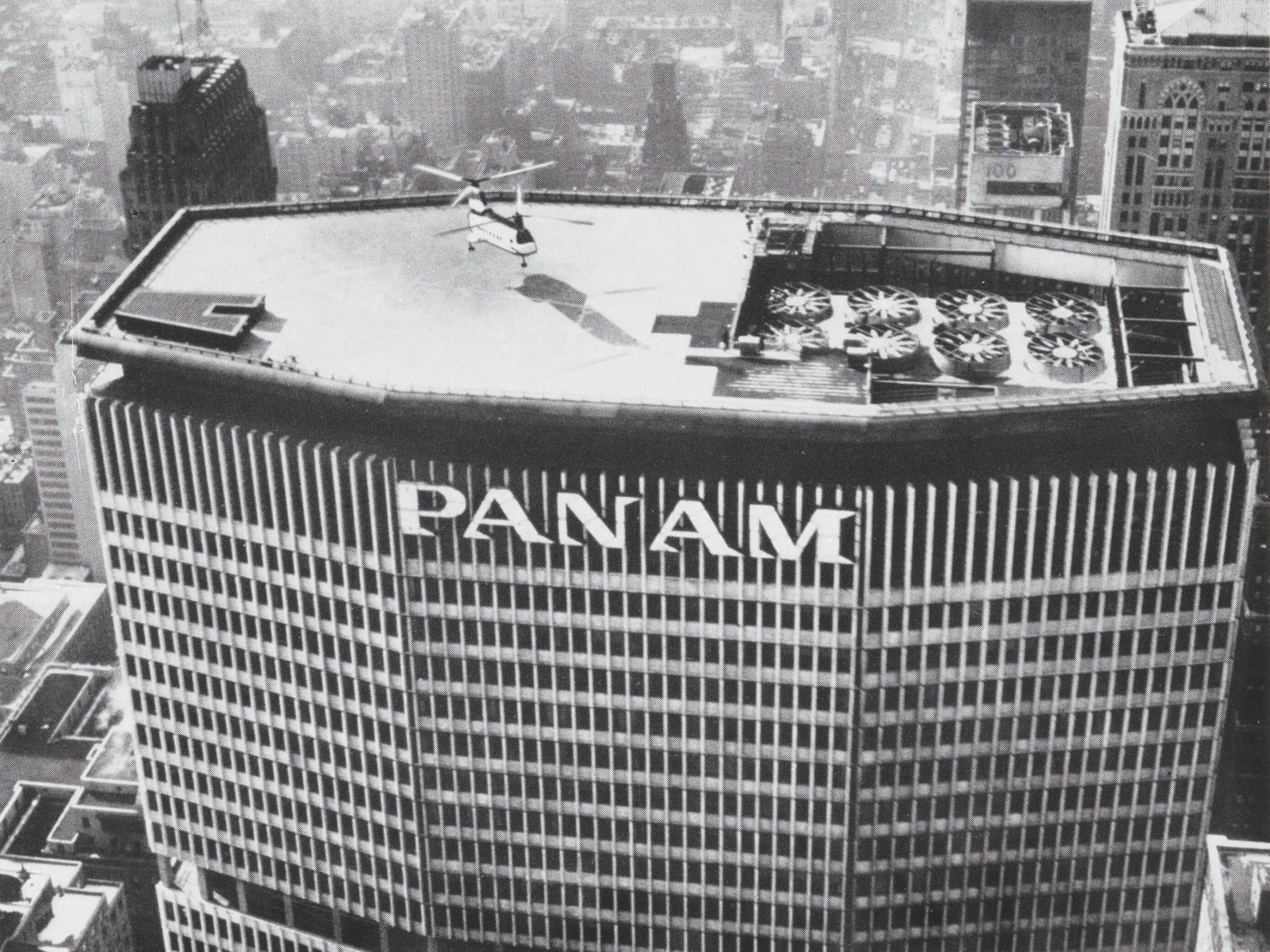
The idea of a helicopter airline didn’t die with Greyhound. Helicopter airlines sprouted up all around America and beyond during the 1950s through the 1970s with lines like Chicago Helicopter Airways and New York Airways. These airlines had many of the same ideas that Greyhound had, but kept their operations to a smaller scale. The two aforementioned airlines, for example, flew to destinations within Chicago and New York City, rather than trying to use helicopters to supplant a nationwide bus network. In 1957, New York Airways even hired America’s first black airline pilot, Perry H. Young.
A series of high-profile fatal crashes tarnished helicopter airlines’ reputations. They also gained a reputation for polluting cities with noise. Then there was the whole money problem. Helicopters are expensive to buy and still expensive to run. Helicopter airlines were flying tens of thousands of passengers a year, often for the equivalent of only $75 today, which made some sense in the times of cheap fuel. But as fuel prices began to soar in the 1970s, helicopter airlines began failing.

Today, helicopter airlines are more of a niche service. It seems for some manufacturers and airlines, the hope is that all-electric vertical take-off and landing aircraft will bring back helicopter airlines, but do it safely, quietly, and profitably.
Many of these ideas can be traced back to the 1940s, when a bus company thought, at least for a fleeting moment, that the future of bus travel was in the sky. I suppose that in a weird way, Greyhound wasn’t wrong. Bus travel isn’t what it used to be, and some firms are lucky to see over ten million riders in a year. Yet, some three million people fly in sky buses every day – only they’re planes, not helicopters.
Still, I wonder what could have happened had Greyhound somehow succeeded. Would our cities be full of buzzing helicopters landing on rooftops today? A part of me thinks it would be some good fun to board a helicopter on some random patch of American Interstate.
Top graphic image: State Archives of North Carolina. From the Albert Barden Collection – N_53_15_8645





All Nippon Airways started out as a helicopter transport company, Nippon Herikoputā Yusō. The business soon changed to aeroplane transport only, and all that’s left of the helicopter business, like Victor Clementis’s hat, is the IATA code NH.
That’s a lot of expense to move three people at a time. I wonder what the projected cast of a ticket was? Another idea that never got off the ground.
A question for the rotary wing aircraft knowers: what is the larger contributor to helicopter noise – the engine or rotor(s)?
Even if they shift to electric, if it’s the rotors causing most of the noise, they’ll still be loud.
Propeller blades are high contributors to eVTOL noise. At our company (at probably most others as well), keeping them quiet is of extreme importance. Flights have proven that they can be far quieter than helicopters. I was on site for a family day with about 2000 employees and family for a flight demo. Of course there was a helicopter in the area for video coverage, but then they asked the helo to go away. The crowd noise was louder than the eVTOL at a surprisingly close (but safe) distance away. City managers love eVTOLs because of their quietness. NASA was on hand when noise tests were done with several types of aircraft (similar size) were flown by at the same speed and distance, and the difference was startling as to how much quieter our eVTOLs was than other aircraft.
And just a tiny bit late I found this about noise:
https://www.jobyaviation.com/sound
Love how “Greyhound Skyway Transfer Station” = just a sign in a field.
Not just any field, either, but the side of a highway! I’d love to see that happen with modern traffic racing by.
I’ve never heard of Science and Mechanics, but look at them being the voice of reason! Deferred vehicle maintenance may have been understandable in 1944 due to shortages and rationing, but the veiled implication that some people just don’t maintain their cars is interesting. We share the road with their descendants.
An air bus? What a ridiculous idea, surely the name alone should have told them that
As an aside, Los Angeles Airways was at one time envisioned by Howard Hughes as his way back into the airline industry, after being forced to relinquish control of TWA several years earlier. They were teetering on the brink of bankruptcy in 1969, following a serious crash, and he seemed like the only one interested in trying to bail them out, but he backed out of the deal at the last minute and they went into liquidation. He then went on to buy the also troubled Air West the following year.
Los Angeles Airways operated a shuttle from LAX to the Disneyland Heliport, and in 1968 that route had 2 serious crashes with no survivors, 20 passengers and 3 crew were lost each time.
I, for one, am always amused at the lengths people will go to just to avoid fixing surface transportation issues in North America.
Mass transit in or near major metropolitan areas? Crazy, and never will work. Flying death pod, autonomous or human-controlled? Let the capital flow!
Glad to see we’re still on-brand decades later.
Basically the post-war boom screwed up mass transit. Cheap suburban houses, cheap cars.. Every city (except for LA see Who Framed Rodger Rabbit) that was densely populated before the war has good public transport. Washington DC is the only one I know of to succeed in creating one post-war. People don’t want the disruption or chaos of tunneling or erecting elevated rails. never mind giving up the road space for the rails.
Personally I have been noodling about the idea of skyway/cable car style mass transit.
It’s weird what people get used to, these people apparently enjoy living under a motorway
I love the architecture of the original Greyhound stations. We had one in Cincinnati until recently, when the new owners of Greyhound sold off all the assets and relocated the station to a first ring suburb with as a trailer with no full time staffing or nearby services for the passengers. Then the original station got bulldozed and repaved as a parking lot until the new owner could find a way to redevelop it to his advantage. Yay, parking and stormwater runoff…
Streamline Moderne was a happy compromise, the aesthetic appeal of Art Deco without the costly ornament and materials
For a cinematic view of ’70s New York Airways operations on top of the Pan Am building, check out the underrated Cooghan’s Bluff with Clint Eastwood. Movie basically starts and ends there.
If only we had the Avrocar
Per a very reliable source (my Uber driver) LA will have autonomous drone taxis in time for the 2028 Olympics
I think the real tragedy here is that we didn’t get more Loewy-designed helicopters. Guess I’ll go back to watching more GG1 footage on YouTube.
Hm. The solution to their busses being at capacity was to introduce helicopter busses instead of, you know, more busses.
I am just going to toss Hermann Ganswindt in here since he, I don’t know,
PUBLICLY DEMONSTRATED A HEAVIER-THAN-AIR HELICOPTER CARYING HUMANS IN 1901.
That was well before the Wright brothers got their act together.
Stop the US-washing of history!
At least to some historians, just getting a machine into the air doesn’t make the machine practical or successful. That’s why I used “successful” and “practical” as operative terms. I did write about the history of helicopters in a different article, which describes early efforts in greater detail!
Besides, I said the first successful helicopter was a German creation:
Edit: To expand a little, I’ve also seen the Focke called the first “practical” helicopter. The dividing line with some historians seems to be that the Focke design did not become popular, but the Sikorsky one did.
Thanks Mercedes!
I did like reading the article BTW.
It may have been more successful if they had actually gone this route (pun intended?). Load up the bus, fly it to the next city, then drive the bus to its local stops. I mean, it’s still a terrible, expensive, impractical idea, but at least it might have worked better.
Basically, a flying crane-type helicopter, treat the bus like a shipping container
I never realized there was this much hype surrounding helicopters as a passenger transportation solution. I mainly thought they were mostly a military thing at that point in time.
…Though it suddenly puts a children’s story about a race between a helicopter and a green caterpillar with red stri-I mean, small steam locomotive into perspective.
It makes sense. Airplanes had just turned from impossible fantasy to practical transport. It’d be reasonable at the time to see these rickety death traps and conclude in another decade or two they’d be everywhere.
This was the era when they thought every single pilot returing from the war was going to line up to buy a personal aircraft they could keep in their garage, instead of just going back to their old job at the tool & die shop and never flying again
I think we should all take a moment to appreciate Igor Sikorsky’s safety fedora.
It’s all good, he also had safety squints. It’s hard to tell from the angle of the photo, but he may have had safety loafers too.
if something went wrong in that setup I’m not sure a helmet would have made much difference.
Parking would have been a nightmare if helicopters became more mainstream. Look at the area on those flat roofs. They would fit three helicopters at most. If one broke down, their capacity would plummet. The naivete of these executives is admirable.
Then again, most of today’s ‘startups’ are rife with vaporware ideas. EV air taxis are all over the Flying Magazine website, but the practicality is still unrealized. Those companies will still take in billions in venture-capital handouts, though.
All the more so if the personal commuting helicopter had become a thing. Picture a parking garage. Now picture it full of helicopters. Good grief.
Not to mention having everything in your yard “rearranged” multiple times a day as you and your neighbors took off and landed.
Imagine three helicopters hovering low near ground-effect, waiting for a fourth one to take-off so they can fight for the parking spot. Calamity will ensue!