


Assembling a brand new WWII Jeep from hundreds of individual parts was extremely difficult. It would have been one thing to purchase everything as a huge set, but as the purpose was to demonstrate the enormity of eBay Motors’s WWII Jeep parts selection, I decided to buy almost all the parts one-by-one. This led to a few challenges: 1. There were boxes; lots of boxes. 2. Figuring out how to organize (not lose) things was not easy and 3. This was very obviously not the most cost-effective way of building a WWII Jeep (but again, that wasn’t the point).
If you want a fully restored WWII Jeep, you can generally buy one for around $25,000. As anyone who has restored a car will tell you: If you want to save yourself the headache, just do that instead of restoring a car yourself. It will save you lots of time, and to be honest, it’ll likely be cheaper. In my case, that was especially true because of the way I built my Jeep: I ordered hundreds of parts, individually, meaning I didn’t get the volume-discount that you get anytime you purchase loads of parts all bolted together in the form of a complete vehicle (for example, if I had purchased this one from eBay).


Still, the prices of the individual components were great, so this could have been a lot pricier than it ended up being. At the same time, because I was in a rush, I did have to make some hasty purchases so I probably could have optimized a bit better. Anyway, let’s get into it, starting with the biggest expenses.
Parts That Cost Over $300
Here are the priciest individual purchases, starting with a bit of a luxury item that I didn’t need, but wanted — the brand new engine:
Brand New Engine Block: $6,309.53

The Body: $4,441.88

The Frame: $2,765 (I paid the seller an additional $376.44 — total: $3,141.44)

Complete Engine Overhaul Kit (With Manifolds, Camshaft, Oil Pan)

Combat Wheels:

The Spare Engine: $1,097.50

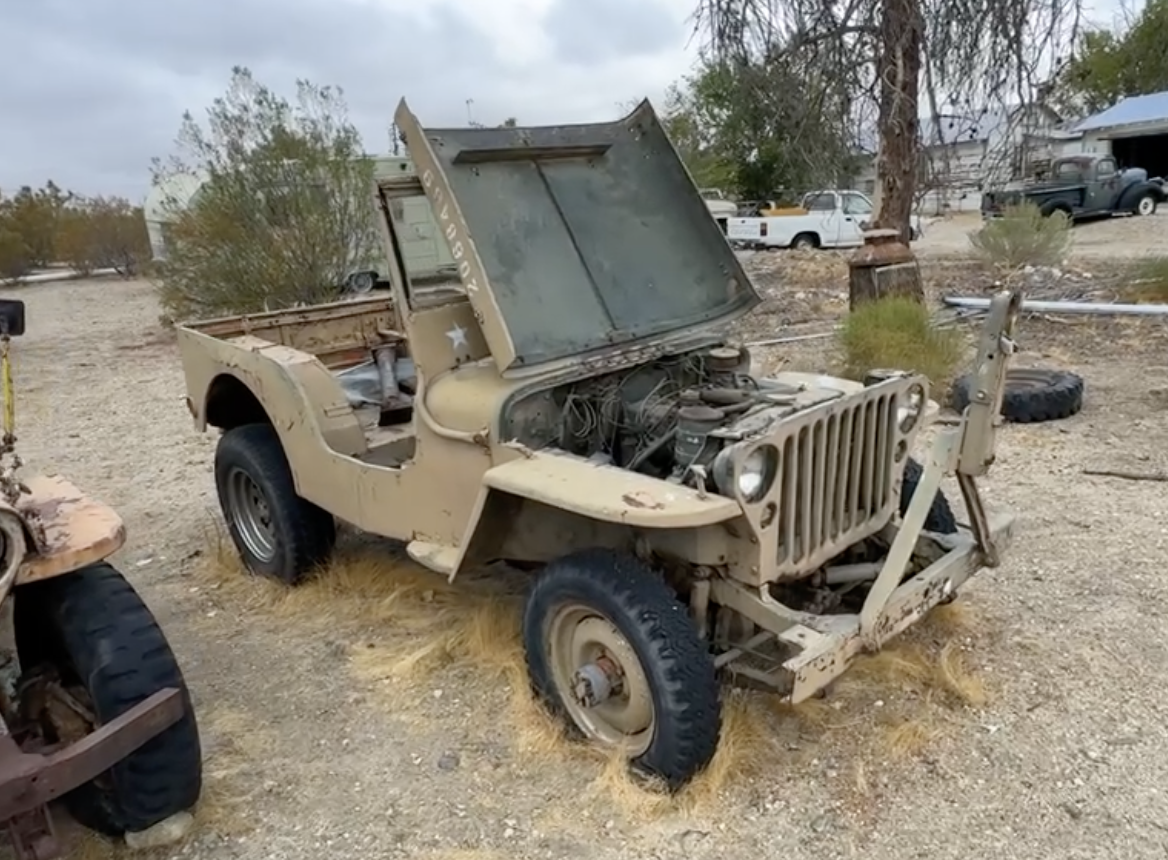
Reference Vehicle: $1500 (purchased from a local)
Crankshaft: 987.75

Axles/Transmission/Transfer Case: $658.50

Generator: $658.50

Full Wiring Harness: $649.95
 Connecting Rods: $592.65
 Cylinder Head: $538.31

Specialty Vehicle Registration Costs: $510

Roof Cross Bow Set: $469.11

Fuel Tank: $433.51

Tires: $498.45

Leaf Springs: $476.55

Driveshafts: $442.28

Assorted Hardware Kit: $395.11

Voltage Regulator: $347.08

Starter Motor: $329.25

Rear Seat Frame: $329.24

Distributor: $309.22

The total of all parts that cost over $300 comes to about $30,100. These higher-priced, large items represent the bulk of my expenses.
Parts That Cost Between $100 And $300
Parts between $100 and $300 represented the smallest category of the three arbitrary categories I created for this article. Here are some examples:
Clutch Kit: $243.21

Windshield Glass: $119.90

Muffler: $122.92

Brake Lines: $178.88

Oil Bath Air Cleaner: $214.01

Steering Shaft: $208.54

Steering Gearbox: $113.40:

Lots Of GL4 Gear Oil: $109

In total, parts between $100 and $300 made up only $7,300 of my vehicle’s total cost.
Sub $100 Parts
It’s the sub-$100 parts that make up the biggest volume of purchases, and as such, adding them up also comes out to about $10,100. Here are a few examples of some important sub-$100 parts. I’m not going to list their individual prices because there are just too many parts in this category (Note: The $10,100 figure includes fluids and small pieces of hardware/tools I had to pick up from local stores):


If you add up the cost of the more expensive parts ($30,100) with that of the $100 to $300 parts ($7,300), and add that to the cost of the cheaper parts ($10,100), you end up with a total of about $47,500. If you add in about $1,000 worth of miscellaneous tools and fasteners I had to buy (a conservative estimate), I end up at $48,500. Luckily, I managed to sell the reference Jeep and the spare engine for a total of $6,000, bringing the total for me to build and register this WWII Jeep to approximately:
$42,500
This is about the same price as a restored Slat Grille MB like this one, but it’s more than buying an average, fully restored WWII Jeep, largely because I bought loads of parts individually, shipped many of them individually, and — the biggest cost — I insisted on one major luxury: that brand new engine.
I could have easily just bought a used, running engine or had a motor rebuilt for much less than buying a fresh engine block, a fresh cylinder head, fresh manifolds, a fresh crankshaft, a fresh camshaft, etc.
If you factor in all the ancillaries, that new engine probably ended up costing me $7 grand, but if I’m honest: It was worth it. To me, the spirit of the build called for a brand new WWII Jeep, and a brand new frame and body weren’t enough for me to feel comfortable calling the whole Jeep brand new. Also, I just think a brand new 80 year-old engine design is cool.

So there you have it. If you want to assemble new WWII Jeep from scratch, and you want a fresh, new motor, a rebuilt transmission and transfer case, a new frame, a new body, new wheels, and pretty much new everything except axles and gearbox housings, it’ll cost you a little over $40 grand if you decided to buy most of the parts piecemeal (and if you make a few grand buying and selling a reference Jeep). That’s probably not the most efficient way of doing things, and you’ll probably spend more than that on labor associated with organizing the parts and actually building the Jeep, but hey, it’s character-building and the end-result is something in which you’ll feel enormous pride.



I’ve been accused of gatekeeping the word ‘enthusiast’, because I feel like people who go to the dealership and just get a credit check and sign some paperwork and walk out with a 392 Challenger or Supra or something, well…. they don’t know S about F. But like.. I don’t mean it in a negative way, it’s more aspirational to learn more and grow your skills.
I still feel that way. IMHO there are tiers of what being a car enthusiast means; they range from “I do my own basic maintenance” (low level) to “I pulled my engine and rebuilt it and put it back in and now the car drives again” (higher level), but the top tier, ultimate S-class variant of being a car enthusiast?
CREATING A CAR FROM SCRATCH. Kit cars, something like this, or building a street rod from garbage, creating a vehicle from previously NOTHING is just absolutely wild.
Congrats DT! You have reached automotive nirvana/full enlightenment with this build.
I hope to get there some day 🙂
Asking for a friend, what level would you call “I pulled my engine and rebuilt it and put it back in and now the car
drives againstill doesn’t run”?I know I’m late to the party, but I have an older, fatter friend with the same question.
Wow, I actually thought it was gonna be a lot more. Like I said in the previous article, great work DT! (and everyone involved). This wrenching saga was so awesome and The Autopian is the best site ever!
If you wish to make an apple pie from scratch, you must first invent the universe.
-Carl Sagan
Loved the project, thanks. Did the deadline spoil the experience for you?
Couldn’t quite put my finger on the whole project but the price tag drove it home for me: this is automotive performance art at its best! And we’re the satisfied audience, so everyone’s happy!
(This follows the great tradition of Roadkill and the Grand Tour assembling an off road mule in Mongolia, so great pedigree here)
Great payoff for this project in these last few articles, this really delivered.
OK, so what is the fate of the ebay jeep, in the end?
[edit] Hey, good answer from David here!
Great article, as always David.
Glad there wasn’t really a budget constraining your efforts.
I’m waiting for the post: “Here’s all of the extra parts I have from building a WWII Jeep from eBay”
Also, are you going to paint it?
Labor. How many hours?
Yeah I was just thinking about that. Just value your labor as worthless I guess.
Brent Mullins of Mullins Jeep Parts and the Museum of the American GI in College Station, Texas did something similar a few years back. Main difference is he had some original frames with engines. He completely refurbished the frames and engines and then built up the jeeps with new parts and bodies. As I recall he even put a short warranty on them. I can’t recall how many he did.
Perhaps already said: The sum of the parts is greater than the whole.