


Everybody loves the new Renault Twingo. Yes, even those who have never heard about it, because the moment you lay your eyes on this happy-looking city car that comes in real colors, you’re rooting for it. Sure, it’s only got 80 horsepower, and yes, it’s an electric car that can manage around 160 miles at best, but it looks so good and it looks so right. It’s a successful update of the wacky 1990s-2000s original to the late 2020s, and I can’t wait to get to drive one.
Dacia, the Romanian carmaker, is pretty much Renault’s reliable sidekick as its cars have traditionally been based on Renault architecture from day one. It only makes sense that Dacia’s new entry-level EV is also based on the Twingo, to benefit from platform-sharing synergies. The time has now come to update Dacia’s Spring, and for the Spring to get to use the Twingo’s bones is what they called a “Good Change” in Robin Hood: Men in Tights.


What Even Is The Dacia Spring?
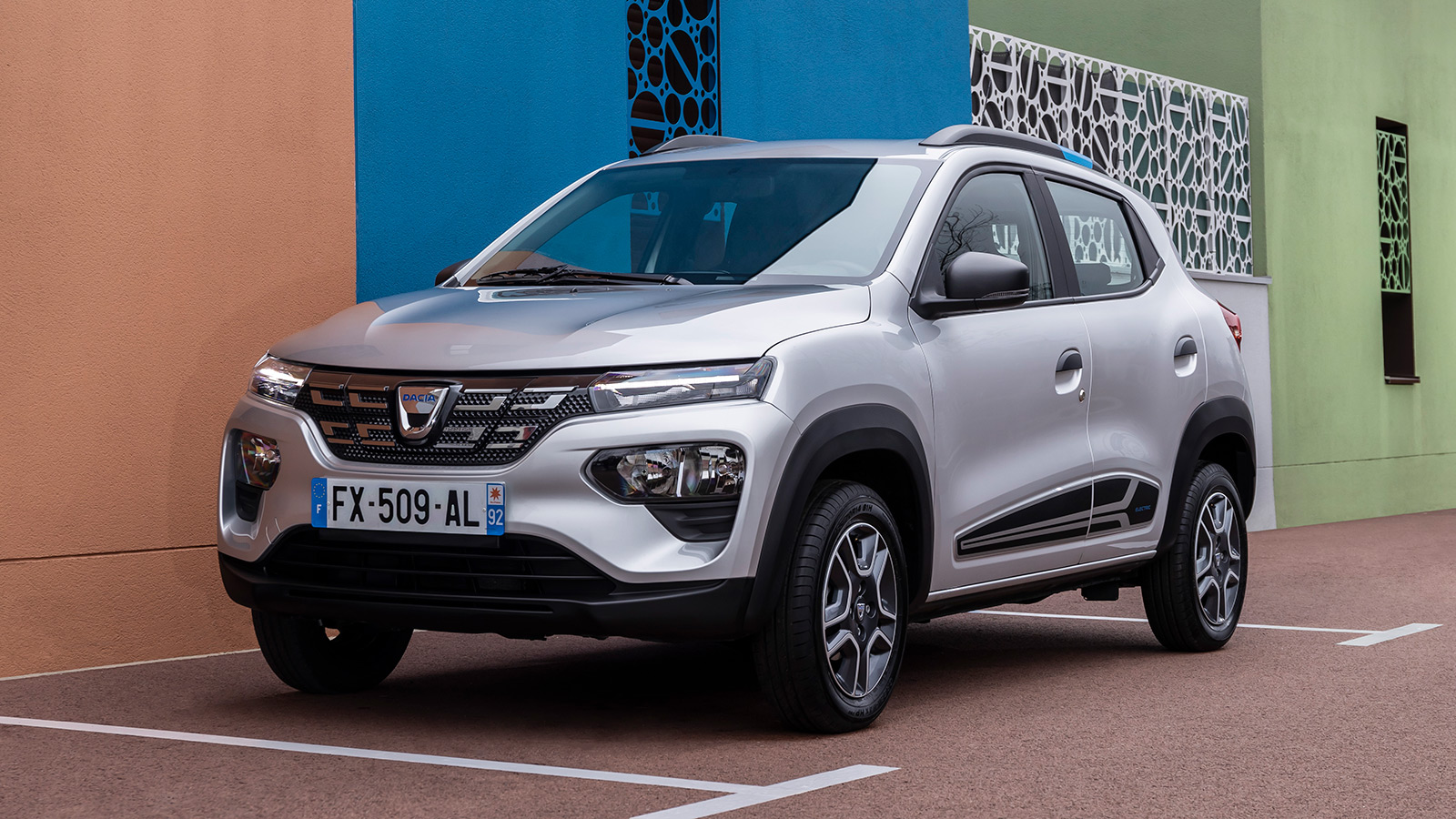
First of all, the original Dacia Spring was launched a few years ago, in 2021. It was Dacia’s first foray into electric cars, and since they had to make it cheap, Dacia based it on the cheapest thing it could find: the Renault Kwid, which is a developing-market gasoline-engined hatchback designed to cost nothing to build, and which also spawned an electric variant, the Renault City K-ZE, developed in partnership with the Chinese Dongfeng.
Since it had to cost just a few thousand new in India, the base Kwid was engineered on a dime, which meant it did terribly in crash tests. The battery pack in the Spring’s floor probably helped stiffen it up, but I still wouldn’t want to crash one. If you think of a generic European car-sharing vehicle, this is very close to it.
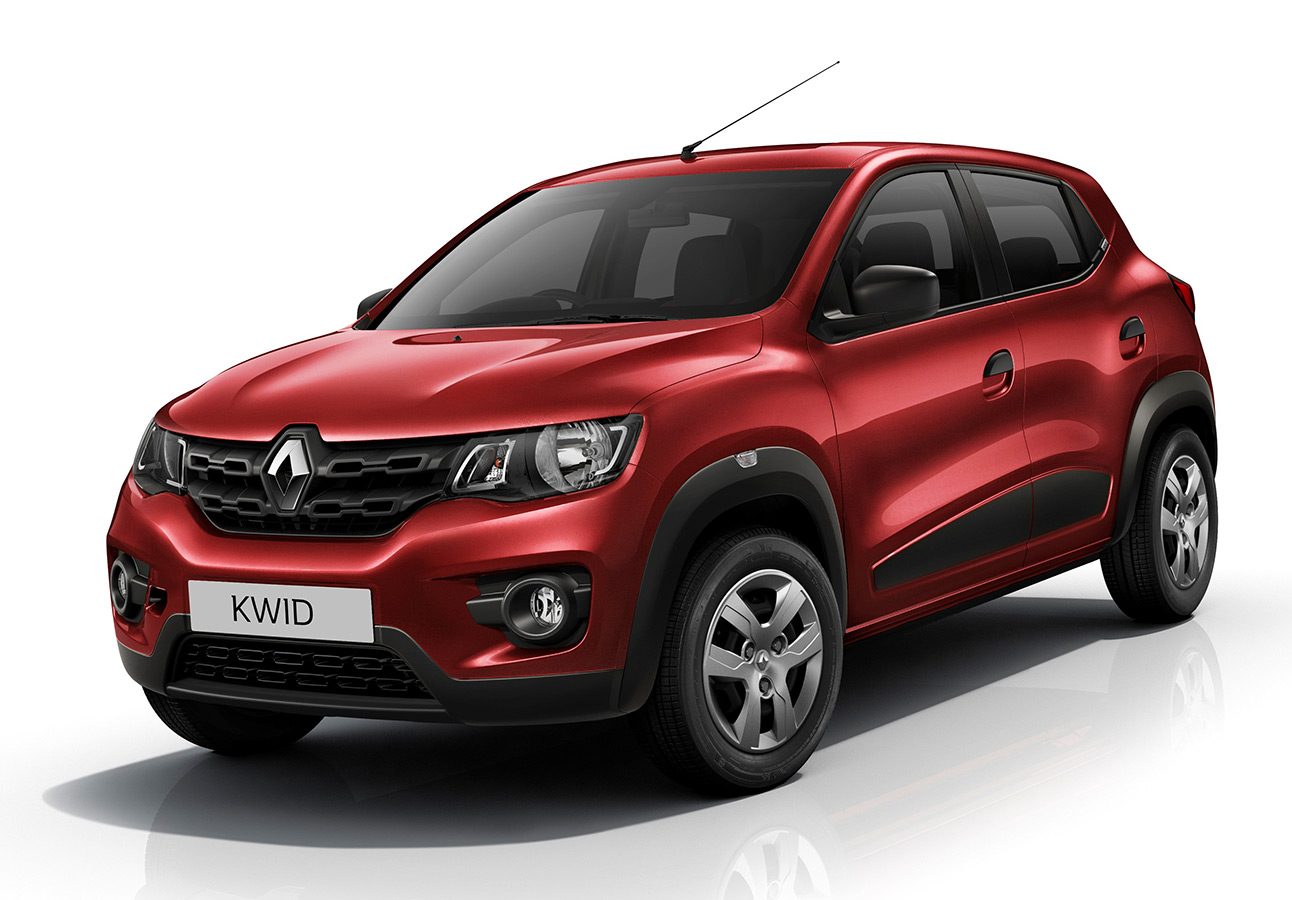
Dacia didn’t make a lot of noise about it, but when the Spring came on sale in Europe, instead of truly being The First Romanian Electric Car Offered to the Public, it was in fact a Chinese-built Renault EV wearing Dacia badging.
Looking back, it was likely the first China-built car I had ever driven, and while I did have my hopes up – I wanted a cheap, cheap EV lease – it wasn’t really much more sophisticated than a Fiat Topolino, which would arrive a couple of years later, even if it was classified as a real car and had a rear seat unlike the Fiat and its Citroën Ami cousin.

The Spring was successfully updated a couple years later with a facelift, which gave it chunkier looks and a new cabin, yet kept it cheap. Amusingly, it was also sold as the Dacia Spring Extreme, which sounds like it was designed for lousy Smarch weather.
The Spring Has Sprung Like Never Before

But now, as the Twingo has been rolled out and sales are ramping up, it’s time for the Spring to really flower, even in September. This week, Dacia launched the new, Twingo-based 2027 Spring, which will be built at the same factory as the Twingo in Novo Mesto, Slovenia. It’s still not built in Romania, but since it’s effectively a rebranding exercise, it’s fine.
Since the Twingo has been painstakingly engineered to be as affordable as possible, for a sub-20,000 Euro starting price, making an even cheaper version with a Dacia design will have required some careful thinking, even if it took the company just 16 months to speed it through the development stage.

It also means some of the Twingo’s hallmark stuff will have had to be left out, including the sliding rear seat that perfects the balance between rear seat room and cargo space in the Renault – but since the sliding seat was always a Twingo thing and something people remember from the original car, the Spring doesn’t necessarily need it. Come to think of it, nearly everything in the new Spring will be a bonus compared to earlier ones.
The dashboard follows the blocky and modular styling of other Dacias, with a recycled blue plastic finish on top, while the Twingo has a glossy round shape to the dash, with trim that’s color-matched to the exterior color. In daily driving, the Spring’s beeps and bongs can also be silenced with just two presses of the MySafety button next to the steering wheel, like in Renaults.

And just in case, the Spring also has a longer rear overhang than the Twingo, so it has a bigger 337-liter trunk than the Twingo’s 307 liters. Both cars are four-seaters, and the rear seats have a 50/50 fold as a result. The rear windows are pop-out instead of rolling down, like with the Twingo, to save costs and effort.
Lose The Roundness

You can only really notice the Spring’s relation to the Renault from looking at the windows. The sheet metal is unique to the Dacia from the windows down, and the rear end has this Opel/Vauxhall Signum thing going on with the rear window/tail light design.
Dacia’s designers have deleted the roundness that makes the Twingo easy to sketch on a napkin and replaced it with a serious look that’s slightly more appliance-like, especially in the underwear blue that appears to be the launch color.
Since the Twingo always needed to look like a Twingo (something the 2007-on second generation car never did), the Spring is more free to look like whatever they can make it, as long as it has the blockiness that Dacia includes in all its cars today. There are a lot of unpainted surfaces that just have easter egg detailing instead.

The Twingo/Spring (Springo?) isn’t the only Renault-based badge-engineering job currently out there, as the new generation Renault 5 has been redesigned to be sold as the Nissan Micra. The Micra does look more like an R5 than the Spring resembles the Twingo, but that’s largely because of the distinctive roof shape.
Nissan will introduce the new PIXO city car later this month, and it is likely to be yet another interpretation of the Twingo platform and chassis, just with a Nissan identity that will bring in inspiration from the Pike Factory cars – remember the Pao, Figaro, Be-1 and Rasheen? Keep an eye on those side windows, as they are likely to keep their shape even in the Nissan.
Is It Cheap Enough For A Cheap Dacia?

To keep things simple, there will only be one Spring version on offer, priced below 18,000 Euros in some European countries such as Italy. The battery is just 27kWh in size, with the aforementioned 80 horsepower motor and an estimated 155 miles of range (WLTP). For a city car and a commuter, that’s absolutely fine, especially if you can just plug it in at work as well as at home.
However, in the UK you can get the outgoing, still Chinese-built Old Spring (is that an aftershave?) for just £12,000, which is 14,000 Euros or $16k. The new one will be priced at around £18,000 in the UK, or $24k. Naturally, various subsidies and grants will play a role in different European countries when it comes to pricing the Spring, and I don’t have a clue whether our Finnish market will even get the car.

Make no mistake, the new car is a lot more car, wider and longer, even if the drivetrain numbers don’t change much: the battery size goes up from 24kWh, power is boosted to 80 hp from 70 in the base version, and range is improved by 15 miles at best. Top speed is 130km/h (80 mph), and the car gets to 62 mph in some 12 seconds, with 175Nm of torque (129 lb-ft).
The old car has also been offered with a 100-horsepower electric motor, which is peppier than what you can get in the new Spring. Still, the outgoing car is a facelift version of the old, dinky Spring, and the 2027 version will definitely be more substantial.

Fast charging speeds remain at 50kW max, but you can spec the car with three-phase 11kW AC charging instead of the standard 6.6 kW setup.
It’s also worth noting that as these cars won’t have active battery temperature management to save costs and will instead rely on passive (air) cooling while driving, in hot and cold temps, the DC fast charging speeds in the Twingo, Spring, and the upcoming Nissan are likely to be pretty sucky. It’s better to plug in the 11kW AC charging cable instead, since the tiny battery is quickly topped up with that, and AC charging has been proven to be better for the battery over time.
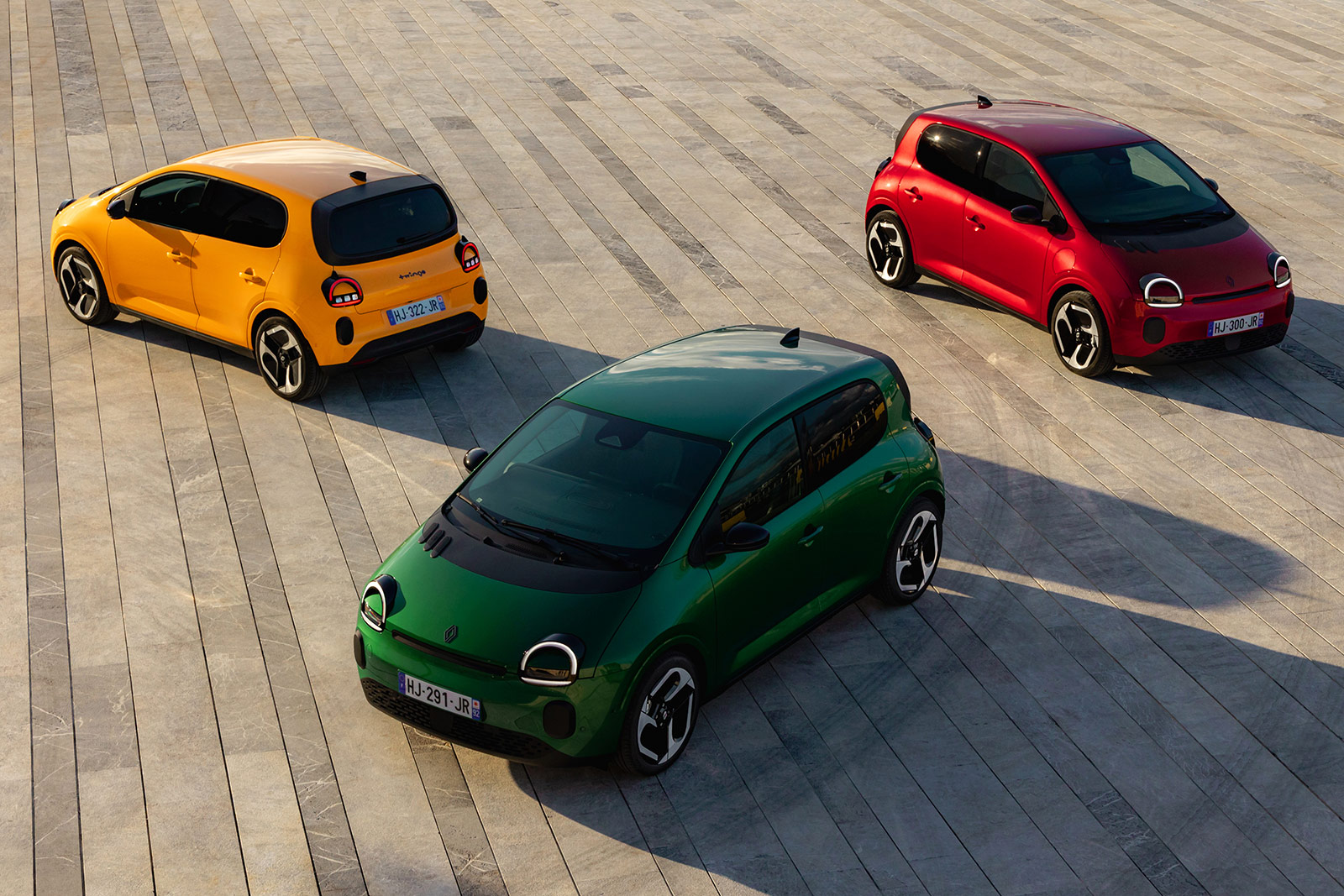
The presence of the Twingo and Spring on the market is significant. While the Dacia Sandero costs about the same and keeps topping European sales charts, European carmakers have largely steered away from the small city car segment due to regulations making it increasingly difficult to sell small cars profitably. As a result, many of the usual small cars either haven’t received a successor or will just grow up a size, with a bigger price tag.
The Ford Fiesta is gone, reportedly to be replaced by an EV version again based on the Renault R5 E-Tech; the VW Polo is gone, replaced by the ID.Polo, which is again an EV. Fiat designed the new Panda as a Grande Panda, making it bigger, but it will also sell the old version as long as it’s legally possible, as the Pandina, which is at its heart based on a 2004 design.
With average car prices and fuel prices going up (think $10/gal across Europe), to be able to buy or lease a small EV for a relatively sensible cost sounds good to me, as long as it fits your life and your use case. Forget having just a beater with a heater – this is all about using CarPlay in a charging bay.
(Images: Dacia unless otherwise noted)


First, thanks for mentioning the Nissan Micra, since it’s also a Twingo-based car. 🙂
Until your article above Antti, I somehow missed the fact that the Twingo (and cousins) has an air-cooled battery pack, much like the first two gens of the Nissan Leaf. The short battery life this caused for Leaf v.1 & 2 are its biggest flaw, resulting in extra terrible resale values, even for an older EV. I honestly wonder if Renault’s done anything to avoid this severe ownership problem for the Twingo & Co.?
I really lusted for a Twingo (meaningless, since I live in LA) but now that I know it’s air-cooled, my ardor has quieted down a bit. Does anyone know about how the Twingo’s batteries are expected to do down the road? Is it a matter of battery chemistry?
I wish we had ANY version of the Twingo in America, even with the caveat of the air-cooled pack.
I owned a K-ZE in China, bought it second-hand for 5500USD and it was a brilliant little EV, ended up driving 40,000km over 18 months. Even with cheap Linglongs it handled way better than any other Chinese micro EV, Wuling Minis and Changan’s Lumin don’t even come close. I ended up taking it on a Sunday drive event with a local car club for shits and giggles, things got a bit heated on a narrow downhill pass, and I managed to keep up with a boosted Forester and base-model Mini, even with 44hp!
The air-cooled battery is a huge Achilles heel though, one fast charge and you’re pretty much done for the day.
Dacia is just no BS cars. If “real men” weren’t so afraid their dicks would fall off if they ever came near one, Dacia would sell a lot more!
There’s no way the body structure of the Dacia is actually much longer than the Twingo — I suspect the length is all in the bumper. The rear storage space is larger due to regulations around measurement, the Renault is probably measured with the seats all the way back, while the Dacia gets to measure the trunk space with the seats in their fixed position. Seats-folded they’ll have the same volume.
“Forget having just a beater with a heater”
True, but using the heater in one of these for any length of time is going to be a massive range drop :/
I know they’re popular in Europe, but I never understood the concept of a city car, and an electric one baffles me even more.
Most European cities are so well covered by public transportation that owning and managing a car (any car, no matter how cheap or small) is just a massive burden.
The only reason I’d want to own a car is to get out of the city, at which point I’d want way more than 27kwh and 80mph top speed.
Having said that, the Twingo looks absolutely amazing. The Spring is thoroughly mid.
Nobody wants to take ten bags of grocery shopping on the bus… But then, we (I mean my family, not all of Europe) use car sharing for that. Which is the perfect use case for city cars, as most trips are just to the shops or friends or the beach…
Also, sometimes you need to get three buses and spend an hour travelling to get somewhere you could drive in 10 mins, as most lines run into and out of town centres, not across the suburbs. Public transport is great, but it’s not perfect, driving is still often easier.
Pretty much this. In a lot of cases driving is still faster than public transport, even in cities.
Also, having a car is very convenient if you have kids.
I think you read the label ‘city car’ too strict. Much of the small cars are being used as a 2nd car in a household, for the short runs to the shops, taxi driving your children or going to work. This could well be within city limits, but most of the times you go from village to village or neighboring city. You can only drive faster than 80 mph on some of the German autobahns (legally) , so I do not see any need for 80 mph+ for a small car. And 27 kwh gives you plenty range for the intended purposes and leaves your car lighter, thus also saving in energy consumption.
That is the thing.
Here in Europe, this is not a city car. It is just a car. And one of the more affordeable options at that.
I bragged about my 75 hp in my first car. A lot of my friends made do with a lot less.
80 mph is over the legal speed in all of Europe save for some remote German roads. Trafic is often moving slower.
My own car (Cooper SE) has 27kWh. I would not use this car to drag a speedboat across the Alps. But the limitations are not as big as perceived. My commute is twice one hour per day. In summer, I drive to work three times before charging. In winter I often have to charge every two trips.
Then there is the positive side about owning a small, affordeable EV with a small battery:
“80 mph is over the legal speed in all of Europe save for some remote German roads.”
80 mph is also over the legal speed in most of the US, yet the bitterest complaints are about people who legally drive at the posted speed limit in the left lane.
I, too, have never understood the concept of the small city car. What I do understand is the concept of the small car for people in rural areas, where public transport is shitty and they are single or childless so they never need a bigger one.
That lack of active battery temperature management is what killed the battery on the first-gen Nissan Leaf after a few years, meaning used versions were near-useless.
What was the range on the one David bought? 20 miles?
You’d think that with Nissan being connected with the Renault group, that this information would have fed back to Renault HQ
I don’t think they expect people to keep these for more than a few years. The low entry price means that these are pretty much like disposable products.
I mean, Europe is certainly heating up but most of the continent doesn’t experience the vast range of temps like we get here in the U.S. and as a result I don’t think the gen1 Leaf has as terrible a reputation there as it does here.
Missed opportunity to call it the Spring-e.
I would but a Twingo if we could get them in the US.
The old Spring was probably the ugliest car on the road. Looked terrible in photos and even worse in real life. Not seen the new one yet in real life but the photos are much, much better.
I only saw the old Spring on Sundays, being driven by little old ladies going to church, which is strange. Probably a Dacia person plugged into the church networks somewhere…
I saw one on the Place de l’Etoile 2 weeks ago, leaning heavily and fully loaded with sullen teenage goths.
I can see these being popular among ride-share drivers in cities like Lisbon or Barcelona.
More affordable small EVs are a good thing.
So is blue underwear.
I’m always impressed when an automaker can create two very differently decorated vehicles from the same body hard points, and I’m especially impressed here that the vehicles have different door skins with different handle recesses, to match both the Twingo’s rounded styling and blockier ones for the more-masculine Spring. This required two different stamping processes and would have been such an easy area in which to cheap out, yet Renault chose not to do so.
Honestly, either one seems like perfectly decent city transportation. I say you may as well lean into the cuteness and get the Twingo version, though. And, assuming the Twingo also doesn’t come standard with DC fast-charging, I’d upgrade to that, too.
Was that supposed to be underwater blue, or am I missing a cultural reference?
Must be a European thing. Schlüpferblau (literally “panties blue”) is a more or less official German name for a very light pastel blue.
Also the colour for the Hyundai i30N.
Exactly.
I was watching a review about it from a uk auto channel and she was of the opinion everyone will get the higher journey trim because you get so much for the the ~£2k. Not having dc fast charging on the base is very strange it’s not much of cost add anymore. It’s just something people expect. Plus ac chargers break, with no dc you are really stuck.
While it sucks if the OBC charger goes, those are still warrantied. I do wonder how these will keep their value when they hit the used market, I’d guess a lot end up in fleet use.
They seem the type of vehicle that would be a good ROI for a cleaning company or something like copier repair? I would imagine buyers will be more concerned about no dc once it’s out of warranty. Could see a delta like the early leaf without DC or the i8 without a rex. Sell for about half.
Those back seats look very uncomfortable even just looking at them. I would be springing out of that backseat as soon as the car came to a stop.
They look fine to me. The thing I’d be concerned about is whether the bottom cushion is high enough off of the floor to keep strain off of your thighs, which is something a lot of small cars get incorrect (at least here in the US).
Electric cars typically get this wrong because of the battery under the floor. To maintain headroom, they lower the seat and you’re left with your knees sky high.
It’s a Twingo, just worse in every aspect
The Grande Panda should be the Granda Panda, and I will die on this hill.
Pande
Is it just me, or does that picture of the dash make this look like it has a nicer, more user friendly interior than most luxury cars these days?
It’s got Real Knobs which mustn’t be taken for granted!
Real Knobs is my next band name.
Playing covers of Circle Jerks?
Can’t forget the new Trax LS simple dashboard and HVAC layout…
https://cars.usnews.com/pics/size/0x0/images/Auto/izmo/i159615785/2024_chevrolet_trax_dashboard.jpg
They’re real and they’re spectacular!
But the Twingo brings a smile to everyone’s face.
I feel like there’s a missing “Good News!” at the beginning of any headline or story involving Dacia…
Beat me to it!