

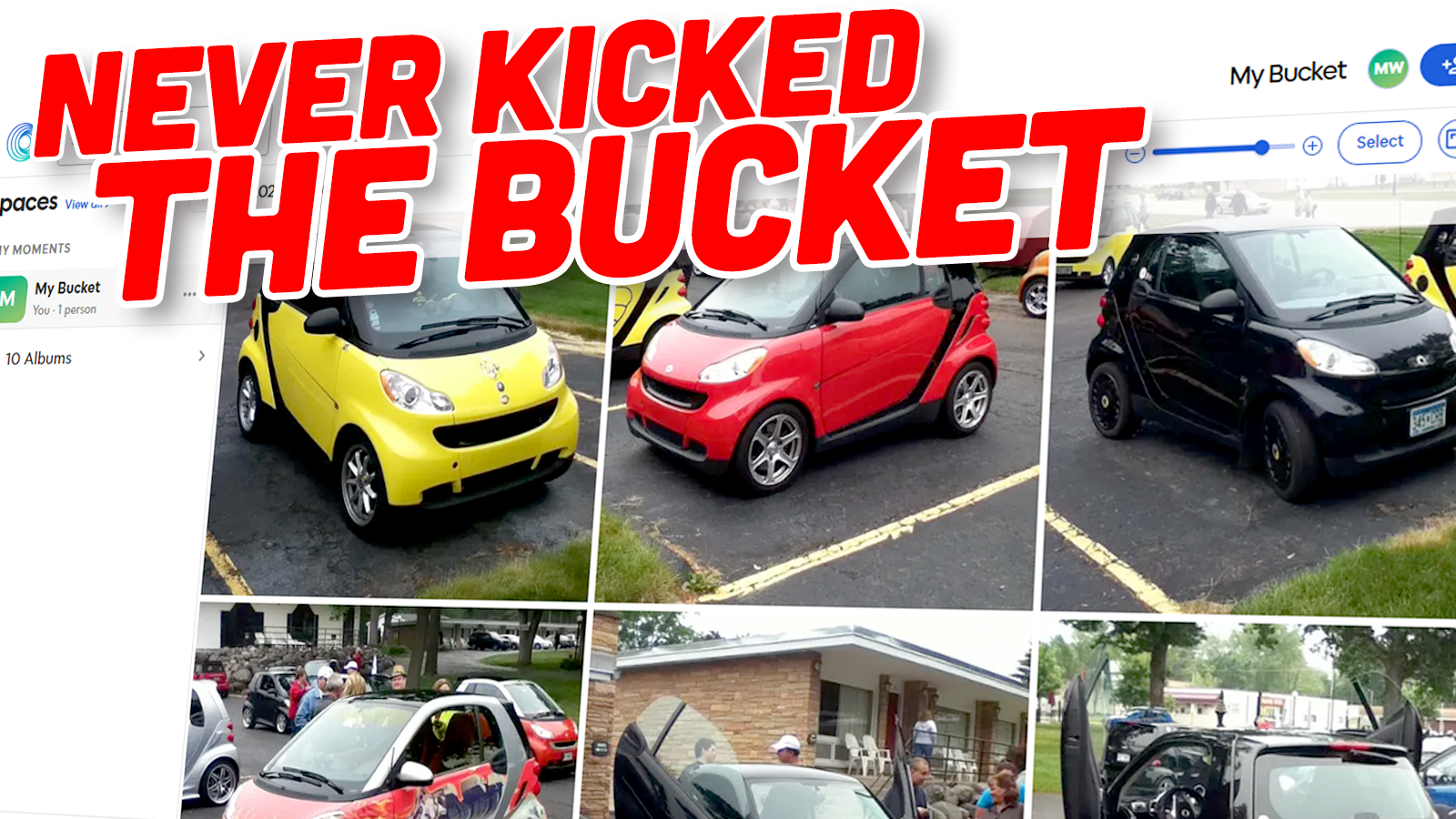
Back in 2017, Photobucket dealt a blow to the internet. The once-free image host quietly changed its business model, and practically overnight, millions of images were effectively removed from various forums and websites across the Internet. Photobucket then said that you could get your images back onto the pages of your favorite forums if you paid the company. I took the bait, and after Photobucket’s transition, I’ve been forking over $8 a month to the platform. But I’m doing it for what feels like a decent reason.
For most people, the concept of image hosting is an artifact of how the Internet and technology used to work. A lot of forums didn’t have a native image repository, so if you wanted to share a DIY car fix, your sweet computer build, or whatever else with your friends on the Internet, you had to upload the image elsewhere. Likewise, phones used to ship with only 8 gigabytes or 16 gigabytes of storage or so, and if you loved snapping pictures, it didn’t take long to fill up your phone.


Image hosting sites offer an easy way to keep your images only a few clicks away, right here on the Internet. Part of what made these sites great was that you could easily copy an image’s link and paste it into one or several forums. Photobucket was once a leader of image hosting. Founded in 2003, Photobucket was a free service that let you store photos on its servers and then share them to Tumblr, eBay, Reddit, Myspace, Facebook, or any number of Internet forums. People built websites featuring photos they stored on Photobucket. Photobucket even became the default image host of Twitter in 2011.
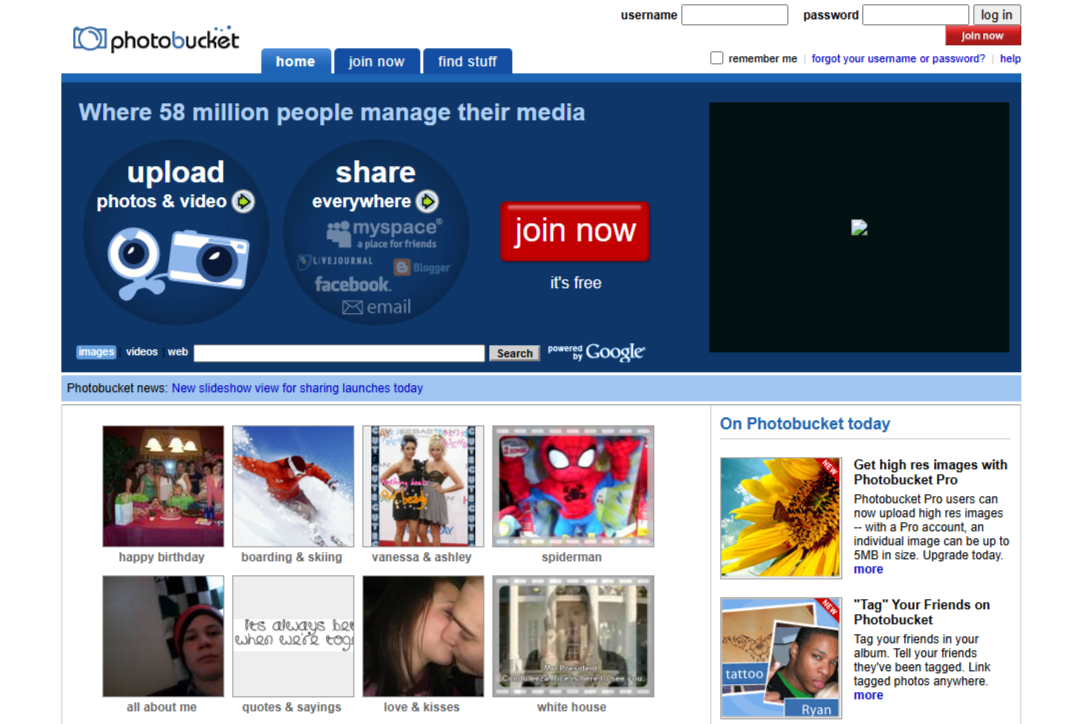
Until 2014, Photobucket made money the same way a lot of websites on the Internet did: It sold out portions of its site and mobile presence to advertisers. That way, the site was free to use, but still made money. Winds of change came in 2014, when Photobucket first announced a paid tier for people with large storage needs. Then, in 2017, Photobucket broke much of the Internet. I suppose I was one of the suckers, because when Photobucket started threatening to delete my photos, I started paying up. But, in a weird way, I’m also keeping a part of the old Internet alive.
Photobucket’s Blow To The Web
Photobucket’s disaster was one of its own making. On June 28, 2017, Photobucket changed its Terms of Use. Suddenly, Photobucket wasn’t going to allow the sharing of any photo from a free account anymore. At its peak in 2006, TechCrunch reported, a full two percent of America’s Internet traffic funneled through Photobucket. In 2019, it was the 1,500th most visited website in America. That should give you a sense of just how much was at stake here.
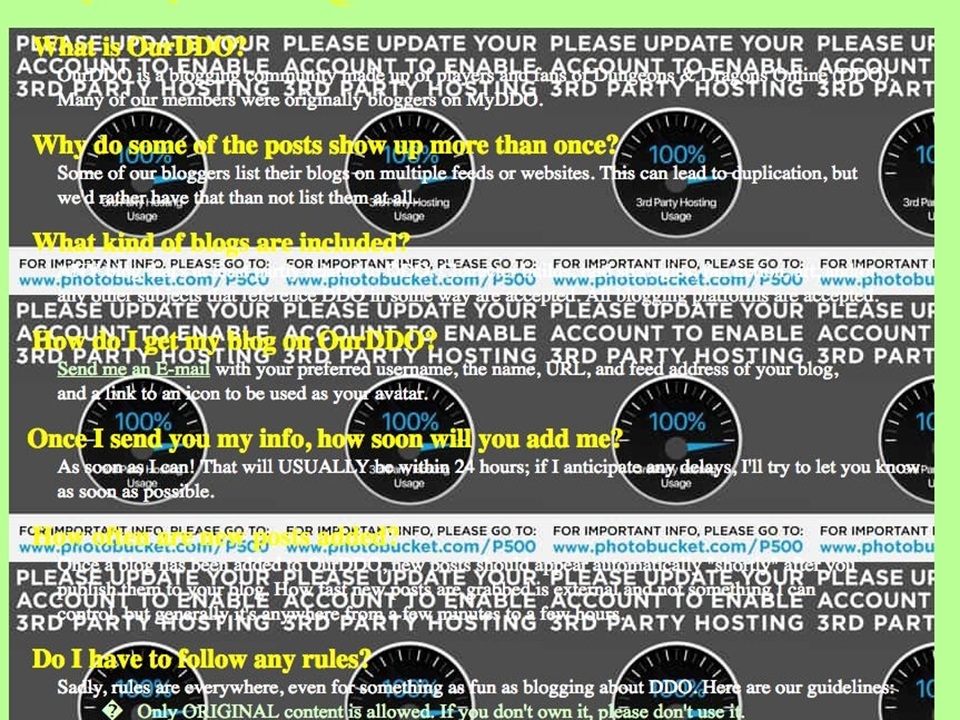
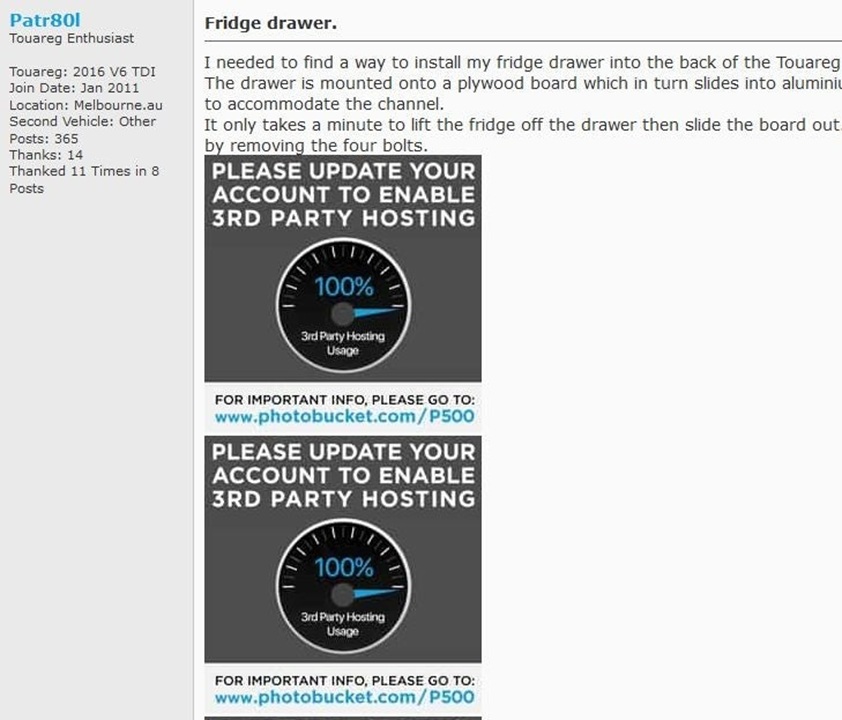
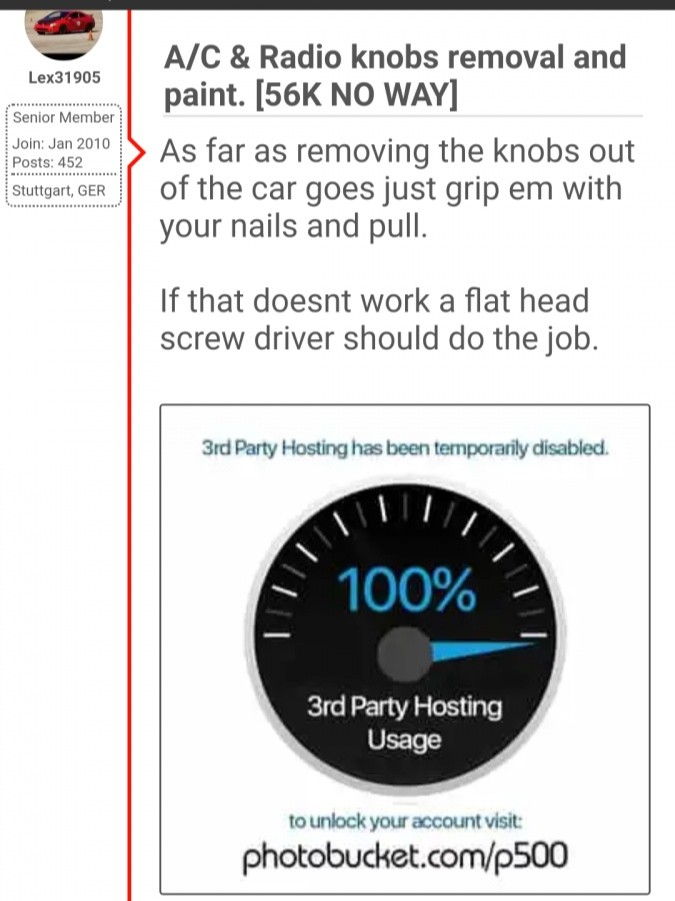
Unfortunately, Photobucket made this change practically overnight without much warning to its users. Suddenly, all sorts of Internet blogs, car forums, lifestyle forums, and even Dungeons & Dragons websites were more or less destroyed. Any site that displayed an image from Photobucket now displayed this image, instead:

The image below shows what happened to a page on a Dungeons & Dragons-themed website. As the Verge reported, an estimated 60 million images were effectively removed from the Internet after Photobucket changed this policy.
Photobucket had a solution. It said if you wanted to restore the function to your website, all you had to do was pay the company $399 per year. What a deal. This started an Internet wildfire and a PR nightmare for Photobucket. There was no shortage of people who claimed that Photobucket’s policy change was “extortion” or “blackmail.” Some people, who had a decade of work stored on Photobucket, paid the price. Others took their photos and either moved them to sites like Imgur or Google, or just went old-school and put their images on physical storage.
This had a profound effect on car forums. Suddenly, any thread containing an image from Photobucket was decimated. Entire how-to wrenching threads became wastelands of the infuriating image above. Sure, by 2017, a lot of car forums had their own image hosting, but someone who posted a how-to thread in 2008 might not have been around in 2017 to update their images. So, once-handy tutorials in car forums became useless, and it pissed off enthusiasts all over the car world.
Anyway, later in 2017, Photobucket would get a grade of “F” from the Denver/Boulder Better Business Bureau following a flood of complaints that Photobucket did not respond to. Photobucket’s traffic was already hurting in 2017 – which may have been the impetus for the new subscription model – but the plan worked. Here’s what Insider reported back then:
If Google Trends is anything to go by, interest in Photobucket has been going downhill since 2008.
[Photobucket representative Angela Fulcher] told INSIDER, however, that Photobucket was financially solvent before introducing P500. So it wasn’t necessarily a desperate survival tactic for the site. Furthermore, Fulcher said that P500 is a success so far, despite the backlash.
“The number of P500 subscribers are increasing substantially from week to week as our users appreciate the benefits of our platform’s ease of use and unlimited 3rd party hosting,” she told INSIDER.
My Photobucket Alternative Didn’t Last Long
I didn’t have the kind of money to give $399 to Photobucket at the time, so I let my images die. Instead, I found a more clever solution, or so I thought. At the time, I had a regular blog on Kinja that I called the Smart Blog. One day, I realized that I could upload as many pictures as I wanted into a post, save that post as a draft, and then share those images anywhere on the Internet, for free, in full resolution. It was basically old-school Photobucket, but better.
Admittedly, I never thought that Kinja would go anywhere. Likewise, since this wasn’t an advertised feature of Kinja, who knows how long I’d be able to use it as a photo hosting site without the powers that be realizing it. Of course, when Kinja, alongside Oppositelock, Jalopnik, and other sites, fell into the hands of G/O Media, that future changed. G/O Media killed all user-operated blogs, including my precious diary. In doing so, my entire Kinja photo repository was wiped out.
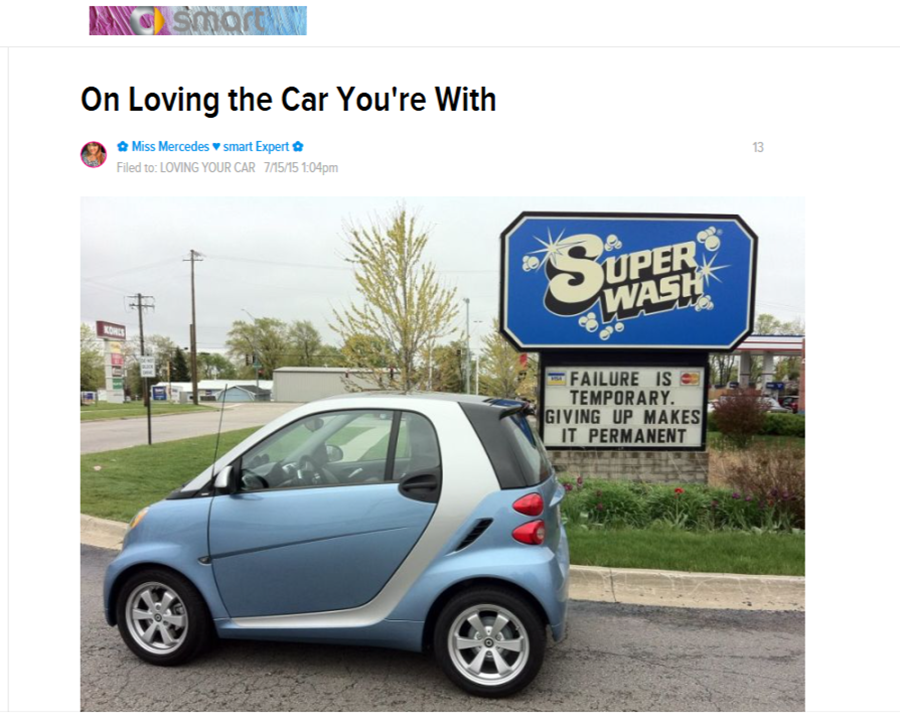
This one hurt even worse than Photobucket because while Photobucket replaced images with the annoying placeholders, G/O’s nuking of Kinja completely deleted the images. Any car forum thread that I embedded Kinja images into is now permanently broken.
In 2018, Photobucket dramatically lowered its barrier to image hosting. Now, you could restore your images to websites and forums for $20 per year. In late 2018, the plan changed again, and Photobucket offered 2 GB of photo storage with third-party hosting for $49 a year, 20 GB for $70 a year, and 2 TB for $124 a year. In 2019, the plans changed yet again, with Photobucket asking $60 for 25 GB, $84 for 250 GB, and $144 a year for unlimited storage.
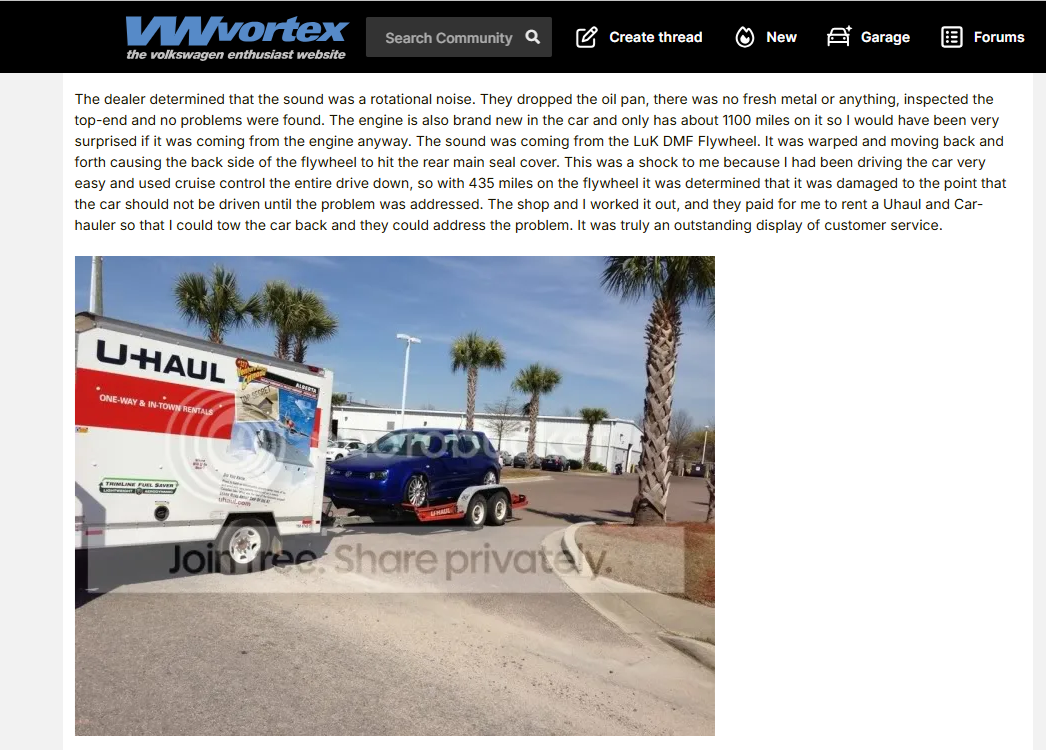
Photobucket also decided to restore the images it removed in 2017, sort of. If you still had a free account in 2019 and had a bandwidth greater than 25 MB, the images you had embedded on car forums and blogs were back, but blurred out, low-resolution, and with a giant Photobucket watermark. In other words, your photos became only slightly better than useless. Since then, Photobucket adjusted this again, and now images are low-res with a watermark, but are otherwise clear.
I still run into these quirky images today. It was just this weekend when I was researching a noise that my wife’s Volkswagen is making, when I found a thread filled with images with big Photobucket watermarks (above).
I Gave In And Paid Up
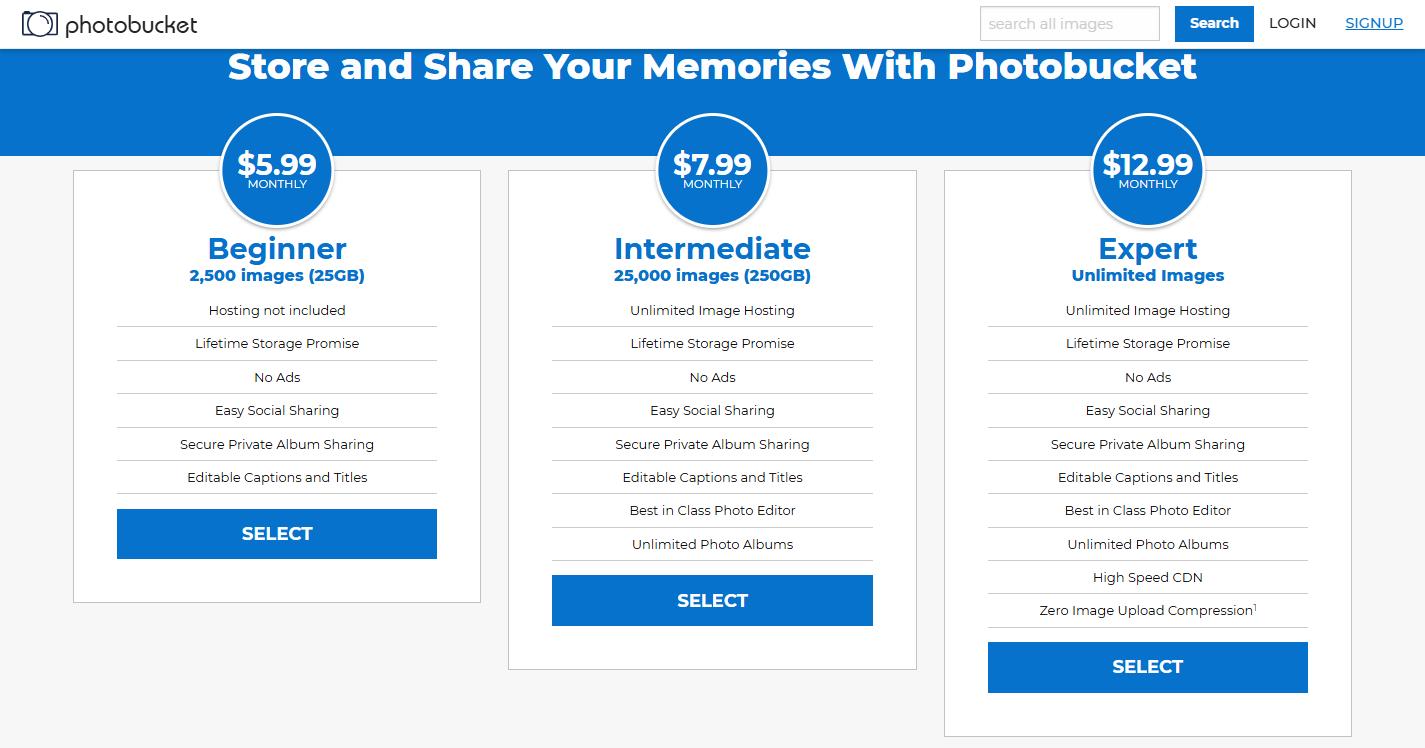
As time marched forward, Photobucket would change how it advertises the subscription tiers. At first, Photobucket merely warned me that my account was near the limit for a free account. Okay, whatever. In mid-2019, this messaging changed to me being over the free limit. This made sense because I was now over the 25 MB bandwidth limit. But whatever, it was fine. At that point, I was using Photobucket purely for image storage.
In 2020, the messaging changed again. Not only was I over on bandwidth, but now I was over on storage, despite having not uploaded a single image to my Photobucket account since 2017. Photobucket just arbitrarily decided that my existing photos were now over the limit. Again, I did nothing.
In early 2021, Photobucket started telling me to delete photos from my account or start paying. I did nothing. By 2022, Photobucket got even more aggressive. Now, Photobucket kept saying that it was going to delete my photos because I wasn’t using my account. Weirdly, I was logging in from time to time and downloading my own photos. But I guess I wasn’t really “using” it.
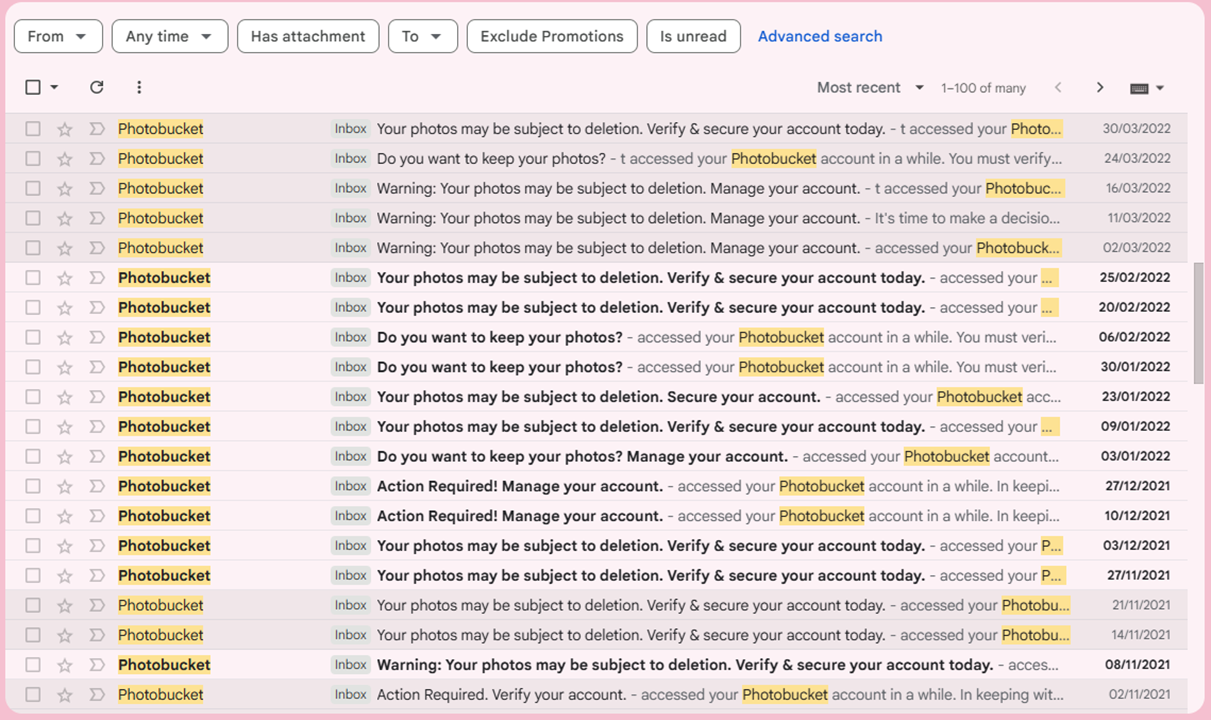
But that scared me enough. Not to pay Photobucket, of course, but to download my photos and delete my own account. But there was a twist. While there were mass-download tools out there, a great deal of the photos that I downloaded from my own account were corrupted. At least in 2022, I couldn’t find a 100 percent effective way to download my photos unless I downloaded them one at a time. I thought that was downright diabolical, given the 2,020 photos I have on there. So, I paid up, $8 a month, to be exact. Photobucket finally got me after years of non-stop emails. Apparently, these weren’t empty threats, as Photobucket has allegedly deleted the images of some free accounts.
At first, I was pretty pissed off. The only reason I subscribed was that Photobucket didn’t even offer a clear way to leave the platform. So I was paying $8 just to keep my photos “safe.” I’ve only just now discovered that Photobucket has a way to download all of your photos at once, and I found it by accident.
Keeping A Part Of The Old Car Internet Alive
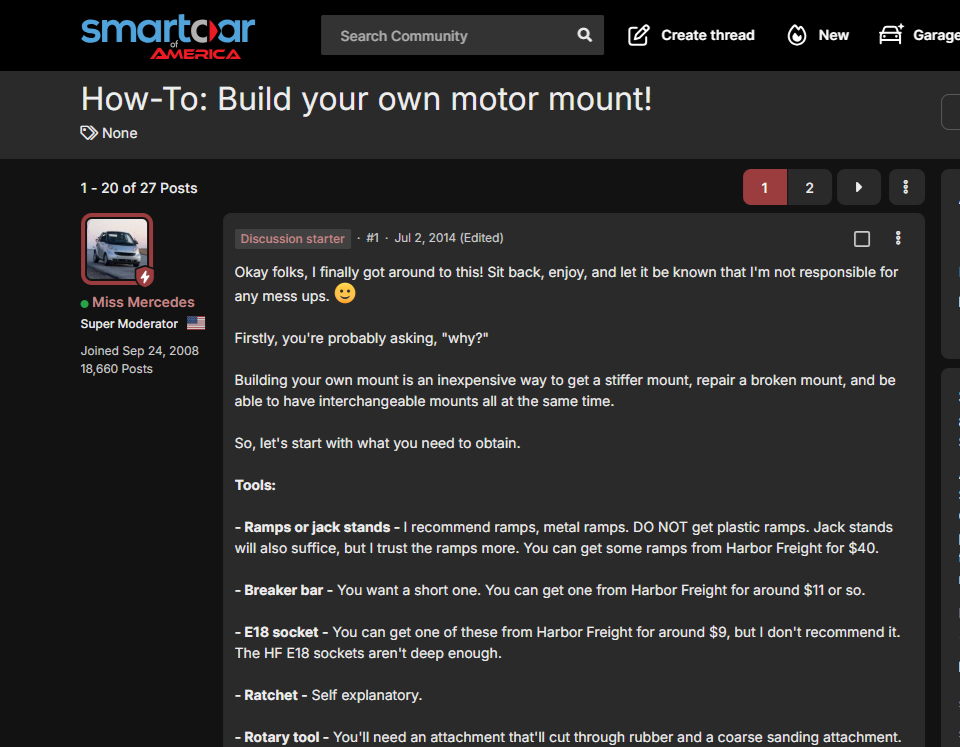
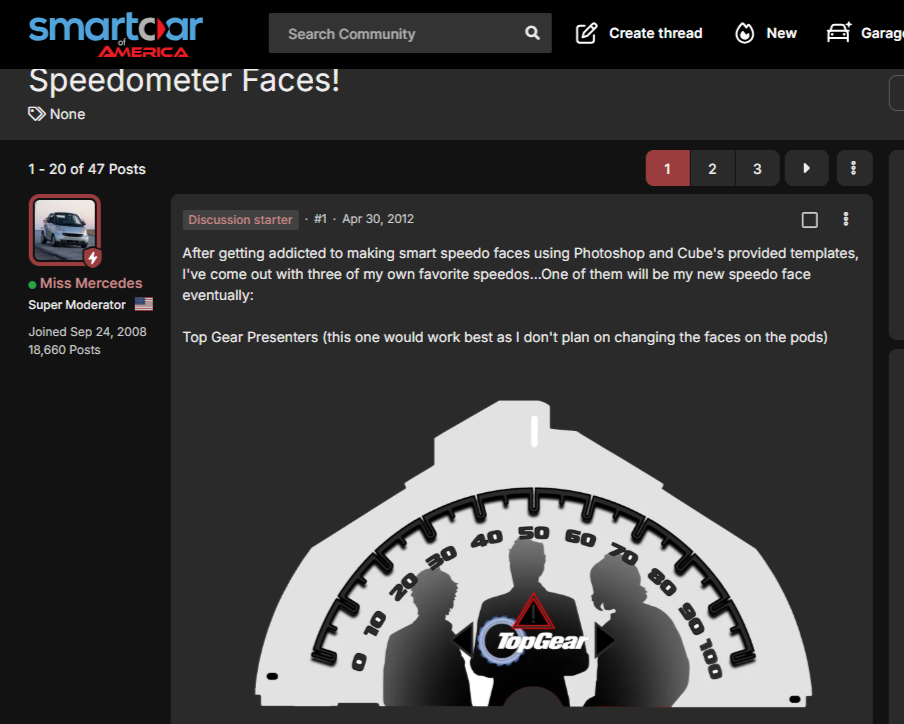
Yet, I also found an unintended benefit. If I ever search the net for a DIY thing for Smarts and I come up on an old thread I published, my photos are still there, and the thread is entirely intact. There are no giant Photobucket watermarks and no blurring. Just the same photos as I uploaded them to Photobucket as far back as 2008. Weirdly, I felt proud about that. So much of the Internet is different after Photobucket changed its policies, but if you view any car forum thread I’ve made, the photos are still there, just like the old-school Internet days.
So, Photobucket has gotten my money for four years because of this. I grew up when the Internet was seemingly a great exchange of ideas and information. There weren’t smartphones, no doomscrolling, no TikTok, and almost none of the toxicity that exists today. A lot of people logged onto their computers to hear “You’ve got mail!” and lost connections when someone picked up a phone.
I even remember the early days of YouTube when it was just random people doing random things. There wasn’t a Mr. Beast, millions of ads, StreetSpeed717s, or any nonsense like that. LimeWire was a big thing back then, too, and part of its hilarity was that you had no idea if the copy of Axel F from Crazy Frog was actually the file it was pretending to be.
In a strange way, paying for Photobucket let me hold on to some of those memories of the old Internet. Photobucket is the reason why I still have images from the first-ever Smart rally that I went to!

However, I am considering a change. As much as I want to keep an old car forum relevant, I have to face the fact that car forums have largely been replaced by Facebook. My old threads get zero traffic now, and the only person adding to the view counts of those threads is me. So, am I basically just spending $8 a month for my own amusement?
Facebook is a terrible platform for a car forum. The Facebook group search function doesn’t find what you’re looking for, and there are no “threads” in the traditional sense. Instead, someone just asks a question and people answer. Even when one of my old threads is relevant, I just copy and paste it into Facebook, photos, and all.
Is This Even Necessary Anymore?

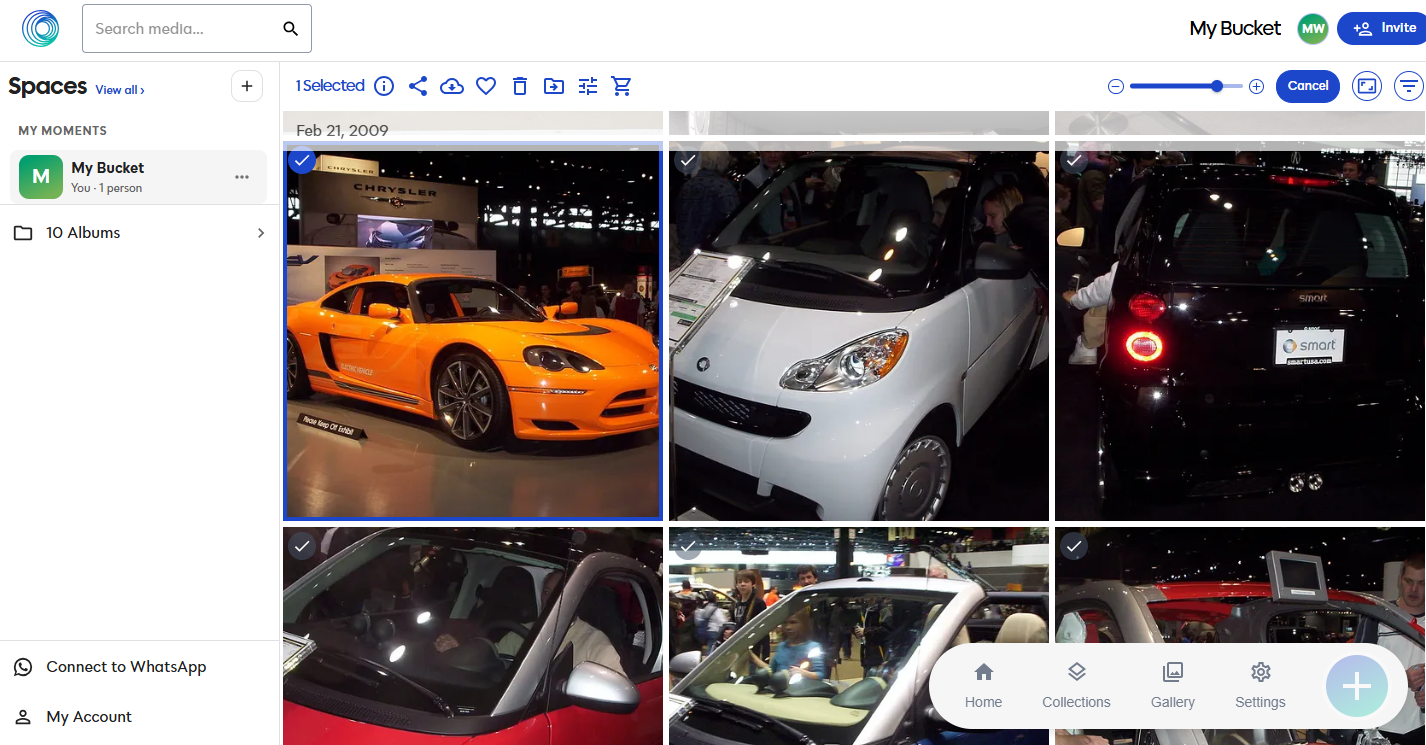
Today, there is an easy way to download your photos from Photobucket that the site does not advertise:
- Go to your bucket from a desktop computer, then hit “select”.
- Click the first picture.
- Scroll all the way down to the end of your pictures, hold down the Shift key, and then click the final picture. Make sure the site shows all of your images highlighted
- Click “download”. Photobucket will email you a .zip archive a few minutes later.
The need to preserve these photos is further challenged by how Photobucket currently displays images from free accounts. There is a super easy, barely inconvenient way to get around the blurring and the watermark. Just right-click on the image and open it in a new tab. Or do the equivalent on your phone. You’ll get the image without the watermark and without blurring. Of course, Photobucket could change this at any time, but it’s been like this for years.
The Internet has changed a lot since Photobucket changed its policies in 2017. Practically overnight, car forums and all sorts of websites were changed for the worse. In the years since, the car Internet itself has evolved. Many forums don’t get the traffic they used to, as people use social media to exchange car ideas and car repair advice. Maybe I’m out of touch, but that seems so sad.
I am left asking myself if paying money to keep a part of the old Internet alive is worth it. With each passing day, I’m edging closer to the conclusion that it is not. But for now, if you see an old forum thread by “Miss Mercedes” or “Neonspinnazz,” there’s a good chance the photos in it are from Photobucket.
Top graphic image: Photobucket


I’m confused. I have 20K plus images on Google and pay $2.17/month. I can share them at will.
Thank you for your service. There is a reason Google results always point to forums from 10-15 years ago when the internet was actually helpful.
I feel weird saying that I’ve never heard of Photobucket. I always used imgur for that sort of thing, but I haven’t even thought of that site for years.
Imgur is what people use NOW, but it’s probably only a matter of time.
The general lesson is that with the modern Internet, unless you have something stored on your own local physical media, you don’t own it, and you can lose it at anytime.
You posted pictures? Cute, we updated our policy last night to increase profits, and deleted them.
You bought a movie on Amazon to “own”? Well, doesn’t exist anymore because we decided it was no longer profitable to host.
See also: music libraries, etc.
Besides owning physical movies, I keep entire hard drives full of media, even stuff that’s available streaming.
Because, as I’m always saying to people, we may currently live in a golden age of streaming media, but it won’t always be that way (the cracks are already beginning to show). It’s a bit like when I was saving to move out of AK, and I cut off cable, but I still had 50 VHS tapes full of Simpsons episodes to keep me company.
Or likelier with Amazon, the licensing copyrights expired.
Same with music. Some artists are making unavailable portions of their back-catalogs, or making changes to songs on streaming platforms decades after they were released.
If your data isn’t in multiple places, it doesn’t really exist. The Cloud is a great backup, but it should never, ever be your primary storage for most things. The Enterprise standard rule is 3-2-1 (and now an extra -1 – an immutable copy). Three copies of the data, in at least two different places, one of which is offsite, and one that can’t be deleted for a period of time. Cloud storage satisfies two of those requirements. Immutability is probably overkill for home use. I’d just keep an offline copy that is updated periodically if I had data I cared about THAT much.
I realize this can be somewhat problematical for movies purchased via the streaming services, but music can generally be downloaded. And of course pictures usually start off local. I’ve never really cared about movies personally, I very rarely watch anything more than a couple of times, unlike music where I only buy it if I want to listen to it forever.
Also, as an aside – RAID is NOT a backup strategy, it’s a data availability strategy. Especially with consumer-grade RAID devices.
-Taking off my Enterprise backup and storage consultant hat
I wasn’t going to go that deep, but yes.
My personal system is that I auto copy data (includes documents, pictures, movies, and music, 25TB) daily to duplicate hard drives (not raid, 50TB of drives total). Important documents/pictures are copied to another HD every 6mo and stored off-site. Yet another copy of those important documents/pictures are also burnt to DVD yearly, and stored at different off-site location.
I’m not a professional, but I think I’m doing okay?
Yup – good enough for home use and budget certainly.
I use a pair of NAS boxes that rsync to each other in Maine and Florida, plus a backup drive for them. I also backup all of my computers daily using Veeam Backup, which can do bare metal restores. And anything actually important is sync’d to a cloud account and all of my computers. Financial and work stuff mostly.
Veeam is a great application – it’s full-fat Enterprise backup software that they give away for free for non-commercial use. Has saved my bacon a couple of times when drives failed. Boot off a thumbdrive, connect to the backup repository and in a few minutes you are back to your latest backup (or whichever restore point you want to go to that you have kept).
I have Macrium Reflect for system drive full image backups and USB boot restore, which sounds similar. However it stopped being free for home use a couple of years ago, so there are no updates. I’ll check out Veeam. Thanks.
Another great thing about Veeam is you can do file-level restores very easily too. Deleted something and have a ‘oops’ moment the next day? No problem.
Of course, I fully expect them to kill the free version at some point, but they’ve been offering it for as long as they have existed. What you want to look for is “Veeam Agent for Windows” – and they have a Linux agent too. Technically, you can install their entire backup server console setup and manage up to 10 computers backups centrally for free, but that is overkill unless you have more than 3-4 machines or you just want to learn it.
Excellent. I’ll try it.
I like access to individual files from the system image. Macrium can also mount the image to grab individual files, so that’s definitely a function I want
Thanks again.
Happy to help! Have fun with it!
I also pay for my ancient photo bucket account, and for the exact same reason: my DIYs in forums need those photos!
It is old, and Facebook and YouTube have replaced some forum stuff, but if you write a 100 photo diy that takes 8h, YouTube or Facebook isn’t going to cut it.
I also remember when photobucket broke internet! So much knowledge lost! And I also remember when yoy could watch a 5 min YouTube without being interrupted 3 times for ads
Thank you for your service.
it’s crazy how forums died and some were left withering.
I was a random regional mod on one for a time, I was really active with a car club, but I eventually stopped visiting as well and at some point all of the other mods had left and deleted their accounts (I assume).
somehow my abandoned account became the main mod contact and I started getting emails from people responding to automated messages “I” supposedly sent them welcoming them to the forums or requests for moderation. I guess the website got sold and updated a few times and my old account (that I couldn’t remember the password for) became the boss of everything.
My guess is that they moved from one forum software to another (likely from vBulletin 3), and whatever role/permission system mapping they had set up for the migration turned mods into admins or something.
Is it THAT prohibitive to just host on your owned physical media?
It is if you want other people to have access to it, like Mercedes is saying. You can absolutely have your own stored physical media, but if you want to write a tutorial with images for future visitors to reference, they need to be on some kind of web server.
Even major websites don’t themselves own the physical hardware on which their sites (and images) are hosted, because that requires a lot of cost-prohibitive overhead and infrastructure. I’m sure The Autopian, which is WordPress-based, runs on some managed WordPress cloud platform like WP Engine, or on a provisioned virtual private server. Because that just makes sense. Most of those web severs and cloud instances in most places of the world run on Amazon Web Services (AWS), Google Cloud, or Microsoft Azure…even if they are white-labeled by another company.
If you’re the New York Times or the BBC sure, you’re going to need a damn good server with lots of very expensive hardware and staff to manage it. No argument.
But what if you are just looking for a way to share your collection of penguin furry porn or whatever to fettishists around the world with maybe a few dozen of hits per pic per day? Could you not DIY a solition?
https://maketecheasier.com/set-up-self-hosted-photo-gallery-raspberry-pi/
https://dev.to/rossanodan/how-i-turned-my-raspberry-pi-into-a-private-cloud-server-1lpn
It is if you’re trying to share you fixes and efforts with the rest of the world.
Ironically such a DIY is exactly the type of fix and effort best shared with the rest of the world.
Print media is dead but I can still pick up a copy of Car and Driver from August 1987 and the pictures will still be there. I look up a how-to from a car forum from 2022 and the images are already gone.
Progress.
I’ve used various side-loading tactics for years to host my photos on other sites.
Facebook for a long time didn’t actually protect images, if you had a direct link to them. So while an account may be limited to friend or whatever they want to call it, if you had a direct URL to a picture, you could embed that somewhere else.
This is the same tactic you highlighted by directly viewing the image outside of the photo bucket webpage.
Anything is an image hosting site, if you are determined enough 😀
I tried to go look at some of my old build threads to see if my photos are still available, but the forums have either shut down entirely, or it was so long ago I don’t care to dig that far to find them. Nothing did was revolutionary or unique anyways.
Back when photobucket nuked the images for non-paying accounts, most people simply switched over to imgur.
They keep e-mailing me. But since I’m not even remotely active in any of the places that I used Photobucket for, I don’t care.
They haven’t deleted my stuff, as I found my old seatbelt holder DIY I wrote on the Gencoupe forums as a joke, and the pics are there with watermarks. Man, as if I wrote that over 15 years ago.
I ditched Photobucket when they pulled off that nonsense. It simply wasn’t worth it.
I’d like to suggest you might be falling to nostalgia a little; the toxicity was absolutely there, it was just less public. There were plenty of very awful places but you had to either go out of your way to visit them or attract their attention as a target to be aware of them.
There wasn’t the all-consuming lifestyle toxicity back then, but aside from a few select nerds, very few people were online 24/7 like people are today.
I had a ton of photos, both personal and part of DIYs I posted in car forums back in the day. They all went away or became pixelated, watermarked, useless crap.
I wish Photobucket a slow and painful death. My hatred for them is stronger than a thousand burning suns.
I’m still mourning the loss of Waffle Images.
We’ll learn this lesson again when Imgur finallly finds its ‘social media image host’ platform unprofitable.
I treated Photobucket the same way I treated Reddit, Twitter/X, and Tumblr when the enshittification got to be too much for me to bear – I not only stopped using them, but I deleted all my data and my accounts. There are enough alternatives out there that are good enough for me. Granted, I do not have 18k posts, so I understand better where you are coming from now that you have explained it.
Is there a way to edit your old forum pictures with non photobucket pictures since you are still active?
There sure is! I have more than 18,000 forum posts though. That’s the major reason why I never got around to replacing the photos.
I wouldn’t say this to anyone who wasn’t you and who wasn’t committed to being a curator of valuable internet knowledge, but it might be worth setting up an AWS S3 instance, or even something a bit more user-friendly like a Digital Ocean media container (Digital Ocean is just AWS with a wrapper). It can still be pretty user-friendly, and you get to either SFTP in or use the web interface to drag-and-drop images in. And if you set the policy level correctly, those images become immediately visible to the public, with dedicated URLs that resolve correctly.
Let me know if you need help setting something like that.
Tsk Tsk The Autopian is the bent, Unlimited salami data storage.
I’m waiting for The Autopian Deli Center to launch. I think I’ll spring for the Gabagool to to store my photos.
I never really understood the paid image hosting racket. I know several pro and semi pro photographers that were and probably still are obsessed with smugmug. They claim peace of mind but really you are trusting them to not go out of business keep on top of their bills and not loose your data someway.
There are tons of cheap shared or vps hosting out there and open source photo galleries that do the same just more customizable. Video hosting can be a PIA so I can understand why you would want some kind of cdn or scalable container if you did a lot. For lower traffic shorter videos it’s not the end of the world. But images should be fine with just about any provider out there now. Especially if you have a scaled down version you are embedding.
More customizable and a bit cheaper, yes, but way more work and knowledge needed to set up and maintain compared to just paying someone like Smugmug a few extra bucks to handle it. If your hobby’s tech, it makes sense to run your own. If it’s photography, I can definitely understand why someone would want to spend more time on the part they enjoy for a small fee.
Way cheaper. Maybe $30 a year to $30 a month. Set it up once and they are fine and stable. Photography and graphic / web design sort of merged maybe 30 years ago. Maybe people 60 I can see. Should have local backups too it’s just good practice. All these photo hosting sites are one bad quarter away from loosing all your data and shutting down.
This has me wondering, how easy is it to self-host one’s images with a personal server? Probably not too hard, but I’d imagine it’d be a lot of hassle to keep everything online and working one’s entire life, and there’s not much chance of it persisting after that
Easy to do. But depending on how popular your photos are, it could put a hurt on your internet bandwidth.
Not too difficult, but you’d want to guarantee good uptime, and a nefarious actor or even just a careless AI agent could cause problems by sending too much traffic to your server and taking it down. You also might end up running afoul of your home internet provider’s rules and having your service throttled or canceled.
The better option is to set up a cloud instance, under Amazon AWS or Microsoft Azure or Google Cloud. You’re still at the mercy of a big company, but those three are the biggest internet cloud providers in the world and the majority of websites and web-enabled applications use one of those platforms to some extent, especially for image hosting…including those of very large, high-revenue companies. Amazon, Microsoft and Google couldn’t afford to just pull a Photobucket and change up the rules, so you’d be pretty well-insulated.
I spend a lot of time on the old-school Lego forum Eurobricks.com, and it’s pretty delightful! Perhaps part of the reason it’s still viable is that the online Lego community had its own dedicated image hosting sites. Brickshelf.com was the big one back in the day, and although I remember some drama a bit back where it was going to be shut down after the owner died, but it appears that a Lego Bionicle archive website acquired it, and so it is still be fully functional, to the point where I can view images from the oldest threads I can find, as far back as 2005! I host all my Lego images on Bricksafe.com, which is a newer alternative. Hopefully the community remains robust enough to support these platforms for a long time yet!
I pay Fastmail for email/PIM, try to chuck some dollars to open software I use, PalmDB for these old handheld computer archives, archive.org, etc.
No judgement at all, but I definitely feel the cost/benefit question. I do like being the customer and only the customer though.
I never believe the promise of something for nothing and chicks for free. Why would a company, a fan sure, provide a service without a way to cover costs?
I use Flickr, which i think is a better option, it’s expansive ($80 a year) but at least they don’t delete photos and they provide unlimited space, upload as much as you want, there are accounts with 100K photos and more.
You can use it for free but for just 1000 photos.
I too pay for Flickr. I live in fear of the day they go dark and all of my stuff is lost. I’ve got a milestone coming up and I plan to have them send me everything (without taking anything down) so I’ve got my own backup should they ever sell out or go bankrupt or whatever. But then I’d have to find another place to store it where it will be visible…?
Move your stuff to multiple sites like I did. Lots on my laptop, lots on Google, very little left on Dropbox.
Yes, I have 995 old photos there. I intended to upgrade, but used Google instead. I also have Dropbox, but I’ve been moving those photos via my phone since they didn’t survive on my new laptop and they told me they wouldn’t help me.
Phuck photobucket