


Imagine you’re driving down the road and you get hit in the face with a small, soft object. Then another one. Then another one. It’s a particularly unusual situation because your windows are up, your sunroof is closed, and as far as you can tell, you’re the only person in the car. You manage to pick up one of these pieces of debris and realize they’re little bits of foam coming from deep inside your dashboard. This isn’t the sort of foam party you were expecting, right?
It’s easy to take your car’s heating and air conditioning for granted. After all, heat in a combustion-powered car is just a byproduct of igniting gasoline vapors, and air conditioning is one of those things that just makes life easier. However, it probably shouldn’t come as a surprise just how many parts are needed to make these heat-exchange systems work. For either, there’s a heat exchanger outside the car hooked to a heat exchanger inside the car to pump warmth or cold into the cabin depending on if you’re blasting the heat or the air-con. An electric fan blows air across these elements, and from there, things get a little complicated.


Obviously, you don’t want full heat or full cold out of every vent all the time, which is where a series of blend doors deep inside the dashboard come in. These flaps regulate the hot/cold air mixture and guide air through specific ducts so you can defog your windscreen, blow cold air on your face, or warm your feet. Obviously, these doors need some sort of sealing so air doesn’t just go around them, so some automakers have used open-cell foam. It’s light and effective, but it can also degrade over time. See where this is going, yeah? Eventually, some cars will live long enough to see their HVAC foam break down. Once it starts to crumble, the stream of air from the blower motor sends it out the vents and into your face. Annoying and mildly hazardous at first, but let it go on, and you could lose effective heating and air conditioning. That’s a big problem.
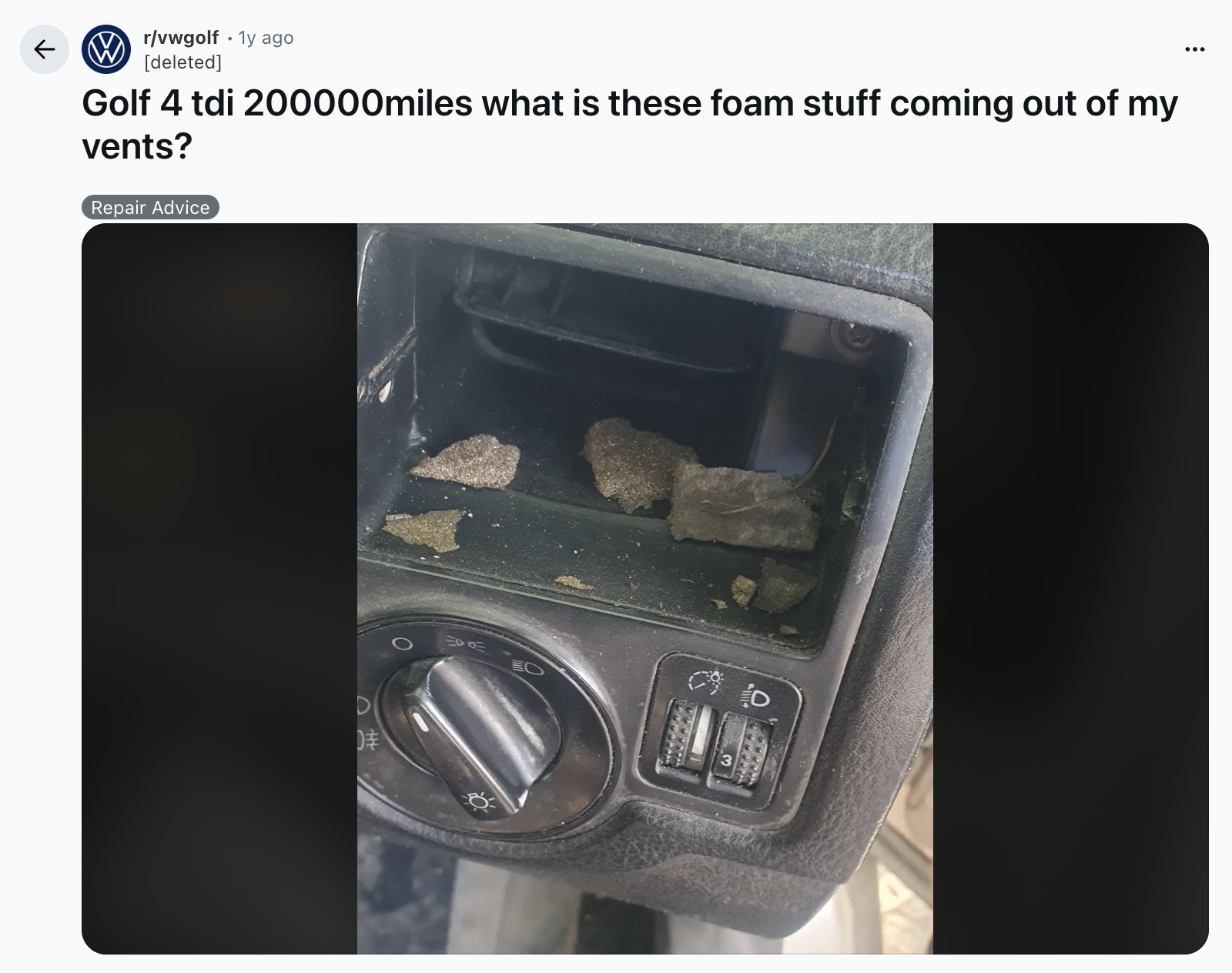
Perhaps the most notorious cars for unexpected blend door foam parties are 1999 to 2005 Volkswagen Golfs and Jettas, although other Volkswagen models of the ’90s and early 2000s are similarly affected. This Reddit post does an absolutely perfect job of showing the chunks of foam that’ll be flying at a driver’s face as this problem happens, and let me tell you, you don’t want a bit of foam in your eye at 70 MPH. Is it exceptionally subpar foam? Perhaps, although some of the notoriety likely comes from Volkswagen selling a ton of these things.
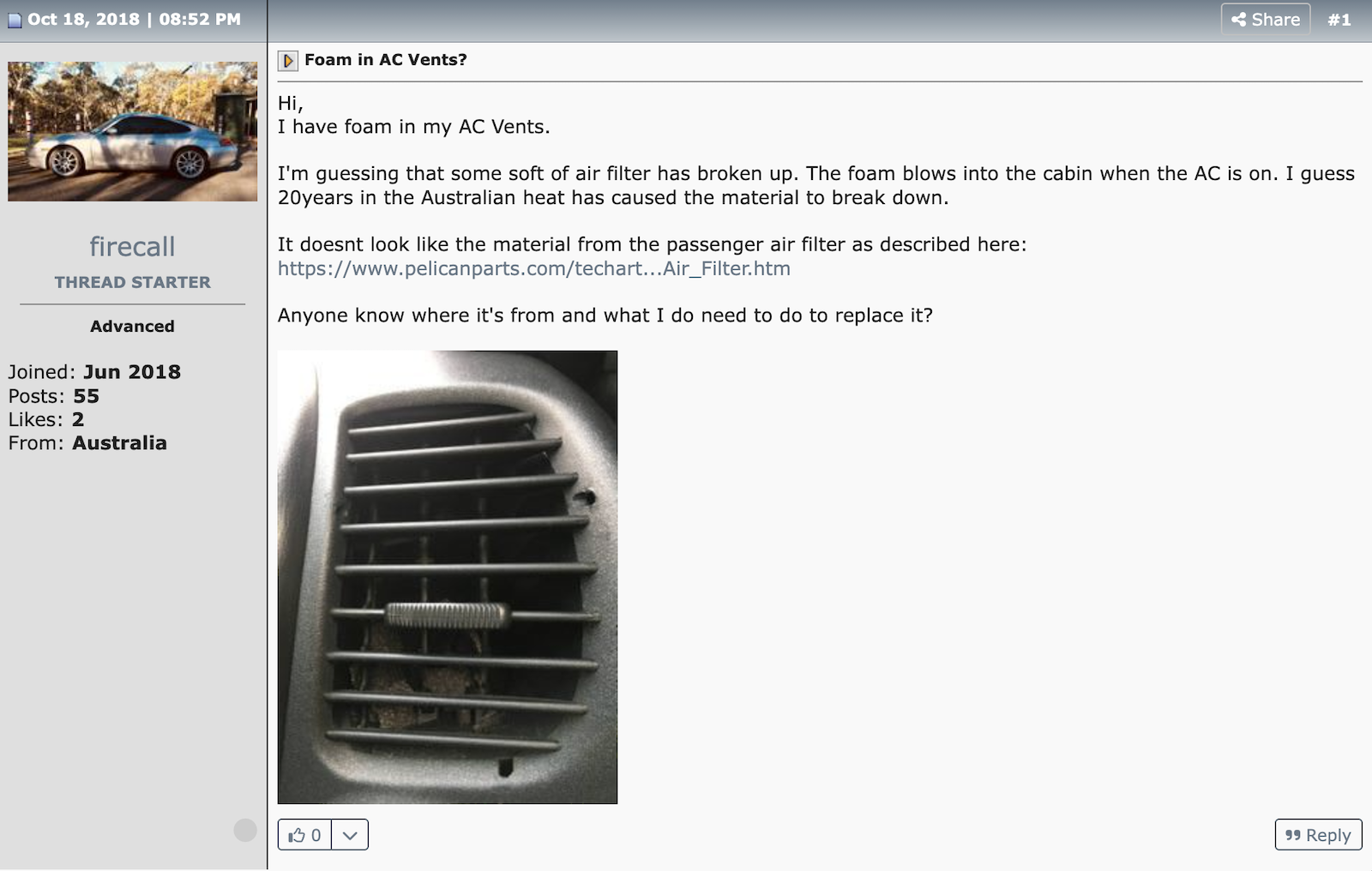
Unsurprisingly, Porsches of the same era are similarly affected, with visibility of this problem getting a boost for several reasons. Firstly, Porsche sports cars are generally occasion cars, only used in nice weather. As such, they don’t deteriorate quite like mass-market economy cars, meaning they’re likely to grow old enough that this is a real problem. Secondly, Porsche owners have a social community, so you’re likely to hear about this problem online because Porsche owners are online.
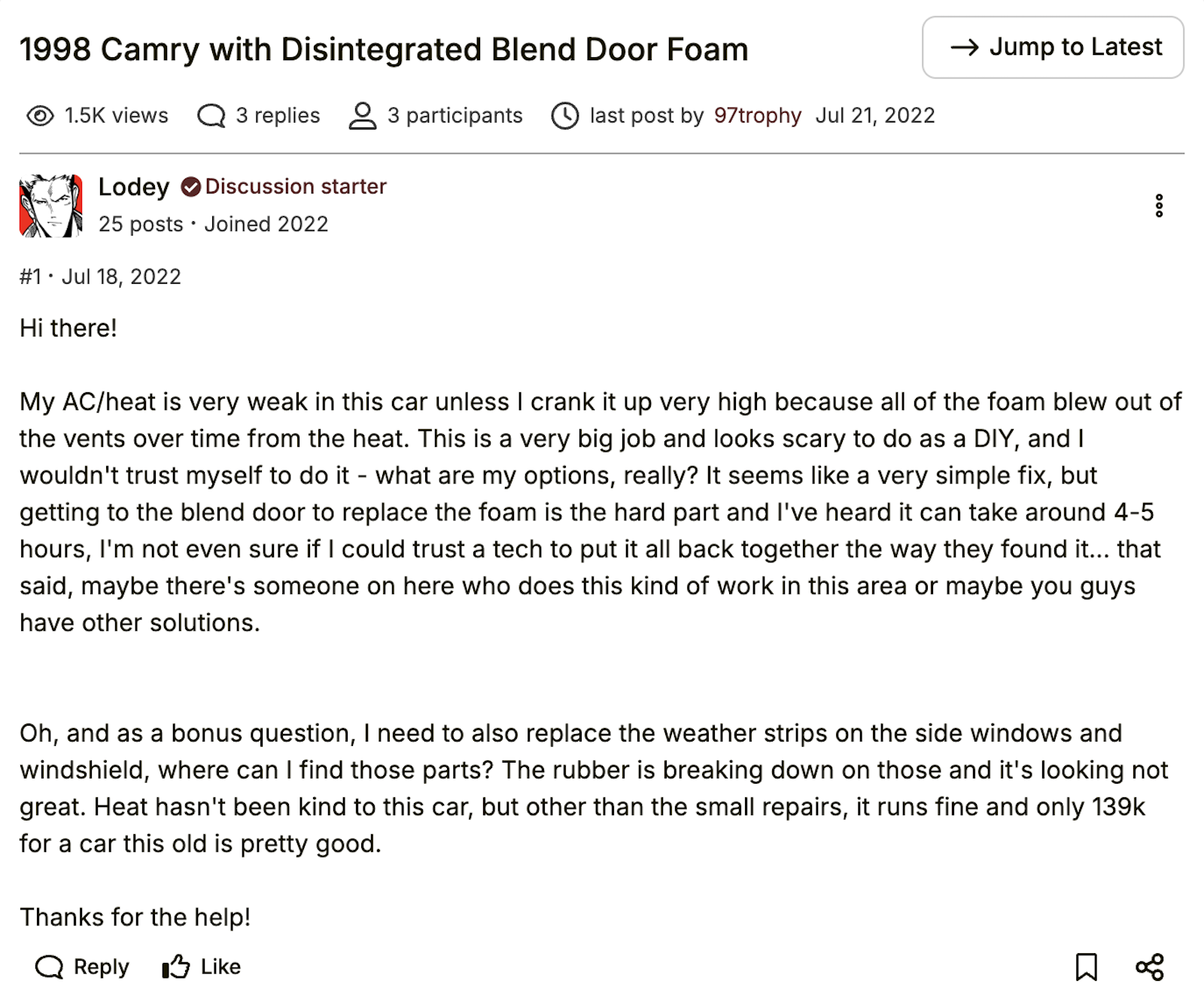
While turn-of-the-millennium Volkswagens and Porsches are the most notorious offenders, they certainly aren’t the only cars that can suffer from degrading blend door foam. Here’s a post from the ToyotaNation forum in which one Camry owner experiencing foam disintegration asks “what are my options, really?” It’s a good question, so let’s run through a few potential paths forward.
Option 1: Remove The Entire Dashboard
If you want to go by-the-book, getting to those blend doors will require a whole lot of disassembly. See, their housing sits behind the dashboard, which means the official procedure for models like the 996 Porsche 911 and Mk4 Volkswagen Jetta involves removing the entire dashboard, then anything else in the way of the evaporator case. Removing the evaporator case also generally involves evacuating the air conditioning refrigerant, something you can’t really do safely at home. Want to farm the whole process out to a shop? Be prepared to bust out a comma. Removing an entire dashboard and the heater box behind it is an incredibly laborious process, and once you add the cost of air conditioning refrigerant and blend door rehabilitation, you’re likely looking at a four-figure bill. However, let’s say you drive a super-basic Mk4 Volkswagen without air conditioning. If you want to do this job at home, HumbleMechanic has an awesome video guide to doing it the right way.
Option 2: Oscillating Tool Hackage
Unsurprisingly, some people don’t want to remove their entire dashboard, and depending on the car, will take just about the easiest route forward no matter what the aesthetic results might be. On fried egg-era Porsches, it’s not uncommon for owners to pull the center air vents out and attack the ducting with an oscillating tool to gain access to some of the blend doors and seal them up with aluminum tape. However, this doesn’t give access to all blend doors, and the resulting patch-up of the HVAC ducting with aluminum tape is a bit unsightly. Sure, it might remedy a few symptoms and not take much time, but it’s the sort of thing that would make my eye twitch if I saw it on a nice car. Still, if you bought a high-mileage Boxster with a questionable title for like $3,500, this route might be for you.
Option 3: Getting Surgical With It
As far as these alternative good-enough blend door fixes go, there’s one that stands head and shoulders above the rest, and that’s by going in through existing holes. On a Mk4 Golf or Jetta, that would be through the access panel behind the dashboard. On the 986 Boxster and 996 911, that would be through the cowl. Pull the wiper arms and cowl plastics, and the heater core is effectively right there. Remove a few fasteners, plug a few lines, lift out the heater core, and the blend door housing is right there. Unfortunately, it’s not easy to reach each blend door, but it can be done with an inspection camera and a long piece of stiff wire. YouTuber John Salt recently posted a phenomenal video detailing this method, along with an inexpensive STL file for 3D printing blend door plugs. Remember, don’t use PLA for this, it could melt. This is probably the route I’ll go when it’s time to do the blend door foam on my 1999 Boxster, or I’ll just pay a specialist to do a dash-out job because I’m saving a boatload of money by doing my own suspension refresh.

Obviously, living with disintegrating blend door foam is aggravating, and that’s before we get into the financial side of things. Adding insult to injury, many commonly affected cars aren’t worth more than a few thousand dollars. Once you subtract the recoup of selling say, a 2002 Jetta for a slightly nicer Jetta, it might work out cheaper than having the blend doors repaired.
However, there is another way of looking at this problem. Even in the rust belt, many of the more notoriously affected cars are now more than 20 years old. Up here, you won’t find an overwhelming number of early-2000s Honda Civics or Chevrolet Cavaliers still doing daily duty, but you’ll still see Mk4 TDIs smoking about. Sure, they might have holes in their front fenders, but likely due to a combination of general anti-corrosion measures and careful maintenance, they’re still going long after the end of their expected lifespan. They’ve outlasted their vent foam, so what’s one big pinch-me bill to keep them on the road even longer?
Top graphic image: Volkswagen, YouTube/HumbleMechanic




Breathing that stuff in is not good.
Is there even a useful purpose for it?
I think you’re selling Option 2 WAY too short. Is it the “hackey” way? Sure. But it’s strategic hackery: highly effective, and the finished product is completely invisible unless you pull the dash half apart again.
I did this repair on my ’01 using aluminum tape to patch the blend doors. The foam was almost completely gone! I won’t say it was easy, but it was far from the most difficult job I’ve done on the car (hello, AOS!). I also have no doubt that restoring the car’s heat and AC to full performance raised the value far more than some visible aluminum tape on a plastic duct hidden behind the radio head unit may have diminished it. Also: just say no to the oscillating tool – a sharp utility knife is just as effective, more controllable, and less messy.
Only a fool would pay four figures to have this fixed “the right way” on a car that probably isn’t worth much more than four figures.
Yet another reason not to buy VW. I’ve only ever experienced this in VWs. But to be fair, the only other high mileage vehicles we’ve had were either Toyota or Subaru.
Another annoying consequence of all the plastic and glue in our vehicles. I had a vehicle that was blowing foam at me, it wasn’t a VW. Probably was a Ford but can’t remember which one.
AH YES! I’ve done this one! We have a 2004 VW Beetle Turbo S, and I had to go through the repairs to fix this but your article missed the absolute best part! This is absolutely one of the worst ‘fixes’ I’ve ever had to do on a car! Allow me to share!
You see, when the foam degrades it tends to fall off and wind up in hte bottom of the blend door area, getting trapped between the door and the … duct work? Anyway, this causes friction/resistance, which then strips out the blend door actuator support pin! What does that mean? Eventually your blend door quits moving, and it just gets jammed. Maybe you’ll have no heat whatsoever, or maybe you’ll have tons of heat and no way to turn it off!
Either way the repair is super fun. On the beetle, I pulled the stereo, the stereo surround and center dash out, removed the HVAC controls, etc, and then if you dig deep enough you get the actual duct work that you dremel into, create a giant access hole, clean up all the foam, and then tape it back together using foil HVAC tape. Then reassemble…. but again, since your pivot pushing is stripped, your door is still not going to work.
So you need to order an updated stronger 3d printed part since hte factory part is NLA. Here’s the best part, the pin is accessible UNDER the center of the dash, and there is about 1-1.5″ of space between the pin and the front of hte center console. This involves laying upside down in the passenger footwell using long extended reach needle nose pliers to try to replace it, which you cannot see at all, so you’ll likely also need a small mirror on an extendable stick to see what you are doing. But remember you’re upside down too. I think replacing the pin bushing took 1.5 hours of this position, and idk how many times I dropped it or failed getting it in.
For something so simple, WORST REPAIR EVER.
The upside is the Turbo S Beetle is super underrated; its chipped to 235hp/275ftlbs and it’s a blast to drive. You can scoop them for $3-5k, aftermarket is strong, community is good, 1.8T VWs are a pretty great car imho. ESPECIALLY chipped.
I have the ’02 1.8T seen at Torchfest back in March https://www.theautopian.com/the-autopian-nc-meetup-was-fantastic-despite-what-they-want-you-to-think/ . Despite having only 57,000 miles on it, it started doing the foam spitting a couple years ago. Rather than fix it, I decided to try to get ahead of it by getting in the car turning the, closing all the vents except for one, firing up the shop vac and putting the car fan on high. It spat out most of the dead foam. I did all four vents and that’s stopped 90% of it. I’m not terribly worried about the blend door as I rarely change that.
And you’re right about the 1.8T being a fun little car. It’s small, it’s relatively nimble, and even without a chip it’s pretty quick.
An unchipped 1.8T is a huge mistake, you go from 150/150 or 180/180, to 235/275. It transforms it into something completely different lol
Add it to the list of ownership quirks with this gen of VW that already includes “smelling like crayons”
In terms of all the problems I’ve seen from my ’98 and ’01 VW cars, I’d be thrilled if this was near the top of the list. It definitely fits the category of “anything made from plastic, adhesive, or foam just completely giving up”
It seems like people in cooler climates have better luck on this front, but they usually have to contend with road salt and those issues. Which are much more understandable to the general public than “Why is half of your dashboard laying on my shins?”
Don’t move, those are load-bearing shins! And also, can you hold up the headliner so I can see out the back?
I had it done by a shop on my 2001 Boxster and it was not a dash-out procedure. Not sure how they did it, but it was around $700. That was a few years ago, and AC and heat are still working fine. Maybe they did the “through the cowl” method.
The title had me hoping for Securefoam from Demolition Man.
I basically knew before I clicked.
“… blend doors? Yep, the fuggin’ blend doors! FFS.”
“One big ‘pinch me’ bill… love this phrase! Sometimes you decide to keep the car you know and pay to fix it.
My Country Squire used little bits of foam and felt to add ‘resistance’ to the HVAC vents so they wouldn’t all just point down with the car moving. I had a few shoot out at me on the first full blast usage of my previous ’87.
Volvos do this too. Doesn’t seem to affect HVAC performance enough to bother with. Just suck it out with a vacuum.
My 128i kept have big chunks of decomposing foam on the driver’s side floor. Eventually figured out that BMW put a big hunk of it under the steering column to take up the space where the column tilts and telescopes. I sucked it all out with a shop vac and replaced it with craft foam from Michaels. Easy-peasy.
We do not seem to see a lot of these stories where VWs have the same problem as Porsche vehicles. Why not Porsches are just turbo charged Volkswagens. In fact the 911 is just a beetle flattened out a little bit. I’d go route 4 take off the vent doors glue a bit of fine screen on the back to block the foam and just let that little VW motor gurgle
I had a 97 XJ that was spitting foam at me on occasion. Came out in much smaller pieces than these VW ones though.
I have a ’97 ZJ that occasionally produces very small pieces of foam, mostly from the center vents. The stuff crumbles as soon as you touch it.
I would just rent a big vacuum and suck all this out.
“ Firstly, Porsche sports cars are generally occasion cars, only used in nice weather.”
I can’t be the only person that dailies theirs.
Certainly not many people people daily there VWs even if they slap Porsche badges on them. Despite the quote from the movie “We don’t need no stinking badge’s” Porsche does need badges as it is the only thing that differentiates a VW from a Porsche.
I too love jokes that were tired before Clarkson even got fired from Top Gear
My 987.1 Cayman endures the commute through San Francisco everyday and gets exclusively street parked. It’s coming up on 173k miles, and yes it pelts me with foam on a daily basis.
996.1 here and some days I turn it on to see a puff of disintegrating foam erupting from the vents.
I recently picked up some manually-adjusted louvres for the defrosting vents and it’s made humid, hot days much less foggy.
You are a hero.
Using a car.. as a car?!
Well, I never!!!1!1!ONE!!
If only I knew what the term “generally” meant I’d know whether or not to agree. /s
Fair enough.
You’re not. I love dailying mine.
Me too! Snow is a no go, as the front air intakes would act like snow scoops. The rest is fine.