

Something happened during a short panel at the New York Auto Show yesterday that exemplified everything that’s hard about being a carmaker in 2026. The stage for the conversation was set up at one end of the large open atrium near the show floor entrance, and it featured major execs talking about how hard it is to build and sell cars with all this uncertainty. Nearby, someone had organized free hot dogs for journalists, and the line was so long it sort of overwhelmed the panel.
There’s something about the sight of this enormous wave of people hoping to get a cheap product while a CEO talks about global uncertainty that felt just a little too on the nose even for The Morning Dump.


While there were no Chinese automakers on hand directly, there were plenty of automakers who work with them, and it seems like that work is going to bring those automakers a lot closer to our shores. Specifically, GM might help build cars from Wuling in Mexico and Stellantis could manufacture Leapmotors in Canada. This is sort of the dream of Chinese automakers, and it comes at a time when China is able to build a lot faster than we are.
This makes sense both as a reflection of America’s trade policy and as an outcome from whatever the White House is trying to do in the Middle East which, according to one automaker, is dampening sales in the United States.
The US Pulling Out Of Canada Is Going To Be Great For China

A lot of the discussion around President Trump’s trade war is that, by chucking all of its existing trade relationships out the window, it’s encouraging countries to look at China as a more stable trading partner. This was initially thought of as something that’ll happen in places like Europe and South America.
Surely, given our longstanding relationship and importance, the United States didn’t have to worry about Chinese automakers getting too strong of a foothold in either Canada or Mexico. Given how freaked out American carmakers are about China, that would seemingly be bad. That thinking ignores how much America has pissed off Canada and how, by encouraging automakers to stop building cars in either country, the White House has created a difficult situation for those same automakers. Stellantis, in particular, has taken a beating from Canadian lawmakers over shifting production from Canada to the United States.
The solution? Canada has opened its market to Chinese-built cars, in defiance of policymakers in the United States, and now Stellantis reportedly senses an opportunity. According to this Bloomberg report, Stellantis is looking to utilize its Chinese Leapmotor brand to build cars in the same Brampton facility that lost manufacturing to an American one:
The company has since been in discussions with Canadian Industry Minister Melanie Joly over future plans for the plant.
Those talks now include the possibility of building cars in partnership with Leapmotor, a fast-growing Chinese manufacturer. Stellantis bought a 20% stake in Leapmotor in 2023, and a year later the two companies formed a joint venture called Leapmotor International, focused on global production and sale of the electric vehicles.
In a statement, Joly confirmed the government and the company are engaged in discussions. “Any new auto investments will prioritize Canada’s supply chain, including Canadian labor and parts suppliers,” the minister’s office said, without mentioning Leapmotor or any Chinese companies.
That would be quite the turnaround if it happened. One of the knocks against Chinese cars in Canada is that it would kill local jobs. If those local jobs are building Chinese cars, well, maybe Canadian consumers won’t care so much.
Mexico, Too, Might Get Some New Chinese Car Factories After All
It seems hard to remember that far back but, prior to Liberation Day, Mexico had been talked out of hosting more Chinese car manufacturing by the Biden Administration. Even though plenty of Chinese cars are imported to Mexico, production has been mostly limited.
Mexico, though, is now facing down the prospect of losing the United States-Mexico-Canada Agreement, which could make its booming carmaking business a little shakier. GM, in particular, builds a lot of cars in Mexico. Can you guess what might happen next?
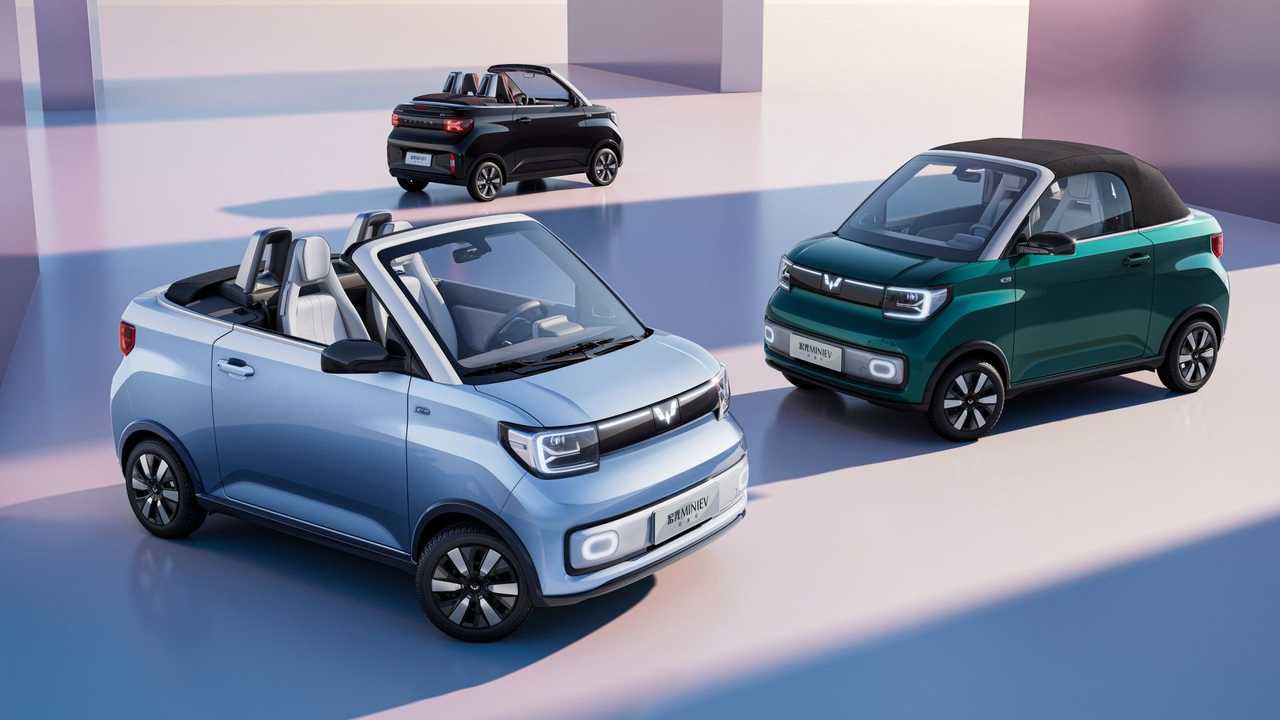
GM’s partnership with SAIC and Wuling has long exported China-made cars for sale in Mexico under the Chevrolet brand, such as the Capita and Groove crossovers, Tornado minibus and Aveo hatchback. But the venture is looking for a local production base after Mexico hiked tariffs on Chinese imports in January.
The gambit positions GM’s profitable Chinese partnership at the vanguard of a new manufacturing strategy as automakers navigate shifting trade policies following Trump’s tariff regime. GM joins rivals including Ford in leveraging China-built vehicles for international markets, though its production at a Mexico facility represents a novel hybrid approach.
Chinese cars on the southern border. Chinese cars on the northern border. Chinese cars everywhere.
Renault CEO: Chinese Suppliers Are Just Faster
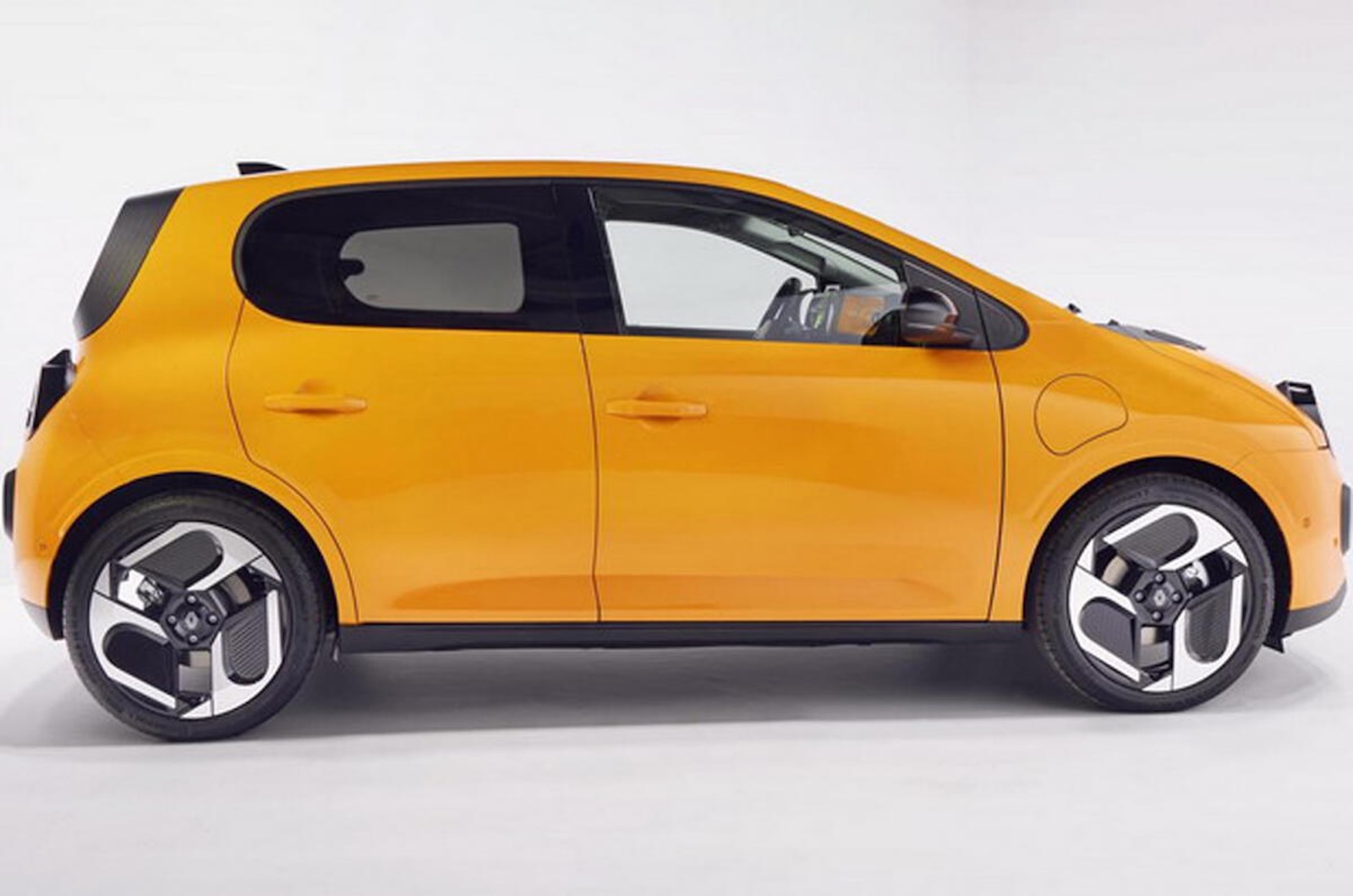
The new Renault Twingo is one of the most interesting new cars on the market to me, and its relatively quick road to production has a somewhat predictable origin story. Renault’s new CEO François Provost spoke to Manager Magazin about how the car came together:
Provost: We need to be innovative and fast enough to leave our Chinese competitors behind. To achieve this, we must be better than them, or at least on par, in everything that matters in the automotive business today: electromobility, intelligent and connected cars, and artificial intelligence.
MM: Chinese manufacturers are considered superior in most of these fields.
They are strong, but so are we. Let me give you an example: We developed the new Twingo in 21 months. Large parts of it were developed in China with Chinese colleagues, using fewer suppliers, shorter decision-making processes, and faster software development. Our next goal is to compete against Chinese manufacturers in Europe with European suppliers. Not just on price, but also on speed.
While there’s certainly a lot to say about how China has some unfair advantages when it comes to production, there’s also a culture and society that’s not quite as hamstrung by permitting and regulation. A friend of mine is opening up coffee shops in China and the United States simultaneously, and he can get a shop in China rented, built, staffed, and opened in about six weeks. His first shop in the United States took six months.
Volvo Says The Conflict With No Obvious End Is Dragging Down Sales In The United States

I’ll probably have a wrap up of sales conditions tomorrow, but the general message is that the market sputtered in March. Why? While many were expecting a bump from tax returns, the uncertainty around fuel prices and the latest Middle East war weighed down sales. At least, that’s what Volvo is saying:
Sales in the Americas region decreased by 28 per cent, totaling 29,651 cars as a result of weak customer sentiment, made worse by the ongoing geopolitical conflict in the Middle East. Deliveries of electrified models decreased by 30 per cent compared to the same period last year, due to the negative impact from the removal of subsidies on fully electric and plug-in hybrid cars.
This is the first time I think I’ve seen a carmaker specifically call out the Middle East conflict as a sales impediment, though it won’t be the last. At the end of this month it’ll be time for automakers to release quarterly earning reports, and I’m guessing we’ll hear a lot about it then.
What I’m Listening To While Writing TMD
It’s the Wu-Tang Clan doing “C.R.E.A.M.” live at the Sydney Opera House.
The Big Question
Which Chinese car would you most like to be able to buy in the United States?
Top photo:


The Gung Ho remake will be the rest of the world vs the Chinese. The US has been behind for decades and now it’s getting worse.
I bought the 2027 Chevy Bolt. It is 51% Chinese parts according to the Monroney sticker. I don’t know how that percentage is calculated.
That is so high because the batteries for the Bolt are now made in China instead of the US like the previous gen. Its almost like incentives are better than tariffs at creating new US jobs despite what many think.
Ok, but when can I get a Zeekr Mix?
First, drop any car with a tracking device. If there are any left, I’ll check them out.
With that requirement you also have no US market options for a new car.
News Flash: American cars track you too.
The Slate probably won’t because it has no OTA antenna.
My cars are slightly older and they don’t either.
Those silly little Wulings pictured above call my name.
I try not to buy Chinese anything unless there is no alternative (which is the reality too much of the time already). I doubt they make a single car I would be interested in buying anyway. Certainly nothing I have ever seen interests me in the slightest.
BYD. I have ridden in many as Ubers in Brazil. They feel solid as any Tesla, but priced within reach of many more. Build Your Dream millennians!
It’s important to note the Leapmotor proposal for Ontario is to assemble from imported knockdown kits, so not a benefit to the local supply chain.
Re Twingo: It’s entirely possible to engineer and launch a vehicle in 21 months if you don’t waste 3 years trying to reinvent the door handles.
I’d get a BYD Dolphin or Yuan if they were sold under $20-22k.
If they cost more than that, I’d go with the new Bolt.
The Dolphin is a bit lame though.
Go for the Seagull. Much more interesting.
The coffee shop problem hits the nail on the head. Chinese are quick everyone else except maybe Vietnam and Taiwan is slow in comparison. Europe is even slower then the US but that’s not a new problem. The Taiwanese that are used to building things in China and Taiwan throw their hands up when they have to do something in the us for politics. They get it but they also know it’s going to take 5 to 10x longer and cost 5 to 10x more.
There are so many Chinese cars I would take for the prices they go for in China. There is a new one almost everyday that looks like a great value. I was in a xpeng mona 01 and really was impressed with how it was put together and the value for price point. Now the mona 03 has been announced and it looks even better. I also like they use mediatek chipsets. I don’t want a Qualcomm and their thermal issues anywhere.
BYD’s Fang Cheng Bao Tai 3 looks like a riot. Sort of like a modern scion xb. How you not love it.
For a small pickup geely sub brand radar now called Riddara in some markets the king Kong.
Of course everyone’s favorite the xiaomi su7
If you can’t beat them……
I recently saw the Stelato S9 touring in Huawei’s flagship store in Shanghai and it took me a moment to collect my jaw off the floor. Then I read the specs, learned the price ($45k) and I wept. We’re deeply screwed.
I visited a BYD showroom the last time I was in Singapore and had very similar thoughts.
I’m here if you need a hug.
The rear is a Lincoln Continental. The front is a Hyundai Ioniq mixed with a little Porsche. The middle is a Lucid Air.
It’s neat, but I don’t know if I’d say it’s handsome.
However, for the price, I could live with a little hodge-podge in the styling department as long as it isn’t a piece of junk.
I mean, lots may be a bit derivative these days. In person, the whole thing was a greatest hits collection, but well done, so can’t be mad. The frameless doors (rear and front) had such a satisfying thunk, and the rear quarter panel was nicely low-slung – reminiscent of a 2020’s M5 touring.
If any Chinese are still making Jeep cj or xj clones that’d be my choice.
Somehow despite this sentiment, Tesla sales were up 6% in Q1 compared to 2025. Which is definitely curious. I have no insight into where those sales occurred, or if there were heavy discounts to help. But it’s still surprising to me.
Not that surprising. Tesla sales plummeted in 1Q2025 as a result of Musk’s Nazi salute and participation in politics both in the USA and Germany.
I’m still a bit surprised to see them recover at all, as there’s simply too much competition in the space now. A decade ago was a different story if you wanted a competitive EV.
I’m curious to see the breakdown in sales by region.
The Big Question: Shanghai SH1020SP – Tycho de Feijter even wrote an article on it once upon a time.
Re:
As a wise person once mentioned to me “it’s easy to produce quickly if you don’t care if any workers get hurt or killed in the process”
I think these days it’s less that, as opposed to mind-numbing entitlement and head-up-the-ass syndrome in our western culture. Exhibit A: VW.
I’m not saying our current regs are all sunshine and roses, but fully mimicking China’s processes is also not a panacea. Actual “good” is somewhere in between.
The old guard is slow because they have 30 different suppliers parts they they have to try to get to communicate when new auto companies use 2 controllers to manage the whole car reducing communication and packaging problems. It’s old thinking and not poor working conditions.
I think we’re possibly talking about completely unrelated things? My comment wasn’t intended to be exclusively about car manufacturing.