


You might have heard the story about the museum owner who the hatchet that young George Washington used to chop down his Dad’s prized cherry tree before famously confessing to the deed. Said the proprietor, “The handle’s been replaced three times, and the head twice, but other than that it’s the original hatchet.”
The story of the hatchet is a fabrication (as is, apparently, the story of George playing junior lumberjack), but it raises an important graduate-level question that I need your help in answering today: at what point do repairs and replacements made to a car become so numerous that the car no longer be considered the original article?


A few weekends back, we visited some old friends, and I got a chance to see the progress on my pal’s 1967 Camaro project. It’s not in bad shape for a Midwest car, and with a V8 of unknown size or origin under the hood, it’s not a one-of-whatever SS or RS. And so, he can do whatever he wants to it without suffering the scorn of crazies.
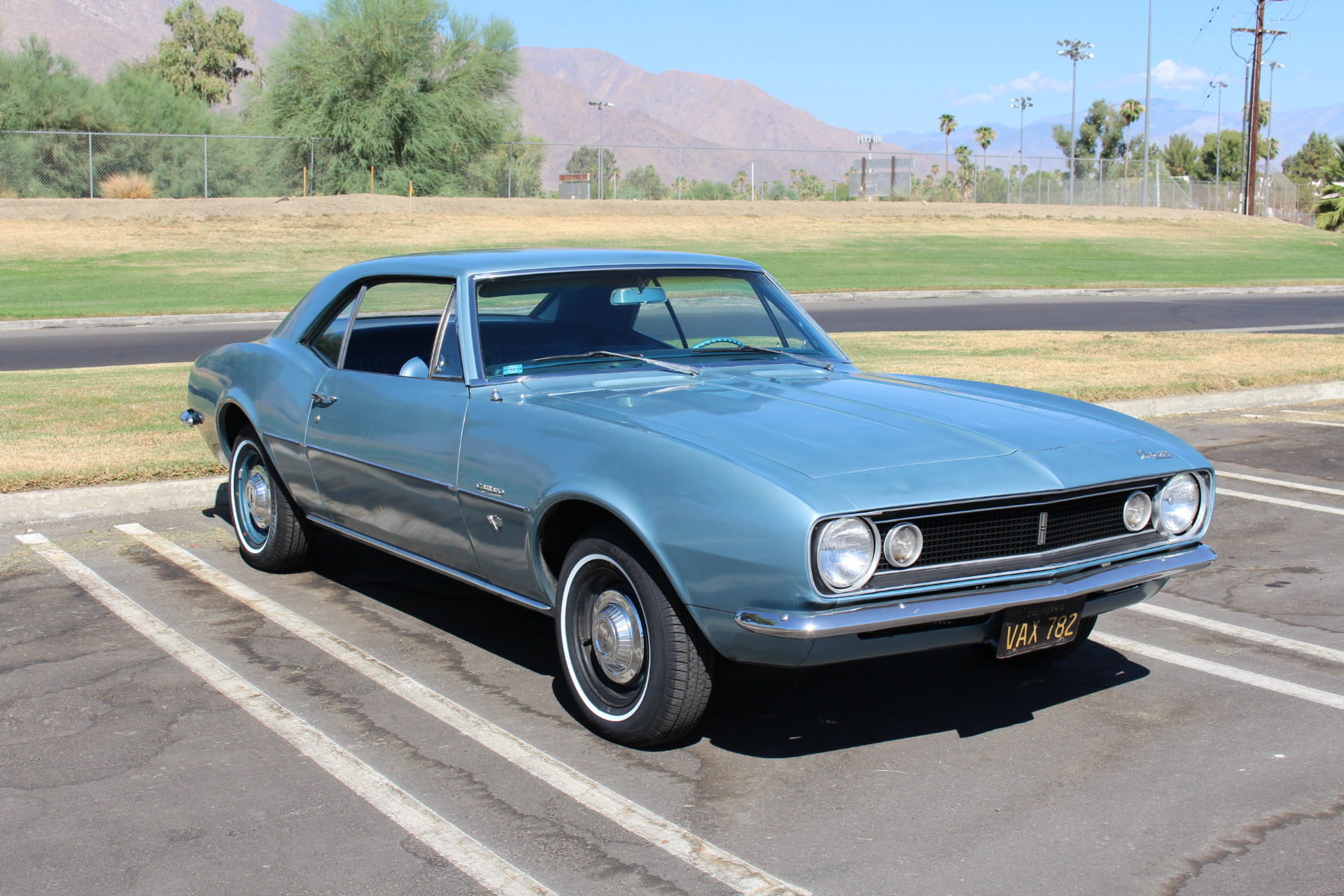
There’s some non-fatal rust on the rear quarters that may require burning out or perhaps adding a new panel. “In fact,” said my friend, “I even considered getting an all-new shell for the thing.” That’s where the Washington’s-axe question came up again.

Nobody hates chasing rust more than me, so the idea of brand-new sheet metal is appealing to me. Based on the availability of replacement parts these days, you could essentially build an all-new 1967 Camaro from the ground up, put a crate motor in it, and grab a VIN number off of some totaled or corroded-in-half straight-six junker in a salvage yard. Of course, the cost would be twice what it’s worth, and it would be a stretch to call it the “same car” as you started with.
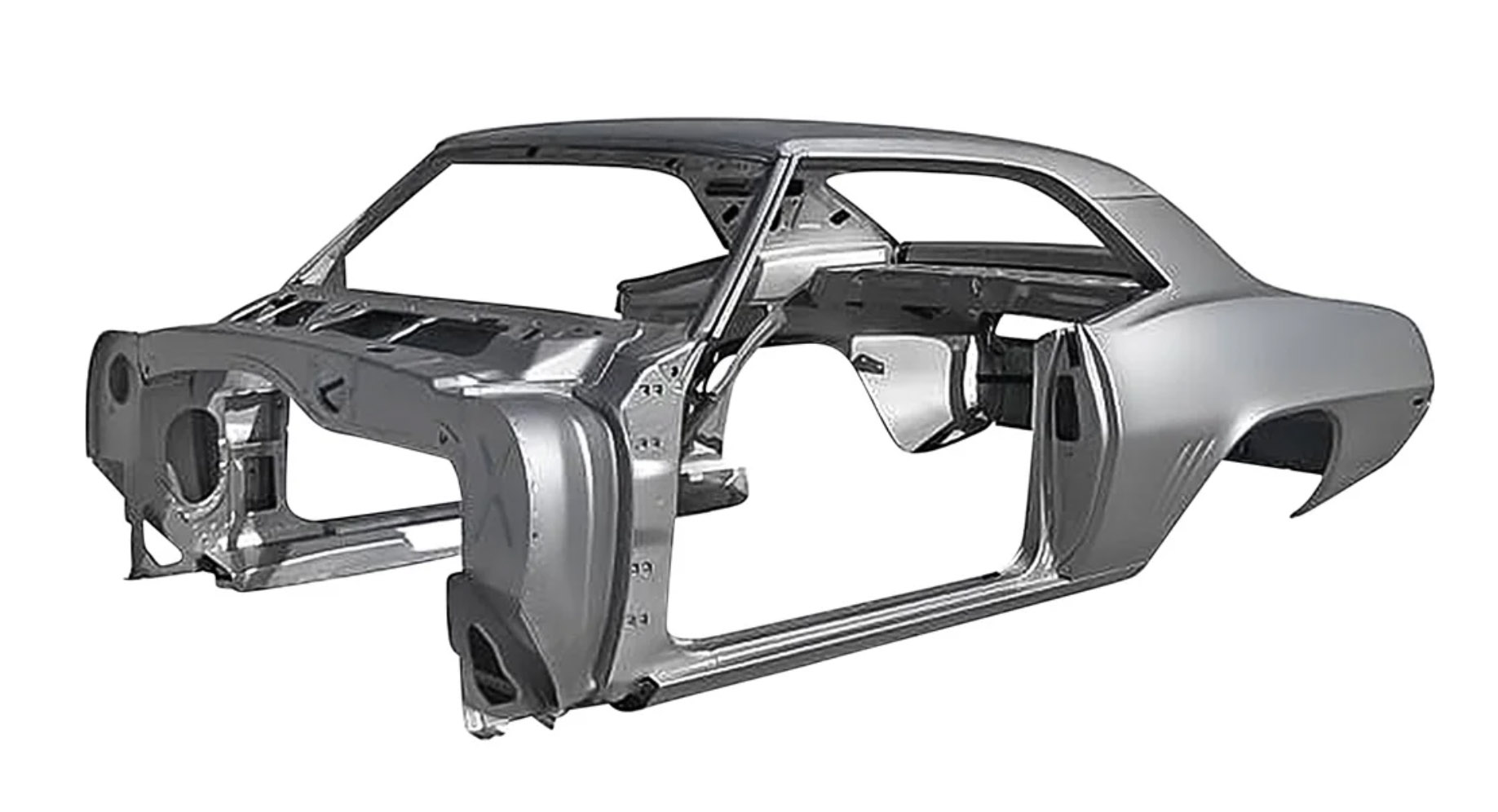
Or would it?
Sanding down rust that will almost certainly come back to my friend’s old Camaro will be a dreadful task, but running our hands down the flanks of this Camaro in the garage, we imagined a person on the Chevy lot sixty years ago doing the same thing as he signed up for monthly payments, excited about getting the keys to his new pony car sitting there in the afternoon sun. There’s a soul to these parts that no aftermarket shell can recreate. Replacing a panel or two that’s too far gone is one thing; at what point does the number of new panels and parts erase the car’s vintage provenance?
I’m lost, Autopians. What do you think? Is “numbers matching, original-except-for-the-tires-and-water-pump” the only thing that qualifies as an original car, or can a George Washington’s hatchet of a ride where only the frame rails remain make the grade? You’re a smart lot –let me know!
Top graphic image: eBay via Barn Finds


49.5%
Ah, yes,Theseus’s Paradox! I’m going with the Continued Identity Theory. An object stays the same as long as it continuously and metaphysically exists under the same identity without being fully transformed at one time. If every part has been replaced, but over a period of time, it can still be understood as the same car. If everything is replaced at the same time, it’s regarded as a new object even if it looks exactly the same.
Since I can’t afford a new bodyshell from British Motor Heritage, my MGB will never be fully transformed at one time and will always be the same object…
How does the Continued Identity Theory answer Thomas Hobbes’ question? If the old parts are built back into a car, then is that not the original car?
Philosophy aside, fortunately cars have VINs and only one can be registered. So I suppose that’s the easy answer. Whichever is registered as the original car, is the original car.
Hobbes’ theory assumed you keep the old parts, which most certainly I would not.
The frame-swap Toyota trucks are the first thing that came to my mind. Are they ‘the same truck’ when they get the frame swap? I think most would say yes. So, is there a point down the line when you can then replace enough parts that it’s a different truck? What’s the limit? What’s the part that then gets replaced and it’s ‘different’? I don’t think they count as different trucks, but, if you do – where does the line get drawn in a frame-swap case?
I’ve thought about this for a while as I’ve been eyeing the MK Sportscars site. Basically a modern take of the Lotus 7 built using a donor Miata NB. Miata powertrain and running gear with a whole new body/frame. Is it still a Miata in the eyes of the RMV? Some say yes, some say no.
Johnny Cash might know.
I had this discussion with a friend 2+ decades ago, after his car went through a series of wrecks that replaced so much of the car that I argued it was basically a new car. We argued back and forth and settled on it being the same car by virtue of the firewall (with VIN plate) and engine/transmission were original, so it was still the old car.
I brought this back up when he body-swapped an old Bronco, and after that discussion we decided it came down to intangible things like feel and experience. Replacing major parts can make a car feel new in certain aspects, but then other aspects can make it still feel like the old vehicle you’ve known. The Bronco had a new body, rebuilt power train, and many new interior bits. But it had the old steering wheel, the familiar shifter clunk, and to my friend it just felt like it was, in an anthropomorphic way, his old friend.
They still call the Mississippi River the Mississippi even though the water you view on one occasion is not the same in the next viewing. Even the banks change over time.
Heck, the human body replaces 1% of its cells every day. Below is a breakdown of cellular replacement:
Cell Lifespans by Type
• Stomach and gut lining: 3 to 7 days due to harsh digestive acids.
• Taste buds: 10 days.
• Skin cells (surface): 2 to 4 weeks.
• Red blood cells: About 4 months (120 days).
• Liver cells: 1 to 3 years.
• Skeleton / bone remodeling: About 10 years.
• Skeletal muscle & fat cells: Roughly 8 to 15 years.
• Cerebral cortex neurons (brain) and eye lens cells: Generally never replaced and stay with you from birth until death
So, by that measure, are you even the same person over time?
If we equate the VIN with human neural cells, then it’s the same car.
It can feel like the same car with a new engine.
It can feel like the same car with a new body (thinking old VW bug here)
It can feel like the same car with a new cabin.
–and so on. If you are not doing it all at the same time, no problem 🙂 (are my personal rules…)
It depends, or, it’s best not to worry about it.
I have a friend who gradually turned a YJ Wrangler into a King of the Hammers style rock buggy. There is no longer a single part from the original YJ left.
I’ve seen youtube videos of people building 1st gen Mustang bodies out of reproduction panels. So it’s a thing, and it must be worth it.
If Carrozzeria Diomante is any indication, all you need is any mangled and burnt out piece of metal with a VIN on it.
Ask Jim Glickenhaus, he’s convinced a foot-long piece of steel tubing – at best – in a replica chassis means he has a real Ferrari P3/4.
I’m only a few parts away from having this answer personally
I have the real answer and a philosophical answer.
Real- firewall. Everything else is ‘bolt on’. Frame? Bolts on. Engine? Bolts. Seats? Bolts. Body? Can bolt. Then weld. Firewall and vin are the car.
Philosophical? Its the soul, the memories, the history. Grandmas 1964 Nova with the i6 was what she drove, then in 1971 it got an LT1 and straight axle, then 1977 turned into a street freak, a pro street car in the 1980s, and pro touring in 1997. The restomodded in 2015. All parts changed, but all part of its history. Its the same car even if the engine, interior, floors, changed. Because take out part, it wont be the car it is today.
I got my 1968 Oldsmobile in 1995 while I was in college. It was a 1968 Cutlass S with an Olds Rocket 350, a Rochester 2-Jet, single exhaust and a 2-speed automatic. Inside it was column shifted with a bench seat. It was originally light blue and someone had painted it light blue again… but poorly. Here’s (most of) what I’ve changed over the years:
So is it the same car? I feel like yes. It still gives me the same vibe it did when I bought it for $1,800 30+ years ago. My improvements haven’t made it any more obnoxious than it already was.
This is similar to a question i heard asked about an engine swap “does an engine swap change a car’s soul?” Maybe compare the weight of replacement materials to the overall weight of the vehicle? Example: if weight of original drivetrain + original frame > replacement sheet metal, then it’s original. But now do it with an engine swap: IF weight of new engine + sheet metal > weight of frame and remaining drivetrain, then new car.
I have been thinking of doing this with a cj-7 or cj-8 for decades. You can easily get jeep frames and bodies ( and nearly every other part, thanks quadratec) online and have been since before the internet was a thing.
You would only need a junked out one for the VIN
it would have to be called the JEEP of Theseus
A “THESEUS” vanity plate would be the only vanity plate I’ve ever considered but I would absolutely get it for this such a project.
Ignoring regulations that tell you what is the same car, I think it boils down to systems. Fuel system, engine, body, electrical, cooling, brakes, interior, etc. If you replace one system, it’s probably the same car. If you replace parts of all systems, it’s probably the same car. Ah, but some systems are more heavily weighted. If you replace the body, I would say it’s a different car. If you replace the engine and transmission with similar equipment, it’s probably the same car. If you replace an economy engine and transmission with race equipment, I’d call it a different car. If you replace half the body with similar components, it’s probably the same car, but if you go past half, it might be a different car. If you replace the fuel system, it’s probably the same car. If you replace the brake system by itself, it’s probably the same car. If you replace the brakes as part of a plan to convert the car to a racecar, it might put it over into different car territory. Wear items can be replaced with impunity without changing what car it is. I know I didn’t organize these thoughts well, and it needs further development, but these are my basic opinions on when a car ceases to be the same car it started as.
In the eyes of the law, as I understand it the VIN plate is what makes it “the same car”. Removing one and putting it on a new vehicle is fraud, unless you have it properly documented – the specifics of which probably vary by state. It may require the presence of an officer of the law and maybe even recorded video of the swap on top of that.
I recall a case involving a beautiful blue rebuilt early ’60s Stingray who’s VIN switch hadn’t been documented properly, resulting in a demand that the vehicle be destroyed.
I never did hear how that turned out.
as long as the odometer and vin tags (with correct rivets in KS) are there then it is legally the same car. for collectors looking for original, nothing really can be replaced without value degradation.
I believe that Penn Jillette has an analogy about this regarding Houdini’s wand (another Ship of Theseus deal): You have Houdini’s wand. You replace the shaft and tips. Do you still have Houdini’s wand? Yes, if no one else claims to have it.
Please direct me to where 1st gen Camaros, even junked straight six models, are still in junkyards, and this proposed scheme wasn’t already carried out prior to Bill Clinton taking office. Thank you for your attention to this matter.
Dynacorn has been producing full shells for quite a few classics for 20 year or more.
This is so weird! I was just having this thought today on my way to work.
My 2001 Toyota Tundra has a new frame from the factory. So far, I’ve replaced: rear end, driveshaft, springs, all new wheels, new hood, doors (x4) and fenders, new rear bumper, new bed and portions of the cab have been rebuilt. I’ve also swapped out the entire interior. Next on the list is an entirely new cab, and possibly an engine swap.
When it’s all said and done, the only OEM things will most likely been the transmission and transfer case…
I helped a friend of a friend salvage parts off of a 914 that had nearly returned to earth completely. The body was just about to cave in in the middle from chassis rot. This gentlemen insisted that car had a future and was worth something. Should it ever return the the road, it would need to harvest the souls of at least 10 other 914’s in the process.
Yes, I’ve seen plenty of 914s where the closed doors are very structural
Aw, can we also call it by its even more cool original name, the “ship of Theseus” conundrum?
For me, it’s probably the simplistic but compelling legal answer – is the VIN the same?
I even asked the local PD that I do per-diem work for about this – as there is a VIN on the dashboard, each of the doors and also on the frame – none of them would match. They would probably go by the VIN on the dashboard, which wouldn’t match the original truck…
If you carve those vin plates out of the original, then replace the rest of the car with those old vin plates, is it valid?
I have no idea…that’s a good question.
I think it would only really become an issue if I sold the car. RI requires a “VIN check” for cars 2001 and newer (and it’s an ’01) so if a random person took it and they decided to check multiple VIN’s, there might be problems…
Amen.