


You might have heard the story about the museum owner who the hatchet that young George Washington used to chop down his Dad’s prized cherry tree before famously confessing to the deed. Said the proprietor, “The handle’s been replaced three times, and the head twice, but other than that it’s the original hatchet.”
The story of the hatchet is a fabrication (as is, apparently, the story of George playing junior lumberjack), but it raises an important graduate-level question that I need your help in answering today: at what point do repairs and replacements made to a car become so numerous that the car no longer be considered the original article?


A few weekends back, we visited some old friends, and I got a chance to see the progress on my pal’s 1967 Camaro project. It’s not in bad shape for a Midwest car, and with a V8 of unknown size or origin under the hood, it’s not a one-of-whatever SS or RS. And so, he can do whatever he wants to it without suffering the scorn of crazies.
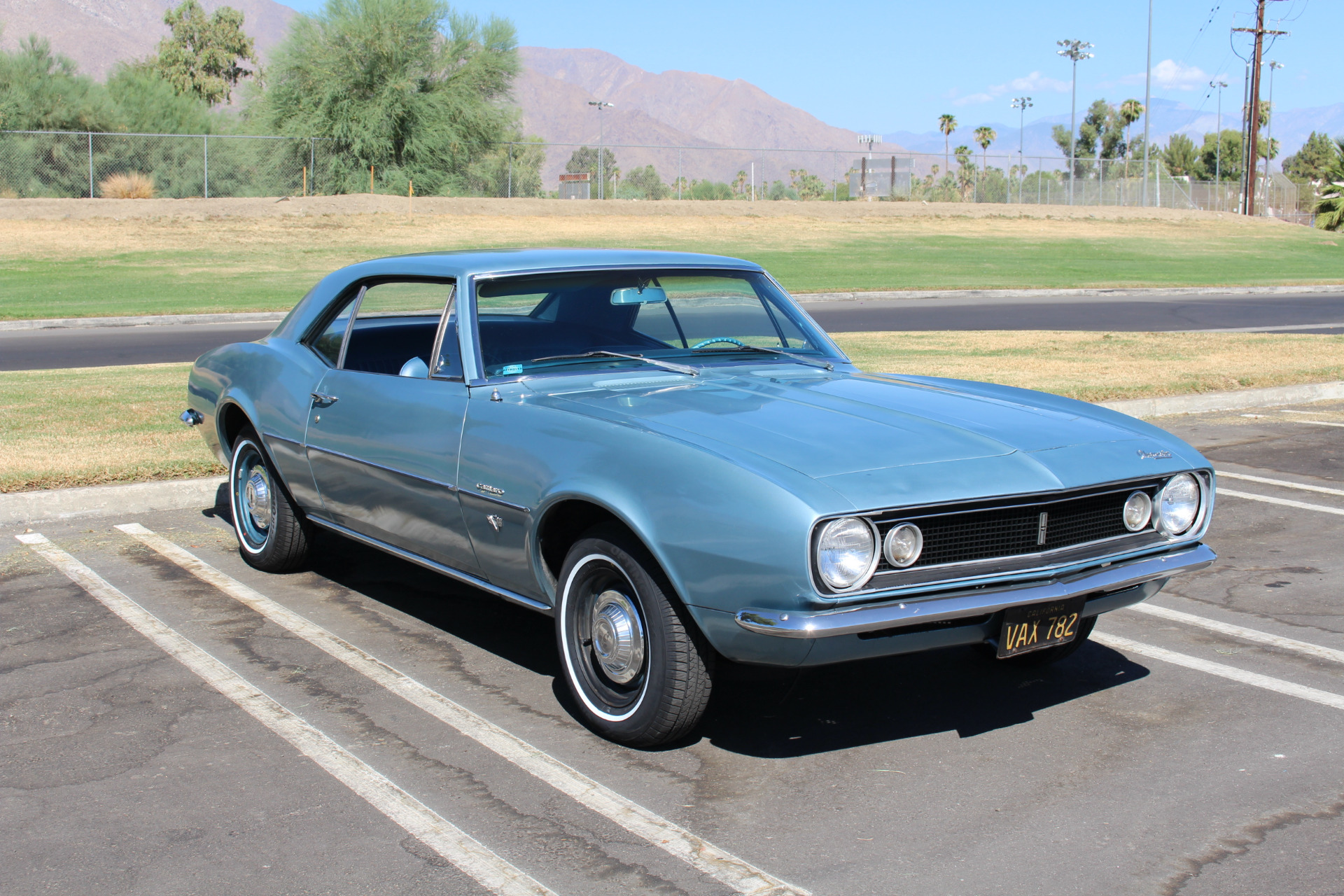
There’s some non-fatal rust on the rear quarters that may require burning out or perhaps adding a new panel. “In fact,” said my friend, “I even considered getting an all-new shell for the thing.” That’s where the Washington’s-axe question came up again.

Nobody hates chasing rust more than me, so the idea of brand-new sheet metal is appealing to me. Based on the availability of replacement parts these days, you could essentially build an all-new 1967 Camaro from the ground up, put a crate motor in it, and grab a VIN number off of some totaled or corroded-in-half straight-six junker in a salvage yard. Of course, the cost would be twice what it’s worth, and it would be a stretch to call it the “same car” as you started with.
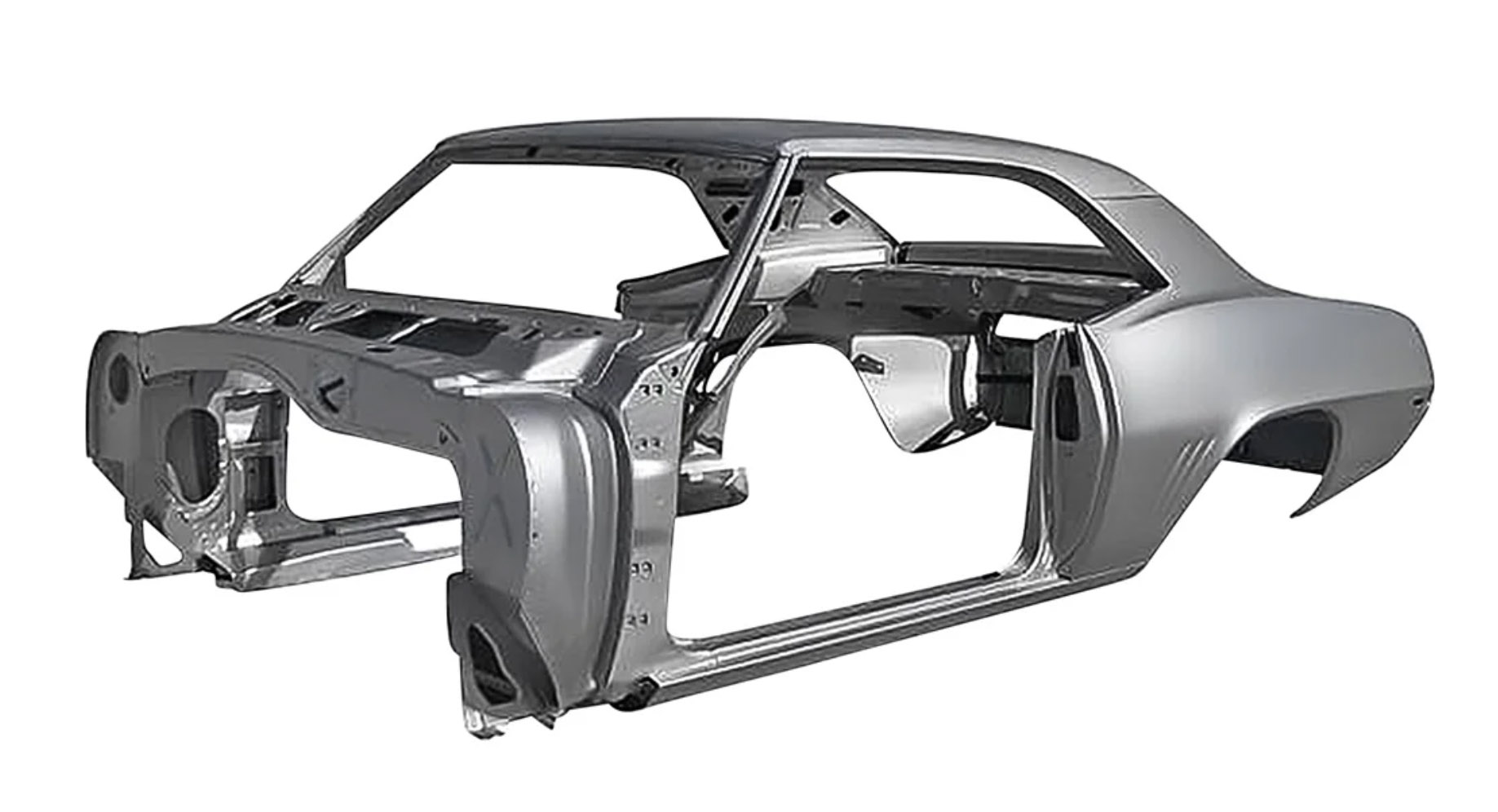
Or would it?
Sanding down rust that will almost certainly come back to my friend’s old Camaro will be a dreadful task, but running our hands down the flanks of this Camaro in the garage, we imagined a person on the Chevy lot sixty years ago doing the same thing as he signed up for monthly payments, excited about getting the keys to his new pony car sitting there in the afternoon sun. There’s a soul to these parts that no aftermarket shell can recreate. Replacing a panel or two that’s too far gone is one thing; at what point does the number of new panels and parts erase the car’s vintage provenance?
I’m lost, Autopians. What do you think? Is “numbers matching, original-except-for-the-tires-and-water-pump” the only thing that qualifies as an original car, or can a George Washington’s hatchet of a ride where only the frame rails remain make the grade? You’re a smart lot –let me know!
Top graphic image: eBay via Barn Finds


I purchased a Miata with a 2.5 motor swapped in. The rear differential had also been replaced. Then I upgraded from a 5spd to a 6spd with a new transmission, clutch and driveshaft. So the entire drivetrain is not stock. But it’s still a Miata and makes me smile every day. I consider it the same car. If I swapped out the body, then I would not have much original car left. I’m thinking of putting a 1st gen Tacoma pickup cab and bed on it. MX-Taco?
As Ferraris has proven, as long as you own the VIN Number: As much money as you have.
I have a neighbor, and the folks on the Discord may have seen me post some pictures there, who has a Nissan Leaf named Theseus. They won the President’s Trophy at our neighborhood car show. It’s a gen 1 Leaf and first they paid to have the battery upgraded by an outfit I don’t recall the name of in California (we’re in Arizona) and that got it much improved range of around 300 miles. Then one of their kids who was learning to drive got into an accident. The battery was fine, but a lot of the rest of it was not. Another Leaf of the same color and same year was acquired and other spares so from slightly greater than two cars, one was forged. It is a loved car and driven daily but they consider it their car, it’s history is one story. Good enough for me.
It’s a question of how the process went. If, at all times during the restoration/conservation, you could point at one (and only one) object that was unambiguously and recognizably “the car”, then it’s the same car. If “the car” was reduced to a mere collection of parts, or if at some point more than one object could equally claim to be “the car” at the same time, then it’s not the same car.
I think the answer depends on what the owner wants from the car. If it has to be unchanged from original factory then even replacing tires and hoses is unacceptable.
On the other hand I’ve done frame swaps and body swaps and the only original part was the rusty VIN placard stuck to the firewall with pop rivets.
Idk, but my Lady’s XJ is nicknamed The Jeep of Theseus for that reason.
Me, being the guy who gives good car advice, she chose to not ask my advice on the purchase, and bought it for $2K for “overlanding”.
15x the purchase price into it and it still doesn’t run or drive, and with us living at 7800ft of elevation. It’ll probably need to be turbocharged to have a chance at doing the speed limit up here.
The only saving grace is that in theory it’s the last project car she’ll ever buy, because of how badly it has gone.
She also ignored my advice back when we were just friends and bought the exact configuration of truck I told her not to, which ended up also being a money pit.
I remember years ago reading an article about the restoration of a ‘rare’ panther pink Challenger that had almost folded in half in an accident. The only parts they were able to save was the deck lid and the passenger door. To me not an original car anymore.
i helped a buddy turn two piles of CJ2A parts into one running, driving CJ2A. does the original frame and surplus parts make an original jeep? idk.
It might be that vehicle taxation here plays a big role in my opinion, but I say: re-shell. That’s when it’s gonna be a completely different car, even if it’s the same chassis and the engine. The shell houses the car, and if you replace it in its entirety, all at the same time, it’s not the same car anymore.
However, if you do that piece by piece over fifty years … I dunno, the car gets a pass?
FWIW, the old regulation here said that if a car retained over 50% of its original content, it was still the same car – but the law book defined the percentages. Hence you got the Merc convertibles on W115 ambulance chassis, until the loophole was plugged. And if you went over 50%, you were liable for import tax.
The UK rules seem to have changed recently, and reading them through the message seems to be:
So even a brand new, reproduction body would not count as a “substantial change”, as long as you document moving the VIN plate over.
In fact, you’d probably want as much documentation on every part of the swap as possible, just in case the bureaucracy gets interested in you.
My thought is that replacing the class A surface metal would be OK, but once you get down to things below it, then it changes. For example, replacing the firewall, with the VIN tag on it, in my mind makes it a different vehicle.
It is a difficult question. If a radiator core support was to be replaced, which on some vehicles contains a body identification tag, would that make it a different vehicle?
To me it depends on how we define the object. If it’s significance comes from a connection to a person (Lincoln’s hat) or a specific event (the boat Washington crossed the Delaware in) then it has to retain some component that the prior owner directly saw or touched or that was present at the event which defines it.
So with a vehicle of unknown or insignificant provenance I would give a lot of leeway to letting it still be what rolled off the production line. If you only identify it as a 1967 Camaro it remains a 1967 Camaro if you gradually replace all of the components. If you identify it as a specific person’s 1967 Camaro then it needs to have at least a component that the prior owner saw or touched or used IMO.
Bein’ an old fart Boomer, I might as well stick my oar in and say that I think any vehicle that features any part of the drivetrain, body/coachwork, or interior (other than safety features – seat belts, modern radio, etc) which are unoriginal (items that were not offered on that vehicle when it was originally sold) is no longer the vehicle listed on the title for that vehicle. IMO, the title of a vehicle should be tied to its engine. So, if you have the chassis and body to a 1961 Corvette and you stick an engine in it from a 2003 Honda, that vehicle should be titled as an ’03 Honda not as a ’61 Vette. The ONLY caveat to this is for those vintage, antique, and classic vehicles which are converted to electric power. Controversial? Maybe, but electrification is saving our plant. It isn’t trying to con anyone into thinking some vehicle is anything other than what it is.
I dunno. Ask Flying Scotsman. I’m pretty sure the only thing that might be original there is the frames.
Granted the only reply you’ll probably get is the safety valves opening, but still…
I just watched one of the Mike Brewer, from the Wheeler Dealers, shows asking the same question about the Mini. The new bodies are made from the original jigs and even some of the original workers producing them. No idea where the Camaro bodies are made but I’d guess China where I doubt any of the workforce having ever seen a real one.
I have always thought that with really, really valuable cars (like Bugatti valuable), all that is required for a car to qualify as the same car is the VIN.
The chassis, or unibody, is the backbone/foundation of any car/truck. If that is changed then it’s not the same car anymore. It’s as simple as that.
My old 2CV is still going 34 years after I sold it. The new owner (my cousin) has changed a lot of it, not least a new chassis in the way home from driving it across the Sahara. Yes, he is way cooler than me.
Anyway, I think that most of the glass is still original, but the rest has been replaced.
I think that the key issue is that the removed original parts that still exist, if you stacked them all together today, wouldn’t make a car, or even a car shaped blob.
I think I’m the same person who sold him that car, despite most of my actual cells having been replaced several times since then.
You’re still considered to be the same person because your body is regenerating itself. Only if your 2CV regenerated its own parts could it still be considered to be the same car.
Owners are the method by which cars regenerate their own parts.
That’s fair enough.
The next paradox to explore would be if you built it one piece at a time and it didn’t cost you a dime is it still a Cadillac?
Johnny Cash answered this a few decades ago ????
https://m.youtube.com/watch?v=Hb9F2DT8iEQ
Only if you can tell me what model year it is