

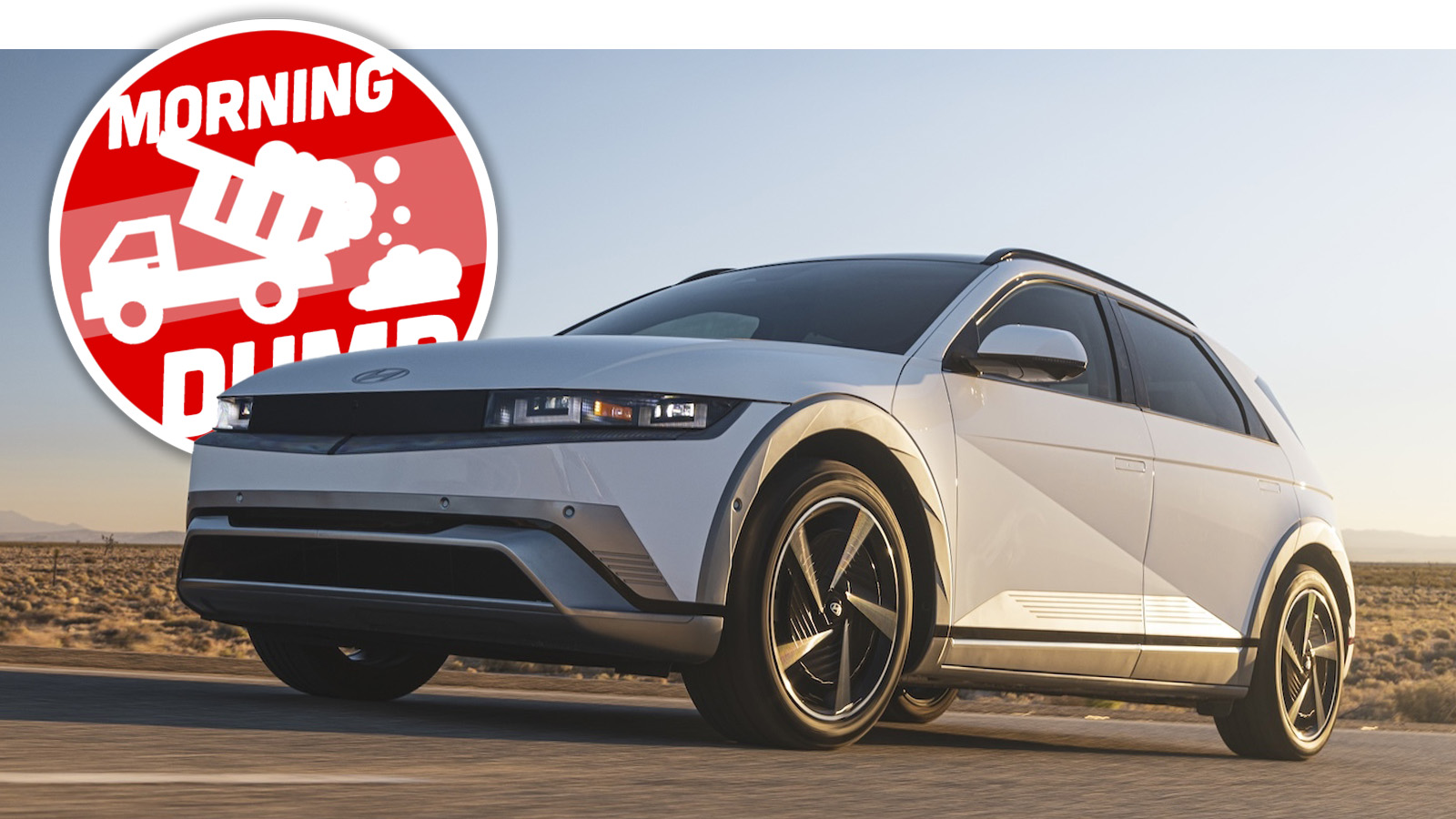
It’s been an exceedingly strange past two years for cars. Huge global growth of Chinese models, American tariffs impacting pricing and margins, and shifting environmental regulations have all done their part to tilt the table in all manner of ways. Hyundai seems to be feeling that right now. Operating profit and overall deliveries are down, but one of the few bright spots is the good ol’ U.S.-of-A.
Meanwhile, another Chinese car brand wants to come stateside, Toyota unleashes a pleasantly sensible off-road Sequoia, and we now know just how far the Volvo EX60 should go on a charge. Welcome back to The Morning Dump, where we puree this morning’s automotive headlines into a sort-of butternut squash soup of car news.


In The Margins

It’s about that time of year again when automakers release their second-quarter financial reports. This usually consists of rather dry Powerpoint presentations and video calls with investors, but in the strange year of 2026, there’s always news in the numbers. General Motors is on fire right now, having beaten earnings expectations for the 16th straight time in a row. Hyundai, on the other hand, isn’t seeing quite the same growth. Operating profit missed expectations, but it seems that the American market is doing a lot to cushion the blow. As Bloomberg reports:
Operating profit was 2.85 trillion won ($1.9 billion) for the three months ended June 30, down nearly 21% from a year earlier, the Seoul-based company said Thursday. That fell short of analyst estimates for 3.1 trillion won. Revenue rose about 2% to 49.2 trillion won, a record for the second quarter.
While a drop in operating profit was forecasted, missing the forecast by nearly $169 million isn’t great. So what happened? Well, a whole bunch of things coming together. Kicking things off, major factors include global competition from China and global economic fear.
“Prolonged geopolitical instability, including the Iran conflict, has heightened external uncertainty,” Chief Financial Officer Lee Seung Jo said in an earnings call. “China’s aggressive EV offensive is exerting a major impact on the growth of overall demand.”
However, those two factors alone don’t explain everything. American tariffs on high-margin Genesis models likely don’t help, and a deadly March fire in a plant that supplied Hyundai’s Korean engine factories with valves led to component shortages that impacted production. While a relatively weak Korean won should help export margins, it’s a double-edged sword. A weaker domestic currency usually makes it more expensive to source parts from overseas. Then there’s the current state of labor relations in Korea. Union negotiations are ongoing amid a partial strike, and signs of a swift resolution aren’t exactly clear.
Add it all up, and Hyundai’s global wholesale deliveries are down 6.9 percent year-over-year. That’s not-so-nice. Global retail sales are down about 4.2 percent, with two markets bucking the trend: India and America, up by 7.4 percent and 4 percent respectively. Obviously, these two markets have very different product mixes. Hyundai sells dirt-cheap models in India like the Creta and the Grand i10 NIOS that likely wouldn’t fly in America, but the current Venue and Elantra are still some of the most affordable new cars stateside, playing in a price bracket that many automakers have abandoned and many consumers need options in. Weirdly, Hyundai’s stock hasn’t taken a tumble on the news. It’s risen 3.35 percent today so far, partly thanks to hype around non-automotive projects like humanoid robots. Still, cars are Hyundai Motor’s bread and butter, and that puts the company in a strange spot.
Right now, things certainly aren’t catastrophic, but it seems that Hyundai needs America just as much as America needs Hyundai. In addition to affordable cars, local production plants and plans for further onshoring in a high-margin market should be mutually beneficial. Of course, a big part of that is because America’s car market is in a weird spot compared to the rest of the world. Legislation is working to keep Chinese cars out, but what if that changes in the future?
A Matter Of Time?
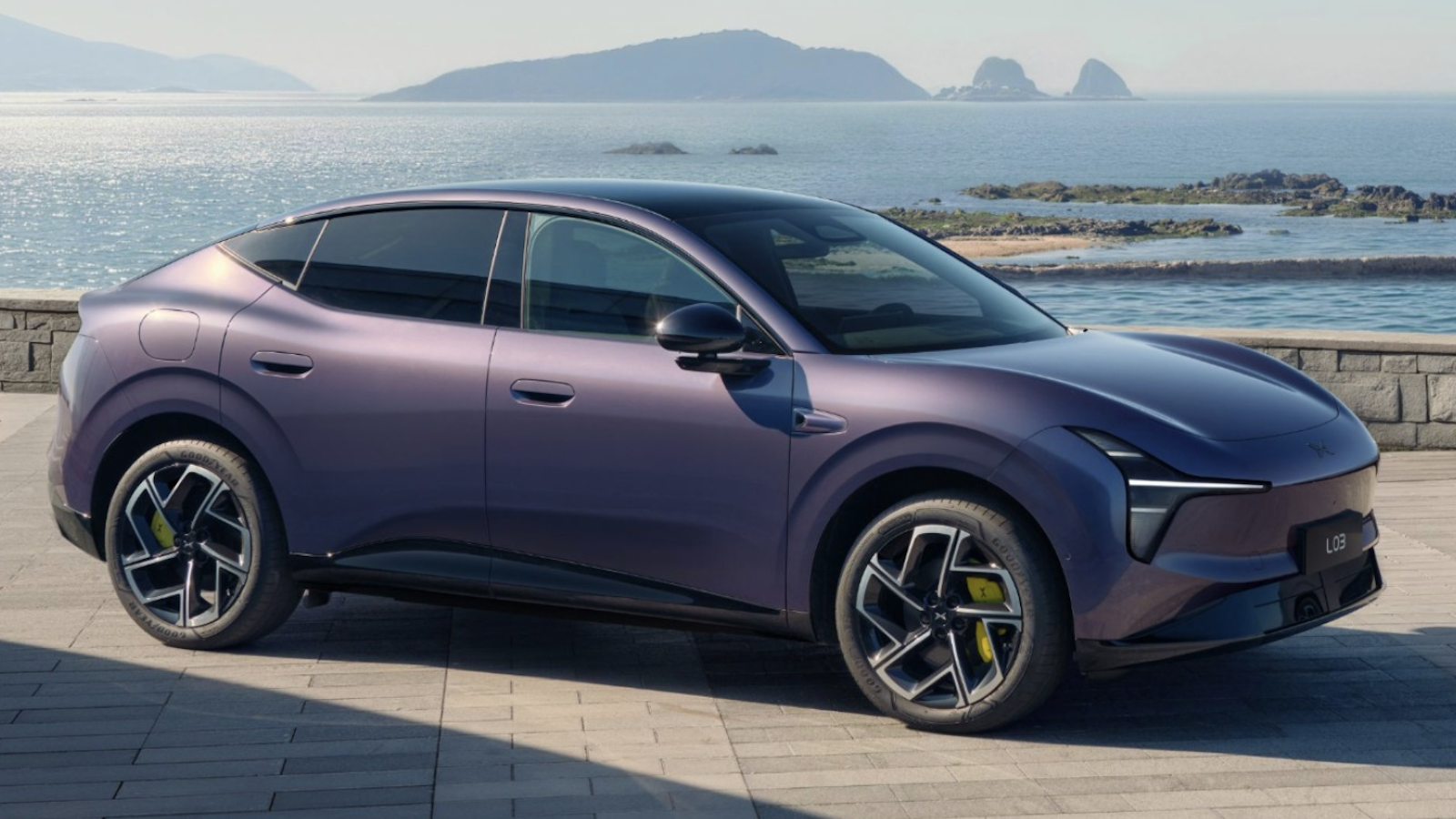
As it stands, Chinese EVs in America are essentially a no-go. Protectionist trade policies make the economics of importing most models unfeasible, but that doesn’t mean that some Chinese automakers aren’t waiting things out. Ward’s Auto recently interviewed Xpeng CEO He Xiaopeng, and the brand’s ambitions of coming to America should regulations change were rather clear.
He fully accepts the current U.S. position with regard to imports from China, but should the political situation change, the CEO said that Xpeng is happy to expand into the market.
“Well, I think that if the U.S. policy allows for companies like us to stay or enter the market and build factories there, definitely we’ll embrace that decision,” He told WardsAuto in an interview.
Of course, the biggest obstacles for Chinese automakers eyeing the U.S. market are legislative, both current and proposed. The current 100 percent tariff rate on imported Chinese EVs and phased-in connected vehicle legislation that for model year 2027, “Prohibits sales of connected vehicles by connected vehicle manufacturers owned by, controlled by, or subject to the jurisdiction or direction of China or Russia, and vehicles using their covered software” are concrete right now, but they could be bolstered by proposed legislation that would ban automakers with more than 15 percent Chinese ownership. As Reuters reports, it’s just moved through a Senate panel:
The U.S. Senate Commerce Committee approved legislation to toughen a U.S. government ban on Chinese automakers entering the American market that could potentially bar Mercedes-Benz from selling vehicles in the United States.
Senator Ted Cruz, the chair of the committee, warned that without changes, the bill’s provision that would ban companies with more than 15% ownership of Chinese entities would bar Mercedes-Benz from selling vehicles in the United States because of its nearly 20% Chinese investment. Senator Bernie Moreno said Mercedes-Benz would have until 2030 to comply and could still get waivers if needed.
The obvious catch here is that such protectionist legislation lives and dies by whoever’s in power at a given time. If the upcoming 2028 election results in changes that open things up for even local production of cars from Chinese brands, America’s roads might look much different than they do now. For now, Xpeng is looking at potentially entering the Canadian market, and thanks to similarities between Canada’s vehicle safety standards and America’s vehicle safety standards, adapting Canadian-spec cars for U.S. homologation would be relatively easy. For now, this all remains theoretical, but if trade restrictions open up several years down the line, Chinese cars in America would simply be a matter of time.
Locker’d, Not Loaded

As astoundingly large as full-size body-on-frame SUVs are these days, they still fill an important niche. If you need to say, pull a larger camper while toting around the whole family, a minivan probably won’t do the trick based on towing capacity alone. The Toyota Sequoia is now a veteran of the scene, having been on sale for 25 years and three generations, and it’s getting some minor upgrades for 2027 to keep up with the pack. The big one is an off-road focused Trailhunter version that’s actually surprisingly sensible.
Built on the entry-level SR5 model, the Sequoia Trailhunter gets Michelin all-terrain tires wrapped around bronze 18-inch alloy wheels, Old Man Emu suspension, skid plates, recovery hooks, a locking rear differential, and some electronic off-road gadgetry like Toyota’s Crawl Control. Nothing outlandish, but instead thoughtful touches for a spot of off-roading. Toyota hasn’t revealed pricing, but considering the Sequoia Trailhunter is based on the SUV’s most affordable trim, don’t be surprised if it’s priced far lower than the TRD Pro.
Of course, the Trailhunter package isn’t the only new addition to the Sequoia for 2027. Toyota’s biggest SUV has been subtly facelifted with a squarer grille sitting inside a new front bumper. New infotainment software including a built-in dashcam joins the party, the suite of active safety systems has been updated, and brighter fog lights aim to illuminate more of the night. Expect more details including pricing to surface this autumn, when the updated Sequoia is expected to roll into showrooms.
Home On The Range

The posh European electric crossover wars are still on like Donkey Kong, and Volvo is placing a lot of faith in its forthcoming EX60. Not only is it the marque’s first true electric compact crossover, it’s priced competitively with the gracefully aging XC60 plug-in hybrid and promises solid power, quick DC fast charging, and none of the UX foibles found in the recently-discontinued-in-America single-screen EX30. Now we now just how far the first models of EX60 will travel on a charge, and it’s not bad.
The cheapest P6 model on either 20-inch or 21-inch wheels is good for 307 miles on the EPA cycle. Selecting the 22-inch wheels shaves that number down to 295 miles. As for the all-wheel-drive EX60 P10, it’s rated at 330 miles of range on either 20-inch or 21-inch wheels, with that figure falling to 312 miles of range should you tick the box for the twenty-twos. On the one hand, those are rather respectable figures. On the other, the new BMW iX3 50 xDrive is rated for up to 434 miles of range with all-wheel-drive and 20-inch wheels, and the 400-mile mark is about the point where range anxiety becomes a distant memory. Granted, the BMW has a much larger battery pack—108 kWh to the 80 kWh pack in the EX60 P6 and the 91 kWh pack in the EX60 P10—and Volvo has a bigger-batteried EX60 incoming.
What I’m Listening To While Writing TMD:
I didn’t have new Chiodos on my bingo card for the week, but you know what? “TAPDAT” rips pretty well.
The Big Question:
If tariffs on imports, restrictions on Chinese vehicles, and the rollback of emissions standards hold, what do you think the American car market will look like in five years’ time? Ten?
Top graphic image: Hyundai



“The Big Question:If tariffs on imports, restrictions on Chinese vehicles, and the rollback of emissions standards hold, what do you think the American car market will look like in five years’ time? Ten?”
Far behind the rest of the civilized world.
Lol. Why do you people continually think China is magic? The laws of physics work the same in Guangzhou and Shenzhen as they do in Detroit and Louisville- there is no special sauce that allows for them to be built both using significantly less resources and at a signficantly higher degree of quality than anywhere else in the world. I will preempt the “muh magic centralized supply chain!” argument by pointing out the very same supply chain exists in the US and Germany. Chinese cars are sold cheaply because a) they are massively subsidized; b) lack of regulatory costs thanks to lax oversight; c) many of them are genuinely cheap shitboxes that wont pass crash testing and fall apart after a couple of years.
Want the Chinese car experience in the US? Go drive a Volvo EX30. It’s an okay powertrain, on an okay chassis, with okay performance, an okay interior, and the worst UX ever inflicted on an automobile. All for a price that’s equal to, or slightly more expensive than it’s competition. That’s what Chinese cars in the US look like.
I just meant the rest of the world will be farther along on electric vehicles. Not just China, but other countries that have to compete against inexpensive Chinese vehicles. Their technology and 10 more years of real-world experience will have them outpacing the U.S. even more than right now.
I really want a basic 2-door simple pickup truck. I could not tell you the last non-GM vehicle I bought, but my next vehicle will probably be a Slate, since GM has no incentive to compete against small, inexpensive EVs available in other countries.
You’re still saying China is magic. Those inexpensive Chinese vehicles they are competing against are inexpensive for reasons that have nothing to do with physics or engineering. And the fight will not be one of product development but trade policy.
I disagree. I do not think China is magic. But I remember when Japan came into America in the 70s and 80s with inexpensive vehicles that used less gas and pretty much ate up the Big Three market share for lunch.
Were the Japanese cars magic at the time? Not really. Were they cheaper and more efficient? Definitely. But it took U.S. manufacturers at least a decade to catch up, hence the term ‘malaise era’. And some would say they never really caught up with the Japanese.
So let’s say the rest of the world continues to make cars more efficient and less stressful on the environment, and we exclude the U.S. by levying protectionist tariffs against ‘foreign’ cars and lessening the environmental regulations on U.S. based manufacturers. If the U.S. suddenly reverts back to a ‘California’ type of emission and economy regulations, U.S. based manufacturers are going to be 10 years behind the rest of the civilized world.
In the 70s and 80s, Japanese auto makers built cars that were compact, lightweight, with good handling and efficiency to offer a different option to the giant boats that made up the product lines of US automakers. There was a specific product hole in the market, and Japanese imports filled it. Chinese cars are not filling a hole, they are the same tech-crammed blobby CUVs everyone else makes, just cheaper thanks to subsidies and lax regulations, and with even more useless features (buried three menus deep in a touchscreen) implemented worse.
This is an attack on a straw man of the US consumer as a coal-rolling, truck obsessed redneck, not the US consumer that actually exists. The average US consumer actually does not like paying triple digits to fill their 24 gallon diesel tank. Strip out commercial/fleet sales of pickups, and the average US consumer is actually shopping for Rav4 (hybrid only) or CRVs (mostly hybrids), or Model 3/Y (EV). The average US consumer actually kind of does care about the environment, but really hates being told what to do, and really really hates being told what they can’t do. Which is why politicos love to say “look at the rejection of EV mandates, people in the US clearly hate the environment!” when the correct lesson is that no, people hate mandates.
This is true, because while CARB may have been a good idea 40 years ago, and still competent 20 years ago, the CARB of today is both actively detrimental to the environment and actively hostile to both consumers and manufactures.
“The average US consumer actually does not like paying triple digits to fill their 24 gallon diesel tank. Strip out commercial/fleet sales of pickups, and the average US consumer is actually shopping for Rav4 (hybrid only) or CRVs (mostly hybrids), or Model 3/Y (EV).”
Not in the northern rural parts of the U.S. where I live. People may not like paying to fill their huge trucks and SUVs, but they keep on doing it. For every small car I see, I see 10 medium-to-large SUVs. For every hybrid vehicle I see, I see 50 crew-cab pickups.
While we own a 4-cyl 2015 Cruze, a 3-cyl 2024 Trax, and a 4-cyl 2010 regular-cab RWD mid-size pickup, we’re in the minority in our town, although I am seeing more people driving the new 2nd-gen Trax now that it’s the cheapest vehicle by a domestic automaker, which are the most popular manufacturers in our area. (even though it’s made in South Korea, it’s available for purchase in a nearby town) It’s rare to see a Rav4 in my town, although they are driving by somewhat more lately, even rarer to see anything made by Honda, and I might see a Tesla once a month – usually with out-of-state license plates.
I would like to buck the stereotypes in my area and buy a Slate pickup truck. But I’m retired, and I think my little rusty 5-speed pickup still has 4 or 5 years left in it before something structural collapses due to rust.
The CARB of today is not static. You don’t simply stop pollution control regulations and say “we’re good enough”. It’s a continuous mission. No different than Republican Richard Nixon’s EPA, currently under assault and increasingly not able to perform its core function.
I didn’t say they were.
I didn’t say they should.
The EPA, like CARB, has suffered from gross mission drift over it’s history. Just because the EPA or CARB says something is good for the environment does not automatically make it true- it must stand up to reasonable scrutiny and scientific inquiry. And recently, both CARB and the EPA have made extremely questionable decisions that look a lot less like promoting improved environmental conditions and a lot more like either picking political favorites, or outright idiocy (like CARB’s “Efficient Tires” proposal, which is just dumb and does nothing whatsoever to improve the environment).
Look dude, I know your handlers have traded out the Russians for the Chinese now, being the latest boogeyman your were told to fear.
Lol, I don’t think I’ve ever said anything about Russia here, but thanks for letting us all know your NPC patch is out of date. CNN has backed off the China love fest for reasons I don’t quite comprehend, you need to update.
Maybe the rest of the world will be farther along in EV adoption than the US but that doesn’t mean that US mfgs will be left behind since other than the upcoming Slate they also do business in other parts of the world including China for the “Big 3” GM, Ford and Tesla.
Spot on, but on top, labor is still massively cheaper in China, they have a higher degree of automation with robots, resulting in a lower cost base, and there is way less pressure to be profitable and cater to shareholders
I think the idea is that US carmakers will be lazy and the rest of the world’s carmakers will be competing at the cutting edge.
Yes, many US car makers are lazy, or perhaps financially conservative. So is Toyota, and that’s done them well so far. But “Chinese EVs are technical masterpieces!” is pure fiction. I’ve driven enough of them to evaluate their general engineering philosophy as “check the box, regardless of how you do it, actual driving experience be damned.” They are cutting edge only in an exploration of how much state subsidy support will your trade partners tolerate. If the answer from third-party countries is “all of it” then very quickly there will be only automakers in the US and China.
> “Chinese EVs are technical masterpieces!” is pure fiction
No one here has claimed they were. At most, the consensus seems to be they’re feature- and quality-competitive with western makers, just cheaper.
Plenty have, reading comprehension again. And the “feature and quality competitive, just cheaper” is the myth that needs dispelling. Chinese cars that are feature and quality competitive do exist, and they have the same price tags as their non-Chinese competitors in non-Chinese markets.
Because the Xiaomi SU7 Ultra exists. US$75k for 1500BHP is magic any way you slice it.
Yes, it’s a fantastic example of “check the box” engineering. Pretty sure Tesla or Lucid could bang out an edition of the Air or Model 3 with similar numbers if they cared to do so, but since the chance of that being a financially sound decision is about zero it likely won’t happen.
Also, I would bet a significant sum of money that if that car was to be sold in the US, the price tag would be six figures and the first digit would not be a one, and probably not a two either. Prices in China have zero resemblance to prices elsewhere.
Well the BYD Denza Z9 GT launched in Germany and France, for about 115K Euro including VAT.
It gives up about 350 BHP but gained a whole lot of refinement, plus 1.5MW charging (JFC.)
Here I’m happy to get reliable 150kW charging.
They can check my boxes all they want.
Or buy a Buick
China is not magic, but having worked extensively in heavy manufacturing in both the US and Australia, I can tell you that China is many times more likely to continue investing in new manufacturing technology and automation. They know as the middle class in China keeps growing, the labour price advantage will continue to erode, so things like the Zeekr “dark factory” exist with minimal humans working there.
Meanwhile both the US and Aus are content on bleeding any last micron of profitability out of decades old equipment which is only supported by a rapidly retiring workforce.
I’ve been witness to and personally submitted innumerable proposals with sound financial justification to have them squashed by internal politics, or an unwillingness to front the initial capital. Then to be asked how we can improve conversion costs when we require double the manpower to do the job in its current setup. Easy example. Upgrade gantry crane to use electromagnet instead of having two people sling up every load. Cost $250k installed and commissioned, ROIC in <2yrs. Passed over.
Signed,
Exasperated Ginger Beer
Oh I share your frustration, but I’ve also seen the inside of a few of those Chinese “automated” factories, and there’s still a whole lot of humans doing things. And at least in the US there are plenty of firms pushing the envelope on manufacturing tech, they just don’t get the press they might in a place like China.
You aren’t going to get people out of manufacturing in the medium to long term, and I also don’t want to as I love manufacturing for the middle class. It has historically provided strong, middle class income for vast swathes of the population due to the manual nature of it.
I’d much rather keep the same number of employees and increase output than maintain output and reduce employee numbers.
Definitely- actually one thing I am hopeful about AI for is it kills off enough Bullshit Jobs (defined here as a job that can be done by AI for cheaper, many White Collar professions are awash in them) and puts a lot of competent people into manufacturing careers they wouldn’t otherwise have considered.
Why are you spamming the board with the same “Why do you people continually think China is magic?” statement. Repetitive statements can be labeled as spam.
As long as people keep spouting “magic Chinese EVs will be dirt cheap and save us all” I will continue pointing out that no, actually the won’t.
Does the truth bother you so much?
Nobody here is saying that. I don’t know where you got that impression.
It’s a convenient strawman for his argument, nothing more.
Plenty of people are saying that, it’s an extremely common comment in these threads. I got the impression because of something called “reading comprehension” that’s taught in schools.
Why do all these EVs have such large wheels when it’s so clearly negatively impacts range. I realize you’re not going to be putting 15″ on these things with the brakes they need but more than 18″ seems excessive to me on a base model of small CUV.
Why does anything have such large wheels? Because we’re living in a very stupid era, that’s why
True story
The trend is not new. The oversized wheel trend started over 20 years ago.
Yes I’m aware, but it seems especially stupid on EVs when they’re literally admitting it negatively impacts range, which is a key metric folks cite when they’re on the fence about adopting an EV.
-Must look like an egg for aero
-20″+ rims and to get heated seats you have to lose 20 miles of range
Gah the dreaded “preferred options” package
“What do you think the American car market will look like in five years’ time? Ten?”
It’ll be just as bland as now, with or without the addition of Chinese vehicles. Perhaps even worse.
I’m not saying concerns over national security or doing business with companies controlled by immoral dictatorships are not a real thing. So, will the US ban Lucid? You mean to tell me somehow Saudi Arabia is a better dictatorship and defender of human rights than China?
Don’t even bother answering that. We know it’s all about trump’s portfolio.
Did you want an actual answer? Or just raging? I mean, I agree with forcibly divesting the scumbag investors of Lucid, but their engineering and software developlement is very much on-shore, which is very much not the case with Chinese automakers. TBH, I’m not sure Saudi Arabia has the expertise to be a national security threat with that sort of thing.
“I’m not sure Saudi Arabia has the expertise to be a national security threat with that sort of thing.”
I’m sure there’s an Israeli company who would be glad to sell them software to do it.
Ouch, but you’re right.
Raging. Definitely raging (You got my number).
But, also, I just wanted to point out, the tentacles are everywhere and likely very unavoidable unless we want to go and live under a (tentacle proof) rock. Hyperbole isn’t exactly the same as promoting our values, especially when nobody can agree on our values anymore in the first place.
To summarize, China isn’t the only troublesome entity entrenched in our increasingly lack of choice life.
Certainly agree. But they are the biggest and most dangerous squid at the moment. If throwing them out sets the precedent to kick out the smaller scumbag fries too, more the better.
The immoral dictatorship that is the US currently doesn’t view the immoral dictatorship of Saudi Arabia as a substantial threat. Xi is what Trump wants to be, which is triggering his well known jealousy.
By immortal dictatorships coordinating with mega corporations, you are referencing the US currently.
“Trailhunter” sounds less like a Toyota trim level, and more like the house brand at a Bass Pro.
Or a blind wanderer.
The grill on the Sequoia is so big that it looks as if the car lost its front clip in an accident and someone replaced it with a trapezoid of plastic fencing painted black.
Still like me an Ionic 5 but can’t yet rationalize the price.
Am I alone in NOT being excited by the prospect of humanoid robots?
I have mixed feelings about Chinese cars in America. I guess if they were built here, largely with American/unionized workers, I’d feel a bit better about it… maybe. But there’d need to be some effective/enforceable legislation about privacy/data collection/etc… in place before I’d consider it. Of course, those privacy protections must apply to ALL cars, not just Chinese ones. Frankly, I’d like to see an actual OFF switch for ALL upstream data if the owner/driver chooses to do so.
I only like old Volvos for whatever reason. I’ve got two and the newest one is an ’04, and I’d go as recent as the early 2010s, but probably not newer than that. The new ones are pretty, but they just don’t seem very Volvoish to me. 🙁
Used Ioniq 5s are a great bargain. Highly recommend.
Bought mine 2 months ago and I love it so far. Its not a sports car, its heavy. But as a daily commute vehicle I feel like I am driving a much more expensive luxury vehicle. Its my first electric car and I am blown away by how quiet it is. I had to wrap or tie down anything in the trunk and glove compartment because even the manual moving around during braking is noticeable.
Perhaps because Geely bought them in 2010…
We had a 2011 C30 that was bought new in 2010. Great car. We sort of regret trading it but got the 2019 XC40. It was ok but you could just feel the drop in quality. Buggy software etc. Nothing horrible but if you’re used to Volvo being fairly trouble-free and bullet-proof? It was clear these were not the same.
Always loved C30s. 🙂 I still pause to look when I see one on the road, even a regular one. 🙂
LLMs got so good so fast because all the training data was freely available to steal from the internet. There is no vast amount of training data on how to move and interact with objects in the real world so companies are having to create it from scratch by observing humans in their environment.
We are years away from little robot maids in our homes that can actually do chores despite being able to buy little robots, already.
Check out Joanna Stern’s recent video on Youtube about robot training and how companies are paying people to strap cameras on their head and doing household tasks. https://www.youtube.com/watch?v=yfZhpEupz5M&pp=ygUMam9hbm5hIHN0ZXJu
Grills used to be smaller when they were made of more expensive materials and were only big when they were ostentatious demonstrations of wealth. Those demonstrations still exist, just rendered in cheap black plastic now.
Oversized wheels, the bell bottoms of the automotive world. Impractical pure fashion that will look unfashionable with the distance of years. Also roundish and appearing near the feet.
That’s good! Though I think describing them as the saggy pants of the automotive world is more accurate. After all, you can still run pretty much in bell bottoms. 🙂
What did bell bottoms ever do to you!?!?! While not quite full on bell, I still loves me some 00s sneaker flare jeans.
Bell bottoms at least harken back to a practical idea, sailors could easily roll them up to swab decks. Saggy pants mimic getting your belt taken while being thrown in jail for the night, not so practical. (usual IIRC popular explanations disclaimer)
I thought it had more to do with cowboy boots being in fashion so they could easily slide over them but then got exaggerated to impractical levels in the name of fashion. Wheel sizes used to be the same way 25 years ago, you’d get whatever size rim fits around your brakes, and since all the cool cars came with 18’s, it became fashionable to have big wheels. I think in 5-10 more years they won’t be as prevalent as more people put smaller steelies and chonky tires on their boring cars to make it look like an “overlander” or “desert racer”.
I thought that’s what ‘boot cut’ jeans are for. Or am I showing my age again?
And also easily take them off over shoes to use as a makeshift floatation device if required
I have no idea if it’s intentional or not, but the mental image conjured by this sentence is not pleasant.
It made me hungry.
In this era of greyscale vehicles, I would welcome a car that was available in babyshit yellow again.
I miss the days when cars had grilles rather than grilles having cars.
Yeah, and a bumper just being a…bumper. Not having a grille IN the bumper?! Being functional 1st, since that’s it’s whole purpose. But I digress, since that was given up long ago. I still much prefer ham bumpers though, ha ha
The Sequoia is by far the worst full size SUV on the market, especially considering the laughably high price they ask for the thing. Toyota needs some more substantial updates. I have no idea why’d you buy the thing anymore. Small passenger and cargo space considering their large size, meh ride, meh interior, meh reliability, highest in-class asking price, potentially self destructing engine; sounds like a winner to me.
Is there a full-size SUV out there without a questionable powertrain?
Honestly, the Hurricane 6 and ZF8 is probably the best overall powertrain. They’ve been pretty dang reliable, offer two power levels, are super smooth, decent economy, and just perform really well. I think Ford’s 3.5L EB wouldn’t be bad either, but the trans might be a little concerning; same with the 5.3L Tahoes and tans. No idea about Nissan’s 3.5L V6 and it’s transmission.
Given that there are only 2 other vehicles that I consider to be comparable, I think I’d still choose it over a Wagoneer or an Expedition. (or Armada if your towing needs are a bit less)
At least it gets terrible fuel economy?
Somewhat tangential: I love the idea of connected vehicles, but I hate that they’re tied to their manufacturer forever. Your connected car should be like your phone; you should be able to take it to any service provider you like.
Why do you love the idea? I can’t think of any reason I really want my car connected to anything. I suppose it’s a bit more important for an EV, but mainly just to track/control charging while you’re away from the car.
Two reasons;
One, the ‘while you’re away from the car’ scenario. I like the idea of being able to check on my car’s cameras, or warm it up, or make sure it’s locked, from my phone or computer. I have to park in a public parking lot; I realize that if you’ve got the wallet to keep your car cozy in a heated, locked garage, it’s never something you’ll ever need to care about.
Two, road hazards/alerts. Currently I use google maps even when I know where I’m going for the alerts, but I hate having to interact with my phone will driving. I’d rather have that pop up unobtrusively somewhere on the dashboard.
Makes sense. I often wonder if I accidentally left my car unlocked. My house has a smart lock, and if I have the same question I just check the app. My garage door does, too, come to think of it. I don’t have cameras on my car but can see the utility.
As for the alerts, I’m always plugged in to use Android Auto for music while driving. Unfortunately the alerts don’t show up unless I have navigation actively set to a location.
I could see products from companies like xpeng being brought in with CKD or almost assembled minus any of the software or mcu by a importer. Then use third party software like mobieye or some of the stuff being developed in texas. On top of qnx or Android Auto or whatever other rtos is out there then.
That also brings into question could the Chinese get a Tesla style deal for the US or is there a loophole already they just aren’t prepared to jump through. They could simply throw western software on with control by a Western entity. If cisa inspects their code, verified it and the ownership of “xpeng of America” then maybe there is a pathway. Like this whole Chinese router ban that appears to be functioning like that with maybe some generous leeway.
Other then that basically the same possibly with a few more start ups. Probably more because trucks and suvs. More Chinese suppliers setting up in the US that will bring down the cost of domestic bev production.
One more interesting thing that could happen is the Chinese could bring in something not connected like the slate. They already are with some lsv and even some class 5 trucks. Plus mullen doing weird things. Sort of like China bikes 20 years ago. People are bringing them in and no one is really sure whats going on. I think we could see more of that. Especially as this weird project zero thing sweeps the country. It appears like it’s real goal is to make lsv legal. Because it’s stated purpose is rather nonsensical but sounds good to the normal nonsense people.
The Chinese are on track to own the emoto space if they don’t already. All the kids riding them will likely stay on Chinese brands just get bigger bikes as they age. We are starting to see Chinese ev lsv that make a lot of sense compared to utvs and golf carts. If they are able to own that market. It’s hard to say where that leaves the other guys in 5 to 10 years. I guess building gas and hybrid units for people that want them.
In 10 years there will almost certainly be Chinese brands in the US just how they get here and who is controlling the units in the US I suppose will be the issue. I suspect the Chinese know about Toyotas issues with distributors but probably know Subaru was able to get it worked out. It could take a lot of Japanese brands out. Might even take some euro brands out. Toyota has enough of a following to survive in the US I think. Korean brands have shown to be able to hold on to marketshare against Chinese in other areas. I think that will hold true in the automotive space.
If the EX60 gets increasingly better mileage with smaller diameter wheels, then why don’t they offer 16’s or 17’s? The Geo Metro came stock with 13’s.. maybe that size is ripe for a comeback.
Ive often wondered this. For the low cost high range model, can’t they put it on smaller rims? I’m not quite sure what the relationship is between rim diameter and range though. Its not like rim diameter defines tire diameter completely. You can have the same external diameter of the package across many rim sizes, which I assume they do already. But is tons of sidewall helping? Is there a sweet spot for weight where you get the lightest package and thats the actual benefit we are seeing? Go too small and your rubber starts to bring the weight back up?
Would this car look good on my 1980s 15 inch BBS Meshies?
The only example I can offer is the Prius PHEV. The SE model comes with 17″ rims and is rated for 44 miles of all electric range. The XSE and XSE Premium come with 19″ rims and is rated for 39 miles of all electric range.
These are the EPA ratings and your mileage may literally vary. I can get about 35 miles of all electric range on my XSE Premium, but 20 miles of my commute is interstate at 70+.
There’s a host of tire size calculators out there, and Tire Rack does a nice job of communicating weights by size for both wheels & tires. I ran some scenarios several years ago, with the lower boundary diameter (determined by brake clearance) also being the lightest combo, but that was on a car with stock 18″ optionable up to 20″, and I ran it with 17″. Tire availability at smaller sizes may become the limiting factor before you invert the total weight curve.
interesting. I mess with a few specific tire size calculators but I’ve never noticed one giving weight estimates. I run 15s on my Saabaru (I daily an 06 Aero oddly enough, to your screen name), those 15 inch BBS meshies I mentioned above. And while they are WAY lighter than the 18s I ran before, those 18s were on the obscene side of heavy for their size.
So does this lead to the conclusion that unsprung weight has significant impact on EV total mileage? or is it just total weight? What would happen if we moved the brakes inboard, to mount on the motor?
Fashion and the association of large wheels with luxury, but also brake size. Sure, it’s an EV with regen, but it still needs the mechanical brakes to be able to stop the vehicle when the battery is fully charged. It probably could accomplish that with a little smaller diameter, but that circles back to fashion.
But you can drop several inches on most of the cars sold with stupidly oversized wheels and not run into issues. Like the Hyundai e-GMPs (Ionic 5/6, EV6, GV60) are spec’d with 21″s, but 19’s will clear the brake calipers just fine and get you like 20-30 miles more range.
Oops missed your comment before posting about the absurdity of the wheels. I do think most EVs due to the combination of speed and weight need pretty big brakes compared to what was acceptable in the past. That being said I had a 1st gen Cayenne S, a porker of a SUV at 5300 lbs and it had killer OE Brembo brakes and they fit within 18″ wheels. Seems most smaller EVs hit that weight or less so in theory no reason they need more brakes than that-which frankly is overkill anyways. These 19″ + wheels are absurd with no benefit that I can see besides styling.
what do you think the American car market will look like in five years’ time? Ten?
The only ever buy used people will have won the cheapskate wars and will be fighting over the remaining used cars and only a few very rich will be buying a few new cars. (snark?)
If so, the OEM market will collapse, most players will fall out of it because they need sales volume to maintain their large infrastructures. those who survive will look vastly different and will have to cater to new markets somehow. Those who cater will win and grow, and the market will carry on as it always has. so long as there is a need, someone will find a way to meet it and make a profit (profit being the reason they decide to solve the problem they identified).
This is somewhat playing out in the bicycle industry. While not an exact match to automotive, manufacturers are largely competing with a glut of used bikes that just don’t fail quickly enough to sustain the volumes they need to sell, so most of the market is either bottom barrel stuff for box store sales to people who don’t really care or caters to the high end suckers they convince need some new advancement of questionable value. Every few years, they shift around new “standards” or proprietary ones to reduce retrofitting the new tech fad to old bikes or push out reduce inventory and reduce production of newer equivalent parts that fit old bikes. I have a 1912 Iver Johnson racing bike. The fork is 1″ quill and the BB is ISO compliant (I’m pretty sure on the latter, though not 100%). Those were current standards until not too long ago and, now that newer standards have been adopted, good replacement parts that match those older standards are getting tougher to find.
(As an aside that might be interesting, the chain ring bolts were #10-30, a long-obsolete size nearly impossible to find, which explains why the hardware mine had was so random yet looked like they had been replaced quite a while ago. I don’t like modifying original stuff, but I was able to find the correct odd-type nuts and screws in M5, which was a simple retapping to fit.)
The 4Runner Trailhunter is only like $200 less than the TRD pro. I think the Sequoia Trailhunter will not be a lot cheaper than the TRD pro. The Tacoma is $1000 cheaper no a big discount on $64K.
I wish Hyundai-Kia would make like a tree and leaf.
In 5 years automotive regulations will be unpresidentedly different.
Chinese imports MUST be permitted at low end of the market if affordability is to improve.
China is not magic, and their cars are only cheap at the moment because of massive subsidies. Cars are more expensive today because regulations demand they are far, far safer, and far, far more efficient than their predecessors. A Chinese import targeted at the low end of the market that has to meet the same regulations and without subsidy support will not be meaningfully cheaper than cars from any other nations. As a certain auto executive once said “the entry level car is a used car.”
For many, range is not that big of a factor. Only for those who frequently travel hundreds of miles per trip should make that part of the decision-making.
Miles per kWh is the important statistic, as it can be used to determine the cost per mile.
And this can be compared among EVs as well as ICE/hybrids.
The Miles Per Dollar is the major comparison tool.
It requires:
Why do you expect miles per kWh to degrade with time? Battery capacity degrades with time, but I haven’t heard of efficiency changing.
Is it the capacity? well, that’s a whole nother ballgame!
I wouldn’t even mind that. Until it gets below my average round-trip, of course.
Yeah, I’m not aware of any mechanism that would make efficiency worse over time, unlike with ICE where engine components wear down.
If the Ioniq5 was at 75% scale so it’s an actual hatchback instead of a crossover masquerading as a hot hatch, I’d seriously consider getting one.
Yeah after seeing them in person I don’t think I would want one as they are more CUV/Van looking then hot hatch even though in pictures they look like a hot hatch. Compared to my Polestar 2 they are a bit bigger. Hopefully either a wagon or a smaller hatch back style EV makes it ways to the US well besides the R3 if it comes out though I just really don’t care for Rivians dash layout everything else about the R3 is cool though.
If I bought one I’d totally get XXL OMNI plates.
Although the look of the Ioniq5 has grown on me and I would love to own one as is, I agree an actual BEV hatch with 250+ range would be great. I hope the R3 happens.
But isn’t the R3 another crossover pretending to be a hatchback?
Gimme an actual hot hatch EV!
I’m awaiting the answer to this myself. It looks to be almost the same size as my second gen XB and I love the similar shape to a Delta Integrale.
So far I’ve only seen pictures of the R3X (lifted offroad crossover version) but I want to see what the normal version looks like.
Absolutely this. Same car in every way, but sized like a Golf. It would be in my driveway (because it would fit!).
TBQ: Pretty much like what we have today.
To be honest if it was me in charge, I’d tell the companies I’ll keep up the protections but they have to sell two vehicle makes per brand for $20,000 out the door! And I get to approve of what models they are, and they can’t detrim them to save costs. Protectionism comes at a price and this is it.
I think you are right. I’d like to think things will change, but, realistically, I’m just not seeing it.
kind of surprising to me at least that the GM product line is as profitable as it is. outside of the DFM free manual trans Caddy, and probably the Corvette in one form or another, nothing is really inspiring to buy and the quality perception is massively tarnished by the 6.2 v8 Debacle.
The aluminum plant fires, resulting shortages, and lower supply of F-150s has likely contributed the majority of the extra profit for GM. And I don’t think your average normie car/truck buyer is all that aware/concerned about the 6.2 issues, even owners.
I’ve wondered, with all the engine and transmission issues, that so frequently result in full replacement of that component, way more of those have to be produced. Production requires emissions, and most the weaknesses are due to economy technologies (like AFM), so if you add it all together, have we seen anywhere near the benefit, or does the additional component manufacture and shipping etc, offset much of the AFM benefit?
AFM/DFM is solely there to try to meat EPA regulations. sadly it has not gotten a lot better over time. Though it is less of a talking point than the machining issues along with absurdly thin oil viscosity choices. Though, I will say Toyota is in the same boat with the Tundra turbo V6. But I think that issue is crank related since the crank bearing only provided runout protection on 180 degrees of the bearing surface at any one time.
You make a great point about machining issues. How on earth have so many brands suddenly forgotten how to machine and clean an engine? Its like an epidemic in auto manufacturing that we thought had been cured 30 years ago.
They didn’t forget – they went looking for a place to cut costs that the customer wouldn’t notice and decided that skipping a process here or there wouldn’t cause any problems. But they were wrong.
They haven’t suddenly forgotten how to machine and clean a part. Swarf has been in engines since the beginning of time.
The problem is that with modern engines using lighter oil, tighter tolerances, and higher cylinder pressure the debris that used to just get flushed away by the oil gets imbedded in a bearing and then that bearing fails.
(Swarf is the technical name for debris left over from machining)
Exactly this, the precision needed to make a modern high-efficiency, high-power, high-reliability engine is off the charts compared to 30 years ago so the slightest thing wrong can now cascade into a huge failure. Adding to this, while I think oils have easily gotten twice as good during that time, the recommended oil change interval has doubled if not tripled as if it breaks out of warranty it’s no longer the manufacturers problem.
(One other thing to point out, GM has had many 10’s of thousands of failures of both their engines and transmissions and still didn’t issue a recall, Toyota had 6 fail I believe when they recalled the first batch of 100,000, yet they seem to get reported on as if it’s an identical severity problem)
You underestimate the margins on trucks.
And people happily pay it.
And foolishly pay it, not understanding they cost very little to make. It’s all money in the pocket for them, and for you, you’re not quite getting the value you thought you were.
Trucks and SUVs, despite the Ford F series being the best selling pickup, GM still holds the largest market share in full sized trucks at 42% they also have the majority of the full sized SUV market captured. Corvettes and Cadillac sedans are fun but not where the profits are really made.
Even that F series being best selling is only because Chevy and GMC trucks are listed separately. Together, they sell more than F series. I consider it reasonable to view them as essentially the same vehicle, though some might disagree.
Agreed I’ve never fully understood why GM even kept the GMC brand around they are very transparently the same products as Chevrolet with some minor trim changes (especially when they were killing off brands post 2008.) I suppose the Denali line is probably pretty profitable since it’s the ol’ American add some chrome and nicer trim, pull a motor from a Cadillac and sell it for a substantial markup-no idea the numbers on these though, and seems like they could’ve easily done something like this with Chevy instead.
GMC stayed around because:
A. It was profitable
B. Almost every Buick dealer was paired with a GMC dealer and at that time Buick sold almost all cars and GMC was trucks and SUVs. Combined the dealer had a full model line.
Interesting didn’t know they typically paired Buick and GMC at dealers.
TBQ: we’ll continue to drive oversized and overpowered vehicles while simultaneously bemoaning our lack of ‘energy independence’.
The US has been a net exporter of oil since 2019.
And yet most of the fuel we use comes from oil imported from Saudi Arabia, Canada and Mexico.
Because not all oil is the same. Sweet Crude gets exported while Heavy Crude, which is what our refineries are set up for, is imported.
No, a majority of domestically refined gasoline is from domestic oil. A significant minority is from imports, for the reason you describe, but it is not “most”.
https://www.domesticoperating.com/blog/2026/04/20/where-the-us-gets-its-oil-and-gas-from/
I stand corrected – 40% isn’t most.
https://www.artberman.com/blog/america-has-plenty-of-oil-just-not-the-right-kind/
Yeah, the bigger issue is that global markets are always subject to global market forces.
Even if the US produced 100% of the fuel needed in the correct form in the US, we would still see high energy prices because the companies that produce it in the US are free to sell it outside of the US. So if prices go up in other countries, US producers make more money selling it to those other countries which drives up prices here.
There are good reasons to be “energy independent,” but it doesn’t grant complete immunity to global energy prices,
There is a legislative fix to companies exporting gasoline and diesel but I can’t see that happening without another 70’s style crisis with gas lines and rationing.
According to some of the projections I’m hearing, we might be back to that crisis state in about 7-8 weeks…
When the Strategic Reserves dry up – Exactly.
It’s going to be a huge economic jolt, which was completely avoidable. On the other hand, the event will reinforce that other recent policies were a mistake, and completely avoidable. You don’t kneecap future innovation. Placement of blame is obvious.
https://64.media.tumblr.com/tumblr_ldr02njoNk1qeno54o1_500.gif
You understand that organization is the petroleum industry. More independent sources will confirm our refinery plants are made to take oil not readily found here. Hence the imported oil, and all the external sales of US pumped oil.
TBQ – If the policies of the current administration hold, in 5-10 years I would hope to see a return of the mid-2000’s with regards to reliability and longevity. No more CVTs (except eCVTs), cylinder deactivation, engine stop/start, small displacement turbo engines in large vehicles, 0W-16 oil, etc. Just an honest return to properly sized NA engines with 5 or 6 speed automatics without techno-trickery to make the MPG look better on the EPA test.
If defined by powetrain reliability and longevity, cars are more reliable today than ever. The average age of cars on the road keeps increasing thanks to that.
I think where it got worse is anything software related (there was comparatively very little of that in the mid 2000s, so that makes sense) and repairability/repair costs.
There is reasonable evidence indicating long term life of powertrains is pulling back some currently. But since we can’t measure a 2020 as a 10 year vehicle, we have to make some estimates. But I work in an industry giving me access to a lot of vehicle repair data, and I disagree that right now is the peak of that. I would put it 10 years ago.
Yeah, agreed on that. There is some real evidence that we have plateaued and maybe going slightly in the wrong direction over the past few years. But as you point out, that data is too recent and noisy to truly draw a conclusion.
What is clear is we are still in a better spot reliability-wise than the mid-2000s, which was worse than both today and 10 years ago.
I think it depends on what mid-2000’s vehicles we look at. GM/Ford/Chrysler didn’t have a great reputation in that era. However, they were easier/cheaper to repair than the cars made recently. That’s probably why I still see lots of vehicles from that era on the road.
Cheaper body repair parts would be fantastic. But isn’t going to happen.
If the policies of the current administration hold, in 5-10 years, will there still be an intact country?
It will look mostly like it does now, but with modest and gradual improvements to fuel economy pretty much across the board.
Sorry to be boring, but I don’t think there’s some large unmet demand for a type of vehicle that isn’t currently sold here, and I think incremental efficiency improvements will continue to be demanded by consumers. Hybrids and plug-ins will become more common as buyers get used to them. EVs will hold onto their niche, but won’t radically expand market share without paradigm shifts in range per dollar calculus. The rollback of emissions standards might allow for a few oddball and daring offerings to appear that might otherwise have been no-goes, but the overall marketplace would stay about the same.
Assuming nothing else changes I’m inclined to agree with this, although I might be slightly more bullish on EVs – I think they’ll expand their market share, but not necessarily radically, from a combination of minor factors (drivers getting used to the idea of mostly/fully-electric cars, increased visibility of charging, penetration into the secondhand market, etc.). But it would be a slow shift, not at all a radical one.
On the other hand, “nothing else changes” feels like a big assumption to make over a five-year period, let alone ten. Whatever we think things will be like ten years from now, I’d be more willing to bet that we’ll be wrong than that we’ll be right.
Why is no one mentioning the decrease in battery costs. It’s been going on for years now, and is allowing EVs to be more cost competitive with ICE vehicles than ever before. They’ve been averaging something like an 5-10% annual drop in cost per kWh for the past 15 years, and are projected to continue to do so.
What other car component do you know that is actually decreasing in price? Not engine blocks. Not tires….
I’m not saying I expect EV sales to explode in the US. I don’t. But I expect them to return to their previous trend they were on before Trump eliminated incentives, within the next year or two. I expect the increase in EV market share will be larger than any increase in ICE/HEV average fuel economy numbers.
I think you’re right to point out that there’s basically a tipping point somewhere with EVs that we’re somewhat close to reaching.
As it stands, any improvements in battery costs or chemistry is being used to offer more range and bigger batteries for the same price, as opposed to offering discounts.
The range wars aren’t over yet, and automakers offering big range are being rewarded by consumers.
But that will have diminishing returns. Once you can start maintaining range with smaller and smaller batteries (due to chemistry and efficiency gains), EVs will truly shine. They’ll be lighter, too – which will only accelerate the virtuous cycle.
Just sticking with Hyundai…
2022 Ioniq 5 starting MSRP of $41,245 ($48,991 inflation adjusted) with 58-kWh pack.
2026 Ioniq 5 starting MSRP of $36,600 with 63-kWh pack.
They are a bit of an exception, but…
2024 Equinox EV starting MSRP $34,995 ($37,892 inflation adjusted) with 85 kWh pack
2026 Equinox EV starting MSRP $36,600 with 85 kWh pack
And meanwhile the “regular” Equinox over that same period…
2024 Equinox starting MSRP $27,995 ($30,312 inflation adjusted)
2026 Equinox starting MSRP $30,795
Is it because of battery prices? I dunno. But the electric car dropped ~$1k in real dollars while the gas one increased by ~$400 (while getting a refresh too). I fully admit that things like available government incentives likely had to play into it as well, so I clearly understand that what I posted isn’t absolute evidence of much of anything at all. But it does at least raise questions to your claims.
Economies of scale. Think longer term. As ‘the whole’ of the global automotive manufacturing industry starts to tilt EV, there will be less of everything ICE being manufactured. Cost advantages from mass production go away, prices go up. The reverse is true for anything EV…higher manufacturing numbers will result in lower manufacturing costs. Now, will they pass those savings on to customers? In MBA run America, likely no. Stock price is more important.
The data I see on batteries shows that while you are correct about price parity with ICE, we are also reaching a point that without new large scale innovation, batteries are going to get much cheaper. We’ve built out the scale to maximize cost/production benefits. The materials cost what they cost, and would only go up with more demand. I don’t see indications that current battery types are going to continue dropping by large margins, and even if they did, 10% discount of $100 per kwh doesn’t have the market impact 10% off $1000 per kwh did a 15 years back.
What data do you see that suggests this?
Lithium and nickel are like 40% what they cost four years ago. They could continue to drop. They could rise. But acting like they only go up is silly.
Also, you are ignoring new battery developments. Salt batteries are just starting to enter production when it comes to EVs. That could be a huge impact. Yes they are less energy dense, they are another option to fulfill supply and thus decrease prices overall.
Sure, but batteries are still by far the most expensive component in an EV. Somewhere between 30-40% on most EVs. So shaving 10% off that year after year still translates to large impact.
Sorry, I missed a key “not”. Batteries are NOT expected to get that much cheaper.
2025 came in at $97 per kwh average for EV batterys. If we look at a 100 kwh battery, that’s $9700 in cost to produce. So 10% savings on that is $970 off the price of manufacture. If an average EV is $50K, that $970, even if passed along 100%, is not of significant impact to vehicle pricing. But even if the batteries were $120 per kwh, thats still only $1200. We will just have to agree to disagree regarding whether 10% discount year over year for the foreseeable future can be expected. Bloomberg expects 3% price reduction in battery costs for 2026.
I consider new chemistry to be a large scale innovation, so yes, a chemistry shift can have huge impact. So could solid state batteries.
Lithium spiked to 10x its price in 2022. then collapsed as supply increased due to investment but ran in to the reality of a slower than expected EV growth, leading to overproduction compared to market needs. Demand is expected to increase, which is allowing the return of mining that was suspended due to the post 22 demand being lower than expected. Lithium price YOY is up about 100% from last July, so we are already seeing those market reactions as EVs continue to grow.
I had a Hyundai from the era of recalls, easy thefts (leading to high insurance rates), and multiple recalls. They’d have to do a lot to win me back.
It’s interesting what Hyundai will do near-term. They’ve cut exports from those facilities but are balancing it with increased product mix within the US.
But imported models from Korea, as they are hit only once on import
taxesduties rather than the multiple times, plus increased domestic profiteering under the guise of tariffs and reduced competition, on domestic produced components.