

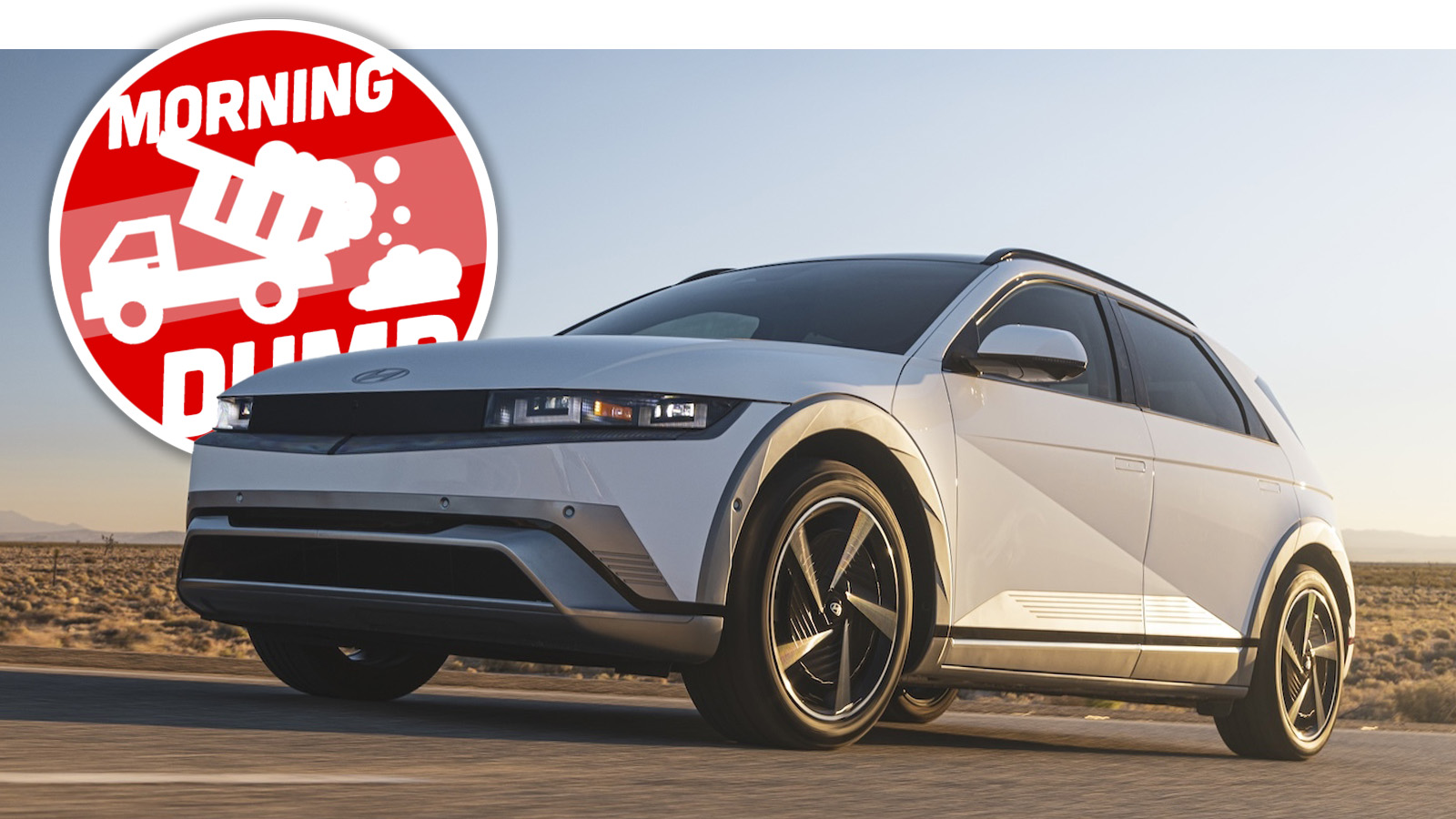
It’s been an exceedingly strange past two years for cars. Huge global growth of Chinese models, American tariffs impacting pricing and margins, and shifting environmental regulations have all done their part to tilt the table in all manner of ways. Hyundai seems to be feeling that right now. Operating profit and overall deliveries are down, but one of the few bright spots is the good ol’ U.S.-of-A.
Meanwhile, another Chinese car brand wants to come stateside, Toyota unleashes a pleasantly sensible off-road Sequoia, and we now know just how far the Volvo EX60 should go on a charge. Welcome back to The Morning Dump, where we puree this morning’s automotive headlines into a sort-of butternut squash soup of car news.


In The Margins

It’s about that time of year again when automakers release their second-quarter financial reports. This usually consists of rather dry Powerpoint presentations and video calls with investors, but in the strange year of 2026, there’s always news in the numbers. General Motors is on fire right now, having beaten earnings expectations for the 16th straight time in a row. Hyundai, on the other hand, isn’t seeing quite the same growth. Operating profit missed expectations, but it seems that the American market is doing a lot to cushion the blow. As Bloomberg reports:
Operating profit was 2.85 trillion won ($1.9 billion) for the three months ended June 30, down nearly 21% from a year earlier, the Seoul-based company said Thursday. That fell short of analyst estimates for 3.1 trillion won. Revenue rose about 2% to 49.2 trillion won, a record for the second quarter.
While a drop in operating profit was forecasted, missing the forecast by nearly $169 million isn’t great. So what happened? Well, a whole bunch of things coming together. Kicking things off, major factors include global competition from China and global economic fear.
“Prolonged geopolitical instability, including the Iran conflict, has heightened external uncertainty,” Chief Financial Officer Lee Seung Jo said in an earnings call. “China’s aggressive EV offensive is exerting a major impact on the growth of overall demand.”
However, those two factors alone don’t explain everything. American tariffs on high-margin Genesis models likely don’t help, and a deadly March fire in a plant that supplied Hyundai’s Korean engine factories with valves led to component shortages that impacted production. While a relatively weak Korean won should help export margins, it’s a double-edged sword. A weaker domestic currency usually makes it more expensive to source parts from overseas. Then there’s the current state of labor relations in Korea. Union negotiations are ongoing amid a partial strike, and signs of a swift resolution aren’t exactly clear.
Add it all up, and Hyundai’s global wholesale deliveries are down 6.9 percent year-over-year. That’s not-so-nice. Global retail sales are down about 4.2 percent, with two markets bucking the trend: India and America, up by 7.4 percent and 4 percent respectively. Obviously, these two markets have very different product mixes. Hyundai sells dirt-cheap models in India like the Creta and the Grand i10 NIOS that likely wouldn’t fly in America, but the current Venue and Elantra are still some of the most affordable new cars stateside, playing in a price bracket that many automakers have abandoned and many consumers need options in. Weirdly, Hyundai’s stock hasn’t taken a tumble on the news. It’s risen 3.35 percent today so far, partly thanks to hype around non-automotive projects like humanoid robots. Still, cars are Hyundai Motor’s bread and butter, and that puts the company in a strange spot.
Right now, things certainly aren’t catastrophic, but it seems that Hyundai needs America just as much as America needs Hyundai. In addition to affordable cars, local production plants and plans for further onshoring in a high-margin market should be mutually beneficial. Of course, a big part of that is because America’s car market is in a weird spot compared to the rest of the world. Legislation is working to keep Chinese cars out, but what if that changes in the future?
A Matter Of Time?
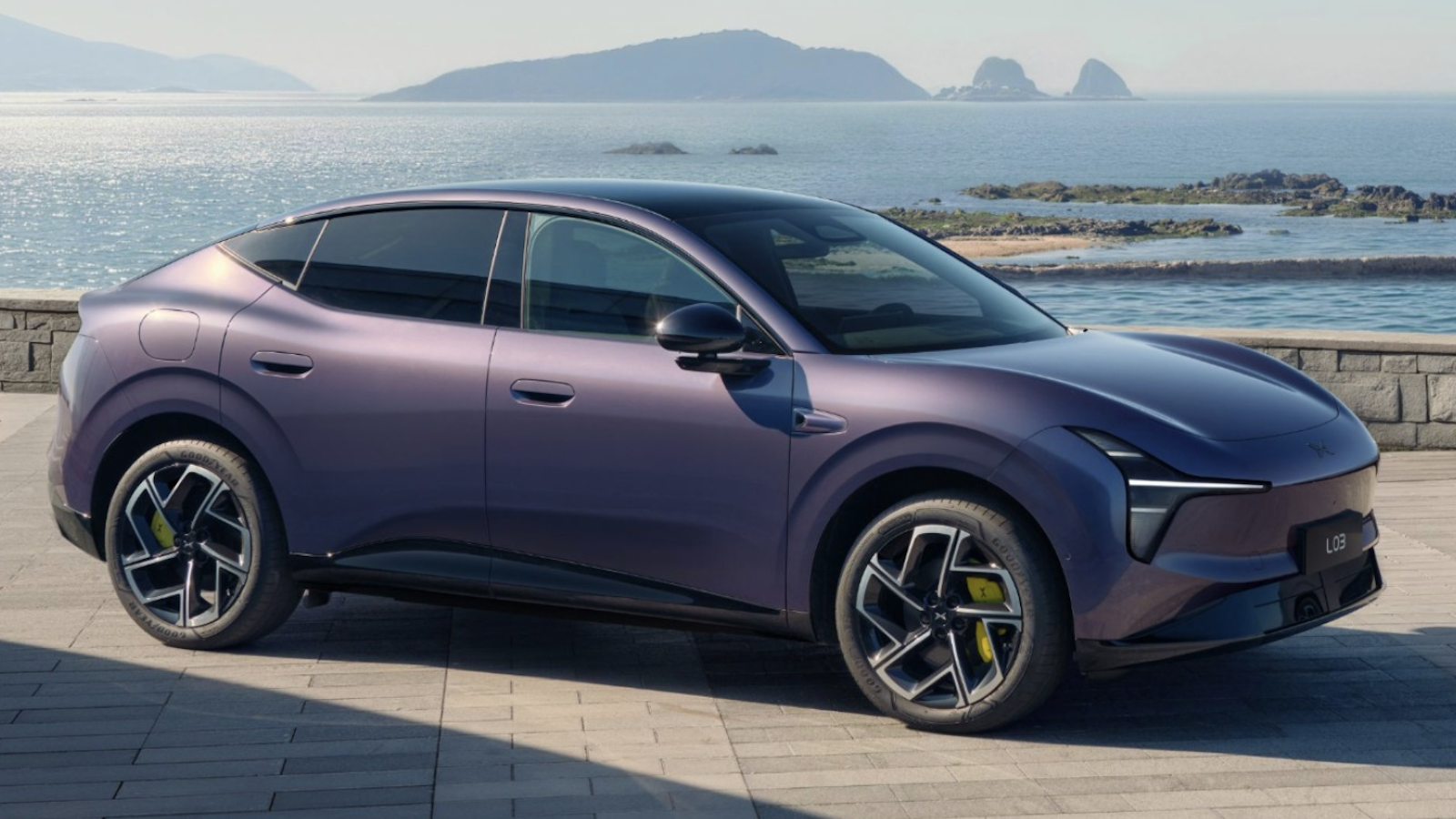
As it stands, Chinese EVs in America are essentially a no-go. Protectionist trade policies make the economics of importing most models unfeasible, but that doesn’t mean that some Chinese automakers aren’t waiting things out. Ward’s Auto recently interviewed Xpeng CEO He Xiaopeng, and the brand’s ambitions of coming to America should regulations change were rather clear.
He fully accepts the current U.S. position with regard to imports from China, but should the political situation change, the CEO said that Xpeng is happy to expand into the market.
“Well, I think that if the U.S. policy allows for companies like us to stay or enter the market and build factories there, definitely we’ll embrace that decision,” He told WardsAuto in an interview.
Of course, the biggest obstacles for Chinese automakers eyeing the U.S. market are legislative, both current and proposed. The current 100 percent tariff rate on imported Chinese EVs and phased-in connected vehicle legislation that for model year 2027, “Prohibits sales of connected vehicles by connected vehicle manufacturers owned by, controlled by, or subject to the jurisdiction or direction of China or Russia, and vehicles using their covered software” are concrete right now, but they could be bolstered by proposed legislation that would ban automakers with more than 15 percent Chinese ownership. As Reuters reports, it’s just moved through a Senate panel:
The U.S. Senate Commerce Committee approved legislation to toughen a U.S. government ban on Chinese automakers entering the American market that could potentially bar Mercedes-Benz from selling vehicles in the United States.
Senator Ted Cruz, the chair of the committee, warned that without changes, the bill’s provision that would ban companies with more than 15% ownership of Chinese entities would bar Mercedes-Benz from selling vehicles in the United States because of its nearly 20% Chinese investment. Senator Bernie Moreno said Mercedes-Benz would have until 2030 to comply and could still get waivers if needed.
The obvious catch here is that such protectionist legislation lives and dies by whoever’s in power at a given time. If the upcoming 2028 election results in changes that open things up for even local production of cars from Chinese brands, America’s roads might look much different than they do now. For now, Xpeng is looking at potentially entering the Canadian market, and thanks to similarities between Canada’s vehicle safety standards and America’s vehicle safety standards, adapting Canadian-spec cars for U.S. homologation would be relatively easy. For now, this all remains theoretical, but if trade restrictions open up several years down the line, Chinese cars in America would simply be a matter of time.
Locker’d, Not Loaded

As astoundingly large as full-size body-on-frame SUVs are these days, they still fill an important niche. If you need to say, pull a larger camper while toting around the whole family, a minivan probably won’t do the trick based on towing capacity alone. The Toyota Sequoia is now a veteran of the scene, having been on sale for 25 years and three generations, and it’s getting some minor upgrades for 2027 to keep up with the pack. The big one is an off-road focused Trailhunter version that’s actually surprisingly sensible.
Built on the entry-level SR5 model, the Sequoia Trailhunter gets Michelin all-terrain tires wrapped around bronze 18-inch alloy wheels, Old Man Emu suspension, skid plates, recovery hooks, a locking rear differential, and some electronic off-road gadgetry like Toyota’s Crawl Control. Nothing outlandish, but instead thoughtful touches for a spot of off-roading. Toyota hasn’t revealed pricing, but considering the Sequoia Trailhunter is based on the SUV’s most affordable trim, don’t be surprised if it’s priced far lower than the TRD Pro.
Of course, the Trailhunter package isn’t the only new addition to the Sequoia for 2027. Toyota’s biggest SUV has been subtly facelifted with a squarer grille sitting inside a new front bumper. New infotainment software including a built-in dashcam joins the party, the suite of active safety systems has been updated, and brighter fog lights aim to illuminate more of the night. Expect more details including pricing to surface this autumn, when the updated Sequoia is expected to roll into showrooms.
Home On The Range

The posh European electric crossover wars are still on like Donkey Kong, and Volvo is placing a lot of faith in its forthcoming EX60. Not only is it the marque’s first true electric compact crossover, it’s priced competitively with the gracefully aging XC60 plug-in hybrid and promises solid power, quick DC fast charging, and none of the UX foibles found in the recently-discontinued-in-America single-screen EX30. Now we now just how far the first models of EX60 will travel on a charge, and it’s not bad.
The cheapest P6 model on either 20-inch or 21-inch wheels is good for 307 miles on the EPA cycle. Selecting the 22-inch wheels shaves that number down to 295 miles. As for the all-wheel-drive EX60 P10, it’s rated at 330 miles of range on either 20-inch or 21-inch wheels, with that figure falling to 312 miles of range should you tick the box for the twenty-twos. On the one hand, those are rather respectable figures. On the other, the new BMW iX3 50 xDrive is rated for up to 434 miles of range with all-wheel-drive and 20-inch wheels, and the 400-mile mark is about the point where range anxiety becomes a distant memory. Granted, the BMW has a much larger battery pack—108 kWh to the 80 kWh pack in the EX60 P6 and the 91 kWh pack in the EX60 P10—and Volvo has a bigger-batteried EX60 incoming.
What I’m Listening To While Writing TMD:
I didn’t have new Chiodos on my bingo card for the week, but you know what? “TAPDAT” rips pretty well.
The Big Question:
If tariffs on imports, restrictions on Chinese vehicles, and the rollback of emissions standards hold, what do you think the American car market will look like in five years’ time? Ten?
Top graphic image: Hyundai




The US car market in 5 years? A lot of AI, subscriptions, and ads. Big-tech junk and the design and business ideology that comes with it.
Starting prices might go lower as automakers finish their sluggish reaction to reduced consumer spending power, but they’ll be designed to extract more money long-term. “Recurring revenue”, “vehicle as a service”.
More gas and hybrid emphasis over electric, but only stupid companies will really get into “emissions rollbacks, woo!”. Like, maybe Stellantis. They’d do it just for the vice signaling.
And, hopefully, some weird composite-bodied electric pickup trucks will make their yearly sales targets and defy those trends. That’s where all my hope is.
Oh, and in 10 years? WAY too much geopolitical instability to even guess. I think it’s likely enough already that Mexico has a serious problem with its sovereignty within the 5 years. I would also say Chinese import restrictions are less likely to hold than restrictions on trade with western countries are to escalate.
Oh, and Korea. For the same reason we’ve put tariffs on Brazil despite our trade surplus; they stopped a coup. They’ve also been prosecuting the Moonies, whose conference featured a certain guest circa early 2020 (along with charming people like Hun Sen…). They attended one of his circa early 2020 events, too.
There’s a joke to be made about Hyundai’s respect for traditional southern values, but that probably won’t help them.
In five years? The same, just less affordable. More AI gimmickry, but no sea change. Musk will claim Tesla have reached level 5 and it won’t be true. He will lose interest in cars even more. Expect more Euro cars in Canada as Canada joins a free-trade agreement with the EU.
Ten years? Who knows. If the US still has free and fair elections, there may be a swing back towards sensible regulations, but car manufacturers have been burned once and may be hesitant to plow a lot of money into EVs. Solid state batteries still won’t be a thing. Level 5 still won’t be a thing. Elon Musk will not pretend to care about cars anymore. He may buy Raytheon in cash for the lulz. He’ll be on his third ketamine-related health incident. The EU will now be called the North Atlantic Union and include Canada.
I’m pretty sure the heavy tariffs against Chinese EVs had a lot of bipartisan support (even if the current administration co-opted it after the fact), so I’m assuming they’ll be waiting a while.
I want to believe taking bribes (sorry I mistyped “campaign contributions”) openly from Chinese manufacturers in exchange for setting up factories in their states may be a bridge too far for the majority of constituents of all parties. Electronic surveillance and AI are in the zeitgeist, and I suspect Americans may be leery of their car sending their information to China.
But if the price is low enough? People will look the other way, not out of malice or masochism or stupidity, but because cars are expensive and western brands have mostly abandoned the lower tier.
Translation: Continued addiction and reliance to a globally traded volatile substance creates affordability and other economic issues when wars break out in the oil-rich Middle East. Furthermore, the attempts by some regions and governments in the world to remove themselves from these issues, done so by electrification, is putting pressure on existing manufacturing.
Every new vehicle will look like an egg because the “voice of the customer” says so, and all these companies are too chicken shit to try something new that might not yield MAXIMUM profit for the shareholder.
That, and we will see the end of the (yet to be released) carbureted Chargers with straight pipes that lasted from 2028 to 2029 when the administration finally goes back to normal politics.
10 years from now… We will magically be at Level 5 due to AI, and this whole group (us) will hate it and still be clinging to our Miatas and Changli’s.
I am still totally mystified by the Autopians push for obscene pay for lazy American union car employees and at the same time pushing for the importation of poorly built unproven cars with no warranty or support using slave labor. To me these two goals aren’t mutually achievable. Those cheap Chinese vehicles will be ake every domestic union member unemployed in 2 years. Once again I urge someone with an economics degree to at least conduct a few classes among the writing staff and
I’m totally mystified by MAGA pretending to care about economics but also supporting Donald. Pretending to care about union jobs while electing union busters. Calling an entire sector of employees “lazy”. Selling cars from a lot though, that sure takes a lot of elbow grease.
TBQ: In theory, protectionist policies tend to drive up cost for consumers.
So, if theory holds in the real world, and these policies continue, then, in five years, I expect the car market in the US to be less affordable (not just “more expensive”, but less affordable). And given the decreased competition with the rest of the world (with perhaps less innovation accompanying it), then perhaps the typical new car in the US will be similar to those available in the domestic market today.
And also: my 24 year-old daily driver will then be my 29 year-old daily driver.
No one can predict what will happen in 10 years, so I won’t go there…
We are already witnessing the unaffordable curve ramping up.
In theory? No, we’re witnessing it live, right now.
I agree…
“what do you think the American car market will look like in five years’ time? Ten?”
It will look roughly the same as today… but with higher prices/costs and less vehicle choice
And that’s the problem.
The US will remain unchanged and get left behind by the rest of the world.
Hopefully the Republicans/Magas get shafted in the next few elections and future administrations do everything they can to undo Trump’s crooked legacy.
In a perfect world, I’d like to see the breakup of the Republican party and Magas get relegated to being a tiny lunatic fringe… just like how McCarthyism rose and fell in the past.
I see a lot of similarity between the McCarthy nutjobs and the Maga nutjobs.