

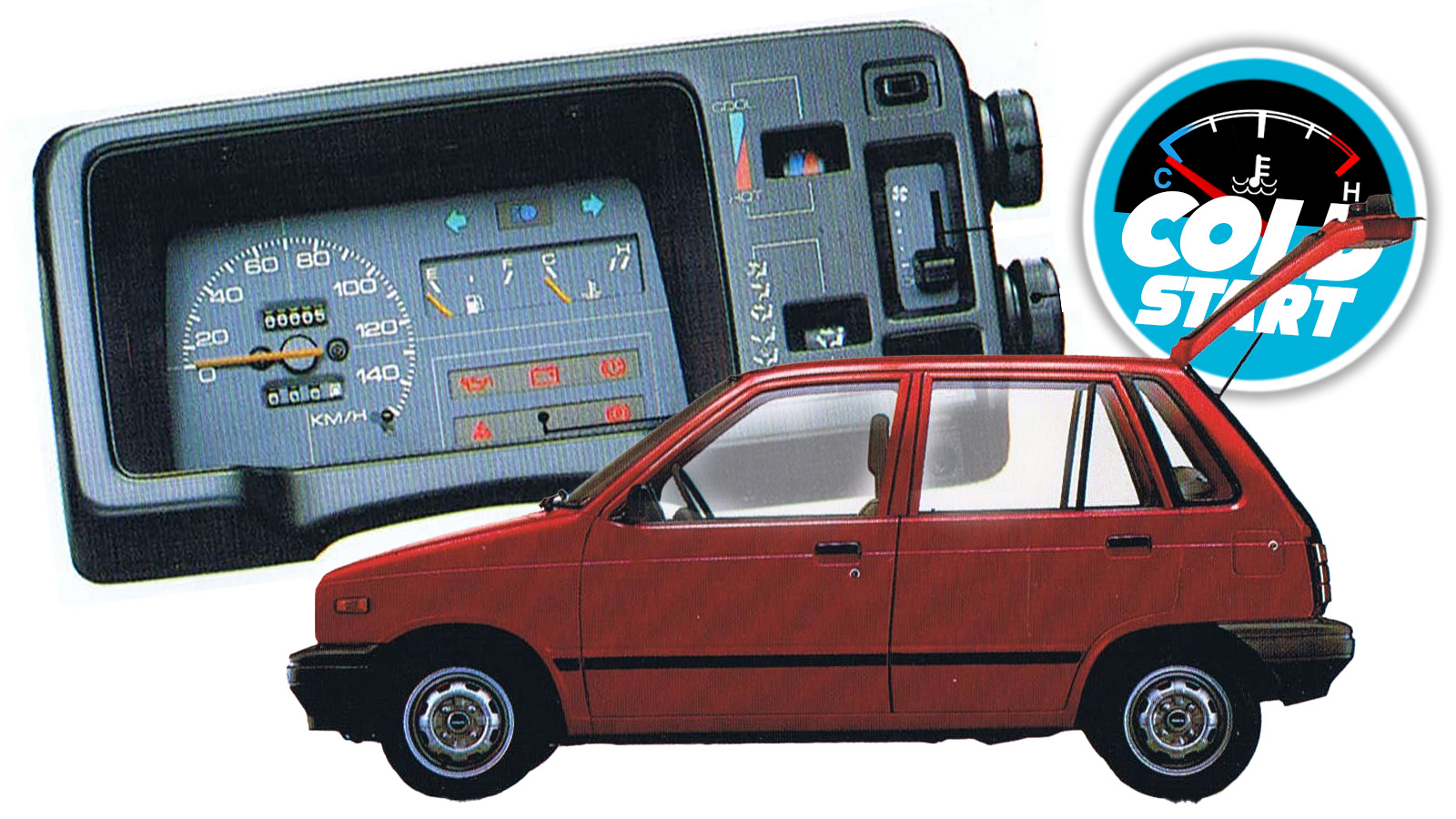
It’s strange, sometimes, the things that get your attention. Sometimes it’s obvious – an attractive person, a vivid burst of colorful design, an eternally leaking sandwich. Other times, it’s more subtle, more about details and qualities that aren’t shouting for you to notice them. Details and qualities like how an inexpensive car’s instrument cluster has been designed. These are the important things, people.
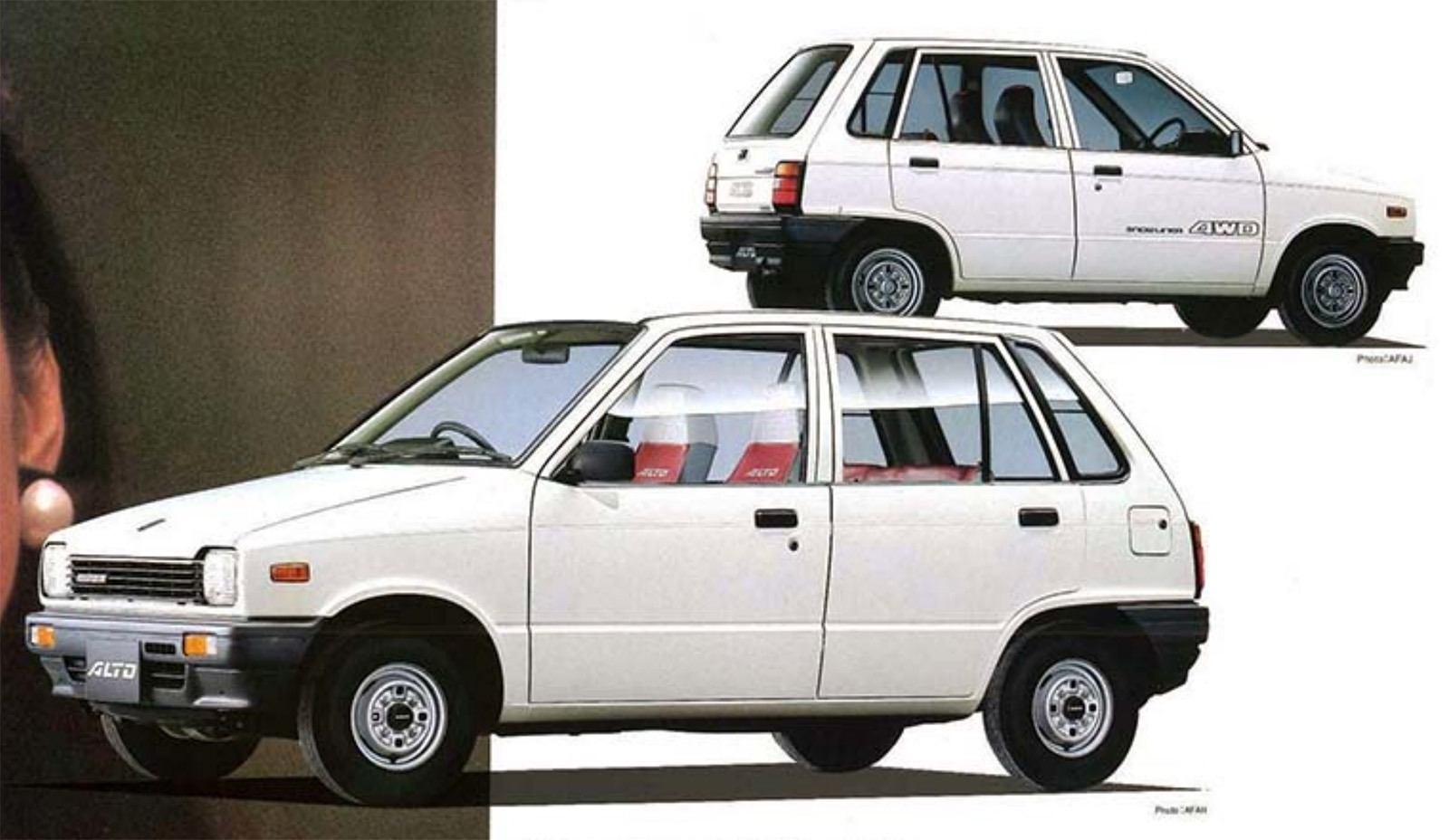
The car I’m talking about is a popular and very rational little car, the second-generation Suzuki Alto. The Alto is very much a people’s car, useful and affordable. It started out in Japan as a Kei-class car with a 543cc engine, but in other markets, freed from the Kei restrictions, it got a 796cc engine, like what it used in one of its best-known versions, the Indian-market Maruti 800.


It’s a great, no-nonsense little car! But it still strived for a certain sense of romance and drama, as you can see in this Japanese-market commercial:
Did you see the rotating front seat!? What? I had no idea they had that; what a strange addition for a little hatchback! Also, that moody woman seems to show up in the brochures, too, where she looms with similar dramatic gravity as the car’s impressive wicker-hauling capabilities are highlighted:
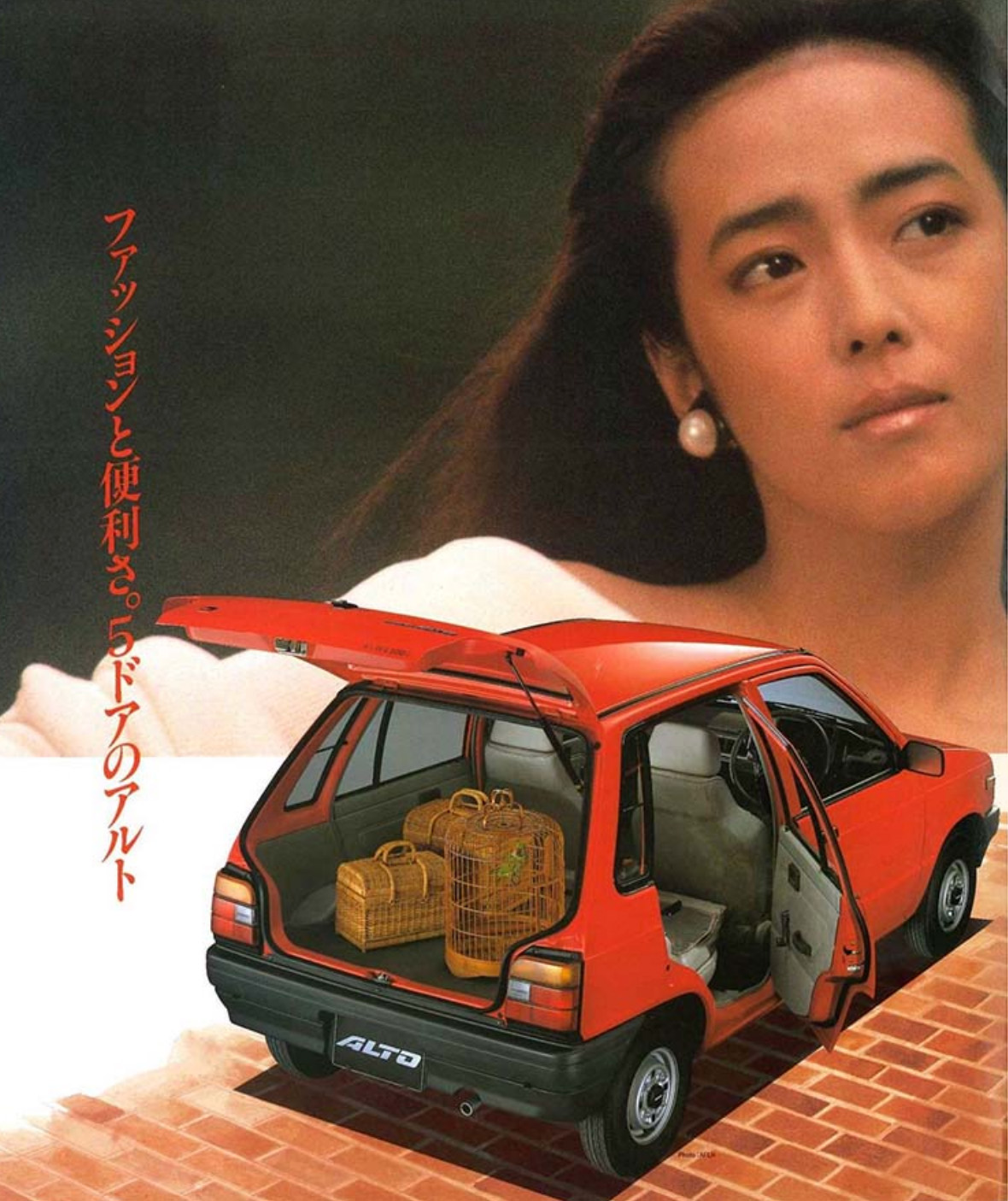
Damn that thing can haul some wicker!
Just for an intresting comparison in marketing, this is how the Maruti 800 – essentially the same car – was marketed in India:
It’s much more of a family car feel in the Indian market, and note how they make a very clear contrast between the family warm and dry in their Maruti 800 next to the rain-soaked family crammed on a motorbike.

But I’m getting off-track! I want to focus on just one aspect of this generation of Alto, beyond its ability to haul dogs and soccer balls and kids with sticks; I’m talking about the dashboard.
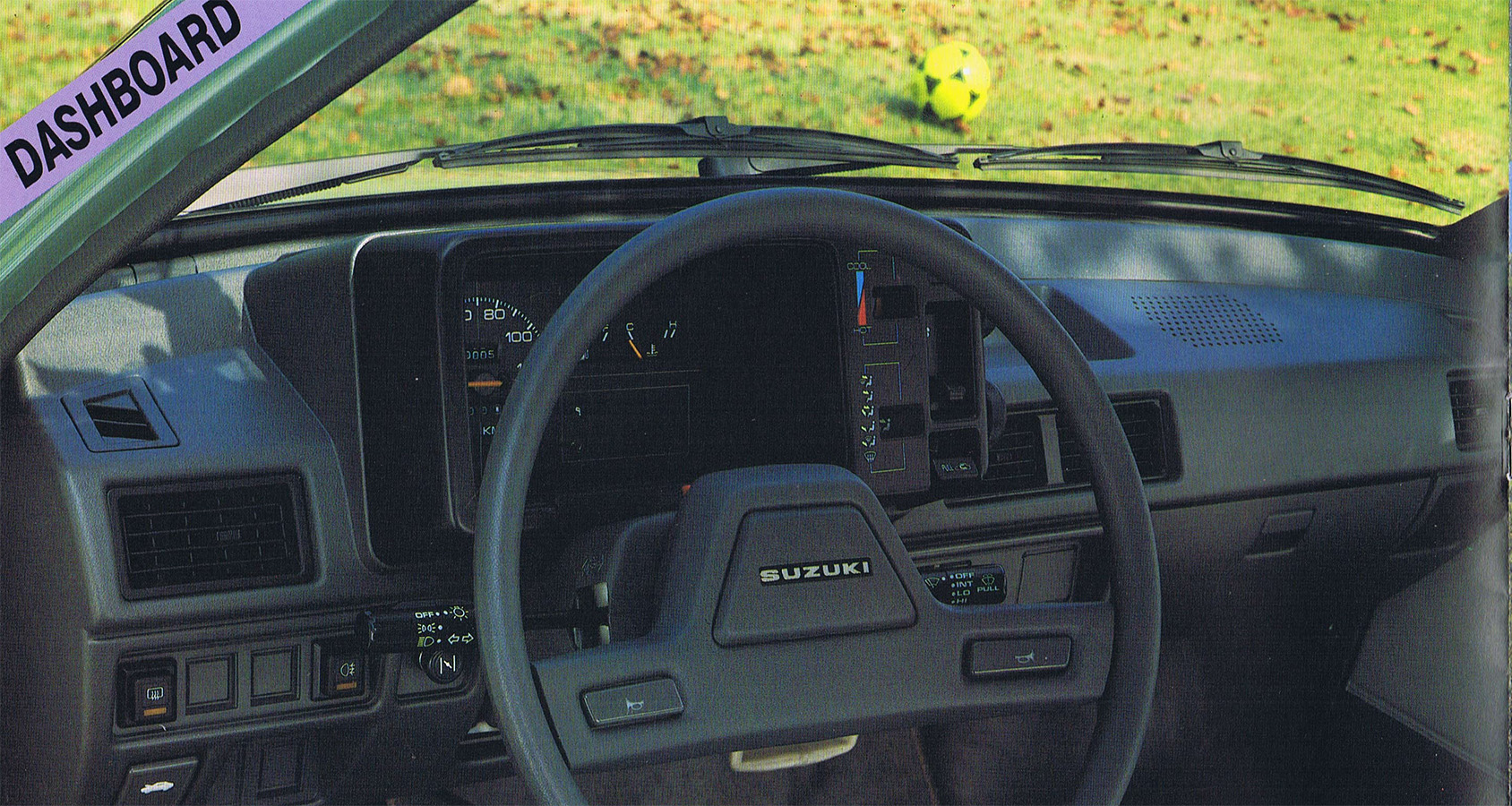
The dash doesn’t look too unusual at first glance, but I want to focus on the instrument binnacle part:
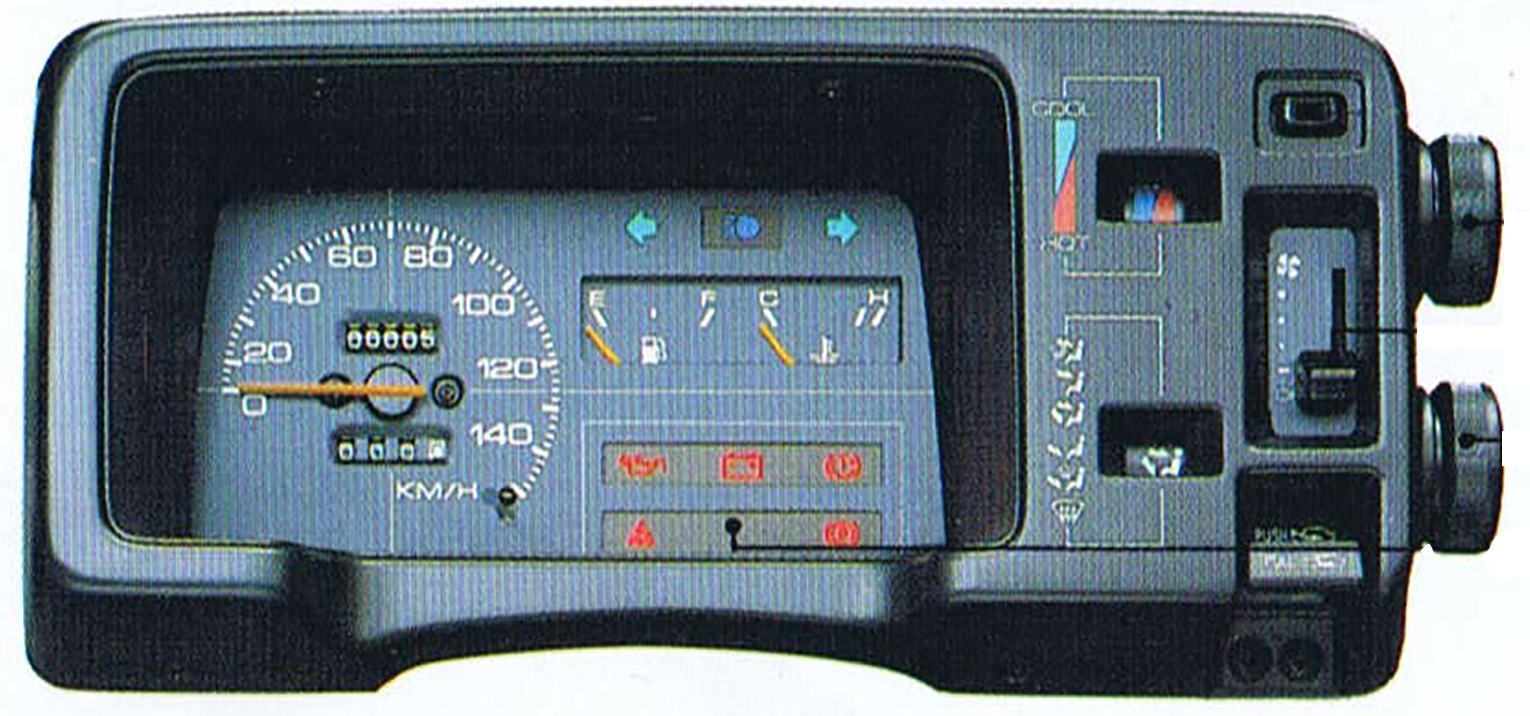
There we go. Here’s why I’m so taken by it – look how much is crammed into this thing: it’s not just the standard set of gauges, but the entire HVAC system controls are in there, too! I’m sure there are other cars that have crammed the HVAC controls into a compact unit by the instrument cluster like this, but I can’t think of others at the moment.
It’s absolutely a cost-saving measure: they just need to make one unit for the instruments and HVAC controls instead of having to make a separate HVAC unit on the lower-middle dashboard. By placing the controls on the edge of the cluster, they’re still pretty accessible to the passenger, too.
The side-mounted knobs control the temperature and the airflow direction – you know, face, feet, windshield, that sort of thing. The knobs rotate icons/graphics in little windows to show what’s selected, which strikes me as a very clear and effective way to do that, more so even than the more common knobs with a pointer, which is harder to read at a glance than this is.
For example, look above and see roughly where the temperature is, and where the airflow is directed. Now look at this more common setup and look for the same things:

I think the Alto’s setup reads a lot faster! Especially this setup, where it’s not immediately clear which lever controls what setting at a quick glance.
It’s such a tidy, contained little unit. I can almost imagine it being sold independently to bolt onto your kit car or home-built car projects, since it has pretty much everything one needs right there in one little box. Maybe it could have lights and wipers on the other side, in case those weren’t on steering column stalks.
Maybe it’s a mundane thing, but I like it. I respect it, like I respect all things that just work, like spoons. Also, I enjoyed using the word “binnacle,” which sounds to me like some sort of mollusk.
Top graphic images: Suzuki


I am in favor of all Suzuki content, especially kei-related items. Check out the interior of the 1989 Suzuki Cervo next!
I like the binnacle too. I really like the knobs for temperature and airflow distribution! I wonder if the HVAC stuff got flopped over to the left side in RHD cars? Otherwise, the passenger is going to have a hard time messing with them.
A 4WD one of these would be a lot of fun in the snow; certainly more so than the scooter the poor rain-soaked family in India is putting around on.
Fabulous, makes me think of the Chevy sonic.
Dear Mazda: I know you don’t need any help selling Miatas but put in swivel seats and watch your sales go up. You’re welcome.
Why swivel seats in SUVs and Minivans aren’t a thing….
These are legitimately some of the most amazing cars I’ve ever ridden in. They (were) everywhere in India and Nepal. You’d see mint ones occasionally, but far more often you’ll spot ones with little in the way of paint or suspension left. 2nd (or all?) gears grind eventually and they just keep on taking it. You can fit around six or seven people in these if you try. That binnacle was frequently vibrating past the point of visual recognition on rough (all) roads there, but it is a very tidy piece of packaging.
I prefer the original Fiat Panda. The instrument cluster includes not only the HVAC controls but also the actual outlet.
https://assets.dyler.com/uploads/posts/336/images/7205/to-make-the-most-out-of-limited-space-there-is-a-storage-compartment-across-panda-s-dashboard.jpg
The Panda’s fabric-covered dash looks pretty cool.
It is. The storage area is positively huge. And the ashtray/small storage box can easily be removed or pushed all the way to the steering column or the passenger door.
The new Grande Panda is a weak homage, but at least Stellantis tries.
Err, except when its RHD. Love the simplicity, very 80s Renault
Heyyyyyy… easy there, cowboy – don’t shake my binnacle.
This walked, so the S2000 can run.
I saw “Binnacle Mollusk” play last night and they were awesome!
Rock on…
Hot take: Tesla Model 3.
Touchscreen don’t count
Why not?
To me, “controls into a compact unit” here implies physical controls. If we wanna talk “compact on a touchscreen”, smartwatches exist and therefore make anything in-car-dash-sized unimpressive.
It’s apples and jolly ranchers.
Because touchscreens bad
Little known factoid, all Alto owners automatically qualified for a Norden bombsight operator certification after six months of ownership.
The Z32 generation of the Nissan 300ZX had HVAC controls on the right binnacle, along with the wiper controls. The higher trim models had automatic climate control, all controlled by buttons on that little panel.
I always love when they combine as much as possible into one unit or space. Like the old cars, that only had 2 gauges in the dash, but they would have like 2-4 separate measurement readings in them. (Image of a modern remake)
Me too. My ’72 Super Beetle has everything in one single gauge. Speedometer, odometer, fuel gauge, hazards, two warning lights, and lights indicating whether you’ve got the high beams or rear window defroster on. They only used one gauge for all Beetles though, so it also has a light for low transmission fluid, only applicable to cars with the automatic stickshift.
For some reason, they decided that the brake warning light should live right in the middle of the dashboard. It only illuminates if one of the brake circuits fails…and then only when you apply the brakes.
It reminds me of the gauge cluster on a Suzuki enduro motorcycle I once owned. I imagine some of their talent at creating such a small cluster with integrated controls comes from producing motorcycles.
Reminds me of my JDM 1980 Honda Prelude XE – which had the radio controls and LED clock and coin bin on the sides of the instrument binnacle.
But this was the era of binnacles filled with switches on the side – such as the Isuzu Piazza/Impulse….
Coin bin -velvet lined to limit jingling. 2- Maintenance minder with symbols. 3-clock operates without key by pushing the cover over the “time set” buttons. My 80 Accord converted me to Japanese cars immediately. Add in HVAC air selector switch for inside out outside air. 1 key for the door and ignition. with teeth on both sides. Turbine smooth engines. i can go on.