


We as a species have a certain love affair with complexity. An iPhone tells the time just as well as an automatic watch, yet some of us still pay thousands to put tiny Swiss-made springs and gears on our wrists. We go slack-jawed at concerts adorned with moving set pieces and pyrotechnics, feel a certain satisfaction from videos showing hundreds of dominoes falling perfectly into place, and marvel at tens of thousands of dots coming together to form a perfectly pointillistic picture. Outstanding displays of creative effort say something about the human spirit, and that explains the Porsche 911 Targa 4S.
Of the 19 standard-issue variants of Porsche’s rear-engined sports car, the Targa 4S will perplex spec sheet jockeys the most. It’s more expensive and heavier than a Carrera 4S Cabriolet, you can’t operate the roof whilst moving at any meaningful speed, you can’t get it with the purity of rear-wheel-drive, and yet none of that really matters because it embodies a certain romance. Allow me to explain.


[Full disclosure: Porsche Canada let me borrow this 911 Targa 4S for a week so long as I kept the shiny side up, returned it clean with a full tank of premium fuel, and reviewed it.]
The Basics
Engine: Three-liter quad-cam 24-valve twin-turbocharged flat-six.
Transmission: Eight-speed dual-clutch automatic.
Drive: Full-time all-wheel-drive with limited-slip rear differential.
Output: 473 horsepower at 6,500 RPM, 390 lb.-ft. of torque from 2,000 RPM to 5,000 RPM.
Fuel Economy: 17 MPG city, 24 MPG highway, 20 MPG combined (13.8 L/100km city, 9.8 L/100km highway, 12.0 L/100km combined).
Base Price: $182,550 ($192,550 in Canada).
Price As-Tested: $213,480 ($226,680 in Canada).
Why Does It Exist?
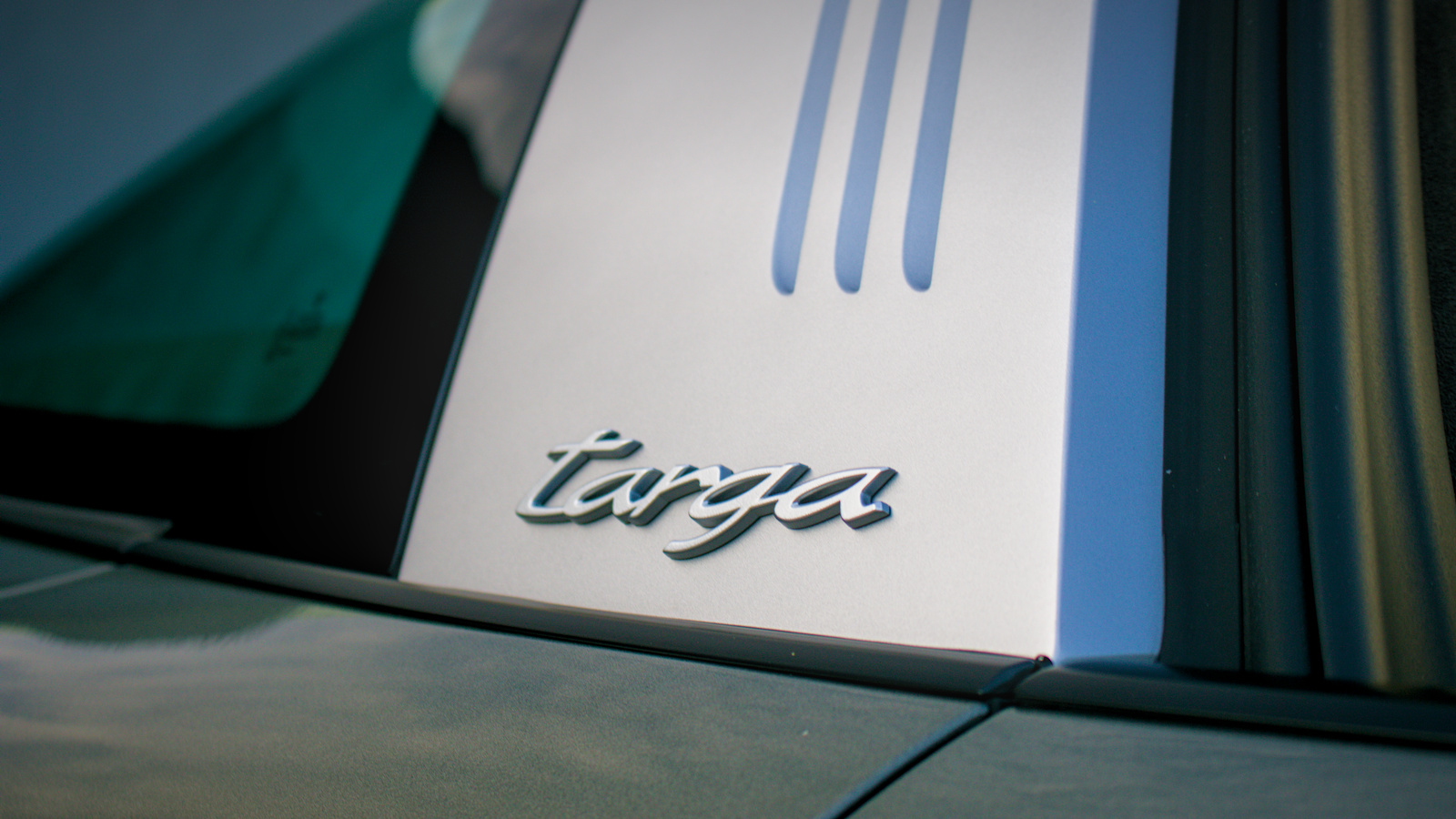
In the 1960s, convertibles were generally lighter than their tin-topped counterparts, but they were also rather unsafe. Not only did cutting the roof off a car compromise its structural rigidity, but the tracing-paper-thin A-pillars of the time afforded virtually no rollover protection. With growing scrutiny of automobile safety resulting in—among other things—a fear of convertibles being banned, Porsche decided to take a more structurally sound approach. With a fixed rollover hoop, a removable roof panel, and a name recalling the Targa Florio road race, the 911 Targa was an instant icon. Small wonder this sort-of coupe-cabrio body style is still part of the 911 range today.
How Does It Look?
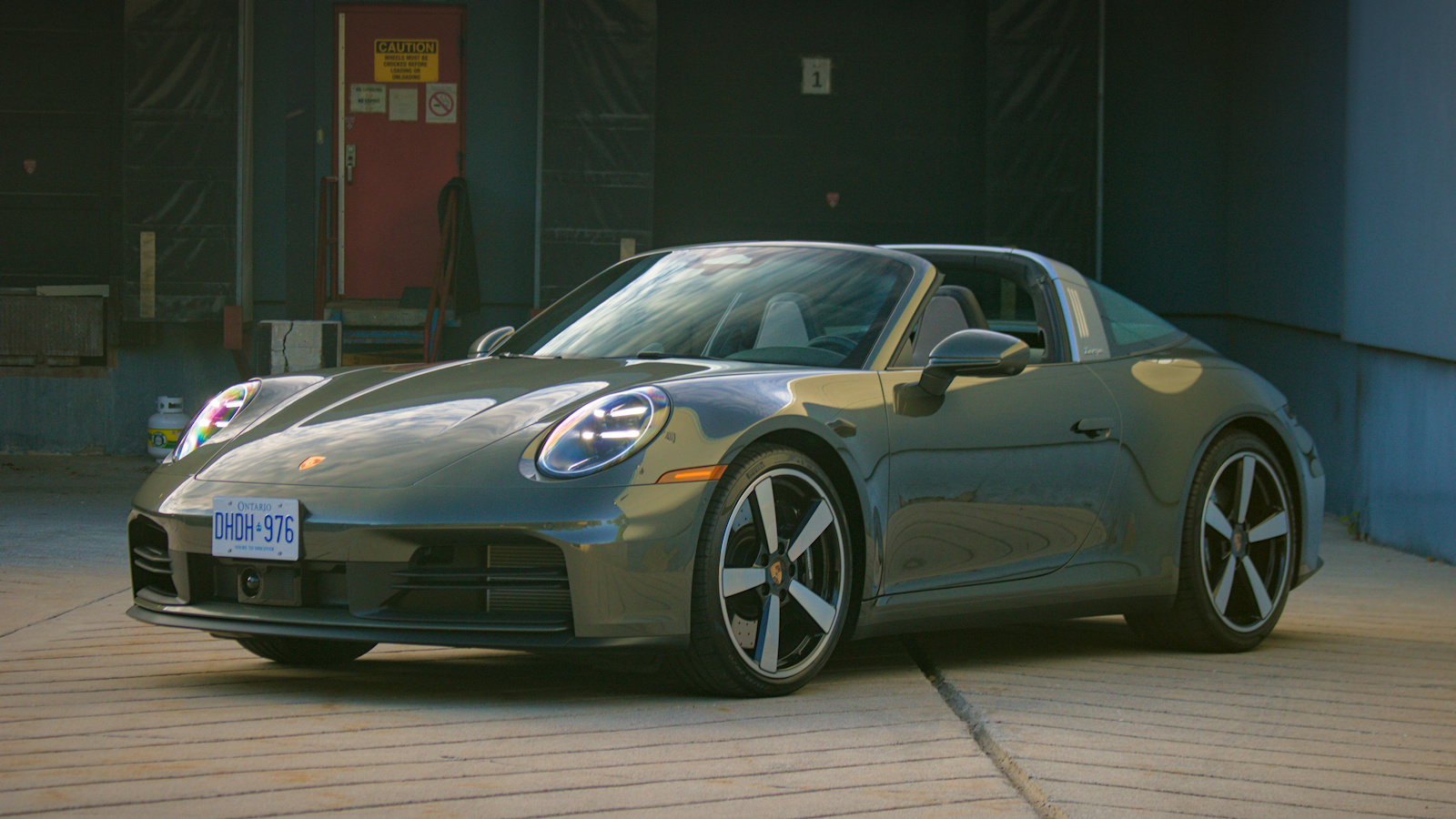
Like a Porsche 911, obviously. This might be the world’s most recognizable sports car lineage, in the sense that you could put the latest model in a time machine, send it back to the first full production year of the original model, and people would know what it is. Granted, trying to force too much old-school design language on a car is a risky endeavor, but the Targa 4S gets it just right. From the magnesium-clad roll hoop spanning the cabin to the wraparound rear window to the optional Fuchs-inspired alloy wheels, the throwback Targa treatment just fits, disguising an absolutely jaw-dropping top mechanism with familiar elements.
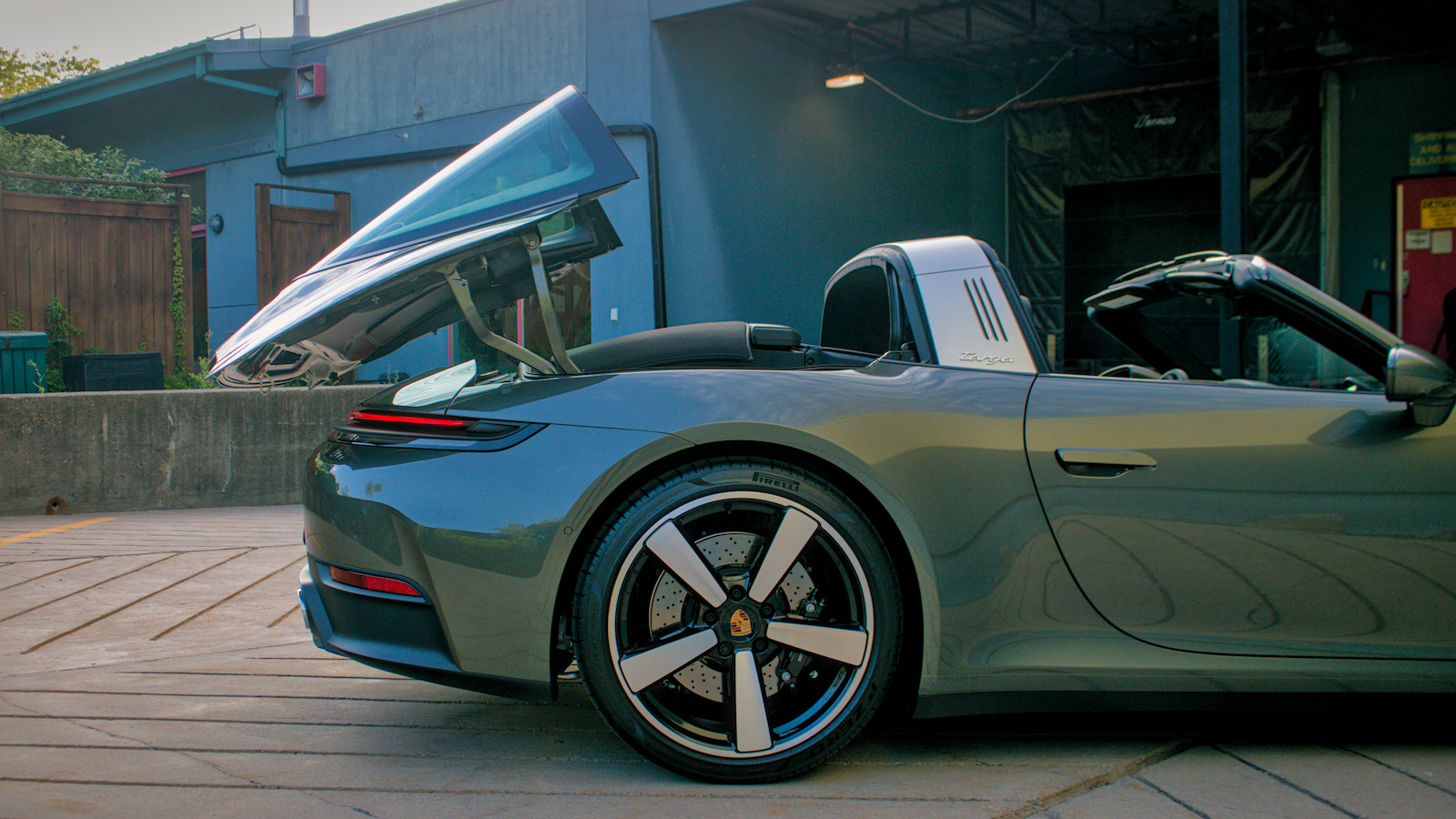
The 19-second ballet starts with the side windows dropping and the rear clamshell rising, window and all, like this sports car’s about to launch a missile. From there, the corners of the metallic roll hoop trim tuck inward to make room for the targa panel arms, then the fabric-clad roof takes a bow and disappears into a nook behind the rear seats, carried by seemingly impossibly thin legs. The roll hoop trim drops, the clamshell lowers, and the whole affair’s done within a single traffic light cycle. It’s a mesmerizingly complicated mechanism, one that makes Rube Goldberg seem like a purveyor of hammers.
All the arms, all the hinges, all the latches, all the microswitches required to pull off such a sequence boggle the mind. There are so many moving parts to the Targa 4S’ roof that it transcends the class barrier. It doesn’t matter that this thing costs more than $200,000 as-spec’d, Brooks Brothers broskis in the financial district and early-2000s GM truck owners in the hardware store parking lot both marvel at Porsche’s grand complication.
What About The Interior?
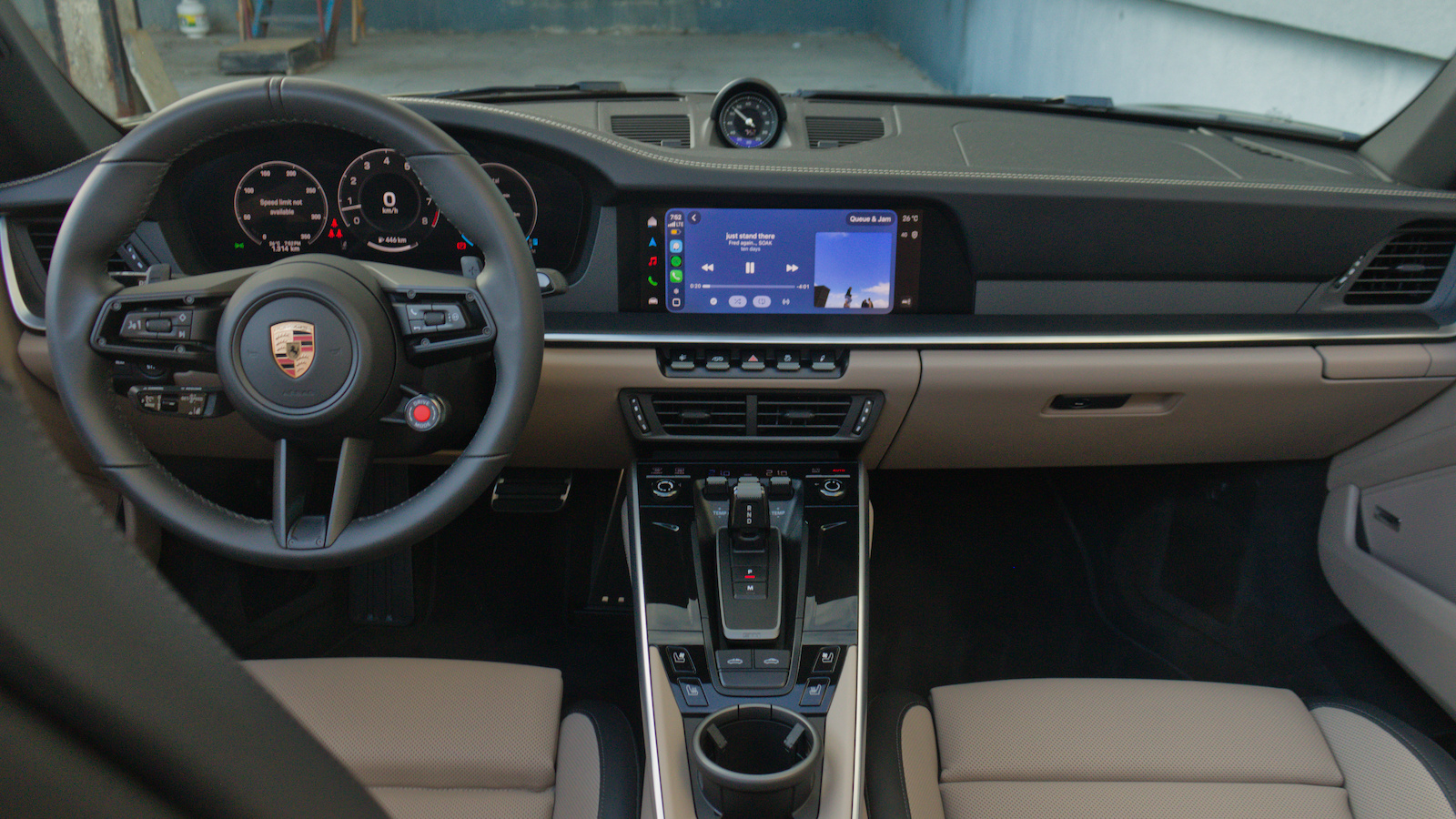
As cars continue to evolve into Best Buy branches on wheels, it’s easy to get the sense that some people on certain interior design teams are trying new things simply for the sake of newness. I’m certainly not saying Porsche’s immune to digital infuriation—the touchscreen-controlled air-con vents in the current Panamera are particularly ridiculous—but they haven’t cocked it up inside the 992.2 911. It starts by maintaining a decent selection of physical controls. The choice of capacitive-touch pads for track selection and some of the climate control functions isn’t ideal, but actual volume and tuning knobs, gratifyingly clicky toggle switches for temperature and fan speed, and real buttons for seat heating and ventilation are greatly appreciated. Then there’s the relative lack of a learning curve. Even if you’ve never driven a Porsche before, the only thing you’ll have to get used to is the starter button placement to the left of the steering wheel. Everything else works exactly as you’d expect, from the cruise control stalk to the dome lights.
What’s more, the sense of solidity is immense. Extending beyond the selection of leathers and the tactility of the various latches, buttons, switches, and knobs, the general build quality of this 911 Targa 4S is exactly what you’d expect from such a luxury item. You’ll find an excellent paint finish and spot-on panel gaps. You won’t find squeaks, rattles, or wind leaks, even though the life of a press car isn’t dissimilar to that of a rental minivan in NASCAR country.
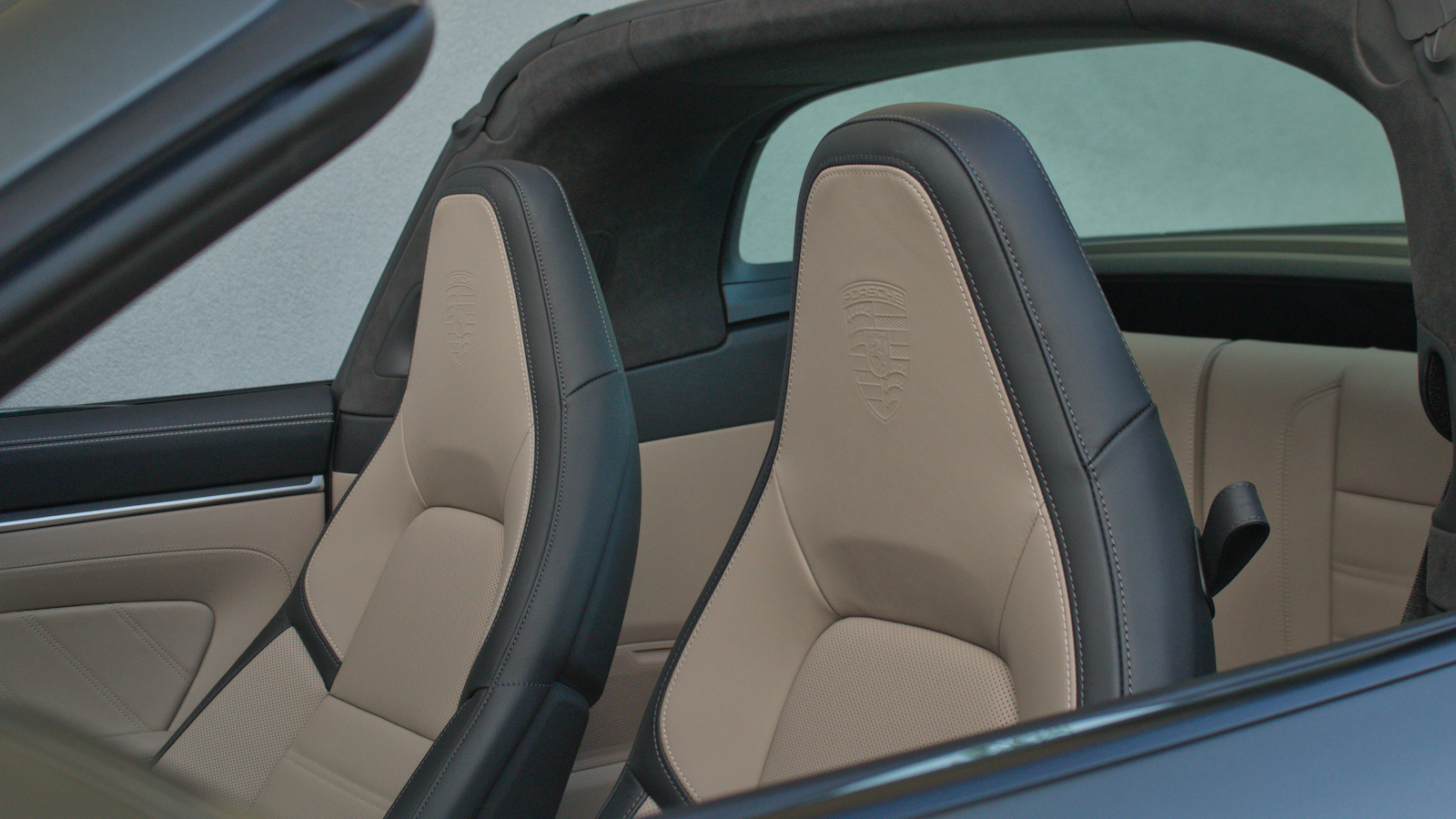
Thanks to Porsche’s largely à la carte options menu, there are four different seat options available on the 911 Targa 4S. My test unit came with the 14-way Sport Seats, but don’t let the name fool you. When other options are more aggressive, these are essentially the wide-boy comfort seats. They’re probably great for someone who wears a larger pair of jeans than me, but their lateral support is lacking if you have, say, a 30-inch waist. However, the optional rear seats are perfectly usable by shorter passengers for modest distances. Four-up in the Targa was no sweat, and when you’re not using the rear seats, you can fold them down to fit a large checked bag. As for general ergonomics, they’re spot-on. Huge steering wheel rake and reach adjustment contribute to an excellent driving position, something that ought to be mandatory when you’re spending this sort of coin on a car.
How Does It Drive?
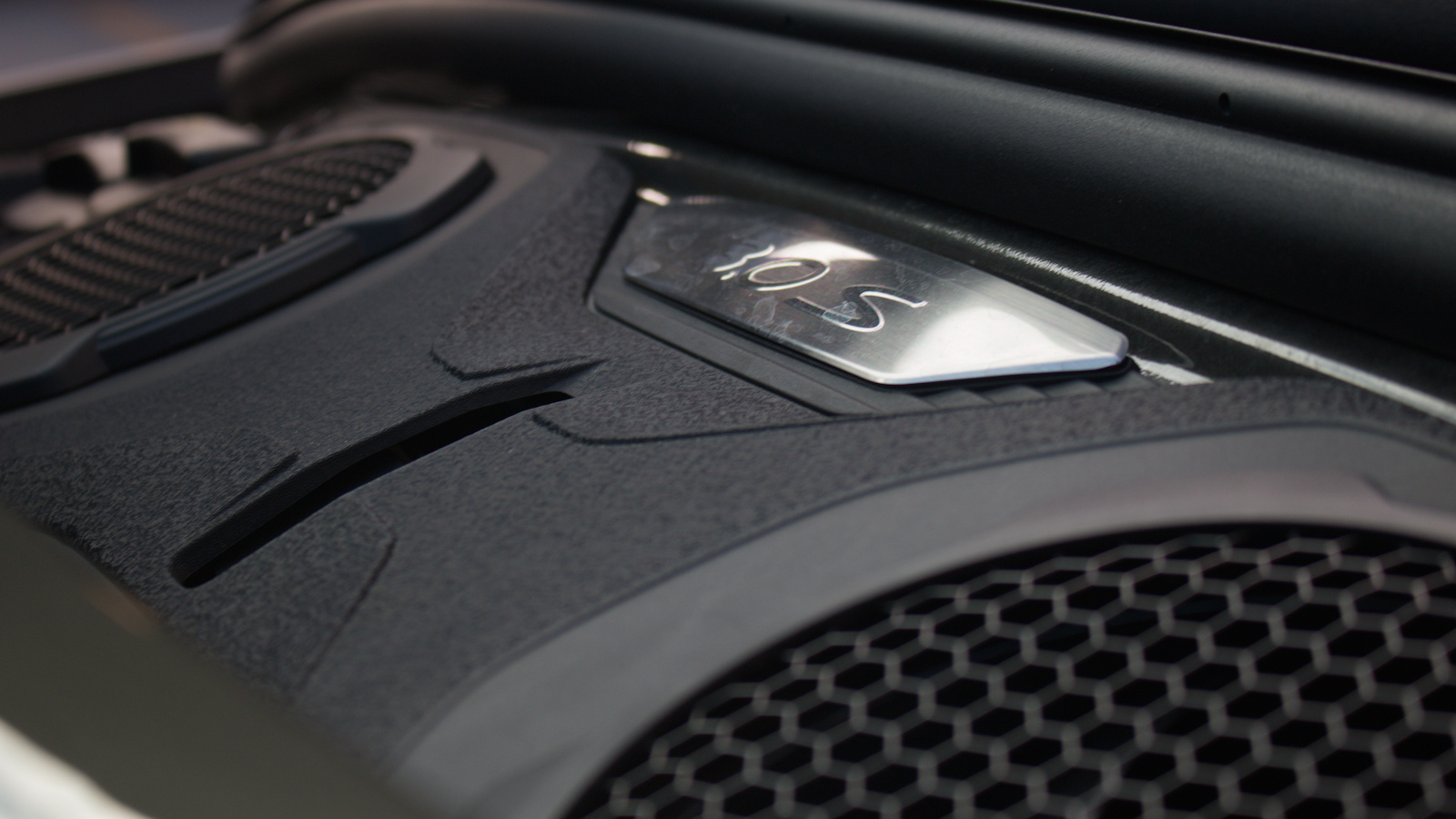
It’s been nearly a decade since we first saw Porsche’s MDC three-liter twin-turbocharged flat-six, but this downsized, turbocharged engine isn’t done yet. Charge coolers from the old Turbo and turbochargers from the old GTS mean the Targa 4S now makes 473 horsepower—29 more than the old 4S. That’s absolutely plenty, especially when hitched to Porsche’s eight-speed PDK dual-clutch automatic gearbox. Think quiet, sedate highway cruising thanks to multiple overdrive ratios, but savage acceleration due to closer lower ratios and launch control that really dumps the clutch. Porsche claims zero-to-60 mph in 3.5 seconds, but I’d estimate that figure to be quite conservative.
Beyond the hair-raising experience of a ruthlessly optimized sprint to highway speeds, the 911 Targa 4S’ engine does something many modern turbocharged units don’t: Reward you for winding it out. You’ll hear and feel a whole range of changes in tonality and intensity as the virtual needle sweeps across the tachometer, and despite power peaking at 6,500 RPM, Porsche’s mainstream sports car motor doesn’t fall on its face at the top of the rev range. Add in a plateau of torque around town and when passing, and this is still a satisfying engine nearly a decade after its introduction.
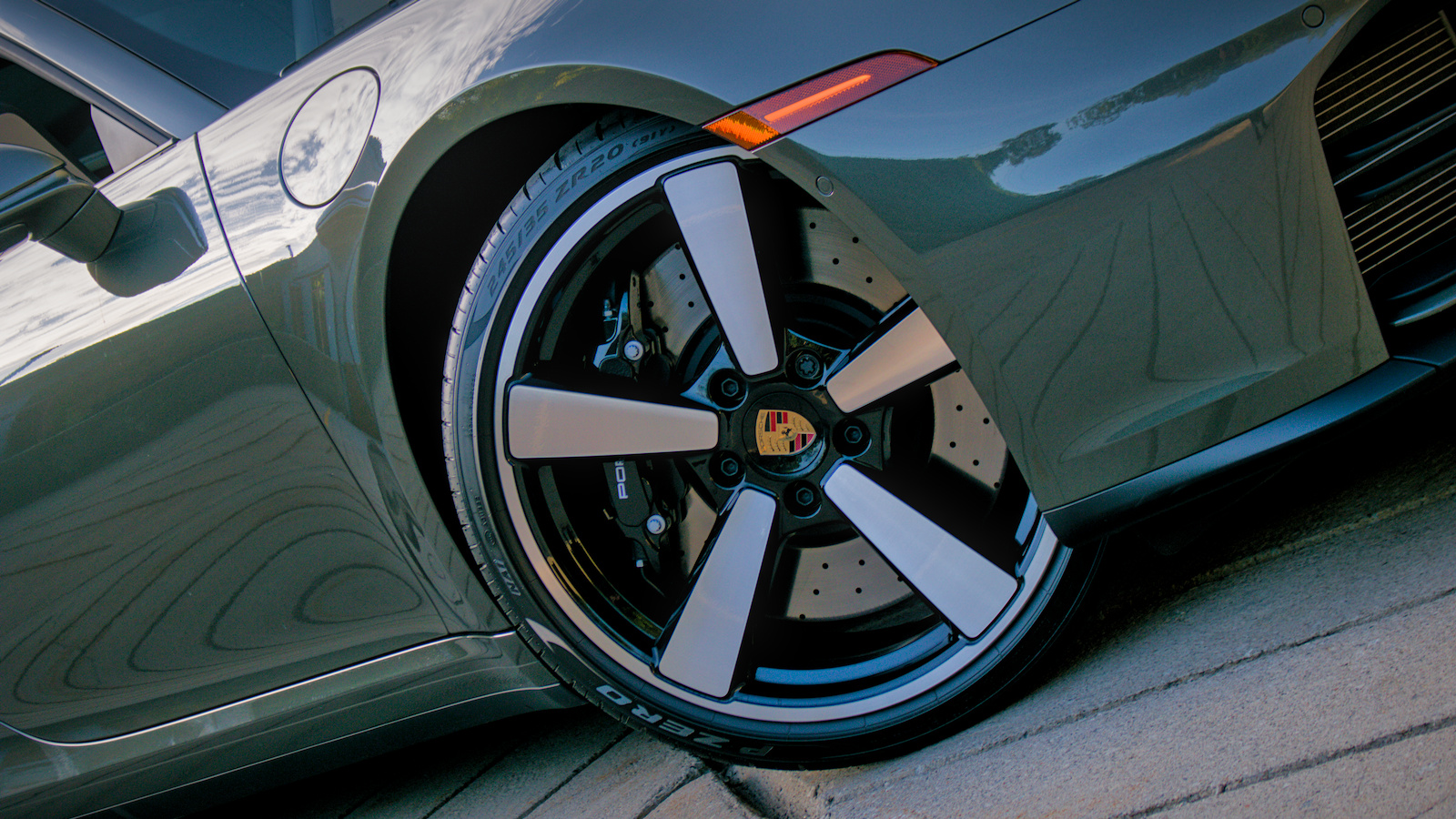
However, it’s not quite as satisfying as the way Porsche’s set up the ride and handling balance of the 911 Targa 4S. While high spring rates and stiff dampers make sense on the track, in the real world with frost heaves and potholes and cold fills, suspension like this is what you want. Think sensible, softer-than-the-GTS spring rates that breathe with bumpy roads and damping that keeps a lid on it all. Fair play to the actual structure of the car, too, as the body shell feels almost as rigid as that of the coupe. Add it all up and this sports car rides as well as many grand tourers, yet it doesn’t sacrifice much in the bends, if anything.
Porsche is still on top of the world when it comes to electric power steering calibration. It knows what it’s doing with its anti-roll bar rates and damping calibrations, and even its spec Pirelli tires. The result is a sports car with an aphid-like grip on the road that communicates just how much of it you’re using. Think steering that weights up naturally with load but starts to go light as you peer past the summit of tire-grip mountain, just enough body roll to tell you what’s going on without being a hindrance, hints at the grain of the surface, the tools you actually want when the road gets twisty. There’s fun to be had here at all manner of paces, and that’s part of the 911’s charm. It’s a fast car, but you don’t need to drive like your hair’s on fire to enjoy it.
Does It Have The Electronic Crap I Want?
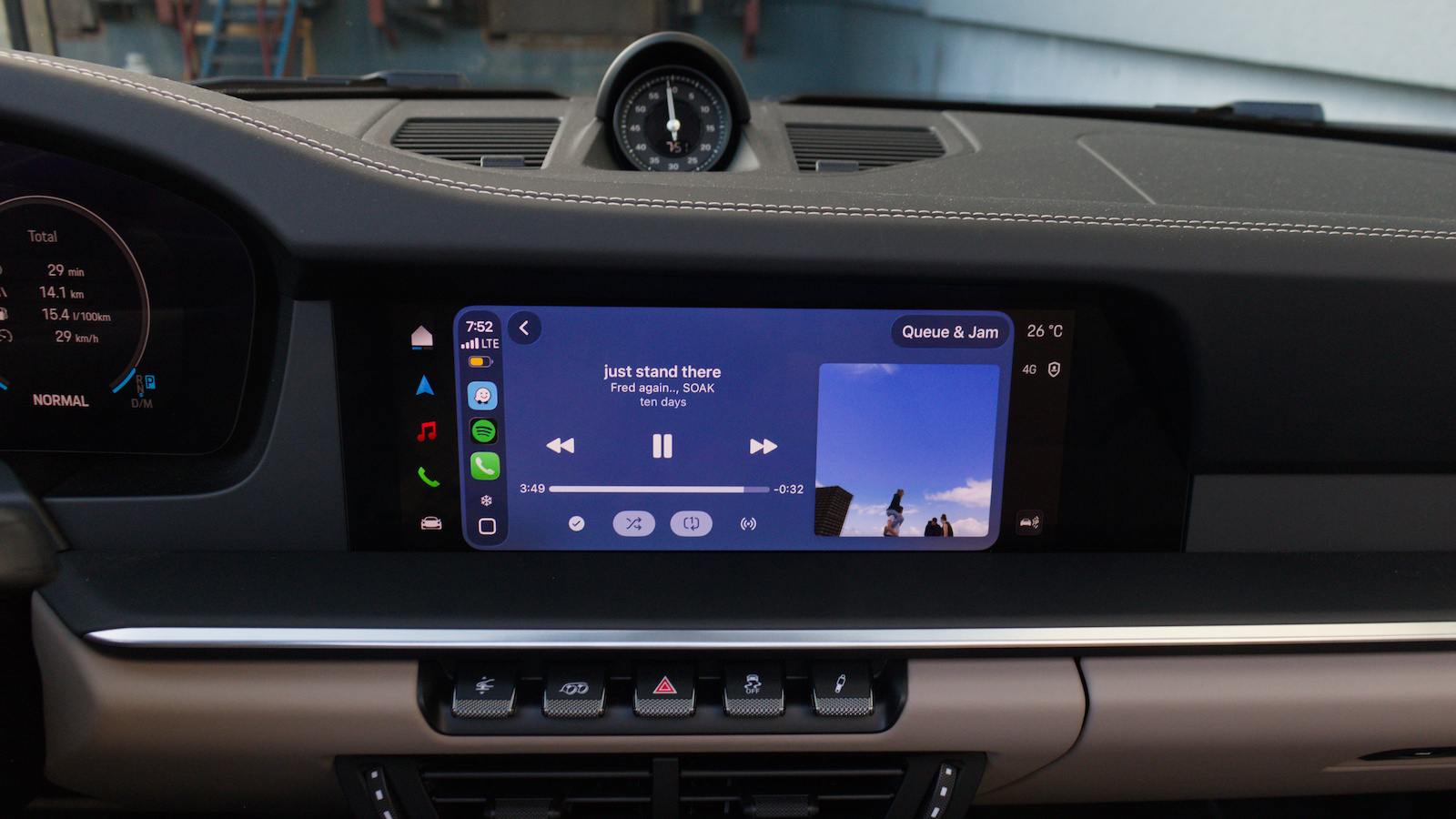
While some Porsches of the past had spartan standard appointments, the latest 911 strikes a better balance. Included on every model, you’ll find wireless smartphone charging, front and rear parking sensors, a heated steering wheel, anti-dazzle matrix headlights, and auto-dimming side- and rear-view mirrors. Beyond that, the level of equipment really depends on how deep your pockets go. If you’re willing to splash cash, you can even option your 911 Targa 4S with night vision as a tactical deterrent against deer strikes.
As for the in-cabin screens, the infotainment’s remarkably good. A bit slow to boot from absolute cold, but the first screen you see is a very different sort of safety screen. Instead of being greeted by a screed of legalese advising you to not use the system whilst driving, you get to opt out of data transmission. At a time when you are often the product, that’s a welcome touch. The screen itself has deep black levels and proper responsiveness, and the menu structure makes perfect sense. It’s a similar deal with the digital instrument cluster, which is just so usable that the demise of a physical tachometer doesn’t feel like a hardship.
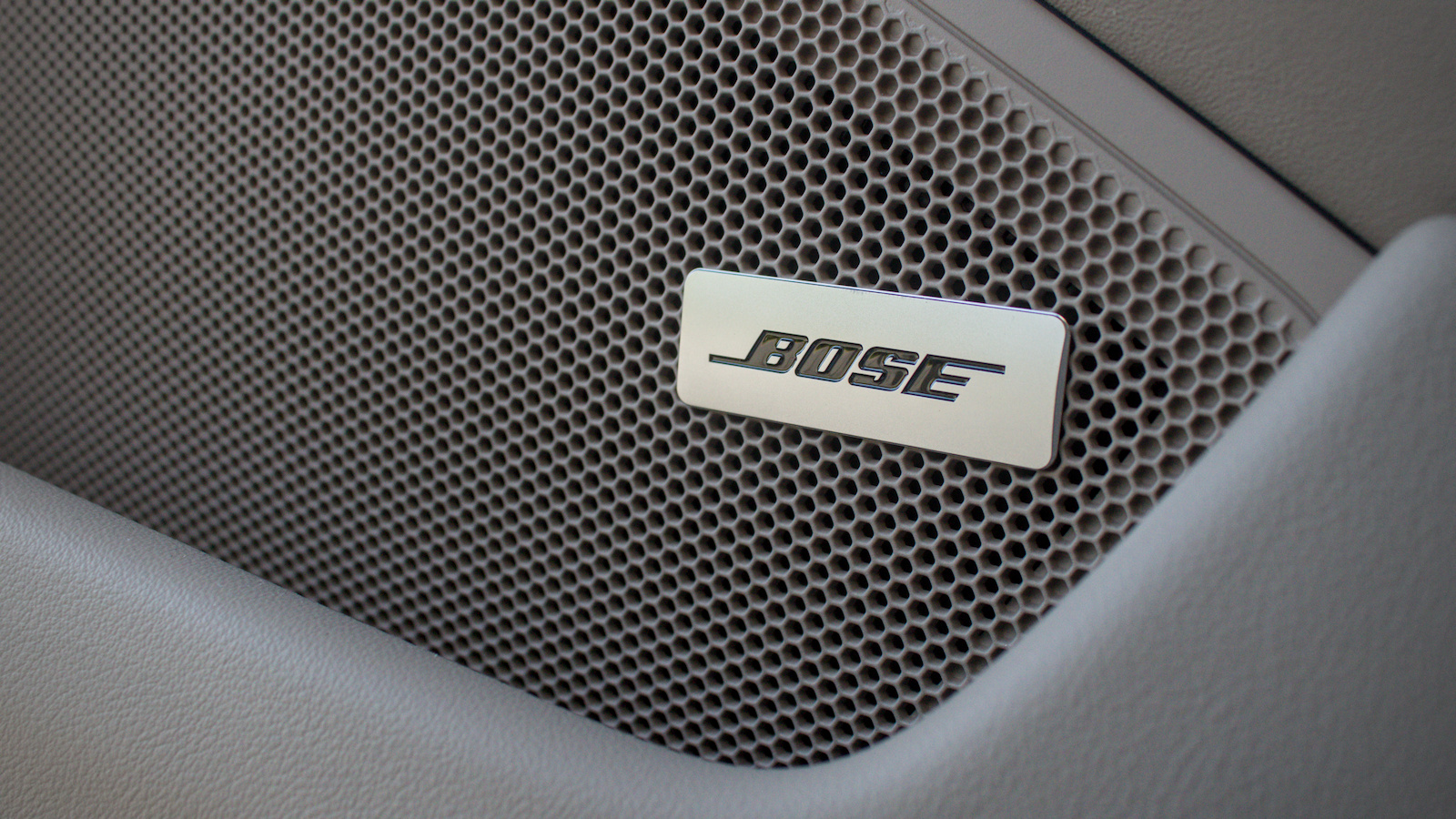
As for the optional Bose stereo, it’s the same here as it’s been in every 992-generation 911 I’ve tested: adequate, but certainly not exceptional. There’s decent amplification and a wide soundstage, but it feels like the signal processing scoops the midrange, detail isn’t exemplary, and there’s some noticeable distortion when you crank it up. If you’re spending this sort of money on a new 911, make sure to tick the box for the top-shelf Burmester sound system. It’s worth it.
Three Things To Know About The Porsche 911 Targa 4S
- It now makes as much horsepower as the old GTS.
- You’ll want to watch the roof go up and down for hours.
- Its structure still feels remarkably rigid.
Does The Porsche 911 Targa 4S Fulfil Its Purpose?
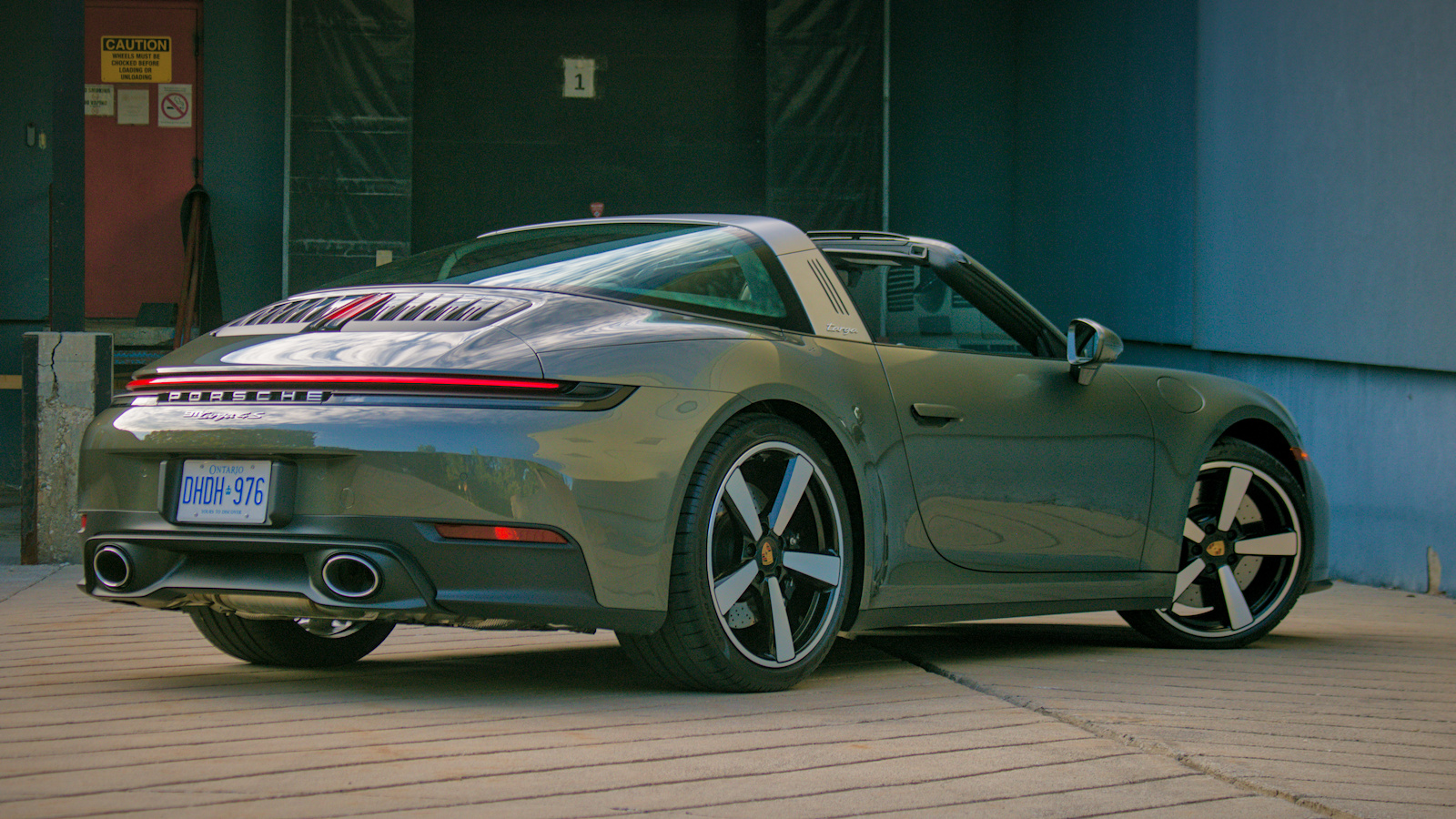
How would you define the purpose of a 911 Targa 4S? Sure, it’s genuinely quick and tantalizingly capable and comfortable and well-screwed-together and surprisingly practical, but so is every non-hardcore 911 for the past 35 years or so. Well-rounded excellence you’ll want to use every day isn’t unique to this variant. You can find it in a base Carrera 2, and every Turbo from the 993 onward has turned that up to 11. So what makes the Targa tick?
It only takes a glance at the whole 911 spectrum to find out. Sure, a model that’s heavier and more complex and more expensive than a true cabriolet sounds a bit daft on paper, but then you watch the roof mechanism do its thing and all prejudices simply melt away. That top appeals to something in all of us, whether you love cars or don’t. It’s unnecessarily elaborate, yet oh so easy to adore. Plus, the Targa 4S comes with relative upsides too. It’s stiffer than a cabriolet and likely quieter inside and probably more secure thanks to rigid parts in the top panel, but far more of an occasion than a sunroof-equipped coupe will ever be. As a bonus, the Targa 4S is as quick as the old GTS but rides better over pockmarked roads.
When it comes to luxurious all-wheel-drive two-door machines with rear seats, the only real rivals to the 911 Targa 4S outside of a 911 Carrera 4S Cabriolet are the Mercedes-AMG SL and the Maserati GranCabrio, both of which have their own quirks. The Maserati looks exotic and doesn’t half-handle, but the pre-facelift version has fallen victim to some serious depreciation, and that doesn’t play well for total cost of ownership. Plus, the effective trunk aperture is tight with the top down, Maserati’s servicing network is rather small, and who decided to put the top controls in a touchscreen? As for the SL, it’s less expensive than the Targa 4S, quieter, and has a bigger trunk, but it’s not as engaging of a drive, its heavy mix of touchscreen and capacitive-touch cabin controls are irritating to operate, and Mercedes-AMG hasn’t quite nailed the build quality yet. For instance, the paint usually has a level of orange peel that wouldn’t be acceptable on a $75,000 car, let alone something pushing up against the $150,000 mark in mid-range SL 55 trim. The 911 Targa 4S may be annoyingly expensive, but historically strong resale value mitigates some of the premium, and that astonishing roof might simply hand-wave the rest. After all, sports cars are inherently irrational.
What’s The Punctum Of The Porsche 911 Targa 4S?
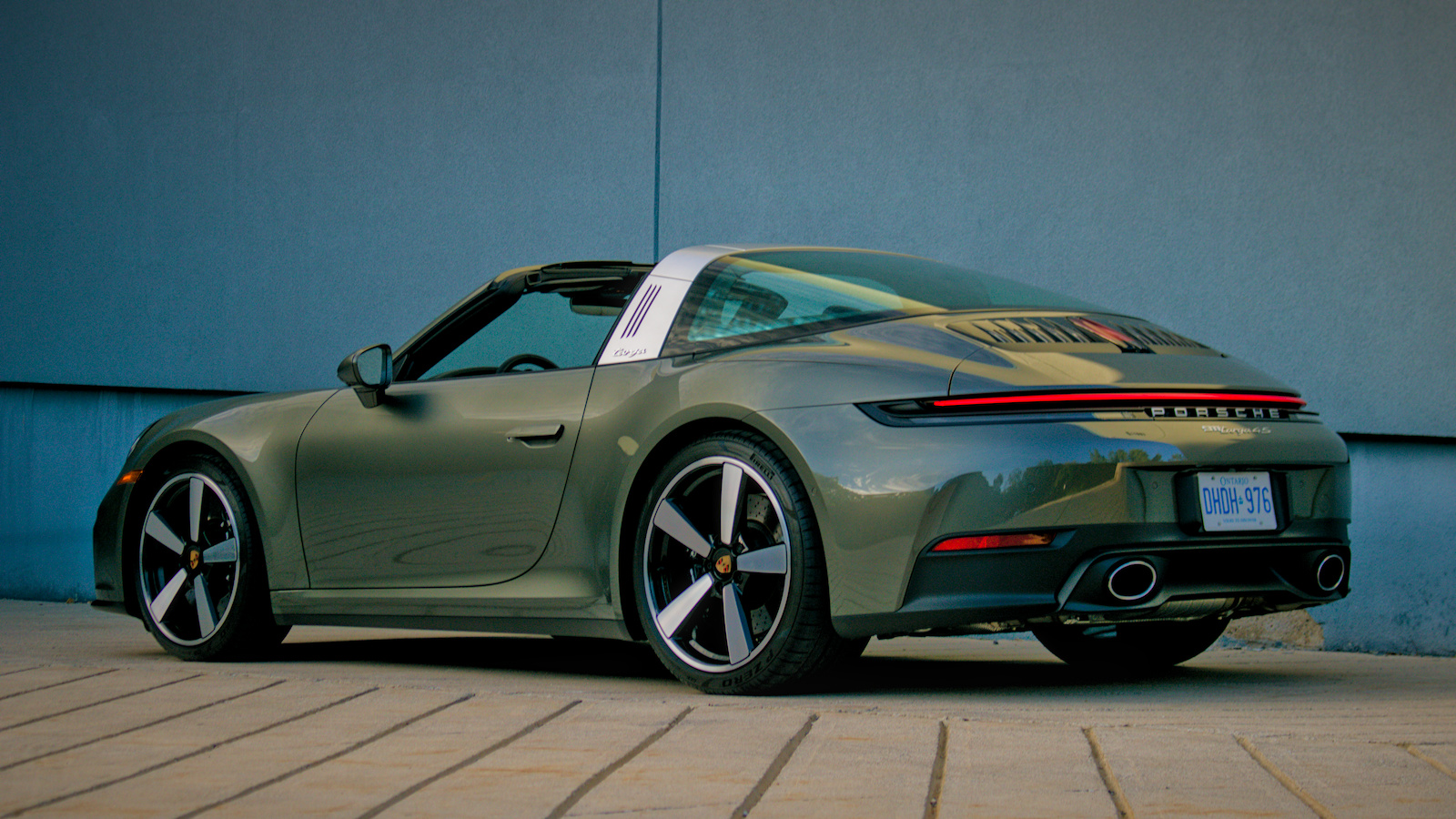
Not quite a coupe, not quite a cabriolet, but certainly a machine for lovers.
Top graphic image: Thomas Hundal


Wow, that roof is awesome! Fun watching the mechanisms. Any car like this should be manual. Outside not be able to use arms/legs, (that’s what this costs, ha ha) get a stick. I can’t imagine buying this car w/ an… automatic. The car is ruined and pointless
Does it make a “whee-wahh-waah-waahh” Transformers sound while it does this?
I am having a hard time with a 911 that isn’t a turbo for well over $200k. It seems like a 911 should start about 20% over the cost of a Corvette and increase from there. I love 911s, but I seem to remember them being way more affordable years ago. Most of the people I knew that had Porsches in the 80’s-00’s were people with middle management jobs that loved cars. Now even the base model 911 is a playtoy for the most wealthy-a shame for sure.
It is a turbo?
You’re right, it’s turbocharged but not the Turbo model. The Turbo models start at $270k.
My Uncle had a 1987 911 Targa in light metallic teal/green with a whale tail. It was my dream car as a kid. I had a huge poster on my wall of an orange 911 and a white slant nose one. He gave me a ride once. It was all sound and raw, analog joy. I grew up and now realize that I’ll never be able to own one. Also, the 911 got fat and is now a GT car that uses technical skills to be sporty. I don’t want an automatic with an Ipad. I want to earn my properly rev-matched gearshifts.
The final nail in the coffin for me is that the only people who can afford these are those folks that sit in boardrooms and make decisions that ruin the other 99% of people’s lives. Work harder for less folks, so a few elite people can have their 911 Targa.
[Full disclosure: Porsche Canada let me borrow this 911 Targa 4S for a week so long as I kept the shiny side up, returned it clean with a full tank of premium fuel, and reviewed it.]
That’s how you do it. Get to drive something like this for a week, but without the financial obligations. I can keep its shiny side up. I can keep or make it clean and refuel it. I hope you pinch yourself once in a while and appreciate how cool it is that you get to do what you do.
I thought Targas looked a little weird when they first came out but I can appreciate what they were going for.
But, wow! $200K? And I can’t imagine how bereft I’d be with the first bird dropping, fender ding or whatever befell it.
I will never buy a Porsche. If the Cayman had been available with a moon roof, I might have. I get the rationale around not putting extra weight up high. But I really like moon roofs. Light and air coming in from outside is on my must-have list.
In the late seventies my single mom briefly dated a guy with a Targa. She lost interest in him pretty quickly, but over the decades since if pressed about “the best car” or her favorite car she’ll eventually say Targa. So, if I slip and land in so much money that a quarter mil seems like a reasonable car price (never going to happen, I’m not sure I could ever believe that) while she’s still alive this will be what I get.
These cars always turn my head. Didn’t realize they were still making this variant. Love the rims too. I also like the 50th anniversary model except the colors weren’t that great (black, grey, or a weird grey white). You could get the houndstooth seats though and similar rims.
I mostly couldn’t give you shits about the 911 or most other modern German cars, but I totally agree that the 911 Targa is a dream machine.
:swoon:
I was just down at my local Mazda dealer and for a $41k you can get a new version of the RF that allows you to put the back window. down with the top up, which is the only sane configuration for Florida driving most of the time.
I’m not going to say that I don’t like it, because I pretty much can’t help but like every 911 generation and variant ever, even the ones that get hate. This one is very easy on the eyes, especially in that lovely adult shade of green. The faux Fuchs alloy wheels are nice, though I’d prefer them an inch or even two smaller so as to not curb them quite so often. Of course, I much prefered the traditionally analog 911 dashes of yesteryear, but since everything’s gotta be screens now, this ain’t awful. If you can afford to drop $200,000.+ on a car (comfortably more than that with tax, title, and registration all-in, even if you manged to keep away from the options menu) then you probably wouldn’t tend to worry about the increased cost down the road for servicing all those little motors and solenoids in the arousingly complicated top mechanism(s, plural) once it’s out of warranty.
Still, this is a quarter-million-dollar plaything, and though the 911 was never really a ‘value’ proposition (not even as the relatively short-lived 912) it saddens me to see them reserved for the 1%ers and a few others happy to live beyond their means because they had one video go viral on Youtube. Even the Boxster/Cayman are roughly six-figure machines in some flavors now. 🙁 Is it really impossible to sell an entry-level Porsche for maybe $65K (that’s not a compact crossover) and still manage to eek out a modest but respectable profit? A 914 reboot, with a four cylinder engine, manual transmission, etc… would be lovely, as long as it looked, felt, and drove like a Porsche. It needn’t be the fastest car in its price/class, just the most Porsche-like.
I had a 997.2 in my garage for a couple of months – my brother in law bought it as a 40th birthday present for his wife, who is not into cars and has to schlep three kids around to soccer and hockey practice. My job was to hide it until the big reveal, which did not go great especially since there was also a surprise party. Yeah, we all knew who was really having the midlife crisis.
Anyhow, that particular car was a 4S convertible with PASM and PDK. It was…not great. You could tell there was a sports car under there, but the leather interior, AWD and general avoirdupois blunted it. The suspension settings were “floaty” or “harsh”. As a leather lined luxury cruiser, the sports car roots hobbled the car because the transmission was easily confused and the suspension tuning was disappointing after trying to make it comfortable.
It ended up not being good at anything other than allowing the sun to shine off Wally’s combover as he impressed college girls, so mission accomplished I guess.
Funny how impressions are different, I had a 997.2 4S Coupe with PDK and PASM for 4 years and 40k miles and found the suspension to be great (except in Sport Plus) and the transmission smooth. Did a lot of mountain roads driving and long distance cruising with it.
I do suspension tuning as part of my job, and now I understand why people hold our parts in high regard if that’s the best that Porsche could do 🙂
I didn’t take it up into the mountains, but we do have some reasonably interesting rural roads that I know very well that I use to evaluate suspension. Compared to a 1990 Miata on Konis and sway bars, it either rode more poorly or was less stable – but hey, you got to choose!
The transmission wasn’t happy around town, it got confused a few times as to what gear it really wanted to be in. Long distance driving wasn’t part of my experience so I don’t know how it did on the interstate. Given that the car hasn’t left town since Wally presented it to his wife, this is its use case.
If this car had been a 2WD coupe, I suspect I would have found it much better since it would have been a more focused car.
You know you can get basically that same roof in a little Japanese car that costs $10k less than the average US new car? It also takes 2/3 the time. For the as-tested price of this thing, you could get 5 of them and have $20k left over to rent the racetrack for your new spec series.
Heck, the options on this thing alone will pay for a slightly used Miata RF.
I picked up an NC with a power top for £2k. That’s probably less than a year’s tax and insurance on the Porsche.
“I Don’t Care If There are Faster Porsche 911s Because The Targa 4S Is Magical”
If it’s truly magical, then it should be able to cast spells. So can it cast magic spells like Cure Light Wounds and Magic Missle?
:rolls die:
Cure Light Wounds…. 2
Magic Missile …. 9
How’s the wind noise at highway speeds with the roof off?
My C6 Vette had pretty awful noise at higher speeds. Some aftermarket folks sold a little gizmo that would hold the rear hatch open a little bit to allow air flow.
I wear musician’s ear plugs while driving my C5 with the top off. Otherwise it’s literally deafening and more than a little stressful.
Haven’t tried the 992 but apparently it’s pretty good except for a certain speed at around 50 mph or so where the buffeting is pretty horrible. Surprised to not see that being mentioned in the article.
I’ve always been intrigued by the Glass-Roof Targa with the massive sliding glass (I think this was 1993–2012 / 993, 996, 997). The aesthetic of the current little fabric top and the incredible complexity to remove that little fabric top is to me disturbing–think in contrast how simple it is to just flip the top back on a Miata.
I LIKE THIS CAR LESS NOW. I thought it had hard panel that one removed a la corvette t top. This fabric top and rube goldberg x2 concealer. nope. I ll pass now.
“In the 1960s, convertibles were … rather unsafe. Not only did cutting the roof off a car compromise its structural rigidity…”
Most 1960’s convertibles were body on frame construction – so there was minimal loss of structural rigidity, as the bodywork was largely not a structural member. Hence hardtops and such.
You’re thinking of the factory and aftermarket convertible conversions of the 80s, which required the unibodies to be heavily reinforced, but still often had massive amounts of cowl-shake due to the lack of structural rigidity after removing the roof.
For the 911 – yes, it’s a unibody, and the Targa band negated the need for a lot of structural bracing which the later cabriolet needed.
In this case, Porsche used the preceding Cabriolet as the basis for the Targa – so the added structural bracing was already in place.
I enjoy the track easter eggs in every review.
OK, so, is there like a primer, or explainer or something for 911 models / variants? I have no idea which ones are the fancy, extra-fancy, vanishingly-rare ones. Where is this one in the overall lineup? Which one would a regular dentist be driving? What is the actual difference?
(It’s academic to me as I’ll likely never drive and certainly never buy one anyway.)
911 Model pattern is as thus:
4 = all wheel drive if you see it in the name, adds a bit but not as much as you’d think to sticker price.
Model Order in terms of sticker price:
Base –> S –> GTS –> GT3 –> Turbo –> Turbo S –> GT3 RS –> GT3 S/C
In regular models, the S is typically a good jump up from the base, and the GTS is typically a “more tuned” S with most of the common favorite check boxes bundled together.
RS = track focused variant that is heavily tuned and intended for aggressive track performance
S/C = Convertible GT3 RS
Thought they dropped the non-S Turbo for the 992. GTS is typically a sweet spot
If you go on the Porsche 911 site – the ones at the top are cheaper and more common, and the ones at the bottom are more costly and rarer.
https://www.porsche.com/usa/models/911/#modelRangeId=911
Base – Enthusiast with some money
S/GTS – Dentist/Doctor
Turbo/S – Old money/finance
GT3 – Crypto Bro
(this is mostly made up, I’m not a Porsche guy but I have met a few).
The Porsche Cayman is a better Porsche 911 than a Porsche 911.
The 718 is sadly dead.
If Porsche was really on the ball with this, they could have made a skinnier platform that could have accommodated a body with the CdA value of a Porsche 550 coupe, which would allow an EV variant to get acceptable range with a sub-3,000 lb curb weight, and also a 4-cylinder ICE variant that did the same and got 50+ mpg highway. But none of the automakers are that forward thinking enough to do that, so we get a morbidly obese 911 that weighs almost as much as a Ford Explorer from 2 decades ago instead while the 718 is killed off…
718 is returning as an electric variant, presentation in autumn and sale in spring 2027, while the ICE version just got put on hold again last week after being hastily developed from the electric platform (not final yet)
The EV will fail to be attractive to enthusiasts or interesting if it weighs 2 tons though. They need to make lightweight sports cars again, and being an EV does not make that impossible. You have to design the car around the limitations of EV technology.
(Unless it’s the now 4048 lb Slate Truck, but that is both a truck and fun/affordable rather than a sports car. Also, it’s because of LFP.)
For a truck, mass is not as much of a concern as a sports car. I expect a truck to have the driving dynamics of a truck: utilitarian. I expect a sports car to be fun, nimble, and engaging. I really don’t have a want or need for a truck, but the Slate being supposedly repairable by DIY types with basic tools, while also being inexpensive, AND an EV, makes it the new car that most appeals to me of those available in the USA. I’d love the sports car equivalent to be available, but it doesn’t exist in the USA.
Also, I have a Triumph GT6 converted to EV with LFP that is half as energy dense by mass vs the LFP available today, and it weighs LESS than it did with the inline 6.
If Slate makes a low coupe/liftback sort of model in the future, I will be very happy. Something I expected would be “maybe I’ll build it someday, because it’s NEVER happening otherwise”.
I’d be more willing to believe it if Cayman guys would stop saying it every time the 911 is brought up.
Is it weird that I expected the back glass to open like a hatchback and the targa top to be popped off and stored manually? Like the old T-tops where you pop a handle, they come off and you yourself put each half of the top into the storage space yourself?
As the former owner of a Honda del sol, that was my thought too.
You think the rich people buying this $200,000 car want the hassle of taking the roof off themselves? Manual operation is for the poors.
It is weird – because 356s, Targas and 911s have never had a glass liftback.
The first Targas had a soft landau-type rear window which could be dropped (remember, this was supposed to be a cabriolet before Porsche was scared off by the potential of them being prohibited in the US) – then after just a couple years, Porsche went with the fixed, curved rear glass everyone remembers.
The roof panels always folded up and went into the frunk.
Oddly enough, the 996 and 997 Targa rear windows actually did open like a liftback, and it’s WEIRD.
Oh, you mean the “Targa” which was actually just a big glass sunroof?
Yah – that was weird.
I did too but after seeing the price I am happy that it does the job for you.