

I’m a very fortunate person in a number of ways, and one of those ways is the sheer number and variety of cars I’ve had the privilege of driving. Many of those cars had manual transmissions, and I’m happy to note that I’ve gotten to row gears in all sorts of different and strange ways: on floors and columns, sequentially, via all manner of spindly rods and fat stumpy knobs and bent levers and strange twisting umbrella handles and more. There’s a dazzling array of ways to move cogs together and apart, and I’m delighted to have tried so many.
But then I was sent this auction listing for a 1969 Mitsubishi 500, and I realized there’s at least one shifting configuration I don’t think I’ve ever experienced, and it’s on this humble little early Kei-class car. In fact, I’m not sure I can think of another car that does it this way at all?


The car itself is a pretty charming little thing; The Mitsubishi 500 was released in 1960, and was the first mass-produced production car Mitsubishi built after WWII. That seems a little late for that, but I’m not here to give Mitsubishi guff for being slow; that wasa difficult period for them. It was the first Japanese car to be tested in a wind tunnel!
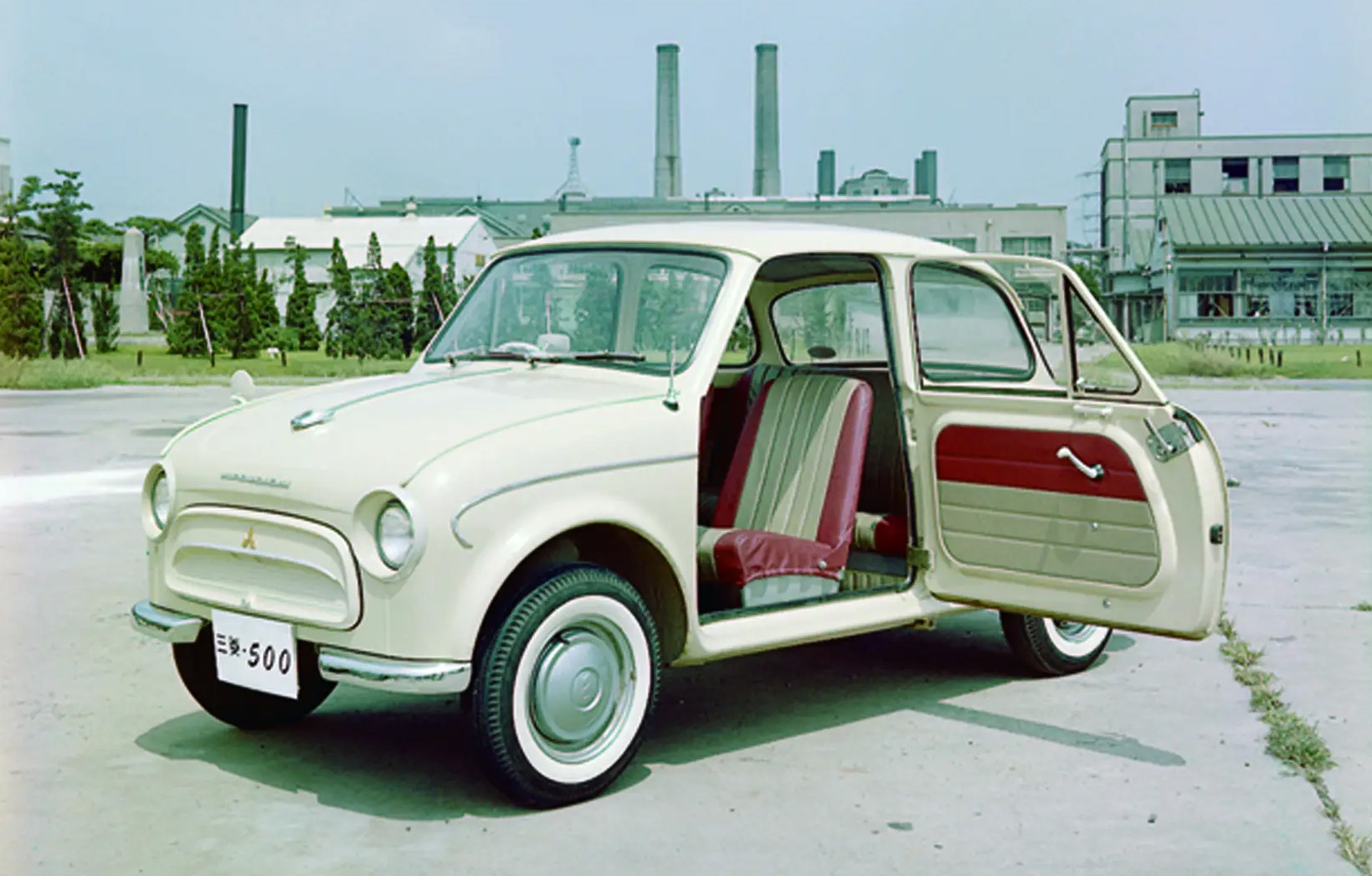
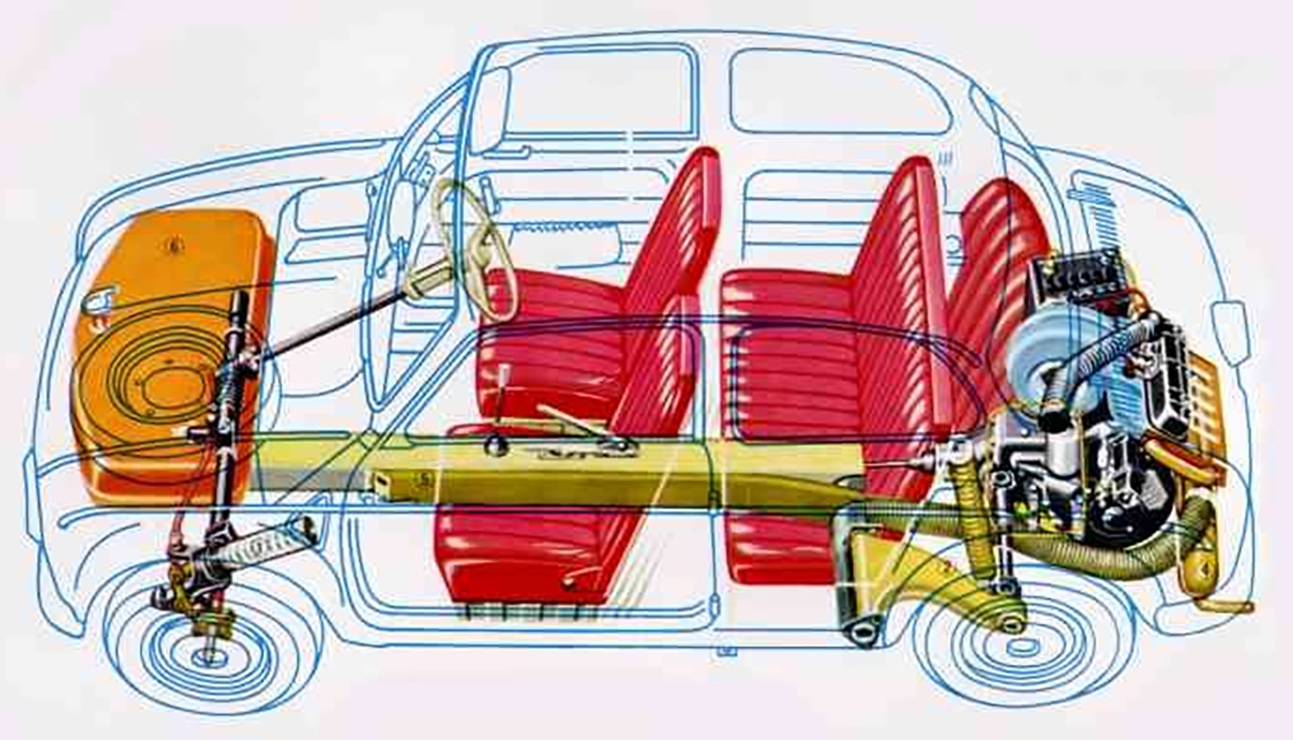
It’s an appealing little thing, a simple and clever unibody design, with a rear-mounted inline-twin making about 21 horsepower.
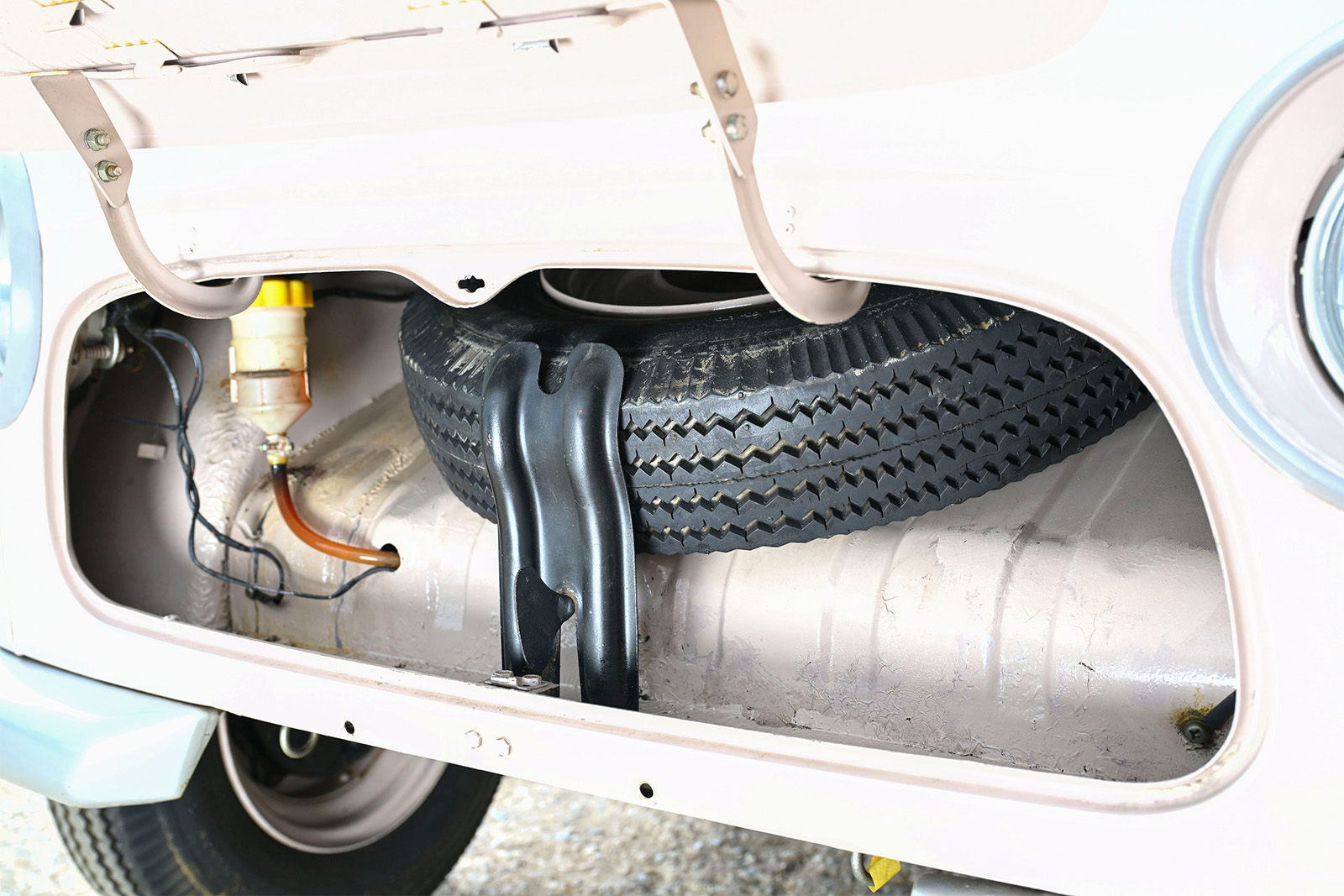
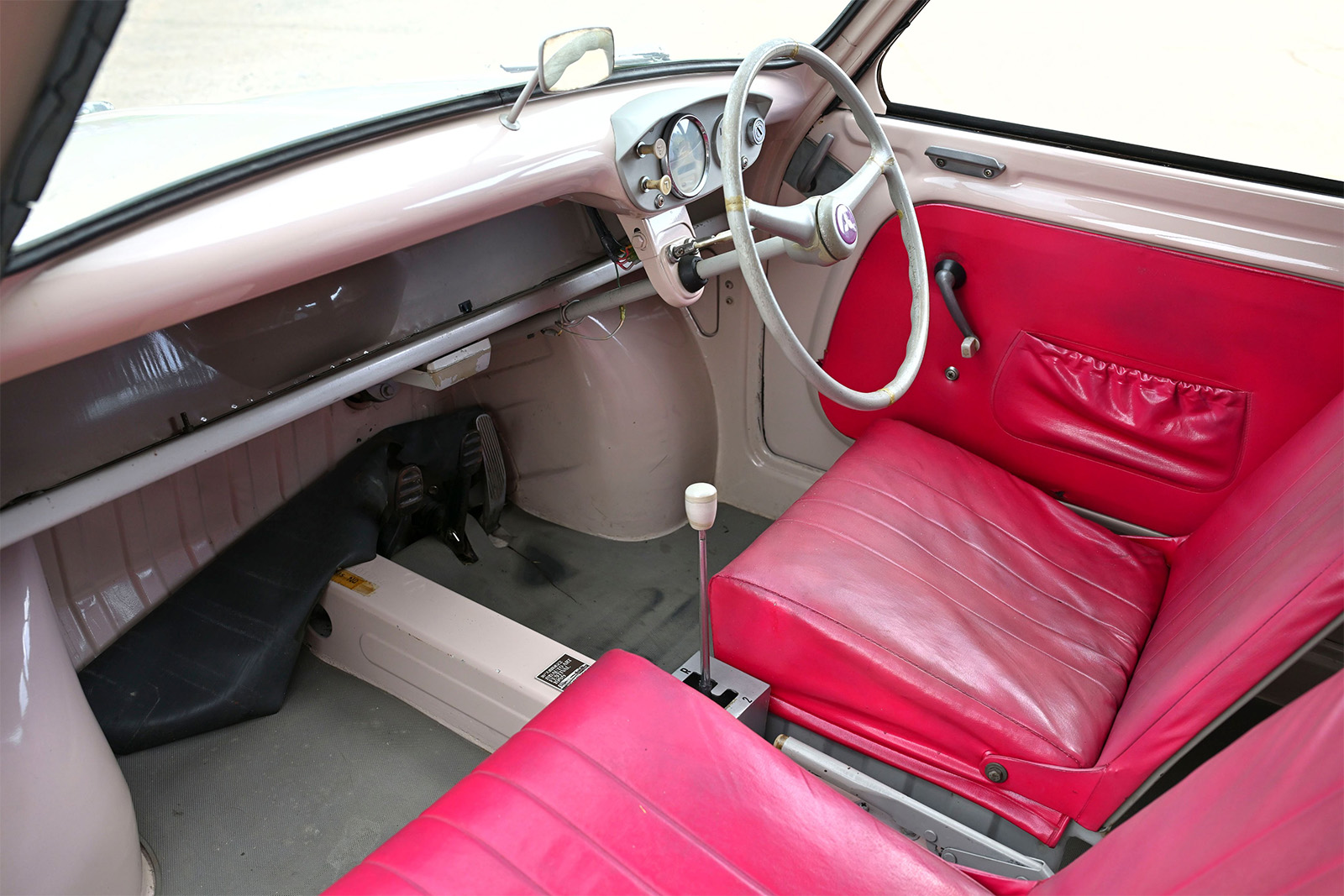
The design has a number of interesting little quirks, too. For example, look at the padded luggage well behind the rear seat up there; you’d think there’d have been room for a trunk up front, but Mitsu decided to make one of these spare tire access hatches instead:
…along with a very Subaru 360-like deep package shelf under the dash that’s almost like a little trunk itself:
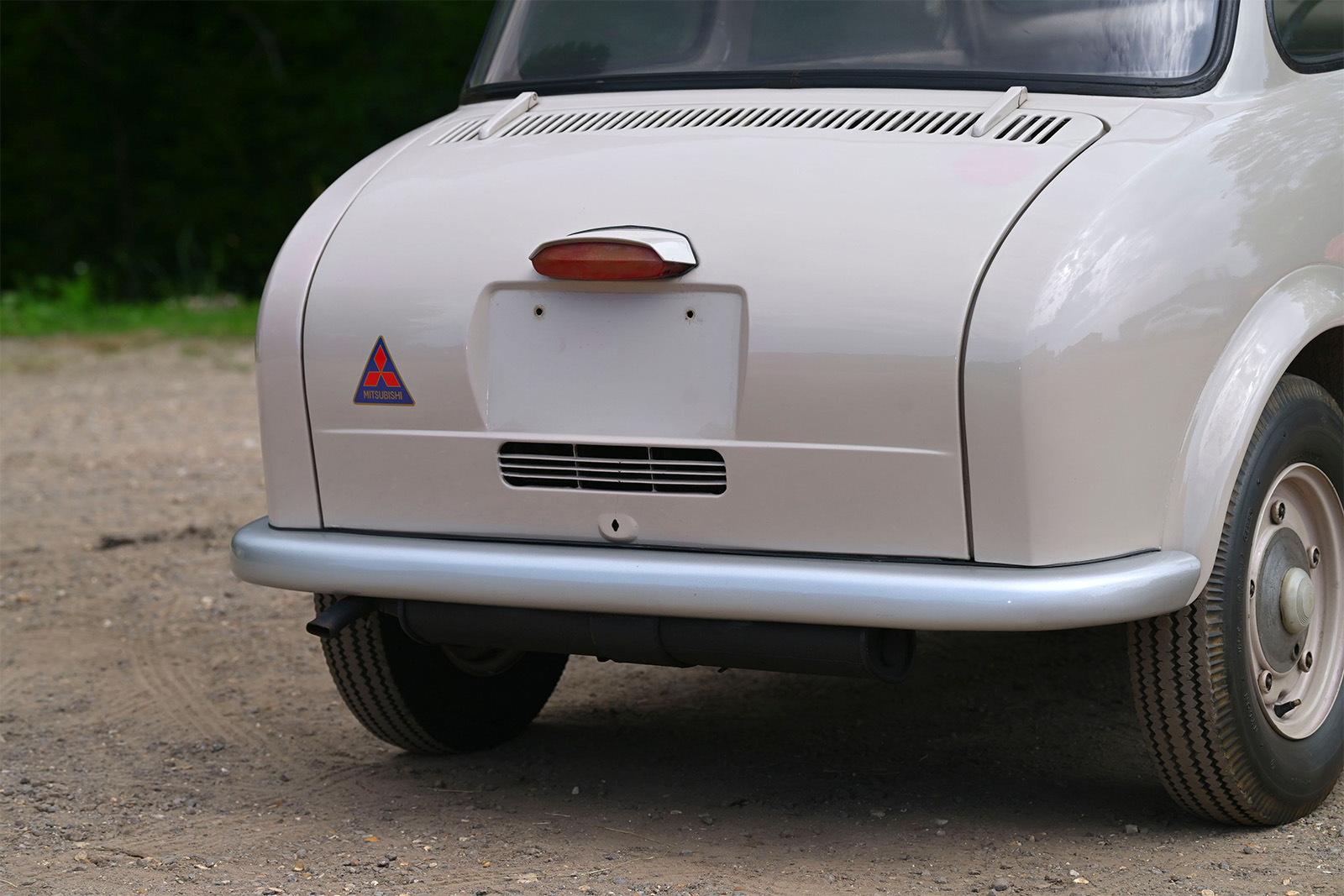
The rear is oddly minimalistic and cyclopean, with one central taillamp:
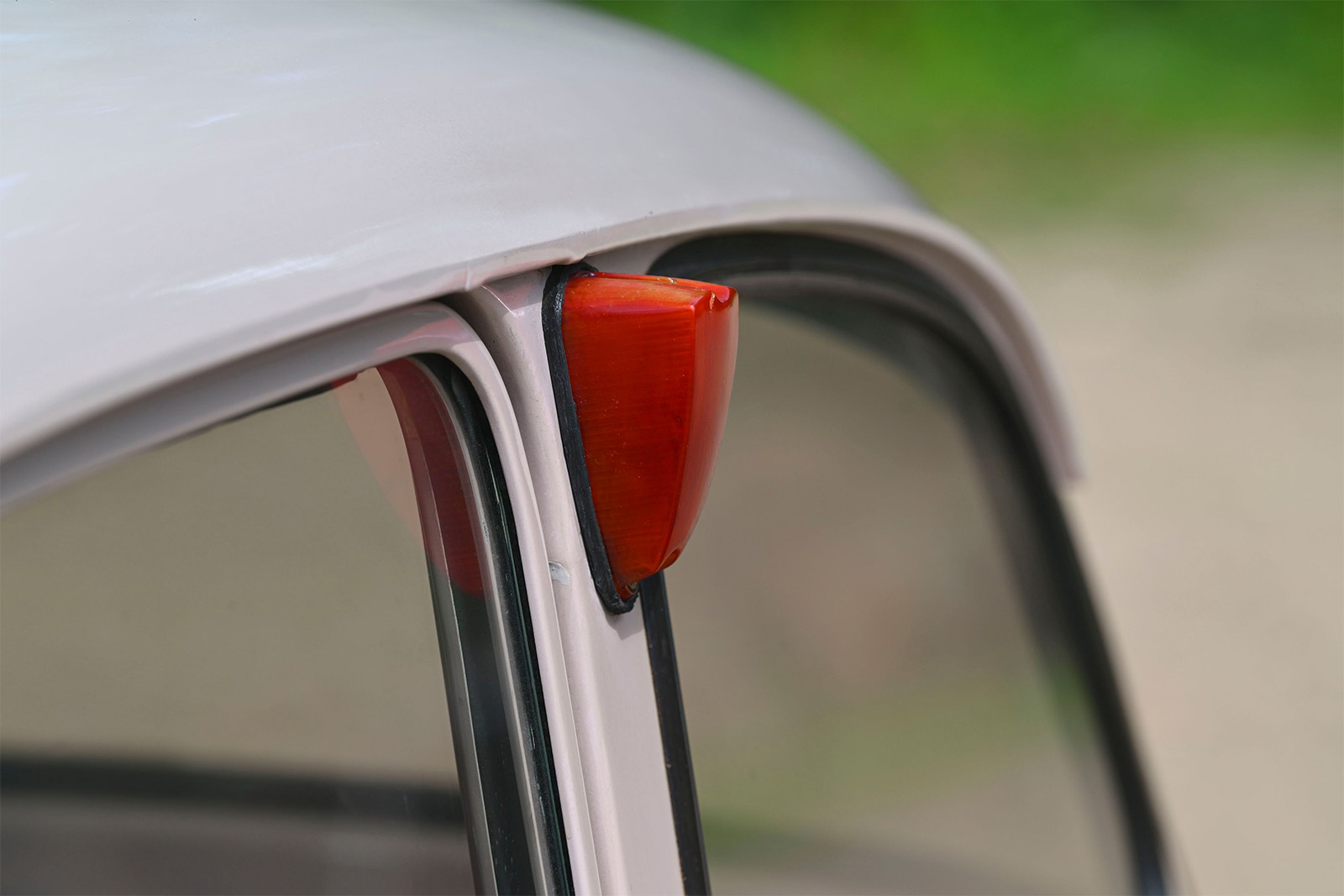
…which it is able to do because the turn indicators are on the B-pillars, like flashing ears:
Of course, I’m just making you wait for the real crux of all this here. The shifter. Specifically, the shift pattern. As I’ve said, I don’t think I’ve ever encountered this before. See if you can see why it’s so weird. I’m pretty sure you can:
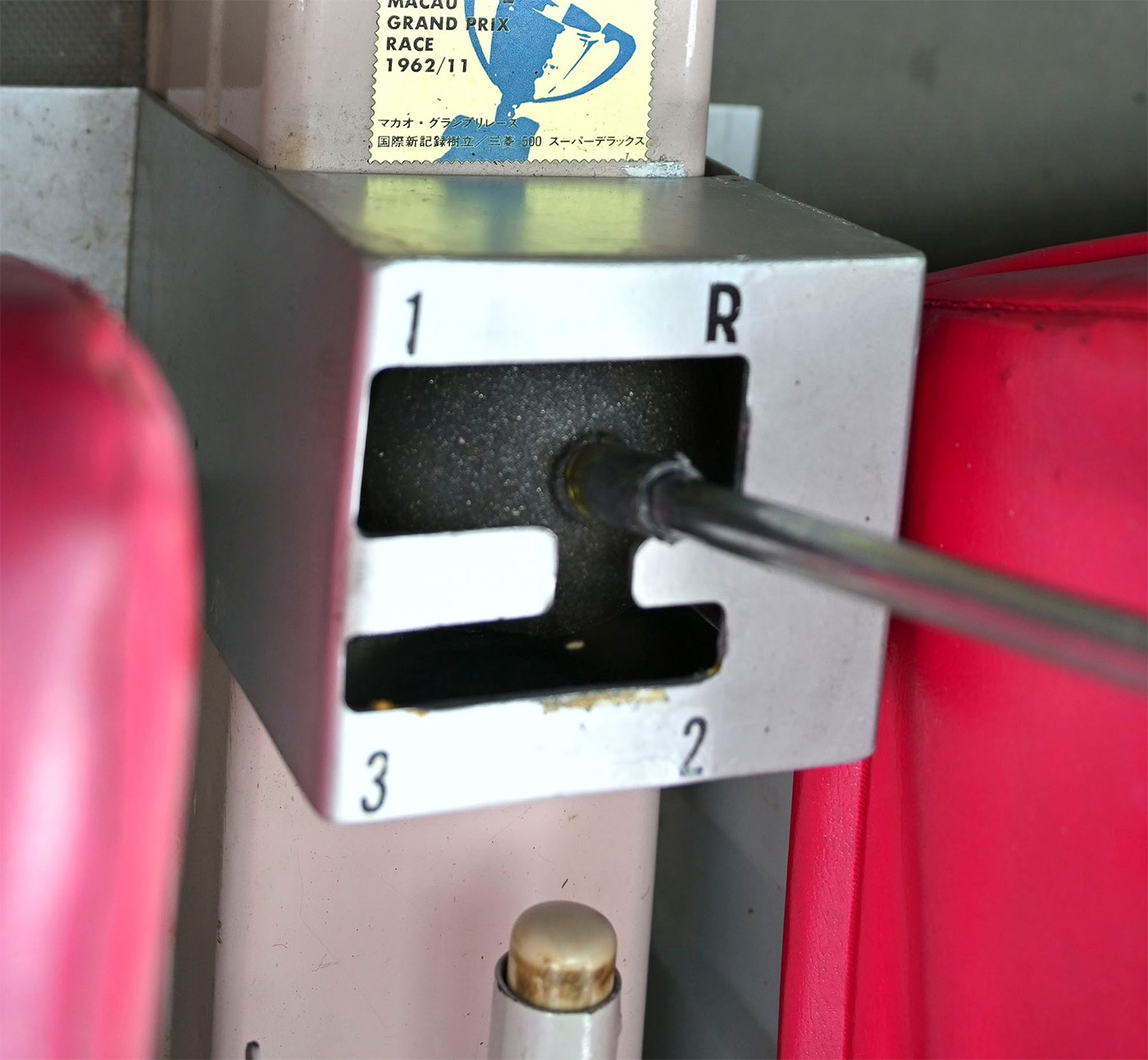
Okay, it’s an H-pattern three-speed. That’s not so odd. But note how this picture is oriented: front of the car is toward the top. The shift diagram on the dash will make it more clear:
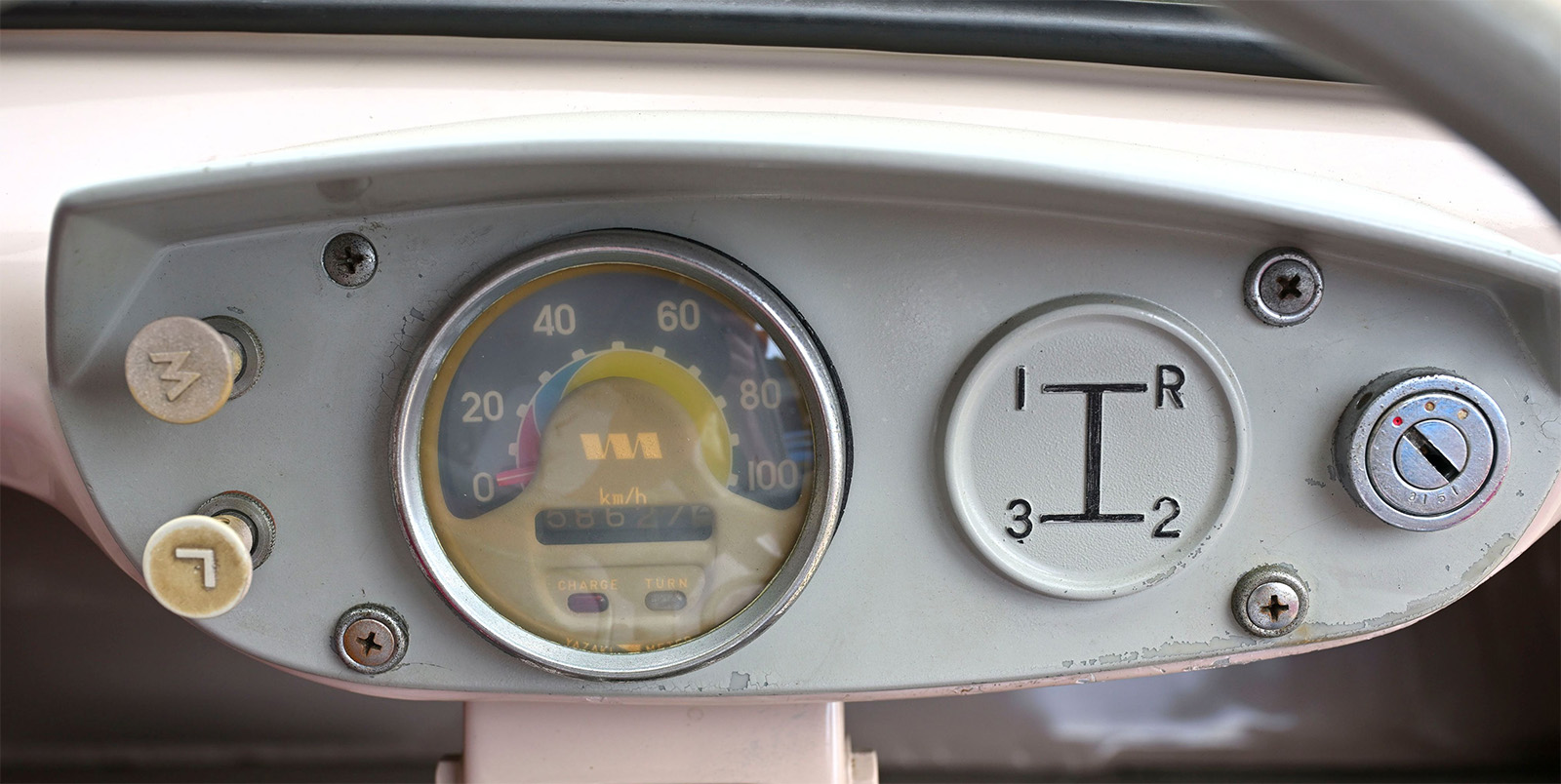
Yes, it’s rotated 90° from what we all expect. It’s more of an I-pattern than an H-pattern this way. You’re shifting sideways to get into gears instead of up and down. It just seems so weird! It must feel really strange until you get used to it, too. And, why? There must be some technical reason for doing it this way? Is it because the rear engine is transverse?
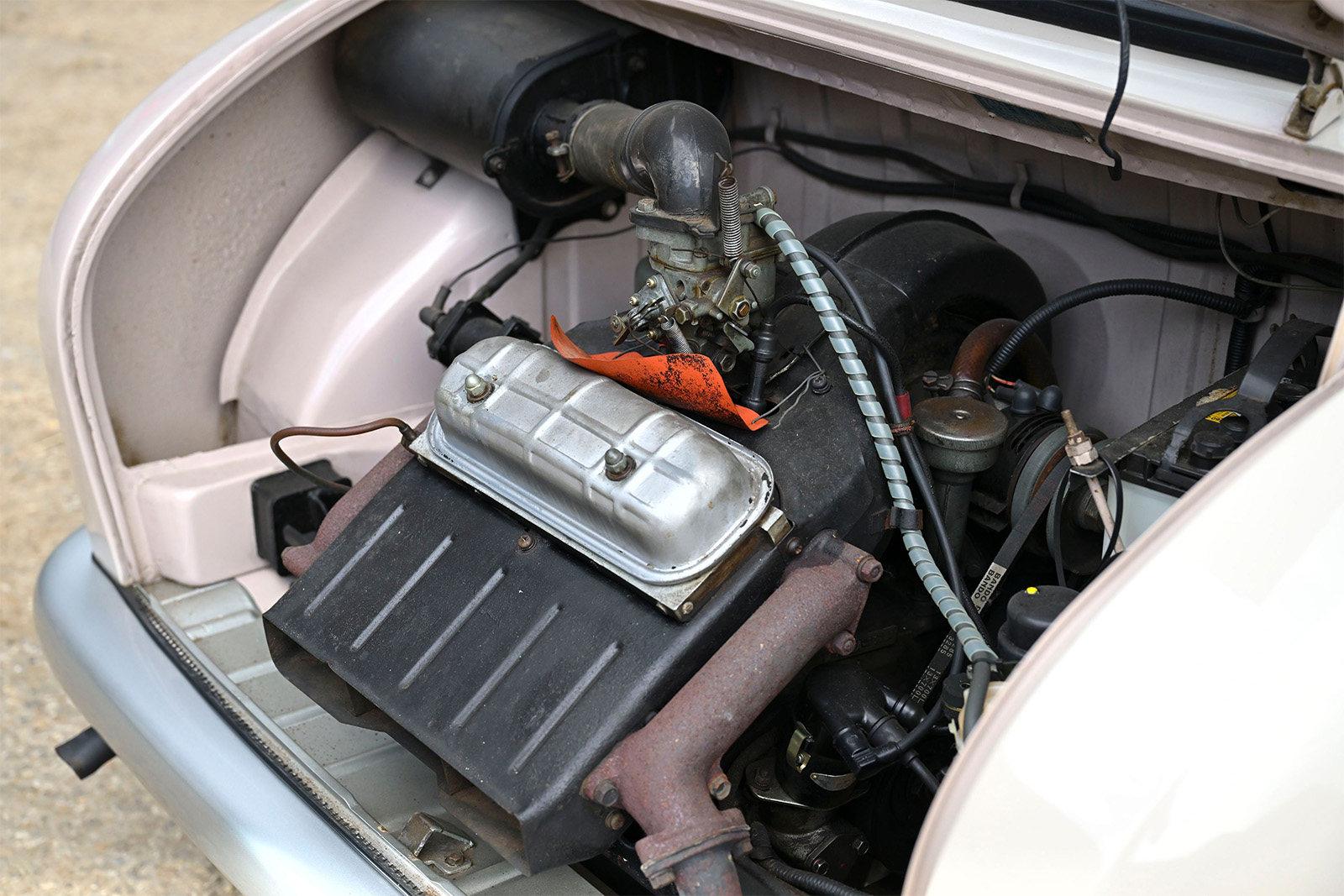
There’s been other transverse rear-engined cars, like the NSU Prinz, and they had a normally-oriented shifter. The closest example I can think of where a car had a shifter that felt like it was oriented in a different way may be the column shifter on a Trabant:

…but even that somehow doesn’t feel quite as weird? I drove a Trabant, and I was able to adapt to the shifting fairly quickly, perhaps because I already expect manual column shifters to be a bit outside my usual experience? But this Mitsubishi, with its floor-mounted stick seems like it should be what you expect, but then you realize that, unless you’re driving sidesaddle, it’s not.
Are there any other cars that use this kind of I-pattern shifter? I suspect there must be, but I can’t think of any? I really want to try one of these now!


This shift pattern hurts me in ways my ex could only dream of.
I wanna drive it.
That’s pretty strange, all right.At least it appears to be a gated shifter: look out, Ferrari!
My Hillman Minx had a column shifter with first where third would be, second in fourth position, third in first, and fourth in second place. A feature of using the RHD shift linkage, I suppose.
By contrast, my DS-21 automatique‘s horizontal shifter and my Renault 16’s five-on-the-tree seemed perfectly normal.
When will we get the Craziest-Shift-Pattern-EVAH feature, Torch?
A friend of mine bought an early ’70s C-10 pickup with a 3-speed on the floor. But the linkage was put together wrong by a previous owner with the 2-3 gears being inverted while the R-1 gears were where they were supposed to be.
So reverse was up and to the left like normal and 1st was down and to the left, but to get to 2nd, you had to slide the shifter up into neutral, and then over to the right and down where 3rd would normally be. Then straight up to get to 3rd.
That took a while to get used to driving.
Crazy Vaclav-san says put it in I.
The column shift on a Trabant was weird, agreed, but only took a couple of minutes to get used to. At least the gate on the Mitsu should guide you in the right direction, so long as the R is locked out when you’re in first.
Oh my, the doing the quick neutral wiggle would be so weird going fore and aft vs side to side
Is that technically a dogleg first gear if it’s on it’s side?
If we have to coin a term for this shift pattern, I humbly suggest “Praying Mantis”.
Not only I-pattern, but also the 1 and 2 are not aligned, instead it is 2-3. Apart from the 90 degree rotation that is similar to the 2CV pattern. I have shifted with side-column-, top-column- (DS-semi-automatic), dashboard- and floor-mounted-gear-selectors without any adjustment problems, but for me the 1-shift right-2 movement of the 2CV felt strange and it took some time to get used to. I have driven more dog-legged 1st gear cars, but with those you were able to skip 1st gear in normal circumstances.
For high speed right hand cornering upshifts: You just lean out with your body and elbow the shifter to the left for that sweet, hands-free 2-3 upshift.
I’m sure that car had loads of power and grip and would routinely make that shift a celebratory occasion.
Excellent observation and analysis. No notes.