

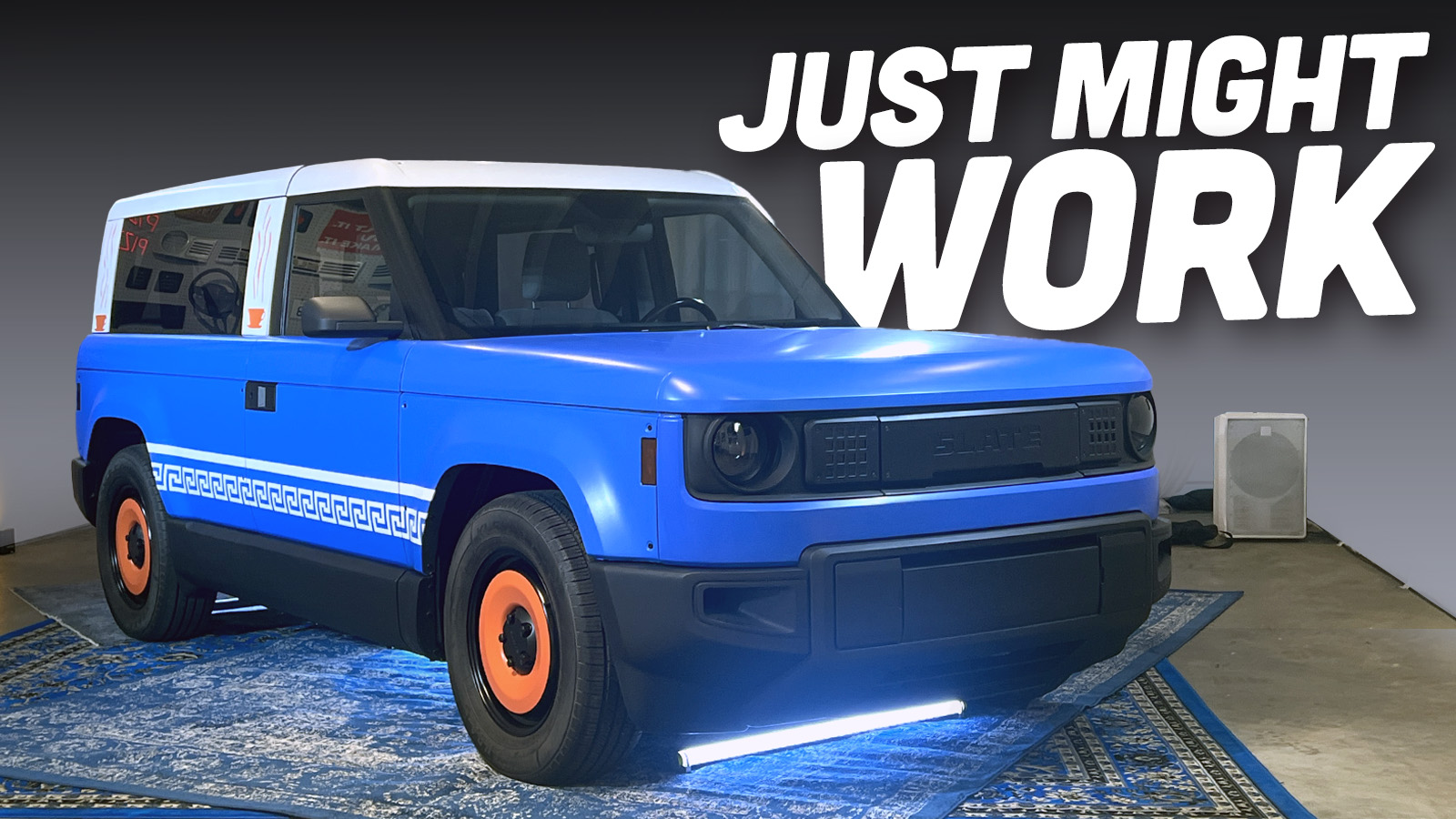
One of the biggest questions in the automotive world for 2026 is whether Slate’s electric pickup will succeed. It was revealed just over a year ago, and back then, the U.S. still had a federal tax credit that would push the truck’s price to around $20,000. It was a glimmer of hope in a world where affordability is at the front of mind for buyers, with fewer and fewer options to choose from.
Now that tax credit is gone, demand for EVs in general has flattened out in the United States. Our very own David Tracy argued, perhaps rightly, that the Slate truck would be a far more appropriate “people’s car” if it just had a simple, four-cylinder gas engine rather than an EV powertrain. He also argued that such a bare-bones vehicle, which doesn’t come standard with stuff like a stereo or exterior paint, simply isn’t competitive against entry-level crossovers or its most direct competitor, the Ford Maverick.


David made some great points in that post, and I don’t necessarily disagree with them. But I also don’t think it’s fair to count out the truck entirely. I feel especially strongly about that after spending some time actually sitting in a Slate prototype, and speaking to its designers.
The Right Size And The Right Shape
The Slate truck has a simple, straightforward mission: To offer one of the most affordable new vehicles on the market that people will actually like. That means it has to appeal to a wide range of buyers, which requires a bit of a balancing act.
“We knew that this thing had to at least be customizable from the ground up, so we wanted to have something that’s very simple, yet, I would say timeless,” says Gus Bizyk, Slate’s head of exterior design. “That way, it doesn’t stick to a certain time period.”
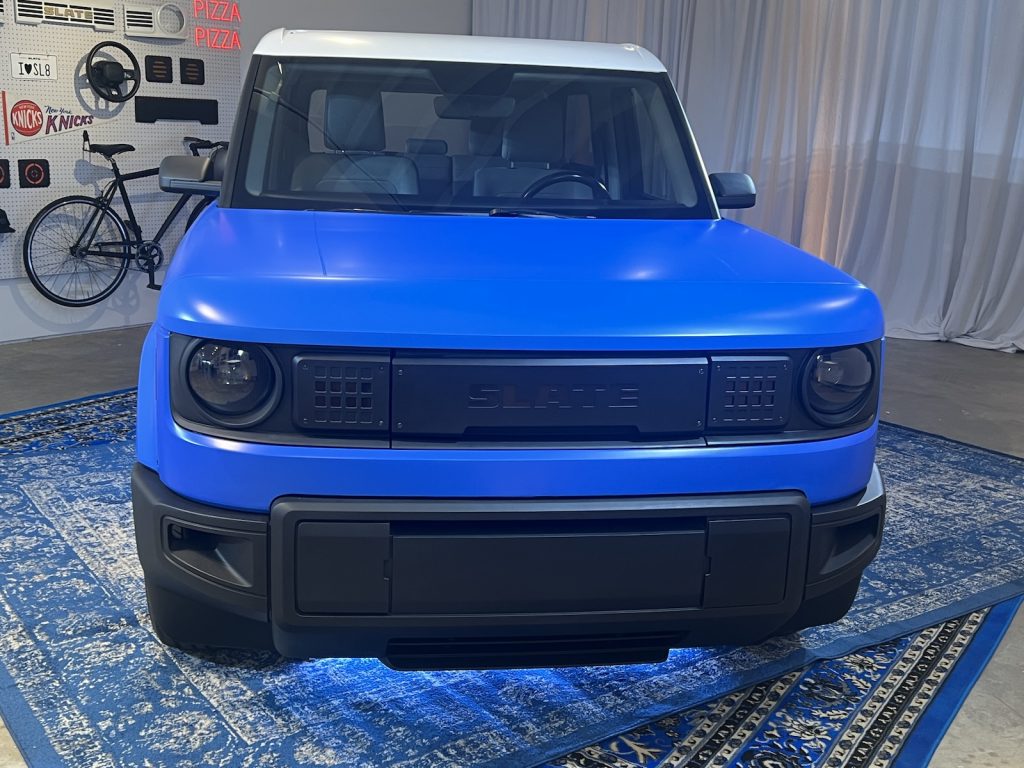
Slate’s whole schtick is that pretty much everything you see on the truck is customizable in some way. You can add wraps to the unpainted composite body panels, switch out the fascia, bolt accessories to the dashboard, and even turn the truck into a two-door SUV with a set of rear seats. The company’s configurator tool is one of the most detailed I’ve seen outside of internal tools for hyper-exotic carmakers.
When Bizyk brought this up, I immediately thought about the Slate’s perfectly round headlights. I’d argue that the prettiest cars ever built all have round headlights, and that the automotive sector’s move away from round headlights was where we started going wrong as a society. So I asked whether the truck’s round headlights were purposeful in winning people over. Bizyk brought it back to customization possibilities:
“We knew that we wanted to make this thing as customizable as possible. So one of the things that we noticed in the very beginning, a seven-inch round [headlight], if you go online, you’ll be able to find a whole vast area of different types of aftermarket headlights,” he told me. “So with that in mind, you know, we want to make this thing, I would say, customizable. But also, I would actually use the term open source. That’s the thing. We want to be able to have people 3D-print parts, but also buy whatever they find alluring online, and just be able to place it in. So those are the things that we’re working on for this.”
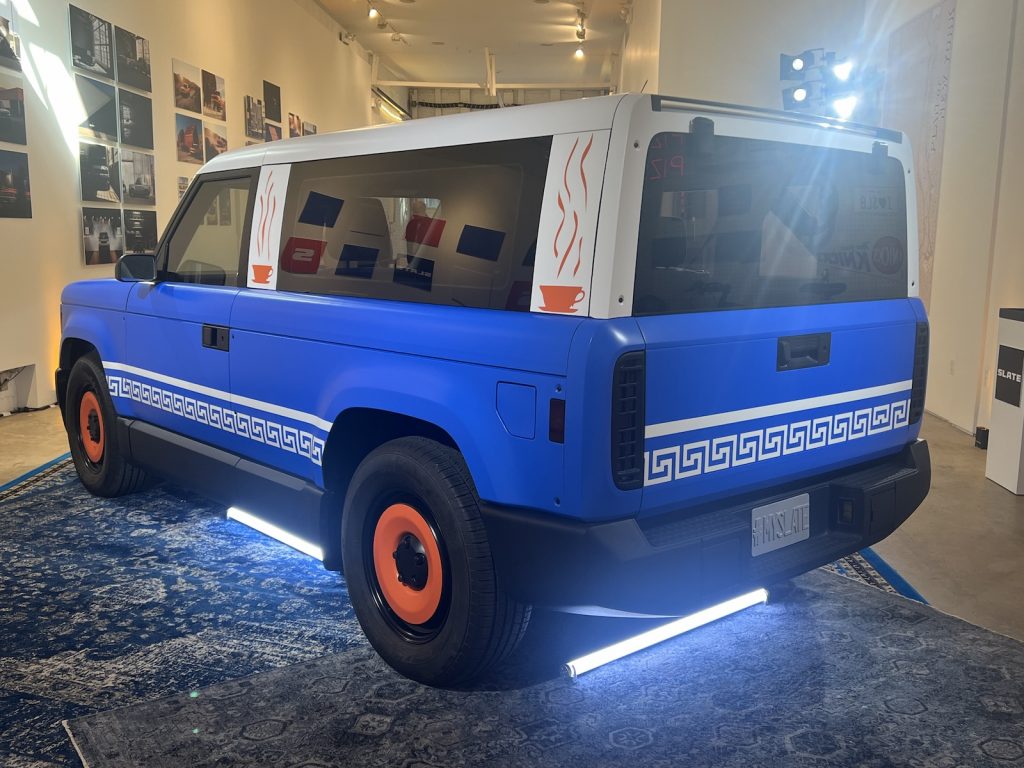
This level of customization, where buyers can easily swap out things like headlights, grille pieces, interior trim, and even body panels with little more than a few hand tools, does more than just give people the opportunity to customize their rigs. It also unlocks the ability for owners to upgrade their cars as new and improved accessories and tech become available. I asked Slate’s head interior designer, Aaron Gold, about the standard phone mount, and he told me that the actual size of the mount is still being finalized. But even after it hits production, it can still evolve and be easily switched out by customers.
“One of the coolest things is that the way the dashboard is designed,” he told me. “[The phone mount] isn’t integrated into the vehicle, right? So it’s something that I can change with technology. So if in a year we’re using some magical little floating guy who’s an AI [chatbot instead of our phones], we can make that work, right? So we’re not locked in, which is something that’s super cool.”

This, to me, is the main reason I think fleets and commercial users will be intrigued by the Slate truck. The ability to upgrade parts as necessary to keep up with their specific use cases feels like an appealing trait and signals that the Slate isn’t the type of vehicle that needs to be quickly disposed of after a few years of service. Plus, fleets can easily repair and replace damaged panels on the fly, which means less downtime spent at body shops.
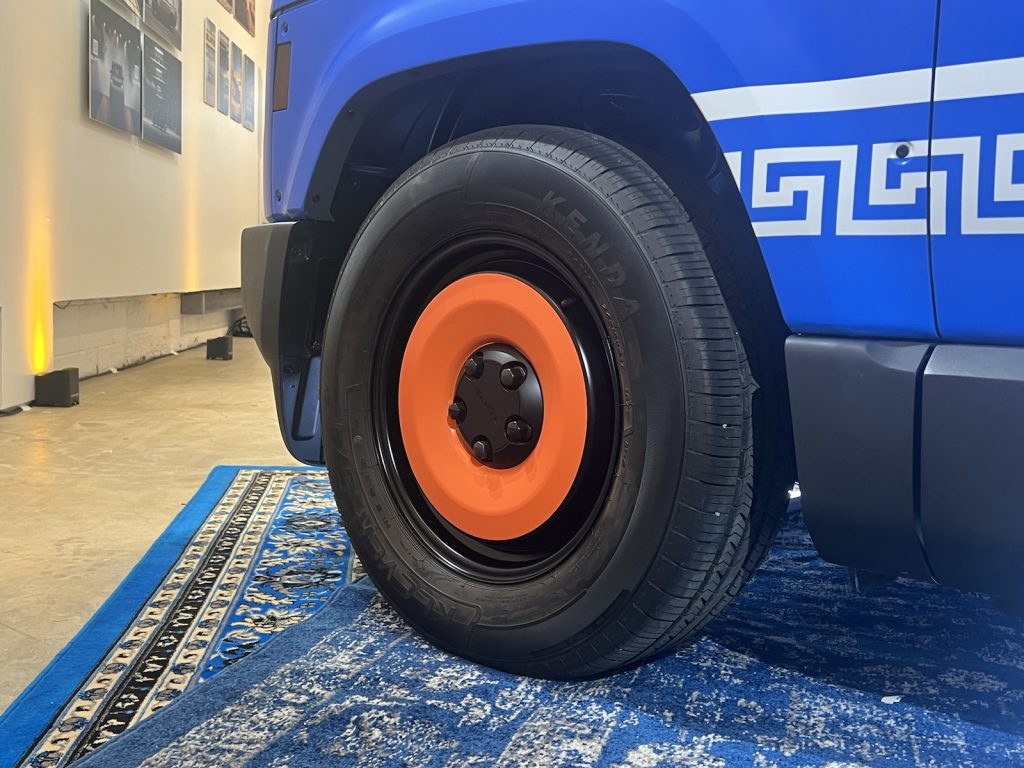
For retail buyers, this goes back to one of Slate’s principal arguments about offering a wide range of accessories. Owners will only buy the stuff they truly want, and none of the stuff they don’t.
“Typically, you’d say, ‘I’m just, I just need this, right? A vehicle that gets me from A to B,'” says Meredith Alves, Slate’s head of Color, Material, and Finish. “But you happen to want, like, the stitch or something, and then all of a sudden you’re given all these features that you’re like, ‘I’ll never use that.”
I Don’t Mind The Interior, But It’ll Be A Shock For Normies
One of the big arguments David made in his Slate post was that the interior was too bare-bones to be competitive in the cheap car segment. And he’s right in the sense that there is basically nothing to the Slate’s cabin. There’s a steering wheel with cruise control functions, a column shifter (nice), three knobs for climate control, and a couple of buttons on the left for stuff like turning off traction control and opening the frunk.
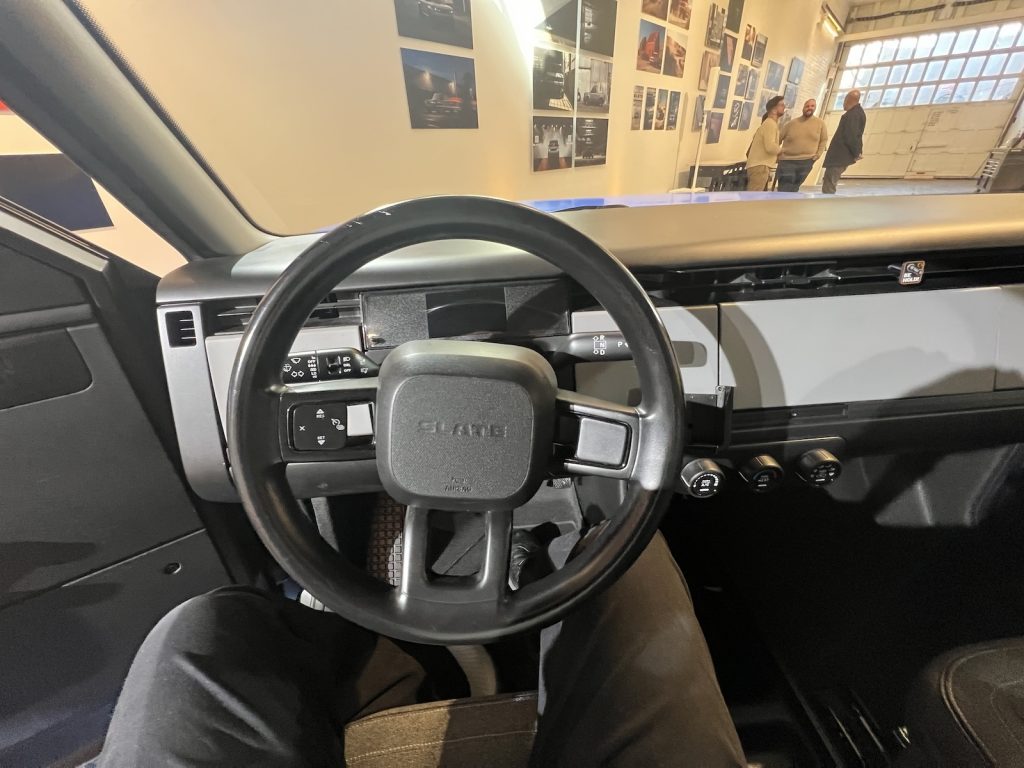
For me, as a person who both loves old trucks and often spends time in stripped-out, basic vehicles, this is a welcome sight. A vehicle with no screen, a round wheel, and analog HVAC controls is incredibly refreshing in a world dominated by seas of touch-capacitive buttons and gigantic screens.
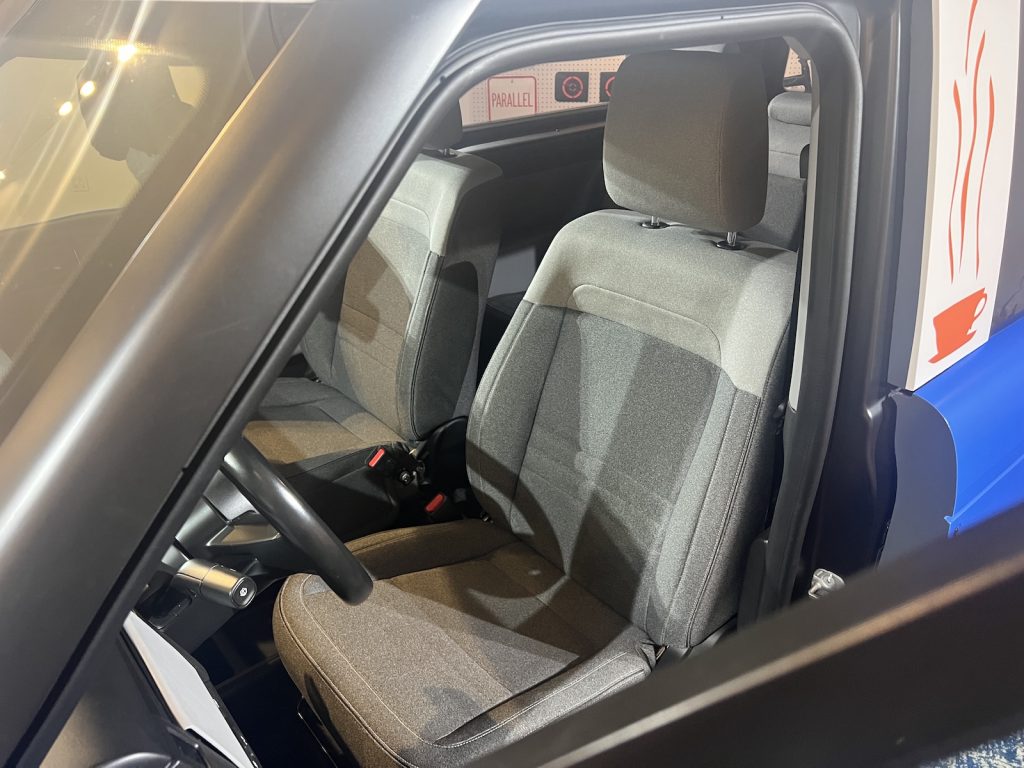
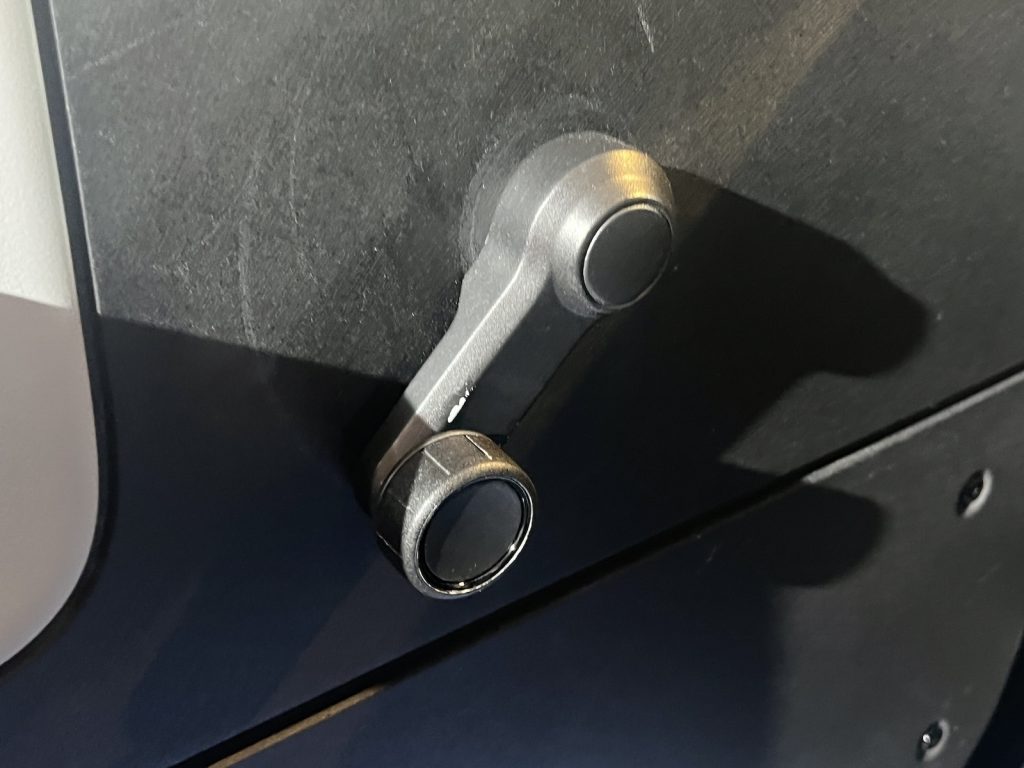
The seats are fully manual and covered in a stitched fabric instead of fake leather, which warms my heart. Famously, there are manual crank windows in place of power-operated units. The SUV version I got to spend time in had a rear bench, which had absolutely zero amenities aside from a couple of cupholders. It’s a minimalist’s dream car.
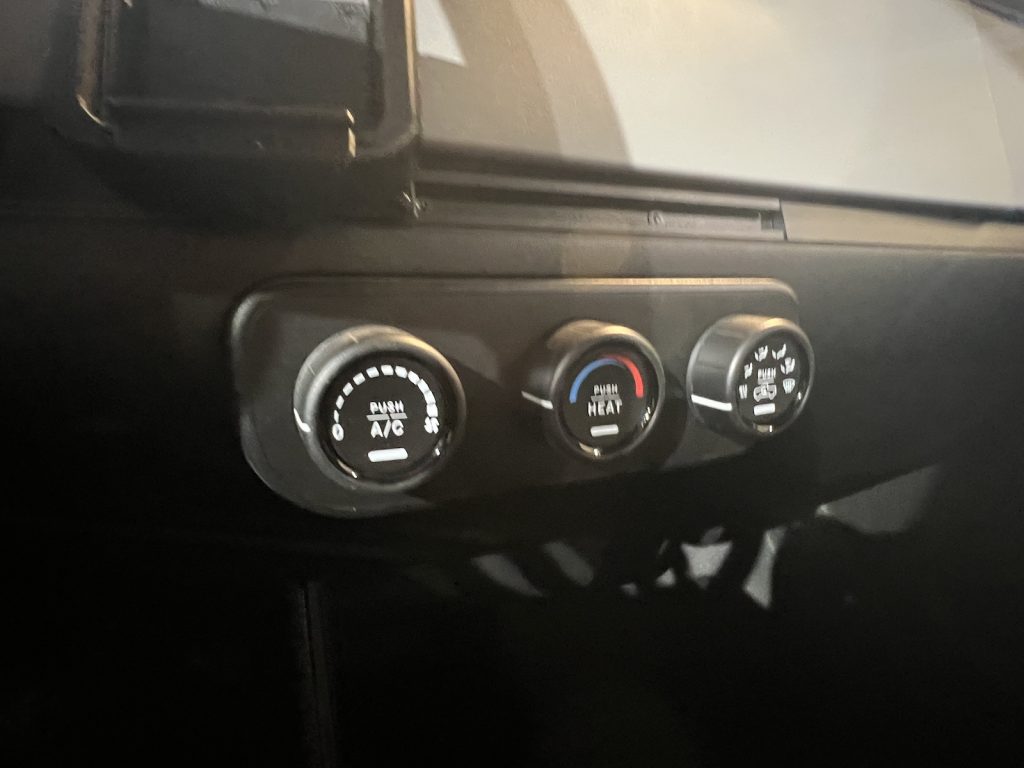
The thing is, the average buyer is now used to seeing screens and buttons everywhere, so seeing a truck without any of that stuff might be jarring. Sure, you can add some of that stuff back in, but it comes at a cost. Every accessory is an optional extra, adding to the bottom line of a car that’s supposed to be one of the most affordable vehicles in America. As David pointed out, you get a lot less content per dollar versus something like a Maverick. And the downside of nothing being integrated into the dash means it’ll be a hodge-podge of bolt-ons you’re looking at, not a cohesive, sleek dash with an integrated screen.
Coming At The Right Time
There is hope for Slate, though. Over 100,000 people put down reservations for the truck in the first few weeks following its announcement. The disappearing federal tax credit may have killed some of its momentum, but that’s still a lot of potential buyers showing interest. It’s not a make-or-break statistic, but it’s proof that people are interested in the concept.
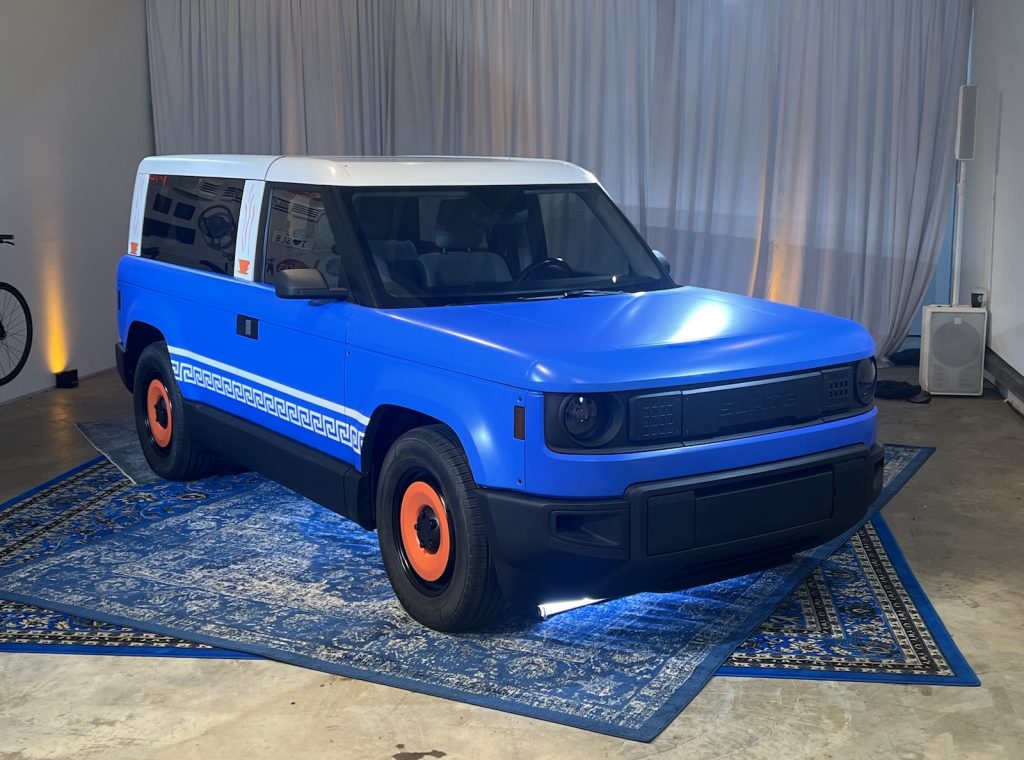
While demand for electric vehicles is slowing down compared to last year, it’s possible things could turn around, thanks to the conflict in Iran. Rising gas prices have resulted in a surge in interest from buyers for “electrified” models, including hybrids and full-on EVs. Hell, even I’d consider an EV after having to drop $111 to fill up my Audi’s gas tank over the weekend. I wanted to throw up.
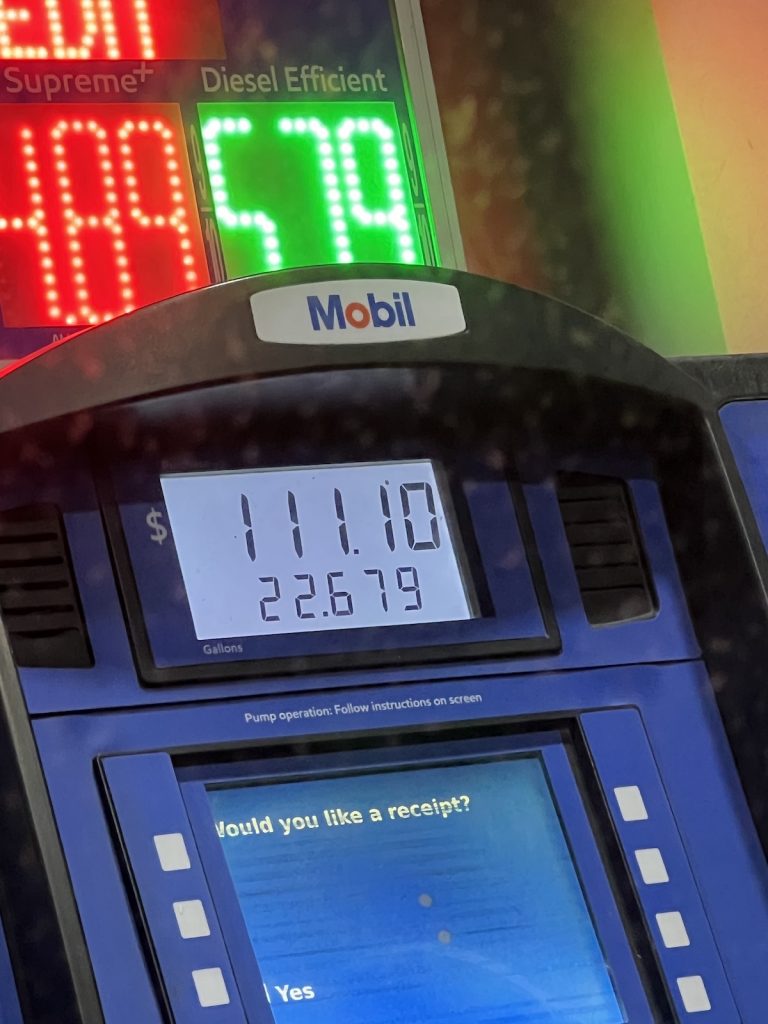
These gas prices aren’t set to go away any time soon, which means people who probably thought they wouldn’t own a Slate because it was no longer the $20,000 deal the company advertised might reconsider when they get the email later this year that their car is ready for delivery. But even if those people want an EV, would they actually choose the Slate? Perhaps. But also, perhaps not.
There Are Still Questions
Even if you’re sold on the accessories, you might not be sold on Slate’s fundamentals. There are just two battery sizes available right now: A standard range setup that’s good for 150 miles of range, or an extended-range battery that Slate says can go 240 miles on a charge.
Neither of those numbers is great. The Chevy Bolt, the cheapest EV currently on sale in America, starts at nearly the same price as the base Slate truck, and it gets 262 miles to a charge—that’s more range than the Slate offers, even with the optional battery. Sure, it doesn’t have nearly as much utility, but it does come standard with a better-equipped interior, more doors, and more seats.
The base 150-mile rating might’ve been acceptable 10 years ago, but these days, even the 240-mile range will have many buyers second-guessing their decisions. A decade ago, there wasn’t a swath of used, highly affordable EVs for people to shop against new models, either. In this price range, you have to assume people are shopping new and used to extract the best value. Why buy a Slate truck when, for a few thousand bucks more, I can get a whole-ass used F-150 Lightning instead? And if you don’t absolutely need an EV, certified pre-owned Mavericks are thousands cheaper than the most affordable Slate truck.
Whether high oil prices and the ability to easily customize and repair the Slate truck are enough to win over buyers from established brands is unclear right now. But I think there’s a lot to like about Slate, especially if you need a fleet of trucks that don’t travel huge distances every day. Given the truck’s small size, I could see them taking over the contractor arena in metropolitan areas with ease. With deliveries still set for Q4 of 2026, we won’t have to wait long to find out.
Top graphic image: Brian Silvestro


Maybe I missed it, but given a screen is mandated for the backup camera, I assume the small digital display ahead of the steering wheel serves that purpose.
As for the Slate’s range,150 to 240 miles isn’t bad for a basic four wheeled brick that is unlikely to be used for intercity trips at interstate speeds.
The hardest thing about the Slate is the convincing they’ll have to do to the public who continue to push the most b.s. narratives in existence.
“I need a crew cab just in case I have a family”, “I travel 500 miles a day”, etc.
They won’t be able to do it.
I do appreciate you mentioning the Maverick though. I’m shocked the prices on those came down as much as they did (or at least compared to what I thought they were). It’s interesting!
People talk like there are unlimited cheap used specific makes and models of cars to satisfy any and all demand. Also fleet buyers often do not buy used cars and trucks.
I have hopes this vehicle succeeds.
I also know that Amazon has enough money that they could sell these at a loss for a long time until they are well established just like all the other tech sector disruptions (taxi anyone?)
What’s likely to dominate reviews is the range. With the EPA refusing to break out city/highway range ratings and the Slate’s brick-like aerodynamics, highway range is unlikely to hit 200mi even with the big battery. It might even struggle to hit 150mi at 75mph. They really need to design a few first-party aerodynamic accessories, like an obtrusive but easily detachable spoiler and/or a sloping bed cover and give them to reviewers to prove that the range problem can be improved.
The key to this truck is all going to all depend on if it becomes a Fad.
The math doesn’t work for this truck for a normal consumer. I need a vehicle that can carry 2 people normally and 3 perhaps in a pinch. By the time I get an SUV version of this, I can likely get an Equinox EV. If I want something funkier looking, Ioniq 5s exist for about the same money. And they all have power windows and more range
However, fads happen. I remember when VW couldn’t keep New Beetles in Stock, but were putting cash on the hoods of Golfs, that were the same car, but with a practical body shape. I’ve read about Ford struggling to sell Falcons, cutting off 2 doors and making the trunk smaller and then struggling to keep up with demand for the resulting Mustang.
This little truck has potential to be a fad. I can’t say if it will or not, but there’s a chance. If it becomes THE thing to own, Slate will have a hard time keeping up with demand, regardless of specs.
As for the specs, they are plenty good enough for the only logical buyers. Commercial customers. The local NAPA needs a truck to replace their ancient Rangers to run parts to the repair shops. This would work. A local Florist needs a delivery vehicle to replace the clapped out NV200. This would work (with SUV kit). etc.
So no panel van option for a sweet mural. Disappointed.
You should be able to put a wrap over the window though, so while you would have some lines to contend with, you could still pull it off.
If you can paint a mural, you can build a wooden box to stick it on.
I can’t say I’m optimistic, but I am hopeful. I really want this thing to fly. I’m 90% their perfect demographic, with one key failure. I don’t ever spend more than a few grand on a car. I don’t buy new cars. But if I were buying a NEW commuter, I would be very interested in a Slate. Lack of pointless tech really calls to me. The whole design ethos is great, like purposefully using 7 inch round headlights so people have access to all those options. Thats awesome.
I think they will succeed in fleets and trades. It’s a great idea it’s just might not be all that cost competitive. It really needs to be around $20k. The van setup right now at $30k could be a winner for the trades and fleets with no real options for a small van. I’m sure the modular option is a selling point for many it just might be a pay more for less situation for a while. I expect they will figure out economies of scale take advantage of cheaper batteries and maybe the 2029 will be a winner for everyone.
Would be great to get an article about internal tools for hyper-exotic carmakers
Excellent sport coat, have one just like it in my closet, waiting for the style to return. It is time. And the basic Slate truck is too expensive at 30K, even 25K is tough to justify. If it were a hybrid 25k would be excellent.
houndstooth never fails
I could see these being used in municipal fleets as a street-legal replacement for John Deere Gators. Granted, to get into that market, they will need attachments like plows and snow brooms.
The top end Gators cost up to $30K, so we’re already in the right price bracket. A Slate that can do most of that same stuff but be legal to drive on the highway would be really competitive.
The only thing that you might give up is some all terrain capability. But in a municipal role such as park and school grounds maintenance, that’s not as much of a consideration. It might just work for that.
it will fail on the hyper-basic premise that what people do and what people say are often 2 different things.
I mentioned it will all depend on if it becomes a FAD. Fads happen and it’s been a while since we had one. This has the potential to become a fad where people find the style cool and want one and since the price isn’t insane, get one. The New Beetle, PT Cruiser, heck the original Mustang, were all fairly inexpensive and sold well to people that might have actually needed a bit more vehicle than they got.
Others are talking about how it should be a hit for commercial operators. Just like how the Maverick was positioned to do well there and then everyone went crazy ordering them for personal use and drove the Maverick up market. Which I think MIGHT happen here.
I would love to have this as a commuter vehicle as my commute is 15 miles each way I would like a vehicle that fit more than 10 bags of mulch in my trunk or more than 4 yard bags of sticks and leaves. I do not need a full size truck that gets absymal fuel economy and I do not want to then complain about parking downtown just to do occasional truck things. This would absolutely fit the bill.
It’s been over 20 years since the OG Scion xB hit the States. They marketed to the fast & furious teens and 20-somethings as a way to express themselves, but it was widely adopted by a much older crowd because it was so practical and minimalist. I hope the Slate has similar success, and influence. I hope to see other similar options from other manufacturers, with hybrids or four-bangers.
I had this thought as well, the designers were showing me just how easy it was to slide in and out of the seat—it’s the perfect height for older people and requires zero effort for egress.
Is the business plan just combining a whole bunch of stuff that has been shown to either be unpopular or unprofitable and hope there is enough demand for it? Regular cab pickups still exist but do not sell super well. Base models with less features exist but typically do not sell as well as mid tier options, heck even basic work trucks still kinda exist, they now have radios and power windows because most people wanted them and for the small volume that didn’t it was probably more expensive to not have them. Many manufacturers are moving away from or scaling back EV plans. There isn’t any option for awd. The customization aspect is kinda cool, but that is highly dependent on how much the add ones cost and how much support they get, I’d love to be wrong but I have my doubts there will be enough volume to sustain a rich aftermarket.
I’m very optimistic about the Slate truck!
People love love love tiny two-door pickups with electric motors, a whole kit-car ethos with online dealer support.
The world is craving this!
I think it will be the sleeper hit of the decade with sales measured in the dozens!
At least two, and possibly three people on this site will buy them.
My home state of Calif will buy most as it fits the vibe here. I predict sales of no less than 40 and possibly as high as 72!
Gonna be a big big success!
I can hear Slate already, taking roll of the potential owners:
“Bueller…Bueller…Bueller…”
Now, in all seriousness, I like it and really would consider one. But I’m a former auto and tractor mechanic, have lots of garage space, own multiple cars and trucks, love tiny cars and tinker with my cars non stop. Plus I think the micro pickups of the 70s and 80s were fab as I owned half of dozen of them.
But every single normie I know wouldn’t give you two dollars for a Slate.
This dog won’t hunt.
You and David are bumming me out.
I’m ok with basic, I’m ok with compromise.
But from a company that has been notorious for using users data against them (ever wonder why something on Amazon is a certain color? because data shows one over another has an effect), from a company that has not had workers rights in the best interest, and on a new business venture – I’ll let someone else guinneapig that.
No one cares who makes their consumer products. Sadly.
And yet, Tesla sales took a serious hit in response to Elon’s political nonsense outside of America. So there’re still people who’ll stick with their convictions.
Elon had to work really hard to get hated as much as he’s hated. Most other consumer companies work hard to remain anonymous and non-politcal (at least to the public). The hard reality is that we’ve become conditioned to seeing most generic consumer products coming from overseas from companies we’ve never heard of. Slate will succeed only if it hits its price targets and delivers an acceptable-quality-level products within its promised timeline. Right now, it’s vaporware and any sort of recession will probably kill it.
Not applicable. Elon was part of a niche group where ideological purity is critical.
Normies want cheap, quick and cool.
Where do they put the mandated backup camera?
They put it on the digital gauge cluster screen IIRC
You are correct.
Thanks for the replies.
HARD disagree. If I wanted to buy a Ford Maverick I’d buy a Ford Maverick. But I didn’t because:
A: Its a Ford so its going to be a POS
B: Its not all that small. Its a lot larger than my 1996 Tacoma 4-banger
C: It is nothing like the Slate, not the same kind of vehicle and made for an entirely different buyer.
The Slate isn’t a direct competitor to anything because there isn’t anything else in its size available. Its also not a competitor because this truck’s ENTIRE appeal is that it doesn’t have all of that stupid bullshit we really don’t need. I don’t need power seats, power mirrors, a heated steering wheel, a whole dash full of screens and so on. Nope. I want the spiritual successor to trucks like the one I own, which has a bench seat, crank windows, manual mirrors and not much else. Ding Ding Ding! That’s what we want. None of the stupid crap that Maverick comes standard with.
At the end of the day its the simple, no bones, more honest to god, down to earth, no bullshit kind of vehicle the Slate seems to be and something we have sorely missed.
Not sure I agree…
A: The Hybrid Maverick has a NA 2.5 tried and true Duratec backed up by the Toyota designed/inspired planetary CVT. It should be pretty reliable long-term.
B: It’s smaller than my 2001 Crew Cab Tacoma… barely. But, outside of the Miata, cars and trucks have generally jumped a size from where they were at 20 years ago.
C: Similar buyers. Mavericks are all over fleets these days. The beauty of the Maverick is that it is cheap and cheerful in it’s design and price.
Also, sure the Maverick doesn’t have a bench seat and roll up windows, but who wants roll up windows with a crew cab? Maverick has all that someone would want without a ton of bells and whistles. 10/10 recommend.
Yup, you and dozens of other people are the target market for Slate!
The question is are you willing to pay more to get less?
At $20K the Slate made sense. I can’t see it selling for $30K
I think you’ve hit the nail on the head when it comes to fleet sales. Fleets can make the best use of a short-ranged EV, custom-branded wraps, minimal amenities, and low lifetime maintenance costs. I can see a big fraction of Slate’s sales going to fleets, while still selling in lower numbers to consumers interested in a niche vehicle.
In particular, I could also see this as a popular rental in places like Maui or Martha’s Vineyard, where trips are short and operating costs for a gas car are high. Resorts could keep a fleet on hand parked at Level 1 chargers and rent them by the day to tourists.
Where I live that fleet role is filled by the Chevy Bolt. NAPA pretty much replaced their entire fleet of old Rangers with Bolts. So has the Chic-fil-a and some other restaurants.
I just wasted a few minutes on the maker to basically design a heritage Toyota including the wheel decals. Kinda neat. I mean I haven’t driven more than 100 miles in a day in a long time. Daily commute is about 54 miles.
If and when this becomes an actual hybrid then maybe would consider it.
BEV is a no go for me though.
You’re welcome!
https://www.theautopian.com/im-about-to-speak-to-the-designer-of-the-slate-pickup-truck-what-do-you-want-to-know/comment-page-2/#comment-915700
Did you actually ask the guy?
You touch on my big hope for this… that it’s cheap to insure because the body panels are easy to replace, and a wrap should be cheaper than matching paint.
I think the big competition is going to be cars like the Bolt, but also used EV’s. For the price, the Bolt is a really good value. And used Bolts are (prior to the gas prices going up) like $12,000-17,000.
I understand that wraps start to fail after about 5 years. I’d prefer mine without a wrap.
Somehow, more expensive oil will just mean that electricity prices jump just as high.
I still want it with a dependable four-banger in it. Nissan SR20DE or Toyota 3S-FE are my first thoughts.
Why? Do all of the power plants run on petroleum? Nope. A lot of it its from Nuclear- of which the US has more of than anyone else, and of which we get a lot of our power from. All I know is that after having owned a variety of EVs over the last 3 admins, our costs range from being around 50% less than the equivalent in has during “normal” times to 3 and 4 times cheaper then the orange dipshit pulls another stunt.