

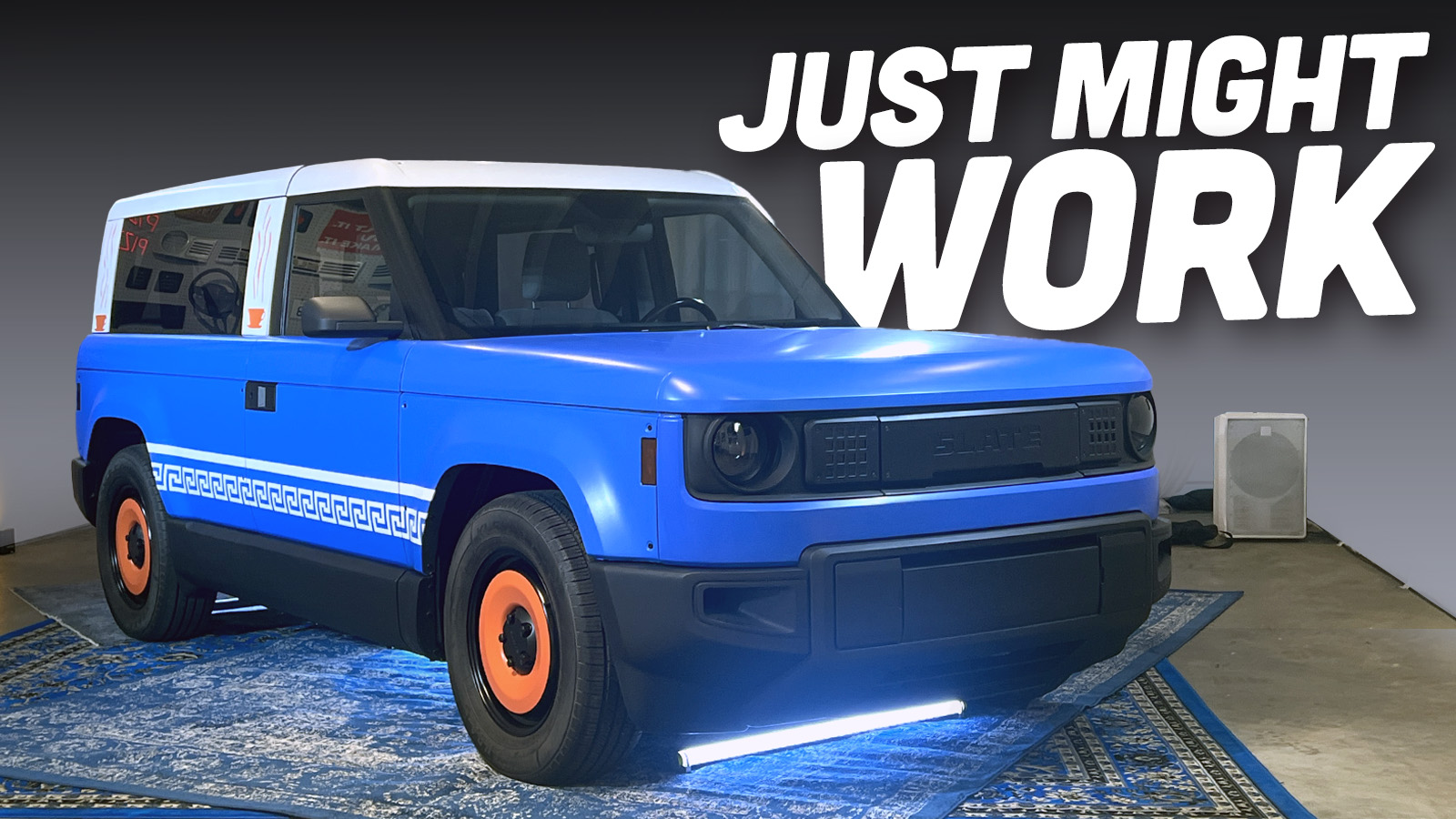
One of the biggest questions in the automotive world for 2026 is whether Slate’s electric pickup will succeed. It was revealed just over a year ago, and back then, the U.S. still had a federal tax credit that would push the truck’s price to around $20,000. It was a glimmer of hope in a world where affordability is at the front of mind for buyers, with fewer and fewer options to choose from.
Now that tax credit is gone, demand for EVs in general has flattened out in the United States. Our very own David Tracy argued, perhaps rightly, that the Slate truck would be a far more appropriate “people’s car” if it just had a simple, four-cylinder gas engine rather than an EV powertrain. He also argued that such a bare-bones vehicle, which doesn’t come standard with stuff like a stereo or exterior paint, simply isn’t competitive against entry-level crossovers or its most direct competitor, the Ford Maverick.


David made some great points in that post, and I don’t necessarily disagree with them. But I also don’t think it’s fair to count out the truck entirely. I feel especially strongly about that after spending some time actually sitting in a Slate prototype, and speaking to its designers.
The Right Size And The Right Shape
The Slate truck has a simple, straightforward mission: To offer one of the most affordable new vehicles on the market that people will actually like. That means it has to appeal to a wide range of buyers, which requires a bit of a balancing act.
“We knew that this thing had to at least be customizable from the ground up, so we wanted to have something that’s very simple, yet, I would say timeless,” says Gus Bizyk, Slate’s head of exterior design. “That way, it doesn’t stick to a certain time period.”
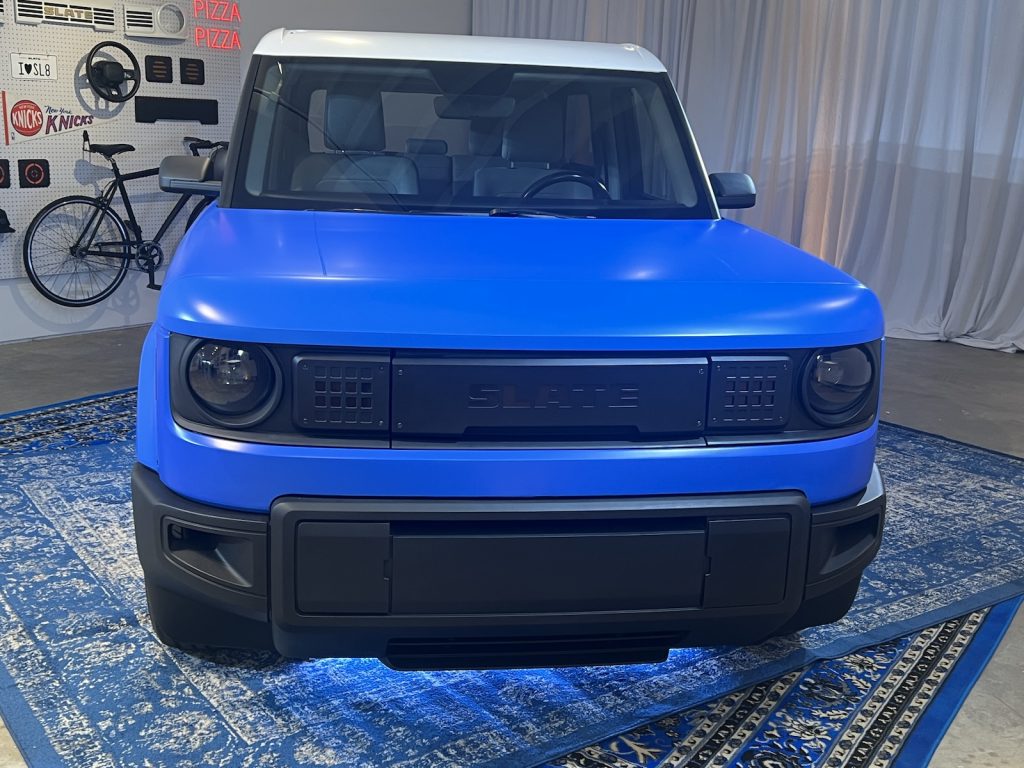
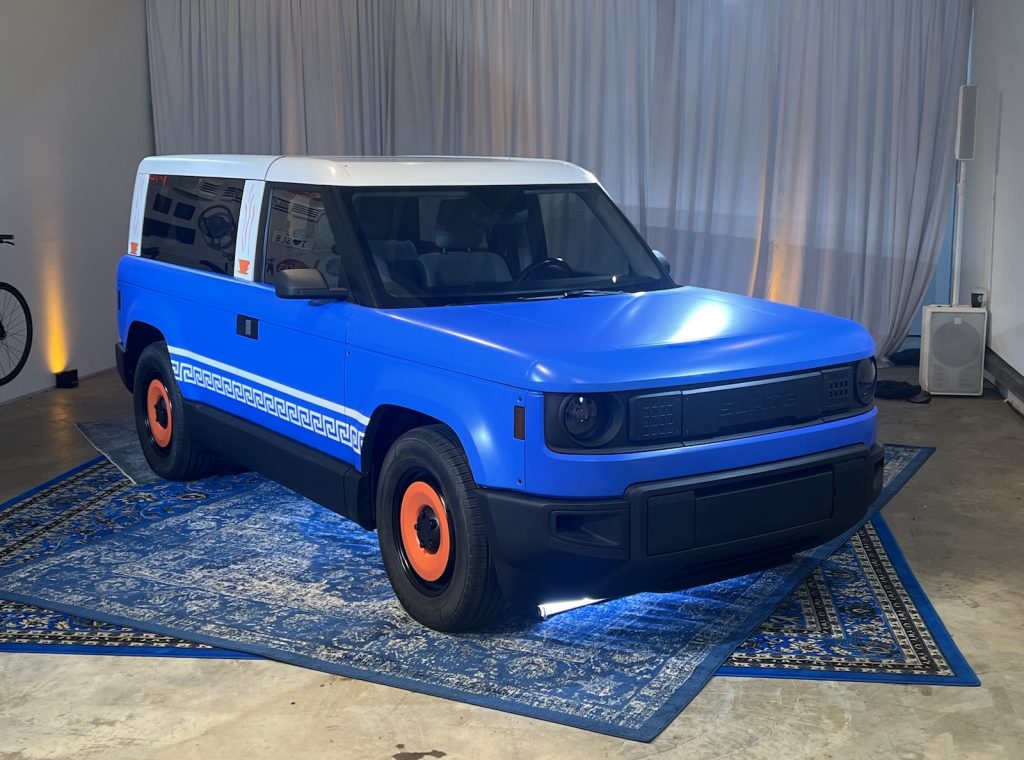
Slate’s whole schtick is that pretty much everything you see on the truck is customizable in some way. You can add wraps to the unpainted composite body panels, switch out the fascia, bolt accessories to the dashboard, and even turn the truck into a two-door SUV with a set of rear seats. The company’s configurator tool is one of the most detailed I’ve seen outside of internal tools for hyper-exotic carmakers.
When Bizyk brought this up, I immediately thought about the Slate’s perfectly round headlights. I’d argue that the prettiest cars ever built all have round headlights, and that the automotive sector’s move away from round headlights was where we started going wrong as a society. So I asked whether the truck’s round headlights were purposeful in winning people over. Bizyk brought it back to customization possibilities:
“We knew that we wanted to make this thing as customizable as possible. So one of the things that we noticed in the very beginning, a seven-inch round [headlight], if you go online, you’ll be able to find a whole vast area of different types of aftermarket headlights,” he told me. “So with that in mind, you know, we want to make this thing, I would say, customizable. But also, I would actually use the term open source. That’s the thing. We want to be able to have people 3D-print parts, but also buy whatever they find alluring online, and just be able to place it in. So those are the things that we’re working on for this.”
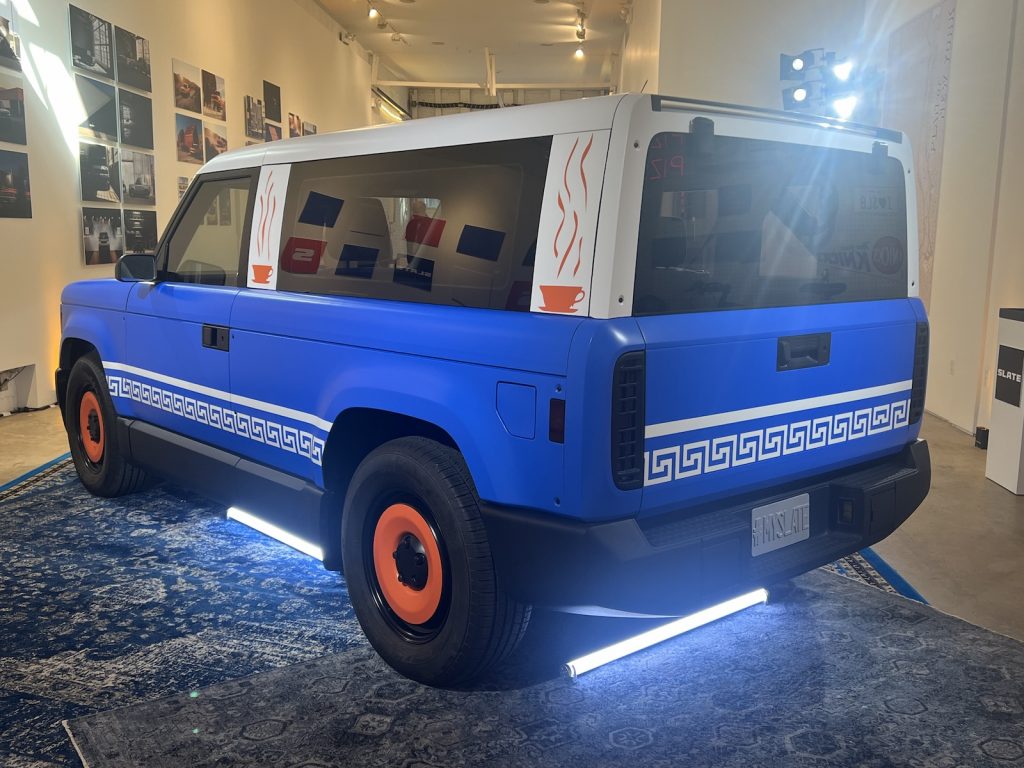
This level of customization, where buyers can easily swap out things like headlights, grille pieces, interior trim, and even body panels with little more than a few hand tools, does more than just give people the opportunity to customize their rigs. It also unlocks the ability for owners to upgrade their cars as new and improved accessories and tech become available. I asked Slate’s head interior designer, Aaron Gold, about the standard phone mount, and he told me that the actual size of the mount is still being finalized. But even after it hits production, it can still evolve and be easily switched out by customers.
“One of the coolest things is that the way the dashboard is designed,” he told me. “[The phone mount] isn’t integrated into the vehicle, right? So it’s something that I can change with technology. So if in a year we’re using some magical little floating guy who’s an AI [chatbot instead of our phones], we can make that work, right? So we’re not locked in, which is something that’s super cool.”

This, to me, is the main reason I think fleets and commercial users will be intrigued by the Slate truck. The ability to upgrade parts as necessary to keep up with their specific use cases feels like an appealing trait and signals that the Slate isn’t the type of vehicle that needs to be quickly disposed of after a few years of service. Plus, fleets can easily repair and replace damaged panels on the fly, which means less downtime spent at body shops.
For retail buyers, this goes back to one of Slate’s principal arguments about offering a wide range of accessories. Owners will only buy the stuff they truly want, and none of the stuff they don’t.
“Typically, you’d say, ‘I’m just, I just need this, right? A vehicle that gets me from A to B,'” says Meredith Alves, Slate’s head of Color, Material, and Finish. “But you happen to want, like, the stitch or something, and then all of a sudden you’re given all these features that you’re like, ‘I’ll never use that.”
I Don’t Mind The Interior, But It’ll Be A Shock For Normies
One of the big arguments David made in his Slate post was that the interior was too bare-bones to be competitive in the cheap car segment. And he’s right in the sense that there is basically nothing to the Slate’s cabin. There’s a steering wheel with cruise control functions, a column shifter (nice), three knobs for climate control, and a couple of buttons on the left for stuff like turning off traction control and opening the frunk.
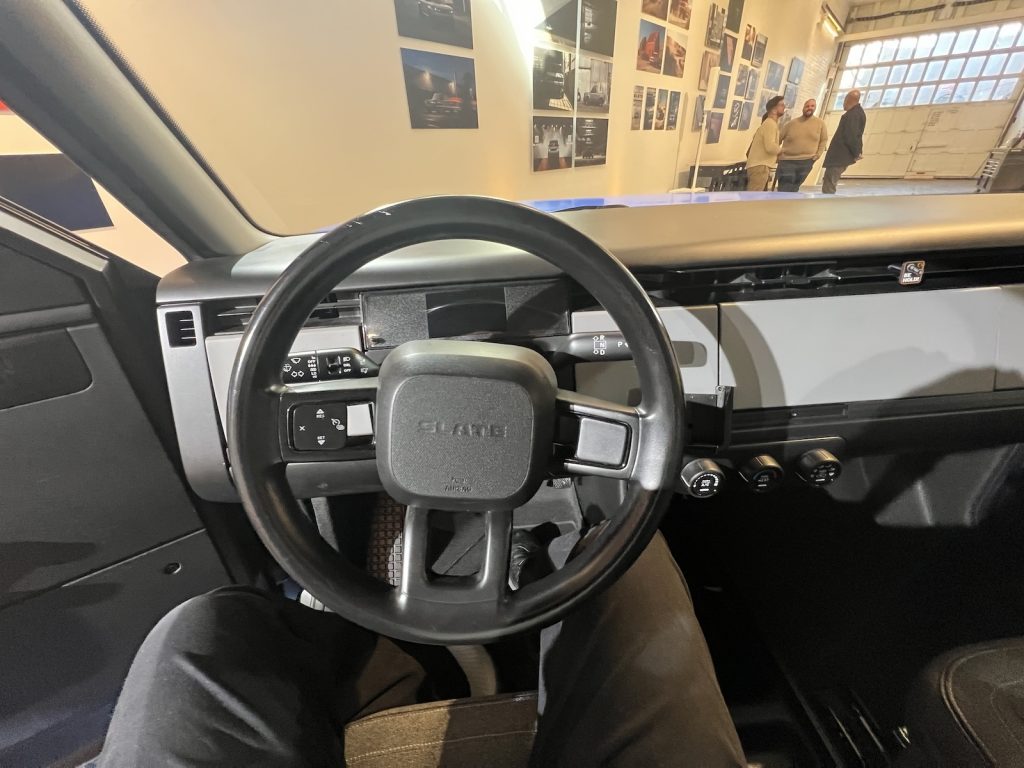
For me, as a person who both loves old trucks and often spends time in stripped-out, basic vehicles, this is a welcome sight. A vehicle with no screen, a round wheel, and analog HVAC controls is incredibly refreshing in a world dominated by seas of touch-capacitive buttons and gigantic screens.
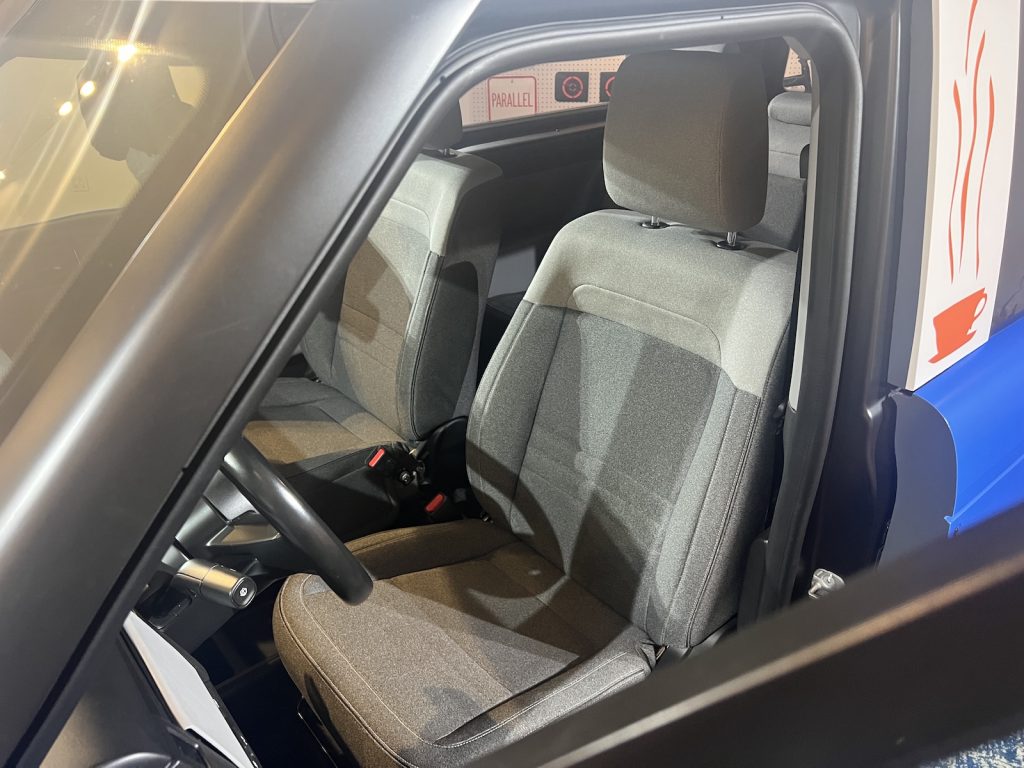
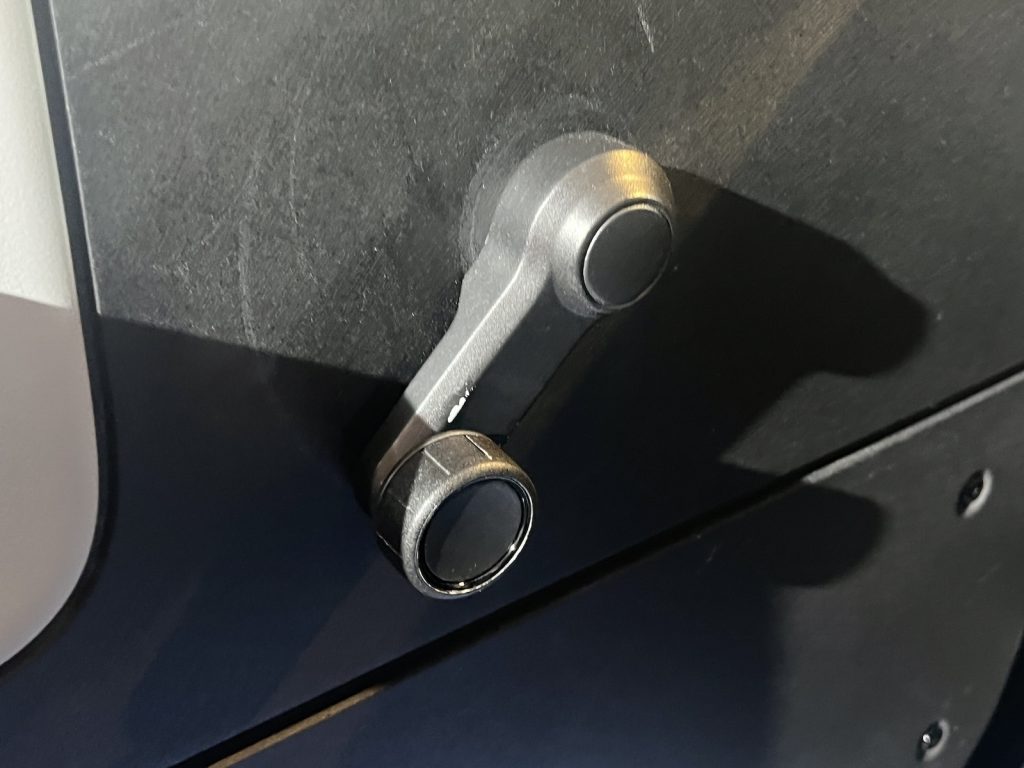
The seats are fully manual and covered in a stitched fabric instead of fake leather, which warms my heart. Famously, there are manual crank windows in place of power-operated units. The SUV version I got to spend time in had a rear bench, which had absolutely zero amenities aside from a couple of cupholders. It’s a minimalist’s dream car.
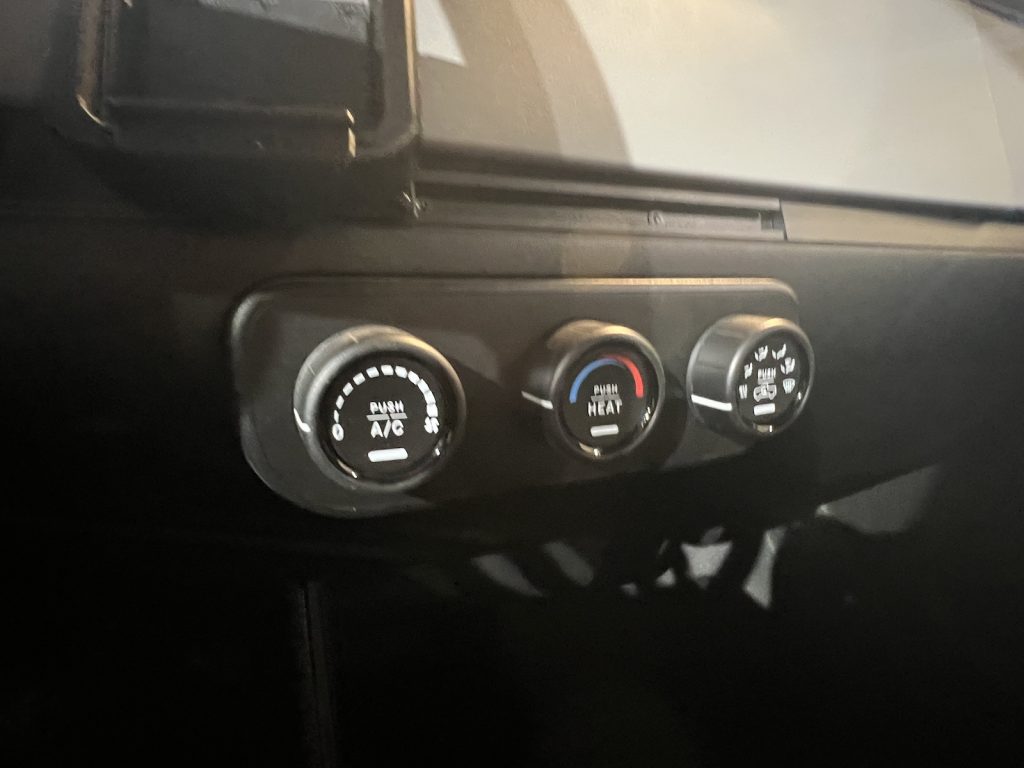
The thing is, the average buyer is now used to seeing screens and buttons everywhere, so seeing a truck without any of that stuff might be jarring. Sure, you can add some of that stuff back in, but it comes at a cost. Every accessory is an optional extra, adding to the bottom line of a car that’s supposed to be one of the most affordable vehicles in America. As David pointed out, you get a lot less content per dollar versus something like a Maverick. And the downside of nothing being integrated into the dash means it’ll be a hodge-podge of bolt-ons you’re looking at, not a cohesive, sleek dash with an integrated screen.
Coming At The Right Time
There is hope for Slate, though. Over 100,000 people put down reservations for the truck in the first few weeks following its announcement. The disappearing federal tax credit may have killed some of its momentum, but that’s still a lot of potential buyers showing interest. It’s not a make-or-break statistic, but it’s proof that people are interested in the concept.
While demand for electric vehicles is slowing down compared to last year, it’s possible things could turn around, thanks to the conflict in Iran. Rising gas prices have resulted in a surge in interest from buyers for “electrified” models, including hybrids and full-on EVs. Hell, even I’d consider an EV after having to drop $111 to fill up my Audi’s gas tank over the weekend. I wanted to throw up.
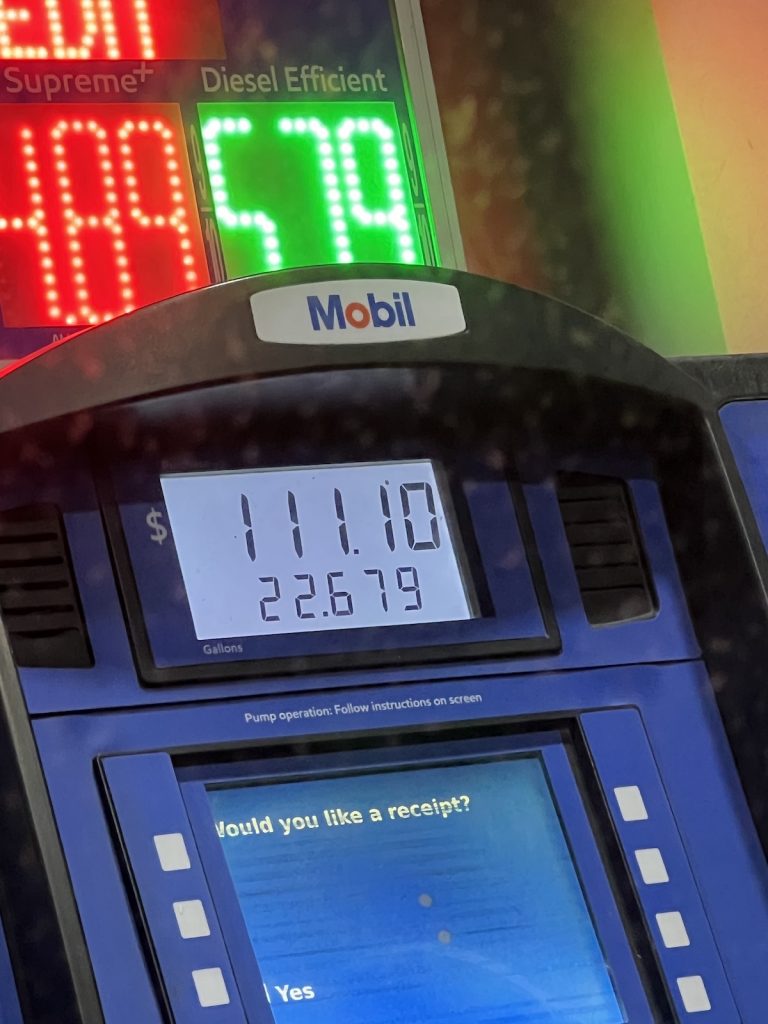
These gas prices aren’t set to go away any time soon, which means people who probably thought they wouldn’t own a Slate because it was no longer the $20,000 deal the company advertised might reconsider when they get the email later this year that their car is ready for delivery. But even if those people want an EV, would they actually choose the Slate? Perhaps. But also, perhaps not.
There Are Still Questions
Even if you’re sold on the accessories, you might not be sold on Slate’s fundamentals. There are just two battery sizes available right now: A standard range setup that’s good for 150 miles of range, or an extended-range battery that Slate says can go 240 miles on a charge.
Neither of those numbers is great. The Chevy Bolt, the cheapest EV currently on sale in America, starts at nearly the same price as the base Slate truck, and it gets 262 miles to a charge—that’s more range than the Slate offers, even with the optional battery. Sure, it doesn’t have nearly as much utility, but it does come standard with a better-equipped interior, more doors, and more seats.
The base 150-mile rating might’ve been acceptable 10 years ago, but these days, even the 240-mile range will have many buyers second-guessing their decisions. A decade ago, there wasn’t a swath of used, highly affordable EVs for people to shop against new models, either. In this price range, you have to assume people are shopping new and used to extract the best value. Why buy a Slate truck when, for a few thousand bucks more, I can get a whole-ass used F-150 Lightning instead? And if you don’t absolutely need an EV, certified pre-owned Mavericks are thousands cheaper than the most affordable Slate truck.
Whether high oil prices and the ability to easily customize and repair the Slate truck are enough to win over buyers from established brands is unclear right now. But I think there’s a lot to like about Slate, especially if you need a fleet of trucks that don’t travel huge distances every day. Given the truck’s small size, I could see them taking over the contractor arena in metropolitan areas with ease. With deliveries still set for Q4 of 2026, we won’t have to wait long to find out.
Top graphic image: Brian Silvestro


Regular gas in my part of California is at least $5.30/gal, and diesel is over $7/gal. My local utility in Sacramento county, SMUD offers a 1.5¢ per kWh discount for home EV charging, for a net $0.14 per kWh on electricity usage between midnight and 6 a.m. for residential customers with a registered EV. Buying an EV now is looking pretty attractive to me, even without a tax credit.
I’m on the reservation list. The only option I think I will be adding is the extended range battery. At the expected price it will have to compete with the used ev market and used trucks like the Maverick, the appeal to me is a brand new vehicle with nothing to break. The only scheduled maintenance would be tire rotations and adding washer fluid making this relatively cheap to operate.
It might be great for people who occasionally need a truck that would usually sit unused for long periods, but this doesn’t have the size or payload that user might need. How is warranty handled? Doesn’t seem like it effectively has one, so that makes it a used car competitor. How many people are going to buy a new vehicle and immediately tear into it to instal something as basic as a stereo? I had a car like that in high school, a $500 ’84 Subaru wagon. It also had crank windows and while I did put in a stereo right away, it did have a radio to start. I’d rather have the Subaru for about 1/30th the cost (adjusting for inflation). Even as someone who likes simplicity (my only car is a GR86 and a big attraction was its relative simplicity), this is a bit much of an ask. With an ICE, a larger battery, or a fair deal cheaper price, it would have appeal, but it seems really poor value for the money, particularly when this kind of extreme declutter is going to appeal to a small audience. It seems intended to sell in volume as it’s a truck and trucks sell, but how many of the modern truck buyers are looking for something like this? Maybe as a sports car where minimalism and customizing are badges of honor, competition is sparse, and the car is expected to be a toy (not that I’m arguing that they should have built a sports car as there’s no volume there), but not for what appears to be a daily grinder for Normals against established manufacturers offering more for the same or less with warranties (including CPO) and likely to still be around in ten years. OK, the simplicity means spares won’t be as important, but the odd thing about this age of easy production with amazing, accessible components, tutorials, and technologies like 3D printers, it seems like fewer people than in the past have the first clue or inclination to fix or make anything themselves and I think too many people at Slate live in a bubble where ownership and usage of things like 3D printers are common when the reality is that those things and the people who readily use them are relatively rare and how many of those users would buy a Slate?
Not those window cranks, man. I grew up with window cranks. I have them in my 96 Tracker and will be switching them over to electric at some point. It’s the reach over for the passenger side. I’m not doing it.
A Slate makes lots of sense for fleets, but they are a 2nd/3rd/4th car for almost anyone not operating a fleet. I paid 7.5k For a 4×4 Tundra with an 8 foot bed, topper, and an AM/FM/CD player. Crank windows were a bonus. As was the timing belt?
I wish them all the success, but if I decide to add an electric car it is going to be a slightly used one that has benefitted from catastrophic depreciation.
I’ve watched my local O’reilly’s location total several new Nissan Frontier pickup trucks, Slates would be the perfect fleet replacement for some of those.
I am a huge DIY person and have already been scheming several projects that I’d love to do if I got my hands on one of these, I just want to know how those composite panels handle the hail we get around here. I’ll be one of the first to hit mine with a can of Rustoleum plastic primer and paint it green!
Another spot where it gets beat out by the Maverick. The O’Reilly’s around here have those for delivery cars. And some Rangers.
Ha, I was going to mention O’Reilly as well. Some of the ones around me had first-generation Chevy Colorados that they ran into the ground. Finally they replaced them with Frontiers and a few last-gen Tacomas, but I assume operating costs on those are still relatively high. The Slate seems like it would be absolutely perfect for that specific use case.
My 2027 Bolt RS is a ‘Rolls-Royce’ compared to this. Price-wise, my Bolt listed for $33500. It is too early to tell, but initial quality/fit and finish appear excellent. I have a 2001 Highlander that I use for hauling compost and the like.
I need something for around-town (less than 60 miles / day) that I can throw crap into the back of and this is a perfect use case for it. I really want to know how those composite body panels will hold up to hail.
They’ll hold up as well as your plastic bumpers hold up to parking dings – its the same material.
I have my 2000 Ford Ranger Electric, and have a reservation on the Slate. Coming from the point of view of the Ranger, it came with AC,manual windows, am/fm radio.(I upgraded the windows and stereo but can also do that with a Slate.)
What the Ranger doesn’t have, DC fast charging, cruise control, power frunk, 100 more HP, 100 more miles of range with just the standard battery. So for me it would be quite an upgrade.
When I bought my Ranger it didn’t commute well(see above range) so I got a 2017 Bolt which did, cost of both(used) combined 6 years ago was $25k, so if the Slate comes in around that I’m good.
My case is fairly unique but I think there’s a lot of people with 20+ year old FFRs and such that want basically the same thing, EV or not, single cab truck for 2nd or 3rd vehicle, let one of the kids drive it to school and use it for hardware store runs on the weekend. And I think Slate is seriously targeting Fleets, and they really don’t have to sell that many, if they do half the numbers of the Maverick that’ll probably be a massive win for them.
And as Brian mentioned, the look of it is cool, the round headlights, the square body, it’s like a shrunk down C10 or F100 and you can get a two tone wrap to complete the look, or go classic Bronco style with the open top bench in the back.
I hope they make it, I have my Ranger so if not I’ll be ok, but I think the youths today need cool small trucks again, if it’s a hit maybe it’ll encourage other 80s/90s style small EVs, the makes already got cool names to use, Neon, Pulsar, Probe(snicker).
I agree Chrysler/Stellantis is really sleeping on that Neon name for something cool. Cannot wait for Slates to start hitting the test drive phase!
After reading the article, I have a hard time reconciling it with the headline. It seems like you went over far more reasons the Slate won’t work. And for what it’s worth, I would agree.
I understand the soft spot of the enthusiast community for this thing, and I hope to be wrong because it’s a noble endeavor by the Slate team.
But the reality is, very few mainstream buyers would accept a car this feature-less and this cheap looking especially at the new price this will demand. I didn’t think it had much of a chance at $20k, but nearly $30k is outrageous for what will look and feel like a glorified golf cart to most people.
I think it being electric is the least of its problems, frankly.
Also, “fleets can easily repair and replace damaged panels on the fly, which means less downtime spent at body shops” – come on, we all know fleets don’t care about body damage.
Anybody been up to Warsaw Indiana to check on how the factory is coming along?
I’ve driven by and there is certainly a lot of activity going on there.
Range doesn’t scare me. Any vehicle I buy is my second, and even 150 miles of range will cover an entire week for me with room to spare. I’ve decided I’m too damn old to keep making the 1100 mile drive back home for the holidays. This would be a great vehicle for many things I’d rather not have to spend an hour cleaning out my car afterward.
We’ll see if I start saving to import a kei car at the end of 2027 or if I decide to buy a Slate before then.
Kei cars are crappy death traps, I would buy the Bolt, other EV’s or if decent, the Slate truck if I wanted something to drive in town & I had a place to charge it at home…
So did you look underneath it at the frame and structural members and ask the Slate people about the corrosion warranty?
Also, will they offer a separate, covered outdoor storage topper so I can have the bed separate from the cab, yet still have covered storage?
Will they partner with an aftermarket company like Leer or SnugTop and have (wrappable?) toppers available to purchase – either through Slate or a third party?
I’m with DT. I’d buy this in a hot second if it had a 150hp gasoline engine. But it never will. Building EV is easy for startup companies. All of the powertrain parts are easily available as commodities off the shelf from 100 suppliers, and there are no concerns about emissions compliance. But if you want a gasoline engine, it’s not so easy. Either they buy an engine that’s already emissions compliant ($$, and you’re at the mercy of the supplier) or develop an in-house gas engine that’s emissions compliant ($$$). Not gonna happen, unless the EV Slate sells so many that the company has tons of cash to develop their own engine.
Yeah, an ultra basic, blank slate, minimalist vehicle like this with a tiny gas engine would be ideal for me. Especially if it was, like, styled as a cool retro-looking small car a la Nissan Pao. I mean, if you have to pay for the body molds anyway to build a vehicle.
Even a basic hybrid with a tiny battery and a little 2-cylinder
So the base Case scenario from the article and comments is it is great to buy for many uses as long as the buyer is not the one driving it? Put your employees in it and screw them if they don’t like it
I find basic cars are the best. However no radio but has cruise control and traction control are standard? Also I wonder why with no accessories running on electric, like windows, why does it have such poor range? I’m thinking a Cushman truck will be cheaper but better.
TC is required by law and both it and CC are very easy to implement. The poor range is due to a small battery to keep it cheap and I imagine the aero isn’t very good, either.
Traction Control is required by law? When did the nanny state do this? Next thing you know they will be required to have brakes and lights horns.
Well, technically, it’s stability control that’s mandated (2012), but since ESC incorporates TC, you get the one with the other. Everyone decided to buy jacked up vehicles with a propensity to flip over and didn’t want to adjust their driving behavior to match, so a bunch ended up becoming Dollar Store “On-the-Roof Erik Carlssons” and The Man swooped in with rules attempting to protect the stupid from themselves instead of letting it work itself out.
Kinda doubt many folks care about personalization, seems like an odd place to focus. I also wonder what the ven diagram of folks who want a basic tech-free car and folks who want an EV, and people willing to support Amazon/Bezos looks like… I’m sure there’s some overlap, but it still seems kinda niche.
I think the personalization aspect is there to generate marketing interest with consumers and appeal to regional delivery and small business segments, rather than for mainstream customers
Yeah, they might do better with a customization focus if these were sports cars. This seems more like Toyota’s idea for Scion, which failed, but at least it doesn’t seem like Slate’s business plan relies on selling that customization, so that’s a (small) plus.
Good for clicks and the “that’s cool” factor, but execution will be close to nil. Even the Maverick released 3D printable files for accessories for the rear seats in the cab. I’m sure they were a massive success and tens of them were actually made.
As a family’s second car it makes a lot of sense, especially for people who own a home and have need for a small truck without all the full-size truck baggage and fuel economy.
The fact that the Slate also doesn’t have a modem and can’t track my location to sell to god knows who is also ideal.
…that you know of…yet.
Actual car aside, that Anthora NYC-street-coffee cup theme is sweet.
Are there really folks nostalgic for hand crank windows? I’m pretty ok with bare bones cars, and I’ve owned plenty of old cars with manual windows but idk pretty happy to let them be a thing of the past. And while on whole I’ve still dealt with more broken power windows I’ve also dealt with cars with broken crank windows so it’s not like having manual windows alone is a guarantee of enduring operation.
Kind of at a weird point in history – if vinyl records can make a comeback so can crank window handles.
lol maybe, though I must say I have been low key collecting vinyl and still enjoy film cameras and I am ok without manual windows. But who knows maybe others will find them pleasantly tactile…
I prefer the crank windows. Easier and cheaper to repair. If the gears are not stripped it’s a simple bending of metal. As opposed to a $300 motor and electric work
Only issue I’ve ever had with a window is cranks breaking off and the ones in this Slate shown already shows some wear on the crank and panel. I never had an issue with power windows with about 100k mi. in cars with manual windows and 900k in cars with power. Not that I think it’s a big concern. In my early ’80s Subarus, I could reach all 4 windows and wind them while driving without taking my eyes off the road or at a red light, plus remove or add the manual sunroof panel with time to wait for the green. I don’t know how big the Slate is inside, but if this is sized like everything else today, that’s going to be a reach just to get to the single other window.
I will say I don’t know if door panels scratching bc they’re hard plastic guarantees the guts are crappy? I had a 2007 hyundai for a while with hard plastic door panels (mightve been crank windows too…) and they scratched quite easily but overall that was a pretty reliable car
I won’t buy Hyundais and the Sonata my ex had was falling apart so badly that I didn’t notice the state of plastics (weatherstripping—what I thought was a solved problem—completely gone from the window channels in under 90k miles like it was made in the old DeLorean factory, but the worst one was the control arms broke from corrosion, thankfully at low speed or I’d be in prison for killing Hyundai execs). Otherwise, it’s not something I’ve seen since probably the ’80s on cars that were lower end with years of UV damage. If that’s where the money’s being saved instead of something important, that might be OK, though it’s not a good sign to people wondering if this new manufacturer is making a good car and it’s up against cars from established makers offer interiors that don’t look like cars built 40 years ago with 10 years of neglect and environment on them in short order. Of course, these might be abused pre production cars with lower end plastics than production units will have and I hope that’s the case. VW has made junk for several decades, but they convinced enough people they were a premium product because the interiors seemed nicer than competitors (at least for a few years), giving a perception of quality to buyers. The opposite tends not to do as well unless it’s priced significantly less than competitors or it has an established reputation for being otherwise bulletproof, which isn’t the case here.
The accent was a car I foolishly bought with an ex…lol…but that’s pretty terrible. Idk I would be nervous about buying a hyundai kia product now based on Theta engine problems, the Kia boyz thing etc. I fear like you that they’ve figured out how to make a really nice looking product and cheaped out to the very letter of what they think they can get away with everywhere else. While not the same company when I worked at a camera repair shop and we found the same thing with Samsung camera gear, looks nice, cool sometimes even innovative features but when you took them apart they were cheaply built with little thought given to actual long term durability, and I fear that Hyundai has as a similar mentality as another rising Korean manufacturing giant.
That being said I see your point, and as someone who works in digital product design perceived quality is important bc whether real or not it effects how people perceive durability, reliability etc. Hopefully it is an early pre-production prototype and there’s still time to sort this out for them. I don’t mind budget but I hate cheap if that makes sense.
I’m 100% with you on that. Cheap doesn’t need to be junk and I have no problem with cheap and durable. Like my ’90 Legacy. Interior was all hard plastics (though at least it was blue, which looked a lot nicer than the tan), but it wore well, nothing failed, and the ergonomics were top notch and I prefer that to soft touch that seems nicer, but effectively melts.
To your point: I recently picked up a 2005 Legacy GT wagon, bit of a unicorn car for me that I’ve admired for years. When they came out they had a much “nicer” more euro interior than previous Legacies, lots of soft touch plastic finishes. And wouldn’t you know it in 2026 even in a clearly well cared for car (even if high miles 198k) all the soft touch plastics are mildly ratty. I’ve replaced two door pulls, bought a center console on ebay only to find that the seller’s low res photos hid a lot and it wasn’t enough better than mine to be worth the work to install. And I’ve basically given up because every one I see is the same or worse. I don’t know if that’s why or its just cheapness but my wife has a 2015 Legacy and that car’s interior has noticeably more hard plastic but my guess is it will last better because of it even though it didn’t feel as lux when it was new.
That was the last year for a manual wagon, wasn’t it? I wanted one in Atlantic blue, but I needed better mileage and now they largely seemed to have disappeared. I think they had rust issues, but I’m not sure if that was why they disappeared. Surely, they couldn’t have been worse than Mazda and I still occasionally see Mazda contemporaries.
A guy at work got rid of his ’13 or so Legacy about a year ago and it had almost 300k on it. Seemed like the HG was going, so he sold it cheap to a mechanic who he said fixed it and is driving it around.
It was the only year for the stick for non-outback Legacy wagon, i believe you could get the stick in the sedan a few years longer, and they offered the spec b for all the product run. I’ve read only like 1600 stickshift legacy wagons were made. I don’t think they were any more rust prone than any other subaru…I’m lucky enough to live in the PNW where rust isn’t much of an issue though I have noticed thanks to a sloppy windshield install job there’s some tiny bubbling near the windshield I’ll need to correct at some point sooner than later.
Sadly the early version of the EJ255 that these came with had some design flaws that I’m sure took many off the road prematurely. Mine is on its 3rd engine looking through the records, in theory previous owner took care of the major one-the banjo bolt filters that clog and starve the turbo of oil which then frags itself and take out the engine-after this happened to him.
IMO everyone who complains about these being rusty (or mazdas for that matter) live somewhere where rust is just a problem for all cars? Like if I live in Minnesota or chicago isn’t anything I daily in the winter going to look like swiss cheese in 15-20 years if I don’t religiously wash it??
While that was closer to being the case in the ’70s and ’80s, there have been large differences in the efficacy of rust protection between brands this century and I’d say it probably started to really stand out in the ’90s. I’m in New England and rust is a largely solved issue for many cars as long as you do some pretty basic maintenance, like washing it, and I like to recoat the undercarriage with anticorrosion stuff every spring, but most people don’t do that.
For at least the first 10 years of the century, Mazda was about 20 years behind almost everyone—the 20 years where the most progress in anticorrosion improvements took place. Serious rust on my 3 was forming in just 5 years, pushing me to trade it in before they became holes. Traded it for a ’12 Focus, which was the same platform, and it had no rust at all 5 years and 200k miles later when it got totaled (and was just a better car in every single way, though I had the manual transmission). The ST that followed was a similar story. When I bought the Mazda to take my ’90 Legacy off the road with the intention to restore it, the 270k mile, 16-year-old Legacy had less rust than the Mazda would have 5 years later. There are plenty of daily-type cars that are 20+ years old driving around here, but few of them are of models with poor rust protection. It’s telling as to who had it nailed in the 90s by reliable, popular cars that are still around. For instance, I see a fair number of Toyotas from the 90s, but far fewer Hondas, largely because they didn’t start to get their shit together in that regard until around the turn of the century. Domestics, OTOH, were largely good on rust, but disappeared for mechanical reasons. It’s very likely that I see more ’90s Toyotas than ~pre-2010 Mazdas.
Ah very interesting-thank you for correcting my ignorance as a non-rust belter!
In this case, ignorance truly is bliss! Rust has killed so many great cars and nowadays, I don’t even like the snow. It used to be fun as nobody else would be on the road, but now everyone thinks their AWD with whatever no-name all seasons they got on sale make them impervious to conditions, so we get crashes and backups everywhere.
Probably depends on the car, in my experience the regulators are usually under $100 on modern cars and they rarely fail on old cars (managed to get one semi working that had seized in my 83 bmw), and while a PITA to replace the electrical part is typically a single plug.
I don’t feel strongly either way, its not like crank windows take any real effort to use, if you could save a couple of bucks on a car by deleting power windows, I would, but, these days, the economies of scale mean that power windows are usually cheaper to build than crank windows. If the majority of the cars coming down the line will have power, anyway. The Slate changes that math a bit
It seems like so few people understand the economies of scale for all these features.
Your car wouldn’t get cheaper with the removal of these (now basic and standard) features. It’s likely that giving the choice of hand crank vs. power windows would increase the cost of each car due to the added manufacturing complexity.
There’s a point where if enough people want a feature, it makes it cheaper for everyone to just include it in every car. We are well past that point for power windows – and many other features.
That’s when its at a critical mass, which won’t be the case on the Slate for this particular feature
I wouldn’t say nostalgic, but it’s generally one less expensive component to worry about. I rarely open the windows on my vehicle as it is, so if it helps keep it cheap, I’m all for it. I generally prefer to walk inside when I order food anywhere, rather than sit in a drive thru line. And it’s too hot here eight months of the year to not use the AC these days.
I don’t understand why anybody waits in line for drive through “service.” It’s almost always faster inside, with personal interaction in a climate-controlled environment. No idling exhaust fumes or emissions.
This is a nation of lardasses that behave as if they are allergic to even small amounts of exercise. They literally don’t want to get off their asses to walk inside.
I often see them in parking lots, inside oversized SUVs/CUVs/trucks, causing a traffic jam to form behind them because they’re willing to wait 5 minutes for someone parked close to the store to leave, so they don’t have to walk an extra 50-100 feet.
The lifehack is to take a parking space in the far back of the lot. Walk. You’ll be in the store before the lazy ones even pull into their space, and you’ll be the lone vehicle in the back so it will be easy to find your car when you walk out. And you avoid all of the traffic.
Exactly. I’ve been a regular at a specific Whataburger for so long that they pretty much all know me. If I order online and walk in, half of them will just be like “oh, hi Nick” and grab my food. In and out in less than 30 seconds sometimes and the drive thru line hasn’t even moved.
Normally I’m with you on complicated tech hurting long term reliability, but I’ve just not had many cars out of the way too many I’ve owned suffer power window failures (my bmw e46 being a notable exception and my ’80s firebird had one motor fail and it was PITA to replace) also I seem to recall the early 00s durango my parents had for awhile was apparently notorious for regulator failures.
I haven’t had many power window regulators fail (maybe one?) but I’m looking at it from an initial cost perspective, not cost to repair. If if’s cheaper to get to market, that’s what concerns me with the Slate. It would be a second vehicle for me, and something likely to be abused like a fleet vehicle.
It’s a nostalgia factor for sure, and here we are talking about them so no such thing as bad press. They’re going to have a power option that you can get after the fact, like if a fleet truck had the crank windows and you get it used or what not.
That’s interesting, makes me think they’re at least running power to the doors then? Also makes me realize I missed if it has power locks or not in which case there would already be wiring in the door.
Power locks/anti theft is standard so no Kia boyz there, also power frunk and preconditioning buttons on the fob they show on their web site. So yeah, definitely power to the doors, even though they do show some variations where the doors are removed like a Jeep, probably cap off the wires when that’s done.
It’s not really about the crank v. power more than simplicity v. complexity.
The Slate, I’m sure, for an EV probably has the most bare bones wiring harness ever. Signal lights, rear view camera. No radio, no power accessories, no screens. The whole setup is probably six wires. For every thing you add, you need more connections, more labor to assemble and more cost.
Yeh interesting point I hadn’t fully considered, though it makes me wonder if it has power locks because if it already has wiring into the door we’re talking about like 30 seconds of labor tops to plug in a power window and the hardware installation between a power window and a crank window can’t be that different having seen the guts of both the basic mechanics are teh same it’s just whether the lift is powered by my hand or a small electric motor.
I believe folks like David are looking at this the wrong way entirely.
It’s not meant to be a Maverick, Jeep or Tacoma competitor – it’s something completely different.
And it’s really not meant to be loaded up w/ all kinds of accessories from Slate either – tho one certainly can.
This is a modern-day Land Rover 110 or 1966 Ford Bronco – but without 4wd or any of the mechanical complexity and needs of an ICE powertrain.
It’s not meant for long-distance drives, going off-road farther than a gravel track, towing a boat or a travel trailer, taking Mother and the Kids to Sunday Brunch, or being used as a rideshare.
The use case is rugged simplicity – Hauling stuff for the lawn or DIY home renovation, junk to the landfill or the thrift shop, bikes or kayaks or fishing gear to the local trailhead or river, and commuting to the office during the week. Or use it for your small business – package/food deliveries, lawn care and other home services.
Just like our Dads and Granddads used their little trucks (LUV, Courier, HiLux, B2000, ) in the 70’s and 80’s.
Best thing for these is to add as little as possible: Get your cheap seat covers and bluetooth speakers online. Spray-paint your steelies and add some cheap chrome hubcaps. Maybe add the rear cap, but don’t bother with back seats and interior panels at all. And take it to Maaco for a cheap paint job, or DIY it yourself. Who cares if it gets scratched or beaten up a bit – it’s a work truck, not a show car.
I agree this would make a great third car, I’ve even caught myself pondering if I could talk my wife into buying one. But for me the sticking point is the price is kind of a lot for a for bare bones weekend project hauler when I can get into a pretty good used ICE pickup for half the money.
I do think it makes a great fleet vehicle though and Slate would be fools not to go after that market.
I completely agree, but I don’t think it’s David or the Autopian team get it wrong – I think Slate does.
Their expectation is that this will be a mainstream car with wide appeal. It won’t, for the reasons you state.
It’s like Trader Joe’s vs Kroger/Safeway. When you radically change a business model, there’s almost an Uncanny Valley where you’ll fail if you *aren’t* different enough.
Slate’s in that valley right now. Can they be different enough from Ford/Toyota/Jeep that they attract their own following?
But I’ll also exposure my own bias here: I frequently get frustrated by people and even the writers here. Cars and the automotive market take so long to change that we can’t do what is best for “now”. We can’t afford it. Cars, and their consequences, stay on the road for far too long for that.
The door panel already looks scratched up from someone cranking the window up/down.
It does. That does’t speak much for quality.
And it doesn’t seem like these will have a warranty, at least not one that is meaningful without dealers or other service center, which is an additional missing feature for the price and really pins this as a competitor with an older used vehicle that’s aged past its factory warranty and isn’t available CPO, not a new car even if it’s priced more like the latter.
It’s an EV – with no nav and minimal electronics which aren’t directly related to propulsion. Looking at the recalls for other cars – they’re all related to ICE propulsion, electronics, missing bolts and premature rust.
So other than shrapnel-throwing airbags – What can go wrong?
Everything it still has, including metal underneath the plastic that can rust or have poor welds or insufficient component mounting. Cars from established and experienced manufacturers have had recalls unrelated to their ICE drivetrains well before they had any of the troublesome modern electronics and Tesla’s recalls are practically legendary for all manner of odd part and that’s on a more premium product. The Slate still has suspension, steering, brakes, body parts, lighting, glass, drive system, battery etc., and they’re a new manufacturer with their own platform being built to as low a price as possible, especially after the EV credit cancelation. Making cars is hard and that’s just the practical side of it. Having a warranty also buys peace of mind and that’s a big reason many people buy new instead of lightly used and why CPO is popular despite the upcharge even on cars with very solid reputations. Not having a practical warranty that’s comparable to any other OEM further restricts their pool of buyers and I’m questioning how large that pool is vs what they need it to be. Hyundai was practically dead in the US until they came up with the 10/100k warranty. They still continued to make shit cars, but people didn’t care because they were cheaper and they had the warranty. The other issue here about selling as cheap as possible is that people with the money to throw at this on a whim are unlikely to be interested in doing so for a short range, bottom end kit-car-light that the end user is expected to finish, so their pool is largely going to have to come from people with less money and those people are more risk averse because $30k+ is a lot of money to them and they need their car to just work. That build down to a price also means low profitability per unit, which requires higher sales volume. Fleet sales seem the best option as they’re cheap, simple, and have their own people to maintain them. For most others, they’ll be great used buys at $8k in 3 years, but only if enough people buy them new which, well, that expected high depreciation isn’t going to help with, either. I hope I’m wrong, but I’ve been studying the car business for about 40 years and I see a lot of heavy weights hanging over their head from a sketchy rope.
I also saw that. Shades of Mazda’s “piano black” interior
Meet the two door Ridgeline. It will peak with those sales numbers and drop from there.
Honda Alabama builds over 300K vehicles annual. It’s at capacity.
Slate is 100% successful if they are full capacity.
I’m sure the factory is successful. They build multiple products. It’s like the Ranger/Bronco factory. Ford deliberately builds less Rangers because the Bronco has a higher profit margin.
Sales numbers are what I’m pointing to for the Slate pickup. I don’t see them getting anywhere near the numbers as the Maverick. Maybe the Santa Cruz.
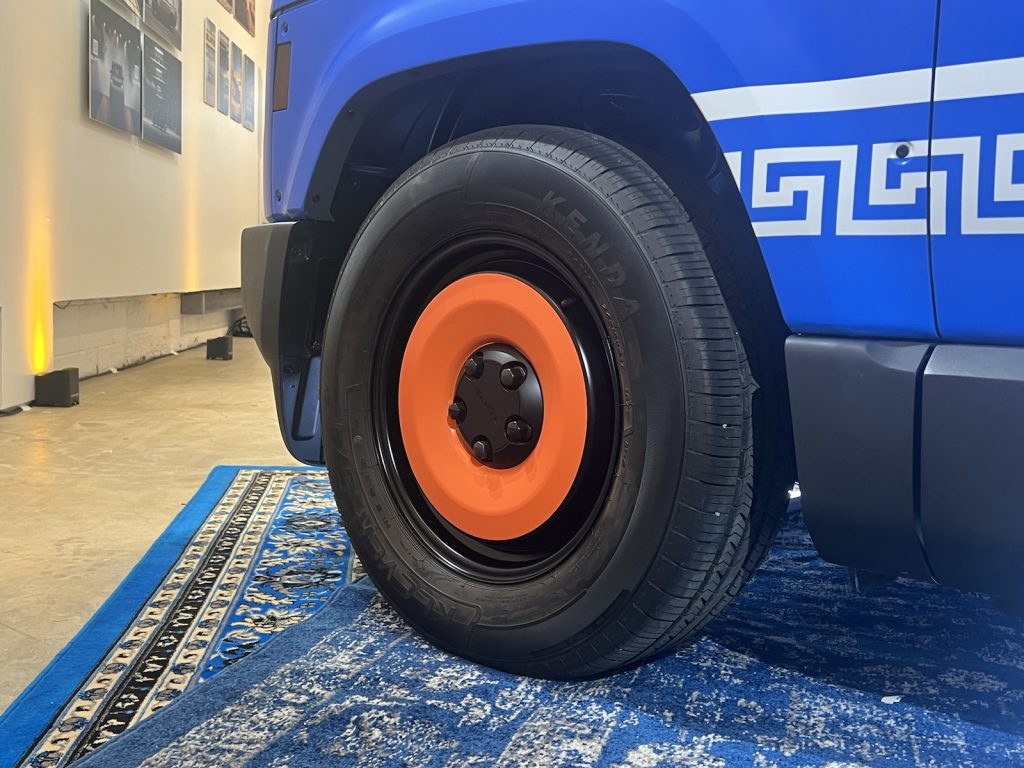
I can’t believe they invited journalists to show this off and then went with that dorky wrap and small tires. I was initially very excited for Slate, but that has faded. David is right on all accounts. This could be the cheapest pickup on the market and still not a good value.
In what universe are 245/65/17 tires small?
Times have changed.
The fate of this project will be determined by the marketing rollout and there ain’t no al-go-riddem for a product like this.
One of the reasons I’m into bicycles is I can modify them so easily. I’m a big proponent of buying used, modifying to meet my needs and upgrading over time. My current daily bike was purchased after it was damaged in a garage fire, rehabbed, rebuilt as a mountain bike, then an urban commuter bike, then an e-bike, and now an e-bike kid hauler.
If this Slate allows a similar kind of process, I’m very interested.
Exactly, they’re openness to modifications is their biggest appeal to me. I’ll be interested to see how they stick to that with warranty issues and such.