

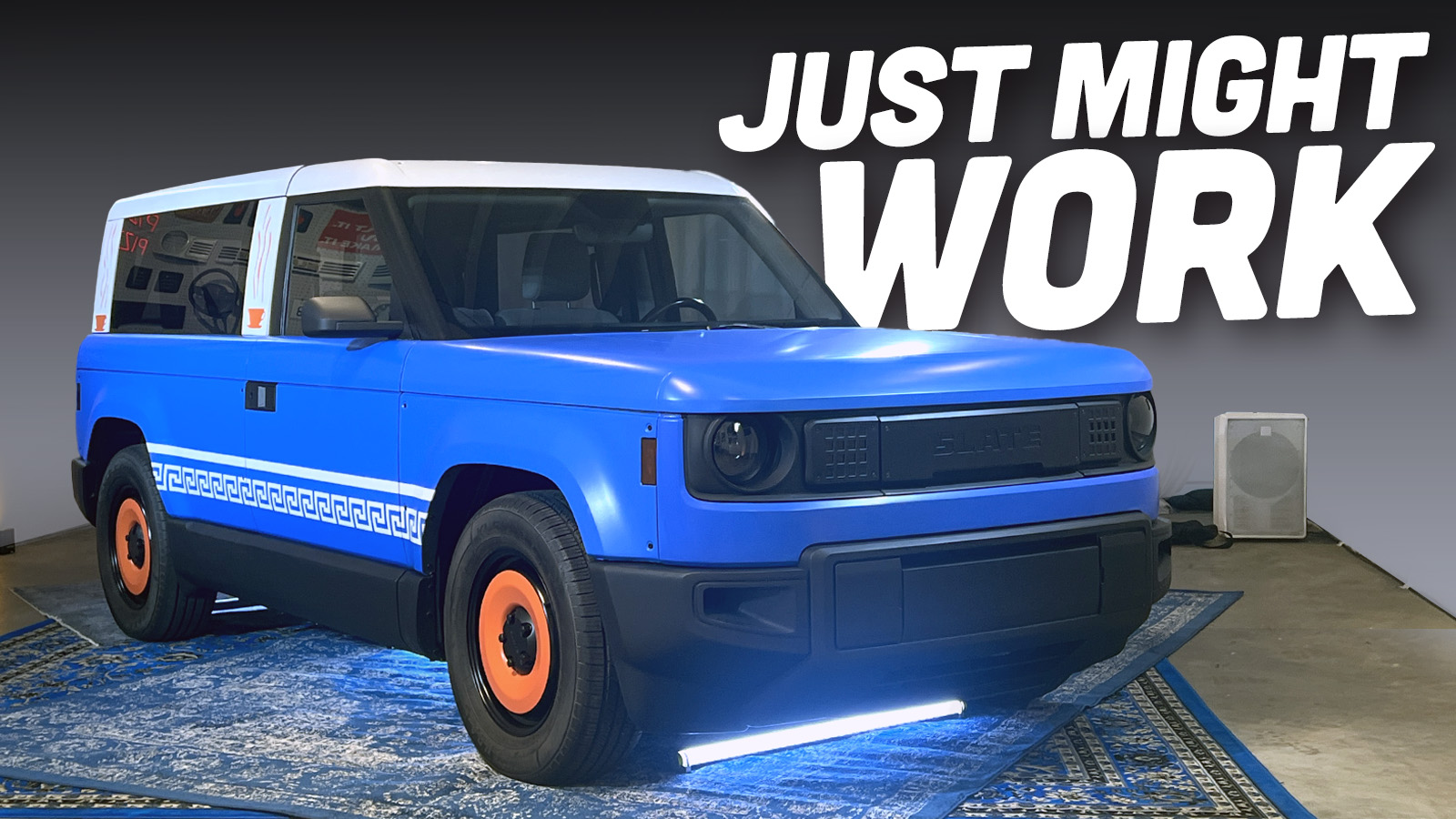
One of the biggest questions in the automotive world for 2026 is whether Slate’s electric pickup will succeed. It was revealed just over a year ago, and back then, the U.S. still had a federal tax credit that would push the truck’s price to around $20,000. It was a glimmer of hope in a world where affordability is at the front of mind for buyers, with fewer and fewer options to choose from.
Now that tax credit is gone, demand for EVs in general has flattened out in the United States. Our very own David Tracy argued, perhaps rightly, that the Slate truck would be a far more appropriate “people’s car” if it just had a simple, four-cylinder gas engine rather than an EV powertrain. He also argued that such a bare-bones vehicle, which doesn’t come standard with stuff like a stereo or exterior paint, simply isn’t competitive against entry-level crossovers or its most direct competitor, the Ford Maverick.


David made some great points in that post, and I don’t necessarily disagree with them. But I also don’t think it’s fair to count out the truck entirely. I feel especially strongly about that after spending some time actually sitting in a Slate prototype, and speaking to its designers.
The Right Size And The Right Shape
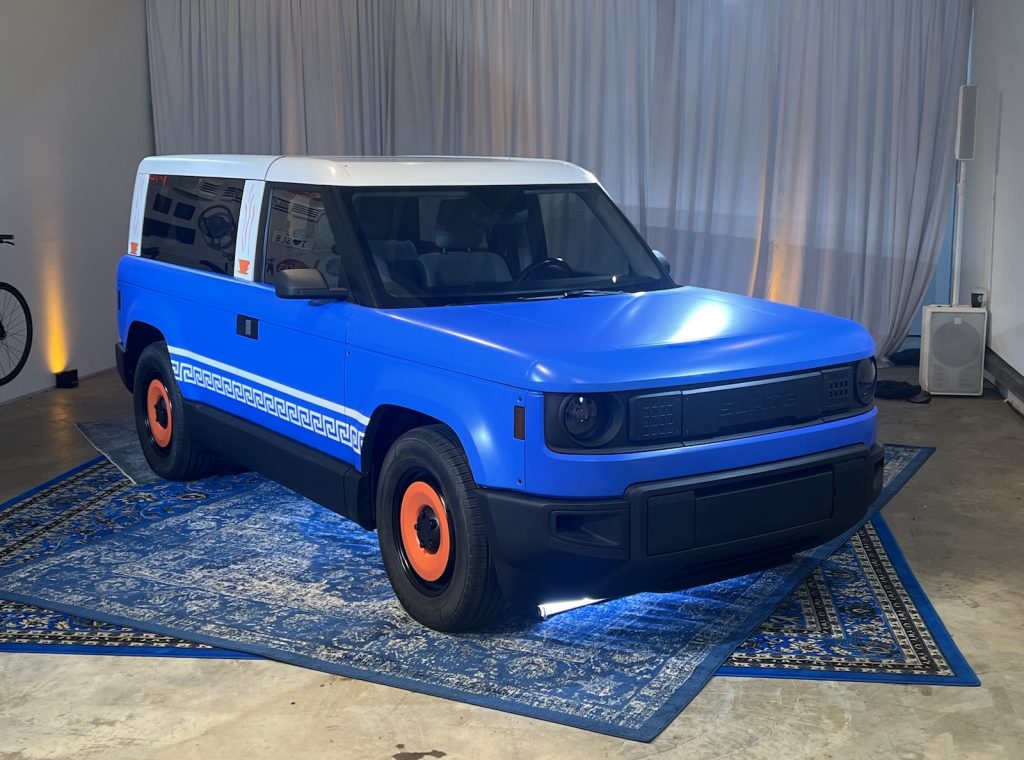
The Slate truck has a simple, straightforward mission: To offer one of the most affordable new vehicles on the market that people will actually like. That means it has to appeal to a wide range of buyers, which requires a bit of a balancing act.
“We knew that this thing had to at least be customizable from the ground up, so we wanted to have something that’s very simple, yet, I would say timeless,” says Gus Bizyk, Slate’s head of exterior design. “That way, it doesn’t stick to a certain time period.”
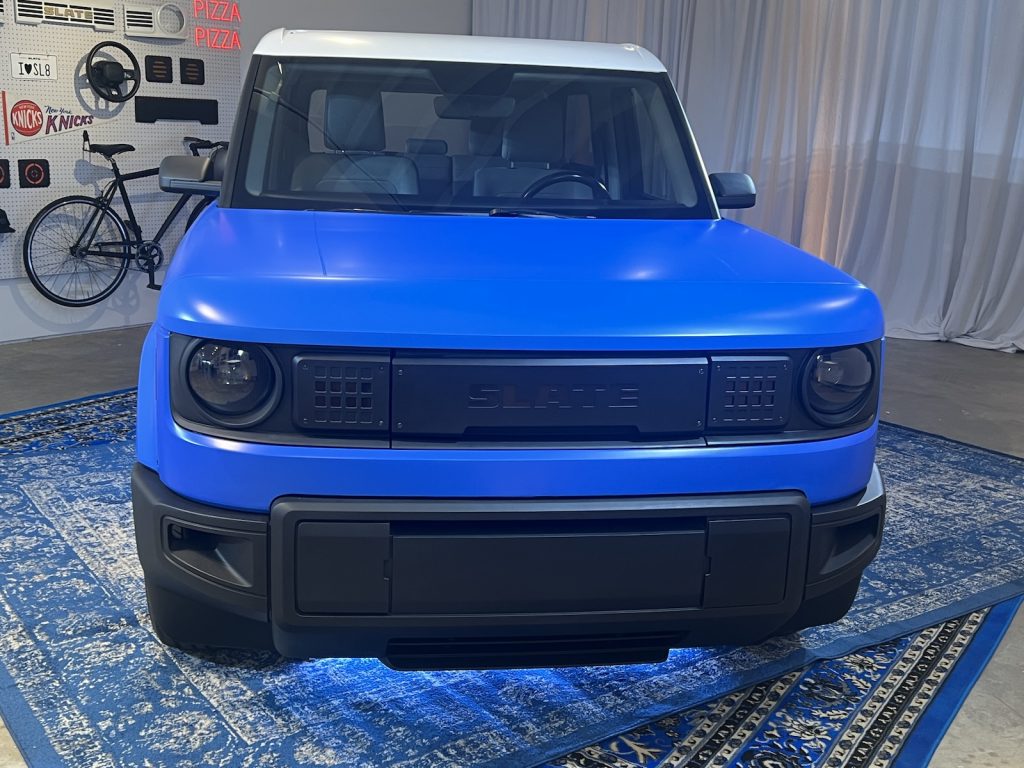
Slate’s whole schtick is that pretty much everything you see on the truck is customizable in some way. You can add wraps to the unpainted composite body panels, switch out the fascia, bolt accessories to the dashboard, and even turn the truck into a two-door SUV with a set of rear seats. The company’s configurator tool is one of the most detailed I’ve seen outside of internal tools for hyper-exotic carmakers.
When Bizyk brought this up, I immediately thought about the Slate’s perfectly round headlights. I’d argue that the prettiest cars ever built all have round headlights, and that the automotive sector’s move away from round headlights was where we started going wrong as a society. So I asked whether the truck’s round headlights were purposeful in winning people over. Bizyk brought it back to customization possibilities:
“We knew that we wanted to make this thing as customizable as possible. So one of the things that we noticed in the very beginning, a seven-inch round [headlight], if you go online, you’ll be able to find a whole vast area of different types of aftermarket headlights,” he told me. “So with that in mind, you know, we want to make this thing, I would say, customizable. But also, I would actually use the term open source. That’s the thing. We want to be able to have people 3D-print parts, but also buy whatever they find alluring online, and just be able to place it in. So those are the things that we’re working on for this.”
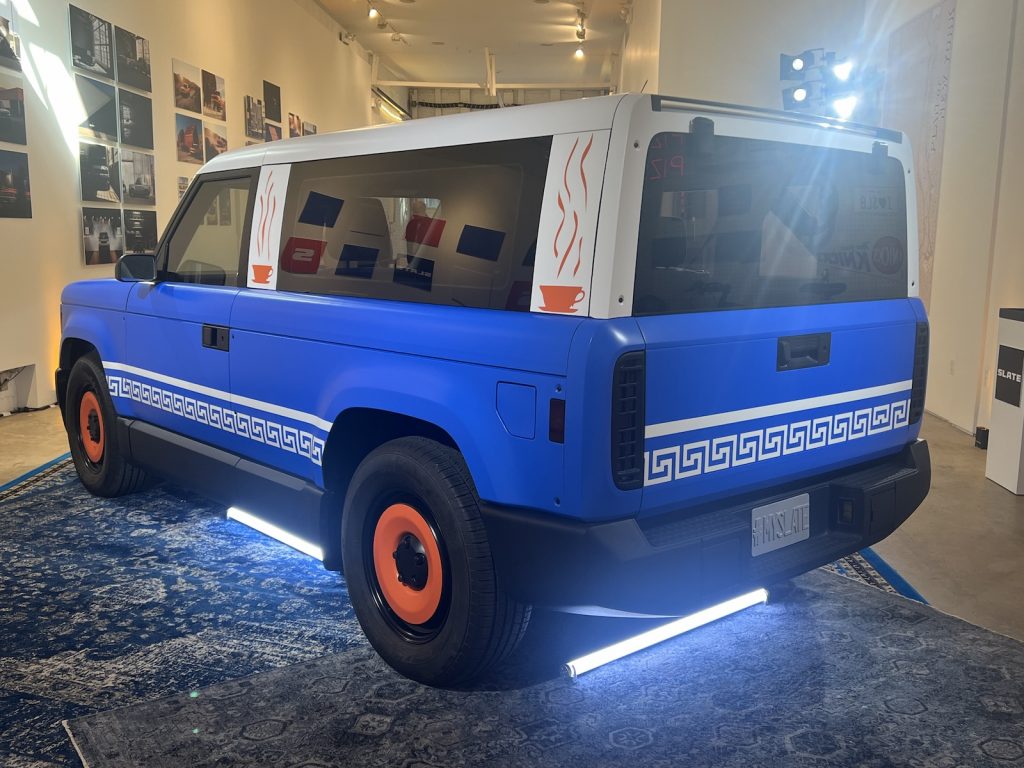
This level of customization, where buyers can easily swap out things like headlights, grille pieces, interior trim, and even body panels with little more than a few hand tools, does more than just give people the opportunity to customize their rigs. It also unlocks the ability for owners to upgrade their cars as new and improved accessories and tech become available. I asked Slate’s head interior designer, Aaron Gold, about the standard phone mount, and he told me that the actual size of the mount is still being finalized. But even after it hits production, it can still evolve and be easily switched out by customers.
“One of the coolest things is that the way the dashboard is designed,” he told me. “[The phone mount] isn’t integrated into the vehicle, right? So it’s something that I can change with technology. So if in a year we’re using some magical little floating guy who’s an AI [chatbot instead of our phones], we can make that work, right? So we’re not locked in, which is something that’s super cool.”

This, to me, is the main reason I think fleets and commercial users will be intrigued by the Slate truck. The ability to upgrade parts as necessary to keep up with their specific use cases feels like an appealing trait and signals that the Slate isn’t the type of vehicle that needs to be quickly disposed of after a few years of service. Plus, fleets can easily repair and replace damaged panels on the fly, which means less downtime spent at body shops.
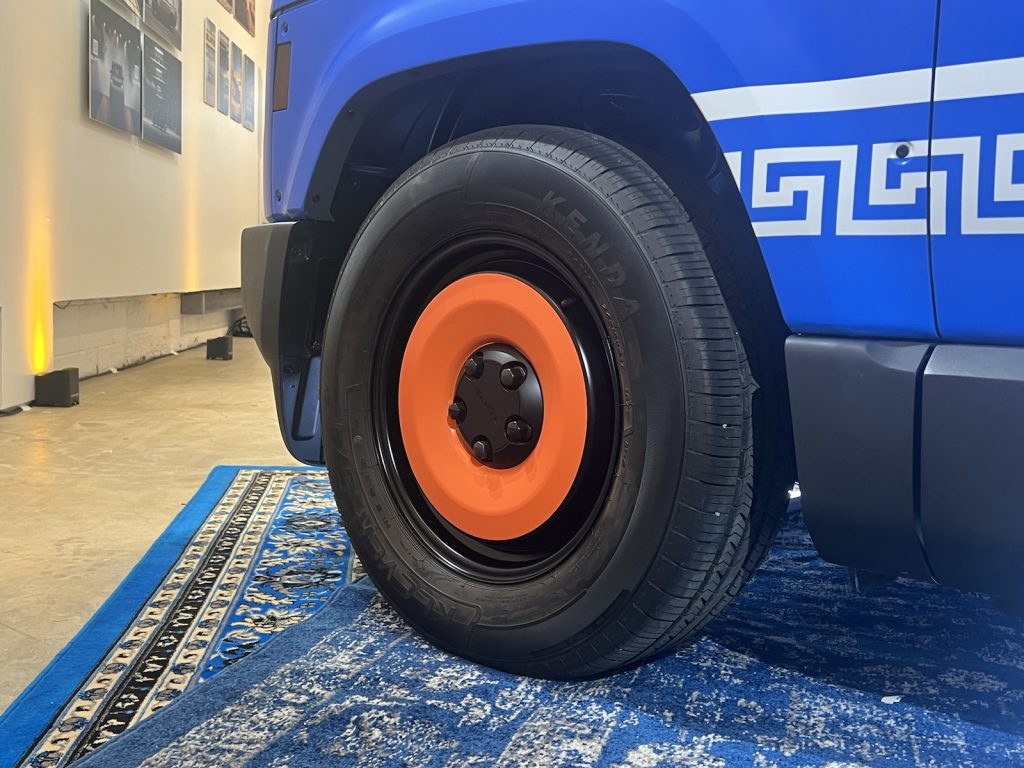
For retail buyers, this goes back to one of Slate’s principal arguments about offering a wide range of accessories. Owners will only buy the stuff they truly want, and none of the stuff they don’t.
“Typically, you’d say, ‘I’m just, I just need this, right? A vehicle that gets me from A to B,'” says Meredith Alves, Slate’s head of Color, Material, and Finish. “But you happen to want, like, the stitch or something, and then all of a sudden you’re given all these features that you’re like, ‘I’ll never use that.”
I Don’t Mind The Interior, But It’ll Be A Shock For Normies
One of the big arguments David made in his Slate post was that the interior was too bare-bones to be competitive in the cheap car segment. And he’s right in the sense that there is basically nothing to the Slate’s cabin. There’s a steering wheel with cruise control functions, a column shifter (nice), three knobs for climate control, and a couple of buttons on the left for stuff like turning off traction control and opening the frunk.
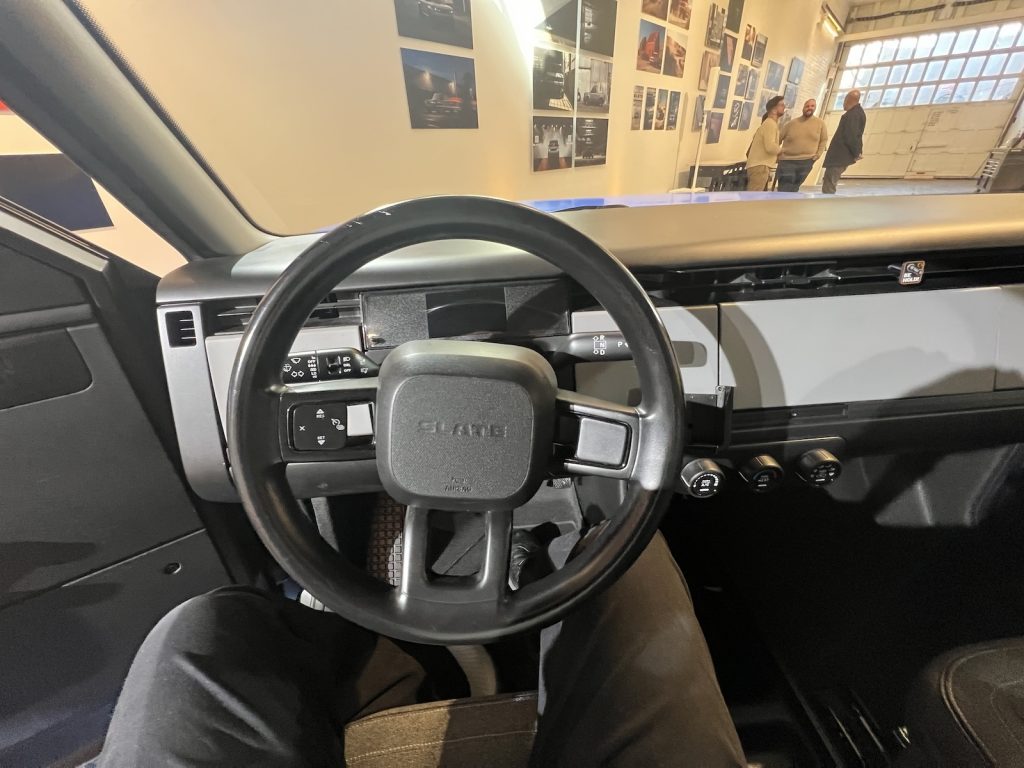
For me, as a person who both loves old trucks and often spends time in stripped-out, basic vehicles, this is a welcome sight. A vehicle with no screen, a round wheel, and analog HVAC controls is incredibly refreshing in a world dominated by seas of touch-capacitive buttons and gigantic screens.
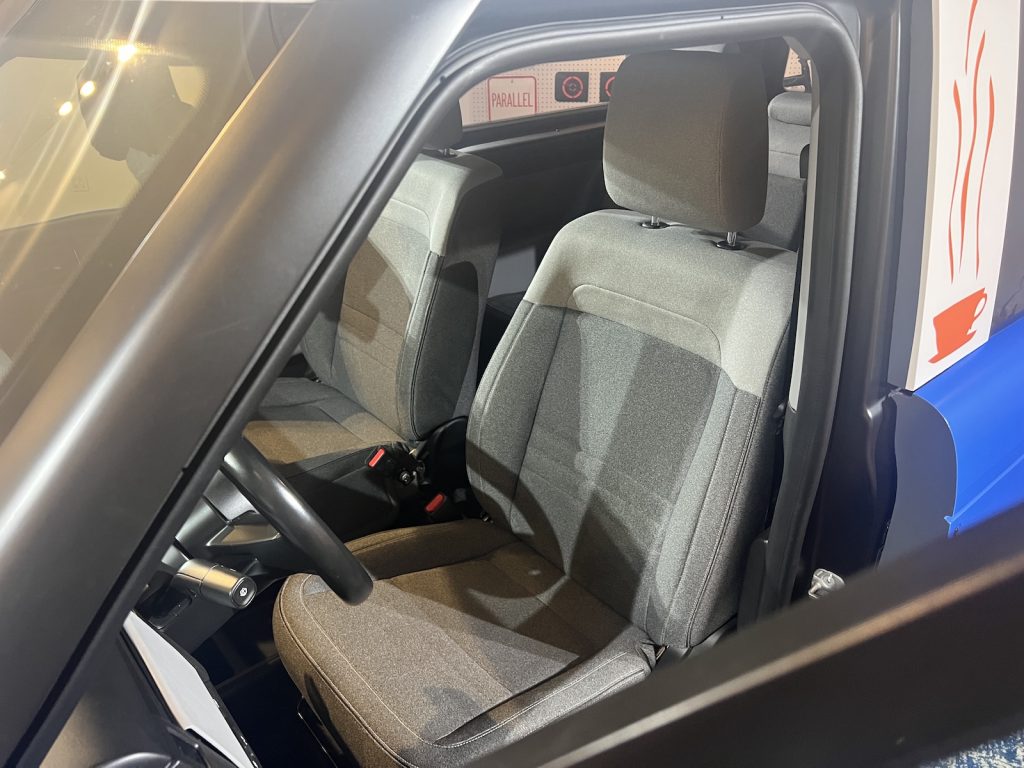
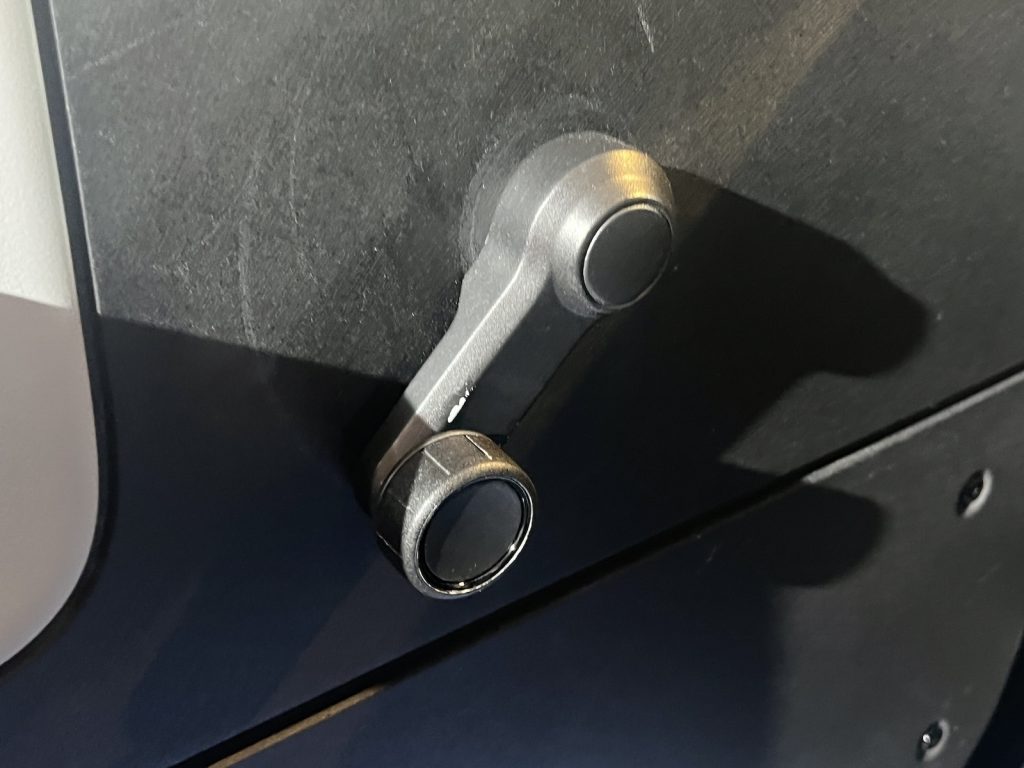
The seats are fully manual and covered in a stitched fabric instead of fake leather, which warms my heart. Famously, there are manual crank windows in place of power-operated units. The SUV version I got to spend time in had a rear bench, which had absolutely zero amenities aside from a couple of cupholders. It’s a minimalist’s dream car.
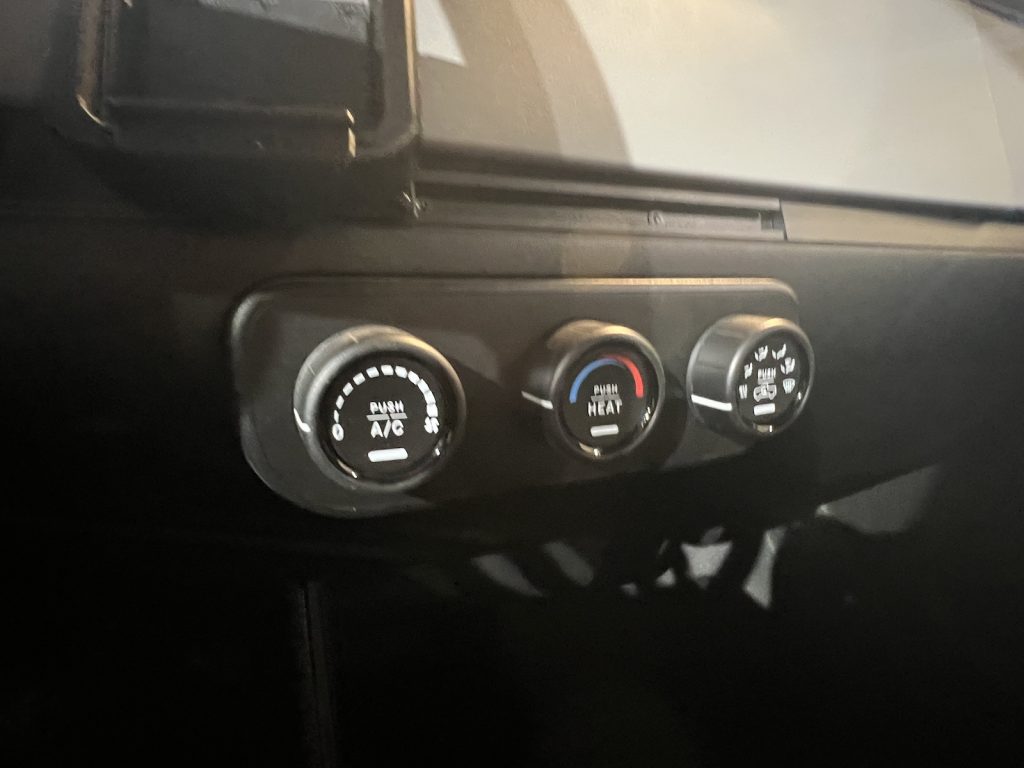
The thing is, the average buyer is now used to seeing screens and buttons everywhere, so seeing a truck without any of that stuff might be jarring. Sure, you can add some of that stuff back in, but it comes at a cost. Every accessory is an optional extra, adding to the bottom line of a car that’s supposed to be one of the most affordable vehicles in America. As David pointed out, you get a lot less content per dollar versus something like a Maverick. And the downside of nothing being integrated into the dash means it’ll be a hodge-podge of bolt-ons you’re looking at, not a cohesive, sleek dash with an integrated screen.
Coming At The Right Time
There is hope for Slate, though. Over 100,000 people put down reservations for the truck in the first few weeks following its announcement. The disappearing federal tax credit may have killed some of its momentum, but that’s still a lot of potential buyers showing interest. It’s not a make-or-break statistic, but it’s proof that people are interested in the concept.
While demand for electric vehicles is slowing down compared to last year, it’s possible things could turn around, thanks to the conflict in Iran. Rising gas prices have resulted in a surge in interest from buyers for “electrified” models, including hybrids and full-on EVs. Hell, even I’d consider an EV after having to drop $111 to fill up my Audi’s gas tank over the weekend. I wanted to throw up.

These gas prices aren’t set to go away any time soon, which means people who probably thought they wouldn’t own a Slate because it was no longer the $20,000 deal the company advertised might reconsider when they get the email later this year that their car is ready for delivery. But even if those people want an EV, would they actually choose the Slate? Perhaps. But also, perhaps not.
There Are Still Questions
Even if you’re sold on the accessories, you might not be sold on Slate’s fundamentals. There are just two battery sizes available right now: A standard range setup that’s good for 150 miles of range, or an extended-range battery that Slate says can go 240 miles on a charge.
Neither of those numbers is great. The Chevy Bolt, the cheapest EV currently on sale in America, starts at nearly the same price as the base Slate truck, and it gets 262 miles to a charge—that’s more range than the Slate offers, even with the optional battery. Sure, it doesn’t have nearly as much utility, but it does come standard with a better-equipped interior, more doors, and more seats.
The base 150-mile rating might’ve been acceptable 10 years ago, but these days, even the 240-mile range will have many buyers second-guessing their decisions. A decade ago, there wasn’t a swath of used, highly affordable EVs for people to shop against new models, either. In this price range, you have to assume people are shopping new and used to extract the best value. Why buy a Slate truck when, for a few thousand bucks more, I can get a whole-ass used F-150 Lightning instead? And if you don’t absolutely need an EV, certified pre-owned Mavericks are thousands cheaper than the most affordable Slate truck.
Whether high oil prices and the ability to easily customize and repair the Slate truck are enough to win over buyers from established brands is unclear right now. But I think there’s a lot to like about Slate, especially if you need a fleet of trucks that don’t travel huge distances every day. Given the truck’s small size, I could see them taking over the contractor arena in metropolitan areas with ease. With deliveries still set for Q4 of 2026, we won’t have to wait long to find out.
Top graphic image: Brian Silvestro


I mean, it’s sort of like “every website has infinite scroll and a gigantic corner radius on everything”. We’re used to the look, it doesn’t mean we want it.
I remember checking Google Scholar for something a while back and noticing the design wasn’t updated, there were still hard corners on things. It was a breath of fresh air…
Or, with phones, we’ve become used to no headphone jack and a camera island in the middle of the screen. If someone sold a phone without a camera floating within the display space, that would go way up on my personal ranking.
The Slate’s design is jarring like water in the desert. Hopefully, it won’t turn out to be a mirage.
Well, good news phone wise is that Sony sells smart phones without camera islands and with headphone jacks! And Red Magic phones have cameras hidden under the screen, which is super cool.
Huh. I thought Sony stopped making those years ago.
…
Well, it appears they are not available in the US.
I’m a fan of this little guy, but $27,500 is not a realistic number. These will be in the low 30’s by the time they’re released, and well…
I feel like this vehicle needs to be like Bird Scooters, usable on a whim as needed in a city type environment maybe? I would almost rather buy a chinesium fake G wagon golf cart that is considered an LSV for grocery getting. I would definitely rather have one of those if they made them able to go 60 mph and had an optional range extender battery slot or two.
The Slate’s concept is very ownership-focused. The vehicle-sharing-app sort of paradigm doesn’t suit it.
All comes down to price.
Most people realize that they use a fraction of all the stupid gadgets and doodads that their overpriced cars come with. I don’t want lane keeping assist, self-driving or collision detection. Enough with the nanny-tech. I don’t even use cruise control. People want a back-to-basics vehicle but it has to be cheap and offer at least a reasonable range or 250+ miles.
you don’t usually have a choice in that. NHTSA is like CARB, they generally seem to find generally legit things to justify their existence and then go to the Nth degree when they cannot find something new to fill the raison d’être
As much as I hate to say it, this is where this administration’s push for fewer regulations makes some sense. Over the decades some of these agencies have gone fully-insanity mode on outlining too many things that car makers much meet which has added to the MSRP of new cars. ABS and airbags? Good things. But anything added in the last 5-10 years should be scaled back. We have hit diminishing return on things.
Completely agreed, although we likely disagree on the point of diminishing returns.
20 to 30 mpg is a massive improvement. 30 to 40 is still a big jump. 40-50 isn’t significant enough for most people to see outside of macro level analysis. None the less, each jump costs a significant amount of engineering and pricetag dollars
If we took today’s 40 MPG hyrids and stripped most of the fat out of them, we could probably bump up to 60-80, while also cutting a ton of cost.
Each jump takes that much more time, money and effort – and adds weight and complexity. We aren’t looking at the fact that the added complexity will make cars FAR more likely to get thrown away after a certain amount of time versus kept longer. There is a huge amount of environmental impact to the manufacturing process, so keeping something alive for 15 years vs just 10 is massive. But the bureaucrats who write these laws don’t care, they just want to green-wash things and make it LOOK like they are doing the right thing.
100%
If you look into lifetime impacts of a single vehicle, almost every study compares any older vehicle to a new one as if both were built today, which is inherently a false conclusion.
The older vehicle was already built. Those resources have already been invested. We can spend even more energy to crush the old one AND build a more efficient replacement, or we can maximize the return on energy investment in the old vehicle before throwing it away.
My newest vehicle is a 2008 with 260k miles and no CELs, so I’m doing my part.
I think the issue is less the NHTSA, which moves pretty slowly, and more the IIHS, which is a private industry group that does crash testing and keeps adding more active safety requirements in order to achieve a 5 star crash rating.
Auto Engineer here: A ton of new reqs are NHTSA driven, but you are correct that IIHS adds to it.
The NHTSA doesn’t move that slowly since they have a pretty wide margin for regulatory control under listed duties.
I agree with you on every point except cruise control, but I don’t need it to do anything more than hold a constant speed. Another one is BT Audio, but I can add that easily for $200.
I’m not sure I’d want to be in one of these for more than a couple hours at a time, so the 150-240 mile range doesn’t really matter to me. The use case really shines for a sub 100mi per day local runabout like a Honda Gator SxS.
Oh, you can add BT for WAY less than $200. I have a $20 BT adapter on my old ’64 Buick. Its wired into the back of the stereo (AUX) and lets me connect my phone to the stereo. Most of today’s most important conveniences (streaming music and GPS) for $20 in a 60 year old car.
The range thing becomes an issue when you factor in charge time, and reduced range when its cold and if you are hauling anything. It quickly added up to where you see that ~250 miles is kind of the minimum for most people (at least in the US). Everyone always says to only charge to 80%, so you’ve lost the top 20% of your total range. In the cold, you could easily lose 1/3 of your range, and then another 1/3 if you were towing something. So now your 250 miles drops to 200 miles, then down to 133 miles and finally just 90 miles. Totally extreme use-case, but still.
The BT Audio included a head unit and speakers, not just a dongle. In 3 of my cars, I had to upgrade the head unit to get aux in/BT functionality. In the newest car, I just needed a BT receiver since it already had a line in port. Replacing the head unit in that car would be significantly more complex since it’s tied into multiple vehicle systems.
I could have modded the oem HUs for line in, but that wouldn’t provide hands free calling. $80 for a newer HU with that functionality sounded like the right call.
I completely agree on the range/range anxiety aspects. I benchmark milage as 60% is functionally useful, with cold potentially eating half of what’s left. Same for towing.
I don’t see a big problem here as I don’t view it as a primary vehicle for most people. Same goes for towing. If you need big range or towing capacity, you’re buying a different vehicle. If you only need to pull a small trailer a couple times a year, it’ll probably be fine.
Have they talked about pricing in a post-tax credits world? Because at $27500 this is DOA. You can get an Equinox EV brand new for less than that and it’s a drastically nicer vehicle instead of a penalty box.
The customization aspect of this is cool, but I still think it’s a real hard sell, especially if it doesn’t have an eye-popping price. Maybe it will be like the Maverick and they’ll sell a few of them for $20k and 3 years later that will be $26k?
For someone like me, the fact it doesn’t have all the normal crap is exactly what makes it interesting. I have zero interest in an over complicated Equinox EV, and I’m not looking for a primary commuting vehicle. This is a utility appliance with a license plate.
for what you pay what you get is not it. I guess in the future when cars are even MORE expensive this might look more atractive if they can keep the pricing down. but the base model doesn’t even have a radio and even if you pay the extra to et a radio you get the equivalent of a crappy Bluetooth speaker from costo.. then you get into the small range, the slow charging. like any one of these would be a huge compromise but the slate has ALL of them.
I remember my old 82 Toyota pickup. It was cheap, basic, single cab, crank windows, vinyl bench seat, and no carpet. It had a cassette AM/FM radio but the road noise when you drove it made it almost impossible to hear. I worked it to death. It wasn’t easy, almost worked myself to death as well.
If this had a 6′ bed it could be the same thing. Almost. I haven’t bought a new car since 1992. So I’ll have to wait and see how you all like them, and maybe in 5-6 years pick one up in the secondary market.
I have a deposit on one of these (and on the Telo) though I sort of doubt I’ll get either one. I want an EV (I’ve had a roof full of solar panels for 25+ years) and I want Slate and Telo to succeed, but $30K still feels like a bit of an ask for a Slate, given what else that buys. Humans (many of them, anyway) aren’t always thinking of the big picture/long game, so someone with $30K in their pocket is going to be hard pressed to look at a Slate and not seriously consider what that same money buys in a gas or hybrid alternative (new or used).
Honestly, me personally, I think I’d rather have a base Twingo EV, but that’s not going to be possible during my lifetime. 🙁 If I could buy one for $22-23K, I’d sell my other cars (except for the Miata) and have a lot of extra space in my garage.
PS: re: certified used early Mavericks: at $21-22K, they cost exactly as much now, five years old with 50Kmiles on ’em as they did brand new. I’m gonna say: hard pass.
I’d love to get the Twingo or Renault 5 here in the US. That would be perfect size for my needs. I hardly ever drive without a kid in the back, so the two door aspect of the Slate is a deal breaker.
I’m hoping Telo does well enough to offer their van in a few years.
When I heard that Nissan’s Micra EV was based on Renault’s well-reviewed 5 EV, I sort of dared to hope that mabye Nissan would bring it here to the states as a sub-$30K small EV (finally!) but even though Nissan needs a serious reboot, I doubt anyone there is going to rationalize taking that step, unless gas prices stay high for a long time (which they probably won’t).
That would be wonderful, and I agree highly unlikely.
I like the Slate overall and the moddability is very appealing, but to me it’s a pickup truck primarily and it fails at being a good pickup by only having a 5-foot bed.
Yeah, the value proposition is where this thing doesn’t take off. While I DO see a use for it, like with fleets, as the article points out, you can get WAY more vehicle for the same or less money. LOVE the concept, and would LOVE accessorizing the crud out of one. But when even the absolute bare-bone base model is more expensive than a low mileage Maverick or Bolt? That’s where you lose the general car buying public.
You know what else is more expensive than a low mileage Maverick or Bolt? A new Maverick or Bolt; but somehow the general car buying public still buys those for some reason..
It really makes no sense!
😉
A new Maverick or Bolt has much lower mileage than even a low-mileage used Maverick or Bolt, so there’s still an added value to the extra you’d pay. While a new Slate would also have less miles than a low mileage Maverick or Bolt, a new Slate has EVERYTHING less… making it still the worse value. If miles is the ONLY thing you’re concerned about, then, sure, pay a premium. But folks also tend to like things like, I dunno, a basic radio? You’d rather pay more for NO radio, NO center console, NO speakers, etc.? Have at it. That doesn’t make it a good value though.
My point was comparing used to new cars is not apples-to-apples, cars are always depreciating assets that don’t depreciate linearly, the steepest is on new cars.
“I can go buy a rusty shitbox with a working radio for $500, so who’d ever pay more that that for a car?”
A rusty shitbox with a working radio for $500 is a better value than a rusty shitbox without a radio for $600. I’m comparing features-to-features, price-to-price, to determine value. A “used” Duesenberg in pristine mint condition for the same price as a brand new F-150, the Duesenberg would hand-down be the better value. It doesn’t matter which is new and which is used. It’s vehicle-to-vehicle, apples-to-apples.
Used-to-new is apples-to-oranges, if you bring in collectibles, that’s apples-to-bananas, and before you try this one, race cars are also a whole other thing. Even within ‘used’ there’s something like a lease return, which has retained value but still depreciating, and 20+ years old at the bottom of the depreciation curve.
Collectibles are not everyday drivers. Race cars are not everyday drivers. Both a new ultra-budget vehicle and a nicer barely used vehicle ARE everyday drivers. Apples-to-apples. Time and time again, I’ve qualified the used one as a “low mileage Maverick or Bolt”. You even quoted me on that once (you must have forgotten or are intentionally moving the goalposts). Good luck finding a 20+ year old low mileage Maverick or Bolt!
not like my opinion matters, but I hate that the new guy is running things. I pulled my reservation when that happened
Why?
It’s not just the optics of bouncing a woman on a day of significance for women.
The putz put in place doesn’t have any experience in this field and it smells like Amazon getting ready to do Amazon things. Slate will suffer at the very least for this move
I haven’t followed Slate news specifically, in part because I’m highly suspect it ever actually makes it to market, let alone is successful enough I buy one.
Amazon doing Amazon things is almost a sure bet. Watch a bunch of plastic parts end up being made with what amounts to effectively slave labor or something.
As for ‘bouncing a woman on a day of significance for women’, above a certain level none of that matters in megacorp land.
All of your points are correct and good
McKinsey & Co. man is here to save the company from its lack of “business school thinking”.
Exactly right. Praise be in his name (Bezos, obvs)
Could work in France, especially the version with a roof over the back.
Depends on price, (tariffs — who would have thought the land of the free would be the land against free trade…) and whether the makers are videoed making Nazi salutes or not…
But the idea of a plastic bodied, fun, utility vehicle already lives in the culture of the Mehari.
Still remember the joy with which I saw one mechanic fix a ding with a hairdryer…
And the Slate’s dashboard is positively crowded compared to a Mehari’s…
I gave them the $50 reservation. Have been back and forth about buying it, when the email arrives. I need a small truck for going to Home Depot. From what I have seen a 4×8 sheet will fit in the bed with tailgate down. My work commute is local and drive about 200 miles weekly. Like that I can modify it right away without worrying about the warranty. Like that the body panels won’t rust. I am good with using my phone for infotainment. Today I am in the buy camp.
“$111 to fill up my Audi’s 23+ gallon gas tank over the weekend. I wanted to throw up.”
FIFY. Context is important. You could also just buy a more fuel efficient car that sips regular and/or joules.
Just for funsies why not run the numbers and see how much you’d save if your Audi ran on electricity instead? Assuming you get 15/17/21 mpg your Audi would probably get about 63 MPGe if it ran on electricity. If those maths check out you’d only save money if you paid less than $0.53/kWh which isn’t far off what public chargers cost.
Don’t forget his line about the so-expensive diesel, where getting twice the mileage of a gas engine in a diesel is not even entering his mind (TBF that’s how most people look at diesel, but I somehow expect better from ‘car journos’)
Agree. I’m filling up my diesel weekly and yes it’s of course more expensive but I still don’t sweat it. It would never cause me to think I need to buy another vehicle to make up the difference in fuel cost.
“I could see them taking over the contractor arena in metropolitan areas with ease.”
Not if you can’t transport a 4 x 8 sheet of plywood or drywall. The Chevy Astro van was the urban contractor’s ideal work vehicle, and you could transport a 4 x 8 sheet on its side in one…
I wonder, though, how many contractors need to carry that 4 x 8? If there’s a need for multiple sheets, those are getting delivered by a much larger truck to begin with.
This is where I’m on the fence, and really debating my insistence on a minimum 6′ bed for a mini truck. I do carry sheet goods and other large items, not every day but often enough. A lumber rack helps for wood and pipe even longer than 8′ (which is the limit for minimal overhang with the gate down), but lifting like 5/8″ greenboard up there is awkward.
With the Slate I’d probably have to use my 3/4 ton a little more often than I do now (ideally it stays parked for all but the biggest jobs), but maybe the tradeoff of getting rid of a whole ICE system to maintain is worth it…
Roof racks are a thing, and this isn’t 7′ tall unlike modern trucks.
Can’t wait for this to be my second-second car after the miata. It seems like the perfect city truck, something I didn’t think would ever exist again.
Love the concept but I’m afraid it’s going to fall in the same camp as many other logical/rational/utilitarian vehicles that have all had one-and-done product cycles that couldn’t sustain sales momentum: Scion xB, Ford Transit Connect (technically 2 cycles), FJ Cruiser, Honda Element etc. They are hanging the future of the company on consumer’s desires to get back to basics and a DIY ethos — but I just don’t think the pendulum is going to swing that far. Fleet use and gas prices might keep it afloat at relatively low volumes. Lord knows that they won’t be putting regular updates into the market, so as sales trail off and (maybe?) level out can they remain profitable? Tune in next decade for the exciting conclusion…
So called “open source” but is it Right to Repair?
Yes!
My wife would be pissed if I parked on the rug like that.
Slate’s problem is that even Toyota now has a Hilux EV that comes in a dual cab format with power windows and most mod cons for about US$50,000. Of course, the range is terrible (~350 km) because the ICE platform can’t accommodate a decent sized battery. But it’s otherwise a typically equipped Toyota EV pickup for fifty grand.
Imagine what happens when Toyota actually tries making a proper on…
I think that they’ve gone too far with the minimalist stuff. I think that deleting any sort of stereo and having crank windows is a bit of a mistake. Clever for sure but perhaps a bit to clever for its own good methinks…
The stereo I feel like you’d do better “minimalist” by just slapping a screen on there that all it can do is Android Auto/Car Play and a couple of speakers in the dash. Like I’m all against the “giant touch-screen of doom” method of car UI (I even love the commander knob in my Miata/wife’s CX-5), but I want a screen at least a little bigger than my phone’s and Android Auto’s more simplified UI.
You can put your own media player in for…basically any price range you want. But I mean, I don’t think the “value” of the typical bundled entertainment system is as good as people are assuming. It’s not like you’re getting thousands of dollars worth in a Chevy Trax or whatever. The difference is, you can add to this without something in the way.
The value isn’t in the lack of a stereo. The value is if I don’t want one I don’t have to pay for it, but if I do I can use whatever stereo I want to pick. There’s also value in not having important controls buried inside a touchscreen. The biggest value is in a few years, if I want to upgrade the infotainment to CarPlay 2030 edition, I can.
Now I want a 3D printer, so I can make wheel trims like these for some of my cars!
Tepid take: crank windows are a stupid hair shirt. There’s nothing good about them.
When your drivers side power window fails to close you will hate power windows…
In all the cars i’ve owned and my friends have owned, the only window mechanism that ever broke was a manual one.
I’m sure I will, but I drive Japanese cars so it’s unlikely to ever happen.
my family members that froze in the backseat of the rental car when the power window failed to go up after paying a toll on the way home from JFK airport after a christmas trip would beg to differ. I had 2 generations of Toyota pick-ups (an ’80 & ’00) with crank windows that were just fine.
ANOTHER ONE, i love you. Theyre so performative, whenever LOTUS switched from crank to electric because they were lighter & more reliable there was no longer a reason to make a car with crank windows ever again.
Why not add just one penny to that tank for a perfect $111.11? I am now sad.
My wife sometimes texts me to tell me the time is 1:11 or 5:55 or whatever. She absolutely would have put another penny in that tank.
I woke up at 11:11 the other day and the first thing I did was screenshot my phone to send to my brother.
Or stop on 111.00 the perfect Nelson, one arm, one eye and one ball…
Ambitious but crap. I like the concept,but this seems like something that may fly in a country like India or Cuba or something,not in countries where people are used to big screens,power everything and EVs which for years now have had more than 350 miles of range.
I disagree; I think this is a fantastic idea, especially for those of us who like to customize their cars. My brain works overtime thinking about modding something like this.
BUT – it’s dead on arrival to me with the tax credit gone. This is a $20k vehicle, full stop. It is totally noncompetitive with new Mavericks, to say nothing of used Tacos or Colorados or Rangers, higher milage be darned. And if you don’t want a truck, a Bolt or Leaf is a much better option for an entry-level EV.
At 20k, I have the budget to mod it to my taste, including dropping in the back seats and a topper. At 27k or whatever it ends up being, I’d have nothing but regret.
Maybe I’ll pick up a used one in a few years when they drop to around 15k.
I think both of you are assuming the intended market is primary suburban commuter. That’s where I disagree. The use niche is urban and rural runabout. It’s a street legal golf cart/SxS with a bed and hvac.
I’m comparing a street-legal EV truck against other street-legal trucks and street-legal EVs, and I don’t think I’m wrong in my assessment.
Go ahead and compare it to off-road vehicles though, I don’t know much about those at all!
I’m agreeing that compared to other EVs, the juice ain’t worth the squeeze.
My point is that I don’t think it’s an apt comparison, they’re going for a different market. It doesn’t make sense as a daily driver for a 60 minute commute to the office, but it does work for running to the hardware store for a load of mulch instead of using a [insert egg shaped CUV of your choice here], or running around a big facility (golf course for example) with some tools in the back.
Why not both? I was interested in this because of both things you said – EV commuter/running errands, and also to throw mulch or river rock or lumber or small appliances or furniture in the back with tie downs.
I wouldn’t consider it for just one or the other. It does both EV things well and small truck things well.
Simply because it’s likely too spartan for most people to consider as a primary vehicle, while having the pricetag of other EVs that are much better primary vehicles.
It excels at being a light duty work truck, akin to an 80s Toyota pickup. It’s small, rather efficient, and simple by design. If it were closer to said 80s truck price (20k adjusted for inflation), then I agree it would do much better as a general use primary vehicle.
If you aren’t willing to pay equal or more money for intentionally less content, in a comparatively utilitarian vehicle, sold by a completely unproven automaker, you won’t buy one.
I bet you and I are both the type that would ‘spend more for less’, but I honestly do not think that applies to the larger market as a whole. This is for enthusiasts by enthusiasts.