

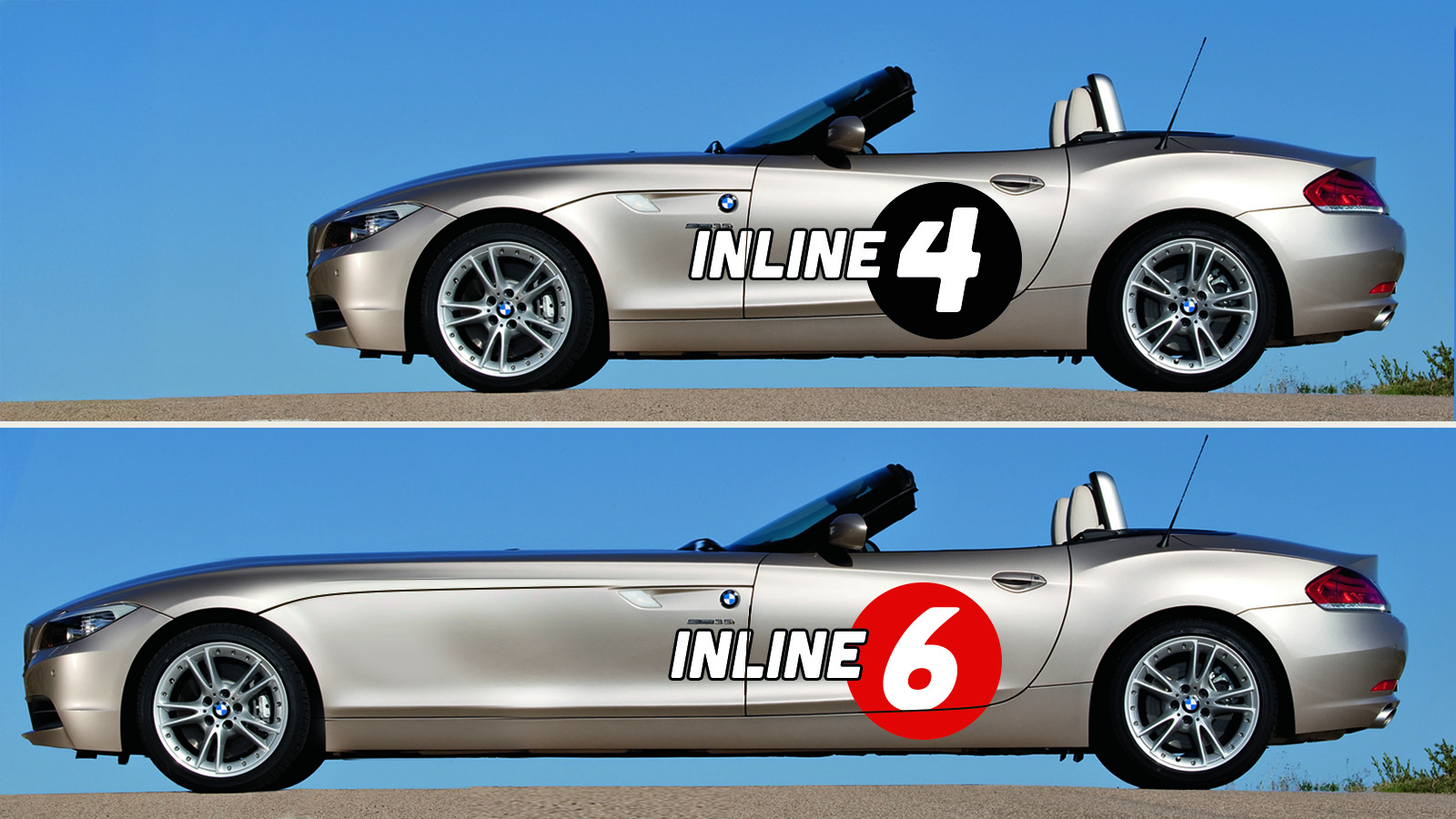
A straight-six is two cylinders longer than an inline-four, right? I mean nice try at confusing the issue with the whole “straight” vs “in-line” thing, but it’s not hard maths. I used to own an E86 BMW Z4 with a 3.0 six, and my brother-in-law had an E85 (same car but without a roof) Z4 2.0 four, and it was pretty clearly a couple of 500cc cylinders different under that long, long, looong bonnet. But what if you want to keep the capacity the same, for tax reasons, or because science demands you only change one variable at a time, or if you’ve been asked to design yet another interchangeable 2.0 litre engine and you are hoping to bankrupt some poor unsuspecting OEM because they omitted cylinder count in the product definition document?
Let’s assume our benchmark is a 2.0 litre four with a bore and stroke of 86mm. It’s a common engine capacity — so common in fact that all three cars parked on my drive right now are 2.0, and both my GT86 and Lotus Europa have the exact same 86mm bore and stroke. This makes for an actual capacity of 1998cc, but that’s close enough.


[I’m Dave Larkman, former Lead Engineer of Powertrain Design at Lotus Cars. I spent 25 years doing extremely confidential work at Lotus for other OEMs, like GM and Nissan, and working on every Lotus product from the S2 Exige to the Emira. I also worked in Powertrain Research, where I got to engineer ingenious engines with 40:1 compression ratios or foot long titanium pistons. [Ed Note: Read Dave’s other pieces here. -DT] ]
Please excuse the crudity of this model; I no longer have the resources of a multinational automotive engineering consultancy to command at my whim. This entire article had a CAD budget of 10 hours, so no complaining that it doesn’t have core plugs/oil drains/oil drillings/breathers/engine mounts/casting datums/coolant connections/ribs or, you know, all the stuff that makes a real model of a block take three months.
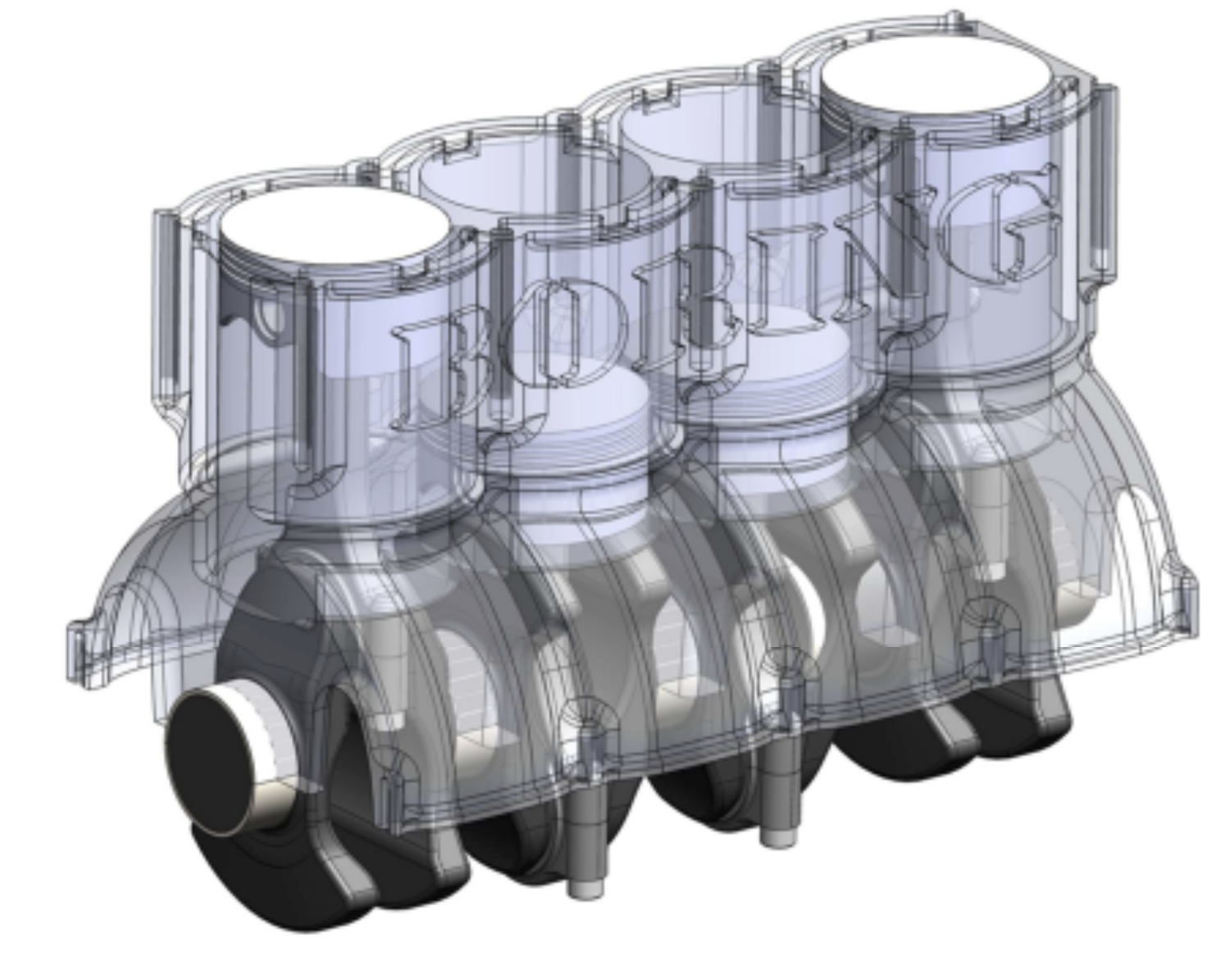
Simply pressing the do-a-drawing button on the CAD gives us a clear view of what we mean by bore and stroke: the cylinder bore is the diameter of the hole in the block, and the stroke is how far the piston moves from top to bottom. Multiply this volume by the number of cylinders to get the engine capacity. (4.0-liters, 2.0 liters, 3.5 liters, etc.)
Why would you want a 2.0 straight six instead of a 2.0 inline-4? [Ed Note: Isn’t it strange that folks call it a straight-six but not a straight-4? -DT]. Well, the inline six is the smallest engine layout with perfect balance, and as a result, the basis of quite a bit of engine snobbery. Plus they sound glorious. Most of the basic engine architecture of a family of inline engines can be shared, so the cam drive (chain, or I guess belt if DT doesn’t have a say, or gears if you want to do it properly), front case, front end accessory drive system, any rear end accessory drive, gearbox bell housing geometry, etc. If you already need a 1.0 triple or a 1.3 four in your smaller cars then a 2.0 six starts to make sense from a parts-sharing standpoint.
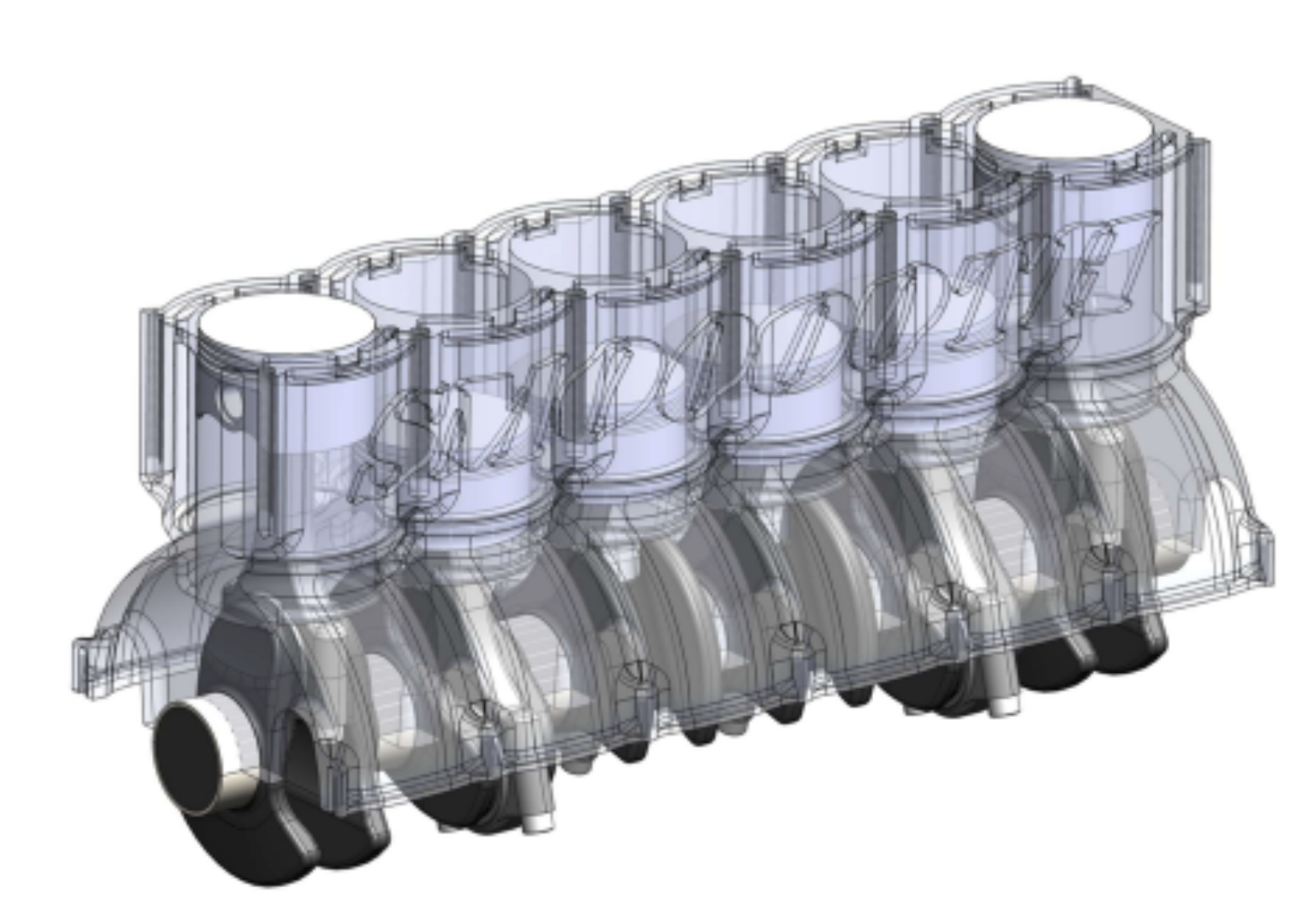
Keeping a square bore-to-stroke ratio gives us 75.1mm for both in our glorious 2.0 straight six. That gives a swept capacity of 1997cc, which is as near as dammit the same as the straight four. To calculate our increase in engine length we just need the space between the cylinders, which I’ve assumed is 6mm (I’ll be honest here and say that most of the cylinder blocks I’ve designed have been for single cylinder engines, and often very weird single cylinder engines, but 6mm seems sensible for head gasket sealing).
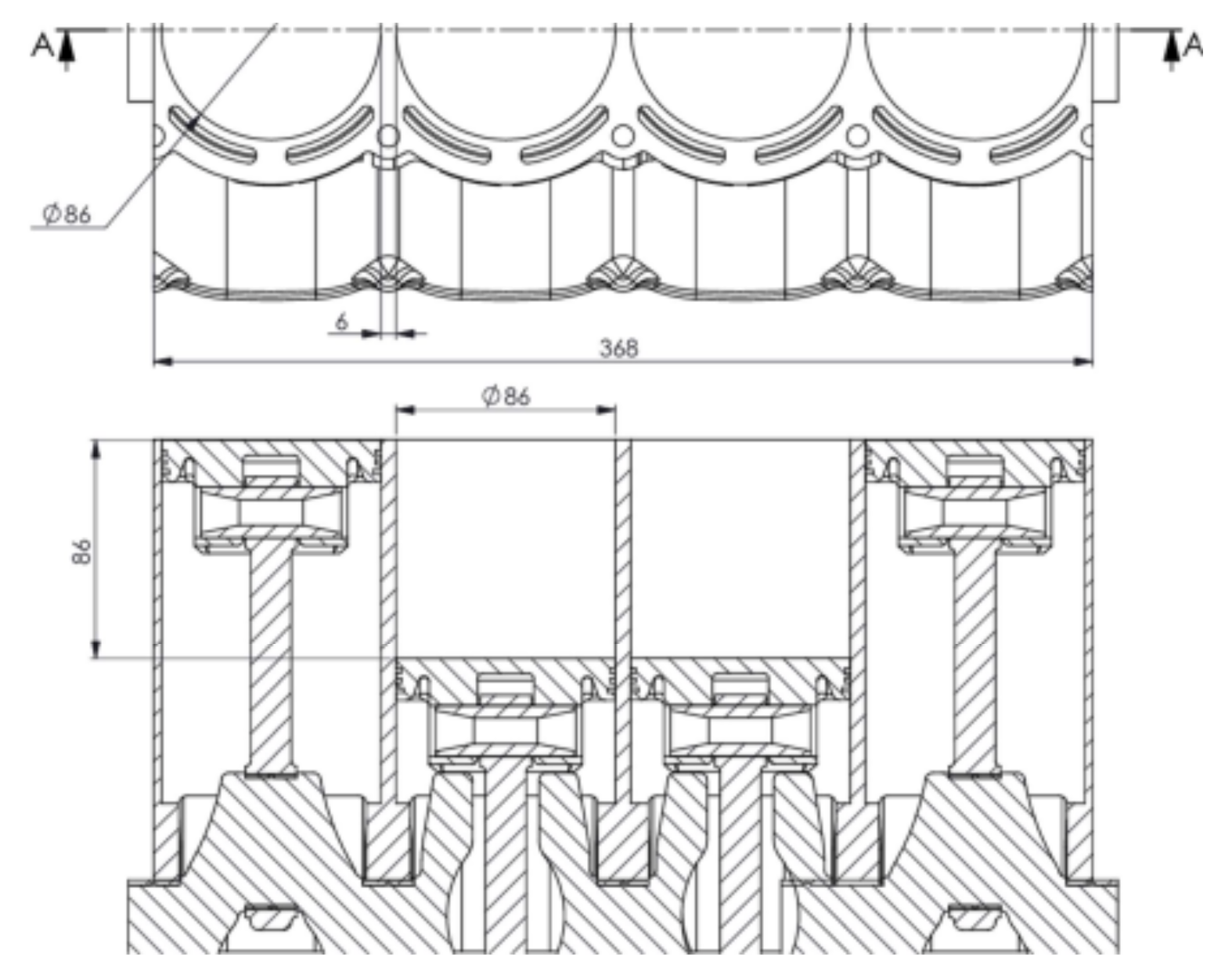
That makes the block length (ignoring all the tedious front case flanges and gearbox mounting at each end that you’d need for any engine regardless of cylinder count) just 368mm long (14.5 metric inches [Ed Note: What the actual ef is a metric-inch? Huh? -DT]) on our benchmark four cylinder, and 486.6mm (19.1“) for the six cylinder. That’s a disappointingly difficult 118.6mm or 4.7” of extra engine length to fit in a car. I once had to redesign an exhaust manifold because it stuck out of the front of the engine by 0.01mm more than the OEM’s current engine, to give you an idea of how critical engine size is for OEMs.
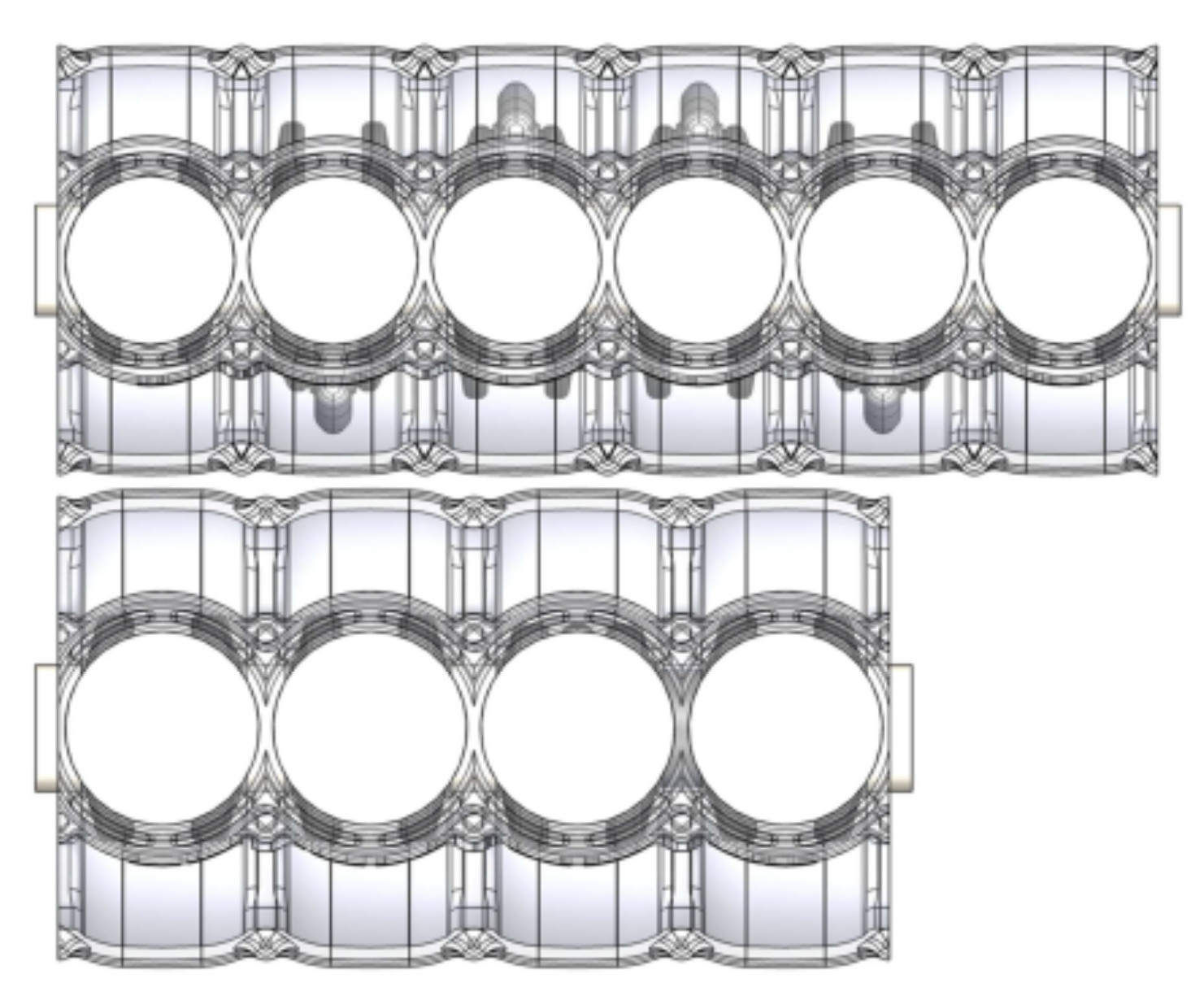
Wow. When I started this I kind of expected this to be a much less obvious difference in length. I guess that’s why we model this stuff up rather than relying on some engineer’s ad hoc reckoning. I have a follow-up thing planned using bits of this model, and I’m a bit worried it’s not going to be a dinky as I thought it would.
Back to our surprisingly long 2.0 six: As well as your improved smoothness and noise you’ll get more revs from the shorter stroke, meaning more power. You’ll also get an increase in total valve flow area, despite having smaller valves in smaller cylinders, so again more power. How much more power? Well, after all the extra bearings and cam drive friction maybe only a few percent based on some rough calcs, but anything at all is nice given that you’re really doing this to get a smoother engine and nicer noise, because it’s the experience that counts, not the numbers.
Although that saying about there being no replacement for displacement/no substitute for cubes? Slightly smaller engine capacity, same level of technology, but more power.
Why then does no one make 2.0 straight sixes anymore? Cost is a big one; small pistons cost nearly as much as bigger ones, and take the same grief to assemble. Cranks, block, head and cams will be 50% more expensive. But the big issues are packaging, that extra 4.7” of engine length, and worse emissions from the extra internal friction. It’s hard to justify when most customers just won’t notice the difference in the engine.
However, for just a tiny additional two and a half inches of engine length on top of that, you can get 50% more power by ignoring the total capacity, saving a bunch on money on common pistons, rods, valves, springs, and just have an even more glorious 3.0 six instead.
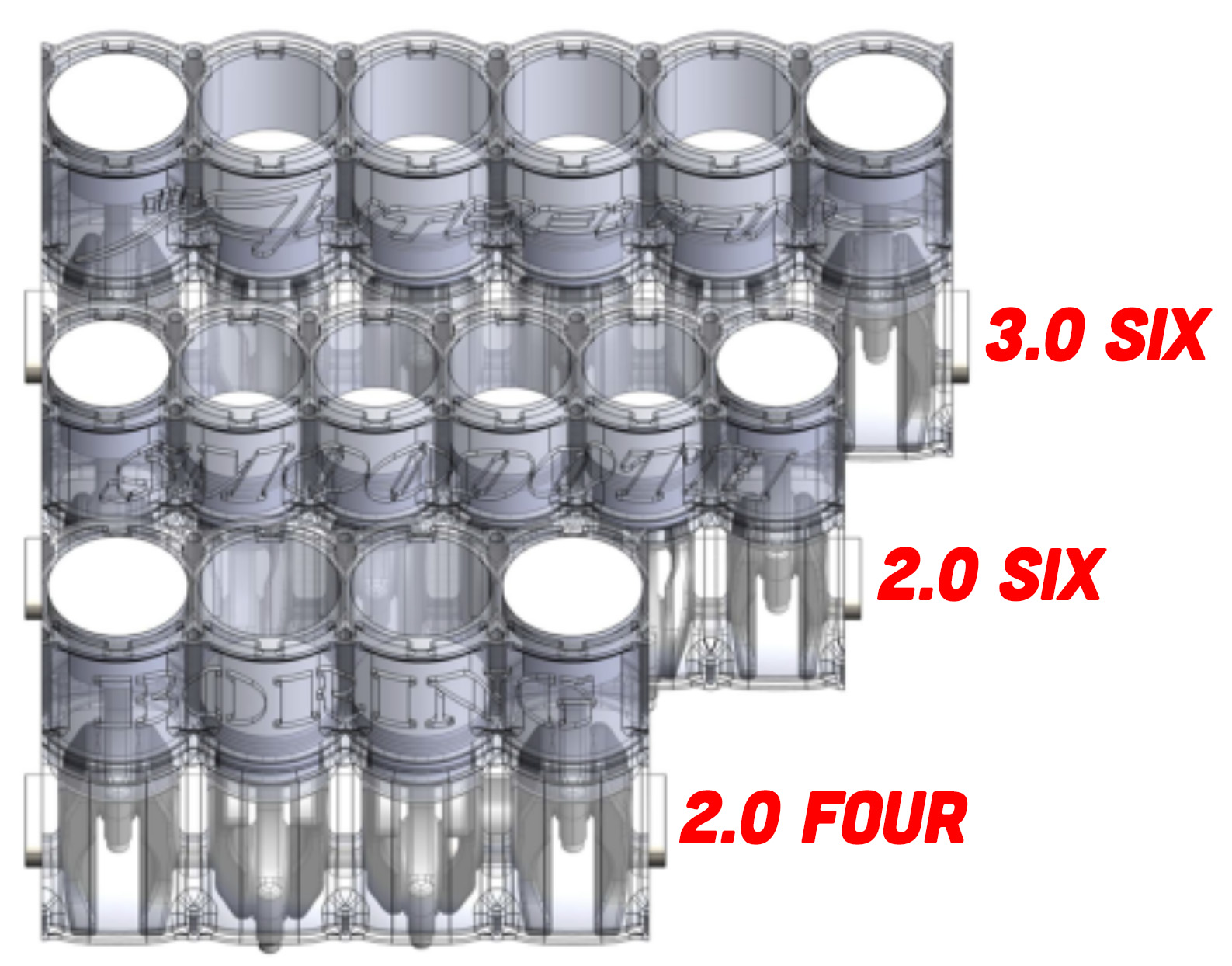
Why would anyone want a 2.0 straight six when 3.0 six is just 13% longer?
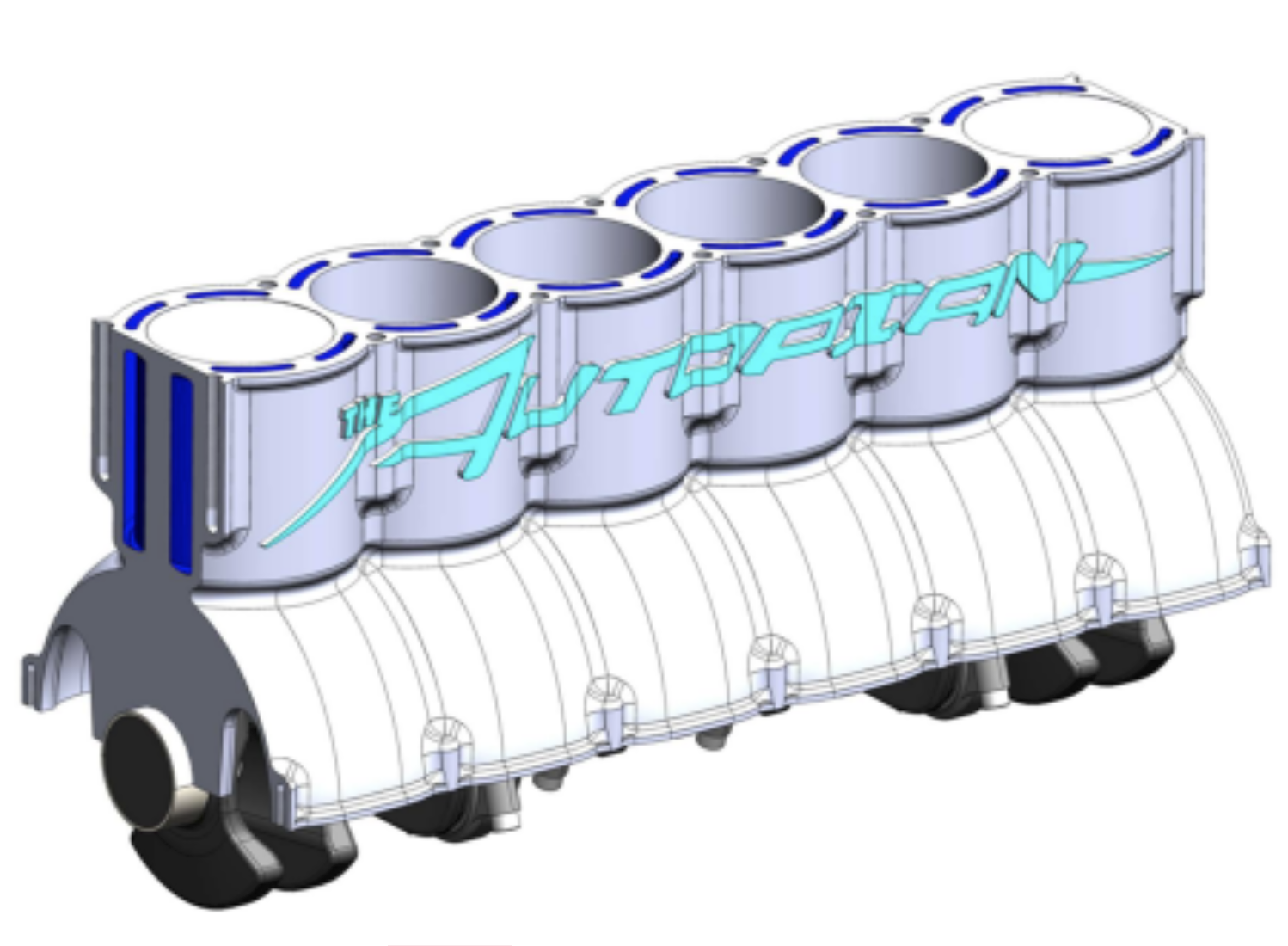
Just so you know: the “The Autopian” logo on the side of that block took longer to model than converting the base 3.0 six assembly to either the 2.0 six or the 2.0 four. Worth it though.
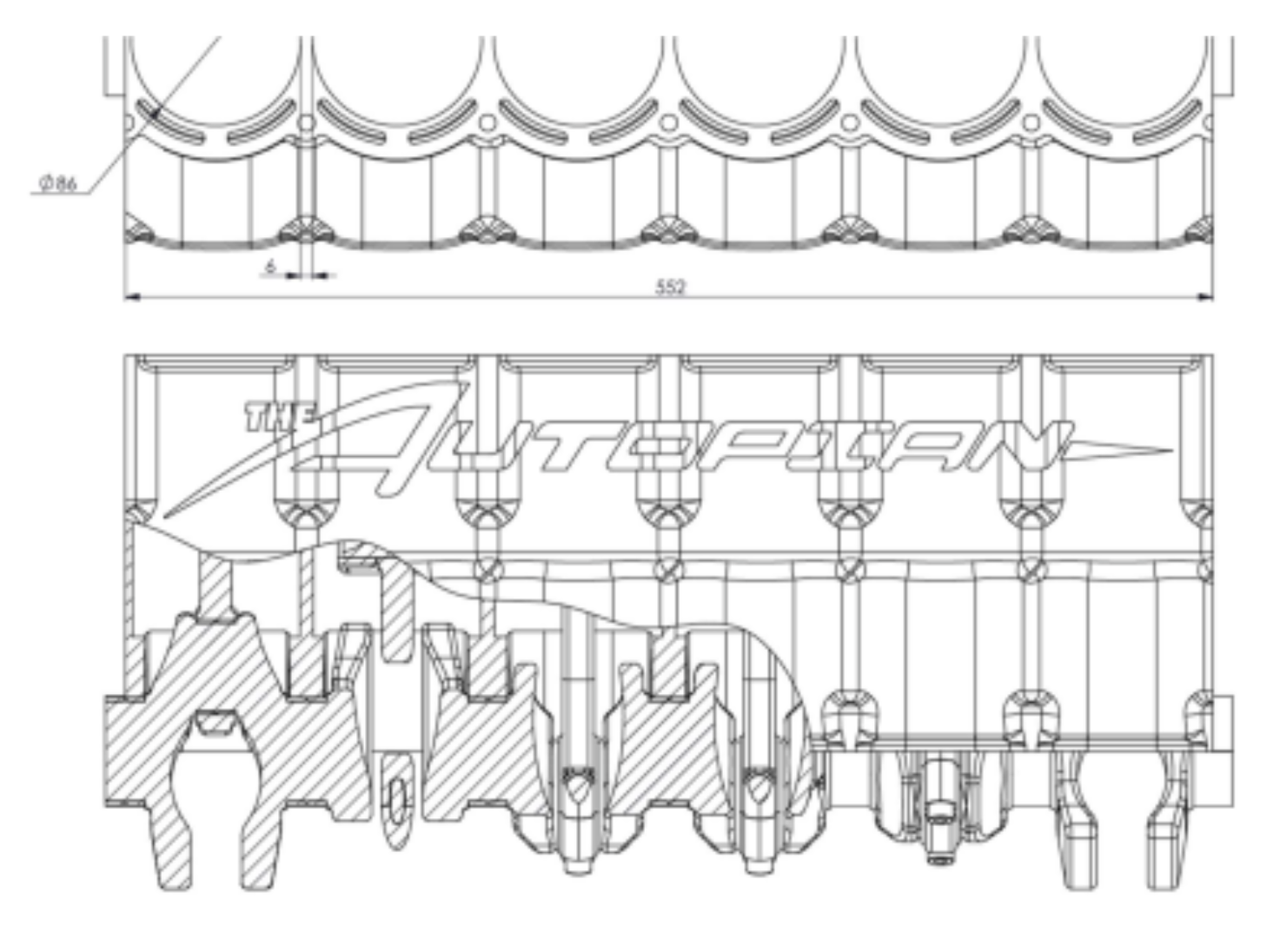
Huge thanks to Jack for the CAD access, without which this would just be some maths and maybe some crudely drawn circles in MS Paint.
All Images: Author


Just make a 3.0 I6 that’s very undersquare. Now it’s as long as a square 2.0 I4. Checkmate.
Now hear me out: Oval pistons! Honda has done them in the 1979 NR500 V4 engine, and Ferrari is working on an engine that turns the ovals in an orientation that shortens the engine. An oval piston I6 the length of a round piston I4 is possible!
Cheap? nope. More durable than round pistons? Ha! Horribly complicated and Autopian? I’d say so.
I designed one of those oval piston I6s about a year before Ferrari went public, following the sudden realisation that the Honda NR was the wrong way round.
Technically not an oval, it’s two pairs of tangent arcs, which is a shape I’ve found it impossible to find a name for.
I am glad the 3.0 I6 is enjoying a bit of a resurgence and renaissance because of packaging. It’s easy to hang a few turbos off the exhaust manifold of an inline 6 rather than trying to squeeze them in on the outside of an already wide v or plumb them into a hot v config.
I mean…. yes, but… 5 cylinders bro. Best engine of all time.
well except they sounded even worse than most sixes. But that is no big deal to me if they eliminate the need for balance shafts and increase longevity.
The big question I have is why is the Hurricane 3.0 inline six only Turbo Charged, why can’t a properly design flow through head NA straight six in this day and age not make more power and live longer than the Pentastar, while also be cheaper since it shares much of the parts and architecture of the Hurricane? of course there is the issue with length and crash zones, but if the boosted hurricane exists, I assume that is all worked out?
The Pentastar is used in front-wheel-drive applications, and the Hurricane is too long for that. Volvo’s inline-6 was an extreme exercise in shortening engine blocks, with some substantial cost/reliability compromises made in the name of packaging. The Hurricane is designed from the ground up for boost, with thick structural braces all across its block and the whole head designed for turbocharging.
The Pentastar is the cheapest production automotive V6 in the world, features variable valve lift/duration (a bit like VTEC, using two different intake cam profiles), and has a substantially larger bore than the 3.0L Hurricane.
To make the Hurricane into a viable Pentastar replacement in the RWD vehicles, the block would have to be made longer to accommodate bigger bores, thinner to save money/weight, the head would have to be redesigned around variable valve lift. For all that work, they’d get something that makes about the same power of the Pentastar, but unable to fit their FWD platforms and with a big up-front development cost that they’d still have to offset.
Conversely, the Standard Output version of the engine uses cheaper/smaller turbos, cheaper metals in the rods/pistons/crank than the H/O and runs happily on regular gas. It still costs more than a Pentastar, but it’s a lot more powerful, and crucially, it didn’t cost the company that much more to have the S/O in production, because it’s just an H/O with cheaper bits inside and slightly higher compression.
I did enjoy Mike Fernie talking to Bruce Wood of Cosworth about his favourite engines, which covers a lot of the pros and cons of different layouts:
https://www.youtube.com/watch?v=drxmwbWoZ_c
What if you reduced the bore and increased the stroke to shrink the inline six back down? Is there a limit to that, any downsides. (besides height)?
This is exactly the recipe countless old MG’s, Healeys, and Triumph’s used in the fifties and sixties…As I’ve owned a ton of old British junk (and loved every one…). When you drive these cars, you quickly learn why a common descriptor of these engines is “agricultural”…They rev like a tractor, and pull like tractors (many of these engines were derived from tractor motors), which is to say that they don’t rev high…but have decent torque. In general, these long throw engines tend to lug and don’t feel particularly responsive.
Of note, I believe this engine architecture derived from a British tax system that taxed cars based on the cylinder bore size – so small bore/long throw was pretty tax efficient.
biggest issue is probably Rod Ratio’s and Rev limitations from the longer stroke.
Packaging for extra cylinders is always hilarious when you have the smaller of the engines.
My excursion has a fan shroud that comes back over a foot just to reach the fan on my little 5.4 V8, since a V10 was the more common gas engine choice.
the ones that get me are the malaise era things like Monte Carlo’s and Ford Elites. those things had so much front overhang that even the biggest motors still resulted in 2 foot long tubes attached tot he fan shrouds.