

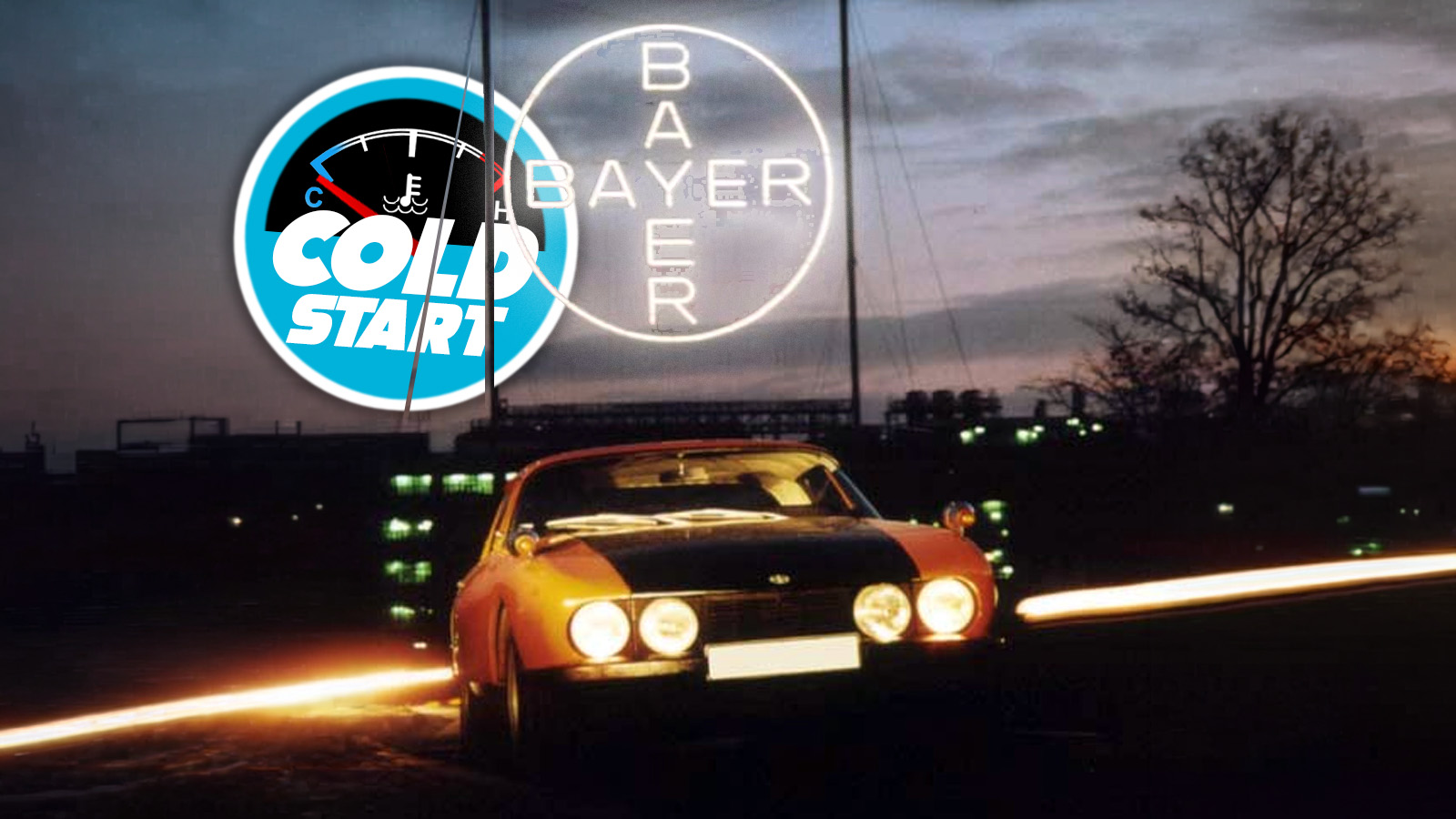
Quick, what was the first all-plastic car ever made? Ford’s 1941 soybean-plastic car? The original fiberglass Corvette from 1953? Both of those are sort of accurate, but if we’re talking about a totally plastic car – as in plastic chassis, not just body panels – then we need to look somewhere else. Somewhere unexpected, like your medicine cabinet. That’s because the company that made the first truly all-plastic car was Bayer, whom most of us know best as makers of delicious, crunchy aspirin.
Bayer wasn’t just a pharmaceutical company; the greater Bayer AG organization had its chemical-stained fingers in many other pies, including the invention of polycarbonate plastics in 1953, and that leads to what I want to tell you about now, how in 1967 Bayer subsidiary Covestro built the K 67, that first all-plastic car.


The car was made for the annual K show (for Kunststoffe, the word for plastics) in Düsseldorf, Germany – a sort of plastics trade show that has been going on since 1953 and continues today. The Bayer K 67 wasn’t just some trade show stunt – this was a genuine engineering and materials science milestone, and influenced the use of plastics in cars to this day.
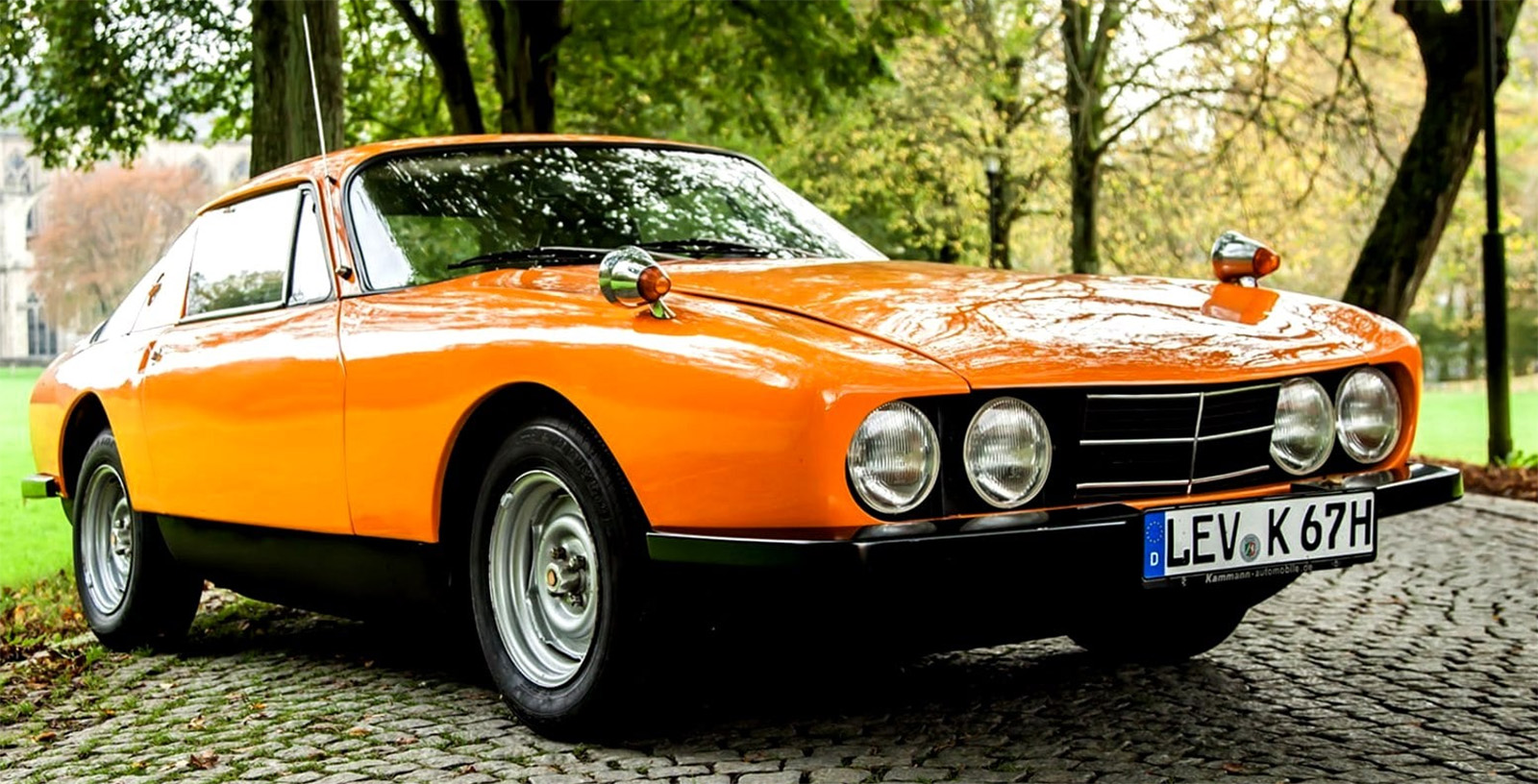
It also didn’t hurt that the thing looked pretty great; it was designed by influential industrial designer Hans Gugelot, known for furniture designs and consumer electronics like stereos and shavers for companies like Braun. The body was a sleek fastback with good proportions, and in at least one aspect, predicted a design detail we see on many cars to this day. Look it this:
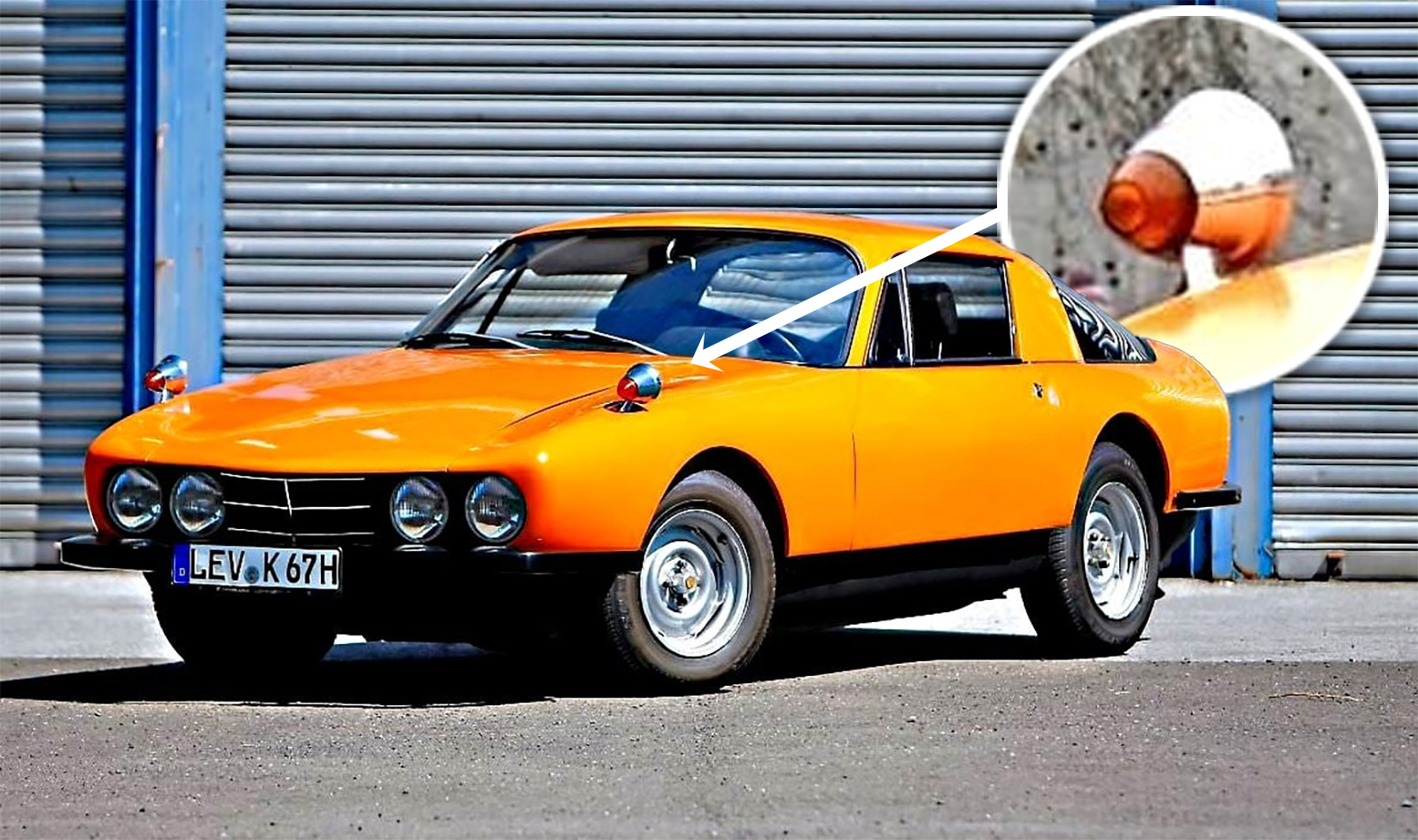
See how those conical turn signal lenses are integrated into the side-view, wing-mounted mirrors? So many modern cars have indicator repeaters on their mirrors now, and I think this may have been the first application of a combined indicator/mirror. What I like especially is that I think this was just an adaptation of an existing, off-the-shelf mirror design and turn signal lens design, which just makes it cooler.
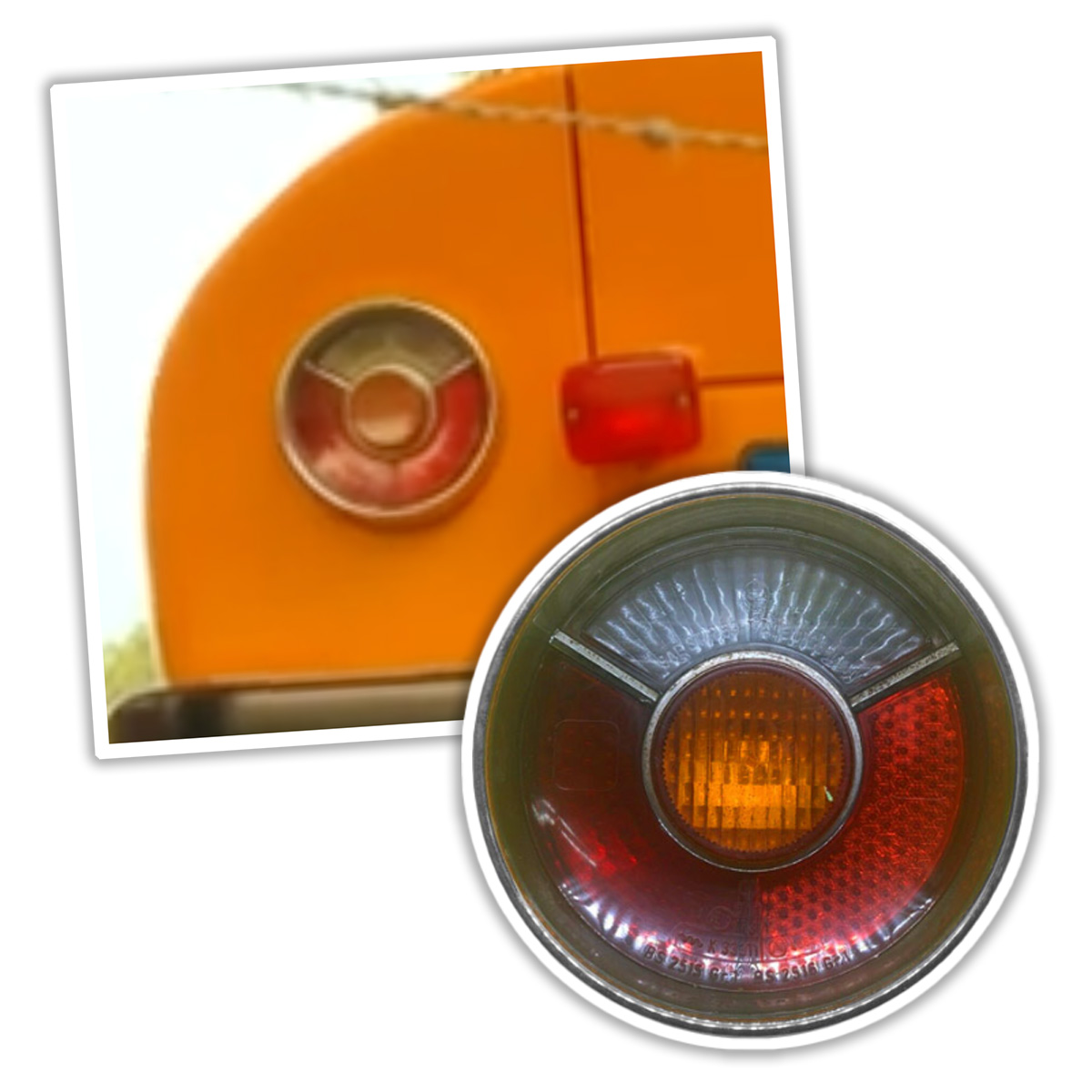
Around back there are distinctive taillights that hint at what’s under the hood: those are BMW 1600/2002 taillights, and the drivetrain is from the BMW 1600i/2000 CS, the 2-liter inline-four. The plastic car weighed only about 1873 pounds, so it was actually fairly quick (8.5% faster, it seems) compared to its donor car.
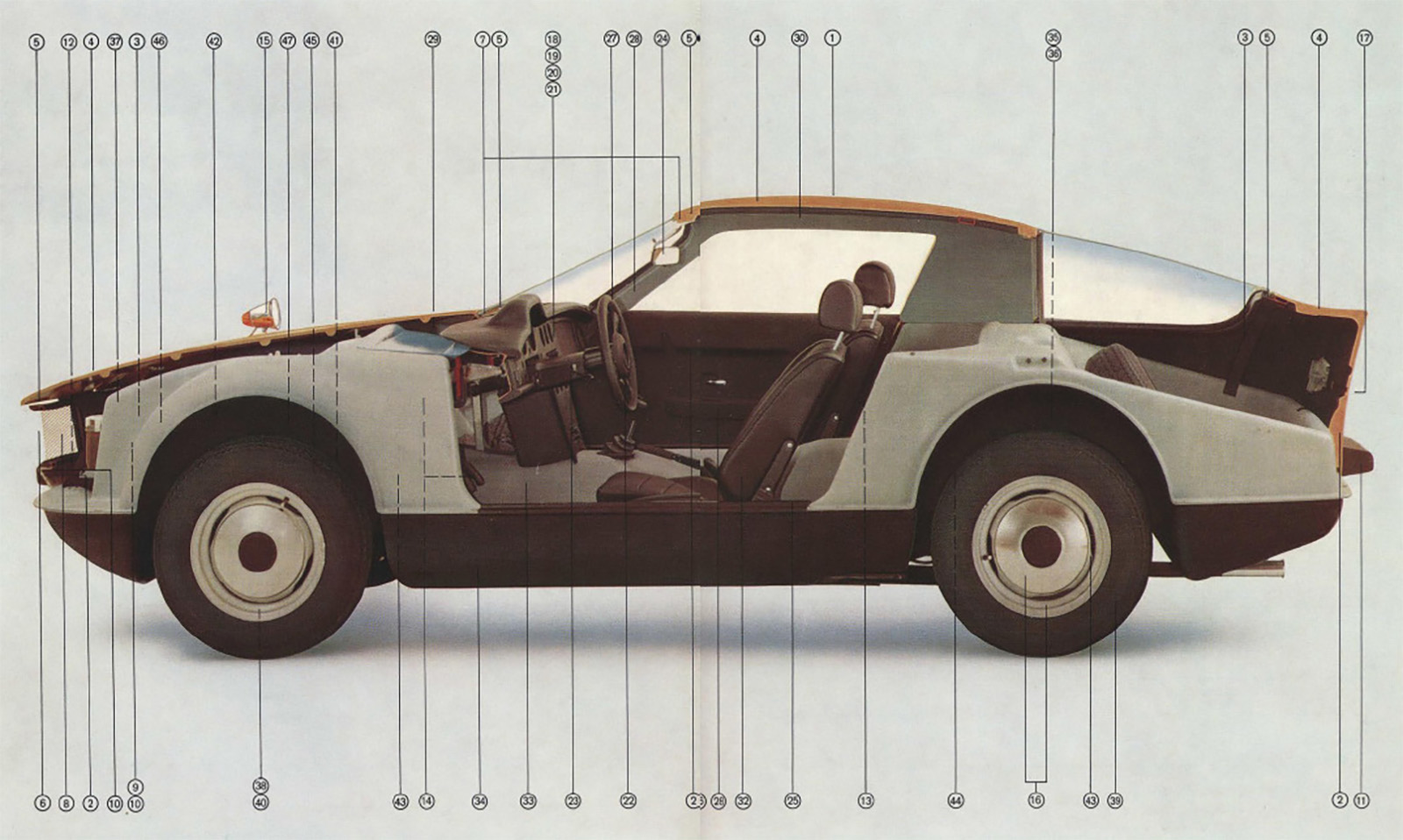
What really set the K 67 apart was its chassis, though, a plastic sandwich of glass-reinforced plastic bread and a hard foam meat. This plastic chassis proved quite rigid and strong, and absorbed all of the stresses of torsion and shock while driving with aplomb. It’s interesting to see how much more material is used in a plastic chassis, and how the chassis also forms many of the compartments of the body, like the trunk tub.
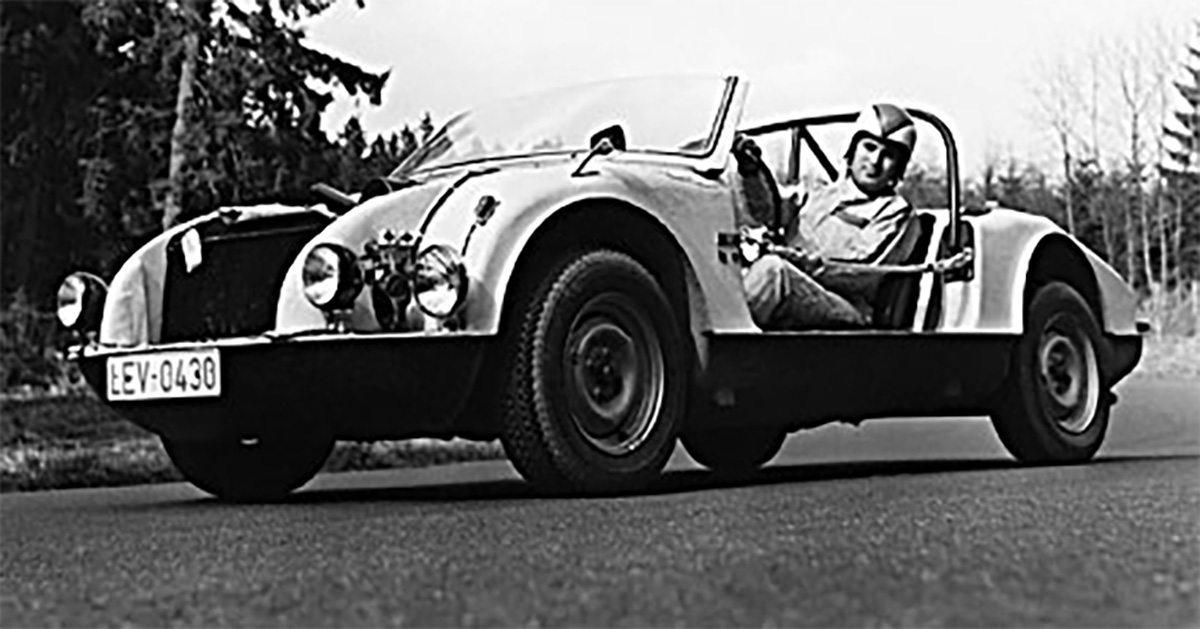
The test mules were pretty much just that chassis without the body, and it looks surprisingly good, considering the total lack of any outer skin.
Modern cars use plastics and polycarbonate parts extensively, which makes the relative obscurity of this Bayer-built concept a bit surprising. The K 67 was a genuine pathfinder in the world of automotive materials tech, and yet it feels like it’s hardly discussed! That’s a shame.
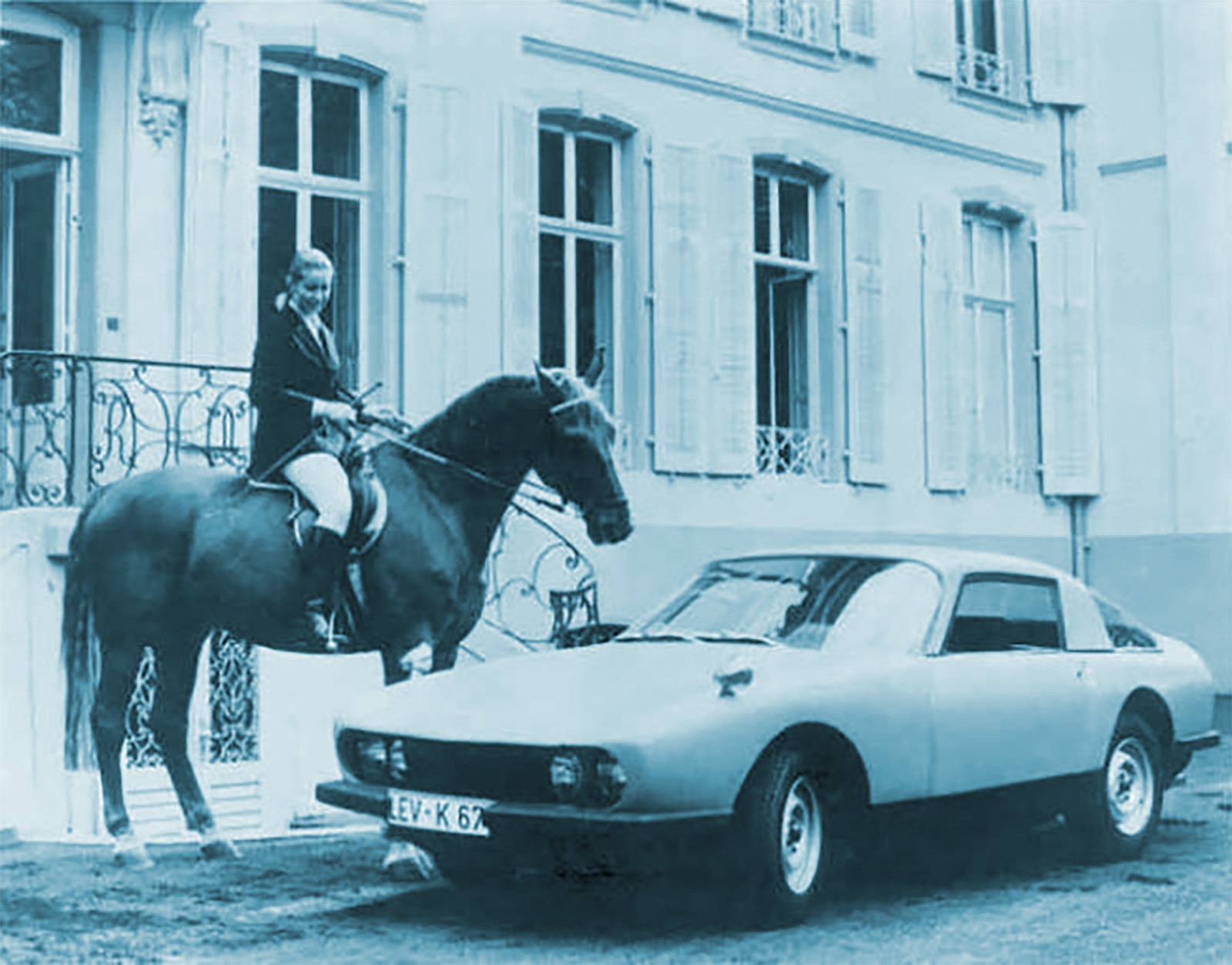
Also, if you were concerned that such a car would have issues co-existing near horses, I hope this publicity photo puts your mind at ease.
(top image: Bayer)


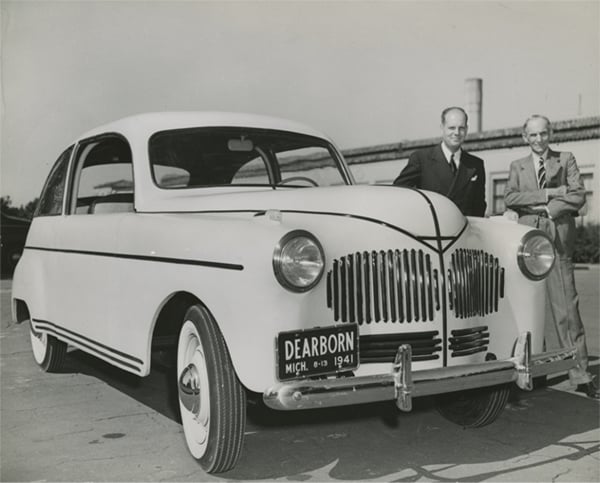
The Rochdale Olympic would like to have a word. As would the Lotus Elite.
Great story, thank for digging it up!
Also would have looked cool with the plastic rims from the Citroën SM 🙂
Looks a bit like the OSI Ford, but la mode de ’67 was like that, I guess?
Can we send Matt and David to the K-Show in Germany? We need some new minivan content.
A squinty look and I see a TVR Clipper crossed with a Saab Sonnet.
My first thought was Saab Sonnet as well
I don’t recall ever seeing this before. It looks like Ogle modded a Sonett III. I like it.
I bet that repairing it after a crash would be a real headache.
Not if you have a heat gun, just melt it back together.
You’d probably have to strip it down to the bayer chassis.
I wonder if the engine is naturally asprinated.
Oddly handsome. Was there no metal subframe of sorts for mounting the tops of the shocks/struts and the engine/transmission, or did they literally just get bolted TO the plastic chassis?
Good looking car, if I squint I see a bit of SAAB Sonnet there.
I didn’t extract and translate the German closed captions, but there is something in there about “chassis” “metallic” “sandwich”. Which would make sense, to integrate some steel near the outer surfaces and take the stresses, similar to rebar in concrete.
Probably where the motor mounts an suspension connections are.
They put an Opel Manta schnoz on a OG TVR Griffith !
The detail I’d examine is how they handle mount points for suspension and sub-frames.
Yeah that night photo made me think it was a 1974 Opel Manta. (My dad had one and had it painted rallye orange.)
My Laverda RGA Jota had bodywork made of ‘unbreakable’ Bayflex plastic that was also developed by Bayer. Spoiler alert, it’s totally breakable and absolutely not the type of plastic that can be fixed with adhesives or plastic welding (and a Laverda is not the kind of motorcycle you can easily find replacement parts for.)
I bet this li’l buggy was either made of ‘Bayflex’ or one of its antecedents.
Never had a big problem with the panels on mine. That was back in the 70’s though. The parts that were a problem where the use thrice break often clutch cables. I used to keep a cache of a dozen on hand and never go on a ride without at least three spares.
Sweet bike, wish I’d kept it.
Mine was an ’83 and by then the triple had been tamed a bit with a 120 degree crank and a hydraulic clutch. The RGS/RGA bikes got lots of bodywork, as was the fashion then.
Mine never really broke down, other than rattling a few screws loose. Since there was no internet back then and Laverda had abandoned North America, it was good that I didn’t need to find anything crucial on short notice.
Nearest dealer was in Montreal and I was in Regina. I used to order parts in batches. Seals, brake parts clutch cables in bulk. Never had those problems with my Suzukis.
The only bike I rode that was sweeter was a friends Bimota KB3. But back in the 80’s it cost 12k iirc so there was zero chance of buying one on my budget.
I also liked his RG500, but the thing was always trying to kill you.
I had a Dayton 400 for a while and it could wheelie for blocks.
Crazy times when you think you are indestructible.
I used to have trouble with clutch cables.
You need to lubricate them before installation. This is crucial.
I used Lubrimoly.
The problem was the design of the cable head IMO. It used to snap off all the time. I lubed em, tried to fit other cables – no luck. I looked into cobbling together a hydraulic system but but was approached by a Laverda aficiondo and sold the bike for a tidy sum after a couple of years of ownership.
Here’s a piece of trivia: Bayer was the first to synthesize and commercially market heroin.
But they later tested it on concentration camp prisoners, so they knew it was safe
I was not aware of that, but it somehow doesn’t surprise me.
Would be unsurprising, but possibly not true since it had already entered then exited the marketplace decades before.
Tested? It was already already marketed 41 years before WWII.
They had to be sure
The prisoners all got placebos. Hitler got the good stuff.
They mostly got experimental anesthetics, at least from Bayer, other subsidiaries of IG Farben worked on different things
Opioids were Hermann Göring’s thing. The other Nazis generally preferred methamphetamine (then known as Pervitin).
TBH Bayer actually supplied the poisons for many of the death camps.
I know it was WWII and all that but talk about a legacy of horror to try and overcome.
To be precise, aspirin and heroin were synthesized by the same chemist (Felix Hoffmann) eleven days apart in August 1897.
You’re right. That’s why I specified that they synthesized it and commercialized it rather than invented it.
And now they own Monsanto. Pick your poison.
Give it flip-over headlights and a quality ragtop + zippered rear window + keep a removeable hardtop and it would great body kit for an old NA Miata doner car.
Mr. McGuire: I want to say one word to you. Just one word
Benjamin: Yes, sir.
Mr. McGuire: Are you listening?
Benjamin: Yes, I am.
Mr. McGuire: Kunststoffe
Benjamin: Exactly how do you mean?
Mr. McGuire: There’s a great future in kunststoffe. Think about it. Will you think about it?
Wow! Made 5!! The Holy Grail.
Reminds me of the Brazilian Puma. The fiberglass VW body cover. Been looking for an
affordable (lol) 2002. Would take this instead.
Wonder if the molds might still exist..hmmm
Bayer: We’re pharma, we’re old, we were established all the way back in 1863, and we made a car once!
Mitsubishi: Hold my beer…
Hyundai: Hold my…
DuPont/GM: Bitches, please…
Wouldn’t Hyundai be “hold my boat”?
Hold my furnace, but I missed my chance to edit.
They apparently built 5 of these things, 2 of which are still out there:
https://www.plasticstoday.com/automotive-mobility/throwback-thursday-the-plastic-car-of-the-future-circa-1967
The test mule looks a bit like a Morgan. Nice.
My stepdad has told me stories of his friend’s dad that was in the plastics industry in the 50s-60s. He ended up with some significant contracts to supply materials in the Michigan territory shortly before plastic had widespread use in cars. It worked out pretty well for him, like private jet level of well.
Nice pull. This is pretty cool, I had never heard anything about this. It is pretty sexy.
Lotus Elite (1957).
I’ll see your Type 14 and raise you a Spatz.
Yes the real thing a decade earlier, I hear they were quite light.
Of course GRP bodies had been around a lot longer, the first (1948?) Glasspar had a Jeep chassis, and would cover most of the normal Autopian talking points in one vehicle.
True. But the Elite’s fiberglass chassis makes it a more direct predecessor to the K87.
I believe the next in line would be the Chaparral 2, which also had a fiberglass chassis.
I too was going to note that the Lotus Elite beat this by 10 years.
Those wing mirrors are – arousing.
Pointy. My 10 year old self would have loved this car.
There’s a whole missed product placement opportunity here. This was the same year The Graduate came out. Plastics.
That scene is the first thing I thought of too.
Should’ve used an Alfa Romeo engine instead of BMW.
And both models are 1600’s!
I see a lot of Jensen Interceptor.
Very ’60s eurovibe
Ask your doctor if Covestro is right for you!
But man, those potential side effects are doozies.
Covestro, from the makers of Fartella.