

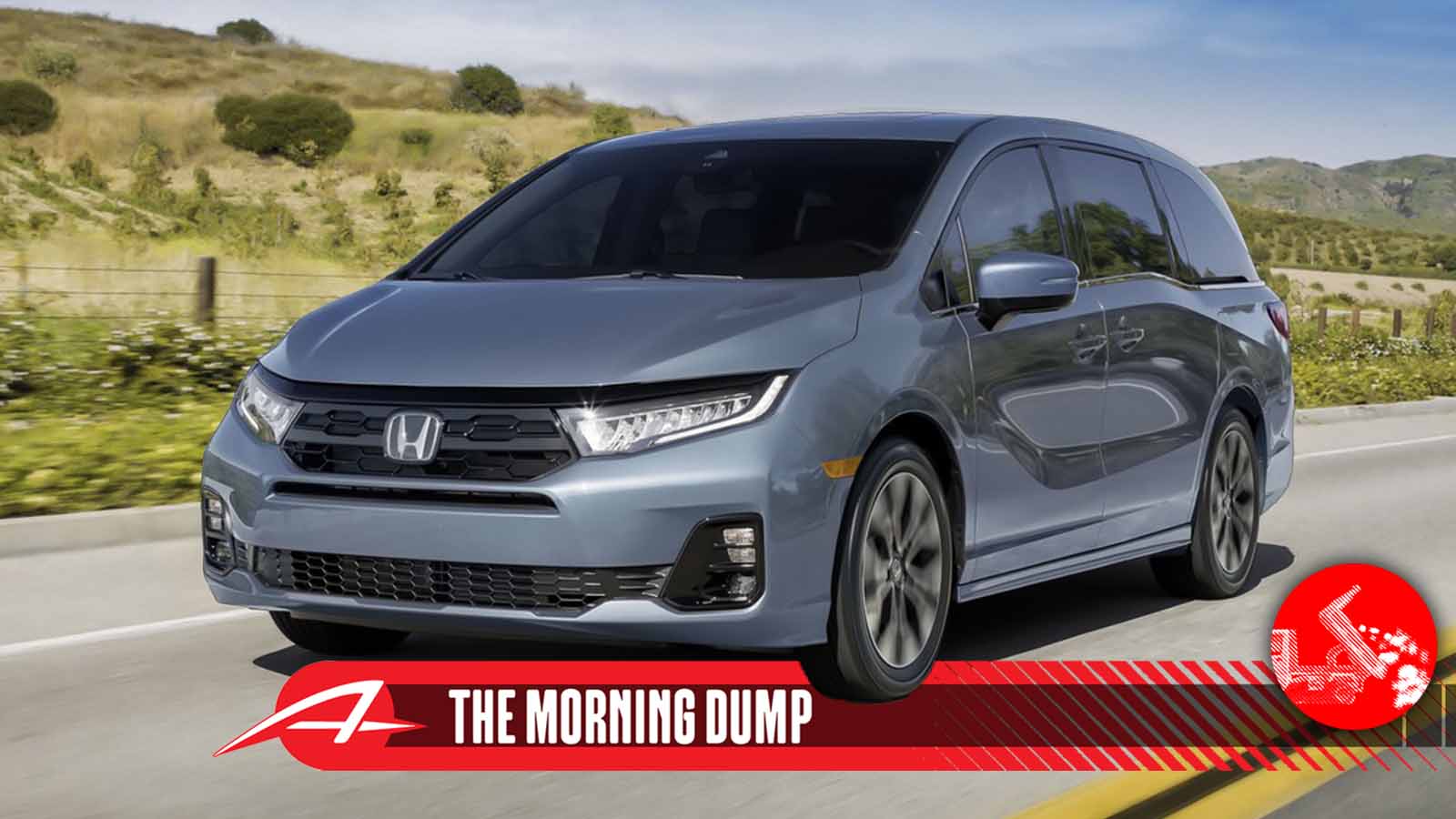
Being a popular car brand means, typically, developing a next generation car almost as soon as the one you just designed gets out the door. Does that make sense? People are keeping their cars longer, and modern cars are generally very good.
I’m sure Honda would like to refresh its current lineup of vehicles. I’m sure Honda also would like to have back the billions it poured into EV development. If you can’t change the past, at least you can hope to change the future. That’s what Honda is trying to do, but it ain’t happening overnight.


Your humble Morning Dump author meets a fair number of celebrities in this line of work, but I’m not one to brag. I did meet Serena Williams last year and she was an absolute delight. Now, she’s getting her own Lincoln, and it’s as charming as she is. Oh, and guess who helped it come to life?
There are more tariff threats and, honestly, this is all getting pretty exhausting, so I’ll keep it brief. In less exhausting news, the Kia EV6 isn’t a bad little electric car, and now it’s way more competitively priced. I’d still probably buy a used one, but the delta between new and used has gotten a lot smaller.
I Hope You Like The Odyssey, Because It’ll Be Mostly The Same Odyssey For A While
The EV hype cycle led a bunch of companies to make a bunch of weird decisions, many of which collided with both market realities and a sudden shift in government priorities. Honda tried to hedge its bets a little by having GM build its first large scale EV project. That worked until it didn’t.
Instead of putting a lot of time and money into developing a V6 AWD hybrid system, Honda poured billions into EV projects it would eventually cancel. Toyota, on the other hand, put a lot of its cash into developed various hybrid platforms, including an AWD system for larger vehicles. Looking at the market, Honda has, essentially, four hybrids whereas Toyota has nearly 30.
You can see where this is going, and Automotive News has the update you were probably expecting:
Honda, in a supplier memo reviewed by Automotive News, said it will extend production of the Odyssey, Accord and HR-V, as well as the Acura MDX and Integra.
Next-generation models of the nameplates won’t arrive until the end of the decade at the earliest, according to the memo.
Here’s Honda’s statement on the story:
“We are not going to comment on future product plans. We are very confident and excited in our future product strategy including our previously announced plans to advance our award-winning hybrid technology to more models.”
The last Odyssey got approximately seven years before redesigns. At this rate, the current Odyssey may go as long as 13 years. The Kia Carnival is relatively new and has a hybrid. The Toyota Sienna is newer and has an AWD hybrid version. Only the Pacifica is older.
I like the Odyssey, obviously, and perhaps the extension of the platform means that Honda can offer it at an increasingly competitive price? Maybe that’s true of the other vehicles in the lineup that are also aging?
As one dealer points out to AN, it’s not quite that simple:
“New product drives new consumers to the brand and reinvigorates existing loyalists,” the dealer said. “When we extend the product cycle beyond the standard five-year period, the product tends to start getting stale, and you start seeing defections.”
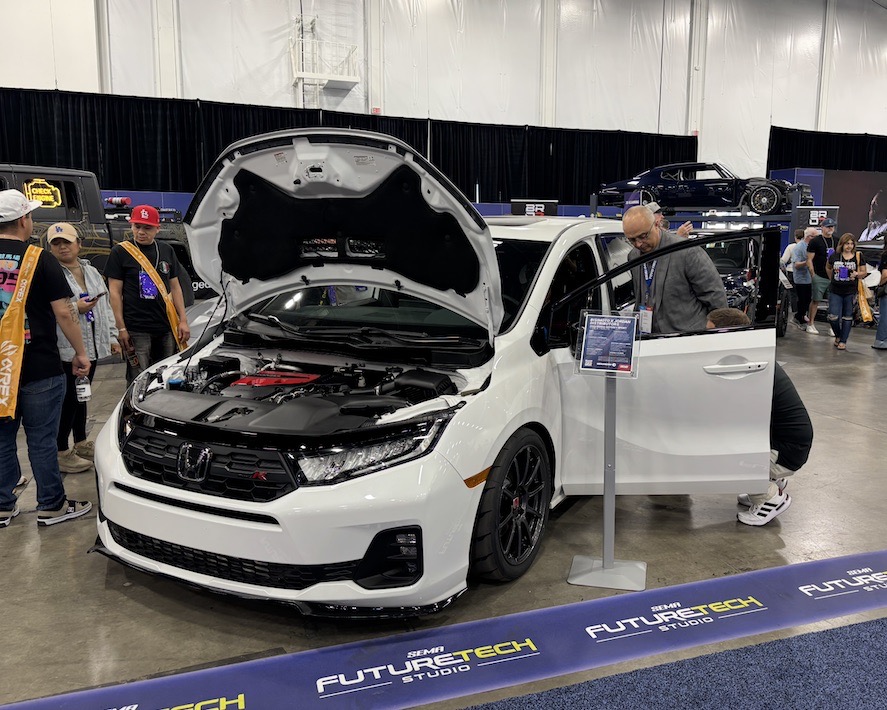
There’s an obvious solution here. Our pal Bisi already pointed out that you can make a manual, Type R Odyssey minivan. You know Toyota isn’t going to do it. In fact, no one else is going to do it. The Honda is already the best-handling minivan in the class by a large margin, so why not make a fun halo model for a little while?
It’ll make everyone happy. Everyone. Well, it’ll make me happy, but I’m a Honda owner!
[Ed Note: I think family cars can be old, as long as they’re safe. Families just need seats and a low asking price, which is why the Dodge Journey did so well late into its life and why the Durango is still crushing it after 15 years. -DT].
Serena Williams Got A Custom Navigator From Lincoln And Galpin Auto Sports
It was a big deal when Lincoln poached Christine Park Cheng from Cadillac to head up the luxury brand’s design direction. I’m not sure if getting to work with Serena Williams to build a 1-of-1 Lincoln Navigator was one of the perks the company offered, but after hanging out briefly with Williams at Pebble Beach last year, I definitely get why that would be persuasive.
Celebrities and large Ford SUVs go together historically, and while this one might not be as brash as the Flexpedition, it’s far more tasteful:
The vehicle was customized by Galpin Lincoln in Los Angeles, a partner with a long history of offering customization and personalization options to Lincoln clients. The result is a luxurious one-of-a-kind Navigator that reflects Serena’s individuality, strength, and grace.
Serena shared that she has always loved three things: pink, hearts,
and roses. Our Brand-on-Vehicle Design Team created an elegant rose symbol, with one petal shaped like a heart, to merge her favorites together. The symbol appears on the B-pillar and as well as on the rear Split Gate.
Oh, hey, Galpin Lincoln? That means the folks at Galpin Auto Sports who did this bespoke work of art are also the same people who helped lift our Nissan Murano CrossCabriolet. I wonder if this means they’ll be open to my super bespoke Ford Tempo project…
If there’s a feature I like best it’s the Clay Court interior, which is not a color I’d have imagined would work as well as it does.
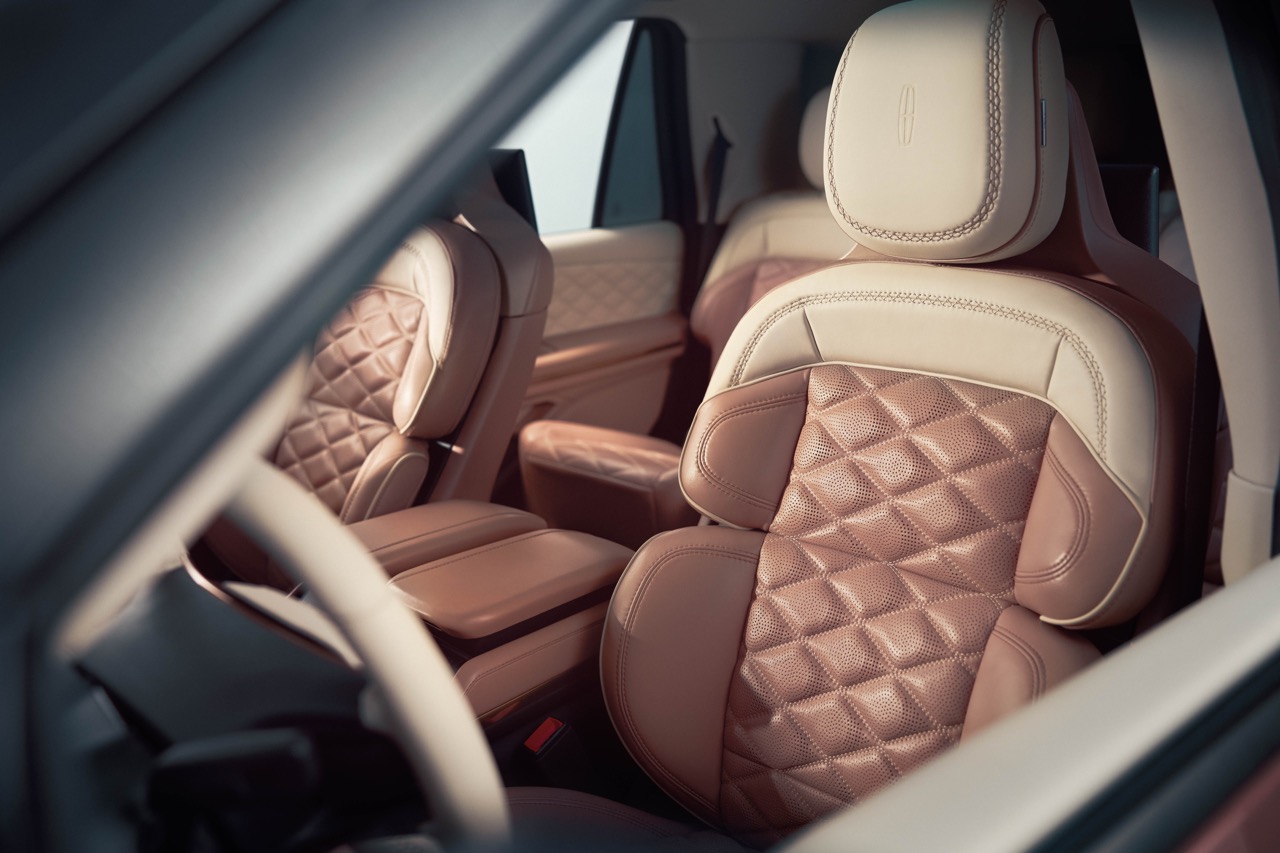
If you can touch it or see it, GAS did something to make it a little extra special. You know… Ford did end up selling the Flexpedition. Perhaps a Serena Edition Navigator?
If I Had A Nickel For Every Tariff Threat…

Here’s hoping you’re not trying to import a European-built car in the near future, because the President has raised tariffs by 25% again.
“I am pleased to announce that, based on the fact the European Union is not complying with our fully agreed to Trade Deal, next week I will be increasing Tariffs charged to the European Union for Cars and Trucks coming into the United States,” Trump said Friday in a social media post. “The Tariff will be increased to 25%.”
Trump said the levies would not apply to automobiles built in US facilities. “It is fully understood and agreed that, if they produce Cars and Trucks in U.S.A. Plants, there will be NO TARIFF,” the president said.
President Trump didn’t explain what, exactly, the EU has done. The EU has moved slowly to pass a final deal and is still working through some finer points, but moving slowly is the EU’s whole thing. It would be like getting upset that I chose a TMD song of the day featuring a woman with a guitar.
The New Kia EV6 Is Now Under $40k, Delivered

Kia dropped the EV6 GT for 2026 which, having driven it and the GT-Line, is totally fine. A super-fast EV6 was fun, but a regular GT6 is quick enough for most people. Kia also dropped the price.
Without the destination charge, the new EV6 is $37,900 for the Light SR RWD, which is $5,000 cheaper than the 2025 MY car. Even better, the Long Range RWD is just $41,200, which is also $5,000 cheaper.
Did Kia jack the destination charge a bunch to make up for it? Kia did not! The new destination is just $1,545, or a mere $70 more than last year (with fuel prices, that seems reasonable). Obviously, the $7,500 tax credit is gone, but if you’re buying and not leasing the lower base price is probably better.
What I’m Listening To While Writing TMD
This was apparently a thing on TikTok last year and I missed it, mostly because I’m an Unc. Elizabeth Nichols has had me laughing this weekend with “I Got A New One.” So much modern country music is bad. This is good, with a real Robert Earl Keen energy I love. Also, the video has a half-ton of great trucks.
The Big Question
Do we care that platforms are lasting longer?
Top photo: Honda




The Civic is not mentioned, but since the Integra is based on the Civic Si, one would assume that the Civic also won’t be refreshed anytime soon. Which is a shame. I like the 11th Gen but I’ve been looking forward to seeing what’s next.
Not necessarily. Didn’t the IDX ride on the 9th generation Civic platform well after the 10th generation Civic was out?
yah – ILX was out of sync with Civic. I could definitely see that again with the Integra.
I don’t think the Civic is a concern since it’s such a core volume product globally; same for CR-V. The Integra, Odyssey, and MDX are more specific to the North American market.
Accord and HR-V are global but fall somewhere in between. HR-V was tailored more to US buyers; Accord sales are much lower than they once were here, but that segment moves slower than it once did and most of its volume still is likely from the US and China.
There is a global Accord but it is different than the one for North America. Our Accord split off in 2002 and has been different since then.
Same with the Camry, Jetta, Passat….
Accords began to diverge well before then. The European market received a different one from North America/Japan in the 90s with the 5th gen, then the 6th gen became 3 different models, then Europe/Japan merged in 2002 for the 7th & 8th gen which we saw as the Acura TSX. Even then, the 7th/8th gen NA Accord was sold as the Inspire in Japan.
After that, the 9th gen that debuted for MY2013 became the only Accord bodystyle. Japan receives the same as NA, and Honda no longer sells the Accord in Europe. China still seems to be a big Accord market as well.
Thanks for the added info.
I have a 2011 TSX Wagon which was the only way to get the Euro Accord wagon in the USA. One of the last wagons on the market and likely the last wagon I’ll own as they are simply no longer sold in the USA.
Look on the bright side, this delays the inevitable bloating of the next model. The Civic is already larger than an Accord should be, and the Accord is becoming an irrelevant boat.
Civic is midsize – the most popular size of sedan in the USA. Accord has been a large car for more than a decade. They fit well in their respective classes.
Pretty much everyone has dropped the compact class – for non luxury brands only the Corolla, Jetta, and Mazda 3 remain and only one of those actually sells in volume.
For the past 2-3 decades, increasing crash safety standards and the popularization of IIHS awards meant that new platforms were often necessary to earn those IIHS awards without increasing weight too much. In the past ~5 years, crash safety standards have focused more on non-structural changes (like seat geometries) and active safety/ADAS, and engines have mostly finished downsizing, so the need for new platforms for ICE cars has decreased especially if there’s room for hybrid batteries.
It’s a better investment for almost everyone to focus on EV platform development that targets low hanging fruit like structural battery packs (or even just making their first pure-EV platform in general).
I’m glad to hear the Integra is sticking around; they didn’t do much for the recent refresh, so I figured it was going to get axed before long. Now I just hope it gets a hybrid version and more tech from the ADX. It would also be nice to see a refreshed Accord and hybrid versions of the HR-V and ADX in the US.
As far as platform age goes, I do care about the infotainment and electrical system. I’d love to have a 392 Challenger Widebody with a manual, but I’m kinda concerned about how easy it would be for others to hack and steal it; I’m not necessarily expecting a car to be absolutely impossible to steal, but a newer one would be more resilient to modern theft, I think. I don’t want an infotainment system that integrates all the HVAC controls in the screen, but one that’s large enough with wireless Android Auto and is paired with plenty of physical buttons (like what’s in the current Durango) would be ideal.
If I had a family to drive around, I would care more about crash safety, so I would be hesitant to buy something that doesn’t compare well to its newest rivals in that respect.
They didn’t do much with the FE Civic either. The Integra’s still a fairly new car and sales have actually ticked up a bit. It’s pretty egregious that it didn’t get a hybrid version, given that the Civic Sport Hybrid is right there.
Absolutely I care. We’re very much hoping to have a kid soon, that means I need the market to be flooded with hybrid minivans immediately so I can at least approach affording a used one in a few years.
Let’s look at my current fleet in reverse order:
-2016 Sorento (soon to be gone)
-2013 Optima
-2000 Excursion
-1990 Rover Mini
I’d like platforms to run longer because we’re keeping them longer and I’d like to be able to BUY PARTS FOR THEM.
Which is much harder to do when a car only runs 3-5 years in lower volumes.
TBQ: Up until very recently, no. However, the MPG gains afforded by hybrids make any non-hybridized platform look like stone age technology. Case in point, the new Honda Passport. So if the platform has been hybridized, I foresee it sticking around for quite a while. The 2021 Sienna and the new Rav4, which, to my understanding, is just a heavy refresh of the previous gen, come to mind.
The Honda Odyssey is an interesting product. While its V6 and platform are sweet, its MPG and lack of AWD are not. There’s an opportunity for Honda to make a value play here, but starting MSRP vs starting MSRP, the Toyota is slightly cheaper. A 14 MPG difference is huge. I’d take AWD, +13 MPG, and a slightly slower 0-60 time over an Odyssey every day of the week.
Toyota managed to get all those hybrids plus several EVs to market while Honda could barely do either. Letting the 0-series EVs get to the expensive tooling stage was an unnecessary mistake that others avoided; it should’ve been cancelled without debate the second the tax credits were confirmed to be cancelled, and arguably earlier since it was already clear by 2024 that a ~$50k 400V non-luxury EV wasn’t going to sell.
Meanwhile they still haven’t brought a hybrid system to anything larger than a CR-V/Accord; even Nissan might beat them to that!
Yeah, Toyota is a much larger company than Honda. They have about 3x the output. 4x the operating income.
Which all the more reason the Honda can’t afford to spend years in R&D and then tool a new platform and then cancel it a few months before start of production.
I think good platforms should stick around for a long time, why not?
I was going to say the same thing. “If it’s good, long is fine.” If it’s not good, well to hell with it.
Good platforms, yes, keep ’em around. I think they could use some better powertrains in those platforms, though. The 2.0-liter with CVT is underwhelming in the Civic, let alone the heavier and more expensive HR-V where it’s the only option. The 1.5+CVT is very much worth avoiding in the Accord and CR-V, and it’s embarrassing in a car as expensive as the Integra.
Updating the interior and powertrains are key even if the unibody hard points stay the same.
All of the Honda’s you mentioned should be hybrid only by now and Honda REALLY needs a hybrid for the Odyssey, Ridgeline, Pilot, and Passport. Those models where rumored to be getting a hybrid V6 for 2027 – hopefully that was not delayed.
Sienna and Carnival are newer than Odyssey, but not significantly so, by 3 model years or so. The old Sienna went 10 years before the current gen came out with a couple refreshes in there along the way. Minivan product cycles are going to remain longer it seems.
Accord – not a lot of competition in the segment so makes some sense.
HR-V – more surprising, given it’s a bigger segment. Maybe some skepticism on making major moves related to production as it’s built in Mexico.
Integra – well, the ILX pretty much got lapped by the Civic during its run, so par for the course I guess. And the 3rd gen Integra had an unusually long run for Honda of the time.
Nothing wrong with most of those but the Accord/HR-V could use a bit more of a freshening to extend longer and/or some trim reshuffling, and HR-V/Integra could stand for some extra features for their price too.
The HR-V desperately needs the Civic’s hybrid system (which it’s already sold with elsewhere) and maybe an exterior design refresh (but do NOT touch the interior/dash!). The Accord can afford to become the new oldest model in the class, taking over from the Malibu and whenever Nissan decides to recancel the Altima
I’m assuming it’s a production concern for a North American hybrid HR-V, if the Mexico plant isn’t yet set up for hybrid production and the hybrid that exists elsewhere comes from other plants. The current Civic hybrid existed a few years globally before coming here in the same way.
Add to that the tariff back-and-forth and they may be weighing where to produce them. But with Kia adding the Seltos hybrid (even if that drops the Niro), there’s certainly enough competition in the segment.
I could see them looking at combining the HR-V into a single product line again, and bringing the product cycles in line could be part of the delay. They made it sound like our HR-V was supposed to be so specific to our market, but a lot of others get both ours as the ZR-V and the Fit-based HR-V.
The Chrysler Pacifica/Voyager is tied with the Odyssey as oldest minivan on the market (they both came out for the 2017 model year) and was still the best seller in the category last year (126,000 units vs #2 Sienna’s 101,000) and is already trending upward again in 2026. Age doesn’t seem to be mattering much for minivan shoppers
Odyssey’s first model year was 2018, so Pacifica actually has it beat by a year. Minivan buyers are generally buying it for pragmatic reasons, so there’s not really a ‘need’ to update as frequently. I bet you could put an example of each of the Odyssey or Pacifica facelifts side by side and ask the average person which one is oldest and newest and probably get all different answers.
Kia has been chasing more sales lately with a big increase last year, but for the most part I think I think each manufacturer will just continue to be strategic about the number of vans they plan to produce.
Genuinely what is going on at Honda. First they partner with GM to get some form of electric vehicle in the US market. Then they cancel it after like 18 months of production to focus on their own EV platforms. After dumping billions into their own EVs they cancel at the 11th hour when everything is basically all set to go. For years they seemed to be ready to pull out of Indycar, but they instead double down and kill the IMSA program. They pulled out of F1 only to change their mind after selling the powertrain IP off to Red Bull and have egg on their face with how awful their powertrain package was with Aston. Does Honda even have any direction as to where they plan to be in 5-10 years? People say that Nissan is a doomed and directionless company, but Honda doesn’t seem to be able to keep to their plans or accept risk. Maybe they need some fresh heads in the C-suite to get back on track, but it seems that Honda Global is content with letting its market share get swallowed up without a fight internationally by the Chinese and Koreans.
I think Honda was so sure of the Nissan-Mitsubishi merger and once that fell through, so did everything else
It was hanging around with that degenerate mind changer GM that did them in.
If it weren’t for the fact that the Odyssey is, er, Odd looking, I would say “why fix what ain’t broke?
I say get the damned thing right and leave it alone as a general rule.
Yeah, more graceful styling could keep it desirable for many more years. I guess it gets a pass because the Sienna is quite ugly too and the better looking Pacifica (until this last restyle) just didn’t compete in the reliability department, perceived or otherwise.
Not even remotely. In fact, the auto-journos spilling ink about how old some perfectly good platform happens to be is one of my biggest pet peeves about the car community. As long at it still meets reasonable safety standards then it’s fair game.
I agree with this. I just care that they update the infotainment. No one should be selling a new car with 5+ year old infotainment tech.
I don’t know. I recently bought a new Miata, and instead of it driving like one of the best small affordable sports cars of 2026, it drives like one of the best small affordable sports of 2016. Have I made a huge mistake??
You could’ve bought used for less and gotten the same experience! 😉
I love Honda, the company and the cars they make. My first car was a civic and I’ve owned many others. That said, I can’t imagine current Honda CEO and leadership are going to survive much longer after walking back EV plans, skipping Nissan merger (which now seems to me like a mistake) and now delaying future product launches. The Prelude is nice but pricey, Accord sales are down this generation, and Honda basically only makes Civics and nice larger SUVs in the US. it seems Honda is getting outpaced by competitors at least in the US. Is it just me?
FWIW the CRV, Pilot, Passport, and Ridgeline are all made here.
I meant the Civic and SUV’s are what they actually sell well in the US, not what is manufactured in the US. It’s my fault for the confusing language 🙂
Shockingly though Accord sales are on the come up for this year, 27% increase YoY from 2025
That is shocking, but can probably be attributed somewhat to increased Hybrid sales in the general marketplace and the overall lower Accord sales of the current generation. It hasn’t been that many generations since the Accord was competing with the Camry for top seller in the US. Now Accord sales are significantly lower than Camry. If I were going to choose now I’d pick a Civic Hybrid as a family vehicle over an Accord as they are close enough in size and features and the Civic offers greater value (in my opinion). American Honda has really gone all in on SUV’s (and made some really great ones) but my point still is they seem to have missed the overall boat with the market, with Nissan, with Hybrids and now with extending products.
“Shockingly though Accord sales are on the come up for this year, 27% increase YoY from 2025”
That’s some very optimistic cherry picking.
https://www.goodcarbadcar.net/honda-accord-sales-figures/
https://www.goodcarbadcar.net/toyota-camry-sales-figures/
https://www.goodcarbadcar.net/chevrolet-malibu-sales-figures/
As always context is key. The Accord saw a huge drop in sales in 1Q2025 vs 1Q2024. 1Q2026 is up but still historically low.
Last 10 years:
2016 77,073
2017 69,815
2018 61,601
2019 64,411
2020 47,125
2021 46,591
2022 40,941
2023 42,806
2024 41,927
2025 30,612
2026 37,317
classic “it depends”. I generally don’t mind if it’s been a while since the last redesign and even appreciate the “bugs are worked” out nature of it. an extra 2-3 years is no biggie. an extra 3+ years may start to push it. Hopefully Honda does some interior/equipment refreshes and maybe even updating exterior color choices. This works well so long as they keep the price in check. Not that it needs to be the value option, but the fact that it’s a long in tooth model should somewhat reflect “better” pricing.
As someone that worked on the u718 Project it’s super cool to see the one off she got over the standard grey and black ones that are everywhere. Although to my eye the paint doesn’t look any different than the “Sunrise Copper” paint you can get on them.
It makes sense to squeeze a year or three more out of a cycle at this point in car history. If cars are lasting longer, why not? It’s better for everyone. Average person will never know, and in theory would make cars cheaper by giving an extra year or two for development.
Not one iota. My two current cars being on platforms that were well established by the time our copies rolled off the line has meant that parts are available and affordable.
I shopped 5th gen 4Runners and 2nd/3rd gen Frontiers a couple years back – I’m not afraid of “old” platforms!
They’re largely mature at this point.
That said, I do recognize packaging is a huge issue when trying to electrify even a little and wish Honda put more effort into that. We still see different compromises chosen like no spare for the CR-V and Forester hybrids but the RAV4 Prime still has room for a spare. (but the Corolla Cross hybrid doesn’t get a pass from me, boo!)
Of course I say that while moaning about Toyota’s truck packaging but I digress.
And at least they’re a bit better than options a decade ago where a big battery was just plonked unceremoniously the trunk.
Do we care that platforms are lasting longer?
NO!
Longer lived platforms have more bugs worked out and keep costs lower.
Most people are not car news and specs obsessed gear heads.
They want transportation with technology, comfort and reliability.
New stuck on plastic cladding and a bigger screen will convince most of the public the car is newer.
one of the keys here is keep costs lower…which should translate to “better” pricing. That lets Honda keep their per unit profit good still. So long as they’re not charging “new model” pricing to a mature model, it all works well for me.
Re keeping costs low, I wonder how much tooling life figures int this. If one of your many tools has a life of 200k units and so is expected to be replaced 4 times during a 1M unit model run, and then the model run is extended to 1.5M units, the 8 tool purchases vs.5 tool purchases is NBD. But it you have a big expensive tool that has a 1M units life that you never expected to replace, that eats into the unit cost reduction you were hoping for.
I’m glad you added this perspective. I’m a numbers guy (finance, not accounting) and we’re often blasted along with beancounters for killing products. the reality is Operations/Engineering & Finance/Accounting run the math just like you gave in your example and show what makes sense. The business/product managers can do with that what they want. But at least in better run organizations, you don’t give a lot of green lights to money-losing math problems.
And certainly Honda has figured this in. So they estimated the expected cost of running the model an extra 5 (or whatever number) years, and weighed against alternatives and their costs, then weighed that balance against whatever market and marketing expectations, and made a decision.
This is what people miss when they say “X car is 10 years old – the tooling was paid for long ago”. The design, testing, and development was paid for long ago but the tooling has to be steadily replaced because a tool only last for a fixed number of parts.
The question is when does it make sense to refresh the design so when we we are paying for new tools at least they are for something that looks new to the customer.
For people with less insight into tooling wear, a few examples:
Thank you for the much more detailed explanation. I’ve done injection, cast and forgings over the years. Never messed around with stampings.
Well the Odyssey should technically last 10 years…
But really the safety standards have changed since it was designed https://youtu.be/idguv5ok9Lw?si=-CowbFIK6fxaItd2
Do we care that platforms are lasting longer?
No. Modern ICE/hybrid vehicles are a mature technology. A 2026 is not going to be meaningfully better than a 2023 and barely better than a 2013. Delaying an updated platform was a big deal when cars were changing faster.
Here’s hoping you’re not trying to import a European-built car in the near future, because the President has raised tariffs by 25% again.
Huh? I thought trump was distracted by a squirrel he saw through the window and forgot about tariffs. Tariffs were at least three wars ago at this point.
Agree on your point on modern vehicles, in some aspects a 2013 would even be better than a 2026, like insurance, repair costs and actual buttons in the dashboard.
I could not care less how “old” a platform is, if anything I prefer it as it means things are very well sorted out.
I think it depends on the platform and that cars competition. Take the Miata, it doesn’t really matter if Mazda doesn’t want to replace it for another 4 years, since it’s still a benchmark and an amazing car for what it is. On the other hand you have cars like the just now discontinued ICE Macan which was starting to feel old and uncompetitive years before it actually was discontinued.
Also there’s something to be said about what sells and what doesn’t, sure the Durango does well, but the Wagoneer S and Hornet are so bad that they have never sold well, despite being brand new platforms. Just because a platform is new doesn’t mean it’s better, so if Honda is cooking up a really solid new platform, I think we’d all rather wait 2-3 years extra for it to be perfect.
A 1988 Porsche Carrera was essentially the same car as a 1963 Porsche 901.
(That’s not an answer, I know, just a reflection)
Also regarding, tariffs. Hooray, we get to keep all the euro goodies for ourselves! Or something…
Not really. If a platform is working well and has the bugs worked out, why fix what’s not broken? Interior refreshes can go a long way to keeping a vehicle updated.