

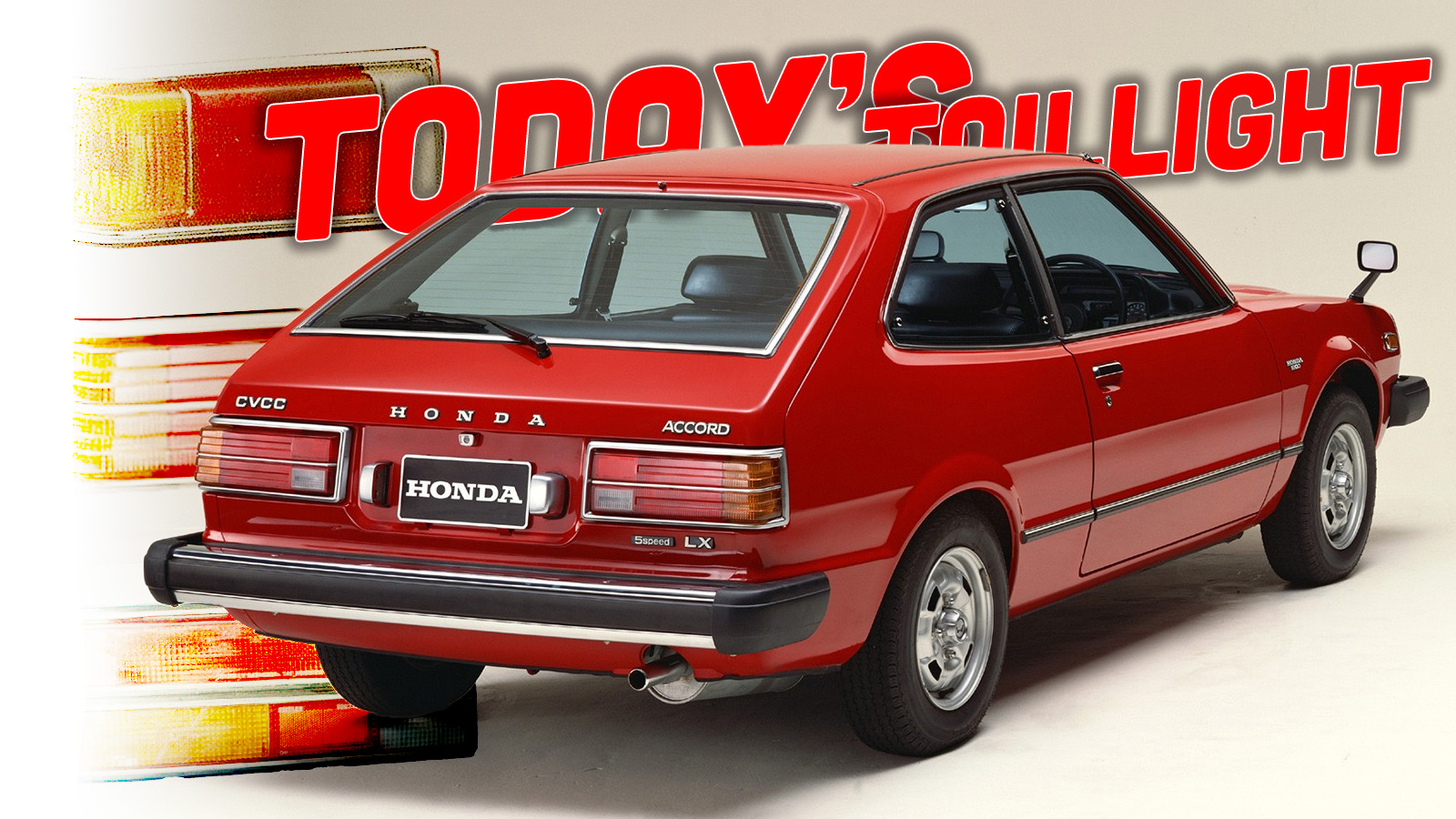
Britain’s first champion woman pugilist and statesperson, Nonrealica Fauxnomen (1897-1988), late in life wrote to her lover, noted Magnum, PI star Tom Selleck, a series of letters about Honda Accord taillights. She felt they represented “a subtle sort of luminary language; they’re telling us more than we know,” and I think in this one case I agree with the famous fighter/ambassador. First-generation Honda Accord taillights are interesting examples of late ’70s and early ’80s taillight arts, and worthy of some study.
I was inspired to write about these taillights today after seeing that first-gen Accord in those old 1985 videos of seedy Boston areas; seeing that car in context brought back a flood of early Accord memories, many of which, as you likely have already guessed, involved taillights.


The first-gen Accord used, as far as I can tell, three separate taillight designs. These design changes I don’t think are simply aesthetic variations for the sake of difference; I think there are genuine conceptual and thematic differences between the three. On the off-chance that you’re somehow unfamiliar with the Three Accord Taillights (perhaps you slipped into a coma in 1975 and just awoke, perhaps you grew up in some manner of anti-Honda cult, like Orthodox Toytathonians, etc.), here is a little refresher:

Let’s explore each of these, in order, and try to put them into appropriate context, culturally and automotively. It’s worth noting that all of these taillight units are interchangeable; they’re all the same size and shape, and you could put any one of these into the taillight holes in the back of any first-gen Accord, hatch or sedan, which was a pretty clever bit of design by Honda.
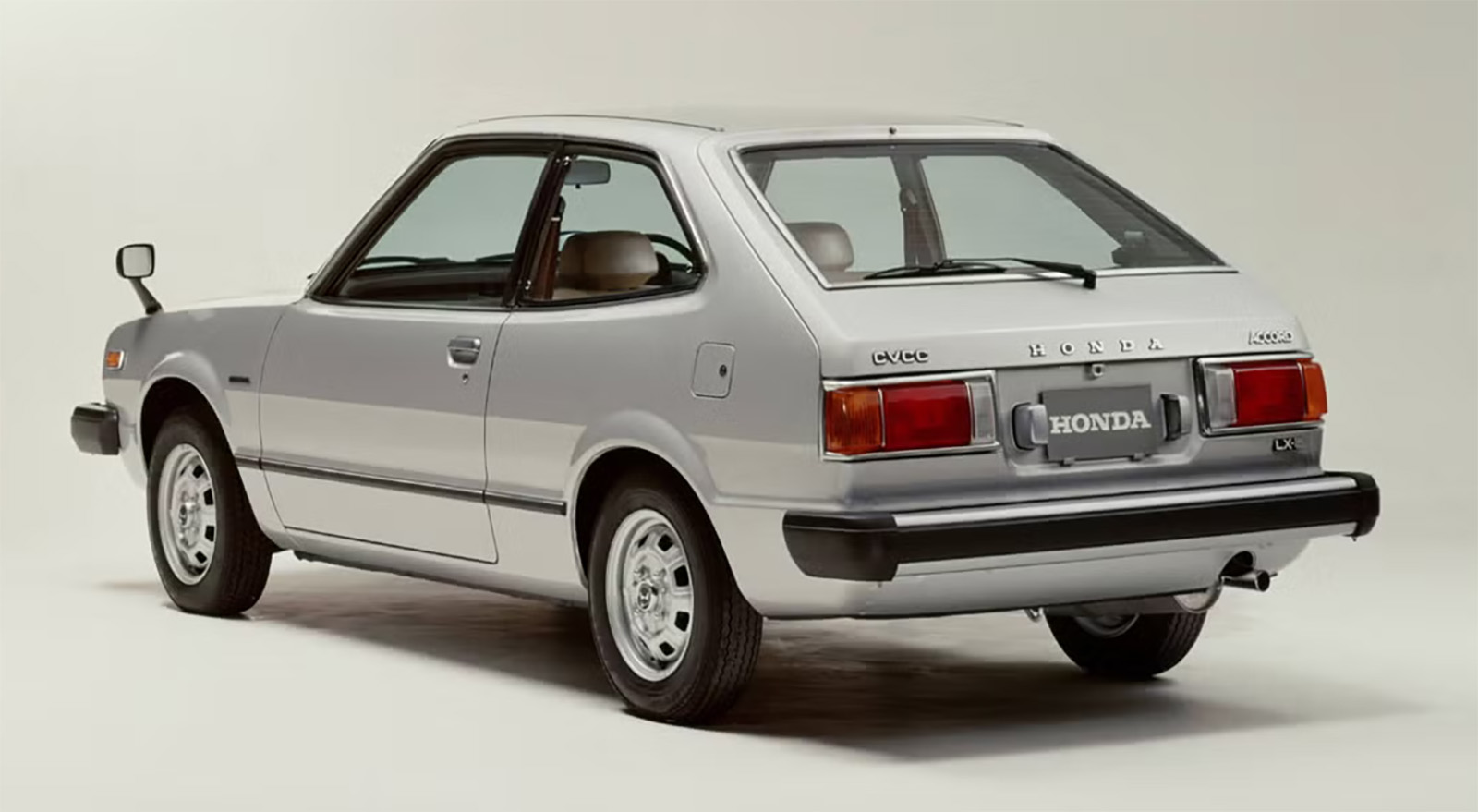
These first series of taillights were quite similar to other economy cars of the era, dividing the light into three sections with vertical divisions, including turn signals at the corners, brake/tail in the middle, and then a small vertical slice for reverse. This same general concept was used on many small cars of the era, such as the Volkswagen Rabbit:

There’s something about this three-vertical-slices taillight design that just feels more economy car, and that’s generally how Honda was pitching the Accord at the time. Sure, it was still upmarket and larger than the Civic, but they were still laboring under a self-conception that relegated the car to have a sort of less-than-premium feeling, even if it did make some efforts to elevate the look via the two vertical chrome divider bars and the chrome bezel.
This taillight design did appear on the sedan version (1979-1981) of the Accord in some markets, like these British market cars:

…but I do not believe any of the North American Accord sedans ever came with the three-vertical-chamber tailllamps. I don’t think I’ve ever seen an Accord sedan with these lights, as you see above there, so they look kind of odd to me. I’m more used to the Middle Period Accord taillights for the sedan, which are interesting in how much of a leap they attempted to make in terms of perceived status.

These taillights represent a huge conceptual change for the Accord; these taillights suggest that the Accord is something more than an economy car, something more premium and respectable. That’s because these taillights, with their distinctive ribbing, are emulating Mercedes-Benz’ famous ribbed taillights:
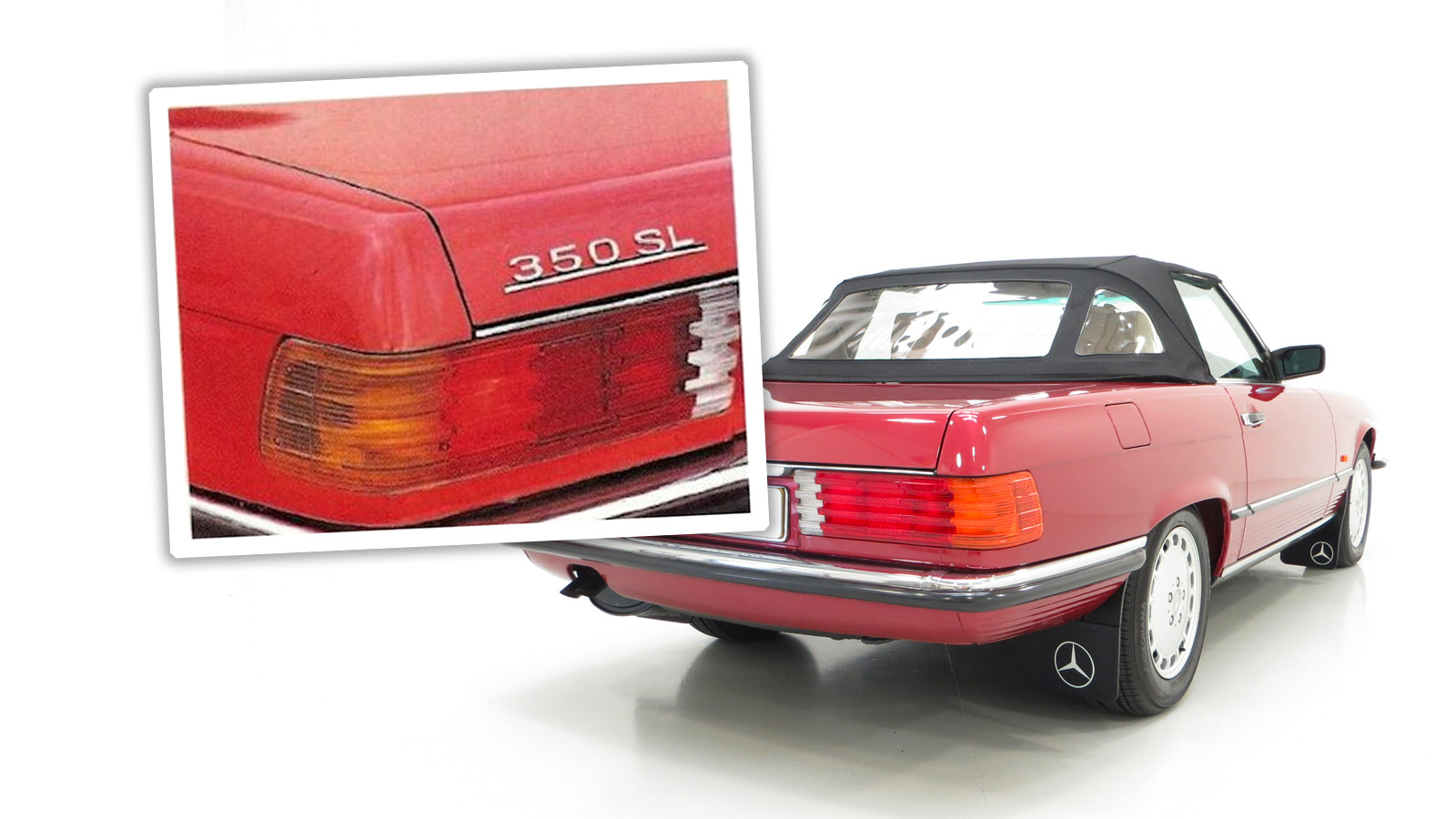
People associated these ribbed taillights with Mercedes, and from there, with quality and status. A number of automakers emulated Mercedes-Benz’ ribbed design in the 1980s, so Honda was in good company:

This generation of taillight even had one unique variant, the blacked-out-chrome edition used on the Accord GX:

These lights definitely elevated the Accord, but at the same time, they felt a little dowdy, maybe a bit dated. I think that’s why they were replaced, in 1980, with a taillight design that was significantly more modern and yet retained some of the upmarket feel of the ribbed Middle Period taillights:

The final iteration of first-gen Accord taillights was the first to completely divide the taillight in half horizontally; while the ribbed taillights had a full-length horizontal trim bar, the turn indicator remained vertically divided at the corner. The final taillight divided functionality into two “stories”: the upper “floor” was all red and housed the brake and tail marking lamps. The “ground floor” was divided into three sections, with 50% being devoted to a half-height turn indicator, still at the outboard corner, and the remaining pair of 25% square-shaped sections being devoted to the retroreflector and reverse lamp.
The divider bar was a combination of black and chrome, and the overall lens surfacing was smooth. The overall look modernized and cleaned up the rear of the Accord appreciably, and the wide emphasis of the segment divisions imparted a visual width to the car, which helped it maintain a somewhat more premium feel.
These differences may seem subtle, even trivial, to those too blighted or debased to truly appreciate the stories that taillights are always seeking to tell. I pity such people, living as they are in a world half-understood, doomed to blindly stumble around, ignorant to the wealth of information and subtle cultural cues that every pair of taillights seeks to cast upon the world, redly.




Jason, you’re singling out the followers of the cult band the Walterfollowers and their iconic 28 Model 27 Chrysler one tail light mascot.
Ribbed taillamps weren’t for extra visual pleasure. Even Jason wrote about them in his article.
Buick did the same with its LeSabre from 1977 to 1983, too. The 1977–1978 has the horizontal amber turn signal indicators and brake lamps almost the entire length. The 1979 has the revised taillamps with amber turn signal indicators at edge like Volkswagen Rabbit and horizontal chrome trim in the middle. The 1980 is same as 1979 but with ribbed “Mercedes-Benz” texture while the 1981–1983 replaces the amber with red.