

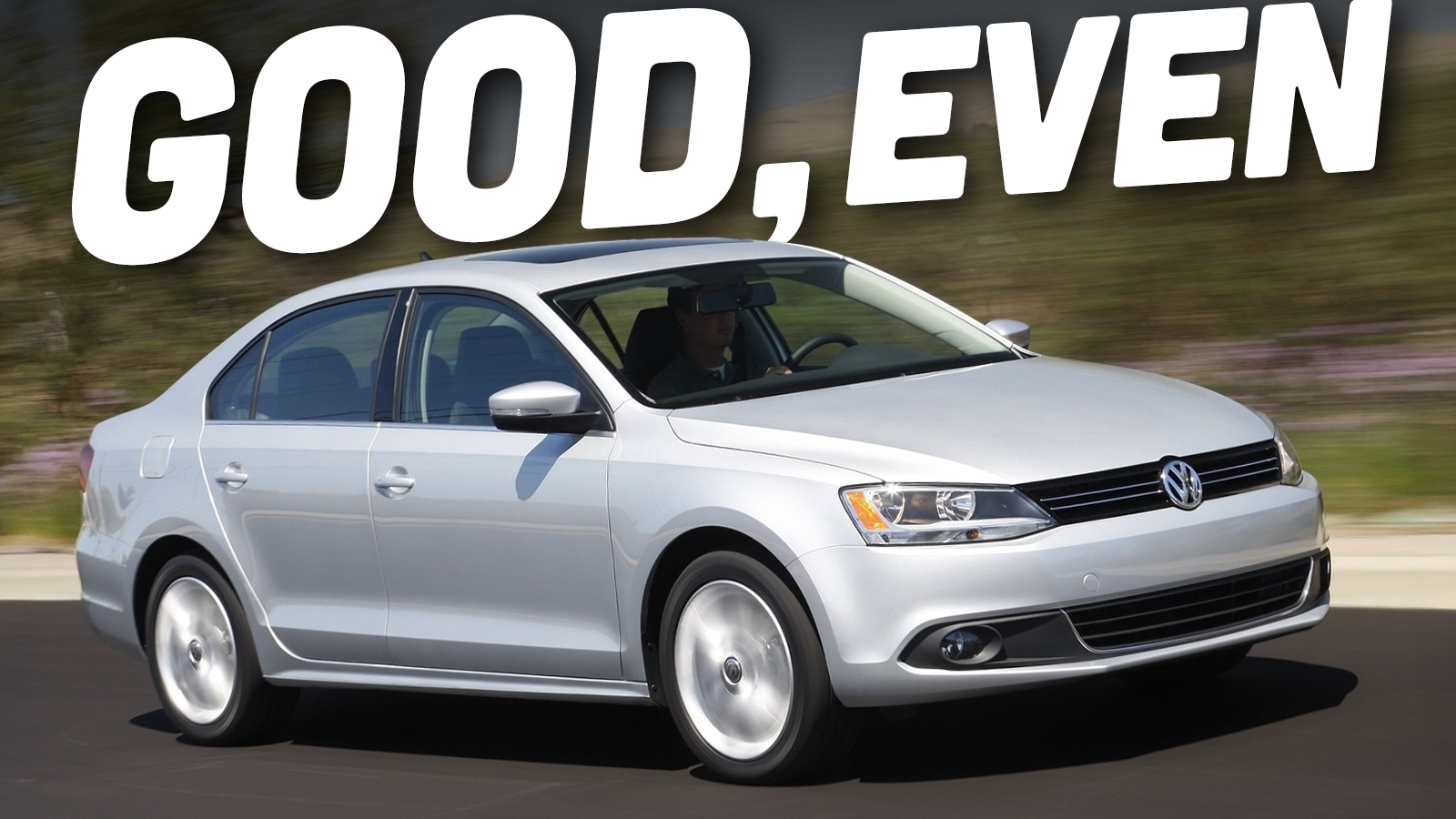
It’s safe to say that Volkswagen isn’t having the easiest time in America. On the one hand, fans of the brand feel somewhat alienated by moves like discontinuing the regular Golf and ditching manual transmissions. On the other, the brand hasn’t had the stateside success it expected over the past decade or so, and we’re still waiting on hybrid models. Where did the visible decline really start? While it’s easy to point fingers at Dieselgate, many enthusiasts of the brand will single out another moment that marked a turning point for the brand: The launch of the 2011 Jetta.
See, for the first three decades of its life, the Volkswagen Jetta was the compact sedan you bought if you wanted something nicer than all the other compact sedans. The Mk4 model of 1999 was a particularly high water mark, instantly becoming one of the most desirable compact cars on the American market. Despite carving out a successful niche, the Jetta never quite saw the sheer sales figures of the Toyota Corolla and Honda Civic, but Volkswagen hoped the Mk6 model of 2011 would turn things around by laser-aiming it at the American market.


While previous Jettas had essentially been four-door variants of the Golf, the Mk6 was a marked departure from that tradition. With a stretched wheelbase and entirely unique sheetmetal, it had a certain glitz at a standstill that carried through every part of its reveal. These days, it’s fairly standard for automakers to rent a venue, have executives say a few words, then drive a new car on stage for journalists to poke and prod. The venue that Volkswagen rented out? Times Square. Yep, Times Square. Oh, and it booked Katy Perry to be the entertainment of the event, right as “California Gurls” was about to hit number one on the Billboard Hot 100. The confidence, the sheer confidence.
Of course, Katy Perry dancing on the hood of Volkswagen’s then-new compact sedan couldn’t conceal a fundamental truth about the Mk6 Jetta: Underneath the crisp styling and enticing list of available toys, Volkswagen made it really cheap. Like, Dollar General cheap.
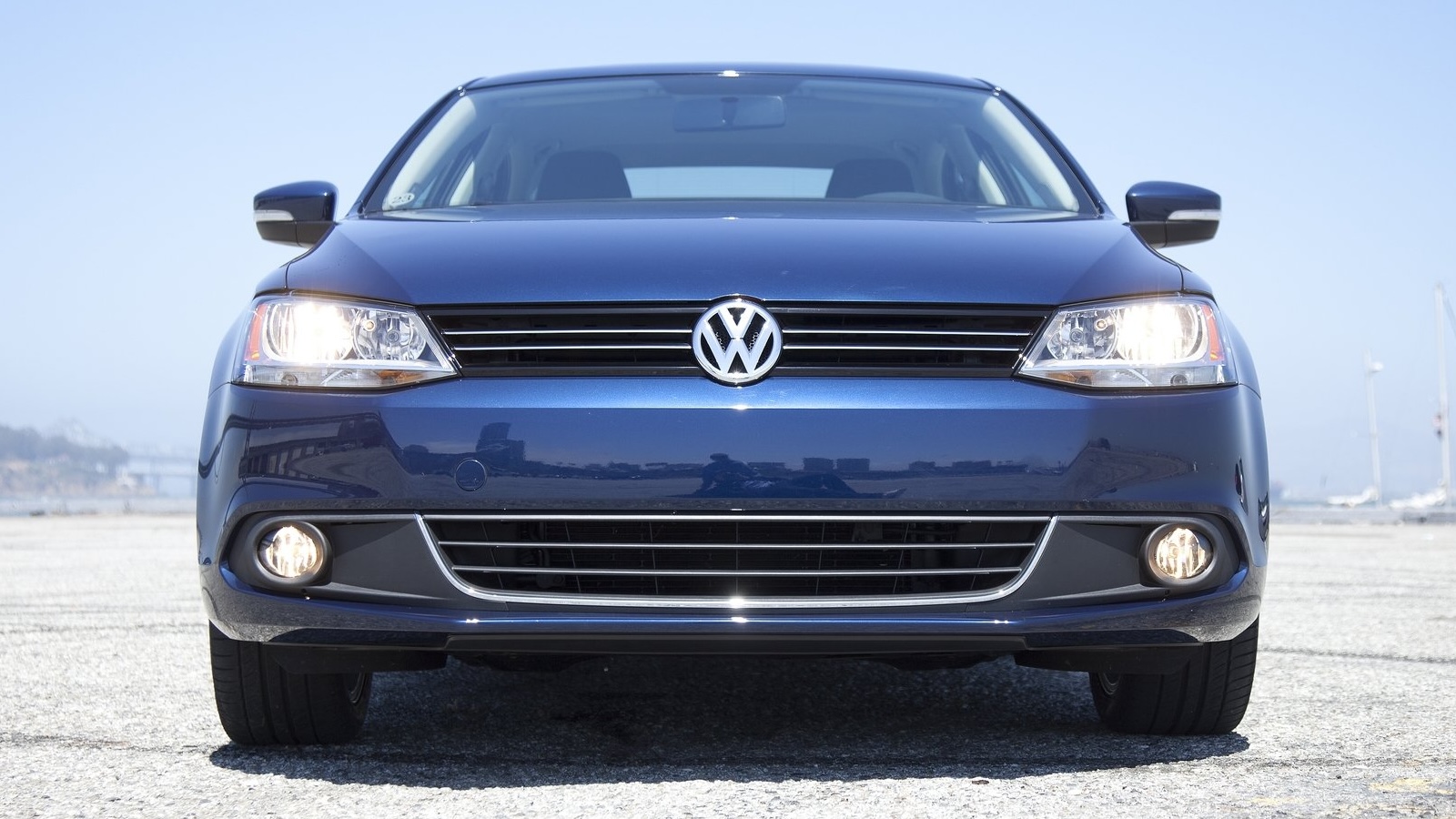
Volkswagen somewhat arrogantly assumed that putting price above everything else would appeal to more Americans, despite the brand having built its water-cooled stateside reputation on offering nicer-than-average cars. The headline figure was $14,995 for the base model before freight, and this base model was truly something to behold. Here’s a short list of the things it didn’t come with: Cruise control, steering wheel-mounted controls of any kind, floor mats, a height-adjustable driver’s seat, rear cup holders, rear disc brakes, independent rear suspension, or an engine from this century. Indeed, while the cheapest 2010 Jetta featured Volkswagen’s 2.5-liter inline-five, the 2011 Jetta S reached into the back catalog and found an engine with an architecture dating back to 1972.
That’s right, it was a two-liter variant of the EA827 inline-four making just 115 horsepower. Why so little? Well, sporting a single overhead cam and just two valves per cylinder when most rivals’ entry-level engines had moved onto twin cams and 16 valves played a big role. Hitched to either a five-speed manual gearbox or a six-speed automatic, the two-point-slow didn’t exactly offer swift forward progress. When Car And Driver tested a stick-shift model, it ran from zero-to-60 mph in 11 seconds flat. That’s not brilliant for a compact car in 2011.

Also in the suboptimal category, the interior materials. As the magazine wrote: “After hitting an Audi-like high point in the 2005–10 fifth generation, you can almost hear the Jetta’s interior screaming as its costs have been cut. The few remaining soft-touch surfaces have now mostly iced over with hard plastic.” Indeed, compared to the fifth-generation Jetta, the 2011 model didn’t feel nearly as lovely in any trim but the most expensive one. That was a hard pill to swallow at a time when compact cars were just getting better and better.
On showroom appeal alone, GM and Ford were making massive strides. The first-generation Chevrolet Cruze felt like a Ritz-Carlton suite compared to its Cobalt predecessor, with dramatically improved interior materials, a standard six-speed manual transmission, standard satellite radio, and optional Bluetooth even on the base model. Likewise, Ford’s then-incoming 2012 U.S.-market Focus was finally a world car again, offering a far more sophisticated suspension setup than Volkswagen’s compact sedan and an additional 45 standard horsepower. Oh, and let’s not forget how vast of an improvement the Kia Forte was over its Spectra predecessor, with the added bonuses of standard Bluetooth, a standard USB port, and a standard height-adjustable driver’s seat. Just as Volkswagen was taking its bestselling sedan downmarket, the backmarkers of the pack (okay, not you, Dodge Caliber) were moving up in the world.

At first glance, it seemed like Volkswagen got the top non-performance trims of its sixth-generation Jetta wrong too. While the two-liter TDI diesel engine continued to be held in high regard until about 2015, and the SEL trim kept many expensive-feeling soft-touch plastics, a whole load of items disappeared from the options list or were reserved for only the top trim. No more 10-speaker audio, only an eight-speaker system. No more power driver’s seat, or optional household power outlet, and not nearly the same quality materials as the previous model when it came to the TDI. The one thing Volkswagen did carry over was the 170-horsepower 2.5-liter straight-five, which was getting a touch thirsty by 2011.

Despite the Mk6 Jetta being a disappointment compared to its predecessor, it still did some things well. The doors still closed with a quality thud, the rear seat was absolutely enormous, the trunk was suitably commodious, and the aforementioned diesel engine really was the high card. Regardless, at the time, none of this could make up for what was indisputably a step back for Volkswagen.

Throughout the Mk6 Jetta’s production run, the marque tried to make amends. The 2013 model year brought a leather-wrapped steering wheel and shifter back to the mid-range SE trim, along with power reclining front seats and a center armrest. All TDI models gained a soft-touch dashboard midway through the model year, but bigger updates came in 2014. Not only was the straight-five replaced with a 1.8-liter turbocharged four-cylinder engine, but independent rear suspension also joined the party. A facelift in 2015 introduced available xenon lights and updated interior materials, and the ancient two-liter base engine was finally replaced in 2016 with a 1.4-liter turbocharged inline-four.
However, a funny thing has since happened to cars with the ancient two-liter straight-four: They’ve soldiered on in regular duty as more and more of their competitors have shown powertrain-related Achilles’ heels. While automatic Ford Focuses have been dogged by failing transmissions, 1.8-liter Chevrolet Cruzes have been suffering from oil cooler failures that cause oil and coolant to mix, Nissan Sentras have been plagued with transmission issues, and Elantras of the time keep blowing up, the base Mk6 Jetta just keeps going so long as the timing belt’s replaced at its intended interval, the odd coil pack’s replaced as necessary, and the $12 coolant outlet flange that takes an hour to replace is changed if it starts leaking.

Likewise, the 2.5-liter inline-five has also proven itself out on the road. The PCV diaphragm can tear with age, but Dorman makes a replacement for about $50. The vacuum pump can leak, resulting in a hard brake pedal and an oil drip on the exhaust manifold, but DIYers have figured out a way to remove it from up top and rebuild kits exist for as little as $50. Coil packs can go with age, but the timing chain on 2011-and-up cars generally holds up perfectly. There are reasons you see clapped-out Mk6 Jettas with mega mileage on them, and it’s not frequent preventative maintenance.

It’s not glamorous, it’s not luxurious, but the early Mk6 Jetta has proven a remarkably robust used car that sells for pennies on the dollar compared to its Japanese rivals. It’s simple, it’s utilitarian, it’s surprisingly faithful to the mission of the Beetle: sensible transportation at an affordable price. In short, it’s a pretty good economy car with the added bonus of unusually good ride quality, even if handling with the torsion beam rear suspension isn’t anything to write home about. It might not be regarded as the best Jetta by enthusiasts, but on robustness alone, it’s a real contender for the title of the best Jetta for its actual purpose.
Top graphic image: Volkswagen


“The headline figure was $14,995 for the base model before freight”
????
had one as a rental car. In Georgia, in August. The AC could not keep the car cool, even in recirculating mode, max fan.
It was broken.
The a/c in my (then 10-year-old) ’04 Mk4 Jetta TDI blew a lot colder than my wife’s ’15 BMW X5. To the point she commented on it. And this was in 95-degree, 95% relative humidity SE Texas. In wintertime, the bun warmers could warm buns faster and warmer than the X5.
I had one, manual transmission, it was an excellent car, I would still have it if it hadn’t been stolen.
Sounds like this base Jetta was kind of the Slate of its day, but without all of the planned “upgrade after purchase” functionality. Minimalist feature set to keep it cheap, but in the Jetta’s case, you were kind of stuck with that.
I had a Mk6 rental Jetta with the 1.8T and in Texas summer heat with the A/C blasting cold it went all the way up to its electronically-limited 130mph, and stayed there for as long as I wanted it to. Not many base model cheap compacts from that era in that price range could do the same (certainly no Corolla lol).
I guess full Autobahn blasts were still in the design brief…
It’s German – would you expect anything less?
Certainly not. After driving a mk2 Fabia 1.6TDI which felt planted at over 160km/h – 100mph, it was clear.
The SE with the 2.5 was the one to get. Honestly it was probably the only one to get. My wife had a 2012 with that engine, and it was flawless for 177k miles, right up until someone crashed into her. It had more than enough power for daily and highway, want great on gas but wasn’t terrible either, handled well and didn’t feel cheap like the lower models did.
That 2.5 is probably the best engine VW made since the original. If I had to buy another VW (please God no), it would only be one with that engine
Some time I’d like to get a Sportwagen wiyh the 2.5 and go to work on it.
And I know it would be impossible to get one at a good price, but throwing a Lambo head on it……
The Sportwagen is based on the global Golf platform not the stripped down North American Jetta platform.
Much nicer vehicle.
That’s what I drive right now, but it’s the CJAA, not the 2.5. It’s great sometimes
I bought a “fixed” CJAA 2014 Sportwagen post diesel gate. It was a lemon that VW refused to fix under the diesel gate warranty. Sold it to Carvana for a profit in 2021.
It was nice – shame about the quality A guy I work with had an identical car that was also a lemon. It seems storing cars in the desert for 2 years then trying to make the diesel aftertreatment do things it was never designed to do doesn’t turn out well)
CJAA is actually a pretty great engine, if you remove the VW “fix” for it. So to make it better to use, you have to make it worse for the environment. Not exactly the situation I wanted to find myself in when I bought the car. I thought I was getting a steal on it.
That isn’t really an option for me. I live in a urban area with routine poor air quality days and have a wife with asthma. I can’t in good conscience increase the emissions from my vehicle 50X to save a buck.
The TDI was sold off and I’ve spent about $5K keeping the emission systems on my 6.6L Duramax working. (A Banks iDash shows just how much that aftertreatment does)
Deleted modern diesels are a lot worse polluters than the old stock diesels before DPF and SCR because in the old days we tuned the engine to meet emissions. Today the engine is turned for efficiency and power and the emissions are cleaned up by the aftertreatment.
Yep, that’s why I won’t ever buy another diesel, not to mention that unless you live near a highway, it’s getting harder and harder to find at the stations. Anything with a 2.5 though? I’m just dumb enough to consider that.
I know. That’s why it’s preferable.
And that 2.5….there are vids on YouTube featuring cars with that motor after intake.and exhaust work, and it sounds demonic. In a good way.
I see them here in Texas in good shape in the 5k range, as a vehicle I love mine occasionally
Me, being escorted out of the retirement home lobby mid incoherent dementia ramble: I SWEAR! THERE WAS A COMPANY CALLED VOLKSWAGEN, AND THEY ONCE MADE GOOD CHEAP CARS!
My adult children: it’s bed time, NSane *gaze over to staff to let them know to sedate me*
Made me think of 12 Monkeys
Beware the applesauce!
😉
So about that low starting price – it’s actually worse than you wrote. My friend and her partner at the time bought one of those stripper models (without consulting me). The car has no A/C and no radio. Madness.
They bought it in Florida and brought it to Arizona, granted she lives in the mountains, but still. She still has the thing – I told her she’d have to drive it somewhere north if she wants to ever get rid of it…but she does love it and as far as I know it’s been quite reliable.
I had a fairly low optioned mk6 Jetta TDI. It was comfortable and seemed to punch above what I paid for it alojg with being a decent place to be. Had great driving feel and was quick enough for what it was. Having been in one recently I’m not sure like most vws they have aged well. But a base mk6 is maybe worth $3k or less now for that maybe ? For a sub $2k car sure. I would imagine a lot of things wont be quite right and or broken.
But others of the same era and similar class are probably in the same boat. New sort of meh but as cheap beater cars sure. Jetta, Focus, Cruze, Elantra, Rio, Forte, Sonata, Soul. I used to get a base 08 focus as a loaner alot. I liked it for what it was. New they even made sense. I knew a few people that bought them for their kids for under $10k. USPS has a fleet of low spec focus of that era that keep going I bet could be had for under $1k when they get auctioned off. Most of the HK probably can get a free engine for a while if you can find an decent dealer. Or are about a 3 hour job with $500 junkyard engine.
I think the Mk6 cars deserve more praise than they get. From a sales perspective, VW absolutely did the right thing. The Jetta outsold the Civic for a month or two in this generation. This is probably the only generation that accomplished that from 1980-now. From a styling perspective, these cars were a dead ringer for the A4 while maintaining a resemblance to Mk1-2 and Mk4. Though the dash was hard plastic on early years (excluding the TDI and GLI, which had a premium soft dash) and the door panels were cheap, the interior was among the best looking in Jetta history. These cars were very reliable and ranked well with Consumer Reports, they handled well, and there were trims that weren’t poverty cars. There were 5 engine options at one time to meet every need: 8v 2.0 for those who needed cheap, 2.5 for those who wanted to go faster, TDI for highway mileage, Hybrid for city mileage, and 2.0T for going really fast. And again, VW rectified all of the wrongs of this generation by the end (except for maybe the door cards which had fake hard upholstery from beginning to end). Mk5 was better in every way except styling and electrical gremlins, and Mk7 is better in every way, particularly with the 2025+ refresh, but there was a lot more right than wrong about Mk6, so long as you could get over the hard dash in some trims/years.
When you talk about where VW went wrong or lost the thread, I don’t put any blame on the Mk6 Jetta or the Jetta in general. Truthfully, VW went wrong with its SUVs. I think that’s the real reason sales aren’t wonderful. Yes, the touch slider climate controls were a mistake costing sales, but VW’s SUVs are bigger issue. First, VW was late offering an SUV and ceded market share to literally every other brand. Then, the first SUVs were aimed wrong; the Touareg was smallish and too expensive, and the first Tiguan was way too small and required premium fuel. The Atlas and Tiguan II seemed like VW was finally catching up to competitors, but those SUVs were plagued with reliability issues far beyond what was common for the Golf/GTI, Jetta, and Passat. And if you think VW’s SUVs have gotten better, think again… The brand-new Mk3 Tiguan has been plagued with sensor and software errors sending false warning messages, and the same issues are plaguing the end of the first gen Atlas. I have little faith that the Mk2 Atlas will fix any of this seeing as it shares its engine with the Mk3 Tiguan Turbo, which had a software error falsely indicating a failed turbocharger. There are whole Facebook groups full of complaining Tiguan and Atlas owners. Many of them have successfully completed buybacks from VW, and the common theme in post after post is, “I will never buy another VW again.” It’s BAD in VW’s SUV world. It’s hardly worth mentioning for a niche product, but the Buzz is having similar software problems, too. The Jetta, GTI, and Taos are generally fine, but the Tiguan and Atlas’s uncheck unreliability are the cause of sagging US sales as it sours the public to the entire brand. Hopefully the Mk3 Tiguan gets a comprehensive software update asap to fix those issues, and hopefully the Mk2 Atlas will have inherited all of those fixes before it arrives. Then the next Jetta, Mk8 due in 2028, needs to have adopted the new physical climate controls from Europe and have avoided the SUVs’ software bugs before it lands if its going to succeed and eventually lead to a Mk9. But, yeah, VW lost its way through poorly planned SUV launches and software unreliability, not because of the Mk6 Jetta being an all-time best seller.
While they might have outsold the Civic for a few months, that was also one of the worst generations of Civic and sales tanked. They cheaped out just as everyone else (except VW) upped their game and ended up performing an emergency facelift for 2013.
This…. VW was know as a more premium non-luxury brand. That was why people put up with their poor quality.
Then VW went cheap just as everyone else stepped up their game and still didn’t fix their quality problems.
There’s something to be said for old tech and durability, but the Corolla was the same formula and was a safer bet with more power. While boring, so was the VW.
“1.8 liter Chevrolet Cruzes have been suffering from oil cooler failures that cause oil and coolant to mix” Wait what
Not sure if you’re questioning the prevalence of this issue, which I don’t know, or how that happens, but if the latter, I take it to mean the Cruze uses a typical OEM heat exchanger type of oil cooler where a coolant jacket surrounds part of the oil passage, generally where the oil filter is installed. It assists oil warm up and helps reduce peak oil temps for road cars, but it’s nowhere as effective as an oil cooler with an external heat exchanger like a radiator for the kinds of temps you’d expect from track use.
Just a piss poor attempt at humor on my part lol, should’ve said “ope” instead. I was however not aware that that oil and coolant mixing could happen, my 1.8 had the oil cooler seals fail last year but thankfully it was just a small external leak so after a new seal kit so far so good!
Good thing!
What’s funny (to me anyway) is that I own the spiritual sibling of this car, a 2010 Ford Focus (which is exactly the same as the 2011, so pretty close).
The USDM 2008 – 2011 model is usually mocked for being this odd-ish facelift of the Mk1 rather than the Mk2 the rest of the world got, but you know what? She’s a rock solid car that handles nicely, has a durable engine, had all the kinks worked out/had none of the problems the Mk3 would come with, so what’s not to like?
I have well over 100k on mine with no major issues, parts are widely available/cheap, and she makes even a trip to the grocery store fun. That’s pretty good value from my pov.
The only real issue I know of with the mk3 was the DCT. I had a manual and it was Corolla-reliable while better in every other measure. Got totaled at 204k miles and even then, it drove away from the scene while the jackass who hit me was stranded on the highway. At the time, it looked and drove like maybe a quarter of that and averaged about 36 mpg running on 87 its entire life. Engine and transmission wide, all I did was change the oil and filters and I think I changed the spark plugs around 100k because the book said to, but it was running fine. They probably could have been re-gapped and reused, but even I have limits to my cheapness. Chassis was a wheel bearing around 50k and new brake pads, rotors, and a set of rear shocks at 130k or so. My middle sister had a couple with the DCTs. No issues mechanically, though they don’t drive a ton. First one fought a bear, which ended in a draw (as in both of them lost) and the other she crashed, the details of which she never said (she’s a terrible driver, she also crashed the Mazda CX5—which rolled over—that followed before probably wisely deciding to let my BiL do all the driving). Luckily, no injuries beyond bruises with any of those.
I loved those Foci. Just good, and NICE cars with the manual.
I haven’t checked in a while, but they were a used steal for a few years thanks to the reputation from the DCT (and being a Ford) before people seemed to catch on. I suppose new was a steal, too, as I paid $20k for a SE hatch with the sport package, moonroof, and 17″ wheels. No haggling, they came in a hair over the price I figured on before going in and I was special ordering to get the manual, so I didn’t see the need to fight for less. Replaced it with an ST for only a couple grand more and that was great, as well, until I got hit with the internal coolant intrusion issue at 180k. It looks like, though, that the STs might have gotten two Ecoboosts, one that was the problem time bomb type and (seemingly more common) another one that didn’t have the problem. I don’t know if it was different foundries or what or even if that’s entirely correct, but it’s really too bad as it was an unnecessary Achille’s heel for an otherwise good engine and great car. Friggin’ Ford.
Mk 3 Focuses were great. The DCT seems to have been mostly fixed but not until the last year or two of the run with the final revision of the seals. Regret not getting an ST; I imagine most of them are full of vape smoke and flat-brimmed hats now.
It was nuts. I bought my ’16 for $23k and change while some people reported even better deals. Almost as soon as they were discontinued, the used ones were going for more than the new ones were getting a few weeks earlier. Anyway, there are probably some good ones out there, but they might go for a premium price, don’t know. Great cars—not just a regular Focus with more power, they felt more special. Great handling with the nannies turned off (the regular Focus would have been a lot better if they had the option to kill those dumb things that made them especially annoying in the snow), quick enough to be fun, rode pretty decent, just as reliable as the SE until the coolant issue, and I averaged about 30 mpg over its life. No issues with either car (204k and 181k miles) from GDI that people always complain about.
I still maintain that the MKV/VI VW Golf/Jetta (and others) platform is one of the best driving small cars you could get, at least in the US. My 2009 GTI was a blast on the track, even when it was stock. It felt solid and planted in a way other small cars at the time didn’t, but it felt eager to have fun in the corners and didn’t feel heavy or ponderous. Even in stock form, my current 2014 Sportwagen TDI was fun to drive, more fun now I’ve upgraded the suspension and upped the power.
And the mods! Holy Jesus you can do anything to a VW on that platform. It was sold at the peak of water-cooled VW enthusiasm, so there’s tons of things you can upgrade or customize. That’s one of the reasons I got the Sportwagen back in 2020, I knew I would be able to upgrade it to my tastes.
I just wish you could change the coding for the steering rack to make it more like the GTI, the steering on my car could do with some more weight and some more feeling on-center. You can make a lot of changes via coding, but that’s not one of them.
The Bicentenario edition has to be one of the dullest special editions of this car:
Jetta Bicentenario | PDF | Airbag | Control remoto
I always liked the styling but the electrical nightmares scare me off.Those old Jettas from the 80’s were great cars but somewhere along the line they lost reliability.I really wanted a CC but the service manager at the local VW-Mazda dealership told me that I was better off buying a Mazda.So 3 Mazdas later I’m still happy he steered me that way.
The pre-facelift design is one of the cleanest of this century.
Sometimes clean is good. Other times, it’s just boring.
I feel these earn a spot in the latter category.
I feel the same, actually. But I accuse that to overexposure.
The 2.5 was a good engine, the 2.slow was not. The problem VW had at the time was trying to out-toyota toyota in terms of sales in the global market and they’ve always had this stupid knack for making products “specifically for the US market” – which means either enshittified versions of their good cars or just garbage vehicles that are for the developing world and the US. The NCS (jetta) and NMS (passat) were woefully shit compared to their showroom mates like the golf and Touareg. Let’s also not forget the Routan was sitting on the showroom floor too. God, those were some terrible times.
https://en.wikipedia.org/wiki/Volkswagen_Jetta#Sales
This sais the best years for the Jetta in the US were betwwn 2010 and 14.
My wife test drove one in 2012. It certainly was a handsome car, and very “right-sized”. She ended up with a Corolla which was probably the right call, lol.
That example was a 2.5L, which was pretty punchy, if thirsty. I will say this though, even the mid-trim Jetta was pretty sucky on the inside. They weren’t quite 00’s GM bad but the fact I’ve even mentioned 00’s GM tells you all you need to know.
I always felt like VW telling us that “Americans just want their cars CHEAP and FAT” was condescending, and not helpful to keep their existing customers. I know they wanted big volume, but people before this era bought VWs because they were different, not because they made the most sense.
I think the logic was that people who wanted “Euro” and “different” were ready to step up to a Golf.
I rented a 2011 for a work trip…I remember nothing about it other than the DCT being completely obnoxious. Every time I took off from a stop, I had to manually take off from 2nd in order to do so smoothly.
I recently drove a 2025, it wasn’t quite as bad, but still not smooth. You know what’s smooth? A damn slushbox or – god forbid – a CVT. Those manage to move away from a stop without feeling like a 15 yo kid’s learning how to drive a manual.
The only Jetta that got a DCT was the GLI.
Damn, you’re right – that almost makes it worse. How does one screw up a slushbox that badly?
no sympathy for vw. gm like quality. the worst service dept in all autoworld. no knobs. dont need em
If VW wanted (wants) to become the largest car manufacturer in the world, there was (is) no other way to go.
Toyota’s offerings in US do not mirror that much the ones they offer in Japan or Europe and neither do those from GM (mostly because GM doesn’t sell much outside of America except for some eastern bound Buick minivans).
So Volkswagen did the same. Because it is company trying to make money, not a an organisation trying to entice a minority of die hard fans.
Another question is whether the execution was good or bad. But no matter how much it is hated, the idea was sound.
Except Toyota figured it out. Their only USDM-specific models now are the trucks and full-size unibodies. The Camry, RAV4, Corolla, Corolla Cross, Prius, BZ, Crown etc. are global models. It turns out if you make the right compromises and have good brand equity then regionalization doesn’t matter nearly as much. VW never did the legwork to make that work for them.
Volkswagen’s problems in the US go back to the late 1970s. European currencies were exploding vs. the US dollar. All of the other European manufacturers (Audi, BMW, SAAB, Peugeot) were forced to move upmarket or abandon the US entirely, but VW couldn’t really move upmarket, being a “people’s car” and all that. First they built a factory in the US, then they exported Brazilian-market cars to the US. Anything they could do to sell cheap cars in the US, they tried. There were quality and reliability issues, even in the German-built cars.
And Americans started to ask what made a Jetta a better car than a Corolla, et. al. And few found a reason to pick any VW over the competition.
and then there was the vw dealer malarky
Bring back the 2.slow.
Incorrect. The 2.slow had its day. Give me the return of the 2.5.
“Some of them haven’t blown up yet”
Faint praise indeed