

I feel like every time I get excited about some extraordinarily affordable car, electric or otherwise, there’s always someone around to tell me why such a thing is impossible in America. And, sure, they usually have some pretty valid reasons, not meeting safety requirements or not having the profit margins that companies demand, or being just too crude or basic to be appealing to the mass market, or something like that. Fine. Whatever. I could do without the weird glee some people seem to have in shooting down my dirt-cheap car dreams, but more importantly, I can’t ignore the fact that these cheap cars do exist in other places. China, for example. And now, it seems, Mexico.
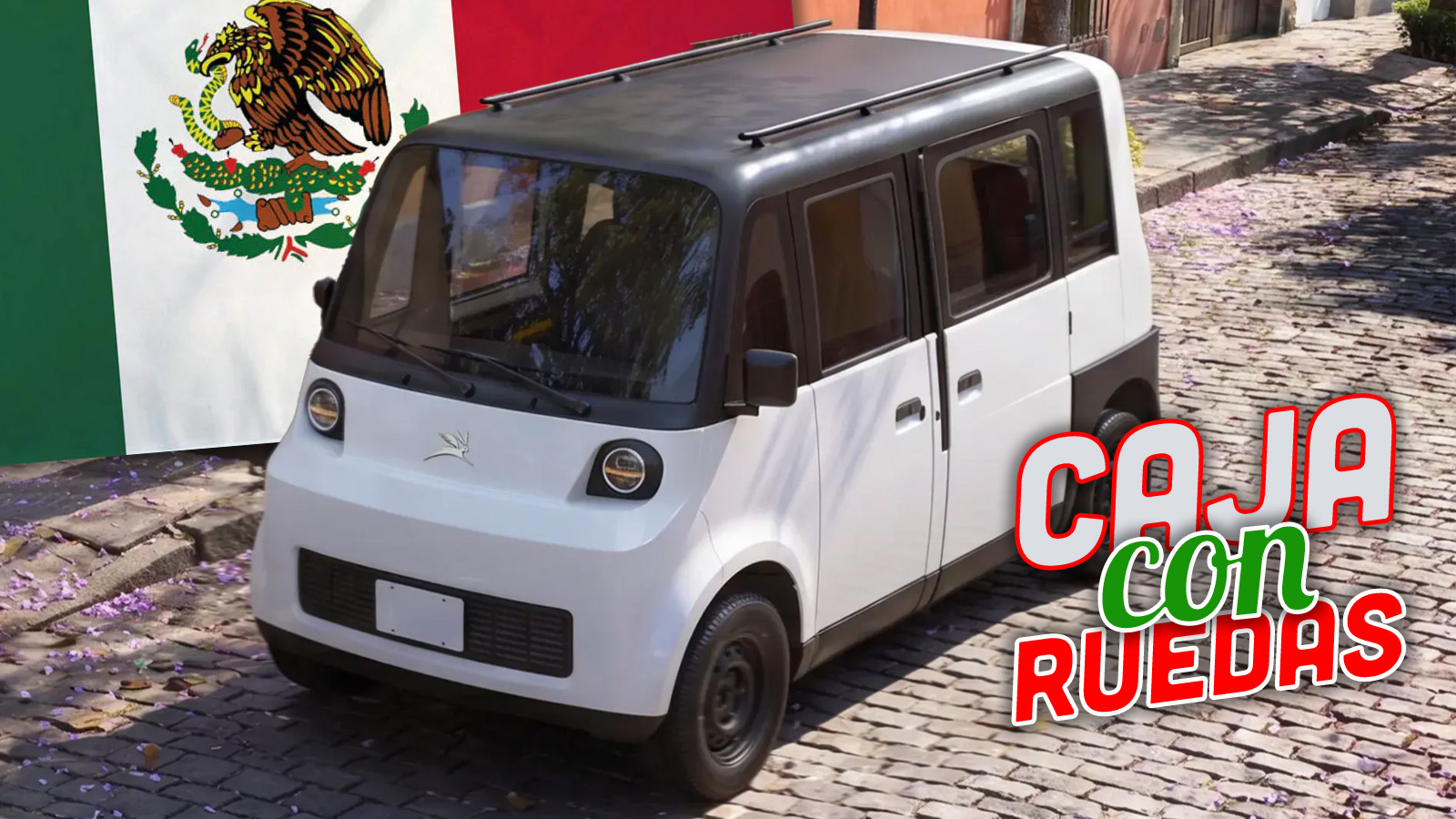
Yes, Mexico! Mexico has a pretty long history with affordable cars, being the final holdout of original Volkswagen Beetle (Vocho, as they say) manufacturing. Now the country – and I mean that at least partially literally, since the Mexican government is backing this new EV startup, Olinia – has put their support into a clever-looking and useful-seeming little electric van that is planned to sell for about 150,000 pesos, which translates to about $8,600. Mexican President Claudia Sheinbaum even drove a prototype around at an event yesterday.


Here, see for yourself:
That’s gloriously cheap. Even better, it seems understandably cheap, not some wild startup wishful thinking kind of crap. The vehicle, the Olina Uno, is realistically modest, but enough to do its intended job just fine. It’s designed for its intended purpose – a flexible, multi-use electric city car – and that’s it. The speed is limited to 50 kph/31 mph, so it’s definitely just a city car, but for a huge amount of driving, this actually is plenty. I learned this lesson when I was driving my Changli every day.

It’s a six-seater van – there’s also a cargo pickup truck variant –that moves around with a 17 horsepower electric motor, sucking electrons from a 14.7kWh LFP (lithium iron phosphate) battery pack, with a range of over 62 miles or so. This is a very basic vehicle, but a clever, useful design. Honestly, it doesn’t seem all that different than similar Chinese small, lower-speed electric vehicles, but that makes sense: this isn’t necessarily the place to re-invent the wheel.
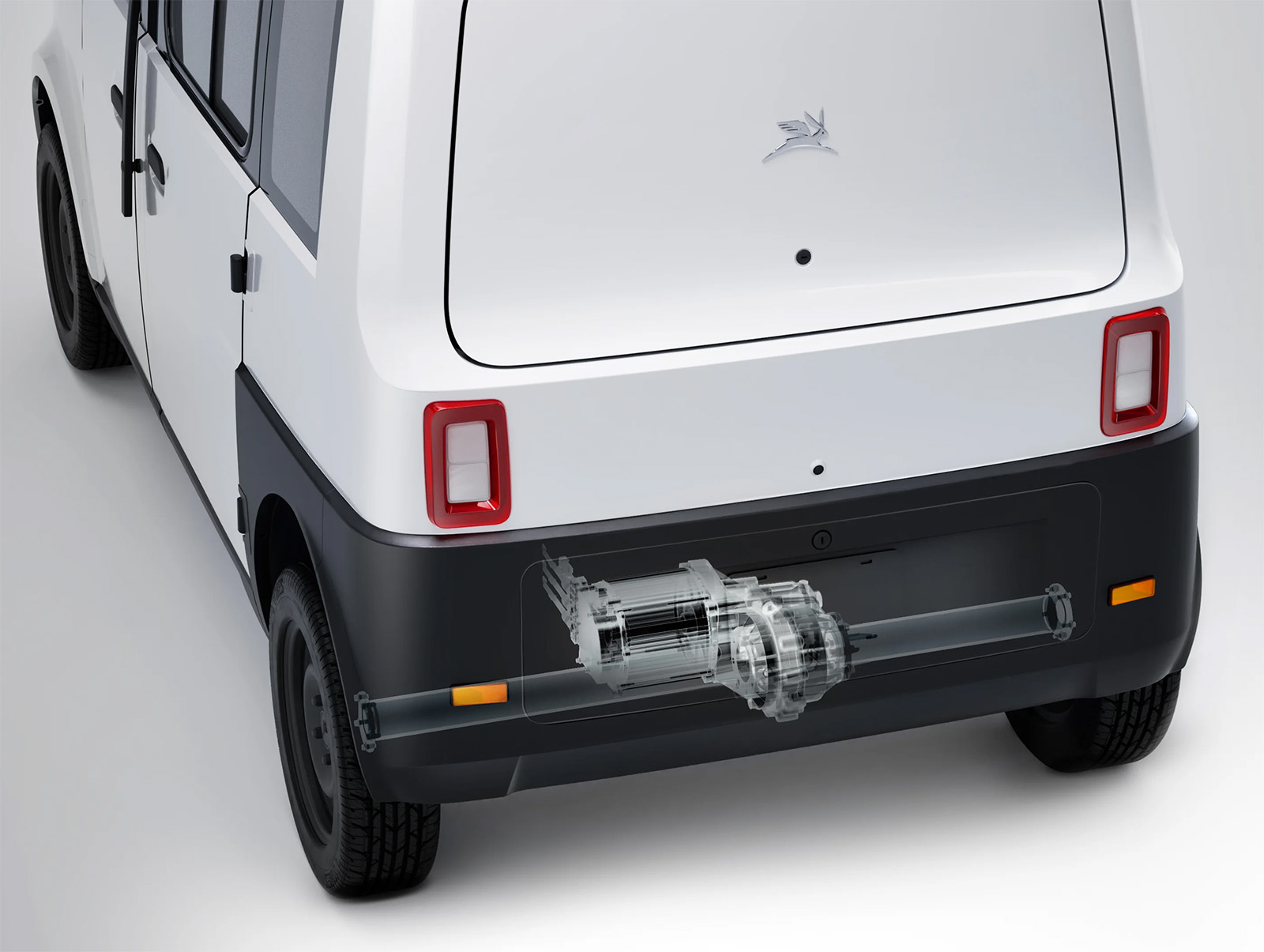
The Olinia Uno will recharge from normal wall outlets, eight hours at 110 volts, four at 220 volts, which, like so many specs relating to this car, isn’t impressive when compared to modern, full-price EVs, but for the use cases that this is targeted? Definitely good enough.

Smaller than even most compacts, the box-on-wheels design allows for more interior volume than most small cars, and provides better weather protection and comfort than three-wheeled tuk-tuks/auto-rickshaws that are in use for similar intra-city travel. The Olinia site offers an operating cost comparison between a regular automobile taxi, a three-wheel moto-taxi/tuk tuk, and the Olinia Uno. Unsurprisingly, the Uno comes out the cheapest, at $900, compared to $2,194 for the moto taxi, and $4,320 for the conventional cab.

This isn’t a sub-$10,000 that’s going to be absolutely everything to everyone. But it is a sub-$10,000 transportation machine that is far more useful and capable than its simple specs would suggest. People could definitely use this thing, in the right locations, of course, as their day-to-day transportation for about 75% of their driving needs. This category of vehicle is viable and, I can tell you from experience, appealing. Small, lower-speed EVs work for so many things, and I think the way they’re handling this in Mexico makes a ton of sense.
I’m excited to see how this all plays out.
Top photo: Olinia


Given the speed limits I see here in town, 30mph ain’t gonna cut it. A top speed of 45mph would pretty much be a necessity to avoid becoming roadkill.
I mean, how is this any different from the electric golf carts running around a bunch of cities in the South as LSVs? This is not a proper car, it’s a glorified golf cart. Maybe a nice one, but definitely not something you could use for a daily commute on highways/freeways.
I live here in Mexico and I am surprised these aren’t built by Zacua, the privately owned EV company that also sells small EVs (albeit nicer looking and more expensive ones). Wonder if these will end the same way our favourite loan shark’s FAW motors venture went… just 2 sticks on a barren land….
‘Controles simples, a la mano’. Fuck yeah. This should be our rallying cry. Well, that and, ‘fuck AI’
I wonder if this would replace any of the Toyota Hi-Ace vans I see shuttling guests around the larger resorts in Cabo.
Everytime I see this thing I think it’s vaporware. There is just something about it. Plus I’m not sure the Mexican government is known to deliver on promises. I suppose the Chinese can sell something like that for around $2k to $3k. And a real city car for $5500 so $8k in Mexico should be possible. If it was a Chinese company doing it I would take it at face value. I bet the pack power electronics and motor is coming from China. Maybe even the blue prismatic lfp batteries that are dirt cheap and appear to be manufactured by multiple companies.
Even in the context of “it would be nice if we could have cheap stuff here instead of using protectionist government policies to prop up domestic automaker stock buybacks,” is there even a market here for a glorified golf cart that can sorta seat 6 people?
Realistically, the same places that use literal golf carts. Golf courses and retirement communities. There was a story not that long ago about converting old Nissan leaf’s for the same purpose.
Trying to drive this in a US urban metro would be suicidal due to it’s glacial acceleration and lack of anything approaching crash safety systems. They’d work fine in suburban/rural areas once you slapped a hazard triangle on the back, assuming you want the Amish experience without the hassle of horses.
Remind me of the MIA Electric which started like a good idea and ended with a big politica and economical fail.
16 years ago
Same shape,same hopes…
You can run golf carts on AZ streets with 35mph (or less) speed limits. The carts go 25-35mph, enough to keep up with most traffic. Acceleration and range with LFP batteries is quite good and prices are similar to this Mexican machine.
I like it, but I’d need it to get to 50mph for any safe use on rural roads here. I can get by with a tractor if I can;t leave the property with it.
It is nice to see anything new in the non-interstate mobility space that isn’t a tandem-seated three-wheeler.
It’s actually very cramped inside. All the passengers have to cross their legs in order to fit. Hopefully the second generation will come out very soon, because this one has some design flaws.
I hate to say it, but it does look like the hubcaps have already been stolen off of it…
The AAMVA leaders would have a heart attack if this sold stateside. They are backdoor banning 30 year old kei cars, this is even better.
What they are not saying is how much of it is manufactured from raw materials in Mexico, and how much is components imported from China.
Hecho en Mexico furniture, which is found in furniture stores all over the United States, is actually assembled in Mexico, with parts from China, CKD style.
It’s probably capable of going faster than 31 MPH. Someone will quickly figure out how to remove the speed limiter. 17HP is not very much, but a second gear in the transmission would probably allow it to reach 45 or 50… eventually…
We have stuff like this in Florida. You can register it like a golf cart as a low speed vehichle. I see them a few times a week on the road.
I agree 31mph should be enough in cities and towns. I wish traffic in Mexican cities didn’t exceed 31, that would improve the urban fabric significantly.
Unfortunately, the reality is very different.
Last time was in Mexico City cab, the speedo was conveniently broken…. definitely exceeding the speed limit.
An EV city car built with the quality of a 50 years old RV, The safety of an aluminum can. And the speed of me running up hill. Frankly I couldn’t get to work on the range, couldn’t get up to the speed limit of the secondary roads let alone main highway so it is a no case use for me
The logo is a rabbit with wings it’s adorable I NEED IT do they sell t-shirts?
Looks like the Autopian “A” logo
In a quick glance it looks like a stylized hammer-n-sickle.