

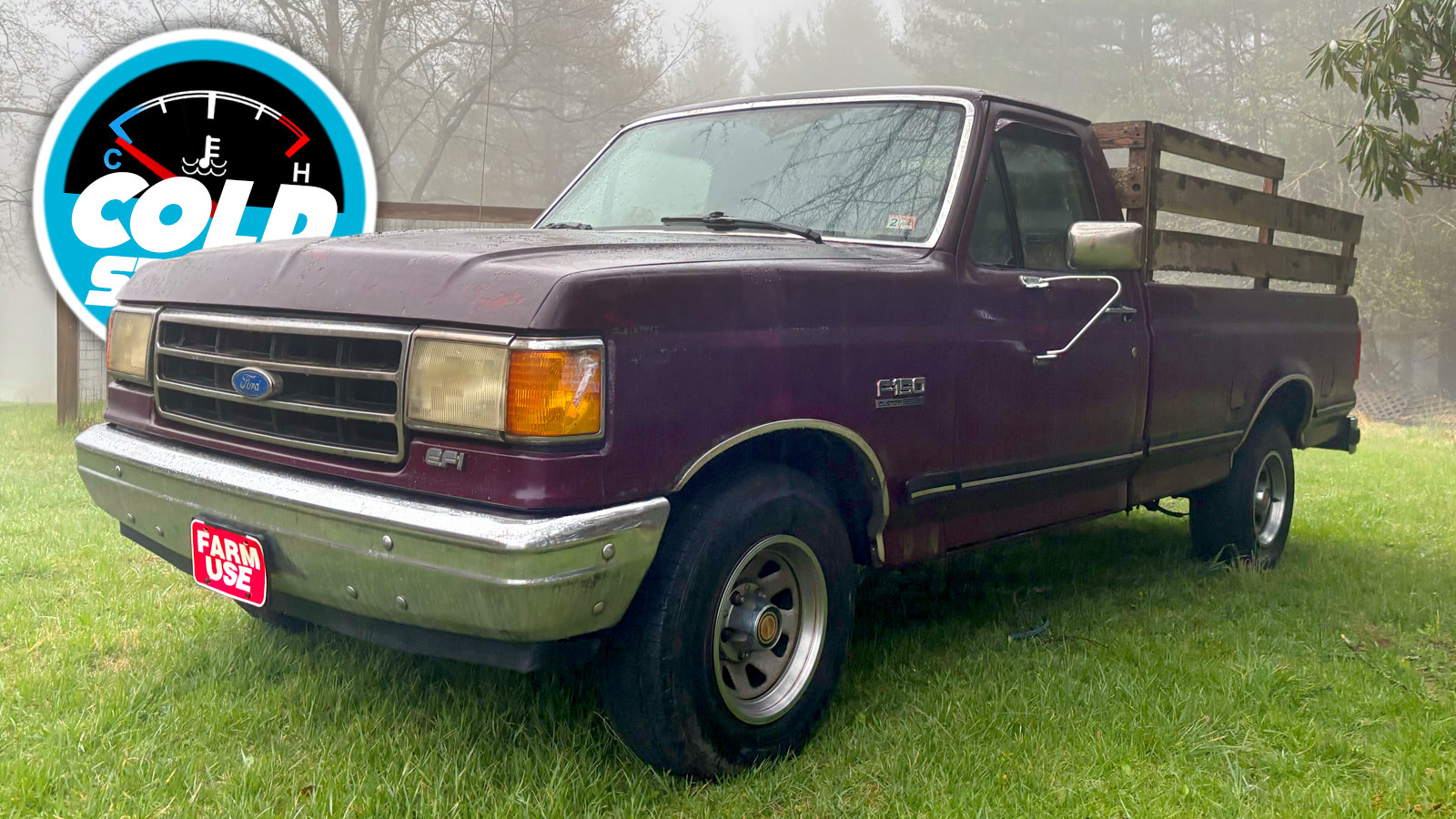
First of all, I hope everyone had a lovely holiday, whether you celebrated the Passover or Easter or magician David Blaine’s birthday or whatever. Personally, I celebrated in two ways: I continued to refrain from eating anything leavened because I wanted to remember that it would have been deeply, richly crappy to be forced to build big dumb statues of some Pharaoh, and I took a trip with my kid into some lovely parts of Virginia. In my 1989 Ford F-150 that, about a week ago, couldn’t drive for more than 10 minutes without producing so much steam it made the view out the windshield look like a 1940s noir detective film.
You may recall my last wrenching update, where I made a little bit of progress on my Citroën 2CV and took a big step backward with my F-150 when I was an idiot and used a breaker bar to tighten a nut on the truck’s leaky thermostat housing after I changed the gasket. Of course, it cracked, and I was geysering coolant from there.


So, I replaced it! That’s a whole new thermostat housing you see there, a new gasket, and the cooling system has been flushed and everything! It doesn’t leak anymore!
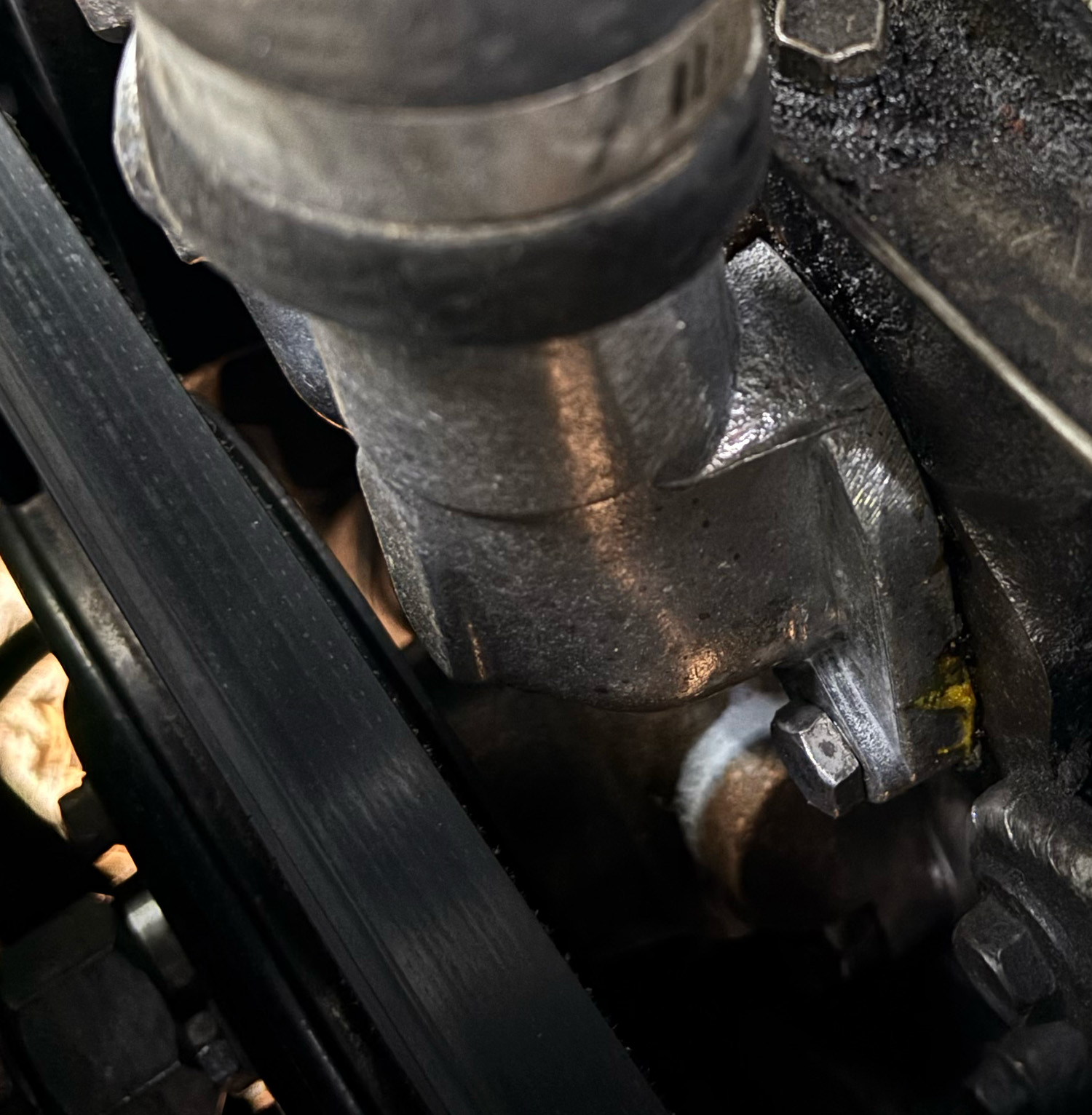
So that part’s great. The part that isn’t so great is that the head gasket and head are clearly borked, from an unfortunate overheating event that happened when my water pump died a while back. So even with the cooling system being intact, I’m still sort of screwed, in a big, expensive way.
Or am I?
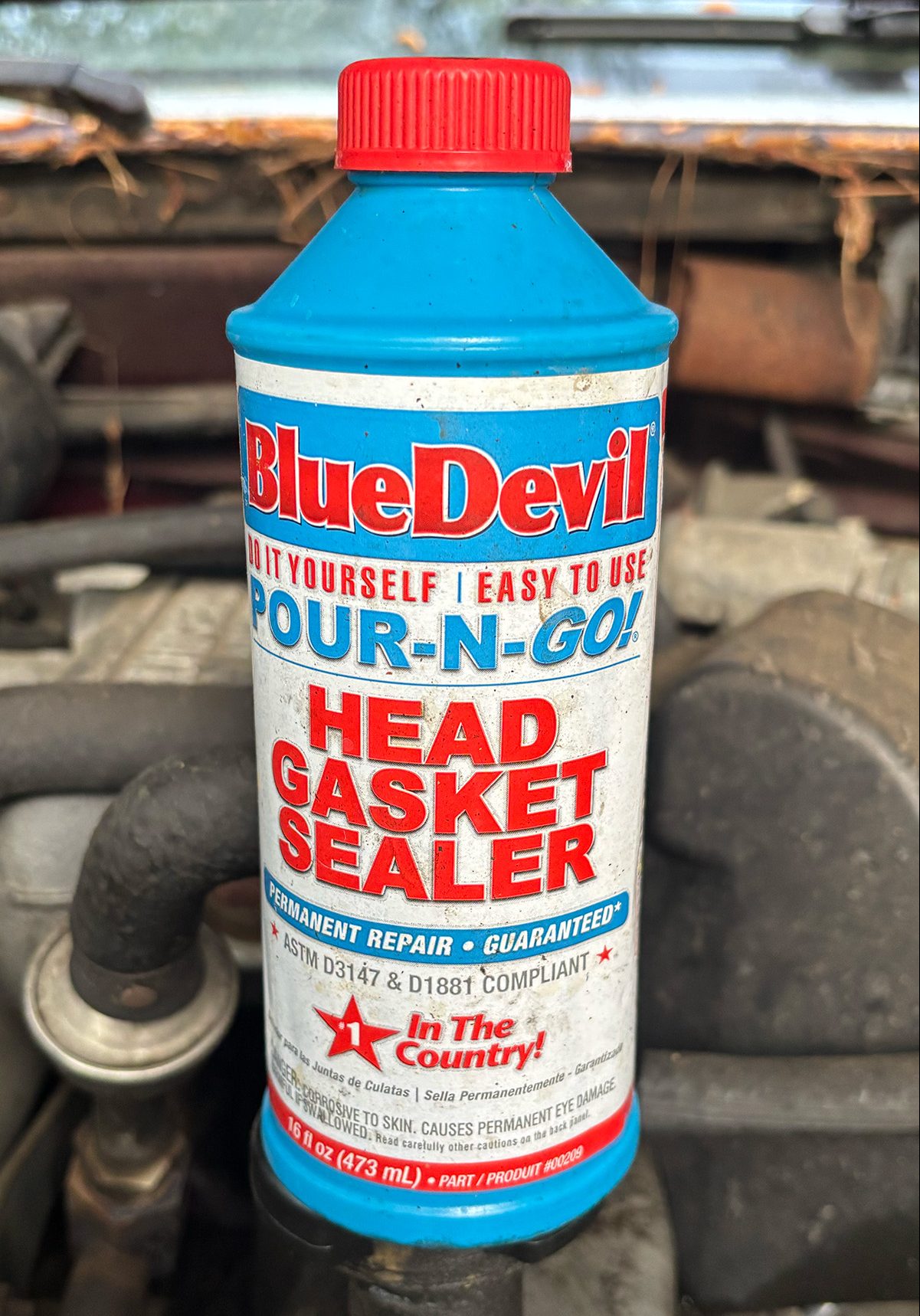
I mean, I definitely am, but maybe there’s a way around, you know, doing the right thing. See, I needed to use the truck within the next couple of days, and at the moment, I lack the money/time/will/skills to do a proper head job on this engine, so I was on the verge of despair. But then I remembered hearing vague stories about a magical elixir that could do the job of skilled mechanics, just via the magic of a blue liquid!
Yes, a blue liquid, just like menstrual fluid or baby urine!
I’d never used any of these head gasket sealers before, so I got one with the evocative name Blue Devil and the excitingly bold promise of a “permanent repair,” which feels almost amoral. I’m not being paid by these indigo demon people, by the way, I just looked up these fluids and found some good reviews and figured, what the hell, I don’t really have anything to lose?
I always feel a little odd about liquids that claim to replace whole, genuine specialists, like Liquid Plumr or Janitor in a Drum or Liquid Lawyer, but I can’t reject something so potentially convenient just because it seems strange.
These fluids work because they have sodium silicate or some other similar “liquid glass” in them that flows through the cooling system and, when subjected to the heat and pressure at the point where there’s a leak between the cylinder head and the block, it flows in there and solidifies, forming a hard seal.
There are stories of people using this stuff and getting 10,000 miles or more out of the engine. And it seems that big, overbuilt, relatively simple engines like my 4.9-liter/300 cubic inch inline-six are ideal candidates for this magic goop. So I tried it.
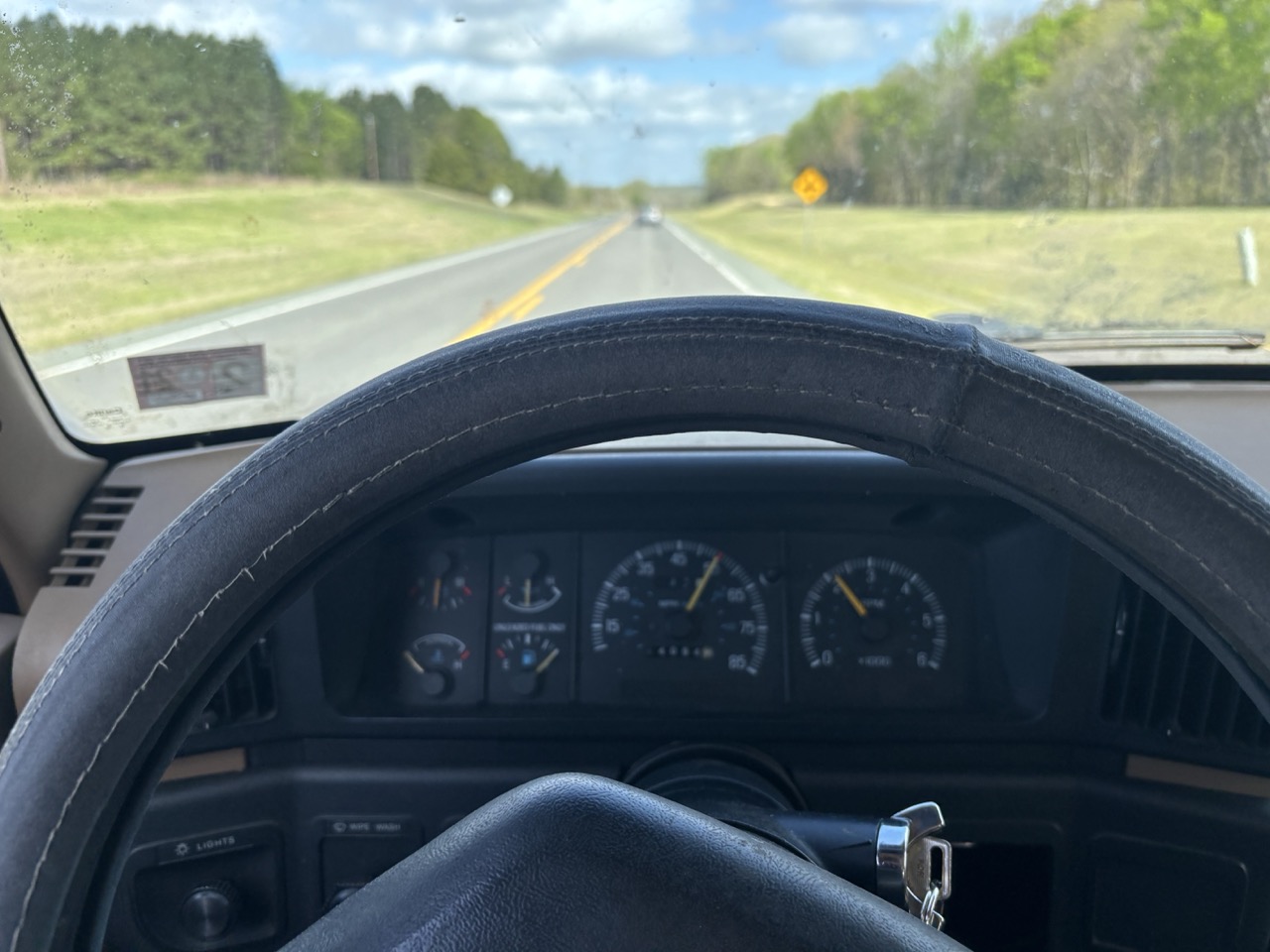
And holy crap, it seemed to work! I took a shortish test run in the truck, but long enough where it normally would be pumping steam into the aether, and it didn’t overheat! It ran…basically fine? I had just enough confidence to try a two-and-a-half-hour trip, because why not? Life is for taking inane risks, right?
Other than a fun time with my kid, the point of the trip was to haul a new refrigerator to my friend’s mountain place, then go visit some other friends who also have access to a mountain place nearby. How do I know so many people with houses in the Virginia mountains isn’t clear, but whatever, it’s lovely country.
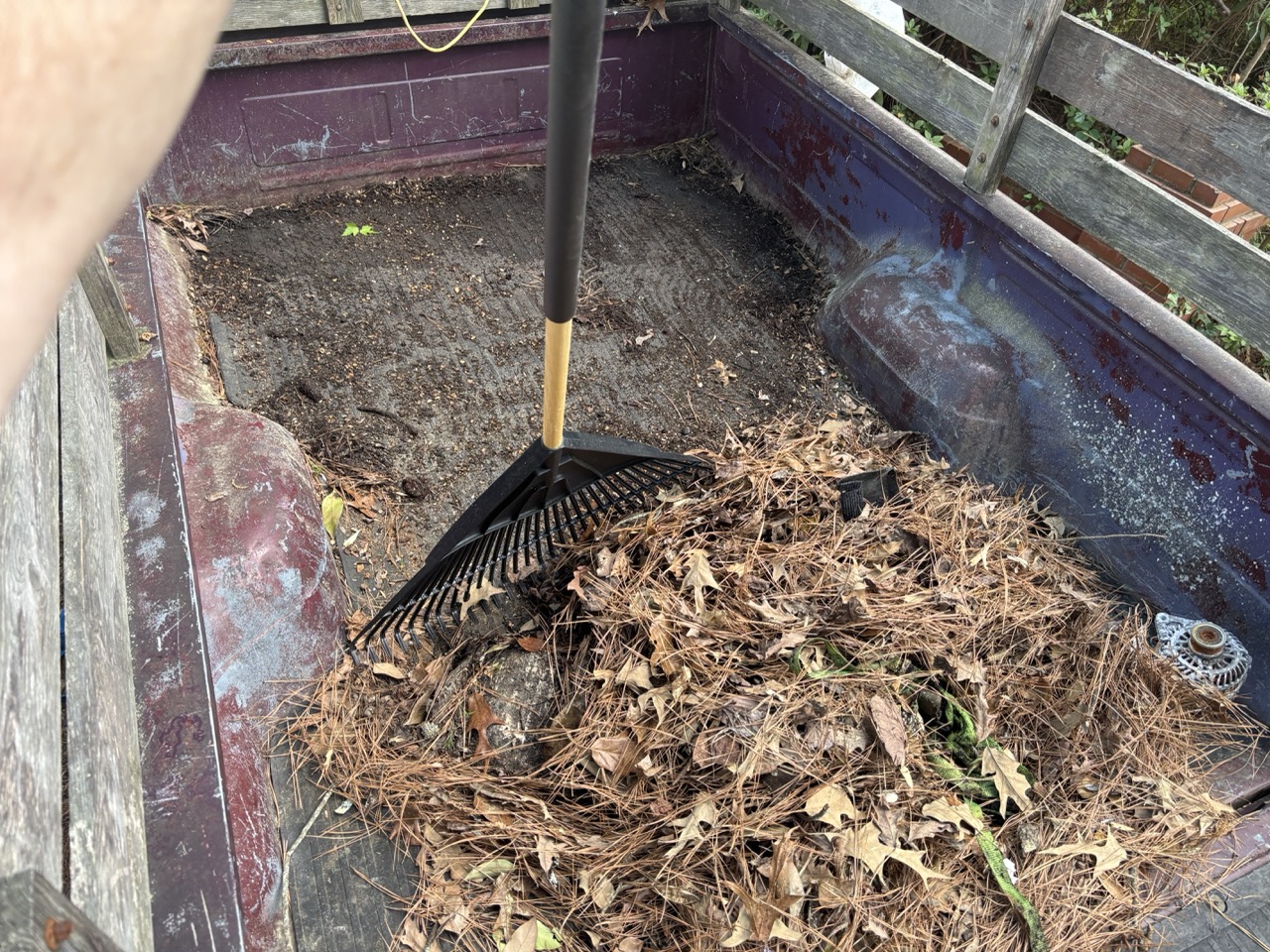
Since my truck is now mobile again and I needed the whole bed clean, I raked out months of pine needles and leaves and probably shredded documents from the squirrel community.

My cat Tomato offered precisely zero useful assistance, but remained to supervise my efforts, which I think he judged sub-par.
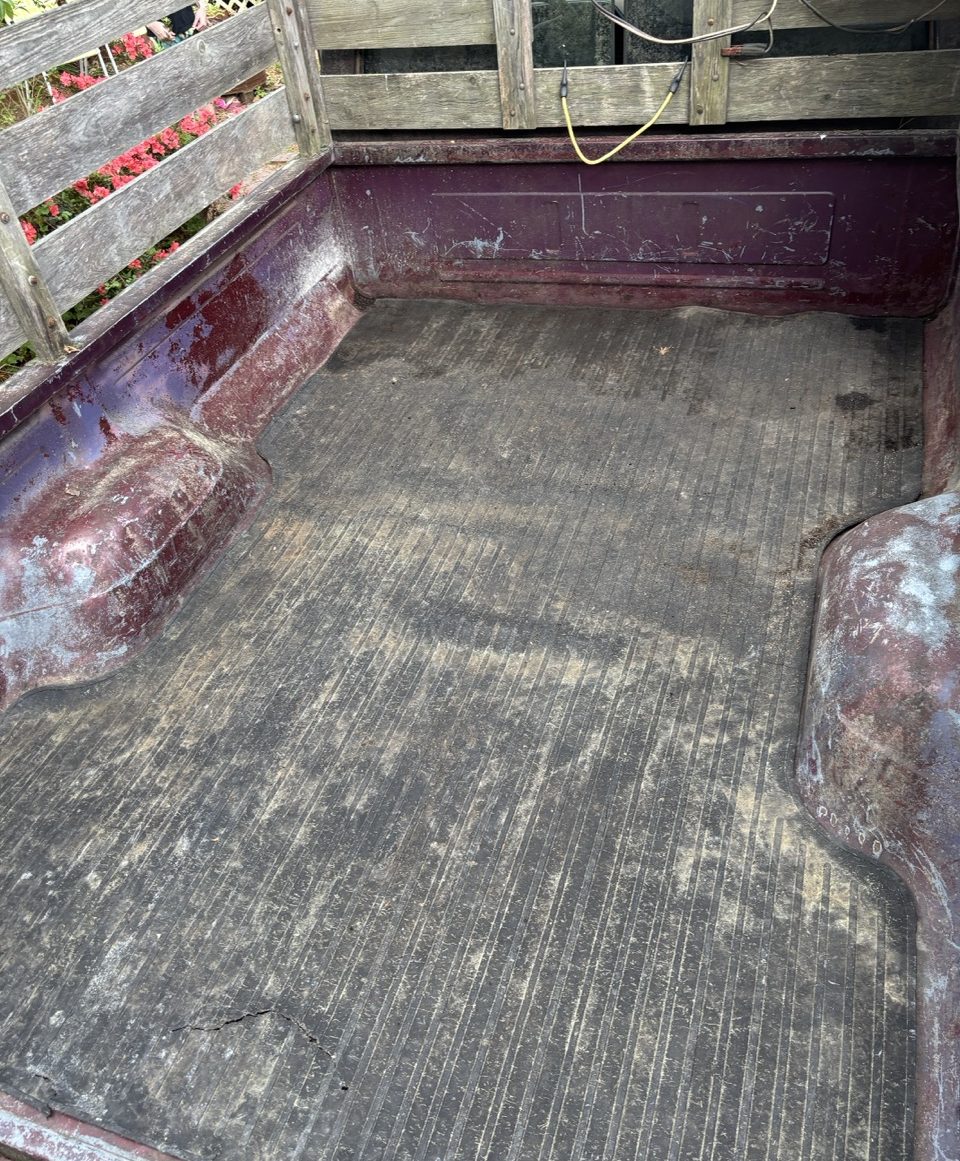
I did end up getting the bed cleared of detrius, and fridge-ready!
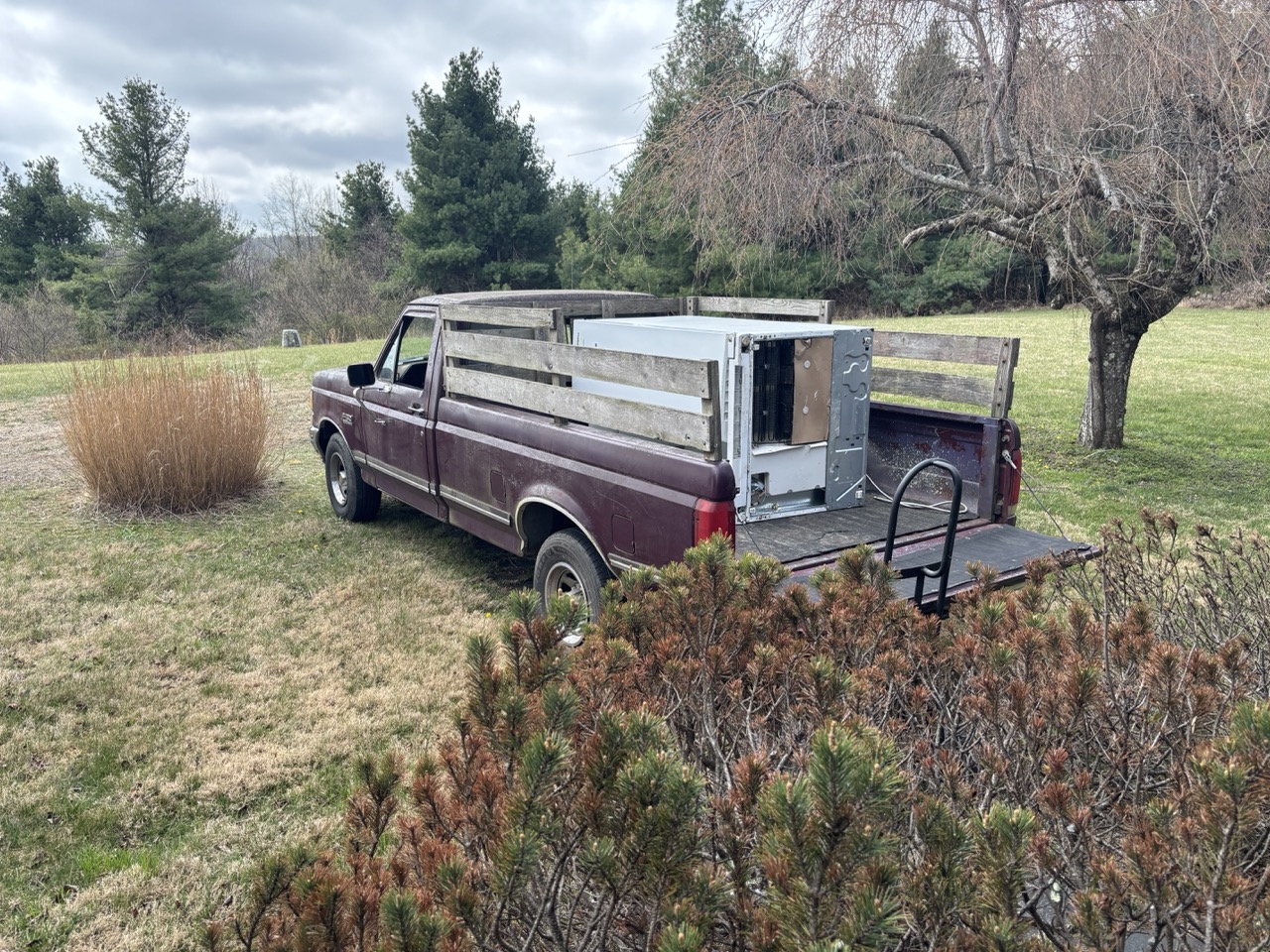
Incredibly, the truck made it! It was slow to start after one short pit stop, but other than that, it was pretty hassle-free? I took it easy on it, never rev’d above about 3000 RPM, but it was able to maintain 55-65 mph, no trouble.
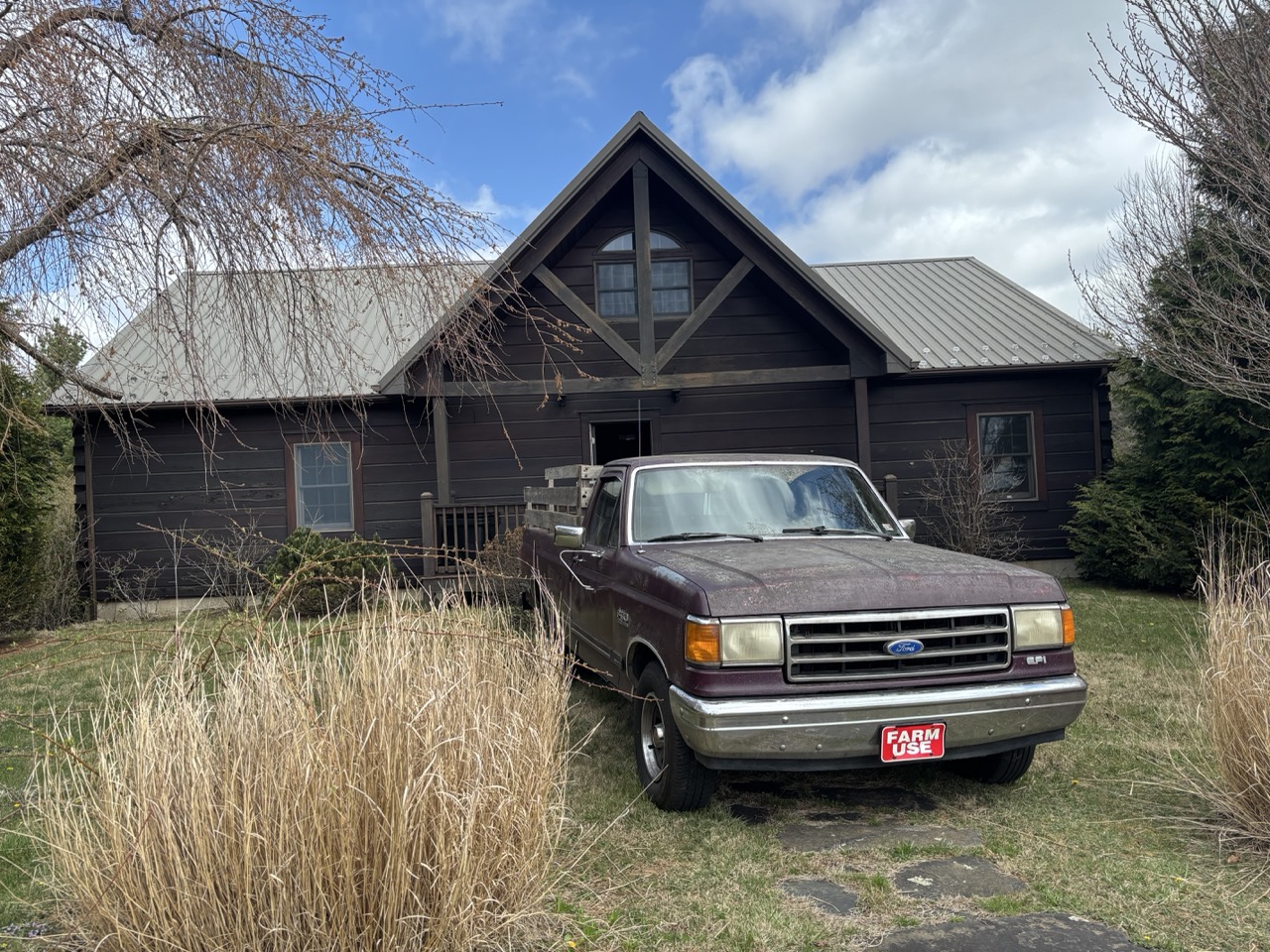 It idles a bit rough, and there’s a bumpy spot between about 2000-2600 RPM that suddenly smooths out for reasons I don’t understand yet, but overall? It works.

I drove it to my friends’ place next, where we enjoyed some lovely and damp times with them and their family, interacting with cattle, and I offered to haul a bunch of trash from their property that had been languishing for a long time, because, you know, I drank their booze and ate their food and I should probably repay in some way.
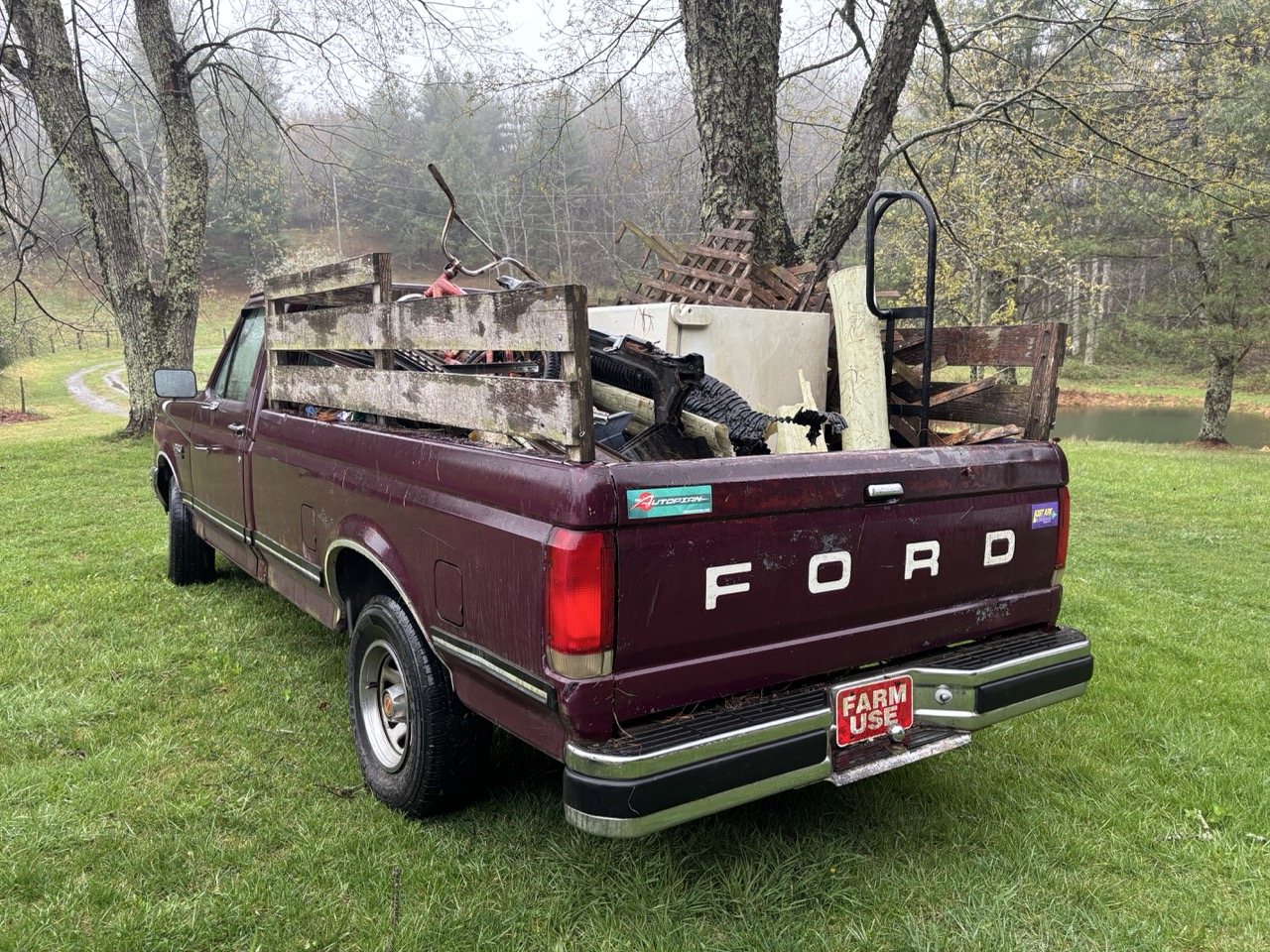
Besides, what’s the point of having a truck if you can’t cram it full of crap? Oh, and I had my other friend’s old fridge in there anyway, so it’s not like I wasn’t going to take a trip to the dump as it was.
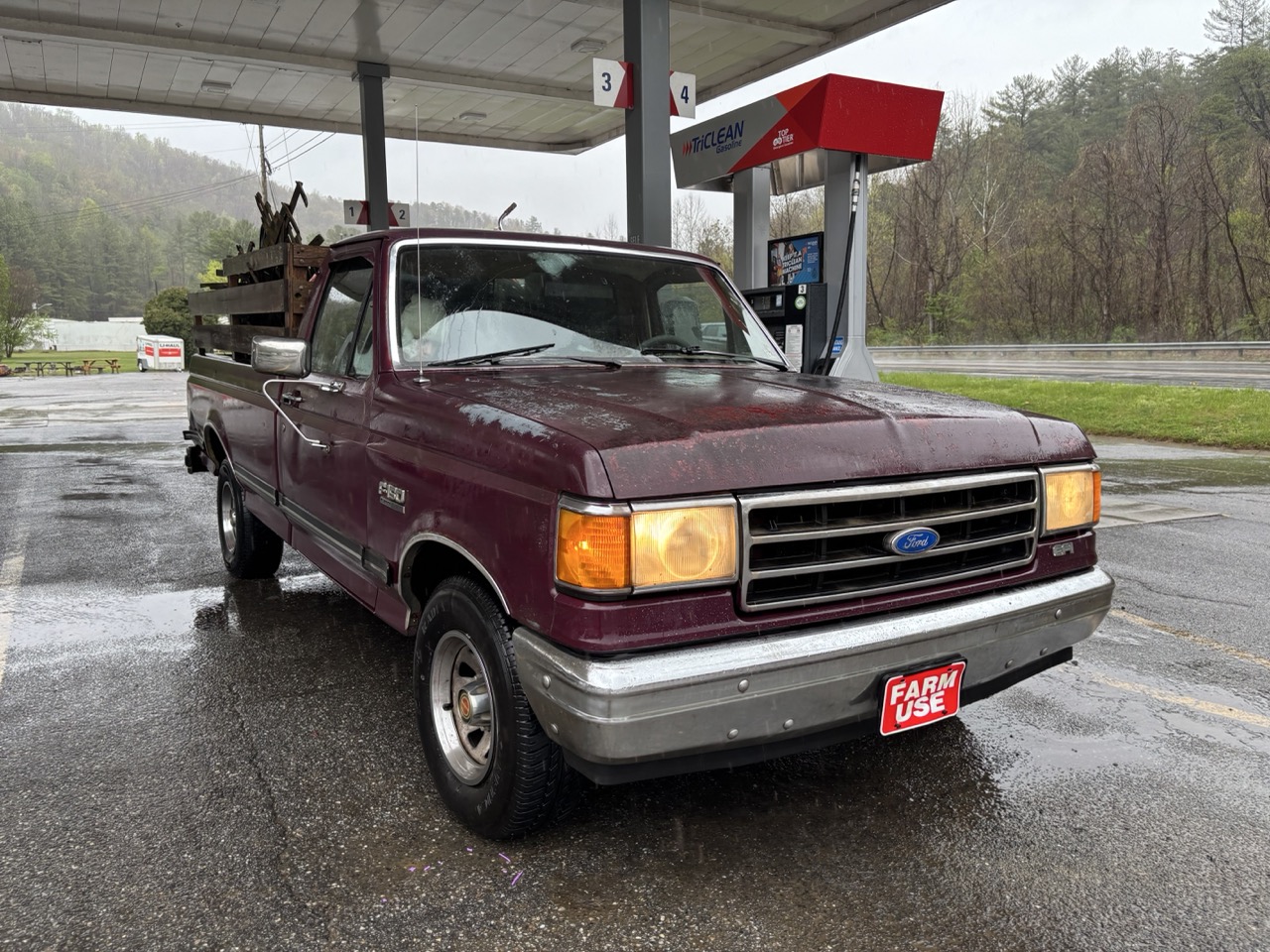
Mostly, I’m amazed at how well the truck did; the differences between doing a full head job and pouring some blue liquid in the radiator are vast, and it really feels like cheating that this worked as well as it worked. I read reviews and watched videos, yet somehow retained a bit of skepticism. But so far – knock on wood, spit thrice, all that – it seems to have, if not solved, at least managed the head gasket issue.
There was one concerning thing, though: when I finally got back home and parked by my house, I saw steam from the engine; I was fearful that I’d see it coming from the head gasket, but that wasn’t the case. It was much more exciting:
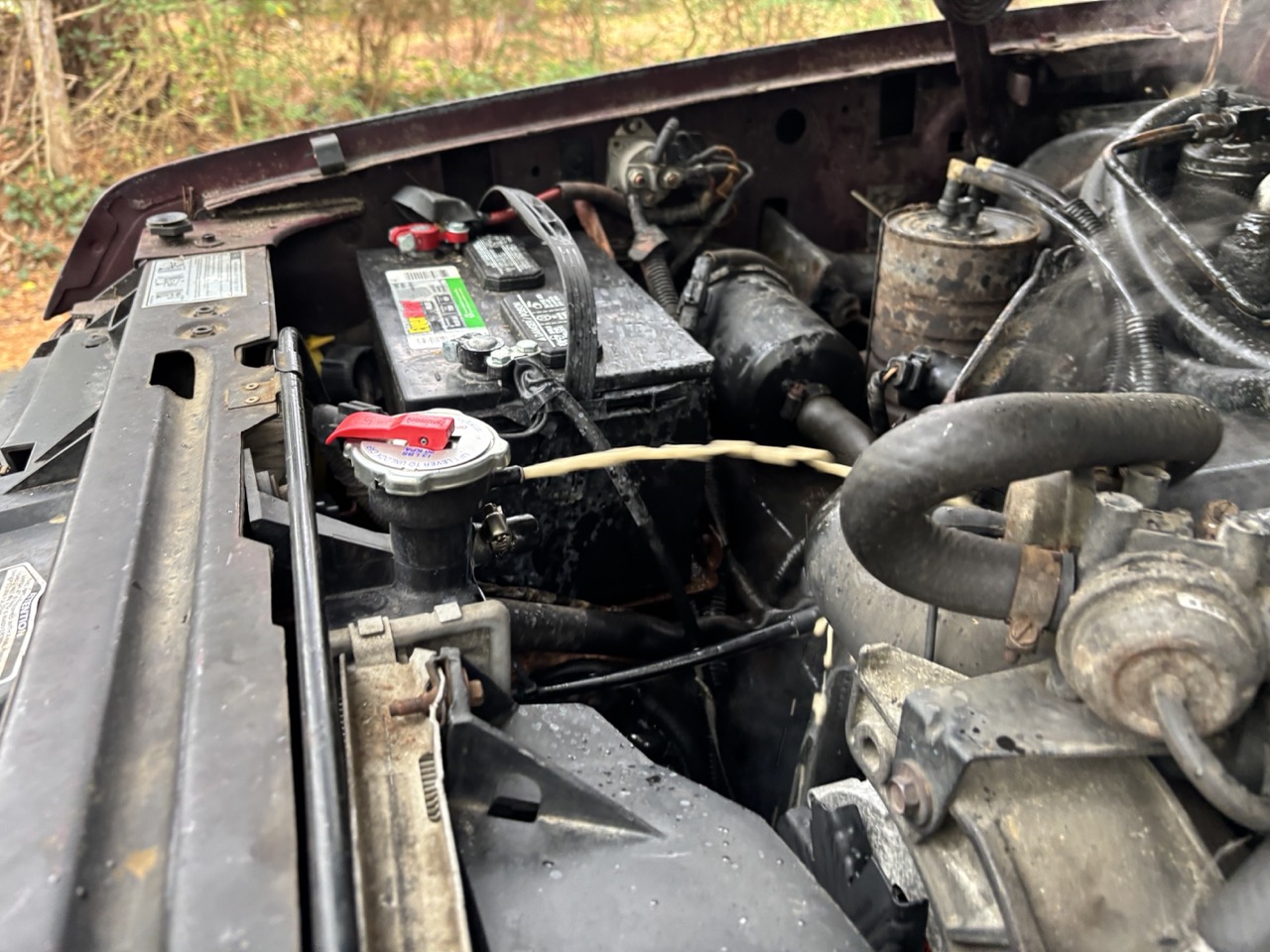
It was spraying from the overflow/pressure relief nozzle under the radiator cap. I’d never seen this happen before. It continued for maybe a minute or so, then petered out. It didn’t do this any of the other times I drove it for similar lengths of time and then stopped, so I’m sort of baffled. It started and ran fine a couple of hours after this, too.
I’ll check the coolant level and see if I can see anything odd in there. I also checked the oil cap and didn’t see any Forbidden Mayonnaise, which happens when coolant and oil mix:
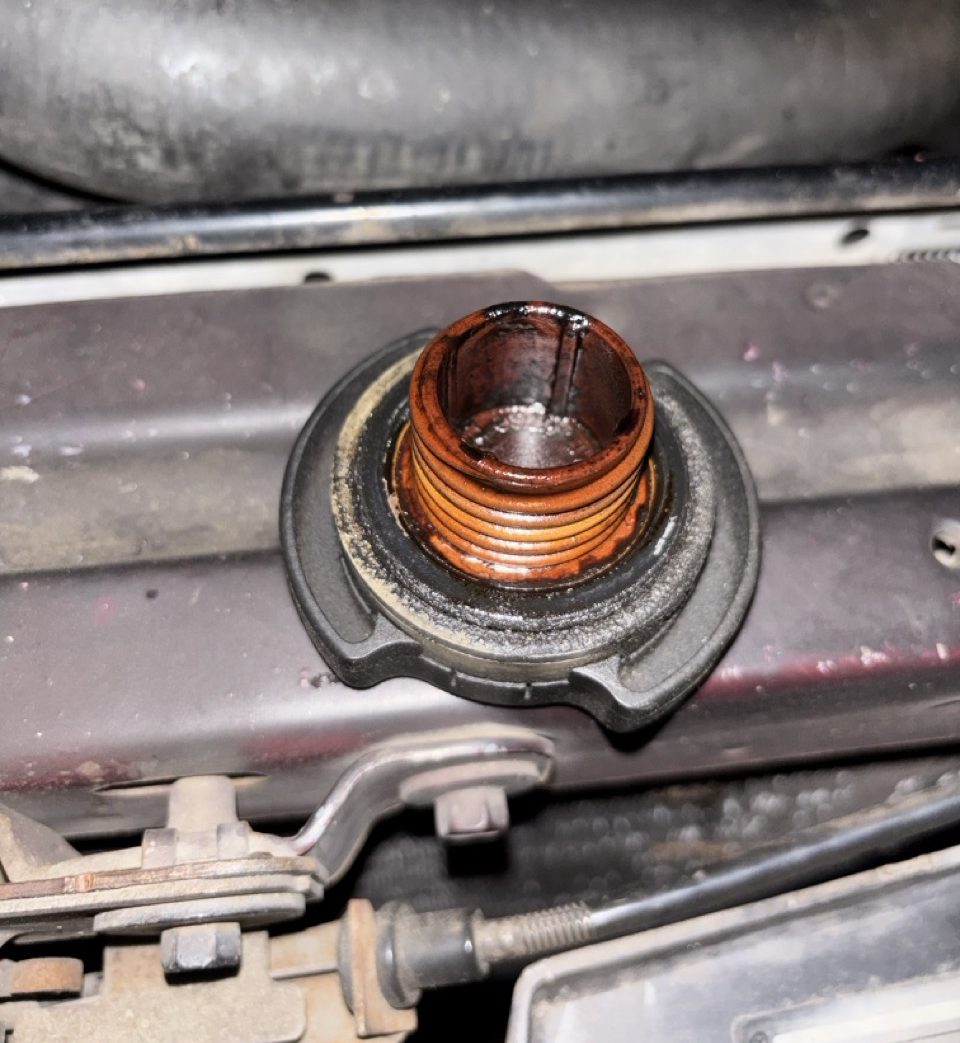
So, at this point, I’m not sure that was. The fact that I avoided a major repair with a liquid makes me think that there must be some consequences to pay, but as far as I’m concerned, this magic juice made my truck operational and proved itself on a not-insignificant trial run, so I’m just going to take this strange victory and enjoy a functional truck.
Even if it required a deal with the (blue) devil.
All photos by the author




Chief Creative Officers, they are just like us.
So the Blinker Fluid actually works, Huh?
That jet of overflow coolant looks like
I’m guessing it didn’t look as opaque in person?
I’m just glad right now that Jason’s 2CV is air cooled. I think if he poured something like this into his 2CV, our local French Car Club might have to stage Une Interdiction.
Head jobs are the reason Torch prefers air-cooled engines in general.
I had to look up the ASTM D3147 standard listed on the bottle, thinking it was unrelated and just there to look good. To my surprise, it’s “Standard Test Method for Testing Stop-Leak Additives for Engine Coolants”, so it’s valid! Wow. Here’s a snippet:
4.1 A heated test solution is circulated through a pressurized
cubical metal reservoir which contains a slit and holes to
simulate leaks in an engine cooling system. The effectiveness
of the stop-leak material is measured by its ability to seal the
leaks under the prescribed conditions of flow rate, temperature,
pressure, and time.
4.2 The presence of particles in the test material that are
larger than 0.84 mm (0.033 in.) or the presence of gumming or
gelling in stop-leak additives is determined by screening a test
solution through a 850 µm (U.S. No. 20) standard sieve. The
screening is done both before and after the circulating test.
Particles that remain on the sieve may be too large to pass
through some passages of the cooling system.
Is there a site for reading ASTM standards without paying the $72 fee? I have bought many of them on the company’s dime, but a free source would be valued for personal interest. I haven’t looked for torrents, though.
I do not have one sorry. My company has a subscription to Accuris so I get access to the standards through them. But yeah I remember wanting to look them up before (such as in college) and it being a challenge to find for free.
Liquid Lawyer! Ha ha ha ha ha
I tried the off-brand Barrister in a Bottle and when I poured it on the judge, as per the instructions on the bottle, he got really angry…
😀
You forgot the esteemed Captain Morgan on your list of liquids purported to replace skilled professionals. 😛
Also, and this only applies to regfrigerators that you want to use after moving them, keeping them upright during transport is the recommended method. If the fridge absolutely must lie down during transport, let it stand upright for at least a day before plugging it back in (so all the oil drains back into the right bits of the compressor). Learn from my mistakes and not your own, and you’ll be forever considered a wise fellow.
I’ve always wondered about those liquid ‘solutions’ …how do they know exactly where to do their thing? I.e.: why would it thicken/harden/whatever only in those spots where the gasket/head is found wanting, and not anywhere else it might go? I remain confuzzled, but am glad it worked for your big purple truck.
Mmmm: forbidden mayonaise! Sounds like something Homer Simpson would say. 😉
I always enjoy everything you write Jason, so again: thank you! 🙂
My understanding is that the exposure to oxygen and/or the pressure drop at a leak site causes a chemical reaction to solidify the additive. There are insoluble solids suspended in product that accumulate where that pressure differential is, so they are supposed to collect and bind together where they are being forced out of a hole/crack/what-have-you.
There is always the risk of the any of the solidified bits breaking off and entering the cooling loop and clogging something.
Ah, that makes some sense: the stuff that reaches air solidifies and the stuff that doesn’t doesn’t. Thanks LoC. 🙂
But I think it has to be mostly the pressure drop causing accumulation of particles, because otherwise you’d think that any of the stop-leak that made it to the overflow reservior would solidify. Maybe it does!
So you’re saying it isn’t little smurfs that go swimming around, looking for light?
No we haven’t got SCUBA gear that small yet unfortunately.
Forbidden mayo? Or a forbidden mayo-flavored milkshake?
His milkshake brings all the goys to the yard… 🙂
(Yes, I know the plural is goyim, but that doesn’t work w the song)
And their life is better than yours…
Oy vey, again with the yours!
🙂
DUG and I fully disapprove. Harumph.
It’s great to see The Marshal moving again, even if it does feel like a bit of a Passover/Easter miracle that may not make it through the next 40 days and 40 nights.
It has risen…
The Shroud of Touring?
I don’t know why I find these posts about your adventures with this truck so entertaining, but I do. I like seeing the old truck doing truck things. Keep them coming when ever you have them. Also, Happy Passover.
While I’m glad the blue fluid “worked” as a stop-gap, it’s not a lasting repair.
You need to drain your coolant system and maybe give it a proper flush in concert with the head gasket job.
If the “magic” sealer did in fact plug up a leak, that means there’s a better-than-good chance it’s going to also cause a blockage elsewhere. Maybe in the head, maybe the radiator, maybe the water pump, maybe your heater core. Regardless it’s bad and not designed for it. Hopefully you can remove what’s left of it with just a flush, but I suspect you’ve contaminated your entire cooling system, and may need to do some teardown to unclog where it’s settled, and possibly replace some components.
“Stop-leak” products are for desperate emergency situations only, because if they might possibly work, the chances of them causing more damage is high, but less high than not driving it without the hopeful bodge.
Re your comment combined with the the radiator cap blowing off steam: is it possible that something on the way to the overflow tank is clogged, and this is the first time since the head leak that the system has gotten to full pressure, so instead of ejecting to the overflow tank it overpressured out the cap?
That’s generally my thought.
You’re supposed to drain and refill the fluid with Blue Devil, are you not?
Yeah my bad advice to use stop leak wound up killing a heater core in a ~2003 Nissan Sentra.
Yeah I did similar to my second car. I believed the spiel that the neat black blobs would “find” the air in the system and plug them. Instead they seemingly blockaded enough of the water jackets to cause the engine to overheat and lead to rod knock, and did nothing to stop the leak, which was from an impacted radiator that should have been replaced.
Replying to myself to add: There’s quite a few teardown and “just rolled into the shop” videos of folks using stop-leak type products. They very rarely do anything beneficial, and generally lead to more damage. Like I said, they’re only “good” for last-ditch desperate emeegency situations where using such a thing is somehow better than stopping to refill the fluid as needed.
This. You are asking your radiator to clog. Get that stuff flushed out ASAP. It might be too late already (why would it blow steam out of the relief if there wasn’t overpressure?).
Looks like no function on the temp gauge, bad sender? With the coolant leaks “fixed” so no steam escapes, now how will you know if it overheats?
yeah, I noticed that, too. it WAS working last week. I may have broken something.
Oy, back to the family “farm” for more wrenching.
I would guess the Blue Devil has sealed up the sender so it no longer touches the fluid.
(The name of this stuff makes every sentence feel like it was written in the 1890’s)
Blue Devil: the power to “fix” what ain’t even broke.
Some Magic Blue Liquid goes in, 2.5hrs. later it dispenses cappuccino !Truly the work of the Devil !
I don’t miss the “make do” years of youth.
Typical cat behavior, I’m afraid. All supervisor, no skill. And some bite. And a lot of judgement.
Mine is more of the, I’ll scream at you until you sit down so I can curl up in your lap. She requires HOURS of lap time per day, it’s a terrible way to live. /S
My old guy was like that. He had needs damnit, and had a relentless case of heavychin (in which a peet is laid across my wrist, and his head on top of that), my need to type be damned. He’d sit there and screm his dumb scremsong until I scooped him up.
I got a tattoo of his peetprint in that spot after he passed.
🙁 poor little guy just needed to love you. I just had to lock mine out of the office because I can’t cuddle and work at the same time. I do take a forced lunch break on the couch so she can get her snuggles in though.
Two of mine would compete for keyboard duty. One walking on it the other laying. The third was partial to the exhaust heat from the case. Laptops did not make me immune from cat attention.
They also liked to lay on my lap while I worked. They’d get testy if I moved too much.
Thankfully the dogs don’t share any of these behaviors. They prefer to lay on the dog bed and snore.
If I’m inside mine doesn’t care what I’m doing but if I’m outside he supervises and insists on getting the middle of absolutely everything.
I mean if head gasket in a can is good enough for Roadkill, it’s certainly good enough for all of us!
Just don’t bother to look into what happened to those cars after the episode was done. …….
Hey, don’t knock Liquid Lawyer. It organized all the lawsuits against me into one class action.
I have seen magic fluids accumulate on the radiator cap and prop it open, causing it to no longer seal. This may or may not be the underlying cause of your new leak.
And I agree that the small radiator fitting usually connects to the overflow tank. If you don’t have an overflow tank, you can at least add a hose so the spray aims toward the ground instead of the engine.
Back in my youth, it was K&W Block Seal. I rescued several Pontiac V8’s with that stuff. It’s not a pour it in and go, there’s a process, and it worked great!
My neighbor asked me if I would use my truck to go pick up a couch for her, and she was really hesitant to ask. I was like, I would LOVE to! That’s what truck people DO!
First thing: great cat.
Second thing: “Yes, a blue liquid, just like menstrual fluid or baby urine!” It’s all realistic colours on UK TV now, I thought we were fine with pretending it was all some kind of science project, but no, it has to be the right colours.
Third thing: I used oiltyte stick to seal up a leaky diff housing once, and it worked fine for seven years on the welded diff on my drift car. I was too scared to change the seal because that would have involved inspecting the welded gears, and I didn’t trust the previous owner at all by this point. But also I’d have then had to do it properly and I definitely couldn’t afford that. So, in summary, sometimes it works out fine to try a bodge and just hope it’s all OK.
They’re the right colors in most US ads now too. But it’s recent-ish.
I’ve been told that when you lay a refrigerator on it’s side you that, you should let it stand for at least 24 hours after delivery so that all the coolant can settle back into the area for the compressor to pump. Otherwise, the compressor might get damaged. And good luck on the blue repair job!
I don’t think it’s the refrigerant but the oil that lubes the pump has to drain back down or the pump can run dry.
I believe you are correct. I had forgotten that.
I destroyed a pop vending machine by ignoring this advice once.
I’m a K Seal man myself
Given some of the heaps people on this site own, I’m betting there’s more than a few of us with a preferred brand of “mechanic in a can”.
K Seal FTW!
We were on at least year 4 of a K-Seal head gasket repair in my wife’s ’95 Ford Escort that seems to have just let go again a few days ago. To quote the Project Farm guy: “Highly Impressive!”
What are “farm use” license plates? I have seen plates that list agricultural, which I understand to mean can be driven locally from field to field, but generally not allowed on main roads as they do meet full safety requirements.
let’s just all be cool about that
Think of it like Montana plates for city people. Its fine.
I am in SWVA. Last year we ‘did away’ with them, but you can get permanent farm vehicle plates from the DMV. Still got pulled over a couple times because the five oh didn’t know the new rules. At least now with a DMV-issues plate I look WAY less suspicious on the interstate.
I once drove to Morganton, NC on the old farm use plates. So I think your trip and mine cancel each other out.
Please check the underside for rusted out critical mount points for suspension, and leaf spring shackles- seen them fail on Fords of that age.
I know you’ve driven the thing on roads near home for quite some time, but I was surprised seeing you say you took it on a trip to Virginia, state of the “we will ticket you for absolutely everything every damn time”.
You get them from the Liquid Lawyer. He flushes DMV rules down the drain!
Safety requirements? We don’t need no stinkin’ safety requirements!
Safety requirements,
No hidden defects.
Oh, they got that all messed up.
Safety requirements?
No, hidden defects!
Part of the Torchinsky family Seder tradition is Otto asking questions about the North Carolina motor vehicle code.
Or maybe just this year because he’s about that age to be studying for his license. Just don’t send him to take the road test in the Marshal.
Send him in the 2CV
“Why is this Ford different from all other Fords?”
Isn’t that port on the radiator neck supposed to be connected to the overflow tank?
Because once you shut off the truck, it continues to get heat up – and without a water pump circulating the coolant, it gets hotter. Hot things (including liquid) expand, and the radiator cap pressure relief spring dumps the pressurized fluid.
Typically, this pressure dump doesn’t direct at the intake manifold and accessory belts.
Yeah, that felt odd to me, too. It really seems like it should be going to the overflow tank. I’ll look into that.
I Was going to point this out too, the overflow/expansion tank should be capturing all of this. Looks like your hose, at least has left the chat.
Also might be worthwhile to change the oil, just in case you got coolant into the crankcase while your head gasket was leaky.
How am I supposed to know the vehicle is overheating if coolant isn’t spraying everywhere?
That sounds like a job for Liquid Lawyer… Liquid Lawyer to the rescue!
I have a 300-6 in my 92 F-250 and there’s a hose that goes to the dual coolant overflow/windshield washer tank. I’ve overheated mine several times without any damage/problems.
So my former 88 F250 with a 351 had 2 ports on the radiator neck, one connected to the overflow tank, and the other plugged with a rubber cap.
My stock radiator had a single port and a blanked port. All the parts store replacements as of 2025 had the two ports you described and came with a clamp on plug to blank the lower. I think the second port might be for a later ford degas retrofit? Seems like it matches the degas necks on my 2000s fords.
Mine was a replacement, however it was replaced in the early 2010s.
For the record, my favorite DC Comics superhero in the 80s was Blue Devil.
https://www.syfy.com/sites/syfy/files/2020/08/blue-devil-1-cover.jpg