

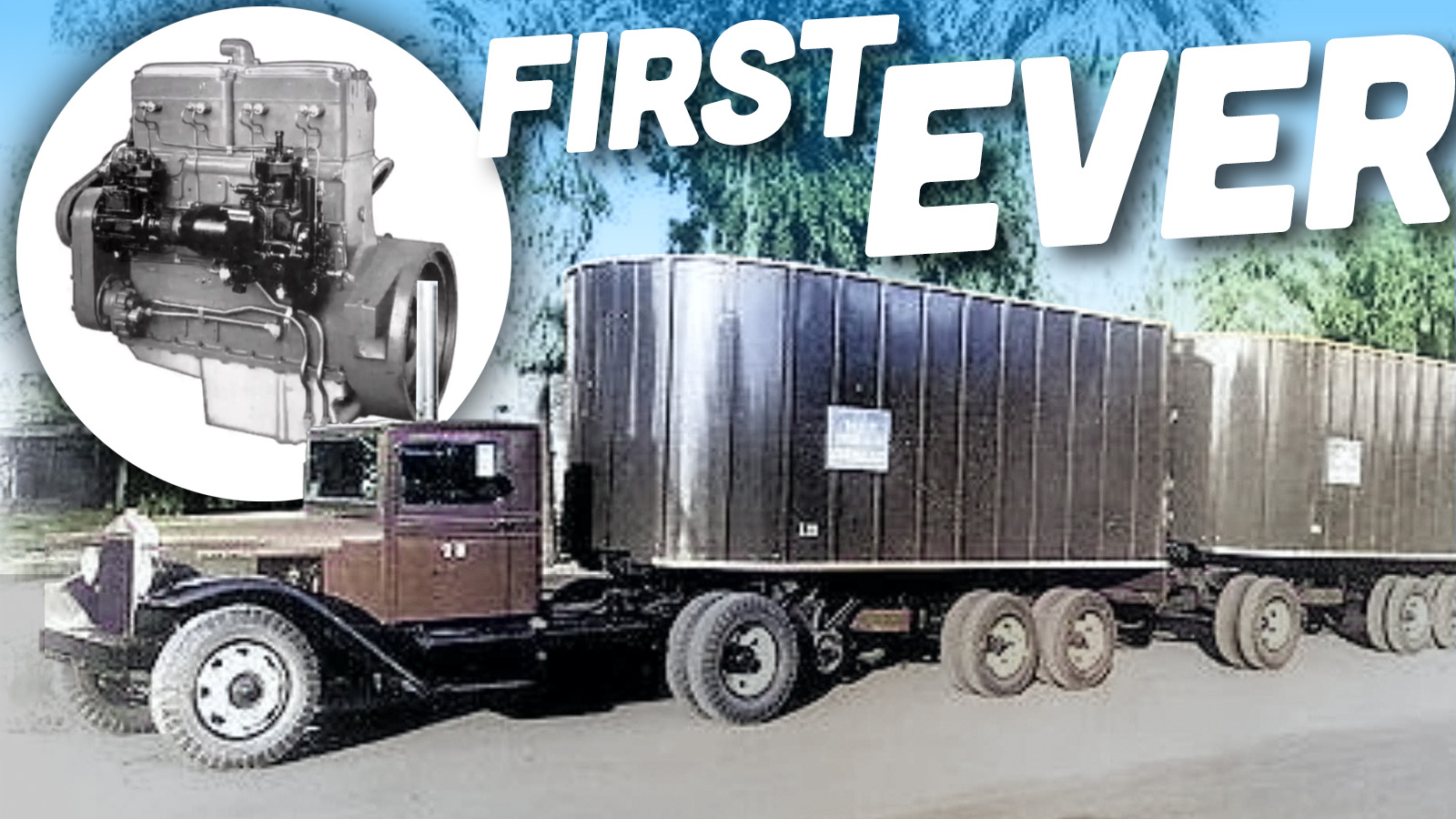
The diesel engine is a mainstay of transportation logistics all around the world. The vast majority of semi-tractors that you pass on the interstate, locomotives that blast by grade crossings, and even medium-duty commercial trucks house mighty diesel engines under their skin. But it wasn’t always this way. Before diesel was the king of power, it was a newer technology that seemingly few people knew about, but slowly snaked its way through various industries. In 1933, Cummins and Kenworth built the first American production semi truck with a diesel engine. This innovative, efficient rig planted the seeds for the domination of diesel that the industry enjoys today. It even had another first that’s still in use today.
Back in the 1870s, in the halls of the Technische Hochschule in Munich, a young Rudolf Diesel pondered whether it was possible to create an engine that converted heat into mechanical work efficiently. By 1885, Rudolf was consumed by his idea and set up a shop to test it. In his eyes, one of the keys to high thermal efficiency was a high compression ratio. In 1892, Diesel earned German patent DRP 67207 for a compression-ignition engine design. His first test engine was built just a year later.


Diesel’s first engine, a 25 HP powerplant, wasn’t an immediate success. That changed in 1897 when Diesel’s Motor 250/400 fired successfully for the first time. What was remarkable about Diesel’s engine, Diesel World reported, was its 26.2 percent thermal efficiency at a time when steam had only 10 percent efficiency.
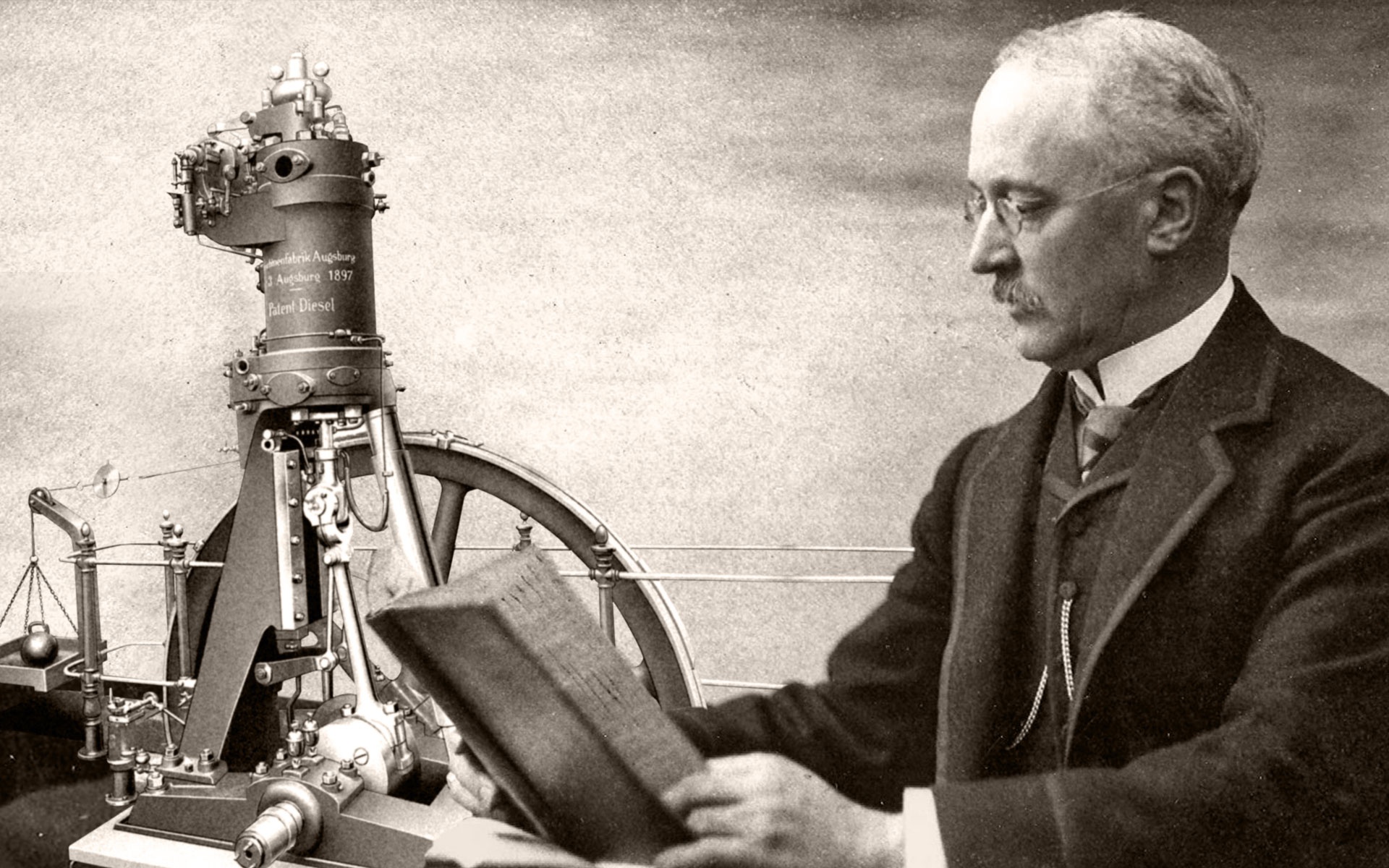
Diesel garnered international attention with his engine, with both Maschinenfabrik-Augsburg AG (MAN) and the Sulzer Brothers of Switzerland licensing the design. However, according to researcher Jean-Baptiste Fressoz, Diesel wasn’t trying to make it big from his engine. Instead, he saw his namesake powerplant being the engine of Socialism. He imagined a utopia where farmers and workers would decentralize small industry and revitalize rural lands with the power of diesel engines. In Diesel’s eyes, the diesel engine would give the worker the power to take production out of large cities and put it in the hands of everyone. To Diesel, the only way this was achievable was with an engine that was easy to use, easy to maintain, efficient, and lasted longer than other engines.
As Diesel World writes, not long after Diesel’s engine ran reliably in 1897, he more or less considered the engine’s development a done deal and started promoting it. Other engineers, however, thought the engine actually wasn’t ready to go into the hands of the public. Reportedly, Diesel didn’t like the idea of other engineers fiddling with his invention, even though they were improving it. He saw these other engineers as threats to his control over his own invention, and apparently, this drove Diesel to a nervous breakdown. Some engineers reportedly even thought that Diesel’s contribution to the diesel engine was minimal after 1897. But Diesel refused the help of other engineers.
By 1912, however, Diesel’s patents began expiring, and soon enough, no one had to ask Diesel for a license to engineer their own diesel engine. One of those people was Clessie Cummins.
How Cummins Put Diesel In Cars And Trucks
When Busch-Sulzer brought diesel engines to America in 1911, the technology was still very experimental. Power outputs were still low, and applications were still largely agricultural and industrial. There were no production diesel cars or trucks back then.
As Diesel World writes, the first ocean-going vessel to get a diesel engine was the Anglo-Saxon Petroleum Co. Vulcanus in 1911. This ship was a tanker and featured a reversible diesel six that pumped out 450 HP at a leisurely 180 RPM. What made the Vulcanus such an innovative ship was the fact that it consumed only two tons of fuel oil on the same routes that would have required 11 tons of coal to run a steam engine.
In 1913, racecar driver and automotive engineer Alexander Winton took Diesel’s engine design and made his own tweaks, creating one of the very first American-built diesels. By 1916 and 1917, the Winton Engine Works was slinging diesel engines for ships and locomotives.

Then there was Clessie Lyle Cummins. I’ve written about the history of Cummins before, and click here to read it.
My favorite part about the Cummins story is what Clessie did when his company was on the ropes in 1929 after orders dried up. Instead of doubling down on what wasn’t working, he made a major pivot from agriculture and started placing his engines into cars. Cummins bolted a Model U diesel into a 1925 Packard limousine and, in 1930, drove it 800 miles from Indiana to the New York Auto Show. The car drank only $1.38 ($26.37 in 2026) in diesel to get there at an average speed of 31.7mph and fuel economy of 31.4 mpg.
Not satisfied with only one example of what diesel could do, Cummins entered a diesel-powered car into the 1931 Indianapolis 500. That car ran the entire race at an average speed of 86.17 mph without stopping for fuel, and while Cummins wasn’t trying to win, the car placed a respectable 13th out of 33.

Later in 1931, Cummins raced a diesel-powered truck from New York to Los Angeles. The Cummins team nearly crashed into a train due to ineffective brakes, but would ultimately set a coast-to-coast truck speed record of 97 hours and 20 minutes over 3,214 miles. Much like in the Indy 500, the gas cars were faster, but the diesel had the upper hand in not having to stop as often.
This race would inspire Clessie to invent the Jake Brake, but it also did more than that. This marketing blitz was so successful that one of the companies that came knocking was Kenworth.
The Rise Of Kenworth
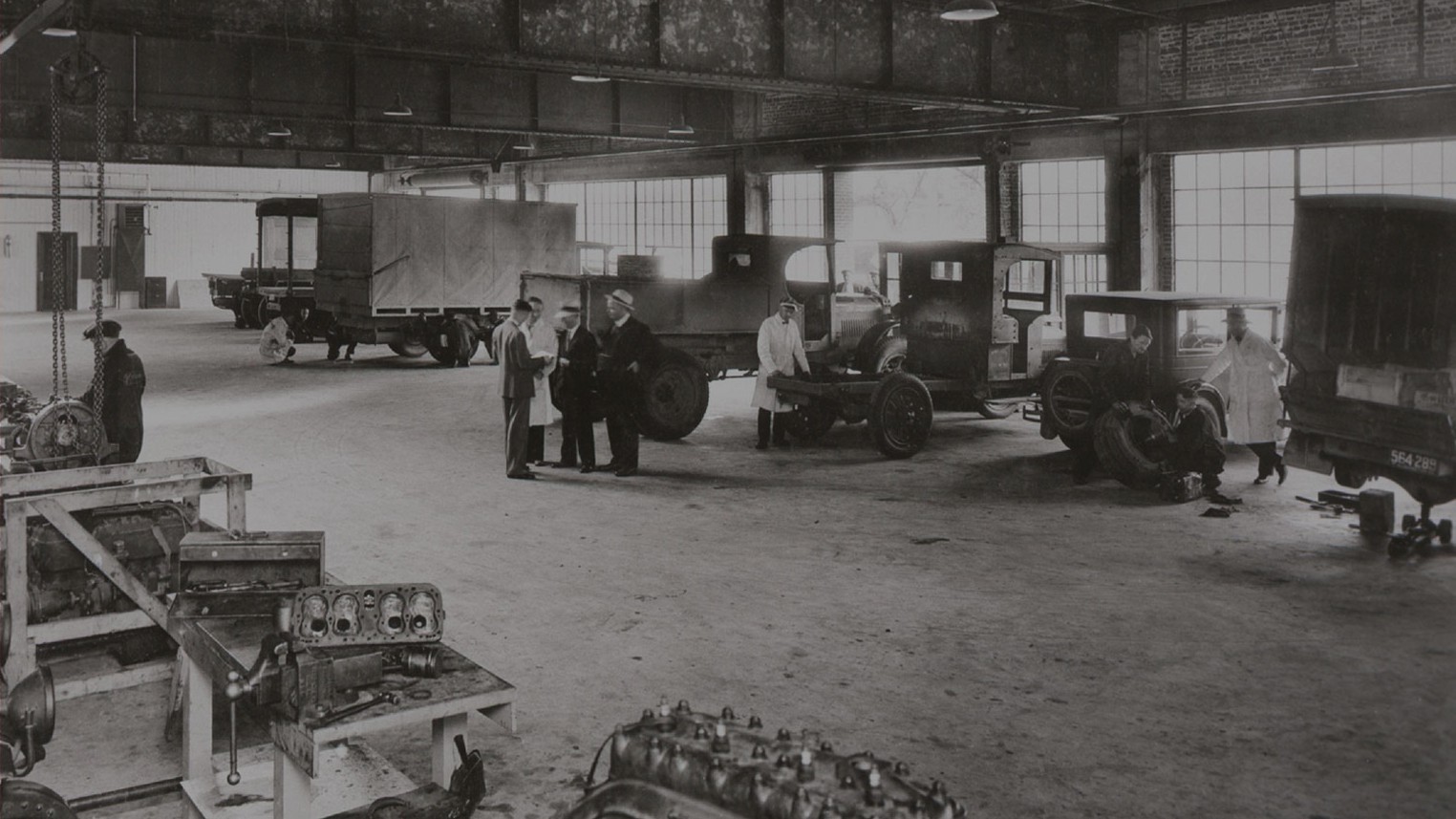
While the Kenworth of today traces its roots to its incorporation in 1923, its actual origins go back farther than that. In 1912, brothers George T. Gerlinger and Louis Gerlinger, Jr. founded Gerlinger Motors, a car and truck dealership and repair shop in Portland, Oregon. As Kenworth notes, business at the garage was slow as there weren’t many cars or trucks on the road back then. Vehicles were sold or repaired sporadically, and sometimes, business was so dry that Gerlinger’s mechanics had to take on other jobs to make ends meet. To fix that, the Gerlingers decided to get into the business of building their own vehicles. In 1915, the brothers created the Gersix, a rugged steel-framed truck that sported a six-cylinder engine.
While the rugged Gersix was a popular truck with loggers in the Pacific Northwest, it did not bring in enough business to save Gerlinger Motors. In 1917, the company, which had moved to Tacoma, Washington, was put up for sale, and Gerlinger’s landlord, Seattle businessman Edgar K. Worthington, wanted it. Worthington would join forces with former Coast Guard Captain Frederick Kent to buy the Gerlinger concern, renaming it to the Gersix Motor Company.
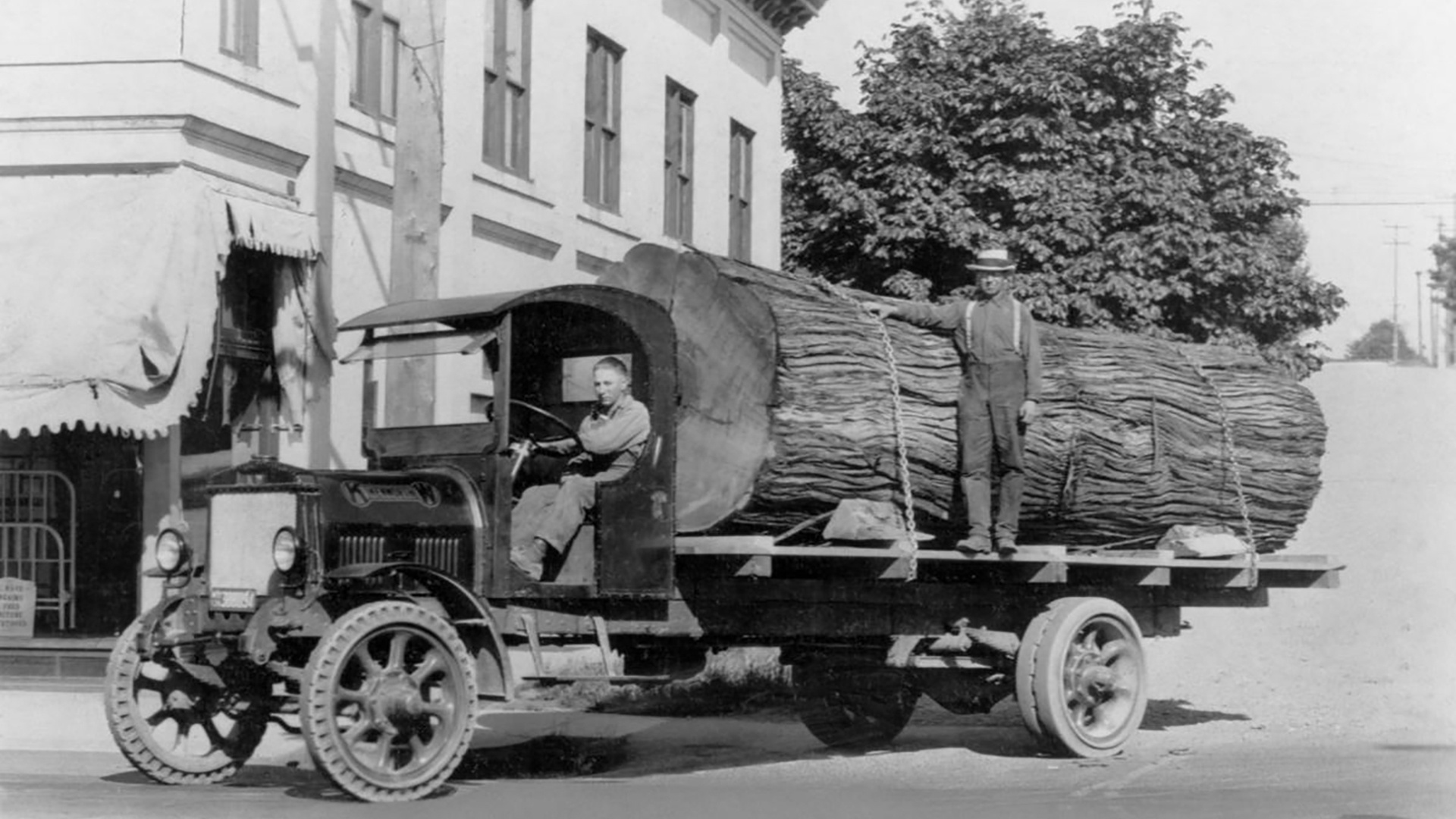
Kenworth continues:
Kenworth Formed—1923
In 1919, Frederick Kent retired from the business and his son, Harry Kent became Edgar’s new partner. As the company grew, so did its need for capital. Although sales were strong for the Gersix—53 trucks were sold in 1922—they decided to reincorporate, capitalizing on a $60,000 infusion of cash. In 1923, the transaction was completed, and it marked the beginning of a new era. The company became Ken-Worth, named after the two principal stockholders Harry Kent and Edgar Worthington. The Kenworth Motor Truck Company was born, and headquarters were established in Seattle.Custom Trucks, A Kenworth Tradition—1924-1926
In 1924, Kenworth sold 80 trucks and production a year later neared two trucks per week. Even in those early years, Kenworth was dedicated to the custom truck. Under the guidance of Vernon Smith, a master salesman responsible for building sales in the region, the custom truck became the hallmark for Kenworth. Kenworth’s John Cannon recalled:“It wasn’t falling into an idea or creating something, it was simply because Vernon Smith would go out and sell some trucks with this or that specification, and then he’d come back to the plant and say, ‘Here, I have the sale, now we have to build them.’ So, it came not as a designed thing, but more or less as the state-of-the-market at the time. Everybody else was building standard stuff, and we were building anything that Vernon could get an order for.”
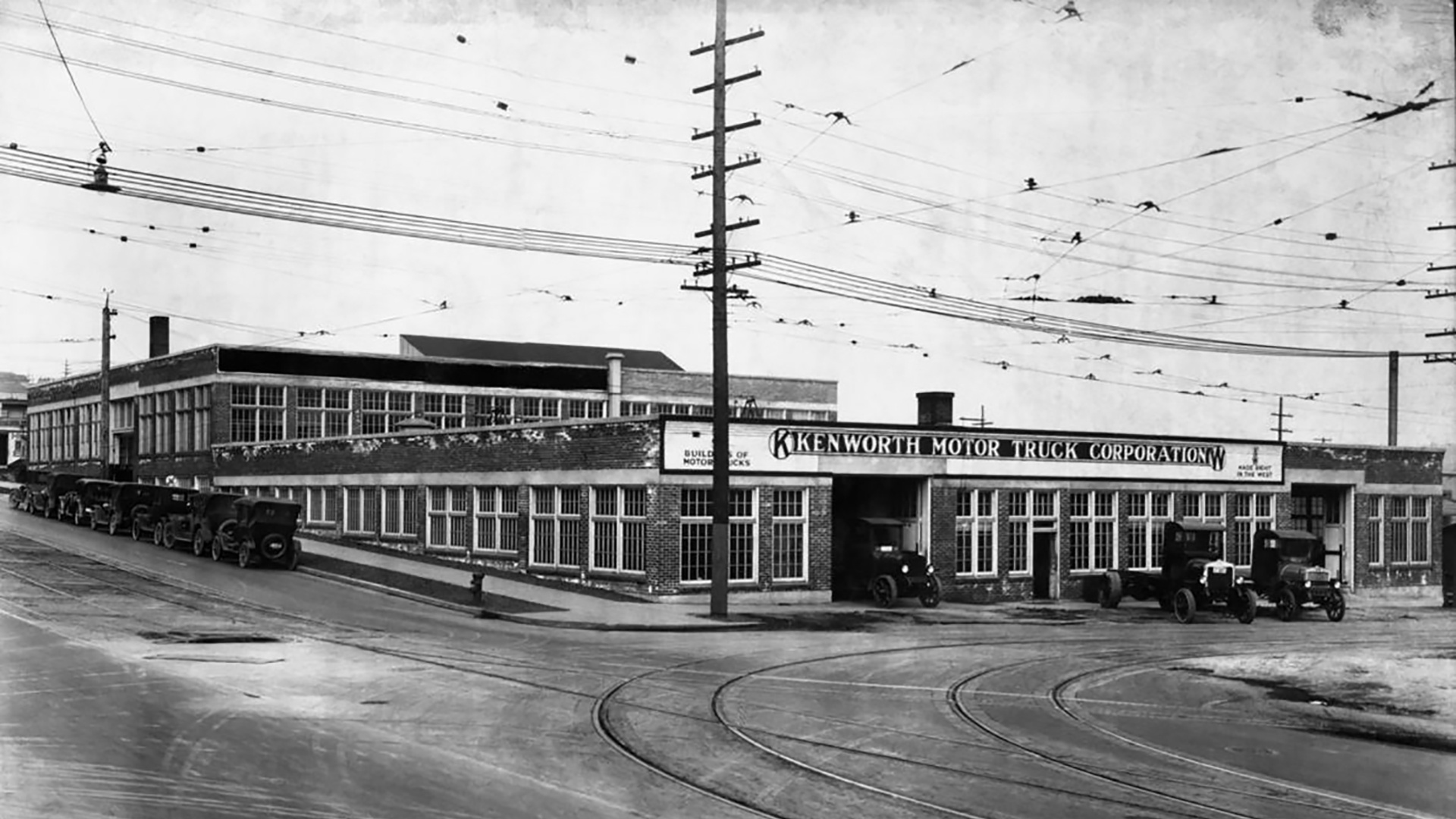
The new Kenworth would grow rapidly, with production reaching three trucks a week before Kenworth found it necessary to open more factories, including one in Canada. By 1930, Kenworth was cranking out 250 trucks a year. Sadly, like so many businesses that grew exponentially in the 1920s, the Great Depression put the brakes on Kenworth’s fortunes. The company defaulted on loans, and the future was uncertain. But Kenworth didn’t give up, and instead pivoted to new markets and found some fortune by selling custom fire trucks to fire departments.
Real winds of change came in 1933, when Kenworth became the first major truck manufacturer to offer diesel power as a factory option.
Diesel Spread Across The West Coast
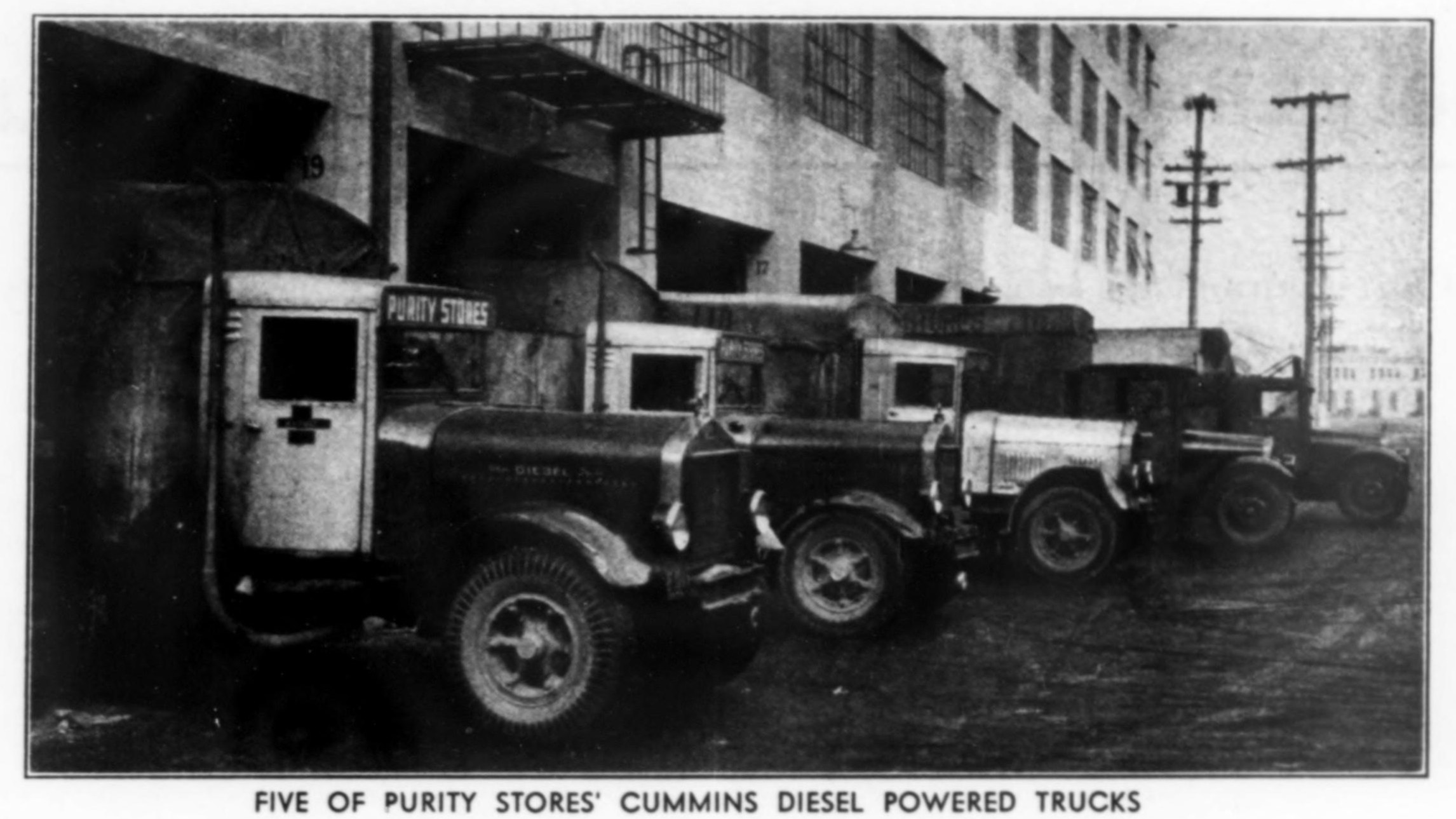
Kenworth’s move didn’t come entirely out of nowhere. As Commercial Car Journal wrote in 1933, diesel was slowly becoming the engine of choice on the West Coast. Back then, the magazine said, there were some 900 cities without rail access. Thus, the truck was the king of logistics out there. These trucks, which were often loaded down to around 34,000 pounds, sometimes drove on routes spanning well over a thousand miles. At first, all of the rigs that handled these drives utilized gasoline engines, which got the job done, but at a high running cost.
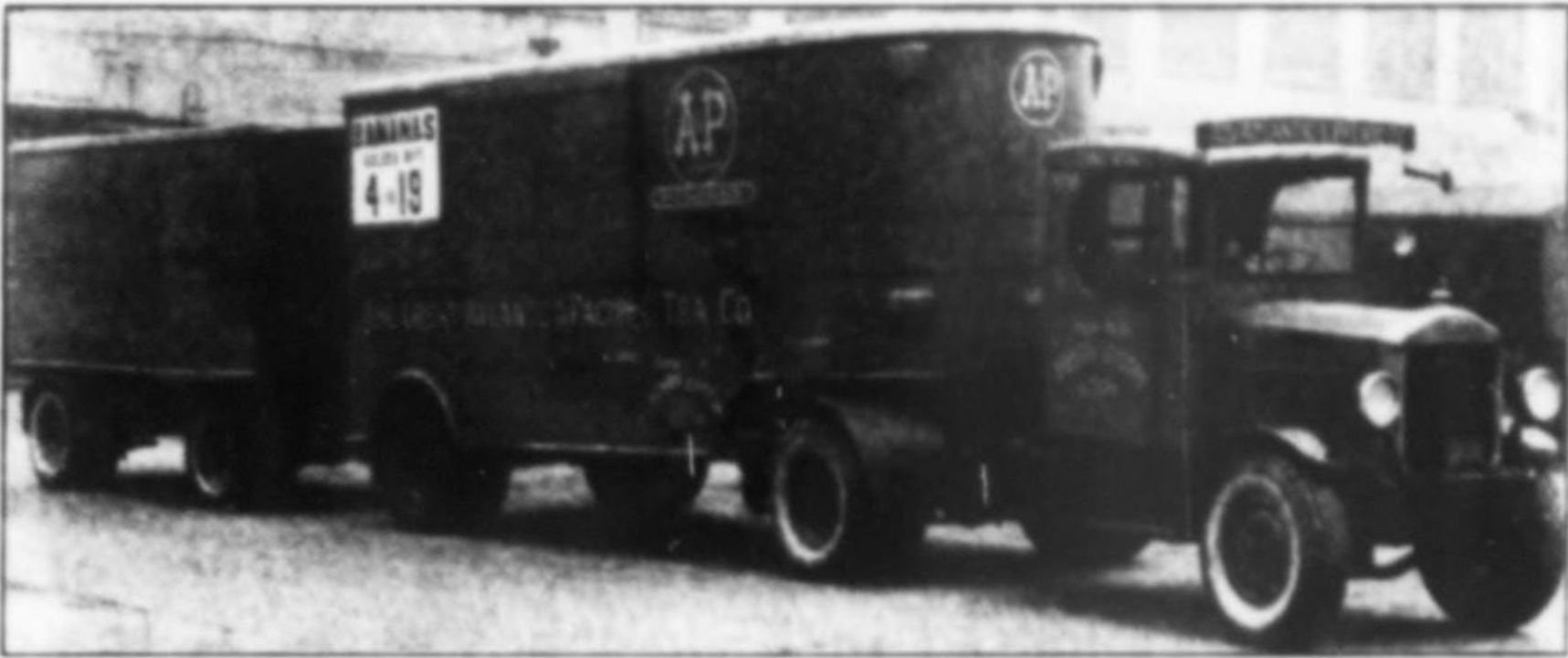
In 1932, fleet operators began taking a different direction. Carriers like the Purity Stores, Ltd. of San Francisco and the Intermountain Motor Freight Co. of San Francisco, and smaller companies, began converting their trucks to diesel power. The switch wasn’t because of horsepower, but of fuel economy and longevity.
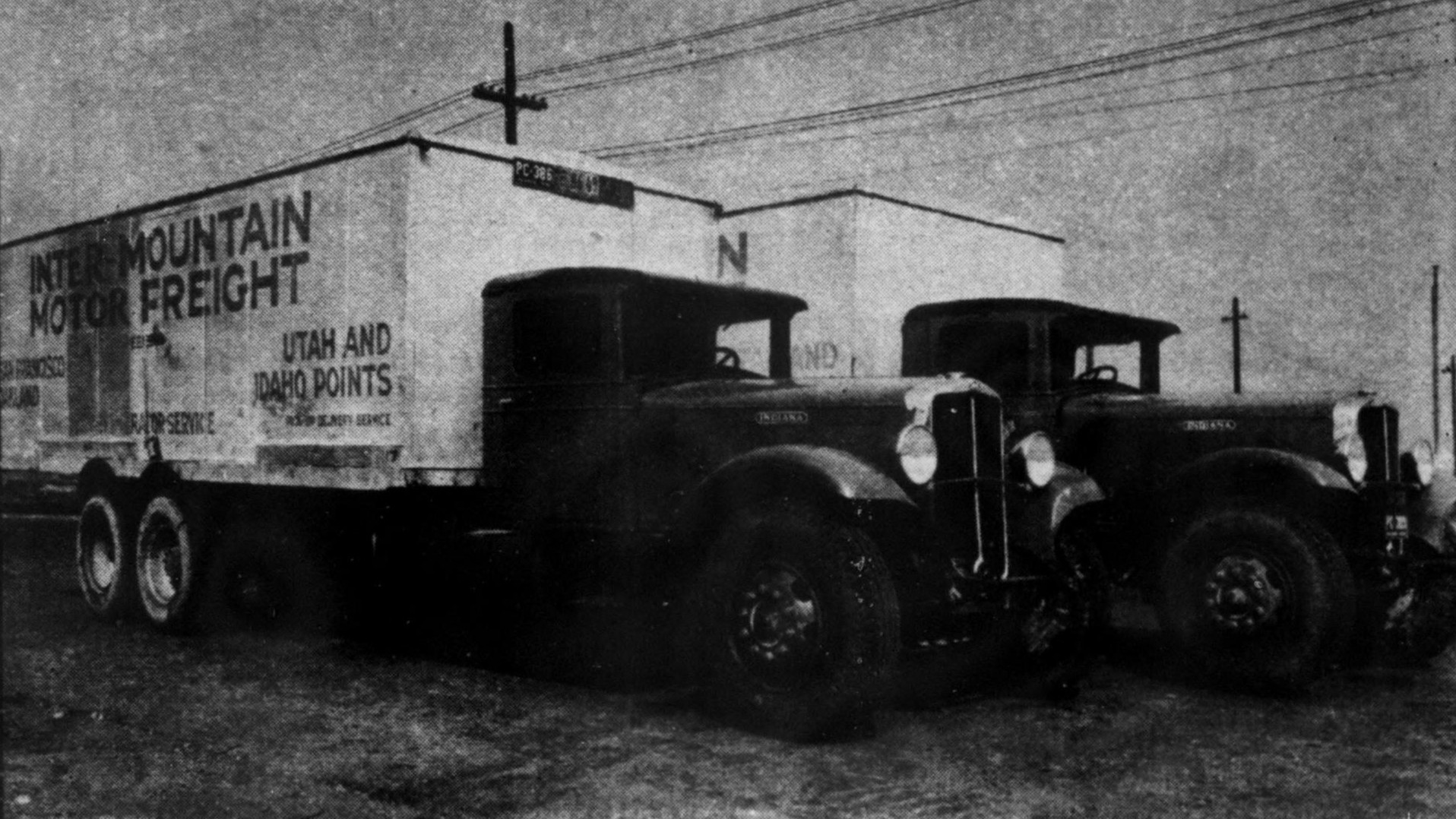
Intermountain Motor Freight installed 672 cubic inch Cummins Model H six-cylinder engines into its trucks. These mills made 125 HP, or more than the 100 HP gasoline engines the carrier’s trucks had before, but were technically four hours slower along the route because they used the gas engine’s transmission and gearing. The real benefit was the fuel economy.
The carrier’s trucks often ran a 1,616-mile main route stretching through California, Nevada, and then terminating at Salt Lake City, Utah. Gas-powered trucks running the route would consume 475 gallons, earning a terrible 3.4 mpg along the way. Given an average price of gasoline of 21 cents per gallon ($4.89 in 2026) back then, the gas trucks cost $99.75 ($2,322 in 2026) for one round trip.
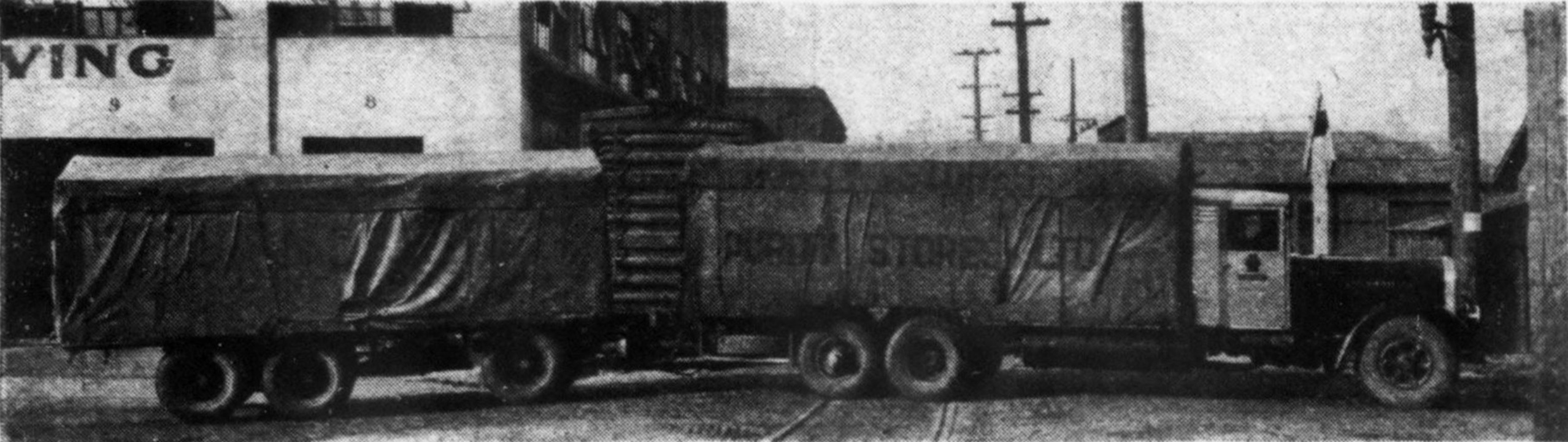
The diesels simply blew the gas engines out of the water. They consumed only 230 gallons of fuel for the same 1,616 miles, averaging about 7 mpg. That alone was huge, but the price of diesel was just 5.2 cents per gallon ($1.16 in 2026) back then. The result? The diesels could do the round trip for $11.96 ($278 in 2026). The Commercial Car Journal conceded that diesel prices and gasoline prices do vary, and that the diesels couldn’t gain as much speed on flat ground thanks to the gearing. The diesels also weighed 500 pounds more than the equivalent gas engines and cost much more per unit.
But the results were undeniable. The diesels could drive twice as far on one tank of diesel as a gasser could cover with the same quantity of fuel. And then there was the cost of fuel; the diesels were over 80 percent cheaper to run. Even after you accounted for the extra weight (which, in theory, removed 500 pounds of allowable cargo weight) and the extra cost of the engines, the diesels simply couldn’t be beaten.
Purity Stores, which had stores dotting a 400-mile radius of California, reported similar results. Its trucks averaged 6.5 mpg to 7.2 mpg, and Purity also purchased diesel in bulk, which lowered the price to only 3 cents per gallon (70 cents in 2026). A similar contract that Purity had with a gasoline supplier reduced the cost of gas to 14 cents per gallon ($3.26 in 2026), which was still much more than diesel.
Purity’s drivers said that the diesels run the same routes as the gassers, but faster, with fewer gear changes, and less driver effort. The diesels became such a point of pride for Purity’s drivers that if they had to drive a gas truck for the day, they took it as a demotion and a punishment. Meanwhile, those gassers got only 3.5 mpg on the same routes.
Purity also brought some great data to the table, reporting consistently high fuel economy for three Cummins diesel trucks over a combined 70,000 miles. The company also had a four-cylinder Cummins on deck that was being forced to haul 50,000 pounds, or right at the legal limit. That one got an even more impressive 10 mpg over the course of 17,000 miles, but was known for being awfully slow.
As diesel had proven itself to be a seemingly magic bullet to lower operating costs, other companies began converting their trucks to diesel, too. By the end of 1932, Indiana, White, Kleiber Motor Company, Linn Manufacturing, Robert Gotfredson Truck, Sterling, and Nelson LeMoon each advertised that Cummins engines were available. These engines weren’t installed by the manufacturers, but by Cummins. Some were demonstrators rather than production vehicles.
The First Production Diesel Semi

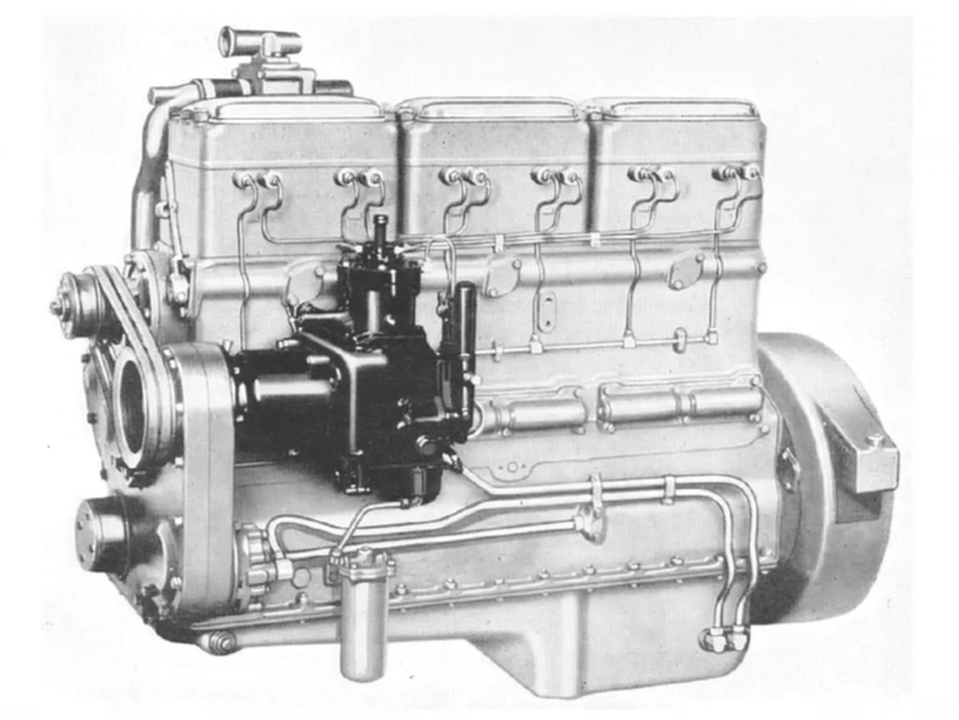
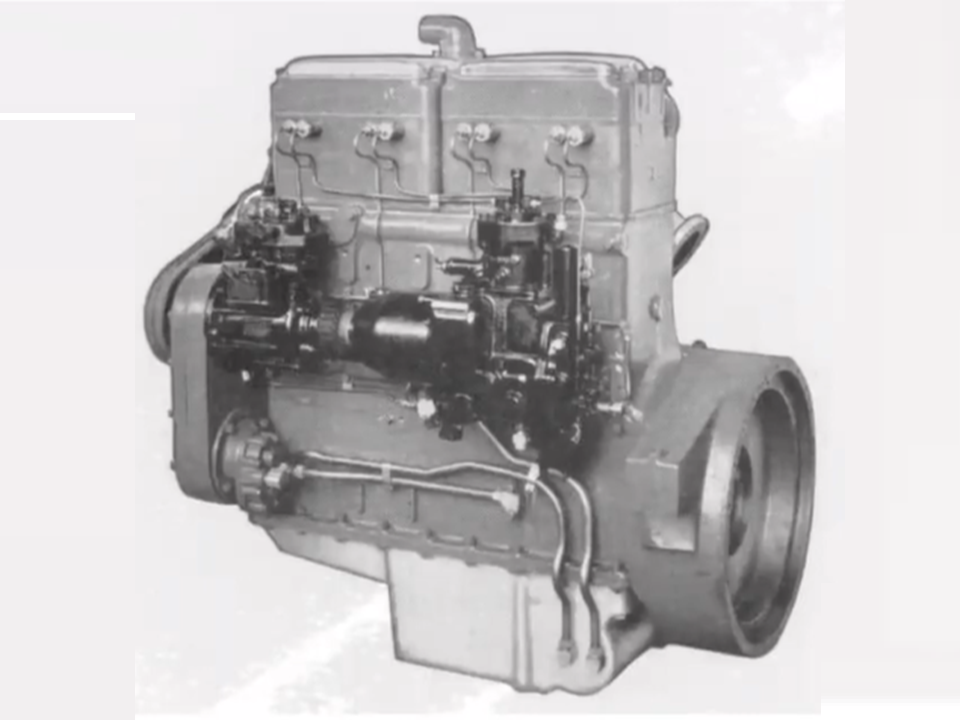
Kenworth decided to take this concept a step further. Diesel was becoming huge on the West Coast, and demand was only growing. Why have these carriers buy gas trucks just to convert them later? What if they could buy a diesel straight from the manufacturer? Kenworth’s diesel started life when engineer Murray Aitken drew up plans to mount a 448 cubic inch Cummins HA-4 straight-four diesel into an existing chassis. This engine utilized a Cummins disc fuel injection pump and pushrod-actuated injectors for an output of 100 HP at 1,800 RPM.
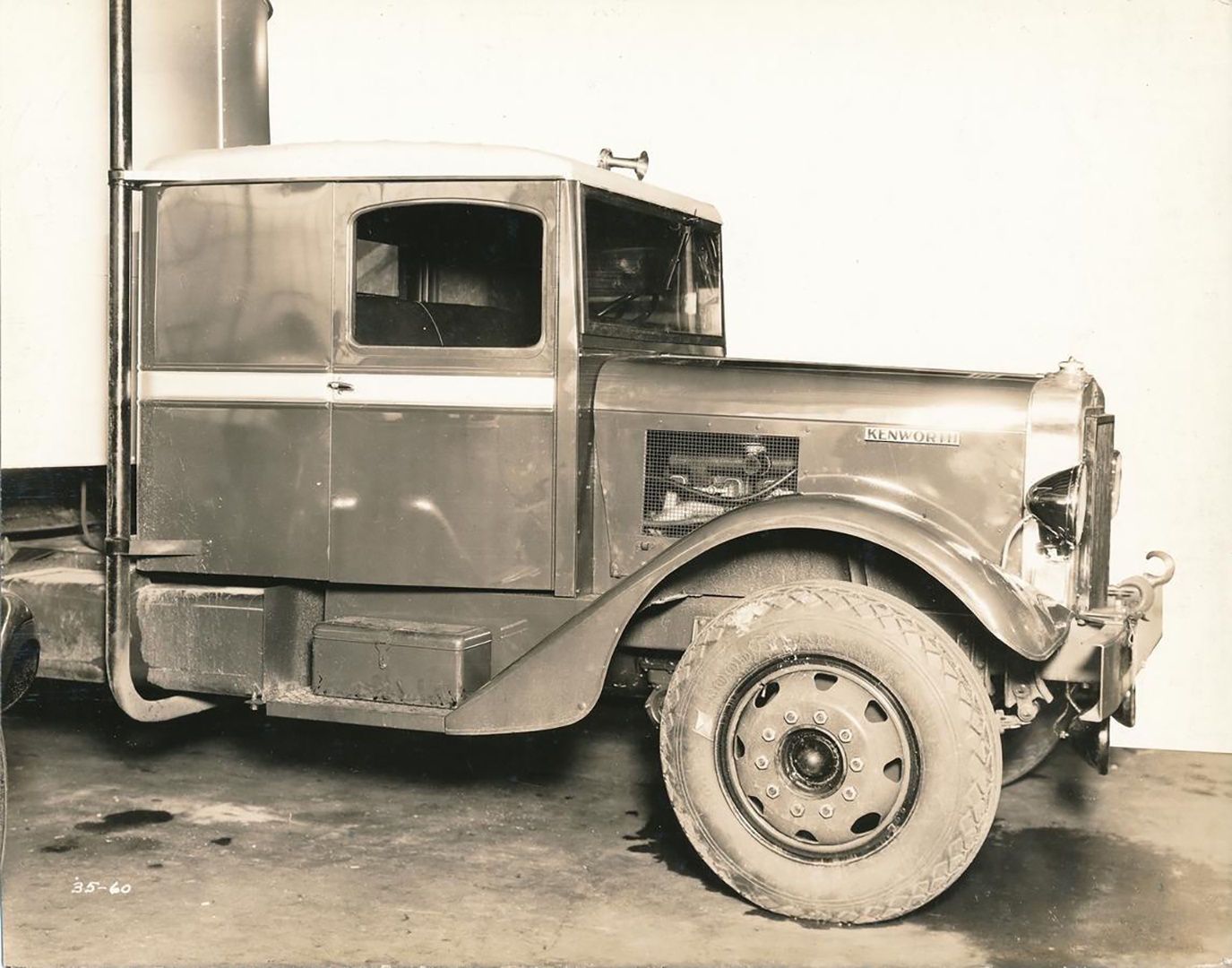
The rig, which was ordered by California’s Valley Motor Express, would get more than just a diesel engine. Kenworth chief engineer John Holmstrom noted that one of the downsides of a Cummins diesel of the 1930s was that it belched black smoke. To keep this smoke away from people at ground level, Holmstrom designed a vertical exhaust stack that fired the smoke above the rig. Reportedly, this was the first time vertical stacks had been offered from the factory on a semi-tractor.

Kenworth had one more trick up its sleeve, too. In developing the truck, Kenworth noted that carriers running diesels were driving thousands of miles. Some carriers were connecting Chicago and Los Angeles by truck! Yet, drivers had zero accommodations on the truck itself. Kenworth’s solution was the first production integrated sleeper. This sleeper offered just enough room for a single person to catch some shut-eye between drives.
Valley Motor Express was so excited for its new truck that it specifically requested that the truck be shipped over water from Kenworth’s factory in Seattle to California rather than driven. This way, Valley Motor Express got a truly new truck with zero miles.

The Kenworth diesel was a smash hit, and a win that the company desperately needed in a dark time. By mid-1934, Kenworth wasn’t alone. Other manufacturers, including the Four Wheel Drive Auto Company (FWD), the Kleiber Motor Company, Linn Manufacturing, Robert Gotfredson Truck, Sterling, Ward LaFrance, and White were all offering Cummins diesels as original equipment. Cummins was advertising fuel savings as high as 80 percent by going with its diesels.
This was a turning point in trucking history. While gasoline engines stuck around in Class 8 tractors for several decades – even Ford Louisville Class 8 semis had the option for gas in the 1980s – diesel eventually became the dominant form of power in long-haul trucking. Diesel reliability, power, fuel economy, and running costs just made sense for heavy trucking. Likewise, the sleeper also changed how drivers lived on long routes.
Even today, when diesel prices are higher than gasoline, and diesel engines are adorned with complex emissions equipment, diesel still reigns supreme in the Class 8 market. Of course, you will still find diesels churning away in locomotives and construction equipment for decades to come, too. All of these engines can trace their lineage back to those diesel experiments of the late 1800s and the early 1900s.
While Kenworth claims to be the first, and it is a bit of a big deal, I have to imagine that if it wasn’t Kenworth, some other company would have come up with the same idea. Diesel had become too popular to ignore. Still, good on Kenworth’s engineers for recognizing a demand in the market and implementing it in a way that’s still in widespread use today.
It’s a bit wild to think about how far diesel has come. Rudolf saw it as a way to put the means of production into the hands of the worker. Today, so much of the world depends on diesel. If you’ve purchased a car, something at a grocery store, or even something on Amazon, chances are it spent a part of its transportation aboard a vehicle burning diesel. So, the next time you see a trucker, thank them for their hard work, and thank history’s countless engineers for our modern world.
Top graphic images: Kenworth; Cummins


“We’re still going to use Chrysler 413s into the 70s” – Mack Trucks
I always wondered about if the diesel naysayers were similar to the EV naysayers today with the ” but where will you get fuel”. I can remember people talking about diesel cars like that in the 80s and 90s. My great grandfather had a moving and haulage business among other things. A decent size fleet of maybe 75 trucks. Starting in the early 20s. He didn’t care for diesel and refused to run them. When his son took over he started to run some and the old man apparently thought it would be the death of them. Apparently he had some issues with an early diesel and never let it go. I never really got the full story.
I have barely started reading this, but I was already sidetracked by this:
How did I not know that Diesel is a guy’s name? This sounds like one of those fake stories you tell your kids as a joke: “Back in 1932, Edward P. Internet invented the email and launched America Online.”
You’ll get a kick out of diesel’s point running his engine off of rancid peanut oil.
I believe you’re thinking of Robert P. Arpanet.
You may also recall Philo T. Farnsworth, who invented the Farnsworth, now commonly called a “tv” or computer monitor.
And back in 1937, Hormel invented SPAM.
If you didn’t also know, the Otto Cycle that gas engines run on is named after the engineer that made the first working version, Nicolaus Otto. The Wankel (rotary) engine used by Mazda is named after its inventor, Felix Wankel. The Atkinson Cycle used by some engines in hybrid applications is named after its inventor, James Atkinson. And the Miller Cycle used by a handful of engines, maybe most notably the Mazda Millenia, was invented by Ralph Miller.
Oh, I knew all of that. It’s just that those all sound like a person’s name and they’re all named after someone, not just one of the cycles.
I guess between diesel not being a common name and all the other fuels not being named after someone, I never thought it was someone’s name. It would be like if you learned gasoline was named after Friedrich L. Gasoline lol.
A+ job, Mercedes! I love auto history. Can someone ELI5 me: why are diesels so much more efficient? It doesn’t seem like there’s that much difference between diesel and gas engines mechanically, a four-stroke is a four-stroke… it can’t be that much more efficient to simply not have spark plugs, can it? What’s the deal? Why does a diesel F-250 get like 5 more mpg than a gasser?
Most of it is high compression ratio and lean mixture: the higher the ratio, the more work you extract from the heat generated by burning the fuel, and the leaner the burn the less fuel you use.
Gas engines are limited by knock due to both factors, so there are upper limits on how hard you can push them. Diesel fuel, and the way it’s injected, avoid both problems, so your limiting point moves elsewhere.
One of the big reasons is there is more potential energy in diesel. Higher btu value. You can run higher cetane and get a little better mileage in modern diesels as well.
Not all diesels are equal, for a start.
You really have to drive them to find out how different they are. More comparable to a race engine on petrol, than a standard gas engine.
Watching wrecker drivers swap out gas engines for non turbo diesel engines with seemingly less power made me wonder. The explanation I got was no matter how much you load them up, they just go.
Diesels have to be better built, so done right, they can outlast everything else. Turbos can have advantages gas turbos don’t see. A diesel can have a naturally varying compression ratio. Mine is mechanical and generates more power under load than on a light load.
Without any electronic safety devices, I learned that efficiency requires some caution.
The limit on power is actually piston temperature. It’s possible to destroy an engine like this with careless use of that power.
I get 18 to 20 mpg, sometimes more.
No regrets
I’m glad you asked, and this is the first time I’ve seen ELI5.
I thought it was a typo.
A significant difference in use is the amount of torque at idle, allowing an air conditioner and alternator to be very effective at all times.
And maximum torque is reached at low RPMs; it doesn’t take the engine long to get off-idle and into the peak power band. Combined with efficient gearing, the diesel engine can stay in its most efficient operating range more of the time, doing relatively more work on relatively less fuel.
A big factor in using diesel was avoiding ethanol trash fuel, and its lower effiency and reliability. It’s forced on you here.
I also found that due to industrial compatibility, there are many high performance transmissions that bolt to a Cummins.
Great article, Mercedes
Nice job Mercedes.
In these dark days of high fuel prices how about a deep dive on the current state of alternatives, preferably cheaper and domestic to dino diesel?
My favorite is pilot ignition compressed or liquefied natural gas but there’s dimethyl ether, biodiesel, alcohols, electrification strategies, hydrogen and probably others I’m not aware of.
So very much changed in those first 3+ decades of the 20th century. It must have been a wild time to watch it all happen.
Also those truck drivers driving in the mountainous west with 1930s technology those distances with that much weight and such distances. Ooof that must have be dangerous and painful.
I just read a biography on Rudolf Diesel a couple of months ago. Very good read. He was incredibly smart.
Looks like someone was against the people seizing the means of production.
Great article, but the Jake Brake didn’t get enough credit. A big problem with the original diesels was lack of engine braking causing brakes to overheat and fail, which is why the Cummins team almost hit a train. To truckers in mountainous areas, the gasoline engine’s superior engine braking was a selling point.
Mercedes should have linked her own article on the Jake Brake:
https://www.theautopian.com/the-loud-popping-sounds-you-hear-from-some-semi-trucks-slowing-down-actually-happen-for-a-practical-reason/
I love the deep dives!
But one more thing. You guys do a great job of linking back to your own articles on related topics, but no love for your OWN article on the Jake Brake?
“This race would inspire Clessie to invent the Jake Brake”
https://www.theautopian.com/the-loud-popping-sounds-you-hear-from-some-semi-trucks-slowing-down-actually-happen-for-a-practical-reason/
Dang it, I intended to link back, but forgot!
Can we get more information on the fuel availability?
“from Indiana to the New York Auto Show. The car drank only $1.38 ($26.37 in 2026) in diesel”
But since Diesel engines weren’t a thing, then diesel fuel wouldn’t be available at any petrol stations, would it? And they did a cross country drive too. How did they get diesel fuel? Was it actually called “diesel” fuel at that time if the engines and presumably the inventor was little known? Was the fuel specially formulated for them?
Did they have to carry their own everywhere? So many questions about this!
At a guess, they were buying light fuel oil or lamp oil or something like that. IIRC diesel’s first engines specifically ran on peanut oil (an advantage for farmers who could make their own vegetable oil fuel). One of the nice things about diesel engines is they are less picky about what they burn.
(as an aside, Benz’s famous patent-motorwagen ran on ligroin, a common industrial/scientific general-purpose solvent, since obviously gasoline stations didn’t exist)
In old days in rural areas there was a ton of kerosene for sale. Electricity was really spotty, and it was common for farmers to do their chores in the dark by lamplight. For that matter, a lot of houses weren’t wired and they were lit by lamps too.
Yeah, the big selling point for the Rumely Oil-Pull tractors was that they could run on kerosene. They were magneto ignition, not compression though.
I’ve owned 4 Diesel cars from the 1977-1984 era, and even then, the cars came with a supplement to the Owner’s Manual that was dozens of pages long that listed every fuel station in the US that sold Diesel fuel. It wasn’t even very common then. Nowadays, I bet 90%+ of fuel stations sell Diesel.
Sadly, such detail is missing from that story. However, I did read that, in the case of trucks that were converted to diesel power in the early 1930s, sometimes the trucking company set up refueling stops along routes where their drivers could get diesel.
Thanks!
I appreciate the thoughts here by other responders too!
With the roll out of EV’s and the initial issues of charging availability, it’s interesting to see how it was done for a prior “new” fuel (diesel).