

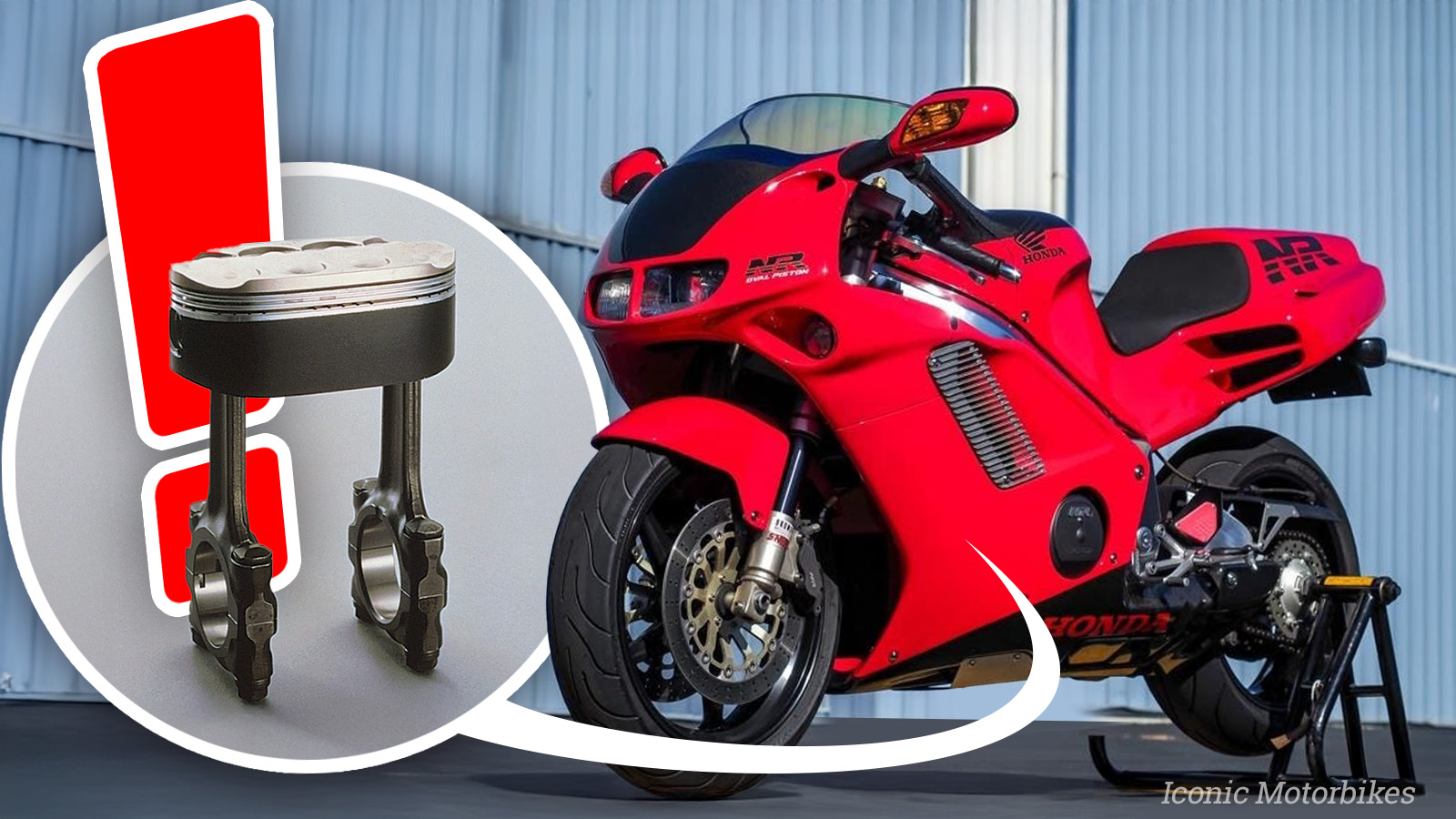
The vast majority of piston engines that have been built throughout history have been built to a similar formula. Round pistons travel up and down in cylinders, sucking, squeezing, banging, and blowing their way through propulsion. These engines might have three, four, or maybe five valves per cylinder. Back in 1979, Honda threw that script out of the window when it created an engine with oval pistons, eight valves per cylinder, and a layout that pretty much simulated a V8 with only four cylinders. The Honda oval piston engine was an engineering masterpiece, but it was also technically a failure.
Honda’s founder, the enigmatic Soichiro Honda, had a strong dedication to the four-stroke engine. When his competitors cranked out two-stroke motorcycles by the thousands, Honda’s company was advancing four-stroke technology. Even Honda’s outboard engines were four-stroke mills back when outboards were often two-strokes.


Soichiro Honda’s four-stroke obsession started early on. Honda launched its first product, the A-Type bicycle engine, in 1947. The A-Type was a die-cast two-stroke engine with rotary valves that delivered power to a bicycle rear wheel through a belt drive. However, in a modern retrospective, Honda says that Soichiro likely wanted to make four-stroke engines from the start of his company. Soichiro saw two-strokes as being unnecessarily loud, too smoky, and too inefficient. He hated how two-strokes burned their own lubricating oil, and when it came to outboard motors, Honda thought that boats should not pollute the waters they travel in. Unfortunately, two-stroke engines were also simple and made loads of power for their size, so even Honda reluctantly built two-strokes in its early years.

Despite Soichiro’s disdain for two-strokes, says Honda, his company was late to producing four-strokes in Japan. Honda’s first four-stroke motorcycle was the 1951 E-Type, which was made at least a year after the competition started pumping out their own four-strokes. But Honda’s was different. Its four-stroke didn’t use economical side-valves like most of the competition, but higher-performance overhead valves.
From that point forward, Honda would be married to the four-stroke. It would continue to develop and produce two-stroke engines until 2007, but most of these engines would be found in racing motorcycles, dirt bikes, and small-bore scooters. Honda’s love for four-stroke power was perhaps demonstrated best during Honda’s dominant Grand Prix racing years during the 1960s. As Honda notes, Soichiro’s childhood dream was to become a motorsport World Champion in a vehicle he built himself, and he wanted to make that dream come true in the Isle of Man TT.
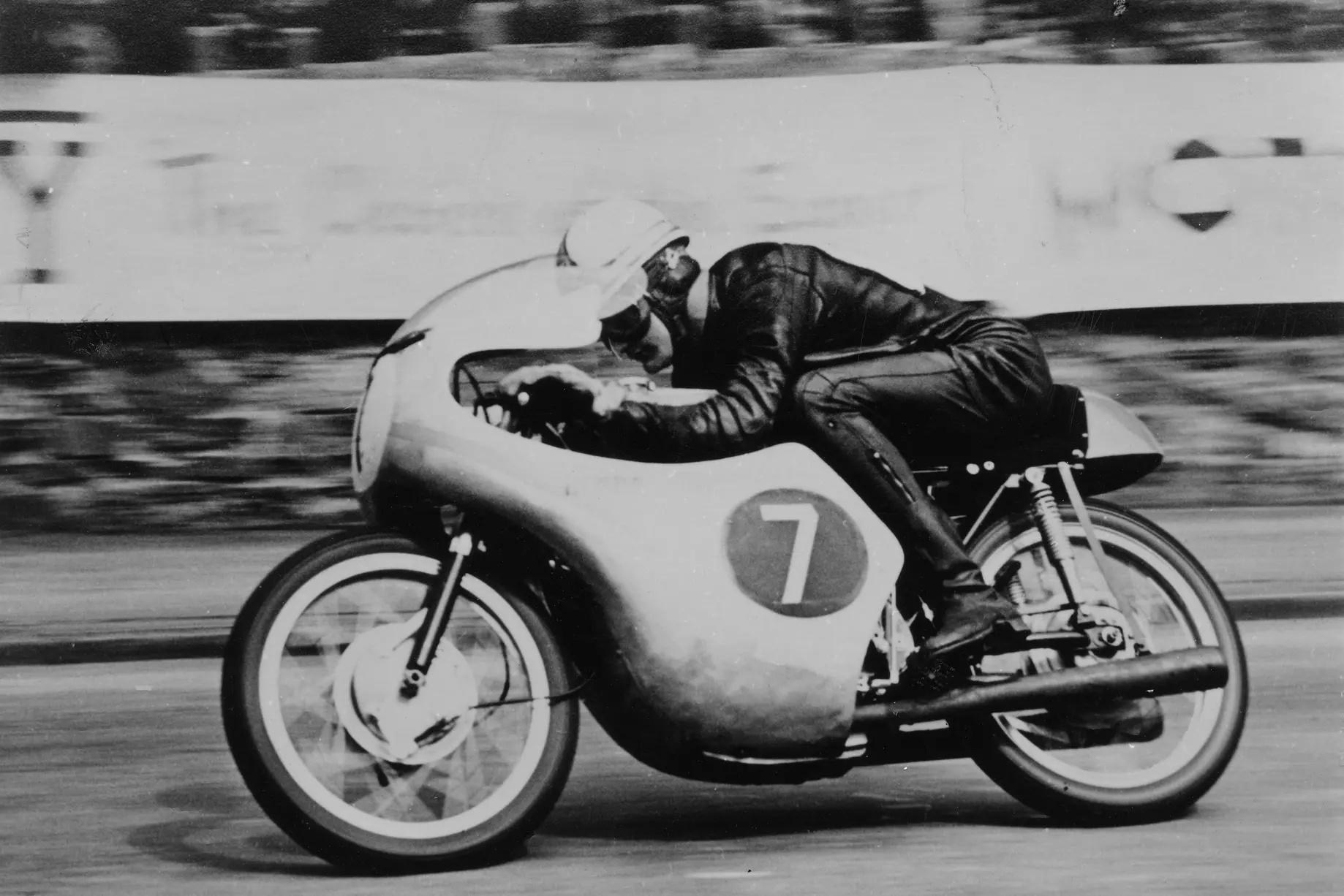
In 1959, Honda did just that, challenging the world’s most legendary motorcycle race with a team of four-stroke DOHC two-cylinder 125cc motorcycles called the RC142. These bikes had their engines as stressed members, leading-link front suspension, and a swingarm bringing up the rear. They’d take sixth, seventh, eighth, and 11th in their class, proving that Honda meant business.
In 1960, Honda entered improved 125s and 250s, and started winning races left and right from the Spanish Grand Prix to the TT. Honda then won big again in 1962 and became a double world champion after only two years of racing. By the mid-point in the decade, Honda was scoring championship wins and podium finishes with four-strokes that screamed past 20,000 RPM and left two-stroke competitors behind their tails.

Unfortunately, Honda’s domination was short-lived. Eventually, the two-strokes caught up and passed Honda. By 1967, Honda left the Motorcycle World Championship to focus on its car business and car racing efforts. This hiatus would last until 1978, when Honda announced it was getting back into grand prix racing. But in typical Honda fashion, the new bike had to be four-stroke, and Honda came up with a fascinating way to make itself competitive.
Honda Tried To Beat Two-Strokes By Getting Weird
In 1978, Honda formed the NR (New Racing) Block at the Asaka R&D Center to develop racing engines. The research team was initially small, consisting of only three engineers. The project lead was famed engineer Shoichiro Irimajiri, engine development was led by Suguru Kanazawa, and Satoru Horiike led chassis development. They would be joined by other engineers, including Toshimitsu Yoshimura. These young minds faced an incredible hurdle.
Two-stroke engines dominated the World GP circuit, and those 500cc engines made about 120 horsepower. Power alone wasn’t the only concern of a team trying to enter GP racing. In 1970, the Fédération Internationale de Motocyclisme (FIM) restricted cylinder counts to no more than four for the 500cc class. Engines had been getting more powerful and more complex, while transferring power to transmissions that had more gears. The cylinder limits were placed to help small teams that didn’t have factory backing stay competitive. The FIM also limited racers to six gears.
Suzuki and Yamaha would join Honda in ending their racing programs, only to return a few years later with two-stroke engines in hand. But Honda? It was loyal to the four-stroke. Honda’s engineers weren’t about to let some pesky rules get in their way.

According to Honda, there were three major components to making power: displacement, RPM, and stroke-averaged combustion pressure. Displacement was limited to 500cc in the rules. Likewise, compression pressure was limited to atmospheric pressure. So, by Honda’s estimation, the only way to make a four-stroke engine beat a two-stroke engine on power was to turn up the RPM. Researchers concluded that their four-strokes needed to spin twice as fast as a two-stroke. In the past, Honda’s solution to the RPM problem was to add cylinders. In this case, Honda might have developed a V8 to beat the two-stroke fours. Unfortunately, the four-cylinder limit blocked Honda from playing its old tricks.
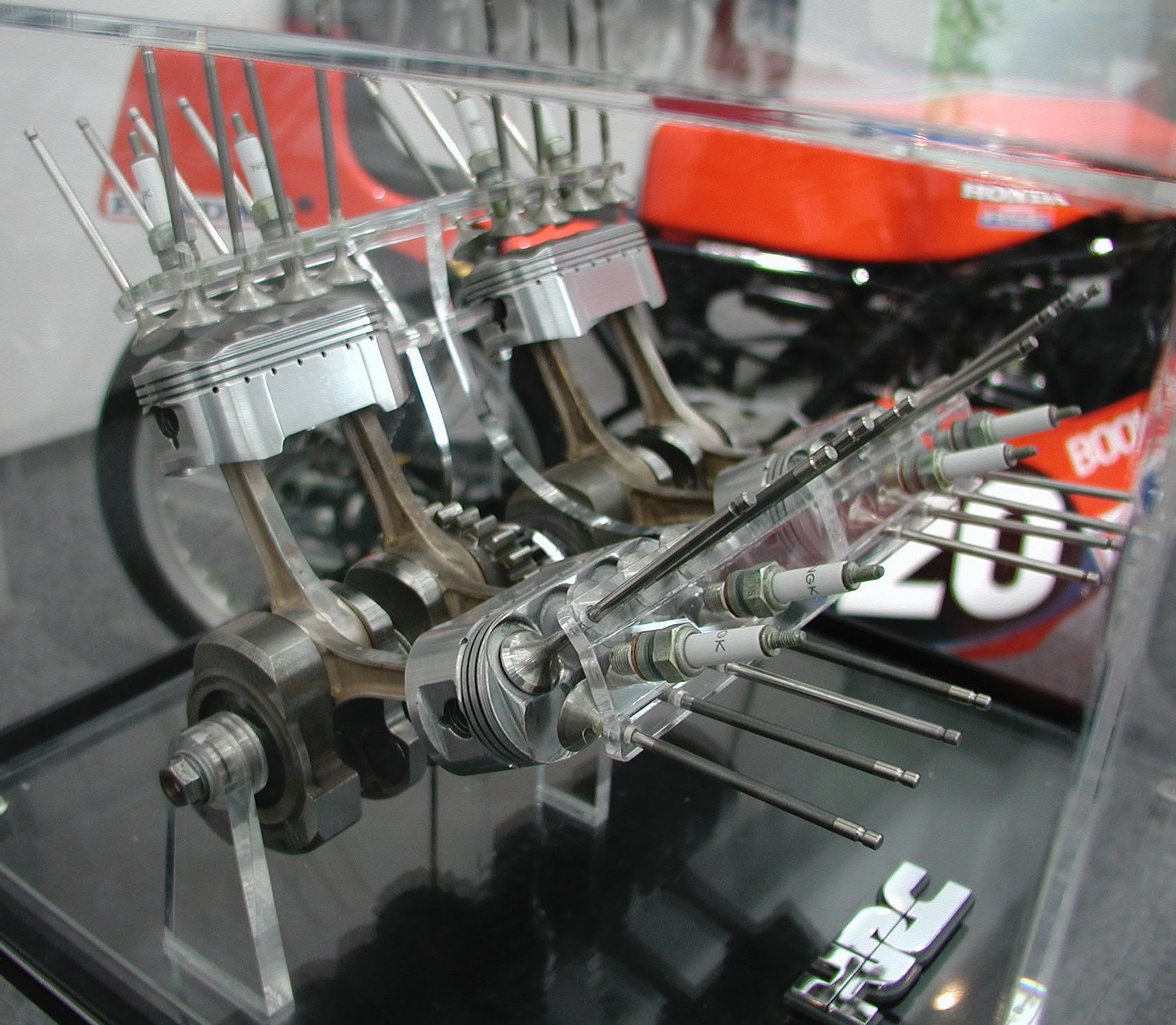
As Cycle World writes, Honda says that Shoichiro Irimajiri was driving home from the R&D center one day when he began wondering if pistons really needed to be round. If Honda could make oval pistons, the pistons would have a longer combustion chamber capable of housing double the valves as typical. These eight valves could then appropriately feed and exhaust the engine at speeds as high as 23,000 RPM, and thus beat two-strokes on power. Irimajiri was dreaming of what was effectively a V8 engine, but with its pistons permanently configured as four pairs.
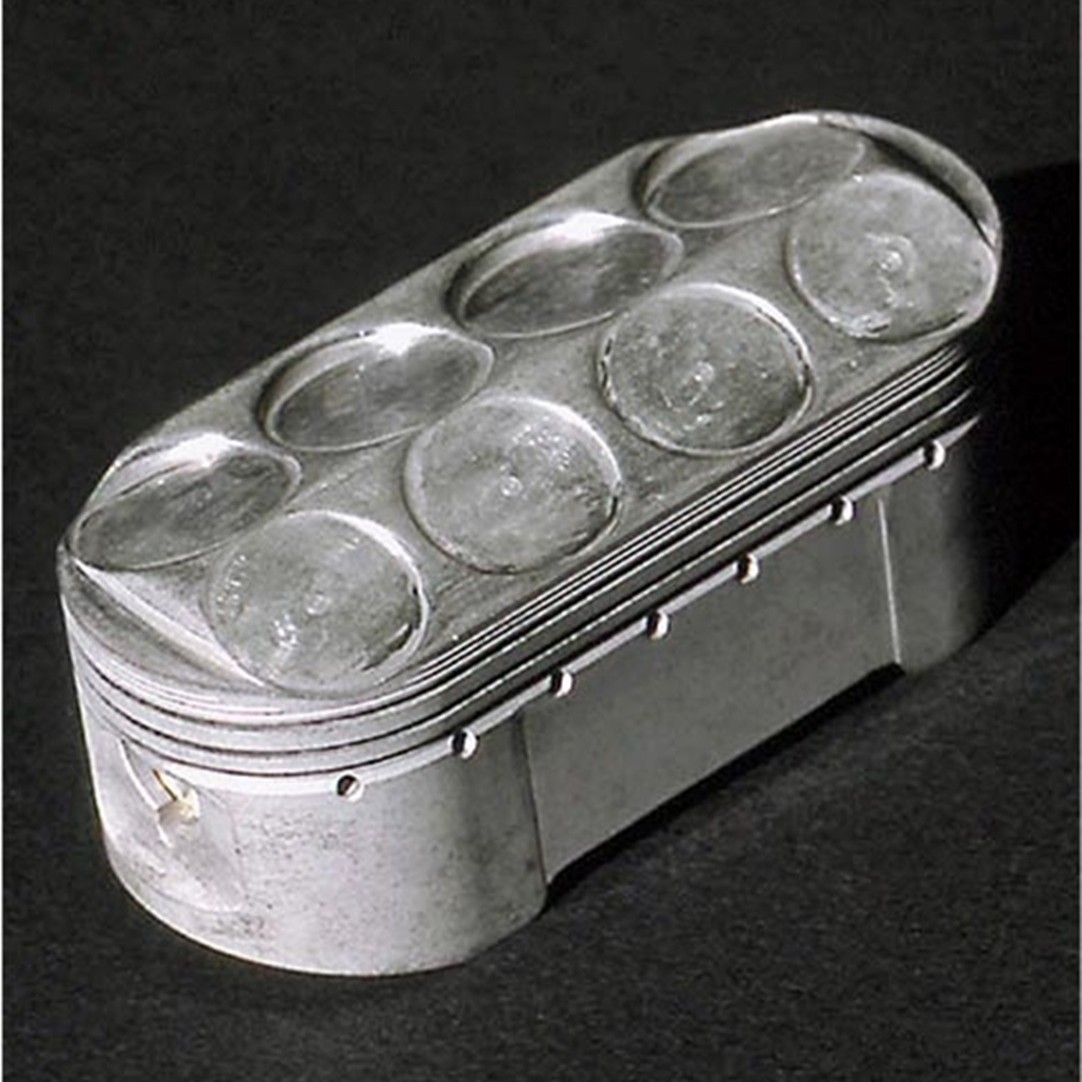
Honda figured that an eight-valve-per-cylinder V4 engine spinning at 23,000 RPM could make 130 horsepower, which was more than the two-stroke competition at the time. The team’s immediate challenge was getting an oval piston to seal. From Honda:
The idea of an oval-piston engine was not without a few doubts, of course. Could it achieve the calculated intake efficiency under actual running conditions? What about friction and the sealing of pistons? Could the engine be cooled effectively so that the pistons would not be deformed by high temperatures? Several problems needed to be solved, but no one was more aware of that than the development staff. In their desire to bring something new to the racing world, the voices of concern simply did not resonate with them.
“We didn’t think much about whether the engine would actually turn over,” Yoshimura recalled, “or even whether it would be practical at all. We weren’t worried about those things, since we just wanted to make it work.” Testing with a two-valve, single-cylinder engine indeed confirmed that the oval piston would rev. They gradually increased the number of valves, in time reaching the eight-valve, single-cylinder. However, by this time the development staff had already gone through numerous problems.
The phenomenon of sudden disintegration was a significant obstacle, typically arising when the engine speed exceeded 10,000 rpm. The cause for this was the twisting of connecting rods. Unlike a regular piston, an oval piston has two rods. The rods would distort as the engine speed increased, pulling the piston pin out of its proper orientation and causing the parts to break. To solve the problem, not only would the design specifications have to be modified, but the machining accuracy would have to be improved. Accordingly, the development team worked with the staff at Honda Engineering (EG) to try various approaches.
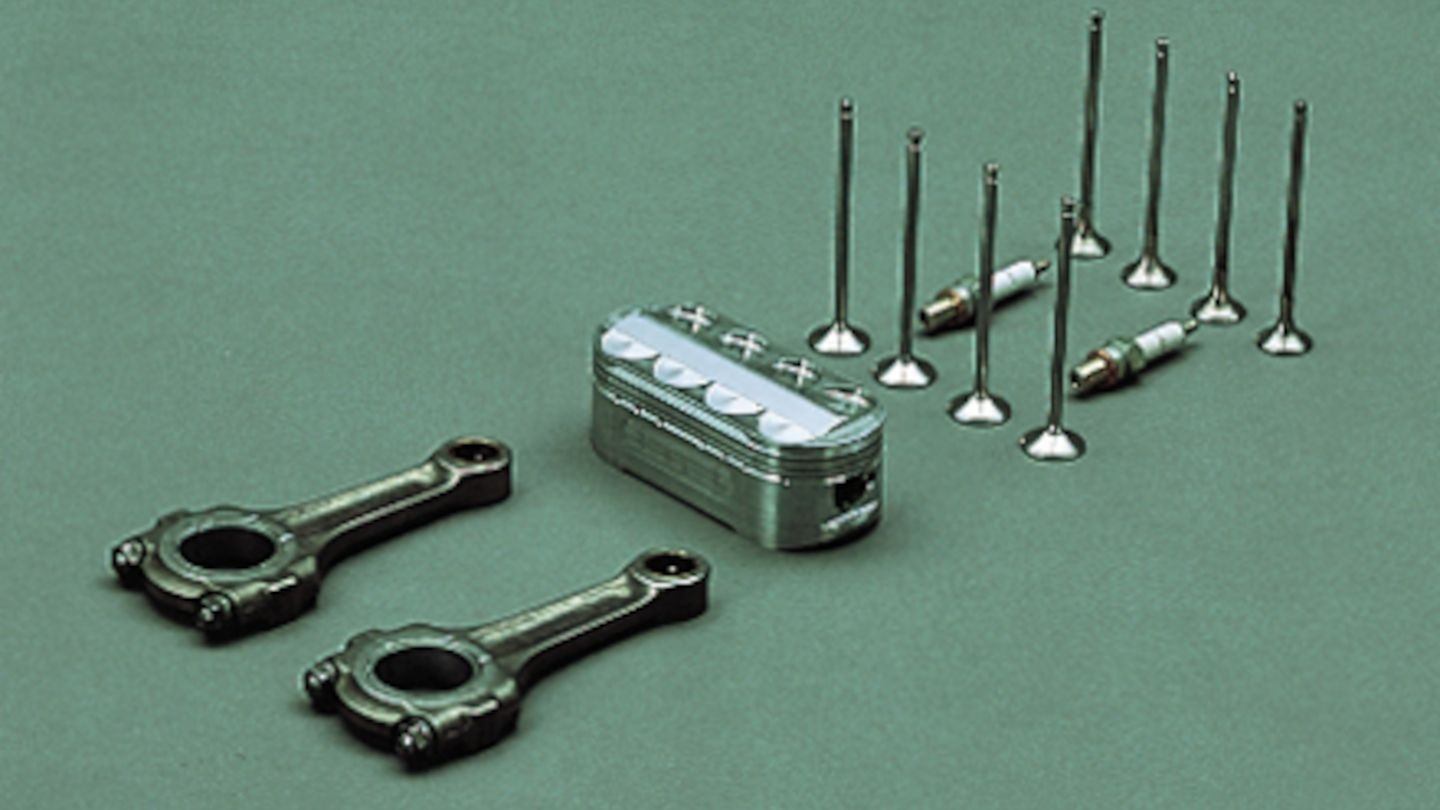
That test engine, called the Koo, was built from the bottom end of an XL250 with custom-fabricated parts slathered on top. The single-cylinder engine fired its first breath in April 1978 and proved the oval concept worked. However, it made only 10 HP, so now Honda needed to get the concept to actually make power. They also needed to figure out how to prevent the engine from rapidly disassembling itself.
That “sudden disintegration” issue that Honda explained was that, sometimes, the engine would randomly stop running. When the head was removed, researchers would find two connecting rods, but no piston. In testing, they found that, at speeds above 10,000 RPM, cyclic crank twist would cause one of the connecting rods to fall out of synchronization, and as a result the piston would delete itself.
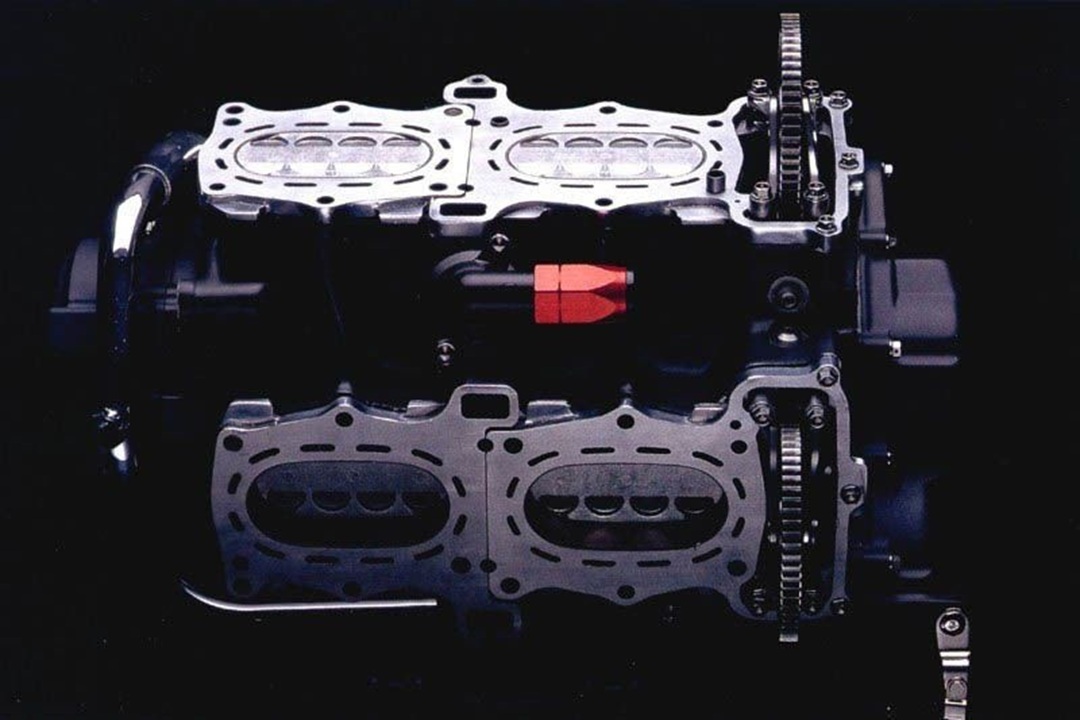
Honda had solved the piston issue by October 1978, and the engine was then capable of running up to 15,000 RPM, good for 20 HP. But now there was a new problem: As the engine spun up even faster, piston rings failed, followed by valve springs. Engineers found out that oval piston rings were hard to manufacture. From Honda:
The piston ring, also, was a real headache, since the oval shape was so difficult to machine accurately. Experiments were repeated over and over, through a process of trial and error. For example, they tested a split-type ring made of two parts and formed the ring into a “walking stick” shape. But after every conceivable alternative had been tried, they found themselves back at the starting point with a conventional, self-stretching piston ring. Even with that configuration they still had to expend extra effort calculating the appropriate dimensions, so that the ring would remain in free form during machining, but produce constant bearing pressure once installed. NC machines were still inaccurate during that period. Therefore, additional effort was required to produce the desired quality of a part by accurately reflecting the specified machining dimensions.
The Honda NR500
In November 1978, Honda’s engineers believed they had worked out the kinks enough to advance to a real four-cylinder racing engine. For this, Honda sent its engineers on a field trip to the Nasu Heights, some 115 miles away from the R&D center. There, the engineers took up shop in a hotel that was closed for the winter. They didn’t even have heat and had to wrap themselves up in blankets to stay warm while they developed the racing engine.
It was in this cold hotel that the engineers tried different experiments. Magnesium pistons were considered, which weighed 40 percent less than aluminum ones, but they had a knack for blowing up above 17,000 RPM. The engine also had a problem with smoking like a two-stroke because of poorly sealed piston rings. The original pistons had flat sides with circular ends. The winning formula was changing the shape of the piston to be curved.
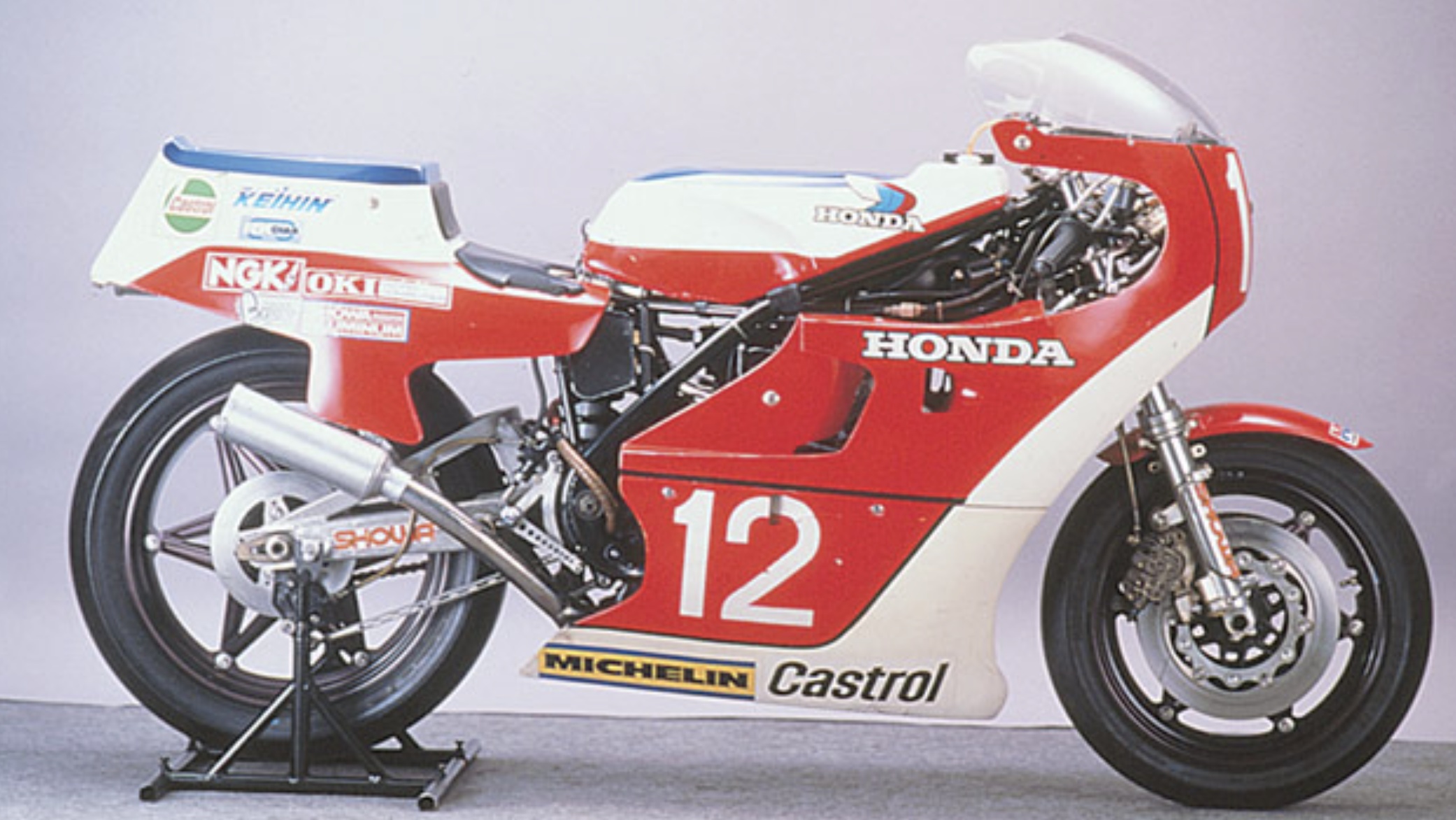
Honda couldn’t just put this engine into any motorcycle, and the engineers gave the machine carbon brakes, a lightweight aluminum monocoque chassis, side-mounted radiators, and an inverted Showa fork.
In April 1979, the engineers emerged from the hotel with the new version of their oval piston engine, the 0X. This V4 had a 100-degree bank angle and made 88.7 HP. More development got the engine up to 110 HP, but added complications, including breaking its geartrain and valves. Even though the engine was still making less power than desired, Honda then gave the 0X a trial by fire, pitting the engine against actual competitors on the track.
One Hit Wonder
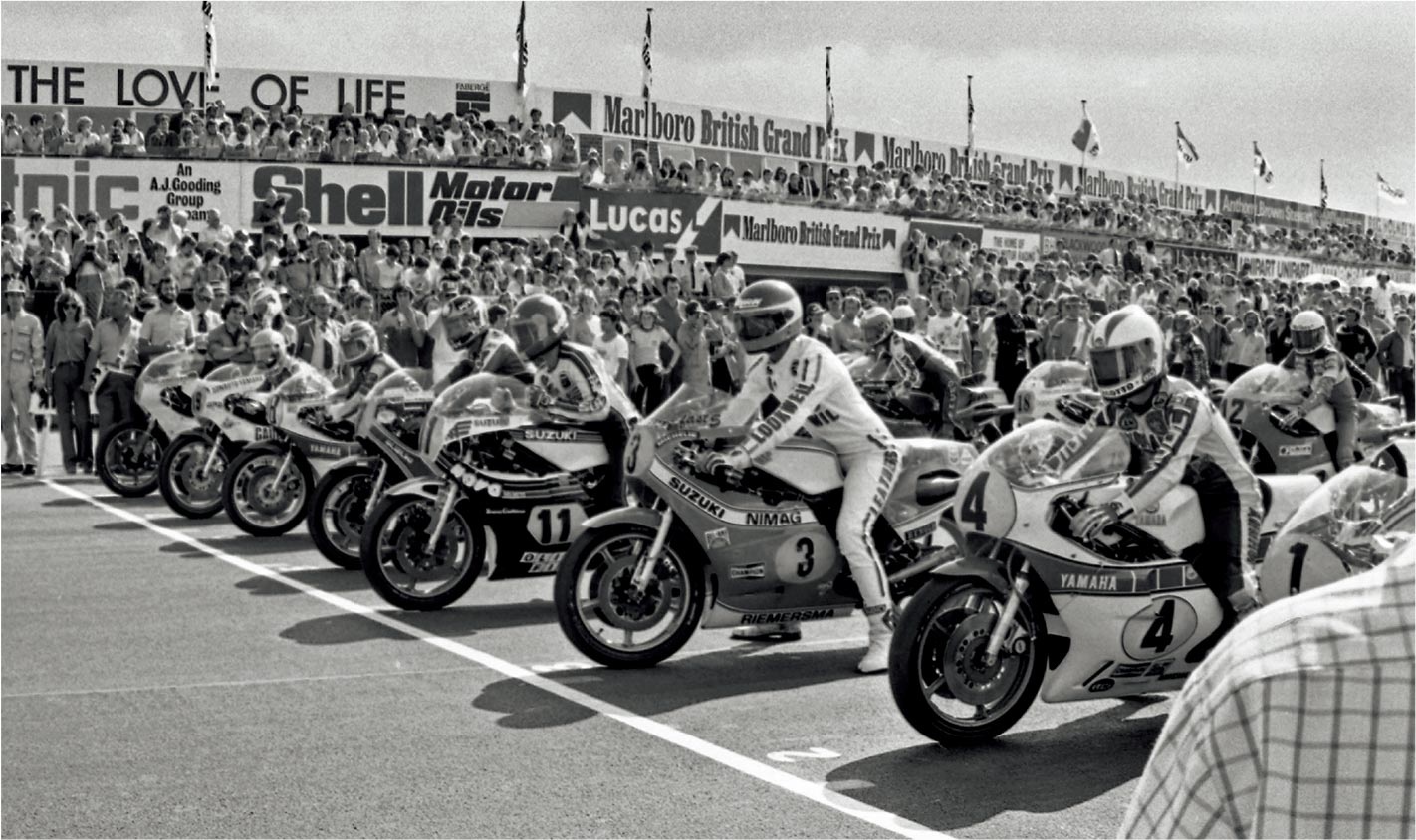
Its first race was a total disaster. Not only were the racebikes so slow that they didn’t even qualify in one race, but they weren’t even reliable enough to finish. From Honda:
The 11th Grand Prix race in the U.K was to be the powerplant’s first event. The speed of development would therefore have to increase in order that Honda’s machines could be ready for the race. Although the initial target had yet to be achieved, the engine was already producing 100 horsepower at 16,000 rpm. Finally, in July a brace of NR500 machines was completed, each equipped with an 0X engine. The bikes, which were decidedly not in racing condition, set out upon the Silverstone circuit in August, there to display their prowess.
From the start, however, the debut was a particularly tough battle. In fact, the machines barely qualified for a place within the last group. Once the final race was underway, Mick Grant fell at the very first corner and retired. Takazumi Katayama also retired after several laps because of engine trouble. With both riders out of competition, Honda’s race had ended in disappointment.
Although the staff had not anticipated excellent results, they nevertheless wanted to see a powerful performance. Their shock was understandable as they observed the ever-widening gap between their machines and those of their rivals. The humiliation they also felt, was much worse than they could have expected. In the French Grand Prix, the final race of the season, their embarrassment was even greater, as both riders failed to qualify. Watching the riders leave the race, a devastated Yoshimura couldn’t fight back the tears.
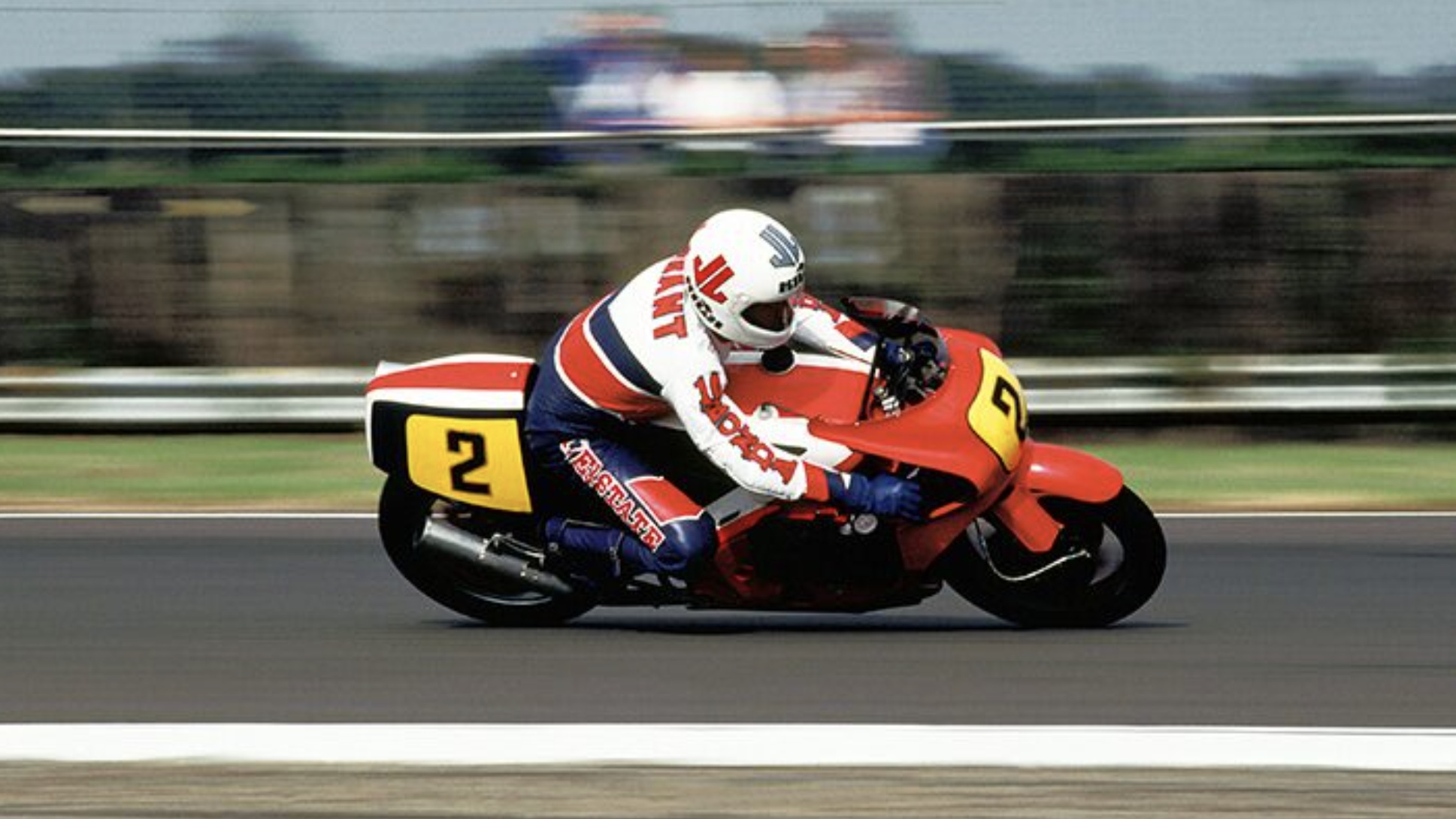
The engineers went back to the drawing board again, this time focusing on the gears and valves that had just publicly embarrassed them. This time, Honda finally got the engine that it envisioned back in 1978:
Key problems in the team’s engine design included the gear train and valve system. In the former, a reduction gear was initially used to turn the cam at half the rate of crank revolution. However, since it had been a source of frequent failures, a normal cam-reduction gear train system was adopted. Still, the problem refused to disappear. Numerous options were tried, after which the team came up with the idea of a rubber damper that would mesh with the cam gear. Fortunately, the design was a success, allowing the valve system to turn properly. Moreover, it resulted in higher power output.
Additional areas of concern were the over-effectiveness of engine braking and a sudden burst of power when the throttle was opened (the so-called “bang”). The problem of engine braking was quickly resolved through the use of a device called a “back-torque limiter.” However, the team couldn’t find an absolute solution for the “bang.”
The NR500 improved slowly but steadily, thanks to the team’s dedicated effort. In 1982, their 2X modified engine achieved 135 horsepower, and in 1983, a 3X unit demonstrated output of 130 horsepower. The oval piston engines were at last on par with their rivals, at least in terms of output. The NR500 (2X) machine that helped Kengo Kiyama to win the 1981 Suzuka 500-Kilometer Race, giving Honda its first victory with the oval piston engine.
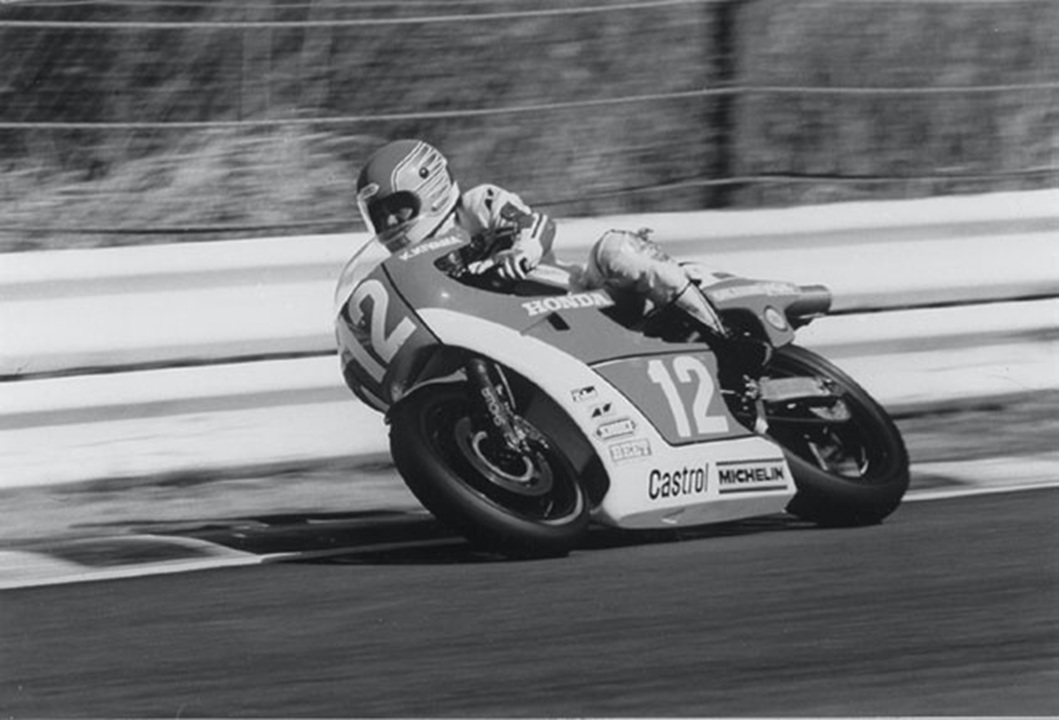
Sadly, the Suzuka 500-Kilometer Race (above) would become the only competition won by the NR500. Honda didn’t even score a win on the international stage and won no points in the grand prix.
Part of the problem, Honda says, was that the NR500 was about 60 pounds heavier than everything else on the track. Its oval piston engine alone weighed about 40 pounds more than a two-stroke engine. This also made the bike’s center of gravity higher than the competition. To combat weight issues, Honda replaced steel parts with titanium and aluminum with magnesium. However, this was canceled out because the competition made their bikes lighter through similar material changes.
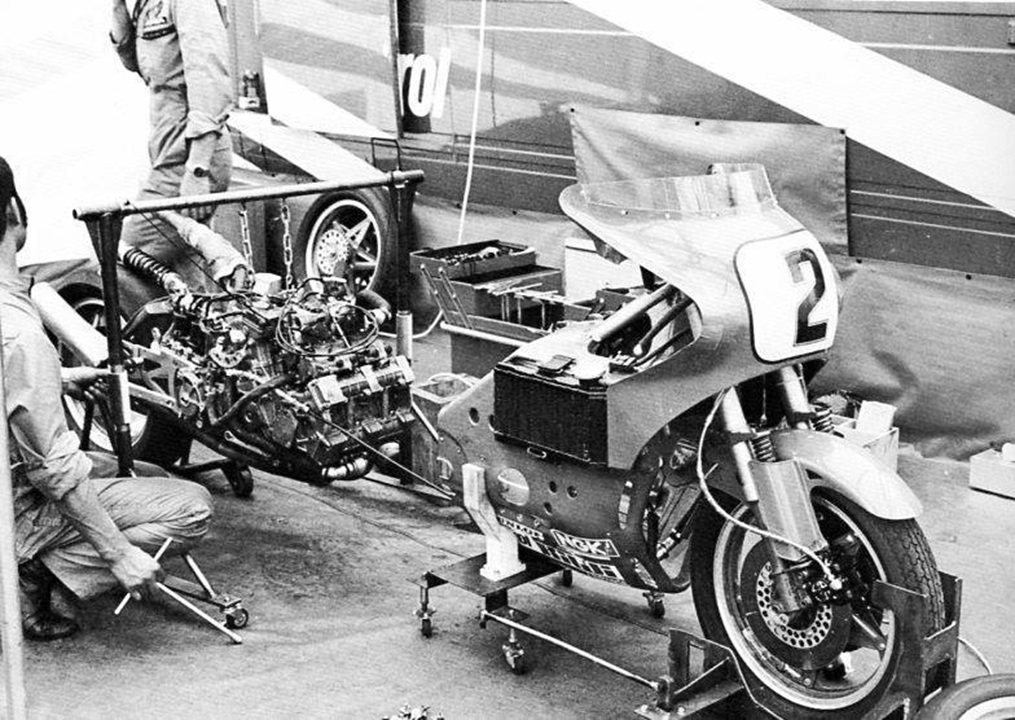
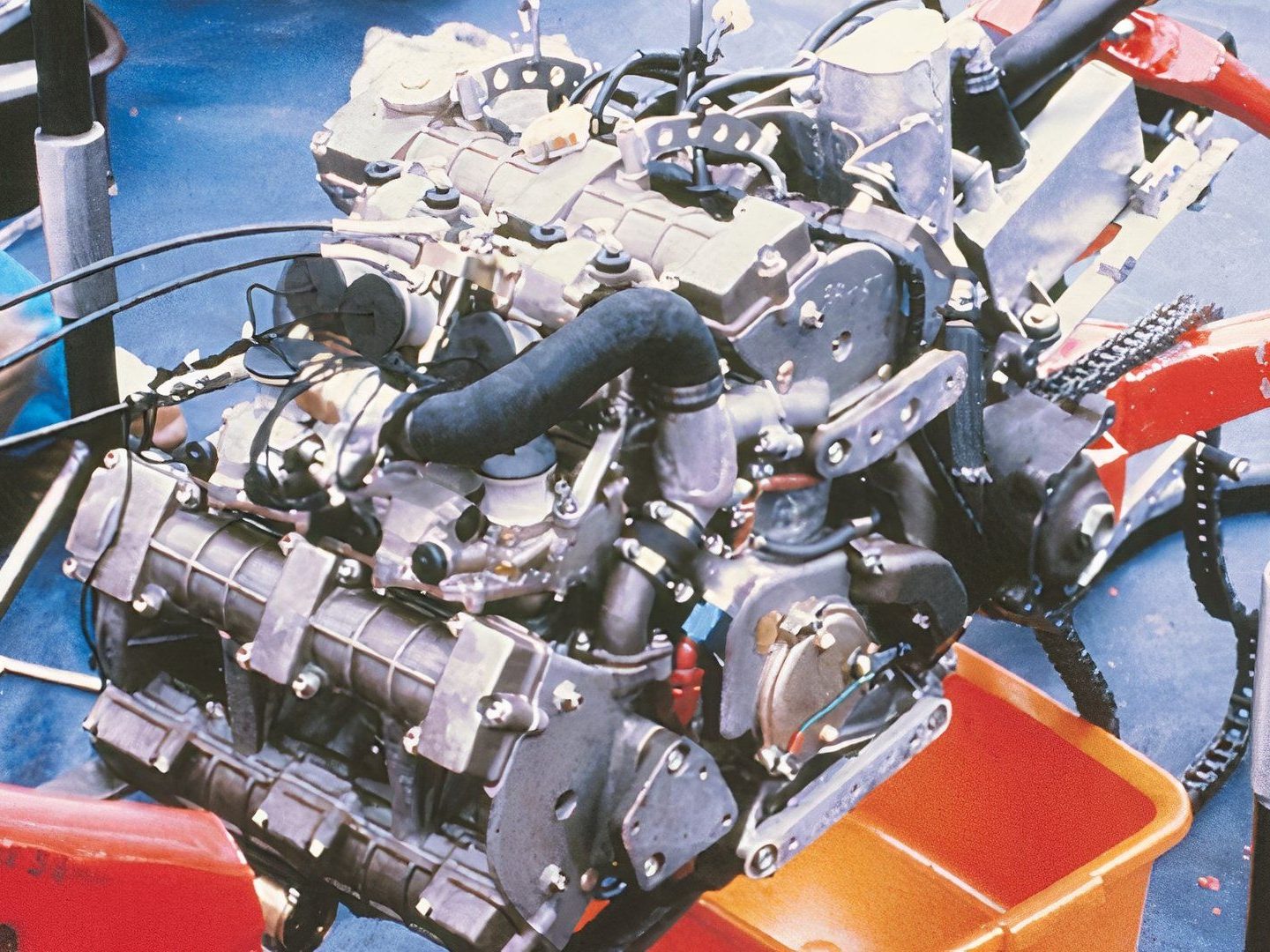
Then there was the chassis, which was light but complex. If the engine needed service, such as spark plug removal or carburetor tuning, mechanics had to unfasten several 6mm bolts and then separate the engine from the rest of the bike using two special carts (above), which took too much time.
Honda would get so desperate to reduce weight that it made the NR500’s crankshaft thinner, then sent engineers to the track the night before a race to physically grind off whatever metal they could find. But it didn’t work, and the NR500 remained too heavy. Thirsty for a win, Honda finally threw in the towel and made a two-stroke racer, the NS500.
Engineers Didn’t Give Up
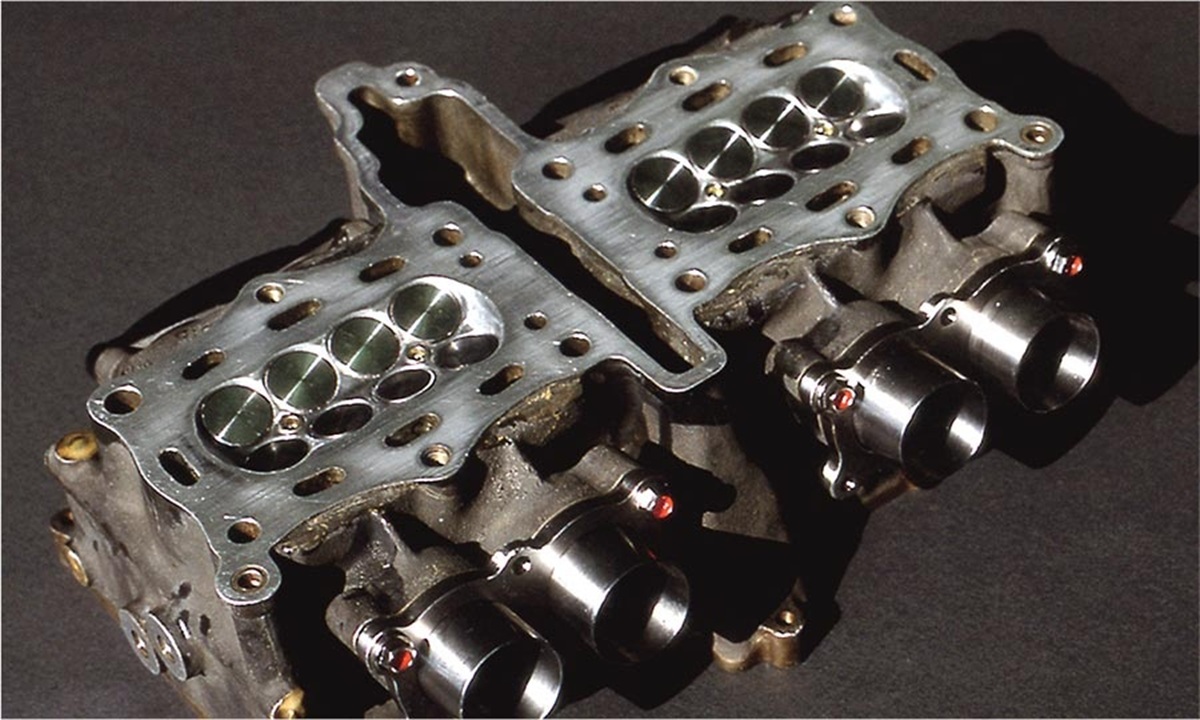
Meanwhile, engineers still developed the oval piston engine, and created a new iteration, the 3X. From Honda:
The 3X engine was developed in 1983 as the last of the (oval piston) competition series. The 3X certainly had sufficient potential to win the World GP race, with an impressive 130-hp/19,500-rpm output. However, the remarkable results of the NS500 machines kept the 3X machines on the sidelines, shelved away in the pits. Finally, Honda decided to take the 3X off its roster of race machines without ever giving the engine a chance of competing.
“Although it couldn’t win a race,” said Yoshimura, “the 3X was very close to the complete form of an oval-piston engine, achieving more than 95-percent maturity.” The development staff could, after all, achieve the engineering target it had set at the beginning. The experience, however, had left them with a deep sense of frustration. “The engine was designed for racing,” Yoshimura said, “so we wanted it to be a winning design. If we had won at Laguna Seca, we could have been content with that and put a more peaceful end to the engine’s racing history.”
In reference to that, the engine did indeed have a chance of winning at Laguna Seca in July 1981. It was not a World Grand Prix race, but it was nevertheless an important event. During the race Freddy Spencer, riding his 2X, led Yamaha’s Kenny Roberts for quite some time. Although Spencer ultimately retired with an electrical problem, it was a race that amply demonstrated the 2X engine’s potential. Spencer’s brief but powerful domination had assured the development staff of the NR500’s potential, and despite all the hardships it was a lasting reminder of their effort and its ultimate value.
Cycle World notes that the FIM also permitted boosted 250s to run in the 500cc class. Honda apparently worked on building a turbocharged oval piston twin that made about 150 HP on a dyno. But it, too, never saw a track.
A Holy Grail Of Honda Sportbikes

The last gasp of Honda’s oval piston motorcycle project was the NR750, which launched in 1992. This was a streetbike with a 748cc liquid-cooled 90-degree V4 engine.
Like the NR500 before it, the NR750 was a technological marvel. It rode on a 45mm inverted fork, stopped using dual 310mm brake discs chomped on by four-post Nissin calipers, and had a cassette-style transmission. Honda was obsessive with the NR750, even with the parts that didn’t need the finest detail. It had a digital dashboard, carbon fiber fairings, projector headlights, magnesium wheels, and even an exhaust firing out from right under the seat.

Cycle World explains that Honda’s engineers finally created their holy grail:
At the time, Honda had around 200 patents on it. The reasons Honda had gone down this rabbit hole in the first place were cylinder-head flow and combustion efficiency; the elliptical pistons essentially gave the NR the combustion chamber volume of a V-8, allowing eight valves per cylinder (with gear-driven DOHC) to be tightly packed into the chamber. But making the pistons oval meant they were 30 percent smaller than a pair of pistons taking up the same space. This, according to Honda’s original NR brochure, resulted in a major reduction in sleeve-related friction. This quasi-V-8 required a lot of doubling down on components: twin connecting rods made of titanium (unheard of back then), two spark plugs, eight valves, and two EFI throttle bodies per cylinder. Getting rid of the gases was, of course, a complex labyrinth of an exhaust system in an 8-into-4-into-2-into-1-into-2 configuration.
With all of this complexity, EFI was essential to feed the air-fuel mixture to the cylinders precisely. Honda’s PGM-FI fuel-injection system, as mentioned, had twin throttle bodies for each cylinder with a single injector in each bore. The system had a 16-bit ECU, a big deal for 1992, monitoring seven different sensors to optimize delivery.

For the August 1994 issue of Cycle World, we were able to find the only NR750 in the US. After much negotiation and legal deliberation with its movie director owner, we tested it. Our review said of the engine, “With an ultrashort stroke and incredible valve area, this motor lives to rev, but, ironically, spinning it to the sky-high 15,000-rpm redline is all but unnecessary. There is ample power right off idle, building progressively through the lower rev range, with a noticeable increase in output as the tacho needle sweeps through 7,500 rpm. From that point on up, power is linear and seamless.”
Ultimately, Cycle World also found that the NR750 was not really any faster than a typical sportbike, even ones from within Honda’s own lineup. But it was much more expensive at a whopper of a price of $60,000 ($144,686 in 2026). Only 322 examples were ever built, and today, they’re so highly sought after that collectors will demand six figures when selling one.

It would be easy to conclude that Honda’s oval piston project was a total failure. Technically, it was. Honda developed these motorcycles to take on the world, and it only ever won one race. Instead, the bikes spent most of their time broken and embarrassing their engineers.
It wasn’t a total waste, however. So many of the NR500’s features are found on motorcycles today, from its exotic materials to its back-torque limiter. Inverted forks, side-mounted radiators, carbon bodies, and massive brakes are also used today. Perhaps the NR500’s biggest contribution to Honda was the V4 engine layout. While Honda would abandon the weird oval piston design, it would surge forward with V4s for decades.

So, in a way, the NR500 was a success, just not the kind of success that Honda expected to get out of it.
The NR500 is just another example of the honestly mad engineering that has happened within Honda over the decades. This is the company that burned hundreds of millions of dollars making motorcycle art, created one of the world’s best touring bikes by accident, and is currently working on a weird V3 with an electric compressor. With that context, it’s not at all surprising that Honda is the one that basically tried to hide a V8 engine inside of a V4. Failure or not, I sure hope Honda’s engineers at least had some fun, because they made one of the weirdest motorcycle engines in decades.
Top graphic images: Honda; Iconic Motorbikes Auctions





Although I drive and ride perhaps the most pedestrian things they make (a 2017 Accord V6 and a 2024 ADV 160) I have to love Honda for doing weird stuff. Their Gold Wing with a horizontally opposed six (I had one). The HondaJet (can’t quite come up with the money for that).
They practically invented thinking outside of the box.
How did they even machine this bore? The original iteration with the flat sides I suppose could be fly-cut across. But the final iteration with the curved sides I can’t even imagine the machining process.
Never underestimate the power of a cam..
That would be my guess, while probably slow, it wouldn’t matter for a race bike if it took all night.
At the same time CNC was a thing, and likely affordable for Honda. It was still probable slow, just because of the reciprocation of mass. The Street bike was CNC I’m sure.
I remember reading an article about this bike / engine by the legendary LJK Setright in CAR Magazine (UK publication) in the 90s, but this goes waaaay deeper.
Thanks as always for your fantastic “wacky engine deep dives”, Mercedes
The FIM cylinder limit was partly inspired by the Moto Guzzi V8 of the 50s and Honda’s own 6 cylinder 250cc GP bike. To go further down the rabbit hole, one of Vic Willoughby’s books has a chapter about a retired engineer building a working Moto Guzzi V8 replica in his shed.
I read the NR750 review at the time and was a little disappointed since it was not significantly faster than Kawasaki or Suzuki 750. FWIW the two stroke NS500 continued the weirdness with a unique V3 layout that in slightly less trick RS500 form was the dominant privateer bike until the early 90s
The 250cc 6-cylinder implies the possibility of a 500cc V12 motorcycle. I’m sure it would be a beast to ride but I’d love to hear the sound.
I think the problem is they gave up after ovals. There are so many other shapes to try! (but, seriously, I admire any engineer/company to try something so novel and work so hard to try and make it work).
In the beautiful world of common sense, this engine has never been anything less than a V8 with more volume (the triangular space between the two rounds which are joined in an oval is extra cubic centimiters) and even less friction (the friction is not the two quarter-circles that two round pistons would provide, but just the straight line joining the two circles that would be two regular round pistons. Pure genius.
Little known fact – most of these were immediately bought by pretty much every major car manufacturer and disassembled for study. At least – for the ones imported to Europe.
Also, the gauge cluster alone had a gazillion patents. Its electonic display was in some sort of periscopic display or something, and would be visible with no glare even with sunlight hitting it straight on.
I love when a company tries something different like this. Racing brings out the kookiest ideas that would never be worked on for production vehicles. Also while I have never wanted to own an NR750 for the unobtainium-ness of it all, I just dig the look. Just like with cars, wide body is best body.
Sadly racing is now so restricted in what you can and can’t do, that this type of innovation can’t happen any more.
Look at how prescriptive the F1 engine regs are. You can’t be bold or go off at a tangent because the rules don’t allow it.
A lot of people say the rules should just say “you have this much fuel to do the race with, you work it out from there” but with the budget caps in place, if a team decides to build a Wankel rotary or something and it’s 6 seconds a lap off the pace, there’s no coming back from that and the season’s ruined. Meanwhile, another team is 2 seconds clear at the head of the field.
Its just too expensive. Not that the NR was cheap, but there’s soooo much money involved anymore that it just can’t be sustainable. It does suck though. F1 is all aerodynamic solutions which are still kind of neat, but they aren’t “out there” tech like the NR.
There is still a lot of innovation in motorcycle racing. MotoGP is going through a rule reset for 2027 to ban all the things engineers figured out loopholes for.
No active suspension- OK we will raise and lower the front and rear suspension with mechanical means and braking force. No dual clutch. Honda figured out a massively complicated “seamless” gearbox. No active aero. Aprilia has their riders blocking off internal ducts with their forearms on straights…..
As I was reading, I wondered about the crank torsion issue and how they set it up: shared crank pins or separate? Piston pairs together on a bank or phased 180*? I looked up some images and it was the former in both cases. This is one of those amazing feats where I don’t know if it’s incredible and admirable or respectfully stupid. It’s an inherently bad idea for all the reasons they discovered that I’m sure almost anyone would have pointed out before the idea was even fully disclosed, but they only did it as a rule workaround, which is understandable, and they did eventually actually get it to work, which is amazing.
Like a lot of dead-ends, the NR is very instructive. If you’re curious, Kevin Cameron’s written a couple times about it from a racing engineer perspective. I totally forgot about the crank twist issue.
KC is a national treasure. Peter Egan too…
I wonder what the rule book said about measuring displacement. Obviously not the usual half of stroke x pi x bore.
As for the engineers finding piston rings to be difficult to make, that would be the first thing I would think if.
Also, as if the piston’s spontaneously disappearing was not bad enough, making them out of magnesium would not be the obvious cure.
Speaking of that, what’s happening with Ferrari’s oval piston adventure?
Do they actually measure it in tech inspection? I’d say if you can’t work it out, quit tech inspection. I mean I would say (Pi * R squared) + ( D * center to center) * stroke. Or fill it with water..
They have to because otherwise teams would 100% cheat (and sometimes did anyway, cue stories of NASCAR teams partially filling the cylinders with wax pre-race). There are things you can get that hook up like a compression tester, that measure how much air goes in and out as the piston moves. And if that’s not good enough the scrutineers will just make you pull the heads and measure it directly.
If someone files a protest, pulling the head and getting out the calipers is pretty routine.
I guess if it was an oval it would be easy to measure, if it was an ellipse. I’d be kind of stumped.
Speaking of conundrums, how do you determine the displacement of an Atkinson cycle engine like this?
https://en.wikipedia.org/wiki/Atkinson_cycle
Wax… brilliant…
I remember reading that Cycle World in 92 and my 14 year old self being in awe of the engineering involved.
It is the motorcycle that Tamburini copied to make the Ducati 916.
I want to know how they honed the cylinders.
I’ve seen the guts of one of these at the Solvang Vintage Motorcycle Museum. They probably still have them on display.
Always a worthwhile museum to visit if you like old, weird motorcycles (lots of one-offs an low production stuff) and are somewhere between Los Angeles and San Francisco on US-101.
Thank you for this! Now I have something to do other than wine tasting in the area around Solvang.
They have a complete bike at the Barber museum in Alabama
I mean, of course they do…
the design’s required compromises over-rode the intended benefits.
see also tyrell p34 6-wheeler, vw w12, brm v-12, vw id buzz, bmw r18, winton 5-axle truck (that i hadn’t known about until reading mercedes’s article this morning), etc.
Excellent. Thanks, guys – good work. 🙂
Finally an NR story!
When Honda did great things – terrible, yes, but great things. The NR750 is an 11/10
(edit typo)
This is why, whenever there’s an article about some crazy new engine design, I always post “If Honda isn’t already doing this, there’s a reason it won’t work”.
I remember being in an office with a cylinder head sketched out that showed a valve switching system (like Honda’s VTEC) but set up so that instead of both valves switching at once, giving two phases, they could switch independently, giving four phases of valve lift, using a simple doodad I came up with. One of the objections was “Honda don’t do this”.
It got approval anyway, but sat on the shelf for ages.
Then three years later Honda did it.
They were pretty much the benchmark for cool engine stuff.
I love these stories of exploiting the gray area of the rules, even when, like this, it doesn’t work. The creativity of the engineers trying to go fast is astounding. Especially when the rules try to slow them down.
FIA: “we’re taking away your downforce!”
F1 teams: “We got it back lol!”