

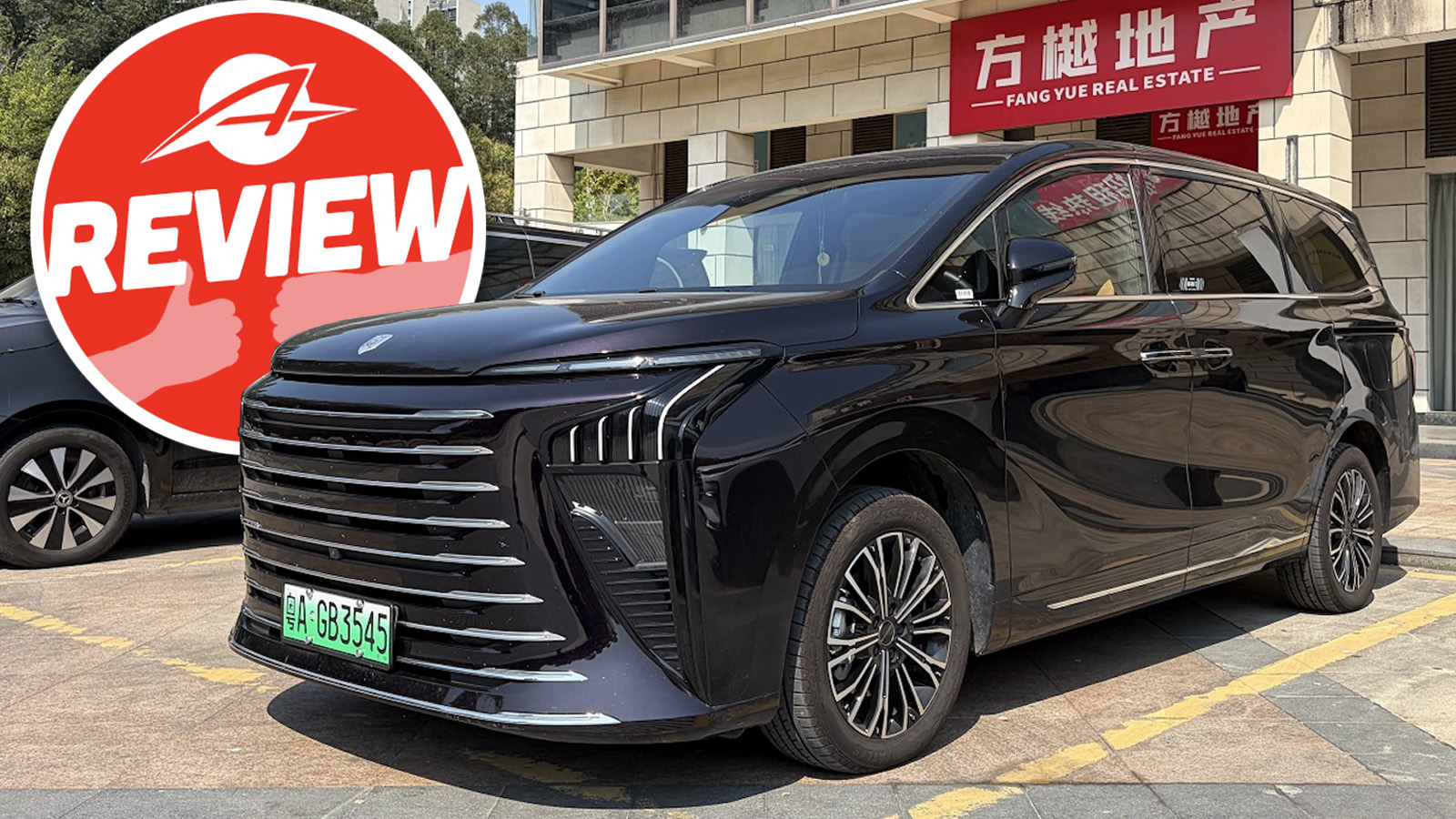
It is not controversial to say that the modern minivan is one of the most versatile vehicles on sale today. Nothing else can transport eight full-grown adults in comfort on Monday while being reconfigured to swallow an entire college dorm’s worth of furniture on Tuesday, all while still fitting into a standard parking spot.
However, despite MSRPs that have soared into the $60k range for the generally agreed upon apogee of US minivans, the Toyota Sienna, US minivans still do a poor job of posing as luxury vehicles. In contrast to dedicated VIP people-mover vans like the Toyota Alphard, US minivans still seem to be designed first and foremost for family duty, where luxury trimmings are just a target for a thrown juice box or tiny kick. In the land of freedom, transporting eight passengers in the lap of luxury is mostly the job of luxury SUVs.


Meanwhile, in China, the currently trendy land of automotive forbidden fruit, approximately $23,000 (189,900 yuan) will get you into a PHEV luxury minivan whose main purpose is to haul people in luxury-car-like accouterments while offering an astounding (to Americans) 125-mile (200-kilometer) rated electric-only range (CLTC). But is it actually worthy of being considered a luxury vehicle, or is it just pretending to be one? Is it better than the Toyota kings of minivans, the Sienna and the Alphard? And at that low initial starting price, does it even matter whether it is or not?
The Basics
Engine: Turbocharged 1.5-liter inline-four
Battery Pack: 34.9 kWh liquid-cooled lithium-ion
Charging: DC fast charging, 7 kW Level 2 AC charging, Level 1 AC charging
Transmission: Single-motor/generator single speed “Dedicated Hybrid Transmission”
Drive: Front-wheel drive
Output: 310 horsepower
Rated Electric Range: 125 miles (200 km) CLTC, 100 miles (160 km) WLTC
Fuel Economy: 5.27L / 100 km (45 mpg) with a depleted battery (CLTC)
Body Style: Minivan
Starting Price: RMB 189,900 or $23k – in China
What Is It?
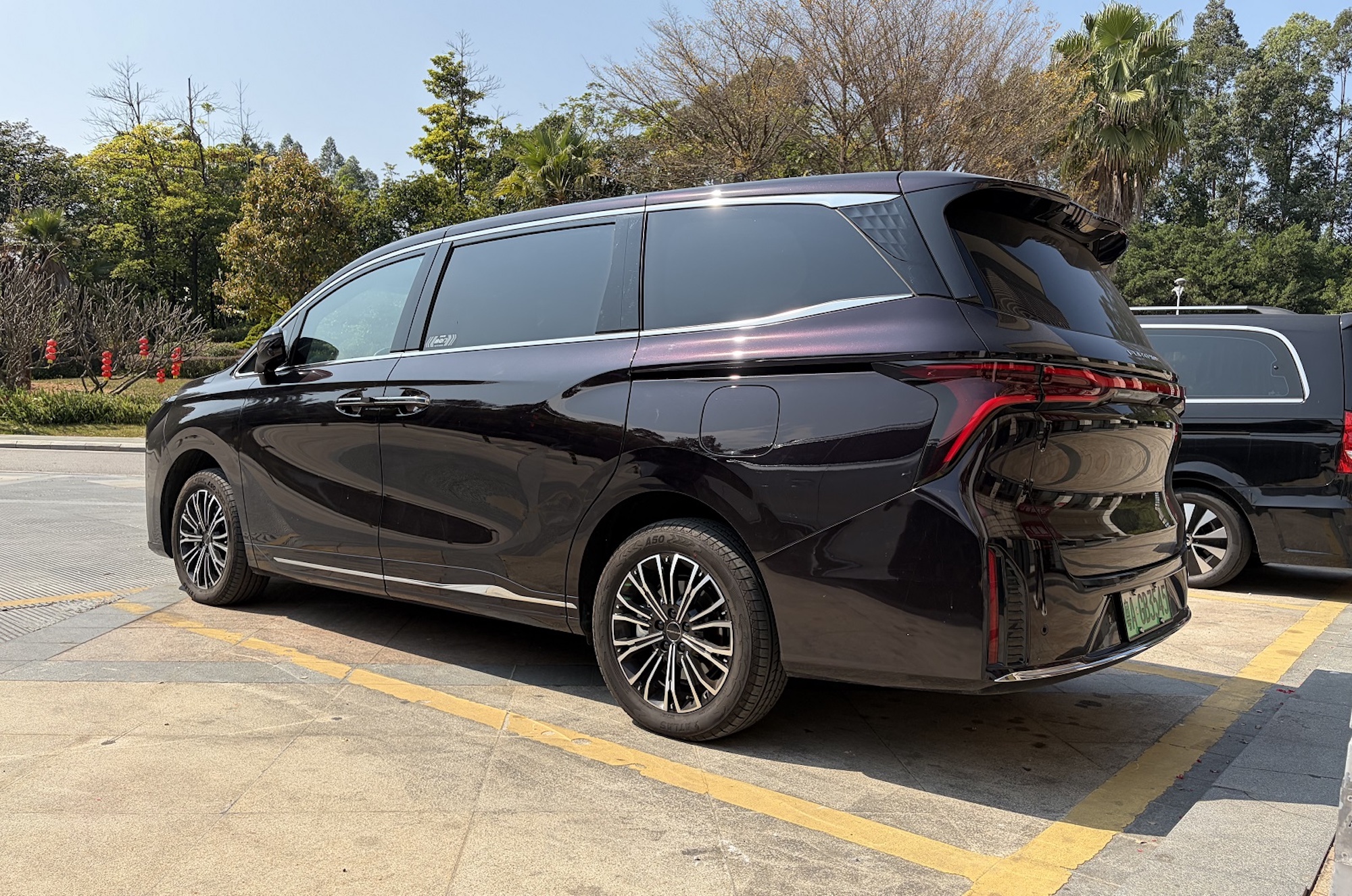
You’re looking at a 2026 Forthing Xinghai V9. Forthing is a division of Dongfeng, one of the OGs of the Chinese auto industry. I primarily remember Dongfeng for producing very robust heavy-duty trucks. While Forthing has been around for a while, the Xinghai subbrand is relatively new. I honestly cannot tell you what Dongfeng is trying to accomplish with the Xinghai subbrand; it’s all very early 1990s JDM feeling to me, when (for example) a vehicle known as a Mazda to Americans might have been branded one of five different ways in Japan.
Why Does It Exist?
The luxury van has been a stalwart segment in Asia for years. These vans, of which the Alphard is the poster child, are designed to shuttle important people in luxury from, for example, the airport where they just disembarked a business-class flight, to a tall skyscraper for a business meeting. Such a use case is not just a Japan-only thing, though; a similar philosophy that VIPs should be shuttled in the back seat exists in other parts of Asia, such as China. China has also been a worldwide leader, perhaps the worldwide leader, in electrified powertrains. PHEV powertrains fit the use case of VIP vans perfectly, where one day’s driving might be crawling in a congested city, but the next might be a long-distance round trip from Guangzhou to Zhuhai. Long-distance luxury PHEV vans like the V9 just make intuitive sense for Asian luxury fleet vans.
How Does It Look?
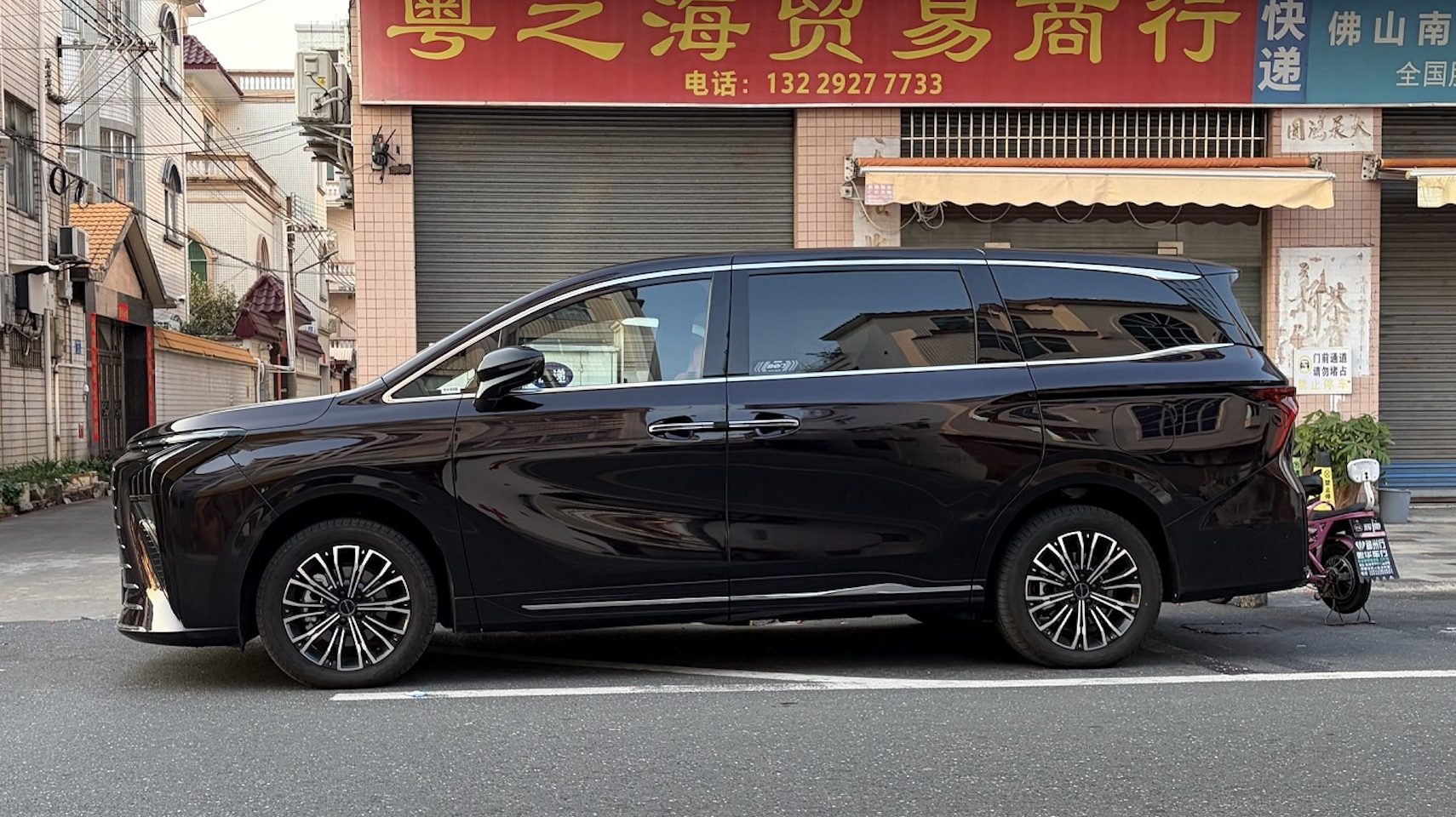
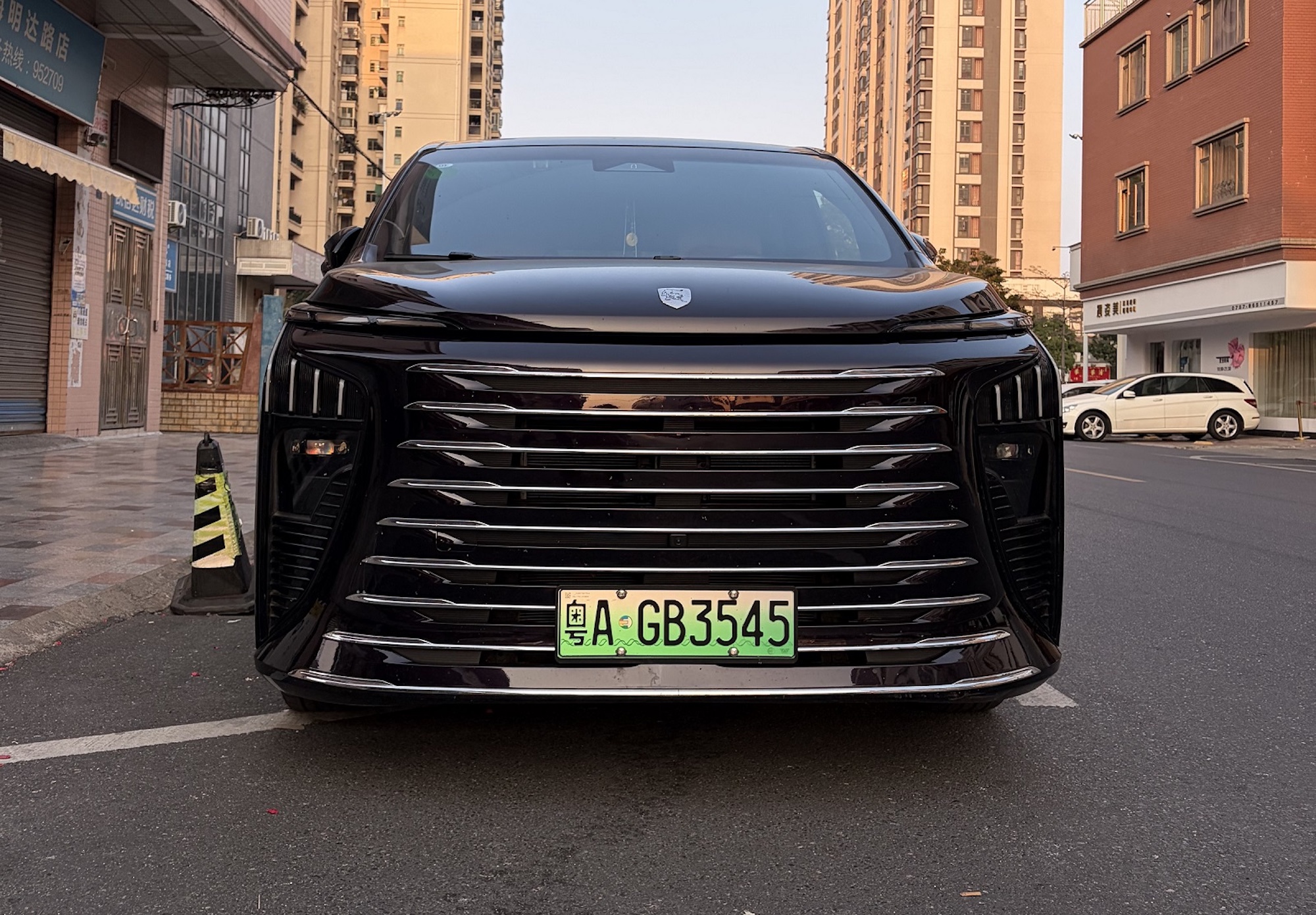
Like a Gillette executive’s dream. Forget 5 blades, let’s go for 6, 7, no 8 blades! That gigantic grille will likely be the first, last, and probably only thing that leaves an impression, but damn, it will be an indelible one.
Besides the grille, the profile is basically what you would expect from a van. It’s not unattractive, although the rolling diameter of the tires feels a little small to someone used to the ever larger meats that US cars are rolling on. And the color choices may raise some eyebrows; The V9 is only available in black, white, and dark purple exterior colors.
How About The Inside?
For better or worse, modern Chinese New Energy Vehicles (NEVs) generally leave a great first impression, but interact with a few of them, and there starts to be a banal sameness to most of their designs. All of them seem to be chasing the feeling of driving the future, and most of them do it with very simple and clean designs and massive screens.
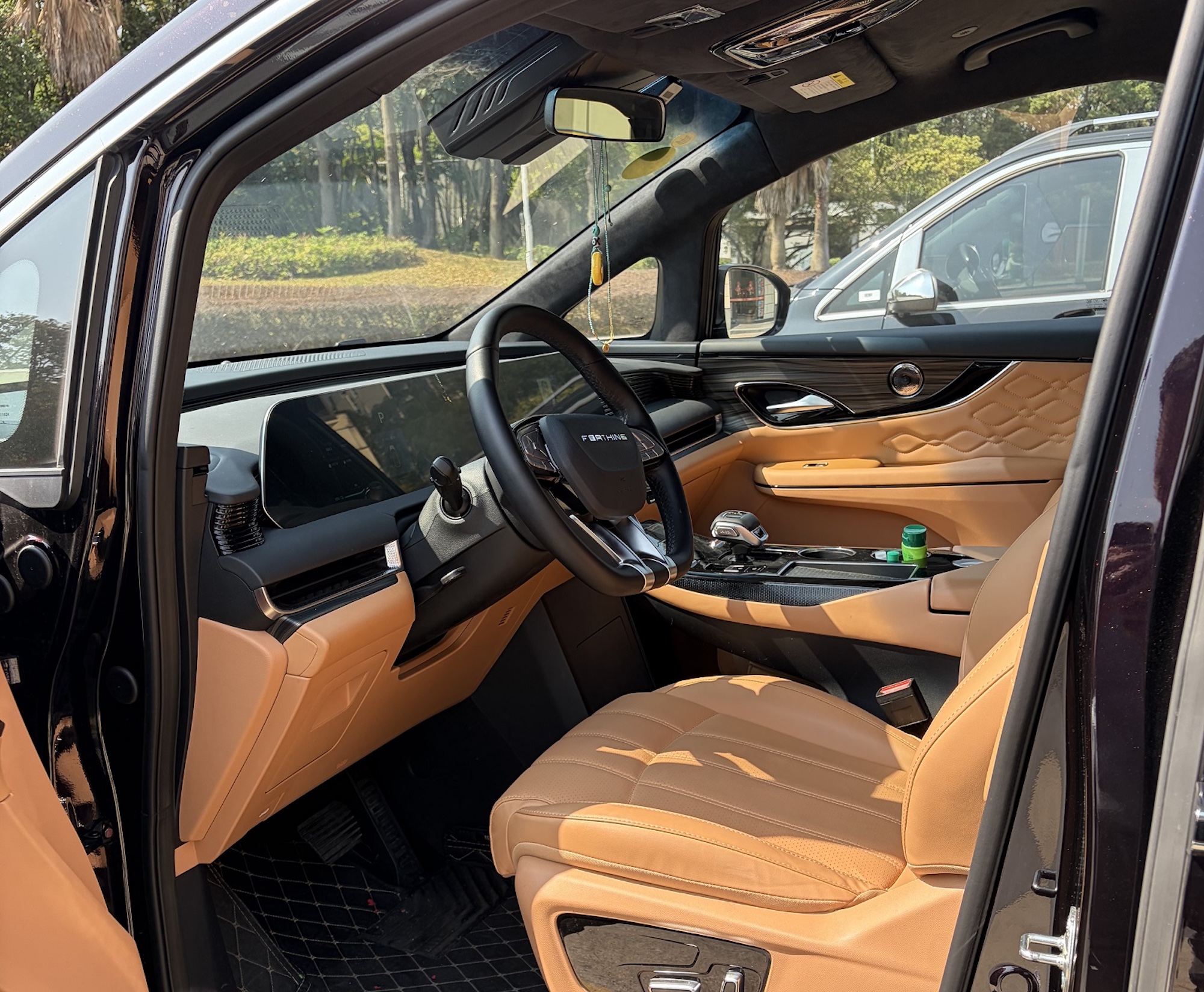
In some ways, this is true for the V9 as well. Nonetheless, if you were just looking at the V9, it certainly appears more luxurious and futuristic than, say, a Sienna Platinum. The seats and leather-appearance plastics have interesting textures and an expensive-looking, low-sheen surface. The interior plastics do look more expensive than they feel, but there are pleasant soft-touch surfaces where you would expect. The console being a gigantic piece of piano black probably looks great in renderings, but will likely look terrible in a couple of years. In terms of textures and designs, the V9 certainly has more going on than a typical NEV.

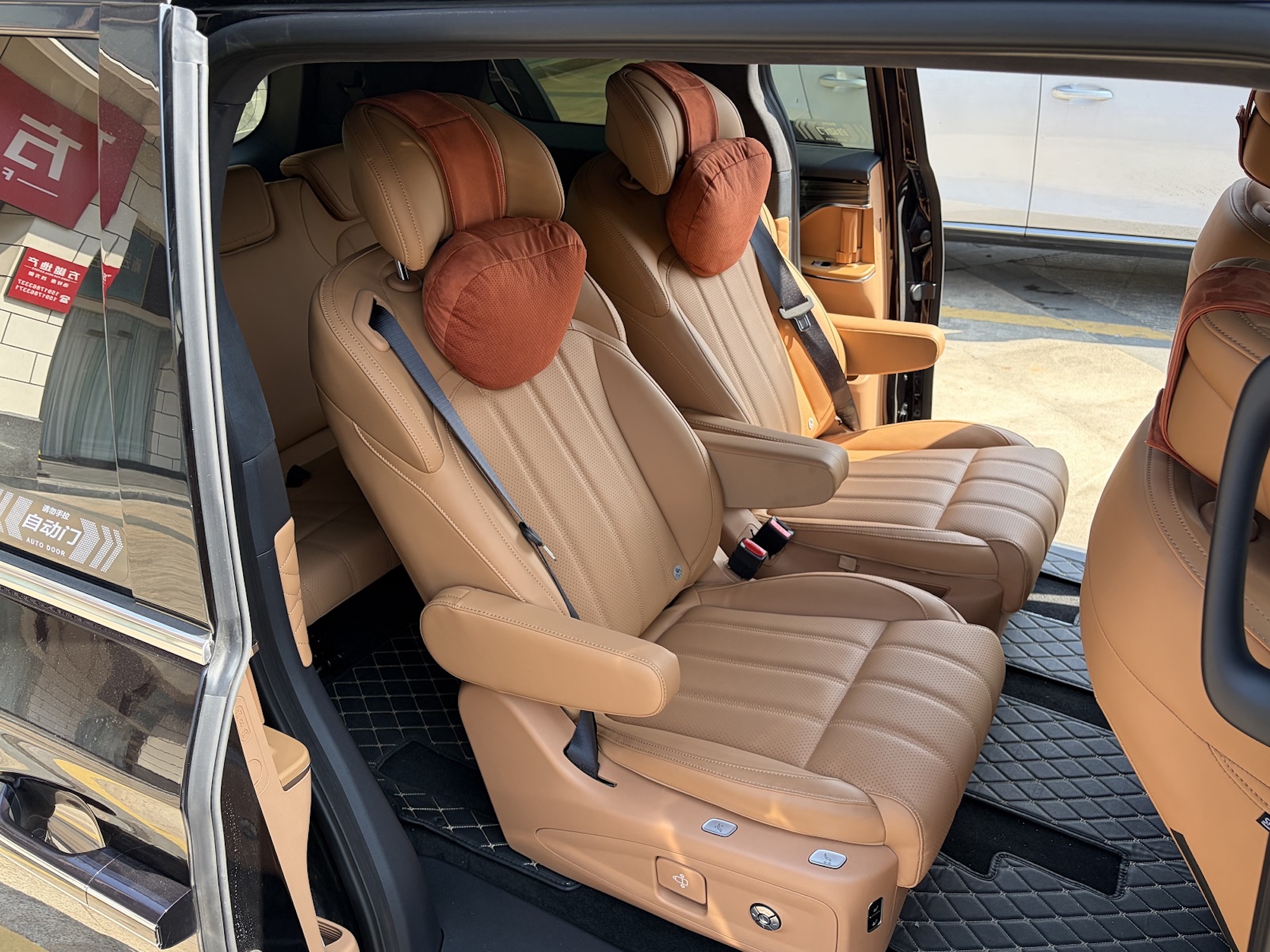
Both the front- and second-row seats are throne-like and very comfortable. The V9 I drove was a mid-tier model missing a lot of the high-end luxury features, but the second-row captain chairs were still power-adjustable, heated, cooled, and equipped with armrests and USB-C ports. Higher trim levels offer panoramic moonroofs, massaging seats, second-row tray tables and foldable leg rests, and even additional second-row screens.

The third row isn’t strictly for kids, but occupants are clearly second-class. Cargo space is acceptable with the third row up, but I assume the second row will limit the ability to haul very large loads.
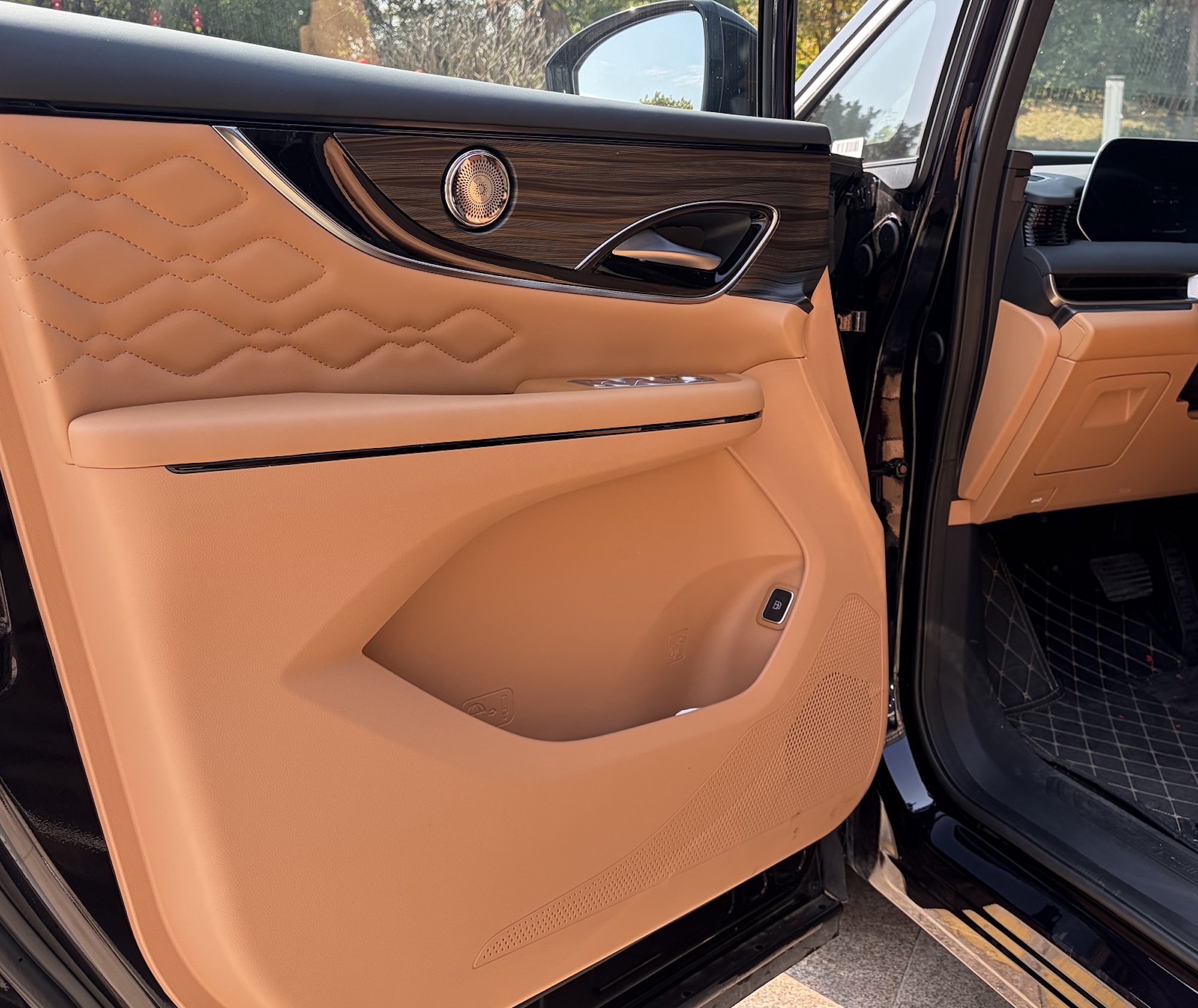
Storage is strictly inferior to most American minivans. While there are storage pockets and the console has a lower storage level, the solutions are fairly rudimentary. The second-row seats move laterally, but each seat is confined to only moving within its own half. (I cannot imagine how this is useful – unless your second row VIPs really want to cuddle?) Besides the items that exude luxury, a lot of the interior feels very much like someone wrote a checklist of features that was then implemented without much thought put into the execution.
While the interior in general is not as nice as that of an Alphard, it leaves a good first impression, and VIPs in that second row will be coddled. To keep with the theme of limited color choices, the interior is only available in white and saddle tan.
How Does It Drive?
The party trick of the V9 is that it offers extremely long electric-only range. In electric mode, it feels like any electric vehicle. Electric power is adequate, but not overwhelming. The CLTC standard has a reputation for generating extremely generous, bordering on ridiculous, range estimates, and this is also the case here. In actual use, I experienced around 70-80 miles of range instead of the rated 125 miles. Still, even 70-80 miles of all electric range would be an absolute game-changer in the US.
Once the engine kicks on, the experience continues to be relatively smooth, though the engine being connected to the wheels via a single-speed direct drive (think current Honda Accord configuration where the motor mostly acts as a generator) makes the van feel slower than its rated 310 total system horsepower.
Past the powertrain, things take a turn for the worse. Possibly to discourage shenanigans, grip limits are low, and the van is softly sprung. The steering feel is rather synthetic when effort seems to fluctuate during a sweep of the steering wheel, even in moderate cornering. It almost feels like the electric power steering cannot make up its mind as to how much assist to provide. And while the suspension is generally soft and tuned for ride quality, the rear is significantly bouncier than the front even with every seat occupied and luggage in the back. On the positive side, there’s no weirdness with the brake pedal and stopping power is, to continue with the theme, fine.
How Are The Electronics?
Get into the V9, and the first thing you notice is there is no start button. The vehicle is programmed to detect the presence of the key and automatically turn itself and leave itself on. It’s not bad when getting in, but I never got over not turning off the vehicle before walking away.
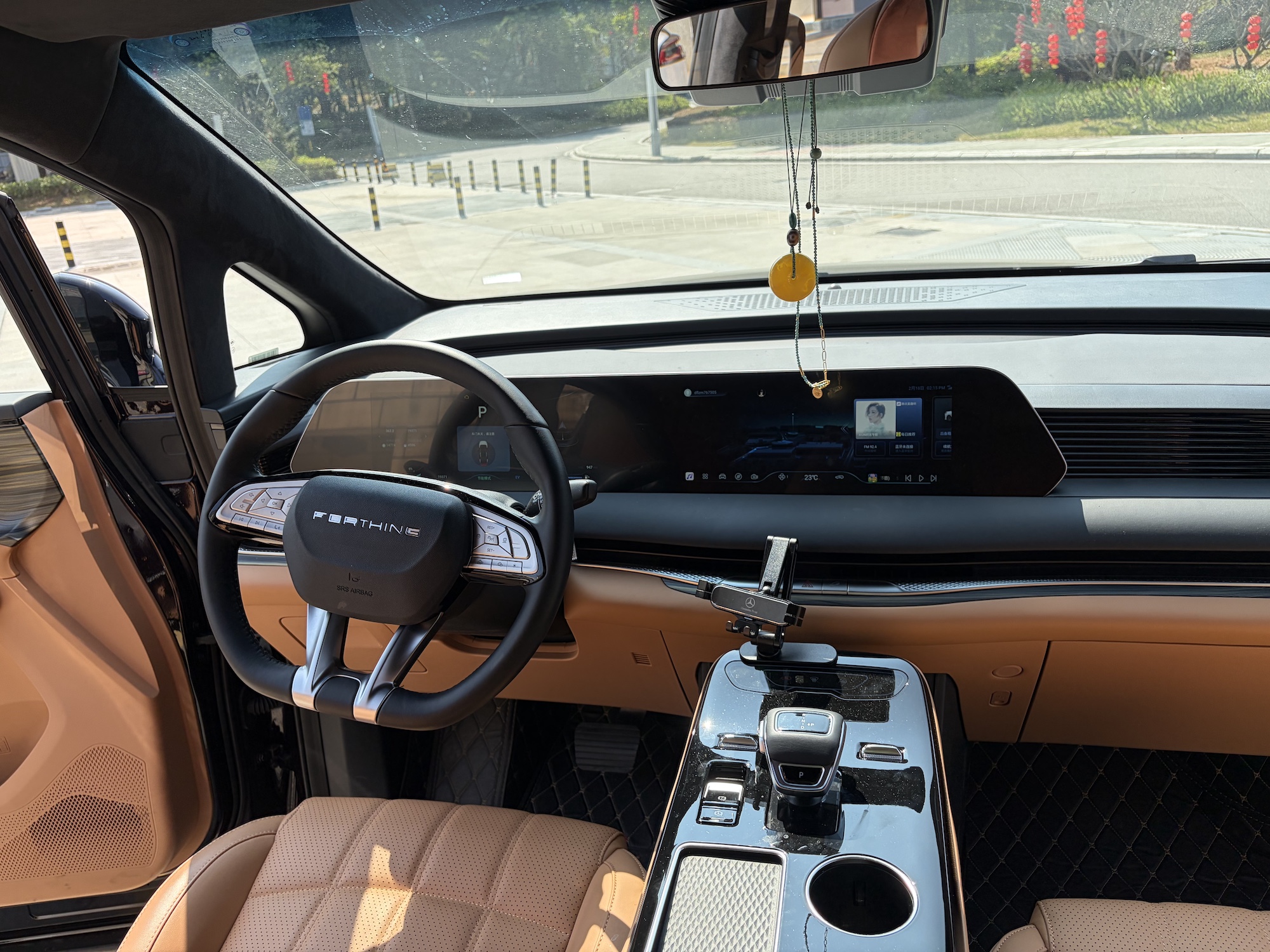
The infotainment has two 12.3-inch screens, and I hope you enjoy interacting with them, because there are basically no buttons at all. There is a shifter, a parking brake button, and steering wheel buttons. A third screen for the front passenger seat is available, but not present on my test car and, honestly, I find passenger screens extremely gimmicky. There is an additional screen in the form of a fold-down television in the second row, but luckily my kids did not discover its existence.
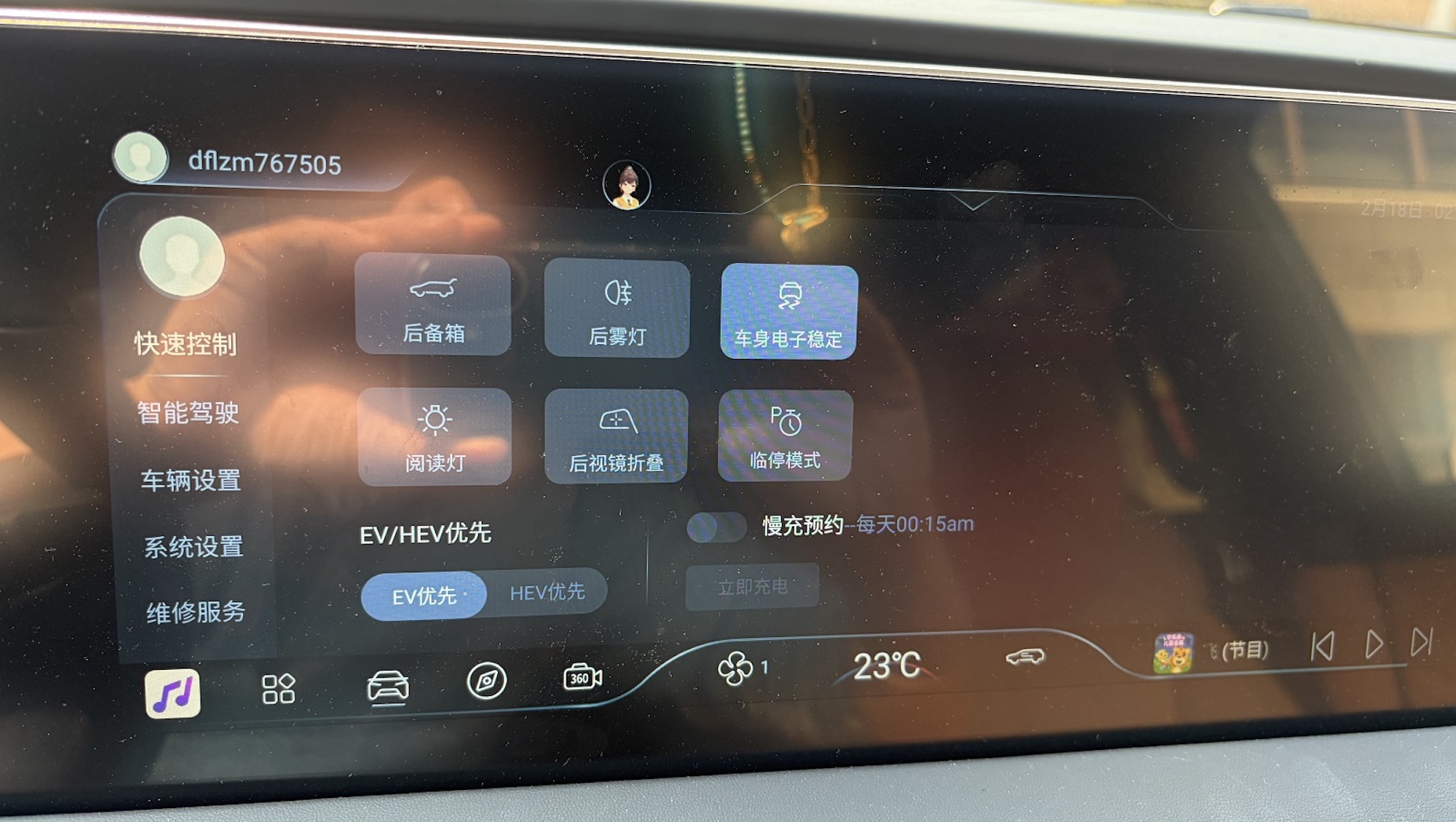
The infotainment is the standard Tencent interface that seems to be present in all Chinese NEVs. There’s a strip on the bottom for HVAC controls and a multifunctional area that displays infotainment, vehicle functions, AI assistant, and various other screens. Instead of Apple CarPlay and Android Auto, phone mirroring is offered for Chinese mobile operating systems. Per my conversations with Chinese drivers, though, phone mirroring does not seem to be as important of a feature as in America, and most people keep their infotainment in the native interface.
While the general infotainment experience was smooth and lag-free, there were some quirks. The infotainment would default to camera views of your front wheels when turning in tight quarters, but the view is too laggy when the speed is above a crawl, and the camera angle points too far downward to allow for any idea of what is actually coming up on the sides. Also, the turn signal sounds are loudly piped through the speakers. I guess so your rear occupants can really know when you intend to turn?
Does The Forthing V9 Fulfill Its Purpose?
With its long (if overrated) electric-only range, very comfortable captains’ chairs, soft ride quality, and a bargain-basement price, this is one vehicle that would absolutely sell like hotcakes if it were imported into the US. Even taking into account the Chinese price being, umm, subsidized, the Forthing V9 would make an interesting choice priced at $45,000 in the American market.
Obviously, $23,000 is not an amount of money that would get you into a new minivan in the US, but the $45k figure is the price for a Sienna XLE. The Sienna XLE has a fairly similar level of features, but lacks the V9’s electric-only range and the throne-like second row seats. However, the Sienna does the practical things better, is nicer to drive, and has physical buttons.
Confirming previous Autopian findings that Chinese cars are pretty good, the V9 does most things acceptably, offers electric-only range that would astound Americans, and leaves a luxurious first impression, but has its quirks and areas for improvement.
Would I be tempted to buy a Forthing V9 if it were available here, say for the aforementioned $45k? Absolutely, if I owned a business that required regular transport of VIPs. And as a family vehicle? Also yes, but I’m a sucker for PHEVs. If the electric-only range were not as big of a deal, I’d probably go for the Sienna.
Top graphic image: author




Dang. Back in the mid-70s, I moved all of my college stuff around in the back of ’68 Datsun 510 station wagon. I have acquired some furniture along the way since then, but other than a bed, the stuff that matters to me now could probably still fit in that car. Had my brother not wrecked it. Eh. I exaggerate a bit. So maybe the smallest van U-Haul will rent to you now.
A few years ago I rented a Volvo XC90, and this was exactly my issue with pretty much every feature in the car. I am beginning to sense that this is an ongoing feature with Chinese cars- checkbox engineering.
We own a XC90. The XC90 is a much more coherent setup than the V9. A few years ago, that might not have been the case due to the Android Auto being in the infancy of its Volvo implementation, but it has improved a lot.
As Reasonable Pushrod explained, it’s a plug-in hybrid. 100 miles (or even “just” 70-80 real world miles) is fantastic for a plug-in hybrid. In america, most of our PHEVs only get 25 to 50 miles of all electric range.
It’s a PHEV. 100 mile EV range is very good for a PHEV.
Had a 99 grand caravan. purchase used. It had the quad seat option -2nd row captains chairs.(pre tumble under design. remove from vehicle if you need the space. later iterations prioritized foldaway over seating comfort.) the quad seats were brilliant. incredibly versatile vehicle & having experienced classy adult seating in 1st 2 rows, i can understand why the Luxury Minivan category is popular in Asia. Wish there had been an ability to take one 2nd row captain chair and place it in 3rd row – in tandem behind 2nd row captain to open up half of the interior for long objects- like lumber or moving several bicycles. that trick would have required some seat belt workaround.
An all captains chair 6 seat minivan would be the bees knees.
They could not make the nose uglier if they tried. Somehow I do not think it will pass EU pedestrian safety requirements (no sharp bits as well as no knee breakers)….
There is no way this gets 45MPG when the battery is depleted. There is a Chinese saying that goes something like “There are no merchants above being deceitful”. If the buyer gets fooled, then it’s the buyer’s fault. The buyer is expected (in theory) to verify claims before handing over his money. But good luck convincing the dealership with this Alphard clone to allow you to verify whether or not it gets 45 miles per gallon running just on gasoline.
Reading the article, this seems to have the characteristics of a Vinfast much more than a Toyota.
The CLTC is apparently one of the more optimistic test cycles and comes out to a third more range than the EPA rating in BEV land. I wouldn’t be surprised if hybrids/depleted PHEVs saw a similar bump.
That does seem to be what this manufacturer claims. When I read it before reading your comment, I took away 45 MPG by depleting the battery and the gas tank. So electric plus gas = 45MPG equivalent? That is crazy high for a 1.5L in a vehicle this big.
It’s not a deceit. It’s just a different (and more optimistic) rating system. And there are plenty of car reviewers inside China who will check manufacturers’ claims, no different than here in the US.
Could it be the 45mpg is also using the British gallon? That would convert to about 37.5mpg in America.
It’s made out of genuine leather!*
*Vegan leather, actually, which is just a nice, misleading way of saying plastic. But you are buying it on Amazon, so we’ll never be bothered with your disappointment, thank you very much.
Our 1Big Mitsubishi Family once owned twin (except for color) Nissan Quest minivans and quite frankly were the two most versatile vehicles we have ever owned.
Plenty of room, plenty of VQ35 power and well, not so great fuel mileage. After a combined 350,000 miles on them we went with our current stablemates twin Outlanders and while more fun to drive, they have less passenger capability and a little less room. Our oldest got her own brand-new Mitsubishi after moving into her own domain.
Nothing truly beats a van to transport humans and their junk.
I do not miss the gas mileage though.
I would be curious as to how the 1.5 turbo/hybrid set up in this V9 does long-term compared to the VQ35 torque heavy equipped Quests did overall…
If you love the form factor, but want better mileage, take a serious look at a Sienna.
Oh absolutely, in the USA the Sienna is really the way to go we just got sick of driving the Quest bus around and with the oldest getting her own Mitsu we did not need the extra room but still have the 3rd row in the Outties if we need it.
Being in the U.S. puts me at a distinct disadvantage when it comes to knowing much about the details of Chinese vehicles. Articles like these are very helpful in that regard, however the one thing that I don’t really see are articles about how they hold up over time. Our society has become accustomed to cars that generally can provide 150k (miles) without much more than basic maintenance and perhaps a repair or two mixed in with the replacement of consumables (brakes, tires, etc.). Is that the same case with these vehicles as well?
I can’t long term the cars, but the late model Chinese cars hold up better than a lot of Americans would expect. There are still issues and parts availability is sometimes a problem in a market with sooooooooo many choices. The caveat to that is the Chinese fleet is relatively new, so we won’t get, for example, 10 year long term reliability pictures of the NEVs for quite awhile. Especially so because Chinese owners tend to drive less than their US equivalent.
That’s certainly not true with any German cars.
there are outilers, of course.
Sure, it looks all shiny-shiny now and if it was ever offered in the US (minus the Chinese OS), it would be priced at $42k, so as to undercut the Toyota, coz undercutting the opposition is SOP when Chinese vehicles are introduced into Western markets. But as my mainland Chinese colleague informs me, these are expensive consumer items, like fancy cellphones, so they’re junk before the warranty period has ended, coz after 5-6 years, parts won’t be available. The manufacturer will have moved onto a whole new vehicle, platform and name within 3 years of introducing this vehicle – if the car-side is still in business and hasn’t been sold off to Geely, BYD, MG, or GWM.
Chinese cars are already at or exceeding near-peer levels, but there are so many brands, sub-brands and models, that a rationalization has to take place if the industry is to survive and thrive without continued levels of state subsidy. Right now is not a good time to buy a newly-introduced Chinese sub-brand if you live in a Western market where they’re sold, because you’re likely buying an orphan. Unless you’re prepared to drive it into the ground, then go nuts. .
When you say junk, do you mean like most American pickup trucks costing double what this van would go for in the United States? Looking at you GM… soon to be SAIC.
Yeah, trucks are big money makers in the US and if the big three ever got serious competition in that market, they’d be forced to drop prices. GM isn’t going to be bought by SAIC or any other Chinese manufacturer under the current administration. That’s crazy talk, lol.
And that was the argument for the owner to get a Dongfeng instead of an upstart brand. The idea being, Dongfeng has been around forever and so they have a track record of, well, existing.